All Posts Tagged ‘wisdom

Post

On Timelessness

30 comments


One must put up barriers to keep oneself in time.


Wild Chicory … Photo by Thomas Peace c. 2018

Post

Separation, habitual dominance, and wholeness…

6 comments


We so habitually separate.  We, psychologically, separate the perceiver from “that which is perceived” so readily, so habitually, just as we were taught… and just as primitive conflicting, opposing factors (over eons) have dictated.  Time, additionally, is separated.  Of course, chronologically, actual physical time (in many, limited respects) has sections, but we, psychologically, almost constantly live in (and “as”) the past, as learned (stored) symbols, words, and concepts (of the past) that we constantly use (and are protrusions of what was poured into us).  What is projected internally (psychologically) is what we are (i.e., what we actually are) fundamentally.  If we remain in the old and limited, we remain old (internally) and limited.  Even our concepts about the future are extensions of past accumulated (old) symbols/patterns.  (Even when we think that we often live in the present, we — in actuality — do not.)

One can’t choose to perceive correctly… any more than one can choose to be wise or choose to be a genius.  Choice and will are not keys to vast understanding.  Understanding takes place when limited perception and fragmentation are not dominating factors.  Will and choice are crude extensions of limited fragmentation; the chooser separating himself (or herself) from the choice is a mere continuity of primitive, illusory, fragmentary opposites.  When fragmentation and limited perception no longer dominate, then there is a wholeness that is not the result of a mold or a mere blueprint.


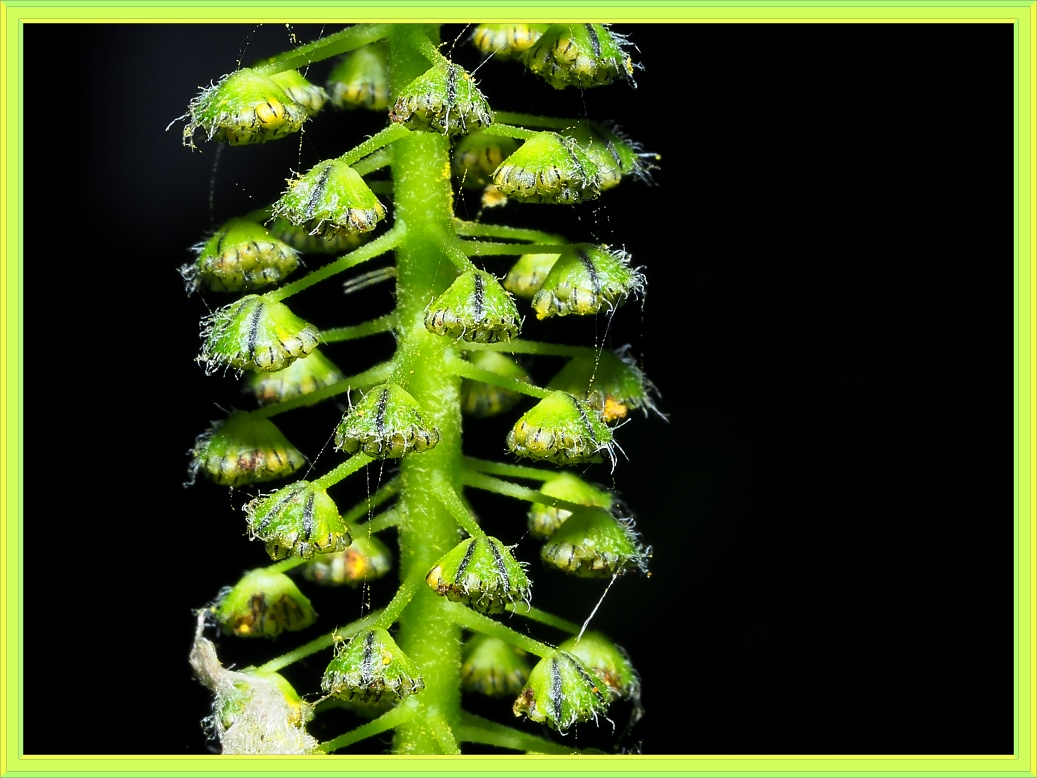
Wildflower Flower Pods … Photo by Thomas Peace c. 2018 .JPG

Post

Sacrosanct

27 comments


An indelible, sacred energy
that rarely visits…

Its immensity surpasses all
things within the world of the
opposites.

Though ineffable, it is the real flame beyond
all of the smoke,
the true light beyond all shadows.
Do not take my word for it.
Find out!


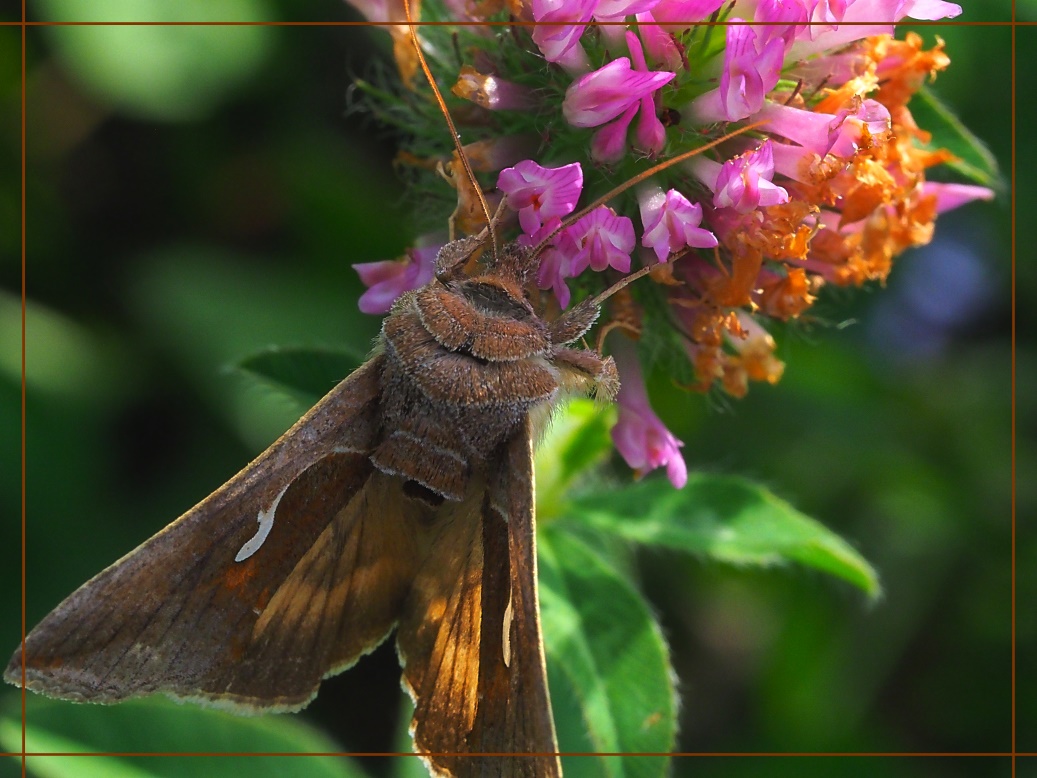
Looper Moth on Clover Flower … Photo by Thomas Peace c. 2018

Post

U.S. Halloween Fright

19 comments


(NOTE:  The following poem is not against voting; it is opposed to voting by people who are easily duped and who turn their backs on the environment.)


This from the witch
          of the stir from the brew
          whose Halloween terror
          came flying for you

She brings you bloody terror
          wrinkled skin and loss of hair
          and all the rats and spiders cheer
          as she circles the air

But all the ugly terror
          that she drapes as the night
          doesn’t equal the brainwashed zombies
          soon to vote with all their might


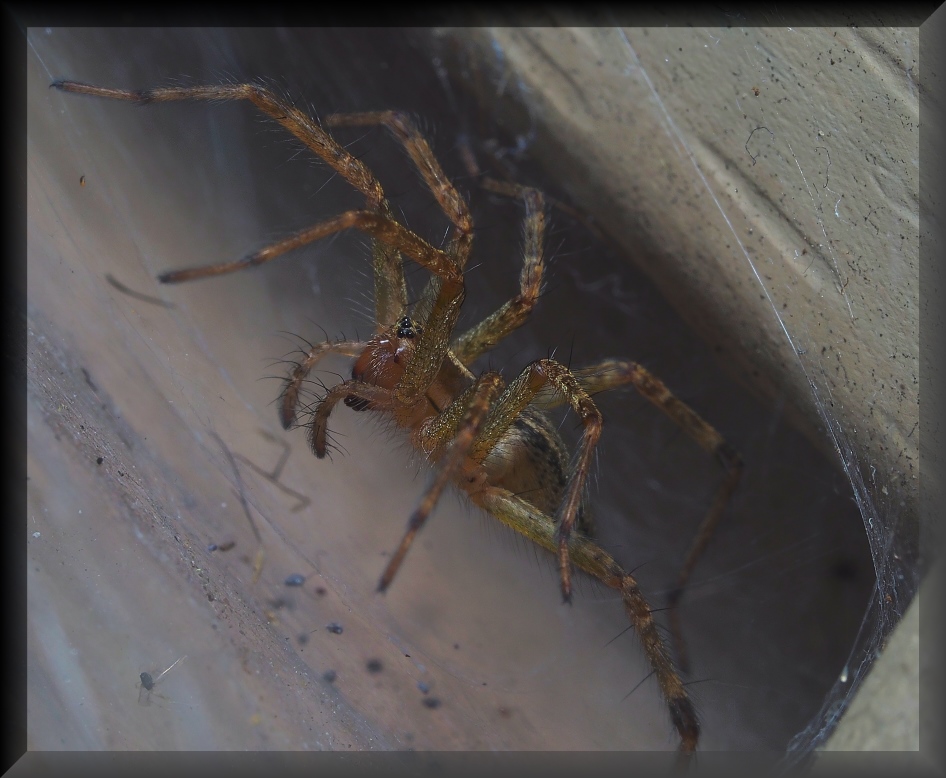
Halloween Wolf Spider … Photo by Thomas Peace c. 2018

Post

The Story of Lo Zu and the Atheist … (Another short Lo Zu tale)

13 comments


The elderly Lo Zu was sitting on a huge fallen log next to a beautiful pond that was not far from the village.  A much younger man, who was an atheist, came by and said to him, “Many people in the area say that you are a great wise man, a holy man, but if there is no God, then you are not a holy man, you are nothing.”

Lo Zu invited the man to sit next to him on the large, fallen log, which he did.  Then Lo Zu, said (while smiling), “We two can agree on one thing; I am nothing.”  

“Then there is no God,” the man pronounced with confidence.

Lo Zu then said, “‘God’, for most everyone, is an image (or series of images) that they have learned.  (They will insist that it is something much more than absorbed images.)  To these images, they associate power, dominance, kindly (special) protection, fatherliness, and unlimited knowledge.  However, these images (and their associative emotions) are self-protrusions of thought/thinking.”

“And so not anything real?” asked the man.

Lo Zu then said, “The sign on the road, just outside of town, that has the name of the town upon it, is not the town.  If someone steals the sign, they are not stealing the town.  If someone wants to visit the town, they do not crawl up the sign.  Additionally, to really be sure that the town is there, one must visit the town.”

“I see what you are getting at,” said the man.  “So, you are suggesting that one, such as you, can visit God.”

“Not really,” said Lo Zu.  “If one, through supposed will and choice, decides to visit ‘God,’ one is visiting one’s own learned images, one’s own learned thoughts and strong emotions associated with such thoughts.  Such a ‘visiting’ is usually a self-deluding form of acquisition that involves greed.” 

“So there is no real God,” the man insisted.

“Jumping to conclusions,” Lo Zu suggested, “may be as foolish as worshipping mere self-fabricated symbols, mere signs.   A strong belief that there is no God may be as superficial and primitive as a strong belief that there is a God.  Holistic perception inquires (without accumulated patterns) into what might be sacred; it inquires with a passion that surpasses beliefs of any kind (and actually finds out).”   

“So what are you saying?” the visitor queried.

Lo Zu replied, “I am saying that I will not encourage you to worship or to cling to any symbols of power, any symbols of divinity.  Worshiping self-created or learned images, that one projects (from what one absorbed from others), is similar to worshipping parts of oneself.  It may be that the true answer has to come to you.  (It cannot merely be visited, like an ordinary town.) The true answer is probably rather unapproachable, but that may be a real key; conclusions, accumulated images, and greed cannot expose it.  It is beyond foolish grasping.  The internal images of self are nothing when foolishness ceases.  When all of the windows are open and the room is not filled with garbage… only then can the breeze, perhaps, flow through.”

With that, Lo Zu stood up and began walking with his meandering cane and said,  “We must go; we see someone carrying a heavy burden and we will help them with it, to a certain point.  You can come along also… unless you prefer to remain stuck where you are.”


Bumblebee covered with Golden Pollen … Photo by Thomas Peace c. 2018

Post

Insights or Non- (Part 6)…

26 comments


The dichotomy between the “perceiver” and “that which is perceived,” is essentially (psychologically) illusory and nonexistent.   

To overlook and ignore others is to be partially dead psychologically — as so many are — while one merely concentrates on a small point, called “me.”

Forget what everyone taught you about life and death; go out, sit with nature, and look at everything as if for the first time.

Peace will never come as long as each of us belongs to some separative group.

If to be typically human is to abide by commercialism and to pollute the planet… then we need to become superhuman (and green).

To function all of one’s life in predictable, knee-jerk reactions of self-projected selfishness is safe, easy, comfortable… but also, unfortunately, dead.


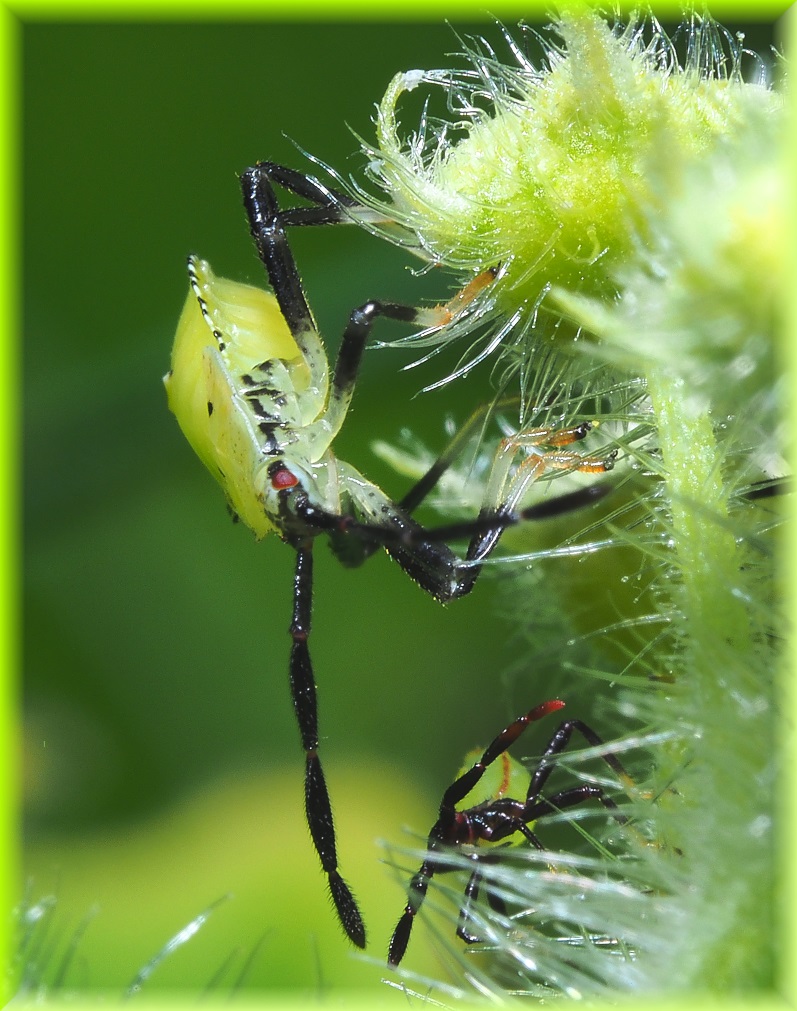
Aphids up close … Photo by Thomas Peace c. 2018


Post

The Story of Lo Zu and the Dog Chasing its Own Tail (Another short Lo Zu tale)

28 comments


Lo Zu, after one of his frequent walks into the fields and wooded areas of nature, came walking into the village.  He stopped to rest for a while and leaned on his sinuous pole, his meandering cane; nearby, a small group of men, all of them sitting together, continued to repeatedly laugh hysterically.

Lo Zu realized that they were laughing at the fact that a nearby dog was repeatedly chasing its own tail.  Lo Zu continued to walk again and came closer to the men who were laughing.  He heard one of them say, “That dog is really ignorant!”  All of them, except Lo Zu, continued to laugh at the dog as it continued to chase its own tail.

Lo Zu turned to face the sitting men and said, “It is so easy to come to conclusions; conclusions that are wrong.”  Lo Zu further went on, “That dog could chase that cat that is a little way down the road, but cats can quickly scratch and the dog could easily get a gravely injured eye.   Likewise, the dog could chase after that man walking across the street.  However, the man could kick the dog or throw something at it, injuring it.  Instead, the dog takes the prudent approach and, for great exercise, chases its own tail.  A most intelligent animal!  I, myself, walk daily to the meadows and woods to enjoy the sweet butterflies and creatures; therefore I get quite a bit of exercise.  I see that dog exercising ‘most every day also.  Sometimes I see it chasing butterflies, which is also a very wise and safe form of exercising.  Exercising often is great intelligence.  I see you men sitting around here a lot each and every day.  Do any of you exercise?”

“Not really,” said one of the men.  (The men were no longer laughing.)

“I didn’t think so,” replied Lo Zu.  He further added, “The beginning of this doglike life always chases its own end; let the dog be your teacher.”


Black Swallowtail on Thistle Plant … Photo by Thomas Peace c. 2018

Post

An Approaching Halloween Dream will Be You Tonight…

18 comments


A Halloween colored dream
came swimming beyond scream
and then a cruel green witch flew by
if you know what i mean


*****************************************************************************************************

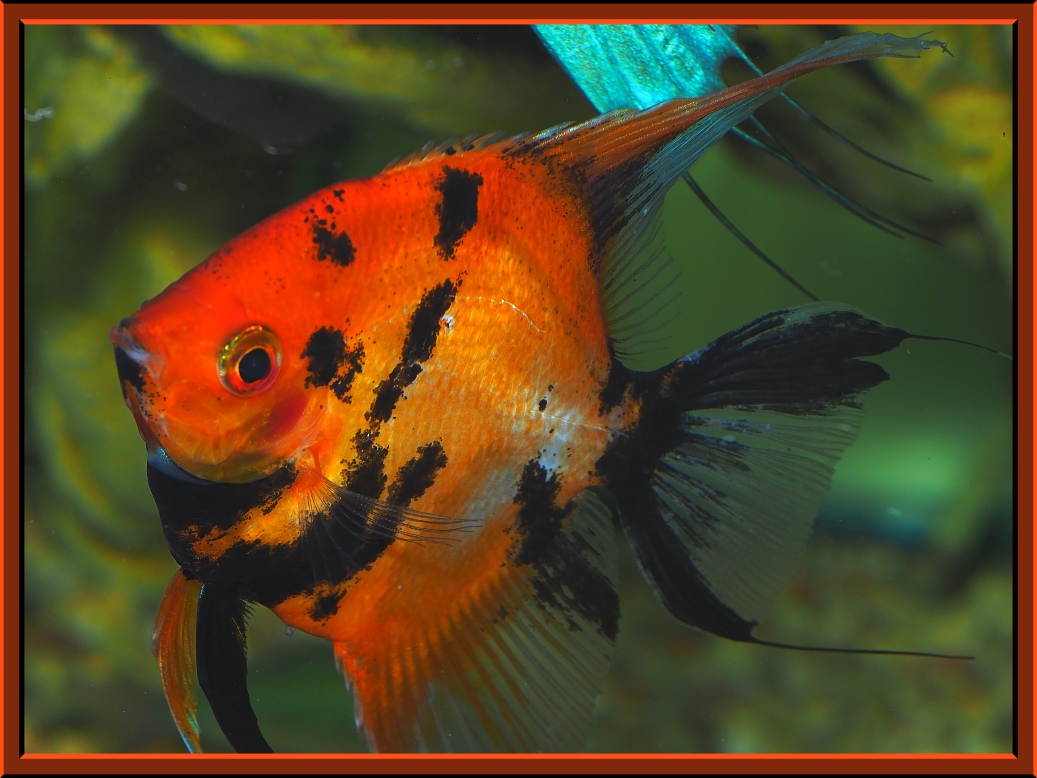
One of our pet Koi Angelfish:

Fire Red Koi Angelfish … Photo by Thomas Peace c. 2018

Post

Life is not a game…

17 comments


Life is not a game.  Too many of us go through life as if the mission is to be totally entertained.  Most people are afraid of death, yet they may not have ever truly lived.   Very many people assume that they are alive.  To go through existence merely imitating others and spewing out what was poured into one by society… may not be “living” whatsoever.  It is so easy to conform.  It is so easy to just fit in the machine and be another cog in the wheel.  Only a very few have been visited by that timeless energy that enraptures and transcends consciousness.

To inquire — to really inquire — into whether or not the sacred exists, takes great passion, great profundity.  A stagnant, indifferent mind could not do it; stagnation and indifference make the actual answer all the more elusive, for the answer lies beyond limitation.  To find the true answer necessitates that the mind be of considerable order and completeness.  An incomplete mind is never fully alive, never fully whole.  

The world has far too many seeds (of consciousness) that have never sprouted, that have never really begun growing.  The answer is immeasurable and cannot be communicated about via mere fragments/words/symbols/patterns.   The minds of most people consist largely of mere fragments/words/symbols/patterns.

We can change.


Green Grasshopper on his favorite leaf … Photo by Thomas Peace c. 2018

Post

Insights or Non- (Part 5)

16 comments


True wisdom has great wholeness, expanse, and vastness; indifference is of limitation and is confined.

Often dying psychologically to “thinking” is alive, harmless, and highly intelligent.  Constantly reacting as mere symbolic thoughts is cadaverous.

Ignorance often does not recognize its own ignorance.  Wisdom often goes unnoticed and unappreciated by those who have little wisdom.  

Nonsensical behavior often makes excuses.  Behavior that is prudent is honest and compassionate.

Many need to make-believe about some heaven or magical domain in the future (that was fabricated by make-believers); escaping what “actually is” is ignorance. (The aforementioned words are not at all meant to deny true eternity or sacredness.)

Wisdom naturally goes beyond superficial values and superficial behaviors.  


Silver-Spotted Skipper Butterfly Up Close … Photo by Thomas Peace c. 2018


Post

Beyond Limited

33 comments


Let’s pull some forever out of a hat
      mail a kind letter back to oneself
and sit again wisely where always sat

Allow tears to flow back into red eyes
      and dream again of flying as a child
beyond cold gravity… blue skies


Getting ready to fly… Male Clouded Sulpher Butterfly … Photo by Thomas Peace c. 2018


Post

Insights or Non- (Part 4)

13 comments


Silence is not an achievement that is the result of your reaction;  true silence is when conflict ends.  

Lucid, insightful wisdom doesn’t take time… but sequential, symbolic thought does.

Compassion isn’t the left arm hating the right arm and thinking it is separate.

John Lennon was right:   “Living is easy with eyes closed… misunderstanding all you see.”

Each of us is responsible for getting oneself and the world right.  Oneself includes — and is — the world.

Don’t think with a prefabricated mind, with a handmedown, archaic mentality; look at things beyond the ways you were taught.  


Wood Boring Crane Fly … Photo by Thomas Peace c. 2018

Post

What are they feeding us?

31 comments


They provided us with delectable ideas

which our minds assimilated like gluttons.
We, of course, became hungry for more.
Our ravenous appetites drove us
to the next serving… and to the next.
One palatable idea after another
is what we craved; anything other
than facing the starvation of the
emptiness within.
True intelligence can only, for a
limited time, feast on the illusions they
provide.  After

that limitation is reached, real
sustenance breaks free beyond
their insipid inedibilities.
Will habit continue to feast on delicacies
of disorder?  Even the supermarkets are
full of the artificial.
It’s good to eat healthy, whole,
nourishing food.
It’s not so good to allow oneself
to be conditioned to merely
swallow a lot of mindless crap.


[Note:  These are not the kind of eggs that you can purchase at the supermarket.  These are 1 millimeter insect eggs on a leaf.   Note the orderly patterns in which they were laid.]

Tiny insect eggs on a leaf… Photo by Thomas Peace c. 2018


Post

Insights or Non- (Part 3)

28 comments


Deep passion — to find out about the whole of existence — goes far beyond details and fragmentary parts.

There can be a holistic awareness, not merely of the five “separate” senses that one “has,” but rather “as” the holistic senses working together harmoniously, as one, without thought/thinking constantly interfering, separating.

When one was young, one mustered up all of the energy that one had to perceive the truth and the whole.  That’s the only way to be!

Order comes through understanding and perception… not via rigid, limited ideals which bring about conflict.

Many animals value life just as we do… maybe even more so.

Look beyond the learned patterns; see beyond the limited, learned symbols.

True wisdom goes beyond perceived borders and is therefore truly compassionate and caring.  


Scarlet-and-Blue Leafhopper …Photo by Thomas Peace c. 2018


Post

Lo Zu and the Truth… (another short Lo Zu tale)

29 comments


A number of young men and young women in Lo Zu’s village gathered around him
one day and one of them said, “Many people, even from other villages, say that
you are a great sage, a man of vast wisdom who carries the truth; please show us
how to carry the truth with us.”

After a considerable length of silence, Lo Zu stood up and said, “If you want the truth, follow me and do exactly what I say, but it will be a very arduous journey with many difficulties.” Then Lo Zu took his meandering cane and began walking, and all of the youth eagerly followed him, with excitement and expectation in their eyes.

He walked through a very large meadow, often bending down to examine the beautiful wildflowers and
insects (while deeply enjoying them). The youth all followed. Then he walked into a thick forest
containing many creeks harboring extremely slippery rocks. All of the youth were somewhat afraid,
but they continued to follow him. After a couple of hours, they came out of the forest
and began climbing a small mountain, all following Lo Zu carefully and diligently. When they
finally reached a very lofty height, Lo Zu stopped walking and began carefully placing large
rocks in each of the youths’ hands. As he placed the large rocks in the hands of each of the
young followers, he said, “These are very special, sacred stones of truth; please carry these back to the
village very carefully, without dropping any; please do not drop the truth.”

Each of the youth carried a number of stones. They followed Lo Zu down off of the mountain. They struggled on their way through the dark forest; it was very 
perilous and difficult with the weight of the stones making their journey all the more excruciating.  As they walked through the large meadow, back toward the
village, many of them were aching with pain from the tiresome journey and from the heavy weight of the stones (over time).

When they finally reached the village, Lo Zu told them to place the stones in a large pile. It was the end of the day, getting dark, and everyone was extremely exhausted (except for Lo Zu who did not carry any stones). Lo Zu asked them, then, to stand in a circle around the stones.  Then Lo Zu remarked to them all, “Here is the truth you worked so diligently for.  These stones are absolutely worthless.  They are not any different from any other stones that one can find. You believed in me, hoping for the truth to be handed to you.  Out of your confusion, you decided that I always held the truth (to give to you). Many people, out of confusion, choose high-ranking “others” to lead them to the truth; out of their confusion, they choose! They go to temples and ask the temple-keepers to give them the truth. What the temple-keepers generally give, however, is as useless as these rocks. Nevertheless, people blindly and devotedly adhere to what they say, just as you have done with me today. It is evening, and you may be disappointed to find that you have wasted your whole day. Do not feel too wronged by this. Many people have wasted their entire lives in carrying the worthless stones, burden, weighty images, and so-called sacred statues of others, and it isn’t evening at the end of it for them; it is the time of their death. They wasted not a day but their entire life, and the sacred eluded them.
Therefore, do not cling to any groups or authoritarian leaders who claim to give concrete methods toward the truth; instead,
find living truth within, without using taxing systems or time.
The first step and the last step are one.”


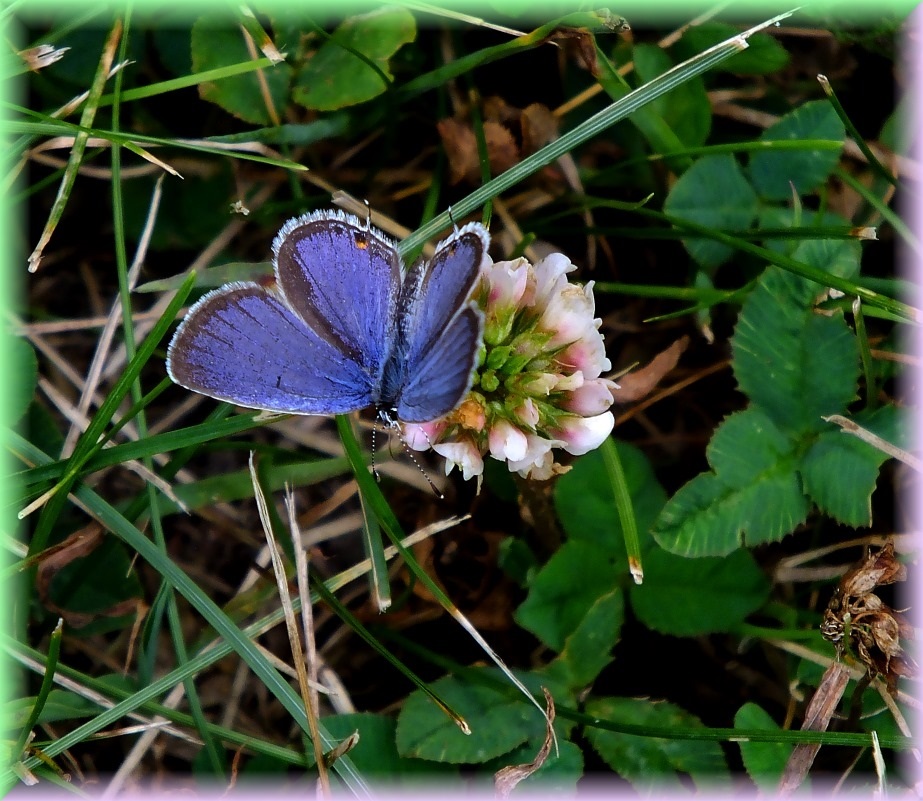
Magnificent Eastern Tailed Blue (in a meadow, of course!)… Photo by Thomas Peace c. 2018

Post

Christianity and the Historical Christ

28 comments


My wife and i were at a relative’s funeral, a number of years ago, and my older cousin was in the church pew in front of us.  At the end of the mass, she turned around and said to me, “It’s too bad that you are a heathen.”  I did not reply anything back to her.  (By the way, i had undergone a profound Timeless/Enlightenment experience long before this occurred, though don’t just believe that; “experience,” by the way, is not a very good word to use for this; no word is sufficient.)

I have always been profoundly interested in spirituality and in the philosophical aspect of things all of my life.  I do not belong to any organized religion because, like separative countries, organized religions tend to divide people and (to a large extent) tend to be a form of tribalism which leads to conflict and war.  Though i am not one to put any credence or reliance into “belief” — since belief tends to be the crude result of a blind acceptance of presuppositions, conclusions, or group acceptances — i am very interested in investigating into truth and holistic order.  I probably had read the New Testament, by the way, many more times than my brazen cousin did.  Years ago, when i was quite younger, i hung around a lot with Professor David Bohm, talking one-on-one with him often about the deeper aspects of truth and reality.  David Bohm was a co-worker with Albert Einstein, by the way.  Einstein loved Bohm and called Bohm his “spiritual son.”  I’ll never forget the wonderful discussions that we had.

As far as the Bible goes, most biblical scholars agree that most of what was handed down over the years has been grossly distorted over time from what the historical Christ actually said (i.e., distorted by mistranslations and intentional, self-serving additions by others).   However, probably if one is truly wise, one can — to a large extent — tell the difference between the weeds and the wheat.

One of the many sections that i find interesting starts at Matthew 13:10:

Then the disciples came and asked him, “Why do you speak to them in parables?” He answered, “To you it has been given to know the secrets of the kingdom of heaven, but to them it has not been given. For to those who have, more will be given, and they will have an abundance; but from those who have nothing, even what they have will be taken away. The reason I speak to them in parables is that “seeing they do not perceive, and hearing they do not listen, nor do they understand. With them indeed is fulfilled the prophecy of Isaiah that says:
‘You will indeed listen, but never understand,
and you will indeed look, but never perceive.
For this people’s heart has grown dull,
and their ears are hard of hearing,
and they have shut their eyes;
so that they might not look with their eyes,
and listen with their ears…'”.

So, here, in this alleged saying, Christ seems to be saying that he will be telling special things (or even secrets) to those that are close to him, who really care.  He also seems to be saying that the masses get parables but not the direct, significant, straight teachings.  As in ancient times, most people do not inquire into what such special teachings may have consisted of; most did not inquire into what such special messages were about.

The ancient Gospel of Thomas was discovered in an earthenware jar in 1945 in a desert by a poor farmer who was digging for fertilizer.  Additionally, Greek fragments of the gospel were found in ancient dump heaps.  The Greek fragments were an even earlier example than the 1945-discovered Coptic version, and were likely a more pristine version of the gospel (and likely are less distorted).   I hope someday that a full, early Greek version of Thomas is discovered!  Many prominent biblical scholars maintain that the Gospel of Thomas was written before any of the four (previously oral) gospels were written.  There is much evidence — and books have even been written on this — that the Gospel of John was written as a rebuttal to the Gospel of Thomas.  Ancient people who were appreciative of the Gospel of Thomas were all butchered and killed by the ancient Bishops and their followers, long after Thomas was written.  The Gospel of Thomas is not full of weird miracles and tons of parables but, instead, contains more direct, simple wisdom sayings and suggestions to look within (rather than to intermediary priests in temples).   Do you think that an early gospel  — though it was dearly accepted by many early in the history of all of this — would be tolerated by the self-appointed religious, orthodox “authorities” while it suggested that one look within, while it condemned the temple leaders?  The Pharisees, the strict, orthodox, temple-attending people at the time of Christ, were often referred to in a negative way in Thomas (and in some of the other new testament gospels).   Jesus was, at first, a follower of John the Baptist, who despised the “high-ranking” Pharisees and Sadducees, the religious leaders (of organized religion) in Israel at the time of Jesus; John got as far away from the temples as he could… (into wonderful, beautiful nature) to speak to the people, away from the orthodox priests/rabbis.  It was likely these religious leaders who had John the Baptist terminated, and it definitely was the leaders of organized religion who had Jesus killed (as well as, later on, all of the admirers of The Gospel of Thomas).   Do you know what they did with popular iconoclasts in the distant past?  They nailed some of them to dead trees; and, very possibly, if they became exceptionally popular, they twisted around and distorted what they had said to suit their own power-hungry ends.

Prelude and a few select sayings from the Gospel of Thomas:


 These are the hidden sayings that the living Yeshua spoke and Yehuda Toma the twin recorded. 
 
(1)
And he said, 
Whoever discovers what these sayings mean 
will not taste death.

(3)
Yeshua said,
If your leaders tell you, “Look, the kingdom is in heaven,”
then the birds of heaven will precede you.
If they say to you, “It’s in the sea,” 
then the fish will precede you.
But the kingdom is inside you and it is outside you.
When you know yourselves,  then you will be known,
and you will understand that you are children of the living father.
But if you do not know yourselves,
then you dwell in poverty and you are poverty.

Sayings 61, 62, 66, and 67: 

(61)
Yeshua said,
Two will rest on a couch. One will die, one will live.
 
Salome said,
Who are you, mister? You have climbed on my couch
and eaten from my table as if you are from someone. 
 
Yeshua said to her,
I am the one who comes from what is whole.
I was given from the things of my father.
 
Salome said,
I am your student.
 
Yeshua said,
I say, if you are whole,  you will be filled with light,
but if divided, you will be filled with darkness.

(62)
Yeshua said,
I disclose my mysteries to those who are worthy
of my mysteries. 
Do not let your left hand know
what your right hand is doing.

(66)
Yeshua said,
Show me the stone that the builders rejected.
That is the cornerstone.
 
(67)
Yeshua said,
One who knows all but lacks within
is utterly lacking.

(The aforementioned excerpts were taken from the Nag Hammadi Library Marvin Meyer Translation of Thomas.   http://gnosis.org/naghamm/gosthom-meyer.html

A good book to read, if you are really interested in this, is “The Five Gospels: What Did Jesus Really Say? The Search for the Authentic Words of Jesus” by Robert W. Funk.
However, I feel that what is most important is to not rely on past writings or sayings of others — especially rather antiquated ones — but, instead, to perceive freshly and find out for oneself (without dependence on organizations and handed-down beliefs).

***************************************************************************************************************************

This is a male Snout Butterfly.   The males have four legs and a pair of unusable anterior legs; those unusable, anterior legs can be seen in the photograph.  The females have six usable legs.  

Male Snout Butterfly… Photo by Thomas Peace c. 2018

Post

Upon Awakening

25 comments


I am not the problems, this morning,
upon waking up,
that i went to bed with.
This waking is a real awakening,
a true awakening.
It is not an awakening to some second-
hand religion or separative flag
that was shoved down my throat.
It is not an awakening to what others 
have said that i was in the past.
It is even beyond what i thought i was
in the past.
It is, very possibly, a true renewal,
a true awakening
beyond the past images and labels
about myself and others.
It is not the old and stale past
getting out of bed; it is
newness, pristine perception,
and whole, healthy action
beyond mere reaction.
It is perception beyond the secondhand images

implanted by a largely immoral society.
We’ll not miss that nightmarish,
assembly-line-brain of conditioning!
The old, jaundiced brain upstairs is dis
              ­app
ear  (arh-whoooooo)

               ing
“So goodbye yellow brick road
Where the dogs of society howl
You can’t plant me in your penthouse
I’m going back to my plow!”  


Mushrooms deep in the woods… Photo by Thomas Peace c. 2018

Post

Dreams

18 comments


Dreams are often a means for the mind to cope with everyday life, involving the past and the possible future, and all are projections from (and “as”) the mind.  Phantasmagoria, in most minds, are the self-protrusions of thought, stemming from the old past (though often concerned about the future).  Dreams, though superficial as they are, are an attempt by the mind at adjusting and dealing with life’s ups and downs.  Dreams are often a scenario of what may occur that is challenging; they are often a postulated sequence of future events.  Usually, though, they are far more superficial than what the waking brain would actually benefit from.  If the mind is full of conflict, problems, fear, frustration, anger, friction, and manipulation during the day, chances are that it will dream with a great deal of these “scenarios” going on.  A mind of great harmony, mindfulness, awareness, and wholeness, on the other hand, need not dream with such “scenarios” much at all.   Dreams, for such a mind of awareness, would be few and far between.  A mind of wholeness and integrity would not often dream; dreams, for such a mind, may occur, however, if certain unusual (rather incompatible) foods have been inadvertently consumed.

With a mind of great mindfulness, wholeness, and awareness, sleep is an extension of the quietness, awareness, and harmony that has gone on during the day.  That quietness is natural and is not the result of some secondhand method or stale blueprint.  Silence, during sleep, can be a motiveless vastness that is beyond accumulation, greed, fear, struggle, strife, wanting, getting, being, not being, conflict, opposites, time, concocted images, and disorder.  Then, occasionally, such a mind may see images or patterns of what will actually happen in the future; however, these insights would not merely be speculative protrusions of the mind; rather, they would entail flashes concerning what actually takes place in the future.  

Sleep can be when regeneration and rejuvenation take place, washing the mind free of habitual garbage from the past.  Silence can be of clarity and great order.  A mind without the beauty of real silence and harmony is an impoverished mind. 


Giant Robberflies rival dragonflies in their effectiveness as predators.  They easily catch other flying insects in flight and are voracious hunters.


Robber Fly … Photo by Thomas Peace c. 2018

Post

Lo Zu regarding the Best Clouds… (Another short Lo Zu tale)…

27 comments


One young student of life asked Lo Zu, “Of all the various types of clouds in the sky,
which is the one that you deem best?”

The great sage’s penetrating eyes sagaciously looked up and he said,
“Not the huge, mountainous, white towering clouds that have accumulated much.  Neither the
saturated, heavy clouds, for each is darkly full of itself; nor the clouds that stretch, sheet-like,
blanketing the whole sky; they think that they know everything.
However, there is real beauty in the little, truly humble, faint cloud of no-mind that one can barely see,
that no one notices; it lets the sun through and helps illuminate the darkness.
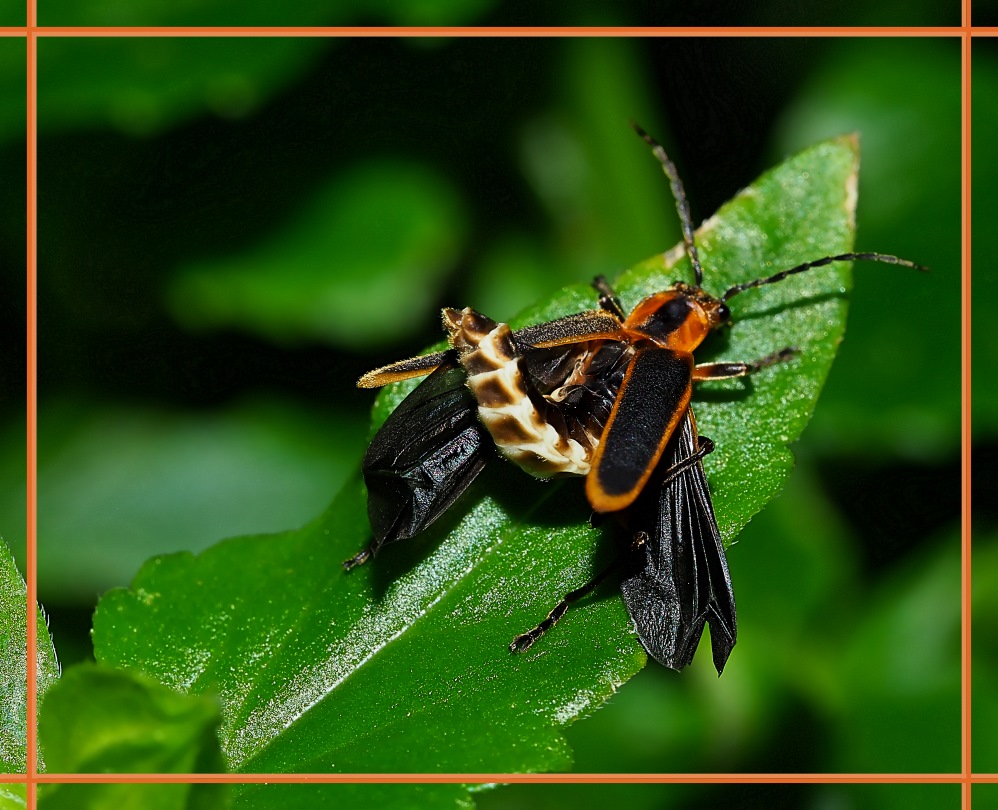
  Fireflies can illuminate
darkness too; very few people love them like I love them.”


Firefly Illumination Happening!… Photo by Thomas Peace c. 2018


Post

The Trashcan of the Mind

10 comments


A trashcan that is full of leftovers and rubbish cannot receive something precious, such as a priceless treasure.  We hold so much information, filling us, satiating us to the brim, and we think we are doing just wonderfully; however, the world is not, for the most part, better off because of it.  It is important to think a lot and to think in ways that are significant and that have profound meaning; too many of us, however, habitually think all kinds of needless things over and over, repetitiously.  There can be an intelligence of silence that exists beyond mere repetitious words/symbols.  This silence involves an emptiness that penetrates and that is full of life.  To be empty — truly empty — is the action of true humility.  That true humility brings about real order and the purity of “harmonious action.”  It is no longer filled with secondhand beliefs, opinions, primitive perspectives, and dead traditions; it is whole, unsullied, and pristine beyond the rubbish of propaganda and learned distortion. 

If procedures and systems involving time are needed to (supposedly) empty the mind, that is questionable; because the “cleaner/eraser (i.e., the one supposedly doing the emptying)” and the contents to be emptied are (psychologically) one and the same.  When one is engaged in such attempts at emptying, a false conflict often ensues.  One cannot, via some concocted will, make the mind empty.  With intelligent, uncalculated perception, however, there is a possibility that a timeless emptiness can exist without illusory effort.  That timeless emptiness, if it really is timeless emptiness, is what perceives beyond distortion and secondhand rubbish.  Such perception is beyond tainting, beyond corruption, beyond habitual (sequential) repetition, beyond ugly, robotic manipulation.  Such perception is a danger to all that is false.  


Monarch Butterfly on Coneflower… Photo by Thomas Peace c. 2018


Post

Beauty Needs No Reason

40 comments


Beauty needs no reason
like bourgeois businessmen do
who strut with the deepest frowns
competitively struggling for what
beauty is not

The faceofthewings(lookclose
ly)has eyes
a dimple and a smile
That smile transcends
sorrow  


[Note:  Do you see the “Smiling Face” in the Swallowtail’s wings?]

The Face on the Wings of a Tiger Swallowtail Butterfly… Photo by Thomas Peace c. 2018

Post

Clinging

19 comments


Why
dew
sew
many
cling
two
the
s
u
p
e
r
f
i
c
i
a
l
?


Rose Chafer… Photo by Thomas Peace c. 2018

Post

Space

17 comments


Few of us, so very few of us, have deep, immeasurable space within (and “as”) the mind.  Most minds are endlessly chattering about one thing or another, filled with series after series of limited thoughts (which are merely symbols), images, fears, opinions, musical tunes, and past experiences.  Most minds are satisfied with remaining cluttered by what was poured into them.  Most go from one series of reacting thoughts and repetitive reconfigurations to another… endlessly.  Being satisfied with that is the norm, and that leads to depression, melancholiness, and division.

This space — of thought — which most people adhere to, and consist of, is of limitation.  It is the small space of fragmentary symbols, which thoughts actually are.  It is the little space between “self” and “other life forms.”  It is the fallacious space between a supposed “me” and the so-called distant thoughts that it allegedly controls.   It is the space between the past and the future.  It is the space between “us” and “them.”  It is the little space of sorrow.

Remain plastered there, if you wish.  However, it may be most prudent to intelligently consider going beyond the norm.  Will going beyond the norm necessitate more methodologies (from the stale past of the old teachers and religious/philosophical/political leaders)?  Will going beyond the norm require following certain patterns in time, as in the ways we have merely functioned in throughout the past?  Surely not!  Love cannot exist deeply and profoundly if limited patterns and limited space crowd the mind.  It is the mind that is full of walls of separation and limitation that is the prejudiced mind, the hating mind, the callous and uncaring mind.  Love cannot enter what is limited, fragmented, contaminated, and “unwhole.”  


Perpetuity… Photo by Thomas Peace c. 2018

Post

Shadow of the Dragon

17 comments


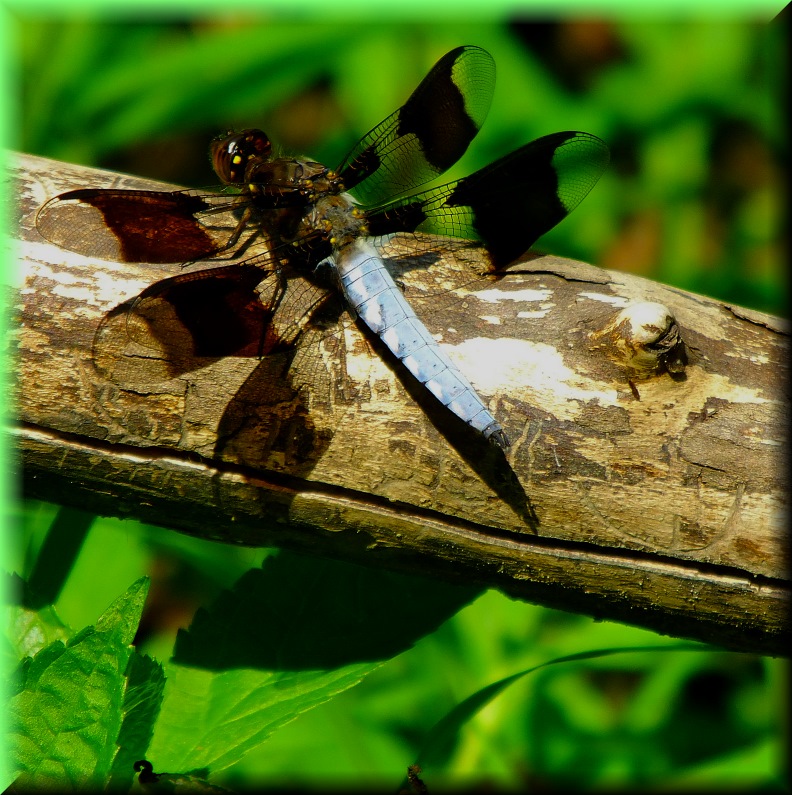
The shadow of my wing
unfolds as a very curious thing
reading this to the very end


The Shadow of the Dragon’s Wing… Photo by Thomas Peace c. 2018

Post

Become a Flower…

28 comments


If people were sweet like flowers
this world wouldn’t be going to hell
and so much would beautifully smell


Become a Flower… Photo by Thomas Peace c. 2018

Post

The Story of Lo Zu and the Young Firefly

32 comments


A young student asked Lo Zu, “When a firefly is full of light, does that mean that it is undergoing satori or full enlightenment?”

“No,” the sage answered, “Fireflies groom themselves often, making themselves orderly and spotless, but that is not enough for them — insects who live with separateness and competition — to receive immeasurable enlightenment.”

“What will happen if I receive such enlightenment?” the lad asked.

Lo Zu then answered, “If the limitless, unadulterated energy of the cosmos visits you and flows through you,  you will look slightly physically different but you will not physically glow and, additionally, the fingers of the hands may contract (making it difficult to move), but usually that visitation occurs when one is alone and not among others.”

“I see,” said the student.

“After the visitation,” said Lo Zu, “you will look just like everyone else and, of course, the hands will easily move again; however, your mind will be much different.  You will be glowing on the inside and will have seen.”

“Seen what?” the young lad enquired.

“Seen what is unseeable; met what is indescribable,” said Lo Zu.

“Is it the sacred?” the young boy asked.

With a tear in his eye and a concomitant smile on his face, Lo Zu answered, “Perhaps!”

Then Lo Zu graciously remarked, “Listen, Firefly, surpass fireflyness.”


Firefly Grooming Itself… Photo by Thomas Peace c. 2018
Post

Lens of Awareness

11 comments


Many of us bloggers, who take pictures often, are scrupulously concerned about keeping our camera lenses clean and spotless.  Many of our minds (and concomitant actions), however, are not taken care of so very diligently.  We look at things through tainted, jaded, contaminated lenses, according to the way we were programmed to look.  We see what we were programmed to see.  We think what we were programmed to think.  Most merely react, very predictably, according to the ways in which they were molded to react by.  If one desires to clean the mind, to polish the lens of the mind, it is usually merely according to someone else’s system, methodology, or beliefs.  That may merely be an extension of the crass conditioning.

Before considering cleaning the lens of the mind, please consider who (or what) is doing the cleaning.   If the “perceiver” is not something separate from the perceived, then the cleaning itself may be part of the programming, part of the conditioning.  Yet, most will just want to go out and take some mighty fine pictures. 

I am quite aware that my blog only helps some people.  Most will not see the seriousness of it.  That lack of seeing the seriousness is what i have seen all my life, ever since childhood.  Our world is going under because of it and, in the long run, our superficial images of things won’t matter one damn bit.


Leopard Frog Time… Photo by Thomas Peace c. 2018

Post

This and That

6 comments


an impressive this and that
a revealing why and how
won’t make the superficial mind much deeper
we might see that by now

a reading left to right
some judgment up and down
will not make the world much saner
or dissolve the patterns to which we’re bound


Young Leafhopper (around 4 mm long)…. Photo by Thomas Peace c. 2018

Post

Bridge to a Better Future

8 comments


Physically, there may be a bridge to a better future.  One can eat more healthfully, exercise more, and do things to improve the environment, including building wonderful bridges.  Internally (i.e., psychologically), is there really a bridge, and who is going to cross that bridge?   Is the bridge different from what one is?  

Is the “experiencer” really something separate from the experience?  If there were no experiences, what would the “experiencer” be?  So many of us, like infantile children, want more and more pleasurable experiences.   Can there be moments when a sagacious mind exists without merely depending upon experience after experience? 

If anger takes place, can it be looked non-fragmentarily — without manufacturing separate ideals — so as to be fully aware of it (without separative space and time)?  Can there be moments when the mind (without excuses) fully sees what it is directly and with full awareness, without concocting notions of something different (that requires space and time to achieve)?  If cruelty exists, and ideals manifest of “someday not being cruel,” is the non-cruelty an actuality or is it a mere abstraction (or escape) that depends upon fabricated psychological time?… and may it be that fabricated time (with its space) fails to see cruelty instantly and fully for what it really is?  Is the thinker really something separate from thought, or are they one and the same?  Is psychological time often an escape depending upon fragmentation, fabricated space, a mentally fabricated separate “I”… and, also, a postponement?  

These questions are here for you to ask yourself; they do not exist for you to reply here with any answers.


from Emily Dickinson:


There are two Mays
And then a Must
And after that a Shall.
How infinite the compromise
That indicates I will!


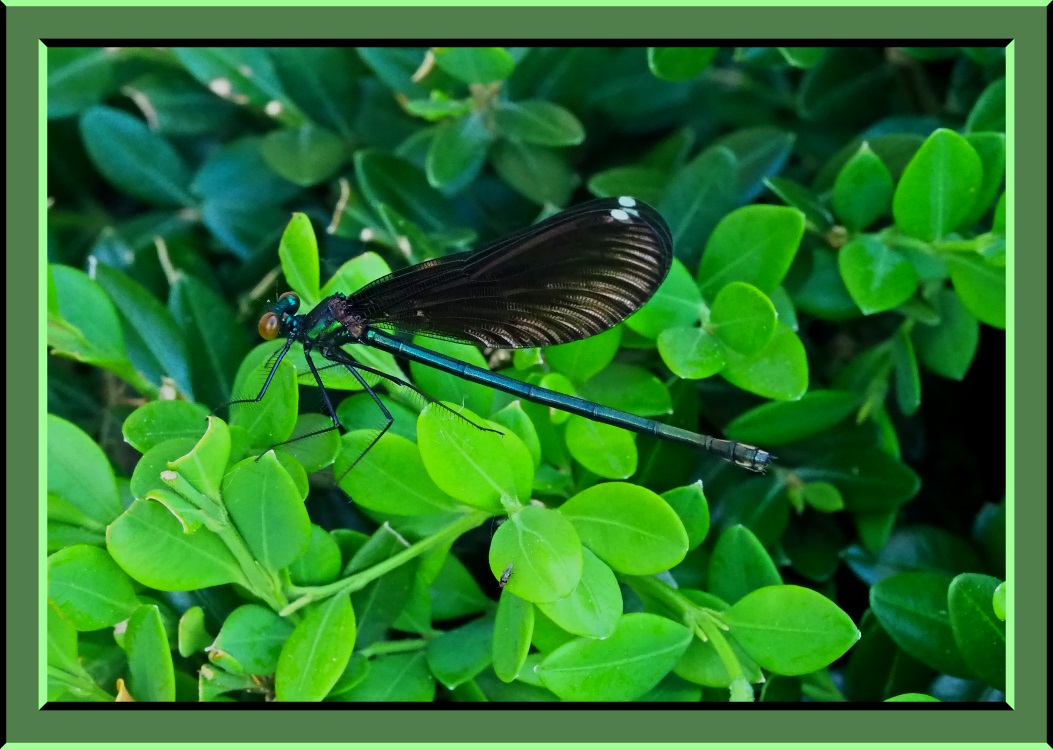
Ebony Jewelwing… Photo by Thomas Peace c. 2018

 

Post

The Story of Lo Zu and The Young Man

28 comments


An inquisitive young man, along with some of his friends, went to Lo Zu, and said,

“Every time that I look east, the birds fly east, and every time that I look west, the birds fly west;

every time that I look up the birds fly up,

and every time that I look down, the birds fly down.  What does this mean?”

After a very long period of silence, Lo Zu, the great sage, finally answered,

“One must keep one’s mouth shut when inquiring within.”


They finally hatched!    🙂

Mourning Dove Fledglings… Photo by Thomas Peace c. 2018


Post

Haiku of Death

22 comments


at my “final ending”
don’t waste a lot of tears
at what is just another beginning


Red Admiral Butterfly Metamorphosed… Photo by Thomas Peace c. 2018

Post

Our Nest Haiku

31 comments


a different kind of bird
a different kind of nest
too many hate you but i don’t


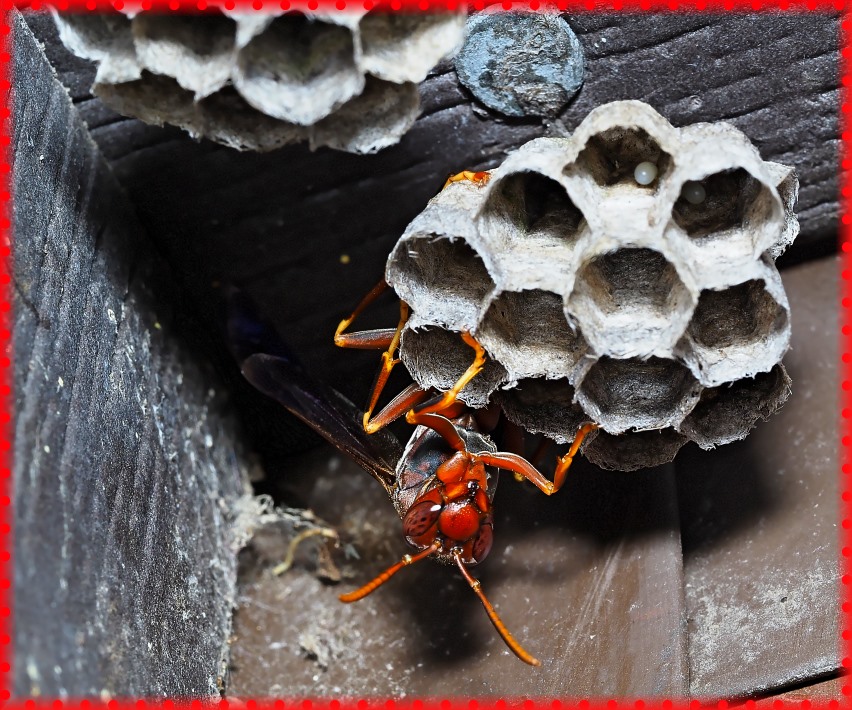
Wasp with Nest Eggs… Photo by Thomas Peace c. 2018
Post

The Way Flowers Were Meant to Vaselessly Be Haiku

12 comments


Not decapitated
Not put in a coffin-like vase
to beautify hell


Midges with Tulip growing Outdoors… Photo by Thomas Peace c. 2018
Post

Insights or Non- (Chapter 2)

28 comments


Intelligently go beyond what everyone has ever taught you about anything.  Reality is totally different from what society has thought it to be.

Much secondhand thought — and all thought is residual and secondhand — is an impediment to receiving direct insight, direct perception.

The caring, intelligent mind recycles and helps to keep our oceans more free of polluting plastics and unnatural debris.  The other kind of mind just doesn’t care.

True joy is walking through the woods, silently listening and effortlessly watching  — without separation — the creatures of nature. 

Forget beliefs!   Find out!

A closed mind, like a closed flower bud, isn’t there yet.

In compassion, there is no separate “you” and “I.”

Little birds who don’t joyfully tweet at the morning return of the rising sun… we call atheists.

Action and understanding are sometimes beautifully, wholly, one and the same thing; mere reaction, darkly, is not usually what involves deep understanding.


[Note:  Photograph is of tiny Spring Beauty Wildflowers (Claytonia virginica) in a wooded area.  Each flower is about 8 mm. (1/3″) across when it is fully open, consisting of 5 petals, 2 green sepals, 5 stamens with pink anthers, and a pistil.  The petals are white with fine pink stripes; these stripes vary from pale pink to bright pink.]


Spring Beauty Wildflower (Claytonia virginica)… Photo by Thomas Peace c. 2018
 

Post

The Poem of the Turning of the Key

28 comments


Once, I was the key and the turning of the key
Once, I was the lock and the unlocking of the lock
Once, I was the door and the opening of the door
Once, I was the light and the seeing of the light

             However, when the light was really seen,
             when the door was really opened,
             when the lock was really unlocked,
             when the key was really found:

There was no “I,” just the turning of the key
There was no “I,” just the unlocking of the lock
No “I” was there, just the opening of the door
No petty “I” was there, just seeing and infinite illumination


[Note:  This is another close-up of some Lichen on a small Oak branch.  I continue to suspect that the close symbiotic relationship between primitive algae and primitive fungus… such as in Lichen, tended to continue — because of its very advantageous aspects — throughout evolution with the higher evolved trees and mushrooms.  That is why, today, we are discovering that mushrooms and trees (and many other plants) share communication and nutrients with each other underground (even over vast distances).]

Lichen on small Oak branch… Photo by Thomas Peace c. 2018

Post

That Eternal Visitor

19 comments


It came when we weren’t expecting it to come
             beyond the moonlit glow
It came when we weren’t expecting it to come
             beyond the realm of know
It came when we weren’t expecting it to come
             such bliss energy and love
It came when we were not existing separately
             that eternal immeasurability from above


Budding Beginnings… Photo by Thomas Peace c. 2018


Post

Insights or Non- (Chapter 1)

15 comments


Most people are heavily conditioned by all kinds of absurd beliefs that divide them and that cause havoc in the world, especially beliefs involving nationalism, religion, politics, (and even science).  To question all beliefs, and to intelligently go beyond them, may be true wisdom.

First thing in the warm spring mornings, many birds sprightly sing to the joy of the new day, to the returning sun, and to the exhilaration of sharing! 

If many folks had Pinocchio noses, their heads would be perpetually tilted by the weight of their answers.

If you exercise the mind but not the body you are cheating a very significant and important part of what you are.

True divinity does not usually interfere with the natural laws of the cosmos… and that noninterference is, in a very real way, an expression of deep compassion.

On their way to the endearing burning candle of society’s tradition, people who look at the contrast between moths and themselves need not ignore the contrast within the moths themselves.

Divinity — though it happens very rarely in the very insane world of man — may enter and visit a very innocent mind… not ever the other way around.

Unfortunately, one doesn’t need to have “right education,” wisdom, halfway decent genetics, or even compassion, to be a parent.

Normality is a common type of insanity.

The truly intelligent human being is a blessing, not a malediction, in the lives of others and regarding the health of Mother Earth.


Desmia subdivisalis moth… Photo by Thomas Peace c. 2018

Post

ReBlog: of Francis’ poetry. I too dislike politics. This goes far beyond politics. People who turn their back on the environment are not going to hell; rather, they are a very unfortunate manifestation of hell.

6 comments

I find that I as time goes by grow weary of politics and all of the dirty tricks that the man in charge who by and large likes to pull because he is a fool a wealthy man in this land a one percenter a climate change hater whose only goal to get others to […]

via Politics — Life and Day to Day things by a Pond Lover

Post

Psychological Order and the fictitious “Center of Control”…

20 comments


Sorry to be harping on this but it is a serious thing that needs attention, despite all the avoidance that miseducated people have regarding it.  As was mentioned in previous postings, when one was very young, one had a Raggedy Ann type of doll whom one carried around as a great, first-rate pal.  Then, one day, one came to the realization that the charming, smiling doll was not a real, living friend; it was fabric, stuffing, and such.  It was quite a shock at first but then one got over it very quickly (finding other interests and discovering nature).  Later in life, perception concerning the ego, or “me,” was much the same thing.  Let us say, metaphorically, that a man carries a stick around (never letting it go and even sleeping with it) day after day, month after month, year after year — just as others taught him to do — all the while believing that it was his central self, or “I,” or “me.”  Stick would feel that everything decided upon and done by thinking was what emanated (or originated) from “stick.”  Stick would be thought of to be the core essence of what one was and any suggestion to “let go” of “stick” would be construed of as utter nonsense.  Letting go of what seems to be the core of one’s essence (and means of control) would seem ludicrous and unimaginable.

The human organism can function beautifully with great harmony, insight, bliss, eternity, and order without clinging to the taught concept of an isolated/controlling “me” or “I.”  Most everyone in society, now, has a concrete ego, isolated self, a “me” that they ardently cling to, just as has been done eons ago by our primitive ancestors.  Actually look at society as it is now — with all of these “me”s and egos — with all of its chaos, wars, crimes, dishonesty, and pollution.  We must change.  We must grow beyond this nonsense.   In previous posts, one wrote about the brain as being like two halves of a walnut… and about how certain surgeries splitting these two halves — by severing the corpus callosum — left each half not knowing what the other half was thinking.  So, in actuality, two fields of consciousness were produced from one field, via advanced surgery (in living human subjects).  Times and evidence have changed; yet so many of us continue to cling to the erroneous (primitive) notion of a central “I,” a central “me” or controller.  For a very long time now, one — when thinking, instead of using the term “I,” — has been using the words of “this movement.”  Of course, for the most part in this primitive culture, one doesn’t verbally say “this movement,” instead of “I,” when actually talking to people.

“I”, “me,” and the notion of a “central controller” are all products of thought (fabrications of thought) either learned or inherited by our culture over millions of years.  “Me” depends upon (and is) a product of thought.  Clinging to that is like perpetually clinging to a little stick, fabric doll, or shadow.  Going beyond that is wisdom that does not preclude joy, bliss, insight involved with the eternal, and harmony.  On the contrary, obstinately clinging to that creates guaranteed disharmony, sorrow, and separation.  Ignorance is:  Me separate from man or so-called others.  Me separate from the environment.  Me separate from “my fears.”  Me separate from “my desires.”  Me separate from “my thoughts.”  “My religion, my country” separate from others.  (It is all so immature and involves separation that feeds conflict, friction, and endless turmoil.)  

People will read this — or will not care to read it — and go on in their standard, ordinary ways.  Even those who claim to be employing sophisticated forms of zen or meditative techniques are additionally subtly entrapped via endlessly clinging to the “me” or “central controller” in many surreptitious ways.  The brain engages in all kinds of subtle or unconscious tricks to maintain the existence of a supposed central controller who is domineering (even though no such center really exists).  One has seen this, time and time again, in many so-called “wise” others… (who have really not changed fundamentally whatsoever).  Going beyond this doesn’t demand sophisticated methods, stratagems, or meditative techniques that take time.  This demands facing something that people absolutely do not want to face; additionally, it demands going into and beyond the root of conditioning.  Most don’t really want to be bothered.  However, actual order can only come about when real seriousness exists, beyond mere fabrications.   The stick is dead; it is not part of the living tree; it is not the whole.  The whole is living and is not what symbolic thought is capable of.  An immoral, violent, primitive society has given you a stick to depend upon.  Are you still endlessly carrying it around?  Are you still relying on it, depending on it?  (Actually, it is a virtual image, a symbol that we have taken to be something real — which is even less than a dead stick — but we won’t elaborate any longer at this point.)  Profound compassion is, on the other hand, real and living; profound compassion goes far beyond mere symbols, images, and borders.


Ringo Starr… Photo by Thomas Peace c. 2018
Post

The Human Condition

9 comments


We humans — most of us anyway — have a preoccupation with forms which rely on demarcations and which distinguish surfaces.  We react to parameters just as we were instructed to, and we are satisfied to allow our brains to remain within those circumscribed fields.  Even the so-called great scientists are immersed in the same methodologies and modes of perception and analysis.  Most conform to standard patterns, even when they think that they are sophisticated and free.  Most have been taught not to trust experience and feeling until they have passed through (and have been filtered by) the organizing chambers of rational thought.  Most, rather like computers, have become mere information processors and, therefore, pitifully impoverished organisms.  

We still — most of us anyway — have subject and object, self and other, man and nature.  Most have very separative minds seeing things fragmentarily (with separation and division).  Concepts and conditioning can never perceive the truth, yet most, even the professional scientists, remain caught within the realm of concepts and conditioning.  Such conditioning can be modified and can evolve some, but it will never perceive and understand the whole over time… and conditioning and evolution are time. 

Is it possible for the mind to change radically, such that it goes beyond all influence and all authority of the past?  Tribal authority is “the past,” the past which is old, stale, and antiquated.  Many can reason very cleverly, very precisely, about a lot of complicated things; but that reasoning inevitably is the essence of a background of a particular conditioning.  Truth can manifest when influence and conflict cease, but any methods, beliefs, or systems directly employed to get there will be an extension of the same old game.  There is no recipe, in time, that takes one to the timeless.  The fabricated/learned psychological self depends upon conflict and time — actually, the separate self is conflict and psychological time — and most people will likely not care to significantly end conditioning; most will want to remain in (and “as”) that conditioning, yet conditioning binds and is suffering.  True silence is deep awareness, a selflessness, a timelessness… and true silence is not what the conditioned mind can cause to happen at any particular point in time; the silence of awareness is beyond the self (and self-effort).  Most are afraid of allowing the self to come to an end psychologically.  Only in the nullification of the false is there the whole blessing of truth and real insight.  Compassion and that truth are not two separate things, as is the “perceiver” and “that which is perceived.”


clinging to surfaces… Photo by Thomas Peace c. 2018


in the heart of the tree… Photo by Thomas Peace c. 2018


Post

Changing

12 comments


Among the many “here”s
           within the many “there”s
           a confusion quite precisely
           drinking coffee stirred by nows

Within the trodden whiles
           absorbing many styles
           a delusion so pretentiously
           through dirty-window-hows

But then unfathomable why
           no shredded bits of get
           a sunburst of entirety
           a placid joyful yes

Like two white(fluffy) socks
           outside the darkest day
           an immeasurable perpetuity
           Untold poetry’s best


Shrooms … Photo by Thomas Peace c. 2018

Post

Distorted Mirror Distorted Mind

11 comments


A perfect mirror has no distortion.  It shows what is really there.  Can the mind be like that?

A distorted mirror, just like a distorted mind, twists things around such that reality seems askew and misrepresentation and untruth run dominant.  Fortunately, most people realize what the situation actually is when they are gazing into an intentionally distorted (circus) mirror.  Unfortunately, many people perceive via minds that are of distortion, deception, and perversion, yet they continue to think that they see things rightly.  Many of us put up a facade, for others to perceive, of what we want them to think we really are.  Many of us deceive not only others… but ourselves.  Society tends to instill various forms of distortion into the minds that partake in its offerings, and such minds then zealously accept such distortions and falsities as the truth.

Many people are overly concerned about how they (physically) appear to others.  Few people are prudently concerned about perceiving themselves as they actually are… internally, without any distortion whatsoever.  A mind that is passionate about going beyond distortion is a very scientific and spiritual mind.  It seems that very few have actually done it (i.e., gone beyond distortion) to any very significant extent. (There are ways to test this out, for accuracy; however, we will not go into that here.)  Great clarity and immense understanding are needed to see the whole.  Most, unfortunately, still function with (and “as”) symbols and fragmentary parts.  If the tools and the processes of the mind are distorted and partial, then the outcome — the results — will be equally askew, equally incomplete.  Before we accept and cherish methods to get out of this distortion, we should question whether they are possibly an extension or continuity of the same-old fallacies, which most are.

Without method, without depending upon the process of psychological time, is it possible for the mind to observe without merely utilizing the past tools (of symbolic thinking, abstraction, analysis, and image-building)?  Can the mind perceive without always carrying the burden of past formulations?  It may be the influential formulations of the past that prevent pristine perception.  We can be choicelessly observing with an intense awareness that includes all of the senses working harmoniously together as a whole, without limited thoughts always interfering… (and all thoughts are limited).

A mind that goes beyond distortion sees deeply.  Such depth goes far beyond the ordinary, far beyond the mundane.  Many cling (knowingly or unknowingly) to the ordinary, yet wish to experience what is beyond the ordinary.  What is truly beyond the ordinary may not at all be what can be categorized or placed into the realm of “experience.”  If an experience is recognized (as most are), it usually consists (more or less) of a rather mundane occurrence that the brain “recertifies,” “acknowledges,” and “classifies” via (and according to) prior memory images, prior mental retentions, and symbols.  Recognition and the reaction to things have their place, but so does an unadulterated awareness beyond mere reaction and conditioned responses.  Full enlightenment/satori — should it ever occur as a blessed visitation by that ineffable, holistic energy to a human being — may be far too immense for any kind of full mental grasping, retention, or remembrance (by the brain) to take place.  However, should it actually happen — and don’t be foolish enough to crave what you suspect that it might be — the brain will have recalled small snippets of that profound event, though what is retained is rather like mere shadows of the actual occurrence.  Great wisdom, unlike distortion, never needs to ask about whether the sacred truly exists.


Polished Jurassic Dinosaur Bone, with crystal fortification, from Utah (1) Photo by Thomas Peace c. 2018

Polished Jurassic Dinosaur Bone, with crystal fortification, from Utah (2) Photo by Thomas Peace c. 2018

Post

Thought and Thinking

44 comments


[2-26-18 Flood Update:

The river is receding well.  We are OK but have a ton of cornstalks in our yard.  I am elderly and have arthritis so may have to hire people to remove it.  Marla says that there is more rain in the forecast (coming soon).  We don’t have hydrophobia yet but we are getting there!

Excerpt from Emily Dickinson:

You cannot fold a Flood—
And put it in a Drawer—
Because the Winds would find it out—
And tell your Cedar Floor—     ]


[Note:    Update on our River Flooding:    The river remains very high.  Our house is OK so far, except for some very minimal water in a small section of our crawl-space that a sump-pump has been taking care of.  Many local rural homes and nearby towns are flooded severely, unfortunately.  Our neighbor told us that her son had to rescue his mother-in-law from her rural home.   Her son’s mother-in-law’s home is surrounded by water and is severely flooded within the living area.  At first, his mother-in-law refused to leave… much like the couple that i mention in my update within the Flooding posting that i submitted.  Please refer back to that recent posting for that update.  We had more severe rain last night for a time; i hope that that will not cause the river to rise; it shouldn’t.   Some large logs have been hitting the horizontal I-beams that support the nearby bridge, as the water level is so very high.  Thanks again to many of you for your heartfelt comments and concerns.]


Thought/thinking is always, as we have often said, an extension or protrusion from the old storehouse of memory.  Thinking is a form or representation and symbolism used in order to achieve desires and wanted outcomes.  Interestingly, when thinking occurs in (and “as”) the brain, it often exists (mimicry-like) as a sequence of words (which are a simulation of one’s actual talking voice); thinking can also occur as a sequence of stored images that are pictorially oriented.  Thinking is essentially all virtual; even the simulation of one’s actual voice, used as internal verbal thought, is virtual.  Yet so many of us cling to (and exist “as”) this virtual, spurious pseudo-reality. The essence of thinking is reaction, mimicry, symbolism, categorization, interpretation, restructuring, recollection, recognition, abstraction, and finding meaning.  Additionally, thinking can help with real curiosity.  Profound curiosity, however, goes beyond thinking and is never merely tied to any superficial motive (such as how to make more money).  It is interesting that those of us who think better than others are (oftentimes) given better (and higher paying) jobs.  Society tends to worship complex and intricate thinking.  Ironically, it may be that the wisest minds go beyond mere motive; it is motive (and robotic reaction) that corrupts the perception (the availability) of the whole.

What we are suggesting here is that, perhaps, it is not merely the most complex thinking mind (with the most thoughts) that is to be admired.  A mind that functions as thinking when it is necessary but that often prudently goes beyond thinking may (indeed) be admirable.   Unfortunately, the brain that thinks endlessly is a very mechanical, robotic, materialistic brain.  A prudent mind that often goes beyond thinking is not the opposite of the “endlessly thinking brain” but it is (fortunately) different.  Of the two aforementioned brains, one of the two endlessly depends on being reactions and on receiving endless stimuli to feed those reactions.  The other of the two often goes beyond the realm of “reacting”; interestingly, it can — and does — function as awareness without the need for exclusively being reactions… without the need for exclusively categorizing endless stimuli.  One of the two craves experience in order to function.  The other of the two partakes in experiencing but also can function without mere dependence on experience.  Of the two, one must stay — and endlessly remain — within the field of the known.   The other of the two dwells in the field of the known but is not merely tied to that very limited domain.   All thoughts are fragmentary symbols, and the essence of the sequential arrangements that they are always involves limitation.  Profound curiosity — if it really has true depth — is not foolish enough to be satisfied with remaining in (and “as”) a limited domain.   Not enough of us question the essence of the domain that we function in… and not enough of us intelligently consider going beyond the domain that we function in; the domain we are referring to is, of course, “thinking.”  The mind can be fully aware, alive, and sensitive without needing to rely on thinking and time (though often, of course, thinking is very necessary).  Mere constant recognition is, each and every time, limited reaction as part of motives.  Each and every limited reaction with (or “as”) a motive is inaction regarding holistic perception; this inaction denies that holistic energy. 

The known cannot penetrate into (and understand) the true unknown.  The unknown, however, can flower within a mind that does not merely exist as endless reaction (i.e., endless responses of the old); a sapient mind often does not merely function with (and “as”) the known.   Deep insight and profound enlightenment/satori can only occur when the known is not functioning (as the old repetition and habitual sequence that it is).  What is truly new, what can never be recognized as the same thing over and over again, can never be experienced by the old past (i.e., by the known).  The dead known can never enter into the measureless and timeless beauty of the living unknown.  What is fallacious cannot remain what it is and enter truth. 

The beauty of real mindfulness and meditation is that they are not what can be practiced via any methodology.  All methodology relies on the known and exists within the field of time.  Time is not a path to the timeless; measure is not a means to the measureless.   Mere experience (or trying to go beyond experience) is not a path to that sacredness that is beyond all the senses. 


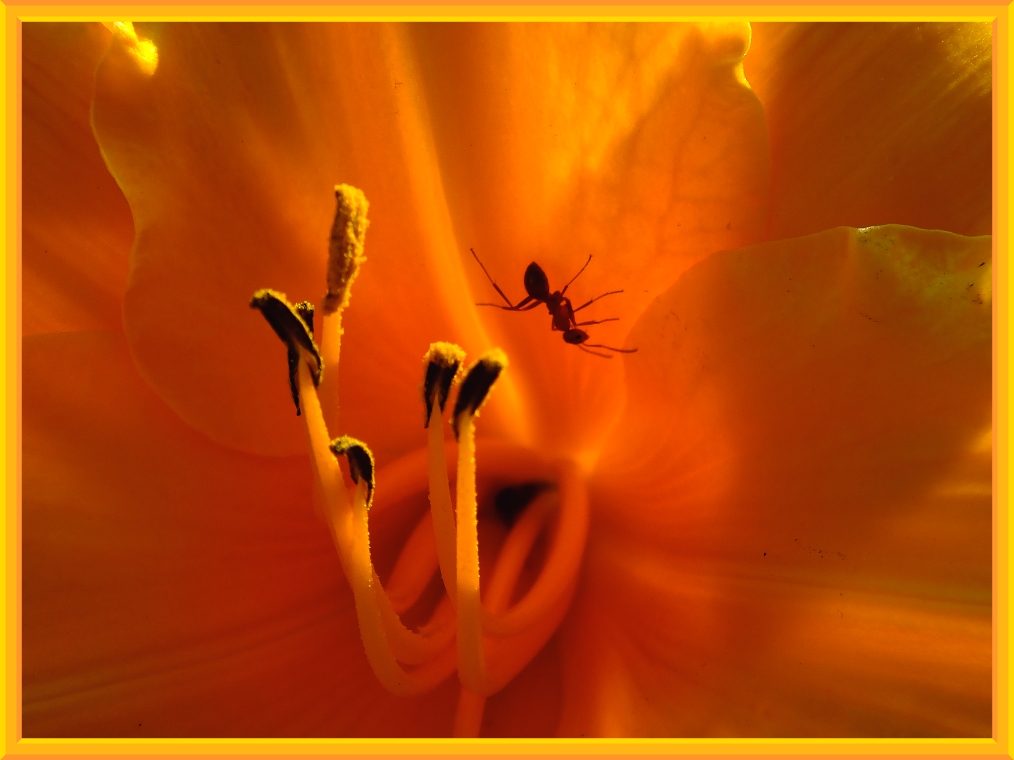
Curious Ant (1) Photo by Thomas Peace c. 2018

Curious Ant (2) Photo by Thomas Peace c. 2018
Post

Glas Kristall Garten

11 comments


When lucid ways mutate into wing
             in a glass crystal garden
there
             where four legs not six legs cling

Only a short mayfly shimmer of time
             in a lush limpid garden
where
             fragile crystalline things hang and delicately rhyme

If all of the mirrors vases and glasses went crashing
             in a perfect world so wonderfully and glaringly clear
there
             would always be your beaming beauty ever so smashing


Crystal Winged Mayfly (1) Photo by Thomas Peace c. 2018

Crystal Winged Mayfly (2) Photo by Thomas Peace c. 2018

Post

Knowing Yourself…

21 comments


There have been blogs, by others, wherein they write all about themselves.  They write about their likes, special preferences (such as favorite foods, books, and movies), social relationships, and so on and so forth.  Others write about the need to love oneself; they write about the beauty of really caring about oneself (first and foremost).  

What is oneself?  Most of us, one suspects, were educated to see the self as we were all programmed to see it.  This education is often very similar to the education that other countries have stuck to in the past, even the one which Adolf Hitler emerged from (who, by the way, loved himself dearly and who passionately encouraged others to adore him too).   

So, what is the self?  Is the self an autonomous entity separate from the environment, the whole, the rest of mankind, the animals?  When a person says that he knows himself, what does he — actually — know?  Is such knowledge a lot of recalled patterns of bygone preferences, tendencies, opinions, images, and methodologies that have occurred in (and “as”) the past?  Recalled patterns (of the past) are from the storehouse of memory.  Recollections, from (and “as”) that memory, are always old (i.e., of the past), limited (i.e., snap-shot-like), partial, and (therefore) incomplete.  Those recollections of self, additionally, are heavily influenced by the past education and culture in which one was raised.   One’s fundamental conceptions of self were poured into one (and absorbed) during one’s youth.  Recollections and labels “about the self” are always of the past.  They are images or linguistic symbols from (and about) “what was.”  

Many people feel empowered by an elevated sense of self.   Many are enamored about themselves and they write about themselves a lot (either positively or negatively), or they are very obsessed about their physical appearance.   However, the self may not necessarily be what society has had each of us accept and take for granted.   There is a very good chance that a lot of primitive miseducation has taken place for many years.  

Unfortunate is the man or woman whose self is a fenced in, segregated, walled-off conglomeration of past images and symbolic thoughts convinced that a special space isolates what they are (or what “one is”) from the rest of life on earth.  Being walled-in is a surefire recipe for depression, no matter how financially fortunate one’s life has been, no matter how wonderful one may (superficially) think one appears physically.  To have private dominion apart from the rest of life, as something special and separate, is no cup of tea that real perception is interested in sipping.   It may be that real liberation does not come from coddling and worshipping the isolated self, as so many immature and egocentric people tend to do, but (instead) comes about when the self is understood and joyfully transcended.   The circumference around an egocentric mind is always limited, primitive, self-concocted via absorbed patterns… and is standardized, mediocre, and regimented.  Most people are very immersed in (and “as”) such a circumference; very few of them will care anything whatsoever about prudently going beyond it.  A limited, walled-in circumference inevitably brings sorrow.  All of the psychological therapy and superficial entertainment in the world will not put an end to that sorrow.

Instead of coming up with notions about “oneself,” go out (for an enlightening change) and perceive without the separative boundaries and isolated perspectives that were implanted in (and “as”) the past.  Is the perceiver so very separate from the perceived?  Walls of delusion may experience a lot of things; however, walls of delusion will never understand and see the uncontaminated truth and the eternal.   Real understanding, bliss, and balance are not of dead limitation, stale recognition, and segregation.

From the poetry of Stephen Crane:


The sage lectured brilliantly. 
Before him, two images: 
“Now this one is a devil, 
And this one is me.” 
He turned away. 
Then a cunning pupil 
Changed the positions. 

Turned the sage again: 
“Now this one is a devil, 
And this one is me.” 
The pupils sat, all grinning, 
And rejoiced in the game. 
But the sage was a sage. 


Super Thin Model (1) Photo by Thomas Peace c. 2018

Super Thin Model (2) Photo by Thomas Peace c. 2018


Post

Two Different Minds

22 comments


When wily mediocrity mingled

           impressing dozens of cadaverous friends

When superficiality stagnated

           content with parts and very dead ends


Where innocence’s insight fully flowered

           near caring doubt’s entwining now

With timelessness everlastingly

           not separate from the whole of life somehow


Soldier Beetle in Chives (1) Photo by Thomas Peace c. 2018

Soldier Beetle in Chives (2) Photo by Thomas Peace c. 2018

Post

Group Mentality

30 comments


Scientists say that we evolved from fish (over millions of years of evolutionary time). Many fish remain together in large schools.  We, as human beings, still cluster together in groups (often, just as the fish do, out of fear or out of the desire to be associated with something more substantial). When one “belongs” to a sizable group, it allows one to identify oneself with (and “as”) something larger and (apparently) much more significant. One identifies with (and becomes) the group. “It is ‘my country'”… which is so vast, powerful, and beautiful… and, so they say, “It is what I am willing to die for.” The aforementioned sentence is a typical thing stated often in various countries, each thinking that their ways and systems are better and more righteous.

Similar things happen with political parties and organized religions. Each person identifies with that large organization (which takes him away from his obscure, unsung, little self). Or, similarly, one identifies with one’s images of God; one identifies, then, with images (that one is) of something powerful, large, and almighty. People identify with something larger that is (they believe) “protecting them,” keeping them safe in a world of full of disorder and chaos.  Some people — full of indoctrinated prejudices — exclusively identify with their race, culture, political group, or family units (apart from all others).  Often, unfortunately, it is mostly about their race, or their culture, or their political group, or their family… and the rest can (more or less) go to grass.  Few of us identify with the little, poor woman or man who labors all day in the vegetable fields under a very hot sun and who gets next to nothing for payment; few actually see a little, defenseless animal as a reflection of the whole.  

Many of our man-made groups, however, are usually not as safe or as necessary as we have been lead to believe. People clinging to individual countries and religions have created wars (against each other) for millennia. People have fought about their different projections of God — and about their little idealistic groups and separate systems — for eons.

Fortunately, there are those who see beyond mere boundaries and groups and who simply help all others.  This affection and care for all others goes beyond the realm of humans and extends into the beautiful realm of animals and plants.  Some help, with real action, not for mere monetary reward but, instead, because they have real love in their hearts for all (beyond what any herd-mentality dictates).  

Can real intelligence stand alone? Without being a hermit, can one not identify with — or belong to — anything (i.e., to anything that, through limited groups and systems, separates man)? It may be that real and lasting peace may come when we go beyond the limited groups, systems, and images that we — so robotically — identify with. The mind that is seriously and intelligently aware transcends separative borders and, hence, goes beyond conflict.  (This “going beyond borders” goes beyond mere external borders and, additionally, involves transcending internal borders, false separation, and internal mental conflict.)  Such a mind, if it is truly intelligent and pristine, is beyond belonging to separative groups that cause havoc, friction, and indifference in the world.  (Our inner conflicts and separations project out into society as outer conflicts and separations.)  Prudent emptiness (which is freedom beyond being lead) — beyond crude traditions and beyond images of the past — does not need to identify with anything. Humility and real innocence need not clutch at (and identify itself with) something “larger.”  Profound innocence is a vulnerability that does not merely turn to violence (i.e., violent ways) to achieve continuity.


Group of Aphids (1) Photo by Thomas Peace c. 2018

Group of Aphids (2) Photo by Thomas Peace c. 2018


Post

Purity beyond Corruption

22 comments


We twotogether as one

          beyond the red insidious wars

          and wrinkled reasons that send sweet smooth youth to die

We touch sweet nature and are sweet nature

We do not travel on polluting jets or diesel cruise ships to visit and 

          see distant nature

We are softly purely content with what and where we are

          (truly close to nature)

And where we are is together

          purely together beyond hard human hypocrisy and

          adulterating contamination

We twotogether as one


Twotogether as One (1) Photo by Thomas Peace c. 2018
Twotogether as One (2) Photo by Thomas Peace c. 2018

Post

Perceiving with True Innocence

16 comments


To look with real innocence is to look, to perceive, with (and “as”) a pristine purity that is uncontaminated.  Looking with what is jaded, distorted, and fallacious, of course, certainly won’t cut it.  Many have assumed, with their preconceptions, that they observe correctly and rightly.  Many end up in conflict, worldwide, over what they consider is right… religiously, politically, economically, nationally, socially, and within the psychological realm… all this involving limited, sequential (learned) patterns.  Multitudes cling to their patterns, their traditions, their customs, their absorbed ways of seeing the world according to the programming which they were taught (from fragmentary groups).  The world ends up with conflict, friction, wars, and endless bickering (as is currently going on).

Some of our learned patterns have been useful medically and also somewhat within technological realms.  However, beyond that, psychologically and such, we have clung to traditions, beliefs, precepts, and patterns that tend to cause friction, separation, and conflict.  The question is:  Can one, without needing time, wash the slate (of the mind) clean so that one can look purely (without what one, psychologically, has accumulated)?  However, who is going to do the cleaning?  Is the “cleaner” actually separate from what is being cleaned?  If the cleaner is not really separate from the content of the rubbish (that needs purging) will the cleaner be cleaning according to the content that was previously implanted in (and “as”) his (or her) consciousness?  Can the conditioned mind perceive that the very images of self and of psychological control may be part of the content, part of the conditioning?  Since all (conditioned) beliefs, precepts, psychological traditions, and customs take time — including the supposition of a special internal center controlling thoughts from some kind of psychological distance — can the mind look without time (without depending on sequences of conditioned patterns)?  This would mean that the mind would look without functioning with (and “as”) past accumulations.  All accumulations from the past are “from time” and “involve time.”  To innocently perceive — without any fallacious center (that takes distance and time to look) and without any limited, accumulated, sequential patterns that were absorbed — does not require time… does not require practice.

One cannot practice meditation.  One cannot practice real love.  Both involve an intelligence beyond time and sequential conditioning.  It may be that real innocence exists when there is no psychological “me” put together by accumulated boundaries, separations, images, and traditions formulated of limited (symbolic and sequential) thoughts.   It has been accumulated boundaries, separations, and traditions that fabricated images of the “me.”  The limitless of eternity is never seen by any conditioning that is limited, bounded, fragmentary, and that is merely an accumulation within (and part of) a learned sequential movement through (and “as”) space/time.  Insight is beyond the accumulated.  Insight is beyond the limited.


On the River Bank … Photo by Thomas Peace c. 2018

Post

Directionlessness

13 comments


All of us function, in life, with regard to various motives.  We react in (and “as”) conditioned responses involving these motives.  Each motive gives us a certain direction to move in; we follow these specific directions, based on motives, throughout life (just as we were taught to).  Very few of us have considered directionless.  Very few have inquired into the possibility of perceiving without being constantly influenced by motives or directions.  Each of us has motives and directions that each one clings to and functions from, (even the so-called great scientists).  Often, these motives conflict — with the motives or directions of other people — and friction ensues.  Desire and greed are often involved with the motives that people have (and desire and greed tend to function from — and “as” — the reactions that they are psychologically).  One’s mind, too, can harbor conflicting motives… conflicting directions to pursue or go in.

A very wise mind, however, is involved with a measureless directionlessness.  To observe purely, without tainted motives or covert conditioning influencing what is seen, requires a highly unprejudiced mind that does not merely perceive via fragmentation and limitation.  Looking in a certain direction — which most all of us tend to do — by its very action (or, rather, reaction) precludes other directions and is always limiting and partial.  Even precise scientists are limited — in their own fields and by their own (learned) processes, habits, prejudices, and procedures — and most would likely laugh if one suggested that they consider directionlessness.  However, a truly sagacious mind would perceive the limitation and fragmentation that motives and directions inevitably bring with them; such a wise mind may then go beyond mere motive (and beyond mere direction).

A mind that perceives beyond merely having a “motive” or “psychological direction” must be a very dynamic mind.  To look (at times) beyond mere motive or beyond specific desire takes tremendous intelligence and great purity.  Directionless is not a stagnant state that one mesmerizes oneself in; rather, it is a causeless explosion of awareness without mere motive and without the influence of psychological conditioning.  It truly is an explosion without any cause.  It is a movement without any direction.  Greed and desire have nothing to do with it; greed and desire are of motive; greed and desire always involve a specific direction.

There is a vast difference between a mind that often is of directionlessness and a (common) mind that always functions by way of motive and direction.  Of the two mentioned in the aforementioned sentence, one of the two always (without exception) reacts (via motives and directions set up by limited influences); the other, of the two — though it also often reacts and is choicelessly aware of the reactions — may often go beyond that… such that it exists with (and “as”) motiveless perception (beyond borders).  Only one of the two can ever perceive and understand the whole (instantly, without mere sequential process); the other must be caught in time-bound, sequential parameters that manifest as fragmentation and limitation.

The beauty of real ecstasy occurs only when harmful (i.e., fallacious) ways are finished while true joy blossoms without motive. 


Jagged Ambush Bug in Cone Flower (1) Photo by Thomas Peace c. 2018

Jagged Ambush Bug in Cone Flower (2) Photo by Thomas Peace c. 2018