
Why
dew
sew
many
cling
two
the
s
u
p
e
r
f
i
c
i
a
l
?

Rose Chafer… Photo by Thomas Peace c. 2018
Why
dew
sew
many
cling
two
the
s
u
p
e
r
f
i
c
i
a
l
?
Rose Chafer… Photo by Thomas Peace c. 2018
Many people do things habitually, mechanically, without thinking, without much awareness, in very robotic ways. The mind gets used to functioning in (and “as”) habit; dullness, and incessant routine set in, making the mind more and more repetitive, more and more machine-like. People get so used to repeating the same set of routines day after day, month after month, year after year, such that they hardly know (or try) anything different. (Air-polluting, fossil fuel spewing vacations aren’t a way out of this, by the way.)
Many people mindlessly and habitually cling to what they were taught, religiously, politically, nationally, ethically, socially, culturally, at home and in the office. To them, “THIS IS THE WAY THINGS MUST BE DONE,” and that is that. Then they remain teaching their children to dwell in the same grooves, to function in the same patterns. Anyone who questions the status quo is considered a trouble-maker or some kind of freak and is cast out. It may be, however, that, in such an atmosphere, true creativity and true “aliveness” is squelched. In such an environment, the truly insightful and the truly creative person is considered an oddball.
Be one of the lemmings if you want to (like most want to), but as for that… well, it’s not for me. Like Einstein, i don’t give a rat’s behind about “fitting-in” or about superficial appearances. It’s the deeper things that matter, and you can’t go deeper if you are stuck in superficial paradigms and one-dimensional routines.
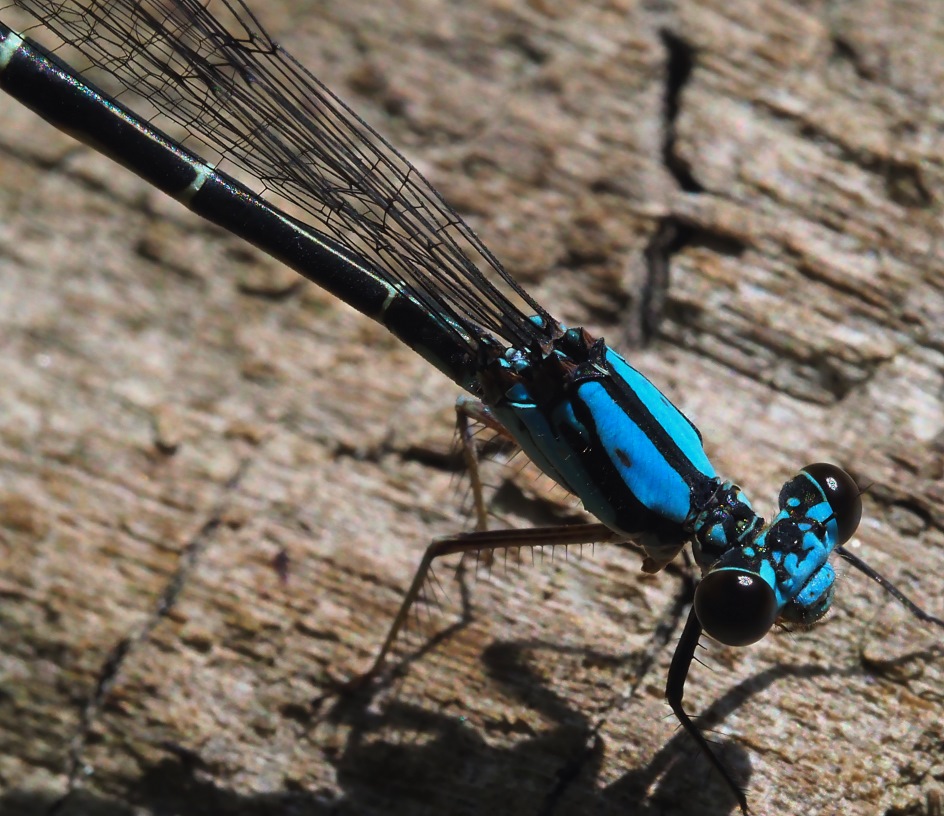
Blue Damsel… Photo by Thomas Peace c. 2018
Comparison is often such a vulgar and unnecessary thing. Many people, throughout life, continue to habitually compare themselves with others. Those “others” are often very standard, ordinary, bourgeois, and dull. People compare their home, livelihood, lifestyle, and overall life, with others. Comparison invites imitation; imitation reinforces “second-handedness” and conformity to formulated, standardized “set patterns.” Fear often emanates from comparison… “Will I be as successful as them?” “Am I too different?” Comparison often paves the way to jealousy and superficial showing-off and boasting. (Some people, for instance, go ga-ga, trying to have the hugest and “most pretty” home; this is so childish and superficial.) Taunting another may often involve comparison. Comparison thrives in the world of the opposites (where differences are often magnified). Comparison can make the mind dull; it can be what nourishes mental sorrow.
The wise mind can exist where comparison is seen for what it is and where it is put in its appropriate place (where its limited aspects are seen). Such a mind can be of a profound joy where comparison does not often needlessly enter. When the mind compares, the mind is comparison (within the limited corridor of the opposites). Uniqueness and spontaneous insight usually do not ever depend upon comparison. Comparison and contrasting correlations can be very useful at times, but the mind need not depend upon them as deeply as it usually does. Perceiving directly, without employing comparison, is often very significant and profound.
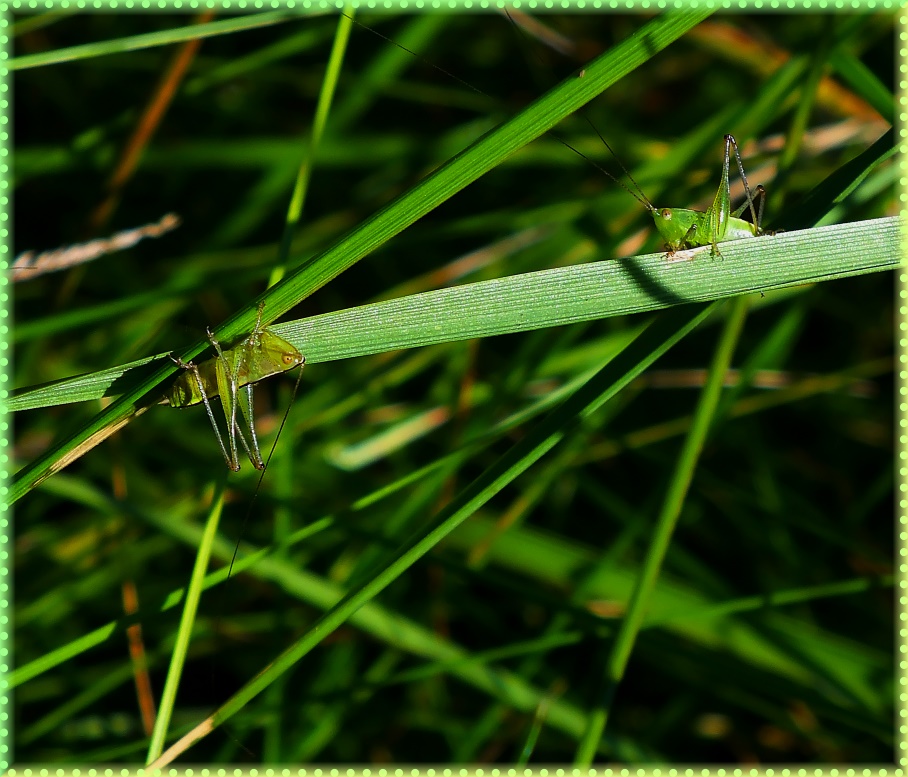
No need to compare! Photo by Thomas Peace c. 2018
“I want happiness,”
said the greed to be happy.
Joy is motiveless.

Magnificent Milkweed Flowers… Photo by Thomas Peace c. 2018
Few of us, so very few of us, have deep, immeasurable space within (and “as”) the mind. Most minds are endlessly chattering about one thing or another, filled with series after series of limited thoughts (which are merely symbols), images, fears, opinions, musical tunes, and past experiences. Most minds are satisfied with remaining cluttered by what was poured into them. Most go from one series of reacting thoughts and repetitive reconfigurations to another… endlessly. Being satisfied with that is the norm, and that leads to depression, melancholiness, and division.
This space — of thought — which most people adhere to, and consist of, is of limitation. It is the small space of fragmentary symbols, which thoughts actually are. It is the little space between “self” and “other life forms.” It is the fallacious space between a supposed “me” and the so-called distant thoughts that it allegedly controls. It is the space between the past and the future. It is the space between “us” and “them.” It is the little space of sorrow.
Remain plastered there, if you wish. However, it may be most prudent to intelligently consider going beyond the norm. Will going beyond the norm necessitate more methodologies (from the stale past of the old teachers and religious/philosophical/political leaders)? Will going beyond the norm require following certain patterns in time, as in the ways we have merely functioned in throughout the past? Surely not! Love cannot exist deeply and profoundly if limited patterns and limited space crowd the mind. It is the mind that is full of walls of separation and limitation that is the prejudiced mind, the hating mind, the callous and uncaring mind. Love cannot enter what is limited, fragmented, contaminated, and “unwhole.”

Perpetuity… Photo by Thomas Peace c. 2018
The separation of the inner from the outer involves standard perception which largely involves misperception and barbaric acceptances. Such misperception involves conflict, separation, isolation, and distinct borders. A prudent entity who intelligently transcends mere inner-outer frameworks of perception is not a dull mind that walks into walls or that steps into busy traffic. Rather, such a person exists beyond old and cadaverous viewpoints and worn-out, primitive perspectives. Only such a person can be of real order; only such a person can be fully genuine, deeply compassionate, and of vast integrity and virtue. (By the way, idealistically saying that one is “one with nature,” which is all the fashion these days, is not it! A limited, fragmented mind can easily identify itself with anything, but it still remains a fragmented mind.)
Thought and stored memory feed the separation of the inner from the outer. Too many of us worship a false inner and are indifferent about the vast outer. A separate perceiver cannot be the complete understanding of the whole as long as the fragmentary self-projected images and thoughts of an isolated, independent observer are maintained via learned effort. Any state of opposition, such as what a concocted, separate “0bserver” brings about, further nourishes indifference and isolation. Thoughts and “image making” form the perceiver, and without thoughts and mental images, without repeated effort and psychological struggle, the perceiver would not be. The psychological ending of the so-called separate perceiver is not something to be frighted of; the true ending of limited images, symbolic patterns, and accepted barriers is not frightening; rather, it is liberation and involves profound insight. Holistic insight does not occur often for conflict and misperception.
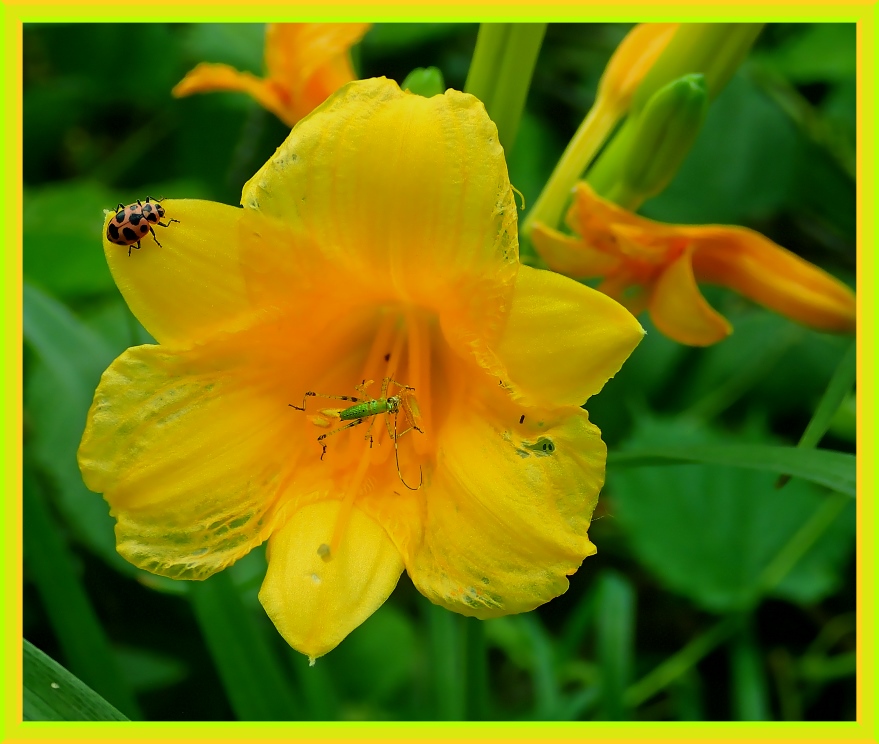
Katydid Nymph and Ladybug… Photo by Thomas Peace c. 2018
an impressive this and that
a revealing why and how
won’t make the superficial mind much deeper
we might see that by now
a reading left to right
some judgment up and down
will not make the world much saner
or dissolve the patterns to which we’re bound

Young Leafhopper (around 4 mm long)…. Photo by Thomas Peace c. 2018
Physically, there may be a bridge to a better future. One can eat more healthfully, exercise more, and do things to improve the environment, including building wonderful bridges. Internally (i.e., psychologically), is there really a bridge, and who is going to cross that bridge? Is the bridge different from what one is?
Is the “experiencer” really something separate from the experience? If there were no experiences, what would the “experiencer” be? So many of us, like infantile children, want more and more pleasurable experiences. Can there be moments when a sagacious mind exists without merely depending upon experience after experience?
If anger takes place, can it be looked non-fragmentarily — without manufacturing separate ideals — so as to be fully aware of it (without separative space and time)? Can there be moments when the mind (without excuses) fully sees what it is directly and with full awareness, without concocting notions of something different (that requires space and time to achieve)? If cruelty exists, and ideals manifest of “someday not being cruel,” is the non-cruelty an actuality or is it a mere abstraction (or escape) that depends upon fabricated psychological time?… and may it be that fabricated time (with its space) fails to see cruelty instantly and fully for what it really is? Is the thinker really something separate from thought, or are they one and the same? Is psychological time often an escape depending upon fragmentation, fabricated space, a mentally fabricated separate “I”… and, also, a postponement?
These questions are here for you to ask yourself; they do not exist for you to reply here with any answers.
from Emily Dickinson:
There are two Mays
And then a Must
And after that a Shall.
How infinite the compromise
That indicates I will!
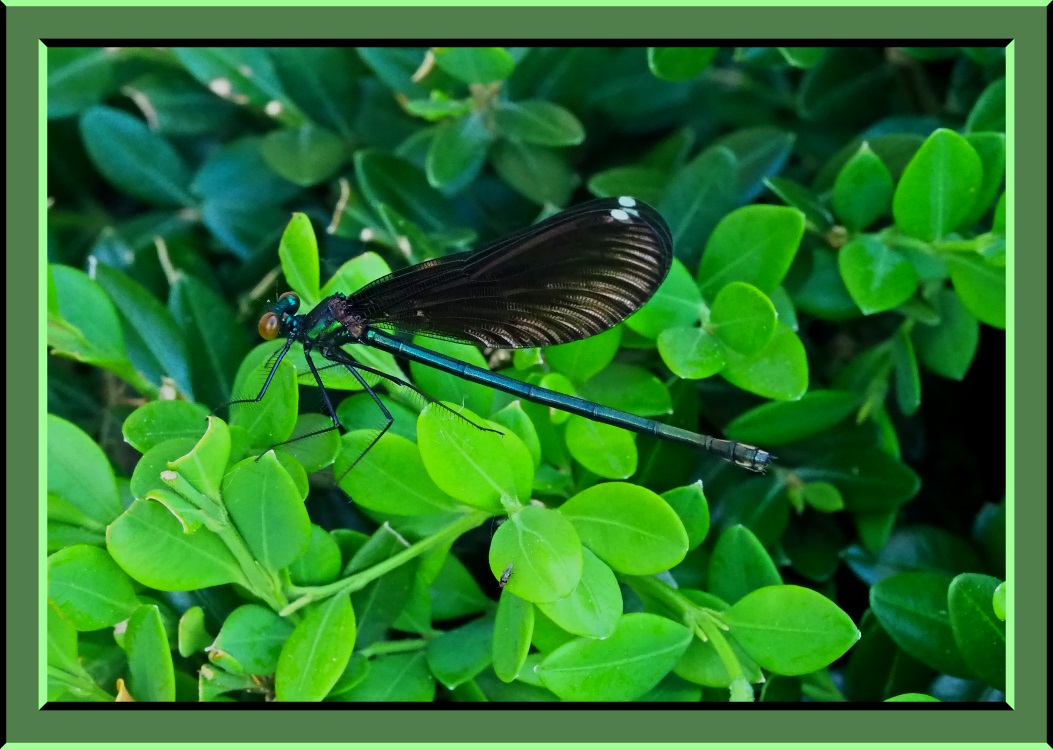
Ebony Jewelwing… Photo by Thomas Peace c. 2018
A totally different dimension of mind can take place. What nearly all people take to be reality is a far cry from what truly exists (beyond delusion). Most are walking around oblivious to what is really possible. They have accepted secondhand images, secondhand patterns, secondhand symbols, dissected labels, measurements, and cold statistics to be their reality; such reality is akin to taking shadows to be concrete substances, toys to be living things, silly iPhones messages to be substantive. Even our images of self are essentially secondhand patterns that we have assimilated and absorbed. Then, these images of self are involved with images of another (a spouse, for instance); one set of images is involved with what are considered images of another. A (relationship between secondhand images of self and — then, also, down the road of psychological time — secondhand images of another) may largely be based on learned, sequential patterns (of recognition and categorization); such a programmed arrangement (based merely on absorbed patterns/symbols/images) may not be much of a relationship at all. It is a relationship of secondhand patterns. What kind of relationship is that?
Life is tremendously much more profound and deep than what learned symbolism, categorization, and information processing are involved with. If you just stick to those three, that the previous sentence mentions, what you are is likely normal… but you certainly may not be what goes beyond the superficial. People all throughout life are all too willing to tell you how to think, what to do, how to live. So many, blogs included, want to give you spiritual templates, philosophical instructions. There are infinite “expert non-experts” out there; just today, one saw a blog wherein the author stated that to fix our life problems, we have to find the right templates, the right instructions. It may be, however, that real life is much too vast, flowing, multidimensional, and alive for any set of cooked-up “shoulds,” instructions, blueprints, or stale templates.
You won’t be getting any die-hard templates from me. It may be that the timelessness of real wisdom exists only when self-concocted effort and struggle cease (psychologically). Such ceasing involves an ending that doesn’t take time, that doesn’t rely on blueprints, instructions, or processes. Most, however, are frightened about psychologically coming to an end (i.e., about psychological dying); most continue to cling to potty little images of self. Therein lies sorrow; the irony is that, without psychologically ending, their sorrow will never really end. Many of us merely depend upon (and exist “as”) patterns and symbols. Be certain here that we are not at all suggesting ending physically; physical existence is an opportunity and a privilege that can involve keen (unspoiled) awareness and dynamic flowering. Physical death is not for me (except for the wonderful fossils that i collect). Psychological dying, however, is a whole other ballgame. The psychological dying to stale, secondhand, dead symbols and images is real living.
from E.E.Cummings:
dying is fine)but Death
?o
baby
i
wouldn’t like
Death if Death
were
good:for
when(instead of stopping to think)you
begin to feel of it,dying
’s miraculous
why?be
cause dying is
perfectly natural;perfectly
putting
it mildly lively(but
Death
is strictly
scientific
& artificial &
evil & legal)
we thank thee
god
almighty for dying
(forgive us,o life!the sin of Death
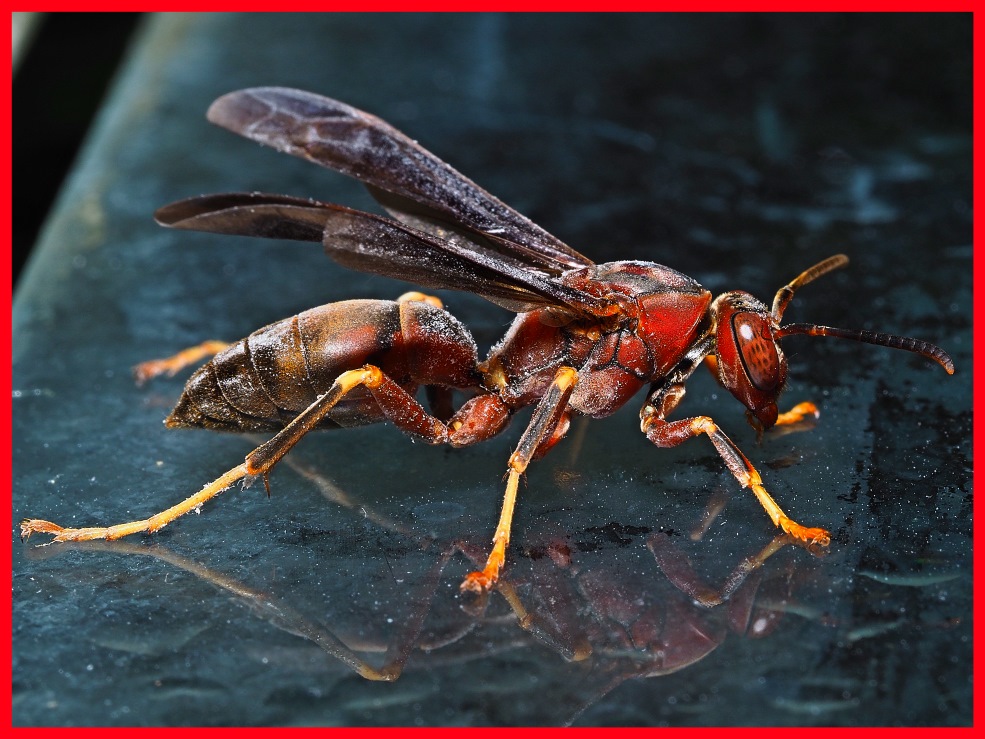
Wasp reflecting deeply… Photo by Thomas Peace c. 2018
If psychological fear occurs and one tries to avoid that fear by indulging in all kinds of escapes, then the fear is never understood. If one tries to suppress or subjugate the fear, then the fear is never fully understood… one is too busy being in conflict with it. If fear arises and one has ideals about oneself being fearless, then those mental ideations prevent one from actually seeing the fear completely (because ideals and learned principles are getting in the way). So, when fear arises, merely labeling it as something negative, or merely judging it in a “thumbs down” kind of way, clouds the full perception of the fear with secondary, learned reactions concerning it or against it. Fear can only be profoundly understood when it is seen without extraneous factors, without learned reactions “about it.”
Additionally, if the fear is merely seen fragmentarily, from a (learned) mental distance, then it will not be fully dealt with without friction and conflict. Fear may not at all be what you have; fear (when it occurs) is what one actually is. When there is no crass distance between the fear and some accepted, supposed center, then (and only then) can there be understanding without friction, without conflict; that understanding can be whole and of great intelligence. The perceiver is not, psychologically, separate from the perceived. So, the next time fear, jealousy, greed, or indifference show up in (and “as”) consciousness, can they be observed without prejudice, without merely labeling them, without denying them, without merely categorizing them with additional reactions (positive or negative), including reactions involving a separative space between the perceiver and that which is perceived? Only then can deep learning and understanding take place.
You can’t understand something fully if you have no true relationship with it. A relationship based on shadow-like ideals, concocted distance, and a learned and admired (though false) center, is really no relationship at all. True and lasting compassion can only take place when real relationship exists.
[Note: The following two photos are of early spring beginnings of mushrooms. The lower photo is of the mycelium which is, by and far, the main body of the mushroom (which grows underground). The mushrooms we see above ground are merely the small, fruiting parts of the organism. Mycelium — much like a neural network — in some mushrooms can spread for miles and connect with tree roots and other plants, trading nutrients and communication signals with them. (See the movie Avatar.) My theory is that primitive lichen, as a combination of molds and algae working symbiotically with each other… may have later evolved over time into these seemingly separate (but very connected) mushrooms-trees-and-plants. The diminutive Lemon Drop Fungi (Bisporella citrina) are fruiting body parts of the mushroom; the Mycelium pictured are from these Lemon Drops. The Lemon Drops are very small, each being only 1mm to 2mm in diameter. Refer to the following blog for further interesting information on Mushrooms: http://www.jingagustin.com/TheMushroomProject/mushroom-anatomy/ ]

Mushroom Primordia Caps… Photo by Thomas Peace c. 2018

Mushroom Mycelium… Photo by Thomas Peace c. 2018
Most people are heavily conditioned by all kinds of absurd beliefs that divide them and that cause havoc in the world, especially beliefs involving nationalism, religion, politics, (and even science). To question all beliefs, and to intelligently go beyond them, may be true wisdom.
First thing in the warm spring mornings, many birds sprightly sing to the joy of the new day, to the returning sun, and to the exhilaration of sharing!
If many folks had Pinocchio noses, their heads would be perpetually tilted by the weight of their answers.
If you exercise the mind but not the body you are cheating a very significant and important part of what you are.
True divinity does not usually interfere with the natural laws of the cosmos… and that noninterference is, in a very real way, an expression of deep compassion.
On their way to the endearing burning candle of society’s tradition, people who look at the contrast between moths and themselves need not ignore the contrast within the moths themselves.
Divinity — though it happens very rarely in the very insane world of man — may enter and visit a very innocent mind… not ever the other way around.
Unfortunately, one doesn’t need to have “right education,” wisdom, halfway decent genetics, or even compassion, to be a parent.
Normality is a common type of insanity.
The truly intelligent human being is a blessing, not a malediction, in the lives of others and regarding the health of Mother Earth.

Desmia subdivisalis moth… Photo by Thomas Peace c. 2018
Sorry to be harping on this but it is a serious thing that needs attention, despite all the avoidance that miseducated people have regarding it. As was mentioned in previous postings, when one was very young, one had a Raggedy Ann type of doll whom one carried around as a great, first-rate pal. Then, one day, one came to the realization that the charming, smiling doll was not a real, living friend; it was fabric, stuffing, and such. It was quite a shock at first but then one got over it very quickly (finding other interests and discovering nature). Later in life, perception concerning the ego, or “me,” was much the same thing. Let us say, metaphorically, that a man carries a stick around (never letting it go and even sleeping with it) day after day, month after month, year after year — just as others taught him to do — all the while believing that it was his central self, or “I,” or “me.” Stick would feel that everything decided upon and done by thinking was what emanated (or originated) from “stick.” Stick would be thought of to be the core essence of what one was and any suggestion to “let go” of “stick” would be construed of as utter nonsense. Letting go of what seems to be the core of one’s essence (and means of control) would seem ludicrous and unimaginable.
The human organism can function beautifully with great harmony, insight, bliss, eternity, and order without clinging to the taught concept of an isolated/controlling “me” or “I.” Most everyone in society, now, has a concrete ego, isolated self, a “me” that they ardently cling to, just as has been done eons ago by our primitive ancestors. Actually look at society as it is now — with all of these “me”s and egos — with all of its chaos, wars, crimes, dishonesty, and pollution. We must change. We must grow beyond this nonsense. In previous posts, one wrote about the brain as being like two halves of a walnut… and about how certain surgeries splitting these two halves — by severing the corpus callosum — left each half not knowing what the other half was thinking. So, in actuality, two fields of consciousness were produced from one field, via advanced surgery (in living human subjects). Times and evidence have changed; yet so many of us continue to cling to the erroneous (primitive) notion of a central “I,” a central “me” or controller. For a very long time now, one — when thinking, instead of using the term “I,” — has been using the words of “this movement.” Of course, for the most part in this primitive culture, one doesn’t verbally say “this movement,” instead of “I,” when actually talking to people.
“I”, “me,” and the notion of a “central controller” are all products of thought (fabrications of thought) either learned or inherited by our culture over millions of years. “Me” depends upon (and is) a product of thought. Clinging to that is like perpetually clinging to a little stick, fabric doll, or shadow. Going beyond that is wisdom that does not preclude joy, bliss, insight involved with the eternal, and harmony. On the contrary, obstinately clinging to that creates guaranteed disharmony, sorrow, and separation. Ignorance is: Me separate from man or so-called others. Me separate from the environment. Me separate from “my fears.” Me separate from “my desires.” Me separate from “my thoughts.” “My religion, my country” separate from others. (It is all so immature and involves separation that feeds conflict, friction, and endless turmoil.)
People will read this — or will not care to read it — and go on in their standard, ordinary ways. Even those who claim to be employing sophisticated forms of zen or meditative techniques are additionally subtly entrapped via endlessly clinging to the “me” or “central controller” in many surreptitious ways. The brain engages in all kinds of subtle or unconscious tricks to maintain the existence of a supposed central controller who is domineering (even though no such center really exists). One has seen this, time and time again, in many so-called “wise” others… (who have really not changed fundamentally whatsoever). Going beyond this doesn’t demand sophisticated methods, stratagems, or meditative techniques that take time. This demands facing something that people absolutely do not want to face; additionally, it demands going into and beyond the root of conditioning. Most don’t really want to be bothered. However, actual order can only come about when real seriousness exists, beyond mere fabrications. The stick is dead; it is not part of the living tree; it is not the whole. The whole is living and is not what symbolic thought is capable of. An immoral, violent, primitive society has given you a stick to depend upon. Are you still endlessly carrying it around? Are you still relying on it, depending on it? (Actually, it is a virtual image, a symbol that we have taken to be something real — which is even less than a dead stick — but we won’t elaborate any longer at this point.) Profound compassion is, on the other hand, real and living; profound compassion goes far beyond mere symbols, images, and borders.

Ringo Starr… Photo by Thomas Peace c. 2018
[Note: The pictured fossil is no April Fools joke. If you’d like to get a good laugh for April Fools Day, once, years ago before i retired, when i worked as a teacher for the multiply handicapped –on April Fools Day — i was putting a slice of pizza into the microwave at work. It was from a sack lunch that my wife, Marla, packed for me. It looked rather sad, for a pizza. I took it out of the aluminum foil wrap and put it on a paper plate and was putting it into the microwave; it looked stale or something! At the last second, before putting it into the microwave, i turned it upside down. It said “Mattel” on the bottom; it was plastic! The fries in the lunch were plastic! The broccoli was plastic! The chocolate in the lunch was plastic!]
Pristine perception takes place when the mind is not tarnished by the methodologies and forms that were manmade and injected into one over time. It is a timeless seeing that is spotless and fresh. Things that were poured into you (over time) by others are all of the past; as such, they — for the most part — are old, residual, and secondhand. A distorted mind does not see clearly; it is swayed by misinformation and tarnished contamination.
One may ask, “How am I to clean my mind to enable it to see clearly?” However, who is going to clean such a mind? Is the “cleaner” going to be something that is somehow magically different from what needs cleaning? Then there are those who say, “Well, I’ll meditate to make my mind still and empty.” Is meditation a mere result, a product (via effort) of a mind that is (itself) full of distortion and fallacies? Any such so-called meditation — fabricated by a distorted mind — will inevitably be an extension of that distortion, no matter how wonderful or relaxing it may feel. Most human brains are so wrapped up in the deception of a supposedly dominating “center” or “me” — a supposed “center” which intrinsically creates false separation and supposed control — that any action or inaction that is created generally extends the deception… and indifference and ignorance inevitably continues. (The old, distorted instrument cannot be fundamentally changed by perpetually clinging — even subtly — to the old, distorted mental misusages.)
Any movement or effort of a distorted mind clinging to information of the past limits it to what was poured into it by (constrained) sequential events in time. Distortion and psychological time exist together as one. Once adulthood is reached, insight, love, and profound intelligence are not a matter of psychological time. Physical and evolutionary time are another story.
How do you look at life? Is it seen through (or “with”) a screen of learned separation?
The photograph is of a proto-primate jaw (with a premolar and two molars). There is a good possibility that it is from what evolved into you and your family… or, at the very least, that it is your distant cousin. (Take a good look at great, great grandmother!) 🙂 The photograph is of a post-Purgatorius species that evolved from Purgatorius following the Cretaceous mass extinction. Mammals — after the mass extinction — began becoming larger, and this one is no exception. It is from the Fort Union Formation of Montana and is 62 to 63 million-years-old. The entire jaw is a little over 5 centimeters long (or 1.96 inches). The teeth are jet black due to millions of years of permineralization, wherein local minerals are permeated into the teeth. See the following for more information: http://www.paleocene-mammals.de/primates.htm

Proto-primate jaw, post-Purgatorius Photo by Thomas Peace c. 2018
‘Aware,’ in the dictionary, is defined as ‘having knowledge,’ or ‘well-informed.’ A mind that is aware just in terms of the dictionary’s definitions of awareness, is a rather mechanical, robotic mind (of which there are, unfortunately, plenty). Awareness is so much more. Awareness that exists within the superficial limitations of knowledge is a confined and reaction-oriented, mechanistic kind of consciousness. Fortunately, there is an awareness that goes far beyond the realm of knowledge and memory retention.
When one was in the fourth grade, one partook in an awareness that was not merely within the realm of knowledge and thinking. It was an awareness beyond thought. It happened spontaneously, without one ever being told about letting or making such a thing happen. At the time, one immediately understood that it was something entirely different than normal (everyday) consciousness; one realized that it was something very special. It, way back then, seemed rather instantaneous and did not seem to require time. (One, back then, didn’t label it as anything because it didn’t require a label; really, it is beyond all labels anyway.) Now, years later, at the age of 66, one is still very appreciative of it. “Thinking,” indeed, takes time; “thinking” is sequential and is a series of conditioned responses. “Thinking” is involved with information collection and information processing; thinking depends upon psychological time. The other, that awareness, was (though rather indefinable) more about aliveness and holistic perception beyond limited boundaries.
The awareness that is beyond mere thinking is involved with sensitivity and understanding. It is not aloofness (that so many, unfortunately, have); it is not indifference (that so many, unfortunately, have); it goes beyond the formulations and molds (of the past) that have structured the endless reactions of man. A mind without such awareness is trapped in the virtual realm of thought/thinking, endlessly reacting somewhat like a programmed robot, endlessly seeing through preconceptions and presuppositions (which isn’t really seeing whatsoever). A mind that merely recognizes according to what it has been taught is a very secondhand, automaton-like mind.
It is very simple, really. To see the unlimited, the whole, the mind cannot merely remain in (and as) the limited. The limited mind cannot, under any circumstances, make itself be beyond the limited. Effort and will have nothing to do with it. Effort and will are within the realm of thinking and sequential memory; besides, will is a fallacious supposition based on a fictitious (but highly “believed in”) center or controller. (As was pointed out in previous postings, human brains have been surgically divided in living human subjects, leaving two separate — viable — fields of consciousness within one braincase.) The sacred, despite what a lot of very self-deceitful and guileful people claim, may not at all be what thought/thinking can summon or conjure up. The sacred is not what thought (which is virtual and limited) can ever grasp. Thought/thinking — and all misconceptions about a “controlling center” or of a “‘me’ manipulating thoughts from a distance” — must come to an end for that sacred immeasurability and impersonal intelligence to be. In fact, when it visits, it makes thinking extremely difficult and rather impossible… much like when the light of the brightest sun annihilates all dark shadows; other physical changes to the body also occur for a while, among other things… but don’t just take my word for it. The sacred and what is secondhand and virtual do not meet and will not ever meet (or combine). Those charlatans who claim that their thoughts, manmade temples, secondhand methods, and mantras (or any thoughts, writings, or sayings) are sacred… are full of drivel.
Beyond categorization, beyond mere recognition and reaction (such as what ideas are) there is a deep, immeasurable dimension (that is not a mere dimension). It will not and cannot ever meet with what is false; the false must die for it to be; such psychological dying is real living. It is not a mere fabrication of the brain. Awareness includes compassion, sensitivity, real curiosity, love, caring, and perception beyond the secondhand garbage that people so easily swallow.
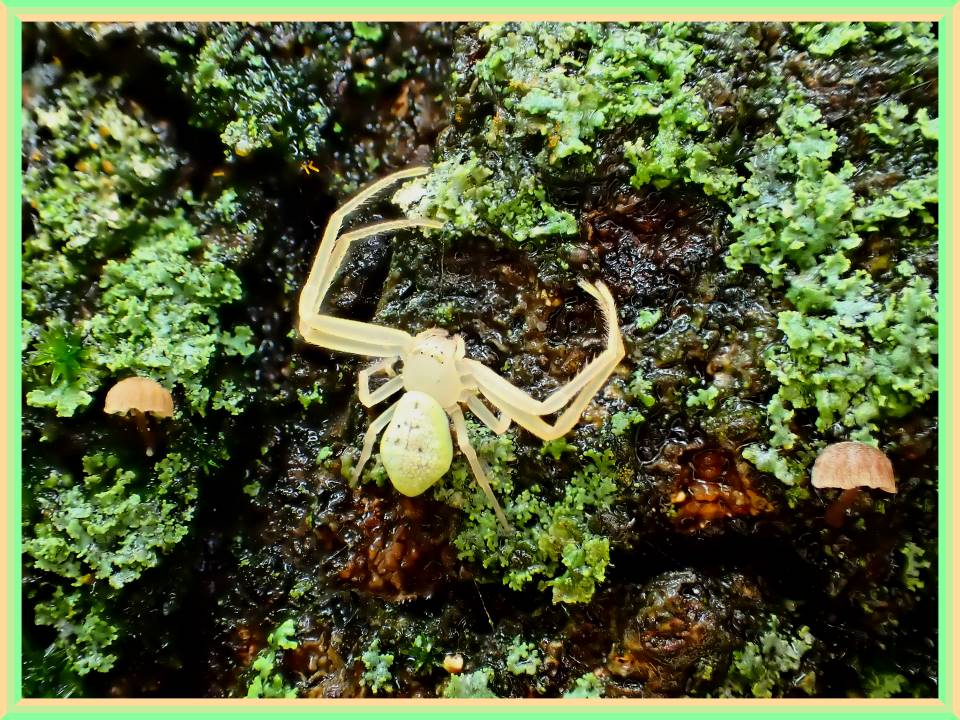
Crab Spider on Lichen (1)
Photo by Thomas Peace c. 2018
Crab Spider on Lichen (2)
Photo by Thomas Peace c. 2018
A perfect mirror has no distortion. It shows what is really there. Can the mind be like that?
A distorted mirror, just like a distorted mind, twists things around such that reality seems askew and misrepresentation and untruth run dominant. Fortunately, most people realize what the situation actually is when they are gazing into an intentionally distorted (circus) mirror. Unfortunately, many people perceive via minds that are of distortion, deception, and perversion, yet they continue to think that they see things rightly. Many of us put up a facade, for others to perceive, of what we want them to think we really are. Many of us deceive not only others… but ourselves. Society tends to instill various forms of distortion into the minds that partake in its offerings, and such minds then zealously accept such distortions and falsities as the truth.
Many people are overly concerned about how they (physically) appear to others. Few people are prudently concerned about perceiving themselves as they actually are… internally, without any distortion whatsoever. A mind that is passionate about going beyond distortion is a very scientific and spiritual mind. It seems that very few have actually done it (i.e., gone beyond distortion) to any very significant extent. (There are ways to test this out, for accuracy; however, we will not go into that here.) Great clarity and immense understanding are needed to see the whole. Most, unfortunately, still function with (and “as”) symbols and fragmentary parts. If the tools and the processes of the mind are distorted and partial, then the outcome — the results — will be equally askew, equally incomplete. Before we accept and cherish methods to get out of this distortion, we should question whether they are possibly an extension or continuity of the same-old fallacies, which most are.
Without method, without depending upon the process of psychological time, is it possible for the mind to observe without merely utilizing the past tools (of symbolic thinking, abstraction, analysis, and image-building)? Can the mind perceive without always carrying the burden of past formulations? It may be the influential formulations of the past that prevent pristine perception. We can be choicelessly observing with an intense awareness that includes all of the senses working harmoniously together as a whole, without limited thoughts always interfering… (and all thoughts are limited).
A mind that goes beyond distortion sees deeply. Such depth goes far beyond the ordinary, far beyond the mundane. Many cling (knowingly or unknowingly) to the ordinary, yet wish to experience what is beyond the ordinary. What is truly beyond the ordinary may not at all be what can be categorized or placed into the realm of “experience.” If an experience is recognized (as most are), it usually consists (more or less) of a rather mundane occurrence that the brain “recertifies,” “acknowledges,” and “classifies” via (and according to) prior memory images, prior mental retentions, and symbols. Recognition and the reaction to things have their place, but so does an unadulterated awareness beyond mere reaction and conditioned responses. Full enlightenment/satori — should it ever occur as a blessed visitation by that ineffable, holistic energy to a human being — may be far too immense for any kind of full mental grasping, retention, or remembrance (by the brain) to take place. However, should it actually happen — and don’t be foolish enough to crave what you suspect that it might be — the brain will have recalled small snippets of that profound event, though what is retained is rather like mere shadows of the actual occurrence. Great wisdom, unlike distortion, never needs to ask about whether the sacred truly exists.

Polished Jurassic Dinosaur Bone, with crystal fortification, from Utah (1) Photo by Thomas Peace c. 2018

Polished Jurassic Dinosaur Bone, with crystal fortification, from Utah (2) Photo by Thomas Peace c. 2018
In that last prose piece that was written, profound curiosity was mentioned. Very many of us, when we were very young, had immense curiosity. This curiosity was a natural investigation into the nature of things. This curiosity concomitantly involved a lot of questioning. Most of us, as we aged — as one can see by observing the adults that one interacts with — have lost a lot of this innate drive to discover; unfortunately, too, the questioning has subsided and (instead) many just (more or less) accept what was poured into them. Then most look at things the way that they were programmed to look… and they end up fitting in quite nicely. This “fitting in,” however, can often be equated with stagnation, blind-acceptance, dull mediocrity, and imprisoned, bourgeois mentality. When the mind merely looks with (and “as”) the accumulated “known,” then one gets very bored, stagnant, dull, and sorrow and depression easily manifest. Many, unfortunately, have quite cadaverous minds, though they are not yet six feet under.
Real discovery, real learning, (and joy), if one is wise, is endless. Such learning, such discovery does not involve mere accumulation. It goes far beyond the mere accumulation of information and beyond the mere reacting (of that accumulation). Curiosity, if it is deep enough, even questions the parameters, nature, essence, and attributes of the very means by which it probes and discovers. Such curiosity, if it is deep enough, may even go beyond the tools that were provided (by society) for it to operate (as). These tools, as can be seen, largely consist of thought and thinking. Most have heavily relied on (and depended upon) thought in their endeavor to assimilate things and figure things out. However, here is the rub: If the tools are limited, if the tools themselves have a propensity toward distortion, if the tools themselves are fragmentary and concocted… then the outcome will (pretty much inevitably) be limited and askew.
It may be that there is a profound learning and a profound curiosity that (together) occur beyond mere accumulation. Such a movement does not depend upon psychological time nor on what others have poured into one. Perceiving beyond lines of demarcation, beyond circumscribed parameters of thought, beyond constrained methodology, beyond the norm, takes great care and intelligence. Yet so many remain in ruts and everlastingly function in (and from) such limitation. Many will easily claim that they are not in a rut (as they robotically keep digging).
Profound insight, deep intelligence, holistic perception, and real compassion occur when the mind is beyond what a stale, rotten society has dictated.

Curiosity (1) Photo by Thomas Peace c. 2018

Curiosity (2) Photo by Thomas Peace c. 2018
Many people suffer from depression and sorrow. Many take pharmaceutical antidepressants and regularly go to clinics to receive therapy. Most, when they were much younger, did not have such issues; in youth, they were filled with wondrous curiosity and inner, refreshing vitality. Many, as they age, become jaded and unhappy, bored with the same-old-things and with the gray monotony of it all.
A large part of the problem lies in wrong education. Most, throughout their education, were not encouraged to be keenly aware of their own minds… to be aware of the essence of thought and thinking and to explore beyond the realm that thought and thinking manifest as. Most, from society as it currently is structured, were taught to cherish and exclusively dwell in (and “as”) the process of thinking; it was taught that the more thinking and the more reaction… the better. Few were encouraged, in their youth, to question everything and to be free from mere standard ways/procedures. These days, almost all of us are immured within the walls of thought/thinking. Many exclusively dwell in (and “as”) thought/thinking… and very few value going beyond that very circumscribed domain. Most have put all of their eggs into that one basket; in that, they dwell. (Ironically, though most everyone exists as “thinking,” few are in a direct, intimate relationship with such thinking, such that they can go beyond it; they see “thinking” as what some alleged independent center is “using from some sort of internal distance.”) Some delude themselves, by others’ methodologies, into practicing going beyond thinking (which is, in reality, an extension of thinking and, each time, a self-imposed hoax); a concocted silence that is part of a perpetuation of backward and spurious ways is not any kind of legitimate silence at all, though many believe that it is.
As one has said so many times before, thinking is always symbolic, always second-hand, limited, and merely representational. Yet so many cling to thinking and unquestionably exist almost exclusively as what it is. Even when most of us look at things, we are looking with (and through) the screen of thinking; such thinking involves labeling, categorizing, classifying, identifying, and pigeonholing. When many look at things, they are mostly looking with the memory bank (i.e., through retained knowledge). Such a memory bank is from the past and is always old, always of stored data. Many look with (and from) the stored (old) past… and they inevitably get bored while they feel stale and full of the mundane. With this situation, antidepressants and clinical so-called experts can only help so much. The selfish “I” is created via concocted psychological distance and learned walls of demarcation; this distance and these very walls are an incarceration that ensures that suffering will continue.
A mind of constant thinking is a mind of sorrow. A mind of deep awareness, however, can often perceive without merely using (and being) the storehouse of old and stuffy memory. To perceive without relying on the storehouse of dead memory and to perceive without depending upon the stale patterns of remembrance is a living art. There is no method or blueprint-oriented practice to this art. It does not involve old patterns that you can absorb to improve yourself with over time. It does not involve intentionally sitting crosslegged for long periods of time, mesmerized by some kind of self-fabricated so-called silence. Being aware (without method) throughout each and every day, being “thinking” when it is necessary but often effortlessly going beyond it, the wise mind sagaciously realizes that profound bliss is not a mere remembrance. Profound joy is not labeling everything and then looking at everything through (and “as”) dead labels. To perceive without the burden of the past is real living. Real living is not the past perpetually relabeling things (with endless symbols) into, and through, the present and future. The mind that goes beyond “perception through mere symbolism and fragmented mental constructs” is a liberated, whole, caring, free mind… full of joy.

Family Photo (1) Photo by Thomas Peace c. 2018

Family Photo (2) Photo by Thomas Peace c. 2018
There have been blogs, by others, wherein they write all about themselves. They write about their likes, special preferences (such as favorite foods, books, and movies), social relationships, and so on and so forth. Others write about the need to love oneself; they write about the beauty of really caring about oneself (first and foremost).
What is oneself? Most of us, one suspects, were educated to see the self as we were all programmed to see it. This education is often very similar to the education that other countries have stuck to in the past, even the one which Adolf Hitler emerged from (who, by the way, loved himself dearly and who passionately encouraged others to adore him too).
So, what is the self? Is the self an autonomous entity separate from the environment, the whole, the rest of mankind, the animals? When a person says that he knows himself, what does he — actually — know? Is such knowledge a lot of recalled patterns of bygone preferences, tendencies, opinions, images, and methodologies that have occurred in (and “as”) the past? Recalled patterns (of the past) are from the storehouse of memory. Recollections, from (and “as”) that memory, are always old (i.e., of the past), limited (i.e., snap-shot-like), partial, and (therefore) incomplete. Those recollections of self, additionally, are heavily influenced by the past education and culture in which one was raised. One’s fundamental conceptions of self were poured into one (and absorbed) during one’s youth. Recollections and labels “about the self” are always of the past. They are images or linguistic symbols from (and about) “what was.”
Many people feel empowered by an elevated sense of self. Many are enamored about themselves and they write about themselves a lot (either positively or negatively), or they are very obsessed about their physical appearance. However, the self may not necessarily be what society has had each of us accept and take for granted. There is a very good chance that a lot of primitive miseducation has taken place for many years.
Unfortunate is the man or woman whose self is a fenced in, segregated, walled-off conglomeration of past images and symbolic thoughts convinced that a special space isolates what they are (or what “one is”) from the rest of life on earth. Being walled-in is a surefire recipe for depression, no matter how financially fortunate one’s life has been, no matter how wonderful one may (superficially) think one appears physically. To have private dominion apart from the rest of life, as something special and separate, is no cup of tea that real perception is interested in sipping. It may be that real liberation does not come from coddling and worshipping the isolated self, as so many immature and egocentric people tend to do, but (instead) comes about when the self is understood and joyfully transcended. The circumference around an egocentric mind is always limited, primitive, self-concocted via absorbed patterns… and is standardized, mediocre, and regimented. Most people are very immersed in (and “as”) such a circumference; very few of them will care anything whatsoever about prudently going beyond it. A limited, walled-in circumference inevitably brings sorrow. All of the psychological therapy and superficial entertainment in the world will not put an end to that sorrow.
Instead of coming up with notions about “oneself,” go out (for an enlightening change) and perceive without the separative boundaries and isolated perspectives that were implanted in (and “as”) the past. Is the perceiver so very separate from the perceived? Walls of delusion may experience a lot of things; however, walls of delusion will never understand and see the uncontaminated truth and the eternal. Real understanding, bliss, and balance are not of dead limitation, stale recognition, and segregation.
From the poetry of Stephen Crane:
The sage lectured brilliantly.
Before him, two images:
“Now this one is a devil,
And this one is me.”
He turned away.
Then a cunning pupil
Changed the positions.
Turned the sage again:
“Now this one is a devil,
And this one is me.”
The pupils sat, all grinning,
And rejoiced in the game.
But the sage was a sage.
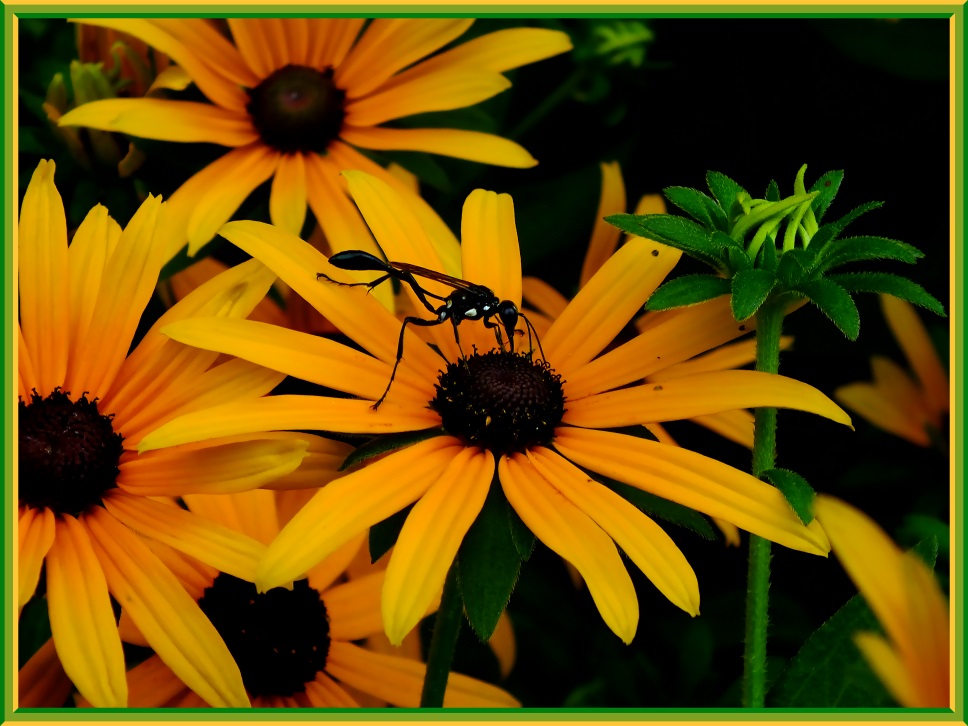
Super Thin Model (1) Photo by Thomas Peace c. 2018

Super Thin Model (2) Photo by Thomas Peace c. 2018
As we were suggesting in recent previous posts, when things — such as fears or desires — are seen with a psychological distance, then that very (separative) perception reinforces the (supposed) gap between the perceiver and that which is perceived. When, for instance, fear is seen as something that one “has,” it is usually seen as what is manipulated (from a distance) by an internal, psychological “I” or “me.” In actuality, the mind (the entity) is not something separate from what the fear is. The fear is what you “are”; it is not merely what you “have.” Perceiving fear from a psychological distance — such as what most minds do — tends to firmly reinforce the notion of a manipulating “I” or center who (supposedly) can, over time, deal with the fear. The fraudulent thing regarding that, though, is that — in reality — the fear is not (whatsoever) separate from what the mind is. Looking at the fear with internal distance, from a supposed internal “I” or “me,” reinforces the assumption of an “I” or “me” that is separate from what is perceived (internally); such an assumption, used habitually, as it is, is imagination reinforcing itself. Perceiving, for instance, fear, sadness, or desire, from a psychological distance — as most people do — reinforces and actually helps fabricate a separate “I” or “me,” (who allegedly “has” those things).
Internally developed fear, per se, depends upon psychological time; without psychological time, internally developed fear would not exist. And we think we can (from an internal distance) understand, over time, psychological fear! We create a separate “analyzer” who is going to analyze internally. However, the analyzer actually is the analyzed. Analysis takes time; additionally, time is required to manufacture a separate “I” who is different from the fear. Does one just want to “get rid” of fear? It may be one part of the mind trying to get rid of another part… being in conflict with it. It may be far more prudent to understand it (i.e. the fear which is yourself), and it may be that one cannot fully understand it if one thinks that it is separate from what one is.
Someone might say, “What is the benefit of seeing all this?” If, for instance, fear takes place and there is an acute perception and accurate relationship regarding (and “as”) that fear… then it can be fully perceived as it is, and not with some extraneous images or imaginings of a separate “I” who is somehow separate from it and in conflict with it. (Conflict is friction and may not solve anything fundamentally.) The extraneous images — of a separate controller or of a separate “I” or “me” — disallow the full perception of the fear as it really is… and tend to waste time by projecting a separate image (or images) that supposedly will do something about the fear. Fear is what one actually is; then a separate image is created by the mind to get rid of, suppress, overcome, analyze, or somehow adjust to the fear. This creates duality and conflict in the mind that essentially leads to friction, limitation, and time wastage. False, inner fragmentation, no matter how sophisticated it may be, is fundamentally (in most cases) what contributes to friction, and it is essentially a waste of time and energy.
People erroneously associate going beyond a central “I” or “me” with a lack of security, with a lack of inner integrity. On the contrary, real integrity exists in perceiving things as they actually are, without introducing fallacious images and a lot of primitive rigmarole into the picture. Bliss and understanding the essence of real eternity can exist only when one psychologically dies to the ungrounded and phony images that one, unfortunately, has been taught (over time) to carry. Such psychological dying is what is truly living, and such living involves direct, untainted, pristine, beautiful perception. It may be that real baptism occurs when one’s consciousness is washed clean of cold deception, false accumulation, and dead tradition.
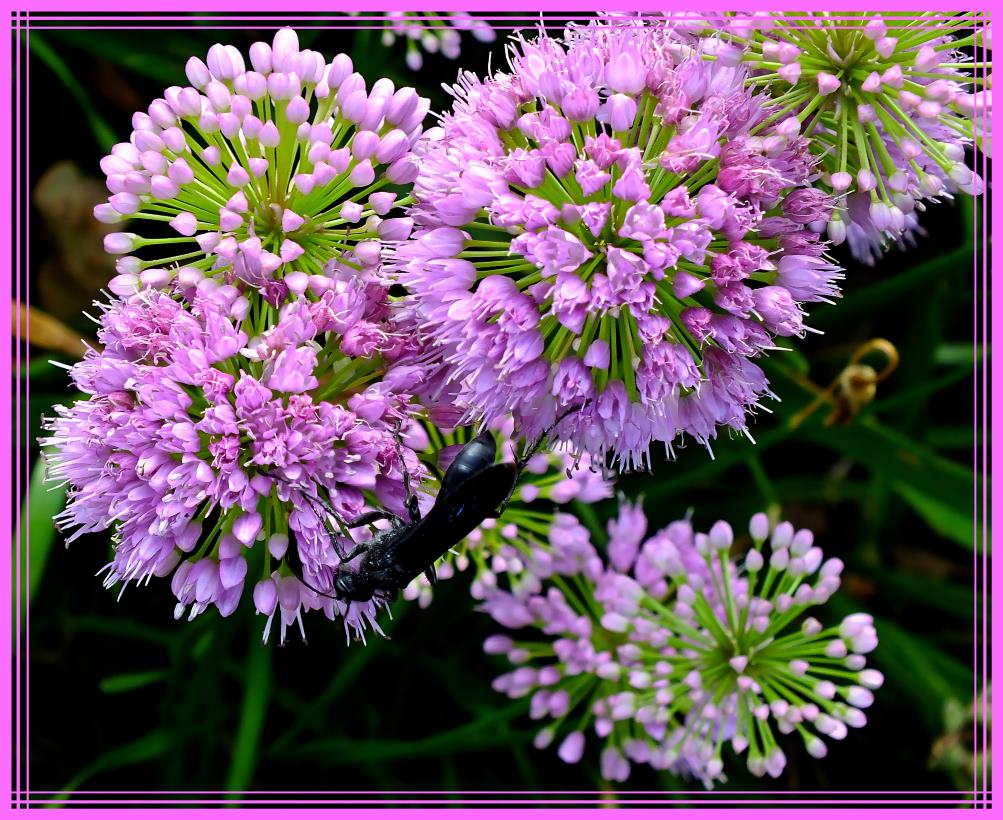
Wasp in Chives (1) Photo by Thomas Peace c. 2018

Wasp in Chives (2) Photo by Thomas Peace c. 2018
All of us function, in life, with regard to various motives. We react in (and “as”) conditioned responses involving these motives. Each motive gives us a certain direction to move in; we follow these specific directions, based on motives, throughout life (just as we were taught to). Very few of us have considered directionless. Very few have inquired into the possibility of perceiving without being constantly influenced by motives or directions. Each of us has motives and directions that each one clings to and functions from, (even the so-called great scientists). Often, these motives conflict — with the motives or directions of other people — and friction ensues. Desire and greed are often involved with the motives that people have (and desire and greed tend to function from — and “as” — the reactions that they are psychologically). One’s mind, too, can harbor conflicting motives… conflicting directions to pursue or go in.
A very wise mind, however, is involved with a measureless directionlessness. To observe purely, without tainted motives or covert conditioning influencing what is seen, requires a highly unprejudiced mind that does not merely perceive via fragmentation and limitation. Looking in a certain direction — which most all of us tend to do — by its very action (or, rather, reaction) precludes other directions and is always limiting and partial. Even precise scientists are limited — in their own fields and by their own (learned) processes, habits, prejudices, and procedures — and most would likely laugh if one suggested that they consider directionlessness. However, a truly sagacious mind would perceive the limitation and fragmentation that motives and directions inevitably bring with them; such a wise mind may then go beyond mere motive (and beyond mere direction).
A mind that perceives beyond merely having a “motive” or “psychological direction” must be a very dynamic mind. To look (at times) beyond mere motive or beyond specific desire takes tremendous intelligence and great purity. Directionless is not a stagnant state that one mesmerizes oneself in; rather, it is a causeless explosion of awareness without mere motive and without the influence of psychological conditioning. It truly is an explosion without any cause. It is a movement without any direction. Greed and desire have nothing to do with it; greed and desire are of motive; greed and desire always involve a specific direction.
There is a vast difference between a mind that often is of directionlessness and a (common) mind that always functions by way of motive and direction. Of the two mentioned in the aforementioned sentence, one of the two always (without exception) reacts (via motives and directions set up by limited influences); the other, of the two — though it also often reacts and is choicelessly aware of the reactions — may often go beyond that… such that it exists with (and “as”) motiveless perception (beyond borders). Only one of the two can ever perceive and understand the whole (instantly, without mere sequential process); the other must be caught in time-bound, sequential parameters that manifest as fragmentation and limitation.
The beauty of real ecstasy occurs only when harmful (i.e., fallacious) ways are finished while true joy blossoms without motive.
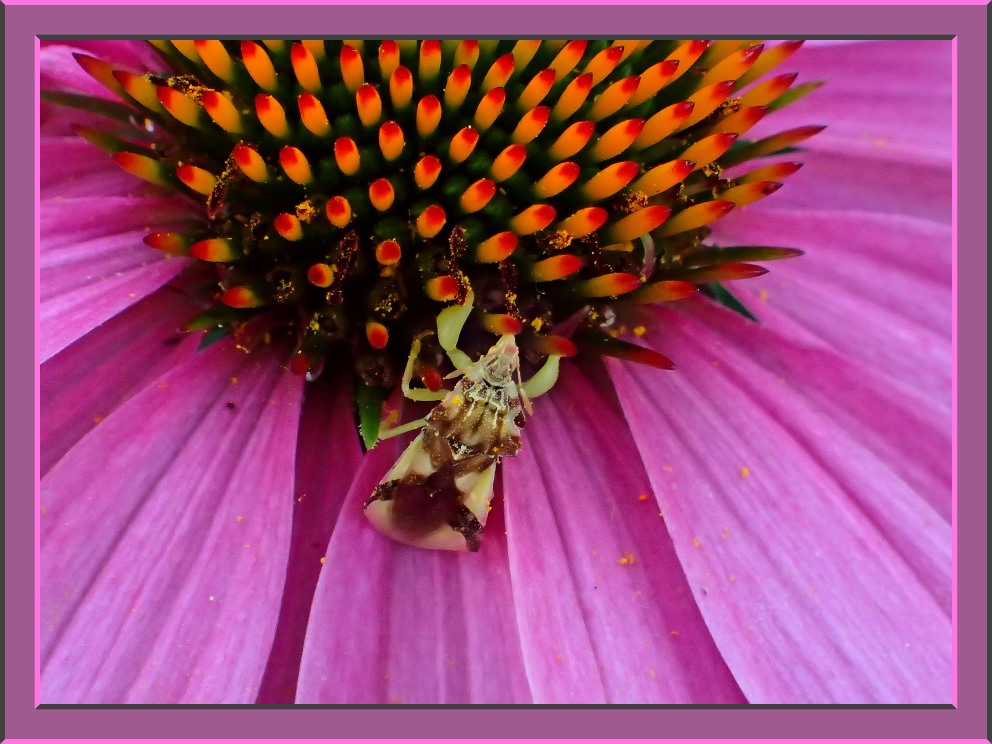
Jagged Ambush Bug in Cone Flower (1) Photo by Thomas Peace c. 2018
Jagged Ambush Bug in Cone Flower (2) Photo by Thomas Peace c. 2018
We all want security or some kind of stability in life. If someone asks you — such as is done in this blog — to consider transcending beyond the image(s) of a central “I” or “me,” it is normal to have reservations about doing that. Since very early childhood, images of there being a central “I”, “me,” or “central controller,” have been poured into us and have been heavily reinforced. People have a psychological defense mechanism regarding protecting that supposed “center” that allegedly controls everything that each one does or decides upon. That defense mechanism is built around the need for stability and security. The “I” or “me” seems quite permanent and seems to be what one can always identify with (and depend upon).
For centuries, many of us have each existed in a country that we identified with and looked to for security. “Our country” will keep us safe; “our country” is better and has the right systems and traditions. “Our country” is protecting us… providing the necessary security for us. However, these countries, worldwide, have not really given us security to any very significant, long-lasting degree. The world remains full of conflict. Crazy leaders, who are power-hungry and who have child-like minds, still (in this so-called modern age) pull people into deadly wars. Separative countries, for eons, have contributed to conflict and wars between humans. We are so programmed into following leaders (who promise security) yet who merely maintain the separative division that puts man against man. Countries are essentially, by the way, manmade. There really isn’t such a thing as Scotland; it is what man concocted.
Organized religions, too, are what man concocted. Just like with countries, they have plenty of leaders who (like deceptive politicians) offer you security (especially in the after-life or in their “here and now” that is promised). Like the image of a central “I,” one’s religion is what one can identify with and depend upon. Like with countries, organized religions have caused much friction between human beings. There have been many wars in the name of religion. This still goes on.
These things that promise security may, with closer more vigilant observation, not provide much real security at all. The world is not a safer place to exist in currently (with these manmade systems full of rigid practices and formulations that separate one group of humans from another). Ignorance constructs walls and barriers to separate people and this inevitably causes conflict. It may be, in reality, a small world… a global world.
Many may easily think that going beyond the concept or idea of a central “I” will somehow negate our security. We are afraid of giving up what we think is so fundamental, so very permanent and lasting. That “I,” however, creates psychological walls (and a bounded circumference) that can (and easily do) cause conflict in the world (and internally). It may be that real security and real relationship with eternity can take place, however, without the illusory (limited) circumference and psychological wall that the image of “I” or “me” manifests as. The reaction of “I” or “me” is a new projection or reflex of thinking each time it takes place, yet we take it to be the same-old, reliable (egocentric) essence of what we are. Like a cigarette lighter flame repetitiously brought into existence, the flame is new and a bit different each time it burns; however, we tend to identify with it as being always the same, permanent thing… which it isn’t. The “I” causes walls of indifference, walls of callousness. Intelligence and a real sense of bliss and eternity can live quite nicely (thank you) without dependence upon the “I,” “me,” or a spurious center… (except during times of superficial conversation where it is still commonly used).
Beyond its limited circumference exists what is beyond borders and concocted walls. Real love transcends the “I,” transcends walls and borders that divide and cause conflict.
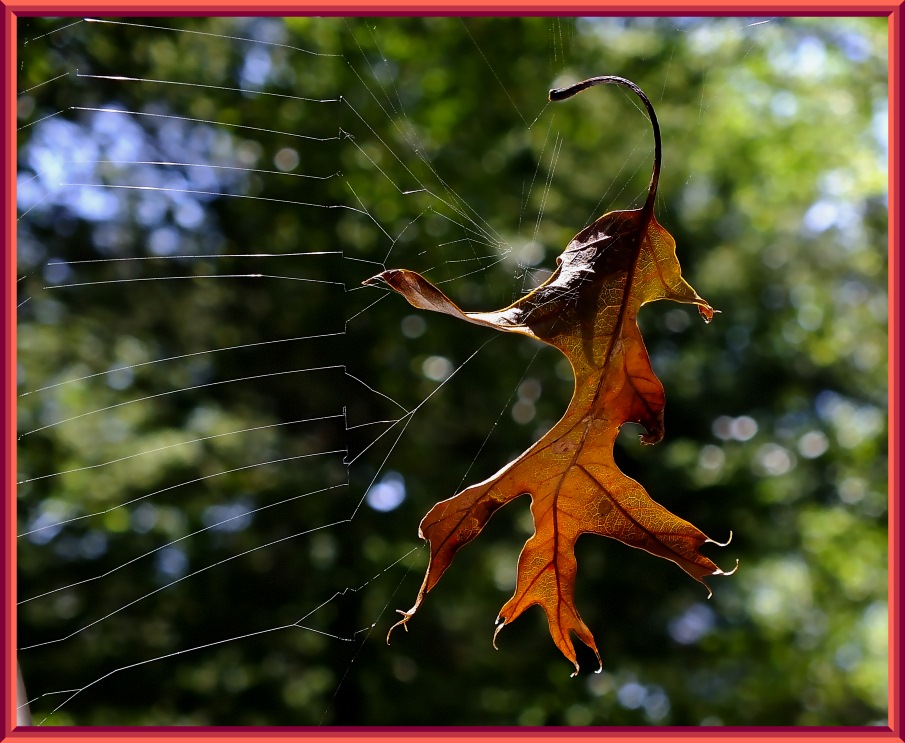
Captured but Plant-based (1) Photo by Thomas Peace c. 2017
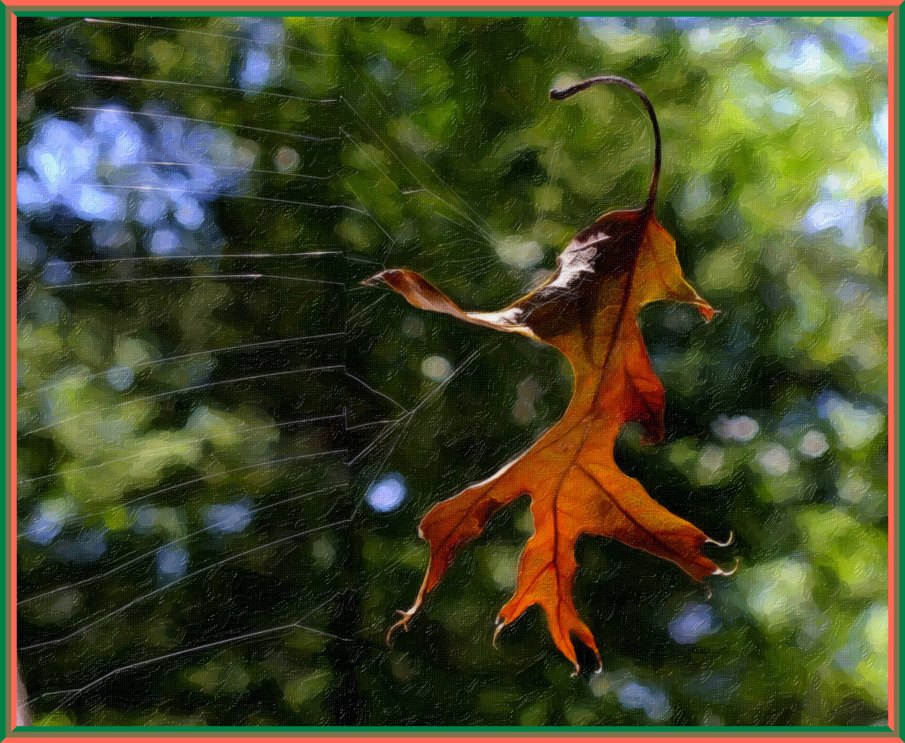
Captured but Plant-based (2) Photo by Thomas Peace c. 2017
One littlest why came up with a how
and said “You shouldn’t”
but then a could gleefully said “Sure we can”
Suddenly a reflective tear cheerlessly cried “Please don’t”
and then cold terror screamed “Oh this is going to be gruesome”
(Snakes are often Ben
Next a placid smile grinned a reassurance
while impatience glanced again at the clock
Understanding suggested “Prejudice and hate can end… or end us”
while fear nervously shouted “What will happen to us?”
Separation coldly looked with indifference
and absorbed habit answered repetitiously
Sequential words swiftly scanned this poem
as wonder why magically dropped in
eficial and not nearly as dangerous to
the earth’s health as man)
Wisdom transcended unwhole fragmentation
while ostentatious showed off his clever intellect

Midland Brown Snake (1) Photo by Thomas Peace c. 2017
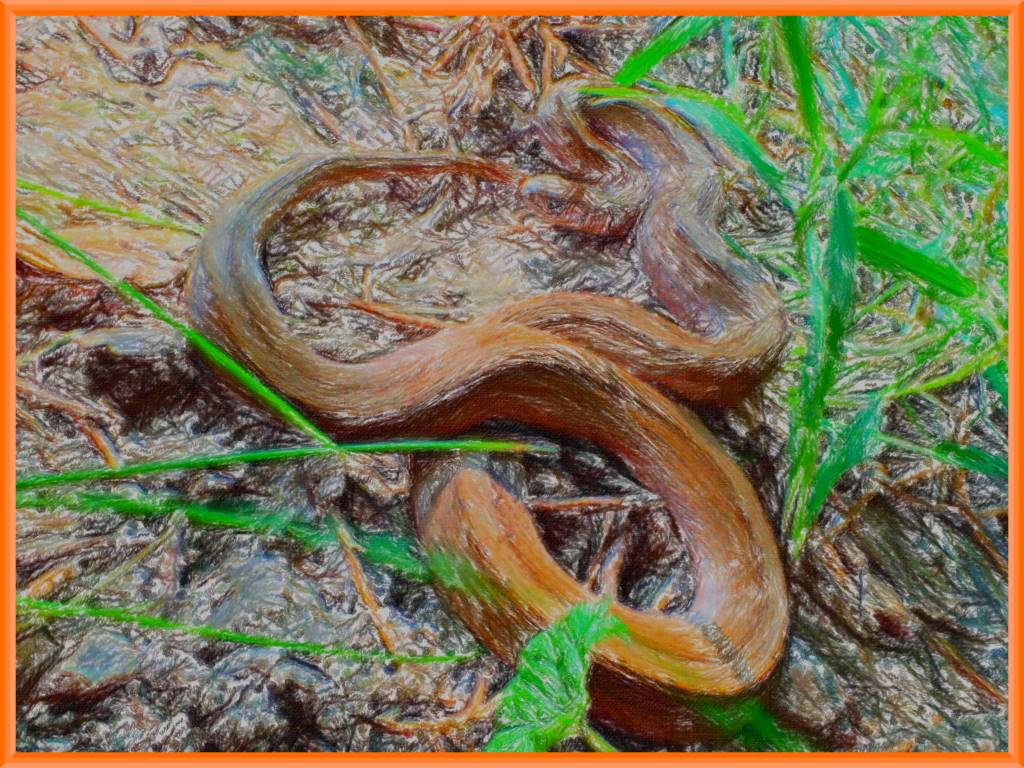
Midland Brown Snake (2) Photo by Thomas Peace c. 2017
[Special Note: Happy New Year everyone! Though we need to go way beyond “happy” into deep perception, compassion, and environmental awareness (that matters).]
The passion of awareness — real awareness, not all of that phony stuff — perceives beyond the known. The known consists of preconceptions, traditions, and limited patterns of the past. Profound awareness goes beyond all those things. It goes beyond the mundane and commonplace. It is not enmeshed in repetitive, rather mechanized habits that dull the mind and expand sorrow. (Most people are caught in sorrow and perpetually try to run from it. Interestingly, they always run from sorrow in a particular direction, and that direction is always limited; then, sorrow remains.) Awareness is a motiveless inquiry without superficial direction or desire. Any inquiry with direction is calculated and limited.
Many people have preconceptions about the way things are; with (and “as”) those preconceptions, they look. What they see, then, will inevitably be limited, predetermined, and partial. To perceive without conclusions is real humility, real innocence in action (beyond mere reaction). The constant labeling of things, mentally, is a repetition of memory and the known (which is the past recurring). All thoughts are symbols that are both fragmentary and limited. Limitation can never see the whole… but so many cling to their limited preconceptions and fragmentary patterns of thought/thinking… just as they were taught to. Many remain circumscribed within the limits that were given to them as their foundation.
Recently one saw a science program about artificial intelligence. In the near future, there will nanorobots (nanobots) — at sizes smaller than the cellular level size — that will enter the brain and connect with the neural pathways. People then will be composed of minds that are part computer… part machine. Ray Kurzweil, who works for Google, and other computer experts/entrepreneurs claim it can begin happening very soon; the year 2029 has been pinpointed as a date for when it can really (more fully) take place. All kinds of beneficial things are allegedly supposed to happen because of this. However, one questions whether is it taking us to a better place. Human minds are heavily conditioned and mechanical enough; implanting the brain with machines will only make them more robot-like… more prone toward programming by the powers that be. Some scientific reports maintain that 50% of the earth’s wildlife has been killed off by humans in the last 40 years. Immersing ourselves in virtual worlds, which is what computer implants will likely do to us to a significant extent, will not help wake us up to what is alive and precious in the real world. Additionally, people wishing harm to others will — more easily — access ways to make deadly viruses and nocuous substances. We need to intelligently put a leash on technology; however, that is unlikely to happen unless more of us wake up; the leash, so far, is on us.
Awareness, real awareness, is action… not merely secondary reaction. Very many of us habitually react all day long (like robotic, mechanized, programmed instruments); and they want to implant more mechanicalness, more man-made concoctions into our (already programmed) brains!
It is only the uncontaminated, pristine, innocent mind that can be entered by the whole, the timeless. That which is limited, fragmented, sequential, partial, and prejudicial, is not open or unbounded enough to be visited by that miraculous, impersonal intelligence.

Bee Flight (1) Photo by Thomas Peace c. 2017

Bee Flight (2) Photo by Thomas Peace c. 2017
Special Note: Happy Holidays to everyone worldwide!
We sure hope that the coming new year brings, with it, more sense and more compassion in people. People, unfortunately, are very gullible and it is easy for the fat-cat bureaucrats to get people to believe just about anything. Please do not get all wrapped up in belief; please intelligently go beyond all belief and tradition-oriented presumption. Do not ever merely believe what i write within this blog; i do not wish to be your authority. (There are plenty of charlatans out there who will gladly be your authority, if that is what you wish.) Each one of us has to deeply question things and look beyond all of the propaganda. If the world has any hope at all, we need to go beyond the ruts that we are mindlessly entrenched in. Governments that rob the poor to feed the filthy rich (and that neglect environmental health and global unity) need to be radically questioned/altered. The world is very small and fragile and it will not last — in its balance naturally as it has — if we continue to lack seriousness and continue to act with negligence regarding the delicate whole. Despite what you were “taught,” you may not be anything separate from all of the fragile creatures and humans of this planet; it may be that you are them. If you do not care — and continue reacting as the fat-cat bureaucrats want you to — it may be like the right hand not at all caring about the left hand (and thinking it is separate).
Alleged saying of Jesus… from the ancient Nag Hammadi Gospel of Thomas (that the hierarchical fat-cats rejected):
Jesus said: “The dead are not alive, and the living will not die. During the days when you ate what is dead, you made it come alive. When you are in the light, what will you do? On the day when you were one, you became two. But when you become two, what will you do?”
Do not ever think that you are something separate. Wash clean of cold deception, false accumulation, and dead tradition.

Mostly alone… Photo by Thomas Peace c. 2017
[Addendum: We saw the movie “Wonder” the other day; it was excellent; highly recommended!]
******************************************************************************************************************************************
But here
amongst
the light of shine
why couldn’t
when arcing was
as shading stared
even when
something moved
ever so
graciously
amid
perceptions reactions
and you’re
blinking

Amongst the Light of Shine (1) Photo by Thomas Peace c. 2017

Amongst the Light of Shine (2) Photo by Thomas Peace c. 2017
One
pink day
in a curious
we kind of way
the camera landed
near what insects were focusing on

Serendipity (1) Photo by Thomas Peace c. 2017

Serendipity (2) Photo by Thomas Peace c. 2017
It is important to have a mind and body that (together) work with great precision. Many people do not take great care of their bodies; nor do they delve into the nature and essence of their minds a great deal. Such behavior is often negligence. A body that consumes many foods that are not conducive to good health is operating in a way that is not harmonious, not orderly. Similarly, a mind that is operating with a lot of inner conflicts, resistance, fears, delusional manipulations, and a fanciful administration of power, is not being harmonious nor orderly.
A mind that is a hodgepodge of absorbed (i.e., learned) conditioning consisting of false psychological separation, inner conflict, inner resistance, and spurious (internal) domineering power can seemingly create a meditative silence that it may think is divine. However, a mind full of inner limitations, conflicts, suppositions, and learned attributes can easily deceive itself; such a silence is (inevitably) as limited as the mind that fabricated it. It may be that a truly profound and precise silence is never the product of a calculating mind.
A mind that is aware of itself, each and every day, without the stagnant patterns that society has impressed upon it, may (without effort or spurious inner dominating factors) function with (and “as”) real order, precision, and harmony. Thinking and the thought process is often used by (and “as”) such a mind; however, the thinking process is seen to be the limited tool that it is; the sagacious mind realizes that it need not exclusively cling to that limited domain. There is a cessation of thought/thinking that comes uninvited, that comes unprovoked; it is not the hypnotic, limited kind of fabricated silence that so many unfortunate minds have learned to materialize.
A mind that has profound awareness functions without a fictitious and misleading center (such as the kind that the majority have learned to accept and take as genuine). Most, with that misleading and inaccurate “center” that each takes to be genuine, function — especially internally — with fraudulent space and with fanciful separation. The fraudulent, limited space and fanciful separation are involved with protrusions of thought that are given (false) credit for being the source of power and domination (of the so-called other thoughts). Then, such minds of imprecision think that they can intentionally meditate, creating or concocting a space of true and legitimate silence. Does one see the absurdity of it?… A mind of delusional, distorted separation and fictitious space thinks it can fabricate a true silence (of vast space). What it produces will be an obtrusion (i.e., an extension) of its own inherent disorder and imprecision (and, therefore, will inevitably be of the conditioned and/or false). It is so easy for distortion to bamboozle itself into thinking that it is free, or whole, or divine (when it is not). Only an innocent, honest, truly humble mind (of real clarity and precision) is beyond self-deception.
A mind that examines without the burden of false values and the stale conditioning (of the past) can flower beyond limitation, internal imprecision, and fallacious separation (such as misrepresentation as when, in the mind, the so-called “controller” is misconstrued as being somehow separate from “thoughts seen with psychological distance”). Profoundly intelligent observation must be pristine, uncontaminated, undistorted, and beyond measure. It is very possible for the truly serious mind. Only a mind of real clarity and precision can see and understand the whole.

Green Lacewing… Predator of many harmful insects… Photo by Thomas Peace c. 2017
We moved and in that moving looked
and in that looking many things were seen
and in that seeing labeled things were from the storehouse of memory
We re-cognized from patterns of the past
We saw everything the way we were instructed to see
We looked from (i.e., as) the screen of conditioning
We never looked originally spotlessly wholly
?Can the yes of awareness be beyond stagnant lies of no
as magic beautifully flowers

Depth with superficiality (1) Photo by Thomas Peace c. 2017

Depth with superficiality (2) Photo by Thomas Peace c. 2017
We have had ideals for centuries. Yet mankind goes on, with all kinds of corruption and distortion. Ideals seem to help but, in the long run, do not change much whatsoever. When one has an ideal, it is a projection or obtrusion (of the mind) regarding what one “ought to be.” That “ought to be,” that “what one should be,” is a pattern that one has accumulated — over time — from others’ teachings or from experiences (of the past). It is a protrusion of the past into the present, concerning what the future “should be”; such a process is a sequence in (and “as”) psychological time.
Profound awareness is not what occurs when the present (in its wholeness) is constantly contaminated by past fragmentary symbols and patterns. People are energetic, habitual, lightning-quick “reacting organisms,” and learned, fragmentary symbols and patterns — of the past, like any “should be” — are usually not enough to entirely tame the deeply ingrained emotions/desires/reactions that “people are” (and to significantly change those reactions). So the projected “‘should be’s” from the past, are (for the most part) never enough to fundamentally alter behavior. Whenever what one “should be” is projected — in (and “as”) the mind — from the past, it is at odds with what “actually is.” The “ideals” and the “actualities” are often in conflict with each other; a mind that habitually feeds internal conflicts is not a healthy mind… it is a mind of friction and internal resistance. When the present time actually takes place, such internal friction and resistance prevent profound awareness. When one portion of the mind is at odds with another portion of the mind — which is so often the case with minds that harbor (and consist of) ideals — then such internal conflict prevents pristine awareness and holistic energy. When pristine awareness takes place, it has its own (unimposed) natural, intrinsic order; then there is no need for symbolic ideals or many regulating laws. Great, sagacious passion sees clearly (without distortion); that very seeing is its own order and compassion.
The wise mind does not merely carry and project ideals but, rather, sees what it actually is from moment to moment. If jealousy is taking place, in such a mind, it sagaciously perceives that jealousy (as what it actually is… not merely as something that it “has.”) Perceiving without “learned-accumulated space,” learned-accumulated patterns of what “should be,” and learned-accumulated patterns of “psychological effort” may enable the mind to be deeply aware beyond the realm of mere fragmentation and sequential expansion; then real insight and order can take place. Such order would not be merely manmade or imposed. Order that is imposed is never lasting and is never what can fundamentally change a person.
Innumerable people are the “should be” or “ought to be” images (of idealism) that they harbor. People who hold many ideals actually are those ideals (and are not something separate from them). The mind does not merely “have ideals”; in many, whether they realize it or not, ideals are what they actually are (at least partially, of course). They are (additionally) a lot of reactions and movements at odds with the ideals; so there is real friction and struggle within. Inner conflict doesn’t easily allow fundamental learning (beyond mere accumulation) to take place. Wisdom goes beyond separation, beyond fragmentation, beyond internal struggle and conflict, beyond very primitive ways of dealing with things. The passion of very intelligent awareness is an explosion beyond the dead sequence of psychological time and distortion; only then can a deep form of timeless compassion and intrinsic order manifest.

Mushrooms without ideals Photo by Thomas Peace c. 2017
Most of us each look with psychological space between a posited “I” and what that “I” — which is actually manufactured — supposedly sees from a distance. Even when a psychological fear takes place, we each tend to see it from a distance, as what each one of us “has,” rather than seeing it as what we actually are. (This psychological distance exudes a false sense of control.) However, if that central “I” is spurious, is mentally manufactured and not really central… and is essentially a projection of the thought process, then erroneous perception is taking place. An illusory “I” often may necessitate a concomitant illusory (psychological distance). The absence of a central “I” helps to curtail unnecessary psychological distance.
We are also separated by organized (concocted) religions, countries, cultural groups, rigid beliefs, systems, and prejudices… many of which we are willing to fight and die over.
Very few of us are truly simple (in an intelligent way) beyond the absorbed conflict, rifts, and illusory boundaries and spaces that were provided by way of direct or indirect indoctrination. The wise mind that transcends the very crass and illusory notion of a central “I” or “me” will live among many who habitually cling to absorbed images of a central self. Such a wise mind usually must function in a vast population of delusion and falsities. It may be that the very essence of those habitually expressing unnecessary psychological space consists of duplicity and inaccuracy. Deep compassion and profound holistic relationship occur not a moment sooner than when (psychologically) the limited “I” is wisely and fully transcended. When the limited “I” is wisely and fully transcended, needless separation and wasteful conflict end.

Snout Butterfly (Photo by Thomas Peace c. 2017)
Sensibility can involve and does involve the ability to receive sensations. We wholeheartedly pursue pleasurable sensations throughout our life. We often avoid sensations that are unpleasant or uncomfortable. Thoughts are often involved in the pursuit of pleasurable sensations and in the avoidance of uncomfortable sensations. Reactions, as thoughts and feelings, often involve sensations of various types… and pursuit or avoidance involving them. Many of the cravings and evasions of people are learned (i.e., absorbed from others). What others — in overall society — pursue and crave is often examined and copied. Needless to say, in this day and age, many are into heavy partying, exotic vacations, and all kinds of entertainment. Much of this involves endlessly trying to find exciting and pleasurable sensations.
One can go on, for many decades, perpetually pursuing one pleasurable experience after another (ruining the environment along the way)… just as one has learned to do by observing many others (who buzz along in large fossil-fueled vehicles). It may be, however, that the values involved in a life of doing that kind of thing are rather superficial, without real depth. To remain in such a state may be rather infantile. Sensibility can also, beyond the aforementioned involvement with limited sensations, pertain to an acute awareness with an overall accompanying perception and intelligence involving what is significant and prudent. Real prudence involves sagacity and sensibility beyond what was merely poured into one by others. Such prudence goes far beyond what is merely pleasurable into realms that help life and humanity (without getting anything in return). The childish mind will be incapable of such prudence; real depth will elude such a mind.
Endlessly pursuing one pleasure after another (without depth), and a donkey perpetually chasing a carrot suspended from a stick tied to its saddle, both have a lot in common. Intelligence goes beyond mere reaction; it is not what is bound in (and “as”) endless reactions. What is restricted and circumscribed is limited. Sensibly going beyond the limitations of what is ordinary may be real intelligence. The carrot is really not something that is truly separate from the donkey, though he thinks it is. The next time desire takes place, please consider the possibility that it is what you actually are, not merely what you have.
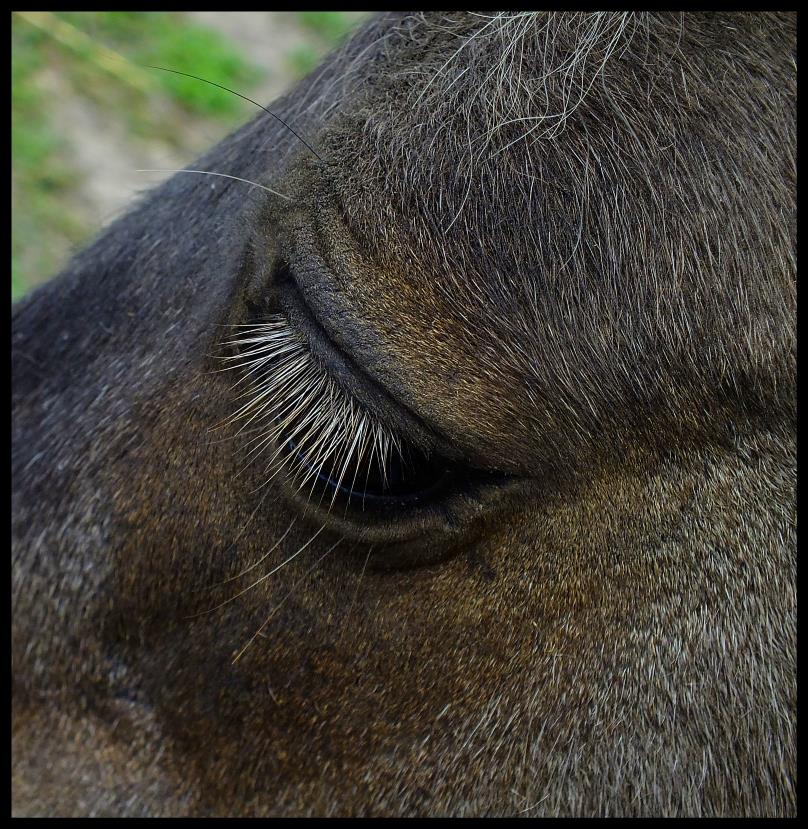
Carrot Groping (1) Photo by Thomas Peace c. 2017

Carrot Groping (2) Photo by Thomas Peace c. 2017
We all suffer. We suffer physically and psychologically. None of us escape it. Here is a little secret about the true nature of suffering: It is neither just yours nor mine; it is universal. It is our suffering. We all share in it… some more than others. When one of us suffers… we all suffer.
So many of us habitually run from suffering. We use all kinds of legal and illegal drugs to escape from suffering. There are plenty of drug-addicted and alcohol addicted people in the world, many of whom insist that they don’t have a problem and can stop whenever they wish to. Instead of habitually fleeing from suffering, few of us have embraced it without separation, without deep-seated bias and friction. Of course, if suffering is overwhelmingly intense (physically), then one would naturally not care to embrace it or have much of a relationship with it. A wise mind, however, may act — and not merely react — to milder forms of suffering in ways unlike what most people do.
Unlike most minds, the wise mind rarely suffers psychologically. A mind that is wise — due to understanding itself and its contents — is of a vast, immense order. Such order is a flame that incinerates the chaotic disorder that psychological suffering feeds upon; hence, psychological suffering, for such a mind, dissipates. Order doesn’t easily manifest as disorder. A mind that is truly orderly rarely suffers.
Thinking, in human beings, stems from (and involves) problem-solving. Thinking is a tool. Many of us continue to think (and entertain thought) even when thinking is no longer necessary. This strict adherence to thought/thinking is a distorted habit that nourishes all kinds of psychological disorder. Thinking is largely symbolic and representative; merely existing as one symbol after another (in sequence) is much like substituting symbols and signs for the real thing. Such substitution rarely leads to lasting joy and pristine revelry; accepting shadows as reality rarely leads to sunlit bliss. Too many of us were educated wrongly; thinking is only a tool; it need not be the essence of consciousness. If you have made tools as the essence of your consciousness, you are bound to suffer.
A wise mind can exist beyond the tools, beyond the shadows, beyond mere symbols and abstractions. Such a mind is beyond suffering (though it has immense empathy); it never needs to take recreational drugs, alcohol, or take antidepressants. Wisdom begins when psychological suffering ends.

Diminutive wildflowers (1) Photo by Thomas Peace c. 2017

Diminutive wildflowers (2) Photo by Thomas Peace c. 2017
There is an impeccability in true mindfulness. Real mindfulness goes beyond hollow and empty ideals and stale mental blueprints. It occurs when the mind is learning, as self-realization, (honestly) from moment to moment with what is actually taking place (without extraneous fabrications). Then there are no ideals about “becoming better” in the future. “Becoming better” in the future, psychologically, is usually a form of fraud, a form of deception. Society accepts this as being normal… with one saying such things as, “I’m working on being a nicer person.” Mental obtrusions about the future allow, in the psychological realm, cheating and duplicity to go on (consciously or unconsciously). The future (psychologically) can be a fantasy. One can easily fantasize anything, especially to be a better (ideal) person (while, in the present, a different reality continues to take place altogether).
Hypocrisy, internally, of the mind to itself, is very easy. To really learn, with integrity, is to fully be aware of what you actually are (in the present) without false pretenses or ideals about the future. This must go beyond being brutally honest with yourself. This goes to where fallacious separation and conflict naturally (without man’s fabrications) comes to an end. This goes to where, when you are jealous (or angry), there is no distance or separation between the jealousy (or anger) and what you are. Or, when fear takes place, there is no separation between the fear and what you are. You are the fear. When you are the fear, in (and “as”) awareness, then learning takes place about it; then it can be enlightening. If you cover the fear up, deny that it exists, make excuses about it, battle with it from a distance, subjugate it, run from it, escape from it with all kinds of tricks, it will not (in such conflict) help you to understand its nature (which is yourself). When anger takes place, seeing it with separation, with friction, with measurement from an isolated center, with opposing ideals (which are obtrusions about the future), perpetuates conflict (which anger is a part of). Be in direct relationship with what the contents of your mind are (without pretense); they are you anyhow. Then such right relationship opens you to real learning, real flowering. Integrity is to be fully aware of what you actually are, without excuses, without judgments, without mental projections about possible future improvements. Real integrity is pure (unsullied) perception and is real relationship. Real relationship goes beyond conflict, is illuminating, and it transforms without effort, without blueprints. Compassion, order, and integrity take place when right relationship deeply exists.
*************************************************************************************************************
[Note: These are Daisy’s Neon Blue Ricefish in one of our aquariums. They are very peaceful and playful fish. Their eyes have a florescent blue coloring, but photographs do not show this well. These were all home-bred by me. The females carry eggs around attached to their bodies like a clump of grapes. They are eventually rubbed off onto plants where they dangle from long stringy-like filaments. They eat their own eggs, but i put green yarn mops in their tank and remove the mops to a separate aquarium away from the parents. These fish were first discovered on Sulawesi Island in 2007. The species was discovered in a small stream by the Indonesian invertebrates expert Daisy Wowor, while she was looking for crustaceans, and the species was appropriately named after her: ( Oryzius woworae. )]

Daisy’s Neon Blue Ricefish (1) Photo by Thomas Peace c. 2017

Daisy’s Neon Blue Ricefish (2) Photo by Thomas Peace c. 2017
Happy New Year! (even though there isn’t anything new about it) Hoping that the following year is full of insight, compassion, and care (radiating from all of us). 🙂
“If the moon, in the act of completing its eternal way around the Earth, were gifted with self-consciousness, it would feel thoroughly convinced that it was traveling its way of its own accord…. So would a Being, endowed with higher insight and more perfect intelligence, watching man and his doings, smile about man’s illusion that he was acting according to his own free will.” — Albert Einstein
Many people ardently insist and feel that they have “free will,” an ability to freely choose without being bound by limitations. They each think that some central agency (i.e.,dominator/controller), apart from the contents, is (somehow) freely acting. Thoughts and thinking involve physical processes within (and “as”) the brain, and these physical process are not exempt from the cause and effect sequences that our universe moves as. The very notion of will implies the power of control that the mind has concerning its own actions. If all of these actions are (inherently) reactions, however, that opens up questions concerning what is actually taking place. (Never feel, however, that conditioning and the lack of free will constitute some kind of get out of jail free pass or “excuse” to whip up; we are, each of us, responsible for helping the world to be orderly and pain-free.)
Did real (free) volition not exist in the worm-like chordates and fish that we evolved from but sprang into existence with us? May it, whether we refuse to see it or not, be that free will, in essence, is a concept that has little or no validity for our current mental states? Most of us, either consciously or unconsciously, cling to the notion of having free will. If the mind has control over its contents, who is the controller? Is the controller separate from what the controlled (psychologically) is? If the controller is not something magically separate, then that has an altogether different meaning and significance.
Sensitively perceiving (not merely conceptually) that most all of what we think and feel is totally conditioned and is part of a cause and effect continuum can allow the mind to come upon a new and vital challenge. Can the mind not merely continue to operate in (and “as”) the same old ways (of conditioning) but, instead, function and live (at times) beyond mere reaction? Real liberty and emancipation may come when the mind sees itself as totally conditioned (when it is conditioned) and deeply ensnared in (and “as”) cause/effect patterns and, then, changes (not through reactions, as in the past), but in a wholly different manner. Then there is a possibility of real order, insight, and compassion to function, beyond the norm. He who clings to prison bars forever thinking that he is free will never run disentangled from all the bondage.

Fungus on Fallen Oak (1) Photo by Thomas Peace c. 2016

Fungus on Fallen Oak (2) Photo by Thomas Peace c. 2016
The steps to the train they know their name
The sign by the bus creates a big fuss
The gate by the tree bent its left knee
The red light in town gave a huge frown
The bite off the peach spoke each to each
The cat on the floor petted more and more
The letter to the friend had plenty to spend
The tree by the brook gave a sweet kindly look
The snail by the well some flowers did sell
The fossil on the stone held its own cellphone
The fear by the door drowned by the shore
The bouncing ball was a joyful dog at a wall
The fog around the house chased a wild mouse
The slicing of bread would soon go to bed
The white toilet seat had just enough to eat
The smiles on the train did not ever complain
The look at the crow had photographs to show
The creak in the floor opened the front door
The corn in the field depressed brakes to yield
The flowers in the yard toiled very hard
The pen in the hand helped to make the man
The wisdom and the tree had to go and pee

Trilobite Fossil Cheirurus sp., middle Ordovician age (1) Photo by Thomas Peace c. 2016

Trilobite Fossil Cheirurus sp., middle Ordovician age (2) Photo by Thomas Peace c. 2016
Comparing yourself to others is a two-fold process that usually involves measurement and techniques (involving duality) that are superfluous (and that may very well dull the mind). If many are immersed in dull habits, superficial behaviors, and limited perspectives, comparing yourself with them and then emulating them may, indeed, tend to make the mind act (i.e., react) similarly. Indifference, seen as normal and ordinary, easily breeds more indifference. A unique person, beyond all the lemmings, perceives beyond mere comparison and imitation; such a person is more inherently free (than those who merely absorb, internalize, swallow, and imitate the behaviors of others). Those who lazily internalize all of society’s values and traditions are not free (though they may, as a reaction, insist that they are); they are secondhand shadows of antiquated authority, old habits, and primitive patterns of the past. It’s easy to be secondhand. Then you don’t have to think or feel.
Very many compare, imitate, copy, fit in, get comfortable, stagnate, presuppose things that were poured into them, and do not ask deep questions. Why? The man or woman who truly goes beyond all of this may not merely be some dishonest, mischievous rogue, but (rather) may be a profoundly insightful, majestic, free, independent, and truly compassionate person. True compassion, true order, has little to do with following old authority, following stale customs, or following dead rules. Real order isn’t what merely occurs from comparing oneself to others and imitating others; real order comes from that timeless (i.e., eternal) action that is not mere reaction.
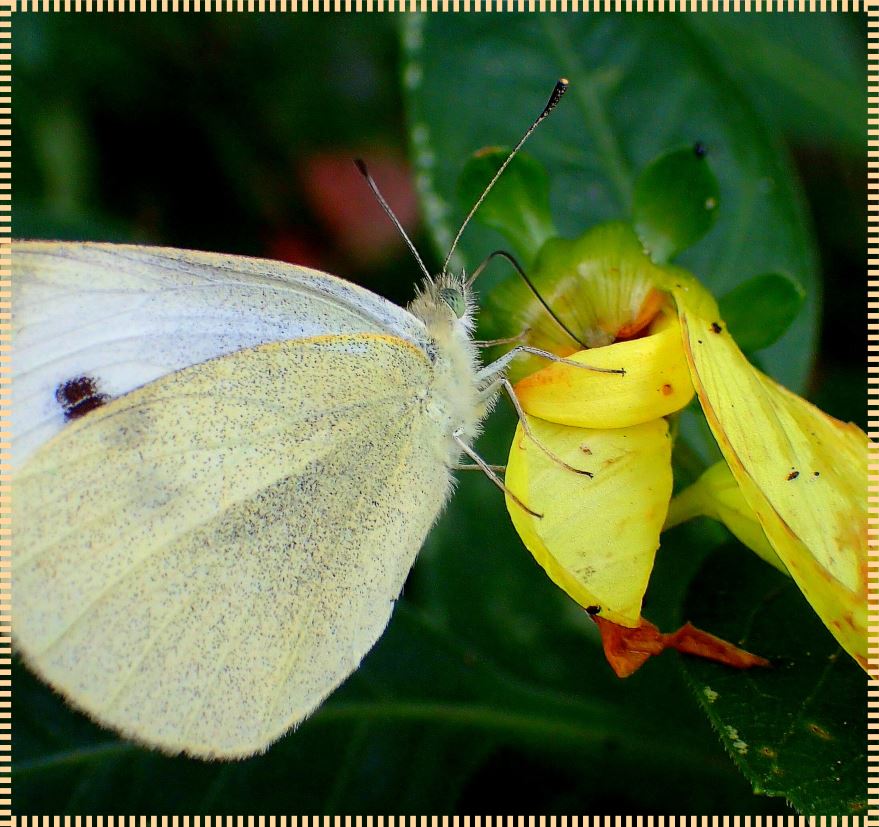
Away from the crowd. (1) Photo by Thomas Peace c. 2016

Away from the crowd. (2) Photo by Thomas Peace c. 2016
True perception involves seeing the whole in a sensitive way without the contamination of isolated (taught, habitual) images. Distortion occurs when the supposed (but false) whole is seen fragmentarily through a mental screen of conditioning. For instance, it is in vogue to say that “I am one with the beauty of nature”… or to identify oneself in a special connection with magnificent, towering trees or a breathtaking mountain range. One fragmentary image, however, identifying itself with other images… is what it is: a sequence of fractional image making. (Few, by the way, identify themselves with people who are mentally or physically handicapped or with disappearing coral reefs; maybe if they observed them without a mere fractional center… more good things would get done). Real wholeness exists beyond the boundaries of thought. These boundaries include the fallacious center that feels in control of what are considered “subservient thoughts.” Thought/thinking projects this center as being separate from other thoughts and as being separate from what is perceived (through the screen of thought); this center has (and is) an essence of separation. Real wholeness does not put a separative, isolated image of a (fallacious) center on a psychological pedestal; real wholeness does not have a supposedly central image that merely identifies itself (at times) with other chosen, select images — like breathtaking mountains — while (at other times) it purports to be domineering over “other” images (whether they be internal or external) from a distance.
Most people don’t care deeply about true or deep perception; they have accepted crude, mundane ways, (and they continue to perceive through — and “as” — these mundane, superficial ways, without going deeply beyond them). In these banal, mundane ways, most inevitably get bored and feel unfulfilled, which is (obviously) due to clinging to the old and stale. They continue to cling to the old and stale ways, and they are afraid to let them go. Untold many, over centuries, have each relied on and believed in a domineering and manipulative center that is (supposedly) in charge of the rest of thinking… and the world remains in crisis; deep harmony rarely emerges out of distortion. The irony in this, unfortunately, is that most will not care to delve into this and transcend the fractional center; yet it is this very so-called center (because of its unnecessary friction and conflict) that keeps them in psychological isolation that is dull, lonely, distorted, second-hand, deceitful (and that is not dynamic while it creates a space of limitation that directly leads to boredom and inner sorrow). The serious mind that sees the falsity of such a center is, on the other hand, joyous, harmonious, original, whole, and beyond deep deception. Falsities are not just in some of the age-old, infantile beliefs of man; they go to the very essence of what consciousness entails. Transcending them is true liberation and bliss… not all that phony stuff.

Sharing (1) Photo by Thomas Peace c. 2016

Sharing (2) Photo by Thomas Peace c. 2016
When we are violent and mentally formulate an ideal of nonviolence, we set up an “idealistic image” for the center of self (which is itself an absorbed, learned image) to strive towards. That “idealistic image,” being a fabricated construct of the brain, is a symbolic pattern that is not — much the same as the image of an isolated (controlling) center — real (other than being a fabrication of the mind). It may be far more prudent to give attention to the actual violence as it is occurring (without merely looking at the violence with separation and imagery). Then violence is not merely something that you have; it is what you actually are. Then you are not separate from the violence. Giving all of your energy to understand it may require that it be seen without a fallacious center trying to do something about it from a distance. In this, there would be no distance of space, nor any distance of time; (there, in other words, would be no spatial distance between a fabricated “center or ego” and the violence… and there would be no psychological time for the fallacious “center” to “have” to try to get rid of the violence.) Superfluous ideals of nonviolence need not (necessarily) be manufactured; if they were, they likely would create space, time, and conflict in the mind, sway attention from the actuality of violence, and would likely tend to support a false (isolated) center that focuses away from the learning, understanding, and true relationship regarding violence; a false center is (in itself) a form of violence; it is a man-made (isolated) image (that projects indifference, separation, and conflict).
Instead of being aware of violence and deeply learning about it (and therefore fundamentally going beyond its many ways), merely mentally saying (with that old, procrastination trick) that one will be “better” in the future involves (the space of time). The false center additionally forms (space) between itself and so-called others. This space and the space of time (psychologically) are intrinsically the same in many respects. Intentionally hurting so-called “other” life-forms is a form of violence. Jealousy is a form of violence. Envy is a form of violence. Racial prejudice is a form of violence. Indifference is a form of violence. Violence exists in many formats. If one fragment merely tries to get rid of another fragment (that is seen with separation)… then conflict continues (in one form or another) and the mind remains immersed in violence. Most have no true relationship with others and no true relationship with violence; so the violence continues (in society) as it does.

Eastern Amberwing. (1) Photo by Thomas Peace c. 2016
Eastern Amberwing. (2) Photo by Thomas Peace c. 2016
*********** This writer would just like to say, “thank you!” to those of you who have been liking and/or commenting on my posts, while being open-minded about it. Of course, to go beyond the superficial, one goes beyond my photos; we are well aware that many are merely satisfied with the photos; it’s not (fortunately) just about the photos. A lot of what is written here, we know, is way beyond the norm; thank goodness for that! Many of the best scientists have said that reality is likely way different than what we have been lead to believe up to this point… way different than what we can imagine. (That is for sure!) I am very appreciative of those of you who stick with this and continue to read, even though, at times, it must be very difficult to swallow or stomach. I’ve always deeply cared about the truth, no matter how uncomfortable the answers may be, no matter what was revealed. Those who do the same, this movement deeply admires. (Truth is beautiful, and there are real treasures if one is open, independent, passionate, honest, and not afraid to go beyond the primitive, antiquated ways.) Too many of us are like clay that (over time) hardens after it has been molded by (equally desiccated) others. *************
Thinking — as a process — is fractional and sequential. Thinking involves a sequential series of patterns; these patterns are always symbolic, limited, and (unless rare insight occurs, influencing them) merely dependent on banal, past memories and ordinary experiences. Patterns, in a sequence, constitute time; thinking and time are not two separate things. Experiencing, in most minds, is dictated — as to how it takes place and manifests — by implanted, past memories. When, as it does with most people, a learned and supposed static self-image seems to be claiming (from a supposed psychological distance) to have control and be dominant over moving, rearranging, sequential, symbolic thought-patterns that thought/thinking considers such a self-center to have power over via managing and authoritatively manipulating… deception takes place. If the supposed central image is not — in reality — central at all, and if it is merely another one of the images (which it is), then things are not as they appear and there must be a significant paradigm shift; otherwise, all kinds of misbehavior and distortion occurs.
A dominating center that — in reality — is not truly dominating and not, in any way, central… creates a tremendous amount of havoc for the (unfortunate) mind miseducated to contain (and “be”) such an array. The havoc involved manifests as needless inner friction, inner conflict, fabricated space, needless dominancy, false glorification, and needless separation. When one segment claims to be dominant and “in control” of other sections (from a fallacious distance)… inner tyranny, friction, struggle, and pseudo-power-control materialize; these often manifest (outwardly) as conflict, outward dominance, and violence in the external world. Additionally, such a false center inevitably leads to the cultivation selfishness, jealousy, and competition; it fosters inner self-aggrandizement, indifference, and isolation. The supposed center is considered permanent, most important, and lasting, while the other thoughts and feelings are considered subservient, more or less temporary, and as something to be used. Surgeries on the corpus callosum within the brain, resulting in two fields of consciousness, are indicative of the falsity of a permanent center. Yet, psychiatrists and psychologists still promote antiquated methodologies which continue to constrain the mind into practices promoting a fallacious center.
A true and intelligent paradigm shift would transcend these false bonds and conceitful ways. A genuine, beautiful psychological transformation would occur when the mind acts — not merely reacts — as a whole without false separation and delusive, fallacious space. Then, when reflection takes place, one is not something separate from the reflection; then, when compassion occurs, one is not something separate from compassion. Since so many thoughts are fractional, limited symbols… the holistic mind would often intelligently go beyond them; the whole is more than the sum of the parts. In this, no crude, dominating part would exist to stupefy, tyrannize, manipulate, or intervene. In this lack of friction and loss of falsity are bliss and integrity. In such wholeness, wisdom manifests, eternity manifests.
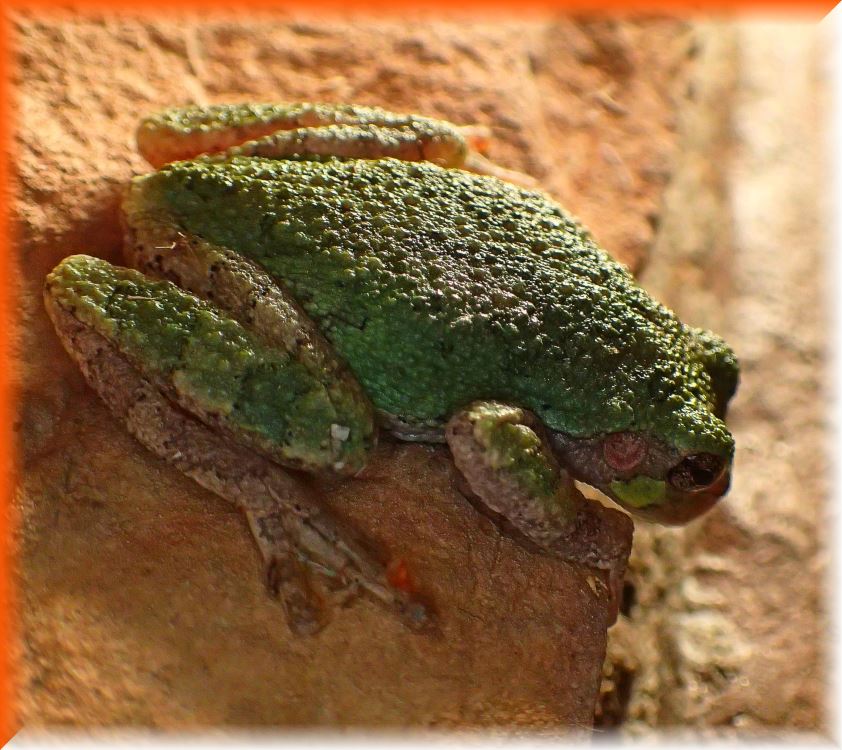
Looking Downward (1) Photo by Thomas Peace c. 2016

Looking Downward (2) Photo by Thomas Peace c. 2016
When this WHAT IF
rumin
8ed on what MIGHT BE,
a
f
ear
interrupted and re
main
ed
as some
thing unpleasant
2 be elimin
8ed
by what considered
itself
2 besomewhat sepa
r8ed from the
f
ear
that thought thoughtithad
& also con
sidered it
self
separatefrom(&controlling)
images projecting the
possible future
& also
separate from the
whole of
time
toc
tic
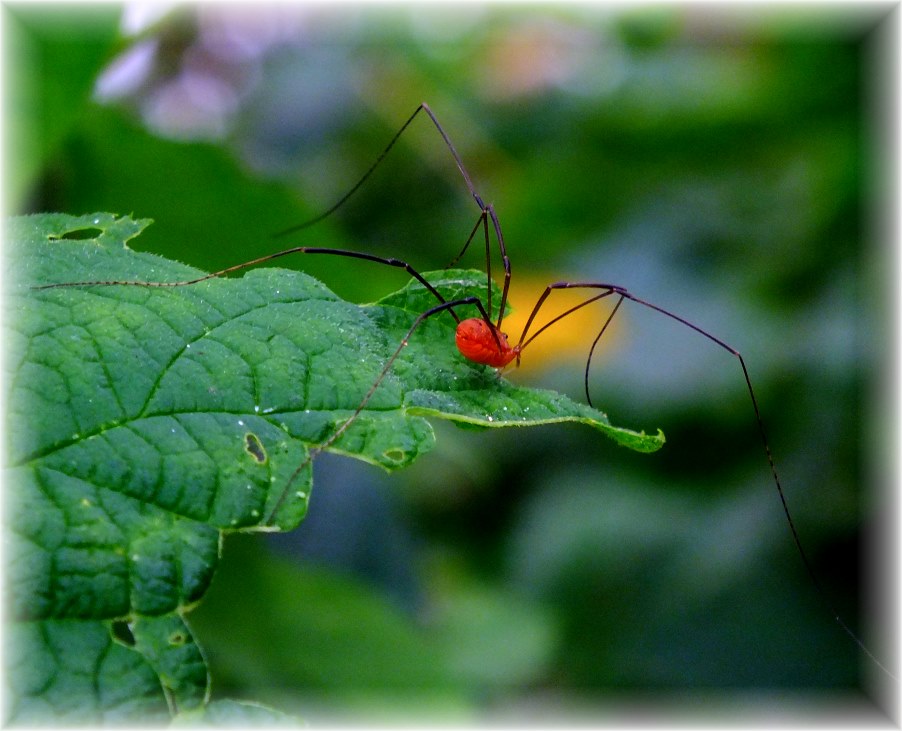
Mommy Shortlegs. (1) Photo by Thomas Peace c. 2016
Mommy Shortlegs. (2) Photo by Thomas Peace c. 2016
When laziness happens, laziness is not what you have…
laziness is what you are.
When indifference happens, indifference is not what you have…
indifference is what you are.
When anger happens, anger is not what you have…
anger is what you are.
When distortion looks…
distortion is what is seen.
When fear happens, fear is not what you have…
fear is what you are.
When compassion happens, compassion is not what you have…
compassion is what you are.
When understanding happens, understanding is not what you have…
understanding is what you are.
When recognition happens, recognition is not what you have…
recognition is what you are.
When wisdom happens, wisdom is not what you have…
wisdom is what you are.
Bellis Perennial. (1) Photo by Thomas Peace c. 2016
Bellis Perennial… Through the Looking Glass Version. (2) Photo by Thomas Peace c. 2016
The moment that a psychological fear — not necessarily threatening physical harm — occurs, simply be the fear, without merely looking at it with (and “from”) separation. Do not (as you learned from the past) merely try to avoid it, or rationalize it, analyze it, judge it, condemn it, or wish it was not happening. Simply be what it is without some (supposed) center looking at it from a (supposed) distance. If a legitimate relationship occurs with a fear, then the mind has much more clarity and energy to perceive with (and “as”) order and integrity. Most people have tension with their fears, involving conflict, friction, and avoidance; they look at “their” fears with images of distance and separation; many feel the more distance and separation… the better. Fear is only really diminished and solved when it is understood in a precise, legitimate relationship… not when there is needless friction, separation, strife, struggling, tug-of-war tension, and piecemeal analysis of fear. Analysis of fear involves — and is — time. A precise relationship with fear is not something that requires time or uncovering. If there is a precise, legitimate relationship (i.e., intelligent relationship) with fear there may be no need for time and duration (which is what analysis is) to better understand it (i.e., fear) in the future. If the future’s perspective (even with loads and loads of analysis having occurred) on fear still involves separation and conflict (as it does when the analyzer is supposedly different from the analyzed), it will not have understood fear to any profound degree; there is no more ideal moment to delve into it and understand the depth of it than when it actually takes place. Analyzing it later involves distance; most people look at fears through (and “as”) distance; such separation is of conflict/friction, and does not deeply flower into profound understanding and immense insight. Fear requires time for its existence. Without time, fear is not. Employing analysis and time to deal with fear may not be the most prudent thing to do.

Roses in the making. Photo by Thomas Peace c. 2016
“All the world’s a stage,” wrote William Shakespeare in “As You Like It.” That stage, too, is the mind and the perceptions of (and “as”) the mind. Whatever characters — as the thoughts and mental images of the mind — that make an appearance on that stage are inevitably what was absorbed from imitating others or from copying and taking mental snapshots of the external world. How these snapshots were taken and how they become rearranged, recognized, and recalled in (and “as”) consciousness has always involved learned and inherited processes. Snapshots and thoughts are of a partial, piecemeal, fragmentary nature; they are never the complete essence of that which they try to capture. The usage of supposed volition regarding the manipulation of these thoughts and images is itself sketchy and quite questionable, since — if truly intelligent observation is taking place — the “I” or supposed center that is allegedly manipulating is likely itself another specimen of the learned (sequential) images or thoughts. Mentally, whatever appears upon the stage (of consciousness) is fundamentally old and of the past; this is because it comes from stored memory (which is always of the accumulated past). Most of us are mentally existing as these images and thoughts (brought out and rearranged) from the past. Most of us are living in the past.
That stage — of consciousness — can exist (some of the time, anyway) without the components of the past making their appearance upon it. Then there is no spurious volition; then there are no obtrusions from (and “as”) the past… neither in the form of thought-oriented symbols nor imagined visual (or auditory) snapshots. Technique and practice have nothing to do with this, as techniques and practices are all extensions of the old, dead past. Then the stage is not the same-old stage anymore.
When the stage is truly empty naturally and intelligently, without having willed anything, or thought anything, or practiced anything, then it may be beyond the concocted, the old past, the symbolic, and the partial. When that takes place, the stage is not of mere experience, partial images, learned symbols, and jaded characters. You know, a limited little stage, with superficial dimensions, is what anyone can recognize and fill with the old and ordinary. However, a living, dynamic, whole, uncorrupt, limitless (immeasurable) stage is another thing altogether. Such a stage (in life) is beyond measurement by the antiquated patterns of the hoarded past.
The learned image of self (or “me”) creates an intrinsic radius (from a center) and a circumference around itself… with limited space between what is considered the central “me” and that which is observed. It is this learned image and absorbed space that helps manufacture a stage of limitation. Such a stage, with its concocted (or learned) center and a radius and circumference, is full of absorbed demarcations/boundaries. Compassion can take place when the falsity of that stage is wisely perceived. Such compassion involves eternity; it goes beyond the many limitations. If it is not perceived with (and “as”) wholeness and integrity then there will not be much compassion. There is no wholeness in a limited, false center (thinking that it is the center of the stage); such a center is partial and learned; neither does the limitless (which is not something that can merely be learned) manifest for such a center.

Two Together. Photo by Thomas Peace c. 2016
Boredom never occurs to the mind that is without a spurious, central regulator that is always dependent upon experience. If the mind is its own energy it does not always have to depend upon outside patterns of energy to function joyfully. So many depend on outside influences, outside patterns and forms. Often they internalize these patterns and forms and merely look with the accumulated remembrances of these. So many depend on internal influences, internal patterns and forms. However, a mind that often looks without merely accumulating, without merely storing patterns and attributes… may perceive freshly and joyfully without the dead and dusty past. When the mind is fresh it renews itself from moment to moment, beyond mere accumulation and storing. Without being dependent upon experiences at all times, it may enjoy experiences, but it often goes beyond them. Then boredom rarely or never sets in. If there is no false center to be entertained, then the mind is free of a learned center that was accumulated from others; such a mind may also be free of many other types of accumulated patterns, forms, and images (oftentimes). For instance, when perception of a creature takes place, it need not merely label it and look at it with a sense of separation. Or if it does label it, there is a “going beyond the label,” and the animal is seen without merely pigeonholing it, categorizing it, and looking at it from a separative stance. Such a mind is free to be fresh and uncontaminated, without the stale past and stored symbols. Boredom is not freedom.

Well, I Toad You So! Video by Thomas Peace c. 2016
There is space between what is seen outwardly (i.e., there in the outer environment) and — for most of us — there is space between what is considered the central controller (i.e., the “I”) and the other (controlled) thoughts. It may be, however, that there is no space between the so-called central controller and the other thoughts whatsoever. Correct perception would be the thoughts or images of the mind (including the thought of “I”) without the imagined space (of using them at a distance) that most people have (and “are”). A mind with less self-deception would function more accurately with less friction and conflict than would a mind full of falsities and concocted limited space. Asserting power and domination (inwardly), when it really isn’t there, may be one of the reasons why people assert power outwardly, trying to dominate over others (or other life forms) while not perceiving their true relationship with them. True relationship, which often involves real compassion, insight, and holistic seeing, is what negates limited space and superficial domination. So many of us extend outwardly what we are inwardly. So many of us take this inward separation, domination, and limited space and (also) utilize it to look outwardly. Indifference is often what then occurs. All thought is limited, but thinking that one is something separate from thought (controlling it) from some sort of inward distance… is much more limited.
Instead, we can transcend inner (false) conflict, transcend separation (that really isn’t there if one sees accurately) and go beyond mere domination and isolation. We can tear down the walls that separate and divide us. We cannot do that fully, however, unless we go beyond our primitive inner separations and fragmentary ways. We can do this. There is something magical and whole beyond limited inner and outer perspectives, beyond mere (absorbed) limited space and conflict.

Spring flowing. Photo by Thomas Peace c. 2016
You need space (don’t you?) to discover “exciting
things” out there
(out there apart from what you are)
There’s only one problem with that
that they didn’t teach you
… which is:
Such space is always limited
and a mind that merely depends
on that limitation
is always limited
A mind that sagaciously goes beyond
such limited space
dies to limitation
and (in such psychological dying)
lives in (and “as”)
a boundless realm
beyond the isolation of
symbolic words, egotistical centers,
habitual cravings, and restricted beliefs
Mostpeople depend on limitation
and are that limitation
And there is nothing perceived
apart from what you are
Limited Space (1) Photo by Thomas Peace c. 2016
Limited Space (2) Photo by Thomas Peace c. 2016
“And what the dead had no speech for, when living,
They can tell you, being dead: the communication
Of the dead is tongued with fire beyond the language of the living.” — T.S. Eliot
Excerpt from my book, which includes, just as it does within the book, another one of the many poems, by famous poets (who are deceased), that seem to help corroborate what i write about:
The “I” that says it sees the “trees” is a manmade, fabricated symbol that is unnecessary; it can be referred to if it represents the whole; however, if reference to it involves positing that the perceiver is something separate from the perceived, then miscalculation and error have taken place. The patterns that one perceives are the patterns that one is; such patterns compose and constitute consciousness. Without such patterns, ordinary consciousness is not possible. If one is supremely intelligent, one can be a mind that does not merely depend on patterns, at all times, in order to healthily function. Such a mind can function as an immense, quiet stillness that is beyond the mechanizations of patterns and attributes; but even this goes only so far and, to remain healthy, the mind must often look at trees, rivers, and other wonderful, flowing manifestations of the earth. It must look at them without separation.
To go beyond the confines of limited patterns, one must first realize that one’s consciousness is not at all separate from the patterns and images that it perceives and functions as. In other words, if one observes things merely via conflict and miscalculated separations, one is then observing with great error. Such error often merely sees itself as separate from the patterns and conflict that compose what it is. If one’s erroneous observations are a millstone around one’s neck, how can such a one have the energy to transcend into a vast, intelligent, placid stillness that is open to the possibility of visitation from the immeasurable benediction of what is truly sacred? A broken mind, full of separation, would be incapable of moving beyond its dead borders that separate it from everything else.
from Wallace Stevens:
THEORY
I am what is around me.
Women understand this.
One is not duchess
A hundred yards from a carriage.
These, then are portraits:
A black vestibule;
A high bed sheltered by curtains.
These are merely instances.

Beeing us. (1) Photo by Thomas Peace c. 2016

Beeing us. (2) Photo by Thomas Peace c. 2016
Once, some time ago, someone asked me, “How much free will do we have?” My answer shocked the questioner. Have you every pondered about how much of what we do and think is conditioned, is essentially reaction? Obviously, the mind is based on and heavily dependent upon the physiology of the brain; the physiology of the brain involves biochemical processes that directly influence thought, awareness, and insight. Of the last three things mentioned in the aforementioned sentence, one of them (i.e., thought) is definitely of a residual quality, in the realm of reaction. Thought is always a reaction “about” something, and (being in, and of, the realm of reaction) it is always secondary in one way or another. All thought is inherently reactionary and symbolic, and as such it is what follows actual occurrences as a result or as a series of reactions. Shadows are secondary.
Most of us function mainly — because of the way we were educated — by (and “as”) thought/thinking. We view the world and react to it via thoughts. Most of us do not realize the profound significance regarding the possibility that thought — by its very intrinsic nature — is essentially totally conditioned. The thought of “I” or “myself” is (as we have suggested many times before) a part of all this. This “I,” for most of us, continues to act (actually react) as if it is “in control” of the “other” thoughts and mental processes. However, this is basically a totally fallacious process — whether we like it or not — as has been shown in previous posts concerning such things as the surgical severing of the corpus callosum in humans, thus producing two separate fields of consciousness. (Do not be overly perturbed about all this… as eternity still exists if one just takes the time to intelligently discover.)
As this movement has said before (and more elaborately in a previous posting), when one was very young, as a child, one had a very precious Raggedy Ann (type) doll that one kept as a close, dear friend. As time went by, one came to the sudden realization that the doll was in no way a friend or “feeling.” It was rather shocking, but maturity and intelligence adjusted to the realization just fine. Later, one went through a similar kind of thing… only this time is wasn’t a doll; it was the central ego, or “I,” or “me.” It took a certain degree of maturity regarding the realization about the doll; similarly, it took a certain degree of maturity regarding the realization concerning the supposed central ego or “I.” Most people have not yet reached that second realm of maturity… from what has been seen by this movement. Even people who say that they are one with everything and who claim to meditate haven’t really done it. Perhaps this is one the reasons why real enlightenment (in the profound sense) is so elusive for them. So many of us depend on (and think we exist as) this supposed central “I” or “me.” Another point: the self cannot decide to meditate any more that it can decide to be instantly enlightened. Most of us do not realize the deep implications regarding conditioning, the self, control, and time.
Thought — all thought — takes time. Deep insight is spontaneous and is essentially what does not take time. Few of us live in (and “as”) deep insight because we were educated to exist in (and “as”) a certain way, and we have never fully seen the immaturity of it. Why change? True insight is order beyond the influence of man, is compassion, is love, is immense and of integrity. Thought is symbolic; steadfastly remaining in (and “as”) mere symbols (especially a non-central, illusory one) is — whether we agree to this or not — suffering. We can do better.

Squirrely. Photo by Thomas Peace c. 2016
We steadfast nouns supposedly dwell in a scientific watery world of wriggling verbs
where nothing is solid and where we shouldn’t exist
where movements as all cigarettesmokespacetime are perpetually changing
as silky smooth adjectives write themselves and bring you to their list
Here and there adverbs endlessly and wholeheartedly played
Said I: “My nominative singular pronoun was bound to go bust”
Through the looking glass, prepositional phrases swayed like beautiful flowers
In a verb-oriented cosmic movement: nouns and this self… inevitably turning to rust
Say they syntax matters a lot of a whole hell
We’ve got free will alright; you can bet all of your relatives’ ingrained conditioning on that
And we’ve enough determiners to keep these phantasmagoric choices exceptionally happy
But when nouns become old-fashioned, you’ll have to give up your hat
Eternally flowing. (1) Photo by Thomas Peace c. 2016

Eternally flowing. (2) Photo by Thomas Peace c. 2016
Love can be in the air,if perception occurs without distortion,
if looking takes place without a so-called central ego
A center apart can’t have profound love in the heart
if everything is seen via ruptured partition and cold separation
They are not thoughts from a true center;
“I” and “mine” are merely accumulated,learned thoughts
Though often cooperative (within “their own limited,little tribe”),
diminutive ants perceive with much friction and separation…(Must we?)
Not “these” are “my” thoughts,
but… “these thoughts”… “these perceptions”
You did not merely “have” jealous thoughts about something;
jealousy was what you were
Not just: “the beautiful bird flapping its wings”…
The wings are the beautiful bird
Not just: “my ideas”…
The ideas are the consciousness
Not just: “I saw the tree”
…but: “The perception of the tree was what you were”
Not: “I see and feel the many branches”
…but: “The many branches are not separate from what one is”
Not: “I looked into the mirror and admired myself”
… but: “Due to some undistorted poetry,the truly intelligent mind can possibly reflect upon what transcends mediocre separation”
Not: “These lines of poetry are presently being read by me”
… but: “These words of poetry, as reading presently occurs, are not separate from from what one is”
Not just: “Now I am going to meditate” (as if conditioning can choose to be the unconditioned… as if the smoke can choose to be the flames)
… but (the realization that): All thoughts (the “I” included as another thought, which it is) cannot ever decide to become (and then actually become) the freedom and non-limitation that they are not
Not (if you are very wise): “I stopped for oncoming traffic”
… but: “The oncoming traffic stopped”

Friction upon treeland. Photo by Thomas Peace c.2016
 Tom's Nature-up-close Photography and Mindfulness Blog