All Posts Tagged ‘psychology

Post

Fears (and how we deal with them)…

25 comments


The moment that a psychological  fear — not necessarily threatening physical harm — occurs, simply be the fear, without merely looking at it with (and “from”) separation.  Do not (as you learned from the past) merely try to avoid it, or rationalize it, analyze it, judge it, condemn it, or wish it was not happening.  Simply be what it is without some (supposed) center looking at it from a (supposed) distance.  If a legitimate relationship occurs with a fear, then the mind has much more clarity and energy to perceive with (and “as”) order and integrity.  Most people have tension with their fears, involving conflict, friction, and avoidance; they look at “their” fears with images of distance and separation; many feel the more distance and separation… the better.  Fear is only really diminished and solved when it is understood in a precise, legitimate relationship… not when there is needless friction, separation, strife, struggling, tug-of-war tension, and piecemeal analysis of fear.  Analysis of fear involves — and is — time.  A precise relationship with fear is not something that requires time or uncovering.  If there is a precise, legitimate relationship (i.e., intelligent relationship) with fear there may be no need for time and duration (which is what analysis is) to better understand it (i.e., fear) in the future.  If the future’s perspective (even with loads and loads of analysis having occurred) on fear still involves separation and conflict (as it does when the analyzer is supposedly different from the analyzed), it will not have understood fear to any profound degree; there is no more ideal moment to delve into it and understand the depth of it than when it actually takes place.  Analyzing it later involves distance; most people look at fears through (and “as”) distance; such separation is of conflict/friction, and does not deeply flower into profound understanding and immense insight.  Fear requires time for its existence.  Without time, fear is not.  Employing analysis and time to deal with fear may not be the most prudent thing to do.

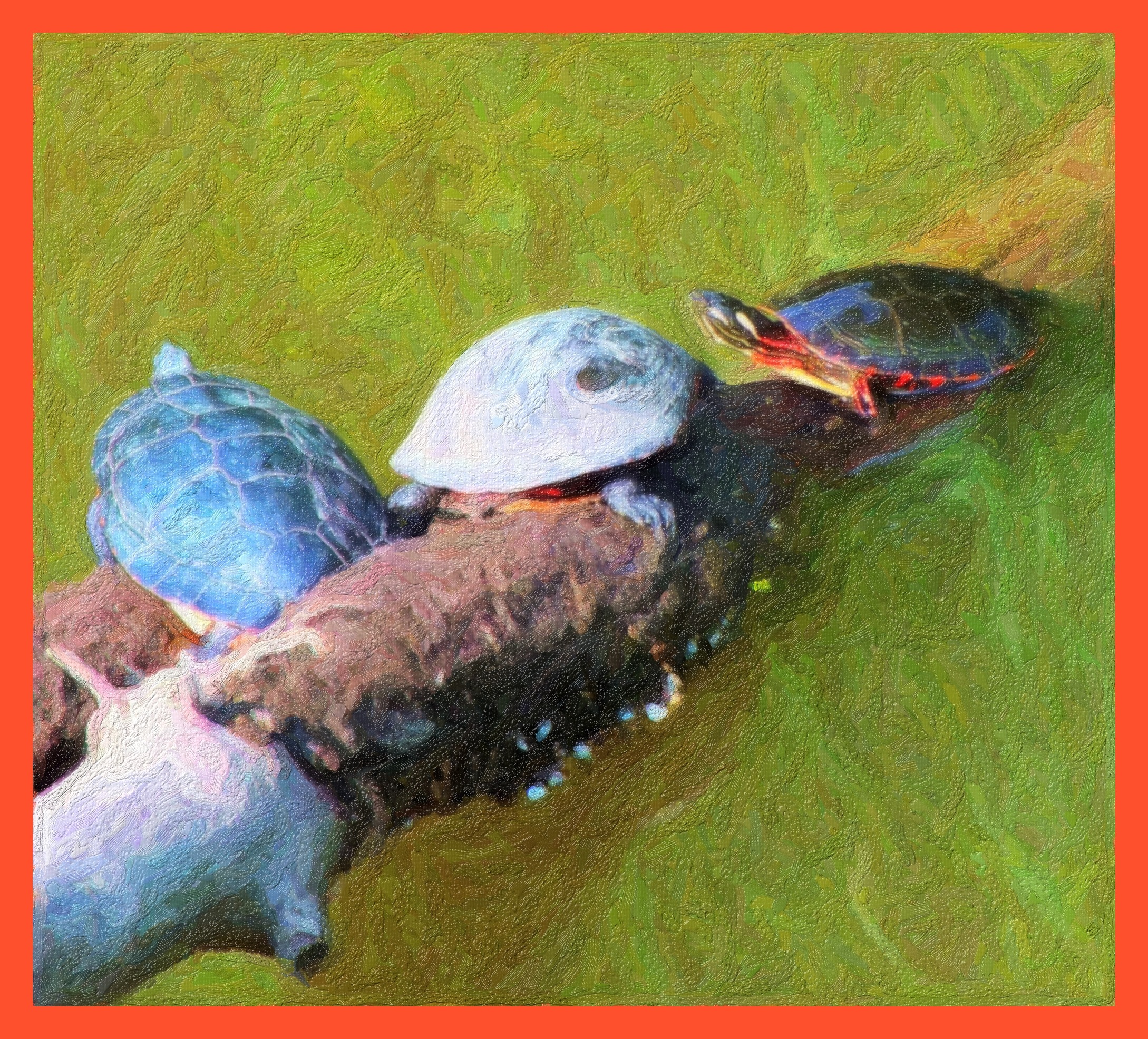
Roses in the making. Photo by Thomas Peace c. 2016

Roses in the making. Photo by Thomas Peace c. 2016


Post

All the world’s a stage…

16 comments


“All the world’s a stage,” wrote William Shakespeare in “As You Like It.”  That stage, too, is the mind and the perceptions of (and “as”) the mind.  Whatever characters — as the thoughts and mental images of the mind — that make an appearance on that stage are inevitably what was absorbed from imitating others or from copying and taking mental snapshots of the external world.  How these snapshots were taken and how they become rearranged, recognized, and recalled in (and “as”) consciousness has always involved learned and inherited processes.  Snapshots and thoughts are of a partial, piecemeal, fragmentary nature; they are never the complete essence of that which they try to capture.  The usage of supposed volition regarding the manipulation of these thoughts and images is itself sketchy and quite questionable, since — if truly intelligent observation is taking place — the “I” or supposed center that is allegedly manipulating is likely itself another specimen of the learned (sequential) images or thoughts.  Mentally, whatever appears upon the stage (of consciousness) is fundamentally old and of the past; this is because it comes from stored memory (which is always of the accumulated past).  Most of us are mentally existing as these images and thoughts (brought out and rearranged) from the past.  Most of us are living in the past.  

That stage — of consciousness — can exist (some of the time, anyway) without the components of the past making their appearance upon it.  Then there is no spurious volition; then there are no obtrusions from (and “as”) the past… neither in the form of thought-oriented symbols nor imagined visual (or auditory) snapshots.  Technique and practice have nothing to do with this, as techniques and practices are all extensions of the old, dead past.  Then the stage is not the same-old stage anymore.  

When the stage is truly empty naturally and intelligently, without having willed anything, or thought anything, or practiced anything, then it may be beyond the concocted, the old past, the symbolic, and the partial.  When that takes place, the stage is not of mere experience, partial images, learned symbols, and jaded characters.  You know, a limited little stage, with superficial dimensions, is what anyone can recognize and fill with the old and ordinary.  However, a living, dynamic, whole, uncorrupt, limitless (immeasurable) stage is another thing altogether.  Such a stage (in life) is beyond measurement by the antiquated patterns of the hoarded past.  

The learned image of self (or “me”) creates an intrinsic radius (from a center) and a circumference around itself… with limited space between what is considered the central “me” and that which is observed.  It is this learned image and absorbed space that helps manufacture a stage of limitation.  Such a stage,  with its concocted (or learned) center and a radius and circumference, is full of absorbed demarcations/boundaries.   Compassion can take place when the falsity of that stage is wisely perceived.   Such compassion involves eternity; it goes beyond the many limitations.  If it is not perceived with (and “as”) wholeness and integrity then there will not be much compassion.  There is no wholeness in a limited, false center (thinking that it is the center of the stage); such a center is partial and learned; neither does the limitless (which is not something that can merely be learned) manifest for such a center.

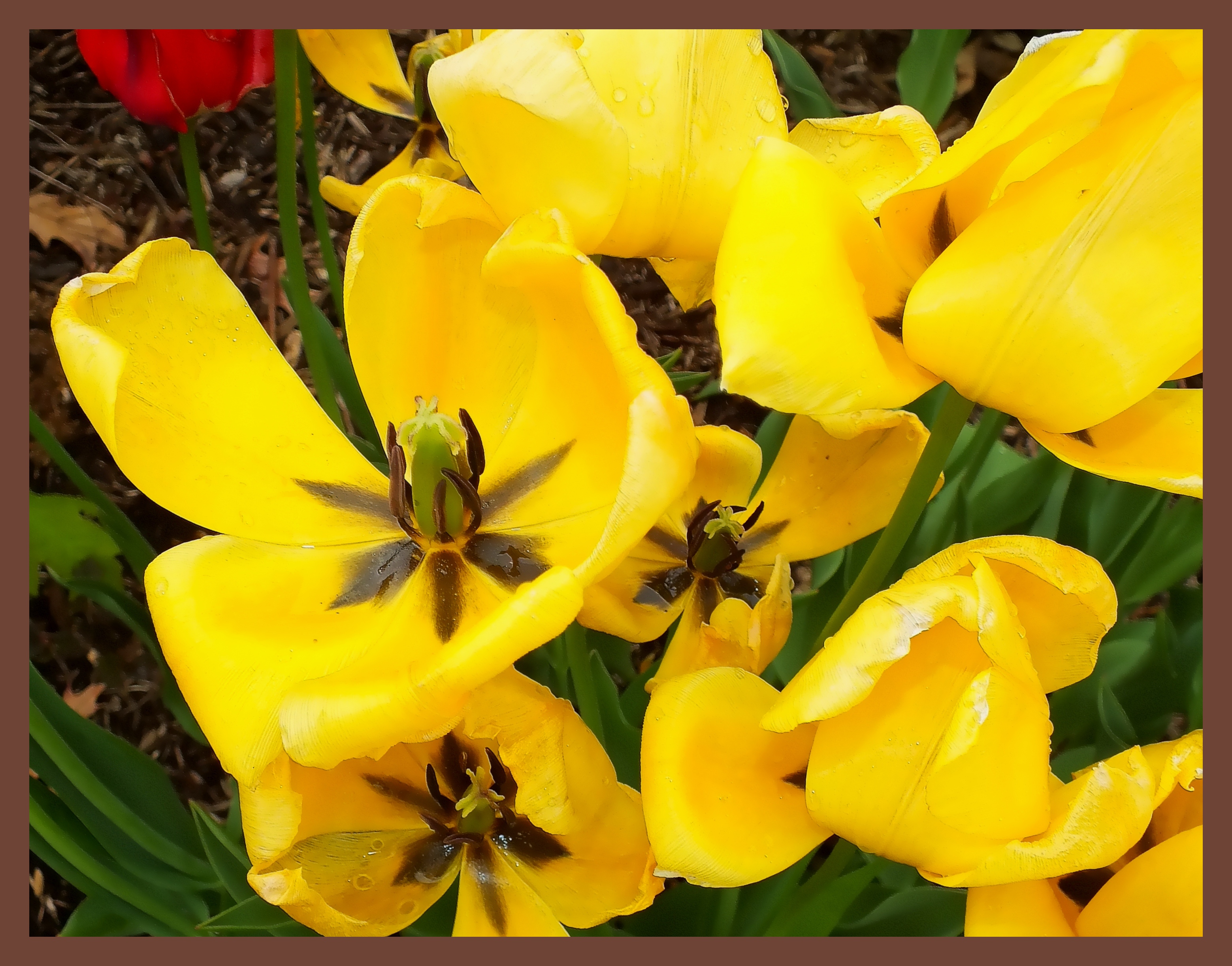
Two Together. Photo by Thomas Peace c. 2016

Two Together. Photo by Thomas Peace c. 2016

Post

Regarding boredom…

15 comments


Boredom never occurs to the mind that is without a spurious, central regulator that is always dependent upon experience.  If the mind is its own energy it does not always have to depend upon outside patterns of energy to function joyfully.  So many depend on outside influences, outside patterns and forms.  Often they internalize these patterns and forms and merely look with the accumulated remembrances of these.  So many depend on internal influences, internal patterns and forms. However, a mind that often looks without merely accumulating, without merely storing patterns and attributes… may perceive freshly and joyfully without the dead and dusty past.  When the mind is fresh it renews itself from moment to moment, beyond mere accumulation and storing.  Without being dependent upon experiences at all times, it may enjoy experiences, but it often goes beyond them.  Then boredom rarely or never sets in.  If there is no false center to be entertained, then the mind is free of a learned center that was accumulated from others; such a mind may also be free of many other types of accumulated patterns, forms, and images (oftentimes). For instance, when perception of a creature takes place, it need not merely label it and look at it with a sense of separation.  Or if it does label it, there is a “going beyond the label,” and the animal is seen without merely pigeonholing it, categorizing it, and looking at it from a separative stance.   Such a mind is free to be fresh and uncontaminated, without the stale past and stored symbols.  Boredom is not freedom.

Well, I Toad You So! Video by Thomas Peace c. 2016

Well, I Toad You So! Video by Thomas Peace c. 2016


Post

Beyond limited space…

13 comments

There is space between what is seen outwardly (i.e., there in the outer environment) and — for most of us — there is space between what is considered the central controller (i.e., the “I”) and the other (controlled) thoughts.  It may be, however, that there is no space between the so-called central controller and the other thoughts whatsoever.  Correct perception would be the thoughts or images of the mind (including the thought of “I”) without the imagined space (of using them at a distance) that most people have (and “are”).  A mind with less self-deception would function more accurately with less friction and conflict than would a mind full of falsities and concocted limited space.  Asserting power and domination (inwardly), when it really isn’t there, may be one of the reasons why people assert power outwardly, trying to dominate over others (or other life forms) while not perceiving their true relationship with them.  True relationship, which often involves real compassion, insight, and holistic seeing, is what negates limited space and superficial domination.  So many of us extend outwardly what we are inwardly.  So many of us take this inward separation, domination, and limited space and (also) utilize it to look outwardly.  Indifference is often what then occurs.   All thought is limited, but thinking that one is something separate from thought (controlling it) from some sort of inward distance… is much more limited.

Instead, we can transcend inner (false) conflict, transcend separation (that really isn’t there if one sees accurately) and go beyond mere domination and isolation.  We can tear down the walls that separate and divide us.  We cannot do that fully, however, unless we go beyond our primitive inner separations and fragmentary ways.  We can do this.  There is something magical and whole beyond limited inner and outer perspectives, beyond mere (absorbed) limited space and conflict.  

Spring flowing. Photo by Thomas Peace c. 2016

Spring flowing. Photo by Thomas Peace c. 2016

Post

Limited space…

12 comments


You need space (don’t you?)  to discover “exciting 
things” out there 
(out there apart from what you are)

There’s only one problem with that
that they didn’t teach you
… which is:
Such space is always limited
and a mind that merely depends
on that limitation
is always limited

A mind that sagaciously goes beyond
such limited space
dies to limitation
and (in such psychological dying)
lives in (and “as”)
a boundless realm
beyond the isolation of
symbolic words, egotistical centers,
habitual cravings, and restricted beliefs

Mostpeople depend on limitation
and are that limitation
And there is nothing perceived
apart from what you are

Limited Space (1) Photo by Thomas Peace c. 2016

Limited Space (1) Photo by Thomas Peace c. 2016

Limited Space (2) Photo by Thomas Peace c. 2016

Limited Space (2) Photo by Thomas Peace c. 2016


Post

Beyond a Broken Mind…

32 comments

“And what the dead had no speech for, when living,
They can tell you, being dead: the communication
Of the dead is tongued with fire beyond the language of the living.”  — T.S. Eliot

Excerpt from my book, which includes, just as it does within the book, another one of the many poems, by famous poets (who are deceased), that seem to help corroborate what i write about:

   The “I” that says it sees the “trees” is a manmade, fabricated symbol that is unnecessary; it can be referred to if it represents the whole; however, if reference to it involves positing that the perceiver is something separate from the perceived, then miscalculation and error have taken place.  The patterns that one perceives are the patterns that one is; such patterns compose and constitute consciousness.  Without such patterns, ordinary consciousness is not possible.  If one is supremely intelligent, one can be a mind that does not merely depend on patterns, at all times, in order to healthily function.  Such a mind can function as an immense, quiet stillness that is beyond the mechanizations of patterns and attributes; but even this goes only so far and, to remain healthy, the mind must often look at trees, rivers, and other wonderful, flowing manifestations of the earth.  It must look at them without separation.

   To go beyond the confines of limited patterns, one must first realize that one’s consciousness is not at all separate from the patterns and images that it perceives and functions as.  In other words, if one observes things merely via conflict and miscalculated separations, one is then observing with great error.  Such error often merely sees itself as separate from the patterns and conflict that compose what it is.  If one’s erroneous observations are a millstone around one’s neck, how can such a one have the energy to transcend into a vast, intelligent, placid stillness that is open to the possibility of visitation from the immeasurable benediction of what is truly sacred?  A broken mind, full of separation, would be incapable of moving beyond its dead borders that separate it from everything else.


from Wallace Stevens:


                  THEORY


I am what is around me.

Women understand this.
One is not duchess
A hundred yards from a carriage.

These, then are portraits:
A black vestibule;
A high bed sheltered by curtains.

These are merely instances.

Beeing us. (1) Photo by Thomas Peace c. 2016

Beeing us. (1) Photo by Thomas Peace c. 2016

Beeing us. (2) Photo by Thomas Peace c. 2016

Beeing us. (2) Photo by Thomas Peace c. 2016


Post

Conditioning and will…

18 comments


Once, some time ago, someone asked me, “How much free will do we have?”  My answer shocked the questioner.  Have you every pondered about how much of what we do and think is conditioned, is essentially reaction?  Obviously, the mind is based on and heavily dependent upon the physiology of the brain; the physiology of the brain involves biochemical processes that directly influence thought, awareness, and insight.  Of the last three things mentioned in the aforementioned sentence, one of them (i.e., thought) is definitely of a residual quality, in the realm of reaction.  Thought is always a reaction “about” something, and (being in, and of, the realm of reaction) it is always secondary in one way or another.  All thought is inherently reactionary and symbolic, and as such it is what follows actual occurrences as a result or as a series of reactions.  Shadows are secondary.

Most of us function mainly — because of the way we were educated — by (and “as”) thought/thinking.  We view the world and react to it via thoughts.  Most of us do not realize the profound significance regarding the possibility that thought — by its very intrinsic nature — is essentially totally conditioned.  The thought of “I” or “myself” is (as we have suggested many times before) a part of all this.  This “I,” for most of us, continues to act (actually react) as if it is “in control” of the “other” thoughts and mental processes.  However, this is basically a totally fallacious process — whether we like it or not — as has been shown in previous posts concerning such things as the surgical severing of the corpus callosum in humans, thus producing two separate fields of consciousness.  (Do not be overly perturbed about all this… as eternity still exists if one just takes the time to intelligently discover.)

As this movement has said before (and more elaborately in a previous posting), when one was very young, as a child, one had a very precious Raggedy Ann (type) doll that one kept as a close, dear friend.  As time went by, one came to the sudden realization that the doll was in no way a friend or “feeling.”  It was rather shocking, but maturity and intelligence adjusted to the realization just fine.  Later, one went through a similar kind of thing… only this time is wasn’t a doll; it was the central ego, or “I,” or “me.”  It took a certain degree of maturity regarding the realization about the doll; similarly, it took a certain degree of maturity regarding the realization concerning the supposed central ego or “I.”  Most people have not yet reached that second realm of maturity… from what has been seen by this movement.  Even people who say that they are one with everything and who claim to meditate haven’t really done it.  Perhaps this is one the reasons why real enlightenment (in the profound sense) is so elusive for them.  So many of us depend on (and think we exist as) this supposed central “I” or “me.”  Another point: the self cannot decide to meditate any more that it can decide to be instantly enlightened.  Most of us do not realize the deep implications regarding conditioning, the self, control, and time.

Thought — all thought — takes time.  Deep insight is spontaneous and is essentially what does not take time.  Few of us live in (and “as”) deep insight because we were educated to exist in (and “as”) a certain way, and we have never fully seen the immaturity of it.  Why change?  True insight is order beyond the influence of man, is compassion, is love, is immense and of integrity.  Thought is symbolic; steadfastly remaining in (and “as”) mere symbols (especially a non-central, illusory one) is — whether we agree to this or not — suffering.  We can do better.

Squirrely. Photo by Thomas Peace c. 2016

Squirrely. Photo by Thomas Peace c. 2016


Post

Latest news: Nouns are Old-fashioned…

22 comments


We steadfast nouns supposedly dwell in a scientific watery world of wriggling verbs
where nothing is solid and where we shouldn’t exist
where movements as all cigarettesmokespacetime are perpetually changing
as silky smooth adjectives write themselves and bring you to their list

Here and there adverbs endlessly and wholeheartedly played
Said I: “My nominative singular pronoun was bound to go bust”
Through the looking glass, prepositional phrases swayed like beautiful flowers
In a verb-oriented cosmic movement: nouns and this self… inevitably turning to rust

Say they syntax matters a lot of a whole hell
We’ve got free will alright; you can bet all of your relatives’ ingrained conditioning on that
And we’ve enough determiners to keep these phantasmagoric choices exceptionally happy
But when nouns become old-fashioned, you’ll have to give up your hat

Eternally flowing. (1) Photo by Thomas Peace c. 2016

Eternally flowing. (1) Photo by Thomas Peace c. 2016

Eternally flowing. (2) Photo by Thomas Peace c. 2016

Eternally flowing. (2) Photo by Thomas Peace c. 2016


Post

If perception occurs without distortion…

14 comments


Love can be in the air,if perception occurs without distortion,
if looking takes place without a so-called central ego

A center apart can’t have profound love in the heart
if everything is seen via ruptured partition and cold separation

They are not thoughts from a true center;
“I” and “mine” are merely accumulated,learned thoughts

Though often cooperative (within “their own limited,little tribe”),
diminutive ants perceive with much friction and separation…(Must we?)

Not “these” are “my” thoughts,
but… “these thoughts”… “these perceptions”

You did not merely “have” jealous thoughts about something;
jealousy was what you were

Not just: “the beautiful bird flapping its wings”…
The wings are the beautiful bird

Not just: “my ideas”…
The ideas are the consciousness

Not just:  “I saw the tree”
…but: “The perception of the tree was what you were”

Not: “I see and feel the many branches”
…but:  “The many branches are not separate from what one is”

Not:  “I looked into the mirror and admired myself”
… but: 
“Due to some undistorted poetry,the truly intelligent mind can possibly reflect upon what transcends mediocre separation”

Not: “These lines of poetry are presently being read by me”
… but: 
“These words of poetry, as reading presently occurs, are not separate from from what one is”

Not just:  “Now I am going to meditate” (as if conditioning can choose to be the unconditioned… as if the smoke can choose to be the flames)
… but (the realization that):  All thoughts (the “I” included as another thought, which it is) cannot ever decide to become (and then actually become) the freedom and non-limitation that they are not

Not (if you are very wise): “I stopped for oncoming traffic”
… but: “The oncoming traffic stopped”

 Friction upon treeland. Photo by Thomas Peace c.2016

Friction upon treeland. Photo by Thomas Peace c.2016


Post

Caught within the Camera Eye

34 comments


In photography, we want our cameras to be in good condition, with clear lenses that are not sullied with any debris or greasy smears.  If the lens of the camera is opaque or grimy, we take care of it immediately.

What about consciousness?  To be of keen understanding and discerning, holistic perception, the mind must be clear and untainted.  Distortion doesn’t perceive things for what they truly are; therefore, it is prudent to care to observe without twisted or tainted patterns or values.  A clear lens is a simple thing, even with complex, digital photography.  A clear lens is not burdened with a lot of fabricated symbols, onerous images, or profuse patterns; it is simple and pure.  The mind can be like that if it is lucky; but not if it is contaminated with the parameters and limitations that society implanted upon it.  Indeed, our rote structures of rather mechanical and/or separative observation (that we have learned and blindly accepted), including our so-called separative countries, political groups, religions, hypnotic (mat-sitting) techniques erroneously called meditation, and that so-called separate “internal controller, called ‘I’,” are all, whether we like it or not, contributing factors toward limited and contaminated perception.  Most of our mind-lenses are more than cloudy, yet we think we see just fine. 

Only an inner lens untouched by man can be of the purity to transcend distortion.

Black and White. (1) Photo by Thomas Peace c. 2016

Black and White. (1) Photo by Thomas Peace c. 2016

Black and White. (2) Photo by Thomas Peace c. 2016

Black and White. (2) Photo by Thomas Peace c. 2016


Post

Walking the Tightrope of Life…

27 comments


Life is very tough for most of us… and, on the tightrope of life, very few are truly balanced.  They lean on their leaders, their authorities, their gurus, their priests, politicians, and systems, and (through such leaning) they never are truly balanced in the true, deep sense (i.e., on their own).  Their dependence is their falling.  Only when one stands alone (with true independence) from the weight of all their symbols and systems, can one truly move in a balanced, light, and free way.  Most of us adamantly and desperately cling to and rely on (i.e., depend on) an image (which is really just another thought) of an “internal central regulator,” or “controller,” or “me.”  This image, however, is merely an “absorbed” thought (poured into us from others).  Though we habitually and tenaciously cling to it as being “central,” and our core,  there is — in reality — nothing truly central about it.  This learned image often nurtures illusory conflict, separation, indifference, and friction (both internally and externally); the mind can function vastly more efficiently without it; clinging to it is another primitive, fragmentary form of  unrefined dependence.  So, many of us have dependencies so ingrained within us we are even oblivious to their existence.  Most of us are heavily burdened with cumbersome dependencies, desires, separative viewpoints, and weighty symbols and labels (that they fabricated us as) which, inevitably, pull us down.  To be truly simple, light, unburdened, full of poise and stability is (these days, as in the past) a very rare thing.  There are those who talk and write a lot, pretending — to themselves and to others — that their systems and ways are balanced, while (in actuality) they are merely rehashing or quoting what was poured into them (furthering the mold that they emerged from and/or accepted).  Why is it that to be deeply, psychologically free and balanced is possible, but — for most humans — it occurs only very rarely?  Undoubtedly, miseducation has a lot to do with it; additionally, most of us were programmed to imitate.   We spend our days repeating what we absorbed from others; most of us are almost constantly mentally repeating absorbed symbols (and we also use these symbols to perceive).  People inevitably get bored with the same old thing — mentally repeating absorbed symbols is, indeed, old — and then (especially these days) drugs become involved.   Do drugs and alcohol (so popular in this day and age) help in regard to being truly balanced?  The answer (unless you are really inebriated and can’t walk the line) is rather obvious.  To be balanced is to exist as equilibrium and harmony.  To psychologically be in true equilibrium and harmony, the mind must understand and transcend ignorance and conflict… and that cannot take place if one merely lives as the absorbed frameworks of separation and symbolism that most people accept (and remain in) as normal.  

On the Tightrope of Life. Photo by Thomas Peace c. 2016

On the Tightrope of Life. Photo by Thomas Peace c. 2016


Post

Beyond what was taught by “many others”…

33 comments


Often, in the backyard, there “is” the trees, the birds, and animals and no “me.”   The space between things (then) — like the clear parts of a dragonfly’s wings — does not separate them.

 Beyond what was taught. Photo by Thomas Peace c. 2016

Beyond what was taught. Photo by Thomas Peace c. 2016


Post

Tweetie Revisited…

28 comments


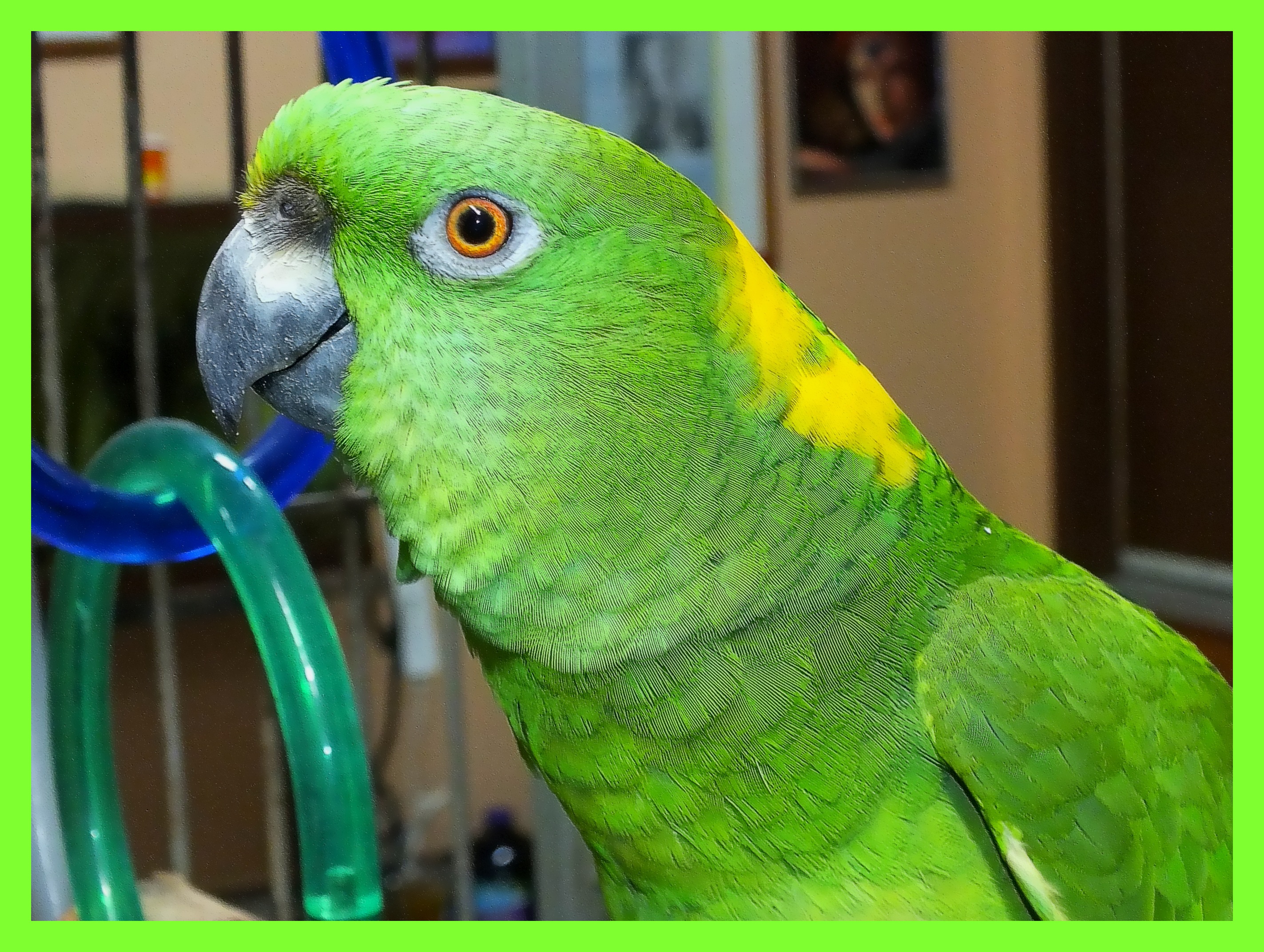
Not long ago, one posted an article about Tweetie Pie, a Yellow Naped Amazon Parrot who lives with us and who seems to have well developed comprehension and language skills.  That previous article mentioned how Dr. Irene Pepperburg’s research on avian psychology suggests that many parrots have the mental understanding of a (human) 5 year old and the verbal capacity of a 2 year old.  We play learning videos and movies all day long for Tweetie and the two other birds who live with her.  They often, by the way, watch full length movies with as much interest and zeal as any human would.  When one walks into their room during a good movie, they don’t even look at what you are doing; and they watch the movie throughout its entire duration.  Anyone who lives with parrots (or dogs or other similar animals too) has the responsibility of exercising their minds and bodies daily.  With parrots, one can daily hold their feet and move them up and down and around repeatedly (so they vigorously flap their wings), so that they get substantial exercise; additionally, toys and fun objects can be given to them to play with often.  Being intelligent, they need a lot of attention and social interaction daily.  Be sure to daily exercise yourself too; many people don’t!

I am retired, and usually home, but earlier this week, Marla and i went to the doctors.  Later, that evening, i said to Tweetie, “What were you thinking about today, Tweetie?”  Tweetie responded with: “About you!”  I then said, “How sweet; thank you, Tweetie!”  Later, while i was preparing the birds’ food next to a large perch that she was on, i said to her, “Do you want a piece of apricot?”  She said, “I do.”  Earlier, when we were at the doctor’s office, one of the nurses we were talking with said that her parents have a parrot that talks with good comprehension.  We sure know what that is about!  Whenever Tweetie talks, it always has relevant meaning; it is not just mimicry.  

I used to be a teacher of students who were multiply handicapped and who had mental retardation.  I know, good and well, that correctly answering a question pertaining to the abstract concept of “thinking” takes a rather high level of cognitive processing.  Lately, over the last few days, one has been talking to Tweetie about simple philosophy and perception “beyond thinking.”  One, of course, has kept things very simple.  When i first told Tweetie that one can look at things without thinking — such that everything is “one thing” — she looked all around carefully as if she got something out of what i said.  A few nights ago, i again talked about philosophical things — you know how it’s in my blood — and suggested looking at everything as not just being separate, but together as one.  I held my hand, with fingers spread, in front of her, and said that each finger was different from the other fingers.  Mentioning that each finger can look and act differently, i wiggled my fingers in different ways.  Then i pointed out that though each finger is different, they are all connected (and not separate), and all are together as one hand.  I said that all of us are like the fingers — all being as one thing.  I said that it is good to go beyond thinking now and then, and to look at everything as if for the first time, without just seeing things as being separate.  As i turned away from her to prepare their food, Tweetie said, “You are right!”  (This was the first time she has ever said that… and we didn’t teach it to her.)  She wasn’t brown-nosing, either; she is brutally honest.  One day, recently, for instance,  i reprimanded one of the other parrots for screaming too loud, and later in the evening, Marla opened the door to the avian room to reprimand me for having their TV on too loud.  I was in their room preparing their food at the time, and said, “Marla, is like an old grouch today.”  Tweetie then said, “You are too!” 

A couple of days after her response to my philosophical talk, i went into their area as they were watching the Muppets on television.  As i was sitting there eating a salad and watching it with them, there was an episode where western ranch hands were riding on top of cows and saying how much they loved the wonderful horses they were riding.  I laughed out loud, and said, “They’re not on horses; they are riding on cows!”  Tweetie said, “You are right!”  She was correct about her judgement of this last (factual) occurrence; whether she was correct regarding what i said philosophically is debatable (though very interesting).  Perhaps intelligent animals are more appreciative of going beyond dead symbols — and of seeing the value of direct perception — than most of us humans.  Tweetie will not likely ever go through profound enlightenment; but, then, neither will the vast majority of humans.  Usually, when i take Tweetie out for her daily exercising, i ask her how she is doing.  Her usual reply is “Pretty good!”  I’ve noticed that on those days that I’ve talked to her about going beyond thinking… she, instead, says, “I don’t know!”  Perfect answer!  People might easily say that i am nuts for talking philosophically to bird brains.  However, i have received more intelligent responses from my avian friends, lately, than i have from local humans in our area.


Eye of perception. Photo by Thomas Peace c. 2016

Eye of perception. Photo by Thomas Peace c. 2016

Post

This Movement

20 comments

 True poise, as we have said, includes intelligence, compassion, awareness, humor, balance, and transcending separation and conflict.  Part of the reason that many of us don’t have it has to do with wrong education; or, despite a wrong education, many just don’t care to go beyond the parameters of limitation.

   In previous posts, some time ago, one wrote about the brain as being like two halves of a walnut… and about how certain surgeries splitting these two halves — by severing the corpus callosum — left each half not knowing what the other half was thinking.  So, in actuality, two fields of consciousness were produced from one field, via advanced surgery.  Therefore, times and evidence has changed; yet so many of us continue to cling to the erroneous (primitive) notion of a central “I,” a central “me” or controller.  For a very long time now, one — when thinking — instead of using the term “I,” has been using the words of “this movement.”  Of course, one doesn’t verbally say “this movement,” instead of “I,” when actually talking to others; (things are at a rather unrefined and strangely unpolished level here in the Midwest U.S.A., and the rest of the world, so one just talks to them in the way that they are familiar with.)

   Clinging to the notion of a central “I,” by repeatedly using it, reinforces the perception and feeling of separation.  We were taught to function in (and “as”) this separation throughout our lives; just look at all of the competition and indifference in the world.  This separation includes — and involves — internal and external forms.  “I” am apart from “you.”  If “I” hurt “you,” “I” will not be hurt.  This “I” thinks that it is apart from the fears that “it has.”  This “I” is supposedly apart from the jealousy that it can later “deal with.”  This “I” is supposedly something separate from the unhealthy habits that “it has.”  This “I” is supposedly apart from other organisms; and it is “their” suffering.  This “I” is going to quiet thoughts in order to “get something spectacular out of it.”  This “I” has freedom to do whatever “it” pleases.  

   Instead of thinking “I,” thinking “this movement,” however, doesn’t tend to reinforce the notion of any (so-called) center (that is fictitious anyway) from everyone else.  “This movement” can include — and does include, in a big way — everyone else.  (Therein lies responsibility.)  “This movement” need not be separate from the perceptions that take place, including butterflies and fears.  Fear may not be separate from what “this movement” is; however, thinking there is an “I” that is separate from fear, controlling it or managing it freely, is conflict and utter nonsense.  When “this movement” is used, it negates a lot of energy wasting conflict that inherently goes along with the separative (erroneous, crass) concept of a central “I.”  Eternity, the sacred and the timeless exists, but it has little to do with robotic, fragmentary, illusory, virtual, isolated, central images; that is one of the reasons why “this movement” is sharing this.

Defying gravity. Photo by Thomas Peace c. 2016

Defying gravity. Photo by Thomas Peace c. 2016


Post

Let’s Pretend

20 comments


Let’s pretend that thoughts
that are symbols
(and all thoughts are symbols)
are what a central “I” controls

And let’s pretend that this I
(that supposedly controls thoughts)
is not another one of the thoughts
is not another one of the symbols

Let’s wonder what the purpose of this poem is
and let’s think that we are sep
a rate
from the symbols regarding this poem

Let’s pretend that thoughts
that many cling to (and “are”) as superficial habits
have even a fraction of the substantive depth and reality
that genuine heartfelt feelings have 

Let’s listen to the sounds around us now
and also hear the sounds
of thinking and pretending
which are not, of course, really sounds at all

Katy with sound sensing legs (1) Photo by Thomas Peace c. 2016

Katy with sound sensing legs (1) Photo by Thomas Peace c. 2016

Katy with sound sensing legs (2) Photo by Thomas Peace c. 2016

Katy with sound sensing legs (2) Photo by Thomas Peace c. 2016


Post

Feeling the depth

23 comments


Many of us go through life regurgitating what was spoon fed to us throughout our youth.  Many of us function and perceive in the ways that we were taught… and, therefore, what we perceive and think is tainted with (and “as”) the dusty past.  Many of us, even when we are encouraged to go beyond all that — in order to, perhaps, see things freshly and anew — tend to just momentarily see the importance of it… but then go on with our lives in the same old ways.  (Which means we never really observed the deep importance of it whatsoever.)

So many of us were so painstakingly drilled (and filled) with the separative systems and symbols of the past… that we tend to habitually cling to them and repeatedly depend on them.  Many of us rarely, if ever, are truly silent and beyond being the absorbed symbols by which we perceive and think.  Many of us are constantly relying on and calculating with (and “as”) these symbols; the very way we perceive things in the world is dictated by what these symbols are constituted of.  We perceive through — and “as” — these symbols.  These symbols have an inherent distance and line of demarcation to them.  They inevitably tend to be fractional, piecemeal icons.  However, thoughts and mentally absorbed symbols/images, no matter how substantial they may seem to be, are almost always mere partial tokens that are mere representational patterns.   Many of us are slaves to these mere representational symbols.  Look at how so many so-called young people constantly are texting to each other.  Instead of enjoying the integrity and wholeness of a moment… they are constantly electronically writing about it to others (all the while conveying with dead words about what could have been a living, joyful occurrence). 

There is a good chance that the only true depth and the only real living (in this life) is what takes place beyond mere symbols, beyond the second-handedness (and virtual reality) that symbols reinforce and foster.  What is superficial will not, however, seriously see the need for transcending all of the symbols and images that people cling to.  What is immersed in superficiality, unfortunately, will not likely truly see the need for going beyond it.

Projections (1) Photo by Thomas Peace c. 2015

Projections (1) Photo by Thomas Peace c. 2015

Projections (2) Photo by Thomas Peace c. 2015

Projections (2) Photo by Thomas Peace c. 2015

Post

The Rule of Thirds

17 comments


The Rule of Thirds… It is mostly used when cholesterol-free/low salt pizza — with whole wheat dough — is made.  Three pieces of whole wheat flat bread are placed on a pizza pan (which is a dandy rule of thirds).  Then the Golden Ratio takes effect, wherein (after the no-salt sauce is spread and non-fat cheese is sprinkled) golden canola oil is placed over each of the three circular sections.  (Green olives are also added, in halves, in measured proportion.)

So many of us, as photographers, are concerned about proper proportion in our photos.  That proportion deals with the relationship of visual elements to each other and to the whole.  If we succeed in arranging the the contents of our photos through the usage of wise judgement, we may produce excellent photographic end products.  The real tragedy as photographers, however, would be that our photographs have correct balance and relationship to the whole… while our minds do not.  If one’s photographs are balanced, yet one’s mind is not, what is the point?  Really!

So many minds are not balanced; and their relationship to the whole is distorted and askew.  Where there is needless conflict, friction, and fragmentation — in terms of the mind — there is no deep balance, integrity, no real proportion; then there is needless separation.  So many of us — just as we did in extremely primitive times — continue to think that we are separate from our thoughts, separate from our perceptions.  We were taught that we are at some separate center that controls thought and thinking from a distance.  It’s like one antenna of an insect maintaining that it is separate from the other antenna (and is its “controller.”)  When one embraces antiquated, fragmentary teachings and adamantly remains with (and “as”) them in mental blindness for an entire lifetime, where is the beauty and balance in that?… where is the proportion and symmetry in that?

Moving to a sense of proportion. Photo by Thomas Peace c. 2015

Moving to a sense of proportion. Photo by Thomas Peace c. 2015

Post

Fear…

12 comments


Fear.  You can run from it all you want, but — if you do — it will always be there (in one form or another).

There are intelligent forms of fear and other forms of fear that are largely unintelligent.  If you are walking through the woods and see a cluster of poison ivy (and have gotten severe rashes from it before) you naturally avoid it with (and “as”) a fear that is sensible and intelligent.  If you are going along with others in an activity that you don’t really deem wise or wholesome, but are doing it just to “fit in” and not be rejected (as so many do with drugs, for example)… that may stem from a form of fear that is rather unintelligent and lopsided.  

So many of us were taught that we are separate from our fears.  When fear takes place, is it truly something that is separate from what you are?  Instead of running from fears, or merely trying to manipulate them, it may be prudent to be in relationship with them… to carefully understand them and examine them (without manufactured distance and learned concepts, without fleeing).  Fear often involves time; fear feeds on (and is) time.  So many have fears about what the future may be (or may not be).   Interestingly — though fear feeds on, involves, (and is) time — fleeing from fear involves time.

Separation from fears may go along with separation from other aspects in life… such as hopes, aspirations, dreams, speculations, and the images of others (that one deems separate from oneself).  Hate often springs from unintelligent fear, for both are intrinsically bound in modes heavily involved with separation.  Mental separation breeds both hate and indifference.   When there is a wall of circumference around a (supposedly) separate self apart from fear, images, aspirations, and others… friction and turmoil often ensue.  We can grow and wisely flower beyond the fragmentation and needless friction — internally and externally — if we perceive beyond mere separative and primitive processes.

Instead of merely just running from boredom, or fear, or loneliness, it may be prudent to remain with them (effortlessly observing) and learn from them intimately; then (out of the intimacy) if relationship with them truly changes naturally, they may flower into what transcends mediocrity, tradition, and fragmentation; then boredom and fear are no longer what they were (as part of  broken, fragmentary isolation and separation).

Fire and ice. Photo by Thomas Peace c. 2015

Fire and ice. Photo by Thomas Peace c. 2015

Post

Sorrow is “secondhandedness”…

19 comments

Most minds, as we were previously saying, often, unfortunately, exclusively remain as what is second-hand.  So many of us merely copy the patterns of others and — with these patterns and symbols — we function and perceive.  There — as has been the case for millennia — are all kinds of politicians, teachers, religious leaders, philosophical and psychological experts who are more than willing to tell you how to live.  However, with all of these so-called experts and leaders, the world remains in quite a lot of turmoil, confusion, violence, and chaos.  To step out of this quagmire, however, and truly be beyond it, calls for being a mind that is not merely second-hand.

From the day we were born, each of us has been encouraged to imitate, to absorb, to utilize the symbols and patterns by which — and through which — we can function well in this world.  It was drilled into you that you are separate… separate from everything else out there, separate from your thoughts.  With these absorbed patterns, we can dominate and succeed.  Real success, however, may not be merely clinging to these basic, rudimentary things.  For instance, constantly looking via separation and concrete images/symbols might make you a wealthy businessman; but it may do little to free you and the world from sorrow and the superficial.  Merely ruthlessly adhering to learned separation and absorbed symbols/images leaves the mind barren and hand-me-down.

To really look and perceive as a fresh, non-imitative, compassionate, wise human being — which so few of us have ever done profoundly — is not something that you can merely rotely learn or absorb.   If it is merely something that can be absorbed or soaked up by the mind… then it is not really fresh (but, rather, second-hand).  So many of us have blindly depended upon others to tell us how to live and function that — for the most part — we perceive and react via second-hand methodologies, images, symbols, and patterns.  Second or third, or fourth-hand, however, (especially when seeping in separation) is not real living; and perception from that is always from the dead past.  Our violence, in society, stems from the learned separation, learned space of limitation, and learned separative symbols that we have absorbed and held as consciousness.  Being content to remain in (and “as”) that is great sorrow, for nothing that is second-hand (and a mere reaction), mentally, is ever what is truly fresh, pristine, and joyfully alive.  No wonder so many are depressed and go to drugs.

Any method, by any teacher, or priest, or guru, to help you get beyond all the second-hand images, and patterns, and reactions… is still a process involving time and learned images and systems.  Only you can look afresh at (and “as”) life without the second-hand images and patterns of others.  Be very careful, however, because if that “you” is another absorbed (separate) image (or set of images) that was learned, then it too is part of the second-handedness and part of the quagmire.

To look, without the contamination of the “absorbed past” does not take time.  Learning the techniques, the images, or self-images, methods, patterns, and symbols of others takes time.  Being second-hand takes time.  When one looks through — and “as” — a learned, separative image, one is using the fossilized past… which is intrinsically (in a big way) dead; that past is a part of conditioned/mechanical/accumulated time.  Going beyond being second-hand does not depend upon procedures learned from others (or from an image of self that was additionally learned).  Going beyond being second-hand is not turning into some kind of vegetable; it may be true freedom and true, highly intelligent independence (from dead imitation).

Again, to look, without the contamination of the “absorbed past” takes no time; for, regarding it, there is no process or method to copy or robotically imitate. Going beyond being second-hand is timeless, and it does not depend upon procedures learned from others (or from an image of self that additionally was learned).  Recognition — from stale and rather dead images that were copied over (and “as”) time — can never come upon the new, the truly sacred and pristine.  What looks from mere fragmentation, symbolism, and the dead past… cannot ever perceive the timeless, the new.
Watching (1). Photo by Thomas Peace c. 2015
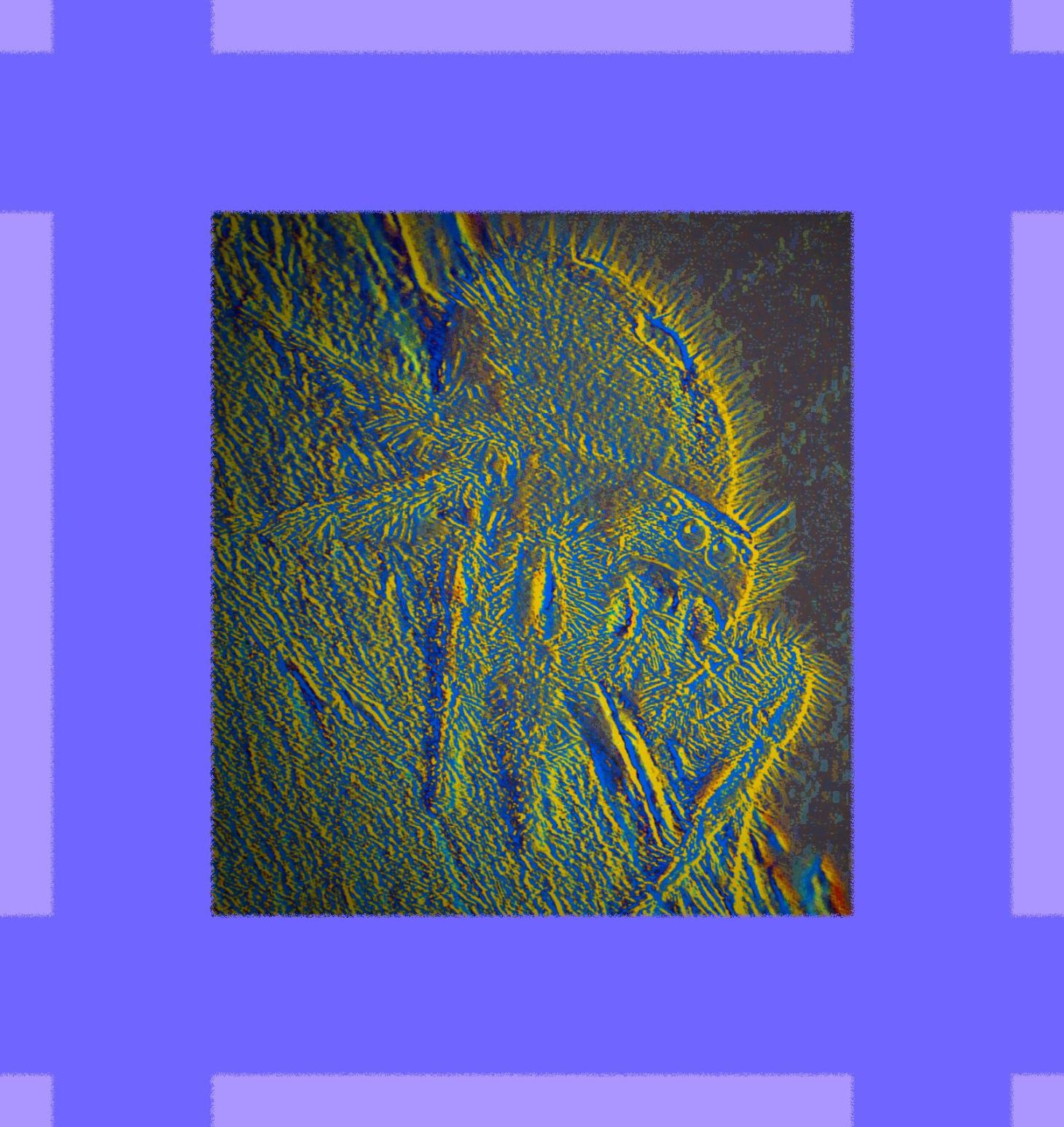
Watching (1). Photo by Thomas Peace c. 2015

Watching (2). Photo by Thomas Peace c. 2015

Watching (2). Photo by Thomas Peace c. 2015

Post

Leaving psychological tradition…

4 comments

.

Being truly mindful or of a deeply meditative mind, is not something that one can know that one is experiencing or part of.  The beauty of the unknown is that it cannot merely be held or captured by the known.  It is a state of true humility where the one who may be involved with it is not certain that it is being done.   There’s no certitude in full mindfulness and profound meditation, because the unknown cannot be captivated (and owned) by the known.  So many of us are indoctrinated by mere symbolic knowledge… by the known; it is what was poured into us — formulating us — throughout our youth.  Even our individual concepts of self are essentially learned symbols and images.  Concentration is all well and good, at times, but it has little to do with this; this goes far beyond mere concentration.  Concentration involves focusing on various images and mental patterns (symbolic patterns).  Concentration is often necessary, but a mind that merely concentrates is stuck in a very limited segment of what the mind is capable of.   We’ve been concentrating for eons, and look where it has gotten us.  We may have better machines and more comfortable lives, but we are lost in symbols, competition, separative ideologies, with power-hungry leaders and mechanical systems manipulating our lives.

It takes great courage and intelligence to step out of that field (that so many of us are immersed in).  To leave the field of the known (i.e., the field of absorbed symbols and learned mental formulations) is, indeed, a kind of psychological dying.  However, it is where the true innocence and true beauty of a different kind of intelligence exists.  Not doing it is truly a morbid kind of decay.  Most of us want to be certain.  We remain (perpetually) in the field of learned images and symbols; we are frightened to go beyond that.  Interestingly, remaining (perpetually) in that field continues with what remains secondhand, stale, and unoriginal.

.

Softshelled Turtle. Photo by Thomas Peace c. 2015

Softshelled Turtle. Photo by Thomas Peace c. 2015

Post

Beyond the here and the now…

3 comments

.

Most of us, in existence — because of the way we were educated (or miseducated) — are immersed almost exclusively in the conceptual, rather than in what is of real energy and substance.  Our concepts (and our perceptions that are based on concepts) are almost always about virtual patterns and images; they are seldom (or never) of the essence of actual energy.  Our modes of consciousness are almost always based around “patterns” within energy; we are seldom (or never) pure and unadulterated energy.  Certain people and groups maintain that you should strive to exist in the “here and now” to better come into contact with that pristine energy (or the essence or source behind all things).  (They’ll give you all kinds of techniques or methods for getting to the “here and now,” which is so ludicrous, as if a technique from the past can fabricate the present.)  Really, for many, the “here and now” is often the result of more concepts, more propositions and proposals put forward by others to absorb and react to.  Then such a “here” or such a “now” becomes a learned frame of mind or mindset (that seems to be divorced from the past), but that really is an extension from (and of) the past.  Perhaps the conditioned recognition of the “now” (as being separate from the past and the future) requires reactions (from the past) that negate the actuality of really being in (a now that is not merely part of the past).  So there is a strong possibility that the moment you recognize that you are in “the here and now”… you really aren’t in (or of) it.  

Most of us are endlessly talkative (to ourselves), endlessly chattering (or visualizing mental images) throughout the day (and night, as we sleep).  We thrive on these endlessly chattering patterns… we are these endlessly chattering patterns.  We are used to being the past, endlessly restructuring itself from (and “as”) patterns that were learned and absorbed.  If the mind (naturally, without method or effort) is quiet (at times) throughout the day, (extremely aware and alert, but without endlessly chattering to itself internally), then at night it can really rest and sleep (without any continuing and habitual, conditioned chattering).  Then, when it sleeps, dreams (and the many absurd patterns that they entail) need not take place; then the mind can really rest and gather energy, without friction, without fears, inner struggles, needless conflict, and all that clutter.  Then, when such a mind wakes, it is naturally (without any effort whatsoever) quiet.  In that quietness, there is no conflict, struggle, friction, control, or domination.  Then there’s no recognition of a “now” separate from the past or the future; but there is an intensity (an intelligent awareness) without dependence upon anything — not even dependence upon recognition and knowledge (which so many are frightened to leave) — (and this includes being beyond the patterns that were poured into it when it was younger).  Then, when it looks, it doesn’t merely robotically perceive what was taught.  Such a mind is truly alive and doesn’t exclusively perceive through (and “as”) the screen of the learned/programmed past.

.

Downsideup. Photo by Thomas Peace c. 2015

Downsideup. Photo by Thomas Peace c. 2015

Post

From one fragmentary mode to the next…

2 comments

.

Many minds depend upon experiences in order to exist… without fully realizing that they are those experiences.  Reacting to (and “as”) experiences involves  conditioned responses following each other, in sequence.  Without such experiences most minds would be lost, for their very composition desperately depends upon such experiences.  Even ancient organisms, such as the mighty Tyrannosaurus rex, had brains that exclusively depended upon experiences.  However, a few very intelligent minds — very few — though being highly appreciative of many experiences, have realized that they need not just exclusively depend upon experience.  Such minds, though they often use and appreciate experience, go beyond it at times.  Such minds are a light to themselves, and they do not exclusively depend upon things… not even upon experience.  To be beyond dependence is to be truly free; the other way is primitive, limited, partial, and without majestic vastness.

.

Duck with a T-rex face.  Photo by Thomas Peace c. 2015

Duck with a T-rex face. Photo by Thomas Peace c. 2015

Post

Ducking the issues…

5 comments

.

If you duck the issues and don’t pay full attention in life… then when thoughts and feelings occur in (and “as”) you, you will not attend to them completely and fully.  To attend to thoughts and feelings completely (as they occur) there is intense observation without separation, without the indifference of distance.  In looking fully and attentively, which is deep learning, there need not be mere judgment, condemnation, or control according a learned authority at some (supposed) distance (be it external or internal).  

.

[Note: Paleontologists have been saying that birds are a branch of dinosaurs that survived the great extinction event.  A close-up of this duck shows what eerily looks like dinosaur raptor teeth.  The tooth-like structures are really lamellae… sieve-like projections that help to extract edible items, such as seeds or insects, away from mud or sand.  They also may be beneficial for defense.  Duckasaurus rex!]

Duck Teeth. Photo by Thomas Peace c. 2015

Duck Teeth. Photo by Thomas Peace c. 2015

Post

Internal disorder is projected outwardly…

2 comments

.

Interesting, isn’t it, about how perfectly the universe works with orderly sequences creating the higher elements via nuclear fusion, with supernovas (creating rare elements) and the like, all with immense order and precision?  Yet isn’t it curious how we humans — many of us — live in tremendous disorder, with wars, violence, deceit, damage to the environment, manipulation via power, and all kinds of disorder that is willing to let others be harmed?  So amongst all of the order, there is the continuing disorder of man; and that needs to change.  

.

Facing it.   Photo by Thomas Peace c. 2015

Facing it. Photo by Thomas Peace c. 2015

Post

Beyond ordinary…

4 comments

.

One must purge what all the pundits, leaders, and experts have taught.  Most of them are full of themselves. We (despite thinking otherwise) live in very primitive times psychologically… and if one doesn’t figure things out for oneself, one will remain within (and “as”) the quagmire of the false and crass.  If one’s very mode and manner of thinking (and, hence, perceiving) was constructed by them, then there must be a fundamental transformation of the mind if one is to see without past corruption and without merely looking with old patterns and standard modes.  To observe without distortion, one must look without a blueprint, methodology, system, or absorbed structure; that can only take place via pristine observation that is unsullied by past dictates or precepts.  Most are unwilling or unable to do this.  They are too mesmerized by what was poured into them, unfortunately.  When they try to guide others, psychologically and spiritually, they are often (even unknowingly) merely projecting what they were taught, (which is essentially second-hand).  Direct observation, without all the garbage and distortion, is possible; deep insight and profound understanding depend upon it.

.

[Note:  If you are using the “Reader”/ “Blogs I Follow” method, note that they have recently revised it.  Personally, I am not too fond of  the revision (photograph-wise).  If you wish to see my photos much better than what happens after “one” or “no” clicks… please click on the “three dots” at the upper righthand corner of the initial presentation, then click on “Visit Site.”  Then you will see the photos the way that they were meant to be seen. (WordPress needs to explain the revision better to everyone.)  Of course, my site is primarily about philosophy, mindfulness, and true self-awareness… not merely about pictures/images.  The photos are an accompanying addition (about splendid nature), but are not the primary thing that I really want to share.]


Three's company. (There's a fourth, but it's hiding.)  Photo by Thomas Peace c. 2015

Three’s company. (There’s a fourth, but it’s hiding.) Photo by Thomas Peace c. 2015

Post

Beyond the suffering…

6 comments

.

One can be stoic in life —  and be rather indifferent to pain — and brightly live and smile beyond the ludicrous, limited, opaque behaviors of others… and beyond the inauspicious, vile, dark circumstances that befall upon one.

.

Ladybug and the aphids it eats.  Photo by Thomas Peace c. 2015

Ladybug and the aphids it eats. Photo by Thomas Peace c. 2015

Post

Effortlessness… (Multi-Photo)

8 comments

.

Effortlessness is essential in regard to being a mind that is open to real wisdom and harmony in (and “as”) the universe.  Effortlessness occurs when the mind is not merely regulating and performing things from what seems to be a center (i.e., central point) and as mere fragmentary reactions.   Effortlessness exists beyond measuring and copying (i.e., imitating what was learned).  The moment one knows or thinks that one is in a state of effortlessness, effortlessness is likely negated.  In effortlessness there is no imagery of an observer separate from the observed; and in deep effortlessness, the observed undergoes a transformation into what exists beyond mere categorization and rote recognition.  A wise individual in effortlessness is not merely lazy; on the contrary, true effortlessness is tremendous, majestic/intelligent action; one can do many things while effortlessness is taking place, wherein the acting and the actor are not two separate things.  One can be diligently watering and caring for some garden plants, for example, and be in a state of effortlessness.  There can also be effortlessness while sitting or sleeping.

Involved in all this is an effortless psychological dying from moment to moment.  Deep psychological creativity manifests as a measureless, unbridled dying from moment to moment.  Only a mind engaging in such psychological dying can be renewed from moment to moment, without merely carrying the burden of the past.  A mind that is not of such dying is likely stuck in the past, (which is stale, rehashed, and what is truly fundamentally dead).  A mind that clings to being a separate observer, that clings to merely being “known and accumulated patterns that react” (and project themselves from a supposed center that was learned), is not likely to be the joy of the measureless and the freedom of profound depth.  A mind of effortlessness, unlike innumerable other minds, does not often waste energy (with internal friction involving conflict, fields of separation, and mere fragmentary struggles).

Only a mind of effortlessness is what is immersed in profound grace.  Minds not of such grace are involved with friction, conflict, rigid images, separation, and psychological energy wastage.  A mind full of feelings of domination from a (supposed) central point is composed of patterns of subjugation and tyrannizing influences that eclipse pristine perception and waste time and energy.  

.

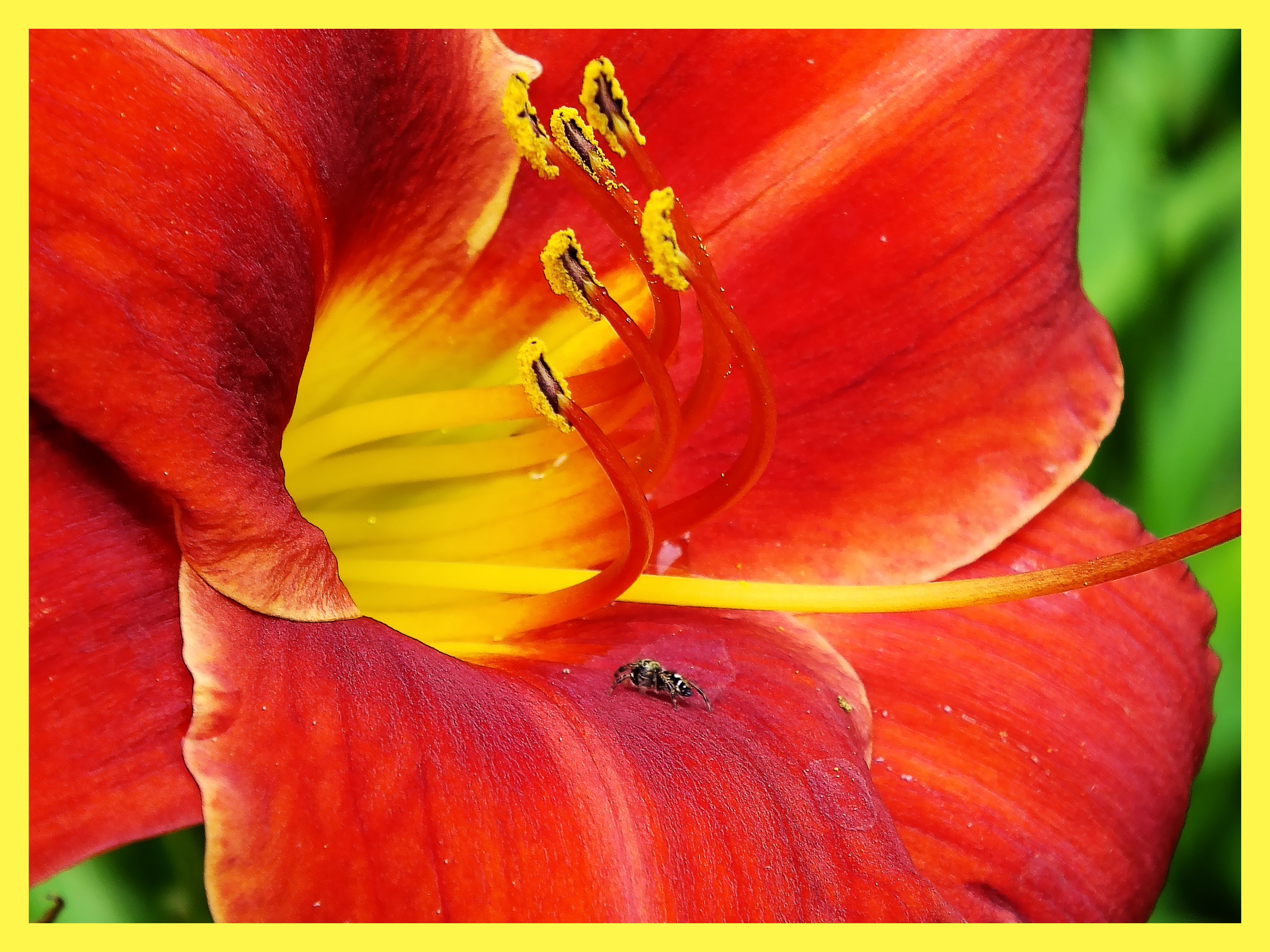
Insect in Lily. (1) Photo by Thomas Peace c. 2015

Insect in Lily. (1) Photo by Thomas Peace c. 2015

Insect in Lily - crayon version. (2) Photo by Thomas Peace c. 2015

Insect in Lily – crayon version. (2) Photo by Thomas Peace c. 2015

Post

We are… (Multi-Photo)

4 comments

.

We are the mountains

We are the golden sun

We are the butterflies

We are the stirring spoon

We are the bird’s song

We are the turning key

We are the churning thoughts

We are the thunderstorms

We are the wars of lies

We are the poetry lines

We are the rocking chairs

We are the light through the forest down the lane

.

We are the butterflies. (1)  Photo by Thomas Peace c. 2015

We are the butterflies. (1) Photo by Thomas Peace c. 2015

We are the butterflies. (2)  Photo by Thomas Peace c. 2015

We are the butterflies. (2) Photo by Thomas Peace c. 2015


Post

Animal – Parrot Intelligence…

16 comments

.

Before I retired, I used to (as a hobby) keep and breed macaws.  Now that I’m older and retired, I have 3 pet parrots… two that are macaws, and one that’s a Yellow Naped Amazon. 

Parrots make great pets but, because of their intelligence, you have to give them a lot of time and stimulation.  In many ways, they are a lot like dogs… except they can talk.  I exercise all of my birds daily… taking them out of their large cages and moving up and down with them many times (as I simultaneously exercise).  They have their own high definition TV in their room, where they like to watch things like The Muppets, Sesame Street, and Rock’n Learn (learning/phonics) videos.  

Their intelligence is phenomenal!  Makes me glad I’m a vegetarian… though I realize that certain birds, like chickens, don’t even come close to the intelligence of parrots.  There are many other intelligent animals, including pigs and dogs.  Tweety Pie, the bird pictured here, talks in complete sentences.  She creates and makes up her own sentences and has great comprehension.  Some birds just mimic; others have comprehension.  For example, when we put on our coats or jackets to go outside, Tweety would ask: “Are you going to go bye-bye now?”  … or “Can I go too?”  We never taught her those questions; she came up with them herself; she says them with the right intonation for a question.  She sings complete songs, like the “Oh what a beautiful morning” song  and other songs including one by the Backstreet Boys.  (I don’t even know the lyrics to that Backstreet Boys song, thank goodness.)  Once, when I was in the living room and couldn’t get the Playstation to work, she said, “What seems to be the problem?”  I said, “I can’t seem to get the TV to work right.”  She then said, “Can I help?”  Something else!  Last night I kept the birds up a bit late because I was cleaning aquariums in their room.  On two separate occasions I told the birds that they could “sleep in late”… (by me not turning on lights or opening window shades until later in the morning); after each of the two times that I told them that they could “sleep in late in the morning,” Tweety Pie” said “Thank You”!  The night before, I asked the birds about which video they’d like to watch; I said, “What do you want to watch… Children Singing, Sesame Street, or The Muppets?”  Tweety said, “Muppets.”  So The Muppets were put on.

I tried to do videos of Tweety, but she won’t talk in front of a camera (at all).  Once, when I worked (before retiring), I recorded her conversations on an audio recorder, took it to work for people to listen to, and people were totally amazed.  (I included a couple of YouTube videos here — of other people’s parrot friends — for people to see, so that they can observe just how intelligent these birds can be; the ones in the videos are not against being video recorded.)  Many of these birds don’t just mimic.  Some, especially, have great comprehension.  One of our macaws, Scarlet, talks and has great comprehension.  When I was younger, I took her to work with me (to my classroom for the multiply handicapped); she would sit on my lap in the car, as I was driving, and was perfect in behavior in the car and in the classroom.  Sometimes Scarlet calls for me by name, saying “Tom, come here,” and Marla, my wife, says that it sounds like I have another wife!  Just last night, I had been playing a learning-video for them about colors, shapes, and counting, and as they (on the video) demonstrated counting to ten; Scarlet then, after they got up to ten, said “eleven.”  

(See the videos below.  The one of the African Grey Parrot, named Einstein, is one of many; to see other of her – she’s a female – videos, do a YouTube search on “Einstein Texan Talking Parrot”; there are other videos of another bird, that’s a show bird, named Einstein… but I like Einstein from Texas best.)

Tweety Pie. Photo by Thomas Peace c. 2015

Tweety Pie. Photo by Thomas Peace c. 2015


Post

Separated space… separated time… (Multi-Photo)

7 comments

.

The space that apparently separates you from others is similar to what seems to separate the past from the future.

.

Sunbathing (1). Photo by Thomas Peace c. 2015

Sunbathing (1). Photo by Thomas Peace c. 2015

Sunbathing (2). Photo by Thomas Peace c. 2015

Sunbathing (2). Photo by Thomas Peace c. 2015

Post

Looking with the antiquated past… (Multi-Photo)

8 comments

.

Don’t fall into merely accepting hand-me-down thoughts, beliefs, and systems.  If you do (absorb and become them), you’ll see what you are programmed to see… which (though seeming comfortable and safe) may not really be seeing whatsoever.

.

Mostly Yellow. (1) Photo by Thomas Peace c. 2015

Mostly Yellow. (1) Photo by Thomas Peace c. 2015

Mostly Yellow. (2) Photo by Thomas Peace c. 2015

Mostly Yellow. (2) Photo by Thomas Peace c. 2015

Post

The light with no opposite… (Multi-Photo)

9 comments

.

The world is

The world is

becoming more

and more

insane and

insensitive;

but one

must remain

must remain

very sane

and 

very sensitive.

Deep light

transcends

the darkness

and is…

and is

unaffected

by it.

.

Grape Hyacinths (1).  Photo by Thomas Peace c. 2015

Grape Hyacinths (1). Photo by Thomas Peace c. 2015

Grape Hyacinths (2) (Color Pencil, Digital) Photo by Thomas Peace c. 2015

Grape Hyacinths (2) (Color Pencil, Digital) Photo by Thomas Peace c. 2015

Post

Going beyond the melancholy and blue…

4 comments

.

If you are melancholy and blue, transcend what you are.  This can be done by, without method, being highly observant from moment to moment, without clinging to the methods, systems, and stale images that were seeded within (and “as”) you.  If one often merely perceives with (and “as”) stale, redundant images that one constantly “recognizes” things with… then one is seeing what was taught; and that is the old, stale, antiquated, and musty “known.”  Perceive without that dust-laden past… and one may see joyfully without merely just recognizing.  That may bring real ecstasy.  Then one won’t be blue any longer… unless one is an Indigo Bunting.

.

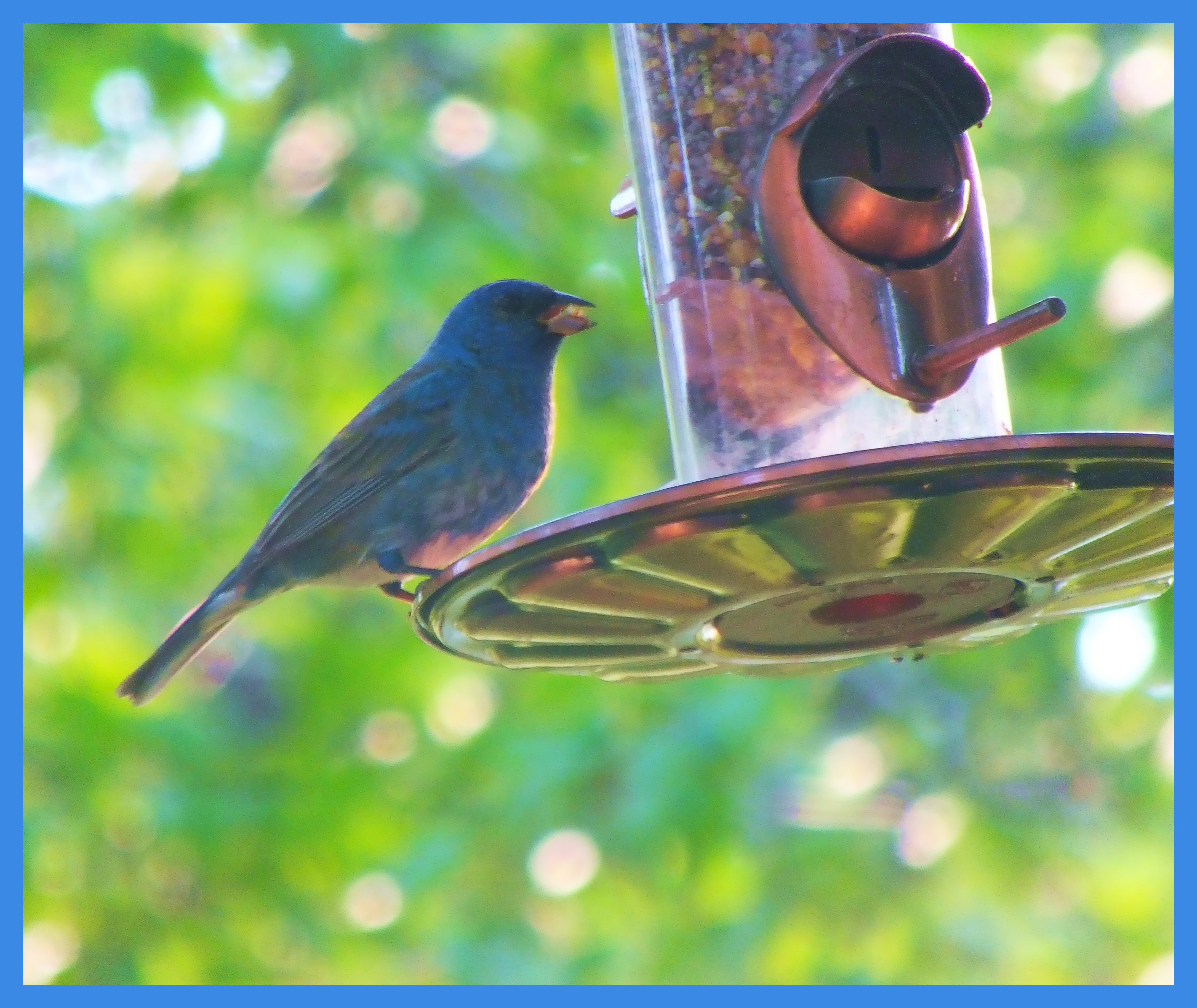
Returning Indigo Bunting. Photo by Thomas Peace c. 2015

Returning Indigo Bunting. Photo by Thomas Peace c. 2015

Post

To look, without all that slop, on a fine Spring Day… (Multi-photo)

3 comments

.

To look, on a fine Spring Day,

at what you are not

from what you are…

takes an assimilated separation 

of “me” and “not me.”

But that looking isn’t “looking”…

it’s merely repeatedly hurling what was absorbed.


To really look, on a fine Spring Day,

at what’s real,

is to look without separation,

without the gobbled “known.”

And that means looking 

without the ingested “me” or “I”…

for otherwise, it’s habitually regurgitating 

what was consumed.

.

Together as one. (1)  Photo by Thomas Peace c. 2015

Together as one. (1) Photo by Thomas Peace c. 2015

Together as one. (Color Pencil rendition). (2)  Photo by Thomas Peace c. 2015

Together as one. (Color Pencil rendition). (2) Photo by Thomas Peace c. 2015

Post

Regarding profound love…

2 comments

.

Profound love exists without a motive, especially a selfish motive.

.

Polyporus squamosus - Dryad's Saddle (Mushroom growing upon a Tree). Photo by Thomas Peace c. 2015

Polyporus squamosus – Dryad’s Saddle (Mushroom growing upon a Tree). Photo by Thomas Peace c. 2015


Post

Reality and Un (Multi-Photo)

5 comments

.

You can choose your friends but you can’t choose your reality.  Either face reality as it really is or adhere to something false that will render you blind in the long run. That is the gist of it!  (Facing reality as it really is involves looking without the accumulated past… involves not looking with what you were “taught.”  Very few are willing or able to do that.  To face reality as it really is involves there being no fear, no desire according to someone’s system and promises… involves looking very scientifically, but without hoarded conclusions and beliefs.   Most feel naked and afraid without being clothed in accumulated beliefs, practices, methodologies, and conclusions.)

.

Resting Fledgling. (1) Photo by Thomas Peace c. 2015

Resting Fledgling. (1) Photo by Thomas Peace c. 2015

Resting Fledgling. (2) Photo by Thomas Peace c. 2015

Resting Fledgling. (2) Photo by Thomas Peace c. 2015

Post

Practicing something to get to the truth. (Multi-Photo)

8 comments

.

I’ve said this before and I’ll say it again:   Just as true humility or love cannot be mechanically practiced, neither is there any real practice to discover truth.  Discovering and living the truth is too profound and dynamic for it to merely come about by way of calculated practices.  Real mindfulness and true meditation is being truly and profoundly alive (beyond mere methodology)… and no one on earth can, nor will they ever, practice being alive.

.

At the Edges. (1) Photo by Thomas Peace c. 2015

At the Edges. (1) Photo by Thomas Peace c. 2015

At the Edges. (2) Photo by Thomas Peace c. 2015

At the Edges. (2) Photo by Thomas Peace c. 2015

Post

The story of the lagging worker…

10 comments

.

His boss wanted to fire him because he was accused, by his coworkers, of moving at a snail’s pace.  

“I realize that I’m a bit sluggish,”  he exclaimed, while red with embarrassment.”  He then said, “There are a lot of sluggards in my family, I know; we were brought up wrong, and some of us are trying our best to get out of the vicious spiral that we are in; please give me another chance.”

“Well, OK,” said his boss, with a straight face.

And so he happily continued in his job of cleaning the inside glass of aquariums… not once thinking that his job sucks.  

[If you are still working for an employer, remember this little story, and realize that (in deep reflection) the observer may not be all that separate from the observed.]

Red Ramshorn Snail. Photo by Thomas Peace c. 2015

Red Ramshorn Snail. Photo by Thomas Peace c. 2015


Post

Some minds blossoming… (Multi-Photo)

16 comments

.

some minds are open

some minds closed

some are separated from the earth

some have deep roots within


some minds blossoming

some withering away

some sharing bright beauty

others darkly cruel

.

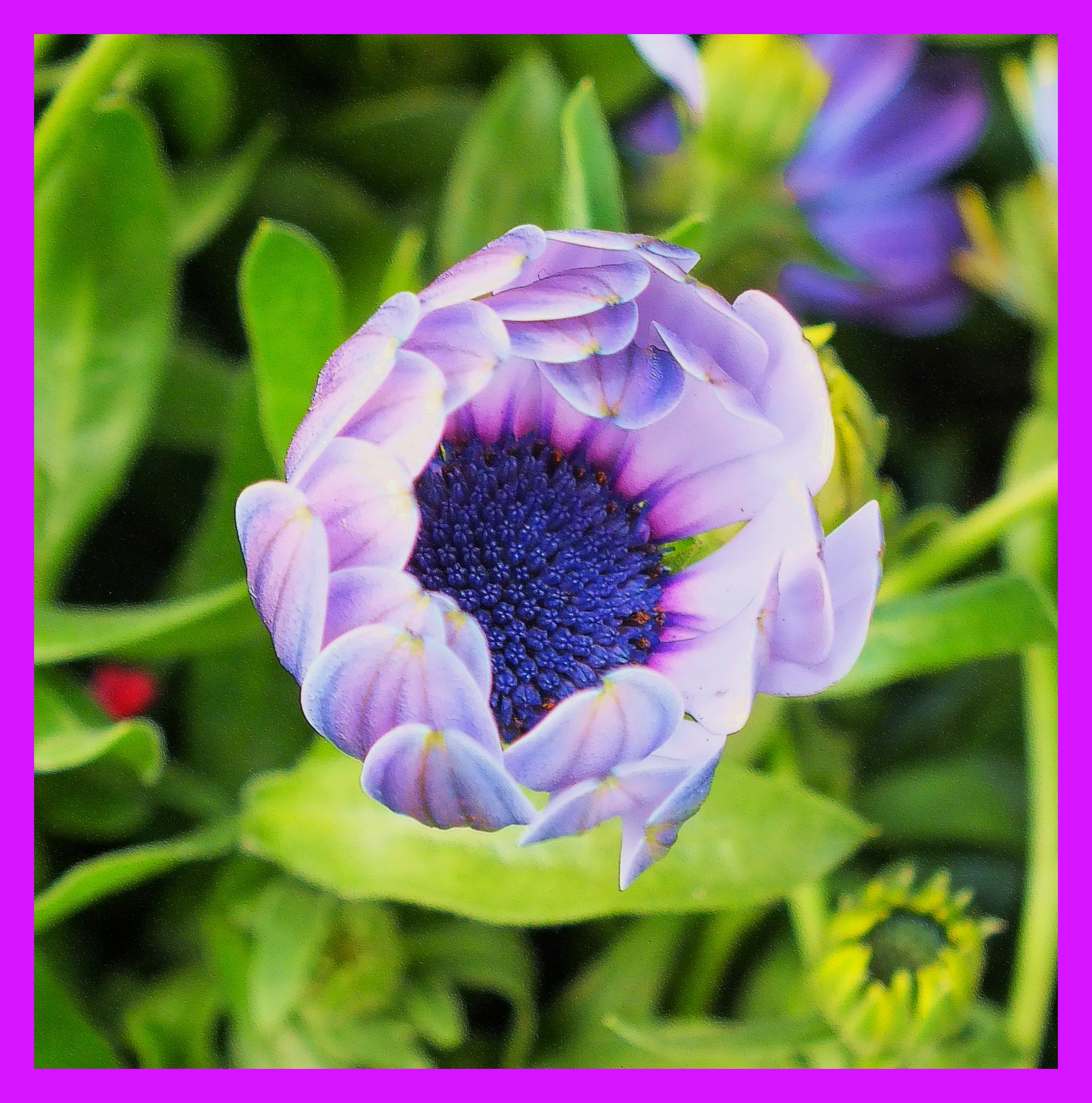
African Daisy, opening.  (1) Photo by Thomas Peace c. 2015

African Daisy, opening. (1) Photo by Thomas Peace c. 2015

African Daisy, opening.  (2) Photo by Thomas Peace c. 2015

African Daisy, opening. (2) Photo by Thomas Peace c. 2015

Post

Beyond prefabrication…

7 comments

.

Do not lifelessly become merely what they want you to become; flower into something magically more true, unlimited, beautiful, and dynamic!

.

Amazingly Different.  Photo by Thomas Peace c. 2015

Amazingly Different. Photo by Thomas Peace c. 2015

Post

Regarding “Jumping to Conclusions”… (Multi-Photo)

11 comments

.

If you are a diminutive jumping spider, by all means jump!  Jumping is your life and calling card.  If you are a human being, by all means jump with your legs and feet too (and exercise a lot).  However, it would be prudent not to — like so many do — jump to conclusions.  Jumping to conclusions often stifles the mind and often causes it to perceive things that are not legitimate and true.  So many of us jump to conclusions.  When we jump to conclusions… we are those conclusions.  Being a conclusion may be rather dead and “unalive.”  Go visit a cemetery; most of the people there (I’ll bet) probably came to conclusions!    😉

.

Tiny Jumping Spider. (1) Photo by Thomas Peace c. 2015

Tiny Jumping Spider. (1) Photo by Thomas Peace c. 2015

Tiny Jumping Spider. (2) Photo by Thomas Peace c. 2015

Tiny Jumping Spider. (2) Photo by Thomas Peace c. 2015

Post

Seeing through the screen of thought…

4 comments

.

The whole realm of thinking is figurative, fragmentary, and of symbolic representations (that are conditioned).  Don’t merely dwell in the field of the conditioned virtual.  You can’t hug a concept of a child.  Don’t — as so many do — mostly exist in (and “as”) symbols; symbols (as words and mental images) are mere tokens.  Most, even when they look at the world, see with (and “as”) the patterns and symbols that they were taught.  Look without separative symbols and learned images.

.

Shadow of thinking. Photo by Thomas Peace c. 2015

Shadow of thinking. Photo by Thomas Peace c. 2015

Post

An average Ode to Mr. Average… (Multi-Photo)

11 comments

.

Mr. Average walked along in his very average way.

Mr. Average — according to his father — was born on a very average day.

Mr. Average, when he was young, went to a very average school.

Mr. Average, when in class, was around average with the breaking of the rules.

Mr. Average, within his mind, partook in an average degree of thinking.

Mr. Average, regarding his eyes (each day) blinked with around the average blinking.

Mr. Average, like most everyone around, saw his self as being separate and apart.

Mr. Average, when shopping with his wife, was a typical shopper at his local Walmart.

Mr. Average, regarding his diet, ate all of the typical meat.

Mr. Average lived in a rather typical American suburb and  lived on a typical street.

Mr. Average, regarding his shape and weight, was not excessively round.

Mr. Average, regarding his thoughts and feelings, never felt anything profound.

Mr. Average, throughout his life, worked at a very average job.

Mr. Average, regarding living things suffering, was never inclined to sob.

Mr. Average, as a father, sent all of his children to an average school.

Mr. Average had around the normal degree of anger… when someone would call him a fool.

Mr. Average uttered the typical saying as he uttered his very last breath.

Mr. Average, when they hurriedly buried him, was interred at around the average depth.

.

An average Cemetery Beetle  (1). Photo by Thomas Peace c. 2015

An average Cemetery Beetle (1). Photo by Thomas Peace c. 2015

An average Cemetery Beetle. (2). Photo by Thomas Peace c. 2015
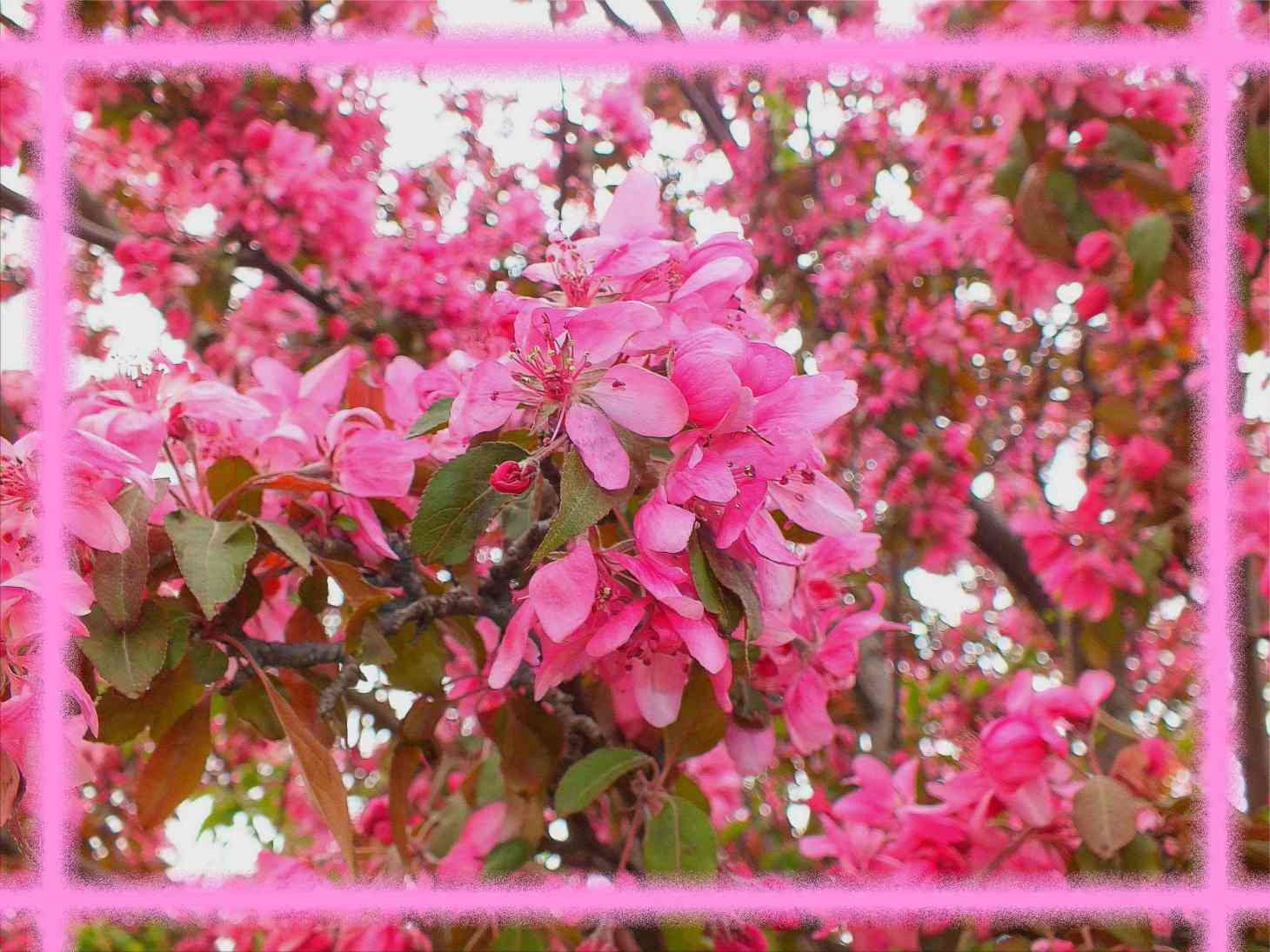
An average Cemetery Beetle. (2). Photo by Thomas Peace c. 2015
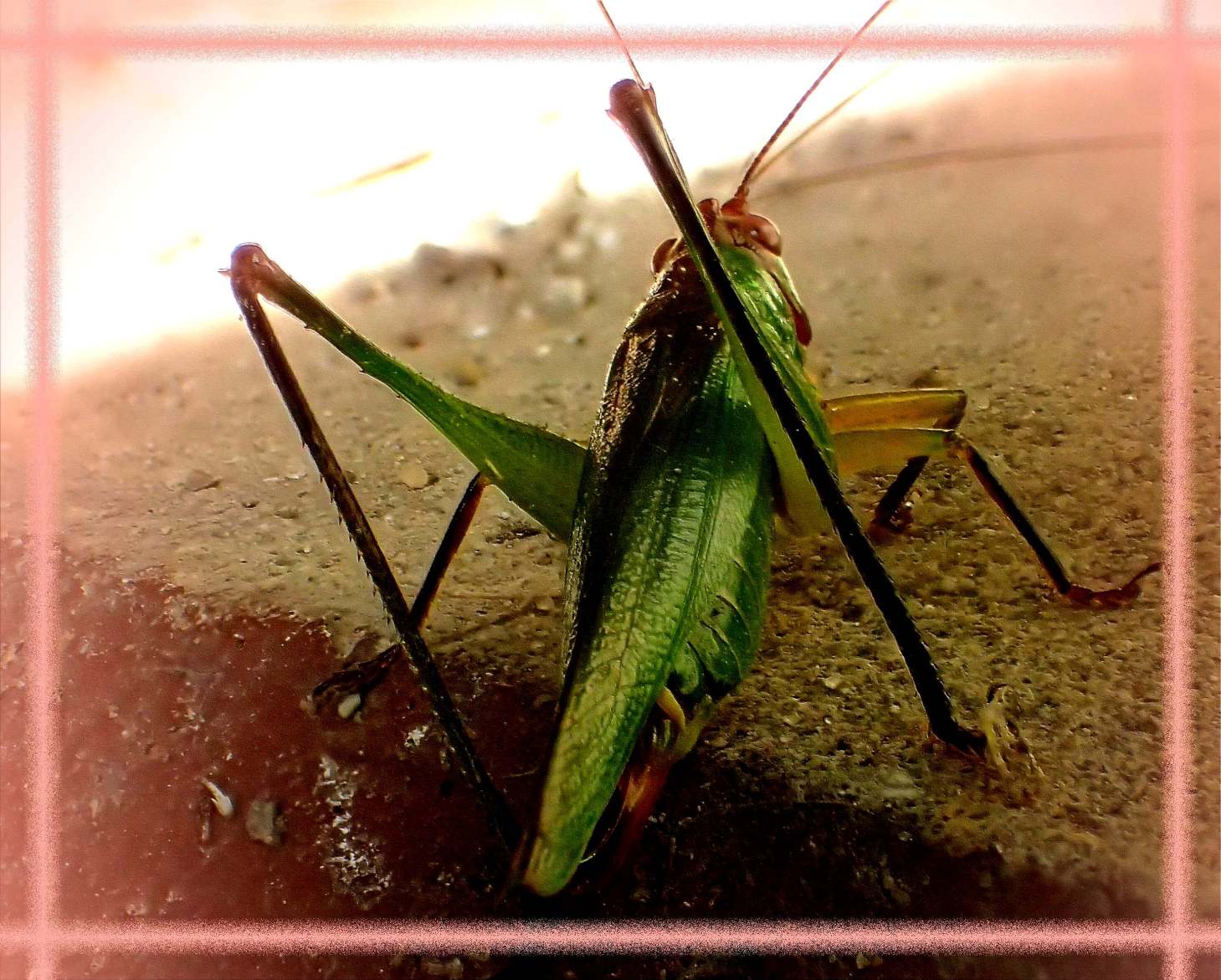


Post

The supposedly dominating central controller… (Multi-Photo)

5 comments

.

Your concept of “I” is not truly what dominates over your other supposedly subordinate (supposedly subservient) thoughts.  All thoughts — including the concept of “I” (or that internal “me”) — are conditioned responses… and, as such, one does not (in reality) truly dominate over the others.  Profound awareness and immense intelligence transcends conditioning (at least to some significant extent) and goes beyond the deep misconceptions that the aforementioned sentence suggests.  Via erroneous (primitive) education, billions are saturated with such substantial misconceptions and delusions (of a “central controller”)… and this, in turn, causes much needless friction and deceit (within the brain) which often projects as additional disorder both within the brain and out from the brain.  Better education could help to change things for the better.  We, as a society, have a long way to go before we transcend out of very psychologically crude, primitive realms.  True freedom lies not in the concept of free will, but in the daily, intelligent (method-free) understanding of the mind, which may allow one to actually joyfully exist (at times) beyond the limited field of total conditioning.  With such freedom comes real goodness and order (beyond mere reactions).

(Added note: This is one fundamental reason why so very few, throughout the world — over time — have truly been enlightened.  A process or technique developed or utilized by a fictitious center cannot ever find profound truth; the profound truth comes only when conditioning and needless conflict, friction, and deceit are dissipated… and not dissipated by some supposed central agent that is — in itself — a major result of ignorance and conditioning.  For so many — for so long — it has been like throwing water to drowning people in order to save them!) 

.

 Jumping spider in Lily. (1) Photo by Thomas Peace c. 2015

Jumping spider in Lily. (1) Photo by Thomas Peace c. 2015

 Jumping spider in Lily. (2) Photo by Thomas Peace c. 2015

Jumping spider in Lily. (2) Photo by Thomas Peace c. 2015


Post

About Dreaming…

14 comments

.

At night — instead of dreaming inane dreams — let the mind be still, calm, and silent.  The function of dreaming is to resolve issues that occurred during the day, so as to put the brain in order.  Desires, fears, and problems all play their part in causing dreams in the brain to occur.  The brain needs order… and, if it is not fully orderly during the day, dreams often occur primarily to help order to occur within (and “as”) the brain.  However, if one is very attentive, aware, and sagacious throughout the day, then dreams become unnecessary.  If, throughout the day, the mind is aware without needless conflict and friction — and without crass separation from the perceptions that take place — then the mind may be orderly and whole.  Then, there is no need for petty, superficial dreams to bring order, for order has occurred throughout the day and there are no significant problems or fears to resolve during sleep.  So a mind that is really whole, wise, orderly, and insightful, rarely dreams.  If it eats some unusual or spicy foods, that may trigger some physiological reactions that cause some superficial dreaming; otherwise dreaming rarely, if ever, occurs.  Then the mind can wake up really rested… not having had to struggle with unresolved conflicts, fears, and problematic patterns.  At night, a truly orderly mind goes beyond patterns, friction, and self-fabricated images… and is truly resting and not wasting energy; and such a mind accomplishes such things during sleep because it often acts that way (as deep order) throughout the day.  Then there is no disorder to “carry over” into the night; then there is no disorder to resolve with (and “as”) superficial dreams.

.

Mayfly Study. Photo by Thomas Peace c. 2015
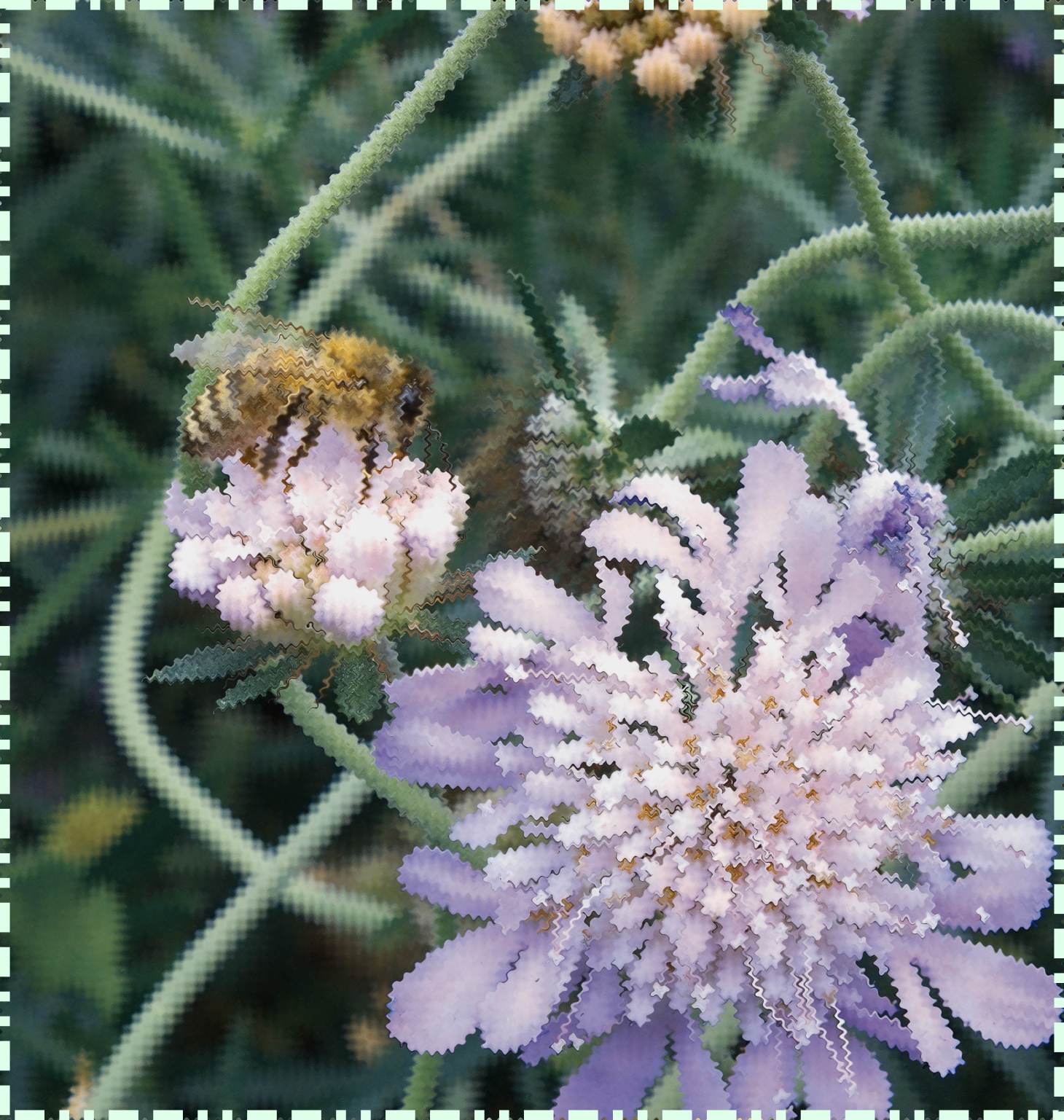
Mayfly Study. Photo by Thomas Peace c. 2015
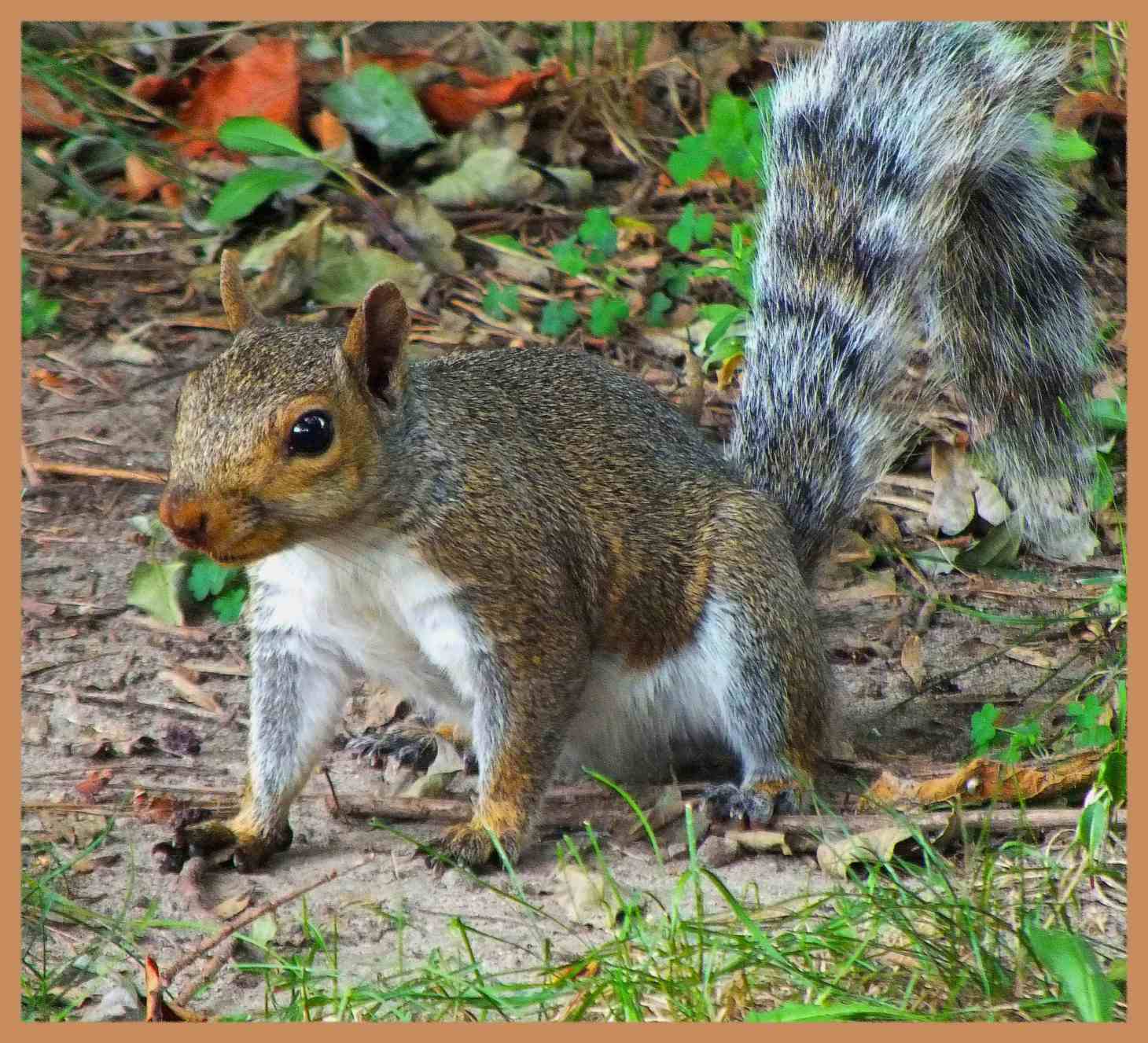
Post

Not so separate from the perceived… (Multi-Photo)

13 comments

.

i stuck a stick

into the mud…

a stick in the mud am i.


i cut a paper

into many fragments…

and i fell to pieces.


i stared at the moon

on a dim blue night…

and i became very pale.


i zigged a zag

on the computer screen…

and ziggyzags became my fate.


i smiled at some children 

who were frightened and sad…

then i became happy two.

.

Small Planet. (1) Photo by Thomas Peace c. 2015
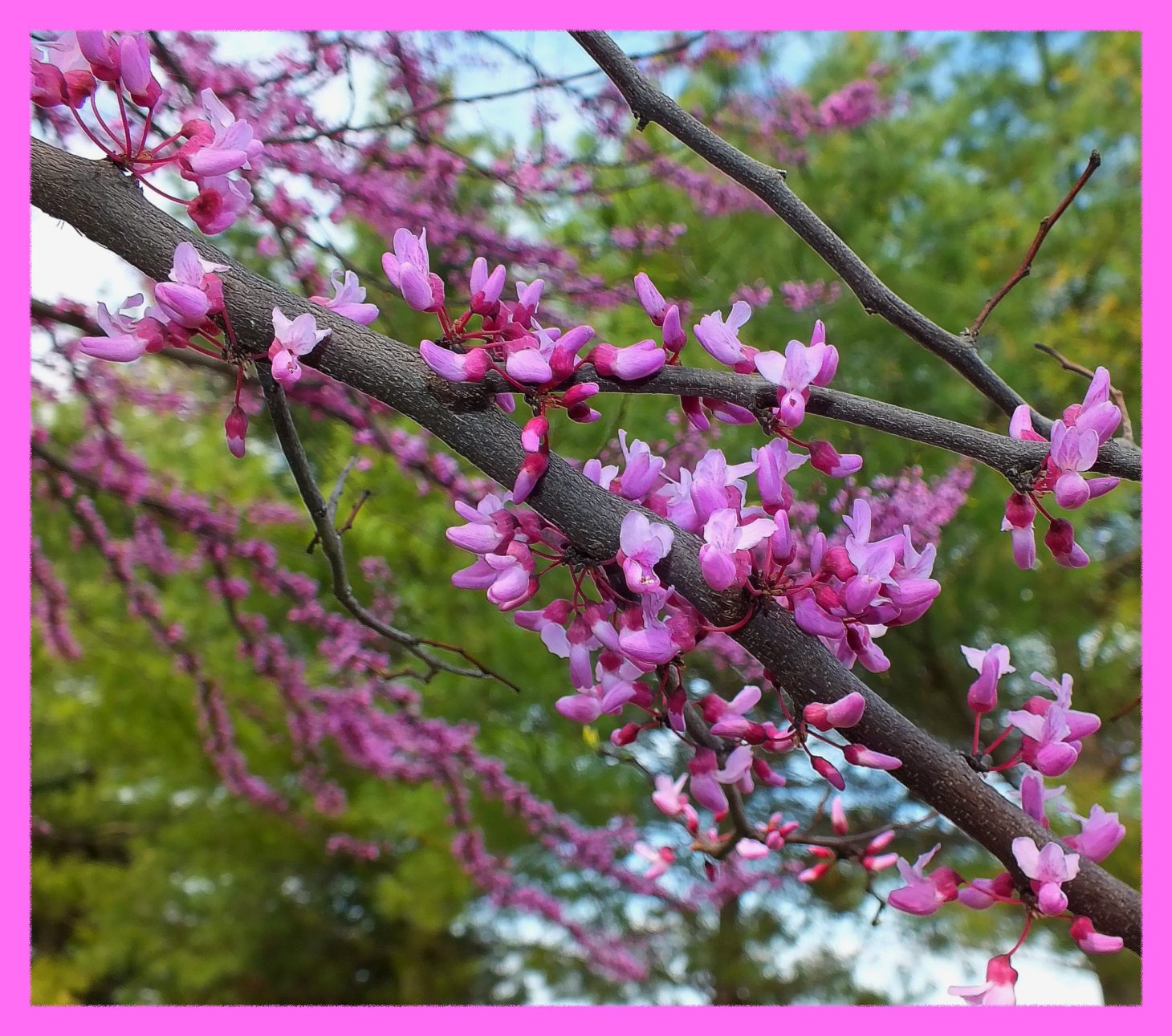
Small Planet. (1) Photo by Thomas Peace c. 2015

Small Planet. (2) Photo by Thomas Peace c. 2015

Small Planet. (2) Photo by Thomas Peace c. 2015


Post

Give…

9 comments

.

give the stripes back to the zebra

give the bark back to the dog

give the insanity back to the politician

give the bulging eyes back to the frog


give the climb back to the mountain

give the remote back to the television show

give the red blood back to the warrior

give the water back to the plant (and watch it grow)


give the turn back to the brass knob

give the yellow leaves back to the fall

give the Cretaceous back to the raptors

give the baseball bat back to the ball

.

Bulging Eyes. Photo by Thomas Peace c. 2015
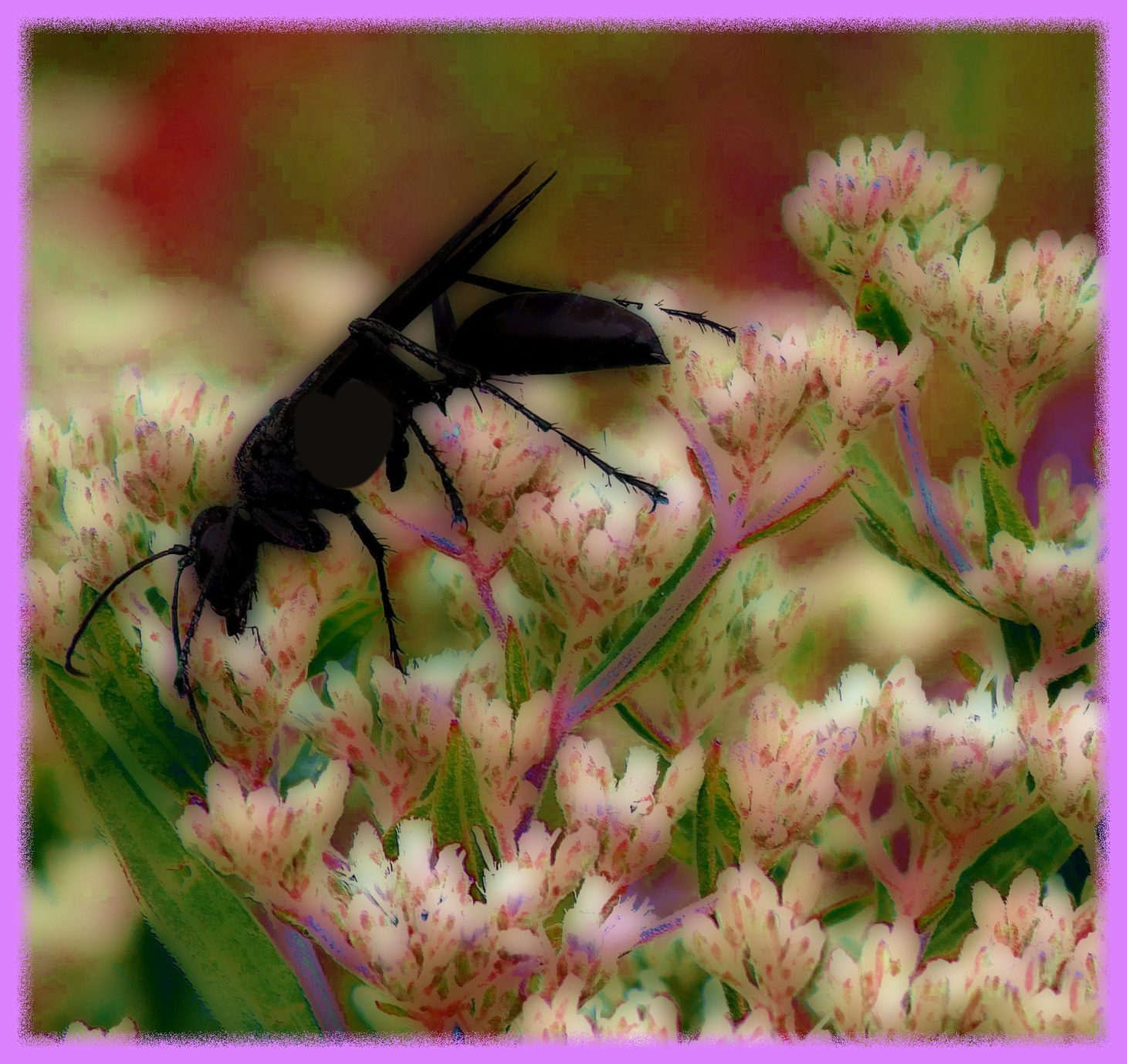
Bulging Eyes. Photo by Thomas Peace c. 2015
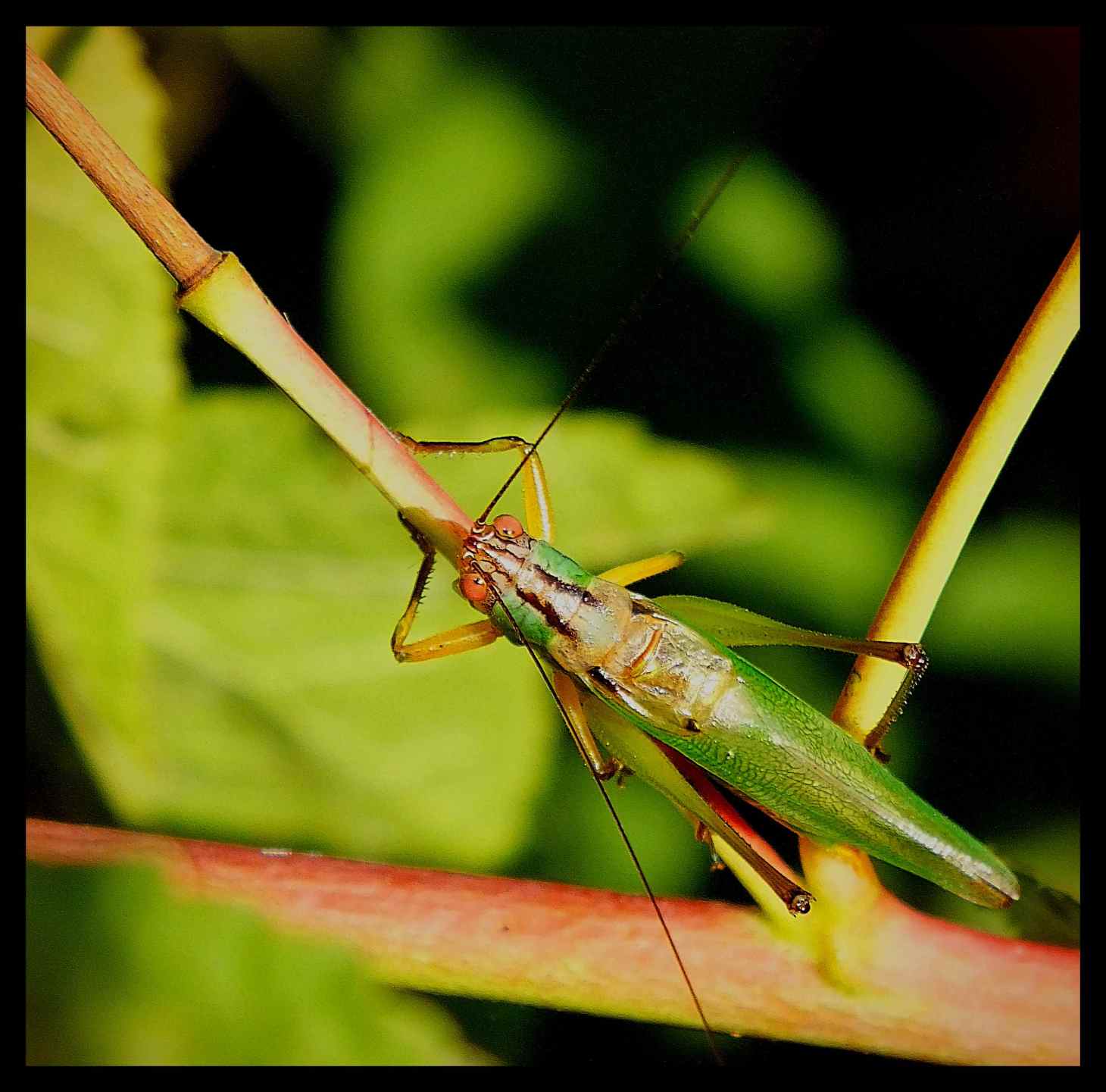
Post

A mind that is endlessly babbling to itself… (Multi-Photo)

4 comments

.

A mind that is endlessly babbling to itself is immured in its own prison of bad habits.  Be silent and attentive!

.

Calling for spring. (2) Photo by Thomas Peace c. 2015

Calling for spring. (2) Photo by Thomas Peace c. 2015

Calling for spring. (1) Photo by Thomas Peace c. 2015

Calling for spring. (1) Photo by Thomas Peace c. 2015

Post

What’s important… (Multi-Photo)

12 comments

.

Breathtaking, exotic vacation views are not what is important.  Deep understanding and heartfelt compassion are what’s important.

.

Clinging. (2) Photo by Thomas Peace c. 2015
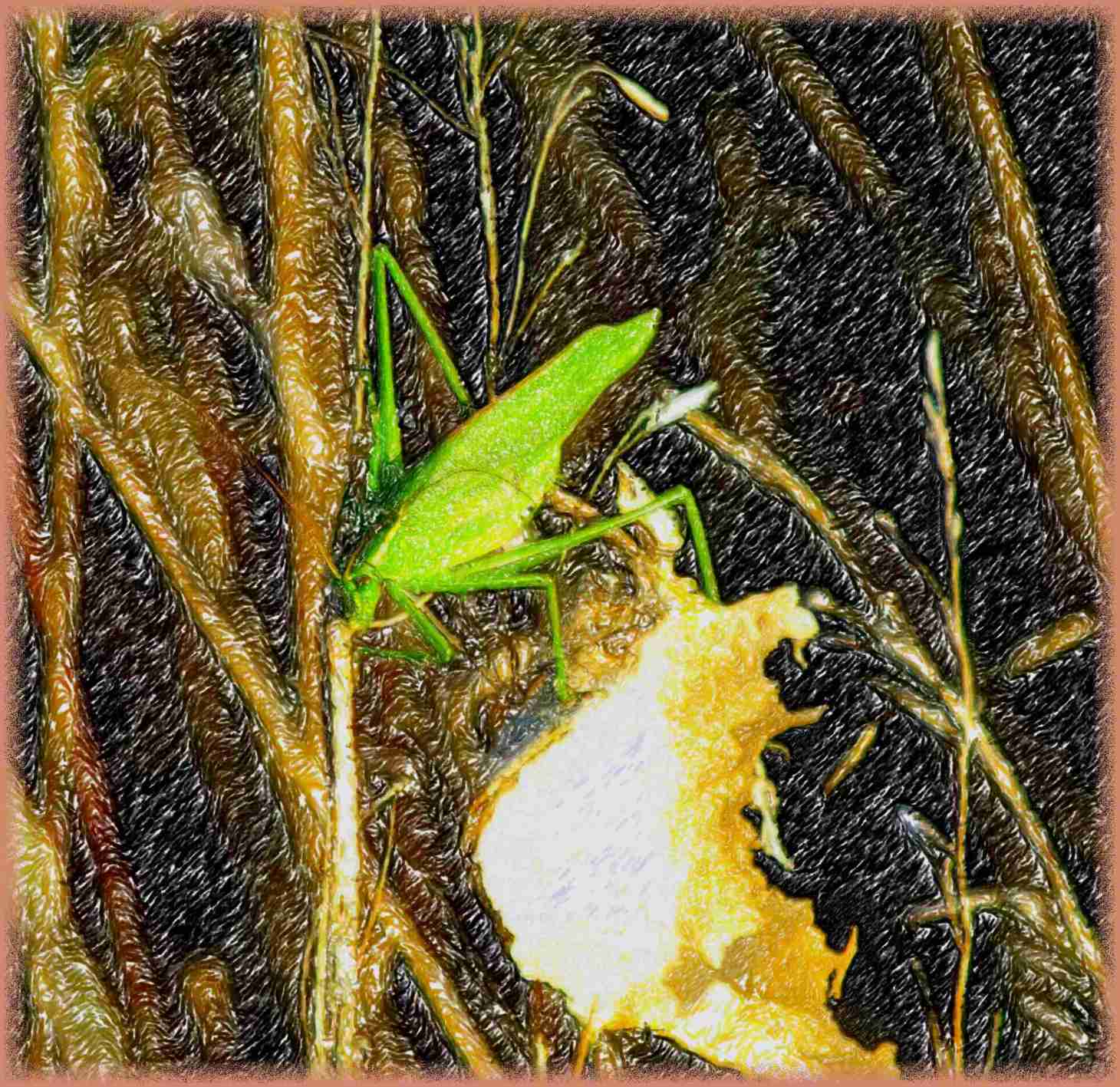
Clinging. (2) Photo by Thomas Peace c. 2015

Clinging. (1) Photo by Thomas Peace c. 2015

Clinging. (1) Photo by Thomas Peace c. 2015
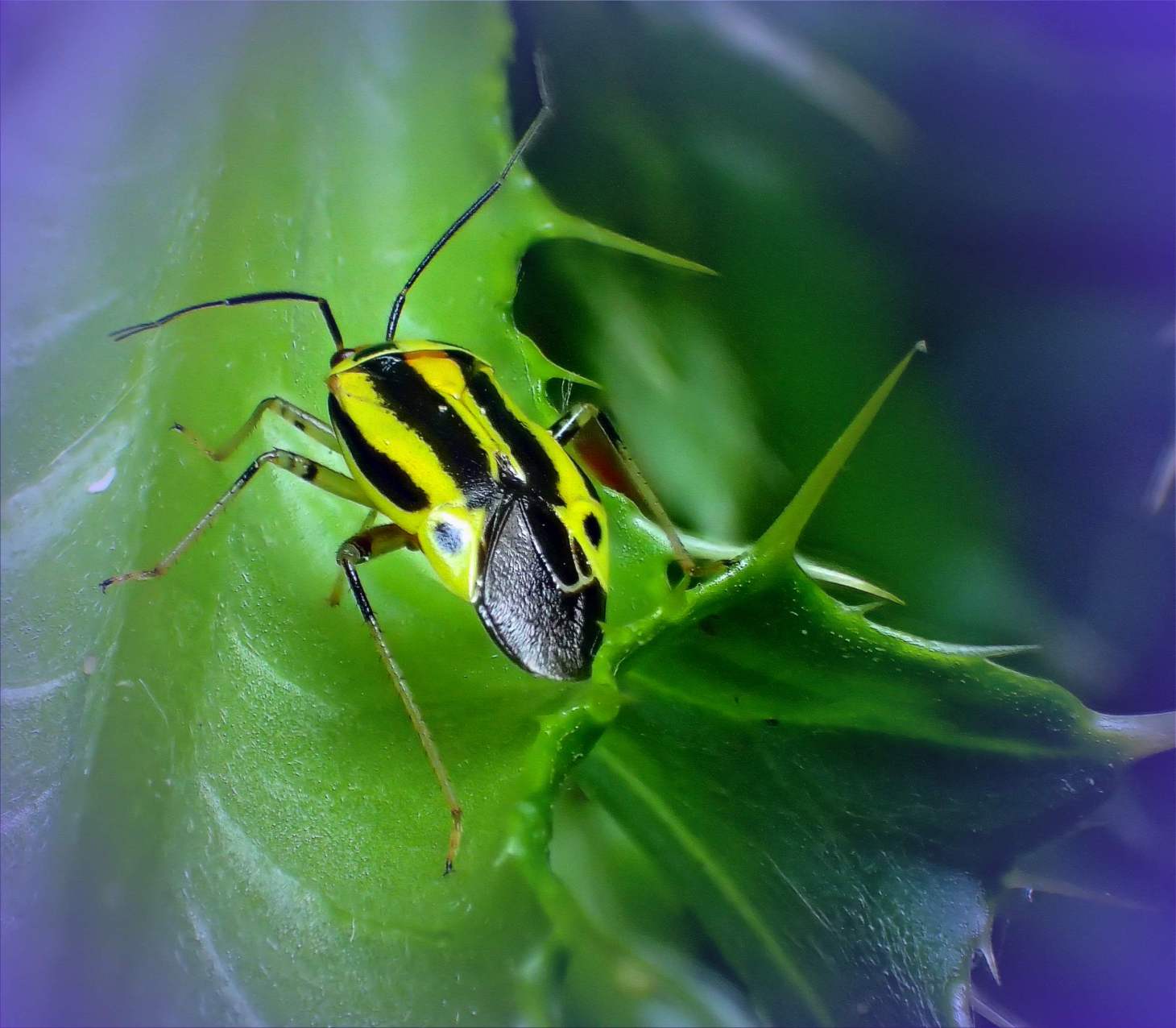
Post

The implicit order…

8 comments

.

To run parallel with the implicit order of the universe is to dynamically act with intelligence and compassion.

.

Silver-spotted Skipper. Photo by Thomas Peace c. 2015

Silver-spotted Skipper. Photo by Thomas Peace c. 2015