The dictionary describes “oblivious” as ‘not aware or concerned about what is happening.’ Many are neither concerned about the environment, about stopping the current virus from spreading, nor about curtailing the injustice and discrimination going on in the world. Looking with the mechanistic brainwashing that was likely poured into you in your youth, is not awareness. True awareness transcends the mediocre, conditioned, superficial platform that society tends to educate its children with. Words are symbolic patterns, virtual reactions, and to merely look at the world through (and “as”) symbolic patterns and conditioned reactions is not real looking and is not real awareness.
The dictionary describes “narrow-minded” as ‘rigid or restricted in one’s views; intolerant.’ Many humans have rigidly clung to the restricted and limited educational patterns that were poured into them. They go through life, looking at things in pre-molded, pre-planned ways — set up by organized bureaucracy — which isn’t really “looking” at all. No wonder then, that there is much indifference and callousness taking place in (and “as”) their minds. Of course, there are a good number of people out there that have noble arrangements or professions that really help people (and animals) but the world needs far more of such people. Indifference, rigidness, and unconcern are far too rampant.
There is no rule or method to follow that enables one to truly go beyond mental superficiality and rigid methodologies. One must do it with the heart in a way that goes beyond the mere symbolic patterns of words, learned patterns of separation, and self-concepts. The true living heart has no boundaries and does not cling to man-made limitations.
Jewel Among the Flowers — Photo by Thomas Peace c. 2021
If you don’t understand what living is, deeply and passionately, then you will not understand about physical death. A man (or woman) who often is psychologically dying to the dead past, to corrupt (limited) conditioning, to illusory limititations, and to robotic traditions and habits… is someone who is deeply living.
By the way, regarding physical death, it’s not what you have been told. It’s not any of the crap that people have dished out to you. It’s not that your special human soul floats away to a bliss with an anthropomorphic god or gods. It is not that when you are dead, you are dead (and that that’s it); it is not that you are reincarnated to some kind of better life; it is not that you go to some kind of heaven or hell; it is not that you float around like a ghost or specter, looking down upon everyone else. It is not what you have been told (by others). So what happens? One must find out. Intelligence must find out. I certainly am not going to tell you. It’s for deep perception to find out (and discover); it’s not for being told (for people to merely robotically believe or not believe). Again… it’s not for being told.
Ever so beautiful. … Photo by Thomas Peace c. 2021
The dictionary defines “discrete” as, ‘individually distinct, separate, discontinuous.” For most of us, our education primarily taught us how to function with separate, discontinuous things (in ways that helped one to be triumphant and successful). For millions of years, we have been functioning largely on the basis of performance and manipulation involving separate things. The fact is, however, that not one thing in our existence is truly distinct, truly separate. Such distinction and separation is only illusory and unreal. It is like the left hand thinking that it is separate from the right hand; it is like you thinking that you are separate from the people in another so-called country.
We distinguish things by making distinctions according to their attributes and properties. That is a function of the thinking process. However, the thinking process is geared toward survival, pleasure, individual success, and fulfilling essential needs; it is not geared toward perceiving the truth, perceiving the whole. In a truly wise and intelligent person, thinking occurs when it is necessary for fulfilling basic, essential needs, but it is often left in the background while deeper, holistic perception occurs. (There is no legitimate technique or man-made method — that involves time — that can take you to that pristine, timeless dimension.) Deep perception exists beyond the cold, fragmentary nature of thought/thinking. (Mere thinking basically sees things in only piecemeal ways.) With deep perception comes intense compassion, caring, and the lack of indifference.
Attachment is very prevalent in most peoples’ lives. Most people are heavily attached, psychologically, to a large number of things. Attachment can give one a sense of security, safety, stability, and self-identification. People are, for example, attached to their religion, their country, their political propensities, their spouse, their house, property, and possessions. People are attached to their beliefs, their traditions, their opinions, and their prejudices. People can be attached to practicing some robotic, absurd method of meditation or mindfulness that they engage in often and that they think is just phenomenal. People are often attached to their conceptions of others and of certain groups; many are attached to the habit of endlessly pursuing pleasure; many are attached to seeing everything with (and “as”) preconceived labels and words. People, over the ages, have been attached to their anthropomorphic mental obtrusions of God and of divine beings. Many people are attached to existing in (and “as”) a competitive way of life, competing against others habitually (without question). Many are attached to football games and other sporting events (that glorify competition and survival of the fittest). Most people are heavily attached to their own images of self, that self (having a name) and being of a supposed real center.
This is all well and good… but, really, it may not be so very well and good. True freedom and profound wisdom exist beyond myriads of accepted attachments (however safe they may erroneously make one feel). Being bound by attachments causes the mind to be bound within limitations. A limited brain is not, under any circumstance, likely to be visited by the unlimited. (You can’t put the ocean in a goldfish bowl.) Little wonder, then, why so few people are ever visited by that sacrosanct eternity. Beliefs, that so very many people are deeply attached to, tend to divide the world causing much friction, fragmentation, turmoil, and even wars (which people die in, with all of the concomitant suffering). Most of us ardently cling to our attachments, because without them we are essentially nothing psychologically (and we are so very afraid of being nothing).
Innumerable many of us, without question, accept our limitations, accept our attachments, and accept our fragmentary lifestyle (which isn’t really living whatsoever). Improper education in the past, really, had a lot to do with it. We were taught to accept words (as symbols) as basically equivalent to the real thing; we exist as words and we worship these words. The world’s climate is changing rapidly like wildfire (due to human negligence and indifference). Most of us (because of habits and attachments) continue to live in (and “as”) the same patterns that have caused the problems in the first place. We must wake up and fundamentally change.
Nature’s Umbrellas … Photo by Thomas Peace c. 2021
Listening is very important in life. How you listen matters tremendously. Most people listen with — and through — the background of their conditioning (that stems from past accumulation). With that accumulation, they listen… which really isn’t listening at all. They then walk around mistakingly thinking that they are “free” and “open.”
True wisdom may be beyond the mere accumulation of patterns (from the past). It may involve deep insight beyond what you merely have been told and accumulated. Insight is timeless; what is timeless is not of mere piecemeal accumulation (which is in time). Piecemeal accumulation is time.
A group of students came walking by and they observed the aged Lo Zu to be peering deep into a large, flourishing bush. The students remarked to themselves that Lo Zu would often be seen closely examining things of nature… nature’s treasures. “What are you observing,” the students fondly asked of Lo Zu. “Life on its journey,” replied Lo Zu. One of the students remarked, “Well, I’ve heard that one before from you. Do you mean deep within that bush is life on its journey?” Lo Zu responded, “I am observing you traveling students; it is yourselves who are life on its journey. And since one is not truly mentally separate from what one observes, this old entity, too, in seeing you, is life on its journey.”
“Interesting remarks,” the students replied. Lo Zu invited, “Take a look at the little eggs within the nest deep inside of that bush. Tell me if you see an egg that looks apart from the rest. Please tell me what you see.” The students eagerly peered into the bush. They excitedly exclaimed, “Yes, Lo Zu, one of the eggs seems to be apart from the rest. It seems different and separate from all of the others.”
Lo Zu replied, “The one is different, but is it really separate?” One of the students answered, “Well, it is different, but it is not really separate from the others; it fits in and is together with them.” “Exactly,” said Lo Zu, “It is different, such that you can distinguish it from the rest, yet it is together with the others, contacting them, and is not separate from them. When you look at things, they seem to be different from what you are — and they are different — yet what you look at, (in other words) what you observe, constitutes part of your consciousness and, therefore, is not really separate from what you are.”
“Profound observation,” the students remarked. Lo Zu then interjected, “Listen to this carefully. Whoever thinks that he (or she) is separate from what he (or she) is, inevitably falls into a lot of needless conflict and friction. Such people go through life fragmented, mentally crippled, and broken up into needless pieces. Beware of accepting separation as the norm (such as is what is taught and endorsed by all of the fighting and competing others). Please look deeper and see without all of the separation. There is great beauty and joy in that.”
The students thanked Lo Zu and went on their way. But only one had really listened passionately.
Life on its Journey … Photo by Thomas Peace c. 2021
I met Kurt Vonnegut many years ago when my wife and i had gone to a book signing event in Chicago. I do not agree with everything that he says, but i am appreciative of the seven very sagacious terms which he seriously provides below. Will the people of our planet change to substantially improve the health of the earth as a whole? That is not likely (in substantial enough numbers). However, at least some of us are trying. Meanwhile, with the Covid situation improving, oodles of people are once again flying around in polluting jets and are long-distance traveling in fossil fuel vehicles to get vacations that they feel they are owed. The blue sky will be getting smoggy again and the crazy winds will continue to get even crazier.
Letter to the Future, From Kurt Vonnegut, Jr.:
“Ladies & Gentlemen of A.D. 2088:
It has been suggested that you might welcome words of wisdom from the past, and that several of us in the twentieth century should send you some. Do you know this advice from Polonius in Shakespeare’s Hamlet: ‘This above all: to thine own self be true’? Or what about these instructions from St. John the Divine: ‘Fear God, and give glory to Him; for the hour of His judgment has come’? The best advice from my own era for you or for just about anybody anytime, I guess, is a prayer first used by alcoholics who hoped to never take a drink again: ‘God grant me the serenity to accept the things I cannot change, courage to change the things I can, and wisdom to know the difference.’
Our century hasn’t been as free with words of wisdom as some others, I think, because we were the first to get reliable information about the human situation: how many of us there were, how much food we could raise or gather, how fast we were reproducing, what made us sick, what made us die, how much damage we were doing to the air and water and topsoil on which most life forms depended, how violent and heartless nature can be, and on and on. Who could wax wise with so much bad news pouring in?
For me, the most paralyzing news was that Nature was no conservationist. It needed no help from us in taking the planet apart and putting it back together some different way, not necessarily improving it from the viewpoint of living things. It set fire to forests with lightning bolts. It paved vast tracts of arable land with lava, which could no more support life than big-city parking lots. It had in the past sent glaciers down from the North Pole to grind up major portions of Asia, Europe, and North America. Nor was there any reason to think that it wouldn’t do that again someday. At this very moment it is turning African farms to deserts, and can be expected to heave up tidal waves or shower down white-hot boulders from outer space at any time. It has not only exterminated exquisitely evolved species in a twinkling, but drained oceans and drowned continents as well. If people think Nature is their friend, then they sure don’t need an enemy.
Yes, and as you people a hundred years from now must know full well, and as your grandchildren will know even better: Nature is ruthless when it comes to matching the quantity of life in any given place at any given time to the quantity of nourishment available. So what have you and Nature done about overpopulation? Back here in 1988, we were seeing ourselves as a new sort of glacier, warm-blooded and clever, unstoppable, about to gobble up everything and then make love—and then double in size again.
On second thought, I am not sure I could bear to hear what you and Nature may have done about too many people for too small a food supply.
And here is a crazy idea I would like to try on you: Is it possible that we aimed rockets with hydrogen bomb warheads at each other, all set to go, in order to take our minds off the deeper problem—how cruelly Nature can be expected to treat us, Nature being Nature, in the by-and-by?
Now that we can discuss the mess we are in with some precision, I hope you have stopped choosing abysmally ignorant optimists for positions of leadership. They were useful only so long as nobody had a clue as to what was really going on—during the past seven million years or so. In my time they have been catastrophic as heads of sophisticated institutions with real work to do.
The sort of leaders we need now are not those who promise ultimate victory over Nature through perseverance in living as we do right now, but those with the courage and intelligence to present to the world what appears to be Nature’s stern but reasonable surrender terms:
Reduce and stabilize your population.
Stop poisoning the air, the water, and the topsoil.
Stop preparing for war and start dealing with your real problems.
Teach your kids, and yourselves, too, while you’re at it, how to inhabit a small planet without helping to kill it.
Stop thinking science can fix anything if you give it a trillion dollars.
Stop thinking your grandchildren will be OK no matter how wasteful or destructive you may be, since they can go to a nice new planet on a spaceship. That is really mean, and stupid.
And so on. Or else.
Am I too pessimistic about life a hundred years from now? Maybe I have spent too much time with scientists and not enough time with speechwriters for politicians. For all I know, even bag ladies and bag gentlemen will have their own personal helicopters or rocket belts in A.D. 2088. Nobody will have to leave home to go to work or school, or even stop watching television. Everybody will sit around all day punching the keys of computer terminals connected to everything there is, and sip orange drink through straws like the astronauts.
Each wish came upon an intangible dream. All dreams are intangible, being the virtual aspirations or speculations that they are. In a world past dreamers, he or she who sees things as they are (beyond distortion), ironically, does not merely see things… because things are of thought’s plurality that is largely illusory and superficial (though important to respond to accordingly at times).
Life, despite what most people think, isn’t a series of things. Life is beyond the plurality of appearances that are tricks upon the mind. Life is not wholeness either, for such wholeness, for most, is just another thing, just another abstraction to dream about.
While in the garden, the handsome blue Hostas and the attractive, purple Columbine flowers were not separate from the mind; then they were beyond mere labeling and definition; spontaneously, they transformed into what cannot be described or dreamed about. Then beauty was the “observing” and was beyond mere “observing.”
In that garden, there was careful “observing” and there was “beyond observing.” The two danced in harmony beyond fabricated plurality and wholeness. Curious, the ants, as to what moved past them in a vastness.
A World Past Dreamers … Photo by Thomas Peace c. 2021
A couple of young men were walking near to where the aged Lo Zu was resting. He was sitting on an inclined large log with his meandering cane resting along his side. Then they observed Lo Zu walking — with his curved, wooden cane — to a nearby evergreen tree, where he presently stopped and began stooping next to the tree, looking at something down low toward the ground; he had a big smile upon his bearded face as he looked at something upon a blade of green.
The young men asked Lo Zu what he was gazing at. “Life on its journey,” reported Lo Zu.
Just then, a group of monks came walking by, all with shaved heads that were bowed down, with eyes only staring at the empty path that they were treading upon, while their “leader” marched ahead, “leading them.” The two youth said to Lo Zu, “Many say that you are the wisest man in all of the lands, yet we see that you do not march with the others and go to the temples.”
Lo Zu replied, “They march with their heads held down — not looking around whatsoever — and follow a path which they’ve been walking upon for centuries, and that path, honestly, is empty and dead. Life is not flowering in such a path. They do not look around to freely and joyfully perceive the beauty of the skies and the miracles of nature; they follow a leader who may be as blinded as they are. They spend time in the temple. It is full of man-made statues. They revere these lifeless statues, all of which were made by thought. They revere a dead product of their own creation. I, however, do not enter the temples. I remain away from the cold, lifeless buildings and spend time with nature, with creation… life. I am neither fascinated by dead, empty paths, man-made fabrications, nor with leaders who lead others to closing their lives away from life and the beauty of existence. Their fancy garbs and decorative buildings do not make them truly religious. Being religious is a living thing. If you are going to worship something, worship that poor, elderly woman toiling in the fields. Help her to carry her heavy load to her home (without asking anything in return).”
Life on its Journey … Photo by Thomas Peace c. 2021
The elderly Lo Zu walked through a long, beautiful meadow and came near to the local village. He saw a group of youth sitting near a fenced garden and ambled near to them while holding on to his sinuous, meandering cane. As he walked, he smiled at the majestic, wonderous blue sky and at the beautiful trees dancing in the light breeze that he was not (in any way) apart from. Many of the young people looked rather bored, and excitement and wonderment were missing from their eyes. Lo Zu said to them, “When i was your age, i too sometimes would get bored; I too found myself lacking in exciting things to do. Now, in my elderly age, there is no boredom; there is only harmony and bliss.”
“What is your secret?, one of the youth asked.
Lo Zu then said, “One went beyond what all of the others said about life, self, and consciousness. The root of suffering was discovered and perceived.”
Some of the youth inquired, “What is the root of suffering?”
Lo Zu replied, “The ‘I,’ the ‘me,’ with all of its pretense and chicanery. The ‘I’ or the ‘me’ helps create a space between what is considered a “center” and the rest of the world (even including between a thought of a supposed center-controller and thinking). However, for example, thoughts and thinking are what consciousness is (as they occur), including the concept of ‘I’ or ‘myself.’ There is, though, a beautiful intelligence beyond and much greater than mere thoughts and thinking. Such intelligence is of a wholeness and transcends the petty concepts of ‘I’ and ‘me.’ Such intelligence transcends psychological suffering/boredom, mere words as labels, and gross limitation; what is whole and immense is not dominated by what is false and limited. Mental suffering is false and limited. Only when one clings to the limited is the intelligence of the whole not apparent. Look at everything beyond fragments, symbols, and images… and perhaps that intelligence will manifest. Clinging to what the ordinary, every-day people tell you… may be like clinging to garbage. Even clinging to ‘collected experiences’ (robotically) is childish and unnecessary. Cling in that way if you wish, but as for this elderly being, there is too much bliss here to crave what is fundamentally of the dead past. See the living beauty of life and nature in each instant (without merely always labeling and remembering). Question things, be appreciative of life, perceive with wholeness, and go beyond the ordinary. “
The group of youth thanked Lo Zu and asked him to stop by to visit them again.
As he walked away, he heard one of them say, “He is not like the other elders; he is different; he seems magical. When he looks at you, it is as if he can see right into you.”
Plum Tree Blossoms Smiling … Photo by Thomas Peace c. 2021
When i am out in society sometimes — like grocery shopping, for instance — and see people, sometimes my eyes almost start tearing. One just feels sorry for them. It’s a tough life out there, and many people are really struggling, really suffering. You, if you at all observant, can see it in their eyes. Especially when i see children, i feel something deep inside. They will be living in a world much more difficult to live in than the one that i lived most of my life in. There will be many more people and less space. There will be fewer jobs, more pollution, even more propaganda, and less truly healthy food. The chances of them being educated rightly in a truly decent, alternative (non-mediocre) school with no more than 8 kids in a classroom and with much emphasis on wisdom, compassion, hands-on experiences (like growing vegetables outdoors, exploring nature, and making solar panels), on understanding beyond standard patterns, and on seeing life as a whole… are almost nil.
Then one looks at the adults. Many seem aged and “worn out” before their time. Many show the effects of endless junk food, alcohol, and endless synthetic medications (prescribed by doctors who, these $-oriented days, are more like puppets of the pharmaceutical companies than true counselors about healthy living patterns and natural cures). (Don’t get me wrong, many people need to be on prescription drugs… but not to the extent being dished out in this pill-happy day and age.) Even a lot of our standard vitamins — tons of them really — these days, are largely made from synthetic products (derived from petroleum). For instance, synthetic vitamin E does not come from a natural food source and is generally derived from petroleum products. Synthetic vitamin E (dl-alpha-tocopherol or any variation starting with dl-) is found in many commonly-sold multivitamin supplements, such as Centrum. You can’t help but feel sorry for people when you see what is being done to them. Fragmentation within minds abounds, which inevitably manifests as disorder, indifference, and conflict. It’s a crazy world. Additionally, repercussions happen, and the disorder that ensues deleteriously affects the animals of the world too. (There are good, holistic, magnanimous people too, but there are not nearly enough of them.)
In a big way, one really can’t blame people for what they are. They are a product of their education (or maybe we should say “miseducation”) and their environment. Very few of us really break free, truly intelligently question everything, and stand alone beyond all of the standard, mundane conditioning. Most people psychologically consist of their conditioning. It is very difficult to get people to change fundamentally… not according to any blueprint or pattern, not according to some concocted religion or government, but wisely, independently, and holistically beyond all of the antiquated past. It is sad — it’s tragic really — that so many inevitably end up falling in a rut, stagnating, and then dying. Things could be very different but, so far, the magic isn’t happening to a very great extent. But we could wake up and help change things.
So nice to bee with you again! Photo by Thomas Peace c. 2021
Human beings have dealt with loneliness for generation after generation. Most of us run away from it. We run away from it in many ways. We run away from it through various forms of entertainment. We run away from it by incessantly watching entertaining sports, by going to entertaining religious services, by endlessly socializing, texting, talking on the phone, reading, endlessly watching television, endlessly listening to the radio, and by innumerable other ways. However, it is always there, waiting around the corner. It is there waiting and once again manifesting. Mankind has been avoiding it for eons. It can even manifest in a person who is among a large group of people. Many, as a means to coping with it, even engage in alcohol and drugs.
Few of us are really involved with loneliness beyond mere conflict. Instead of merely being in conflict with loneliness, by constantly running away from it (as most incessantly do), can one realize that one actually is what it is, without merely thinking that it is what one “has” (as some loneliness)? If we often merely try all of the innumerable escapes from loneliness, it will always be there waiting and popping up again and again. Obviously, it is great to socialize and such. But to merely constantly run away from loneliness may merely feed its flames.
Aloneness is far different than loneliness. The root meaning of alone is ‘all one.’ (How can the mind be ‘all one,’ or whole, if it is primarily composed of fragmented thoughts and if it is constantly escaping from — and in conflict with — the loneliness that it is?) With aloneness, there is contentment/joy/deep perception without needing outside influences. It may occur to one who is a light to himself (or herself). Bliss without endless motives may be indicative of the intelligence of aloneness. It is not a selfish intelligence. It is an intelligence that involves compassion and care for all. True aloneness is beyond propaganda. True aloneness does not blindly jump on the bandwagon just to fit in. True aloneness perceives beyond the inner and outer separation that so many others have accepted from so-called leaders and superiors.
Alone and Unnoticed … Photo by Thomas Peace c.2021
Clarity in terms of the mind. What does it mean? Have you ever pondered over it or considered it deeply and seriously? Most people have not pondered over it. The dictionary defines clarity as: ‘The quality of being coherent;’ it also defines it as: ‘The quality of purity.’ Coherency in minds, in the manner we are writing about, means order. If the mind has significant fears, prejudices, beliefs (which tend to separate and divide people), and is tied down to dead (though fully accepted) second-hand traditions, is that order? If one is at all honest… a mind harboring many of such things — as what it actually “is” — probably is not of order.
Purity (in terms of mental clarity) likely means that the mind is not heavily conditioned, that the mind has not been deeply molded and contaminated by others. It means that the mind can look in a pristine way, beyond what was spoon-fed into it. Pretty much all of us were spoon-fed (mentally) from the day we were born. And most of us fully accept what was poured into us, because it is so very easy to do so. Most like the easy way, the run-of-the-mill way. It is so easy to fit in and to do as everyone else does and to think as everyone else does. It is so very comfortable. We love to imitate; “everyone else is doing it; it must (therefore) be safe and right.” But is it?
Here it is being suggested that a lot of what they pumped into us may be very fundamentally wrong and highly erroneous. Even the very fundamental nature of time that they gave us may be very wrong and largely fallacious. The very nature of our relationship — that they spoon-fed into us — involving thoughts and involving each other… may be very fallacious and not of real and true order. So what is one to do? A disorderly mind, seeking order, will usually find (and discover) according to that disorder. Non-clarity (i.e., non-coherency) cannot easily perceive clarity and order. (Innumerable minds of disorder often cling to primitive, fragmentary traditions of disorder, ardently claiming they are of order; then the endless wars and conflicts between groups of opposing people — with their separate ideologies — continue and go on and on.)
Real clarity may mean standing alone beyond all of the contamination. It may mean that one — without depending upon others — has to work diligently to see (for oneself) what is actually taking place. It likely involves seeing beyond what was poured into you; it likely involves asking the right questions (that are serious and of great meaning to life, wholeness, and dignity). It likely involves seeing beyond all of the second-hand patterns and endless words, labels, and feelings of individual separation (from others). It likely does not involve mere blind conformity, unquestioning acceptance, allegiance, or being mesmerized by authorities (by groups) and their ideas. There are even classes on mindfulness or on meditation that (through various systems and methods) purportedly get you to be mindful or get you to meditate. However, methods and systems just make the mind more imitative, more robotic, more second-hand, and more residual.
Clarity is purity, (plain and simple). It is not about being adulterated by the ordinary and the run-of-the-mill. In clarity is great beauty, love, and eternity. But don’t take my word for it. Find out. To find out there has to be great order of the mind, but not order according to what authorities say, not order according to some second-hand, man-made structures. (Or perhaps you just want to go on blindly accepting, adhering, and repeating the same old things.) It is so very easy to repeat and to fit in. It is altogether a different story when it comes to real purity, deep awareness, and profound coherence.
Schizophyllum commune Fungi on Tree Branch … Photo by Thomas Peace c. 2021
kindness one coherent star shines and upon waking a pillow goes far beyond dreams wisely asking: Am(eye separate)from everyone eye see? Am eye them in different forms?
eye had thought that(eye was separate) but that separation came from a flawed teaching(that thought of itself as greatly separate) while not perceiving that it was of a larger whole
Separation can cheat a kind man and will mock the handicapped Separation can have achieved good grades and can have learned the crude lessons well
Unless one merely remains with the crudity lessons are for transcending and joyfully discarding thus flying love beyond the isolated cadaverous walls of self that enclose (in dark) while grounded
Beyond being Grounded … Photo by Thomas Peace c. 2021
To truly be alive is a real art. It involves a lot of depth, understanding, and compassion. (By the way, psychological depth, great understanding, and compassion are not three separate things; they are all one.) Most of us have been indoctrinated with superficial second-hand patterns, thoughts, and traditions. Most of us live in (and “as”) an endlessly repetitious series or sequence of thoughts. That is what we call “living.” However, that may not be “living” whatsoever. Most people say that they are doing fine and are OK, but, in reality, they are not. They are full of fears, uncertainty, depression, dull mundaneness, and one series of stale thoughts after another.
Thoughts are stale. All thoughts stem from the past and are protrusions (i.e., projections) from (and of) that past. Patterns from the past can be rearranged to seem rather new but, fundamentally, they consist of the stale past. From that past, we look. Most people look through — and from — images of the past that they hold (and are). They recognize, they re-cognize things… such that they perceive according to the symbols and patterns of thoughts that they have absorbed and have clung to in (and “as”) the past. Thoughts are merely symbols and, therefore, are very limited and circumscribed. Symbols, being representations, are always residual, limited, and rather stale. However, most of us were indoctrinated to live in (and “as”) thoughts. Little wonder why so many say that they are enjoying life when, really, they are not. It’s like hugging or clinging to a Stop Sign and saying that the sign fills you with joy. You might fool some people, but you can’t fool me. That Stop Sign, like a thought, is a symbol, and a symbol is always of the past, limited, fragmentary, and nothing to get in rhapsody about. Most of us are of a consciousness that goes from one series of thoughts to another, never looking or perceiving wholly beyond thought/thinking. We go from one sequence of symbolic images to another. Even when we are out in nature, we perceive things through (and with) the screen of thought/thinking; we see things according to mere pre-learned patterns and labels; this may not truly be “seeing” at all. And yet we think that we are doing fine.
Remaining as stale, mundane, second-hand thoughts and patterns is never fine. It is the road to mediocrity, dejection, and robotic-repetition. One has to have the moxie, the fortitude, the guts, and the integrity to go beyond the indoctrination that was implanted in (and “as”) one. But most people are unwilling to do that. They are caught and find it easy to remain rather dead in the net or web of second-hand circumstance. Intelligently going beyond mere thought/thinking is frightening to them, because thought thinking is what they are; it is what they have accepted and is what they cling to.
Thinking in an orderly fashion is very useful at times. However, it is prudent to often go beyond thought/thinking. To merely remain in (and “as”) thought/thinking is sorrow. Period.
Fragmentary Raindrops caught in the Spiderweb of Mediocrity … Photo by Thomas Peace c. 2021
Boundless, in the dictionary, means ‘beyond limits’ or ‘having no boundaries.’ That sacred energy, that eternal flame beyond man-made descriptions, may indeed be of a boundlessness beyond the limited, and, hence, beyond the bounded conceptions and images of mankind. People tend to pretty much exclusively perceive and think about things in terms of limited labels, circumscribed patterns, fragmentary constructs, and sequential images and descriptions. All of these are, by their intrinsic nature, fragmentary, isolating, and limited. Thought/thinking is of this limitation. It has not changed in us, fundamentally, for millions of years. Four million years ago, we perceived via limitation and conflict. And four million years later; we are still perceiving basically via limitation and conflict. We still primarily mostly look with separation at all things; one still continuously perceives oneself as being a separate, independent individual.
Even most of the scientists are caught in this fragmentary, circumscribed, piecemeal way of looking at things. Even though they have some interesting theories and discoveries, they still are perplexed about the nature of things. They have their conflicting theories and divisions of thinking about things. The various so-called religions, too, have their divisions and conflicting theories and stories. Concerning them, people still make and construct stone images to impress others by, just as what was done many millennia ago. Though we’ve changed tremendously technologically, we’ve — most of us anyway — stayed fundamentally the same inwardly (i.e., psychologically) for eons. We still look at things via separation, limitation, circumscribed labels, and conflict. Most of us have a lot of deep-seated fears and psychological problems. Yet we think that we are highly evolved.
Most of us were enthusiastically programmed to react, perceive, and continue to function just like everyone else, both outwardly and inwardly. Heaven forbid if you began to look at things in a whole, new way. But a whole, new way was how Einstein came up with some of his brilliant works; and, believe me, he understood far more than what he revealed in his published and popular works.
The question is: Can one perceive — in a fundamentally different way — without exclusively depending upon mere (limited) patterns (that you were molded to contain)? To answer that question truly and deeply, consciousness needs to go through a radical change. All of the stuff that was hammered into you, throughout your past, has to be put aside or (rather) psychologically died to. When one truly transcends all of the illusory separations, limitations, fragmentation, and division, then real intelligence and compassion emerge. But it isn’t compassion that “you” “have”; it is compassion; it is of the whole, not of a separate “you.”
This Allosaurus Dinosaur Leg-bone was sliced and polished, revealing the now crystallized canals (ducts or channels) that used to transport air (and some blood) through the system; they stored oxygen within their bones, which was a very advanced system (superior to what mammals currently have).
Allosaurus Dinosaur Bone Sliced and Polished … Photo by Thomas Peace c. 2021
There is chronological time — time by the watch — such as when you have to be at the doctor’s office at a certain designated time, or the fact that you have to be at work at a certain time. However, there is also psychological time, such as when the brain imagines (to itself) that it will be less fearful in the future. Psychological time often departs from real, substantive frameworks and oftentimes flows into the fictitious, the imaginary, and the illusory.
Take the psychological time-based situation of a typical person imagining that he or she will be less greedy in the future, for example. The person imagines the greed (that he or she is now) as being separate from what he or she actually is. It is something that can be controlled from a distance, to his or her typical perspective anyway. Then, a separate “I” (that is projected to be separate from the greed) is formulated to go beyond the greed, controlling it, over time. (The imagined separation from the greed is, itself, a form of greed.) That person does not fully perceive that he or she is not separate from what the greed actually is. So the typical brain separates itself from greed (during the very distorted perception of greed) and then imagines or projects a state of being beyond it, or of controlling it. The typical brain sees greed as what it has, or as what it can control, rather than as what it actually is. It additionally projects a “should be” (i.e., an imagined state beyond greed) and strives to get to that imagined point over time.
A mind of deep, holistic intelligence deals with this differently. With such a mind, psychological time is not so much a factor. It instantly sees (without the movement of time being a factor) the greed as being what it is… not as being what it “has” (or what it is contending with or controlling). Here, the perceiver is “that which is perceived”; the controller is not separate from the controlled; really, there is no controller in this situation (and, really, there never truly was, in all actuality). The greed, by the way, likely dissipates without effort due to holistic intelligence (which has its own energy and profound order); or it never occurs much in the first place. (The word “has” in the previous sentence does not mean or imply ownership from a distance. By the way, ownership from a distance implies greed, doesn’t it?)
Here is another extremely interesting time-oriented point. Many top scientists — Einstein among them, who formulated the philosophy of spacetime, with space and time being one thing — are now supportive of the Block Universe perspective. It is also referred to as Eternalism. It, in one fell swoop (and whether you like it or not), nullifies the notion of free-will; however, it does not nullify the responsibility that each one of us has for the whole, for all others, and for the entire environment. Watch the following short video if you are not familiar with it. (You can watch it for a time.)
Goodbye Ice Ice Baby … Photo by Thomas Peace c. 2021
Motivation is oftentimes a very good thing. Your teachers wanted you to have plenty of it when you were a youth in elementary school. Most people look at a man or woman who has very little gumption as being rather mediocre and unproductive. Motivation helps one to accomplish things; oftentimes these things are necessary for good health, community prosperity, and the planet’s wellbeing.
It is prudent to have motivation for one’s so-called self and immediate family. It would be even more prudent to engage in motivation that helps the environment and the planet as a whole. Too many people were educated and conditioned to have motivation for the “self” while, all along, not seeing this self as including and being other life forms and the planet as a whole. Most of us were educated and conditioned to strive for a small, fragmentary self that is (for the most part) considered to be something apart from the whole. Most of us graduate from school, being so very proud of our graduation, and then go out (conditioned and programmed to have motivation for fragmentary concepts of rather separate selves and separate groups); then we ruthlessly compete, struggle, disagree over our separative images and beliefs… and continue to cling to motivational patterns that are isolating, divisive, and devoid of real, holistic compassion.
Although motivation has its place, it is wise to go beyond motivation at times. Thought/thinking is always tied to motivation. Thinking occurs for a reason (usually a very conditioned reason); thinking always involves moving in some direction, acquiring, avoiding, or getting… (all involving motivation). However, a very intelligent mind can see the limitation and the fragmentary nature of motivation; then, if it is lucky, it can sometimes be where motivation is not necessary, where motivation is no longer needed. This motivationless state is where thinking is transcended (without effort) and put aside (for the time being); it is of a causeless bliss and joy.
Can one, out of psychological strife and motivational effort, bring such a state into being? Of course not. The psychological ending of conditioning does not merely depend upon motivational patterns. Thinking (as internal, psychological motivation) has its place, but wisdom goes beyond what is of no use in terms of wholeness and profound awareness. One of intelligence does not set aside a special time to “go beyond motivational thinking” or to “indulge in meditation.” It is not what one can arrange to happen via set motivational undertakings. It happens naturally, spontaneously, without pre-programmed calculation… or it does not happen at all.
Pearling is what occurs in aquarium plants that — when in enough light — emit bubbles of oxygen into the water (that naturally stream upward during photosynthesis). The photo is of some of my Corkscrew Vals pearling. All plants, terrestrial plants included, emit oxygen into the atmosphere during photosynthesis — thank goodness for us — as a natural by-product.
Pearling of Corkscrew Val Aquarium Plants … Photo by Thomas Peace c. 2021
We have space psychologically and, for most of us, it is very limited. Everyone seems to have a space between the so-called central “I” (or “me”) and the “other” thoughts that this “I” is purportedly thinking. People do not realize that this “I” (or “me”) is neither central nor truly “in control” of the so-called “other” thoughts. The image of a center is just a projection of the psychological process and (as such) it is not truly manipulating anything. However, unfortunately, minds conditioned and taught to perceive through this illusory mode of operation tend to be very uncomfortable about going beyond it. The “I” was not designed for one to have insight and holistic perception; the “I” formed as an extension for self-preservation. Preservation and care for the body are crucial and very necessary. “Thinking” was to tool to help in regard to that. But then thought began to make itself out to be the essence of the organism. Then it began projecting the “I,” the “me,” imagining the “I” or the “me” to be a central regulatory entity that dominates or produces the so-called subservient thoughts.
People have, psychologically, created a space between the “I” and other thoughts, (thoughts that the “I” allegedly manipulates). They have space between the perceiver and “that which is perceived.” Such (limited) space is often internal (i.e., between the “me” and the other thoughts). It also, all too often, deals with the external… “me” separate from the animal that is hunted by me.
Going beyond the “I” due to keen insight is what negates these false constructs within the mind. Going beyond the “I,” the “so-called center,” the “me,” is not dangerous. On the contrary, it is only a very intelligent, aware mind that does so. And in so doing, it transcends friction, separation, conflict, illusory fabrications, and internal falsities. Then the body and the mind are in perfect harmony beyond the need to control. This lack of control is not chaos; on the contrary, it is an orderly movement involving insight from a profound whole.
When most people observe, they are observing fragmentarily, with — and from — learned separation. They are observing through a conditioned screen of thought/thinking (involving labels, categorization, and separative distance). This separative structure is of a very crude nature and it is very limited. Such limitation allows very little room for true joy and insight.
Deep compassion occurs when the mind transcends the illusoriness of the supposedly separate “central I.” When other life forms are not merely seen from a separative distance, then a real (much more profound) kind of intelligence manifests; it may involve a space that is not limited. This manifestation is of order and right action. Such right action is not merely a series of dull, learned routines reoccurring as mundane, dead-from-the-heart-up reactions.
The following is not meant to offend those who pray. If you are into “praying,” please read this as objectively as possible.
Praying is still what a lot of people do. Why do people pray and what does praying involve? We must be careful not to overly or subjectively analyze it, since (psychologically) the analyzer is not something truly separate from the analyzed.
People who pray will tell you that they are praying to God, to what they consider or think/feel God to be. Fundamentally, in all actuality, they are praying to an image (of what their thoughts consider God to be). This image is a protrusion of their thinking process. It is a product and fabrication of thought/thinking. One of the associative feelings or suppositions regarding this projected image, regarding what “God” is considered to be, involves attributes of power, dominance, (and all of this with a heavily anthropomorphic bent). In other words, this image of God — within people, constituting part of their minds — consists of human (often fatherly) attributes; these images, for instance, tend to be formulated of human attributes involving such things as great strength, power, endurance, fortitude, fairness, awareness, and keen judgment. (Most people do not harbor internal images of a lazy, indifferent, weak God. Most brains do not harbor associative constructs tying images of God to inefficiency, indolence, and to a complete lack of awareness.)
Many ardently cling to this image involving domination and power — whom they call “God” — and will insist that it is more than a self-projected image that they carry. Curiously, if one examines honestly, there is another image that they carry that (coincidentally) also involves great domination and power. Do you realize what it is? It is the image of the self. It is the image of the “I” and/or the “me.” However, most of us do not see it for what it is (i.e., a projected, concocted image); most of us see it (or feel it) to be the permanent, separate, central orchestrator and core regulator of all of the other thoughts. Most of us see it as what has true domination and power; it (to us) is what is having domination and power over the “other” thoughts (and is separate from them). (So there exists domination and power regarding “God” and domination and power involving the “I” or the “me.”) We don’t see the “I” for what it really is… another protrusion of thought/thinking that (in reality) is neither powerful, dominant, nor truly central. However, most all of us cling to this psychological structure because it fits in well with what everyone else has absorbed and accepted as legitimate. We evolved from primitive hominids in an environment where domination and power were critical and extremely important. Following leaders of power — or forces of power — was critical and necessary way back then, wasn’t it? We haven’t dropped those old-fashioned ways.
A few additional points: So when people pray to God concerning things that need to be done for others, for instance, are they pointing out things that this God may be negligent about understanding or that this God is not quite fully adequate at being aware of? If mentally handicapped people and animals are not gifted enough to pray to what may involve dominance and power, does this mean that they are largely plum out of luck? When a person prays, may it be that that person feels that he or she is involved in a direct pipeline to something considered powerful and dominating (i.e., which — let’s face it — is that person’s image of God) with, all the while, this pipeline being something considered special? And could it be that the previous question implies that psychologically imagining that one has such a pipeline, in oneself, nourishes a form of self-aggrandizement, blowing up the ego of the one so imagining?
So…
Personally, one does not pray in the traditional sense. One rolls up one’s sleeves. My prayer — if it is any form of prayer at all (which it really isn’t) — is the “doing.” I worked throughout life with the handicapped, with the mentally disadvantaged, and with those in real need. If we perceive with real intelligence and understanding, then compassion is there, the sacred is there. But it is not of dominance and power, and all of that traditional, projected, nonsensical crap.
Praying Angel with the Golden Wings … Photo by Thomas Peace c. 2021
When one was very young, one loved nature a lot. Nearing 70 years of age, one still loves nature a lot.
Starting at the 5th Grade level, they put me in parochial school; we had to attend mass every morning. As a child, one thought, “They don’t have God locked up in a golden box on the alter; God (i.e., what is sacred) is outdoors in nature, with life… with all of the trees and creatures.” One still feels the same way.
In the playground, as a kid, they had us pledging allegiance to a flag. As a child, way back then, one saw it as a rag on a stick; one saw how so-called separate countries were in battle with each other (each with their own so-called “special flag”). As a kid, the whole thing seemed so mindless and totally absurd. One kept silent as the other kids endlessly repeated the pledge. At around 70, one still feels the same way.
As a child, one was the only kid in our grade school class who would help a fellow student (in class) who happened to be mentally retarded. At the end of the grade school years, his mother saw me in a department store and passionately thanked me. I also helped foreign students who were struggling to learn English. Much later on in life, my adult profession was being a teacher for the multiply handicapped.
While in grade school years, while one was sitting in one’s room alone, one suddenly went beyond the thought/thinking process; one realized how “special,” “magical,” “intelligent,” and “whole” it was. It was instantaneous (i.e., timeless) whereas thinking was a process that took time. One continued to engage with (or “as”) whatever it was; one continues to be appreciative of it to this day. One can call it “meditation,” but what it involves transcends all words and labels.
One was always amazed at how cruel and indifferent other fellow grade-school students could be. For instance, they would often tease and mock the boy who happened to be mentally retarded. Now, at around 70, one is amazed at how cruel and indifferent adults can be. For instance, former President Trump openly mocking a handicapped man (and mindless masses still voting for him — even with all of his cruelty and racism — and ardently supporting him).
When one was young, one didn’t just regurgitate what was poured into one; one questioned things and pondered things for oneself. After all of these years, one still (thank goodness) questions things and ponders beyond the stagnant, normative traditions.
Does my blogging help much if that person hasn’t previously already figured a lot of it out as a kid? One wonders, one really wonders…
One was here in the past… Photo by Thomas Peace c. 2021
Most of us equate nothingness with worthlessness, with triviality, with insignificance. We are terrified of psychological nothingness, and when nothingness occurs, psychologically, we hurriedly run away from it with chattering thoughts, beliefs (that are extensions of thought/thinking), suppositions, and all kinds of entertainments, including television shows (with their sports and movies), radio shows, and internet correspondences. We were all taught to be something, to constantly pursue things with motives to achieve more and more (and still more). Most of us are internally prejudiced against psychological nothingness; it tends to frighten us and we automatically run away from it.
We were taught (directly or indirectly) that the “I,” the psychological center, the ego, the inner “controller” is very substantial. To most of us — let’s face it — it is the most substantial thing of all. Everything revolves around the “I” and the “me”; to suggest that the “I,” the “me,” is very insubstantial and false would be considered blasphemy by most people. (Such talk goes against their core values, their core essence.) Has your mind ever significantly pondered about what the “I,” the “me,” actually is? Most people don’t bother to ponder about it but they merrily go on referring to the “I” and the “me” and habitually function with such manifestations (that they didn’t bother to deeply ponder about).
Without thought/thinking, there can be no internal “I” or “me.” The “I” and the “me” are dependent upon thought/thinking. Without “thinking,” there is no “I” or “me.” The “I” and the “me” are protrusions of thought/thinking and are (in fact) fabrications (i.e., extensions) of the thinking process. The mind can perfectly function just fine without the inner notion of “I” or “me,” and can often do so with compassion, holistic awareness, empathy, and intelligence. In fact, a brain that exclusively functions with or from an “I” or “me” is a brain of separation, isolation, limitation, and division. A brain of separation, isolation, limitation, division, and imitation, may be considered to be intelligent by many people, but it may not be very intelligent. The “me” is considered separate from other thoughts, people, and organisms. It functions from (and “as”) a limited, separative, isolating space that thought/thinking has concocted. It may be that this concocted limited, isolating space is what is truly illusory and (hence) essentially (in a very limited way) nothing. And it may be that a rather egoless mind — without often depending on projections of “I” and/or “me” — can function as (or “with”) a vast, boundless emptiness. Such a vast emptiness (i.e., vast nothingness) is beyond motive and may be sacred, timeless, inclusive, immeasurable, highly sensitive and intelligent, and of a bliss far from what petty minds can fabricate. A brain consisting of a limited, little ego made up of a learned and fabricated “I” tends to be rather superficial and illusory; a mind of a truly holistic, vast, dynamic, immeasurable nothingness tends to be of true intelligence, understanding, compassion, and deep perception.
Curiosity Overview … Photo by Thomas Peace c. 2021
One would like to reiterate that language oftentimes plays a tremendous role in regard to how we view the world. Language, whether we care to admit it or not, predisposes us to see the world… usually in rather primitive, erroneous, crass ways. After all, language evolved millennia ago (in its basic forms) and we, for the most part, continue on with — and accepting — the same crude, old thing. Our conditioning goes much further in its entrapment by language, further and much deeper than we realize.
As i’ve mentioned before, Professor David Bohm, Einstein’s protege, whom one has talked to a lot many years ago, developed new ideas for a more evolved style of language (via the Rheomode) wherein verbs play a much more predominant role, rather than nouns (as the rather isolated, static objects that nouns generally are). These days, we continue to use language rather primitively and wrongly. The extent of this goes far deeper than many of us suppose. Language loads us with presuppositions and inaccuracies that have trickled down from the primitive past.
When someone says, for example, “I had an insight,” it presupposes that the observer is separate from the observed; it presupposes that some supposed “static” center was at some psychological distance from what the process of insight was and “had it”. In reality, deep insight exists as a movement that no central, isolated “I” actually “has” or can legitimately take credit for. A supposed central agency (that is not really central whatsoever), being static, conceptual, essentially virtual, and essentially fragmentary, cannot justifiably take credit for having what is a movement of substantiality, a holistic movement. An empty sealed jar cannot hold the wind.
When we look, we see — via language, as we were taught — a world of separate things. We see fragmentarily, in a (set, prearranged) sequence developed by language. “This” as separate from “that,” “this” following “that.” Language consists of sequence and fragmentary movements through (and “as”) time.
Do not be a slave to language. This movement asks you to please look deeply beyond it.
Real aloneness is that independence from all “influence.” It is that innocence that occurs when the mind is not tethered to achieving more and more and still more. It is to stand alone away from all influence, from all beliefs, traditions, suppositions, habits, fears, and conclusions. (Besides, beliefs and many iron-clad traditions tend to divide people and cause havoc in the world.)
Aloneness is when, without planning or effort, the mind is of an intelligent emptiness beyond mere thoughts and thinking. It does not occur when the mind consists of desires to get something out of such emptiness. Ambition and expectation have nothing to do with such emptiness manifesting. There is no acquisition or reaping involved with such emptiness. You don’t make yourself empty to “get something.”
When the limitations of thought/thinking in (and “as”) consciousness are intelligently seen, then there may be an abnegation due to seeing the false as the false. Clinging to falsities and limitations may involve effort akin to hugging onto shadows persistently.
That aloneness, that emptiness that is beyond falsities, is like an uncontaminated sky that is open, pure, and unspoiled by the activities of man.
An alone Grasshopper … Photo by Thomas Peace c. 2019
Much of what we do involves motive. Our reactions, throughout the day, largely emanate from motives. Oftentimes these motives are learned (i.e., absorbed) habitual responses, and the end-products (that they unfold into) usually are rather mundane and ordinary. The ramifications of this tend to be conformity, sameness, and a lack of real perception and real creativity.
Such sameness and conformity may not at all be beneficial for life as a whole. Superficial motives often keep one in stagnation, while imitating others. Such habitual motives are a form of inaction and are a wastage of energy. Beliefs stem from motives, and beliefs (with their separative groups) tend to cause division in the world.
The innocent/wise mind, throughout the day, can often look without mere motive. Such looking, such perception, is uncontaminated, whole, and pristine. Seeing beyond the ordinary, it flowers in insights and depth not merely dependent upon direction. Mere motive always has a direction. Such direction corrupts. Only what is beyond direction and motive can, perhaps, commune with the timeless, the immeasurable whole.
Hover Fly on Eastern Daisy Wildflower … Photo by Thomas Peace c. 2019
one budding diminutive why staring at the sky in that beautiful youthful wonderment of innocence beyond piggish power and far from cultivated fear so beyond the grip of authority beyond stuffy temples and stale priests and gurus beyond tests and drunken parties
sweet sky staring further than thought’s weary boredom and so far away from cold shoulds and musts
alive whole and unprogrammed
also looking down of course at tiny grasshoppers and katydids
Sweet little Katydid … Photo by Thomas Peace c. 2019
Violence not only involves shooting bullets, war, causing bloodshed, and physically abusing people. It often occurs in (and “as”) more subtle or less obvious forms that people do not perceive as what is involving violence. Conformity, remaining in a mold that you were programmed to be in, indifference, and imitation are indicative of violence. Many lick the boots of authority, stay trapped in narrow, separative views about being a superior race, country, or religious group. Many of these things tend to separate people socially, religiously, globally, psychologically and otherwise… and are (whether we like to admit it or not) forms of violence, conflict. Many of us worship authority and power, the people with a lot of money and influence, and many of us ignore the person who is bereft of much intelligence and financial success. Many of us are ruthlessly competitive, which is a form of violence (that we were miseducated to accept and think is normal and wonderful)… while real compassion, much cooperation, and holistic awareness (in the classroom) are still rarely touched upon.
Educating children in a run-of-the-mill, standard, ordinary fashion is a form of violence. Cramming 30 kids in a stale classroom and indoctrinating them to conform to a lemming-like existence, to be slaves and victims of comparison, competition, and separative views, is violence.
Mindlessly doing things that pollute the environment, without deeply considering the consequences or trying to alter one’s behavior, are forms of violence. One can go on and on, further upsetting people about the forms of violence that they contribute to (or that they may be involved in). What about violence ending? Merely trying to control violence may not be a full, prudent answer to ending violence. Psychologically, the controller is not really separate from the controlled. A broken, miseducated, limited mind, trying to control violence, will only go so far… to a very limited extent. It will operate within (and “as”) the confinements of its limitation. For violence to fundamentally end, the mind must go beyond its conditioning and limitations; it cannot likely do that if it comfortably remains circumscribed by the limitation of others. Most people, of course, will just not care about this. Limitation, imitation, and mere conformity seem to be the norm.
Long Dash Skipper Butterfly … Photo by Thomas Peace c. 2019
They called her Little Icky Vicky(and she cried a lot in pain)today because of her distorted facial features many people stared then quickly looked away
I called her Victoria & amiably sat next to her in grade school(& always with her was very very kind) There’s a lot of cold(cruel kids who name-call with dark dead hearts)and blind
[Side Note: We saw the movie The Peanut Butter Falcon over the weekend. It is highly recommended. It contains scenes involving both bullying and compassion.]
Not Mere Facial Beauty but Beauty Deep Within … Photo by Thomas Peace c. 2019
Hermann Minkowski and Albert Einstein taught us about how space and time are not two entirely different things but are, together, one. However, most people just do not get what that means, psychologically and fundamentally, including a lot of supposedly smart scientists. Years ago, when i was much younger, i used to hang around the quantum physicist Professor David Bohm, whom Einstein fondly called his “spiritual son.” Bohm was a famous scientist in his own right and when we discussed things, i was already well aware of the implications of spacetime and what that meant psychologically and on a larger scale.
Space and time are not two separate entities; together they are one. If you look at nature and people merely with psychological separation, with psychological space, as most people do, that very separation helps to support and produce an abstracted, psychological “I” or “me.” If you perceived without such (learned) separation, the “I” or “me” need not exist (which would be fundamentally way more accurate). If you say, “I will be trying to be ‘good’ so that I can eventually get to heaven,” you are supposing that you are something separate from time (in time)… rather than the actuality of being what time is. Your brain consists of matter (which often functions to react as thoughts), and matter is space, spacetime. Of course, we have to use time (in the physical world) to get to work on time or to be at a specified meeting on time. To use time to get somewhere psychologically or spiritually, however, is largely fallacious. Wishing to advance over time spiritually presupposes that you are “in time” and are not what “time is.” Mentally manufacturing a separation between you and time (except for certain time-oriented physical things, like the ones mentioned… and for using our crude, unfortunate language system) is often a process of wasting energy and is inviting great deception. Both the aforementioned psychological space separation and the psychological time separation are illusory; together, both help to create the fallacious and selfishly separate ego. (One cannot be in communion with the timeless if one is a series of fragments of time that erroneously presuppose that they are “in time” advancing spiritually.)
Eternal and orderly phenomena can exist (in humans) without the ego (i.e., without any psychological center). As we have often suggested, the central ego is essentially fallacious and illusory. Habitually looking from (and “as”) it is an illusion; it is a fallacy that most people habitually cling to. Like a man who thinks that he sees vast water in a desert — you know that age-old mirage — and insists on fishing in it non-stop, stay completely with the ego if you wish.
When discussing things in public with people, we can still politely use the word “I,” while (all the while) being fully aware of its fallacious and deceiving attributes; it is one of the misfortunes of living in a society with a barbaric system of language. Professor Bohm diligently worked on helping develop a more accurate and scientifically evolved system of language, which he called the Rheomode. Later in life, Bohm learned of the Native American Blackfoot language, and also of other members of this Native American language family, all of which are very strongly verb-based and do not divide the world into solid categories (i.e., nouns) but, instead, describe in terms of processes and related movements. Link to short Professor David Bohm Video.
The comatoseness of the average-ordinary mind is the result of a cadaverous education.
Merely looking at life through a screen of symbols and labels — as most do — isn’t really looking at life at all.
Taking a shower isn’t good enough; cleanse yourself of the dusty, stale past.
One cannot be visited by that pristine ground of eternal sacredness unless one’s mind is of intense order and purity.
There is, despite what we were taught, no (real) separate ego or central “I” controlling thought/thinking; what occurs — other than what holistic insight and direct perception reveal — is mostly all conditioned reactions that one is not separate from.
Being photogenic isn’t important. Being whole, compassionate, and perceptive is important.
Experience… what is it, and why do we exclusively depend upon it? A lot of people say, “I’ve learned from experience”; or they say, “I will learn from my experiences.” Many people go on expensive and lengthy vacations to far distant places to get “exotic experiences.”
Experiencing has its place. However, it is very limited. Many crave “new” experiences… but are such experiences — all based on patterns of recognition — really all that “new”? I am suggesting that fundamentally, intrinsically, they are all very much the same and are not really so “new”; they all depend on — and add to — patterns within the field of the mundane known. (That is why many of us retain a deep, inherent sadness, even though we travel to places that should seem new and exciting. Merely existing as a brain that is based primarily on patterns and the recognition of patterns… is sorrow. But that is what most of us were trained to exist as.) Most of us were brainwashed to crave various “wonderful” experiences (i.e., more and more experiences)… through commercials, magazines, examples in books, and by what friends and relatives say and do. (Experiences are never enough, though, because they are essentially limited. But nobody tells you that.)
Evading experience (on the other hand) can be a very childish thing, wherein one endlessly sits cross-legged, for example, thinking that one is accomplishing something special. (You know… all that phony so-called meditation stuff, which is really a glorified form of self-hypnosis.)
Is the experiencer all so separate from what the experience is? If one examines intelligently, the answer is rather obvious: “No.” We look with (and “as”) accumulated patterns and labels at things, pigeonhole them in the rather musty memory bank system and call the experience “new.” To really see something new, perception itself must be dynamically new, fundamentally different, and not based on old, stale systems (and patterns) of observation. Most people are incapable of that, and you don’t get it by sitting in a corner with your legs crossed. Additionally, you don’t get it by reading traditional so-called “religious” books that have been severely distorted over time.
There is a deep, orderly intelligence that is a true spiritual blossoming that is beyond the thoughts and fabrications of man… beyond all of the rituals, stone temples, and concocted patterns. (Those fabrications are all old, and the timeless, miraculous new does not dwell as them.) Deep intelligence is a dynamic harmony, a deep order that effortlessly flows between experiencing and going beyond experiencing. (Constant experiencing and “accumulating” only builds up the illusion of the self.) The “going beyond experiencing” factor (or dimension) is never planned or mentally arranged for. Deep, spontaneous newness and dynamic creativity are never part of a plan or contrived methodology.
Earth’s glaciers are shrinking five times faster than they were in the 1960s.
The United States used more energy in 2018 than ever before, partly because Americans drove more: 3.225 trillion miles, 12.2 billion more than 2017.
Wolves return to the Netherlands after an absence of 140 years.
A suspected rhino poacher in South Africa is trampled to death by an elephant, then eaten by lions.
The last time Earth’s atmosphere had as much carbon dioxide as it does today, there were trees growing near the South Pole.
Thawing ice on Alaska’s Denali is exposing the 66 tons of feces left by generations of mountain climbers.
Sea level rise has cost property owners on the East and Gulf Coasts more than $16 billion since 2005.
Senator Mike Lee of Utah says that the solution to climate change is to “fall in love, get married, and have some kids.”
Greta Thunberg, the 16-year-old Swede who inspired the Youth Climate Strike, is nominated for the Nobel Peace Prize.
The stomachs of dead whales found in the Philippines and Italy are full of plastic trash.
Scientists discover a new species of orca of southern Chile — “The largest undescribed animal left on the planet.”
Trump’s proposed federal budget would cut funding for the Environmental Protection Agency by 31 percent.
Composite photographer Nick Brandt, whose profound works show how nature in the world is quickly dying away due to man’s indifference, says, “My motivation is my anger and despair at what we are losing, that the human race is sleepwalking its way to oblivion.”
If one is merely a marionette, repeating what others poured into you, then what you say and do will usually be rather robotic, quite puppet-like… though it will seem quite pleasant and socially acceptable to you (while you feel quite unique). There are so many standardized lemmings out there. To question things fundamentally, deeply, with substantial passion, takes great intelligence. That great intelligence (naturally) is largely constituted of immense vastness, which inherently includes compassion. Compassion acts beyond many of the limits of ordinary perception. It perceives beyond all of the mundane, superficial, circumscribed borders. It is not tethered by stale, dinosaurian, antiquated beliefs. Such intelligence (i.e., such profound, penetrating insight) is extremely rare in the world as it now exists; miseducation has a lot to do with it. Acceptance of mediocrity has a lot to do with it.
What prey are you dreaming about tonight, my adroit, winged friend? What shifting air currents are floating through your fulfilled, slumbering mind?
[Note: I was in the woods taking nature pictures and stayed quite awhile. It started getting dark and as i was leaving i saw a White Tail Skimmer Dragonfly landing low in some wild plants on the forest floor, fortunately. I knew that that meant it was preparing for sleep (there). I waited a bit — for it to really dose off — and then i slowly moved in to photograph it. Poison ivy was all around me! Please note how they wrap their legs around plants while in sleep; this stance affords stability for possible upcoming windy conditions.]
Sleeping White Tail Skimmer Dragonfly … Photo by Thomas Peace c. 2019
“I love you in a place where there’s no space or time.” — Kodi Lee
We saw the extraordinarily talented Kodi Lee the other night on America’s Got Talent. Kodi reminded me of a lot of the very fine and wonderful students that i used to have when i was a teacher for the multiply handicapped (before i retired). Seeing Kodi perform brought tears to my eyes. The students that i had were a delight to be around. Some were very gifted. When i was a teacher, we had students, for example, who were very mentally handicapped but who could play the piano flawlessly. One fellow could be shown a complex scientific book (or complex passages on whatever subject); the book could be opened at any section, with both pages flashed (even upside down) in front of his face for a fraction of a second. He then would recite the entire content — from memory — of both pages… word for word, perfectly.
Kodi has autism and autism is increasing worldwide (especially in developed countries) at alarming rates. The adjuvants in vaccines, increasing pollution, fragmented-unhealthy GMO foods, and food additives are possible contributing factors to autism’s increase, i think.
For many years, our classrooms were situated right within the elementary school building and it was a good thing for so-called “normal” children to often interact with those who had severe handicaps. Such a close relationship between these two groups of children benefited those who were handicapped and helped the so-called “normal” population develop empathy, compassion, and understanding concerning the handicapped. Some of my students, by the way, had regular IQs but, because of very severe physiological problems, were quadriplegic and could not control their arms or legs whatsoever. (Real meditation is not merely sitting around being quiet. Compassion is a vital component, and if you don’t have it, the sacred — that timeless enormity that man has sought after for eons — will never visit you.)
My wife and i went to Navy Pier, in Chicago, a few years ago, and we saw and heard some visiting classroom of kids making fun of (and taunting) some other children who were there (who happened to be handicapped). Such callousness is sad and disgraceful. The so-called president of the United States — before he was elected — in his ugly callousness, hateful nature, and typical nefarious manner, mocked and made fun of a gentleman who happened to be mentally handicapped. (Google that!) With his neglect for others having misfortune, and with his gross neglect about the health of nature and the environment, Donald Trump’s behavior is a disgrace to humanity.
(See the short video of Kodi below.)
Gifted Sweat Bee going after the gold while surrounded by tons of adoring fans … Photo by Thomas Peace c. 2019
In order to have psychological fear, psychological time is a fundamental necessity. (Thinking and psychological time are not two separate things.) Without some protrusion of thought about some distant event in the future, there would be no psychological fear. That distance (that the mind fabricates about the future) necessarily involves space (and sequential duration)… which are projected by (and “as”) the mind. “In the future, something terrible might happen.” “In the future, I might not have enough friends.” There may be innumerable fears, such as the two aforementioned ones, that can plague a human’s mind. Then one may say that one would like to get rid of the many fears that one has. Somewhat ironically, the very desire to get rid of these fears is (in a real way) an extension of fear; it (itself) is, in a big way, an extension of (or precursor to) more fear.
Who is dealing (internally) with the fears? If one is looking at the fears with a feeling of control or manipulation, then one is assuming that the fears exist at some distance (to somehow “manipulate”). However, (psychologically, whether we like it or not) the manipulator is not separate from the manipulated; the two are both part of the thought/thinking process… and (in a big way) are not two separate things. Trying to “get rid” of the fear causes the mind to fabricate the controller, the “I” or the “me” who is allegedly separate from the fear.
Many types of sequential thinking (i.e., many forms of sequential thinking) — in most people — trigger thoughts that project (often needless) fear about what may happen in the future (along with thoughts of an “I” or a “me” that will be dealing with things). (Sequential thinking that reflects order is very good; sequential thinking — especially the muddled, psychological kind learned from miseducation — that reflects disorder is bad.) A keen perception that observes this whole process (and that goes beyond fabricating a separate “me” apart from the fear) has gone beyond friction and then has tremendous energy, wholeness, and insight. Insight is timeless energy; most people, unfortunately, waste energy. Timeless energy is beyond the chaos that manifests as mere psychological time. (In true silence there is great energy/insight; however, there is no “I” or “me” who can take one to that silence through the process of sequential time.)
It is so easy to psychologically get into a muddle with things and (still) think that one is doing well. We get situated in a psychological morass without suspecting that that is the situation. We continue to feel that we are performing sufficiently. Self-deception is so very easy, so very possible (with dire consequences), yet few of us look deeply into it and investigate whether it is affecting us. In my blog, for instance, sometimes existing beyond the “self” or existing beyond the supposedly central “I” is sometimes discussed. Many people tend to shun such talk; it makes them feel less comfortable, less psychologically secure, less self-asserting. Ironically, however, it may be metaphorically like remaining in bed all day (under the sheets) to keep oneself “safe” and “unharmed.” However, all the while in such a situation, one is not getting the exercise and joy in life that is there (and the body ends up perishing sooner with many problematic issues).
It is so easy to be duped in life… so easy to be misled. Miseducation has a lot to do with it, and miseducation is rampant in most societies. Learning to be a nurse or a carpenter is one thing (which is good), but many — if not most — of us are brought up and miseducated in ways to bind us to psychological mayhem. One thinks that one is separate from the fears that occur, for example; then one tries to control the fears from an (internal) distance. That very distance reinforces the concept of “I” that thinks that it is separate from the fears. Many fears are protrusions of thought/thinking about what the future might be; the concept of “I” (or “me”) is also a protrusion of thought/thinking. One protrusion thinks that it must control another protrusion; one conditioned reaction projects that it must control another reaction. However, there is a fundamental absurdity with this.
Fear dissipates (fundamentally) not by pseudo-manipulation by a false process but by deep understanding and penetrating insight. The utter chaos, friction, indifference, and violence of our current society is a projection and reflection of the inner disorder within each one of us. Hate is not something that one merely has; it is what one actually is. When hate is a reaction (in one)… one is the hate… one is not merely something that has hate. Hate involves separation, friction, and distance… much like the separation, friction, and distance between the “I” (or swollen ego) that thinks that it is different (or apart) from the fears that take place.
Many of us can transcend the muddle that we are in — that we exist as — and that takes understanding and insight… not mere internally deceptive effort. Don’t be bamboozled by false processes that were absorbed in (and “as”) the past.
Blossoming beyond friction… Photo by Thomas Peace c. 2019
We all need to question more. Many of us, as we get older, lose the joy of deep questioning and become dull and stagnant. Many of us, as we age, begin to merely accept what others have poured into us. Then we look with secondhand eyes (which is really not any kind of real looking). Boredom and mediocrity, then, set in.
If a philosophical question is merely a spring-board to get a result (i.e., a quick answer), then it is giving more emphasis to the end rather than the beauty of the means. Real questions have a life of their own; they are not merely a shallow means to an end. The indoctrinated, the blind, do not question deeply enough. They have embraced superficial answers and have become hardened by inflexible, statue-like, rigid traditions and old, stale viewpoints. Then they become rather apathetic, indifferent, and subservient. Of course, they’ll come up with a million reasons to “justify” such behavior. Blind conditioning works in ironclad (though malignant) ways.
If questioning is merely limited by the language (or languages) that one happens to use, and limited by traditions, then such questioning is very circumscribed and tainted. Deep questioning goes beyond the cage-like barriers that language impales, beyond the confines of tradition. Profound questioning — being true intelligence — is often accompanied by deep empathy. What is pure and unsullied often naturally radiates compassion.
Crab Spider in Wildflower Foliage … Photo by Thomas Peace c. 2019
I am a kid trapped in an old man’s body i fly kites i perpetually chase insects and frogs
i still often gaze in wonder through a magnifying glass
i still think that grown-ups are yucky i love watching toads in the woods i keep fish and shrimp as pets and stare at them for hours i hunt fossils and love everything about dinosaurs and prehistoric life i unendingly question and i still learn best away from boring school
To be one series of conditioned responses after another, each and every day — and please excuse me for saying so — is a rather lackadaisical way to be. It merely entails letting what was poured into you (over time, by society) internally flutter around to emerge out again (externally) slightly modified, slightly altered (but essentially being the same-old-thing). It is the way most people are, and it is the way the bureaucrats want you to remain. They want you to emit what was injected into you. The powers-that-be don’t want any Walt Whitmans, John Lennons, or Rosa Parks questioning things. No way! The powers-that-be want to everyone to robotically conform and nicely fit into their prearranged patterns. Period. They want everyone to remain being the cogs in the nice prearranged machine. The powers-that-be are themselves part of that humongous machine and they will use domination, force, and will blindly do anything to preserve it. Reacting, day in and day out, only like you were programmed (or miseducated) to react… is a very mechanistic/machine-like way of being. Most people do not question enough. Most people do not perceive enough.
Real freedom exists beyond mere conditioned responses. To dwell in (and “as”) real freedom may be an arduous task that may not (at all) be possible for the halfhearted. Real freedom may involve getting laughed at, ridiculed, hated, spit on, and ostracized. Real freedom may involve going beyond a fallacious essence that was given to you to exist as. Real freedom is a precious jewel that no money can buy, that no amount of bartering can acquire.
Spider Web Sugar Candy … Photo by Thomas Peace c. 2019
When i was a student, i thought, “Exams can go to grass!” I never really deeply cared about exams. They never could measure me and they never will measure me. As an adult, i still say, “Exams can go to grass!”
(Sorry grass, you deserve dandelions and insects, not cadaverous exams.)
Damselfly with the Insect Prey that it caught … Photo by Thomas Peace c.2019
To look with real innocence is to look, to perceive, with (and “as”) a pristine purity that is uncontaminated. Looking with what is jaded, distorted, and fallacious, of course, certainly won’t cut it. Many have assumed, with their preconceptions, that they observe correctly and rightly. Many end up in conflict, worldwide, over what they consider is right… religiously, politically, economically, nationally, socially, and within the psychological realm… all this involving limited, sequential (learned) patterns. Multitudes cling to their patterns, their traditions, their customs, their absorbed ways of seeing the world according to the programming which they were taught (from fragmentary groups). The world ends up with conflict, friction, wars, and endless bickering (as is currently going on).
Some of our learned patterns have been useful medically and also somewhat within technological realms. However, beyond that, psychologically and such, we have clung to traditions, beliefs, precepts, and patterns that tend to cause friction, separation, and conflict. The question is: Can one, without needing time, wash the slate (of the mind) clean so that one can look purely (without what one, psychologically, has accumulated)? However, who is going to do the cleaning? Is the “cleaner” actually separate from what is being cleaned? If the cleaner is not really separate from the content of the rubbish (that needs purging) will the cleaner be cleaning according to the content that was previously implanted in (and “as”) his (or her) consciousness? Can the conditioned mind perceive that the very images of self and of psychological control may be part of the content, part of the conditioning? Since all (conditioned) beliefs, precepts, psychological traditions, and customs take time — including the supposition of a special internal center controlling thoughts from some kind of psychological distance — can the mind look without time (without depending on sequences of conditioned patterns)? This would mean that the mind would look without functioning with (and “as”) past accumulations. All accumulations from the past are “from time” and “involve time.” To innocently perceive — without any fallacious center (that takes distance and time to look) and without any limited, accumulated, sequential patterns that were absorbed — does not require time… does not require practice.
One cannot practice meditation. One cannot practice real love. Both involve an intelligence beyond time and sequential conditioning. It may be that real innocence exists when there is no psychological “me” put together by accumulated boundaries, separations, images, and traditions formulated of limited (symbolic and sequential) thoughts. It has been accumulated boundaries, separations, and traditions that fabricated images of the “me.” The limitless of eternity is never seen by any conditioning that is limited, bounded, fragmentary, and that is merely an accumulation within (and part of) a learned sequential movement through (and “as”) space/time. Insight is beyond the accumulated. Insight is beyond the limited.
Most of us, i feel, were educated to accept innumerable fallacies as facts and as ordinary phenomena to be taken for granted. These have been presented to us since birth and, although it wasn’t deliberate indoctrination, the word “indoctrination” is very applicable to what actually has largely taken place. In our youth, we were not encouraged to deeply question society’s values, doctrines, principles, beliefs, and systems (and go beyond them). We were molded to conform, to remain with (and “as”) the status quo, to accept competition… and deviating from that (significantly) was definitely not tolerated. Some people, reading or hearing about this, would say, “Yes, I know,” or “Yes, I realize that.” It is unlikely, however, that many have even the foggiest idea of just how vast the conditioning (and indoctrination) runs into their lives. We were not brought up to be truly open, creative, questioning, deeply insightful human beings; we were, for the most part, programmed to be copiers, replicators, and obedient parts of the machine.
Most of us do not see the world as “one organism”; we perceive the many parts, many species, many others, many sections. We’ve used thought (as we were taught to) for advantageous purposes, yet most all of us greatly overuse it (dwelling, almost exclusively, in that realm). (Some of us who absorbed calculated methods to go beyond thought, by sitting on mats and all such planned nonsense, have substituted mere glorified hypnotic technique to displace thinking, all the while thinking something great has been accomplished.) Very few of us have intelligently seen the limitation of thinking and have truly (intelligently) gone beyond that limitation. Thinking, being the sequential arrangement of symbols (that it is)… is always partial, always very limited. Thinking is a very necessary tool, a necessary instrument that is extremely useful (at times); however, at other times, it is unnecessary to remain in (and “as”) the realm of thinking. Need the mind always merely exist as symbols, as sequential tokens to attain (or “represent”) something? The very supposed core of most people’s selves consists of fragmentary images and symbols (such as “me” and “I”) that they have absorbed from others. So many are existing in a virtual world of man-made images and fabricated constructs that consist primarily of mere representational ideas and habitually learned patterns.
Real perception, real intelligence goes beyond all this — and that is where the real bliss and eternity exists — not by accumulating more methodologies, not by absorbing more systems and patterns, not by blindly adhering to more authority. The truly perceptive mind looks without outward and inward authority. It sees beyond the symbolic, the partial, and the taught. Such a mind is of real bliss and order. It has no teacher, no resting place, no anchor that others have provided in (and “as”) the past. Without looking with (and “as”) the dead past, such a mind may be truly free, pristine, and unspoiled. There is no procedure or “how” regarding getting there. A lot of people prefer to comfortably remain in the leftover debris that was shoveled to them, and they call it “security” and “wellbeing,” yet they remain full of anxiety, uncertainty, and sorrow. Real (fundamental) security and genuine bliss, however, go beyond the residual norms of a fragmented, nocuous society.
All of us, in (and “as”) a succession of moments, in a series or sequence, react. In a very wise entity, however, these reactions are not always habitual, are not always the only activity taking place. In most people, conditioned into habits, what they actuate is always caused by some prior (usually some group of) antecedent factors. They may think and fully feel that they are dignified and elegant and in total control (for what they allegedly “choose”); however, they usually are a reacting part of a calculated, complex matrix devised by a larger society. Many then get stuck in mundane, dull routines and then often try to find various escapes to temporarily pull boredom out for a while. These escapes then create further reactions, many of which do not fundamentally benefit the earth nor those upon it.
What can go beyond this is real integrity, real wholeness, and soundness. To perceive integrally is to perceive beyond the fragments. Thought, being symbolic and partial, is inherently limited and fragmentary. However, most are habitually composed of (and habitually dependent on) thought and thinking. These habitual thoughts go much further (in their extent) than most realize. Thought often separates one group from another, oneself from so-called others at a distance, and the so-called central controller from what is seen (from an alleged distance) as his or her fear.
In a divisive, mad, chaotic world, can the mind exist as more than mere fragmented reaction? There is a quietness, a vast humility, beyond the shadows of spurious control and manipulation. That quietness is not the mere result of any kind of reaction, nor the product of any kind of intention or contrivance. You cannot make yourself be quiet (as so many try to do); the so-called “maker” of the quietness is a protrusion of thought; the concocted reaction from a protrusion of thought can never be genuine quietness. There must be a motiveless (effortless) perceiving without mere habitual rigamarole.
Cloudless Sulphur Butterfly Photo by Thomas Peace c. 2017
[Note: The following poem is not about the Praying Mantis; it is about the species who manufactured the metal rail that the Mantis is walking across.]
Bipedal
Hairy
Tends to dominate other species
Some act with great order and understanding while many are indifferent and uncaring
Often fights other imaginary sub-groups of its own kind
Takes far more — in terms of the domain of other species — than its fair share
Overpopulates its own kind over the entire planet
Covers life-areas with dead concrete
Feels intelligent and superior (while it — all along — ruins the planet)
Most do not realize that they are not separate from the world as a whole
Some are very caring, considerate, and compassionate
Mentally feeds on symbols and images rather than reality
Often uses others for profit
Often blindly follows/obeys power-hungry tyrants in high positions
Some fire projectiles from held devices to put holes in other species or in others of their own kind… rendering them lifeless
Some warmheartedly stay local, recycle, use alternative energy, and actually help nature and others of their own kind
Others hypocritically claim to love nature while they often needlessly fly for long distances in aircraft that spew out deadly fossil fuels in vast quantities
Most foolishly think that their species is separate from other species
Some refrain from harming multitudinous species who highly value their own existence
Some have real empathy while others are mere thinking/reacting machines
Most abandoned life in the trees and woodlands to become the obedient working slaves of others
Only an extremely small number have been visited by that sacred, eternal energy that is beyond the realm of standard causality and rigid boundaries
Many believe in a dominating super-organism who — up above — happens to be a tail-free ape like themselves
Most subscribe to the very primitive notion that the observer is separate from the observed
A small few exist beyond the shared madness
Shadow of Mantis in the World of Man (1) Photo by Thomas Peace c. 2017
Shadow of Mantis in the World of Man (2) Photo by Thomas Peace c. 2017
Today i will be going to the annual Halloween Party at the school for the multiply handicapped (where i had worked as a teacher before i retired); it should be a hauntingly fun day!
I knocked out all
of my teeth last night
to cash in big with the Tooth Fairy
and fill my pockets right
I’ll be buyin’ candy wid all of dat cash
which i’ll sweetly eat right away
(and the beauty is dat
i’ll not have to worry about tooth decay!)
Halloween Tooth Fairy Photo by Thomas Peace c. 2017

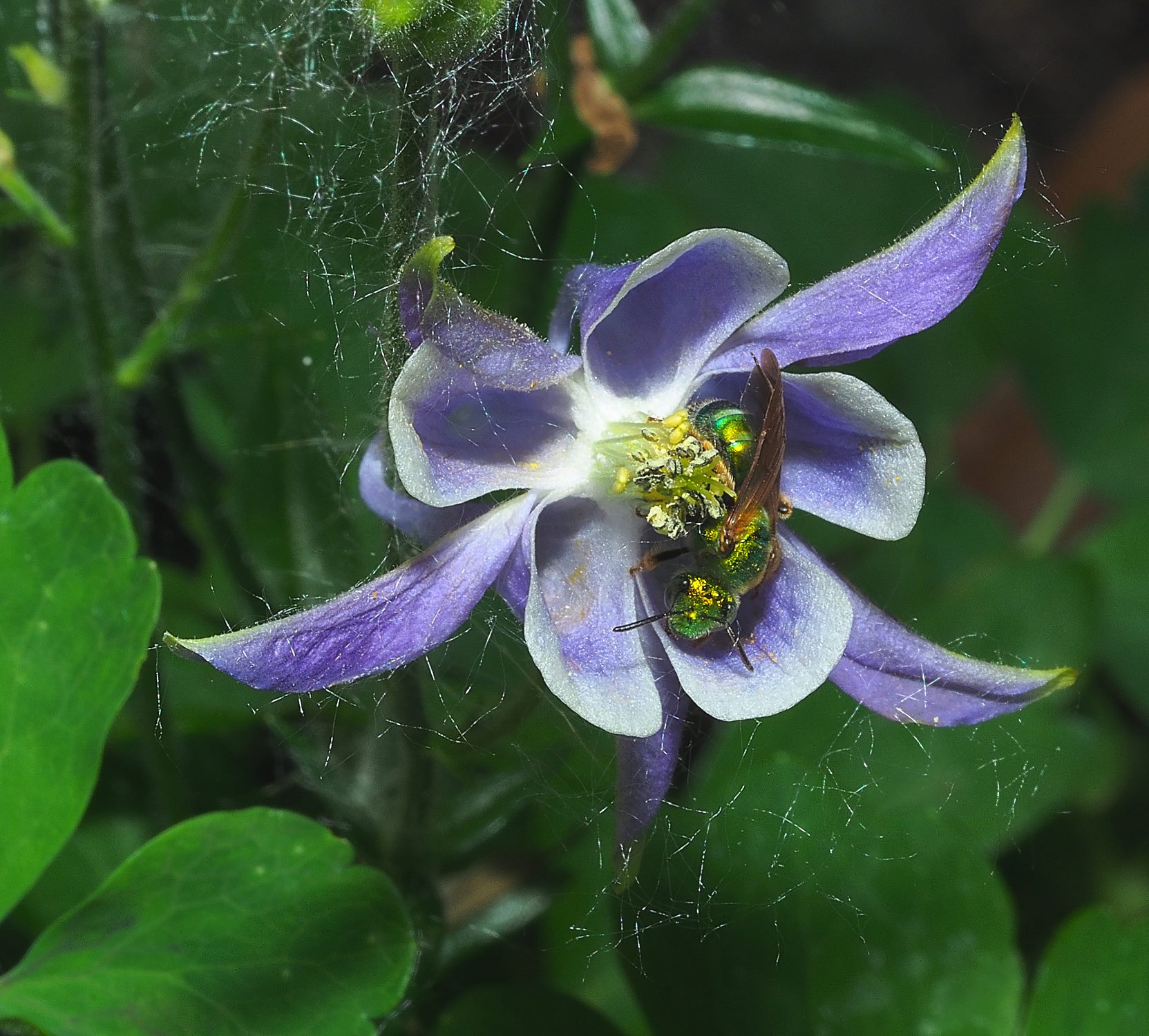
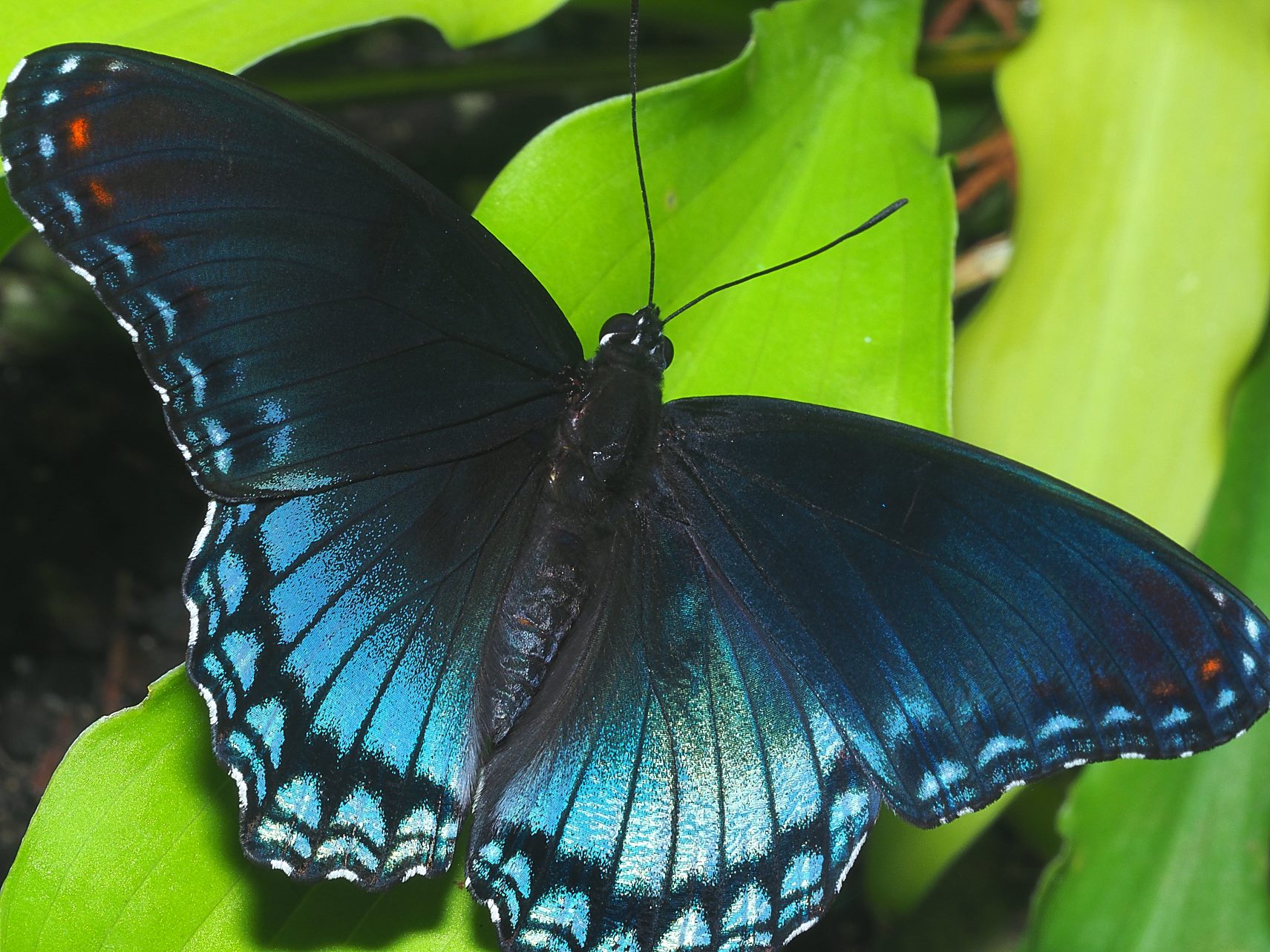






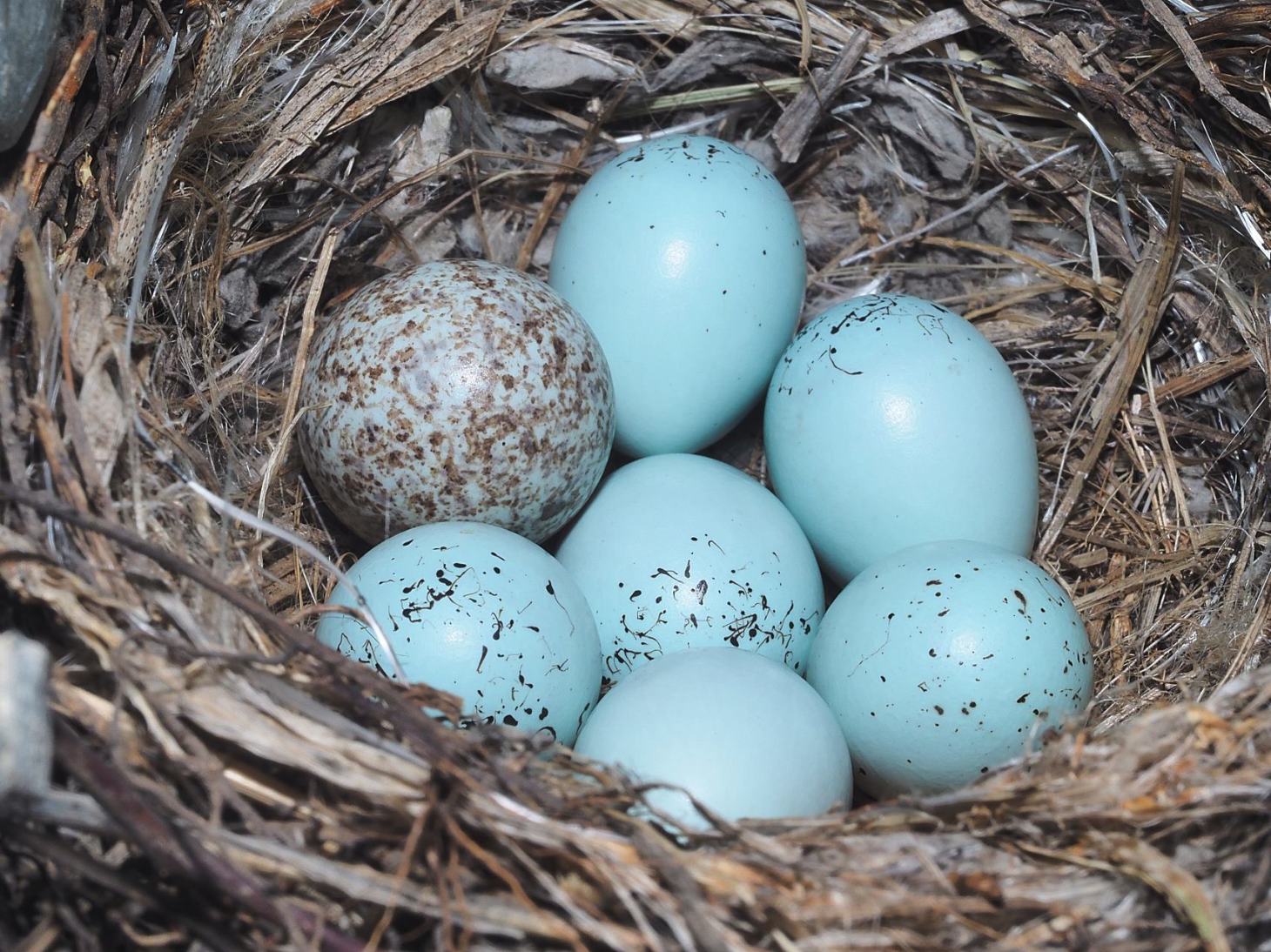







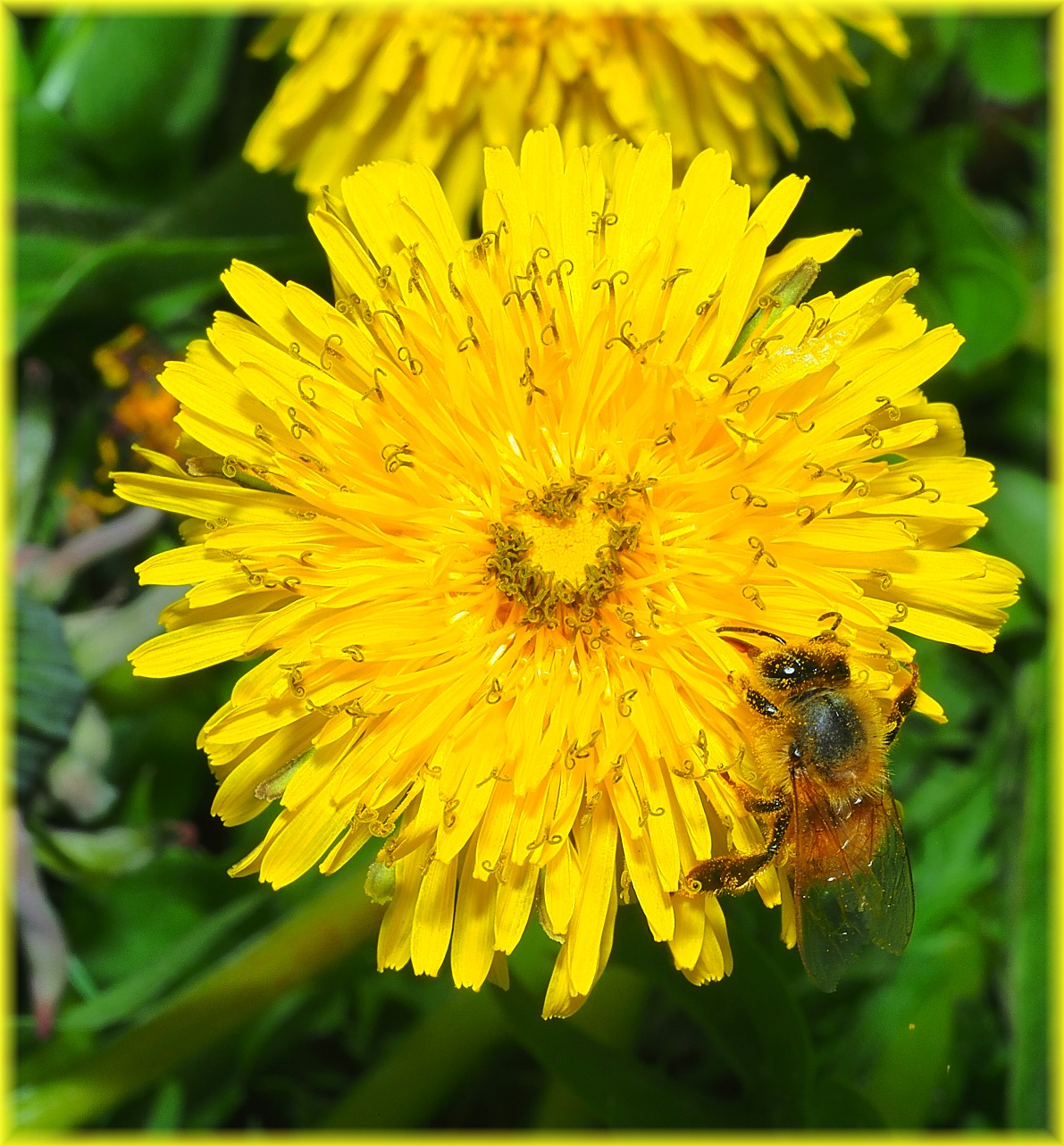


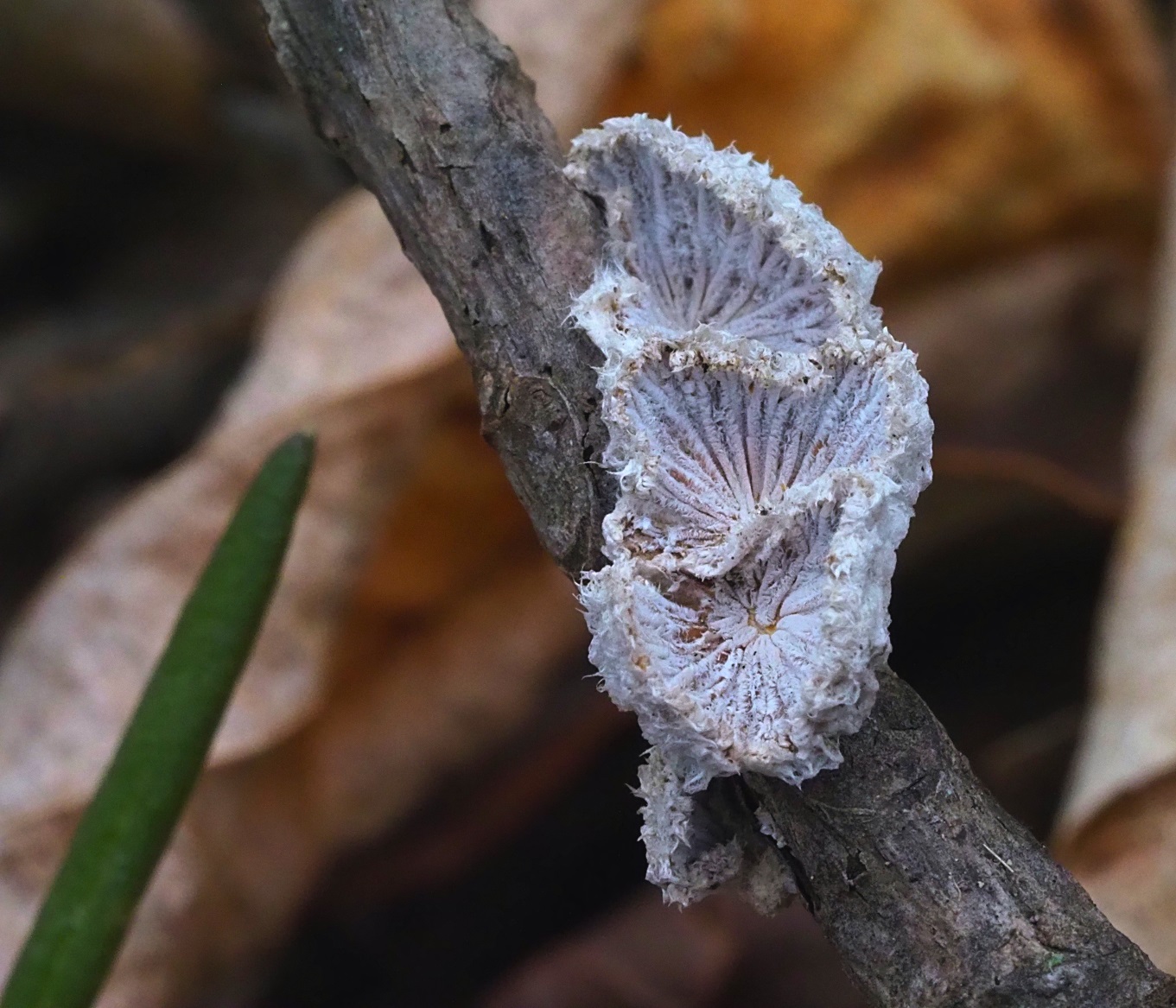
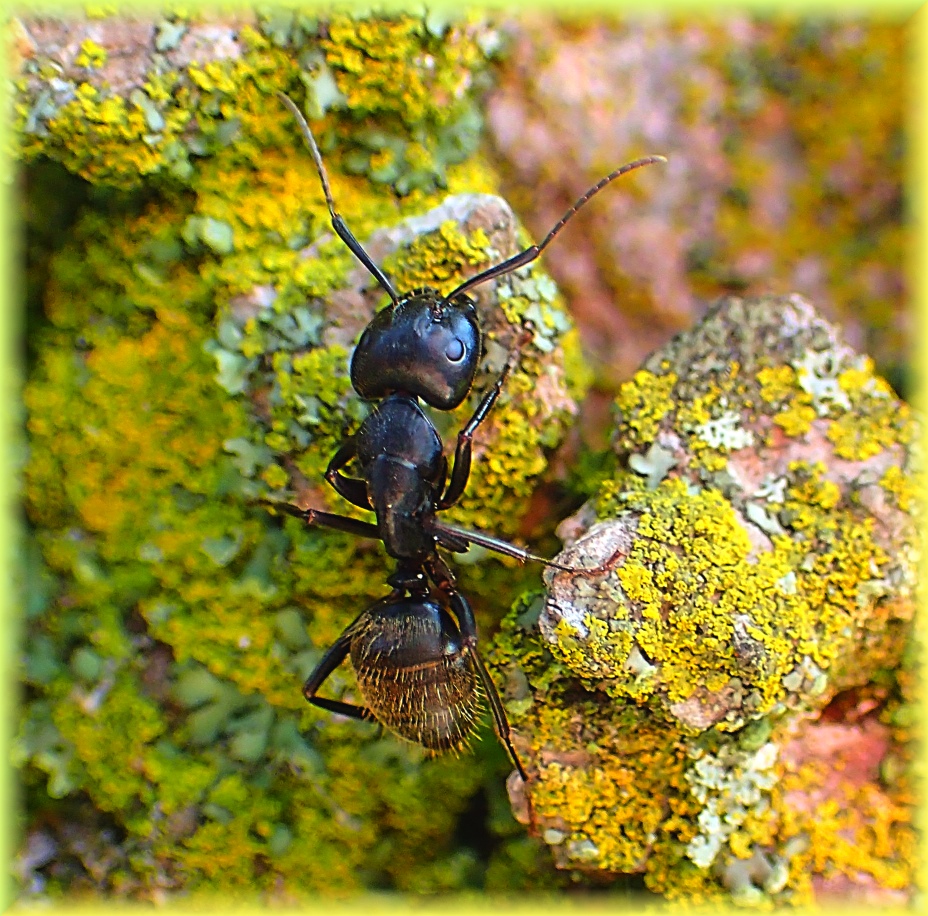


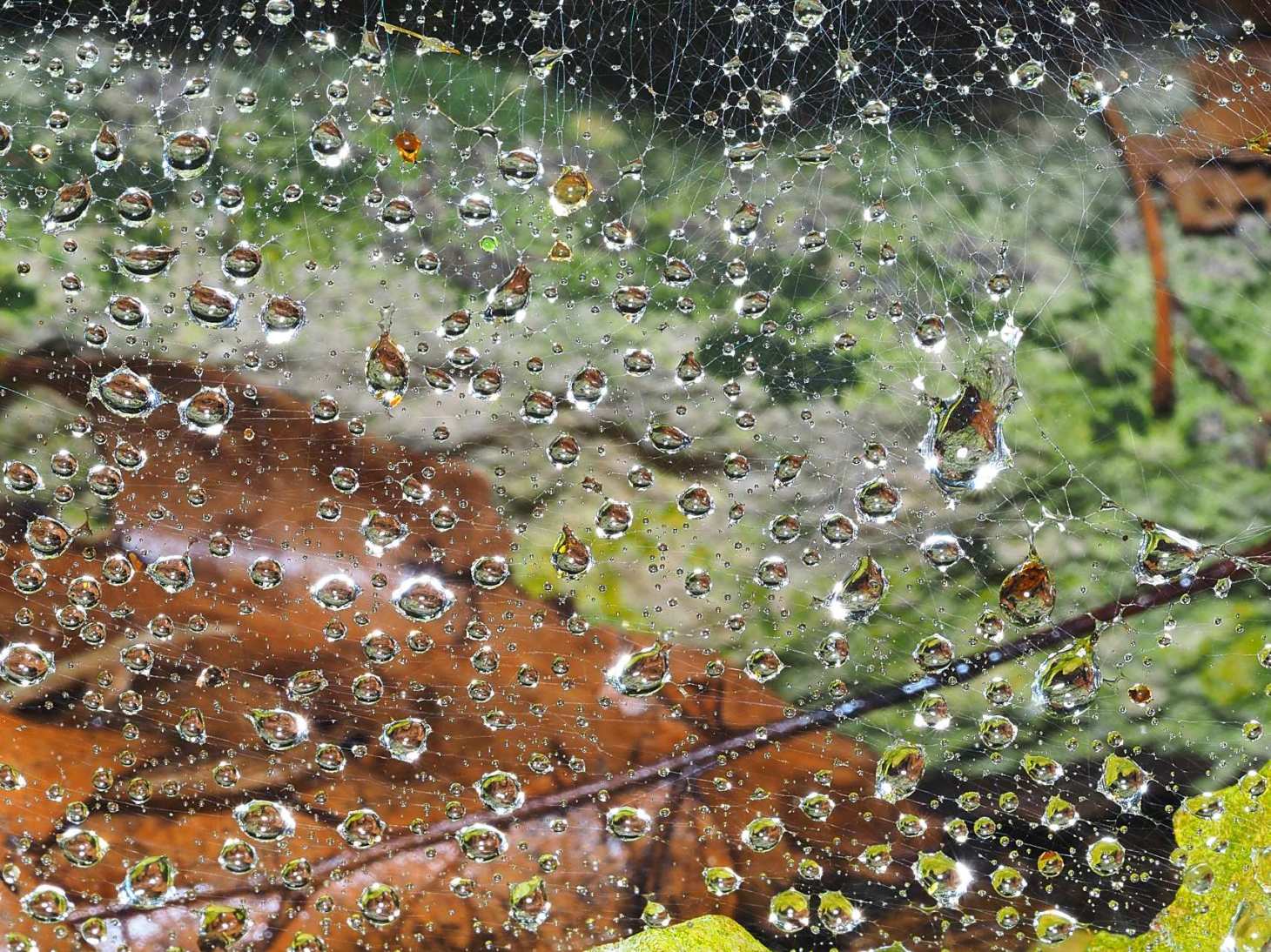

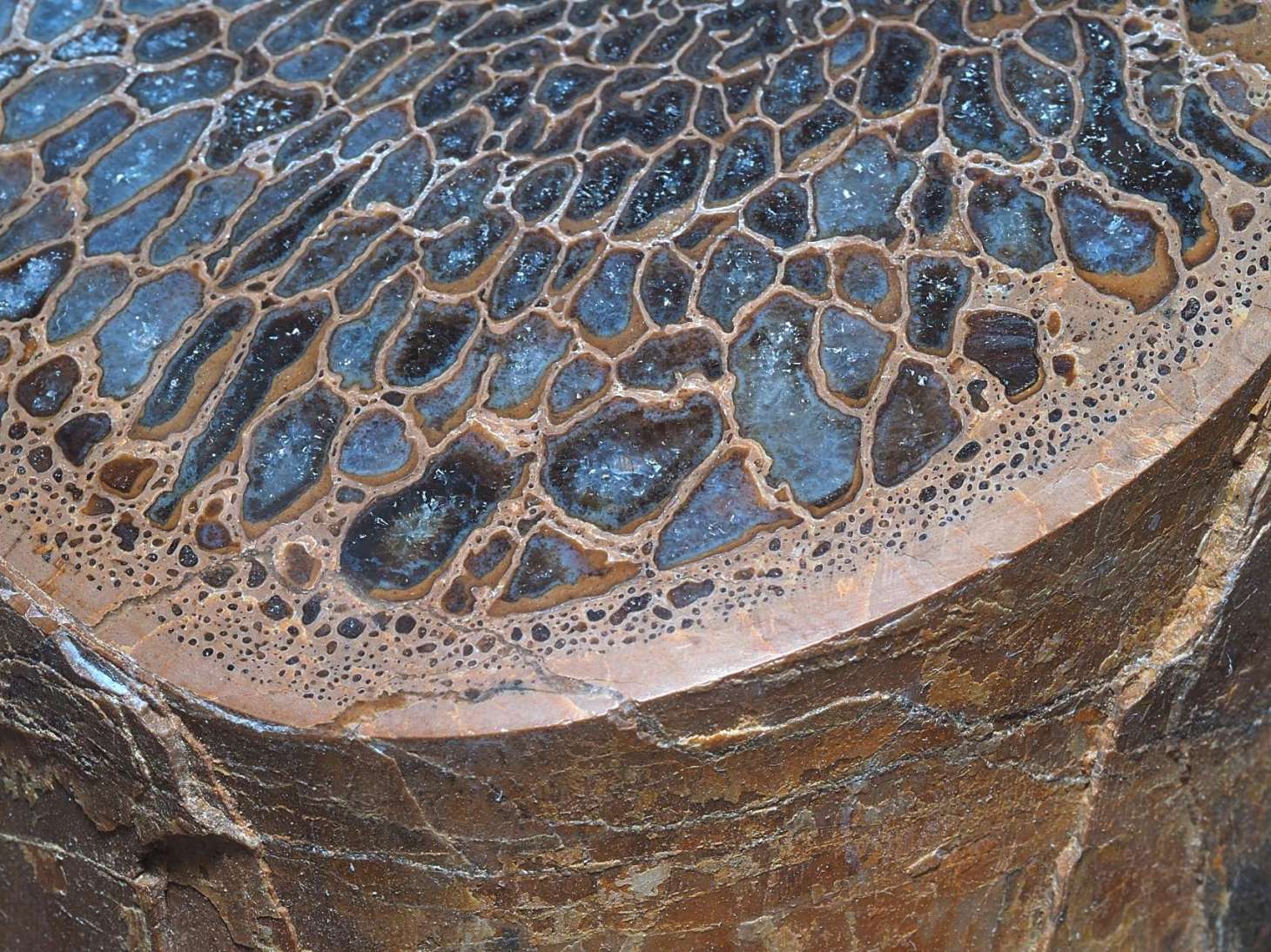


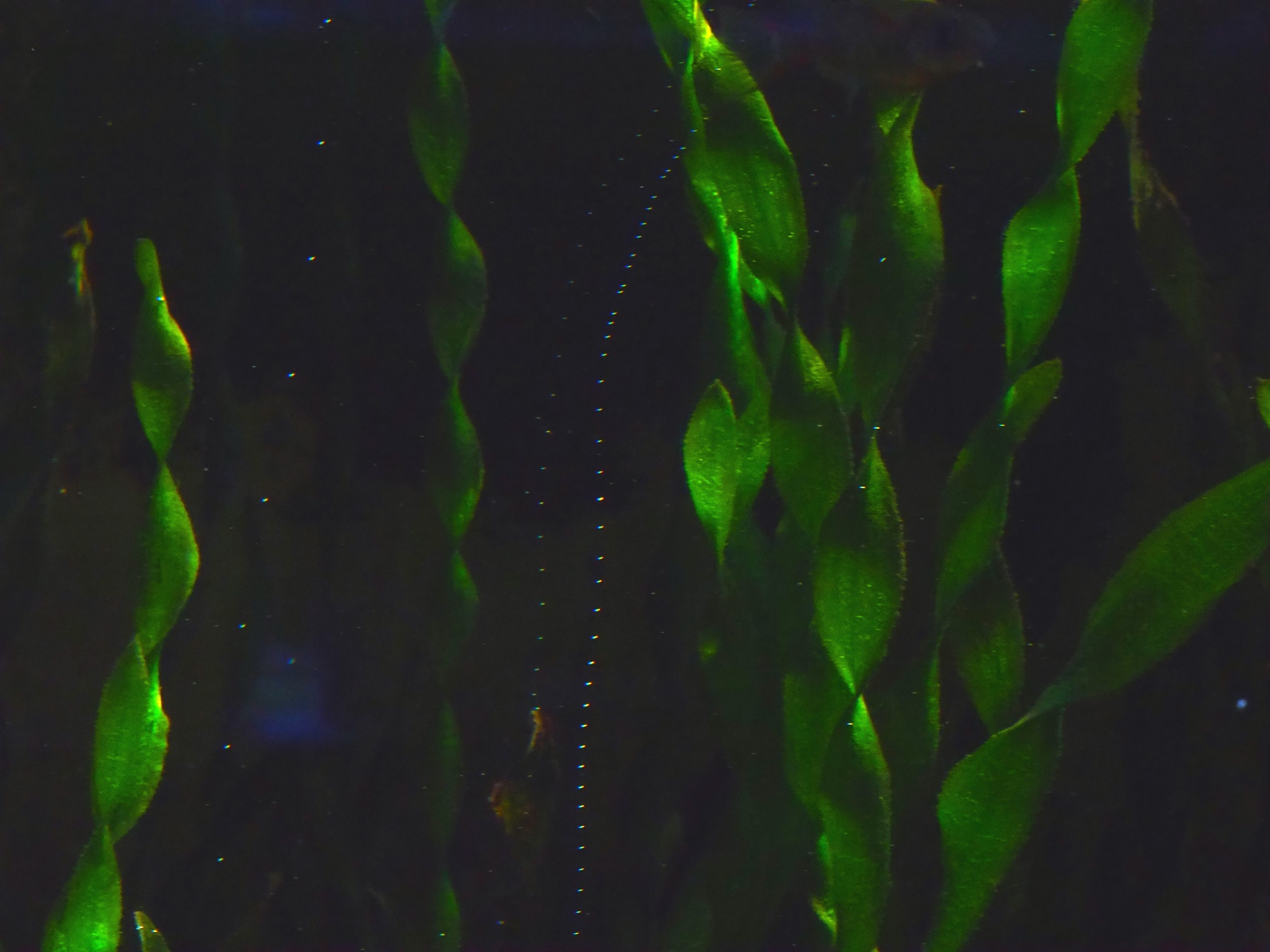















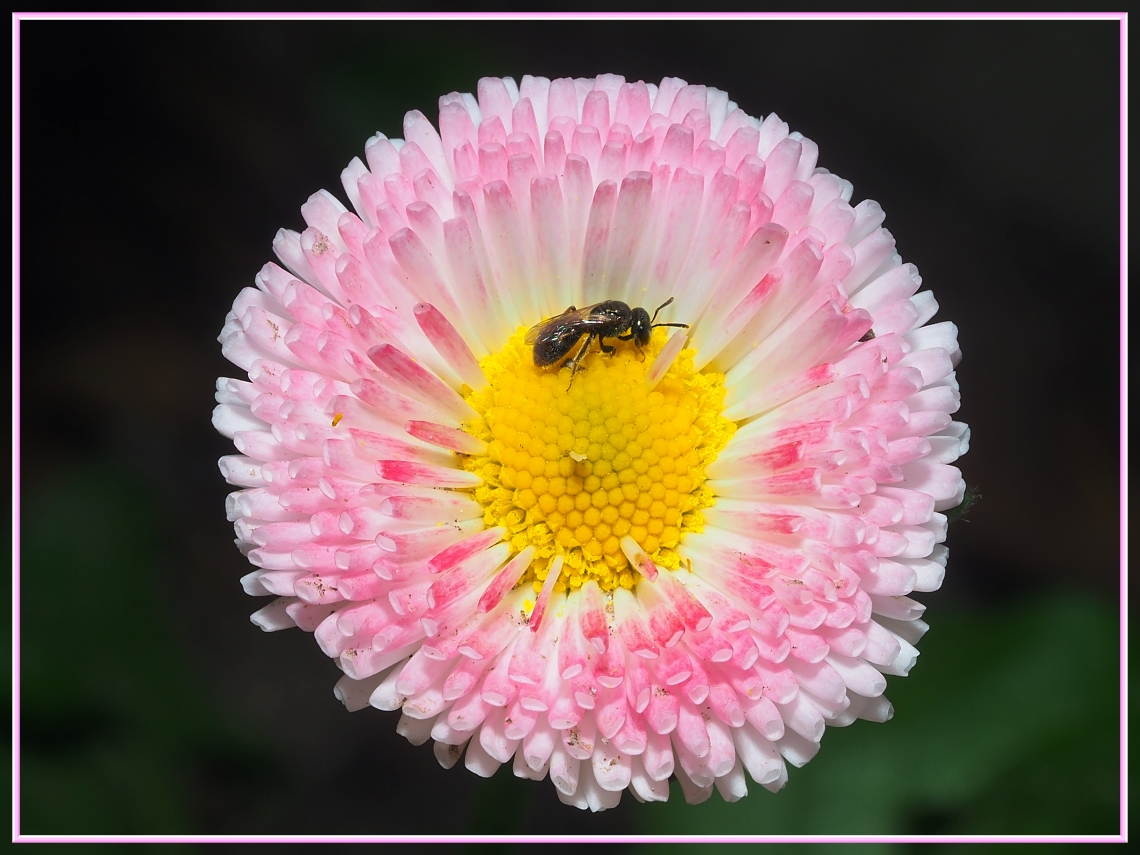


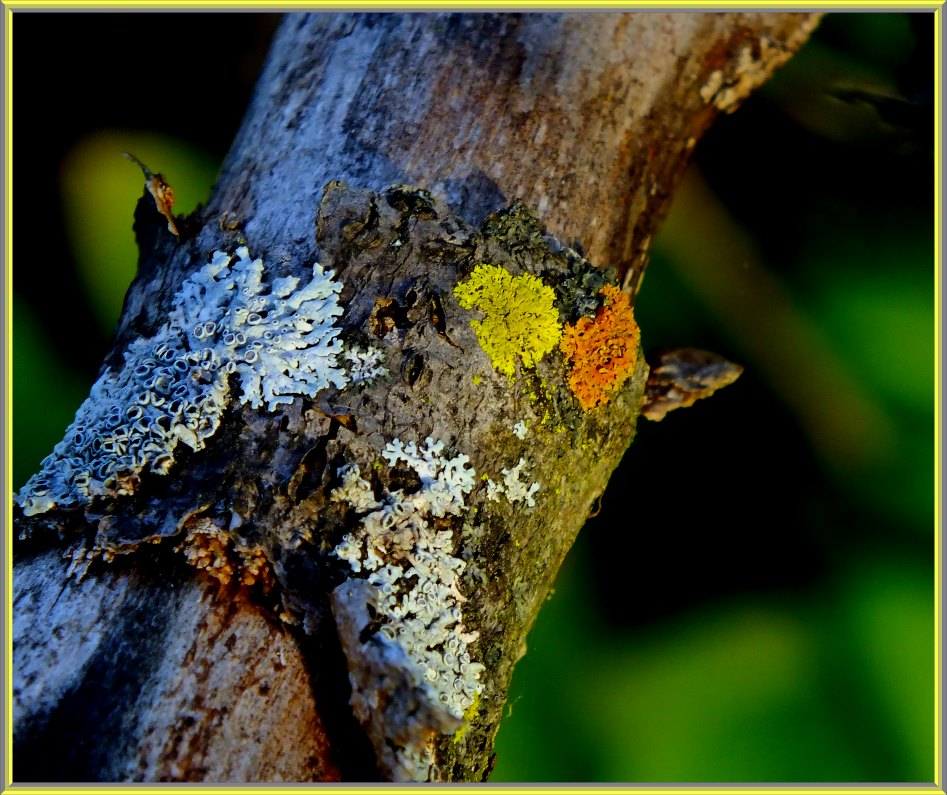
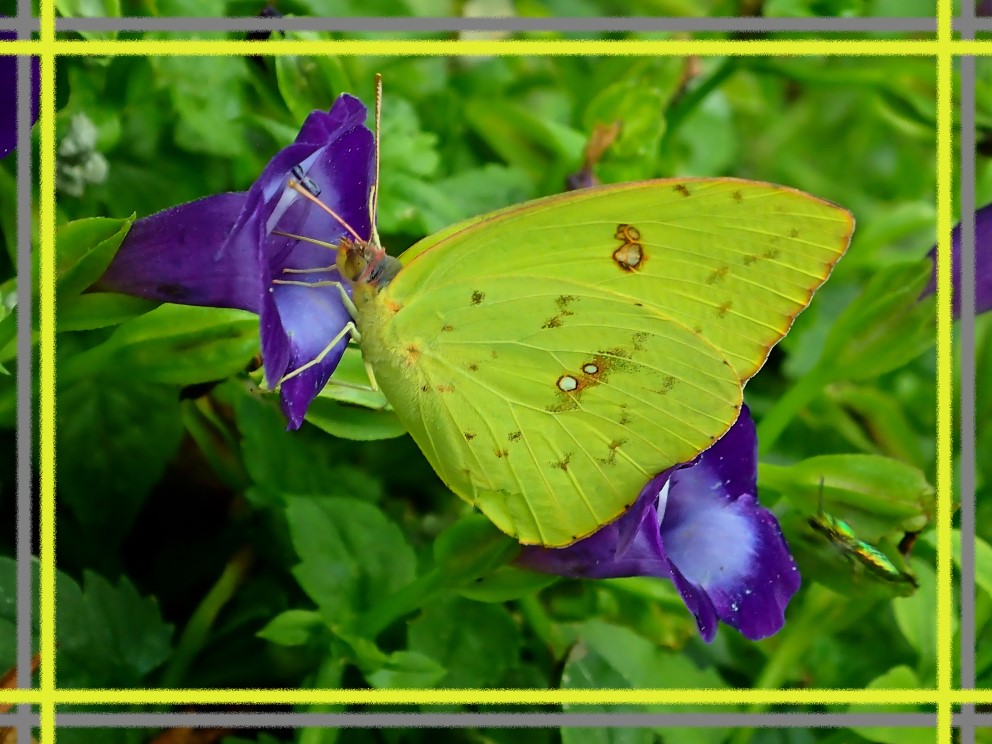

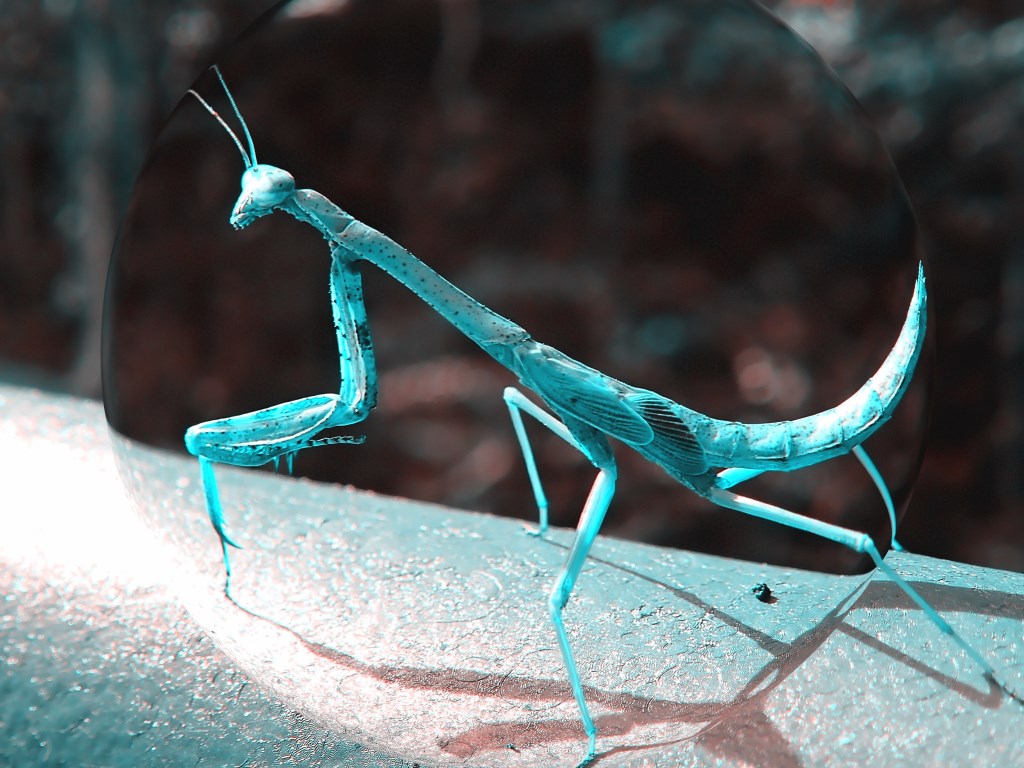


 Tom's Nature-up-close Photography and Mindfulness Blog