Human beings have dealt with loneliness for generation after generation. Most of us run away from it. We run away from it in many ways. We run away from it through various forms of entertainment. We run away from it by incessantly watching entertaining sports, by going to entertaining religious services, by endlessly socializing, texting, talking on the phone, reading, endlessly watching television, endlessly listening to the radio, and by innumerable other ways. However, it is always there, waiting around the corner. It is there waiting and once again manifesting. Mankind has been avoiding it for eons. It can even manifest in a person who is among a large group of people. Many, as a means to coping with it, even engage in alcohol and drugs.
Few of us are really involved with loneliness beyond mere conflict. Instead of merely being in conflict with loneliness, by constantly running away from it (as most incessantly do), can one realize that one actually is what it is, without merely thinking that it is what one “has” (as some loneliness)? If we often merely try all of the innumerable escapes from loneliness, it will always be there waiting and popping up again and again. Obviously, it is great to socialize and such. But to merely constantly run away from loneliness may merely feed its flames.
Aloneness is far different than loneliness. The root meaning of alone is ‘all one.’ (How can the mind be ‘all one,’ or whole, if it is primarily composed of fragmented thoughts and if it is constantly escaping from — and in conflict with — the loneliness that it is?) With aloneness, there is contentment/joy/deep perception without needing outside influences. It may occur to one who is a light to himself (or herself). Bliss without endless motives may be indicative of the intelligence of aloneness. It is not a selfish intelligence. It is an intelligence that involves compassion and care for all. True aloneness is beyond propaganda. True aloneness does not blindly jump on the bandwagon just to fit in. True aloneness perceives beyond the inner and outer separation that so many others have accepted from so-called leaders and superiors.
Alone and Unnoticed … Photo by Thomas Peace c.2021
Clarity in terms of the mind. What does it mean? Have you ever pondered over it or considered it deeply and seriously? Most people have not pondered over it. The dictionary defines clarity as: ‘The quality of being coherent;’ it also defines it as: ‘The quality of purity.’ Coherency in minds, in the manner we are writing about, means order. If the mind has significant fears, prejudices, beliefs (which tend to separate and divide people), and is tied down to dead (though fully accepted) second-hand traditions, is that order? If one is at all honest… a mind harboring many of such things — as what it actually “is” — probably is not of order.
Purity (in terms of mental clarity) likely means that the mind is not heavily conditioned, that the mind has not been deeply molded and contaminated by others. It means that the mind can look in a pristine way, beyond what was spoon-fed into it. Pretty much all of us were spoon-fed (mentally) from the day we were born. And most of us fully accept what was poured into us, because it is so very easy to do so. Most like the easy way, the run-of-the-mill way. It is so easy to fit in and to do as everyone else does and to think as everyone else does. It is so very comfortable. We love to imitate; “everyone else is doing it; it must (therefore) be safe and right.” But is it?
Here it is being suggested that a lot of what they pumped into us may be very fundamentally wrong and highly erroneous. Even the very fundamental nature of time that they gave us may be very wrong and largely fallacious. The very nature of our relationship — that they spoon-fed into us — involving thoughts and involving each other… may be very fallacious and not of real and true order. So what is one to do? A disorderly mind, seeking order, will usually find (and discover) according to that disorder. Non-clarity (i.e., non-coherency) cannot easily perceive clarity and order. (Innumerable minds of disorder often cling to primitive, fragmentary traditions of disorder, ardently claiming they are of order; then the endless wars and conflicts between groups of opposing people — with their separate ideologies — continue and go on and on.)
Real clarity may mean standing alone beyond all of the contamination. It may mean that one — without depending upon others — has to work diligently to see (for oneself) what is actually taking place. It likely involves seeing beyond what was poured into you; it likely involves asking the right questions (that are serious and of great meaning to life, wholeness, and dignity). It likely involves seeing beyond all of the second-hand patterns and endless words, labels, and feelings of individual separation (from others). It likely does not involve mere blind conformity, unquestioning acceptance, allegiance, or being mesmerized by authorities (by groups) and their ideas. There are even classes on mindfulness or on meditation that (through various systems and methods) purportedly get you to be mindful or get you to meditate. However, methods and systems just make the mind more imitative, more robotic, more second-hand, and more residual.
Clarity is purity, (plain and simple). It is not about being adulterated by the ordinary and the run-of-the-mill. In clarity is great beauty, love, and eternity. But don’t take my word for it. Find out. To find out there has to be great order of the mind, but not order according to what authorities say, not order according to some second-hand, man-made structures. (Or perhaps you just want to go on blindly accepting, adhering, and repeating the same old things.) It is so very easy to repeat and to fit in. It is altogether a different story when it comes to real purity, deep awareness, and profound coherence.
Schizophyllum commune Fungi on Tree Branch … Photo by Thomas Peace c. 2021
kindness one coherent star shines and upon waking a pillow goes far beyond dreams wisely asking: Am(eye separate)from everyone eye see? Am eye them in different forms?
eye had thought that(eye was separate) but that separation came from a flawed teaching(that thought of itself as greatly separate) while not perceiving that it was of a larger whole
Separation can cheat a kind man and will mock the handicapped Separation can have achieved good grades and can have learned the crude lessons well
Unless one merely remains with the crudity lessons are for transcending and joyfully discarding thus flying love beyond the isolated cadaverous walls of self that enclose (in dark) while grounded
Beyond being Grounded … Photo by Thomas Peace c. 2021
To truly be alive is a real art. It involves a lot of depth, understanding, and compassion. (By the way, psychological depth, great understanding, and compassion are not three separate things; they are all one.) Most of us have been indoctrinated with superficial second-hand patterns, thoughts, and traditions. Most of us live in (and “as”) an endlessly repetitious series or sequence of thoughts. That is what we call “living.” However, that may not be “living” whatsoever. Most people say that they are doing fine and are OK, but, in reality, they are not. They are full of fears, uncertainty, depression, dull mundaneness, and one series of stale thoughts after another.
Thoughts are stale. All thoughts stem from the past and are protrusions (i.e., projections) from (and of) that past. Patterns from the past can be rearranged to seem rather new but, fundamentally, they consist of the stale past. From that past, we look. Most people look through — and from — images of the past that they hold (and are). They recognize, they re-cognize things… such that they perceive according to the symbols and patterns of thoughts that they have absorbed and have clung to in (and “as”) the past. Thoughts are merely symbols and, therefore, are very limited and circumscribed. Symbols, being representations, are always residual, limited, and rather stale. However, most of us were indoctrinated to live in (and “as”) thoughts. Little wonder why so many say that they are enjoying life when, really, they are not. It’s like hugging or clinging to a Stop Sign and saying that the sign fills you with joy. You might fool some people, but you can’t fool me. That Stop Sign, like a thought, is a symbol, and a symbol is always of the past, limited, fragmentary, and nothing to get in rhapsody about. Most of us are of a consciousness that goes from one series of thoughts to another, never looking or perceiving wholly beyond thought/thinking. We go from one sequence of symbolic images to another. Even when we are out in nature, we perceive things through (and with) the screen of thought/thinking; we see things according to mere pre-learned patterns and labels; this may not truly be “seeing” at all. And yet we think that we are doing fine.
Remaining as stale, mundane, second-hand thoughts and patterns is never fine. It is the road to mediocrity, dejection, and robotic-repetition. One has to have the moxie, the fortitude, the guts, and the integrity to go beyond the indoctrination that was implanted in (and “as”) one. But most people are unwilling to do that. They are caught and find it easy to remain rather dead in the net or web of second-hand circumstance. Intelligently going beyond mere thought/thinking is frightening to them, because thought thinking is what they are; it is what they have accepted and is what they cling to.
Thinking in an orderly fashion is very useful at times. However, it is prudent to often go beyond thought/thinking. To merely remain in (and “as”) thought/thinking is sorrow. Period.
Fragmentary Raindrops caught in the Spiderweb of Mediocrity … Photo by Thomas Peace c. 2021
Boundless, in the dictionary, means ‘beyond limits’ or ‘having no boundaries.’ That sacred energy, that eternal flame beyond man-made descriptions, may indeed be of a boundlessness beyond the limited, and, hence, beyond the bounded conceptions and images of mankind. People tend to pretty much exclusively perceive and think about things in terms of limited labels, circumscribed patterns, fragmentary constructs, and sequential images and descriptions. All of these are, by their intrinsic nature, fragmentary, isolating, and limited. Thought/thinking is of this limitation. It has not changed in us, fundamentally, for millions of years. Four million years ago, we perceived via limitation and conflict. And four million years later; we are still perceiving basically via limitation and conflict. We still primarily mostly look with separation at all things; one still continuously perceives oneself as being a separate, independent individual.
Even most of the scientists are caught in this fragmentary, circumscribed, piecemeal way of looking at things. Even though they have some interesting theories and discoveries, they still are perplexed about the nature of things. They have their conflicting theories and divisions of thinking about things. The various so-called religions, too, have their divisions and conflicting theories and stories. Concerning them, people still make and construct stone images to impress others by, just as what was done many millennia ago. Though we’ve changed tremendously technologically, we’ve — most of us anyway — stayed fundamentally the same inwardly (i.e., psychologically) for eons. We still look at things via separation, limitation, circumscribed labels, and conflict. Most of us have a lot of deep-seated fears and psychological problems. Yet we think that we are highly evolved.
Most of us were enthusiastically programmed to react, perceive, and continue to function just like everyone else, both outwardly and inwardly. Heaven forbid if you began to look at things in a whole, new way. But a whole, new way was how Einstein came up with some of his brilliant works; and, believe me, he understood far more than what he revealed in his published and popular works.
The question is: Can one perceive — in a fundamentally different way — without exclusively depending upon mere (limited) patterns (that you were molded to contain)? To answer that question truly and deeply, consciousness needs to go through a radical change. All of the stuff that was hammered into you, throughout your past, has to be put aside or (rather) psychologically died to. When one truly transcends all of the illusory separations, limitations, fragmentation, and division, then real intelligence and compassion emerge. But it isn’t compassion that “you” “have”; it is compassion; it is of the whole, not of a separate “you.”
This Allosaurus Dinosaur Leg-bone was sliced and polished, revealing the now crystallized canals (ducts or channels) that used to transport air (and some blood) through the system; they stored oxygen within their bones, which was a very advanced system (superior to what mammals currently have).
Allosaurus Dinosaur Bone Sliced and Polished … Photo by Thomas Peace c. 2021
There is chronological time — time by the watch — such as when you have to be at the doctor’s office at a certain designated time, or the fact that you have to be at work at a certain time. However, there is also psychological time, such as when the brain imagines (to itself) that it will be less fearful in the future. Psychological time often departs from real, substantive frameworks and oftentimes flows into the fictitious, the imaginary, and the illusory.
Take the psychological time-based situation of a typical person imagining that he or she will be less greedy in the future, for example. The person imagines the greed (that he or she is now) as being separate from what he or she actually is. It is something that can be controlled from a distance, to his or her typical perspective anyway. Then, a separate “I” (that is projected to be separate from the greed) is formulated to go beyond the greed, controlling it, over time. (The imagined separation from the greed is, itself, a form of greed.) That person does not fully perceive that he or she is not separate from what the greed actually is. So the typical brain separates itself from greed (during the very distorted perception of greed) and then imagines or projects a state of being beyond it, or of controlling it. The typical brain sees greed as what it has, or as what it can control, rather than as what it actually is. It additionally projects a “should be” (i.e., an imagined state beyond greed) and strives to get to that imagined point over time.
A mind of deep, holistic intelligence deals with this differently. With such a mind, psychological time is not so much a factor. It instantly sees (without the movement of time being a factor) the greed as being what it is… not as being what it “has” (or what it is contending with or controlling). Here, the perceiver is “that which is perceived”; the controller is not separate from the controlled; really, there is no controller in this situation (and, really, there never truly was, in all actuality). The greed, by the way, likely dissipates without effort due to holistic intelligence (which has its own energy and profound order); or it never occurs much in the first place. (The word “has” in the previous sentence does not mean or imply ownership from a distance. By the way, ownership from a distance implies greed, doesn’t it?)
Here is another extremely interesting time-oriented point. Many top scientists — Einstein among them, who formulated the philosophy of spacetime, with space and time being one thing — are now supportive of the Block Universe perspective. It is also referred to as Eternalism. It, in one fell swoop (and whether you like it or not), nullifies the notion of free-will; however, it does not nullify the responsibility that each one of us has for the whole, for all others, and for the entire environment. Watch the following short video if you are not familiar with it. (You can watch it for a time.)
Goodbye Ice Ice Baby … Photo by Thomas Peace c. 2021
Motivation is oftentimes a very good thing. Your teachers wanted you to have plenty of it when you were a youth in elementary school. Most people look at a man or woman who has very little gumption as being rather mediocre and unproductive. Motivation helps one to accomplish things; oftentimes these things are necessary for good health, community prosperity, and the planet’s wellbeing.
It is prudent to have motivation for one’s so-called self and immediate family. It would be even more prudent to engage in motivation that helps the environment and the planet as a whole. Too many people were educated and conditioned to have motivation for the “self” while, all along, not seeing this self as including and being other life forms and the planet as a whole. Most of us were educated and conditioned to strive for a small, fragmentary self that is (for the most part) considered to be something apart from the whole. Most of us graduate from school, being so very proud of our graduation, and then go out (conditioned and programmed to have motivation for fragmentary concepts of rather separate selves and separate groups); then we ruthlessly compete, struggle, disagree over our separative images and beliefs… and continue to cling to motivational patterns that are isolating, divisive, and devoid of real, holistic compassion.
Although motivation has its place, it is wise to go beyond motivation at times. Thought/thinking is always tied to motivation. Thinking occurs for a reason (usually a very conditioned reason); thinking always involves moving in some direction, acquiring, avoiding, or getting… (all involving motivation). However, a very intelligent mind can see the limitation and the fragmentary nature of motivation; then, if it is lucky, it can sometimes be where motivation is not necessary, where motivation is no longer needed. This motivationless state is where thinking is transcended (without effort) and put aside (for the time being); it is of a causeless bliss and joy.
Can one, out of psychological strife and motivational effort, bring such a state into being? Of course not. The psychological ending of conditioning does not merely depend upon motivational patterns. Thinking (as internal, psychological motivation) has its place, but wisdom goes beyond what is of no use in terms of wholeness and profound awareness. One of intelligence does not set aside a special time to “go beyond motivational thinking” or to “indulge in meditation.” It is not what one can arrange to happen via set motivational undertakings. It happens naturally, spontaneously, without pre-programmed calculation… or it does not happen at all.
Pearling is what occurs in aquarium plants that — when in enough light — emit bubbles of oxygen into the water (that naturally stream upward during photosynthesis). The photo is of some of my Corkscrew Vals pearling. All plants, terrestrial plants included, emit oxygen into the atmosphere during photosynthesis — thank goodness for us — as a natural by-product.
Pearling of Corkscrew Val Aquarium Plants … Photo by Thomas Peace c. 2021
We have space psychologically and, for most of us, it is very limited. Everyone seems to have a space between the so-called central “I” (or “me”) and the “other” thoughts that this “I” is purportedly thinking. People do not realize that this “I” (or “me”) is neither central nor truly “in control” of the so-called “other” thoughts. The image of a center is just a projection of the psychological process and (as such) it is not truly manipulating anything. However, unfortunately, minds conditioned and taught to perceive through this illusory mode of operation tend to be very uncomfortable about going beyond it. The “I” was not designed for one to have insight and holistic perception; the “I” formed as an extension for self-preservation. Preservation and care for the body are crucial and very necessary. “Thinking” was to tool to help in regard to that. But then thought began to make itself out to be the essence of the organism. Then it began projecting the “I,” the “me,” imagining the “I” or the “me” to be a central regulatory entity that dominates or produces the so-called subservient thoughts.
People have, psychologically, created a space between the “I” and other thoughts, (thoughts that the “I” allegedly manipulates). They have space between the perceiver and “that which is perceived.” Such (limited) space is often internal (i.e., between the “me” and the other thoughts). It also, all too often, deals with the external… “me” separate from the animal that is hunted by me.
Going beyond the “I” due to keen insight is what negates these false constructs within the mind. Going beyond the “I,” the “so-called center,” the “me,” is not dangerous. On the contrary, it is only a very intelligent, aware mind that does so. And in so doing, it transcends friction, separation, conflict, illusory fabrications, and internal falsities. Then the body and the mind are in perfect harmony beyond the need to control. This lack of control is not chaos; on the contrary, it is an orderly movement involving insight from a profound whole.
When most people observe, they are observing fragmentarily, with — and from — learned separation. They are observing through a conditioned screen of thought/thinking (involving labels, categorization, and separative distance). This separative structure is of a very crude nature and it is very limited. Such limitation allows very little room for true joy and insight.
Deep compassion occurs when the mind transcends the illusoriness of the supposedly separate “central I.” When other life forms are not merely seen from a separative distance, then a real (much more profound) kind of intelligence manifests; it may involve a space that is not limited. This manifestation is of order and right action. Such right action is not merely a series of dull, learned routines reoccurring as mundane, dead-from-the-heart-up reactions.
The following is not meant to offend those who pray. If you are into “praying,” please read this as objectively as possible.
Praying is still what a lot of people do. Why do people pray and what does praying involve? We must be careful not to overly or subjectively analyze it, since (psychologically) the analyzer is not something truly separate from the analyzed.
People who pray will tell you that they are praying to God, to what they consider or think/feel God to be. Fundamentally, in all actuality, they are praying to an image (of what their thoughts consider God to be). This image is a protrusion of their thinking process. It is a product and fabrication of thought/thinking. One of the associative feelings or suppositions regarding this projected image, regarding what “God” is considered to be, involves attributes of power, dominance, (and all of this with a heavily anthropomorphic bent). In other words, this image of God — within people, constituting part of their minds — consists of human (often fatherly) attributes; these images, for instance, tend to be formulated of human attributes involving such things as great strength, power, endurance, fortitude, fairness, awareness, and keen judgment. (Most people do not harbor internal images of a lazy, indifferent, weak God. Most brains do not harbor associative constructs tying images of God to inefficiency, indolence, and to a complete lack of awareness.)
Many ardently cling to this image involving domination and power — whom they call “God” — and will insist that it is more than a self-projected image that they carry. Curiously, if one examines honestly, there is another image that they carry that (coincidentally) also involves great domination and power. Do you realize what it is? It is the image of the self. It is the image of the “I” and/or the “me.” However, most of us do not see it for what it is (i.e., a projected, concocted image); most of us see it (or feel it) to be the permanent, separate, central orchestrator and core regulator of all of the other thoughts. Most of us see it as what has true domination and power; it (to us) is what is having domination and power over the “other” thoughts (and is separate from them). (So there exists domination and power regarding “God” and domination and power involving the “I” or the “me.”) We don’t see the “I” for what it really is… another protrusion of thought/thinking that (in reality) is neither powerful, dominant, nor truly central. However, most all of us cling to this psychological structure because it fits in well with what everyone else has absorbed and accepted as legitimate. We evolved from primitive hominids in an environment where domination and power were critical and extremely important. Following leaders of power — or forces of power — was critical and necessary way back then, wasn’t it? We haven’t dropped those old-fashioned ways.
A few additional points: So when people pray to God concerning things that need to be done for others, for instance, are they pointing out things that this God may be negligent about understanding or that this God is not quite fully adequate at being aware of? If mentally handicapped people and animals are not gifted enough to pray to what may involve dominance and power, does this mean that they are largely plum out of luck? When a person prays, may it be that that person feels that he or she is involved in a direct pipeline to something considered powerful and dominating (i.e., which — let’s face it — is that person’s image of God) with, all the while, this pipeline being something considered special? And could it be that the previous question implies that psychologically imagining that one has such a pipeline, in oneself, nourishes a form of self-aggrandizement, blowing up the ego of the one so imagining?
So…
Personally, one does not pray in the traditional sense. One rolls up one’s sleeves. My prayer — if it is any form of prayer at all (which it really isn’t) — is the “doing.” I worked throughout life with the handicapped, with the mentally disadvantaged, and with those in real need. If we perceive with real intelligence and understanding, then compassion is there, the sacred is there. But it is not of dominance and power, and all of that traditional, projected, nonsensical crap.
Praying Angel with the Golden Wings … Photo by Thomas Peace c. 2021
When one was very young, one loved nature a lot. Nearing 70 years of age, one still loves nature a lot.
Starting at the 5th Grade level, they put me in parochial school; we had to attend mass every morning. As a child, one thought, “They don’t have God locked up in a golden box on the alter; God (i.e., what is sacred) is outdoors in nature, with life… with all of the trees and creatures.” One still feels the same way.
In the playground, as a kid, they had us pledging allegiance to a flag. As a child, way back then, one saw it as a rag on a stick; one saw how so-called separate countries were in battle with each other (each with their own so-called “special flag”). As a kid, the whole thing seemed so mindless and totally absurd. One kept silent as the other kids endlessly repeated the pledge. At around 70, one still feels the same way.
As a child, one was the only kid in our grade school class who would help a fellow student (in class) who happened to be mentally retarded. At the end of the grade school years, his mother saw me in a department store and passionately thanked me. I also helped foreign students who were struggling to learn English. Much later on in life, my adult profession was being a teacher for the multiply handicapped.
While in grade school years, while one was sitting in one’s room alone, one suddenly went beyond the thought/thinking process; one realized how “special,” “magical,” “intelligent,” and “whole” it was. It was instantaneous (i.e., timeless) whereas thinking was a process that took time. One continued to engage with (or “as”) whatever it was; one continues to be appreciative of it to this day. One can call it “meditation,” but what it involves transcends all words and labels.
One was always amazed at how cruel and indifferent other fellow grade-school students could be. For instance, they would often tease and mock the boy who happened to be mentally retarded. Now, at around 70, one is amazed at how cruel and indifferent adults can be. For instance, former President Trump openly mocking a handicapped man (and mindless masses still voting for him — even with all of his cruelty and racism — and ardently supporting him).
When one was young, one didn’t just regurgitate what was poured into one; one questioned things and pondered things for oneself. After all of these years, one still (thank goodness) questions things and ponders beyond the stagnant, normative traditions.
Does my blogging help much if that person hasn’t previously already figured a lot of it out as a kid? One wonders, one really wonders…
One was here in the past… Photo by Thomas Peace c. 2021
Most of us equate nothingness with worthlessness, with triviality, with insignificance. We are terrified of psychological nothingness, and when nothingness occurs, psychologically, we hurriedly run away from it with chattering thoughts, beliefs (that are extensions of thought/thinking), suppositions, and all kinds of entertainments, including television shows (with their sports and movies), radio shows, and internet correspondences. We were all taught to be something, to constantly pursue things with motives to achieve more and more (and still more). Most of us are internally prejudiced against psychological nothingness; it tends to frighten us and we automatically run away from it.
We were taught (directly or indirectly) that the “I,” the psychological center, the ego, the inner “controller” is very substantial. To most of us — let’s face it — it is the most substantial thing of all. Everything revolves around the “I” and the “me”; to suggest that the “I,” the “me,” is very insubstantial and false would be considered blasphemy by most people. (Such talk goes against their core values, their core essence.) Has your mind ever significantly pondered about what the “I,” the “me,” actually is? Most people don’t bother to ponder about it but they merrily go on referring to the “I” and the “me” and habitually function with such manifestations (that they didn’t bother to deeply ponder about).
Without thought/thinking, there can be no internal “I” or “me.” The “I” and the “me” are dependent upon thought/thinking. Without “thinking,” there is no “I” or “me.” The “I” and the “me” are protrusions of thought/thinking and are (in fact) fabrications (i.e., extensions) of the thinking process. The mind can perfectly function just fine without the inner notion of “I” or “me,” and can often do so with compassion, holistic awareness, empathy, and intelligence. In fact, a brain that exclusively functions with or from an “I” or “me” is a brain of separation, isolation, limitation, and division. A brain of separation, isolation, limitation, division, and imitation, may be considered to be intelligent by many people, but it may not be very intelligent. The “me” is considered separate from other thoughts, people, and organisms. It functions from (and “as”) a limited, separative, isolating space that thought/thinking has concocted. It may be that this concocted limited, isolating space is what is truly illusory and (hence) essentially (in a very limited way) nothing. And it may be that a rather egoless mind — without often depending on projections of “I” and/or “me” — can function as (or “with”) a vast, boundless emptiness. Such a vast emptiness (i.e., vast nothingness) is beyond motive and may be sacred, timeless, inclusive, immeasurable, highly sensitive and intelligent, and of a bliss far from what petty minds can fabricate. A brain consisting of a limited, little ego made up of a learned and fabricated “I” tends to be rather superficial and illusory; a mind of a truly holistic, vast, dynamic, immeasurable nothingness tends to be of true intelligence, understanding, compassion, and deep perception.
Curiosity Overview … Photo by Thomas Peace c. 2021
It’s not a subject that most of us care to consider. We, most all of us, tend to push it off, avoiding thinking about it. Shortly before my wonderful wife Marla recently passed, i tenderly said to her, “If things should happen to go south with this, death will not keep us apart for very long; death is too superficial, too shallow.”
I am very appreciative of the warm condolences within my previous blog posting and in cards and letters that people have sent to me. It means a lot.
Death is not (at all) what most people think. As Walt Whitman sagaciously wrote, “And to die is different from what any one supposed, and luckier.” There are different kinds of death/dying. There is the death of the physical body; there is the death of a mind that merely goes through life blindly accepting things according to tradition, organizations, and leaders (who, themselves are not truly living). There is the death that permeates a mind of indifference, callousness, and narcissistic behavior. (Perhaps such a mind was never truly alive whatsoever.) So many of us assume that we are living and free; we may not be.
There is, however, a dying, a “good dying,” throughout life, that can exist, psychologically, that may truly be a very highminded, splendid, and vibrant kind of living. A wise entity, who is frequently psychologically dying to dead, stale, stagnant, second-hand thoughts, may be engaging in one of the highest forms of living. As one has often said, thoughts and words are merely symbols and are, for the most part, never the actualities that they stand for and represent. However, most of us live in (and exist through) the domain of thought/thinking. (And we perceive through the screen of thought/thinking.) It’s tragic, really, and (actually) few of us are truly living. We accept authorities and organizations that are, in themselves, rather static, barbaric, and dead. We are followers, rarely thinking and discovering for ourselves. To be second-hand, repeating what was fed into you, is what computers are essentially capable of; it is also what too many of us exclusively do. We were trained to imitate and copy… not to feel and question.
My beloved wife Marla passed away on 10/07/20 due to complex complications from Wilson’s Disease. Her Hepatologist at the University of Chicago Medical Center said that it was amazing that she lived as long as she did. This makes me feel that i succeeded rather well at helping her with her illnesses. Marla was very brave and went through a lot of suffering. She was born with Wilson’s Disease, an autosomal recessive genetic disorder rendering the body to be unable to eliminate excess copper naturally. She had an auto-allergic reaction due to the penicillamine medication that she was on for Wilson’s in the past; penicillamine has a lot of very bad side-effects. At that time, she almost died from ARDS and ended up with only half-lung capacity. She suffered from dystonia — a strong tightening of the muscles involuntarily — and had to have Botox injections deep in her neck every two to three months. Due to the chronic dystonia of her neck, she had to have 8 cervical vertebrae replaced with titanium implants. She then lost the ability to swallow and had to (permanently) eat via enteral feeding (i.e., by a tube going into her stomach area). Before i retired, i was a teacher for the multiply handicapped, and — for decades — helped with enteral feeding (i.e., stomach feeding tubes) with some of my students; so i was very experienced with helping Marla with hers. Marla then had to have shoulder surgery… and then reconstructive shoulder surgery. She had Elastosis perforans Syndrome, a skin disorder (on her thighs) caused by having been on the penicillamine for years before getting on the better (less intrusive) new zinc therapy. She often told me that she had a low threshold for bearing pain but she was way more brave and stalwart than i could have ever been. Despite her pain and struggles, we had a whole lot of great, joyful times together.
I fell in love with Marla largely because of her warm and compassionate heart. She always put others first and was always thinking of others. She often made things for others, like quilts, fancy embroidery things, and homemade lotions. She was a nurse and often would take her elderly mother to the doctors. Everyone who met Marla loved her radiant, caring personality. I am so honored to be her husband.
The following is one of the E. E. Cummings poems that i read at her beautiful outdoor memorial service along the Kankakee River:
i carry your heart with me(i carry it in my heart)i am never without it(anywhere i go you go,my dear;and whatever is done by only me is your doing,my darling) i fear no fate(for you are my fate,my sweet)i want no world(for beautiful you are my world,my true) and it’s you are whatever a moon has always meant and whatever a sun will always sing is you
here is the deepest secret nobody knows (here is the root of the root and the bud of the bud and the sky of the sky of a tree called life;which grows higher than soul can hope or mind can hide) and this is the wonder that’s keeping the stars apart
[Note: The following poem was written days ago and was prescheduled. This note was written on 10/1/2020. Marla, my wife was taken to the emergency room today regarding sudden serious problems with her liver. She has Wilson’s Disease. I will be absent from blogging and will not be able to respond to comments. Take care and stay safe. ]
Note: This is a Praying Mantis. She is a female, laden with eggs. Because of the rotten, declining environment, there are fewer Praying Mantises in our area every year. Years ago, we used to see Mantises frequently; now we rarely see any. I found this one in a hospital garden, along a river, that used to have a lot of them. This was the only one that i saw. Fortunately, female Mantises do not need males in order to reproduce; they can produce fertile eggs and young that are exact clones of themselves. (It sure seems like my childhood premonitions about man ruining the environment are, many decades later, turning out to be true.)
One would like to reiterate that language oftentimes plays a tremendous role in regard to how we view the world. Language, whether we care to admit it or not, predisposes us to see the world… usually in rather primitive, erroneous, crass ways. After all, language evolved millennia ago (in its basic forms) and we, for the most part, continue on with — and accepting — the same crude, old thing. Our conditioning goes much further in its entrapment by language, further and much deeper than we realize.
As i’ve mentioned before, Professor David Bohm, Einstein’s protege, whom one has talked to a lot many years ago, developed new ideas for a more evolved style of language (via the Rheomode) wherein verbs play a much more predominant role, rather than nouns (as the rather isolated, static objects that nouns generally are). These days, we continue to use language rather primitively and wrongly. The extent of this goes far deeper than many of us suppose. Language loads us with presuppositions and inaccuracies that have trickled down from the primitive past.
When someone says, for example, “I had an insight,” it presupposes that the observer is separate from the observed; it presupposes that some supposed “static” center was at some psychological distance from what the process of insight was and “had it”. In reality, deep insight exists as a movement that no central, isolated “I” actually “has” or can legitimately take credit for. A supposed central agency (that is not really central whatsoever), being static, conceptual, essentially virtual, and essentially fragmentary, cannot justifiably take credit for having what is a movement of substantiality, a holistic movement. An empty sealed jar cannot hold the wind.
When we look, we see — via language, as we were taught — a world of separate things. We see fragmentarily, in a (set, prearranged) sequence developed by language. “This” as separate from “that,” “this” following “that.” Language consists of sequence and fragmentary movements through (and “as”) time.
Do not be a slave to language. This movement asks you to please look deeply beyond it.
We function in (and “as”) time. Time involves distinctive patterns in sequences. Thought/thinking is of time; thought/thinking is time. Distinctive, disparate patterns in (and “as”) time allows for conflict, friction, and discord to take place. Needless to say, a lot of friction and disharmony takes place in today’s world; just look at the newspapers to see plenty of that going on.
There is a nameless, sacred timelessness that exists at (or “as”) another dimension completely. It is not of conflictive patterns; it is not of sequences of discord; it is not of fragments involving disorder. It is coherent and is of a harmonious whole, beyond mere conflict and chaos.
Organized religions cannot take you there; organized religions are based on achievement, progress, and movement to goals (in time)… all involving calculated (man-made) patterns. That namelessness is beyond the cause-effect parameters of patterns; it is not some causally induced “effect achieved” or end result.
Thought/thinking, though oftentimes very necessary in functioning, cannot take you to that otherness. Thought can play all kinds of tricks but it cannot take you to where it cannot function… to where it has never functioned (and to where it never will function). (Thought/thinking can easily imagine that it is of wholeness and that it is in great silence and in the special quietness of “not being thought”… while — all the while — it is deceiving itself.) Thought/thinking is always conditioned, always in (or part of) a cause-effect sequence, always reactionary, always rather virtual, always fragmentary, and always rather secondhand. Well, that’s enough thinking for now.
Pale Green Assassin Bug, waiting with his different-colored bait … Photo by Thomas Peace c. 2020
Can consciousness actually be in contact with the infinite when such a consciousness always functions with (and “as”) the limited? It cannot. The mind can think or feel that it is in contact with the infinite, but that is mere reaction and not the actuality. It is immensely easy for the mind to delude itself and trick itself into believing and thinking all sorts of things. A consciousness of fragmentation, for example, can convince itself that it is of wholeness and freedom… while, in actuality, that is not the case whatsoever.
Unfortunately, most people are quite content to merely — in very limited ways — accept the traditions and beliefs that were handed down to them. (Curiously, this is even the case with many of those writing on meditation or mindfulness in books, blogs, and such, as if they have transcended something, when fundamentally they have not.) Most people in limitation — which is of confinement — feel “safe.” They do not truly reexamine all that they were taught. They do not fully question what was spoon-fed to them. (Many assume that they have broken from the standard, run-of-the-mill consciousness but, fundamentally, they have not.) They, among countless others, were taught to conform, obey, absorb, accept, and adhere to all of the traditional outlooks and images. Is a consciousness raised in such a way, and programmed in such a way, much more than a bundle of reactions?
One reaction after another, in life, is limitation, is fragmentation. Holistic contact is much more than mere reaction, but far too many people are merely reacting and are not involved with (or “as”) what is beyond. It is beyond what they spoon-fed into you. It is beyond beliefs, conditionings, and symbolic, sequential thoughts and ordinary feelings (which are all limited reactions). Though the physical organism is important to maintain in time, the old “you” cannot merely psychologically exist (for that immensity and nameless eternity to visit).
Among the Coneflowers … Photo by Thomas Peace c. 2020
Recently, within the last week or two, one of the regular blogs that i visited, as part of a rather poetic posting that it had about things to accomplish, mentioned — among other things — “becoming whole.” Not wishing to criticize here, but that posting — like so many blogs that are similar to it by well-meaning others — has very good intentions but (one feels) misses the mark (so to speak). (Unfortunately — for others — people who write about wholeness and mindfulness, but who have never actually gone through deep and profound enlightenment — though their intentions are good — are like blind men writing about the beauty of good photography.)
To have the aspiration of “becoming whole” may seem well and good but it may actually have the unintentional backfiring effect of being quite misleading and misdirecting. For instance, do any of us deeply question “what” or “who” is going to be “becoming whole”? If what purports to become whole is some illusory “center” that one has accepted (via miseducation) as some kind of core controller in the middle of consciousness that is (supposedly) orchestrating things, then one may be wasting time with fictitious, barbaric paradigms. Frankly, as one has pointed out in numerous blogs (previously), there is no legitimate “center” that is in control. (And do not misconstrue this; this does not mean, because of a lack of a true center, that one should get all depressed about a lack of security and eternity in life; nothing could be further from the case. Security, order, and eternity are there in abundance with right understanding.)
If there is no legitimate center, and there isn’t, then what is it that is going to psychologically “become”? One may become a better cook, a better gardener, a better photographer (over time). These all have to do with physical improvements over (and in) time regarding fragmentary and sequential frameworks… and in such frameworks, they are quite valid. However, wholeness — real wholeness, not silly mental constructs and fabrications about what wholeness is — may be beyond the framework of time. Time, thought, and everything in time (including thought) is fragmentary and sequential. Real wholeness is a timelessness beyond all of this. And an illusory, petty little “center” — that one has blindly accepted from society (from your parents and educators) as being legitimate — purportedly thinks that it can progress (in sequential time) to what it says is whole. It cannot. An illusory fragmentation (as an accepted image of something “central”) cannot become what is pristine and what is beyond sequential, time-oriented paradigms.
It would be prudent, before proceeding on a quest for truth, to do so without carrying a heavy load of preconceptions/presumptions (i.e., a heavy load of baggage). And without the psychological baggage, it may be that there would not be a false, fragmentary network seeking what it could never be. And there is great beauty in that.
Not an Electrical Array … Photo by Thomas Peace c. 2020
We all suffer in the journey of life. The rich and the poor suffer. The rich may think that they suffer less, but what are they rich in? If they are well-to-do with lots of money but are short on real compassion, insight, and wisdom, are they truly rich? Most of us were miseducated on what true richness in life entails; then we go through life bereft of the real treasures, empty of real substance.
Animals (other than our own species) also suffer. Many are currently suffering because of the overindulgence of man… too much cement, too much pollution, too much loss of habitat. There is also the competition in nature between the many animals; many have to struggle among themselves for survival. It’s a tough world out there.
When one looks with barriers, through psychological walls of separation (as one has been mistaught to), then one doesn’t do much about the suffering. Ironically, these very walls (i.e., psychological walls) tend to enclose and greatly contribute to one’s own so-called personal suffering.
True intelligence not only helps much suffering to end in the exterior world — via compassion and action (because “others” aren’t so separate any longer) — but also transcends suffering internally (or psychologically, so to speak). When a mind goes beyond crude ways of perceiving, then a totally different dimension may take place (that is — to a large degree — beyond the friction and pain of regular life). A mind that consists of reaction after reaction is bound to suffer; a mind that does not always react like a programmed robot may transcend much suffering.
Vertical Ascension … Photo by Thomas Peace c. 2020
[Note: I despise politics, but these are critical, precarious times when one must get somewhat “political.” The current diabolical U.S. administration is endorsing coal and fossil fuels and is deregulating and dismantling environmental mandates/regulations, not to mention destroying democracy and free-voting. Each year there are fewer butterflies, fewer bees, fewer lightning bugs, fewer of myriad types of wildlife creatures… not to mention fewer healthy people.
The cover of a recent Sierra Club environmental magazine stated: “Vote like the Planet depends on it (because it does).”]
Clear-eyed lightning thundering into people as a person whose booming tinkering blew separative self-seekers into roaring trepidation
Powerful winds upsetting murky, muddy minds of seem groundlessly thinking they were of clear, illuminated skies but falsely emancipated in dead houses of opaque beliefs
Earth’s life creatures were dying, not from the tempest but from the stale, stagnant home-dwellers indifferent, enclosed abodes of security hiding from the perfume of life
The tumultuous clapping was earth desperately tenacious among the sullied world of gadgets, plastic, and fossil fuels (Their adherence to self-gratification… not worth the price)
Ambrose Bierce defined “decide” as ‘to succumb to the preponderance of one set of influences over another.’ But let’s inquire further. What is it that is doing the “succumbing”? It may actually be — which many people will not care to face — that conditioned reactions help to constitute what one set of influences does over another… and that the knee-jerk concept of “I” or “me” is basically a conditioned protrusion of thought that occurs later (as it falsely appears to take the credit for “deciding”). Additionally, it may be that the conception of “I” or “me,” before any apparent “deciding” takes place, is also merely a learned social projection (of thinking) that is (essentially) unnecessary. Transcending this illusory “center” — that never truly was a center in the first place — takes the intelligence of wisdom. (Such wisdom is of an eternity beyond the falsity of a learned center.)
Are we merely at the mercy of inevitable conditioned responses that render us to be merely rather robotic and computer-like in nature? We say, “Not necessarily.” The (healthy and wise) mind can look holistically, in a manner that is more in-tune with the whole and not merely immersed in (and “as”) fragmentary parts and conditioned robotic reactions. However, there is no “green flag” that pops up in the mind, revealing that one is looking holistically. One cannot “know” that holistic mindfulness is happening. In truth, this may tie into the fact that holistic insight (as profound understanding) is beyond the field of the known.
Real compassion — not the phony kind set up for everyone to see — relies very little on the “I” or the “me.” The poor bloke who is in love with himself (i.e., in love with his “I” and “me”) cares little, for the most part, for others. The real jewel in life may not be what you were taught; it may not be what is construed as being your special center. There is, psychologically, no special center. Thank goodness!
Note: (I’ve dropped out of blogging for a while because i’ve been very busy with other projects. I may — or may not — be doing much blogging in the future; it depends upon my time and some other factors. For those who are truly “inquiring” in all of this, what i have written is always there — and elsewhere — if you know how to look. Regarding the blogging, posting close-up nature pictures has always been a small part of my offerings, although the main focus has always been the philosophy. Followers who have primarily focused on the pictures have really missed the whole point; it’s like focusing on the tie that a good philosopher is wearing, rather than actually listening to what he has to say… which is sad in regard to the picture — or mere tie — lover. That being said, the number of insect species and other small species disappearing in the environment is alarming, to say the least. It breaks my heart to go picture-taking and seeing fewer wildlife species each year, and it is not just in our area; it is all over. Additionally, so many millions of people, such as in America, succumbing to heartless political propaganda — that includes indifference to the health of the environment — is equally cataclysmic… and, of course, the two situations are closely related.)
So many of us have assumed that we are fully living. However, a person who has been through true satori (i.e., true visitation from that eternal, sacred energy) realizes that people are only “alive” and “living” to a very limited, fragmentary extent. Such so-called “living” is only a rather seed-like state that has never really blossomed whatsoever. To truly change fundamentally, the instrument that is looking is perceiving beyond distortion. That instrument is the mind (and perception of the mind is not separate from what the mind is). Before one starts “cleaning” the mind into what one thinks it “should be” one must realize that there is no separate “cleaner” or “changer” and that time is not a necessary factor. And the “should be” is a projection of the mind that may help create illusions of separation, such as (psychologically) the so-called separation between the “changer” and the “changed.” Thought takes time; thought is psychological time and is separative and fragmentary. A vast, whole, timeless intelligence does exist.
To be fundamentally wrong is one thing. But to be fundamentally erroneous with regard to the basic framework or essence of one’s whole psyche is extraordinarily significant. From the day that you were born, they coddled you with warm words that supported the imagery of a center… a central dominating “controller” that is at the core of consciousness dominating and running everything. However, as we’ve mentioned in past blogs, scientists have split the brain (via splitting the corpus callosum) and have created two separate fields of consciousness. The center is fictitious (yet everyone believes in it).
The repetitive operation of a fictitious center — that is not really central at all — creates much mischief; it is separative, illusory, fragmentary, and power-oriented; it depends upon separative borders; it creates a circumference around itself. It, additionally, is a waste of time and energy. Little wonder why there is so much human havoc in the world. We operate with distorted (mental) equipment. Most humans are “off the beam.” Look at the world around you. Look at the narcissistic, sociopathic leaders in America and the world.
How can stability and harmony deeply exist if the essence of consciousness is based on a false premise? We say things like, “I’m working at improving my memory.” You are your memory… and there is no you separate from memory (using it from a distance). Then we surmise that without a center, we will not be secure in eternity. On the contrary, it is the very clinging to a dominating, illusory center that negates the full and comprehensive understanding of beautiful eternity. Distortion cannot perceive the fundamental nature of eternity clearly.
Mr. Lightning Bug waiving Hello on the Fern Plant… Photo by Thomas Peace c. 2020
The following short video explains how Quantum Mechanics is involved in the transition of a tadpole into a mature frog or toad. Such metamorphosis is simply amazing; a lot of what nature does is very spectacular. The video probably explains it much better than i could with written words, and the video is a clip from that excellent Curiosity Stream segment that i mentioned to everyone in my previous blog posting. It’s certainly worth a watch! (When you were an embryo early-on in the womb, you had a tail.)
In the quantum world, boundaries can be penetrated. More of that needs to take place in the human psychological realm as well. When boundaries are truly transcended… that is when real eternity and sacredness can be perceived. But most of us are stuck in limited psychological boundaries. Too many of us hide behind (learned and absorbed) walls of racism, behind learned walls of indifference toward the handicapped and less fortunate, and behind (and “as”) learned walls of a “me” somehow separate from “others.” Have you ever considered that the learned walls of separation may actually help constitute what your consciousness is… and that without these mental (mis)conceptions, the separate “me” or separate “I” would not exist? Apparently, illusion and being “duped” is common, and “most-people” just accept it wholeheartedly without question. Little wonder why the world is quickly being ruined by a particularly odd, obtuse bipedal species. Will we wake up and transform beyond what is causing so much havoc in the world? Our biological clocks are ticking and there may not be much time left.
Please note the remnant tadpole-like-sucking-lips at the central area of this toad’s mouth. 🙂 Please note the eyes that are still very fish-like. Many of us — with our biological clocks — evolved (over time) from fish (but i won’t be eating our pet tropical fish’s food any time soon).
Mr. Toadster Head Study… Photo by Thomas Peace c. 2020
—- In memory of George Floyd — (and those countries that were once free of dictators)
There exists some good evidence that plants, during photosynthesis, employ quantum processes to convert the energy that was captured from the sun into usable energy. During the light-absorption of photosynthesis in plants, a photon excites an electron in a chlorophyll molecule to create a structure called an exciton—an entity containing both the excited electron and the positively charged hole it leaves behind. This exciton then searches by moving until it reaches a protein complex called the reaction center where further processing of the energy is necessary. According to traditional, incoherent processes, the exciton would have to hop from one chlorophyll molecule to another to randomly search for the reaction center. But that would take too long. In taking too long, its energy would be lost. It has to find the reaction center almost instantly.
In order to get there almost instantly, the exciton may actually be “quantum coherent” such that it travels like a wave, it can explore all possible paths simultaneously and only take the most efficient route. A television show that is featured on the Curiosity Channel offers excellent examples of this, but most of you probably do not subscribe to the Curiosity Channel. The Curiosity Channel explains that it is like a blindfolded man in a thick forest who has to get to the reaction center (which is somewhere within the forest). He can randomly search by bumping into tree after tree until he bumps into the reaction center; that is the standard way. But if he acts quantumly, he travels in all directions at once and quickly finds the reaction center. (It’s rather super-computer-like in a way!) If you throw a rock into a pond, the waves travel (in a way) in all directions at once. That is how the exciton may search; quantum tunneling may also be involved.
People who have clairvoyant tendencies may also somehow tap into this quantum oriented realm. Especially, a brain that does not merely depend on a man-made, illusory center may be able to penetrate beyond the ordinary, mundane barriers that restrict, that keep most people confined. That is when real meditation takes place. But there is no psychological center that can “make” real meditation happen. Eternity exists well beyond the confined, the restricted, the ordinary.
From Walt Whitman:
“The smallest sprout shows there is really no death, And if ever there was it led forward life, and does not wait at the end to arrest it, And ceas’d the moment life appear’d.
All goes onward and outward, nothing collapses, And to die is different from what any one supposed, and luckier.”
(Also please watch the short included video if you have time.)
My wonderful, nature-loving wife, Marla, discovered this young, freshly-hatched Snapping Turtle wandering around in our yard and called me to take pictures. Snapping Turtles lay from 20 to 30 eggs on land — in sand or soil — and when the little “snaplets” hatch, they (hopefully) head for water. I took photos of this little fellow and then tossed him in the river that we live on. I saved him a lot of walking/wandering time and prevented him from being eaten by crows, raccoons, and such.
When i was very young — at grade-school-age — i went fishing one day with my grandfather and father. They caught a big turtle — it wasn’t a snapping turtle — and wanted to take it home to make Turtle Soup out of. Yuk! They kept the turtle in a huge fishing net (high up on the bank); the turtle was trapped in the net as it faced the water… wishing to run in. I felt very sorry for the turtle… and gave the big net a swift kick. The turtle managed to get out of the net; i never saw a turtle run so fast; it ran, like lightning, straight into the lake and quickly swam off. Of course, i got a good “yelling-at,” but felt that it was well worth it! That lovely creature got away!
Most humans are trapped and don’t even know it. The net is their traditions, their societal norms, their iron-clad religions, their immoral habits, their separative ways of looking at the world and its so-called separate parts. They think that their net, their beliefs, religions, prayers, mental projections, meditative techniques, and customs are ensuring that they remain very safe. But the net is a net… a limiting, fragmentary, man-made trap that is not helping in a holistic and truly healthy way. One cannot easily kick or leave the trap because one’s very foundation and mental constitution consists of the trap. It is very arduous to go beyond the trap but it is not so difficult if wise/keen and very pure perception occurs without all of the nettings that were crammed into (and around) one over the many years. To look without the known involves no learned technique, no remembered procedure.
That turtle, many years ago, cared more about freedom than most people do in this very nutty age… (with callous, narcissistic, dictatorial leaders popping up worldwide like mushrooms). Their well-designed traps were carefully fabricated to entrap you.
Baby Snapping Turtle (1) … Photo by Thomas Peace c. 2020Baby Snapping Turtle (2) … Photo by Thomas Peace c. 2020
A man who doesn’t merely sugar-coat stuff and (lie like a snake), Governor Andrew Cuomo recently stated, “Do not underestimate this virus. It has beaten us at every turn, and it has surprised us at every turn. Don’t take it lightly. Don’t underestimate it. I believe the facts will change as we go forward. The more we learn about the virus, the more the facts change, and the worse it gets.”
With this Covid-19 situation going on, some people are going absolutely bonkers with regard to staying at home. Some people are vehemently protesting the staying at home orders. All this while most people see professional medical experts’ recommendations to stay home as being very insightful, intelligent, fact and data-based, and beneficial; many people don’t mind staying at home. We live in a very rural area, so we can go to nature areas without contacting people. At our home, we don’t have to go out to be close to nature; nature is part of the essence and foundation of our living space. (We have — and have had — dogs, birds, tropical fish, shrimp, and praying mantises; not that animals can ever truly be “owned”.)
I’ve kept tropical fish for around 59 years so far. Right now i maintain around 700 gallons of aquariums. Aquariums are a very relaxing, educational, and beautiful way of keeping nature within your own home. (Many apartments, where pets are not allowed, allow aquariums.) Think about getting one for yourself. Many can be maintained without a heater. Most tropical fish, despite what the stores tell you, do very well in aquariums kept at room temperature. Petco periodically has “$1 per gallon” sales, wherein you can get a 20 Gallon Long aquarium for $20 or a 40 Gallon Breeder aquarium for $40. Air pumps from Walmart cost around $10 and can run 2 or 3 aquariums at only 4 watts. Walmart sells natural gravel. Many home-bred fish, like Endlers Guppies or hardy Corydoras Catfish (or very colorful Shrimp), can be purchased on eBay.
Most all of my aquariums have live plants. There are all kinds of very beautiful live plants that you can get and they can be very enjoyable to raise and reproduce. Some of my aquariums have shrimp instead of fish, or shrimp combined with small fish.
The following well-done, short video is by Lucas Bretz, where he talks about the “Staying at Home” thing and aquariums. I disagree with him on a number of things regarding the way aquariums should be maintained but there are a number of good ways to keep aquariums that all work well. I met Lucas at an Aquarium Auction/Swap in Champaign, Illinois, and i gave him some young Daisy Neon Blue Ricefish that i bred. Daisy’s are extinct in the wild — due to pollution — and only aquarium enthusiasts like myself and others are keeping them alive. Cory (of Aquarium Co-op) is another great source for videos and aquarium plants and supplies. Prime Time Aquatics is also a great video source. LRB Aquatics sells home-bred fish, shrimp, and plants online.
Below are two different shots of my 8 feet long Angelfish aquarium.
Angelfish and Italian Val Plants … Photo by Thomas Peace c. 2020Large Aquarium with Angelfish, Emerald Corydoras Catfish, and Ivory Mystery Snails … Photo by Thomas Peace c. 2020
It is intelligent to be fearful during this Covid-19 thing. Not being fearful would be a form of foolishness and ignorance. Fear has its place. Is one separate from the fear that one has? Well, one doesn’t merely “have” or “own” fear. Psychological fear is actually part of what one is. If that part gets to be too habitual, too excessive, too dominant… then unnecessary disorder manifests. What is it that is going to “get rid” of excessive fear? What is it that is going to “control” fear from a distance? Is it going to be a supposedly separate set of habitual fabricated images and “learned mental patterns” that are designed to think that they are manipulating fears that are “there” (at a distance) to manipulate? (Such supposed psychological distance is fallacious and is a barbaric inheritance that maintains conflict and illusion. The internal psychological distance creates a false duality; it manifests as the “controller” and the supposed separate “controlled.”)
Security is important in terms of being healthy with food, clothing, and shelter. However, in the quest for mere self-oriented security, the mind-heart can become cold, mechanical, robot-like, over-anxious, and dependent upon strange and unethical patterns. Of course, in the present crisis, if you do not have enough food, fear is a very legitimate factor; good governments and groups need to do more to help people; currently, they are not doing enough. When i was young — and not so young — i quit a good number of jobs because i did not feel that what they were doing (or making) in them was ethical. I left quickly without much concern for what may happen to me. I like what Senator Bernie Sanders recently said: “We must break away from the worldview that everybody should try to become a billionaire — and you can lie, cheat, and steal if your goal is to make billions and not pay attention to the suffering of others.”
Life, real life, is so much more than a Monopoly game. Compassion, these days, is not prevalent enough. But $ in people’s brains certainly is. Many cling to the apron strings of $ and security… and the real joy, extraordinary spiritual bliss, and meaning of life, unfortunately, pass them by. (Kudos to truly dedicated medical staff and other critical needs and essential needs people working at risk — selflessly — to help others in these very precarious times.)
We think internal fear is there to manipulate (at some kind of distance) and we think organisms that suffer are merely “there at a distance.” We may have been taught wrongly.
Mushrooms don’t have to Social Distance. Photo by Thomas Peace (from a distance) c. 2020.
Why do so few people perceive the whole? Have you ever asked yourself that question? Perhaps the question itself is a wrong (i.e., faulty) question. It may be that wholeness is simply “what is” beyond the dualistic, separative perception involving an “observer” and “that which is observed.”
Very few people are of wholeness, though (certainly) a good number think that they are. Most people are of fragmentation… perceiving from — and through — that fragmentation. We were taught, by elders, about how to perceive, how to react, and about what to believe in. We live in (and “as”) mental symbols; we accept those virtual-mental symbols as true realities. Most of us stay in the rut of that limitation, that conditioning, and remain that way until the day we die. Is that ever really living?
Throughout school, we were not encouraged to question things deeply; we were not encouraged to go beyond the accepted values and the accepted ways of perceiving things. Man, throughout the ages, evolved from animals; we (being so-called sophisticated animals) still harbor basic instincts for focusing on elemental parameters, (just like the animals do… only what we do is a bit more “sophisticated”). Few of us go beyond that. You could count those (living wholly) on one hand. What is the sound of one hand clapping?
Through eons of conditioning over generations, people are locked into reacting as they inevitably do. The following video, by Donald Hoffman, is worth a watch; it has its limitations, but it helps to illustrate some about what one has been saying for a long time. (With other of his video/audio sessions, one feels that he relies too much on old, fragmented, mathematical, and speculative approaches that can leave us merely analyzing ad infinitum.) Is, by the way, the watcher separate from the watched?
People, animals, and plants all exist in (and “as”) time. Thought/thinking is fundamentally sequential and is of time. It (i.e., thought) takes time in cause and effect (causal) sequences. Few seriously question about whether or not humans can exist beyond time’s framework. Fewer still ever exist in communion with the timeless.
Timelessness is, itself, a symbolic word and, like all words, has real limitations; the word is definitely not the thing. People tend to live with (and “as”) words and mental images, all of which are sequential symbols that basically are not the things that they represent or stand for. The word “energy” is not the energy; the word “sacred” is not the sacred. Yet we accept words and cling to words and mental images — habitually — and go on in that superficial way until we die.
If people could somehow be visited by the timeless, they surely would perceive it as being sacred, beyond the ordinary, beyond the mundane. That sacredness is never part of the field of time. It is not composed of patterns that you can see; it is not composed of patterns that you can hear; it is not composed of things that you can feel. The timeless and time never fully meet at any point. For it to visit one — and “visit” is a very crude and limited way of putting it, as all words are — one cannot merely be composed of sequential images, thoughts, patterns, fears, prayers, wishes, and desires. Most people are incapable of that — with all of their innumerable habits — and so they remain as they have for generations upon generations.
You cannot invite timelessness. It can never come if you are craving for it. It (i.e., timelessness) is not responsible for what takes place in the field of time, for neither did it create the field of time nor does it get involved with changing things (i.e., manipulating things) in the field of time.
So one who is wise can go beyond merely habitually existing as superficial symbols and other sequential mental patterns; then being beyond mere habitual routine, the timeless may or may not occur. But there is more to being wise than meets the eye.
From E. E. Cummings:
there’s time for laughing and there’s time for crying— for hoping for despair for peace for longing —a time for growing and a time for dying: a night for silence and a day for singing but more than all(as all your more than eyes tell me)there is a time for timelessness
These are very tough times for the world’s people right now. There is the virus going around, many governments (worldwide) are becoming more and more dictatorial, suppressing such things as human rights, the right to vote, and fair and balanced systems. I’ve included another video, down below, by Dr. Campbell, for you to look at if you have not seen it already. He sagaciously suggests something similar to what i have been blogging about for a very long time… that we should stay local — not pollute the air by (needlessly) flying in jet planes (that most all of us ludicrously assume we have a “right” to fly around in) — and produce and consume more goods locally, rather than (cheaply) getting them from overseas. Our population, too, needs to be kept in check. The over-populated (crowded-in-large-groups-cities) Native American Hopewell culture likely descended from the earlier low population hunter/gatherer Adena culture. With much larger populations concentrated together (in large “towns”), the Hopewell culture went through devastating periods of human to human disease transmissions (i.e., devastating viruses); this may have been the primary reason for the Hopewell culture’s demise. Sound familiar? But people tend not to learn; they tend to follow and merely imitate; hence, dictators and lack of freedom are popping up again as phenomena. Few people, in the many nations, are really talking about lowering population levels. So my premonitions (from childhood) about deadly viruses and a deadly-polluted globe seem to be, indeed, transpiring.
To compromise a lot and to look the other way and make excuses is not great order. Only great order as (and of) the mind can allow the possibility of a true (not fabricated) visitation by that sacred, eternal energy to take place. Then there is a real communion, not all of that phony stuff. If it (i.e., such a visitation) never takes place in one’s life, then one’s life may have, unfortunately, turned out to be like a seed that never germinates, an egg that never hatches. With such visitation may come real wisdom about the whole, and not all of that phony stuff; with it, eternity is revealed deeply, and superficiality continues to significantly dissipate.
Dr. Campbell is right, we need to be close to nature and the outdoors. We need to be responsible for our little, delicate planet. We need to care.
Please, if you are able, donate to your local food bank (as we have been repeatedly doing).
Cutleaf Toothwort Wildflower and Insect in the Woods… Photo by Thomas Peace c. 2020
Stay safe and be cautious and prudent in this current viral crisis. This thing will likely be around for a long time. Additionally, in this polluted world, more deadly viruses will be coming. Unfortunately, our government officials are superficially looking at things fragmentarily and are not seeing things holistically with a lot of insight. In the U.S., for instance, i feel that Trump is adding to the nightmare of this. I am basically an apolitical person, but what i see this non-compassionate, narcissistic man doing is horrifying. My friends in other countries are equally horrified with the current U.S. administration, and with good reason. It’s like a horror movie. He has a cult-following around him and, while people are dying, he talks about his ratings. He promotes and endorses racism and he is dismantling just about everything that President Obama did in the past… including (recently) the drastic weakening (i.e., ending) of an Obama-era fuel economy standard that made new cars more fuel-efficient and more environmentally friendly. This will increase pollution while the world wrestles with a respiratory virus pandemic (that Trump had called a hoax) and a climate crisis. (Is a deadly-polluted world really the legacy that you want to leave your kids?) Then there is the drastic cutting of Social Security and Medicare, putting kids in cages, being puppets for the fossil fuel industry, and the GOP’s diabolical suppression of voting in many states. This is an immoral society and we are allowing ourselves to be bamboozled by extremely immoral so-called leaders. Personally, if you subscribe to such nefarious stuff, i would prefer it if you unfollowed this blog and stayed away. Such nefarious behavior is a danger to mankind and the animal and plant kingdoms. Besides, subscribing to such drivel certainly nullifies any chance of ever being visited by that sacred, holistic energy; its order and vast intelligence does not visit the disorderly, the visionless.
I highly recommend watching Dr. John Campbell’s (daily) videos on the coronavirus. (One of his wonderful and very helpful videos that i especially like is provided below. He is from England, and one meter equals around 3.3 feet.) He is a top-notch medical expert (now retired). We all need to talk more about population limitation, healthy environmental measures, and living cooperatively. And please donate, as i did, to your local food bank (in these very difficult times).
Stay safe!
Easter Eggs (kind of)… Photo by Thomas Peace c. 2020
This Covid-19 thing is affecting us all worldwide. We are all in this together. Clairvoyance, or whatever you wish to call it, tends to run in our family. My mother certainly had it, and i tend to have it. I’ve told my wife, for many years, that a terribly virulent virus or germ would be devastating to the human race. I had that “vision” when i was a kid and never forgot what it meant. I also, when i was a kid, saw that humans would pollute the world in very globally lethal ways. (Just a few months ago, one Thursday morning, i had a vision that i was precariously going into the side of a fast-moving Mack truck; the truck was coming from my right and going to the left… in the “vision”. I always go to grocery shop on Thursdays, so i bravely went to shop at our local Walmart, in spite of my vision. I was very cautious. I got groceries and was almost all the way home and thought, “Well that was an unusual false-alarm, thank goodness.” Then, about a mere half-mile from home, i came to a four-way stop. I came to a full stop, was about to proceed when a huge Mack truck came barreling through the intersection without stopping. I was glad that i hesitated at that stop. I was facing south; the truck was coming from the west going east… coming from the right of me and going to the left of me.)
Nature has a way of teaching us lessons. Right now the air across America is getting cleaner — so the scientists say — and the environment is getting healthier, from far less jets in the air and fewer cars on the road. Healthy environments usually produce healthy organisms; sick environments usually produce sick, diseased organisms. Nature has a way of teaching us lessons. But we have to listen.
With this coronavirus thing going around, stay safe and intelligent, use social distancing, wash your hands often, refrain from touching your face, take vitamin D3 and natural vitamin supplements, and (like i’ve been suggesting for eons) stay local (in your own home and yard). Even after this crisis is over, refrain from long-distance traveling, long-distance vacations and excursions in heavily polluting jet planes (all of which are non-green and contribute to a sick planet).
I am not going to give you some “mindfulness techniques” to (supposedly) get you through this crisis with less fear. I myself am afraid (for my wife, myself, and for so-called others). Marla and I are both high-risk. (My recent cardio-stress-echo test, by the way, showed that my heart is in great shape… which was a relief to find out after having had that heart attack in October.)
Being fearful — at this time (with our inept, corrupt, science-denying government and rotten system) — is intelligent. The so-called U.S. government leader(s) — with $-signs in their eyes — are talking about businesses opening again soon, defying Public Health Experts. Bill Gates says we can’t restart the economy soon and simply “ignore that pile of bodies over in the corner.”
with- out a there there isn’t a here and with- out a here there isn’t a there and with- out a future there isn’t a past and with- out a past there isn’t a future and with- out a with there isn’t without and we won’t just be those things that they taught us because they are immersed in illusion and are it
[This post is very similar to a recent post, but reiterating some things is necessary (for it to possibly “sink in”); there are also some new twists.
This will end my posts now for a while (as i had scheduled them); i will take a break (after my recent heart attack) and will not be posting for a while. My cardiologist said that my heart sustained minimal damage, which is good. He said, “Let this be a warning sign.” Warning sign! I was living like a monk and doing everything right! Hopefully, the medication that they are giving me will help keep the bad things from progressing… even though i am no huge fan of Big Pharma.]
Is there a separate controller of thought? Or is such a “separate controller” a product (an extension) of thought itself? Despite what we were taught, it really is the latter. Thought/thinking is a field or sequence of reactions. Positing that a separate controller exists just extends one’s (learned) attachment for some dominating factor, imagined powerful center, or “internal boss.” A very orderly mind can function quite nicely, thank you, without believing in some fictitious (imagined) boss as its “center.”
When someone states “I meditate for 20 minutes a day,” it implies, for one thing, that meditation is something that one can “decide” to do, and it additionally implies that there is a separate “controller” or “regulator,” a dominating entity that makes decisions controlling the thought process. However, the real facts may be that all thoughts are totally conditioned reactions (i.e., symbolic responses to stimuli) and that positing a real “center” or “controller” directly contributes to crude, limited fields of separation. For example, there is the supposed separation between the controller and his or her thoughts. But the inner “controller” is an extension or protrusion of thought and is not at all separate from what thought is. (As we’ve said before, when one speaks to others, one must occasionally use the words “I” or “me,” even though such usage is rather primitive and involves a rather barbaric language system.) However, often thinking (or projecting) a central “I” internally tends to give one a fragmentary, separative view towards others, toward other life forms, and it even creates internal separation/conflict: “me” and the separate thoughts that “I” manipulate. This internal separation then (obviously) extends outwardly into the world. “I” am separate from their suffering… or nature is separate from “me.” The aforementioned sentence is an example of a very primitive, distorted, mindset; such mindsets are, unfortunately, very common, hence all of the indifference and lack of love existing in the world.
True meditation does not occur as a result of some thought process. All thought processes are secondhand (conditioned) reactions (i.e., aftereffects) and a mere secondhand reaction (or set of reactions) can never decide to be what is whole and beyond reaction. Meditation is a thing that occurs uninvited when the mind is not foolishly trying to make it happen. Realizing that one is not something separate from a series of thoughts (as those thoughts are taking place) involves wisdom that allows true meditation to take place. And, as we’ve written before, one cannot merely “know” that one is meditating; it is beyond the field of the known.
The beauty of meditation is that its wholeness and purity may allow the mind to see and exist beyond limitation. That limitlessness is of the eternal, beyond distortion.
Ant on Wild Celery Plant … Photo by Thomas Peace c. 2019
Once there was a twice and then three times Twice there was a once and then three times
Once there was great green earth and no crazy endless raging fires Once there was clear ocean with everything freshly alive
with everything freshly alive…
Once fossil-fuel cars and trucks and redgreenyellow stop lights Now there’s empty rust and black smog while nothing much is alive
while nothing much is alive
Once we made dead plastic we mindlessly tossed it all around Now it’s a veryonceuponatimeplace where life used to be
Once there was heaven fresh air butterflies soaring sweetly in sun Now a lot of toxic dead ocean smell and large bipedal mammals there are none there are none
Once there was a twice and then three times Twice there was a once and then three times
Once there was a Katydid. … Photo by Thomas Peace c. 2019
Real aloneness is that independence from all “influence.” It is that innocence that occurs when the mind is not tethered to achieving more and more and still more. It is to stand alone away from all influence, from all beliefs, traditions, suppositions, habits, fears, and conclusions. (Besides, beliefs and many iron-clad traditions tend to divide people and cause havoc in the world.)
Aloneness is when, without planning or effort, the mind is of an intelligent emptiness beyond mere thoughts and thinking. It does not occur when the mind consists of desires to get something out of such emptiness. Ambition and expectation have nothing to do with such emptiness manifesting. There is no acquisition or reaping involved with such emptiness. You don’t make yourself empty to “get something.”
When the limitations of thought/thinking in (and “as”) consciousness are intelligently seen, then there may be an abnegation due to seeing the false as the false. Clinging to falsities and limitations may involve effort akin to hugging onto shadows persistently.
That aloneness, that emptiness that is beyond falsities, is like an uncontaminated sky that is open, pure, and unspoiled by the activities of man.
An alone Grasshopper … Photo by Thomas Peace c. 2019
If one knows that one is meditating, meditation isn’t there. If one knows that one is whole, wholeness isn’t there. If one knows that one is humble, humility isn’t there. If one knows that one is quiet, quietness isn’t there. If one knows that one is spiritual, spirituality isn’t there. If one cultivates simplicity, simpleness isn’t there. If one cultivates perception, insight isn’t there.
Who is pulling my leg from down there? Photo by Thomas Peace c. 2019
Much of what we do involves motive. Our reactions, throughout the day, largely emanate from motives. Oftentimes these motives are learned (i.e., absorbed) habitual responses, and the end-products (that they unfold into) usually are rather mundane and ordinary. The ramifications of this tend to be conformity, sameness, and a lack of real perception and real creativity.
Such sameness and conformity may not at all be beneficial for life as a whole. Superficial motives often keep one in stagnation, while imitating others. Such habitual motives are a form of inaction and are a wastage of energy. Beliefs stem from motives, and beliefs (with their separative groups) tend to cause division in the world.
The innocent/wise mind, throughout the day, can often look without mere motive. Such looking, such perception, is uncontaminated, whole, and pristine. Seeing beyond the ordinary, it flowers in insights and depth not merely dependent upon direction. Mere motive always has a direction. Such direction corrupts. Only what is beyond direction and motive can, perhaps, commune with the timeless, the immeasurable whole.
Hover Fly on Eastern Daisy Wildflower … Photo by Thomas Peace c. 2019
When Barney, the bulky, bullheaded Bullfrog decided to take up residence under my car tire, i told him politely, “Barney, that is quite a perilous spot at which you can — most definitely — easily expire.”
Barney just sat there without a trembling twitch and said, “You sure are a very worrisome bloke; i can assure you, most greenheartedly, that we brave Bullfrogs are, indubitably, not afraid to croak.”
Then i realized that all of my careful cautions and pale-lectures would not cause Barney to fearfully quiver, so i grabbed his humongous, bullheaded, brown-old butt and — despite his slimy objections — threw him into the river.
Barney the Bullheaded Bullfrog by my car tire. … Photo by Thomas Peace c. 2019
[Note: Tree Crickets are very elusive; if they see (or hear) you coming, they hide on the opposite side of the bush or foliage that they are on. Please note the tympanal membrane on the front leg of this specimen; it is used as a hearing mechanism… an ear.]
Tree Cricket with Tympanal Membrane on front leg … Photo by Thomas Peace c. 2019
I am doing better but i’m still in shock over what happened. Like i mentioned before, i’ve been a vegetarian since 1973 and have (especially over the last couple of years) been eating mostly whole, organic, unprocessed foods. When i would make pizza, i would use fat-free cheese (with a little bit of organic, regular cheese sprinkled on too); i am gluten-free; i do not eat eggs, but when i did, they were mostly Egg-Beaters cholesterol-free eggs. Realizing that heart conditions run in my family, i would take 2,000mg of fish oil every day. I always religiously, very vigorously exercised on a Schwinn indoor bicycle, 15 minutes a day; plus i kept active with cleaning my aquariums and going on nature walks, etc. My total cholesterol (when i went into the hospital) was 104. My LDL cholesterol was 44. (Needless to say, these were very good numbers.) Other factors can play into what causes heart problems, especially, inflammation (and heredity). I have both osteoarthritis and mild rheumatoid arthritis. (Actually, there is a very good chance that if i did not live such a healthy lifestyle… i would have simply flat out died.)
When i was in the hospital, at one point 10 doctors, (as a group, for staff “learning” purposes), came into my room. I said, “Well if something happens to me now, i’m pretty well covered for care!” 🙂 The doctors told me that i was doing everything right. That is both very reassuring and very disheartening. (Hopefully, the medications that they are putting me on will help.)
My blogs keep running (as i had previously scheduled) them and when those run out, that will be it for a while. I will likely take a break. I will (in the future) likely continue to blog but i’ll be doing so with much less frequency. Thanks very much, everyone (for your very kind wishes) and please take good care of yourselves.
With this third time of me bringing fresh meat to the Colony, i am sure to finally get the recognition that i deserve. Hopefully, i will be promoted up the ranks and will be remembered as “The Great Provider” by the Colony. (All of this voluminous Beetle Meat is tough to move, by the way!) I will persevere and will get this wonderful bounty to the Colony.
Goodness! I keep hearing the huge, bipedal ape up above, with his camera, singing the following song to me:
“Getting to know you Getting to know all about you Getting to like you Getting to hope you like me…”
Hauling Beetle Meat to the Colony. … Photo by Thomas Peace c. 2019
[First, a few quick notes: 1. Albert Einstein, a vegetarian, and pacifist, had some of the best ideas about how to end all wars. For instance, he advocated countries systematically, in an intelligent and coordinated fashion, exchanging military personal on an equal basis, thereby making invasions into other countries (because of nefarious goals) rather impossible. But people don’t tend to listen to pacifists. 2. Most people just do not see the gravity of certain things, the seriousness of certain important things; they are oblivious, conform and fall in line, and life passes them by… and the many miracles never happen.] 3. This may not have much to do with anything, but here are what i hear as lyrics in the YouTube video of the Dharma for One song, as sung by Jethro Tull (live) at the Isle of Wright Festival. (This song, played in their first album, did not originally have any words/lyrics.)
Dharma, seek and you will find Truth within your mind, Dharma. Dharma, each to his own we say, Together we’ll end our stream, Dharma. Dharma, mad-time confusion burns, Seek-money never learns, Dharma. Truth is like freedom, it doesn’t fool me, Being true to yourself, never think that you’re free. Dharma will come eventually, Tao. Dharma, Dharma… Dharma, each to his own we sing, Together we’ll end our stream, Dharma. _________________________________________________________________________
Today is my birthday. I was born on November 4th, 1951. When i was the age to be eligible to be drafted (or not) concerning the Vietnam war, i was very concerned about what my draft number — according to the U.S.A. Draft Lottery — would be. I was (and still am) a pacifist and was not at all interested in going to war; i am a vegetarian; i don’t even care to contribute to the killing of animals. The lower the draft number that one is assigned, out of 365 (366), the higher the chances of you being drafted. Draft numbers were selected and assigned, via a Draft Lottery, according to your date of birth; the Draft Lottery, which was held to determine the draft status for my age-group, was held on December 1, 1970. So what was my draft number — assigned to my date of birth — after the Draft Lottery was completed? It was 39. I detested that number. I still detest it. It, being a very low number, meant that i definitely would be selected to go to the war. I was very disquieted about my “very draftable” draft number of 39. Circumstances being what they were, i went to college, where a student deferment was applicable. Later, when student deferments were terminated, i had to — because of my low 39 daft number — submit extensive paperwork requesting conscientious objector status.
So, while in college, around the time that i was becoming a vegetarian, i was visiting a friend of mine in his dormitory room. He and i were both avid fishermen; we would often go fishing together (on the weekends). On that particular day, my friend was not feeling well, so he could not go fishing with me (after i had invited him to). Right before i left his room, he gave me — following our brief discussion about music — a large Jethro Tull LP record album that i had never heard or seen before; it was the first album that the group had ever made. Since i liked the group, i thanked him for lending me the album; i left his dormitory room, and put the album on my bed, face up. (I did not look at the back of the album cover.) I went fishing.
I went fishing, alone, at the campus lake. As i fished, i began feeling immensely connected with the fish. One began seeing them as not being separate from what one was. I began seeing their pain as my pain… (or, rather, the “I” was absent and one was everything that was around). Around the same time at the lake, i began feeling like someone or something was watching the fishing; it was a very definite feeling, and i felt very embarrassed to be “seen” fishing (although no one was physically around).
I went back to my dormitory room, without any fish. After a short while, after relaxing a bit, i went over to the record album, that was on my bed, that my friend had given to me, looked at it and (when about to play it) turned it around to look at the back cover. The following is a picture of the album’s back cover. The album, released in the U.S. in February of 1969, is titled “This Was.”




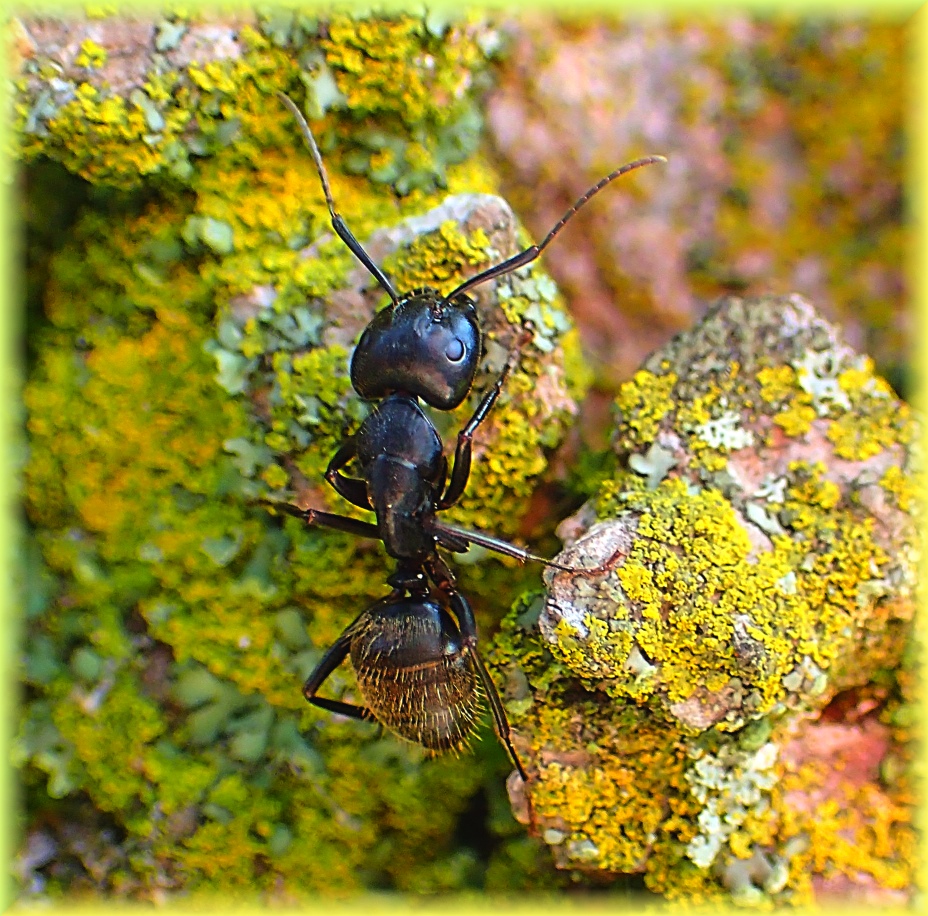


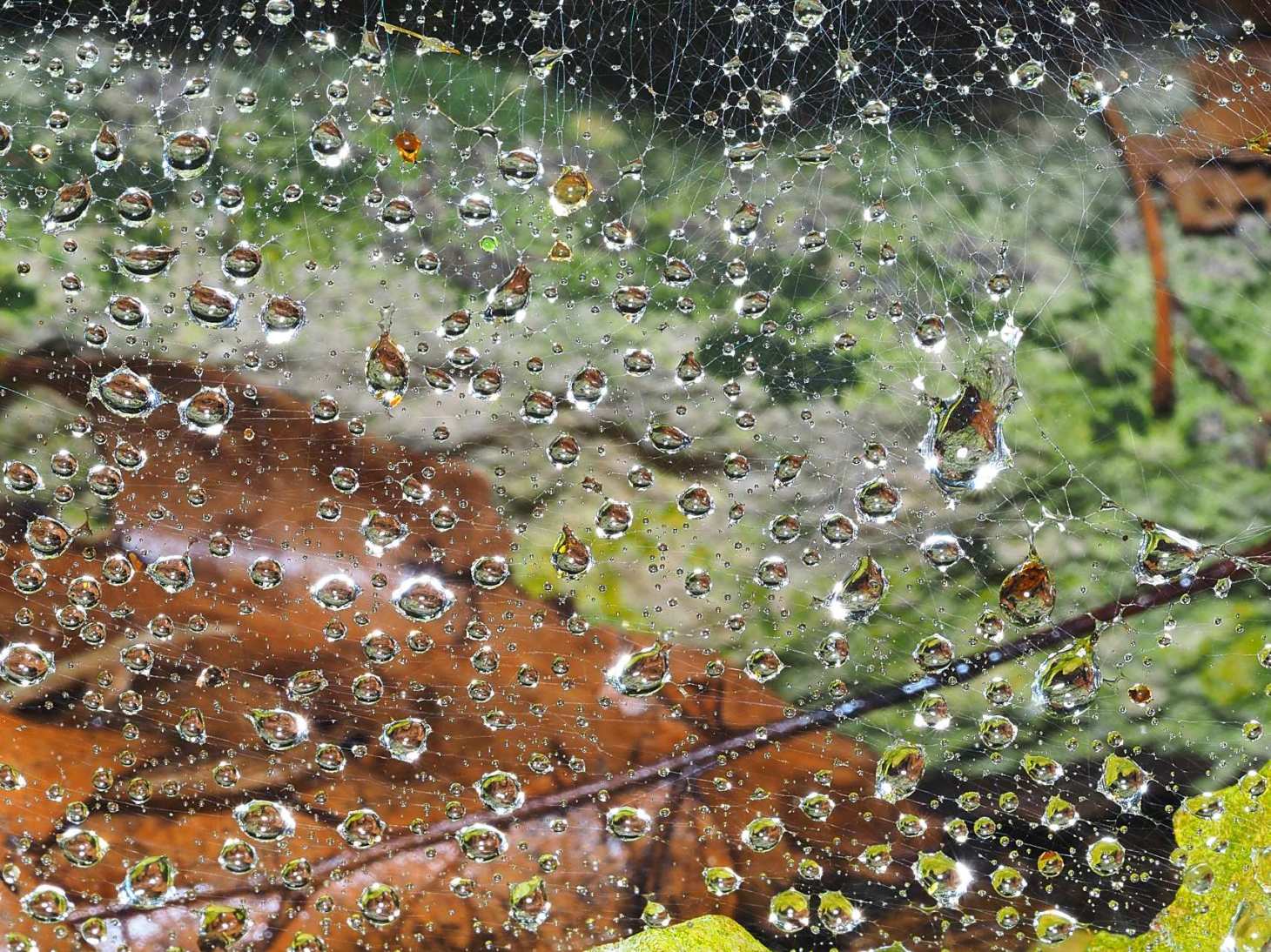

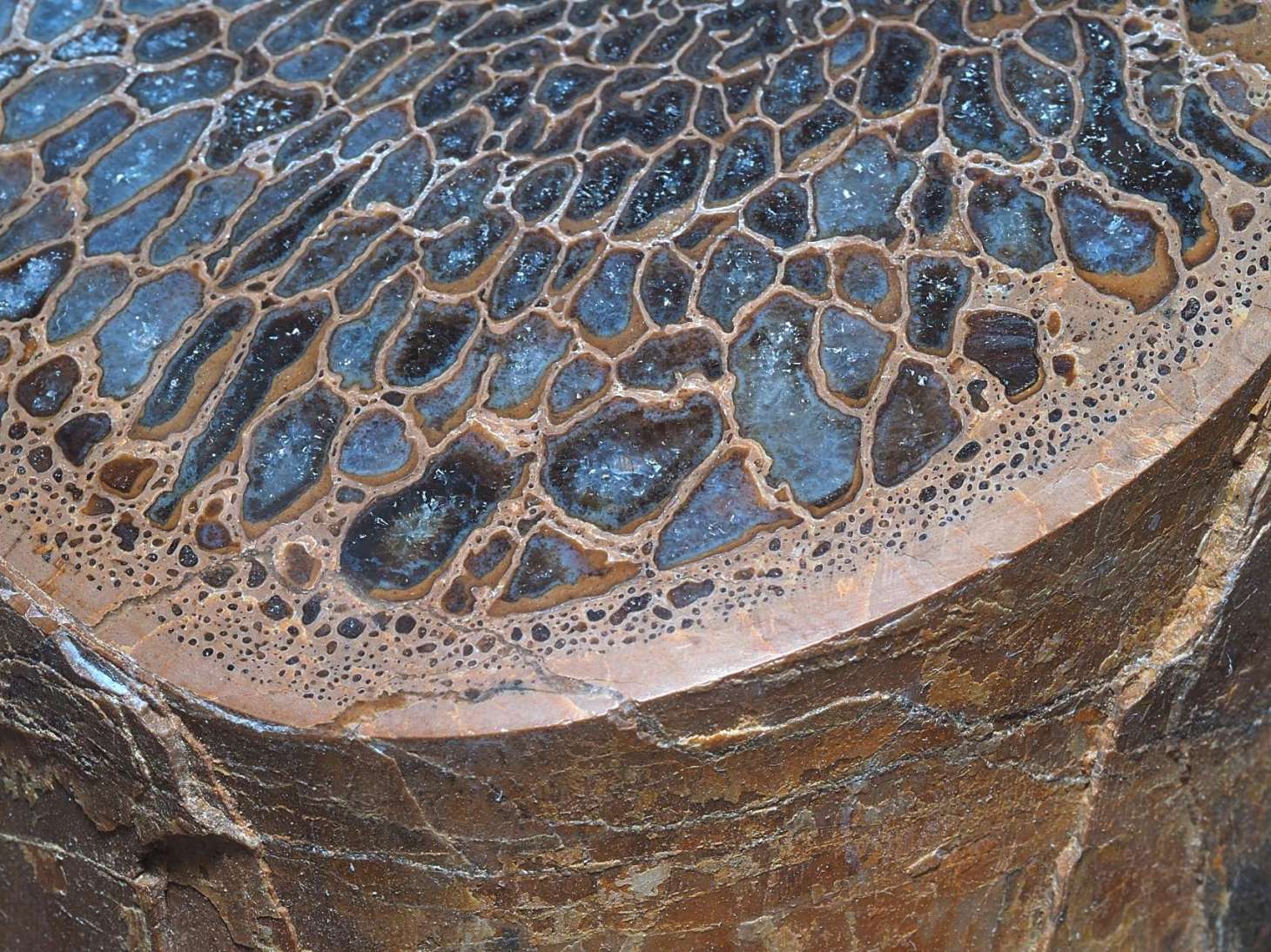


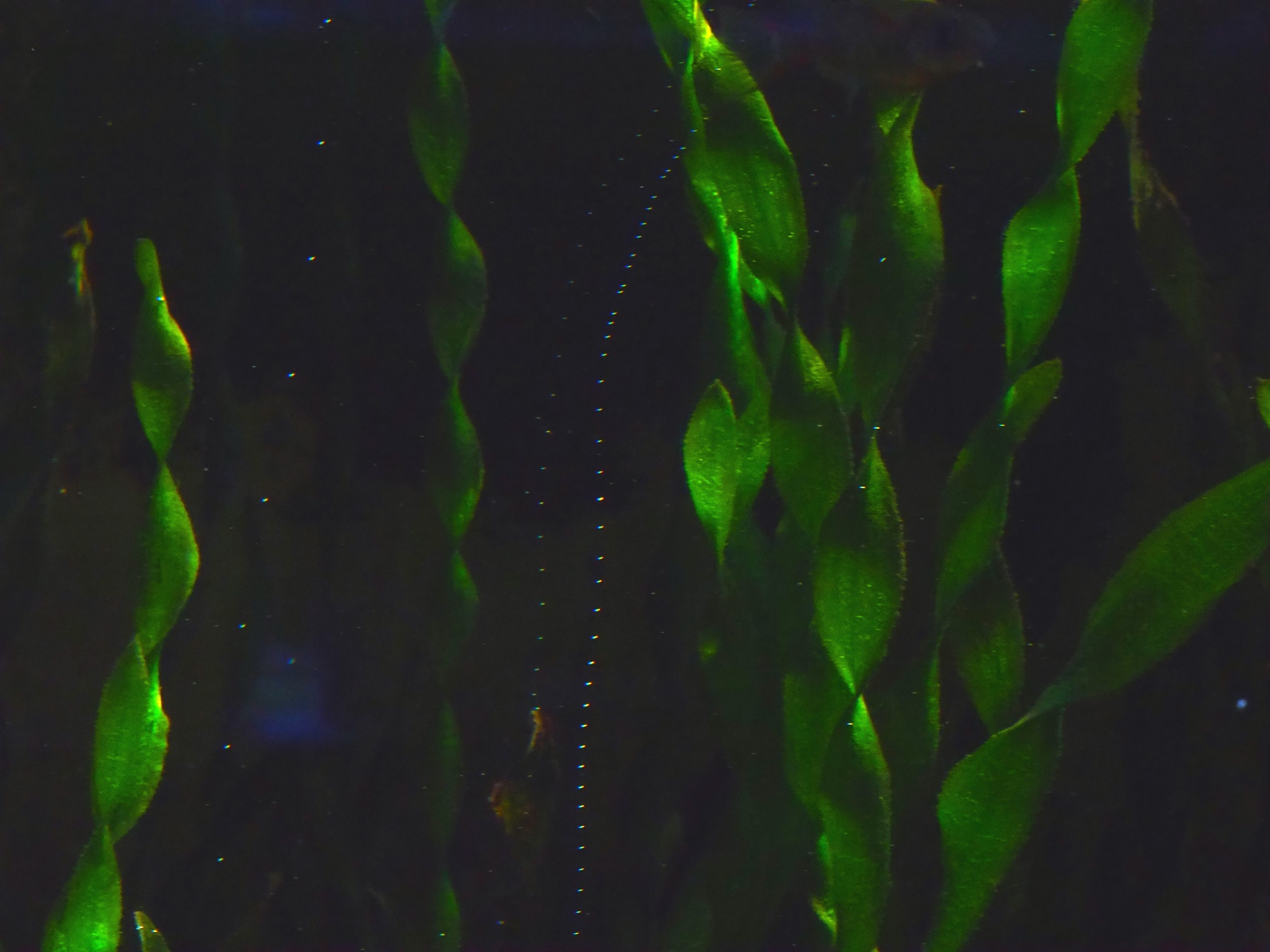








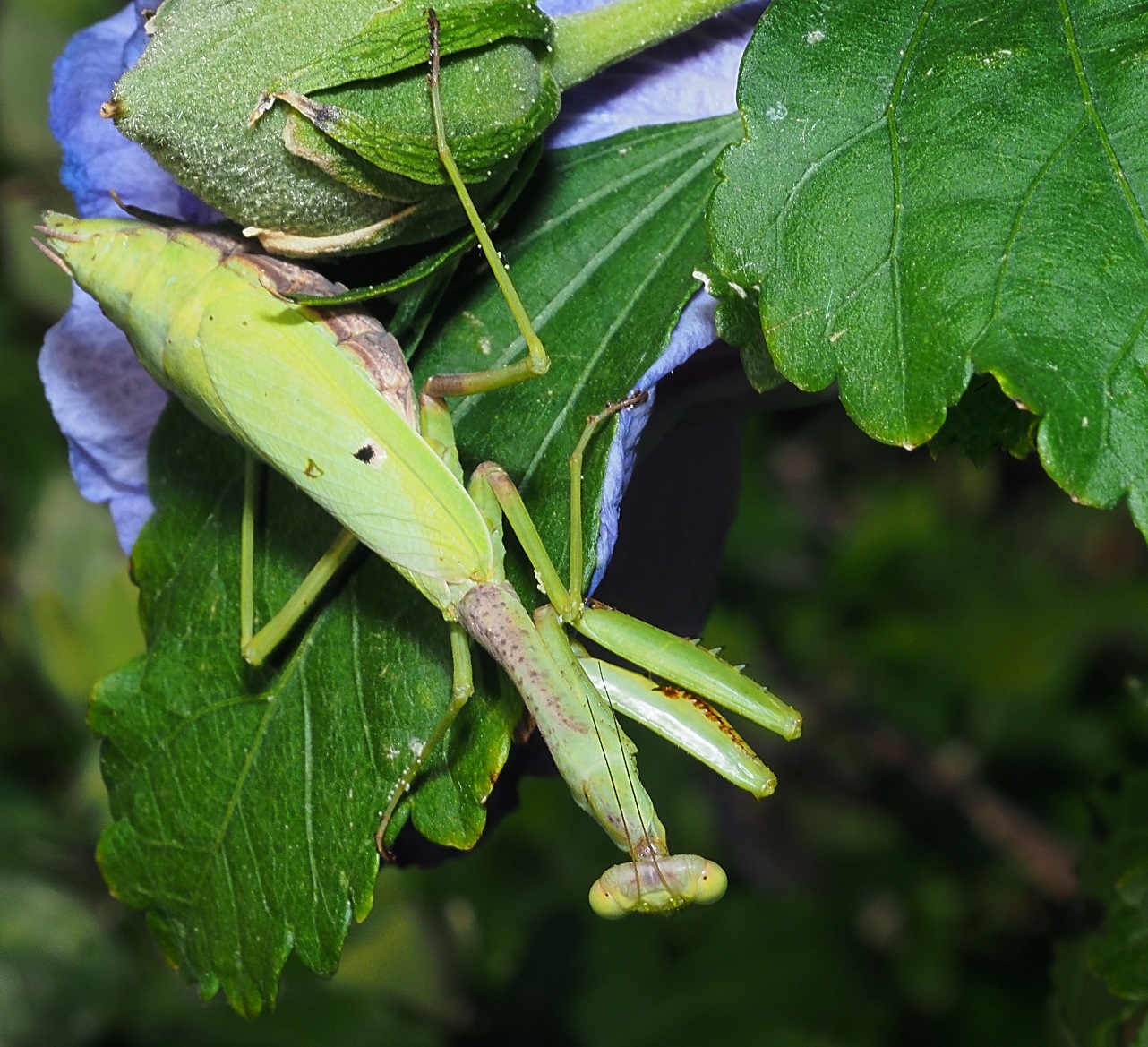


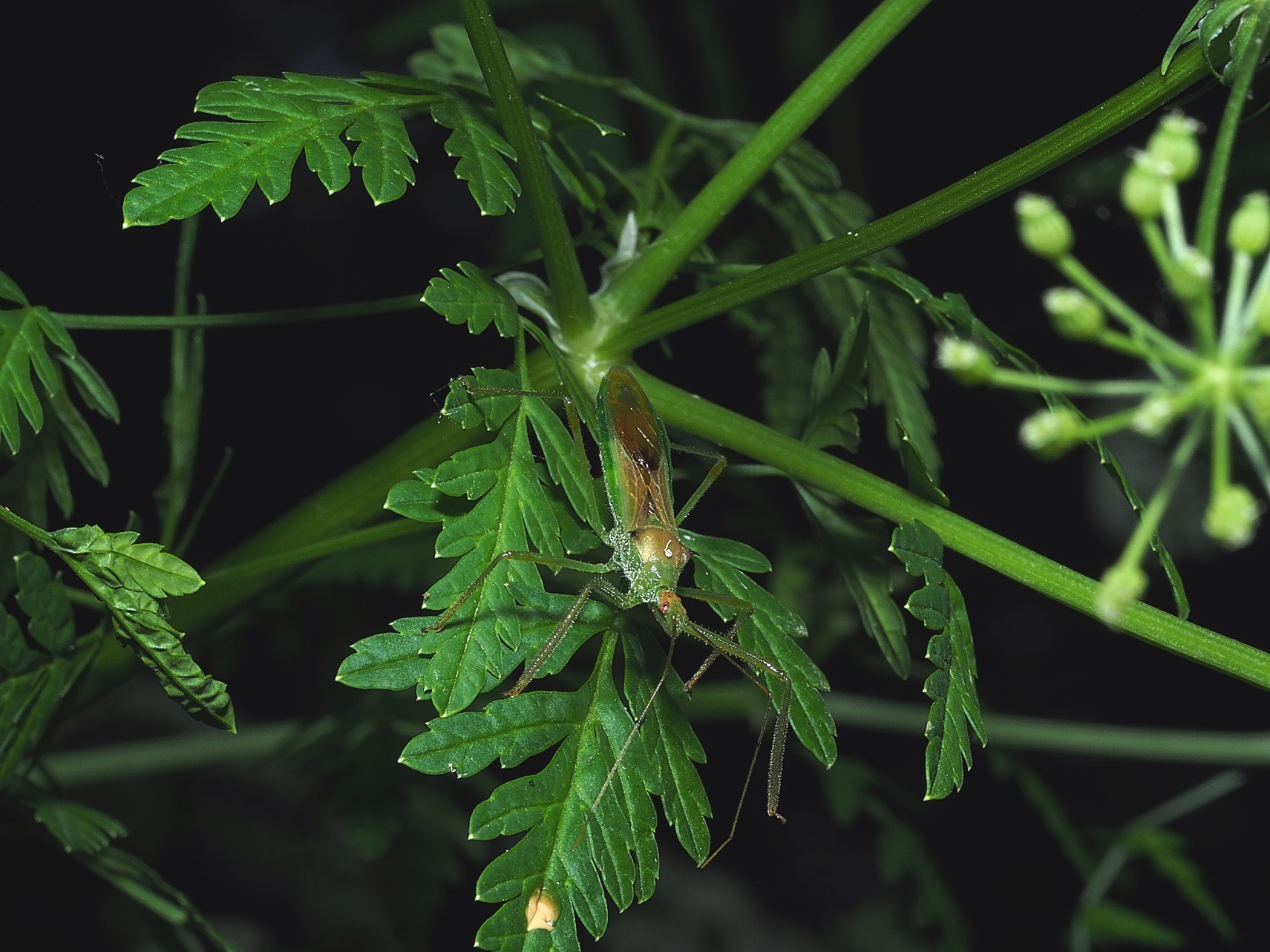
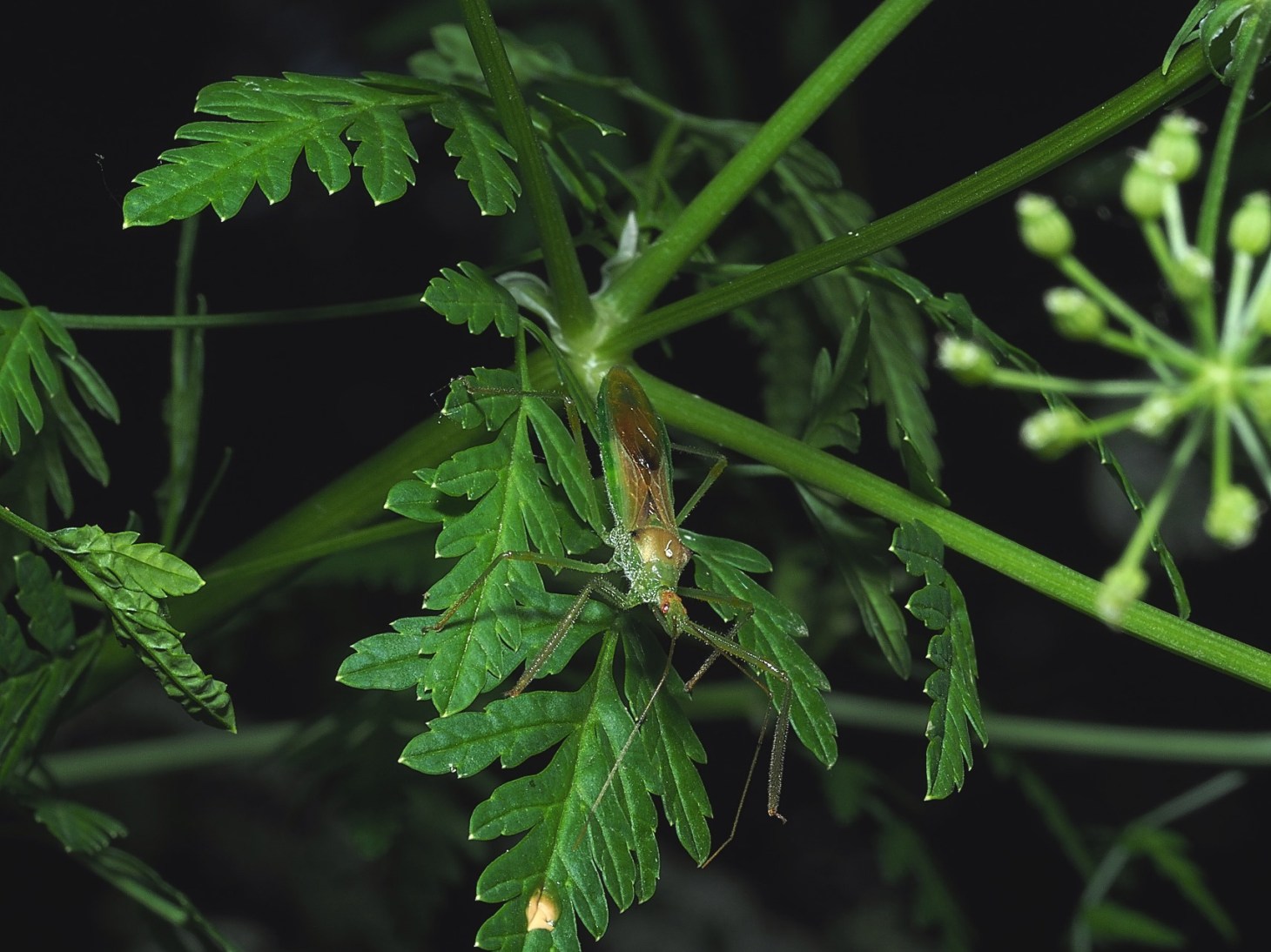





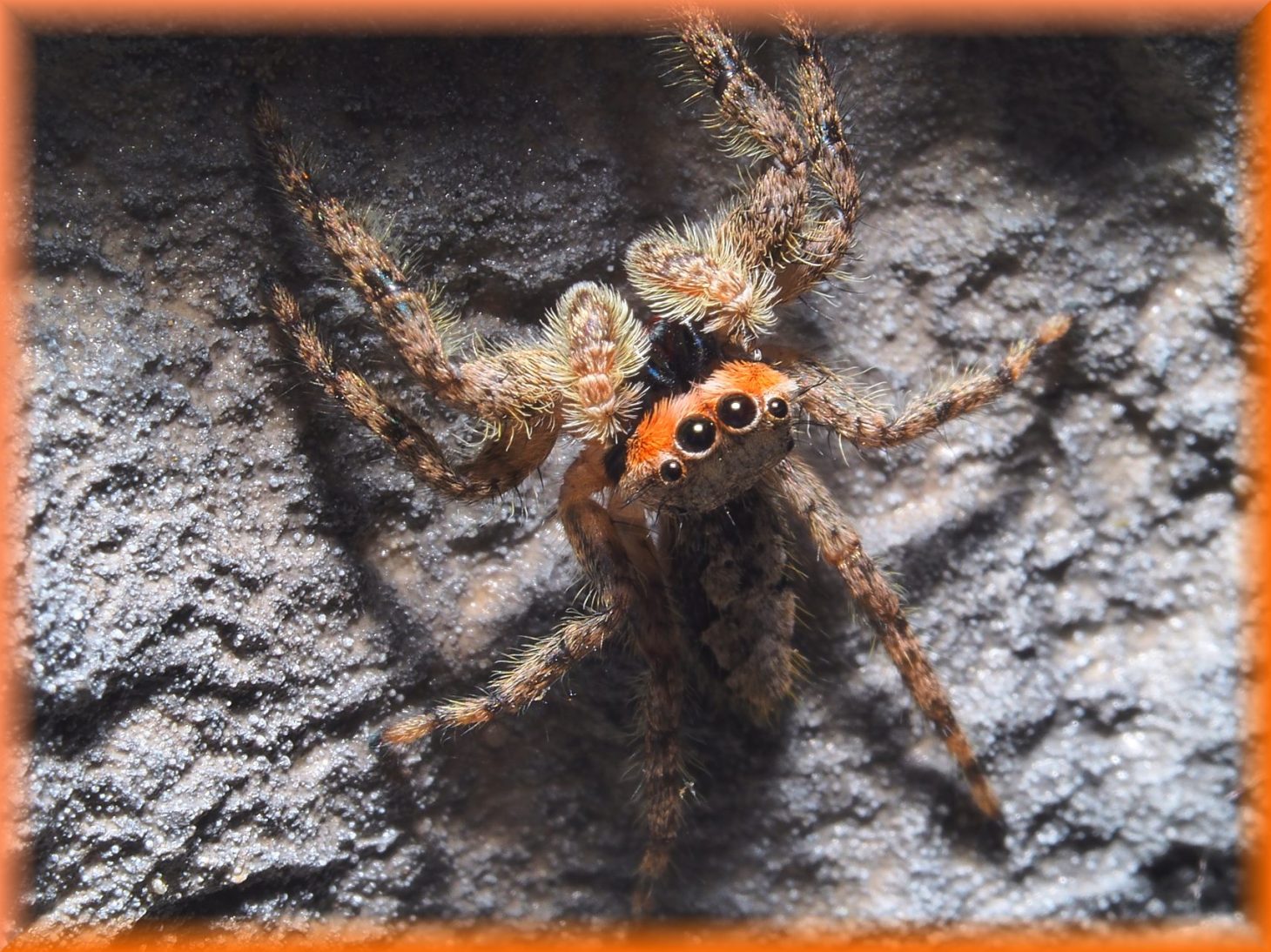


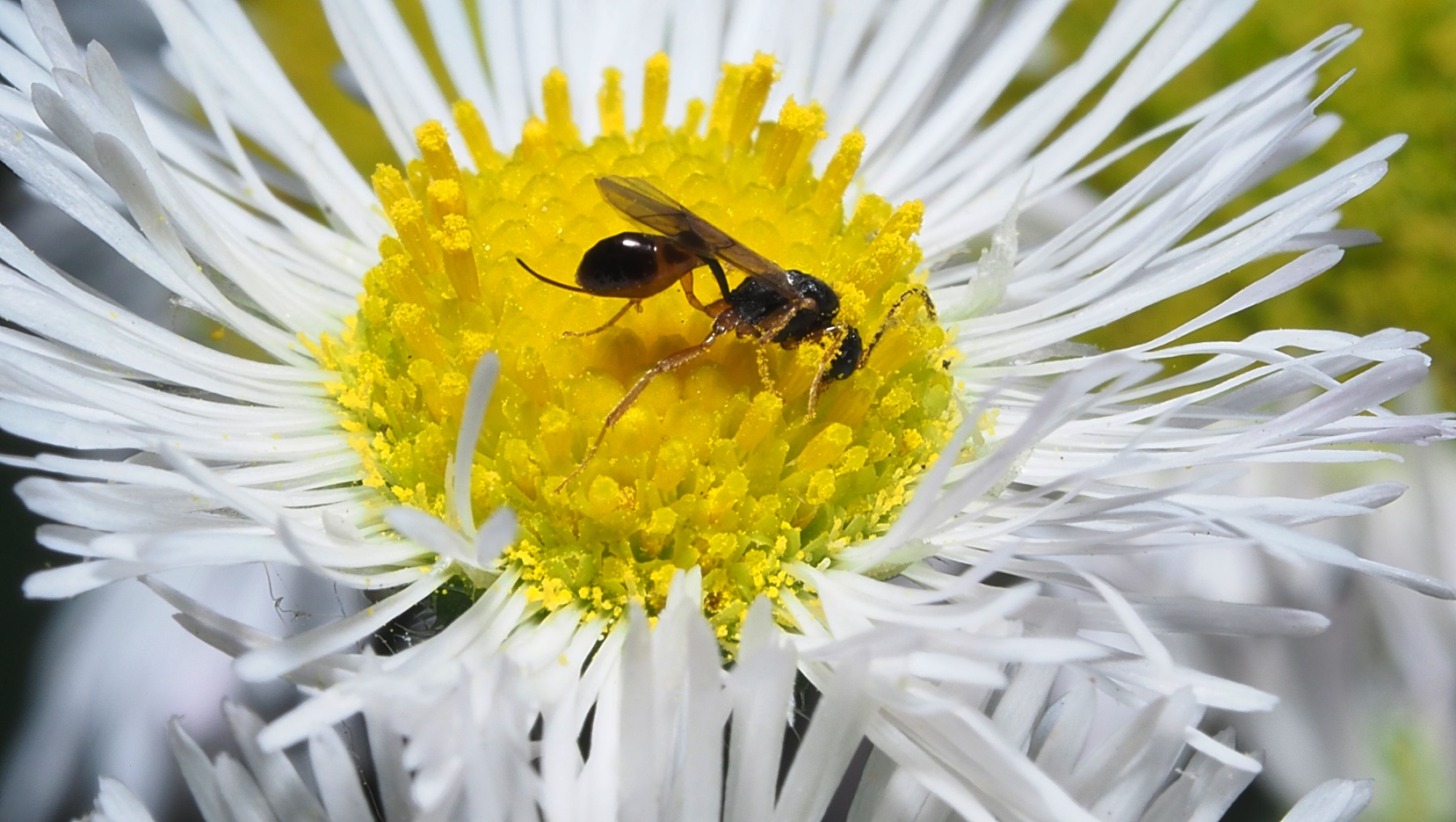
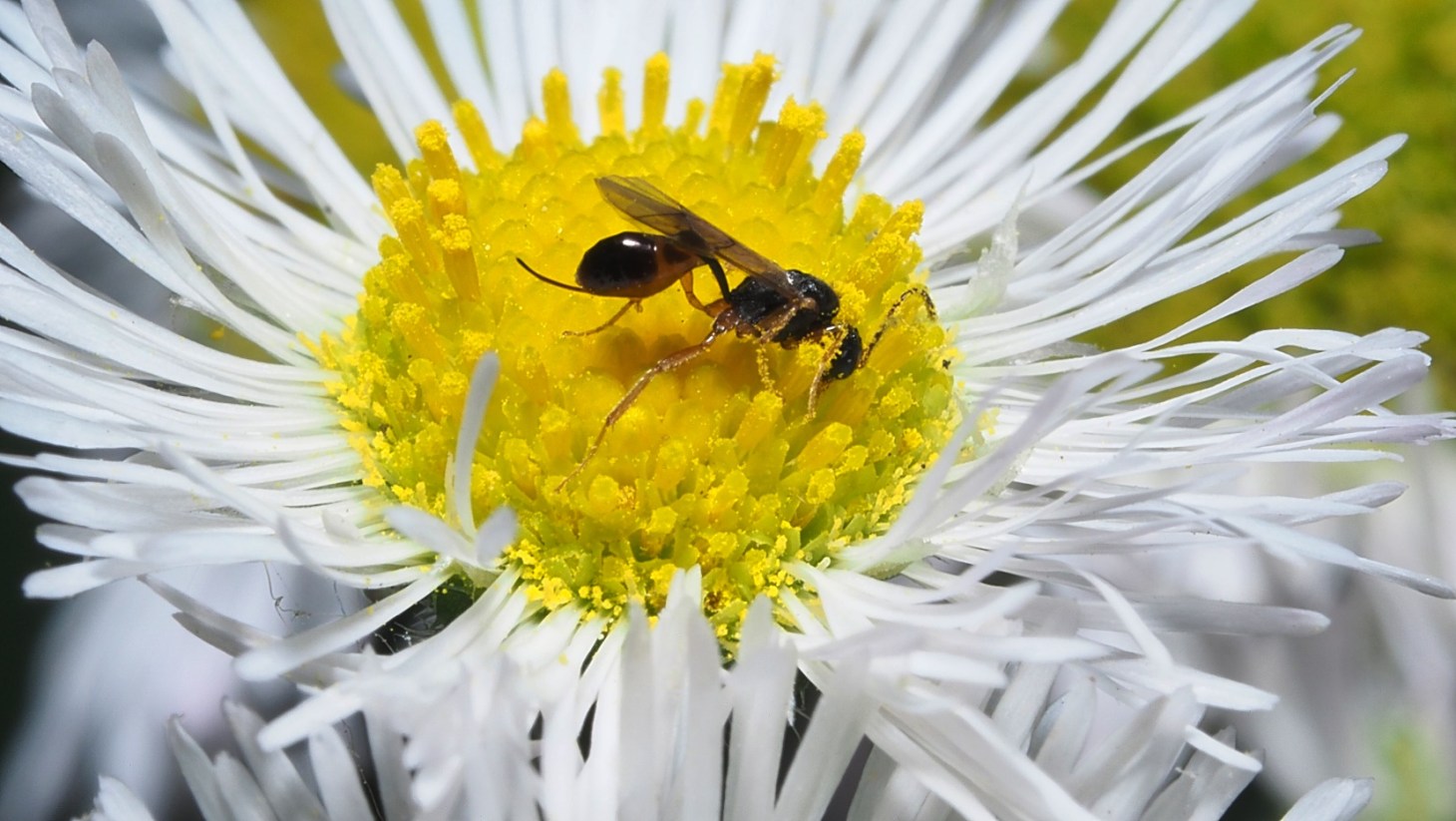




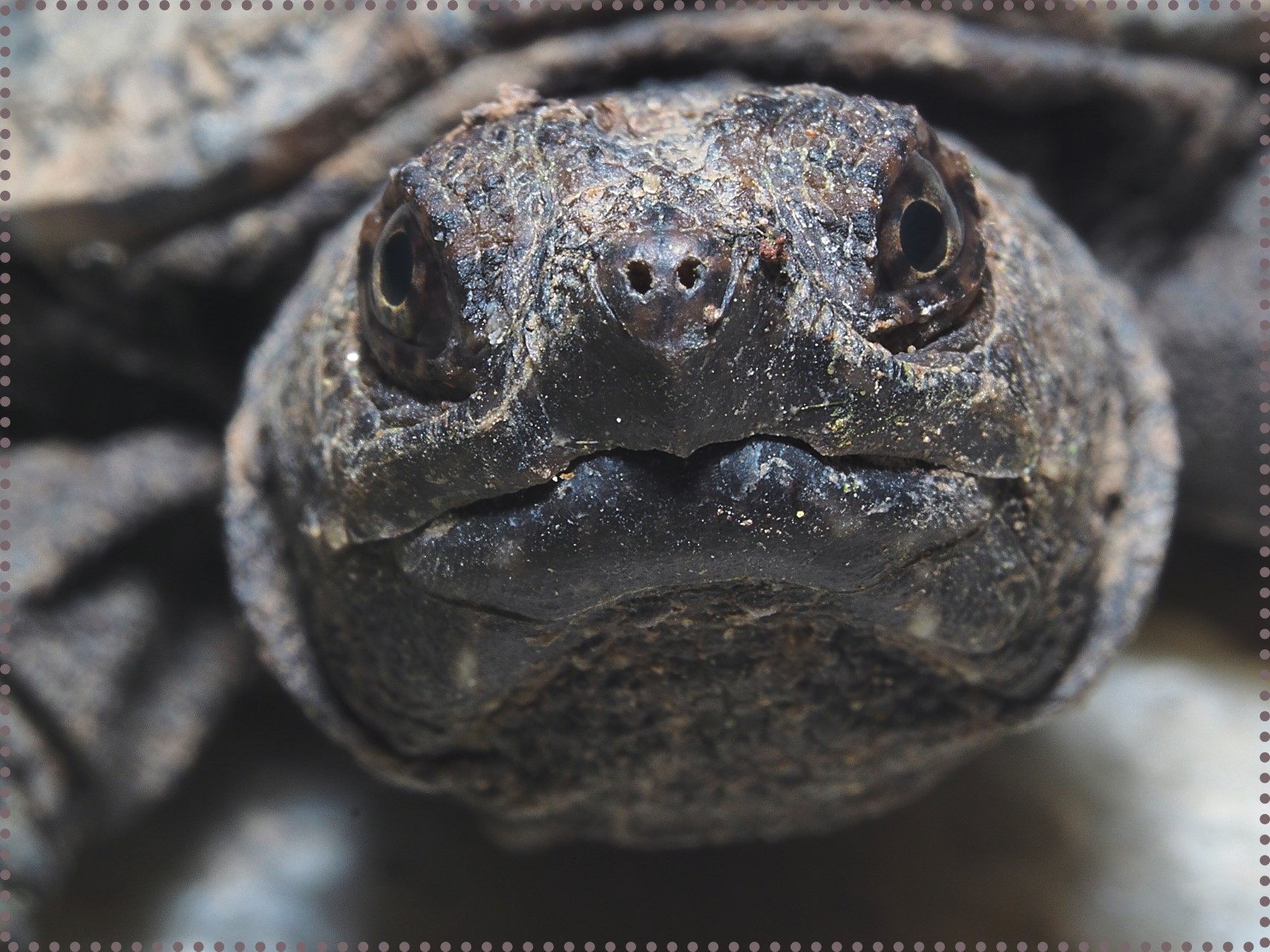
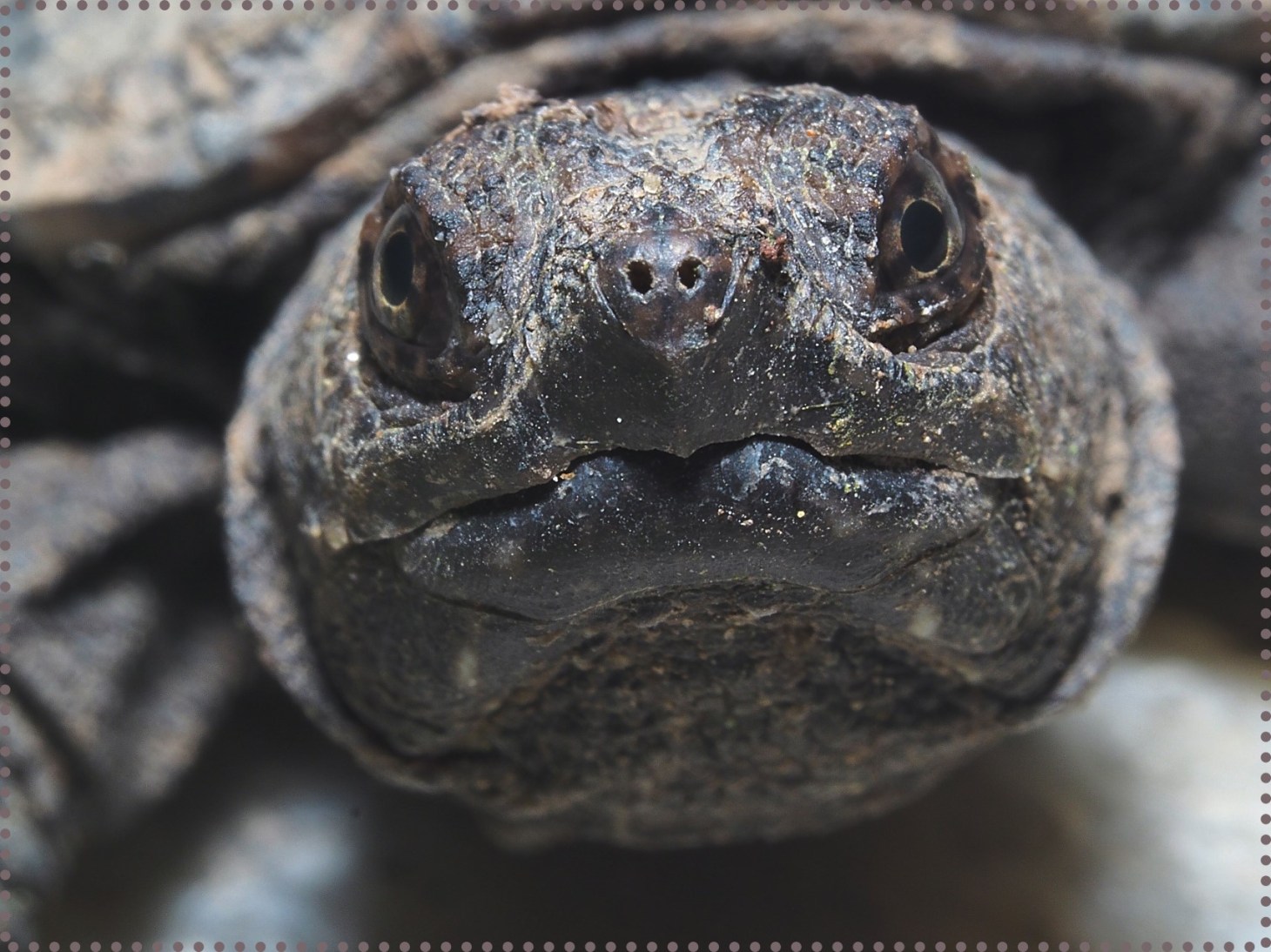









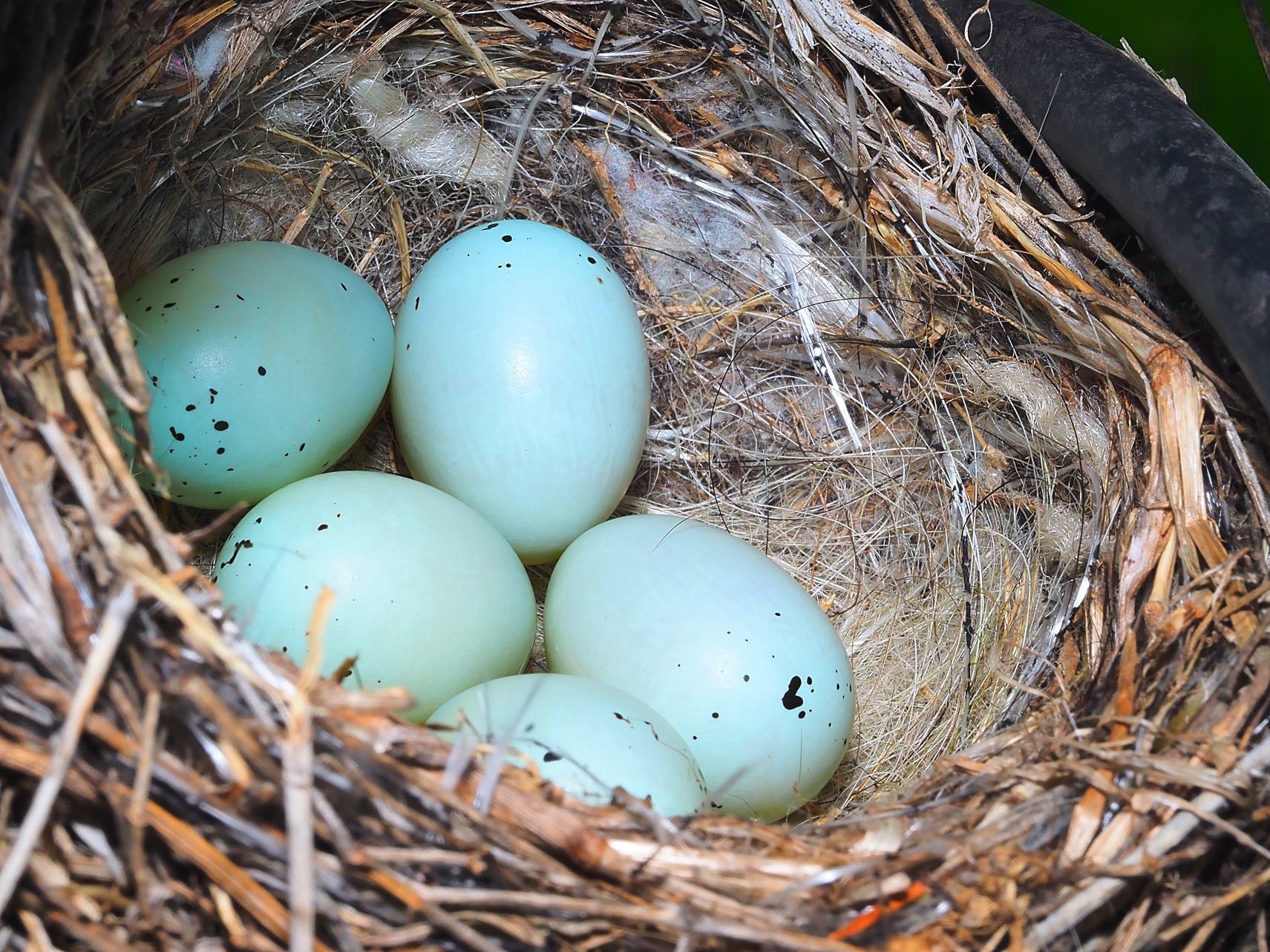
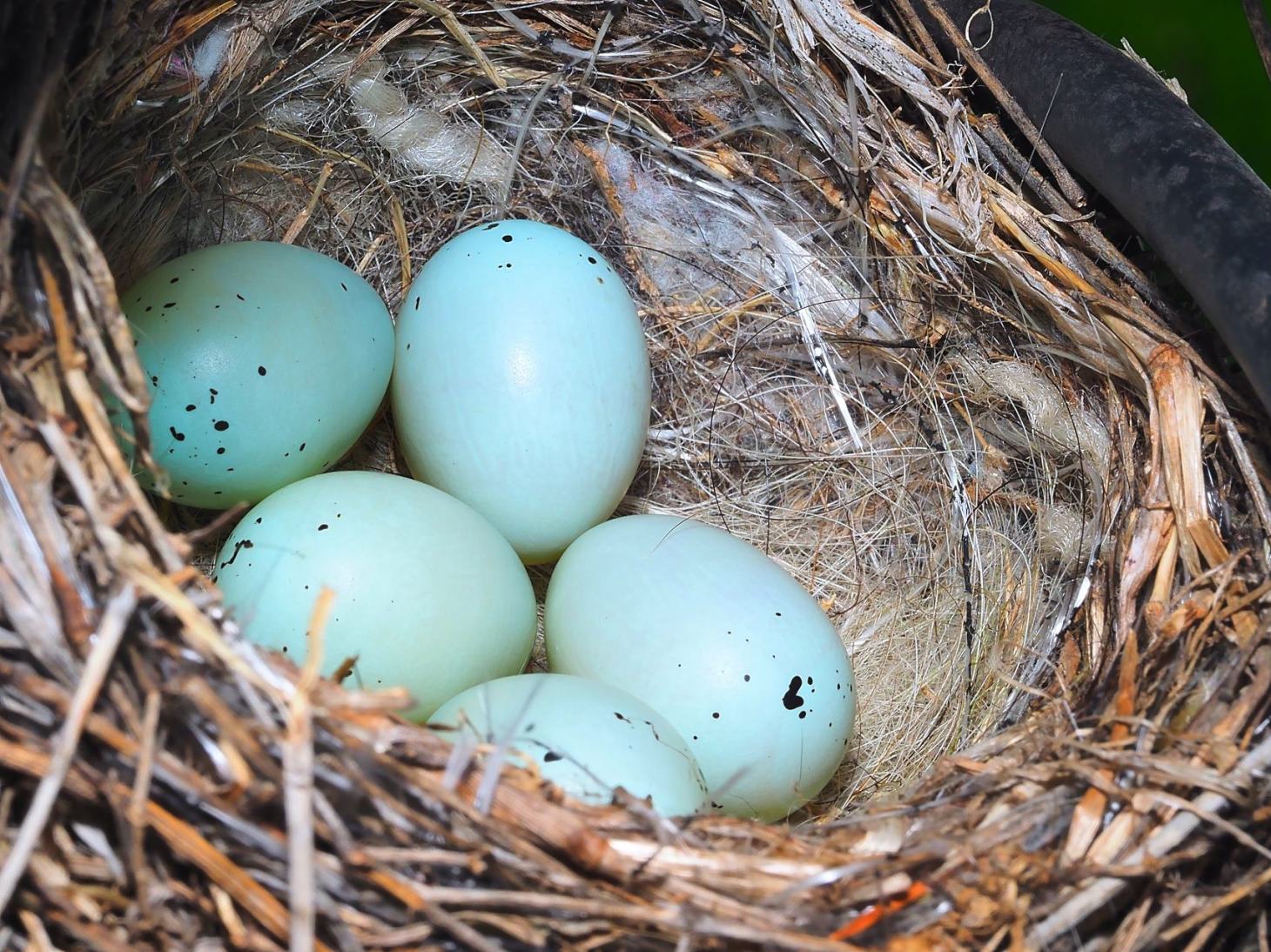


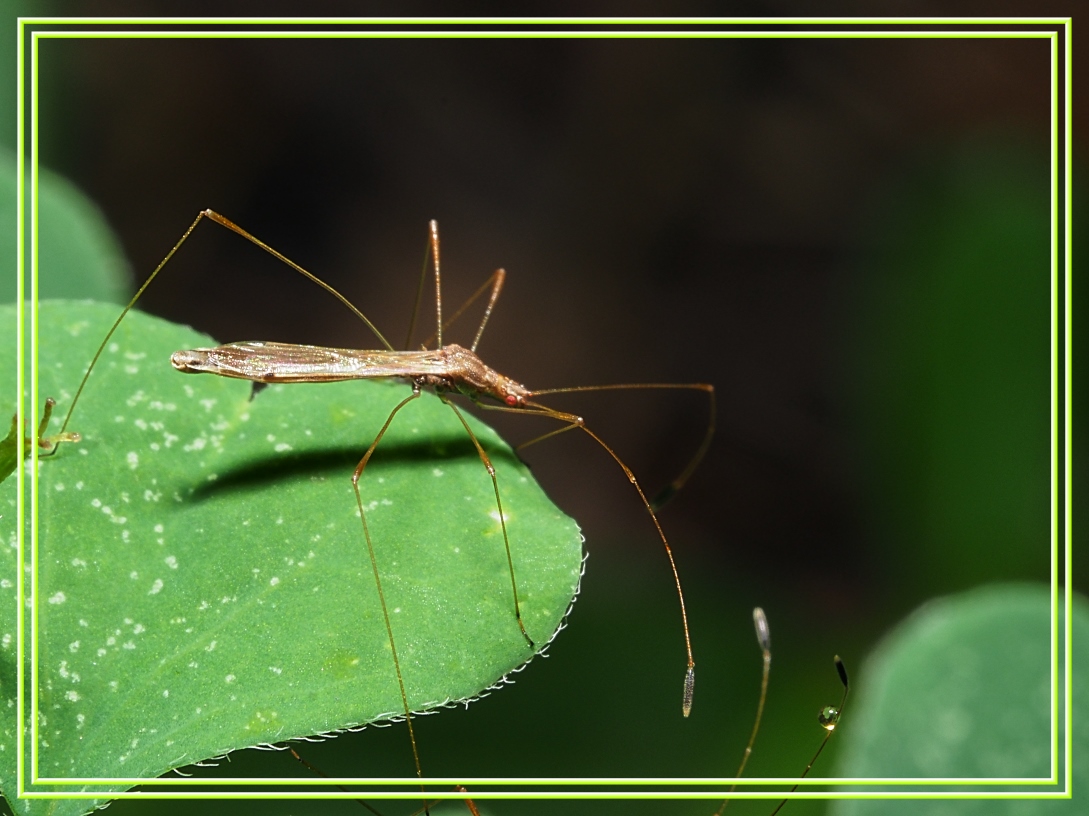





 Tom's Nature-up-close Photography and Mindfulness Blog