There is a vast seriousness that radiates its discipline holistically, healthfully, and with tremendous joy and insight. This seriousness is not what merely childishly depends upon the blueprints of others. Being whole, it need not grope for more, for improvement, nor does it mechanistically function according to any prearranged laid out patterns. The flame of this seriousness burns away illusion, separation, death, and time.
Many people believe that they have free will. Others do not think that that is the case. I say that free will is — for the most part — patently false. Reacting according to “thought/thinking,” as all of us do, depends upon the physiological processes of the brain. These physiological processes are complicated and are not what we can easily regulate. And the controller is not necessarily separate from the controlled. Of course, many things can be done to better help the organ of the brain function healthfully and properly… such as eating whole, healthy foods, exercising regularly, getting enough sleep, and avoiding recreational drugs, alcohol, and smoking. However, there exist genetic, environmental, and unseen forces that are beyond what we can easily regulate.
Then too, the majority of us are heavily conditioned by society. Such conditioning runs very deep within our psyches. Much of such conditioning is so ingrained in (and “as”) us that we are very unaware that it is taking place; we are unaware that it exists at all. Thought/thinking, by its very nature, is essentially very robotic, residual, mechanical, fragmentary, symbolic, second-hand, and sequential. (By the way, perceiving that we do not — for the most part — have free will does not mean that one can do whatever one likes, haphazardly; that would be ludicrous.)
Things like insight, true premonitions, deep compassion, and holistic perception can — and do — transcend conditioned, run-of-the-mill, second-hand thinking and conditioning. Still, most of us are primarily trapped in thought and (for the most part) function in (and “as”) thought. In rare moments — for humanity — during actual nirvana, for instance, a mind does go deeply beyond conditioning wherein (during such visitations/episodes) thought/thinking (temporarily) becomes very difficult… but that (so far) has been a rare occurrence and most of us primarily function in the very limited domain of thought/thinking. It may be prudent not to put all our eggs in one basket.
Excerpt from the poet E.E. Cummings:
A lot of people think or believe or know they feel — but that’s thinking or believing or knowing; not feeling. And poetry is feeling — not knowing or believing or thinking.
Almost anybody can learn to think or believe or know, but not a single human being can be taught to feel. Why? Because whenever you think or you believe or you know, you’re a lot of other people: but the moment you feel, you’re nobody-but-yourself.
When one looks at a tree, one isn’t composed of chlorophyll and bark but the image of the tree is not separate from what one is. Of course, if one is compassionate, one may see the tree not merely as a thing but as a wonderful, precious living presence that one is not separate from. So, in sweet wisdom, the negation of separation goes even deeper.
Excerpt from a poem by Walt Whitman:
There was a child went forth every day. And the first object he look’d upon, that object he became, And that object became part of him for the day or a certain part of the day, Or for many years or stretching cycles of years. The early lilacs became part of this child, And grass and white and red morning-glories, and white and red clover, and the song of the phoebe-bird, And the Third-month lambs and the sow’s pink-faint litter, and the mare’s foal and the cow’s calf, And the noisy brood of the barnyard or by the mire of the pondside, And the fish suspending themselves so curiously below there, and the beautiful curious liquid, And the water-plants with their graceful flat heads, all became part of him. The field-sprouts of Fourth-month and Fifth-month became part of him, Winter-grain sprouts and those of the light-yellow, and the esculent roots of the garden, And the apple-trees cover’d with blossoms and the fruit afterward, and wood-berries, and the commonest weeds by the road, And the oldest drunkard staggering home from the out-house of the tavern whence he had lately risen, And the schoolmistress that pass’d on her way to the school, And the friendly boys that pass’d and the quarrelsome boys…
Too many people hate Dandelions. Photo by Thomas Peace c. 2022
One may ask, “Is compassion very significant in life?” Yes, compassion is immensely significant because it reflects and is a wonderful radiation of the whole. That whole has its own intrinsic, organic intelligence (of which compassion is a very big component). A fragmented, isolated consciousness, that merely perceives with self-idolizing boundaries and cold distance is, unfortunately, not of compassion. Such a debilitated mind is distorted and is not of the whole. Such a mind is isolated and apart. It may be intelligent in a very mechanical, crude, and limited way, but it is not intelligent in a living and wonderfully dynamic way. The isolated mind’s intelligence is — being limited — like that of a programmed, mechanical, robotic computer.
A mindful consciousness is of the whole. Such a dynamic, living mind sees beyond “learned distance” and learned isolating patterns. It is not like a left hand that is attacking the right hand; it sees that both hands — and all organisms — are of the same body. A mind of the whole has great intelligence (because it is of “right relationship”). Majestic love involves all (i.e., the whole) and it is not just yours or mine. A mindful consciousness is the whole.
A short poem by E.E. Cummings:
love is a place & through this place of love move (with brightness of peace) all places
yes is a world & in this world of yes live (skilfully curled) all worlds
We inevitably, when we want to change psychologically, tend to change according to the parameters and goals that constitute our brains’ contents. In other words, we change according to our brains’ attributes. So changes in our lives are based on what our old-style brains have been for millions of years. We change according to past accumulations, knowledge, experiences, and stored-up presuppositions and acceptances. Such change may be no real (fundamental) change at all. It may just likely be an altered version — an extension — of the same old thing. It may be clinging to the past, as we have done for centuries.
It may be highly prudent to be open to change that is not merely the product of past accumulations, past expectations, and past conditioning. Then the “old brain” is not merely calculating what should be (according to past patterns, and past conditioning). Then something completely new and genuinely revolutionary can perhaps take place. And it would not take place merely within the realm of the circumscribed accumulations that were poured into one in the past.
We cling to what others poured into us, via having beliefs and plans for change, etc. But that very “clinging” is preventing us from going profoundly deep (beyond ordinary, inherited, cause-and-effect formulations and acceptances). And that miraculous, timeless, ineffable immensity exists far from our sequential (old-style) concoctions and attachments.
[Note: In order to get the full effect of this Halloween Spider — and, for that matter, of any of my previous photos — it is advisable to go to the original post, and (there) look at the larger featured image photo.]
Halloween Surprise … Photo by Thomas Peace c. 2022
Belief primarily emanates from deeper psychological factors, such as fear, hope, and by what was poured into one in the past. Many people say, “I will not give up my beliefs.” And it may be an ego thing (i.e., these are “my” beliefs). The beliefs tend to actually reinforce the ego. (This, in itself, may negate the possibility of true nirvana, for nirvana may only occur in the egoless mind.) Many people think that if they believe something, they will get something out of it… spiritually, for example. It’s a quid pro quo, this for that, marketplace kind of thing. And, having different beliefs worldwide, we are at each others’ throats. Many — if not all — wars have resulted in the spilling of blood… over beliefs.
Being beyond “beliefs” demands a lot of acute awareness, deep examination, and tremendous inner discipline. It may be that a very intelligent mind largely exists beyond what “beliefs” entail. Such a mind is free to look without circumscribed conditioning. Such a mind does not look through (and “as”) preconceived, rigid, spoon-fed patterns. Only then can the real magic of free discovery happen. Then one does not belong to groups that cause friction, division, and conflict in the world. But most people don’t want to hear such things. They want to go on believing (because it’s the easy thing to do).
Most people are heavily conditioned, even though they insist or feel that they are not heavily conditioned. It is very easy (and comforting) to react and perceive through (and “as”) a tremendous array of conditioning. However, such reacting is not genuine living and such perceiving is not true perception. Such a pseudo-existence is not freedom whatsoever. It is based on fear, fitting in, conformity, misperception, belief, dependence, and superficiality. Such conditioning is not different from what sorrow is, (for a sorrowful mind is a reflection of inner disorder and inner disarray). Transcending the conditioning (that one is not separate from) is very arduous and is not the result of mere methodology but it is essential for true wisdom and true bliss to manifest.
Jack and the Bean Stalk … Photo by Thomas Peace c. 2022
A group of young students saw the sagacious Lo Zu sitting upon a big boulder with a contented look on his face, a face that seemed to radiate much wisdom and clear perception. The students approached Lo Zu and asked him why he never entered the temples.
Lo Zu replied, “I do not enter the temples because they are primitive, manmade fabrications that have nothing to do with the truly sacred. Besides, that vast, timeless sacredness does not have an ego that wants to be worshipped by men or other strange creatures. What is trapped in time and limitation cannot adequately communicate with the timeless and the unlimited. He or she who has a limited ego cannot be communion with that which is beyond boundaries and confinement. True intelligence goes beyond fabrications and limitations. Go to the temples if you wish… but that ineffable sacredness isn’t there (in a limited space).”
There are different levels of love. Superficial love is constituted of motivations for the limited self. That limited self is what was learned (from miseducation) and it is primarily unreal, unintelligent, and fictitious.
There is a profound love that exists beyond the illusory framework of the self. It is a vast intelligence that breaks through the limitations of boundaries and fragmentary, learned perceptions (including the distance that is, in actuality, inherited ignorance). Selfless love is of bright truth, not of shady falsity and erroneousness.
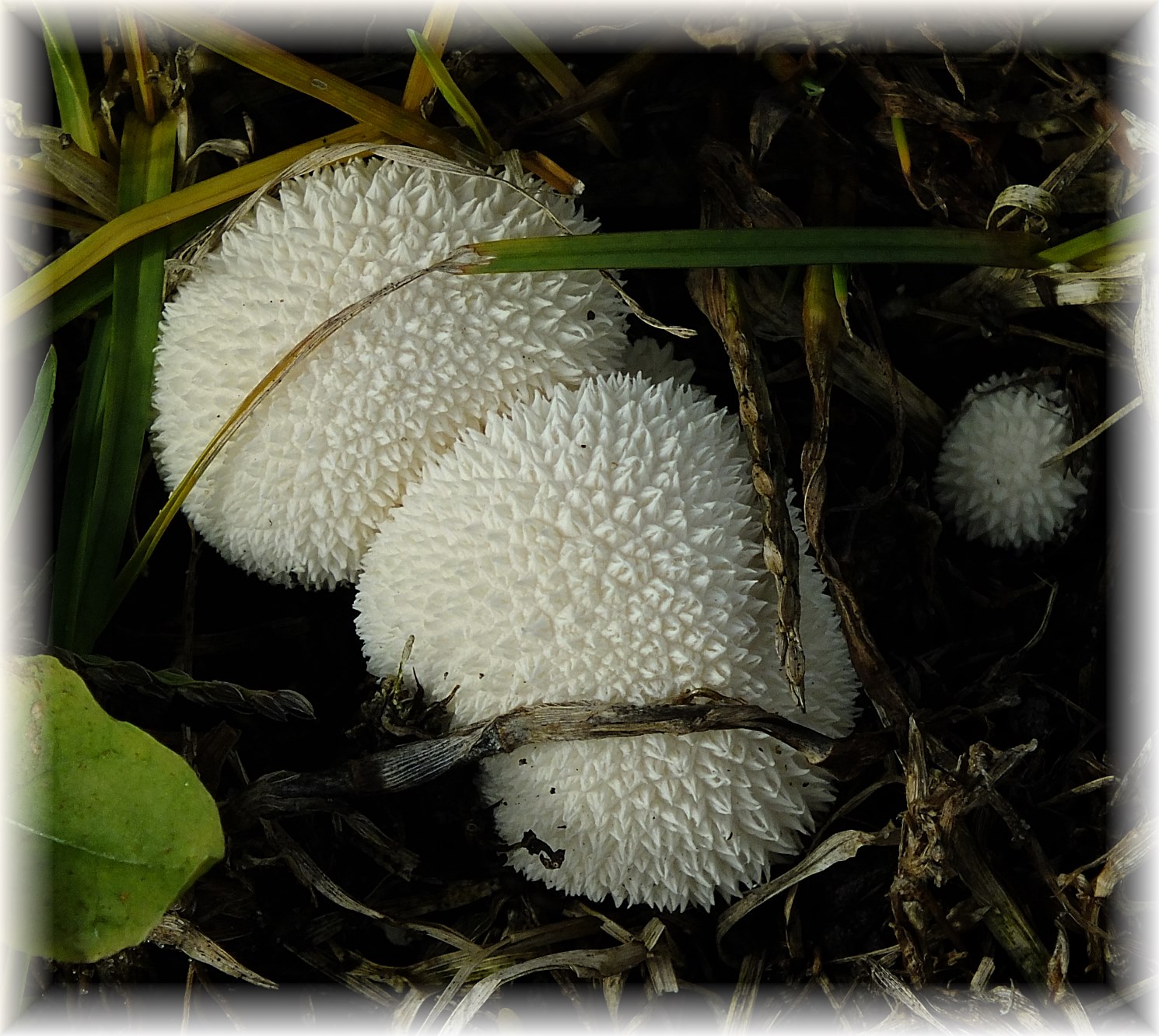
Spiny Puffball Mushrooms … Photo by Thomas Peace c. 2022
Pretty much everybody is conditioned in myriads of different ways. It’s a big factor in why there is so much conflict in the world. Humans have different beliefs and ideas about how things should be done, and about what is best to do. All of our beliefs and ideas involve — and are the result of — time. These beliefs and ideas often result in conflict and friction. To go beyond this conflict without another method (in and “as” time) may involve negation and silence. Such silence is a wonderful negation (mentally) that does not involve time or methodology.
Most people, unfortunately, are conditioned to remain in time exclusively (in the mental sense). They habitually go from one set of symbolic sequences to another (unceasingly). It’s how they were educated (or miseducated) to be.
Great beauty and awareness exist beyond repetitive, sequential, mundane, symbolic mental patterns but most people are too afraid and conditioned to go beyond what they were programmed to be. And being afraid in such a way is just another extension of the stifling, dead conditioning.
Dwindling in Numbers … Photo by Thomas Peace c. 2022
🐜 While reading a certain poem, Suddenly an itchy feeling occurred there upon my head
(I could feel the irritating itchiness as i continued to read) (Or maybe it was that i read to continue) (There was intensified itchiness that persisted)
And Suddenly one realized the power of suggestion and(anyway it wasn’t “my head” like someone or something inside it owned it or anything)
A very intelligent mind often questions in dynamic ways that shatter old, traditional acceptances and assumptions. Albert Einstein, for example, often questioned standard assumptions, and his ground-breaking theories were proven correct by subsequent testing. Einstein once said, “It is a miracle that curiosity survives formal education.”
Organized religions and society (in general) do not want us to doubt much and question much. They want us to fall in line and follow unwaveringly. And most of us carry loads of deep-rooted conditioning, much of which we would never think of questioning. For instance, our very perception of the world around us (and of ourselves) is largely based on fragmentation, separation, delimitation, and learned distance and time. Most of this is fallacious and delusory, not holistic and of deep insight. When most of us cling to fallacious suppositions and presumptions then disorder is what ensues. And look at what is going on worldwide. (For one thing, if more people questioned wisely, the grocery stores wouldn’t be full of sugar-oriented products and adulterated foods that are shelf-stable but very unhealthy; and we wouldn’t dare dump sugar and crap into our automobile gas tanks.)
If one is fortunate enough to have a good, healthy brain, one can — perhaps — question wisely. Then going beyond crippling conditioning is a tremendous joy, adventure, and blessing beyond words, beyond limitation, beyond mediocrity, beyond time.
From E.E. Cummings: “Always the beautiful answer who asks a more beautiful question.”
People are told (for example, by gurus of the East) about how to meditate. Often they are given what is considered a “special” word or mantra to repeat and concentrate upon. However, doing that is merely a limited form of self-hypnosis. There is no “how” to meditate. Any “how” involves a method that takes time. One cannot reach the timeless via a time process.
Beauty exists when the intelligent mind does not merely operate from sequences (of thoughts) to further sequences (of thoughts) exclusively. Thoughts are (limited) symbolic, sequential patterns that depend upon time; indeed, they are time. Most people are habitually existing as them. It is often beneficial to exist as thoughts when necessary but it may also be prudent to psychologically die to them (when they are unnecessary). Such psychological dying does not take time. Psychological dying is fine; physical Death, on the other hand (as i’ve said before) is not my cup of tea. Additionally, one might mention that merely being a corrupt person on this sweet planet, while endlessly robotically moving from fragmentary thought to fragmentary thought (sequentially), may be a form of Death.
And here’s a little poem by E.E. Cummings:
dying is fine)but Death
?o baby i
wouldn’t like
Death if Death were good:for
when(instead of stopping to think)you
begin to feel of it,dying ‘s miraculous why?be
cause dying is
perfectly natural;perfectly putting it mildly lively(but
Death
is strictly scientific & artificial &
evil & legal)
we thank thee god almighty for dying (forgive us,o life!the sin of Death
Many of us pigeonhole things far too excessively. We see things as they are assigned in preconceived categories. So, really, we may not be “seeing” much at all but, rather, are identifying via remembered attributes. Most of us tend to perceive via fragmentary images that have been incorporated into (and “as”) our brains since early youth. With these rather superficial accumulations, we look… which really may not be deep “seeing” at all. Instead of perceiving freshly and holistically, we identify and categorize according to how we were molded (in a very secondhand way).
The robot-like mind may function like an automaton, assuming that it is living, but all the while it is robotically repeating what was poured into it (as it is bereft of deep insight, compassion, and holistic bliss). We need to go much deeper than what we were molded to exist as.
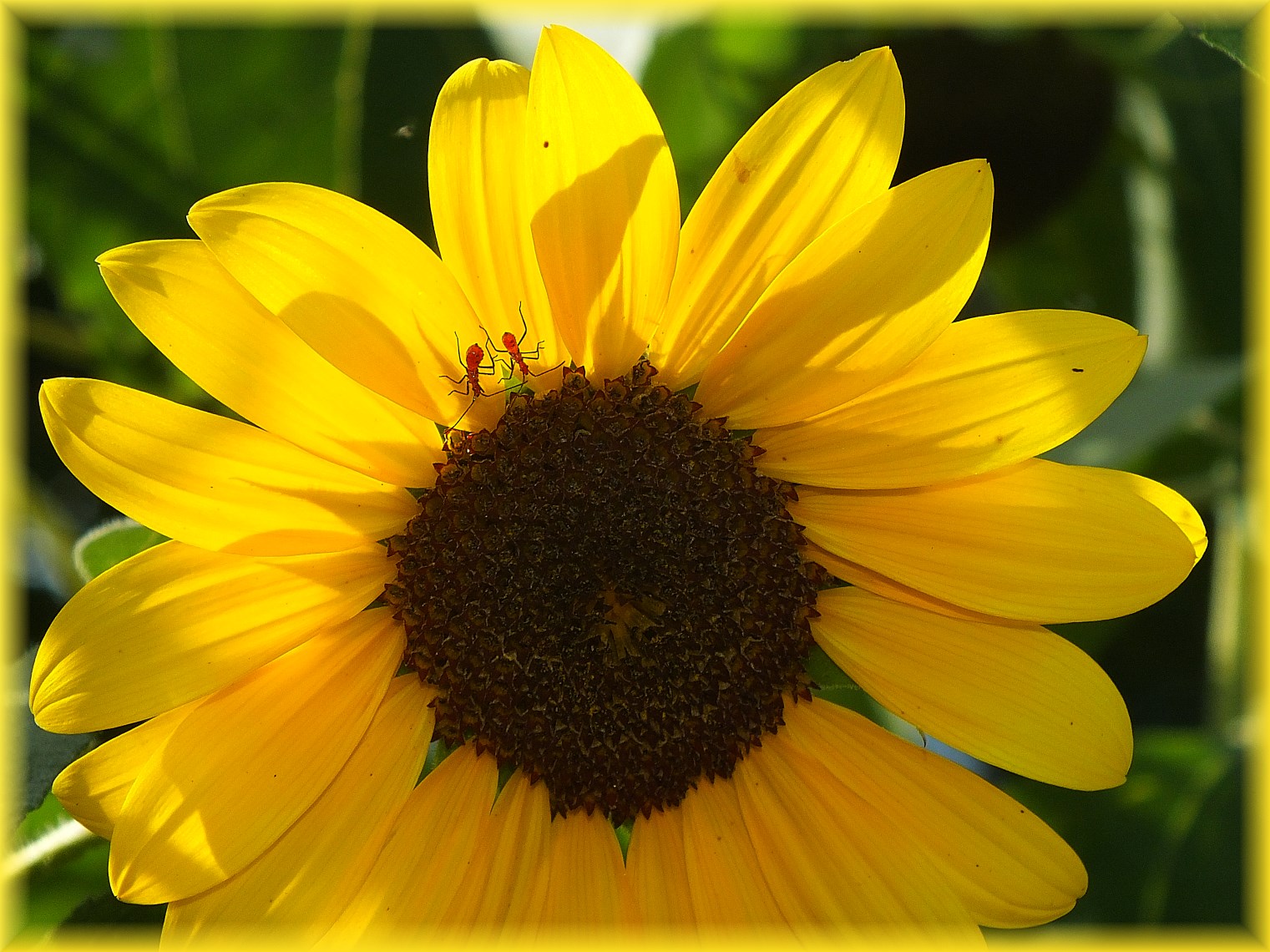
The thinking process is largely based on (and dependent upon) measurement. Without measuring, consciously or unconsciously, thinking (for the most part) would not exist. We have concepts about time — like the past, present, and future — and these aspects of thinking are learned measurements, (and may not necessarily reflect true reality). We have mental labels for certain animals and plants, and these mental labels are largely based on measurements and measure-oriented attributes about the animals and plants. Sometimes measurement is necessary but all too often we engage in it in excess (which results in comparison, greed, jealousy, conflict, frustration, judgment, and discrimination).
Real bliss in life, however, occurs beyond mere measuring and labeling. Measuring and labeling are always partial, limited, and fragmented. A brain that mostly just measures and labels is likely a rather robotic brain that is not of a blissful whole.
The following is one of the many koan-like sayings that occur within the Gospel of Thomas. Some top biblical scholars say that this gospel — which was banned by the so-called high priests who were controlled by the Roman Empire — was closer to the historical Christ and is more pristine than the other politically endorsed gospels. One is not necessarily positing that the following saying means anything specific, but it does pertain to going beyond measurement. (Assessing weight is measurement.)
Jesus said, “The father’s kingdom is like a woman who was carrying a jar full of meal. While she was walking along a distant road, the handle of the jar broke and the meal spilled behind her along the road. She did not know it. She noticed no problem. When she reached her house she put the jar down and found it empty.”
The dictionary defines “Sensibility” as ‘the capacity to feel.’ We can — if we are aware — observe that our society is largely bereft of “feeling,” these days. More and more people are concerned about money and power… not about others, not about curtailing suffering. Of course, there are some people who care, but society (as a whole) is generally headed in a disorderly direction. In regular public schools, they mostly focus on teaching you the 3 Rs. They do not, unfortunately, encourage students to probe deeply into such things as awareness, compassion, deep perception, self-understanding, mindfulness, wholeness, and transcending limitation. Public schools generally do not want students who would question society’s superficial values and norms. Public schools are generally designed to crank out followers and “robotic sameness.” This is why i’ve consistently donated to decent alternative schools such as the Brockwood Park School.
If you are (or were) educated in a run-of-the-mill public school, you will have to re-educate yourself. You will have to step out of the box. But you can’t easily step out of the box if your conditioning and brain are the box. Profound compassion requires going beyond superficial mental distance and numbing perceived space. Profound compassion is a real art (in a world full of sameness and secondhand imitation).
Sweet beyond reason … Photo by Thomas Peace c.2022
The space between the perceiver and that which is perceived… what is it? Have you ever wondered about that fundamental question?
That intervening space, that interstice, may primarily result from thought/thinking. Thought/thinking formulates an image (or an assembly of images) about a central observer (i.e., what thought thinks the “self” is). (This has been going on for eons, over the centuries.) Then thought/thinking assembles images or labels concerning what is perceived at a distance. This may seem silly — though it is essentially true — but what occurs is that one set of images or mental patterns about an observer sees what is considered “itself” looking at something (that apparently exists externally) as the observed (that usually manifests mentally via labels and categorizations of thought). So these two sets of constructs, made up of thought/thinking, are what takes place. So, unfortunately, the relationship is primarily between two sets of images (that thought developed)… which is no real relationship at all.
Real relationship goes beyond this habitual mental orchestration (constituted of mere reactions). Then separation and secondhand labeling come to an end. Then the perceiver and that which is perceived are not parts of some fabricated duality. Deep compassion occurs when the perceiver and the perceived are one (beyond the distortion of thought/thinking). Then mentally fabricated space and separation end.
“The true value of a human being is determined primarily by the measure and the sense in which he has attained liberation from the self”. — Albert Einstein
We human beings — most of us anyway — tend to habitually look at everything through mental screens of conditioning that involve boundaries and borders. Most of us habitually delimit what is observed into fragments and snippets involving identification and learned recognition via what was absorbed in the past. Then we often further delineate things via words and labels. Words are symbolic and secondhand; they — for the most part — are not the actuality of what is observed. The word dog isn’t the dog. Words for many people are often seen as realities and although being primarily symbolic, they are not seen as representations but, rather, as what can take the place of reality just fine. Many people get lost in a world of symbolism, often letting the symbols seem to be realities.
It is good to use symbols when needed but it is also good (and very prudent) to go beyond them (and see their limitation). Then, if one is lucky, the whole is there (without the superficial symbolism). And a lot of people will think that they see the whole (although they do not). Self-deception is very easy, especially when that self is, itself, something that seems to recognize a wholeness from a distance. Chicanery is easy when the perceiver and the perceived appear to be separate and when recognition seems to occur from an internal center. Thought/thinking fabricates the internal center and such a supposed center is then given credit for having great perception, or it is praised for being right, or it is given blame for making mistakes, or it is lauded for exercising freedom of choice.
Most minds resist investigating this kind of thing; most minds are heavily conditioned to support the illusion at any cost. And it’s a tragedy really, because the real magic and the profound beauty only occur if one has the passion and the guts to fully delve into it.
I write to encourage others to go beyond conditioning, blind acceptances, and stagnation. Most of us were deeply conditioned in early childhood — and beyond — to absorb and follow what elders spoon-fed to us; they (i.e., the elders), without question, were deeply conditioned themselves throughout their early (and later) lives. We accept so many myriads of things and most of us blindly adhere to these things without question. Most of us are unaware of the extreme degree of our conditioning.
Conditioning is largely illusory in its essence; a conditioned mind is often a rather disorderly mind (though, to itself, it appears to be very orderly and “normal”). A conditioned mind primarily goes on in the same, old patterns while not questioning their value, essence, or impact. Society is a reflection of this conditioning and society is full of illusion, disorder, conflict, separation, friction, and turmoil. Many of us try to escape from such situations via entertainment, amusements, sports, incessant music, vacations, dreams, and various activities. However, the problem is not solved until we question intelligently and understand our own minds deeply. But going beyond being secondhand is very uncomfortable to a lot of people and so fundamental change does not take place.
Soon you’ll fly beyond all of the excretions. … Photo by Thomas Peace c.2022
The dictionary defines time as: ‘The measured or measurable period during which an action, process, or condition exists or continues.’
Since Einstein, many scientists have been referring to “spacetime,” wherein space and time are united and not separate.
When we look at time or spacetime in the ordinary way, we — as we were taught — look via the known… via limited measurement and inherited pattern-making. Such time (or spacetime) is circumscribed and very limited. We look via the known and usually see things in a circumscribed, bounded, finite, fixed, and confined way. Such looking is fragmentary, partial, and quite constrained. Very few of us look beyond the known, beyond the second-hand, beyond the restricted templates and limited symbolic arrangements. A beautiful psychological transformation or metamorphosis can enable us to exist beyond such bounded, limited perspectives. However, time is not a factor in getting there; that would be absurd. There is no path to the pathless.
We are predisposed to incessantly label and categorize everything. This was hammered into us at school and most of us have largely become products of that miseducation (or very limited education). We habitually look through a screen of patterns and labels that was handed down to us (by our primitive society). We see what we were taught to see. We usually recognize merely according to what we were programmed to recognize. What we see is usually very limited, second-hand, fragmentary, and banal. Then many of us end up depressed, ordinary, and — to a large extent — mediocre.
Please question what you were taught and (often) go beyond it. Please look without all of the crap that was spoon-fed to you. Please often look at things holistically, without all of the divisions, distinctions, separations, run-of-the-mill labels, and distance. Question what was poured into you. Go out, appreciate what you see, and breathe and live as if for the first time.
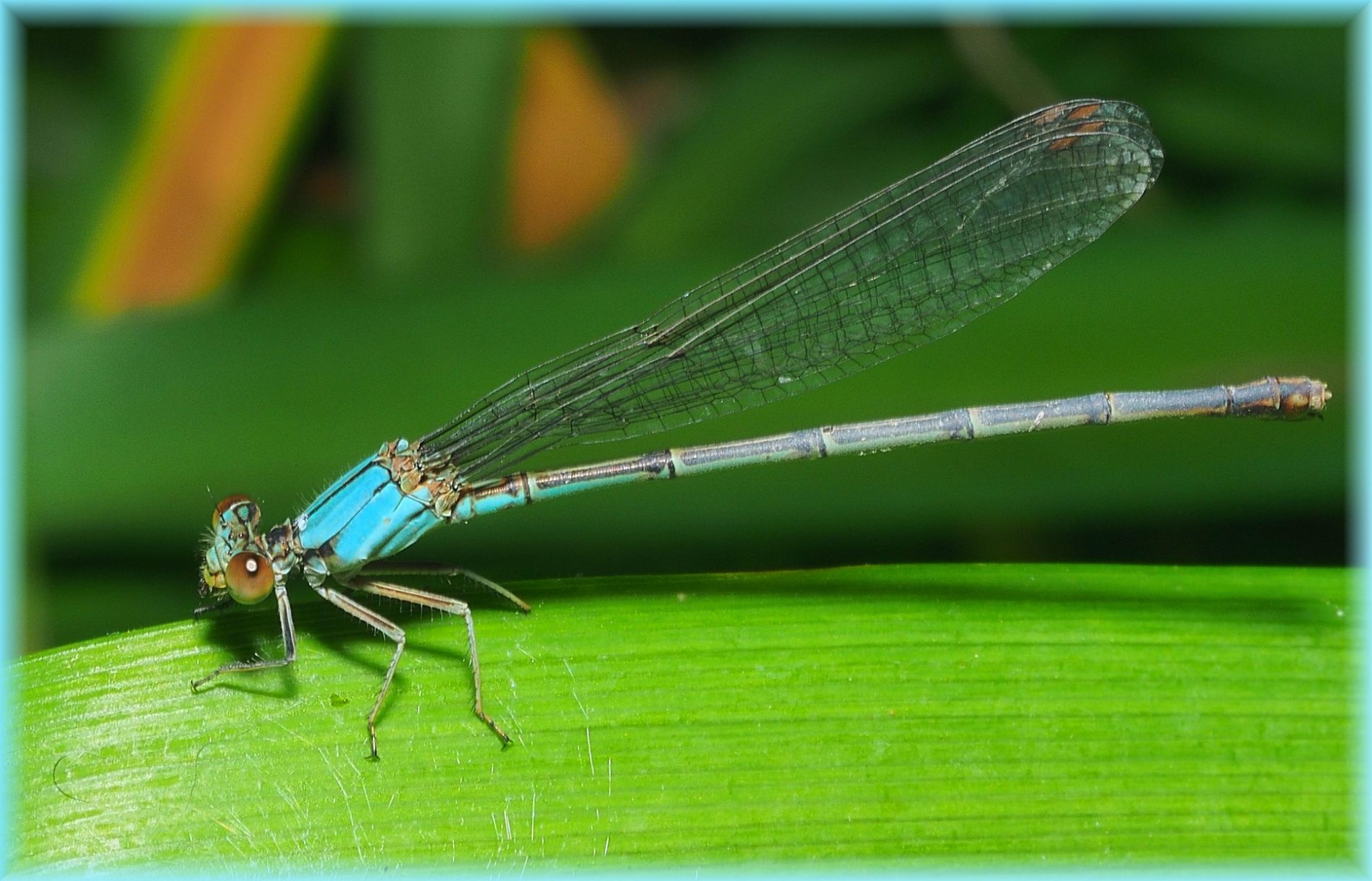
There is the silence of a still evening as the sun is setting when none of the beautiful trees have leaves moving or fluttering about. There is the limited silence between notes being played by a wonderful musical instrument. There is the echoless silence in a large theater when no one is there. There is the murmurless silence of a dragonfly peacefully resting.
Silence of the mind can be a most beautiful, spiritual, divine, and wise thing. True spiritual silence is not an act of will. Will is a projection of desire and will is never truly free, though many of us insist that it is. True spiritual silence that comes about naturally, spontaneously, without any cognitive/mental effort, can be a miraculous thing. It occurs when the mind is aware but is not merely accumulating or striving. Control has nothing to do with it, for control is in the pattern of the opposites and is manipulation toward an end; it is merely part of the cause/effect continuum. True spiritual silence is beyond ends to attain; it is beyond cause and effect patterns and sequences. Such silence is an explosion beyond the known… beyond the cunning and ludicrous patterns of man.
Taking a break on the driveway … Photo by Thomas Peace c. 2022
Creation seems to be a concept that our primitive, sequential, time-oriented brains lock onto. The universe can have its own intrinsic, organic intelligence (which may reflect — but not be created by — a higher order to some extent). However, that higher order exists beyond conflict and separation. Love is beyond conflict and separation; it is a wholeness.
Flowering as Goodness … Photo by Thomas Peace c. 2022
Regarding those who are pompously dogmatic, who pontificate, telling you exactly what to do according to rigid creeds or beliefs that they expect you to adhere to… may i suggest running away from them (and wisely discovering and examining things for yourself beyond set patterns). And many say they’ve “gone beyond society’s crude patterns” while, all the while, they continue to carry them around mentally (tricking themselves that they’ve gone beyond). It’s so easy to deceive oneself and to wallow in (and “as”) that deception; it’s so easy to live a mechanical, robotic-automaton life, falling into programmed, spoon-fed habits and perspectives sadly beyond the natural, holistic, unfettered (living) beauty.
A few students walked past the elderly Lo Zu as he was sitting quietly in nature. As they were passing, they briefly paused near the wise and highly respected Lo Zu and he briefly stated this: “Beyond all of the so-called religious mumbo-jumbo, just sit still and perish to what you’ve been told. Do not try to ‘make’ the mind silent; just be passionate about the intrinsic beauty of true silence and then perhaps true silence will naturally manifest. You cannot make the un-makable.”
We — most of us — live in (and “as”) the linear past, moving into what we think is the future. However, this future is, for the most part, a projection or fabrication from the past, and when unusual things later pop up we arrange them to fit into our storage of narrow past recognitions. (These recognitions constitute what we “are.”) We can fool ourselves into thinking that we often live in the present — in some kind of here and now — but usually it is the clockwork past deluding itself. Self-understanding and critical self-awareness may go beyond the limitations of all this. Such understanding and awareness are not merely the result of some learned processes or taught techniques.
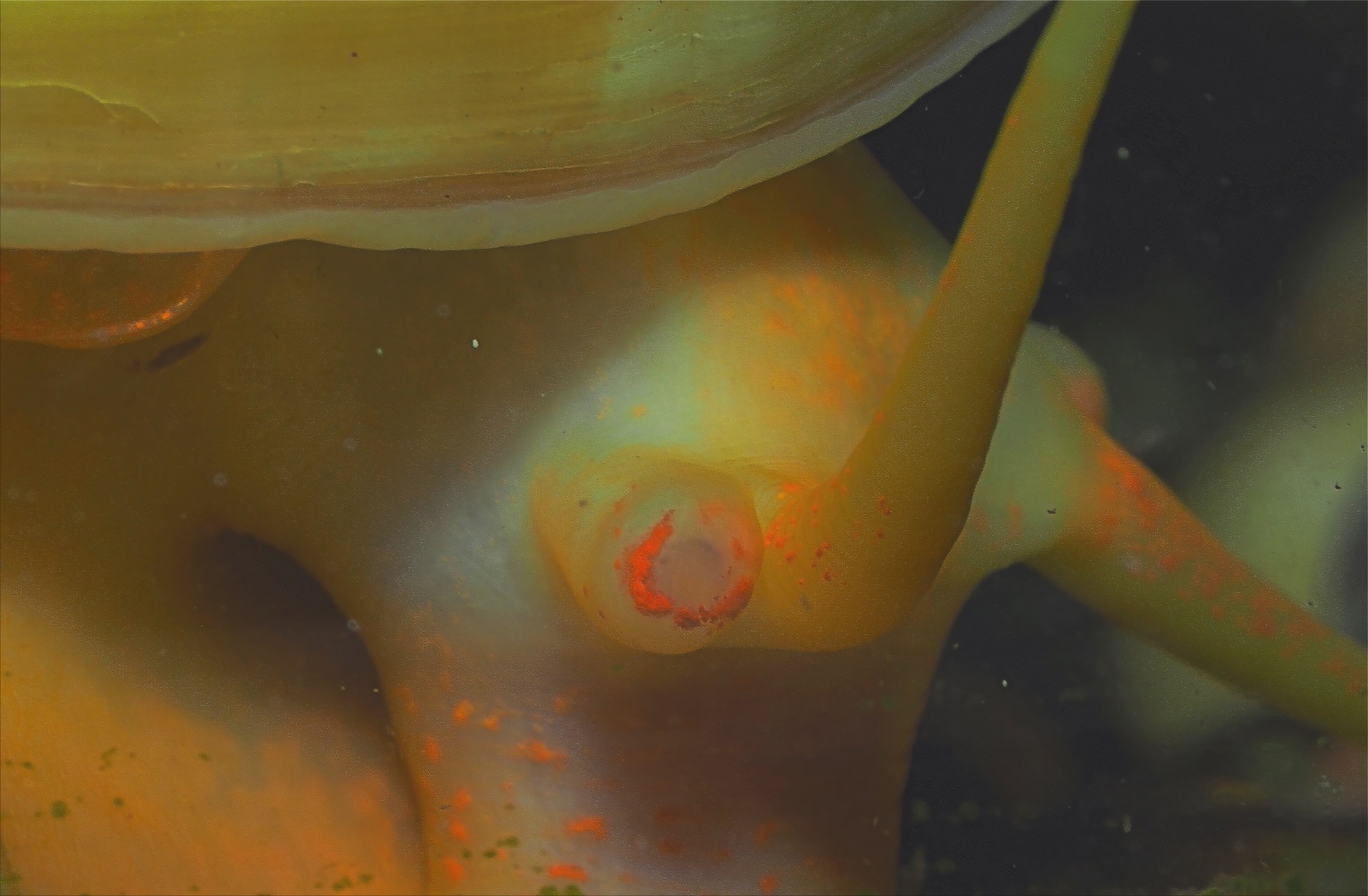
Eye of the Ivory Mystery Snail. … Photo by Thomas Peace c. 2022
Many of us primarily live in the particular and not in the general, not in — or involving — the whole. We merely function as we were taught, and we exist in (and as) the particular. For so many of us, the particular is apart from the whole; we try to solve things by focusing on the particular as apart from the whole. Then conflict ensues and even more problems arise. We see ourselves primarily as separate human beings. We must change.
Sh.t happens!This handsome, large stone is coprolite… fossilized Dinosaur dung from the Jurassic Period. (It no longer smells!) … Photo by Thomas Peace c. 2022
Psychologically, the one who perceives something is not (to a large extent) separate from the perception; so, a man or a woman who is discussing something with someone who is standing in a bed of flowers is — in a very peculiar but real way — conversing with the flowers.
(A favorite excerpt from a very special movie):
.
I could while away the hours Conferrin’ with the flowers Consultin’ with the rain And my head I’d be scratchin’ While my thoughts were busy hatchin’ If I only had a brain
I’d unravel any riddle For any individ’le In trouble or in pain…
Conferrin’ with the Flowers … Photo by Thomas Peace c. 2022
When one was in grade school at, of course, a very young age, one was in one’s upstairs bedroom. Suddenly, one was in an extremely perceptive state in which thought/thinking was not in occurrence. One realized, without internal words or symbols, that it was a very “special” mental state (much different from regular, mundane consciousness involving thought/thinking). Somehow it was instantaneous in nature, not involving time and the sequence that words and time are involved in. From then on, one would occasionally go into that dimension (or “special” mode).
Back then, one did not label it as anything. “Meditation” was not a word that i was familiar with; “meditation” was not discussed or mentioned in my culture or educational background at the time (way back then). Only later, in one’s college days, did i discover more about the term “meditation.” Interestingly, one found that a lot of what some gurus from the East were presenting as “meditation” was really a form of self-hypnosis (involving mere concentration, effort, resistance, and time). Thought/thinking, being a sequential mental process, involves (and actually is) time. Profound perception is beyond time; it is a beautiful timelessness that thought cannot “make happen.”
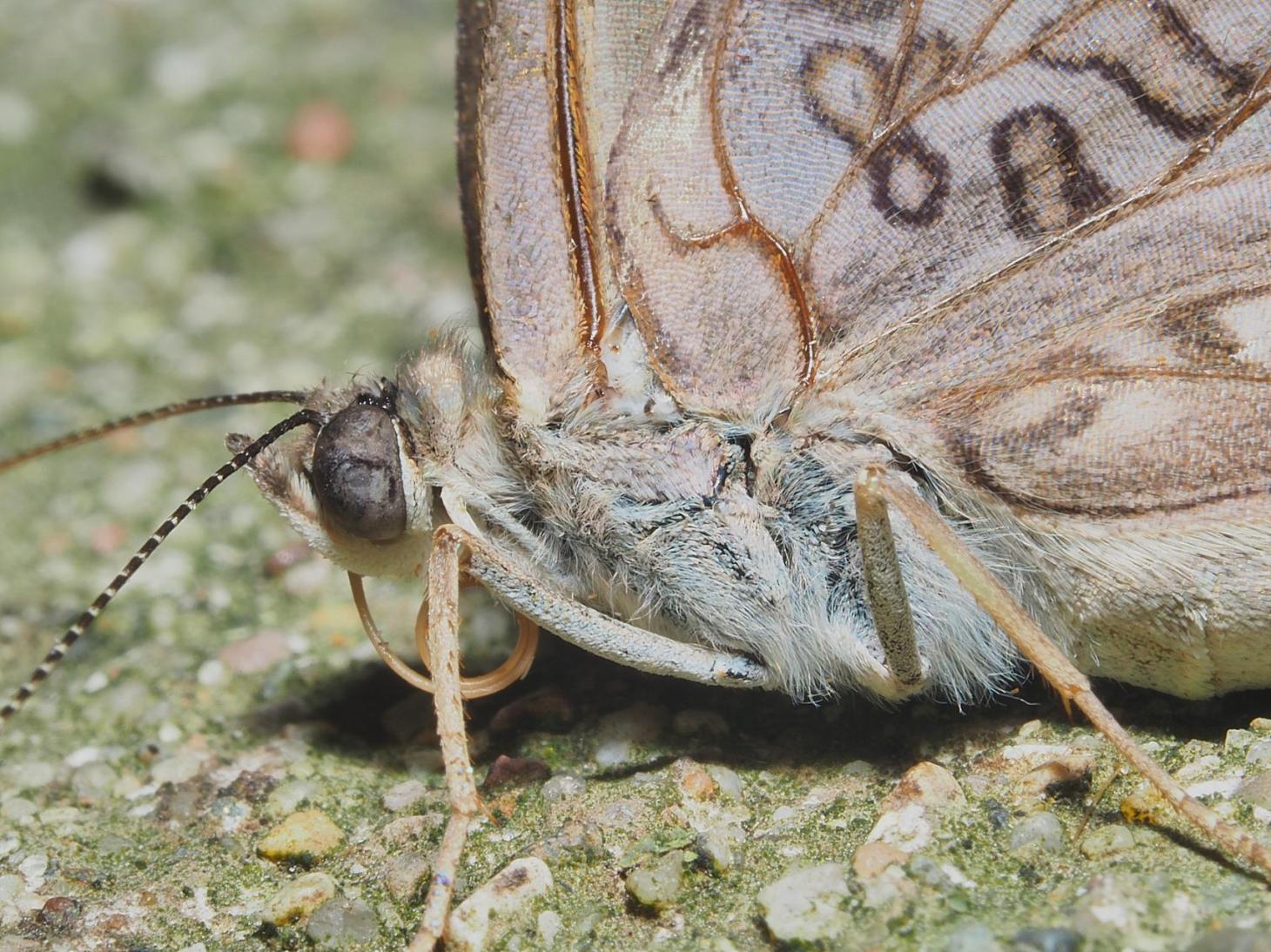
Resting Elderly Butterfly … Photo by Thomas Peace c. 2022
The dictionary defines Nirvana as: ‘(in Buddhism) perfect bliss attained by the extinction of individuality.’
And the following — which may reflect the above definition — may be one pristine part of the bible that managed to get through without being adulterated much over time by those with mythological propensities:
35 For I was hungry and you gave me food, I was thirsty and you gave me drink, I was a stranger and you welcomed me, 36 I was naked and you clothed me, I was sick and you visited me, I was in prison and you came to me.’ 37 Then the righteous will answer him, saying, ‘Lord, when did we see you hungry and feed you, or thirsty and give you drink? 38 And when did we see you a stranger and welcome you, or naked and clothe you? 39 And when did we see you sick or in prison and visit you?’ 40 And the King will answer them, ‘Truly, I say to you, as you did it to one of the least of these my brothers,[a] you did it to me.’
When we consider things mentally we are living in the past. Merely living in the past, in all actuality, is not truly living. Past structures past recognitions, past images and patterns are restructured and re-manipulated. This re-manipulation may seem new, but if the components of it are of images and memories of the past — which they usually are — then what seems somewhat fresh is, for the most part, merely a restructuring of the same old stuff.
In psychoanalysis, looking into the past to get at the source of one’s fears usually isn’t treading new waters whatsoever. It also is a continuation of the past. This past is never truly liberating, for it is an extension of the remains of the stale, the old, and the accumulated. Bringing up old accumulations doesn’t — in any profound way — produce anything liberating and fresh for the mind. The mind that probes into its past is that past; and what it perceives with is dictated by (and actually is) the very past that it is desiring to look into. In actuality, it is very much like a dog chasing its own tail.
Instead of trying to find out about the source of the fears that one thinks one has, it may be much more prudent to perceive that one is not psychologically separate from what fear is as it occurs. Being in right relationship with fear doesn’t take time. Probing into one’s past and psychoanalysis take time. Time is not profoundly liberating in this… because like a dog that chases its own tail, it is a waste of energy. Looking at the past with the past is, for the most part, often a waste of time.
Trying to analyse fears takes time. Trying to control fear takes time. (And trying to control fear presupposes a segment of the mind that is separate from fear and that is capable of manipulating it.) Trying to suppress fear takes time. Escaping from fear, though various forms of entertainment, for example, takes time. Being in an intelligent relationship with fear (as it occurs) does not take time; there is no separation (i.e., no conflict) in that intelligence.
Alien Spy Bot from the Planet Kepler-1606b … Photo by Thomas Peace c. 2022
In my last (recent) blog posting — just prior to this one — in the comments, Marlene thanked me and wisely mentioned how our conditioning causes us to forget (or fail to deeply see) the more realistic unity and wholeness (beyond the individual “I”). One answered back to her, responding that there are endless subtle ways that the isolating self tries to manifest… such that most of us, unfortunately, are hardly perceptive of it.
We are hardwired (by our crude society) to refer to the self habitually, automatically, without question. Going beyond the “I” is considered by many to be heading for insecurity, instability, and chaos. In reality, however, it may be that this limited (but deeply ingrained) notion of a central “I” (in each one of us) is what contributes greatly to the conflict, disorder, selfishness, instability, chaos, and lack of true harmony in the world.
And this constant, deeply ingrained referral to the “I” happens to so many of us, even to those of us who see the unintelligence of doing so. People will automatically, for example, say, “Well I’m working on my meditation or… I am trying to work on my mindfulness more.” So they still — either subtlety or grossly — are maintaining the “I” as a controller and power-source of regulation. Of course, our language itself is designed and structured to often refer to and depend upon the “I.” The “I” is a habitual obtrusion of thought (and it is not truly “in control” as we were programmed to think it is); it reinforces gross separation, selfishness, and (often) indifference. Truly transcending this takes one to a realm of real wholeness — beyond the limited image of “me” — a wholeness of real order, compassion, perception, and true harmony. (One can still, in communication, cautiously use the word “I” but nevertheless be acutely aware of its limiting, superficial aspect.)
The Millipede and its primitive Eye … Photo by Thomas Peace c. 2022
Lo Zu was sitting upon a meandering Oak log, as he so often likes to, silently gazing at the beauty all around him. His right hand — of course — held his splendid, sinuous walking cane. Three young students came by — in the hope of again gleaning some insights of wisdom from him — and they began asking questions. One of the questions, from one of the students, was, “What is the nature of the self?”
Lo Zu smiled caringly at them and said, “See those majestic mountains in the distance? Each one has a name. Each one seems different and separate from the others.” Just then a little toad hopped by, and Lo Zu remarked, “Then too, the warts upon this beautiful, little toad… each one seems separate and distinct from the others; the warts do not have names — as the mountains do — but nevertheless, they are quite similar.” “Kind of like those bird eggs that you told us about once, right?” remarked one of the students. “Exactly!” said Lo Zu.
“What are you getting at?” one of the inquisitive students fondly asked. Lo Zu then said, “The self, which each one of us allegedly has, is like one of those mountains or like one of those warts. However, the mountains are — in reality — all connected and unified by the ground beneath that supports them. Each wart, too, is part of the whole toad. We, as humans, however, get lost in the separateness, the isolation, and do not see the whole (which is the real truth and true reality). We were miseducated, and we accept the limited all too easily and mindlessly; one is conditioned to look at oneself as an isolated, separate mountain, or as a separate wart. We are not just one mountain; we are the whole range (and then some). We are not just one, isolated wart; we are the whole toad (and then some). Thought/thinking is usually limited and isolating. Transcending the habit of superficial thought/thinking may enable truth and unadulterated, holistic beauty to be seen. With (or ‘as’) such beauty, real compassion flowers.”
“Yes,” said one of the students, “but I see that I am separate from my own separate thoughts and I see that I control the thoughts and the thinking process.” Lo Zu answered, “We — over many generations and from early (in life) input from so-called others — have been taught that the ‘I’ is the boss and is the powerful controller of thoughts. But, in reality, it may be that thought itself has projected this image of ‘I’; in other words, the ‘I’ itself may be the product of thought/thinking and may erroneously be imagined as ‘being in charge.’ The more thought attributes power and control to this imaginary ‘controller,’ the more the mind becomes conditioned to take it for granted and accept its supposed controlling power (as reality). More and more of these associative occurrences further condition the mind. However, the alleged separateness and the alleged power of control of this imagined ‘I’ may not be truly grounded in reality. The wise mind that sagaciously sees this does not fall into disorder or disarray but, rather, functions beautifully in (and ‘as’) a most holistic, deep, and profound order (beyond mere ordinary control). Hopefully, the beauty of it can be seen.”
The students graciously thanked Lo Zu and went on their way… pondering deeply.
When you look at nature, if you are merely looking through the patterns of space and distance, are you really looking at all?
A free and wise mind that is not dependent upon things of disorder, needs neither alcohol nor drugs.
Some wise scientists have said that the truth of how the universe works probably exists far from what we have surmised and discovered. And some wise men realize that true spirituality exists far from what mundane, organized religions have maintained.
If you remain in (and “as”) mediocre acceptances all of your life… then it may be that when you die, you are just a little bit more dead.
It may be that only physically and tangibly helping others is any real form of prayer… and that praying with mere thoughts and words isn’t really praying at all.
It is easy to pass the truth by and ignore it; it is easy to see everything through separative eyes of fragmentation, division, and distance (just as you were miseducated to do).
That happy baby isn’t separate from what one is; that injured dog isn’t separate from what one is.
It may be that gross immaturity likes to fly around the world in aircraft that spew inordinate amounts of fossil fuels into the atmosphere, (thus harming all of life)… in order to see “beautiful” natural sites (with patterns that are wonderful eye-candy).
I’ve been waiting for coffee at this table for over 20 minutes, and still no coffee!
Waiting for coffee! … Photo by Thomas Peace c. 2022
True spiritual search lies beyond mere motives; then somehow it magically transcends what search is constituted of.
The pyramid of life (depicted on every U.S. dollar bill) has the all-seeing, all-perceptive eye at the very top. And your wise men don’t know how it feels to be thick as a brick.
The past and the future seem so very different (to our limited, unsophisticated eyes).
Eliot eloquently, poetically wrote: “Time past and time future allow but a little consciousness.”
When you listen to music, are you really separate from the tones and the melody?
If we marginalize the environment, neglecting it and being lackadaisical about it, it will come upon us with a vengeance, with uncontrollable fires, pandemics, tornadoes, hurricanes, and floods. Waking up too late, mankind, isn’t waking up.
The beautiful flower doesn’t care if you stop to notice it or not… and that is part of its innate beauty.
Not that it’s the worst thing in the world (by any means), but exclusively clinging to the orthodox religion that you were born with may be like feeding from a formula-bottle for your entire life.
Amber Stone in the making … Photo by Thomas Peace c. 2022
To look without the background of the past is what looks without contamination and time.
It is most noble to investigate into truth without letting fear cause one to cling to inherited, comforting beliefs (or to self-concocted beliefs); deep intelligence does not let fear alter (or cloud) what it sees.
Education is not just memorizing and regurgitating back information; true education involves questioning, pondering, and investigating far beyond what you are “told.”
An intelligent, holistic mind is also a mind that is appreciative of humor and laughter.
The real problem with kleptomaniacs is that they always take things literally.
Intelligent, vicarious suffering often acts to help other people, animals, and the environment as a whole.
Marionettes are easily worked by strings; gullible people are easily swayed by nefarious, diabolical (so-called) news channels that perpetrate hatred, misinformation, and separation.
A truly good doctor (i.e., general practitioner) informs you about how to eat and act in a more healthfully appropriate way and does not merely robotically and hurridly dispense out synthetic pills to you.
Fear necessitates time and requires time. It is often the past dreading what may happen as the future. To transcend fear at its roots, psychological time must be deeply understood and transcended.
Gray hair really isn’t all that bad! Photo by Thomas Peace c. 2022
The sweet whole can clearly be seen by a mind of sweet wholeness.
Gross oversight is failure to notice the reality of what is actually taking place, failure to notice the whole, (while one, all the while, is fixated on the parts).
It may be prudent to remain with (and “as”) the suffering of loneliness without merely habitually trying to escape from it.
The earth and the moon do not argue amongst themselves about which one is more round, and they dance along with each other just fine.
Most of the food sitting upon selves in the grocery stores of the U.S.A. … is not healthy food.
The scientist said to the man who fell and broke his knee, “Do you understand the gravity of the situation?”
Compassion and wisdom… not two separate things… the one is the other.
Many people of many countries and religions were born into each of those so-called countries and religions, and often inherently (and hereditarily) think that theirs is “the best” and is “very special above the others”; we keep killing ourselves in bloody wars based on separative borders and beliefs.
Looper Moth with Clover … Photo by Thomas Peace c. 2021
Reaction is fragmentation in (and “as”) time and most of our lives are, unfortunately, merely a sequence of robotic reaction after reaction… which is time.
To perceive without depending upon what was intentionally poured into you — to mold you — doesn’t take time.
Fears can decimate the brain; go beyond the fears that you are.
Beyond the smoke and mirrors of lying politicians — who are bought and paid for by the polluted and foggy fossil fuel industry — lies clarity.
The UPPERCASE LETTERS were prejudiced against the lower case letters, so they sentenced them to a life of extreme poverty.
An inattentive, fragmented mind easily comes up with violent and disorderly ways.
She, for entertainment, often traveled from country to country… but in reality, she never actually moved anywhere (especially from her illusions, loneliness, and sorrow).
A constantly clamoring mind is a broken mind without the pristine silence of wholeness.
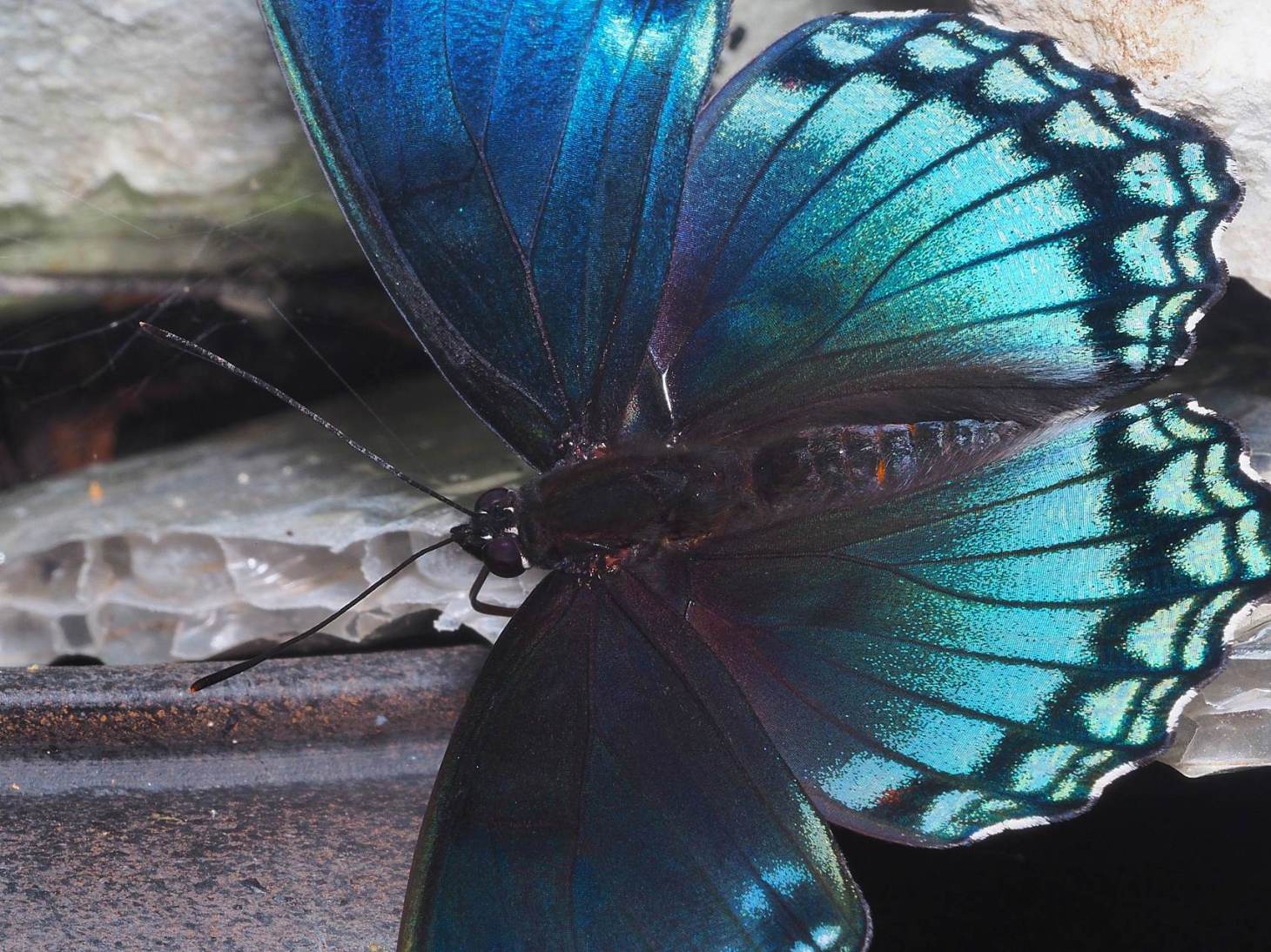
Red-Spotted Purple Butterfly resting on one of my outdoor flower pots. Photo by Thomas Peace c. 2021
Holistic silence cannot be induced. It is not merely the result of some cause, either physically or mentally. One cannot make oneself be holistically silent. All effort, by the brain, involves motive… and motives are a result of desires and goals; with such effort, there is always a thing to be achieved, a reward to acquire.
A dynamic mind, that does not merely robotically bounce from one desire or one goal after another, may perhaps come upon (or manifest as) holistic silence. Holistic silence is not the result of any calculated direction, nor is it what merely radiates in limited and calculated directions. It cannot — as so many mundane things are — merely be recognized and pinpointed; this is one reason why one cannot “know” that one’s mind is of a holistic silence. It, being rather timeless, is beyond mere possession and acquiring. But perhaps it may occur when the mind perceives the conflict and limitations of thoughts, noisy mental images, and concocted mental patterns.
Holistic silence, perhaps a bit like the sun — we are using a crude analogy here — though it does not radiate in one, limited direction, can emanate with beautiful, miraculous effects. If we merely darkly, robotically, and habitually cling to one reacting thought after another — which most all of us do — then there will be little possibility (and space) for such dynamic, natural, bright silence to manifest. Thoughts are generally old, second-hand, residual, limited, of the past, and merely symbolic. If the mind — as most minds — is merely content to exist as one series of sequential thoughts after another, then (like what the previous sentence suggests) it is darkly moving from one sequence of old, limited, symbolic images to another. The new does not take place where the old merely is what is constantly repeating endlessly.
Understanding the mind, understanding thoughts and going beyond the habit of foolishly always merely being them — without technique — may perhaps open a door. Whether the magic of holistic silence flows through or not… well that is another matter…
Once there were three little birds effortlessly sitting in a tall tree
They watched a man down below
with his legs firmly crossed while trying to meditate
The birds were very curious as to why the man did not move
They flew away, enjoyed life, and a good while later returned to the tree
One of the birds defecated on the man's head
The man did not notice
He was too busy craving for something to descend upon him
He later went home (weighing a bit more than before)
Closeup of a Cicada, the insects that make loud, symphonic sounds from the top of tall trees. … Photo by Thomas Peace c. 2021
Awareness, in terms of mindfulness and meditation, is not a calculated escape into some kind of fabricated domain beyond what is all around you. The world is largely a big mess right now, chiefly because of man and the disorder that man propagates. The world of nature basically has a beautiful intrinsic order. Awareness perceives this order and also perceives the disorder (primarily involving man). Again, awareness is not some kind of escape into some kind of domain (fabricated by the mind to, supposedly, exist in a utopian, blissful state). Awareness is not sitting with one’s legs in a lotus position, thinking that one is achieving something extraordinary. That is usually a form of self-hypnosis, and there is nothing extraordinary about that.
Deep awareness remains with (and “as”) what is, but that “what is” is not merely the result of what one was molded and trained to see. Merely looking at things through a mental screen of words (which are mere symbols) and isolated images — in a separative, pigeonholing, divisive kind of way — is just a continuation of mindless, limited conditioning and, therefore, is not deep awareness. Deep awareness shatters through stale acceptances, worn-out systems of looking at things, dead traditions, and preconceived iron-clad concepts, and bursts beyond these mere reactions. Deep awareness is not mere reaction, it is action. Deep awareness acts and ends disorder. Again, deep awareness is action, not mere reaction. Deep awareness exists beyond effort; effort is always for a limited goal — in time — and is of reaction. Reaction is mechanical, robotic, rather dead, unalive, ordinary, and it comfortably fits into the current rotten society just fine.
Leafhoppers are not often seen because they are savvy enough to perceive a person approaching them and they subsequently quickly move to a portion of the plant, that they are upon, that is not visible to the oncoming individual. They are very visually and vibrationally perceptive, which is a limited type of awareness.
And while he observed the diminutive insect gazing out from the base of the leaf, there was no immediate labeling, there was no separation between the leaf and his consciousness, there was no separation between the insect and what he was. (They taught him that he was separate, but he didn’t listen.)
Gazing Leafhopper… there are over 20,000 species of leafhopper worldwide. Photo by Thomas Peace c. 2021
[NOTE: This poem and this posting is just designed for some innocent, scary, Halloween fun. It is not meant to reinforce anyone’s hatred of spiders. When i see a spider in the house, i gently grab it in a soft Kleenex and subsequently release it (gently) out-of-doors. Spiders are generally harmless, are great pest removers, and can be admired for their own intrinsic beauty; humans probably look ugly to a lot of perceptive animals!]
All of what seems to be parts of this universe are not truly separate parts at all but only mistakingly appear to be parts; still, most scientists fail to fully perceive this.
Like man, ants have an organized social structure; unlike man, ants do not ruin the environmental whole.
The mind that primarily perceives through (and with) its many accumulations and beliefs, largely sees — and exists as — what is old, stale, stockpiled, and unalive.
Needless fear blocks the mind from true order and from real freedom and understanding.
A universe without pain and suffering is like a phony plastic plant that need not struggle through the dirt and that is devoid of real growth and feeling.
Look at the map of life as a whole; merely concentrating on a single point or place (of supposed self) is fragmentary, limited, negligible, and ludicrous.
Are you just reading an ordinary poem, or is the magic of the poem unfolding what you are in a miraculous, transformational way?
Awareness is not what you cultivate over time; it occurs to the mind that (now) is passionately and holistically perceptive.
Mother and daughter Tree Frog. … Photo by Thomas Peace c. 2021
Many of us think, at times, pictorially (via mental pictures) and emotionally. And to a large extent, many of us think via internal words and sentences (i.e., verbally). This verbiage is called “inner speech,” and it allegedly involves one talking to oneself. Is there a separate self or separate “center” that is truly separate from this inner speech? One does not think so. Regarding inner speech, the perceiver is the perceived; fabricating (mentally) a separate observer is a waste of energy and causes needless separation. Too many of us look at things — such as fear and such as nature — via mere separation. (We were taught to perceive things, internally and externally, via separation.) (By the way, not having the illusion of a separate, central self does not negate eternity/the eternal; on the contrary, it invites it.)
We think, internally, in a multitude of ways; most of us are constantly chattering, internally, about something. This inner chattering largely consists of words and sequences of words. Words are symbolic and are always fragmentary, always limited. (One often speaks internally with a virtual copy of one’s own voice.) Stillness — which allows for wholeness — is imperative. But one cannot “make” stillness occur. True stillness is not merely an effect brought about by some mechanistic, calculated cause. True stillness comes with holistic perception beyond mere cause and effect reactions. This is why you cannot decide to meditate. You cannot say you will meditate for 30 minutes in the morning and 30 minutes in the evening. This is why “practicing” mindfulness is ludicrous. True meditation occurs naturally; it is uninvited and is not the mere result of some premeditated cause or desire. (You cannot “know” that you are meditating, by the way.)
The watery pool of the holistic, reflective mind (in stillness) will mirror the truth. An agitated mind, full of clatter and turmoil, reflects nothing.
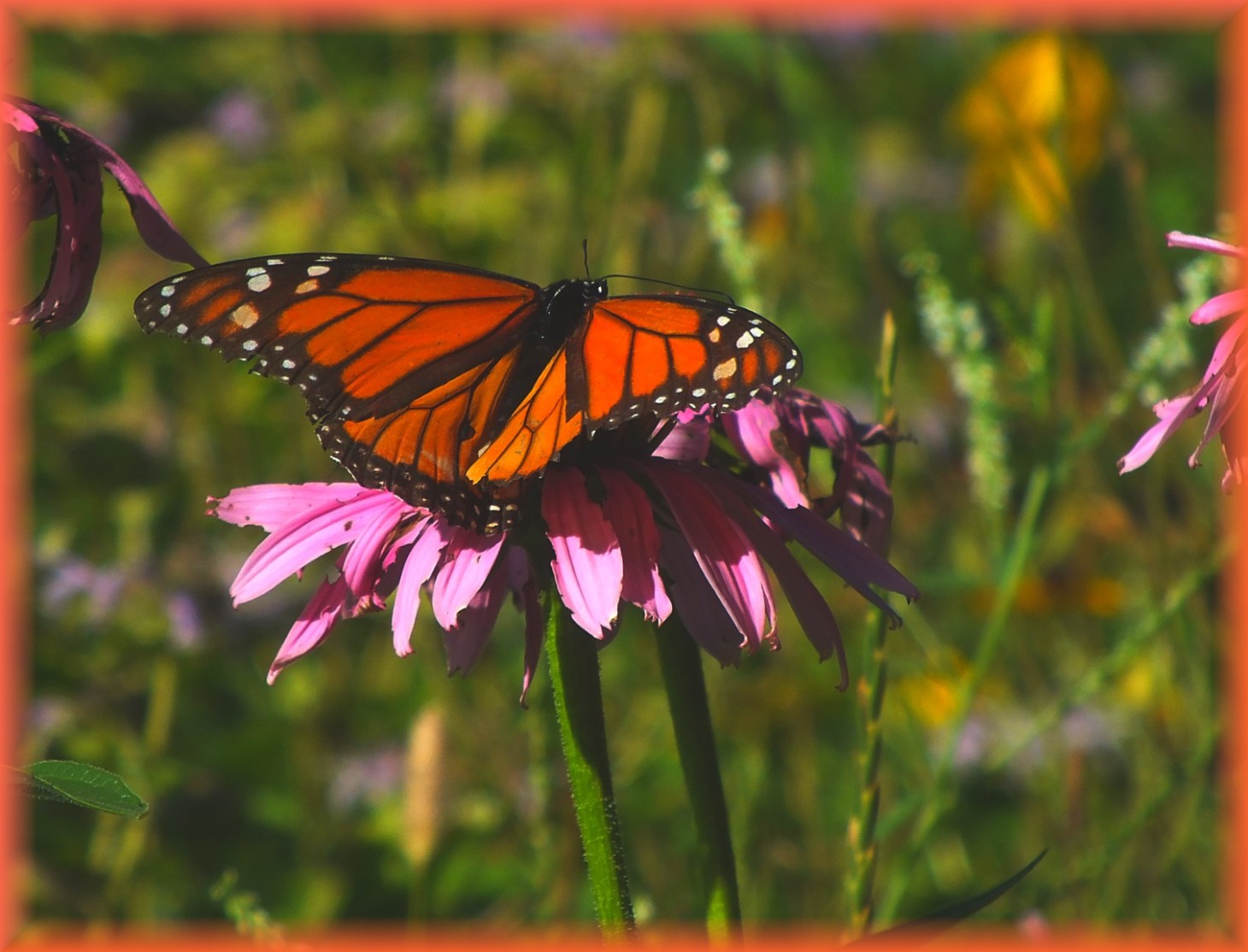
Monarch Butterfly… Only 10% remain after 20 years of manmade extinction. And there are still people saying that manmade climate change is not real. Photo by Thomas Peace c. 2021
The dictionary describes “oblivious” as ‘not aware or concerned about what is happening.’ Many are neither concerned about the environment, about stopping the current virus from spreading, nor about curtailing the injustice and discrimination going on in the world. Looking with the mechanistic brainwashing that was likely poured into you in your youth, is not awareness. True awareness transcends the mediocre, conditioned, superficial platform that society tends to educate its children with. Words are symbolic patterns, virtual reactions, and to merely look at the world through (and “as”) symbolic patterns and conditioned reactions is not real looking and is not real awareness.
The dictionary describes “narrow-minded” as ‘rigid or restricted in one’s views; intolerant.’ Many humans have rigidly clung to the restricted and limited educational patterns that were poured into them. They go through life, looking at things in pre-molded, pre-planned ways — set up by organized bureaucracy — which isn’t really “looking” at all. No wonder then, that there is much indifference and callousness taking place in (and “as”) their minds. Of course, there are a good number of people out there that have noble arrangements or professions that really help people (and animals) but the world needs far more of such people. Indifference, rigidness, and unconcern are far too rampant.
There is no rule or method to follow that enables one to truly go beyond mental superficiality and rigid methodologies. One must do it with the heart in a way that goes beyond the mere symbolic patterns of words, learned patterns of separation, and self-concepts. The true living heart has no boundaries and does not cling to man-made limitations.
Jewel Among the Flowers — Photo by Thomas Peace c. 2021
If you happen to have a physical handicap, ailment, or disorder, one does not think that it would be prudent to take it out on, or blame, some “higher power.” There is a sacredness that exists, but one does not feel that it interferes much with the natural, organic occurrence of things. If it did, there would be no end to the multitude of illnesses and physical problems that needed fixing and if it fixed everything, for example, we would be living in a cartoon-like, plastic-plant-like world where things were disgustingly artificial.
My wonderful wife, before she passed, had all kinds of physical problems (and handicaps). I, more than once, advised her not to take it out on that higher order and vast intelligence. By the way, things happened in the past, such as adult neighbors getting in front of my wife with their car as she was walking down our rural road for exercise, and laughingly mocking the way she walked, stopping their car in front of her to block her walking. This kind of thing is unbelievable, especially from adults. (By the way — and this is not mere politics — i was not at all appreciative of the way Trump, in the past, openly mocked and disparagingly imitated that poor man who was handicapped.) There are some people out there with no hearts. It is very sad.
I was a teacher for students with multiple handicaps, and i occasionally would talk to them about their situation. Some were as intelligent as you or i but, for example, were quadreplegic, not being able to move their arms or legs with coordination and not being able to feed themselves. Yet we got them to laugh often and feel good about themselves. Let me tell you, when anyone of us humans (including animals) suffers… the whole world suffers in a way and (in a way) shares in that suffering. We can help each other and all do better; all of us are like the fingers of one hand, and although the fingers seem separate, in reality they are not separate.
If you happen to have handicaps, keep your head held high; do not feel inferior; please do not blame that sacredness. Let’s face it, in a big way all of us humans have some kind of handicap(s). (Many of my students, while being severely handicapped, smiled more often and were kinder and far more caring than a lot of the ordinary, so-called normal businessmen that i met in the outside world.)
Katy did it again, but i didn’t. … Photo by Thomas Peace c. 2021