Holistic silence cannot be induced. It is not merely the result of some cause, either physically or mentally. One cannot make oneself be holistically silent. All effort, by the brain, involves motive… and motives are a result of desires and goals; with such effort, there is always a thing to be achieved, a reward to acquire.
A dynamic mind, that does not merely robotically bounce from one desire or one goal after another, may perhaps come upon (or manifest as) holistic silence. Holistic silence is not the result of any calculated direction, nor is it what merely radiates in limited and calculated directions. It cannot — as so many mundane things are — merely be recognized and pinpointed; this is one reason why one cannot “know” that one’s mind is of a holistic silence. It, being rather timeless, is beyond mere possession and acquiring. But perhaps it may occur when the mind perceives the conflict and limitations of thoughts, noisy mental images, and concocted mental patterns.
Holistic silence, perhaps a bit like the sun — we are using a crude analogy here — though it does not radiate in one, limited direction, can emanate with beautiful, miraculous effects. If we merely darkly, robotically, and habitually cling to one reacting thought after another — which most all of us do — then there will be little possibility (and space) for such dynamic, natural, bright silence to manifest. Thoughts are generally old, second-hand, residual, limited, of the past, and merely symbolic. If the mind — as most minds — is merely content to exist as one series of sequential thoughts after another, then (like what the previous sentence suggests) it is darkly moving from one sequence of old, limited, symbolic images to another. The new does not take place where the old merely is what is constantly repeating endlessly.
Understanding the mind, understanding thoughts and going beyond the habit of foolishly always merely being them — without technique — may perhaps open a door. Whether the magic of holistic silence flows through or not… well that is another matter…
Once there were three little birds effortlessly sitting in a tall tree
       They watched a man down below
       with his legs firmly crossed while trying to meditate

The birds were very curious as to why the man did not move
       They flew away, enjoyed life, and a good while later returned to the tree
       One of the birds defecated on the man's head

The man did not notice
       He was too busy craving for something to descend upon him
       He later went home (weighing a bit more than before)
Closeup of a Cicada, the insects that make loud, symphonic sounds from the top of tall trees. … Photo by Thomas Peace c. 2021
Integrity is very significant in life. A mind that is merely a sponge, just robotically spewing out what it absorbed, is likely not of integrity. A mind without integrity and order is limited and fragmentary. Integrity means wholeness, soundness. Integrity is of an unadulterated innocence. A mind full of limitations is of conflict and is bound to do divisive and chaotic things. Wholeness exists beyond the limitations. Many of us, when we were younger, accepted behavioral patterns — which society spoon-fed to us — based on competition and conflict. Most of us have accepted such behavioral patterns — largely based on fragmentation and conflict — and have gone on in existence, adhering to these patterns of limitation and conflict. True bliss, however, is not of limitation and fragmentation; true bliss exists with (and “as”) wholeness, integrity. But so many of us have merely accepted what was poured into us when we were young… and we have gone on in the old ways; we have gone on in the antiquated traditions.
Limitation, being based on conflict and tending to produce conflict, inevitably contributes to the divisive and chaotic attributes of society. Limitations — based on conflict — are restrictions, and they snag the mind and keep the mind within (and “as”) constrained and blocked realms. Blocked mental realms often manifest as disorder and conflict. Disorder and conflict do not generally reflect wholeness and integrity.
Interestingly, our very concepts of time are based on fragmentations and limitations. We accepted these time-oriented fragmentations and limitations from society; we fully accepted them as being totally legitimate. However, it may be that we have largely accepted what is fundamentally erroneous and distorted. Our limited conceptualizations of spacetime may be largely fragmentary and perverted; we see what we were programmed to see. Our time conceptualizations may be somewhat relevant physically — in getting actual physical things done — but in the psychological realm, they may be rather absurd, limited, and illusory. One says, “I will try to be less envious of others tomorrow,” but then (at that moment) one creates a space between what one considers to be “oneself” and “others”; one additionally fabricates a “tomorrow” that is separated from “now” by psychological time (which also is of a concocted space). This concocted space is of conflict, which was a distorting factor (initially) in the situation. To live in limitation, conflict, and distortion may not be order, may not be bliss. Deep joy and order may come when distortion ends, when limitation is not just overwhelming.
his looking, day after day year after year,
Was through the mental screens and motifs that They provided
Hence, it wasn’t his “looking” whatsoever; it was Their “looking”
And it wasn’t “seeing” whatsoever; it was the death-like absence of really seeing
It’s Slinky, It’s Slinky … Photo by Thomas Peace c. 2021
The mentally isolated are confined. They, by their own misperceptions and separative viewpoints, are (unfortunately) in a limited sphere that is not in touch with everything. (You can be in a large group of people and be mentally isolated, with a separative self.) Mental confinement is limitation; it occurs when the mind is not caring (about others); it occurs when the environment seems separate from what you are and when you are not very curious about it.
Today, because my wife has passed a little over a year ago, i had a pet sitter come to my house to see about possibly taking care of all of my critters (i.e., pets) should something happen to me (like needing to go to the hospital or something similar). I told my little miniature Dachshund, Lola, (in the morning) that a lady would be coming later in the day; i told her to be nice to the lady. The sitter was to arrive at 2pm. I didn’t say anything, but a little after 2pm, Lola began ceaselessly barking loudly; she never does that in such a manner. I looked outside, and there was no sitter, no car of the sitter out there. After about 5 minutes of ceaseless barking, the sitter arrived (with her two teenage daughters). She said she inadvertently passed my house but eventually circled back and found it. Apparently, Lola sensed they were near (even though they have never been here before)! Lola, and other dogs we have had in the past, seemed to have a form of perception that extends out past the “usual realms.” When my wife Marla was alive, she would tell me about how Lola, and previous dogs we’ve had, would “realize” i was coming home (in the car) 5 or 10 minutes or so before i actually arrived home.
When the sitter arrived, i briefly told her about my wife Marla’s passing… about how, for 12 years, Marla (because of medical complications) was unable to eat and was strictly on enteral feeding (i.e., tube feeding) to her stomach. I told the sitter that, before i retired, i was a teacher for the multiply handicapped and that some of my students were on tube feeding. I would be the one helping them to get their tube feeding nourishment (for years) long before Marla developed eating difficulties. The sitter remarked that our marriage was almost “meant to be”… (regarding how my unusual employment situation benefitted my wife later in our marriage). Well, it was “meant to be”; it was pre-arranged by a wholeness that extends past the “usual realms.” (It is very beautiful regarding how that pre-arrangement took place, but i am not at liberty to go into it in detail). Lots of things can happen beyond the “usual realms,” but if you merely crave for these, nothing will happen; they will come to you (perhaps) without you inviting them… come to you with your natural curiosity, especially if it extends beyond the “self.”
A noiseless patient spider, I mark’d where on a little promontory it stood isolated, Mark’d how to explore the vacant vast surrounding, It launch’d forth filament, filament, filament, out of itself, Ever unreeling them, ever tirelessly speeding them.
And you O my soul where you stand, Surrounded, detached, in measureless oceans of space, Ceaselessly musing, venturing, throwing, seeking the spheres to connect them, Till the bridge you will need be form’d, till the ductile anchor hold, Till the gossamer thread you fling catch somewhere, O my soul.
**************************************
Thanks to monicat for his comments on spider webs in my previous posting, and check out this amazing article on Jumping Spider Visual Acuity (that pstachowski provided in his previous comments to my blog):
Awareness, in terms of mindfulness and meditation, is not a calculated escape into some kind of fabricated domain beyond what is all around you. The world is largely a big mess right now, chiefly because of man and the disorder that man propagates. The world of nature basically has a beautiful intrinsic order. Awareness perceives this order and also perceives the disorder (primarily involving man). Again, awareness is not some kind of escape into some kind of domain (fabricated by the mind to, supposedly, exist in a utopian, blissful state). Awareness is not sitting with one’s legs in a lotus position, thinking that one is achieving something extraordinary. That is usually a form of self-hypnosis, and there is nothing extraordinary about that.
Deep awareness remains with (and “as”) what is, but that “what is” is not merely the result of what one was molded and trained to see. Merely looking at things through a mental screen of words (which are mere symbols) and isolated images — in a separative, pigeonholing, divisive kind of way — is just a continuation of mindless, limited conditioning and, therefore, is not deep awareness. Deep awareness shatters through stale acceptances, worn-out systems of looking at things, dead traditions, and preconceived iron-clad concepts, and bursts beyond these mere reactions. Deep awareness is not mere reaction, it is action. Deep awareness acts and ends disorder. Again, deep awareness is action, not mere reaction. Deep awareness exists beyond effort; effort is always for a limited goal — in time — and is of reaction. Reaction is mechanical, robotic, rather dead, unalive, ordinary, and it comfortably fits into the current rotten society just fine.
Leafhoppers are not often seen because they are savvy enough to perceive a person approaching them and they subsequently quickly move to a portion of the plant, that they are upon, that is not visible to the oncoming individual. They are very visually and vibrationally perceptive, which is a limited type of awareness.
And while he observed the diminutive insect gazing out from the base of the leaf, there was no immediate labeling, there was no separation between the leaf and his consciousness, there was no separation between the insect and what he was. (They taught him that he was separate, but he didn’t listen.)
Gazing Leafhopper… there are over 20,000 species of leafhopper worldwide. Photo by Thomas Peace c. 2021
All of what seems to be parts of this universe are not truly separate parts at all but only mistakingly appear to be parts; still, most scientists fail to fully perceive this.
Like man, ants have an organized social structure; unlike man, ants do not ruin the environmental whole.
The mind that primarily perceives through (and with) its many accumulations and beliefs, largely sees — and exists as — what is old, stale, stockpiled, and unalive.
Needless fear blocks the mind from true order and from real freedom and understanding.
A universe without pain and suffering is like a phony plastic plant that need not struggle through the dirt and that is devoid of real growth and feeling.
Look at the map of life as a whole; merely concentrating on a single point or place (of supposed self) is fragmentary, limited, negligible, and ludicrous.
Are you just reading an ordinary poem, or is the magic of the poem unfolding what you are in a miraculous, transformational way?
Awareness is not what you cultivate over time; it occurs to the mind that (now) is passionately and holistically perceptive.
Mother and daughter Tree Frog. … Photo by Thomas Peace c. 2021
When we were very young, during our education — or, rather, miseducation — a lot of us sagaciously felt or understood that there was something wrong or lacking in what the adults were telling us. But, over time, most all of us accepted what they maintained and we fell into place as we were expected to.
They taught us to look via separation, to look at separate things (largely disconnected). They taught us that running away and trying to escape from aloneness was the norm and that that is the way we should react. They didn’t encourage us to perceive everything holistically (i.e., without mere separation and division). They didn’t reveal to us that, in aloneness, may exist true stillness, a stillness that is miraculously dynamic, timeless, spiritual, and precious. They didn’t encourage us to investigate about and be very appreciative of that stillness which is not merely a part of a mechanistic, mundane, run-of-the-mill life cycle. (By the way, it is good to socialize at times, but it is also extraordinarily important to be alone often, allowing for a deeper penetration into the beauty of unadulterated stillness.) They didn’t encourage us to look beyond the confined limitations and fragmentation of symbolic thought and thinking… (and all thoughts and thinking are limited symbols and are of fragmentation); all thoughts are sequential, abstract, and, hence, are very computer-like and rather virtual. They taught us to exclusively depend upon thought/thinking.
It is good to have hobbies. I have some. But too many of us, as adults, are caught in endlessly trying to escape from our “aloneness” by pursuing endless entertainments and places to visit. (Like the perpetual donkey going after the carrot tied to a stick, so many of us travel, travel, chase, chase, and yet continue — no matter where we go — to carry an overriding staleness, mundaneness, and melancholia.) Without facing and understanding aloneness and the mind, a feeling of lack and mediocrity will endlessly follow you wherever you go, like a shadow. One must face that aloneness and, without effort, allow it to blossom into something priceless and dynamic, beyond mere measure. Then the real miracles can happen. But if we merely perpetually escape from that aloneness — as society conditioned us to — then we will forever remain frequently unfulfilled, mediocre, defeated, and ordinary.
(Additionally, please listen to the very short song, entitled “Just Trying to Be,” included in this posting.)
My Backyard Visitor … Photo by Thomas Peace c.2021
Many of us think, at times, pictorially (via mental pictures) and emotionally. And to a large extent, many of us think via internal words and sentences (i.e., verbally). This verbiage is called “inner speech,” and it allegedly involves one talking to oneself. Is there a separate self or separate “center” that is truly separate from this inner speech? One does not think so. Regarding inner speech, the perceiver is the perceived; fabricating (mentally) a separate observer is a waste of energy and causes needless separation. Too many of us look at things — such as fear and such as nature — via mere separation. (We were taught to perceive things, internally and externally, via separation.) (By the way, not having the illusion of a separate, central self does not negate eternity/the eternal; on the contrary, it invites it.)
We think, internally, in a multitude of ways; most of us are constantly chattering, internally, about something. This inner chattering largely consists of words and sequences of words. Words are symbolic and are always fragmentary, always limited. (One often speaks internally with a virtual copy of one’s own voice.) Stillness — which allows for wholeness — is imperative. But one cannot “make” stillness occur. True stillness is not merely an effect brought about by some mechanistic, calculated cause. True stillness comes with holistic perception beyond mere cause and effect reactions. This is why you cannot decide to meditate. You cannot say you will meditate for 30 minutes in the morning and 30 minutes in the evening. This is why “practicing” mindfulness is ludicrous. True meditation occurs naturally; it is uninvited and is not the mere result of some premeditated cause or desire. (You cannot “know” that you are meditating, by the way.)
The watery pool of the holistic, reflective mind (in stillness) will mirror the truth. An agitated mind, full of clatter and turmoil, reflects nothing.
Monarch Butterfly… Only 10% remain after 20 years of manmade extinction. And there are still people saying that manmade climate change is not real. Photo by Thomas Peace c. 2021
The dictionary describes “oblivious” as ‘not aware or concerned about what is happening.’ Many are neither concerned about the environment, about stopping the current virus from spreading, nor about curtailing the injustice and discrimination going on in the world. Looking with the mechanistic brainwashing that was likely poured into you in your youth, is not awareness. True awareness transcends the mediocre, conditioned, superficial platform that society tends to educate its children with. Words are symbolic patterns, virtual reactions, and to merely look at the world through (and “as”) symbolic patterns and conditioned reactions is not real looking and is not real awareness.
The dictionary describes “narrow-minded” as ‘rigid or restricted in one’s views; intolerant.’ Many humans have rigidly clung to the restricted and limited educational patterns that were poured into them. They go through life, looking at things in pre-molded, pre-planned ways — set up by organized bureaucracy — which isn’t really “looking” at all. No wonder then, that there is much indifference and callousness taking place in (and “as”) their minds. Of course, there are a good number of people out there that have noble arrangements or professions that really help people (and animals) but the world needs far more of such people. Indifference, rigidness, and unconcern are far too rampant.
There is no rule or method to follow that enables one to truly go beyond mental superficiality and rigid methodologies. One must do it with the heart in a way that goes beyond the mere symbolic patterns of words, learned patterns of separation, and self-concepts. The true living heart has no boundaries and does not cling to man-made limitations.
Jewel Among the Flowers — Photo by Thomas Peace c. 2021
If you happen to have a physical handicap, ailment, or disorder, one does not think that it would be prudent to take it out on, or blame, some “higher power.” There is a sacredness that exists, but one does not feel that it interferes much with the natural, organic occurrence of things. If it did, there would be no end to the multitude of illnesses and physical problems that needed fixing and if it fixed everything, for example, we would be living in a cartoon-like, plastic-plant-like world where things were disgustingly artificial.
My wonderful wife, before she passed, had all kinds of physical problems (and handicaps). I, more than once, advised her not to take it out on that higher order and vast intelligence. By the way, things happened in the past, such as adult neighbors getting in front of my wife with their car as she was walking down our rural road for exercise, and laughingly mocking the way she walked, stopping their car in front of her to block her walking. This kind of thing is unbelievable, especially from adults. (By the way — and this is not mere politics — i was not at all appreciative of the way Trump, in the past, openly mocked and disparagingly imitated that poor man who was handicapped.) There are some people out there with no hearts. It is very sad.
I was a teacher for students with multiple handicaps, and i occasionally would talk to them about their situation. Some were as intelligent as you or i but, for example, were quadreplegic, not being able to move their arms or legs with coordination and not being able to feed themselves. Yet we got them to laugh often and feel good about themselves. Let me tell you, when anyone of us humans (including animals) suffers… the whole world suffers in a way and (in a way) shares in that suffering. We can help each other and all do better; all of us are like the fingers of one hand, and although the fingers seem separate, in reality they are not separate.
If you happen to have handicaps, keep your head held high; do not feel inferior; please do not blame that sacredness. Let’s face it, in a big way all of us humans have some kind of handicap(s). (Many of my students, while being severely handicapped, smiled more often and were kinder and far more caring than a lot of the ordinary, so-called normal businessmen that i met in the outside world.)
Katy did it again, but i didn’t. … Photo by Thomas Peace c. 2021
If you don’t understand what living is, deeply and passionately, then you will not understand about physical death. A man (or woman) who often is psychologically dying to the dead past, to corrupt (limited) conditioning, to illusory limititations, and to robotic traditions and habits… is someone who is deeply living.
By the way, regarding physical death, it’s not what you have been told. It’s not any of the crap that people have dished out to you. It’s not that your special human soul floats away to a bliss with an anthropomorphic god or gods. It is not that when you are dead, you are dead (and that that’s it); it is not that you are reincarnated to some kind of better life; it is not that you go to some kind of heaven or hell; it is not that you float around like a ghost or specter, looking down upon everyone else. It is not what you have been told (by others). So what happens? One must find out. Intelligence must find out. I certainly am not going to tell you. It’s for deep perception to find out (and discover); it’s not for being told (for people to merely robotically believe or not believe). Again… it’s not for being told.
Ever so beautiful. … Photo by Thomas Peace c. 2021
The dictionary defines “discrete” as, ‘individually distinct, separate, discontinuous.” For most of us, our education primarily taught us how to function with separate, discontinuous things (in ways that helped one to be triumphant and successful). For millions of years, we have been functioning largely on the basis of performance and manipulation involving separate things. The fact is, however, that not one thing in our existence is truly distinct, truly separate. Such distinction and separation is only illusory and unreal. It is like the left hand thinking that it is separate from the right hand; it is like you thinking that you are separate from the people in another so-called country.
We distinguish things by making distinctions according to their attributes and properties. That is a function of the thinking process. However, the thinking process is geared toward survival, pleasure, individual success, and fulfilling essential needs; it is not geared toward perceiving the truth, perceiving the whole. In a truly wise and intelligent person, thinking occurs when it is necessary for fulfilling basic, essential needs, but it is often left in the background while deeper, holistic perception occurs. (There is no legitimate technique or man-made method — that involves time — that can take you to that pristine, timeless dimension.) Deep perception exists beyond the cold, fragmentary nature of thought/thinking. (Mere thinking basically sees things in only piecemeal ways.) With deep perception comes intense compassion, caring, and the lack of indifference.
Attachment is very prevalent in most peoples’ lives. Most people are heavily attached, psychologically, to a large number of things. Attachment can give one a sense of security, safety, stability, and self-identification. People are, for example, attached to their religion, their country, their political propensities, their spouse, their house, property, and possessions. People are attached to their beliefs, their traditions, their opinions, and their prejudices. People can be attached to practicing some robotic, absurd method of meditation or mindfulness that they engage in often and that they think is just phenomenal. People are often attached to their conceptions of others and of certain groups; many are attached to the habit of endlessly pursuing pleasure; many are attached to seeing everything with (and “as”) preconceived labels and words. People, over the ages, have been attached to their anthropomorphic mental obtrusions of God and of divine beings. Many people are attached to existing in (and “as”) a competitive way of life, competing against others habitually (without question). Many are attached to football games and other sporting events (that glorify competition and survival of the fittest). Most people are heavily attached to their own images of self, that self (having a name) and being of a supposed real center.
This is all well and good… but, really, it may not be so very well and good. True freedom and profound wisdom exist beyond myriads of accepted attachments (however safe they may erroneously make one feel). Being bound by attachments causes the mind to be bound within limitations. A limited brain is not, under any circumstance, likely to be visited by the unlimited. (You can’t put the ocean in a goldfish bowl.) Little wonder, then, why so few people are ever visited by that sacrosanct eternity. Beliefs, that so very many people are deeply attached to, tend to divide the world causing much friction, fragmentation, turmoil, and even wars (which people die in, with all of the concomitant suffering). Most of us ardently cling to our attachments, because without them we are essentially nothing psychologically (and we are so very afraid of being nothing).
Innumerable many of us, without question, accept our limitations, accept our attachments, and accept our fragmentary lifestyle (which isn’t really living whatsoever). Improper education in the past, really, had a lot to do with it. We were taught to accept words (as symbols) as basically equivalent to the real thing; we exist as words and we worship these words. The world’s climate is changing rapidly like wildfire (due to human negligence and indifference). Most of us (because of habits and attachments) continue to live in (and “as”) the same patterns that have caused the problems in the first place. We must wake up and fundamentally change.
Nature’s Umbrellas … Photo by Thomas Peace c. 2021
Listening is very important in life. How you listen matters tremendously. Most people listen with — and through — the background of their conditioning (that stems from past accumulation). With that accumulation, they listen… which really isn’t listening at all. They then walk around mistakingly thinking that they are “free” and “open.”
True wisdom may be beyond the mere accumulation of patterns (from the past). It may involve deep insight beyond what you merely have been told and accumulated. Insight is timeless; what is timeless is not of mere piecemeal accumulation (which is in time). Piecemeal accumulation is time.
A group of students came walking by and they observed the aged Lo Zu to be peering deep into a large, flourishing bush. The students remarked to themselves that Lo Zu would often be seen closely examining things of nature… nature’s treasures. “What are you observing,” the students fondly asked of Lo Zu. “Life on its journey,” replied Lo Zu. One of the students remarked, “Well, I’ve heard that one before from you. Do you mean deep within that bush is life on its journey?” Lo Zu responded, “I am observing you traveling students; it is yourselves who are life on its journey. And since one is not truly mentally separate from what one observes, this old entity, too, in seeing you, is life on its journey.”
“Interesting remarks,” the students replied. Lo Zu invited, “Take a look at the little eggs within the nest deep inside of that bush. Tell me if you see an egg that looks apart from the rest. Please tell me what you see.” The students eagerly peered into the bush. They excitedly exclaimed, “Yes, Lo Zu, one of the eggs seems to be apart from the rest. It seems different and separate from all of the others.”
Lo Zu replied, “The one is different, but is it really separate?” One of the students answered, “Well, it is different, but it is not really separate from the others; it fits in and is together with them.” “Exactly,” said Lo Zu, “It is different, such that you can distinguish it from the rest, yet it is together with the others, contacting them, and is not separate from them. When you look at things, they seem to be different from what you are — and they are different — yet what you look at, (in other words) what you observe, constitutes part of your consciousness and, therefore, is not really separate from what you are.”
“Profound observation,” the students remarked. Lo Zu then interjected, “Listen to this carefully. Whoever thinks that he (or she) is separate from what he (or she) is, inevitably falls into a lot of needless conflict and friction. Such people go through life fragmented, mentally crippled, and broken up into needless pieces. Beware of accepting separation as the norm (such as is what is taught and endorsed by all of the fighting and competing others). Please look deeper and see without all of the separation. There is great beauty and joy in that.”
The students thanked Lo Zu and went on their way. But only one had really listened passionately.
Life on its Journey … Photo by Thomas Peace c. 2021
I met Kurt Vonnegut many years ago when my wife and i had gone to a book signing event in Chicago. I do not agree with everything that he says, but i am appreciative of the seven very sagacious terms which he seriously provides below. Will the people of our planet change to substantially improve the health of the earth as a whole? That is not likely (in substantial enough numbers). However, at least some of us are trying. Meanwhile, with the Covid situation improving, oodles of people are once again flying around in polluting jets and are long-distance traveling in fossil fuel vehicles to get vacations that they feel they are owed. The blue sky will be getting smoggy again and the crazy winds will continue to get even crazier.
Letter to the Future, From Kurt Vonnegut, Jr.:
“Ladies & Gentlemen of A.D. 2088:
It has been suggested that you might welcome words of wisdom from the past, and that several of us in the twentieth century should send you some. Do you know this advice from Polonius in Shakespeare’s Hamlet: ‘This above all: to thine own self be true’? Or what about these instructions from St. John the Divine: ‘Fear God, and give glory to Him; for the hour of His judgment has come’? The best advice from my own era for you or for just about anybody anytime, I guess, is a prayer first used by alcoholics who hoped to never take a drink again: ‘God grant me the serenity to accept the things I cannot change, courage to change the things I can, and wisdom to know the difference.’
Our century hasn’t been as free with words of wisdom as some others, I think, because we were the first to get reliable information about the human situation: how many of us there were, how much food we could raise or gather, how fast we were reproducing, what made us sick, what made us die, how much damage we were doing to the air and water and topsoil on which most life forms depended, how violent and heartless nature can be, and on and on. Who could wax wise with so much bad news pouring in?
For me, the most paralyzing news was that Nature was no conservationist. It needed no help from us in taking the planet apart and putting it back together some different way, not necessarily improving it from the viewpoint of living things. It set fire to forests with lightning bolts. It paved vast tracts of arable land with lava, which could no more support life than big-city parking lots. It had in the past sent glaciers down from the North Pole to grind up major portions of Asia, Europe, and North America. Nor was there any reason to think that it wouldn’t do that again someday. At this very moment it is turning African farms to deserts, and can be expected to heave up tidal waves or shower down white-hot boulders from outer space at any time. It has not only exterminated exquisitely evolved species in a twinkling, but drained oceans and drowned continents as well. If people think Nature is their friend, then they sure don’t need an enemy.
Yes, and as you people a hundred years from now must know full well, and as your grandchildren will know even better: Nature is ruthless when it comes to matching the quantity of life in any given place at any given time to the quantity of nourishment available. So what have you and Nature done about overpopulation? Back here in 1988, we were seeing ourselves as a new sort of glacier, warm-blooded and clever, unstoppable, about to gobble up everything and then make love—and then double in size again.
On second thought, I am not sure I could bear to hear what you and Nature may have done about too many people for too small a food supply.
And here is a crazy idea I would like to try on you: Is it possible that we aimed rockets with hydrogen bomb warheads at each other, all set to go, in order to take our minds off the deeper problem—how cruelly Nature can be expected to treat us, Nature being Nature, in the by-and-by?
Now that we can discuss the mess we are in with some precision, I hope you have stopped choosing abysmally ignorant optimists for positions of leadership. They were useful only so long as nobody had a clue as to what was really going on—during the past seven million years or so. In my time they have been catastrophic as heads of sophisticated institutions with real work to do.
The sort of leaders we need now are not those who promise ultimate victory over Nature through perseverance in living as we do right now, but those with the courage and intelligence to present to the world what appears to be Nature’s stern but reasonable surrender terms:
Reduce and stabilize your population.
Stop poisoning the air, the water, and the topsoil.
Stop preparing for war and start dealing with your real problems.
Teach your kids, and yourselves, too, while you’re at it, how to inhabit a small planet without helping to kill it.
Stop thinking science can fix anything if you give it a trillion dollars.
Stop thinking your grandchildren will be OK no matter how wasteful or destructive you may be, since they can go to a nice new planet on a spaceship. That is really mean, and stupid.
And so on. Or else.
Am I too pessimistic about life a hundred years from now? Maybe I have spent too much time with scientists and not enough time with speechwriters for politicians. For all I know, even bag ladies and bag gentlemen will have their own personal helicopters or rocket belts in A.D. 2088. Nobody will have to leave home to go to work or school, or even stop watching television. Everybody will sit around all day punching the keys of computer terminals connected to everything there is, and sip orange drink through straws like the astronauts.
Each wish came upon an intangible dream. All dreams are intangible, being the virtual aspirations or speculations that they are. In a world past dreamers, he or she who sees things as they are (beyond distortion), ironically, does not merely see things… because things are of thought’s plurality that is largely illusory and superficial (though important to respond to accordingly at times).
Life, despite what most people think, isn’t a series of things. Life is beyond the plurality of appearances that are tricks upon the mind. Life is not wholeness either, for such wholeness, for most, is just another thing, just another abstraction to dream about.
While in the garden, the handsome blue Hostas and the attractive, purple Columbine flowers were not separate from the mind; then they were beyond mere labeling and definition; spontaneously, they transformed into what cannot be described or dreamed about. Then beauty was the “observing” and was beyond mere “observing.”
In that garden, there was careful “observing” and there was “beyond observing.” The two danced in harmony beyond fabricated plurality and wholeness. Curious, the ants, as to what moved past them in a vastness.
A World Past Dreamers … Photo by Thomas Peace c. 2021
A couple of young men were walking near to where the aged Lo Zu was resting. He was sitting on an inclined large log with his meandering cane resting along his side. Then they observed Lo Zu walking — with his curved, wooden cane — to a nearby evergreen tree, where he presently stopped and began stooping next to the tree, looking at something down low toward the ground; he had a big smile upon his bearded face as he looked at something upon a blade of green.
The young men asked Lo Zu what he was gazing at. “Life on its journey,” reported Lo Zu.
Just then, a group of monks came walking by, all with shaved heads that were bowed down, with eyes only staring at the empty path that they were treading upon, while their “leader” marched ahead, “leading them.” The two youth said to Lo Zu, “Many say that you are the wisest man in all of the lands, yet we see that you do not march with the others and go to the temples.”
Lo Zu replied, “They march with their heads held down — not looking around whatsoever — and follow a path which they’ve been walking upon for centuries, and that path, honestly, is empty and dead. Life is not flowering in such a path. They do not look around to freely and joyfully perceive the beauty of the skies and the miracles of nature; they follow a leader who may be as blinded as they are. They spend time in the temple. It is full of man-made statues. They revere these lifeless statues, all of which were made by thought. They revere a dead product of their own creation. I, however, do not enter the temples. I remain away from the cold, lifeless buildings and spend time with nature, with creation… life. I am neither fascinated by dead, empty paths, man-made fabrications, nor with leaders who lead others to closing their lives away from life and the beauty of existence. Their fancy garbs and decorative buildings do not make them truly religious. Being religious is a living thing. If you are going to worship something, worship that poor, elderly woman toiling in the fields. Help her to carry her heavy load to her home (without asking anything in return).”
Life on its Journey … Photo by Thomas Peace c. 2021
The elderly Lo Zu walked through a long, beautiful meadow and came near to the local village. He saw a group of youth sitting near a fenced garden and ambled near to them while holding on to his sinuous, meandering cane. As he walked, he smiled at the majestic, wonderous blue sky and at the beautiful trees dancing in the light breeze that he was not (in any way) apart from. Many of the young people looked rather bored, and excitement and wonderment were missing from their eyes. Lo Zu said to them, “When i was your age, i too sometimes would get bored; I too found myself lacking in exciting things to do. Now, in my elderly age, there is no boredom; there is only harmony and bliss.”
“What is your secret?, one of the youth asked.
Lo Zu then said, “One went beyond what all of the others said about life, self, and consciousness. The root of suffering was discovered and perceived.”
Some of the youth inquired, “What is the root of suffering?”
Lo Zu replied, “The ‘I,’ the ‘me,’ with all of its pretense and chicanery. The ‘I’ or the ‘me’ helps create a space between what is considered a “center” and the rest of the world (even including between a thought of a supposed center-controller and thinking). However, for example, thoughts and thinking are what consciousness is (as they occur), including the concept of ‘I’ or ‘myself.’ There is, though, a beautiful intelligence beyond and much greater than mere thoughts and thinking. Such intelligence is of a wholeness and transcends the petty concepts of ‘I’ and ‘me.’ Such intelligence transcends psychological suffering/boredom, mere words as labels, and gross limitation; what is whole and immense is not dominated by what is false and limited. Mental suffering is false and limited. Only when one clings to the limited is the intelligence of the whole not apparent. Look at everything beyond fragments, symbols, and images… and perhaps that intelligence will manifest. Clinging to what the ordinary, every-day people tell you… may be like clinging to garbage. Even clinging to ‘collected experiences’ (robotically) is childish and unnecessary. Cling in that way if you wish, but as for this elderly being, there is too much bliss here to crave what is fundamentally of the dead past. See the living beauty of life and nature in each instant (without merely always labeling and remembering). Question things, be appreciative of life, perceive with wholeness, and go beyond the ordinary. “
The group of youth thanked Lo Zu and asked him to stop by to visit them again.
As he walked away, he heard one of them say, “He is not like the other elders; he is different; he seems magical. When he looks at you, it is as if he can see right into you.”
Plum Tree Blossoms Smiling … Photo by Thomas Peace c. 2021
When i am out in society sometimes — like grocery shopping, for instance — and see people, sometimes my eyes almost start tearing. One just feels sorry for them. It’s a tough life out there, and many people are really struggling, really suffering. You, if you at all observant, can see it in their eyes. Especially when i see children, i feel something deep inside. They will be living in a world much more difficult to live in than the one that i lived most of my life in. There will be many more people and less space. There will be fewer jobs, more pollution, even more propaganda, and less truly healthy food. The chances of them being educated rightly in a truly decent, alternative (non-mediocre) school with no more than 8 kids in a classroom and with much emphasis on wisdom, compassion, hands-on experiences (like growing vegetables outdoors, exploring nature, and making solar panels), on understanding beyond standard patterns, and on seeing life as a whole… are almost nil.
Then one looks at the adults. Many seem aged and “worn out” before their time. Many show the effects of endless junk food, alcohol, and endless synthetic medications (prescribed by doctors who, these $-oriented days, are more like puppets of the pharmaceutical companies than true counselors about healthy living patterns and natural cures). (Don’t get me wrong, many people need to be on prescription drugs… but not to the extent being dished out in this pill-happy day and age.) Even a lot of our standard vitamins — tons of them really — these days, are largely made from synthetic products (derived from petroleum). For instance, synthetic vitamin E does not come from a natural food source and is generally derived from petroleum products. Synthetic vitamin E (dl-alpha-tocopherol or any variation starting with dl-) is found in many commonly-sold multivitamin supplements, such as Centrum. You can’t help but feel sorry for people when you see what is being done to them. Fragmentation within minds abounds, which inevitably manifests as disorder, indifference, and conflict. It’s a crazy world. Additionally, repercussions happen, and the disorder that ensues deleteriously affects the animals of the world too. (There are good, holistic, magnanimous people too, but there are not nearly enough of them.)
In a big way, one really can’t blame people for what they are. They are a product of their education (or maybe we should say “miseducation”) and their environment. Very few of us really break free, truly intelligently question everything, and stand alone beyond all of the standard, mundane conditioning. Most people psychologically consist of their conditioning. It is very difficult to get people to change fundamentally… not according to any blueprint or pattern, not according to some concocted religion or government, but wisely, independently, and holistically beyond all of the antiquated past. It is sad — it’s tragic really — that so many inevitably end up falling in a rut, stagnating, and then dying. Things could be very different but, so far, the magic isn’t happening to a very great extent. But we could wake up and help change things.
So nice to bee with you again! Photo by Thomas Peace c. 2021
Human beings have dealt with loneliness for generation after generation. Most of us run away from it. We run away from it in many ways. We run away from it through various forms of entertainment. We run away from it by incessantly watching entertaining sports, by going to entertaining religious services, by endlessly socializing, texting, talking on the phone, reading, endlessly watching television, endlessly listening to the radio, and by innumerable other ways. However, it is always there, waiting around the corner. It is there waiting and once again manifesting. Mankind has been avoiding it for eons. It can even manifest in a person who is among a large group of people. Many, as a means to coping with it, even engage in alcohol and drugs.
Few of us are really involved with loneliness beyond mere conflict. Instead of merely being in conflict with loneliness, by constantly running away from it (as most incessantly do), can one realize that one actually is what it is, without merely thinking that it is what one “has” (as some loneliness)? If we often merely try all of the innumerable escapes from loneliness, it will always be there waiting and popping up again and again. Obviously, it is great to socialize and such. But to merely constantly run away from loneliness may merely feed its flames.
Aloneness is far different than loneliness. The root meaning of alone is ‘all one.’ (How can the mind be ‘all one,’ or whole, if it is primarily composed of fragmented thoughts and if it is constantly escaping from — and in conflict with — the loneliness that it is?) With aloneness, there is contentment/joy/deep perception without needing outside influences. It may occur to one who is a light to himself (or herself). Bliss without endless motives may be indicative of the intelligence of aloneness. It is not a selfish intelligence. It is an intelligence that involves compassion and care for all. True aloneness is beyond propaganda. True aloneness does not blindly jump on the bandwagon just to fit in. True aloneness perceives beyond the inner and outer separation that so many others have accepted from so-called leaders and superiors.
Alone and Unnoticed … Photo by Thomas Peace c.2021
Clarity in terms of the mind. What does it mean? Have you ever pondered over it or considered it deeply and seriously? Most people have not pondered over it. The dictionary defines clarity as: ‘The quality of being coherent;’ it also defines it as: ‘The quality of purity.’ Coherency in minds, in the manner we are writing about, means order. If the mind has significant fears, prejudices, beliefs (which tend to separate and divide people), and is tied down to dead (though fully accepted) second-hand traditions, is that order? If one is at all honest… a mind harboring many of such things — as what it actually “is” — probably is not of order.
Purity (in terms of mental clarity) likely means that the mind is not heavily conditioned, that the mind has not been deeply molded and contaminated by others. It means that the mind can look in a pristine way, beyond what was spoon-fed into it. Pretty much all of us were spoon-fed (mentally) from the day we were born. And most of us fully accept what was poured into us, because it is so very easy to do so. Most like the easy way, the run-of-the-mill way. It is so easy to fit in and to do as everyone else does and to think as everyone else does. It is so very comfortable. We love to imitate; “everyone else is doing it; it must (therefore) be safe and right.” But is it?
Here it is being suggested that a lot of what they pumped into us may be very fundamentally wrong and highly erroneous. Even the very fundamental nature of time that they gave us may be very wrong and largely fallacious. The very nature of our relationship — that they spoon-fed into us — involving thoughts and involving each other… may be very fallacious and not of real and true order. So what is one to do? A disorderly mind, seeking order, will usually find (and discover) according to that disorder. Non-clarity (i.e., non-coherency) cannot easily perceive clarity and order. (Innumerable minds of disorder often cling to primitive, fragmentary traditions of disorder, ardently claiming they are of order; then the endless wars and conflicts between groups of opposing people — with their separate ideologies — continue and go on and on.)
Real clarity may mean standing alone beyond all of the contamination. It may mean that one — without depending upon others — has to work diligently to see (for oneself) what is actually taking place. It likely involves seeing beyond what was poured into you; it likely involves asking the right questions (that are serious and of great meaning to life, wholeness, and dignity). It likely involves seeing beyond all of the second-hand patterns and endless words, labels, and feelings of individual separation (from others). It likely does not involve mere blind conformity, unquestioning acceptance, allegiance, or being mesmerized by authorities (by groups) and their ideas. There are even classes on mindfulness or on meditation that (through various systems and methods) purportedly get you to be mindful or get you to meditate. However, methods and systems just make the mind more imitative, more robotic, more second-hand, and more residual.
Clarity is purity, (plain and simple). It is not about being adulterated by the ordinary and the run-of-the-mill. In clarity is great beauty, love, and eternity. But don’t take my word for it. Find out. To find out there has to be great order of the mind, but not order according to what authorities say, not order according to some second-hand, man-made structures. (Or perhaps you just want to go on blindly accepting, adhering, and repeating the same old things.) It is so very easy to repeat and to fit in. It is altogether a different story when it comes to real purity, deep awareness, and profound coherence.
Schizophyllum commune Fungi on Tree Branch … Photo by Thomas Peace c. 2021
To truly be alive is a real art. It involves a lot of depth, understanding, and compassion. (By the way, psychological depth, great understanding, and compassion are not three separate things; they are all one.) Most of us have been indoctrinated with superficial second-hand patterns, thoughts, and traditions. Most of us live in (and “as”) an endlessly repetitious series or sequence of thoughts. That is what we call “living.” However, that may not be “living” whatsoever. Most people say that they are doing fine and are OK, but, in reality, they are not. They are full of fears, uncertainty, depression, dull mundaneness, and one series of stale thoughts after another.
Thoughts are stale. All thoughts stem from the past and are protrusions (i.e., projections) from (and of) that past. Patterns from the past can be rearranged to seem rather new but, fundamentally, they consist of the stale past. From that past, we look. Most people look through — and from — images of the past that they hold (and are). They recognize, they re-cognize things… such that they perceive according to the symbols and patterns of thoughts that they have absorbed and have clung to in (and “as”) the past. Thoughts are merely symbols and, therefore, are very limited and circumscribed. Symbols, being representations, are always residual, limited, and rather stale. However, most of us were indoctrinated to live in (and “as”) thoughts. Little wonder why so many say that they are enjoying life when, really, they are not. It’s like hugging or clinging to a Stop Sign and saying that the sign fills you with joy. You might fool some people, but you can’t fool me. That Stop Sign, like a thought, is a symbol, and a symbol is always of the past, limited, fragmentary, and nothing to get in rhapsody about. Most of us are of a consciousness that goes from one series of thoughts to another, never looking or perceiving wholly beyond thought/thinking. We go from one sequence of symbolic images to another. Even when we are out in nature, we perceive things through (and with) the screen of thought/thinking; we see things according to mere pre-learned patterns and labels; this may not truly be “seeing” at all. And yet we think that we are doing fine.
Remaining as stale, mundane, second-hand thoughts and patterns is never fine. It is the road to mediocrity, dejection, and robotic-repetition. One has to have the moxie, the fortitude, the guts, and the integrity to go beyond the indoctrination that was implanted in (and “as”) one. But most people are unwilling to do that. They are caught and find it easy to remain rather dead in the net or web of second-hand circumstance. Intelligently going beyond mere thought/thinking is frightening to them, because thought thinking is what they are; it is what they have accepted and is what they cling to.
Thinking in an orderly fashion is very useful at times. However, it is prudent to often go beyond thought/thinking. To merely remain in (and “as”) thought/thinking is sorrow. Period.
Fragmentary Raindrops caught in the Spiderweb of Mediocrity … Photo by Thomas Peace c. 2021
Boundless, in the dictionary, means ‘beyond limits’ or ‘having no boundaries.’ That sacred energy, that eternal flame beyond man-made descriptions, may indeed be of a boundlessness beyond the limited, and, hence, beyond the bounded conceptions and images of mankind. People tend to pretty much exclusively perceive and think about things in terms of limited labels, circumscribed patterns, fragmentary constructs, and sequential images and descriptions. All of these are, by their intrinsic nature, fragmentary, isolating, and limited. Thought/thinking is of this limitation. It has not changed in us, fundamentally, for millions of years. Four million years ago, we perceived via limitation and conflict. And four million years later; we are still perceiving basically via limitation and conflict. We still primarily mostly look with separation at all things; one still continuously perceives oneself as being a separate, independent individual.
Even most of the scientists are caught in this fragmentary, circumscribed, piecemeal way of looking at things. Even though they have some interesting theories and discoveries, they still are perplexed about the nature of things. They have their conflicting theories and divisions of thinking about things. The various so-called religions, too, have their divisions and conflicting theories and stories. Concerning them, people still make and construct stone images to impress others by, just as what was done many millennia ago. Though we’ve changed tremendously technologically, we’ve — most of us anyway — stayed fundamentally the same inwardly (i.e., psychologically) for eons. We still look at things via separation, limitation, circumscribed labels, and conflict. Most of us have a lot of deep-seated fears and psychological problems. Yet we think that we are highly evolved.
Most of us were enthusiastically programmed to react, perceive, and continue to function just like everyone else, both outwardly and inwardly. Heaven forbid if you began to look at things in a whole, new way. But a whole, new way was how Einstein came up with some of his brilliant works; and, believe me, he understood far more than what he revealed in his published and popular works.
The question is: Can one perceive — in a fundamentally different way — without exclusively depending upon mere (limited) patterns (that you were molded to contain)? To answer that question truly and deeply, consciousness needs to go through a radical change. All of the stuff that was hammered into you, throughout your past, has to be put aside or (rather) psychologically died to. When one truly transcends all of the illusory separations, limitations, fragmentation, and division, then real intelligence and compassion emerge. But it isn’t compassion that “you” “have”; it is compassion; it is of the whole, not of a separate “you.”
This Allosaurus Dinosaur Leg-bone was sliced and polished, revealing the now crystallized canals (ducts or channels) that used to transport air (and some blood) through the system; they stored oxygen within their bones, which was a very advanced system (superior to what mammals currently have).
Allosaurus Dinosaur Bone Sliced and Polished … Photo by Thomas Peace c. 2021
There is chronological time — time by the watch — such as when you have to be at the doctor’s office at a certain designated time, or the fact that you have to be at work at a certain time. However, there is also psychological time, such as when the brain imagines (to itself) that it will be less fearful in the future. Psychological time often departs from real, substantive frameworks and oftentimes flows into the fictitious, the imaginary, and the illusory.
Take the psychological time-based situation of a typical person imagining that he or she will be less greedy in the future, for example. The person imagines the greed (that he or she is now) as being separate from what he or she actually is. It is something that can be controlled from a distance, to his or her typical perspective anyway. Then, a separate “I” (that is projected to be separate from the greed) is formulated to go beyond the greed, controlling it, over time. (The imagined separation from the greed is, itself, a form of greed.) That person does not fully perceive that he or she is not separate from what the greed actually is. So the typical brain separates itself from greed (during the very distorted perception of greed) and then imagines or projects a state of being beyond it, or of controlling it. The typical brain sees greed as what it has, or as what it can control, rather than as what it actually is. It additionally projects a “should be” (i.e., an imagined state beyond greed) and strives to get to that imagined point over time.
A mind of deep, holistic intelligence deals with this differently. With such a mind, psychological time is not so much a factor. It instantly sees (without the movement of time being a factor) the greed as being what it is… not as being what it “has” (or what it is contending with or controlling). Here, the perceiver is “that which is perceived”; the controller is not separate from the controlled; really, there is no controller in this situation (and, really, there never truly was, in all actuality). The greed, by the way, likely dissipates without effort due to holistic intelligence (which has its own energy and profound order); or it never occurs much in the first place. (The word “has” in the previous sentence does not mean or imply ownership from a distance. By the way, ownership from a distance implies greed, doesn’t it?)
Here is another extremely interesting time-oriented point. Many top scientists — Einstein among them, who formulated the philosophy of spacetime, with space and time being one thing — are now supportive of the Block Universe perspective. It is also referred to as Eternalism. It, in one fell swoop (and whether you like it or not), nullifies the notion of free-will; however, it does not nullify the responsibility that each one of us has for the whole, for all others, and for the entire environment. Watch the following short video if you are not familiar with it. (You can watch it for a time.)
Goodbye Ice Ice Baby … Photo by Thomas Peace c. 2021
Motivation is oftentimes a very good thing. Your teachers wanted you to have plenty of it when you were a youth in elementary school. Most people look at a man or woman who has very little gumption as being rather mediocre and unproductive. Motivation helps one to accomplish things; oftentimes these things are necessary for good health, community prosperity, and the planet’s wellbeing.
It is prudent to have motivation for one’s so-called self and immediate family. It would be even more prudent to engage in motivation that helps the environment and the planet as a whole. Too many people were educated and conditioned to have motivation for the “self” while, all along, not seeing this self as including and being other life forms and the planet as a whole. Most of us were educated and conditioned to strive for a small, fragmentary self that is (for the most part) considered to be something apart from the whole. Most of us graduate from school, being so very proud of our graduation, and then go out (conditioned and programmed to have motivation for fragmentary concepts of rather separate selves and separate groups); then we ruthlessly compete, struggle, disagree over our separative images and beliefs… and continue to cling to motivational patterns that are isolating, divisive, and devoid of real, holistic compassion.
Although motivation has its place, it is wise to go beyond motivation at times. Thought/thinking is always tied to motivation. Thinking occurs for a reason (usually a very conditioned reason); thinking always involves moving in some direction, acquiring, avoiding, or getting… (all involving motivation). However, a very intelligent mind can see the limitation and the fragmentary nature of motivation; then, if it is lucky, it can sometimes be where motivation is not necessary, where motivation is no longer needed. This motivationless state is where thinking is transcended (without effort) and put aside (for the time being); it is of a causeless bliss and joy.
Can one, out of psychological strife and motivational effort, bring such a state into being? Of course not. The psychological ending of conditioning does not merely depend upon motivational patterns. Thinking (as internal, psychological motivation) has its place, but wisdom goes beyond what is of no use in terms of wholeness and profound awareness. One of intelligence does not set aside a special time to “go beyond motivational thinking” or to “indulge in meditation.” It is not what one can arrange to happen via set motivational undertakings. It happens naturally, spontaneously, without pre-programmed calculation… or it does not happen at all.
Pearling is what occurs in aquarium plants that — when in enough light — emit bubbles of oxygen into the water (that naturally stream upward during photosynthesis). The photo is of some of my Corkscrew Vals pearling. All plants, terrestrial plants included, emit oxygen into the atmosphere during photosynthesis — thank goodness for us — as a natural by-product.
Pearling of Corkscrew Val Aquarium Plants … Photo by Thomas Peace c. 2021
The following is not meant to offend those who pray. If you are into “praying,” please read this as objectively as possible.
Praying is still what a lot of people do. Why do people pray and what does praying involve? We must be careful not to overly or subjectively analyze it, since (psychologically) the analyzer is not something truly separate from the analyzed.
People who pray will tell you that they are praying to God, to what they consider or think/feel God to be. Fundamentally, in all actuality, they are praying to an image (of what their thoughts consider God to be). This image is a protrusion of their thinking process. It is a product and fabrication of thought/thinking. One of the associative feelings or suppositions regarding this projected image, regarding what “God” is considered to be, involves attributes of power, dominance, (and all of this with a heavily anthropomorphic bent). In other words, this image of God — within people, constituting part of their minds — consists of human (often fatherly) attributes; these images, for instance, tend to be formulated of human attributes involving such things as great strength, power, endurance, fortitude, fairness, awareness, and keen judgment. (Most people do not harbor internal images of a lazy, indifferent, weak God. Most brains do not harbor associative constructs tying images of God to inefficiency, indolence, and to a complete lack of awareness.)
Many ardently cling to this image involving domination and power — whom they call “God” — and will insist that it is more than a self-projected image that they carry. Curiously, if one examines honestly, there is another image that they carry that (coincidentally) also involves great domination and power. Do you realize what it is? It is the image of the self. It is the image of the “I” and/or the “me.” However, most of us do not see it for what it is (i.e., a projected, concocted image); most of us see it (or feel it) to be the permanent, separate, central orchestrator and core regulator of all of the other thoughts. Most of us see it as what has true domination and power; it (to us) is what is having domination and power over the “other” thoughts (and is separate from them). (So there exists domination and power regarding “God” and domination and power involving the “I” or the “me.”) We don’t see the “I” for what it really is… another protrusion of thought/thinking that (in reality) is neither powerful, dominant, nor truly central. However, most all of us cling to this psychological structure because it fits in well with what everyone else has absorbed and accepted as legitimate. We evolved from primitive hominids in an environment where domination and power were critical and extremely important. Following leaders of power — or forces of power — was critical and necessary way back then, wasn’t it? We haven’t dropped those old-fashioned ways.
A few additional points: So when people pray to God concerning things that need to be done for others, for instance, are they pointing out things that this God may be negligent about understanding or that this God is not quite fully adequate at being aware of? If mentally handicapped people and animals are not gifted enough to pray to what may involve dominance and power, does this mean that they are largely plum out of luck? When a person prays, may it be that that person feels that he or she is involved in a direct pipeline to something considered powerful and dominating (i.e., which — let’s face it — is that person’s image of God) with, all the while, this pipeline being something considered special? And could it be that the previous question implies that psychologically imagining that one has such a pipeline, in oneself, nourishes a form of self-aggrandizement, blowing up the ego of the one so imagining?
So…
Personally, one does not pray in the traditional sense. One rolls up one’s sleeves. My prayer — if it is any form of prayer at all (which it really isn’t) — is the “doing.” I worked throughout life with the handicapped, with the mentally disadvantaged, and with those in real need. If we perceive with real intelligence and understanding, then compassion is there, the sacred is there. But it is not of dominance and power, and all of that traditional, projected, nonsensical crap.
Praying Angel with the Golden Wings … Photo by Thomas Peace c. 2021
Most of us equate nothingness with worthlessness, with triviality, with insignificance. We are terrified of psychological nothingness, and when nothingness occurs, psychologically, we hurriedly run away from it with chattering thoughts, beliefs (that are extensions of thought/thinking), suppositions, and all kinds of entertainments, including television shows (with their sports and movies), radio shows, and internet correspondences. We were all taught to be something, to constantly pursue things with motives to achieve more and more (and still more). Most of us are internally prejudiced against psychological nothingness; it tends to frighten us and we automatically run away from it.
We were taught (directly or indirectly) that the “I,” the psychological center, the ego, the inner “controller” is very substantial. To most of us — let’s face it — it is the most substantial thing of all. Everything revolves around the “I” and the “me”; to suggest that the “I,” the “me,” is very insubstantial and false would be considered blasphemy by most people. (Such talk goes against their core values, their core essence.) Has your mind ever significantly pondered about what the “I,” the “me,” actually is? Most people don’t bother to ponder about it but they merrily go on referring to the “I” and the “me” and habitually function with such manifestations (that they didn’t bother to deeply ponder about).
Without thought/thinking, there can be no internal “I” or “me.” The “I” and the “me” are dependent upon thought/thinking. Without “thinking,” there is no “I” or “me.” The “I” and the “me” are protrusions of thought/thinking and are (in fact) fabrications (i.e., extensions) of the thinking process. The mind can perfectly function just fine without the inner notion of “I” or “me,” and can often do so with compassion, holistic awareness, empathy, and intelligence. In fact, a brain that exclusively functions with or from an “I” or “me” is a brain of separation, isolation, limitation, and division. A brain of separation, isolation, limitation, division, and imitation, may be considered to be intelligent by many people, but it may not be very intelligent. The “me” is considered separate from other thoughts, people, and organisms. It functions from (and “as”) a limited, separative, isolating space that thought/thinking has concocted. It may be that this concocted limited, isolating space is what is truly illusory and (hence) essentially (in a very limited way) nothing. And it may be that a rather egoless mind — without often depending on projections of “I” and/or “me” — can function as (or “with”) a vast, boundless emptiness. Such a vast emptiness (i.e., vast nothingness) is beyond motive and may be sacred, timeless, inclusive, immeasurable, highly sensitive and intelligent, and of a bliss far from what petty minds can fabricate. A brain consisting of a limited, little ego made up of a learned and fabricated “I” tends to be rather superficial and illusory; a mind of a truly holistic, vast, dynamic, immeasurable nothingness tends to be of true intelligence, understanding, compassion, and deep perception.
Curiosity Overview … Photo by Thomas Peace c. 2021
It’s not a subject that most of us care to consider. We, most all of us, tend to push it off, avoiding thinking about it. Shortly before my wonderful wife Marla recently passed, i tenderly said to her, “If things should happen to go south with this, death will not keep us apart for very long; death is too superficial, too shallow.”
I am very appreciative of the warm condolences within my previous blog posting and in cards and letters that people have sent to me. It means a lot.
Death is not (at all) what most people think. As Walt Whitman sagaciously wrote, “And to die is different from what any one supposed, and luckier.” There are different kinds of death/dying. There is the death of the physical body; there is the death of a mind that merely goes through life blindly accepting things according to tradition, organizations, and leaders (who, themselves are not truly living). There is the death that permeates a mind of indifference, callousness, and narcissistic behavior. (Perhaps such a mind was never truly alive whatsoever.) So many of us assume that we are living and free; we may not be.
There is, however, a dying, a “good dying,” throughout life, that can exist, psychologically, that may truly be a very highminded, splendid, and vibrant kind of living. A wise entity, who is frequently psychologically dying to dead, stale, stagnant, second-hand thoughts, may be engaging in one of the highest forms of living. As one has often said, thoughts and words are merely symbols and are, for the most part, never the actualities that they stand for and represent. However, most of us live in (and exist through) the domain of thought/thinking. (And we perceive through the screen of thought/thinking.) It’s tragic, really, and (actually) few of us are truly living. We accept authorities and organizations that are, in themselves, rather static, barbaric, and dead. We are followers, rarely thinking and discovering for ourselves. To be second-hand, repeating what was fed into you, is what computers are essentially capable of; it is also what too many of us exclusively do. We were trained to imitate and copy… not to feel and question.
[Note: The following poem was written days ago and was prescheduled. This note was written on 10/1/2020. Marla, my wife was taken to the emergency room today regarding sudden serious problems with her liver. She has Wilson’s Disease. I will be absent from blogging and will not be able to respond to comments. Take care and stay safe. ]
Note: This is a Praying Mantis. She is a female, laden with eggs. Because of the rotten, declining environment, there are fewer Praying Mantises in our area every year. Years ago, we used to see Mantises frequently; now we rarely see any. I found this one in a hospital garden, along a river, that used to have a lot of them. This was the only one that i saw. Fortunately, female Mantises do not need males in order to reproduce; they can produce fertile eggs and young that are exact clones of themselves. (It sure seems like my childhood premonitions about man ruining the environment are, many decades later, turning out to be true.)
We function in (and “as”) time. Time involves distinctive patterns in sequences. Thought/thinking is of time; thought/thinking is time. Distinctive, disparate patterns in (and “as”) time allows for conflict, friction, and discord to take place. Needless to say, a lot of friction and disharmony takes place in today’s world; just look at the newspapers to see plenty of that going on.
There is a nameless, sacred timelessness that exists at (or “as”) another dimension completely. It is not of conflictive patterns; it is not of sequences of discord; it is not of fragments involving disorder. It is coherent and is of a harmonious whole, beyond mere conflict and chaos.
Organized religions cannot take you there; organized religions are based on achievement, progress, and movement to goals (in time)… all involving calculated (man-made) patterns. That namelessness is beyond the cause-effect parameters of patterns; it is not some causally induced “effect achieved” or end result.
Thought/thinking, though oftentimes very necessary in functioning, cannot take you to that otherness. Thought can play all kinds of tricks but it cannot take you to where it cannot function… to where it has never functioned (and to where it never will function). (Thought/thinking can easily imagine that it is of wholeness and that it is in great silence and in the special quietness of “not being thought”… while — all the while — it is deceiving itself.) Thought/thinking is always conditioned, always in (or part of) a cause-effect sequence, always reactionary, always rather virtual, always fragmentary, and always rather secondhand. Well, that’s enough thinking for now.
Pale Green Assassin Bug, waiting with his different-colored bait … Photo by Thomas Peace c. 2020
Can consciousness actually be in contact with the infinite when such a consciousness always functions with (and “as”) the limited? It cannot. The mind can think or feel that it is in contact with the infinite, but that is mere reaction and not the actuality. It is immensely easy for the mind to delude itself and trick itself into believing and thinking all sorts of things. A consciousness of fragmentation, for example, can convince itself that it is of wholeness and freedom… while, in actuality, that is not the case whatsoever.
Unfortunately, most people are quite content to merely — in very limited ways — accept the traditions and beliefs that were handed down to them. (Curiously, this is even the case with many of those writing on meditation or mindfulness in books, blogs, and such, as if they have transcended something, when fundamentally they have not.) Most people in limitation — which is of confinement — feel “safe.” They do not truly reexamine all that they were taught. They do not fully question what was spoon-fed to them. (Many assume that they have broken from the standard, run-of-the-mill consciousness but, fundamentally, they have not.) They, among countless others, were taught to conform, obey, absorb, accept, and adhere to all of the traditional outlooks and images. Is a consciousness raised in such a way, and programmed in such a way, much more than a bundle of reactions?
One reaction after another, in life, is limitation, is fragmentation. Holistic contact is much more than mere reaction, but far too many people are merely reacting and are not involved with (or “as”) what is beyond. It is beyond what they spoon-fed into you. It is beyond beliefs, conditionings, and symbolic, sequential thoughts and ordinary feelings (which are all limited reactions). Though the physical organism is important to maintain in time, the old “you” cannot merely psychologically exist (for that immensity and nameless eternity to visit).
Among the Coneflowers … Photo by Thomas Peace c. 2020
Recently, within the last week or two, one of the regular blogs that i visited, as part of a rather poetic posting that it had about things to accomplish, mentioned — among other things — “becoming whole.” Not wishing to criticize here, but that posting — like so many blogs that are similar to it by well-meaning others — has very good intentions but (one feels) misses the mark (so to speak). (Unfortunately — for others — people who write about wholeness and mindfulness, but who have never actually gone through deep and profound enlightenment — though their intentions are good — are like blind men writing about the beauty of good photography.)
To have the aspiration of “becoming whole” may seem well and good but it may actually have the unintentional backfiring effect of being quite misleading and misdirecting. For instance, do any of us deeply question “what” or “who” is going to be “becoming whole”? If what purports to become whole is some illusory “center” that one has accepted (via miseducation) as some kind of core controller in the middle of consciousness that is (supposedly) orchestrating things, then one may be wasting time with fictitious, barbaric paradigms. Frankly, as one has pointed out in numerous blogs (previously), there is no legitimate “center” that is in control. (And do not misconstrue this; this does not mean, because of a lack of a true center, that one should get all depressed about a lack of security and eternity in life; nothing could be further from the case. Security, order, and eternity are there in abundance with right understanding.)
If there is no legitimate center, and there isn’t, then what is it that is going to psychologically “become”? One may become a better cook, a better gardener, a better photographer (over time). These all have to do with physical improvements over (and in) time regarding fragmentary and sequential frameworks… and in such frameworks, they are quite valid. However, wholeness — real wholeness, not silly mental constructs and fabrications about what wholeness is — may be beyond the framework of time. Time, thought, and everything in time (including thought) is fragmentary and sequential. Real wholeness is a timelessness beyond all of this. And an illusory, petty little “center” — that one has blindly accepted from society (from your parents and educators) as being legitimate — purportedly thinks that it can progress (in sequential time) to what it says is whole. It cannot. An illusory fragmentation (as an accepted image of something “central”) cannot become what is pristine and what is beyond sequential, time-oriented paradigms.
It would be prudent, before proceeding on a quest for truth, to do so without carrying a heavy load of preconceptions/presumptions (i.e., a heavy load of baggage). And without the psychological baggage, it may be that there would not be a false, fragmentary network seeking what it could never be. And there is great beauty in that.
Not an Electrical Array … Photo by Thomas Peace c. 2020
We all suffer in the journey of life. The rich and the poor suffer. The rich may think that they suffer less, but what are they rich in? If they are well-to-do with lots of money but are short on real compassion, insight, and wisdom, are they truly rich? Most of us were miseducated on what true richness in life entails; then we go through life bereft of the real treasures, empty of real substance.
Animals (other than our own species) also suffer. Many are currently suffering because of the overindulgence of man… too much cement, too much pollution, too much loss of habitat. There is also the competition in nature between the many animals; many have to struggle among themselves for survival. It’s a tough world out there.
When one looks with barriers, through psychological walls of separation (as one has been mistaught to), then one doesn’t do much about the suffering. Ironically, these very walls (i.e., psychological walls) tend to enclose and greatly contribute to one’s own so-called personal suffering.
True intelligence not only helps much suffering to end in the exterior world — via compassion and action (because “others” aren’t so separate any longer) — but also transcends suffering internally (or psychologically, so to speak). When a mind goes beyond crude ways of perceiving, then a totally different dimension may take place (that is — to a large degree — beyond the friction and pain of regular life). A mind that consists of reaction after reaction is bound to suffer; a mind that does not always react like a programmed robot may transcend much suffering.
Vertical Ascension … Photo by Thomas Peace c. 2020
[Note: I despise politics, but these are critical, precarious times when one must get somewhat “political.” The current diabolical U.S. administration is endorsing coal and fossil fuels and is deregulating and dismantling environmental mandates/regulations, not to mention destroying democracy and free-voting. Each year there are fewer butterflies, fewer bees, fewer lightning bugs, fewer of myriad types of wildlife creatures… not to mention fewer healthy people.
The cover of a recent Sierra Club environmental magazine stated: “Vote like the Planet depends on it (because it does).”]
Clear-eyed lightning thundering into people as a person whose booming tinkering blew separative self-seekers into roaring trepidation
Powerful winds upsetting murky, muddy minds of seem groundlessly thinking they were of clear, illuminated skies but falsely emancipated in dead houses of opaque beliefs
Earth’s life creatures were dying, not from the tempest but from the stale, stagnant home-dwellers indifferent, enclosed abodes of security hiding from the perfume of life
The tumultuous clapping was earth desperately tenacious among the sullied world of gadgets, plastic, and fossil fuels (Their adherence to self-gratification… not worth the price)
Ambrose Bierce defined “decide” as ‘to succumb to the preponderance of one set of influences over another.’ But let’s inquire further. What is it that is doing the “succumbing”? It may actually be — which many people will not care to face — that conditioned reactions help to constitute what one set of influences does over another… and that the knee-jerk concept of “I” or “me” is basically a conditioned protrusion of thought that occurs later (as it falsely appears to take the credit for “deciding”). Additionally, it may be that the conception of “I” or “me,” before any apparent “deciding” takes place, is also merely a learned social projection (of thinking) that is (essentially) unnecessary. Transcending this illusory “center” — that never truly was a center in the first place — takes the intelligence of wisdom. (Such wisdom is of an eternity beyond the falsity of a learned center.)
Are we merely at the mercy of inevitable conditioned responses that render us to be merely rather robotic and computer-like in nature? We say, “Not necessarily.” The (healthy and wise) mind can look holistically, in a manner that is more in-tune with the whole and not merely immersed in (and “as”) fragmentary parts and conditioned robotic reactions. However, there is no “green flag” that pops up in the mind, revealing that one is looking holistically. One cannot “know” that holistic mindfulness is happening. In truth, this may tie into the fact that holistic insight (as profound understanding) is beyond the field of the known.
Real compassion — not the phony kind set up for everyone to see — relies very little on the “I” or the “me.” The poor bloke who is in love with himself (i.e., in love with his “I” and “me”) cares little, for the most part, for others. The real jewel in life may not be what you were taught; it may not be what is construed as being your special center. There is, psychologically, no special center. Thank goodness!
Note: (I’ve dropped out of blogging for a while because i’ve been very busy with other projects. I may — or may not — be doing much blogging in the future; it depends upon my time and some other factors. For those who are truly “inquiring” in all of this, what i have written is always there — and elsewhere — if you know how to look. Regarding the blogging, posting close-up nature pictures has always been a small part of my offerings, although the main focus has always been the philosophy. Followers who have primarily focused on the pictures have really missed the whole point; it’s like focusing on the tie that a good philosopher is wearing, rather than actually listening to what he has to say… which is sad in regard to the picture — or mere tie — lover. That being said, the number of insect species and other small species disappearing in the environment is alarming, to say the least. It breaks my heart to go picture-taking and seeing fewer wildlife species each year, and it is not just in our area; it is all over. Additionally, so many millions of people, such as in America, succumbing to heartless political propaganda — that includes indifference to the health of the environment — is equally cataclysmic… and, of course, the two situations are closely related.)
So many of us have assumed that we are fully living. However, a person who has been through true satori (i.e., true visitation from that eternal, sacred energy) realizes that people are only “alive” and “living” to a very limited, fragmentary extent. Such so-called “living” is only a rather seed-like state that has never really blossomed whatsoever. To truly change fundamentally, the instrument that is looking is perceiving beyond distortion. That instrument is the mind (and perception of the mind is not separate from what the mind is). Before one starts “cleaning” the mind into what one thinks it “should be” one must realize that there is no separate “cleaner” or “changer” and that time is not a necessary factor. And the “should be” is a projection of the mind that may help create illusions of separation, such as (psychologically) the so-called separation between the “changer” and the “changed.” Thought takes time; thought is psychological time and is separative and fragmentary. A vast, whole, timeless intelligence does exist.
To be fundamentally wrong is one thing. But to be fundamentally erroneous with regard to the basic framework or essence of one’s whole psyche is extraordinarily significant. From the day that you were born, they coddled you with warm words that supported the imagery of a center… a central dominating “controller” that is at the core of consciousness dominating and running everything. However, as we’ve mentioned in past blogs, scientists have split the brain (via splitting the corpus callosum) and have created two separate fields of consciousness. The center is fictitious (yet everyone believes in it).
The repetitive operation of a fictitious center — that is not really central at all — creates much mischief; it is separative, illusory, fragmentary, and power-oriented; it depends upon separative borders; it creates a circumference around itself. It, additionally, is a waste of time and energy. Little wonder why there is so much human havoc in the world. We operate with distorted (mental) equipment. Most humans are “off the beam.” Look at the world around you. Look at the narcissistic, sociopathic leaders in America and the world.
How can stability and harmony deeply exist if the essence of consciousness is based on a false premise? We say things like, “I’m working at improving my memory.” You are your memory… and there is no you separate from memory (using it from a distance). Then we surmise that without a center, we will not be secure in eternity. On the contrary, it is the very clinging to a dominating, illusory center that negates the full and comprehensive understanding of beautiful eternity. Distortion cannot perceive the fundamental nature of eternity clearly.
Mr. Lightning Bug waiving Hello on the Fern Plant… Photo by Thomas Peace c. 2020
The following short video explains how Quantum Mechanics is involved in the transition of a tadpole into a mature frog or toad. Such metamorphosis is simply amazing; a lot of what nature does is very spectacular. The video probably explains it much better than i could with written words, and the video is a clip from that excellent Curiosity Stream segment that i mentioned to everyone in my previous blog posting. It’s certainly worth a watch! (When you were an embryo early-on in the womb, you had a tail.)
In the quantum world, boundaries can be penetrated. More of that needs to take place in the human psychological realm as well. When boundaries are truly transcended… that is when real eternity and sacredness can be perceived. But most of us are stuck in limited psychological boundaries. Too many of us hide behind (learned and absorbed) walls of racism, behind learned walls of indifference toward the handicapped and less fortunate, and behind (and “as”) learned walls of a “me” somehow separate from “others.” Have you ever considered that the learned walls of separation may actually help constitute what your consciousness is… and that without these mental (mis)conceptions, the separate “me” or separate “I” would not exist? Apparently, illusion and being “duped” is common, and “most-people” just accept it wholeheartedly without question. Little wonder why the world is quickly being ruined by a particularly odd, obtuse bipedal species. Will we wake up and transform beyond what is causing so much havoc in the world? Our biological clocks are ticking and there may not be much time left.
Please note the remnant tadpole-like-sucking-lips at the central area of this toad’s mouth. 🙂 Please note the eyes that are still very fish-like. Many of us — with our biological clocks — evolved (over time) from fish (but i won’t be eating our pet tropical fish’s food any time soon).
Mr. Toadster Head Study… Photo by Thomas Peace c. 2020
My wonderful, nature-loving wife, Marla, discovered this young, freshly-hatched Snapping Turtle wandering around in our yard and called me to take pictures. Snapping Turtles lay from 20 to 30 eggs on land — in sand or soil — and when the little “snaplets” hatch, they (hopefully) head for water. I took photos of this little fellow and then tossed him in the river that we live on. I saved him a lot of walking/wandering time and prevented him from being eaten by crows, raccoons, and such.
When i was very young — at grade-school-age — i went fishing one day with my grandfather and father. They caught a big turtle — it wasn’t a snapping turtle — and wanted to take it home to make Turtle Soup out of. Yuk! They kept the turtle in a huge fishing net (high up on the bank); the turtle was trapped in the net as it faced the water… wishing to run in. I felt very sorry for the turtle… and gave the big net a swift kick. The turtle managed to get out of the net; i never saw a turtle run so fast; it ran, like lightning, straight into the lake and quickly swam off. Of course, i got a good “yelling-at,” but felt that it was well worth it! That lovely creature got away!
Most humans are trapped and don’t even know it. The net is their traditions, their societal norms, their iron-clad religions, their immoral habits, their separative ways of looking at the world and its so-called separate parts. They think that their net, their beliefs, religions, prayers, mental projections, meditative techniques, and customs are ensuring that they remain very safe. But the net is a net… a limiting, fragmentary, man-made trap that is not helping in a holistic and truly healthy way. One cannot easily kick or leave the trap because one’s very foundation and mental constitution consists of the trap. It is very arduous to go beyond the trap but it is not so difficult if wise/keen and very pure perception occurs without all of the nettings that were crammed into (and around) one over the many years. To look without the known involves no learned technique, no remembered procedure.
That turtle, many years ago, cared more about freedom than most people do in this very nutty age… (with callous, narcissistic, dictatorial leaders popping up worldwide like mushrooms). Their well-designed traps were carefully fabricated to entrap you.
Baby Snapping Turtle (1) … Photo by Thomas Peace c. 2020Baby Snapping Turtle (2) … Photo by Thomas Peace c. 2020
A man who doesn’t merely sugar-coat stuff and (lie like a snake), Governor Andrew Cuomo recently stated, “Do not underestimate this virus. It has beaten us at every turn, and it has surprised us at every turn. Don’t take it lightly. Don’t underestimate it. I believe the facts will change as we go forward. The more we learn about the virus, the more the facts change, and the worse it gets.”
With this Covid-19 situation going on, some people are going absolutely bonkers with regard to staying at home. Some people are vehemently protesting the staying at home orders. All this while most people see professional medical experts’ recommendations to stay home as being very insightful, intelligent, fact and data-based, and beneficial; many people don’t mind staying at home. We live in a very rural area, so we can go to nature areas without contacting people. At our home, we don’t have to go out to be close to nature; nature is part of the essence and foundation of our living space. (We have — and have had — dogs, birds, tropical fish, shrimp, and praying mantises; not that animals can ever truly be “owned”.)
I’ve kept tropical fish for around 59 years so far. Right now i maintain around 700 gallons of aquariums. Aquariums are a very relaxing, educational, and beautiful way of keeping nature within your own home. (Many apartments, where pets are not allowed, allow aquariums.) Think about getting one for yourself. Many can be maintained without a heater. Most tropical fish, despite what the stores tell you, do very well in aquariums kept at room temperature. Petco periodically has “$1 per gallon” sales, wherein you can get a 20 Gallon Long aquarium for $20 or a 40 Gallon Breeder aquarium for $40. Air pumps from Walmart cost around $10 and can run 2 or 3 aquariums at only 4 watts. Walmart sells natural gravel. Many home-bred fish, like Endlers Guppies or hardy Corydoras Catfish (or very colorful Shrimp), can be purchased on eBay.
Most all of my aquariums have live plants. There are all kinds of very beautiful live plants that you can get and they can be very enjoyable to raise and reproduce. Some of my aquariums have shrimp instead of fish, or shrimp combined with small fish.
The following well-done, short video is by Lucas Bretz, where he talks about the “Staying at Home” thing and aquariums. I disagree with him on a number of things regarding the way aquariums should be maintained but there are a number of good ways to keep aquariums that all work well. I met Lucas at an Aquarium Auction/Swap in Champaign, Illinois, and i gave him some young Daisy Neon Blue Ricefish that i bred. Daisy’s are extinct in the wild — due to pollution — and only aquarium enthusiasts like myself and others are keeping them alive. Cory (of Aquarium Co-op) is another great source for videos and aquarium plants and supplies. Prime Time Aquatics is also a great video source. LRB Aquatics sells home-bred fish, shrimp, and plants online.
Below are two different shots of my 8 feet long Angelfish aquarium.
Angelfish and Italian Val Plants … Photo by Thomas Peace c. 2020Large Aquarium with Angelfish, Emerald Corydoras Catfish, and Ivory Mystery Snails … Photo by Thomas Peace c. 2020
It is intelligent to be fearful during this Covid-19 thing. Not being fearful would be a form of foolishness and ignorance. Fear has its place. Is one separate from the fear that one has? Well, one doesn’t merely “have” or “own” fear. Psychological fear is actually part of what one is. If that part gets to be too habitual, too excessive, too dominant… then unnecessary disorder manifests. What is it that is going to “get rid” of excessive fear? What is it that is going to “control” fear from a distance? Is it going to be a supposedly separate set of habitual fabricated images and “learned mental patterns” that are designed to think that they are manipulating fears that are “there” (at a distance) to manipulate? (Such supposed psychological distance is fallacious and is a barbaric inheritance that maintains conflict and illusion. The internal psychological distance creates a false duality; it manifests as the “controller” and the supposed separate “controlled.”)
Security is important in terms of being healthy with food, clothing, and shelter. However, in the quest for mere self-oriented security, the mind-heart can become cold, mechanical, robot-like, over-anxious, and dependent upon strange and unethical patterns. Of course, in the present crisis, if you do not have enough food, fear is a very legitimate factor; good governments and groups need to do more to help people; currently, they are not doing enough. When i was young — and not so young — i quit a good number of jobs because i did not feel that what they were doing (or making) in them was ethical. I left quickly without much concern for what may happen to me. I like what Senator Bernie Sanders recently said: “We must break away from the worldview that everybody should try to become a billionaire — and you can lie, cheat, and steal if your goal is to make billions and not pay attention to the suffering of others.”
Life, real life, is so much more than a Monopoly game. Compassion, these days, is not prevalent enough. But $ in people’s brains certainly is. Many cling to the apron strings of $ and security… and the real joy, extraordinary spiritual bliss, and meaning of life, unfortunately, pass them by. (Kudos to truly dedicated medical staff and other critical needs and essential needs people working at risk — selflessly — to help others in these very precarious times.)
We think internal fear is there to manipulate (at some kind of distance) and we think organisms that suffer are merely “there at a distance.” We may have been taught wrongly.
Mushrooms don’t have to Social Distance. Photo by Thomas Peace (from a distance) c. 2020.
Why do so few people perceive the whole? Have you ever asked yourself that question? Perhaps the question itself is a wrong (i.e., faulty) question. It may be that wholeness is simply “what is” beyond the dualistic, separative perception involving an “observer” and “that which is observed.”
Very few people are of wholeness, though (certainly) a good number think that they are. Most people are of fragmentation… perceiving from — and through — that fragmentation. We were taught, by elders, about how to perceive, how to react, and about what to believe in. We live in (and “as”) mental symbols; we accept those virtual-mental symbols as true realities. Most of us stay in the rut of that limitation, that conditioning, and remain that way until the day we die. Is that ever really living?
Throughout school, we were not encouraged to question things deeply; we were not encouraged to go beyond the accepted values and the accepted ways of perceiving things. Man, throughout the ages, evolved from animals; we (being so-called sophisticated animals) still harbor basic instincts for focusing on elemental parameters, (just like the animals do… only what we do is a bit more “sophisticated”). Few of us go beyond that. You could count those (living wholly) on one hand. What is the sound of one hand clapping?
Through eons of conditioning over generations, people are locked into reacting as they inevitably do. The following video, by Donald Hoffman, is worth a watch; it has its limitations, but it helps to illustrate some about what one has been saying for a long time. (With other of his video/audio sessions, one feels that he relies too much on old, fragmented, mathematical, and speculative approaches that can leave us merely analyzing ad infinitum.) Is, by the way, the watcher separate from the watched?
[This post is very similar to a recent post, but reiterating some things is necessary (for it to possibly “sink in”); there are also some new twists.
This will end my posts now for a while (as i had scheduled them); i will take a break (after my recent heart attack) and will not be posting for a while. My cardiologist said that my heart sustained minimal damage, which is good. He said, “Let this be a warning sign.” Warning sign! I was living like a monk and doing everything right! Hopefully, the medication that they are giving me will help keep the bad things from progressing… even though i am no huge fan of Big Pharma.]
Is there a separate controller of thought? Or is such a “separate controller” a product (an extension) of thought itself? Despite what we were taught, it really is the latter. Thought/thinking is a field or sequence of reactions. Positing that a separate controller exists just extends one’s (learned) attachment for some dominating factor, imagined powerful center, or “internal boss.” A very orderly mind can function quite nicely, thank you, without believing in some fictitious (imagined) boss as its “center.”
When someone states “I meditate for 20 minutes a day,” it implies, for one thing, that meditation is something that one can “decide” to do, and it additionally implies that there is a separate “controller” or “regulator,” a dominating entity that makes decisions controlling the thought process. However, the real facts may be that all thoughts are totally conditioned reactions (i.e., symbolic responses to stimuli) and that positing a real “center” or “controller” directly contributes to crude, limited fields of separation. For example, there is the supposed separation between the controller and his or her thoughts. But the inner “controller” is an extension or protrusion of thought and is not at all separate from what thought is. (As we’ve said before, when one speaks to others, one must occasionally use the words “I” or “me,” even though such usage is rather primitive and involves a rather barbaric language system.) However, often thinking (or projecting) a central “I” internally tends to give one a fragmentary, separative view towards others, toward other life forms, and it even creates internal separation/conflict: “me” and the separate thoughts that “I” manipulate. This internal separation then (obviously) extends outwardly into the world. “I” am separate from their suffering… or nature is separate from “me.” The aforementioned sentence is an example of a very primitive, distorted, mindset; such mindsets are, unfortunately, very common, hence all of the indifference and lack of love existing in the world.
True meditation does not occur as a result of some thought process. All thought processes are secondhand (conditioned) reactions (i.e., aftereffects) and a mere secondhand reaction (or set of reactions) can never decide to be what is whole and beyond reaction. Meditation is a thing that occurs uninvited when the mind is not foolishly trying to make it happen. Realizing that one is not something separate from a series of thoughts (as those thoughts are taking place) involves wisdom that allows true meditation to take place. And, as we’ve written before, one cannot merely “know” that one is meditating; it is beyond the field of the known.
The beauty of meditation is that its wholeness and purity may allow the mind to see and exist beyond limitation. That limitlessness is of the eternal, beyond distortion.
Ant on Wild Celery Plant … Photo by Thomas Peace c. 2019
Once there was a twice and then three times Twice there was a once and then three times
Once there was great green earth and no crazy endless raging fires Once there was clear ocean with everything freshly alive
with everything freshly alive…
Once fossil-fuel cars and trucks and redgreenyellow stop lights Now there’s empty rust and black smog while nothing much is alive
while nothing much is alive
Once we made dead plastic we mindlessly tossed it all around Now it’s a veryonceuponatimeplace where life used to be
Once there was heaven fresh air butterflies soaring sweetly in sun Now a lot of toxic dead ocean smell and large bipedal mammals there are none there are none
Once there was a twice and then three times Twice there was a once and then three times
Once there was a Katydid. … Photo by Thomas Peace c. 2019
Real aloneness is that independence from all “influence.” It is that innocence that occurs when the mind is not tethered to achieving more and more and still more. It is to stand alone away from all influence, from all beliefs, traditions, suppositions, habits, fears, and conclusions. (Besides, beliefs and many iron-clad traditions tend to divide people and cause havoc in the world.)
Aloneness is when, without planning or effort, the mind is of an intelligent emptiness beyond mere thoughts and thinking. It does not occur when the mind consists of desires to get something out of such emptiness. Ambition and expectation have nothing to do with such emptiness manifesting. There is no acquisition or reaping involved with such emptiness. You don’t make yourself empty to “get something.”
When the limitations of thought/thinking in (and “as”) consciousness are intelligently seen, then there may be an abnegation due to seeing the false as the false. Clinging to falsities and limitations may involve effort akin to hugging onto shadows persistently.
That aloneness, that emptiness that is beyond falsities, is like an uncontaminated sky that is open, pure, and unspoiled by the activities of man.
An alone Grasshopper … Photo by Thomas Peace c. 2019
If one knows that one is meditating, meditation isn’t there. If one knows that one is whole, wholeness isn’t there. If one knows that one is humble, humility isn’t there. If one knows that one is quiet, quietness isn’t there. If one knows that one is spiritual, spirituality isn’t there. If one cultivates simplicity, simpleness isn’t there. If one cultivates perception, insight isn’t there.
Who is pulling my leg from down there? Photo by Thomas Peace c. 2019



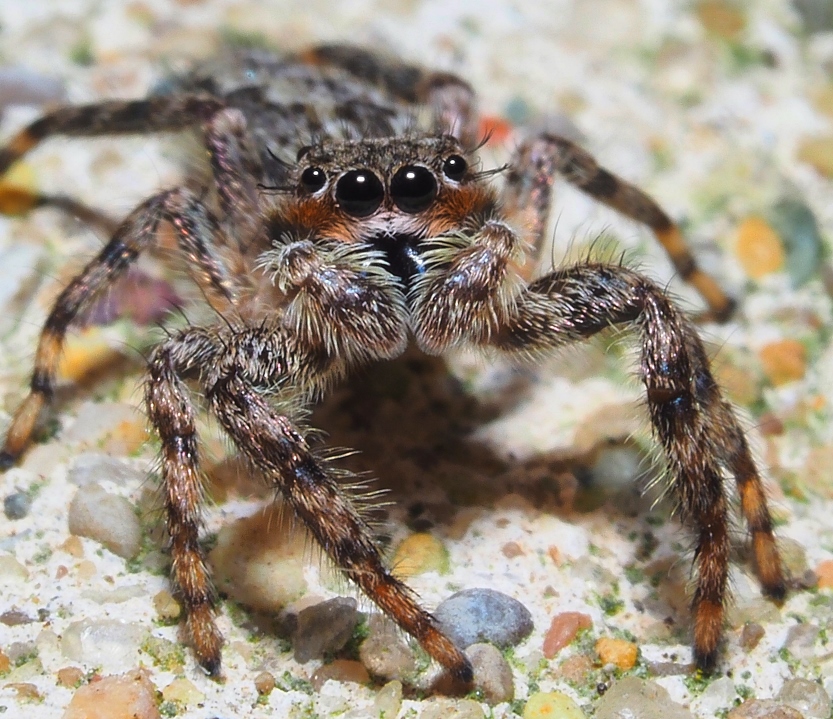

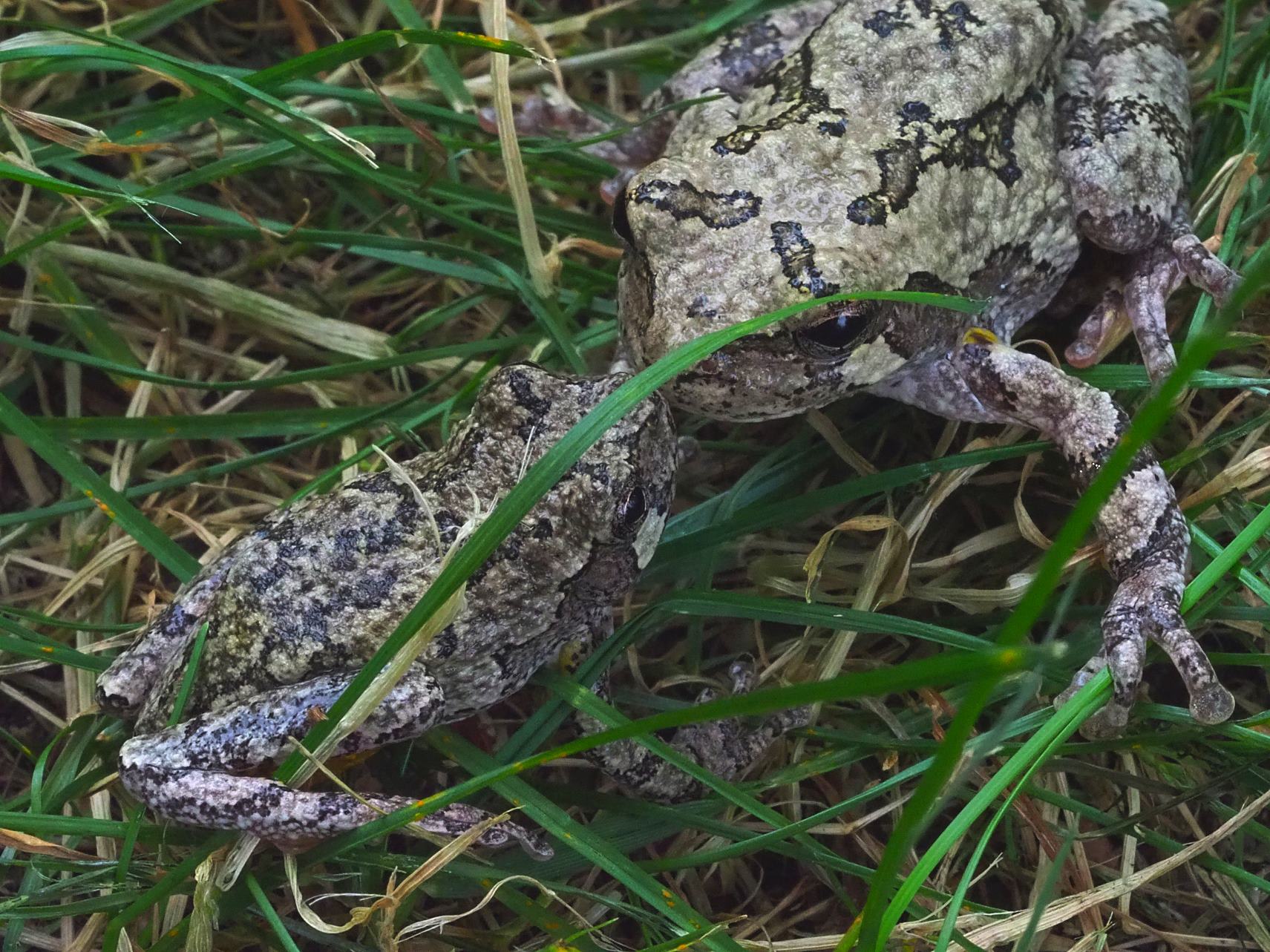
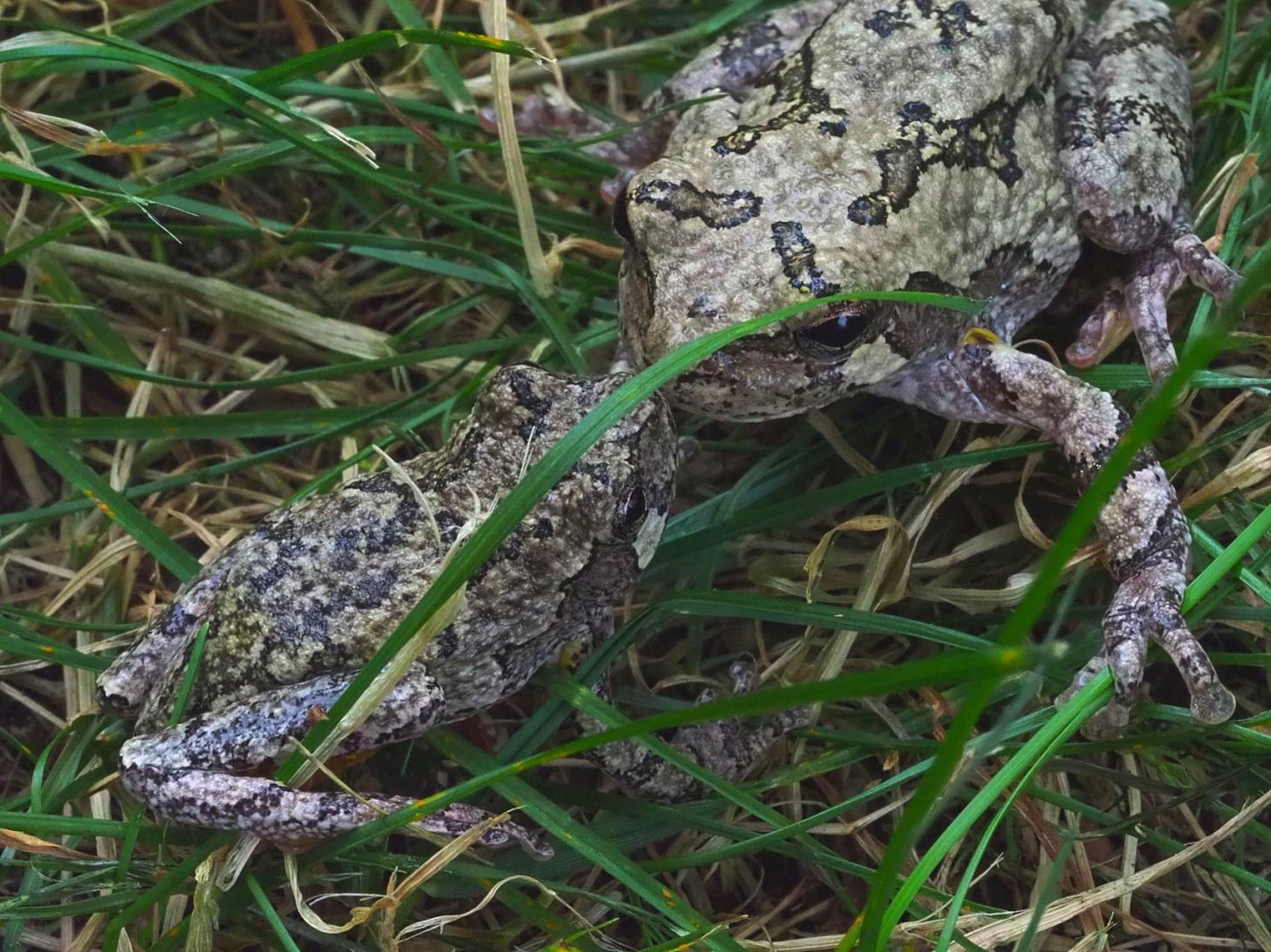
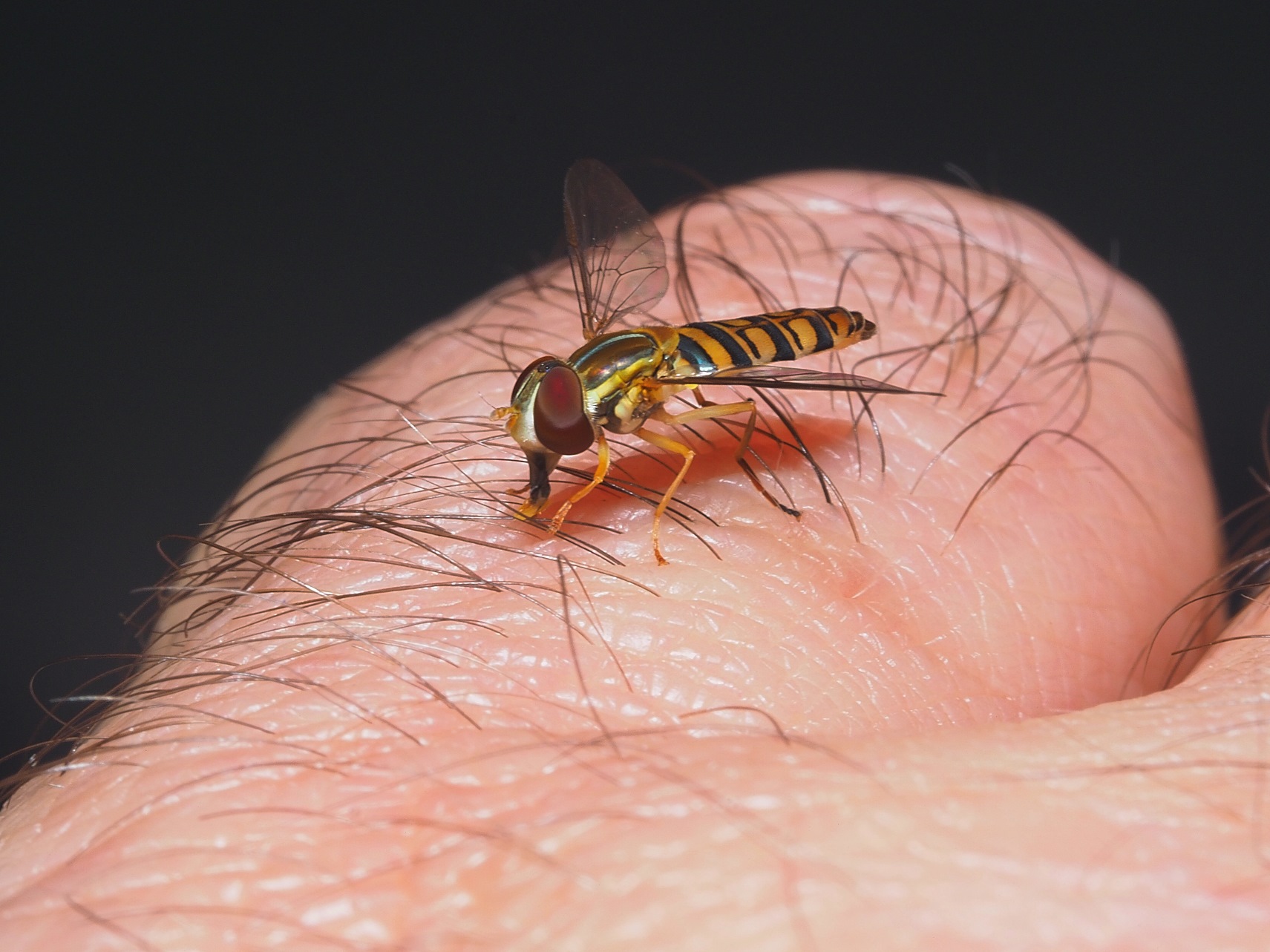


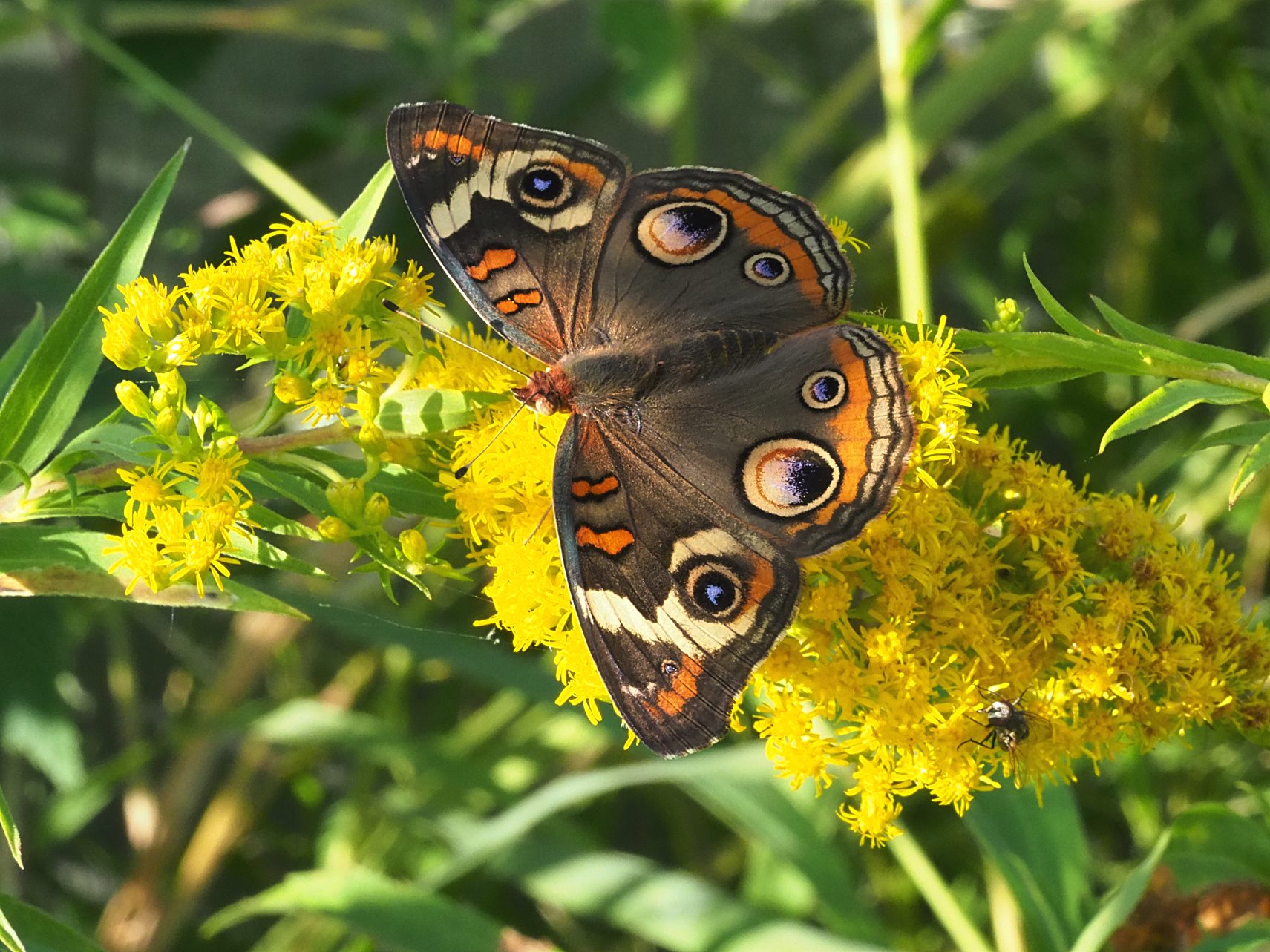
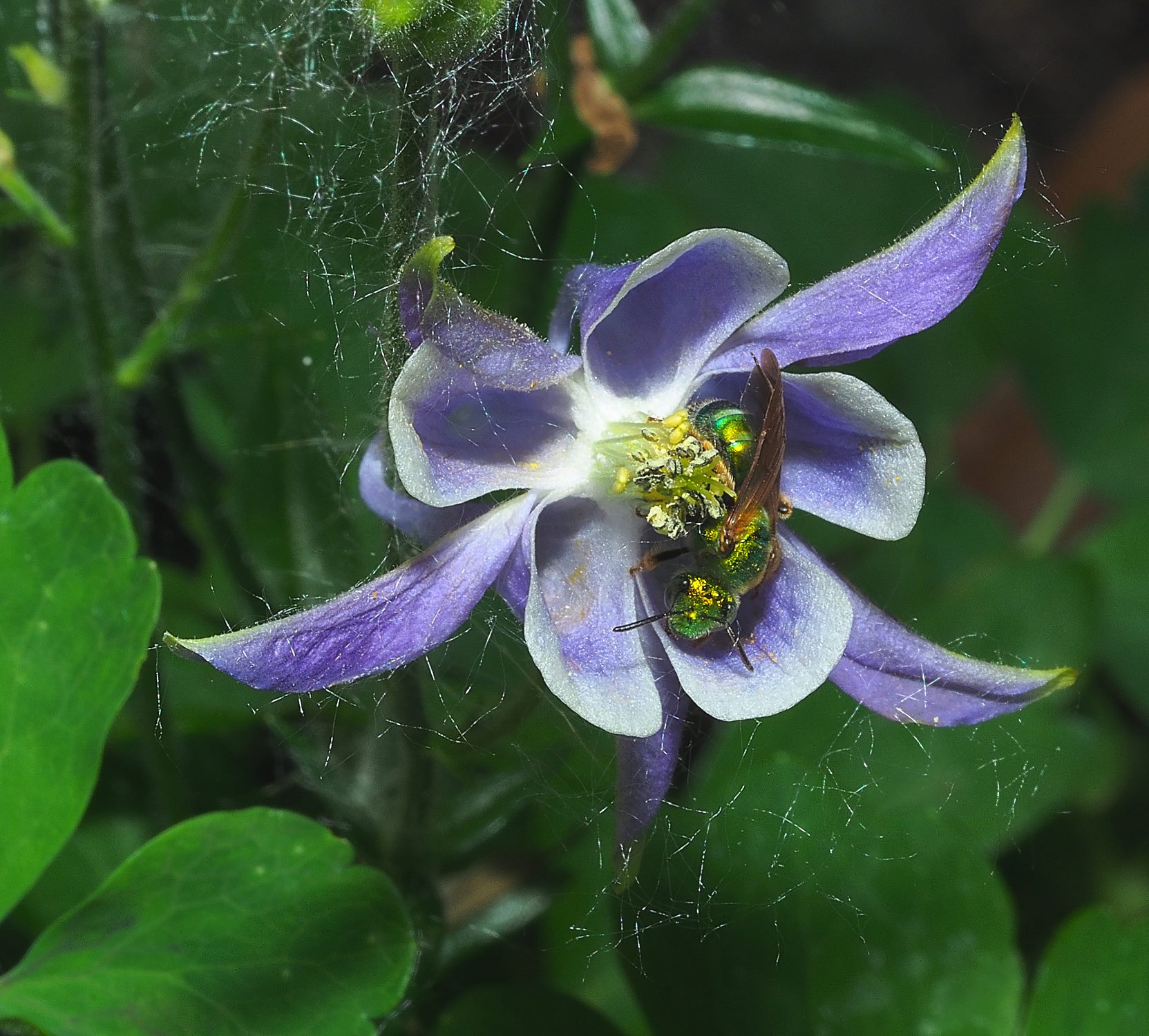
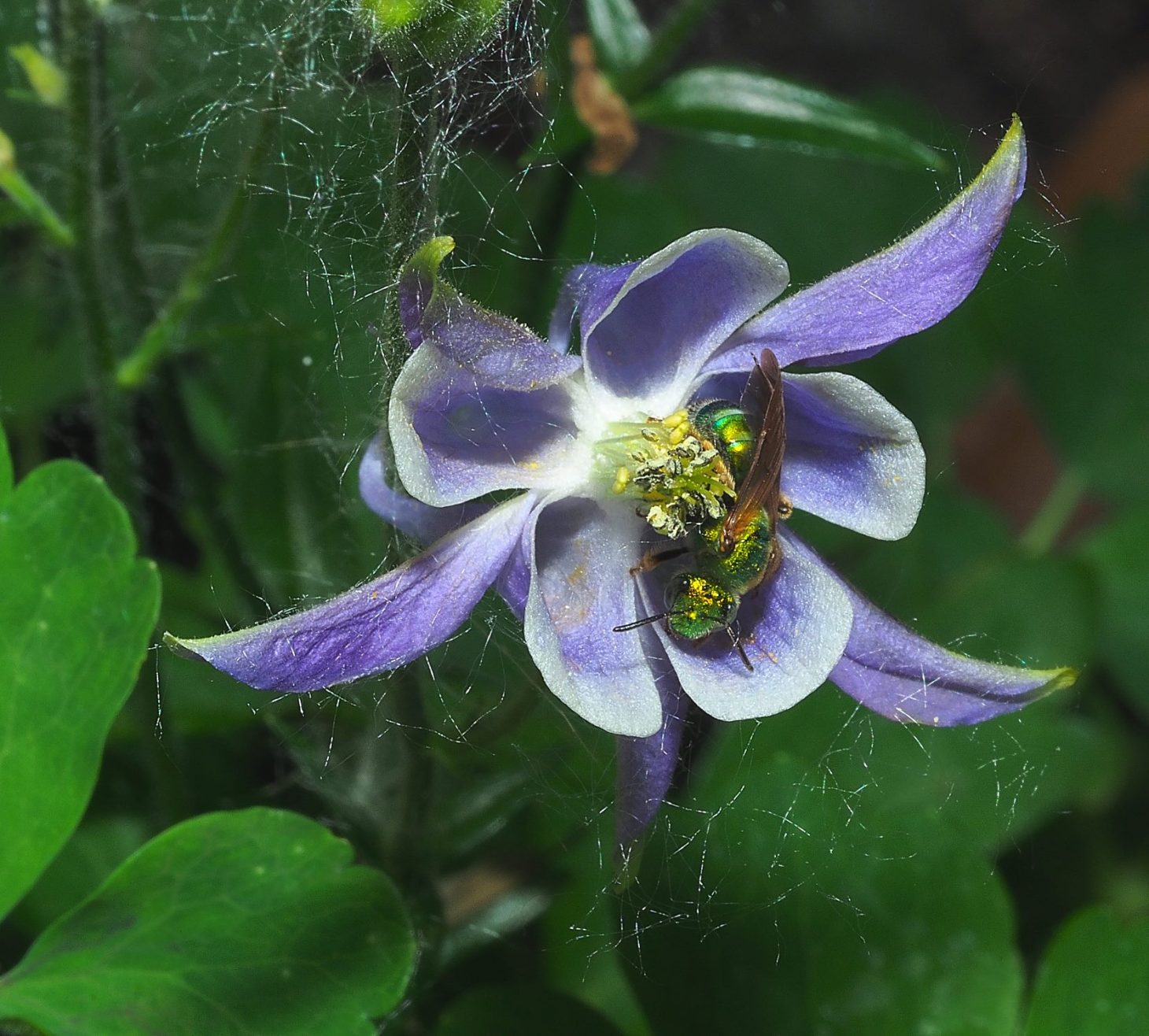


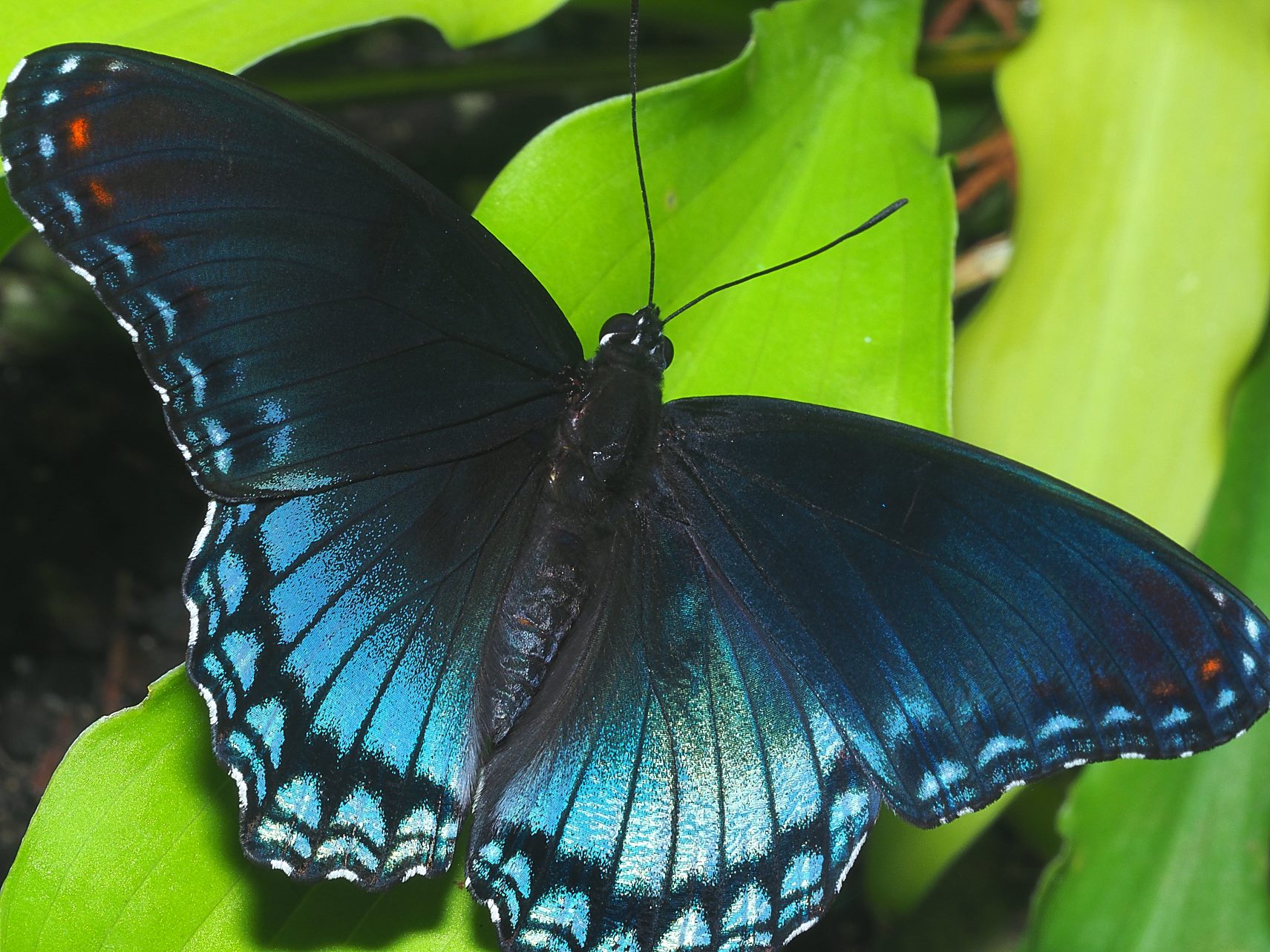
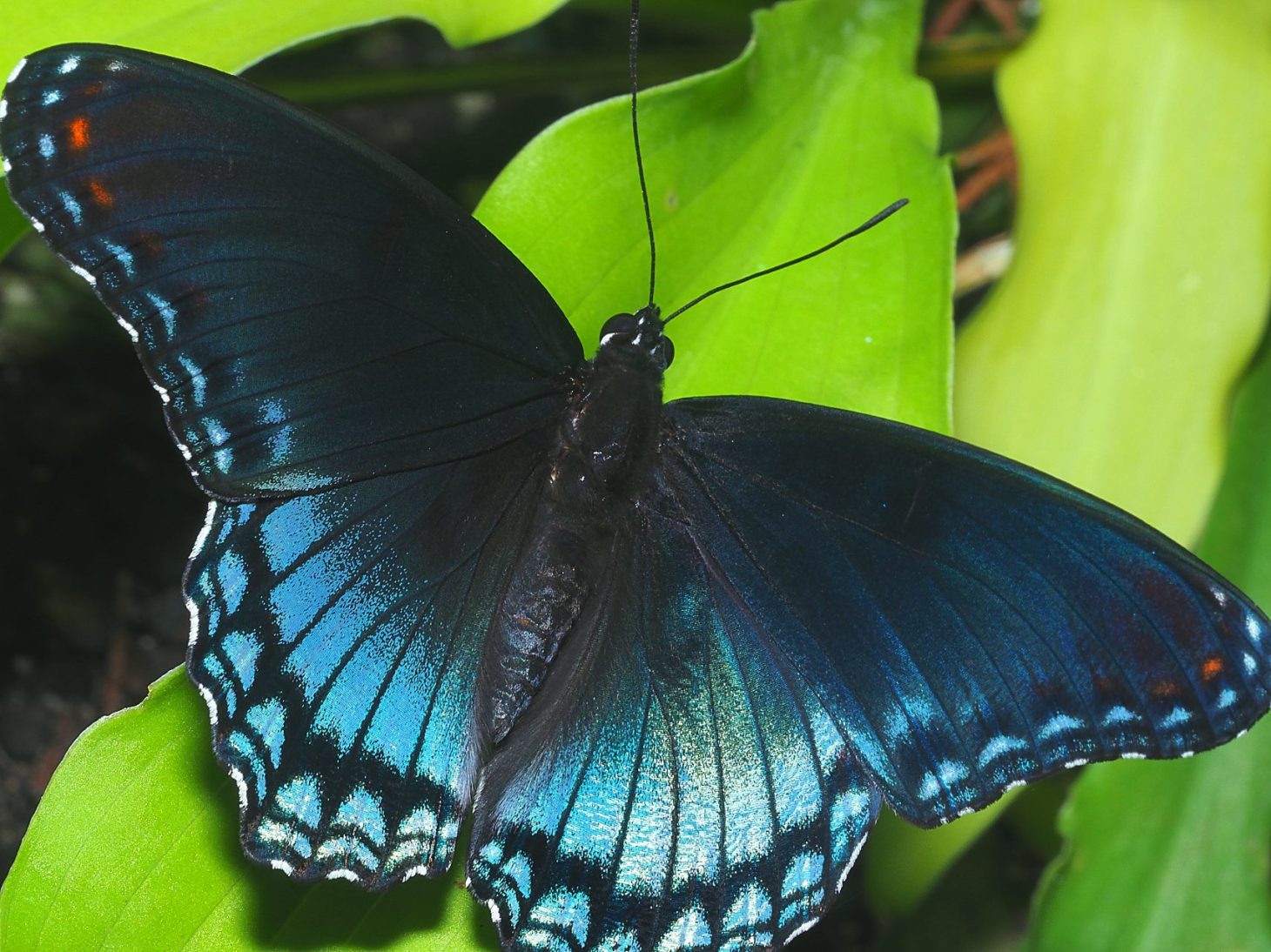


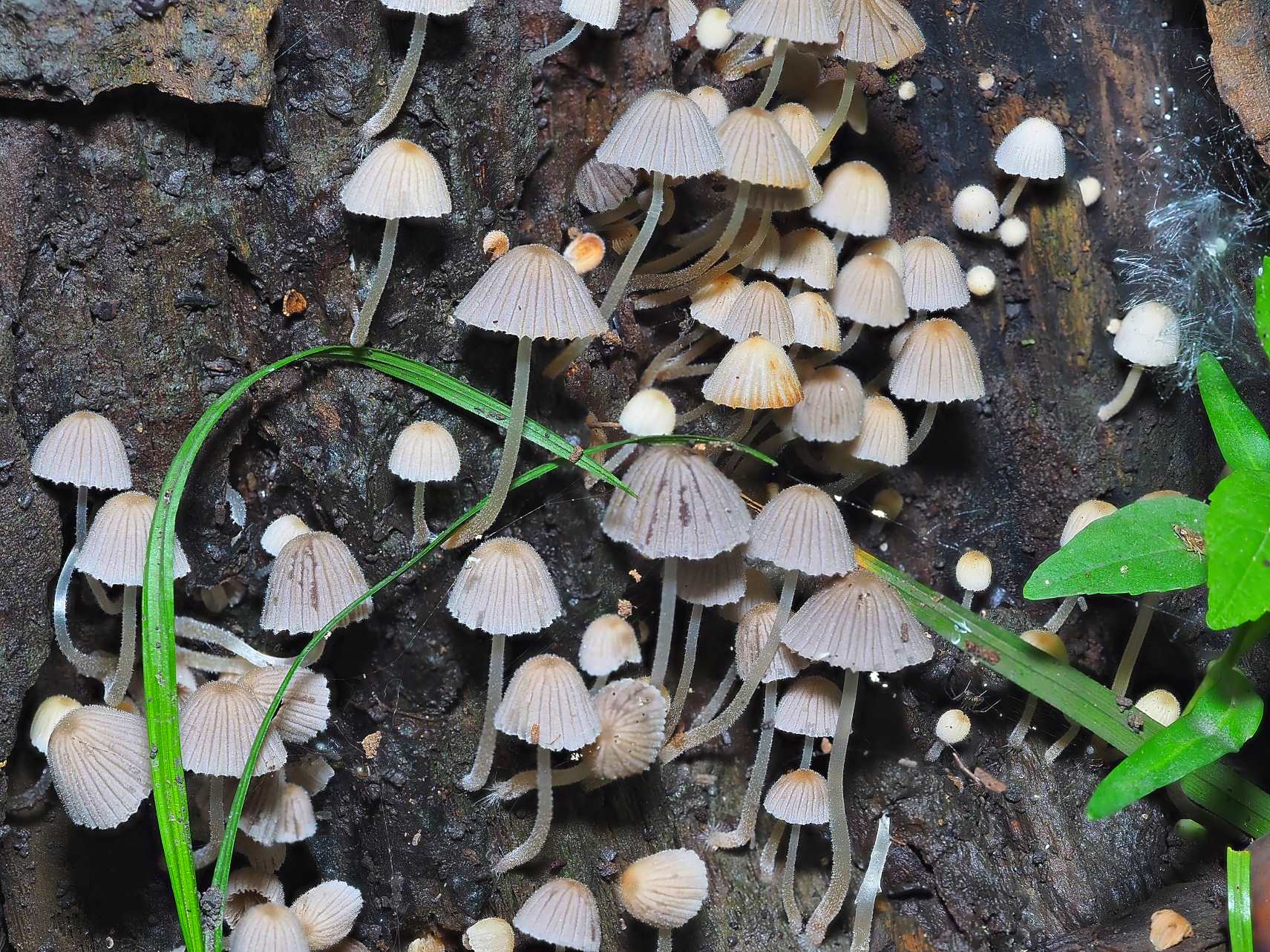



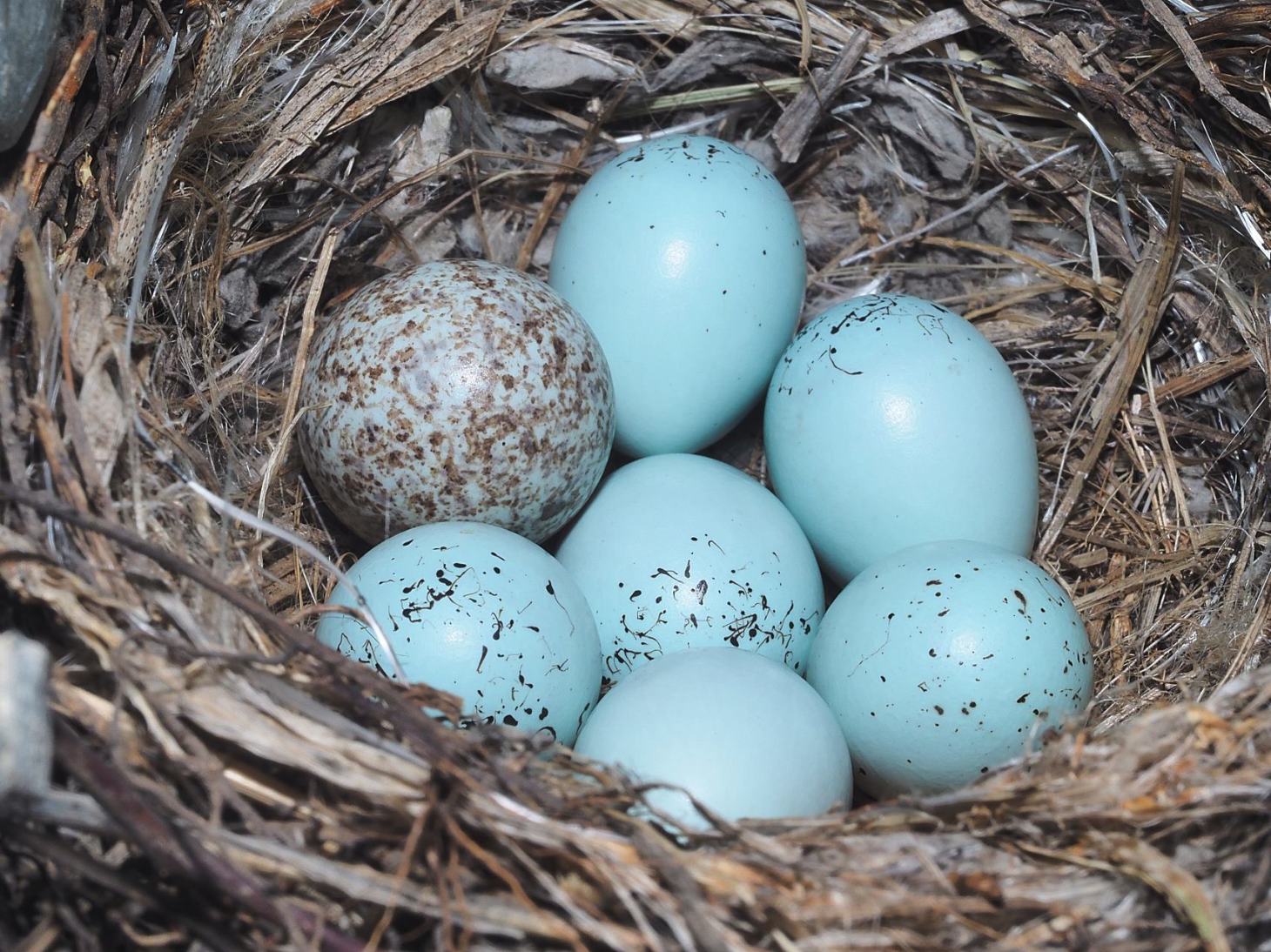







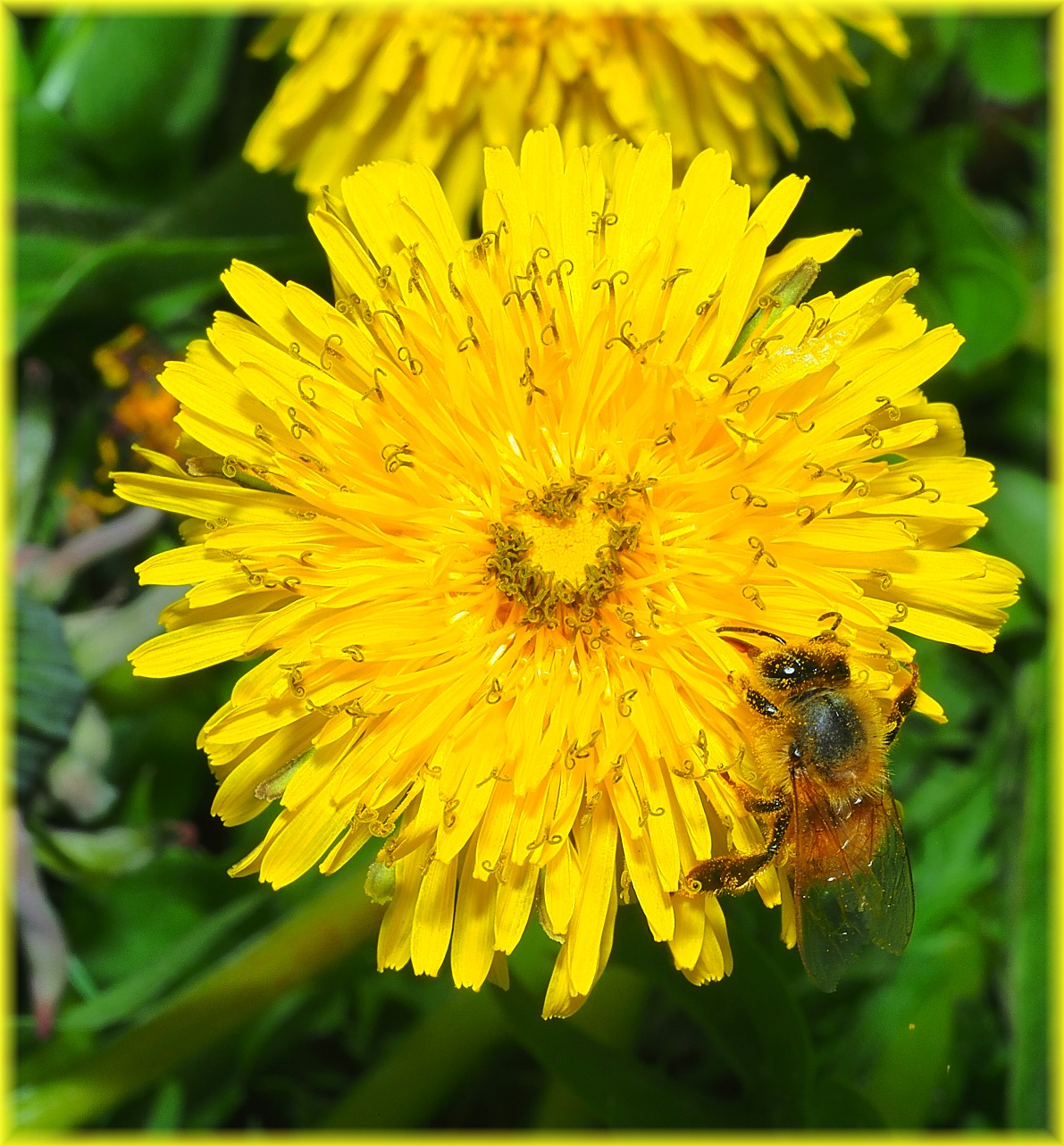


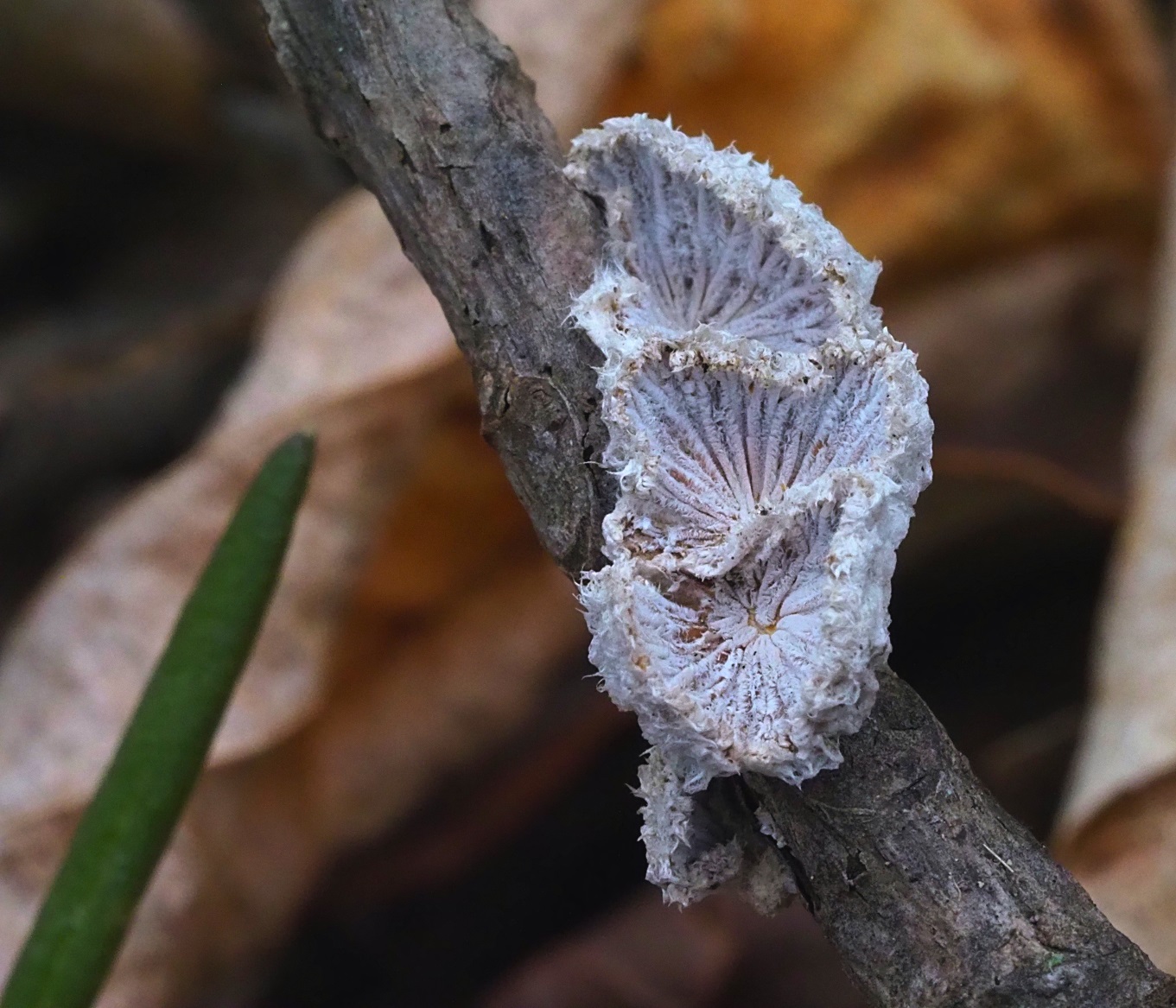

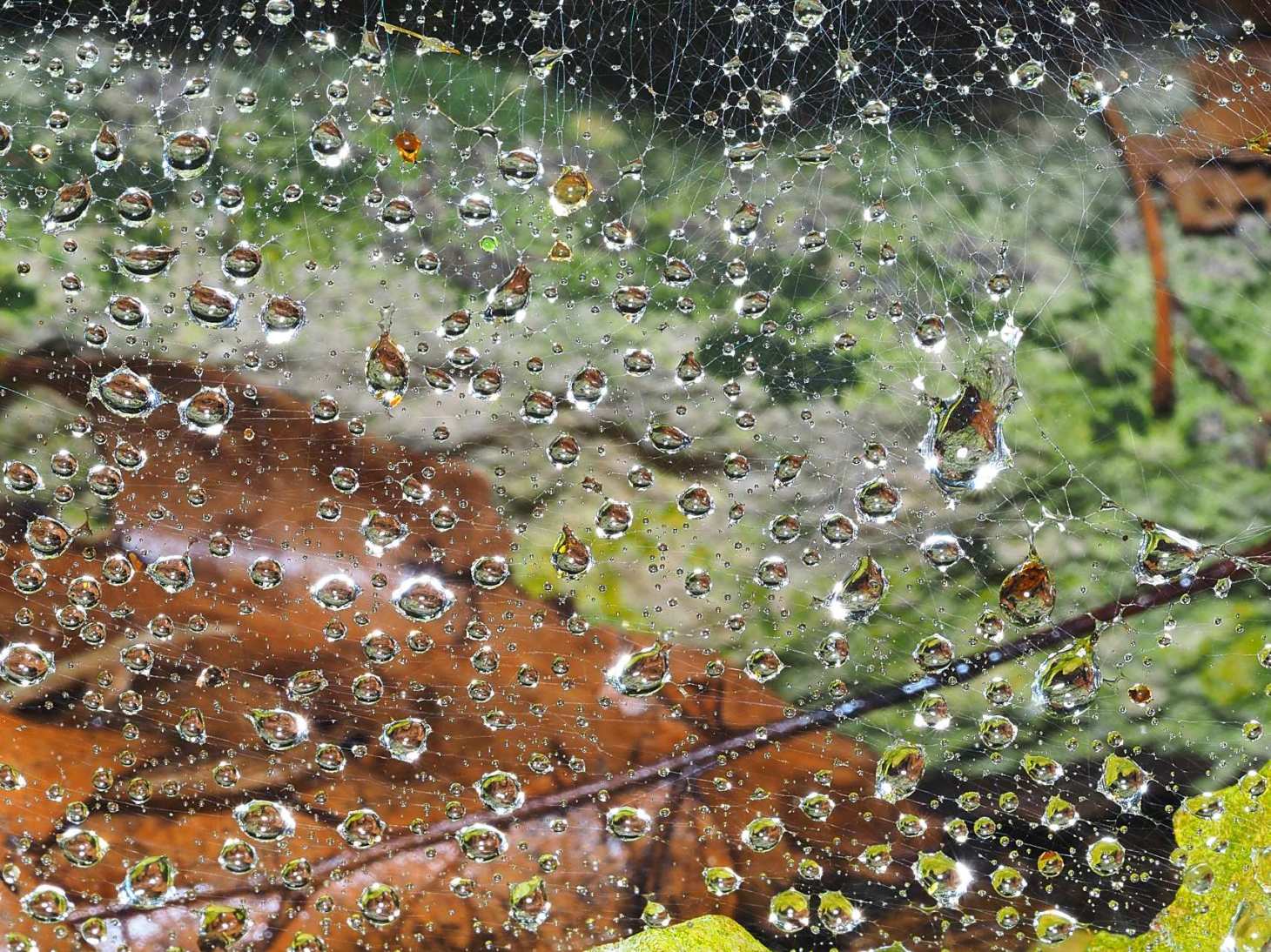

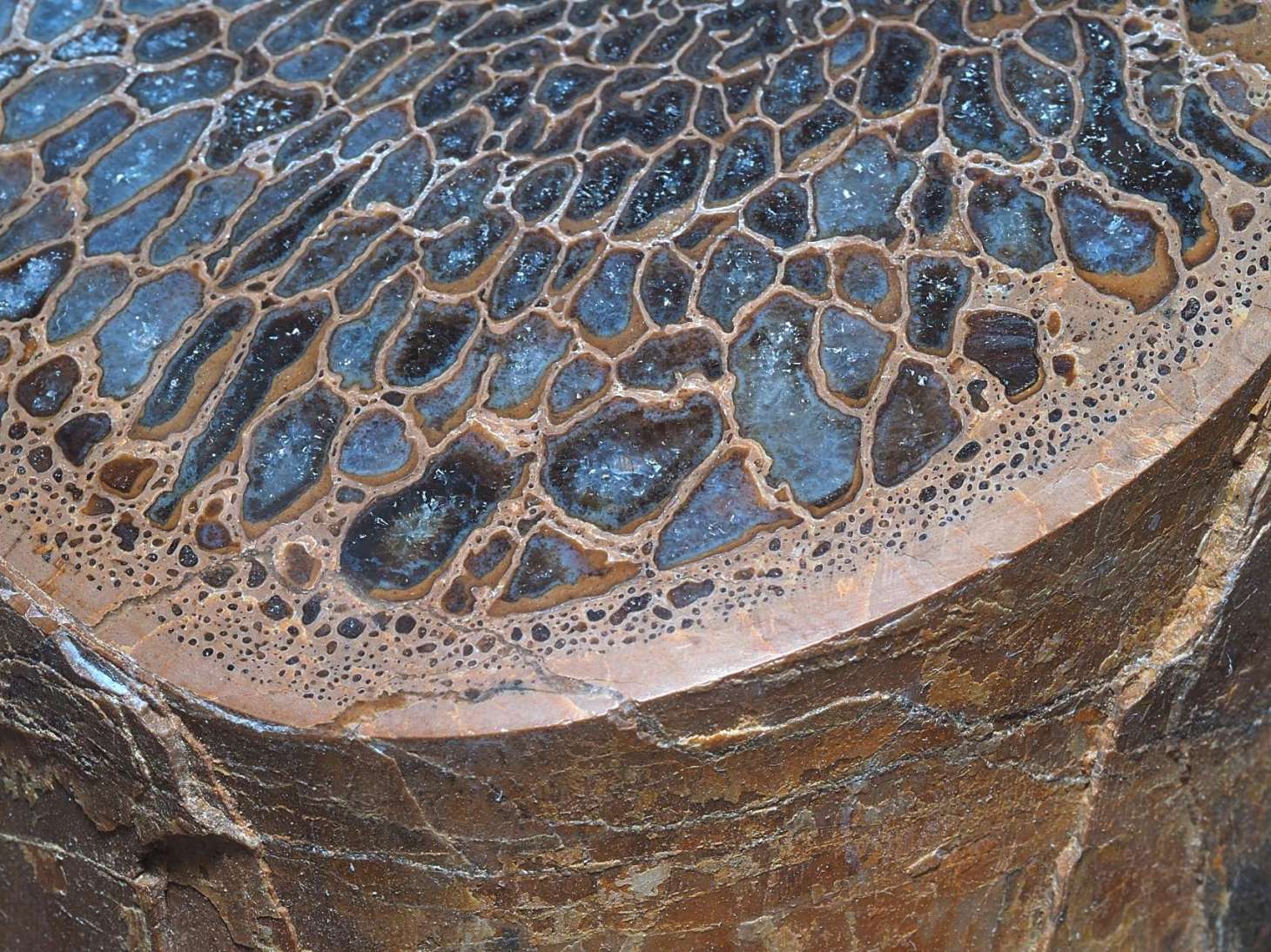


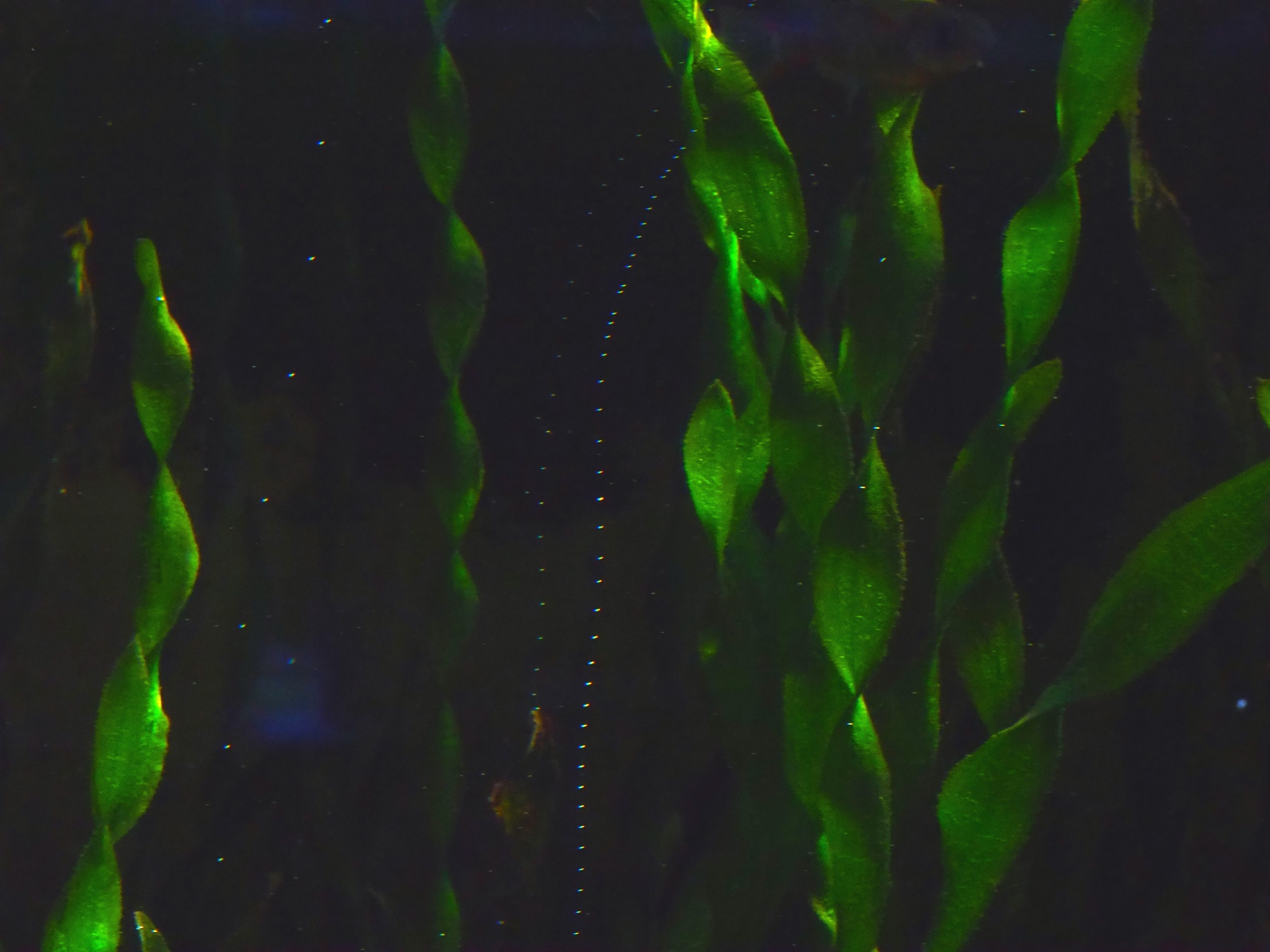






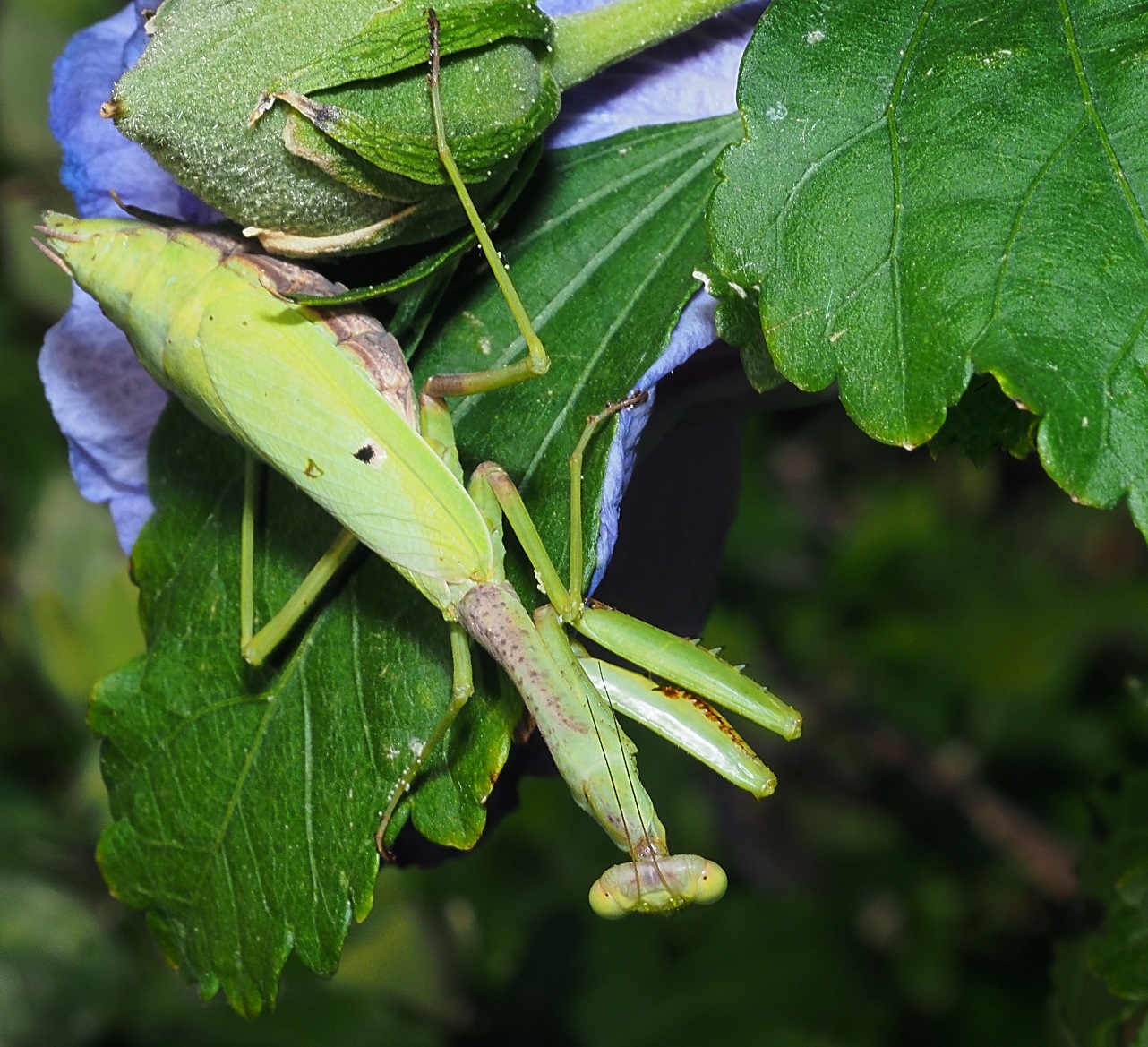
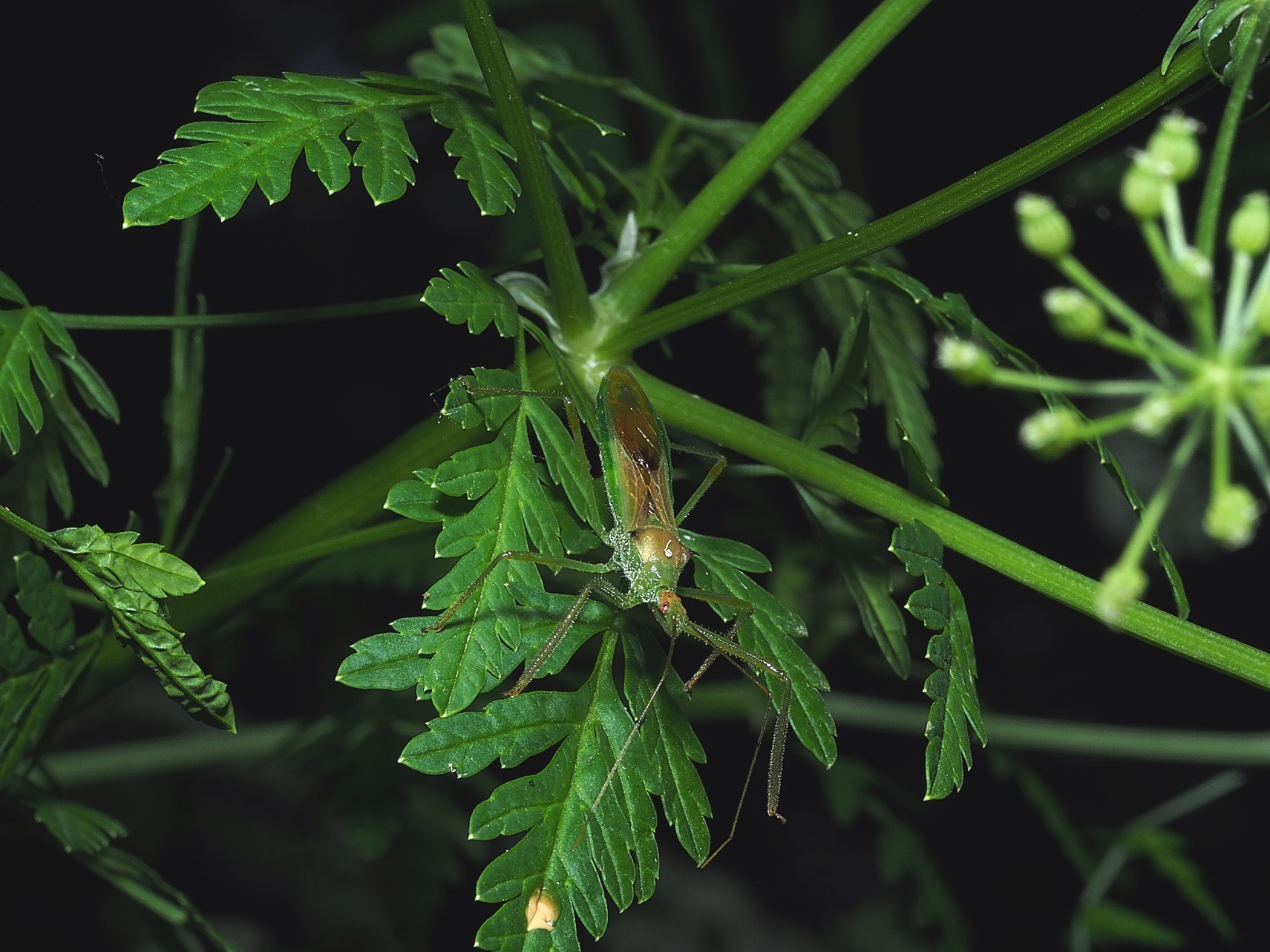





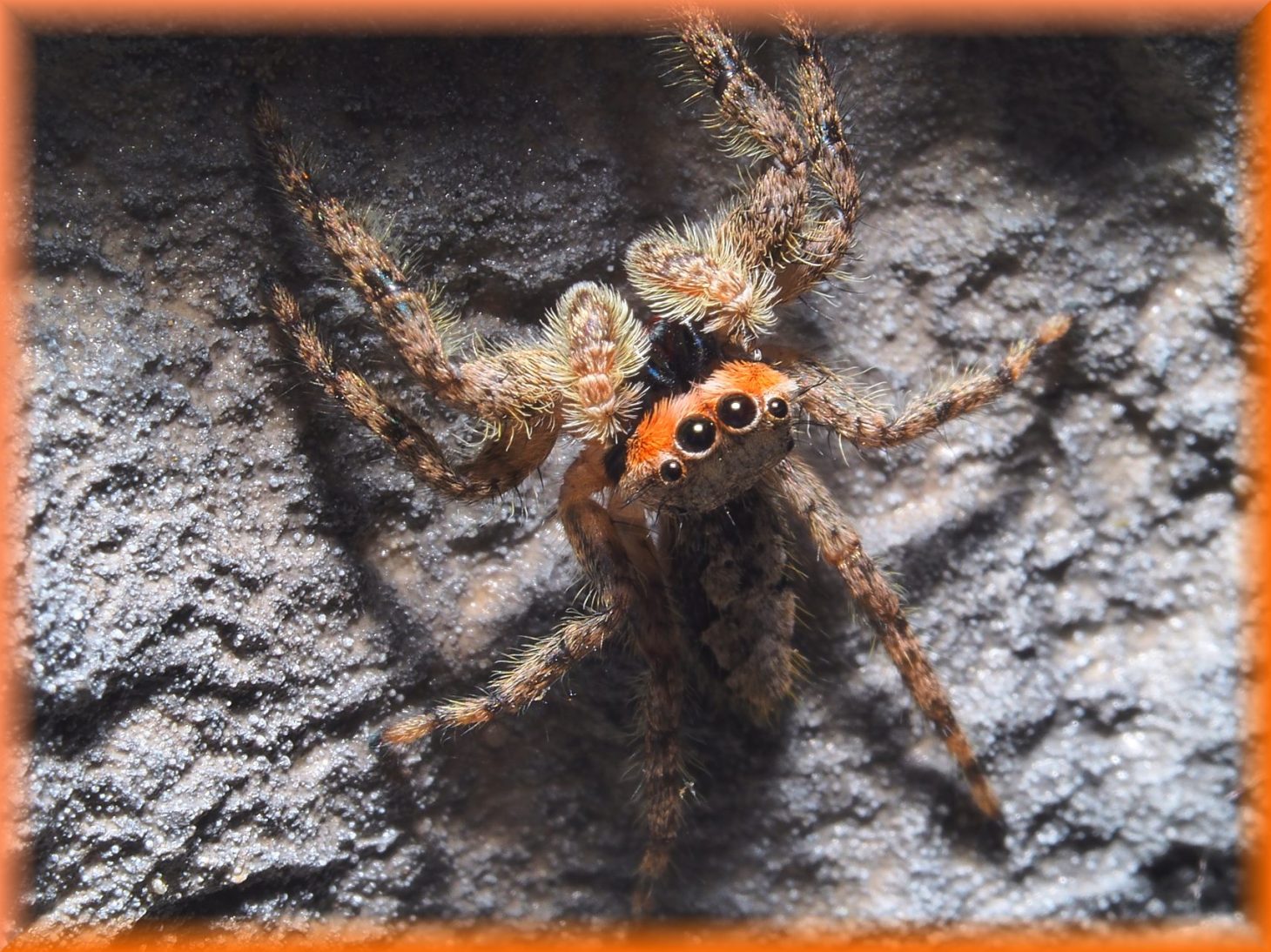


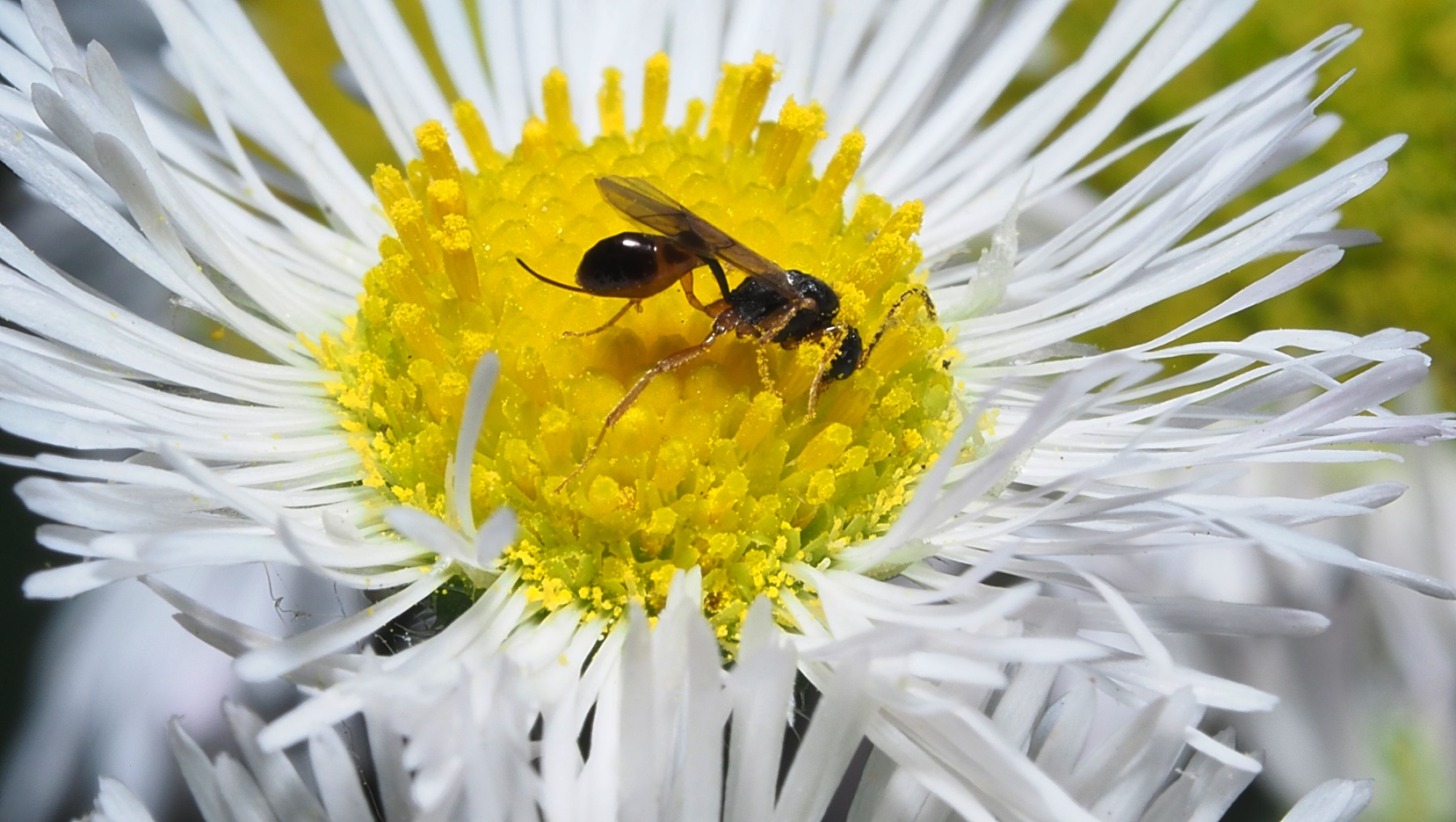
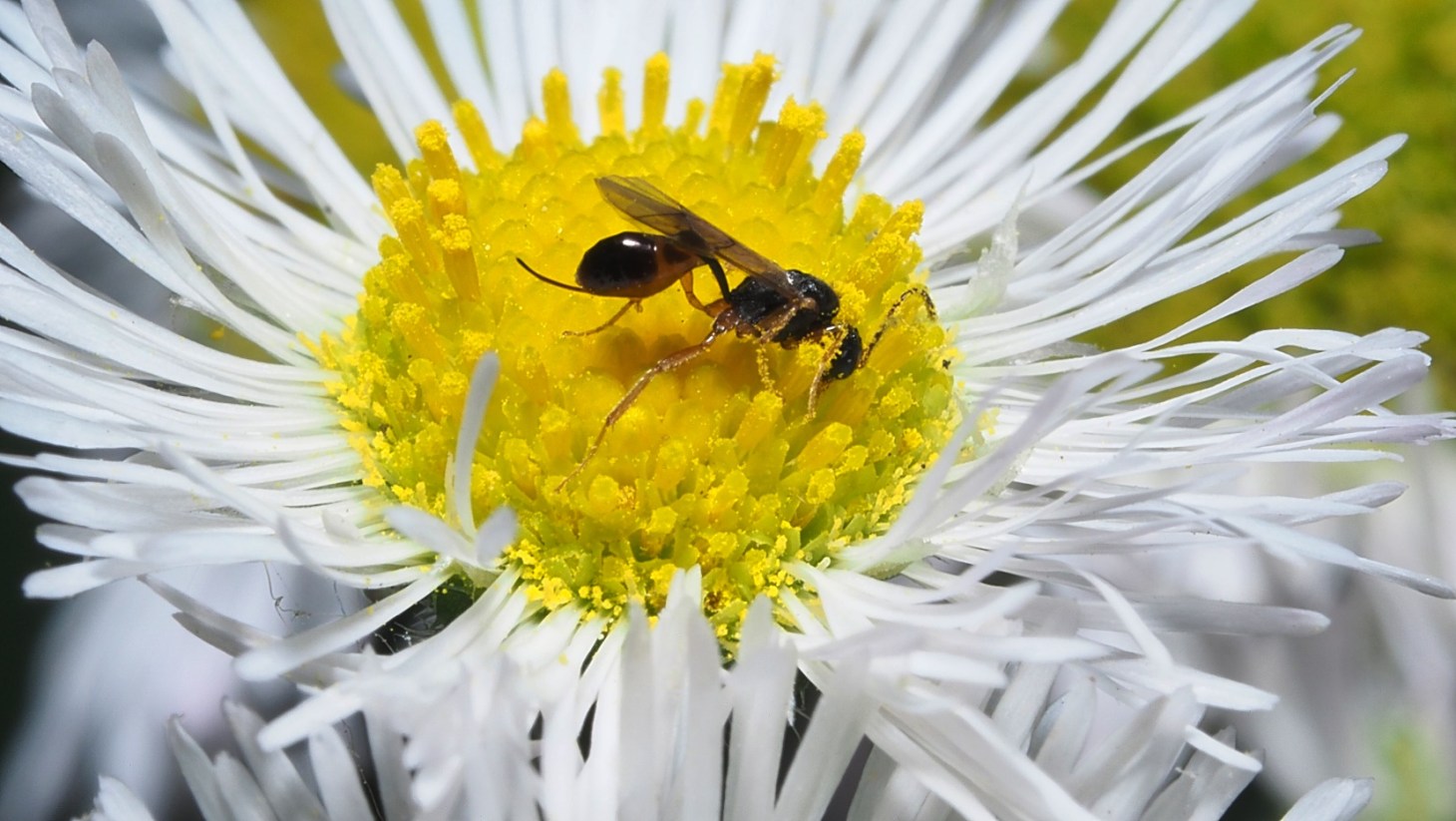




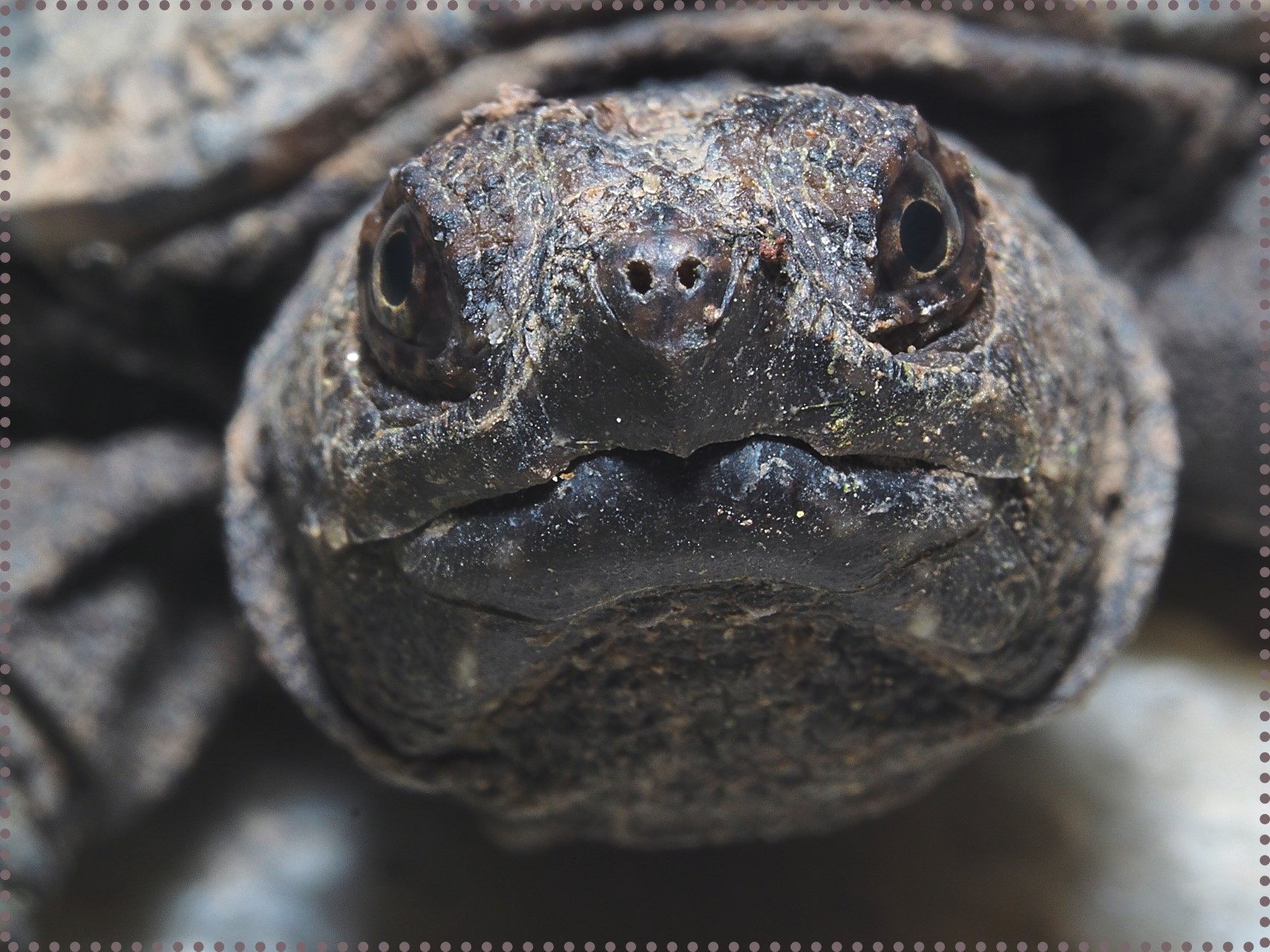
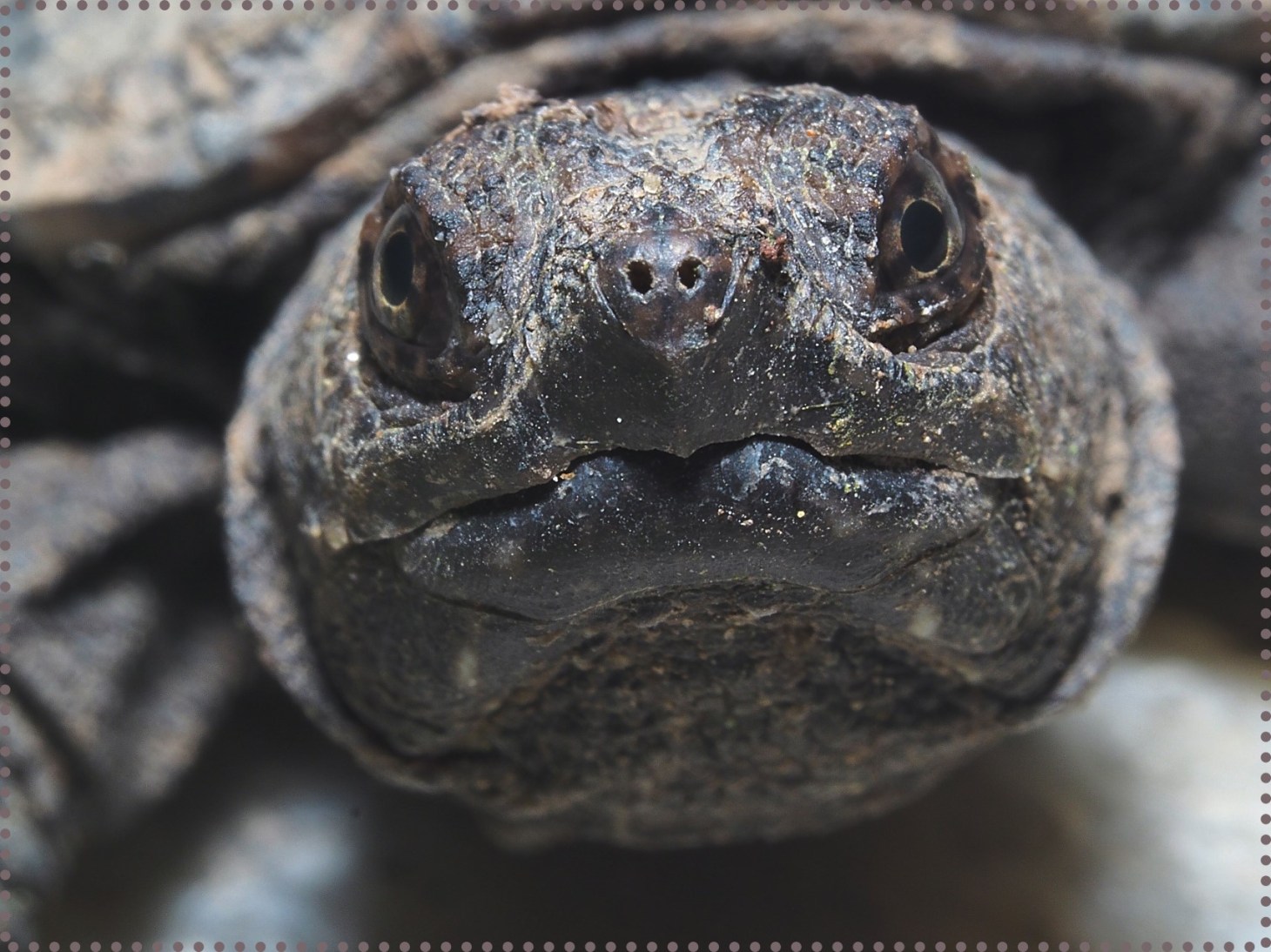





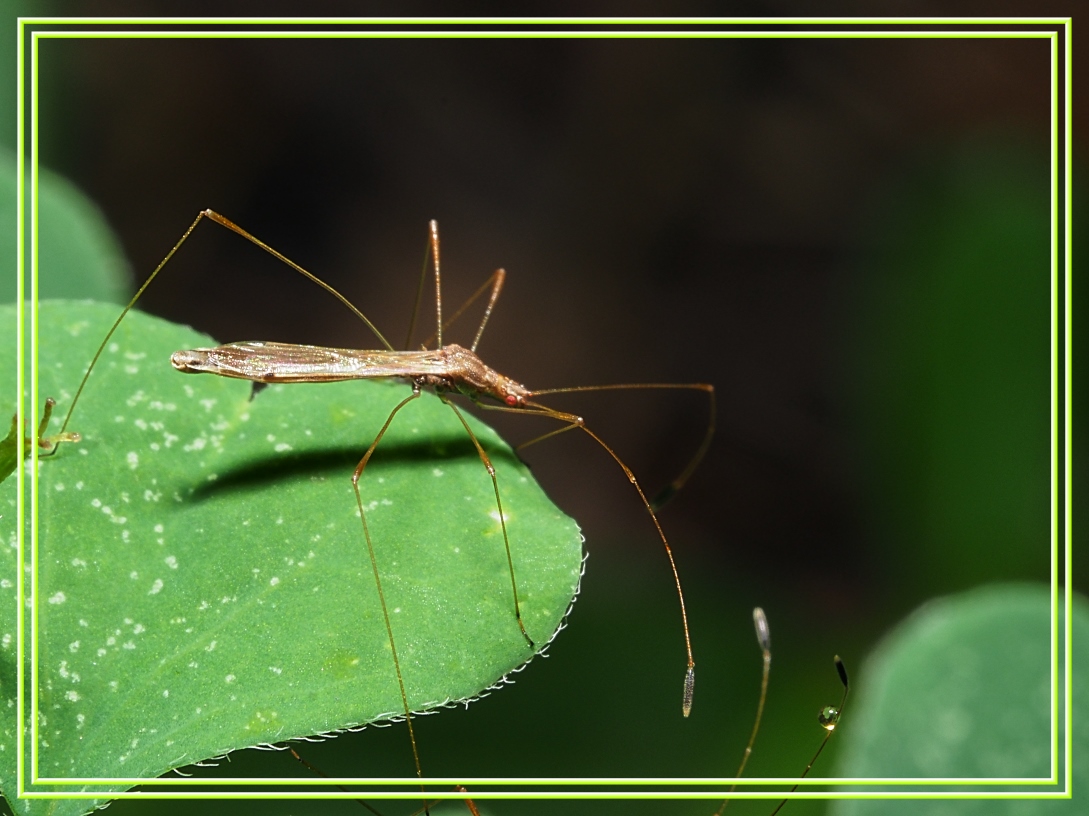
 Tom's Nature-up-close Photography and Mindfulness Blog