Thoughts are, as one has said many times, symbolic representations. The word “butterfly” is not the butterfly. The word “frog” is not the frog. Words are often necessary, but most of us are almost constantly churning with thought after thought, even though these thoughts are just fragmentary symbols. Symbols are tokens for the real thing; they are not the real thing, (be they words or pictorial images in the brain). In our past — in school — we were spoon-fed with words and the symbols within books (as if they were the real thing). We were instructed (for years) to believe in that symbolic/artificial methodology, accepting it as real and true.
A life that habitually clings to one series of symbols after another is, unfortunately, clinging to representations that are (in a big way) superficial. Endlessly clinging to symbols may take away a lot of the true joy, compassion, and true relationship in one’s life. Unfortunately, remaining mostly as symbols and as mental patterns consisting of symbols can tend to make the mind operate in (and “as”) stagnation. Such stagnation consists of sorrow. It is sorrow.
Instead of foolishly trying to escape from this sorrow by means of alcohol, recreational drugs, or expensive vacations, one can likely do much better by not running to outside (purchased) modalities. We can look joyfully just by looking without merely seeing through a mental screen of habitual symbols, labels, and distinctions. “Looking simply” does not require a lot of mental effort, energy, and technique. Since no effort is needed, no time is needed. But we tend to habitually and endlessly employ effort and time. We need not always take time pigeonholing everything with symbolic labels, categorizations, and separate differentiations. Going beyond constant, fragmentary symbolism, and psychological distance is joyous and liberating. In doing so, love is involved… so love then flowers. Words, as rather dead symbols, are protrusions from the past (i.e., from past learned memory). The living present is not of this learned, old past; it is fresh and beyond the old adulteration. Real meditation, without all of the silly techniques and time-oriented methodologies, is the freshness and joy of perception beyond the stale and secondhand.
The word is not the thing. … Photo by Thomas Peace c.2024
We, as human beings, primarily function due to (and from) causes. The process of thinking (per se) involves cause and effect; we usually do things mentally (with a cause or effect in mind or with a series of causes or effects in mind). Animals also act via cause-and-effect parameters. So, in a big way, we are not much different than other animals. Cause is time. When we function with (and “as”) cause, we function in (and “as”) time. Most of us, just as we were taught for many years, remain very time-bound and time-oriented.
Cause and effect often involve — and consist of — a motive or motives. We want to achieve things and get things, just like many animals. Most of us remain in such domains, without ever deeply inquiring what may be beyond. We usually, without question, remain in cause-and-effect parameters without ever mutating beyond such reactions. Can the mind transcend cause/effect parameters, intelligently existing beyond endless motives? This writer says, “Yes!” Then one doesn’t just react in (and “as”) time. Time has its place. It is often necessary. However, merely clinging to it may be rather childish and crass. Thinking, though often very necessary, is imbued with cause and effect attributes; therefore thinking is time (and takes time). Only if we stay limited do we have to exclusively remain in such a domain.
Many are so conditioned to exist as perpetual “achieving” and “getting,” that they would not even consider the possibility of existing beyond such patterns. Most are stuck in grooves, where they habitually remain. Please consider metamorphosing beyond the norm. Wisely ending conditioning may not depend on any concocted (or habitual) series of endless motives.
In the vastness of nature, when walking among the myriad of beautiful plants and animals that are away from human interference and human destruction, is it possible to blend in as a mind that is also away from human interference and human destruction? Can such a mind be empty of the abstractions, ideas, beliefs, labels, and symbols that were poured into it over many years? Such a pure (uncontaminated) mind, empty of its content, empty of all of the second-hand garbage that was poured into it, can then look beyond adulteration and contamination. Such emptiness, then, is all of the living organisms (without merely labeling them, classifying them, pigeonholing them, or recognizing them through learned and preconceived images and patterns). Then, perhaps, there is only the unadulterated perceived… and not the separation between the perceiver and the perceived. Perhaps, in that situation, there is no time and division. Without time and division, real love and joy may flower.
To look superficially through walls involving separation and boundaries… may not be deep perception. The very nature of the isolated center, ego, or so-called controller, automatically creates walls of separation, distance, and boundaries. It’s not “being in the now,” as so many (these days) mechanically parrot and claim they are doing; it is beyond all that bilge. Please look simply and effortlessly… without all of the rubbish, the abstractions, and the learned separations.
This may seem ludicrous at first, but it isn’t. Most of us are heavily conditioned to run from one entertaining experience to another. We will do anything to escape from what we see as our own inner emptiness (i.e., our own inner void and sorrow). We run from one experience to another, like that proverbial donkey that perpetually pursues the carrot dangling from a stick (that is — interestingly enough– attached to the donkey). We were conditioned to do this… and in this conditioning, we remain. We are this conditioning, not something separate from it.
We were not encouraged to refrain from running from inner emptiness. To not run from inner emptiness does not take time. However, most of us, in time and “as time,” continue to run from it. It may be that such effort is a waste of time… which we repeatedly do until we die. It may be largely a waste of time and energy.
When one doesn’t run from emptiness (in and “as” time), a miraculous transformation may happen. Time (then) does not exist in the normal sense and a timeless (non-sequential) bliss and intelligence may flower without a motive or system of effort. The “known” is a sequential, symbolic, robotic series involving experience, recognition, remembrance, and further accumulative experience and repetitive recognition. This stems from the known (i.e., the habitual, reacting, symbolic, past remembrance) and its sequential movement. This “sequential movement” is often necessary, but clinging to it makes the mind mechanical, repetitive, and dull.
Mankind has, for eons, pursued and craved power… power in the form of governing, power involving influence, power in the form of authority, and power in the form of money or possessions. What is this power that man has spent so much effort in acquiring? Control is a significant feature regarding this pursuit of power. Many of us admire the man who we think controls (even if that man has multiple felonies or is a rapist). We are gullible, delusional people. We have always assumed that the controller and the controlled are two separate things. However, are they really separate things psychologically? Are thoughts really controlled by a separate central “controller” that has power? May it be, psychologically, that the controller is the controlled… that the observer is the observed? Could it be that, psychologically, the thinker is not really something separate, whatsoever, from thought/thinking? Could it be that the “thinker” is a projection from the thought/thinking process?
Man has evolved to the point that we can split the atom and do many complicated, amazing things. We have done a lot of fantastic things with energy and its power. However, we always use and manipulate things regarding this power; we are never actually in a direct relationship with the real essence of that power. We live in mental symbols and psychological abstractions, which do not really consist of substantial power whatsoever.
One cannot practice or do anything systematically to bring about or conjure insight. True insight, if you are fortunate, is what always comes uninvited. You cannot “make it happen.”
Insight and intuition are entirely different phenomena. Intuition is the unconscious or semi-conscious ability to create links between (or involving) information. Insight involves — without conscious reasoning — understanding holistically (perhaps beyond the parameters of ordinary sequential time and space).
Although one cannot do anything deliberately and directly to bring about insight, some attributes in one may encourage it to perhaps occur (or set the foundation for it to more likely happen). Being a mind that intelligently perceives things holistically, beyond run-of-the-mill fragmentation, robotic labeling, and accepted separation may be beneficial. Additionally, eating and exercising properly — keeping the body excellent physically — may indirectly be very beneficial. However, there is nothing that one can do to cause it to occur; it is beyond the parameters of time and ordinary causation.
If one is holistically entwined with (and “as”) the whole… truly being at one with the animals, plants, and universal order, then that order may be more inclined to protect and reciprocally care for one. Then real magic may happen (beyond the limited domain of time and space).
We look with (and “as”) the parameters of time and space that we were taught to look at. This might sound strange, but is that all that we must be limited to? Can we look with a depth that goes beyond what was spoon-fed to us? Can we perceive more than what they taught us to perceive? This movement says, “Yes.” But don’t just take my word for it. Explore and find out (with passion). Go beyond their measurements, rules, separations, so-called religions, opinions, organizations, limited teachings, acceptances, beliefs, and stale parameters. But most of you won’t do that. Most will shake their head affirmatively and agree; however, they will not fundamentally change. Unfortunately, most are stuck in orthodoxy, stagnation, and sameness. Most are psychologically afraid to leave the limited and the “known.”
A poem by Stephen Crane:
“Think as I think,” said a man, “Or you are abominably wicked, You are a toad.”
And after I had thought of it, I said: “I will, then, be a toad.”
The Perceiver is the Perceived … Photo by Thomas Peace c.2024
When we were very young, we hadn’t yet learned things about death from society. Then we were full of innocent bliss and we truly felt eternal. Then we were not chock full of knowledge and ideas. We just timelessly looked and marveled.
As adults, most of us have been spoon-fed by a psychologically disturbed society. Most of us no longer feel eternal and timelessly blissful but, rather, feel frightened and insecure. We are afraid of the death that they told us about… about the death we had learned about. We, as adults, exist in a very linear, second-hand, and antiquated fashion. Even with our so-called “correct religious beliefs”, we fear death; beliefs often stem from fear. We fret about a lot of illusory things. It is disturbing to realize this, but it is even more disturbing not to realize it.
To be mentally youthful and untouched by the cadaverous ideas of others is a great order and intelligence.
Most of us look with (and “as”) separation. Within almost each of us, there psychologically exists what we assume to be a “central I” that assumes that it is in control of its thoughts (from a separative distance). This so-called “central I” additionally fundamentally sees things (as if from a point) with a radius between it and the external world.
Love does not readily occur in a mind that is fundamentally based on separation. Psychologically, the perceiver is not separate from the perceived. Separation is often reinforced by fragmentation, conflict, and non-holistic perceiving. A wise mind of profound intelligence may transcend such fragmentary, separative, and divisive psychological behaviors. Such a mind is not fundamentally stuck in conditioned disconnection and illusory partition.
In previous posts, i’ve mentioned existing in effortlessness. Effortlessness is not some lazy psychological state that causes one to be lackadaisical throughout the day. It is not a state of mind that causes one to lay around listlessly throughout the day.
Most of us habitually engage in (and “as”) the effort of “thinking” throughout the day. We are so ingrained in the effort of “thinking” that we hardly or rarely exist without it. We mechanically engage in (and “as”) thinking with constant effort. This “thinking” involves so-called effort by a supposed central, controlling ego. Habitual “thinking” creates the habitual “thinker.” There is a deep perception, however, that does not depend on the habitual effort of thinking. Such perception is not stagnant laziness; on the contrary, it is tremendous energy. This energy acts without dependence on any habitual effort that a limited ego reacts as. In fact, the limited ego is devoid of this energy… and such an ego is often trapped in (and “as”) a series of reactions resulting from habitual effort. This habitual effort was hammered into one (by others in the past) and on this one depends. It is the result of an imitative, secondhand process; it is — itself — an imitative, secondhand process. Imitative, secondhand processes consist of absorbed psychological time and are not true liberation/freedom.
Deep perception is beyond the secondhand. It involves a wholeness that acts outside of the fragmentary effort of an isolated ego. An isolated ego is, itself, secondhand and is the result of stale, fragmentary, effort. The effort of a secondhand ego involves repetitive, habitual psychological time. Wisely existing beyond such effort does not require more time.
Long Legged Attraction … Photo by Thomas Peace c.2024
The root of the word “mediocre” means halfway… like going halfway to a treasure or halfway up the mountain. Many people in society, it seems, tend to not care enough about profound, important, and penetrating things. Many prefer to look superficially and prefer to remain satisfied with the superficial. Caring to go deeper is not a one-dimensional thing. Caring to go deeper is multidimensional (and perhaps beyond ordinary dimensions). If you truly care to go deeper, you also naturally care for all human beings. Additionally, you care for the whole of life: the trees, the plants, the animals, and all living things.
A mind stuck in the superficial remains content with superficial things. This superficiality is fragmented, limited, divisive, and circumscribed. I often get complimented for my pictures but not for the written content. I am polite and thank those who compliment me but i wonder about how they perceive in this world. (If Einstein was still around and he gave a superb lecture, would it be prudent for one of the listeners to solely compliment him on the color of his tie?) Society (and its so-called educational systems) have succeeded in turning out a lot of robotic people who go through the motions of being alive, yet (unfortunately) are not fully alive.
We can exist in an easy so-called life and do as we were told, exist as we were instructed, while we believe in what was hammered into us. To question everything intelligently, however, is not easy. To go beyond mediocrity and a lemming existence is not easy. To go very deeply is not easy. To look beyond the stale curtain (and the provided beliefs, isolated boundaries, and words) is not easy. It may be that, unlike what society had taught you, you are not some separate, little entity that needs to succeed apart from all others; it may be that the whole of life (including all living things) is what you are (and not something separate). In true silence and emptiness… the whole is.
We are all aware of the bloodshed and fighting between the Palestinians and the Israelis. Then there’s Russia and Ukraine, as well as other wars and conflicts taking place worldwide. The mass shootings in America and other areas also come to mind. We human beings do not learn from our mistakes, it seems. We keep on contributing to war and violence.
We need to get to the root of the problem. If getting to the root of the problem makes us feel uncomfortable and annoyed, it doesn’t matter. We need to drop our separative stances (that contribute significantly to why these terrible problems exist). More wars have been fought in the name of religion than for any other reason. That is one big reason why i do not belong to any organized religion. Additionally, i prefer to consider myself to be a global citizen, not just someone who belongs to one country. I’ve lived in various countries during my life. Countries are — whether we like it or not — manmade constructs that are an extension of the divisive tribalism of the past. We are all like the fingers of a hand. The index finger may seem separate from the middle or ring finger but it isn’t. We are all of one whole. Kill another and you are killing yourself.
This outward separation and conflict in the world is a protrusion from the inner separation and conflict within the minds of most of us. This internal conflict must end for the vast external conflict and violence to end. Many people cling to what seems to be “easy security,” by belonging to old, manmade structures; however, in actuality, these very structures are the antithesis of real security and are divisive extensions of the primitive past. This is a very serious thing and anyone who doesn’t want to be bothered is turning his or her back on immense order and goodness. Please be responsible.
Most people look at inner psychological fears with separation (from a distance). However, this distance is illusory; such distance involves time and perpetuates fear. All fears, to exist, depend upon thoughts and time. They are often about what will happen or what — according to the mind — could happen. This projecting about the future involves (and is) psychological time. Of course, there are some natural and necessary fears, like when a big shark is seen in the water where one is swimming. That is when fear is prudent and natural. However, most of us have many fears that are not so prudent.
With many psychological fears — as what often happens — what purports to be separate from fears, supposedly “having them,” then looks for ways to go beyond the fears. This wanting to go beyond the fears involves distance and time. As we said, the fears themselves are the result of time. This may be a mindless circle — that many are caught in — that prevents clear understanding and wise change. A wise mind may perceive that fears are not separate from what it (partially) is. Such a wise mind may also see that there is nothing truly separate from the fears that, in a possessing kind of way, has them. Inventing or imagining something separate from them (to get rid of them) creates unnecessary conflict and friction. Conflict and friction depend upon time (and waste energy).
A mind that is largely beyond psychological fears (and needless internal separation and friction)… is a marvelous thing.
I wrote about this to someone who commented regarding one of my posts a short while ago. Much of my reply is being reiterated here.
We all go through myriads of experiences throughout life. However, most of us do not ponder about the intrinsic essence of “experience” nor about what the implications may entail. Most of us cling to one experience after another. Experience is often recognizing things (i.e., re-cognizing things based on past memory and past accumulation); and the experiencer is not separate from the experience. Experiences, same as with thoughts, are always limited. Experiencing is often very necessary and even beautiful (at times); however endlessly psychologically depending on experiences may be rather limited and childish. Can intelligence sometimes go beyond experience and not always cling to the apron-strings of it? I say, “Yes.” However, there has to be a balance. ”Avoiding experience habitually” can turn out to be neurotic and childish. We often take direct experience to be different than thought/thinking… while, for most of us, thoughts — and the recognitions stemming from stored thoughts — are there (involved) as things are experienced. We often perceive through the screen of thinking (while thinking that we are not thinking).
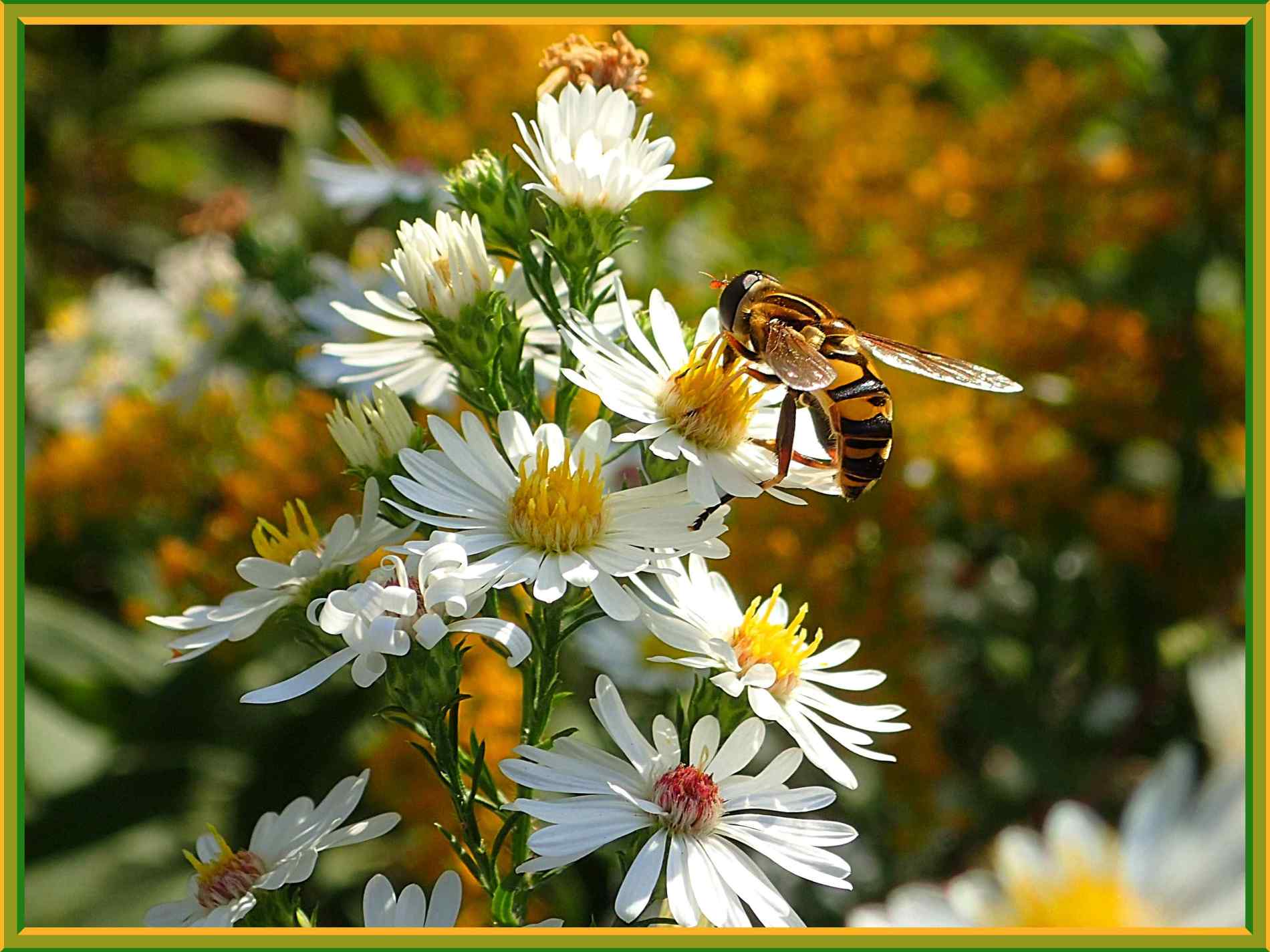
Bumble Bee and Blossoms … Photo by Thomas Peace c.2024
I was replying to someone who commented on one of my posts recently, that control (by a psychological center) is largely an illusion. However, we are such egoists that most of us can’t fathom what existing without control entails. Not long ago, i watched a TED Talk video on how one’s gut bacteria may possibly determine a lot of what constitutes one’s personality and outlook about others. There is a complex nerve network (i.e., the gut-microbiota-brain axis) between the gut and the brain. It’s a two-way street, but 80% of the messages go from the gut to the brain (and not vice versa). More information passes between your brain and your gut than any other body system. In fact, there are more nerve cells in your gut than anywhere else in the body outside of the brain. Gut microbes produce or help produce many of the chemical neurotransmitters that convey messages between your gut and brain. They also produce other chemicals that can affect your brain through your bloodstream. Bacteria produce thousands of bioactive compounds that affect brain function and neurotransmission; these can determine mood and, for instance, whether depression occurs significantly or not. Eating lousy food really turns us into people with psychological problems. Intelligence eats correctly and (hopefully) perceives and thinks correctly.
Eating many whole, prebiotic foods (like beans, wild blueberries, greens, onions, garlic, soy products, nuts, and foods high in fiber) is recommended; avoid eating fragmented, sugar-oriented foods. Probiotic foods like yogurt (with active cultures) are full of good bacteria already. Eat intelligently and (hopefully) perceive and think intelligently.
Fungal (Mushroom) Mycelium, the underground part of mushrooms. These connect to plants and trees and exchange nutrients and information with them. … Photo by Thomas Peace c.2024
Can real, psychological quietness be “made” to happen by a learned psychological image of a central controller (that is neither central nor a true controller)? Is such a “made” quietness actually phony, because it was concocted by a conditioned psychological process that is — in itself — erroneous (and not a legitimate controller)? A fallacious process is not likely to produce a very orderly (profound) psychological result. To psychologically die to what is false is easy if a real, living passion for truth is there, and if real courage, joy, and intelligence are also factors. True quietness may occur — naturally and without effort — in a mind that is orderly, perceiving without much conditioning and contamination by a manipulating society.
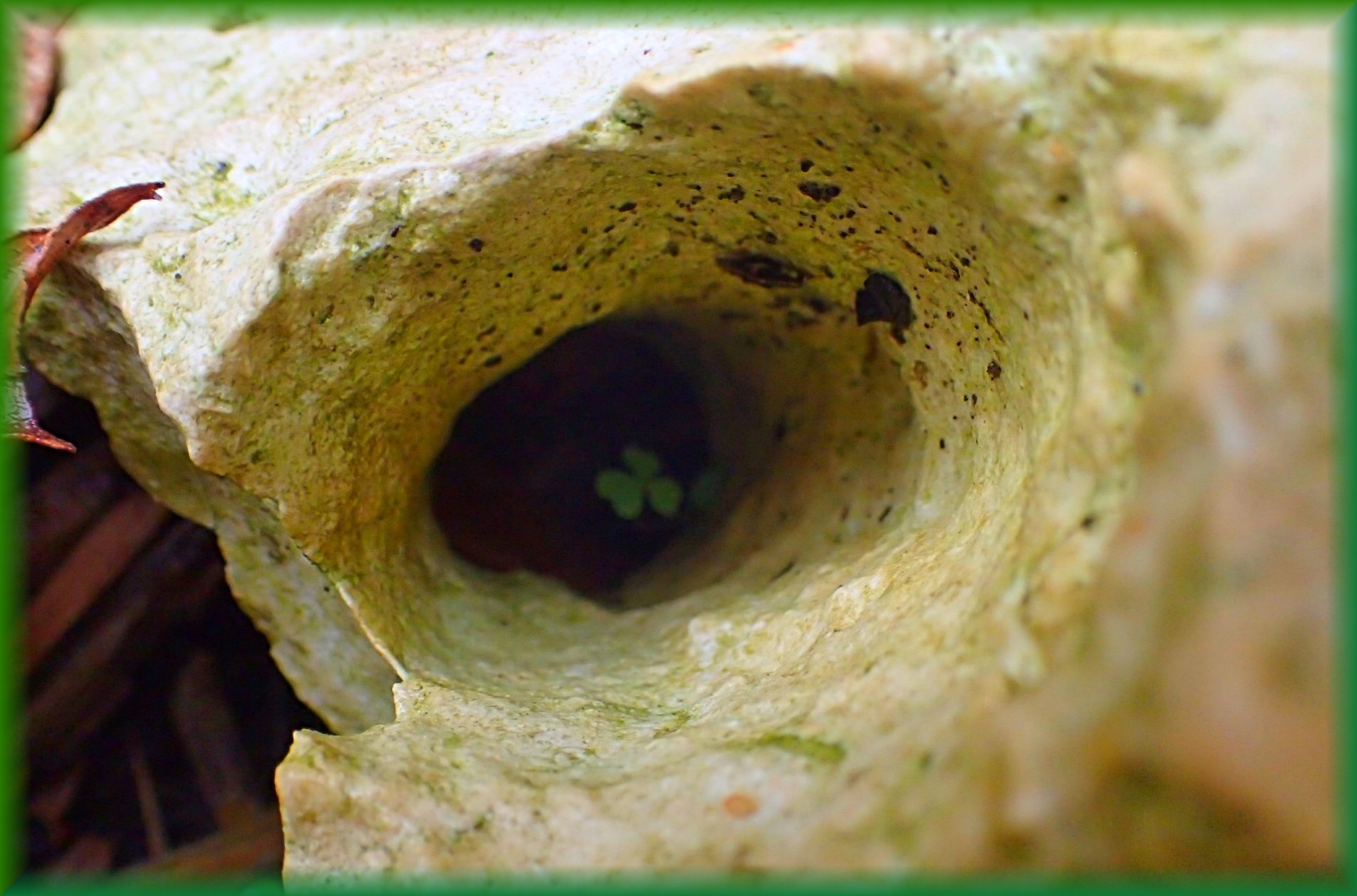
In the eye of the stone… Photo by Thomas Peace c.2024
When you are genuine and whole, you are largely unaffected by the accepted beliefs and psychological frameworks that society embraces. Then you stand alone. Such a person is blessed. Then one sees beyond the fragmentary and fallacious acceptances, beliefs, and assumptions. Then one actually thinks (and questions) beyond blind dependence.
Society tells you that you are in charge of your own thoughts. Society does not suggest that thoughts make the thinker and that the thinker is a product of thought. (By the way, what one implies here does not negate eternity.) Society predominantly endorses fragmentation and friction, not wholeness and deep compassion. Society endorses (and teaches) dominance by the self. Society sees — and encourages you to similarly see — life and death as two separate things, not as what is together as one, as a larger, beautiful whole. Society encourages you to see with distance, and it encourages you to see with distinct borders and separation. You know that society of course; it’s what is continually falling into widespread disorder and chaos.
Please look beyond the fragmentation that was poured into you. Ironically, nourishing the isolated self — as so many narcissists do — negates real security and the understanding of sweet eternity.
Many people — unfortunately, as adults — primarily look at things in life with (and “as”) the known. They recognize things as what they have seen before. This recognition occurs when the mind habitually sees through a screen (and background) of memory. When memory looks, it looks from the old, stale past. Memory is rooted in the old; it is oldfangled. The past, being old and secondhand, tends to make the mind stale, bored, and lacking in passion (from recognizing the same old things repeatedly).
It may be that a wise mind, however, often looks at life freshly, without merely perceiving through stored, musty images (of what was). When we were young, we glowed with the passion of seeing life without stale (learned) recognitions. Then we were blissful; then we were flowing while not merely recognizing. (When i was biologically young, i told people that i would never grow up.)
Look at life happily, joyfully, blissfully, soaringly, and fresh… without always carrying the oppressive burden of the past.
Whatever you do, don’t look at life and the world beyond the systems, patterns, and ways in which you were taught. If you look outside of the systems, patterns, and ways — which were poured into you, forming your consciousness — you may be a danger to all that is false, fragmentary, and distorted. Keep looking at things just as you were programmed to. Don’t question anything. Be sure to accept (and cling to) everything that they poured into you.
Continue to observe things from behind a self-made psychological wall supporting separation and isolation. Continue to mindlessly escape into endless forms of entertainment, travel, drugs, and amusement. Continue to have opinions based on how you were raised and taught. Worship the dollar. Grow out of that youthful, magical wonderment concerning life and turn into a fusty adult who sees little of life’s newness and magical beauty. Get dreadfully bored while seeing and thinking the same old patterns. Think only of yourself and have no feelings for others. Continue to worship the dollar. Never stop endlessly chattering with mental symbols, patterns, and words.Look at everything through a maladjusted psychological screen (or curtain) of separation and division. Be very afraid of sweet and refreshing mental silence. Seldom look at (or visit) nature. Do not fundamentally change on the inside, but make your body look very unusual and different on the outside. Continue to worship the dollar.Go through existence being narrow-minded, selfish, and opinionated. Blindly cling to a lot of manmade patterns that were concocted in the distant past, and never look at reality without old, dusty, iron-clad beliefs. Keep your lawn looking perfect, but remain disorderly and a mess inwardly.
Where the Fairies Live … Photo by Thomas Peace c.2024
To live in the present, in the “here and now,” is often still in vogue these days. To actually “live in the present” may involve much more than most people realize. Many may think that they “live in the present” but they may not. It is extremely easy to deceive oneself. If within, constant “thinking” is going on, then one (surely) does not live in the present. Thoughts are symbols from (and “as”) old, stored memories that unfold from the past. So, if one is constantly thinking about things, one is living in the past. This includes pondering about the future. When we worry about the future, we are using thoughts of the past to project what the future might be (i.e., what the future might consist of).
Additionally, if we go through our day while just habitually recognizing everything with distinct borders, distinct names, distinct attributes, and characteristics, then we are looking primarily with what we were taught… which really isn’t looking at all. Even then we are relying on the past; even then we are existing in (and “as”) the past.
Many say, “Be in the here and now.” What is that “here”? Is it a lot of recognition from (and “as”) what was poured into us in the past? That recognition is the past; its “here” is what old, stored, dusty memory is. Is the “here” some stored images about what is assumed to be centrally located? And, what is “now”? Is it some isolated time interval (of one’s own) that one clings to? It may be that most of us never really wake up. It may be that T.S. Eliot was right when he wrote, “Love is most nearly itself when here and now cease to matter.”
The mind may be a prisoner of its own delusions and misconceptions. To extricate the mind from the quagmire (that it is likely in) may require much more than mere reactions. Mere reactions are likely just extensions of the confusion, disorder, uncertainty, and disarray that the mind is (in). In other words, if the mind is disorderly, who is going to make it orderly?… Will it be another part of that same mind assuming to have (or be) authority or order?
Though we all have to react… merely reacting may not be a profound solution regarding fundamentally existing beyond the disorder. If we perceive our reactions without judgment, ideologies, beliefs, and images of what others have taught… that very perceiving may be beyond the realm of mere reacting. If the mind ceases to depend on standard and ordinary reactions, perhaps it may undergo a transformation wherein few reactions continue to contribute to the misconceptions and delusions that it existed as (in the past). Looking without merely having obtrusions of thought occur as reactions, however, may be easier said than done. The very way we observe things is often heavily tarnished with reactions that we are — for the most part — unaware of. A mind of pristine, untainted “observing,” however, goes beyond being merely rather mechanical and robotic. Such a mind is where true joy and true living exist. Rather crass, robotic minds — though they may say otherwise — are divorced from deep joy and insight. Deep joy and insight are not mere projections (as reactions) from a heavily conditioned mind. Deep joy and true wisdom aren’t part of what must depend; they are spontaneous and not fabricated.
It may very well be that the best joy, the best insights, and the best perceptions… are not merely what are sought (through and “as” reaction). Often, at the precise moment that one seeks to be joyous, joy is not. Most of us have relied, as we were taught, on time to become joyful and wise. However, the most profound joy and the deepest wisdom may not involve a factor that takes, requires, or involves time. Deep joy and deep wisdom are timeless and are not of the realm of mere acquisition (with and by) delayed reactions (about patterns) in time. However, in “time” the wisdom of compassion intelligently acts to help others.
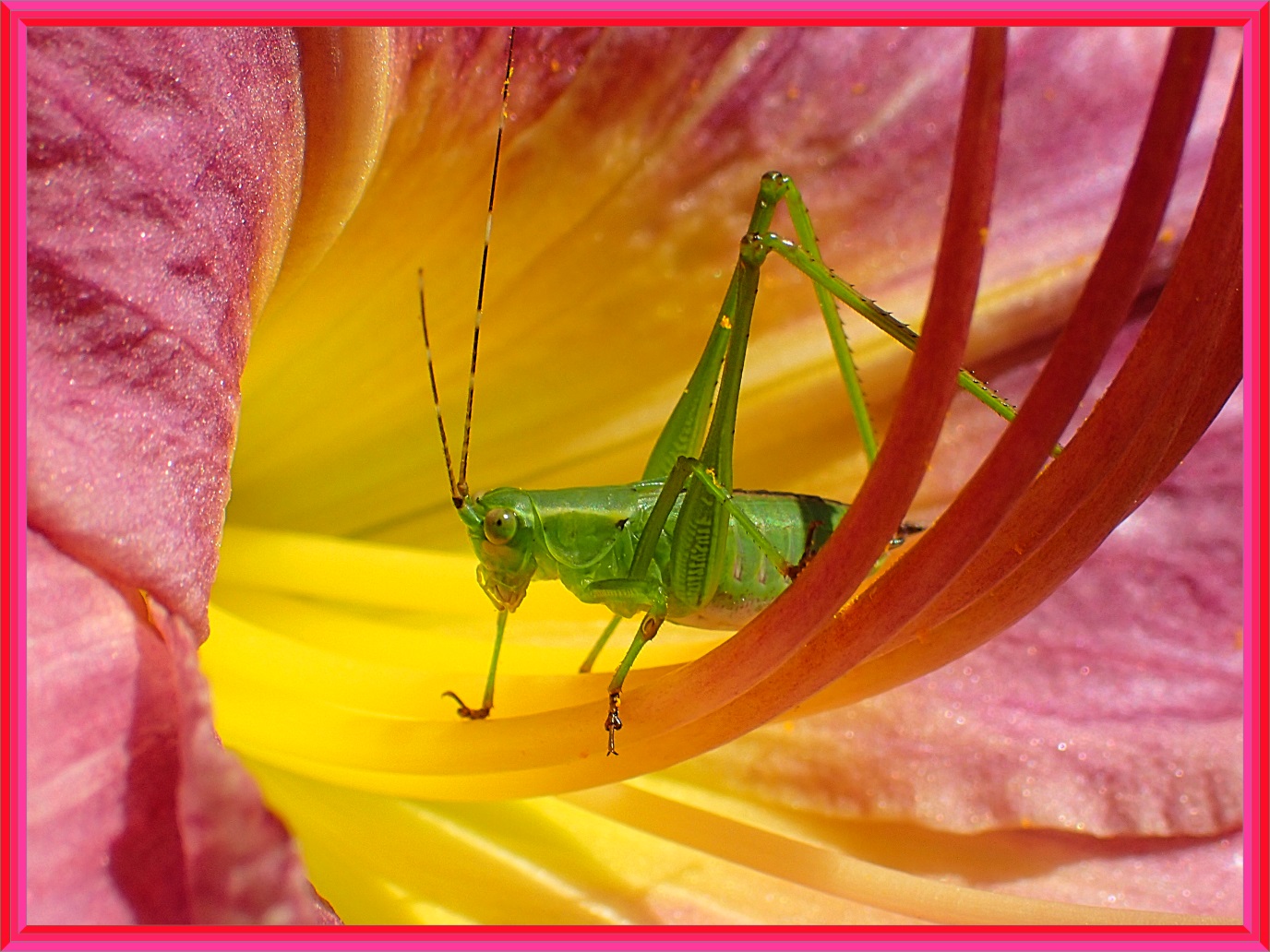
[Note: The front leg has a tannish, round area under the knee… that is its hearing mechanism. Since it has one on the left and right legs, it can hear in stereo.]
Resting on the Balcony … Photo by Thomas Peace c.2024
A run-of-the-mill consciousness that has accepted everything society has poured into it inevitably perceives with (and “as”) confined limitation. It sees what it was taught to see; it thinks (for the most part) what it was taught to think. Ironically, such minds think that they are free.
A limited consciousness will have perceptions and mental reactions defined by limited borders. It may feel free, but such freedom is like the freedom of a dog tethered by a chain; it can go where it wants but where it goes is essentially nowhere.
Orderly, intelligent awareness breaks through this whole circus in (and “as”) a mindful, spiritual revolution. Such a consciousness is not just a product of society. Lemmings are very good at imitating others and at falling into an abyss. Please be different!
Ready for Another Meal … Photo by Thomas Peace c.2024
There exists the intrinsic goodness of a very healthy mind. It is not what came about (secondhand) from the teachings and preaching of others. It is its own radiant and special light (which was not made from what others offered). To act from the blueprint of others is not unsullied, pure action; rather, it is secondhand reaction. Secondhand reaction rarely truly radiates what is holistically good. Behaving from a blueprint is robotic, mechanical, regimented, imitative, and not genuine. Organized governments, religions, schools, and cults tell you how to behave. Dynamic intelligence and true innocence surpass all of the superficiality that mankind’s so-called structured organizations offer. A crippled mind needs a crutch. But over-dependence on crutches keeps you dependent and limited. No need to cling to things, floating frog.
We saw Santa at the mall yesterday (and he put lasting smiles on our faces)! One is never too old to get some real joy with quality Santa Claus time. A bit later, we sent some kids and their parents in his direction (to see him); i hope that they got a chance to visit with him.
The Christmas Holiday Season is very special and magical to me. It is a time of giving and caring with heartfelt joy. Such a holiday season should occur all year long. If possible, this holiday season, donate to some favorite charities. This season should not just be about materialistic things but should involve heartfelt caring and action. It’s a time for kindness, goodness, peace, camaraderie, and joy. Happy Holidays!… Merry Christmas! 🎅🤶
Evolution, involving the myriad of all plants and animals, is magical and miraculous in so many ways. Countless amazing species have appeared (and disappeared) through the journey of life on Earth. To me, it is like the blossoming of a majestic, beautiful flower… and each of its many petals is opening and expanding in miraculous ways. It is imperative that one be in tune with this blossoming, to be extremely appreciative of it and to deeply respect its holistic, spiritual nature. We are all connected. We are, each of us, a petal of this tremendous, immeasurable unfolding.
Understanding the whole cannot occur merely by the sequential movement of fragments. Parts can never perceive the whole or deeply be in communion with it. And, unfortunately, it is all too easy for the mind to play tricks on itself; for instance, it can stick to the notion of a controlling center (called “me” or “I”) that it thinks is the essence of itself. From this supposed “center,” it seems to operate. However, this so-called center is another fragment, a learned obtrusion of thought/thinking, and dependence upon it creates limitation and circumscription. However, almost all of us reinforce it… usually unaware that that is what we are actually doing. We feel safe and smart by doing so, but (in reality) it is neither safe nor intelligent. A false center creates separative distance and boundaries; a false center contributes to conflict (internally and externally), which creates havoc in the world.
Only a subtle, sensitive, keenly perceptive mind can go beyond the notion of a central ego, a central controller (that seems separate from the thoughts it supposedly thinks… that seems separate from others). Such a perceptive mind is then of compassion and wholeness. It no longer is wasting its energy on illusory separations, divisions, isolating beliefs, and absorbed false concepts. Freedom is not circumscribed… (and a psychological center has a limited radius). What is limited is not in true communion with eternity and boundlessness.
For the mind to be holistically mindful, keenly perceptive, compassionate, integrally balanced, and aware, the body must be in great order. What helps to maintain this order involves a well-balanced diet consisting largely of whole foods; also necessary are things like adequate exercise, sufficient sleep, and refraining from recreational drugs. Some of this is easier said than done, especially when it comes to having a good diet.
A good diet, for example, would involve getting enough Omega-3, which is an essential fatty acid. An essential fatty acid is what the body needs; it cannot adequately synthesize it on its own. A lot of people think that they can eat things like walnuts and avocados to get their Omega-3. But most people, especially men (and women who are 30 years or older), cannot adequately convert that type of ALA Omega-3 into the usable kind (i.e., the kind with DHA and EPA). Therefore, they need to get their Omega-3 from oily fish or from Omega-3-rich algae (that has the usable form of Omega-3, not the unsatisfactory ALA kind). Omega-3 is important for brain function, for suppressing arthritis, and for heart health. (Nuts — like walnuts — have other health benefits, by the way, and i eat them every day.)
Additionally, these days, farms don’t usually replenish the soil with organic, whole minerals. Therefore, it is wise to take some supplementary vitamins (especially naturally derived vitamins). Beware; some synthetic vitamins that are sold, believe it or not, are made from petroleum.
[Note: I hope that many of you had a happy Thanksgiving. Beyond being “thankful,” we also need to help others in need (by donating or by doing something)… so that they too may be thankful. ]
To intentionally meditate, at certain times of the day (using certain methods), is likely very limited, false, and likely makes the mind more mechanical, more calculating, and dull. To meditate to get something out of it… is to try to do something from a motive. A so-called meditator who tries to meditate to get nirvana (or to get some kind of “special” non-ordinary experience)… is (let’s face it) out to get something. Time and greed do not (and cannot) lead one to a timeless, non-greedy dimension. Time is sequential and greed (being in time) is, likewise, sequential. The timeless is not an achievement that comes about by calculation, motives, practices, methods, or learned procedures in (and “as”) time. However, there are oodles of people (i.e., charlatans) who (all too willingly) try to instill their methods upon you. And they have plenty of secondhand beliefs that they learned from others.
The beauty of spontaneous, simple, uncalculated awareness (without motives to get something) may come about naturally — without effort — in a mind that is unsullied, uncontaminated, and innocent. And it may be that, on the other hand, the supposed central (controlling) self that tries to meditate through methodology is essentially an obtrusion of conditioned thought/thinking (that is neither central, truly controlling, nor a true initiator of anything). Trying to meditate via the effort of a so-called central controller… is neither viable nor intelligent. Even while engaging in our so-called meditation (which we learned from others), most of us are reinforcing the perpetual conditioned illusion of a center (i.e., a central ego).
To perceive without effort can occur in a mind of deep order, intelligence, and health. Such effortlessness may be beyond the limitations of sequential motives and time. Such effortlessness does not reinforce an illusory center. Bliss, eternity, and a profoundly innocent mind are not separate things.
The Trees’ Symbiotic Friends … Photo by Thomas Peace c.2023
Thinking, being of abstraction, is sequential in nature; therefore, it is of time; it is time. It is psychological time that creates and manifests as fear. In time, one may be despised by others; in time (i.e., in the future), one may be laughed at; in time, one may become senile; in time, one may get psychologically hurt by another. So, often, thought and its shadow (i.e., concomitant fear) manifest in (and “as”) time. And remaining in (and “as”) conditioned, sequential abstraction… is a form of suffering. Such suffering is not blissful living.
Thought is often a very necessary tool. However, all too often, we go on thinking (when thought is not necessary). This remaining in (and “as”) thought/thinking, is remaining in what is merely conditioned, merely sequential, merely symbolic, and what is merely time-bound. To psychologically die, at times, to the repetition of abstract thinking, is to go beyond fear, secondhandedness, fragmentation, symbolism, and separation. It may be that the separation between the thinker and the thought is, in itself, another conditioned, sequential misstep… another learned fabrication that isn’t true. It may be that thought creates (and is) the thinker, not the other way around. And we are afraid to have thinking stop (because we are afraid of being nothing). But this “nothing,” that we are afraid of, is a projection of thought/thinking that is erroneous and illusory. To often go beyond the limitation of abstract, fragmentary, and sequential thinking — and all thought is fragmentary, sequential, and time-bound — may be (if it is actually done) rather blissful and beyond distortion, fear, and suffering.
Chameleonic Sweetie … Photo by Thomas Peace c.2023
One often points out here that it may be prudent to go beyond the limited and fragmentary domain of thought/thinking. One is not asking you to dive deep into a lot of philosophical abstraction. On the contrary, i am suggesting that you do something that is immensely pure, pristine, and beautifully simple… which is to not always be of (and “in”) the domain of thought/thinking. You see, thought/thinking — if we are at all honest with ourselves — is where all of the abstraction is. Most of us habitually live in (and “as”) abstraction. Our thoughts (i.e., our abstractions) are actually what we are. These abstractions are dreadfully habitual, and we do not want to let them go. Most of us even accept words as being rather equivalent to reality… even though words are merely virtual abstractions. (Sometimes words are necessary, but they are only tools.)
Too many of us are satisfied with virtual, illusory, fragmentary ways. Little wonder why the world is full of a lot of insanity and chaos. We need to wake up and change.
These people walk(although they’re dead) These people talk(although they’re dead) These people cadaverously go through the appearances of being alive(although they’re dead) These patterns fight(although they’re dead) These machines bury their dead(even as they themselves are dead)
These machines function(with cause-and-effect robotic mechanicalness) These machines move(with cause-and-effect robotic mechanicalness) These machines calculate and measure(with cause-and-effect mechanicalness) These marionettes agree(with cause-and-effect mechanicalness) These machines salute,march,bow,dance,and kill(with cause-and-effect mechanicalness)
These numerous fears function(through and “as” time) These habitual mental labels function(through and “as” time) These endless desires function(through and “as” time) These absorbed ideas function(through and “as” time) These cognitive symbols function(through and “as” time)
These few people of heartfelt caring(make an infinite difference over,in,and above time) These short moments beyond fragmentation(may hint at something beyond the limitations of time) These suggestive movements beyond the norm(might break through the prison bars of time) These movements outside of instilled beliefs(might break out of the cocoon of time) These final fortunate endings of words(point to something superior to time) These Halloween Days are full of manmade global horrors
Please don’t look at Pumpkin Plumber’s Hind End. (Shame on you. You looked!) … Photo by Thomas Peace c.2023A Deep Look into Bathing Time … Photo by Thomas Peace c.2023
Conflict and friction are rooted in separation. We were miseducated to accept and embrace separation in (and “as”) consciousness. We were taught that we have a separate “ego” that controls things. We were not told about the possibility that this “ego” is merely a protrusion of thought/thinking. We were not told that, psychologically, the perceiver is not something separate from the perceived. So-called “normal” people look at internal anger, fear, and jealousy as if each is something separate from what they actually are. This inward separation also extends “outwardly.” Most look at life with separation and conflict and accept it as being normal.
Genuine, holistic love is not based on separation and conflict. Love is not what involves psychological distance and ironclad, circumscribed boundaries. The left hand that sees the right hand as something apart from itself is ignorant and is confined in (and “as”) blinding deception. Such ignorance and confinement manifest as sorrow. Wisdom transcends this.
While lingering in the very curious dark a quaint two-horse somber carriage happened by and, as it almost paused adjacent to me, Miss Dickinson peering out, smiling, said, “Won’t you hop in to savor some pie?”
We (much later passed) the School, where Children strove Happily at Recess—in the Ring And Staring, (we passed) the Fields of Gazing Grain We (without fail) passed the Setting Sun We passed those Dusky Creatures that were on the Wing
Well, the atmosphere tasted scrumptious, but the Coachman suddenly brought the whole sweet thing to a blinding halt However, Timelessness has that radiant aroma of infinity oozing out from all around it where ending simply began again with just a pinch of salt
In last week’s post, some folks, in the Comment section, mentioned something about the unknown embodying nothingness while mentioning that that is what is so terrifying; they feel safe in the “known.” Those comments got me pondering. Is nothingness (as the unknown) truly terrifying and does it take real courage to live with it psychologically?
As i’ve mentioned numerous times before… we were all very miseducated by society. This miseducation has molded us to be fearful of nothingness… to be anxious about existing in (and “as”) the unknown. It was hammered into us that the known — knowledge, knowing, and memory — is the key to security, safety, and happiness. In some limited ways, it helps with such things, but it may (fundamentally) not consist of (and fully support) lasting security, safety, and happiness. The known is fragmentary, symbolic, virtual, and limited. It is actually the known and its protrusions of “what might be” that produce fears; the unknown does not fuel this. The known and its concoction of “what could happen” is the real root of fear. In groping for security in the known, we absorb (and hold) beliefs. These beliefs were poured into us as products of knowledge that offer security. Do limited, secondhand words, suppositions, and mental images provide vast and unlimited security? Not really! In fact beliefs and absorbed religious suppositions very often divide people in the world, causing much conflict, fighting, war, and suffering. That is not profound security.
If you are not a reflection of what society has poured into you (and if you actually perceive how thoughts create fear and mental problems), then existing (psychologically) as nothingness or as the unknown may not take much courage. For me, nothingness is real bliss and is a great joy. This is because it exists beyond the limitations of symbolic, virtual, cadaverous, and stale thinking. Nothingness (beyond thinking) nullifies fragmentation and secondhanded observation. It, and it alone, allows for pristine and unadulterated observation (that is not contaminated by labels, beliefs, habits, fears, and stale, fragmentary protrusions of thought/thinking). This inner nothingness, which is holistic and uncontaminated, is real bliss, clarity, and timeless joy. (It takes no courage whatsoever to dwell in — and “as” — timeless joy… as the unknown.) The actuality is that stale thoughts and beliefs are limited, old, fragmentary, time-oriented, fear-generating, secondhand, and dark. (Granted, oftentimes rational thoughts are needed to function in life… but they are only limited tools.) The distortion of thought/thinking largely masks the joy and clarity of timeless living. Dying (psychologically) to the known is real freedom; then living and dying are not two separate things… and Death is what endless, robotic, virtual, symbolic, secondhand thinking is.
from E.E. Cummings:
dying is fine)but Death
?o baby i
wouldn’t like
Death if Death were good:for
when(instead of stopping to think)you
begin to feel of it,dying ‘s miraculous why?be
cause dying is
perfectly natural;perfectly putting it mildly lively(but
Death
is strictly scientific & artificial &
evil & legal)
we thank thee god almighty for dying (forgive us,o life!the sin of Death
Many years ago, when i was in college, so-called gurus from the East came to our campus, providing students with meditation techniques that involved sitting cross-legged and concentrating on allegedly “special” mantras that were supposed to take us to a higher spiritual level. I went to a couple of these sessions and ended up telling the bearded gurus — who were taking money, by the way, for their efforts — that i felt that what they were promoting was just a glorified form of self-hypnosis. I read about hypnosis while in high school and was familiar with what it entailed. Needless to say, they were not very elated regarding my comments.
Many people are greedy and gullible. They think that they can pay money that will enable them to soar to some kind of higher spiritual plane. Real meditation is not what one can greedily arrange to happen. It is not something that one can practice. Real meditation is not doing something to attain some otherworldly result (to escape from reality). Real meditation is an effortless thing that may take place if one is very perceptive, caring, and greed-free. Real meditation is not doing something to get something out of it. One cannot “know” that one is meditating. Real meditation takes place, in one, unawares, without a person concluding that he or she is doing it.
A dull, greedy little mind can sit cross-legged (repeating so-called “special” words for decades but it will only be mesmerizing itself hypnotically… rendering itself to be even more dull and robotic). There is no path to the truly spiritual because the truly spiritual (i.e., the timeless) is not in a place. It is not locked up in a box upon an altar. Place and time are bound together.
Beyond the Caterpillars … Photo by Thomas Peace c.2023
When the mind — as thought/thinking — worships what it considers to be “God,” it — in actuality — is worshipping thought-formulated images that it absorbed from others or that it manufactured on its own. So, in essence, it is worshipping itself (or part of itself). Alternatively, it may be far more prudent to diligently inquire as to whether the sacred really exists (or not). And such an explorative inquiry, if it is to be pristine and uninfluenced by outside (or inside) agencies, may best be often done beyond the limitations and trickery of thought/thinking. A lens that is not contaminated by outside debris perceives clearly beyond all of the rot. Keeping the mind healthy, clear, inquisitive, compassionate, orderly, and of dynamic depth, may be far more important than clinging to secondhand images, beliefs, so-called experts, and traditional routines.
There can be a holistic awareness without significant thought/thinking taking place, (in which the intelligent mind often sees without thinking and cognition interfering). There can be, for example, simple awareness of creatures upon flowers and of leaves lightly dancing in the breeze. However, thought/thinking is then not merely labeling, analyzing, comparing, or projecting what science has taught concerning these things. Then the mind may be of a sweet emptiness that is beyond the second-hand constructs of man. That emptiness (of mind) may be a blissful, effortless negation of inherited mental fabrications. Such mental nullification may be the highest positive, for neither is it handed down, replayed as monotonous imitation, conjured up via effort, nor dully rehashed. And it can deeply exist (too) beyond the ordinary, habitual recognition of things. It is always refreshingly new and beyond dead blueprint-like (mental) structuring. (Too many of us take words to be the equivalent of reality; they are not.) And, coincidentally, real love is always explosive, pristine, and not copied or imitated. The ordinary “once-lers” of the world are, unfortunately, not of it.
The elderly, gray-haired Lo Zu was sitting — as he often tended to do — on a large boulder in nature… his wooden meandering cane leaning against him. Some youth saw him from a distance and they curiously journeyed over to where he was sitting. Then they asked him what he was doing. Lo Zu replied… “Doing nothing… being nowhere and existing as nothingness.” One of the youth queried, “What do you mean by ‘existing as nothingness?'”
After a long, meditative pause, Lo Zu replied, “When the ego is transcended, the mind is often mysteriously beyond its contents; then there is a beautiful nothingness that is blissfully beyond ordinary experience, sensation, space, and time; that emptiness is beyond the ‘known.’ But most people are afraid of being beyond the known. They are afraid of having their cup empty. Each one desperately wants their cup to be filled (with something). Their cups are full of stale theories, secondhand ideas, flat beliefs, antiquated traditions, divisive religions, corrosive fears, greedy desires, banal suppositions, learned superstitions, limited so-called organized systems, dead images, and shallow words from so-called leaders. But it may be that their fullness is the real poverty; it may be that real richness is in transcending the psychological self (that is an illusory troublemaker). Profound love is beyond the dilation of self.”
When you were a very young child, before society gave you all kinds of baggage to carry (mentally), you were euphorically joyful, deeply inquisitive, and full of bliss. Then you felt eternal, timeless, and profound, and you were not concerned about death, religion, politics, or how to climb a ladder of success. But they loaded you up with the baggage that they had accumulated (and concomitantly, a lot of the real beauty of life dissipated in consciousness over time). Perhaps you can do yourself a real favor and perceive again (without depending on any accumulated baggage). Perceive without all of their concepts weighing down upon you. Without all of the psychological baggage, perhaps you can be young and full of joy and living magic again.
Clinging to Easy Substance … Photo by Thomas Peace c.2023
I’ve included the following quote by Einstein in previous posts, and i’m including it here again.
“The true value of a human being can be found in the degree to which he has attained liberation from the self.” — Albert Einstein
The human brain goes through a huge amount of associative mental connections. Most people associate the “I,” the “me,” the “self” with power to control, with domination over “other” thoughts, and with freedom to act independently. However, the “I” — just like the other concepts of central authority — is just a protrusion of thought/thinking. In all actuality, there is no true central “controller” situated in the brain. Unfortunately, far too many people treat this thing as if it has a separate, substantive existence (apart from others). It may be that many millions deceive themselves each and every day. Transcending this limited, primitive, crude form of thinking opens the way toward deep compassion and holistic understanding. Our age-old associative ties to a central, independent “controller” (apart from the world) may be very erroneous.
being to timelessness as it’s to time… E.E.Cummings
Time is distance. We perceive with (and “as”) distance, and we remain stuck in time. Of course, you have to keep your doctor’s appointment, which involves a certain physical time and place. (A supposed isolated center looking out, perceives via distance.) Should time be the only domain we function in (and “as”)? This writer says, “No!”
A lot of people in the so-called United States of America like to kill a lot of people in the so-called United States of America. It’s a deplorable form of ignorance really. It’s like the thumb of a hand attacking the fingers of the very same hand. A lot of people have been miseducated, and they do not perceive the unity of all things and creatures. Most look with (and “as”) separation, division, fragmentation, indifference, and isolating distance from a supposed center. We need to wake up and grow beyond the shortsighted limitation.
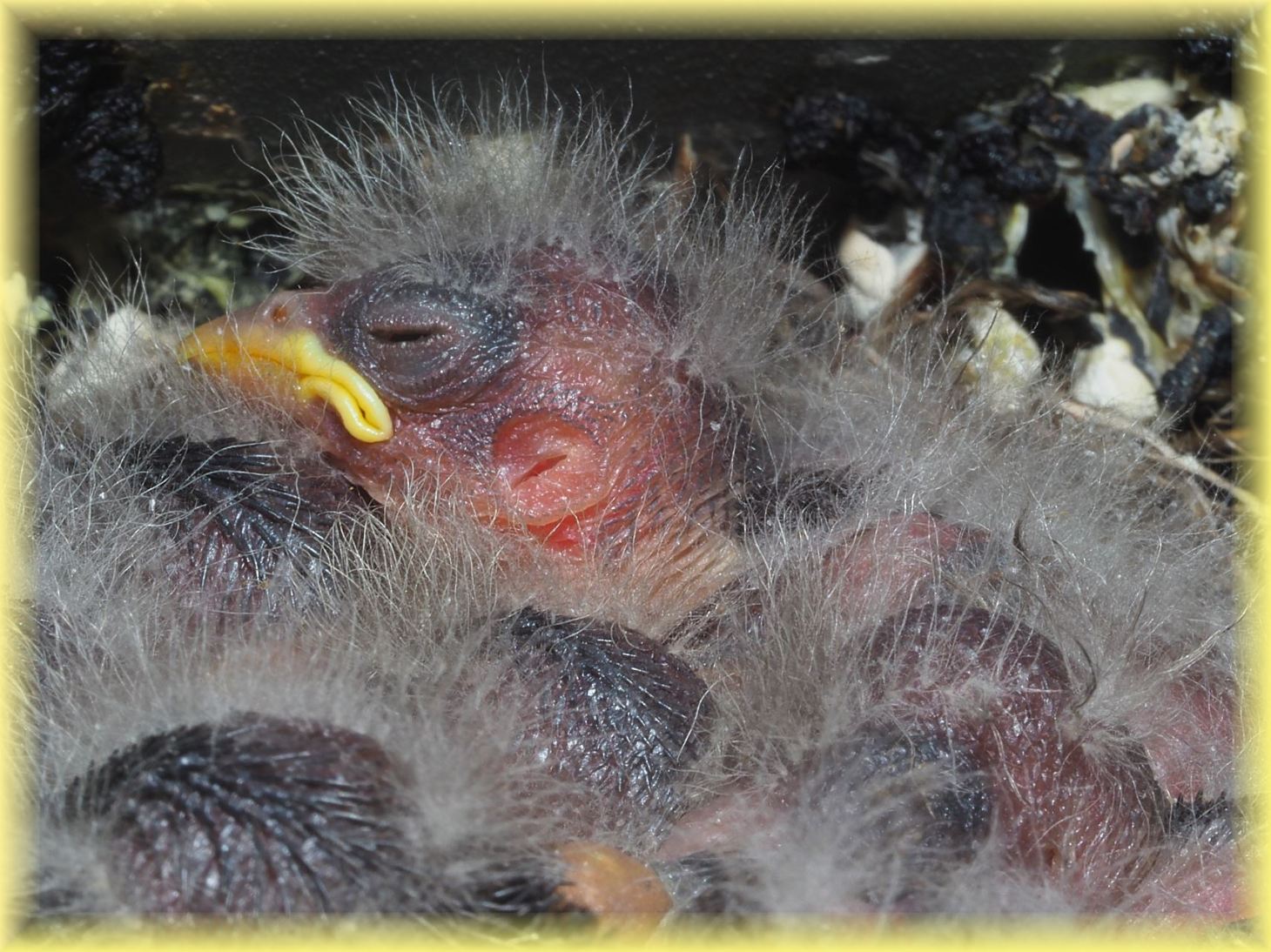
The Bird Ear and the Siblings … Photo by Thomas Peace c.2023
Most of us are almost constantly churning — mentally — with various images, words, and patterns within our minds. (The words are often verbal in essence and usually occur as simulations of what one’s own physical voice sounds like.) Even when we listen to others, or observe others, what we perceive largely consists of patterns recognized (i.e., re-cognized) by mental patterns which already exist in (and “as”) the mind. We often take these patterns — these protrusions of thought/thinking — to be equivalent to pure reality. However, they are primarily just virtual representations that are fragmentary, symbolic, and of the past, since they are constituted of repetitive mental protrusions that reflect what was poured — piecemeal — into us by others. Even the “I” that each one seems to zealously harbor and worship consists of a protrusion of thought/thinking (that deceives the mind and often invites fragmentary, separative behavior).
A silent mind transcends this limitation by going beyond what is secondhand, virtual, and symbolic. Such a mind is not merely trapped in (and “as”) the representational. Such a mind is dynamic, alive, pristine, and beyond sequential, robotic imitation. Then, true care and compassion may manifest. Compassion does not emanate from what is fundamentally not alive.
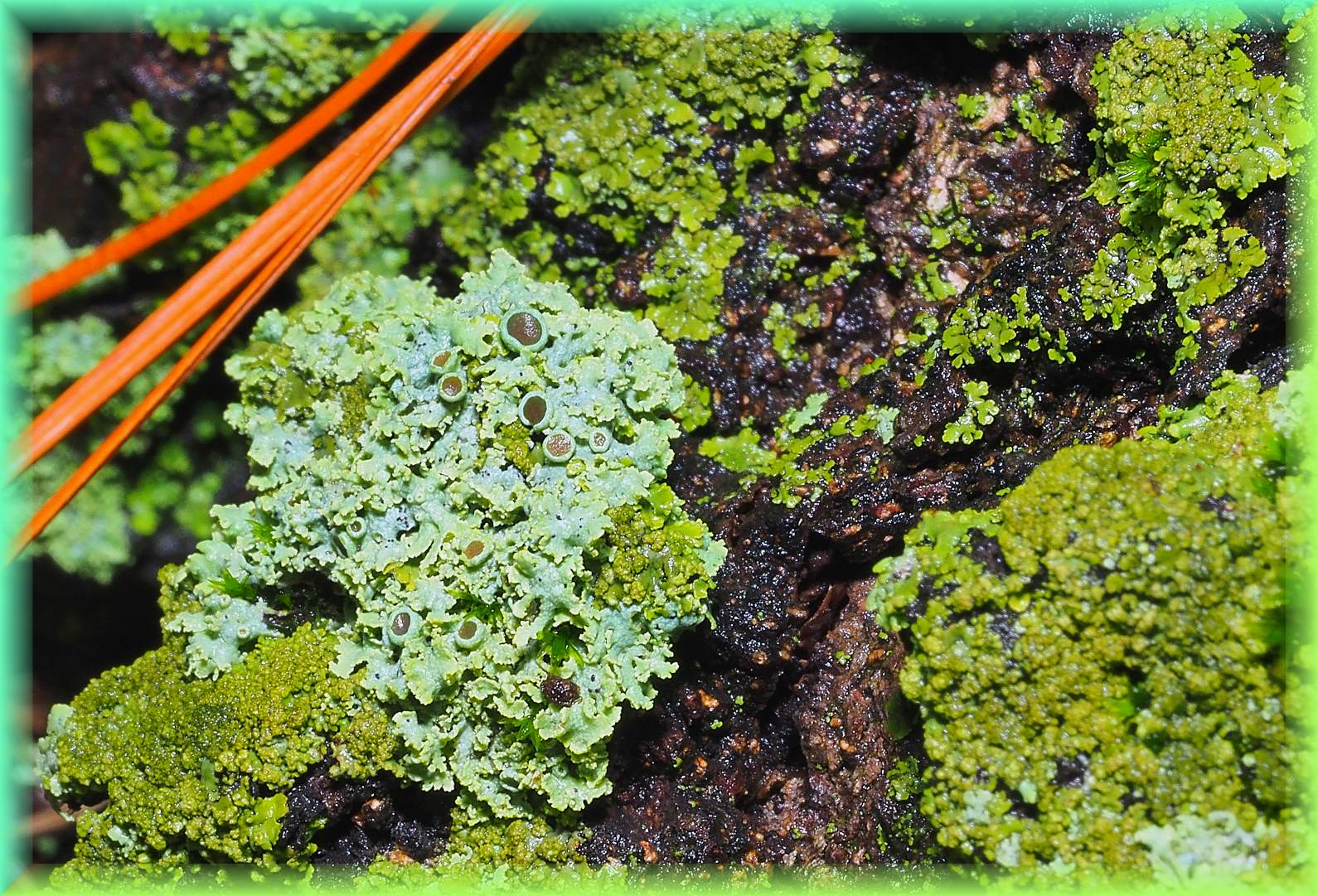
Lichen what you see … Photo by Thomas Peace c.2023
Integrity is wholeness, goodness, purity, accuracy, uprightness, and incorruptness. A disjointed mind that is constantly internally chattering to itself — with fragmentary words and labels that society indoctrinated it with — likely has a hard time with existing as true integrity. Friction, conflict, fragmentation, and indifference are not what contribute to integrity. The lack of integrity is illusory, and so many people (for comfort) accept what is spoon-fed to them but which is essentially false.
There exists a profound level of integrity that is intrinsically a manifestation of incorruptibility; such incorruptibility is beyond the decay that most people fear. It effortlessly transcends mortality.
We’ve looked with separation for eons in order to survive in a competitive world. However, merely looking with (and “as”) separation may not be what is conducive to a truly spiritual life. How does one look without separation? It isn’t the result of some method or system that one can apply or copy. Effort itself, through time, is separative and is not the answer. Practicing meditation is not the answer. Belonging to a so-called organized religion or to an abstracted territorial domain (conveniently called “my country”) contributes to division and conflict in the world. Any procedure performed by a supposed central ego is based on separation.
The answer neither involves time nor a central observer.
The Art of Proper Parenting … Photo by Thomas Peace c.2023
There exists a certain kind of wisdom, a certain kind of compassion, and a certain kind of great intelligence. Each of the three is not something separate from the others.
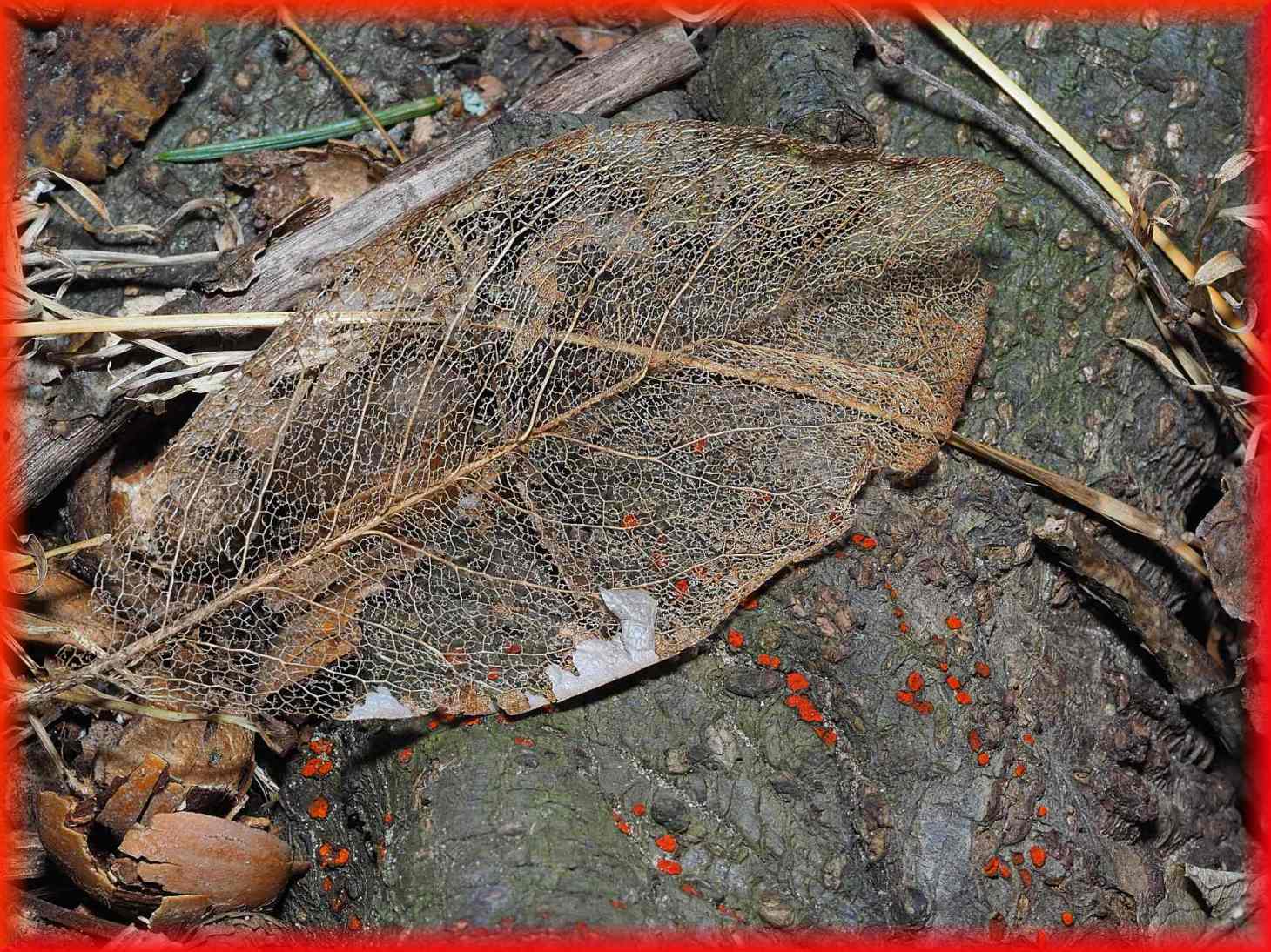
Orange Fairy Cup Fungus … Photo by Thomas Peace c.2023
First of all, if you ever happen to be blessed with a true understanding of how eternity works, don’t go shouting about it from your rooftop. It is a thing for an individual to discover and is not something meant to be shared, one feels.
One will say this, however… Eternity does not depend upon the existence of a central “I.” Anyway, there never was a true central “I” in the first place. Each manifestation of an “I” (or “me”) is an obtrusion and product of thought/thinking and there is nothing truly central about it. This writer sometimes uses the term “I” when responding or writing in this blog because it is a common form of communication. However, in actuality, it is not truly necessary. Eternity exists quite nicely, thank you, without the need for the existence of an “I” or “me.” This seems counterintuitive. However, truly understanding how the cosmos functions (in its entirety) occurs best when the “I” and “me” (with all the falsities involved) are absent or psychologically negated.
One happens to have, and care for, a couple of wonderful pet parrots — I used to breed parrots — and they often speak with comprehension… and they sometimes correctly use the word “I.” For instance, recently my girlfriend bought colorful wooden toys for them and one of them, named “T-rex,” was tearing his huge wooden toy up so much, and making extensive messes, that i removed it (i.e., the toy) from his enclosure… intending to give him one section at a time. He said, “I want it back.” So even animals can use the word “I”; it’s no big deal.
One posits that, for us humans, it takes great intelligence to transcend the notion of a central “I” or “me.” Then, possibly, such a one may partake in great insights that transcend our rudimentary notions of time, space, control, death, life, and self. Many, however, would say, “Well, I’m not interested.”
T-rex (Catalina Macaw) … Photo by Thomas Peace c.2023








































 Tom's Nature-up-close Photography and Mindfulness Blog