
All Posts Tagged ‘truth

Post

Experiencing is often Childish and a Waste of Time…

22 comments

This may seem ludicrous at first, but it isn’t. Most of us are heavily conditioned to run from one entertaining experience to another. We will do anything to escape from what we see as our own inner emptiness (i.e., our own inner void and sorrow). We run from one experience to another, like that proverbial donkey that perpetually pursues the carrot dangling from a stick (that is — interestingly enough– attached to the donkey). We were conditioned to do this… and in this conditioning, we remain. We are this conditioning, not something separate from it.

We were not encouraged to refrain from running from inner emptiness. To not run from inner emptiness does not take time. However, most of us, in time and “as time,” continue to run from it. It may be that such effort is a waste of time… which we repeatedly do until we die. It may be largely a waste of time and energy.

When one doesn’t run from emptiness (in and “as” time), a miraculous transformation may happen. Time (then) does not exist in the normal sense and a timeless (non-sequential) bliss and intelligence may flower without a motive or system of effort. The “known” is a sequential, symbolic, robotic series involving experience, recognition, remembrance, and further accumulative experience and repetitive recognition. This stems from the known (i.e., the habitual, reacting, symbolic, past remembrance) and its sequential movement. This “sequential movement” is often necessary, but clinging to it makes the mind mechanical, repetitive, and dull.

Resting … Photo by Thomas Peace c.2024
Post

Power …

18 comments

Mankind has, for eons, pursued and craved power… power in the form of governing, power involving influence, power in the form of authority, and power in the form of money or possessions.  What is this power that man has spent so much effort in acquiring?  Control is a significant feature regarding this pursuit of power.  Many of us admire the man who we think controls (even if that man has multiple felonies or is a rapist).   We are gullible, delusional people.  We have always assumed that the controller and the controlled are two separate things.  However, are they really separate things psychologically?  Are thoughts really controlled by a separate central “controller” that has power?  May it be, psychologically, that the controller is the controlled… that the observer is the observed?  Could it be that, psychologically, the thinker is not really something separate, whatsoever, from thought/thinking? Could it be that the “thinker” is a projection from the thought/thinking process?

Man has evolved to the point that we can split the atom and do many complicated, amazing things.  We have done a lot of fantastic things with energy and its power.  However, we always use and manipulate things regarding this power; we are never actually in a direct relationship with the real essence of that power.  We live in mental symbols and psychological abstractions, which do not really consist of substantial power whatsoever.

in the heat … Photo by Thomas Peace c.2024

Post

Peace

11 comments

Peace (world peace) comes about when the inhabitants of the earth perceive and feel true heartfelt oneness. It comes when borders — between countries — are seen as manmade fabrications that often bring about unintelligent separation, conflict, animosity, and turmoil. Countries and religions, when clung to as being special and above and apart from the rest, often bring about conflict. Peace exists when the perceiver sees that the perceived is not so very separate and apart (as we were taught). When separation and division disappear, harmony exists. The fingers of a hand may be different — and in different places — but they are (together) united as one. Even within the mind, the “learned” thought process separates the observer from the fear (but the observer is the fear); the “learned” thought process separates the observer from the desire (but the observer is the desire). We separate inwardly and this is also projected outwardly… with outward separation, friction, and conflict (that is often accepted as normal). Without putting tons of money into armaments, we could get so much more accomplished in the health and medical fields, in environmental health for this small planet, in food production, and regarding forest/wildlife expansion and protection. Peace

No Chameleon … Photo by Thomas Peace c.2024

Post

Insight…

21 comments

One cannot practice or do anything systematically to bring about or conjure insight. True insight, if you are fortunate, is what always comes uninvited. You cannot “make it happen.”

Insight and intuition are entirely different phenomena. Intuition is the unconscious or semi-conscious ability to create links between (or involving) information. Insight involves — without conscious reasoning — understanding holistically (perhaps beyond the parameters of ordinary sequential time and space).

Although one cannot do anything deliberately and directly to bring about insight, some attributes in one may encourage it to perhaps occur (or set the foundation for it to more likely happen). Being a mind that intelligently perceives things holistically, beyond run-of-the-mill fragmentation, robotic labeling, and accepted separation may be beneficial. Additionally, eating and exercising properly — keeping the body excellent physically — may indirectly be very beneficial. However, there is nothing that one can do to cause it to occur; it is beyond the parameters of time and ordinary causation.

If one is holistically entwined with (and “as”) the whole… truly being at one with the animals, plants, and universal order, then that order may be more inclined to protect and reciprocally care for one. Then real magic may happen (beyond the limited domain of time and space).

Ouch! … Photo by Thomas Peace c.2024
Post

Perceiving Beyond the Limited

12 comments

We look with (and “as”) the parameters of time and space that we were taught to look at. This might sound strange, but is that all that we must be limited to? Can we look with a depth that goes beyond what was spoon-fed to us? Can we perceive more than what they taught us to perceive? This movement says, “Yes.” But don’t just take my word for it. Explore and find out (with passion). Go beyond their measurements, rules, separations, so-called religions, opinions, organizations, limited teachings, acceptances, beliefs, and stale parameters. But most of you won’t do that. Most will shake their head affirmatively and agree; however, they will not fundamentally change. Unfortunately, most are stuck in orthodoxy, stagnation, and sameness. Most are psychologically afraid to leave the limited and the “known.”

A poem by Stephen Crane:

“Think as I think,” said a man,
“Or you are abominably wicked,
You are a toad.”

And after I had thought of it,
I said: “I will, then, be a toad.”

The Perceiver is the Perceived … Photo by Thomas Peace c.2024

Post

The Whole

9 comments

From E.E. Cummings:
“It is with roses and locomotives (not to mention acrobats Spring electricity Coney Island the 4th of July the eyes of mice and Niagara Falls) that my poems are competing.”

For most people, the “whole,” is conceptual (as a component of thought/thinking). However, what is merely conceptual (i.e., a product of the brain-thought process) is not the whole. It is just a fragment, or series of fragments, constructed of intellectual images/symbols. The whole is imperceptible to a person who is immersed in (and “as”) fragmentation. Yet, a lot of people think that they understand the whole. Words are fragmentary symbols/representations, not the actuality.

Education, in the past, for almost all of us, focused exclusively on intellectual and conceptual things and parameters. We were not encouraged to look beyond mental symbols, fragmentary parameters, and run-of-the-mill mental constructs. We were — early on — molded to perceive conceptually, fragmentarily, with (and “as”) words and ideas. So most of us look with (and “as”) a screen of mental fabrication. Such looking is limited, largely symbolic, and quite robotic.

Encouraging others, later in their lives, to go beyond such mental structures is very difficult. They function almost exclusively in a world of fragmentation and symbolism. However, there is always the chance of real metamorphosis. Surprisingly, perceiving beyond limited concepts and fragmented symbols does not take a lot of effort. It is the robotic attachment to habitual mental effort that prevents people from radically changing. The blind, habitual effort and dependence involving constantly looking with limitation (as mental fragments and symbols) must psychologically end.

Hunting for Food … Photo by Thomas Peace c.2024
Post

To Live in the Present (is illusory) for most people…

15 comments

Recognizing the “present” from the past (i.e., from stored, accumulated memory) is not living in the present whatsoever; it is an extension of the past (involving recognition). We can also recognize — and “be” — concepts about the future. However, such concepts or mental formulations are not the future… but are merely projections — from (and “as”) past memory — about what possibly could be.

To intelligently go beyond such limited mental patterns requires a very sharp, dynamic mind. Most minds are not interested in this. Most minds are not capable of what is needed. They tend to stagnate in (and “as”) limited parameters (all the while thinking that they are free, in the present, and accurate in their perceptions). Erroneous thoughts can believe that they are living in the present, while (all the while) they are not. To truly be of the timeless goes beyond self-deception and limited stagnation. Please intelligently inquire into this.

Since the Cretaceous … Photo by Thomas Peace c.2024

Post

We look with separation…

15 comments

Most of us look with (and “as”) separation. Within almost each of us, there psychologically exists what we assume to be a “central I” that assumes that it is in control of its thoughts (from a separative distance). This so-called “central I” additionally fundamentally sees things (as if from a point) with a radius between it and the external world.

Love does not readily occur in a mind that is fundamentally based on separation. Psychologically, the perceiver is not separate from the perceived. Separation is often reinforced by fragmentation, conflict, and non-holistic perceiving. A wise mind of profound intelligence may transcend such fragmentary, separative, and divisive psychological behaviors. Such a mind is not fundamentally stuck in conditioned disconnection and illusory partition.

Peppermint Patty … Photo by Thomas Peace c.2024

Post

The Wisdom of Effortlessness

8 comments

In previous posts, i’ve mentioned existing in effortlessness. Effortlessness is not some lazy psychological state that causes one to be lackadaisical throughout the day. It is not a state of mind that causes one to lay around listlessly throughout the day.

Most of us habitually engage in (and “as”) the effort of “thinking” throughout the day. We are so ingrained in the effort of “thinking” that we hardly or rarely exist without it. We mechanically engage in (and “as”) thinking with constant effort. This “thinking” involves so-called effort by a supposed central, controlling ego. Habitual “thinking” creates the habitual “thinker.” There is a deep perception, however, that does not depend on the habitual effort of thinking. Such perception is not stagnant laziness; on the contrary, it is tremendous energy. This energy acts without dependence on any habitual effort that a limited ego reacts as. In fact, the limited ego is devoid of this energy… and such an ego is often trapped in (and “as”) a series of reactions resulting from habitual effort. This habitual effort was hammered into one (by others in the past) and on this one depends. It is the result of an imitative, secondhand process; it is — itself — an imitative, secondhand process. Imitative, secondhand processes consist of absorbed psychological time and are not true liberation/freedom.

Deep perception is beyond the secondhand. It involves a wholeness that acts outside of the fragmentary effort of an isolated ego. An isolated ego is, itself, secondhand and is the result of stale, fragmentary, effort. The effort of a secondhand ego involves repetitive, habitual psychological time. Wisely existing beyond such effort does not require more time.

Long Legged Attraction … Photo by Thomas Peace c.2024

Post

In Deep Perception is Great Wisdom

18 comments

Deep perception is the extraordinary order many would radiantly flower in if they were only of it. Such profound perception is beyond the superficial… (the superficial, with its many limitations, forms of fragmentation, and boundaries).

Believing that one has great “will” does little to instill great order in the mind because “will” is a crude mental supposition that presupposes immense freedom (and true freedom is not what manifests by thinking or by believing that one possesses it). One can be in a prison as most people are — psychologically — yet still believe that one has freedom. However, such freedom may be limited and very illusory.

Perceiving everything deeply and profoundly supersedes stale beliefs and conclusions of thought/thinking. In seeing beyond limited conclusions, beliefs, fragments, and suppositions, the mind is of immense clarity and wisdom. Such clarity and wisdom — not being two separate things — is great order and goodness. Many violent and uncaring people think that they have free will; such thinking may not mean a thing. Thoughts (always being fragmented) nullify deep perception if one exclusively exists in (and “as”) thoughts habitually most of the time.

Deep perception acts in (and “as”) a great order (beyond fragmentary thinking and conflict).

Male Indigo Bunting … Photo by Thomas Peace c.2024

Post

Wholeness and Caring…

16 comments

The root of the word “mediocre” means halfway… like going halfway to a treasure or halfway up the mountain. Many people in society, it seems, tend to not care enough about profound, important, and penetrating things. Many prefer to look superficially and prefer to remain satisfied with the superficial. Caring to go deeper is not a one-dimensional thing. Caring to go deeper is multidimensional (and perhaps beyond ordinary dimensions). If you truly care to go deeper, you also naturally care for all human beings. Additionally, you care for the whole of life: the trees, the plants, the animals, and all living things.

A mind stuck in the superficial remains content with superficial things. This superficiality is fragmented, limited, divisive, and circumscribed. I often get complimented for my pictures but not for the written content. I am polite and thank those who compliment me but i wonder about how they perceive in this world. (If Einstein was still around and he gave a superb lecture, would it be prudent for one of the listeners to solely compliment him on the color of his tie?) Society (and its so-called educational systems) have succeeded in turning out a lot of robotic people who go through the motions of being alive, yet (unfortunately) are not fully alive.

We can exist in an easy so-called life and do as we were told, exist as we were instructed, while we believe in what was hammered into us. To question everything intelligently, however, is not easy. To go beyond mediocrity and a lemming existence is not easy. To go very deeply is not easy. To look beyond the stale curtain (and the provided beliefs, isolated boundaries, and words) is not easy. It may be that, unlike what society had taught you, you are not some separate, little entity that needs to succeed apart from all others; it may be that the whole of life (including all living things) is what you are (and not something separate). In true silence and emptiness… the whole is.

River Friend … Photo by Thomas Peace c.2024

Post

A mind separate from “its” fears is a Distortion.

9 comments

Most people look at inner psychological fears with separation (from a distance). However, this distance is illusory; such distance involves time and perpetuates fear. All fears, to exist, depend upon thoughts and time. They are often about what will happen or what — according to the mind — could happen. This projecting about the future involves (and is) psychological time. Of course, there are some natural and necessary fears, like when a big shark is seen in the water where one is swimming. That is when fear is prudent and natural. However, most of us have many fears that are not so prudent.

With many psychological fears — as what often happens — what purports to be separate from fears, supposedly “having them,” then looks for ways to go beyond the fears. This wanting to go beyond the fears involves distance and time. As we said, the fears themselves are the result of time. This may be a mindless circle — that many are caught in — that prevents clear understanding and wise change. A wise mind may perceive that fears are not separate from what it (partially) is. Such a wise mind may also see that there is nothing truly separate from the fears that, in a possessing kind of way, has them. Inventing or imagining something separate from them (to get rid of them) creates unnecessary conflict and friction. Conflict and friction depend upon time (and waste energy).

A mind that is largely beyond psychological fears (and needless internal separation and friction)… is a marvelous thing.

Defying Gravity … Photo by Thomas Peace c.2024
Post

More on that Ineffable Sacredness… and Enlightenment

42 comments

One may ask: If the sacred truly exists, why doesn’t it help us more?

That sacred energy did not create the universe/cosmos. However, the universe — as it exists and as it has existed — is in a very delicate balance. Disorder is only relative (and is part of the entire overall orderly balance of everything). That sacredness doesn’t often interfere with the cosmos (because it — the cosmos — is not a structure to be interfered with). Besides, there would be no end to “fixing” things; that “fixing” could continue ad infinitum. Things are left (as they should be) to run naturally; if everything were changed to be what we consider “perfect”, we would be in a world that is plastic-plant-like or that functions like a fake Sesame Street cartoon.

As i had stated previously in previous posts, enlightenment is not something that one achieves. It is a visitation into you by that ineffable sacredness. During such a visitation, one can feel over a trillion times more alive than during regular existence. Such a visitation can (fortunately) alter or influence the brain cells, enabling them to perceive even more clearly and deeply. It’s important though, not to crave such a visitation. Craving it likely nullifies its occurrence. One must be rather indifferent about it happening (regarding oneself). Besides, you cannot crave the unknowable (i.e., the timeless); you can only crave the known (in and “as” time). However, having a silent, pure, innocent mind is wise. Only in such silence and innocence does it flower. One must have a pure mind… but not one that voraciously craves that mystery to enter one’s life. Let the cup (or flower) of the mind be pure, open, uncontaminated, clean, and often empty (of mere symbolism and stale beliefs); do not greedily crave for it to be filled.

Stamen and Pistil … Photo by Thomas Peace c.2024
Post

Can real, psychological quietness be “made” to happen?…

13 comments

Can real, psychological quietness be “made” to happen by a learned psychological image of a central controller (that is neither central nor a true controller)?
Is such a “made” quietness actually phony, because it was concocted by a conditioned psychological process that is — in itself — erroneous (and not a legitimate controller)? A fallacious process is not likely to produce a very orderly (profound) psychological result.
To psychologically die to what is false is easy if a real, living passion for truth is there, and if real courage, joy, and intelligence are also factors. True quietness may occur — naturally and without effort — in a mind that is orderly, perceiving without much conditioning and contamination by a manipulating society.

In the eye of the stone… Photo by Thomas Peace c.2024
Post

Orderly Sleep…

23 comments

When we sleep — to help create psychological order — the mind often dreams about things that went on during recent days. Some of these dreams may not seem relevant to what actually went on… but, nevertheless, oftentimes they (indirectly) are. (Analyzing them doesn’t do much good, since the analyzer is the analyzed.) If one is very aware and holistically mindful during the day, then dreams are unnecessary. Then, the mind does not need to try to establish order during the night; order was already established. Without incessant dreaming, the mind can exist in (and “as”) a profound, mindful, meditative silence. Such silence is beautifully beyond repetitive, fabricated patterns and concocted symbols.

Be very holistically aware during waking hours, without constantly looking at things, and labeling things, symbolically (i.e., without merely seeing via words and stored mental images). Then, as was mentioned, you will see that having many dreams is unnecessary. (Of course, eating certain spicy or unusual foods — like pepper or piperine — may inadvertently cause dreams following the time they were consumed.) Please be sure to get enough sleep.

Dentition of a Fallen Log … Photo by Thomas Peace c.2024
Post

Comparing ourselves with others…

30 comments

We often compare ourselves with others. Why? Many people fail to ask deeper questions and many adhere to the same, antiquated ways and beliefs. Why would you measure yourself according to such parameters? Many primarily act from conceptual programming and not with the heart. Most look via separation and psychological distance. Success, in a rather insane world, may not really be success at all. Comparison often invites judgment, fear, competition, and imitation. Please consider being beyond those kinds of shenanigans.

Together as One … Photo by Thomas Peace c.2024
Post

The Wisdom of Perceiving Beyond Influence

7 comments

Please consider perceiving beyond influence. Influence rooted in the past may distort perception, causing it to be jaded. We were all heavily conditioned in childhood. We were conditioned to hold certain beliefs and opinions. We were conditioned to perceive through separation, psychological distance, and mental screens involving labeling and pigeonholing. We were taught that fragmentary, manmade borders are legitimate and absolute. We were primarily taught that we are separate from the world, separate from all of life’s creatures, and separate from those other countries.

Additionally, beyond outside social structures trying to condition one, one also can further condition oneself. One can, for example, mislead oneself into thinking that one is superior to others, that one is meditating spectacularly (while all the while one is actually hypnotizing oneself), that a central “controller” is separate from “other” thoughts, or that one is somehow special (such that it is OK for one to take advantage of others).

It is arduous to go beyond outside authority. It is much easier to follow instructions and to do (and think) as you were told. Going beyond “inside” authority is likewise very difficult. When one goes beyond inward authority, perception exists without relying on past conditioning that is mistakingly taken to be original, isolated, or self-created. (One thinks that one needs to control oneself to be good. However, the very control may create a false inward authority, dominance, and friction. Legitimate order may involve much more than that old game.)

To go beyond outside and inside influence may involve great wisdom, freedom, and integrity.

Sweet Effort … Photo by Thomas Peace c.2024
Post

To Exclusively Look With the Known May Often Bring Depression

17 comments

Many people — unfortunately, as adults — primarily look at things in life with (and “as”) the known. They recognize things as what they have seen before. This recognition occurs when the mind habitually sees through a screen (and background) of memory. When memory looks, it looks from the old, stale past. Memory is rooted in the old; it is oldfangled. The past, being old and secondhand, tends to make the mind stale, bored, and lacking in passion (from recognizing the same old things repeatedly).

It may be that a wise mind, however, often looks at life freshly, without merely perceiving through stored, musty images (of what was). When we were young, we glowed with the passion of seeing life without stale (learned) recognitions. Then we were blissful; then we were flowing while not merely recognizing. (When i was biologically young, i told people that i would never grow up.)

Look at life happily, joyfully, blissfully, soaringly, and fresh… without always carrying the oppressive burden of the past.

Resting … Photo by Thomas Peace c.2024
Post

Insight and Wholeness…

26 comments

Love and be the whole miracle of life… not limited, dead concepts and systems.

Intelligence goes beyond the boundaries of “them” and “us” and dissolves them forever.

It is easy to get lost in the shuffle.

A passionless mind is dead before it ever gets to the grave.

Anything, even a heartless machine, can exist as what it was programmed to exist as.

Separation (from others, for instance) is as a death.

You are responsible for the whole of life, because the whole of life is you.

True beginnings are entwined with (and engaged to) true endings.

Clinging to what most of the ungracious masses of separative people have unceasingly clung to:                              it doesn’t ring true.

Fly free (like a Swallowtail) beyond unnecessary limitation…     go beyond the flypaper of stagnant orthodoxy (that so many cling to).

Sweet Meal Time … Photo by Thomas Peace c.2024
Post

Keeping those eyes closed… a Sarcastic Discourse…

17 comments

.

Whatever you do, don’t look at life and the world beyond the systems, patterns, and ways in which you were taught.  If you look outside of the systems, patterns, and ways — which were poured into you, forming your consciousness — you may be a danger to all that is false, fragmentary, and distorted.  Keep looking at things just as you were programmed to.  Don’t question anything.  Be sure to accept (and cling to) everything that they poured into you.  

Continue to observe things from behind a self-made psychological wall supporting separation and isolation.  Continue to mindlessly escape into endless forms of entertainment, travel, drugs, and amusement.  Continue to have opinions based on how you were raised and taught.  Worship the dollar.  Grow out of that youthful, magical wonderment concerning life and turn into a fusty adult who sees little of life’s newness and magical beauty.  Get dreadfully bored while seeing and thinking the same old patterns. Think only of yourself and have no feelings for others.  Continue to worship the dollar.  Never stop endlessly chattering with mental symbols, patterns, and words.Look at everything through a maladjusted psychological screen (or curtain) of separation and division.  Be very afraid of sweet and refreshing mental silence.  Seldom look at (or visit) nature.  Do not fundamentally change on the inside, but make your body look very unusual and different on the outside.  Continue to worship the dollar.Go through existence being narrow-minded, selfish, and opinionated.  Blindly cling to a lot of manmade patterns that were concocted in the distant past, and never look at reality without old, dusty, iron-clad beliefs.  Keep your lawn looking perfect, but remain disorderly and a mess inwardly.  

Where the Fairies Live … Photo by Thomas Peace c.2024
Post

What Divides you from so-called Others?

22 comments

What divides you from so-called “others”? Is it what society has poured into you (when you were very young)? Is that division (i.e., that separation) what they implanted within (and “as”) you? Could it be that when you look with separation and fragmentation, you are separation and fragmentation? 

Thought/thinking usually depends upon division. It is fragmentation. It is one symbol after another. Holistic perception exists beyond these fragmentary divisions/separations. It is, therefore, not merely of limitation, confinement, and solid boundaries. It transcends beyond illusory barriers and close-minded conceptions. Friction is separation, conflict, and division. Harmony is of holistic oneness and caring intelligence. 

It’s-not-easy-being-green-Having-to-spend-each-day-the-color-of-the-leaves-But-i-think-it’s-what-i-want-to-be.-.-photo-by-Thomas-Peace-c.2024
Post

To live in the Present… and to Live in the Here and Now…

22 comments

To live in the present, in the “here and now,” is often still in vogue these days. To actually “live in the present” may involve much more than most people realize. Many may think that they “live in the present” but they may not. It is extremely easy to deceive oneself. If within, constant “thinking” is going on, then one (surely) does not live in the present. Thoughts are symbols from (and “as”) old, stored memories that unfold from the past. So, if one is constantly thinking about things, one is living in the past. This includes pondering about the future. When we worry about the future, we are using thoughts of the past to project what the future might be (i.e., what the future might consist of). 

Additionally, if we go through our day while just habitually recognizing everything with distinct borders, distinct names, distinct attributes, and characteristics, then we are looking primarily with what we were taught… which really isn’t looking at all. Even then we are relying on the past; even then we are existing in (and “as”) the past. 

Many say, “Be in the here and now.” What is that “here”? Is it a lot of recognition from (and “as”) what was poured into us in the past? That recognition is the past; its “here” is what old, stored, dusty memory is. Is the “here” some stored images about what is assumed to be centrally located? And, what is “now”? Is it some isolated time interval (of one’s own) that one clings to? It may be that most of us never really wake up. It may be that T.S. Eliot was right when he wrote, “Love is most nearly itself when here and now cease to matter.”

Gingerly … Photo by Thomas Peace c.2024
Post

True Bliss and Wisdom…

16 comments

The mind may be a prisoner of its own delusions and misconceptions.  To extricate the mind from the quagmire (that it is likely in) may require much more than mere reactions.  Mere reactions are likely just extensions of the confusion, disorder, uncertainty, and disarray that the mind is (in).  In other words, if the mind is disorderly, who is going to make it orderly?… Will it be another part of that same mind assuming to have (or be) authority or order?  

Though we all have to react… merely reacting may not be a profound solution regarding fundamentally existing beyond the disorder.  If we perceive our reactions without judgment, ideologies, beliefs, and images of what others have taught… that very perceiving may be beyond the realm of mere reacting.  If the mind ceases to depend on standard and ordinary reactions, perhaps it may undergo a transformation wherein few reactions continue to contribute to the misconceptions and delusions that it existed as (in the past).  Looking without merely having obtrusions of thought occur as reactions, however, may be easier said than done.  The very way we observe things is often heavily tarnished with reactions that we are — for the most part — unaware of.  A mind of pristine, untainted “observing,” however, goes beyond being merely rather mechanical and robotic.  Such a mind is where true joy and true living exist.  Rather crass, robotic minds — though they may say otherwise — are divorced from deep joy and insight.  Deep joy and insight are not mere projections (as reactions) from a heavily conditioned mind.  Deep joy and true wisdom aren’t part of what must depend; they are spontaneous and not fabricated.  

It may very well be that the best joy, the best insights, and the best perceptions… are not merely what are sought (through and “as” reaction).  Often, at the precise moment that one seeks to be joyous, joy is not.  Most of us have relied, as we were taught, on time to become joyful and wise.  However, the most profound joy and the deepest wisdom may not involve a factor that takes, requires, or involves time.  Deep joy and deep wisdom are timeless and are not of the realm of mere acquisition (with and by) delayed reactions (about patterns) in time.  However, in “time” the wisdom of compassion intelligently acts to help others.


************************************************************************************************

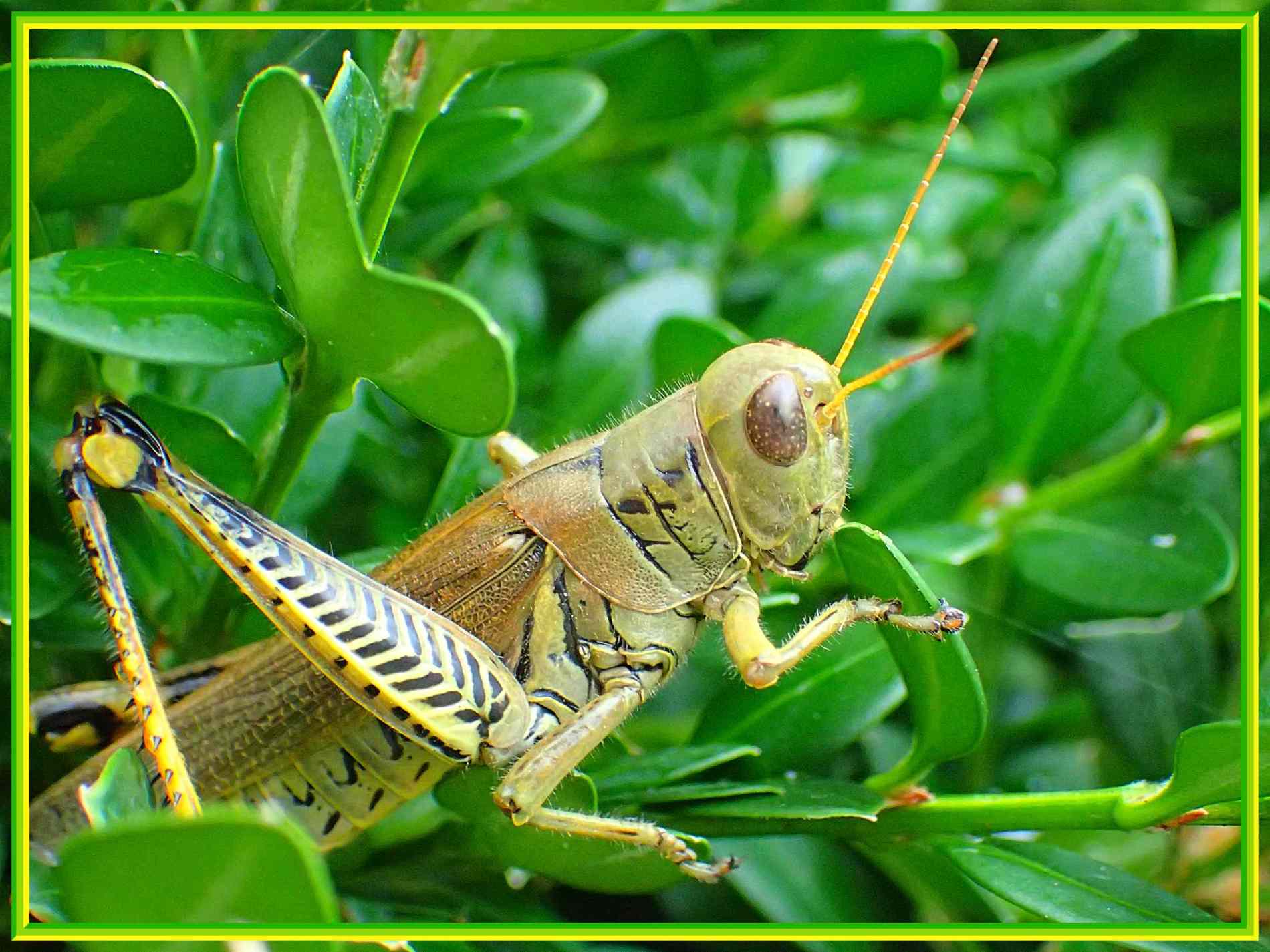
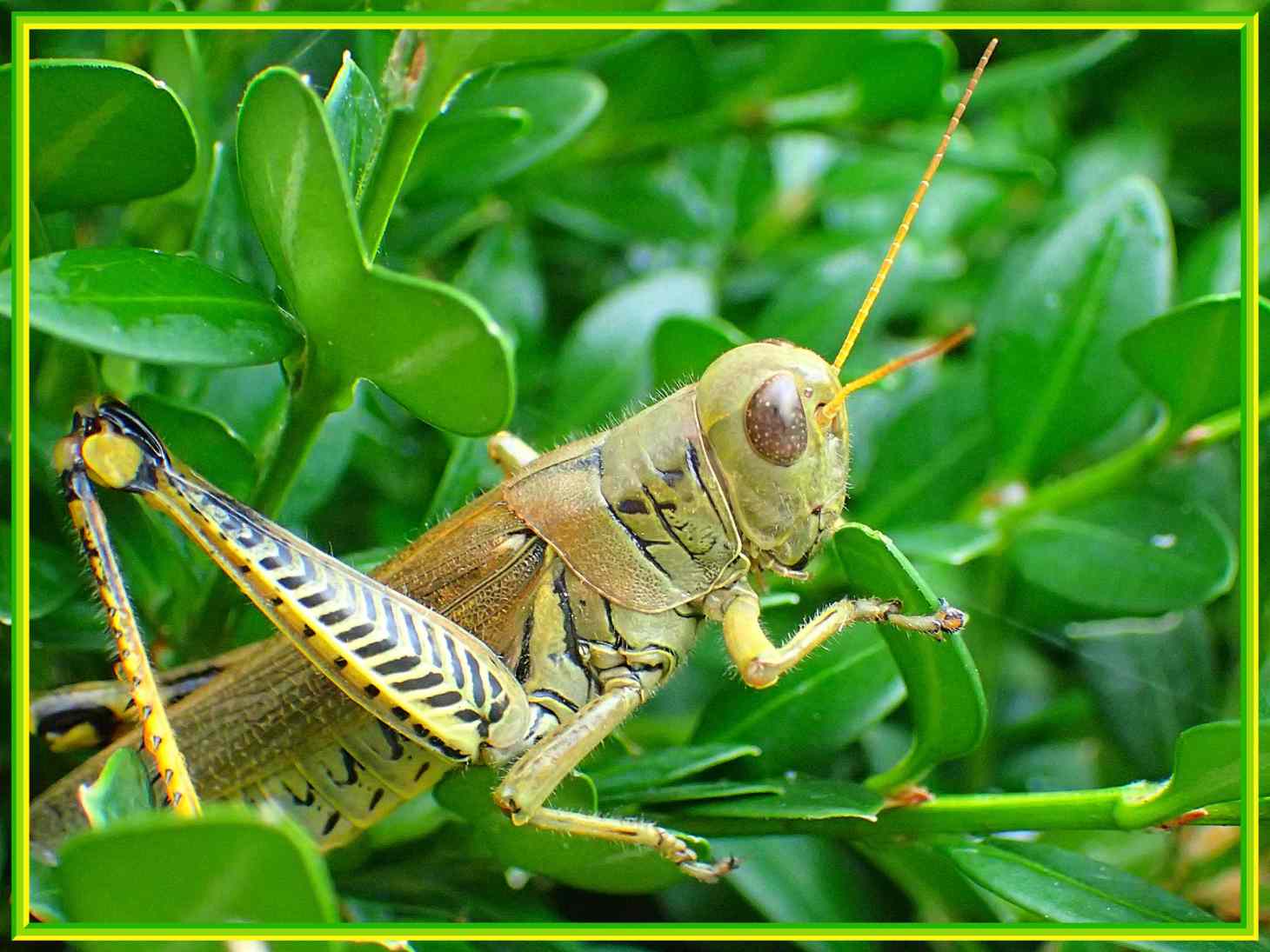
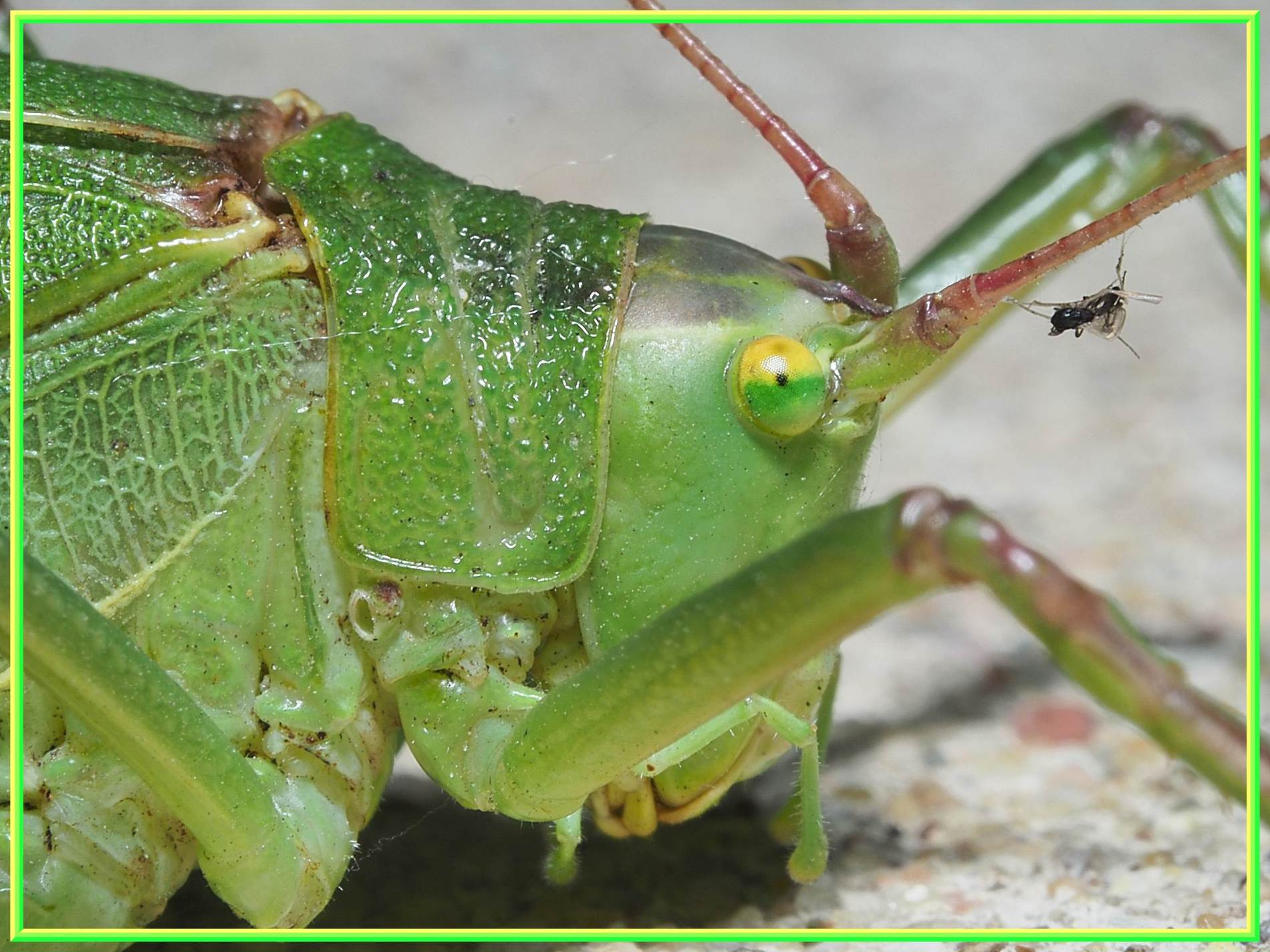
[Note:    The front leg has a tannish, round area under the knee… that is its hearing mechanism.  Since it has one on the left and right legs, it can hear in stereo.]

Resting on the Balcony … Photo by Thomas Peace c.2024
Post

There is an Intrinsic Goodness that is not merely Learned…

19 comments

There exists the intrinsic goodness of a very healthy mind. It is not what came about (secondhand) from the teachings and preaching of others. It is its own radiant and special light (which was not made from what others offered). To act from the blueprint of others is not unsullied, pure action; rather, it is secondhand reaction. Secondhand reaction rarely truly radiates what is holistically good. Behaving from a blueprint is robotic, mechanical, regimented, imitative, and not genuine. Organized governments, religions, schools, and cults tell you how to behave. Dynamic intelligence and true innocence surpass all of the superficiality that mankind’s so-called structured organizations offer. A crippled mind needs a crutch. But over-dependence on crutches keeps you dependent and limited. 
No need to cling to things, floating frog. 

Ribbit… Ribbit… Photo by Thomas Peace c.2023
Post

Intentional Meditation from a “Meditator” is a Falsity…

17 comments

[Note: I hope that many of you had a happy Thanksgiving. Beyond being “thankful,” we also need to help others in need (by donating or by doing something)… so that they too may be thankful. ]

To intentionally meditate, at certain times of the day (using certain methods), is likely very limited, false, and likely makes the mind more mechanical, more calculating, and dull. To meditate to get something out of it… is to try to do something from a motive. A so-called meditator who tries to meditate to get nirvana (or to get some kind of “special” non-ordinary experience)… is (let’s face it) out to get something. Time and greed do not (and cannot) lead one to a timeless, non-greedy dimension. Time is sequential and greed (being in time) is, likewise, sequential. The timeless is not an achievement that comes about by calculation, motives, practices, methods, or learned procedures in (and “as”) time. However, there are oodles of people (i.e., charlatans) who (all too willingly) try to instill their methods upon you. And they have plenty of secondhand beliefs that they learned from others.

The beauty of spontaneous, simple, uncalculated awareness (without motives to get something) may come about naturally — without effort — in a mind that is unsullied, uncontaminated, and innocent. And it may be that, on the other hand, the supposed central (controlling) self that tries to meditate through methodology is essentially an obtrusion of conditioned thought/thinking (that is neither central, truly controlling, nor a true initiator of anything). Trying to meditate via the effort of a so-called central controller… is neither viable nor intelligent. Even while engaging in our so-called meditation (which we learned from others), most of us are reinforcing the perpetual conditioned illusion of a center (i.e., a central ego).

To perceive without effort can occur in a mind of deep order, intelligence, and health. Such effortlessness may be beyond the limitations of sequential motives and time. Such effortlessness does not reinforce an illusory center. Bliss, eternity, and a profoundly innocent mind are not separate things.

The Trees’ Symbiotic Friends … Photo by Thomas Peace c.2023
Post

Thinking, Fear, and Suffering…

18 comments

Thinking, being of abstraction, is sequential in nature; therefore, it is of time; it is time. It is psychological time that creates and manifests as fear. In time, one may be despised by others; in time (i.e., in the future), one may be laughed at; in time, one may become senile; in time, one may get psychologically hurt by another. So, often, thought and its shadow (i.e., concomitant fear) manifest in (and “as”) time. And remaining in (and “as”) conditioned, sequential abstraction… is a form of suffering. Such suffering is not blissful living.

Thought is often a very necessary tool. However, all too often, we go on thinking (when thought is not necessary). This remaining in (and “as”) thought/thinking, is remaining in what is merely conditioned, merely sequential, merely symbolic, and what is merely time-bound. To psychologically die, at times, to the repetition of abstract thinking, is to go beyond fear, secondhandedness, fragmentation, symbolism, and separation. It may be that the separation between the thinker and the thought is, in itself, another conditioned, sequential misstep… another learned fabrication that isn’t true. It may be that thought creates (and is) the thinker, not the other way around. And we are afraid to have thinking stop (because we are afraid of being nothing). But this “nothing,” that we are afraid of, is a projection of thought/thinking that is erroneous and illusory. To often go beyond the limitation of abstract, fragmentary, and sequential thinking — and all thought is fragmentary, sequential, and time-bound — may be (if it is actually done) rather blissful and beyond distortion, fear, and suffering.

Chameleonic Sweetie … Photo by Thomas Peace c.2023
Post

The Limited and Isolated Domain of Thinking

18 comments

One often points out here that it may be prudent to go beyond the limited and fragmentary domain of thought/thinking. One is not asking you to dive deep into a lot of philosophical abstraction. On the contrary, i am suggesting that you do something that is immensely pure, pristine, and beautifully simple… which is to not always be of (and “in”) the domain of thought/thinking. You see, thought/thinking — if we are at all honest with ourselves — is where all of the abstraction is. Most of us habitually live in (and “as”) abstraction. Our thoughts (i.e., our abstractions) are actually what we are. These abstractions are dreadfully habitual, and we do not want to let them go. Most of us even accept words as being rather equivalent to reality… even though words are merely virtual abstractions. (Sometimes words are necessary, but they are only tools.)

Too many of us are satisfied with virtual, illusory, fragmentary ways. Little wonder why the world is full of a lot of insanity and chaos. We need to wake up and change.

In the Shadows … Photo by Thomas Peace c.2023
Post

The Passion of Deep Inquiry regarding Truth

20 comments

In this very insane and violent world, in order to find out what is true, and what is beyond and deeper than what everyone else is thinking, believing, or hoping, one must have (and “be”) a tremendous and great passion (involving holistic discovery). This immense passion must be beyond motives involving hopes, desires, and secondhand patterns. One must — to truly explore — function with (and “as”) a mind that is untainted, unprogrammed, unafraid, unconditioned, and uninfluenced by others. Such a profound inquiry must not try to influence what may be discovered (via any internal, psychological influences such as hopes, beliefs, desires, and expectations). And, such a pristine, inquiring mind must be extremely healthy, via being part of a body that eats wholesome, very natural, nourishing foods, exercises often, and does not indulge in recreational mind-altering drugs, alcohol, and tobacco products (that can distort the observations).

Then, having laid the right foundation, one can inquire. This inquiry may best be done (psychologically) without methods, systems, and learned techniques… just by timelessly, effortlessly looking without conflict, and conditioning… beyond any previously learned psychological molding, casting, techniques, or shaping. Most thinking, per se, involves methodology, remembrance, and effort; being beyond thinking is neither of methodology nor time. Freedom, spirituality, and truth may not be what people think or what minds fabricate.

Shine On You Crazy Diamond … Photo by Thomas Peace c.2023

Post

Anything “Separate” (psychologically) may be largely Illusory…

17 comments

Conflict and friction are rooted in separation. We were miseducated to accept and embrace separation in (and “as”) consciousness. We were taught that we have a separate “ego” that controls things. We were not told about the possibility that this “ego” is merely a protrusion of thought/thinking. We were not told that, psychologically, the perceiver is not something separate from the perceived. So-called “normal” people look at internal anger, fear, and jealousy as if each is something separate from what they actually are. This inward separation also extends “outwardly.” Most look at life with separation and conflict and accept it as being normal.

Genuine, holistic love is not based on separation and conflict. Love is not what involves psychological distance and ironclad, circumscribed boundaries. The left hand that sees the right hand as something apart from itself is ignorant and is confined in (and “as”) blinding deception. Such ignorance and confinement manifest as sorrow. Wisdom transcends this.

Tiger on the run … Photo by Thomas Peace c.2023
Post

The Known and the Unknown…

17 comments

Most people are magnetized to gravitate to (and to dwell in, and “as”) the known. They, unfortunately, cling to an existence exclusively in that superficial dimension. That dimension is a very limited dimension because one can only know (and accumulate) a very limited amount of things. To often exist as the unknown is foreign to them (and, for many, they never even considered it). The known is always of the past because it was accumulated in (and “as”) the past. Being of the past, the known always has a stale, secondhand element to it; it is never new, never totally fresh and living. Virtual, symbolic patterns, which constitute the known, are tokens and representations… not the actuality. It is good to use symbolic patterns often… but they are only temporary tools.


In so-called modern times, we were miseducated to dwell (and exist “as”) the known exclusively. Unfortunately, a mind that exclusively exists as the known is unbalanced and not whole. Society is a direct reflection of this unbalanced element, and insanity is rampant across the world. Interestingly, there is no procedure or method to step out of the known. All procedures and methods involve the known and are extensions of it. Procedures and methods involve time and the known is sequential (in its mechanical nature) and involves (and is) time. The unknown has the essence of nothingness to it (psychologically), and most people (unfortunately) are extremely afraid to be nothing psychologically. All want to be something, to attain something, to become something, to believe something, to get something, and to just continue to accumulate (sequentially). This exclusive sequential accumulation may be the very denial of true and timeless living.

Snapper Jr. … Photo by Thomas Peace c.2023

Post

Meditation does not occur when you sit on your behind and decide to meditate.

14 comments

Many years ago, when i was in college, so-called gurus from the East came to our campus, providing students with meditation techniques that involved sitting cross-legged and concentrating on allegedly “special” mantras that were supposed to take us to a higher spiritual level. I went to a couple of these sessions and ended up telling the bearded gurus — who were taking money, by the way, for their efforts — that i felt that what they were promoting was just a glorified form of self-hypnosis. I read about hypnosis while in high school and was familiar with what it entailed. Needless to say, they were not very elated regarding my comments.

Many people are greedy and gullible. They think that they can pay money that will enable them to soar to some kind of higher spiritual plane. Real meditation is not what one can greedily arrange to happen. It is not something that one can practice. Real meditation is not doing something to attain some otherworldly result (to escape from reality). Real meditation is an effortless thing that may take place if one is very perceptive, caring, and greed-free. Real meditation is not doing something to get something out of it. One cannot “know” that one is meditating. Real meditation takes place, in one, unawares, without a person concluding that he or she is doing it.

A dull, greedy little mind can sit cross-legged (repeating so-called “special” words for decades but it will only be mesmerizing itself hypnotically… rendering itself to be even more dull and robotic). There is no path to the truly spiritual because the truly spiritual (i.e., the timeless) is not in a place. It is not locked up in a box upon an altar. Place and time are bound together.

Beyond the Caterpillars … Photo by Thomas Peace c.2023
Post

The ego prevents Deep, Holistic Compassion…

11 comments

The ego of most people exists as a learned, limited set of reactions that involve separation, distance (from what are considered “others”), conflict, and a circumscribed (though false) center. Thought/thinking is the source of the ego, not the other way around. Egos, being restricted in nature, often cause havoc in the world; just check out the news. The ego, being limited, is often a cause of suffering (both with what are considered “inward” and “outside” events). The ego manifests suffering (because of its confinement and falsity). Deep, holistic compassion is dynamic and involves unadulterated perception. Such perception is direct and is not a mere reaction… it is action and is not robotic (like superficial reaction is). When the ego is transcended, a real, holistic compassion may occur that exists as immense and profound intelligence.

Buck “I” … Photo by Thomas Peace c.2023
Post

More About “Praying”

25 comments

Well, this one is not going to win me any popularity contests!
Nevertheless, one hopes that you have the seriousness, energy, and integrity to openly attend to this.

Although i may have had a profound spiritual nirvana-oriented “experience,” which (if it indeed happened) would definitely cause me to realize the reality of that vast, sacred intelligence… i generally do not pray. With regard to human beings praying, it is indeed amazing how many people think that they have to point out (to that vast, supreme intelligence) what needs to be done in life. If it is indeed vast and intelligent, it wouldn’t need a middle-man (i.e., a basically primitive, fragmentary, limited, little hominid species) to tell it what needs to be done. A human being may think that he or she must point out what he or she or what others need… but that, in a big way, may be arrogant, limited, and insulting. Furthermore, some people may maintain that praying makes them feel better. Well, alcohol and other drugs make a whole lot of people feel better but that does not mean they should be frequently used.

Additionally, many people in life have problems and need help. There would be no end to any divine, miraculous activity of helping people (and animals) once that ball gets rolling. Nature is basically allowed to (naturally) run its course. My suggestion — and i’ve said this before — is, instead of using symbolic words, mental supplication, and summoning wishes toward a supposed God-oriented image in your head… actually roll up your sleeves and do something. For many years, i was a teacher for the multiply handicapped. Instead of merely praying and wishing that their lives improved, i actually did something. Perhaps — at times — one can be somewhat of an extension of that vast, unimaginable, compassionate intelligence, (without merely relying on internal wishes and invocations), without requesting some invisible power to magically get things done.

And please don’t continue to anthropomorphize things; and, of course, that sacred immensity doesn’t want to be worshipped (by fragmentary minds) via idolization, because it certainly doesn’t have a primitive, narcissistic human ego (thank goodness) that craves adoration. One is suggesting here that large numbers of humans have misconstrued what true spirituality entails… but then, one has realized that fact ever since one was in grade school.

Sweet Yellow … Photo by Thomas Peace c.2023
Post

When The Mind Worships What it Considers to be God…

13 comments

When the mind — as thought/thinking — worships what it considers to be “God,” it — in actuality — is worshipping thought-formulated images that it absorbed from others or that it manufactured on its own. So, in essence, it is worshipping itself (or part of itself). Alternatively, it may be far more prudent to diligently inquire as to whether the sacred really exists (or not). And such an explorative inquiry, if it is to be pristine and uninfluenced by outside (or inside) agencies, may best be often done beyond the limitations and trickery of thought/thinking. A lens that is not contaminated by outside debris perceives clearly beyond all of the rot. Keeping the mind healthy, clear, inquisitive, compassionate, orderly, and of dynamic depth, may be far more important than clinging to secondhand images, beliefs, so-called experts, and traditional routines.

Grasping for Life … Photo by Thomas Peace c.2023
Post

Short Video entitled “Animals Acting Like Humans”…

26 comments

Very many of us regard humans as something separate from animals. We are, in actuality, a strange kind of animal.

(Please watch the attached short video.) 😉

Watch the entirety of it, please.

We horse-around … Photo by Thomas Peace c.2023

Post

Liberation from the Limited Notion of Self…

18 comments

I’ve included the following quote by Einstein in previous posts, and i’m including it here again.

“The true value of a human being can be found in the degree to which he has attained liberation from the self.” — Albert Einstein

The human brain goes through a huge amount of associative mental connections. Most people associate the “I,” the “me,” the “self” with power to control, with domination over “other” thoughts, and with freedom to act independently. However, the “I” — just like the other concepts of central authority — is just a protrusion of thought/thinking. In all actuality, there is no true central “controller” situated in the brain. Unfortunately, far too many people treat this thing as if it has a separate, substantive existence (apart from others). It may be that many millions deceive themselves each and every day. Transcending this limited, primitive, crude form of thinking opens the way toward deep compassion and holistic understanding. Our age-old associative ties to a central, independent “controller” (apart from the world) may be very erroneous.

I’m little … Photo by Thomas Peace c.2023
Post

Protrusions of Thought/Thinking

11 comments

Most of us are almost constantly churning — mentally — with various images, words, and patterns within our minds. (The words are often verbal in essence and usually occur as simulations of what one’s own physical voice sounds like.) Even when we listen to others, or observe others, what we perceive largely consists of patterns recognized (i.e., re-cognized) by mental patterns which already exist in (and “as”) the mind. We often take these patterns — these protrusions of thought/thinking — to be equivalent to pure reality. However, they are primarily just virtual representations that are fragmentary, symbolic, and of the past, since they are constituted of repetitive mental protrusions that reflect what was poured — piecemeal — into us by others. Even the “I” that each one seems to zealously harbor and worship consists of a protrusion of thought/thinking (that deceives the mind and often invites fragmentary, separative behavior).

A silent mind transcends this limitation by going beyond what is secondhand, virtual, and symbolic. Such a mind is not merely trapped in (and “as”) the representational. Such a mind is dynamic, alive, pristine, and beyond sequential, robotic imitation. Then, true care and compassion may manifest. Compassion does not emanate from what is fundamentally not alive.

Lichen what you see … Photo by Thomas Peace c.2023
Post

What is Integrity?

13 comments

Integrity is wholeness, goodness, purity, accuracy, uprightness, and incorruptness. A disjointed mind that is constantly internally chattering to itself — with fragmentary words and labels that society indoctrinated it with — likely has a hard time with existing as true integrity. Friction, conflict, fragmentation, and indifference are not what contribute to integrity. The lack of integrity is illusory, and so many people (for comfort) accept what is spoon-fed to them but which is essentially false.

There exists a profound level of integrity that is intrinsically a manifestation of incorruptibility; such incorruptibility is beyond the decay that most people fear. It effortlessly transcends mortality.


Chlorophylless … Photo by Thomas Peace c.2023
Post

Wisdom, Compassion, and Great Intelligence…

15 comments

There exists a certain kind of wisdom, a certain kind of compassion, and a certain kind of great intelligence. Each of the three is not something separate from the others.

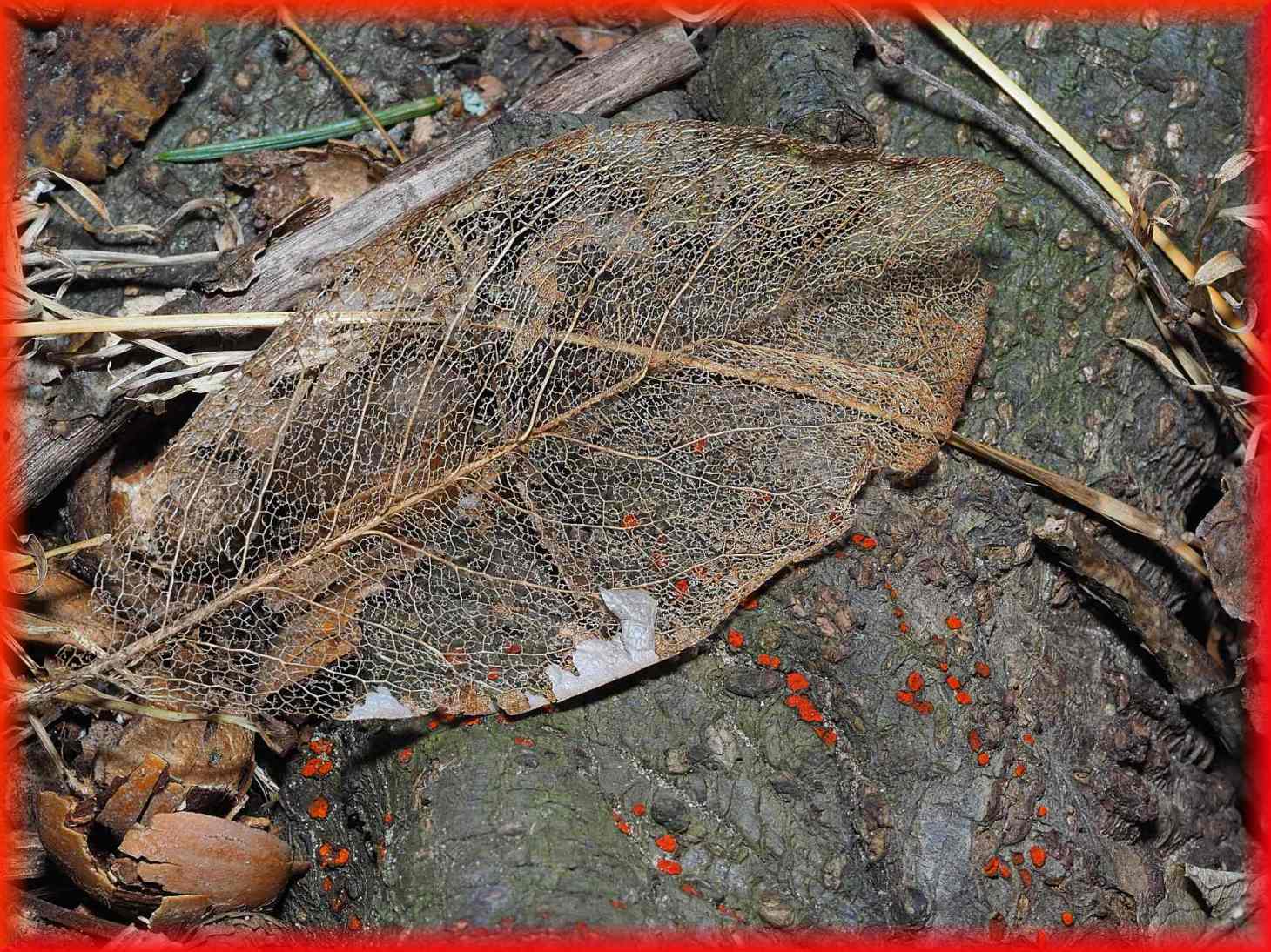
Orange Fairy Cup Fungus … Photo by Thomas Peace c.2023

Post

How do you look at occurrences? It matters…

20 comments

Do you look at things in standard, habitual, common ways (involving space and separation)? How we perceive occurrences matters. It matters regarding the outside environment and it matters internally (i.e., in consciousness, so to speak). Of course, as we have pointed out in the past, we perceive the outside environment via our internal consciousness… so our “outside perceptions” tend to be largely internal and altered by internal screening.

People tend to look at things — both externally and internally — through space that is limited. People, even with thoughts, for example, seem to see thoughts through a limited space (between a perceiver and the perceived). This space may be largely fictitious because there may just be the perceived and any (separate) perceiver may be solely the result of thought/thinking. We see our fears through a limited space (with a distance)… whereas, in reality, we actually are our fears… not merely what “has them.” When one is in sorrow, one is — partially as a part of what one is — the sorrow. Dealing with things directly, without having superfluous entities at a distance, enables more energy and acute intelligence to flower. Additionally, one can point out that limited space (such as habitually concocted by the mind) does not nourish vast, unlimited perception, deep compassion, and pristine understanding. It may be prudent to often be the phenomena of observing without habitual limited space. Limited space is the essence of indifference (i.e., a lack of compassion).

Crystallization … Photo by Thomas Peace c.2023
Post

Seriousness

14 comments

There is a vast seriousness that radiates its discipline holistically, healthfully, and with tremendous joy and insight. This seriousness is not what merely childishly depends upon the blueprints of others. Being whole, it need not grope for more, for improvement, nor does it mechanistically function according to any prearranged laid out patterns. The flame of this seriousness burns away illusion, separation, death, and time.

Bird’s Eye View … photo by Thomas Peace c.2023
Post

Additional Insight about the Perceiver being the Perceived…

11 comments

In my previous two posts (prior to this one), if you understood that, psychologically, the perceiver actually is the perceived (and not merely something separate from the perceived)… then you may understand the following insightful poem by Stephen Crane. If you did not understand (even intellectually) what was previously written, then you will not understand Crane’s poem.

From the poetry of Stephen Crane:

The sage lectured brilliantly. 
Before him, two images: 
“Now this one is a devil, 
And this one is me.” 
He turned away. 
Then a cunning pupil 
Changed the positions. 

Turned the sage again: 
“Now this one is a devil, 
And this one is me.” 
The pupils sat, all grinning, 
And rejoiced in the game. 
But the sage was a sage. 

Image in Consciousness … Photo by Thomas Peace c. 2022
Post

More regarding the Perceiver not being separate from the Perceived…

5 comments

In my prior post, i delved into the likeliness that — psychologically — the perceiver is not truly separate from the perceived. Most people do not realize that their perceptions are not truly separate from what constitutes their consciousness and existence. Many people might argue and say, “Oh, no, I am so much more than my perceptions.” But take away your perceptions, your experiences, your observations, the robotic labeling of things, the conditioned judgments about the things seen… and then what are you? In actuality, you basically are these things and without them you are nothing. Most people are very afraid to be nothing; they “think” that their sense of self is necessary for security and for eternal prosperity. They do not realize that a mind of sweet, psychological nothingness is what security and eternity actually are. And people who are afraid to be nothing do not really understand meditation (though they may often talk about it and “think” that they practice it). (It might be prudent to read my post that is prior to this one.) In the following clever poem, Whitman insightfully talks about people as if they are the things in their lives that they deal with.

Excerpt from A Song for Occupations by Walt Whitman:

When the psalm sings instead of the singer,

When the script preaches instead of the preacher,

When the pulpit descends and goes instead of the carver that
carved the supporting desk,

When I can touch the body of books by night or by day, and
when they touch my body back again,

When a university course convinces like a slumbering woman and
child convince,

When the minted gold in the vault smiles like the night-watchman’s
daughter,

When warrantee deeds loafe in chairs opposite and are my friendly
companions,

I intend to reach them my hand, and make as much of them as
I do of men and women like you.

Beyond separation … Photo by Thomas Peace c. 2022
Post

The Tale of Lo Zu moving the Mountain…

14 comments

Lo Zu was sitting peacefully, adjacent to a beautiful, small creek with splendid, lush vegetation growing all around it. A towering, majestic mountain stood in the distance. Four inquisitive, very young students came by, and one of them said to Lo Zu, “Tell us something of wisdom; please tell us something that will amaze us.”

Lo Zu turned to them, smiling, and said, “Well, my friends, that’s a very tall order!” The youths all affectionately smiled at the aged Lo Zu and agreed. Lo Zu gazed at them and said (half to himself), “Let’s see… what can one say (or do) that would sufficiently satisfy such a tall order?” Then Lo Zu said, “How about if i get that mountain to move? Would that be sufficient?” “Oh, yes it would, indeed,” said one of the young students, “but it can’t be done.”

“Maybe you shouldn’t be so sure,” Lo Zu stated, grinning. Lo Zu continued on, “You see, in the mind, psychologically, it is such that the perceiver is (in a big way) the perceived. If the mind feels anger, it is the anger; if the mind feels joy, it is the joy; if the mind sees a tree (the patterns and the colors of that tree become what the mind is); if the moon is perceived, it’s image becomes what the mind is (psychologically). So the perceiver is (psychologically) the perceived. The two are as one.

“Yes,” the students said. Lo Zu went on, “So if one of you students looks at the mountain, and i move you… then in a big way, the mountain will move.” “Very interesting,” the students proclaimed.

Then Lo Zu said, “”There is a great book, stemming from a great and very wise man, that was written in a foreign land a short while back. It was a cornerstone book that was rejected by the authoritarian (so-called spiritual) bureaucrats in that land (who wanted to manipulate people and did not want them to be independent); they arranged for all of those who cherished that book to be executed. The book was called ‘The Gospel of Thomas.’ Here is one of the sayings from within that book: “When you make the two into one, you will become children of humanity, and when you say, ‘Mountain, move from here,’ it will move.””

Snow at the peak … Photo by Thomas Peace c. 2022
Post

Shorties

21 comments

All of what seems to be parts of this universe are not truly separate parts at all but only mistakingly appear to be parts; still, most scientists fail to fully perceive this.

Like man, ants have an organized social structure; unlike man, ants do not ruin the environmental whole.

The mind that primarily perceives through (and with) its many accumulations and beliefs, largely sees — and exists as — what is old, stale, stockpiled, and unalive.

Needless fear blocks the mind from true order and from real freedom and understanding.

A universe without pain and suffering is like a phony plastic plant that need not struggle through the dirt and that is devoid of real growth and feeling.

Look at the map of life as a whole; merely concentrating on a single point or place (of supposed self) is fragmentary, limited, negligible, and ludicrous.

Are you just reading an ordinary poem, or is the magic of the poem unfolding what you are in a miraculous, transformational way?

Awareness is not what you cultivate over time; it occurs to the mind that (now) is passionately and holistically perceptive.

Mother and daughter Tree Frog. … Photo by Thomas Peace c. 2021
Post

Inner Speech

19 comments

Many of us think, at times, pictorially (via mental pictures) and emotionally. And to a large extent, many of us think via internal words and sentences (i.e., verbally). This verbiage is called “inner speech,” and it allegedly involves one talking to oneself. Is there a separate self or separate “center” that is truly separate from this inner speech? One does not think so. Regarding inner speech, the perceiver is the perceived; fabricating (mentally) a separate observer is a waste of energy and causes needless separation. Too many of us look at things — such as fear and such as nature — via mere separation. (We were taught to perceive things, internally and externally, via separation.) (By the way, not having the illusion of a separate, central self does not negate eternity/the eternal; on the contrary, it invites it.)

We think, internally, in a multitude of ways; most of us are constantly chattering, internally, about something. This inner chattering largely consists of words and sequences of words. Words are symbolic and are always fragmentary, always limited. (One often speaks internally with a virtual copy of one’s own voice.) Stillness — which allows for wholeness — is imperative. But one cannot “make” stillness occur. True stillness is not merely an effect brought about by some mechanistic, calculated cause. True stillness comes with holistic perception beyond mere cause and effect reactions. This is why you cannot decide to meditate. You cannot say you will meditate for 30 minutes in the morning and 30 minutes in the evening. This is why “practicing” mindfulness is ludicrous. True meditation occurs naturally; it is uninvited and is not the mere result of some premeditated cause or desire. (You cannot “know” that you are meditating, by the way.)

The watery pool of the holistic, reflective mind (in stillness) will mirror the truth. An agitated mind, full of clatter and turmoil, reflects nothing.

Monarch Butterfly… Only 10% remain after 20 years of manmade extinction. And there are still people saying that manmade climate change is not real. Photo by Thomas Peace c. 2021

Post

They Better Not Try To Fool My Heart

30 comments


They better not try to fool my heart
because they’d be wasting their time
There are plenty of other lost causes out there
whom they can easily fool

They better not try to harden my heart
because they’d be pounding on the wrong chest
There are endless cold cadavers around the globe
who would gladly help with the cruel beating

They better not pave the path to “truth”
because i have seen where their deception leads to
There are plenty of eager path-makers out there
though no path in time ever leads to the timeless


Shadow of a doubt … Photo by Thomas Peace c. 2018


Post

Truth, security, and the eternal…

5 comments


In great humility, there is an emptiness that exists beyond the “me” and “mine.”  That emptiness is, in actuality, the absence (i.e., the non-existence) of the “me.”  “Mostpeople” would feel frightened about the psychological absence of the “me,” or even about the possibility of the psychological absence of the “me.”  To “mostpeople,” it would seem to be an “insecurity” to go beyond the “me” or beyond the supposedly “controlling center.”   However, for the (truly) wise man, mere security is not a factor… truth is a factor.  To the wise man (or woman), it is truth that is where the real beauty, the real treasure, exists.  

Many years ago, in the early ’70s, when i was in my 4th year of college, i read an article about split-brain operations and how these surgical operations resulted in two totally separate fields of consciousness in one human being.  Reading about how the corpus callosum could be surgically severed, resulting in two distinct, separate fields of consciousness — with each not knowing what the other was doing — pulled one even further away from the ancient orthodoxy that so many of us were indoctrinated by.  It was back then that my insatiable quest for truth began (in the deepest sense), though even when one was much younger one still saw through a lot of the madness and falsities in the things that they tried to indoctrinate into us.  Real humility occurs when the mind intelligently doubts and asks profound questions without relying on what one’s family or culture provides as the truth.  If one largely relies on what one’s family or one’s culture has provided, it reflects a form of arrogance (which is far from true humility); one’s family and culture can, indeed, be a component or facet of oneself and, for sure, being certain of their validity is — in a big way — just a form of self-admiration and arrogance.  Intelligent doubt goes beyond all this.  Such intelligent doubt reflects the way Albert Einstein discovered things, by wisely questioning many things that were taken for granted as facts. Albert Einstein understood what it meant to “stand alone.”   To really inquire into that which is truly sacred, immeasurable, timeless and uncontaminated, one must, of course, do it with an instrument (i.e., a mind) that is itself uncontaminated.  It absolutely must be untainted, healthy, uncorrupt… that instrument (i.e., that true mind of inquiry).  That, then, means no belief, no arrogant assumptions about the validity of one’s own faith, religion, culture, family creeds, and spiritual blueprints; so it means no beliefs or presumptions.  However, “mostpeople” are totally unwilling to be that way.  They want the comfort and security of “knowing.”  It can be the “knowing” of others that they absorb and take on for themselves… it doesn’t matter.  However, it may be that the real quest for truth lies beyond security and “knowing.”  That is why so few ever come upon that real treasure. 

Standing alone (without depending on others), going beyond the crowd, understanding the mind, going beyond mere images of the “me” and “I” — and mere images and learned concepts is all that they really are — may seem like abandoning security.  However, a truly wise mind, that transcends beyond beliefs, realizes things that involve the only real treasure.  That treasure has an essence of real eternity, immensity, and bliss in it (that “mostpeople,” unfortunately, have no clue about whatsoever).  The scientists were, as it turns out, likely right about one thing; they said:  Reality is probably radically different (i.e., far different) from what most of us assume it to be.


Crab Spider blending in (1) Photo by Thomas Peace c. 2017

Crab Spider blending in (2) Photo by Thomas Peace c. 2017

Post

Comparison and Imitation dull the Mind…

25 comments


Comparing yourself to others is a two-fold process that usually involves measurement and techniques (involving duality) that are superfluous (and that may very well dull the mind).  If many are immersed in dull habits, superficial behaviors, and limited perspectives, comparing yourself with them and then emulating them may, indeed, tend to make the mind act (i.e., react) similarly.  Indifference, seen as normal and ordinary, easily breeds more indifference.  A unique person, beyond all the lemmings, perceives beyond mere comparison and imitation; such a person is more inherently free (than those who merely absorb, internalize, swallow, and imitate the behaviors of others).  Those who lazily internalize all of society’s values and traditions are not free (though they may, as a reaction, insist that they are); they are secondhand shadows of antiquated authority, old habits, and primitive patterns of the past.  It’s easy to be secondhand.  Then you don’t have to think or feel.

Very many compare, imitate, copy, fit in, get comfortable, stagnate, presuppose things that were poured into them, and do not ask deep questions.  Why?  The man or woman who truly goes beyond all of this may not merely be some dishonest, mischievous rogue, but (rather) may be a profoundly insightful, majestic, free, independent, and truly compassionate person.  True compassion, true order, has little to do with following old authority, following stale customs, or following dead rules.  Real order isn’t what merely occurs from comparing oneself to others and imitating others; real order comes from that timeless (i.e., eternal) action that is not mere reaction.  

Away from the crowd. (1) Photo by Thomas Peace c. 2016

Away from the crowd. (1) Photo by Thomas Peace c. 2016

Away from the crowd. (2) Photo by Thomas Peace c. 2016

Away from the crowd. (2) Photo by Thomas Peace c. 2016

Post

Order of the mind…

18 comments


Order of the mind is a sane, truly intelligent person’s responsibility.  Real order involves integrity and purity.  How can the mind remain pure if it is merely sullied by the old-fangled values and archaic systems of the past?  One must have a clear, untarnished mind.  For that to occur, it may be that one’s mind must be open, young, and beyond mere influence.  Only profound silence beyond old systems and methods can do that.  That means not merely depending on others.  That means not merely depending on inner thoughts… that were likely implanted in one by (and “as”) others.  That means not merely depending upon time.  (Psychological and so-called spiritual methodologies — dreamed up by man — stem from the past and require time.)  Timelessness involves existing beyond one’s inner conditioning (a conditioning that is the accumulation and extension of the old patterns of others).  Most of us habitually depend upon others; most of us are afraid to stand empty, alone, and open.  “Standing alone” goes beyond psychological security and imitation.  Many go through life imitating and copying; fear has a lot to do with it.   For many, it is far easier to copy others and “go through the motions,” rather than to independently perceive and think for themselves.  (And their so-called leaders are often mentally unsound.)  Too many of us are second-hand human beings.

Real perception, empathy, and compassion, emanates from a superb, selfless mind that is beyond mere imitation and dependence.  Real compassion comes from the heart; it does not emerge from a robotic mind that merely imitates and follows orders.  In real compassion comes real action (not just reaction).  Reaction belongs to imitating, conditioning, and second-hand minds (many of whom are indifferent and puppet-like).

Red-Spotted Purple (1) Photo by Thomas Peace c. 2016

Red-Spotted Purple (1) Photo by Thomas Peace c. 2016

Red-Spotted Purple (2) Photo by Thomas Peace c. 2016

Red-Spotted Purple (2) Photo by Thomas Peace c. 2016