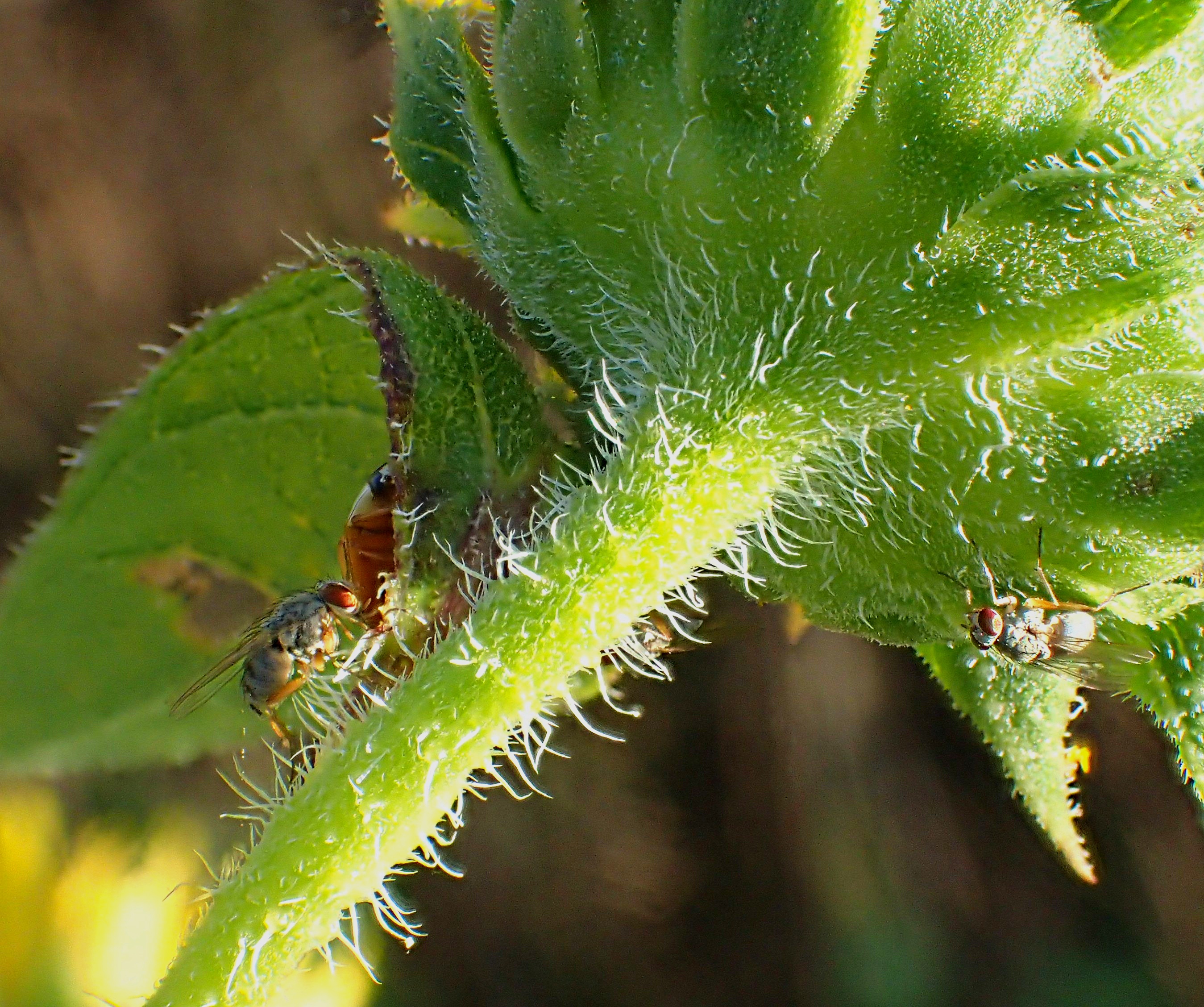
.
Physical threats can be escaped from… and psychological fears are not separate from what you are.
.
.
Ideals cause conflict and friction in the mind. Existing without them and without conflict is true intelligence. Instead of having (and “being”) mere ideals… observe what is taking place from moment to moment (without the conflict that occurs between the “ideal” and the “actuality”… or the conflict that occurs between “fantasized images of the watcher” and the “watched”) and let understanding and learning (beyond conflict) flower. Ideals cause friction between “what you actually are” and what “you wish to be.” Profound understanding trumps ideals every time! When you clearly understand that a certain snake is venomous and extremely poisonous, you naturally avoid getting bitten; you don’t need an ideal about not kissing that snake; intelligence and understanding naturally have you act with (and “as”) caution (beyond lame, fabricated ideals).
.
.
Though our situation may seem rather unlucky now and then… be appreciative for what you have (or who you are with) and are. We are very lucky to have gotten to this point in (and “as”) time and space, whomever we are.
.
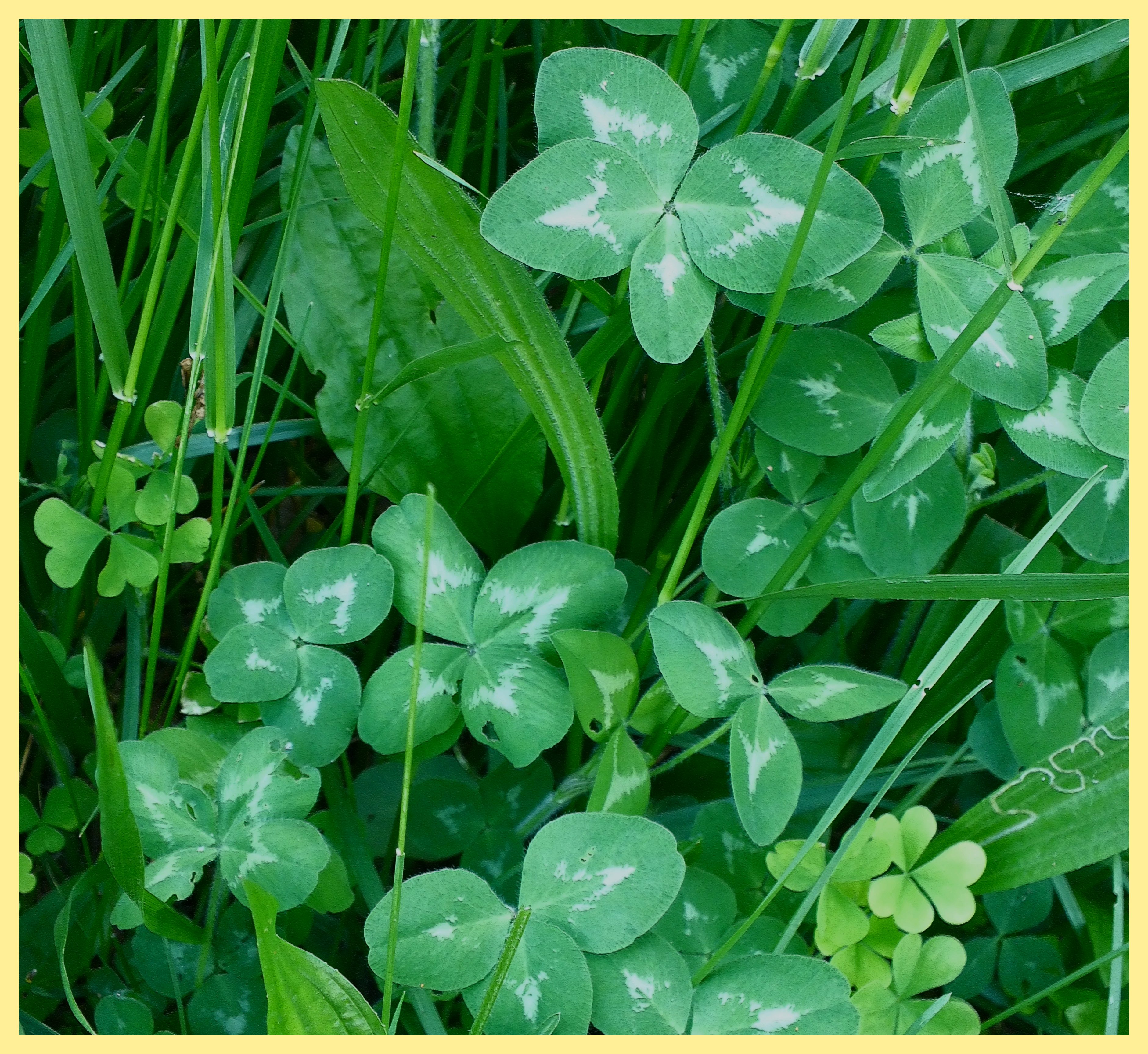
“I’m Looking Over A Four Leaf Clover”
(originally by Art Mooney)
I’m looking over a four leaf clover
I overlooked before
One leaf is sunshine, the second is rain
Third is the roses that grow in the lane
No need explaining
The one remaining is somebody I adore
I’m looking over a four leaf clover
I overlooked before
I’m looking over a four leaf clover
I overlooked before
One leaf is sunshine, the second is rain
Third is the roses that grow in the lane
No need explaining
The one remaining is somebody I adore
I’m looking over a four leaf clover
I overlooked before
I’m looking over a four leaf clover
I overlooked before
One leaf is sunshine, the second is rain
Third is the roses that grow in the lane
No need explaining
The one remaining is somebody I adore
I’m looking over a four leaf clover
I overlooked before
I overlooked before
I overlooked before
.
Flowing movements(callingthemselvespeople)
see these actionsmovements(here)unfoldinglymove
and label it as me a nounstuckrocklikewithinagroove
Evolving observings streaming
and there’s a thinking that
themselves are firmandfixed
There’s metamorphosis movingbursting
here within and all around call
but learned chrylalis concentrated separations
continue to divide pigeonhole label and
stiffen cement and densify all
.
.
Psychologically speaking (without fictitious, crass separation):
In seeing… the see-er is the scene; in hearing… the hearer is the heard; in learning… the learner is the learned; in driving… the driver is the driven; in thinking… the thinker is the thought; in reading (this)… the reader is the read.
.
.
Many have assumptions that the “I” is the central controller of thinking; but, the “I” is actually another one of the conditioned thoughts. Not fully realizing that causes all kinds of illusion, fragmentation, mischief, and needless conflict. One thought — even though it purports to be central — does not, in reality, truly govern, dominate, or keep “other” thoughts in subservience. Profound wisdom and intelligence goes beyond that needless falsity and is then composed of magnificent order that is far more parallel with that of the true, overall order of the universe.
.
.
Depending on recreational drugs means one left one’s inner integrity and happiness for others’ merchandise; doing so leaves one fragmented, twisted, and distorted (and not in the “good” way). I just read about how Montana’s drug problem is skyrocketing out of control… causing devastating results for the state and acting to ruin the economy in many areas. Needless to say, this is also occurring all across the U.S. Life can be extremely tough for most everyone in this day and age, and drugs are an escape. It takes great courage not to escape; it also takes intelligence. Recreational drugs distort the mind… and a mind that is distorted easily makes excuses, easily allows itself to fall into deeper and deeper distortion. Prescription drugs are being abused more and more; and, of course, it’s even easier to rationalize the over-usage of those. In some states, marijuana is being issued as a prescription drug; no doubt many are using it who have no substantial ailment. In India, there are people who take hashish frequently — which contains THC, just like pot does here — and when they die, autopsies reveal that their brains are shrunken, just like with the brains of alcoholics.
Multitudes are addicted to many things which become their drugs… junk foods, cigarettes, alcohol, video games, etc. It’s so easy to depend on crutches, on habits… and on things that others sell to us, saying that it will alter our minds to be “happier.” However, the mind can only be lastingly happy, joyous, and blissful without habitually depending on drugs and substances that allegedly “make” you happy (temporarily); temporary (and distorted) is always a fragmentary, darkly limited thing. Lasting joy must come from within, wherein one is a light to oneself. Beyond dependency, that light is not of distortion.
Excerpts from the unrightfully rejected ancient Gospel of Thomas, which also occur in my “Eternal Fountain of Youth” book (with permission from the Biblical scholar-translators):
Jesus said: “Show me the stone that the builders rejected: That is the cornerstone.”
Jesus said: … “I found all of them all drunk; I found none of them thirsty. And my soul became afflicted for the sons of men, because they are blind in their hearts and do not have sight; for empty they came into the world, and empty too they seek to leave the world. But for the moment they are intoxicated. When they shake off their wine, then they will repent.”
“If one is (whole), one will be filled with light, but if one is divided, one will be filled with darkness.”
.
.
When sensation occurs, the mind reacts according to memory and usually categorizes or “maps” that particular sensation. It is all well and good to do that… but just don’t do it habitually, as most people, unfortunately, do. One can often just be intensely aware — without merely categorizing and labeling (and looking through and from those labels) — so that the mind is not dependent on a mere process of reacting. Merely reacting sets up the mind to be rather mechanical and robotic… and that tends to create a mental environment wherein it is much easier to get bored, get depressed, seek more, or feel in a rut. Profound insight is a living phenomenon beyond the extension of sensation via categorizing or craving; it is something majestically beyond stale reaction. In profound insight, something new occurs to you; it comes to you, not from you; it’s not merely a re-fabricated reaction… a rehashed exercise of the brain.
.
.
Truly helping others — as well as nature — is an action that may not be separate from the order and movement of the divine and spiritual. (One can’t know that one is spiritual… just like one can’t know that one is humble. However — and this probably sounds a bit “out there,” but it’s not — there is a sacred immensity that can visit for a time; should that occur, one would be far beyond the ordinary field of “belief” or “not believing.”) Many people — especially atheists — maintain the conceptual belief that there is no God… and point out that no real evidence exists that God manifests or is beneficent and helps those on this planet. Then there are many who worship God; unfortunately, for many of them, God is a series of mental images and absorbed beliefs… which usually are limited symbols and concepts separate from the whole of life. Beyond all this, real perception is action (beyond conclusions)… wherein the perceiving and the action are one.
Of course, when action is done to truly help others (and all life) — which may be a spiritual thing — that doesn’t mean that one becomes the actual sacred immensity. As was suggested, God, or the conceptual belief that there is no God, for many, is largely merely a concept or series of concepts. Go beyond concepts and actually inquire without pre-molded patterns from others. Passionately inquiring, and (additionally) helping others, and life, may not be a mere concept; it may be an alive, majestic order beyond the cold ordinary. Perception that is limited and incomplete does not act fully/flowingly… it reacts; reactions from (and “as”) what is limited often divide people via rigid beliefs or anti-beliefs. Indifference is a lack of perception. Real perception acts. Care, compassion, and responsibility are at its very heart.
.
.
Lucid, profound perception often sees directly without mere learned and accumulated patterns. In such perception, there is no conception of an “observer” separate from (or independently doing) the “observing”; there is only the observing. If observation occurs exclusively based on past reactions, past memories, past prejudices, and past images involving separation — as it does in so many — then one is looking as an “observer” and primarily with (and “as”) accumulated patterns. Primitive notions that there is an observer that is separate are part of the old, traditional, learned, and accumulated patterns and are a waste of energy… and (directly or indirectly) involve friction, indifference, and conflict.
.
.
Be suspect of those telling you to be detached or to stay in firm belief/attachment. There’s only pristine, dynamic awareness… and not psychological separation (or subjugating oneself with second-hand ideas/images).
.
[Eastern Amberwing Dragonflies, while perched, often flick their abdomen up and down in a wasplike manner. Females lay their eggs in jellylike masses just above the waterline; when exposed to water, these masses burst open and the eggs disperse over a large area.]
.
Most are locked in (and “as”) the small details of life without a passionate inquiry into the essence of the whole… (which, unfortunately — for human beings — is partial, fragmentary, limited, and not real life at all).
.
[Part of a huge Oak Tree]
.
No matter how free they may think they are, all thoughts — as Albert Einstein also sagaciously pointed out — are conditioned reactions… and to go beyond conditioning is to intelligently go beyond thoughts/symbols/reactions. However, the thoughts of the brain — including the conditioned thoughts of “I” or “me” — cannot merely decide to do this whenever and however they like. Whatever is conditioned cannot (in any way, shape, method, or form) fabricate or bring about the true state of the unconditioned. Fully understanding this is deep intelligence; and in that intelligence (if one is lucky) there may be, at times, an ending — though not, of course, a permanent ending — of thought/thinking. If that ending comes about naturally, without any compulsion or methodology (which thought fabricates), then a profound silence may occur. (A fabricated silence is something which is completely different and is just another limited concoction of the brain.) In a truly profound silence is immense order and intelligence (beyond mere symbols, ideas, mental fabrications, and representations); in that silence is freedom, integrity, and wholeness; in that silence (if one is very fortunate) a profound, immeasurable, majestic, unnameable immensity may arrive. (However, much more than even unconditioned silence is involved for that immensity to present itself.) Profound silence is not conditioned, nor is it capable of being permanently held, manipulated, or retained by what is conditioned. Such silence is beyond the realm of conditioning and mundane reaction.
.
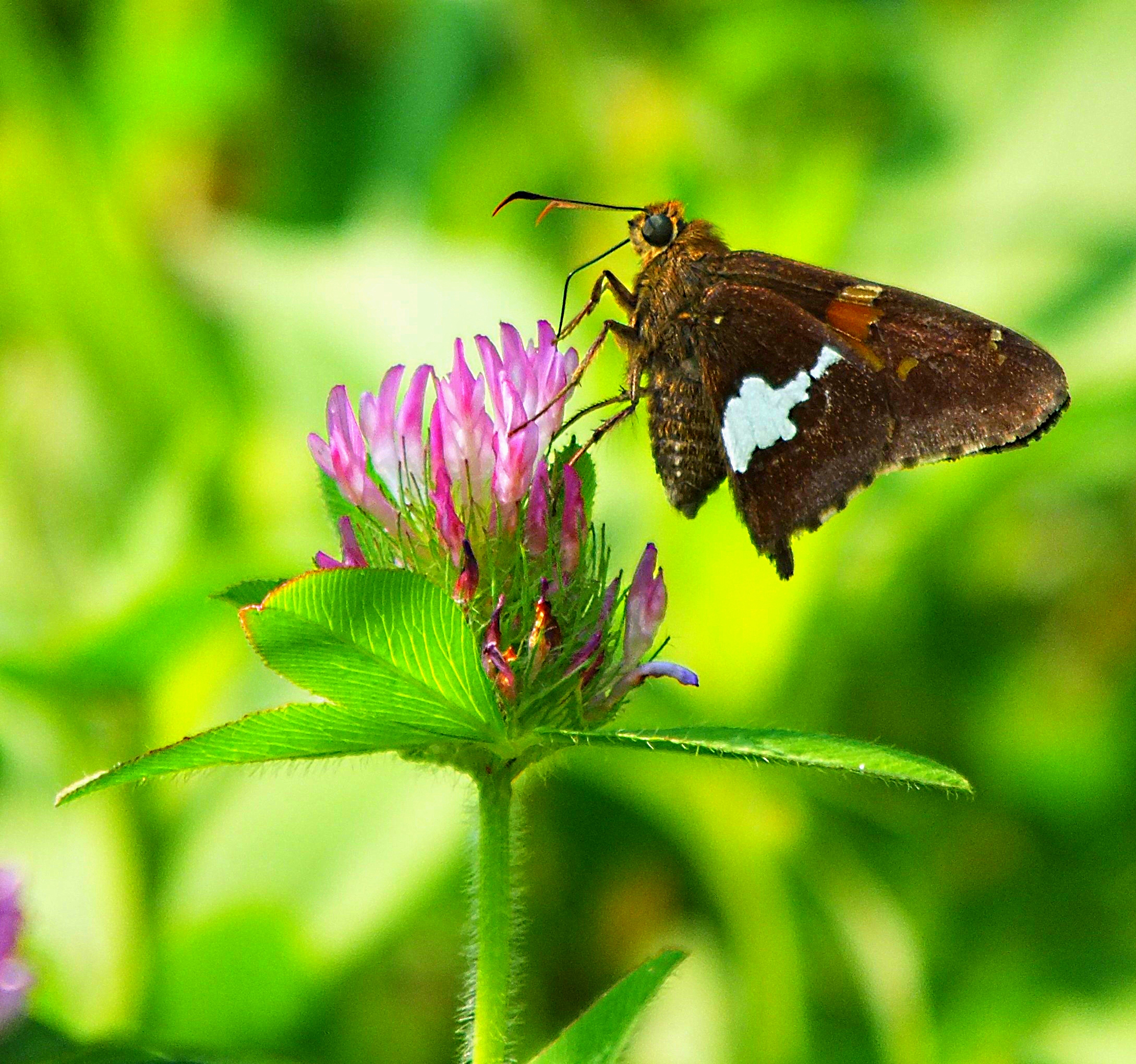
[A Silver-spotted Skipper Butterfly visiting a Red Clover.]
.
A truly aware and mindful human being often exists beyond petty details and, concomitantly, doesn’t need to depend on stimulus after stimulus to be attentive and content. Though experience is often necessary, a deeply aware mind can sagaciously exist in (or, rather, “as”) a timeless domain beyond mundane experience (beyond the continuum of mere cause/effect relationships); or, though this may seem rather odd, it sometimes functions where experience is a minimal phenomenon that is sometimes secondary or “in the background.” If one is merely immersed in (and responding “as”) experience, one is merely part of cause and effect events (that are always partial, always conditioned). A fluid mind that is not merely dependent on causal phenomena may be whole (and not merely dependent on what is fragmentary, conditioned, and partial). Then, when such a mind is experiencing (which is often very necessary)… it does so with great sensitivity and care. Its experiencing then involves a wholeness; experiencing involved with that wholeness has sensitivity which loves nature, the rivers, the people, and the land. Then there isn’t a fragmentary, separate set of experiences that are only out for themselves.
.
[Walking on clouds.]
.
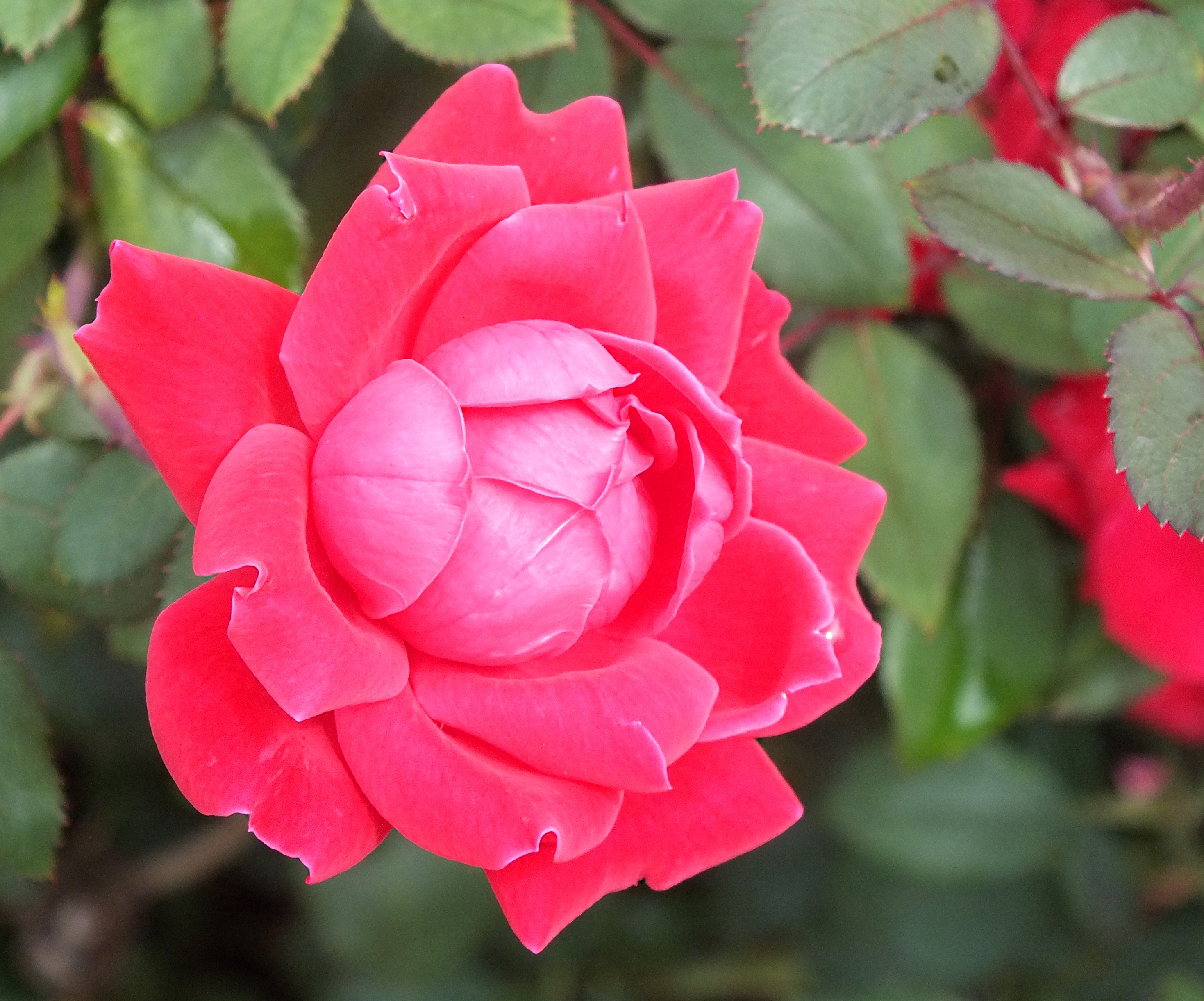
When you look at beautiful roses and sing and smile… most assuredly, the flowers are happily singing and smiling!
(Without the observed, what is the observer?)
.
from E. E. Cummings:
somewhere i have never traveled, gladly beyond
any experience,your eyes have their silence:
in your most frail gesture are things which enclose me,
or which i cannot touch because they are too near
your slightest look easily will unclose me
though i have closed myself as fingers,
you open always petal by petal myself as Spring opens
(touching skilfully,mysteriously)her first rose
or if your wish be to close me, i and
my life will shut very beautifully,suddenly,
as when the heart of this flower imagines
the snow carefully everywhere descending;
nothing which we are to perceive in this world equals
the power of your intense fragility:whose texture
compels me with the color of its countries,
rendering death and forever with each breathing
(i do not know what it is about you that closes
and opens;only something in me understands
the voice of your eyes is deeper than all roses)
nobody,not even the rain,has such small hands
.
Go beyond merely having ideals of what you want to be or “should be.” Such ideals often create inner conflict and friction within (and “as”) the mind and are usually a waste of energy. Look at your actions — without separation — from moment to moment without images of desire or idealism. This doesn’t mean that one just goes on to live in a crazy, disorderly way; it does mean that perhaps attention is looking without “learned patterns,”… and, instead, with a natural, field of order that is beyond conflict, beyond the mind’s (or others’) imposed fabrications. Profound understanding and keen (uncontaminated) “observing” changes things… not stale, concocted ideals.
.
.
If the mind renews itself each and every moment… there is no boring job of drudgery.
.
[Ladybugs are largely carnivorous and eat little insects called Aphids. In this photograph, the captured Aphid is ejecting (i.e., offering) some honeydew, but to no avail. Ants herd Aphids — and protect them like cows – to get honeydew from them (like getting milk from protected cows); but this Ladybug is not just interested in the honeydew; it wants steak for dinner. (There were no protective ants within or around this particular Aphid colony.)]
.
Give a flower to a rainy day and watch the sun begin shining happily. That rainy day is not separate from what many people are.
.
[A Hover Fly enjoying some nectar adjacent to a mosquito that had a massive heart attack. (The mosquito probably sucked someone’s blood who had a lot of bad LDL cholesterol!)]
.
No one – not anybody – can accurately define what true awareness is… because true awareness is too dynamic to merely be put into words and categorized.
.
[Local natural rock-work formation. (There is, by the way, something man-made in this photo. Can you see it?)]
.
A mind that does not depend on images throughout the day (to be aware) can sleep without crass and crude dreams occurring whatsoever.
.
[Leaf-footed Bug with its footing on a leaf. In these, the first three antenna segments are red or reddish brown; the forth is contrastingly yellow-orange or nearly white.]
.
Poise is the elegance and sound balance that a truly aware and, hence, compassionate mind has… without following blueprints.
.
[A Blue Bottle Fly and a Lady Bug. Blue Bottle Flies are most active during spring and fall. Lady Bugs are active spring through fall.]
.
One need not wince at one’s fears and endlessly run away from them if one intelligently realizes that one is not at all separate from what they are.
.
[A couple of Fruit Flies and a hiding Lady Bug. Though the Lady Bug is carnivorous, the Fruit Flies need not worry; they are too large. The Lady Bug goes after even smaller insects, such as Aphids.]
.
True insight is instantaneous (and timeless)… no time (or practice) is involved for it to finally come about.
.
[From earlier this year… these are the Stamen of a red Lily Flower. The Anther is the top part of the Stamen and contains the Pollen, the male reproductive cells. The Filament is lower down and holds the Anther.]
.
Please don’t neglect the bountiful beauty of nature… which includes your own natural body and taking good care of it (and mother earth).
.
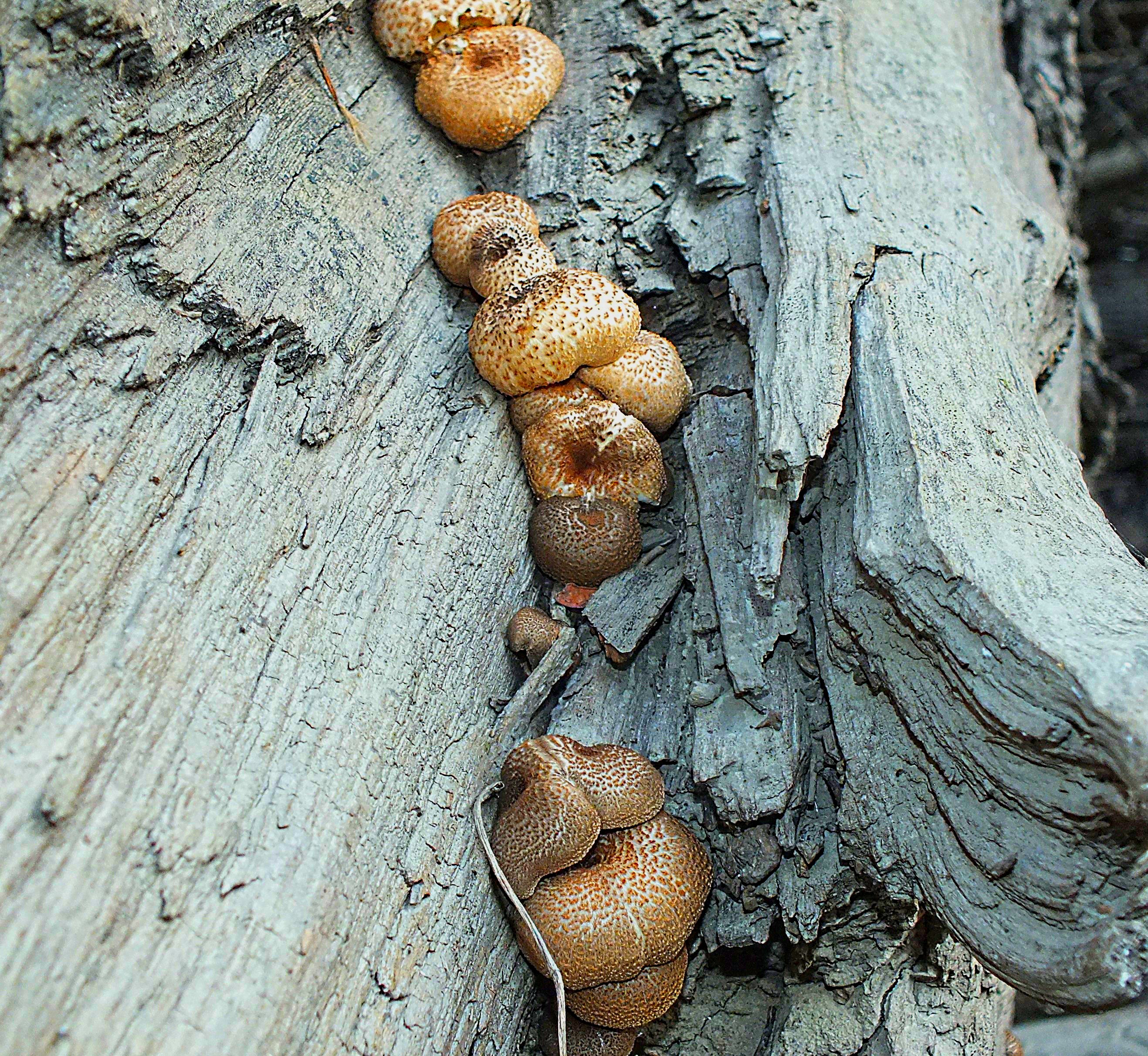
[Polyporus squamosus , called Dryad’s Saddle or Pheasant’s Back Mushroom, is a mushroom that is low growing and has very scaly caps. This mushroom cluster is commonly attached to dead logs or stumps at one point with a thick stem. This mushroom is in a log crevice as the logs floats in a local river. It causes a white rot in the heartwood of living and dead hardwood trees. The name “Dryad’s saddle” refers to legendary creatures in Greek Mythology called Dryads who could conceivably fit and ride on this mushroom, whereas the pheasant’s back analogy derives from the pattern of colors on the bracket matching that of a Pheasant’s back.]
.
Direct perception is timeless; it’s instantaneous. Greed, hatred, envy, and comparison all take time.
.
[This is a Potter Wasp, some Hover Flies, a small wild Fly, and a Soldier Beetle. Potter Wasps make nests of mud that are pot-like. (They were all circling around the flower cluster, but the Soldier Beetle didn’t get the direction right!)]
.
Instead of amplifying another’s faults (and pointing them out)… tell them what it is they are doing orderly and well that is what you admire about them.
.
***This is especially important regarding the way parents interact with their children. Far too many parents say things like: “Joe, you didn’t clean your room; stop being such a slob and clean your room.” Well, in psychology, there is a thing called “The Labeling Theory”; that principle maintains that people (especially “youth”) may incorporate the labels placed on them and (subsequently) use those labels as “self images.” So, if parents tend to call their child a “slob” enough times… there is a good chance that such labeling may contribute to the child becoming more lazy and indifferent… due to an internal mechanism of being (and fulfilling) what was implanted as a self-image. Please… refrain from the negative labels… and whenever they do the smallest good, tell them how caring, helpful, and considerate they are!***
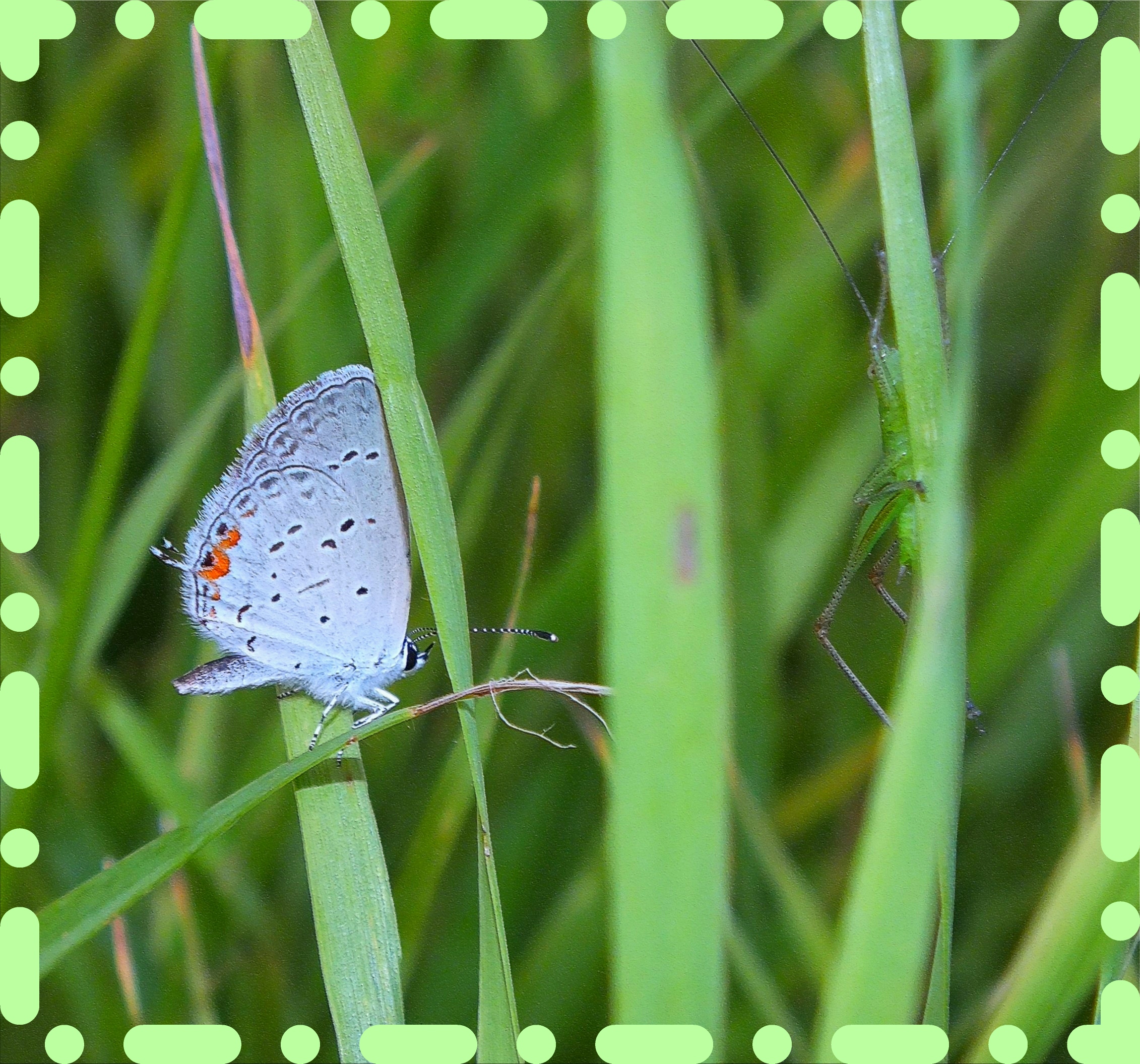
[A green Katydid of the genus Scudderia, moving through the labyrinth of life, helpfully carrying pollen along the way.]
.
.
.
.
.
. Wow! Scientist’s have succeeded in creating a macro-photo of the system and intricate network of neurons composing the human brain (and the images that individual neurons contain)!
.
.