[2-26-18 Flood Update:
The river is receding well. We are OK but have a ton of cornstalks in our yard. I am elderly and have arthritis so may have to hire people to remove it. Marla says that there is more rain in the forecast (coming soon). We don’t have hydrophobia yet but we are getting there!
Excerpt from Emily Dickinson:
You cannot fold a Flood—
And put it in a Drawer—
Because the Winds would find it out—
And tell your Cedar Floor— ]
[Note: Update on our River Flooding: The river remains very high. Our house is OK so far, except for some very minimal water in a small section of our crawl-space that a sump-pump has been taking care of. Many local rural homes and nearby towns are flooded severely, unfortunately. Our neighbor told us that her son had to rescue his mother-in-law from her rural home. Her son’s mother-in-law’s home is surrounded by water and is severely flooded within the living area. At first, his mother-in-law refused to leave… much like the couple that i mention in my update within the Flooding posting that i submitted. Please refer back to that recent posting for that update. We had more severe rain last night for a time; i hope that that will not cause the river to rise; it shouldn’t. Some large logs have been hitting the horizontal I-beams that support the nearby bridge, as the water level is so very high. Thanks again to many of you for your heartfelt comments and concerns.]
Thought/thinking is always, as we have often said, an extension or protrusion from the old storehouse of memory. Thinking is a form or representation and symbolism used in order to achieve desires and wanted outcomes. Interestingly, when thinking occurs in (and “as”) the brain, it often exists (mimicry-like) as a sequence of words (which are a simulation of one’s actual talking voice); thinking can also occur as a sequence of stored images that are pictorially oriented. Thinking is essentially all virtual; even the simulation of one’s actual voice, used as internal verbal thought, is virtual. Yet so many of us cling to (and exist “as”) this virtual, spurious pseudo-reality. The essence of thinking is reaction, mimicry, symbolism, categorization, interpretation, restructuring, recollection, recognition, abstraction, and finding meaning. Additionally, thinking can help with real curiosity. Profound curiosity, however, goes beyond thinking and is never merely tied to any superficial motive (such as how to make more money). It is interesting that those of us who think better than others are (oftentimes) given better (and higher paying) jobs. Society tends to worship complex and intricate thinking. Ironically, it may be that the wisest minds go beyond mere motive; it is motive (and robotic reaction) that corrupts the perception (the availability) of the whole.
What we are suggesting here is that, perhaps, it is not merely the most complex thinking mind (with the most thoughts) that is to be admired. A mind that functions as thinking when it is necessary but that often prudently goes beyond thinking may (indeed) be admirable. Unfortunately, the brain that thinks endlessly is a very mechanical, robotic, materialistic brain. A prudent mind that often goes beyond thinking is not the opposite of the “endlessly thinking brain” but it is (fortunately) different. Of the two aforementioned brains, one of the two endlessly depends on being reactions and on receiving endless stimuli to feed those reactions. The other of the two often goes beyond the realm of “reacting”; interestingly, it can — and does — function as awareness without the need for exclusively being reactions… without the need for exclusively categorizing endless stimuli. One of the two craves experience in order to function. The other of the two partakes in experiencing but also can function without mere dependence on experience. Of the two, one must stay — and endlessly remain — within the field of the known. The other of the two dwells in the field of the known but is not merely tied to that very limited domain. All thoughts are fragmentary symbols, and the essence of the sequential arrangements that they are always involves limitation. Profound curiosity — if it really has true depth — is not foolish enough to be satisfied with remaining in (and “as”) a limited domain. Not enough of us question the essence of the domain that we function in… and not enough of us intelligently consider going beyond the domain that we function in; the domain we are referring to is, of course, “thinking.” The mind can be fully aware, alive, and sensitive without needing to rely on thinking and time (though often, of course, thinking is very necessary). Mere constant recognition is, each and every time, limited reaction as part of motives. Each and every limited reaction with (or “as”) a motive is inaction regarding holistic perception; this inaction denies that holistic energy.
The known cannot penetrate into (and understand) the true unknown. The unknown, however, can flower within a mind that does not merely exist as endless reaction (i.e., endless responses of the old); a sapient mind often does not merely function with (and “as”) the known. Deep insight and profound enlightenment/satori can only occur when the known is not functioning (as the old repetition and habitual sequence that it is). What is truly new, what can never be recognized as the same thing over and over again, can never be experienced by the old past (i.e., by the known). The dead known can never enter into the measureless and timeless beauty of the living unknown. What is fallacious cannot remain what it is and enter truth.
The beauty of real mindfulness and meditation is that they are not what can be practiced via any methodology. All methodology relies on the known and exists within the field of time. Time is not a path to the timeless; measure is not a means to the measureless. Mere experience (or trying to go beyond experience) is not a path to that sacredness that is beyond all the senses.
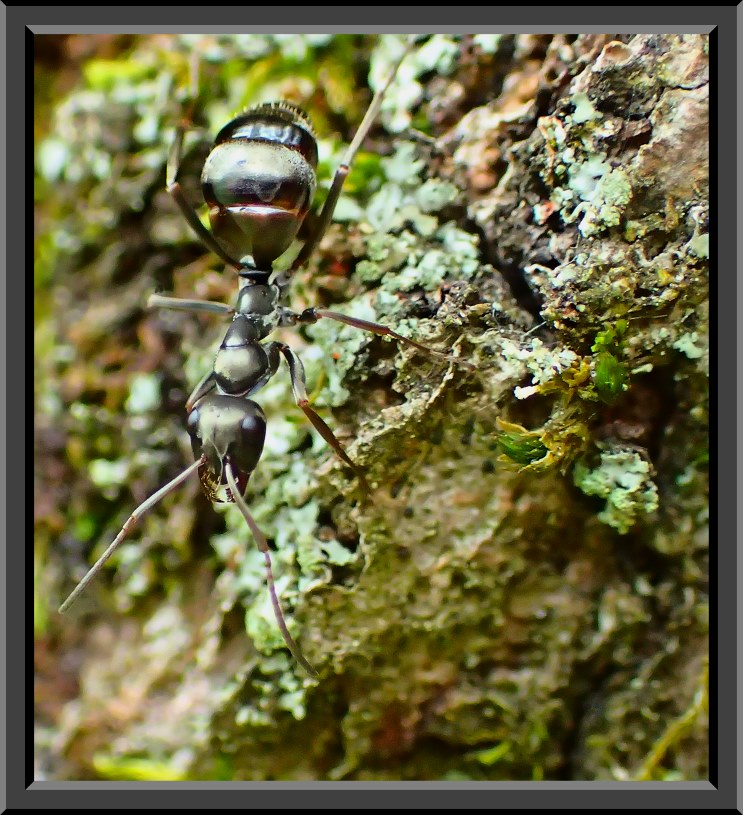
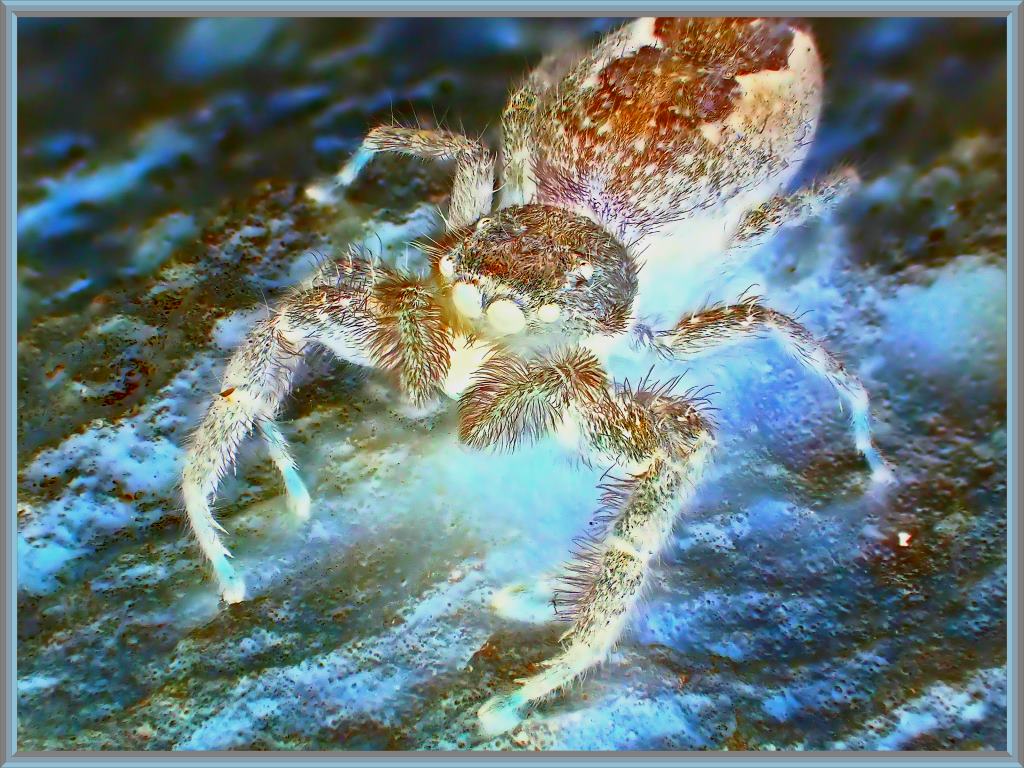
Curious Ant (1) Photo by Thomas Peace c. 2018
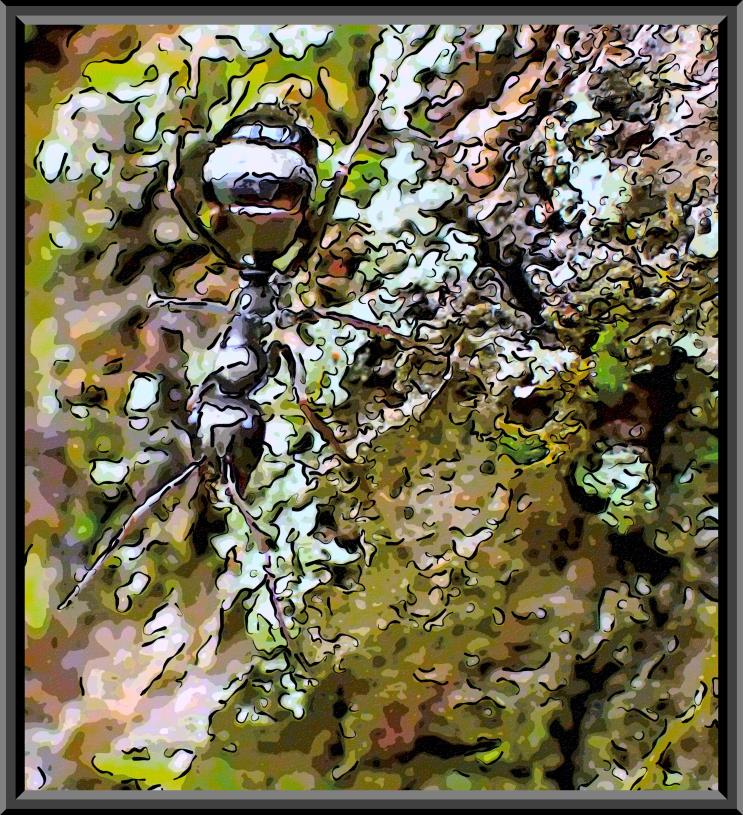
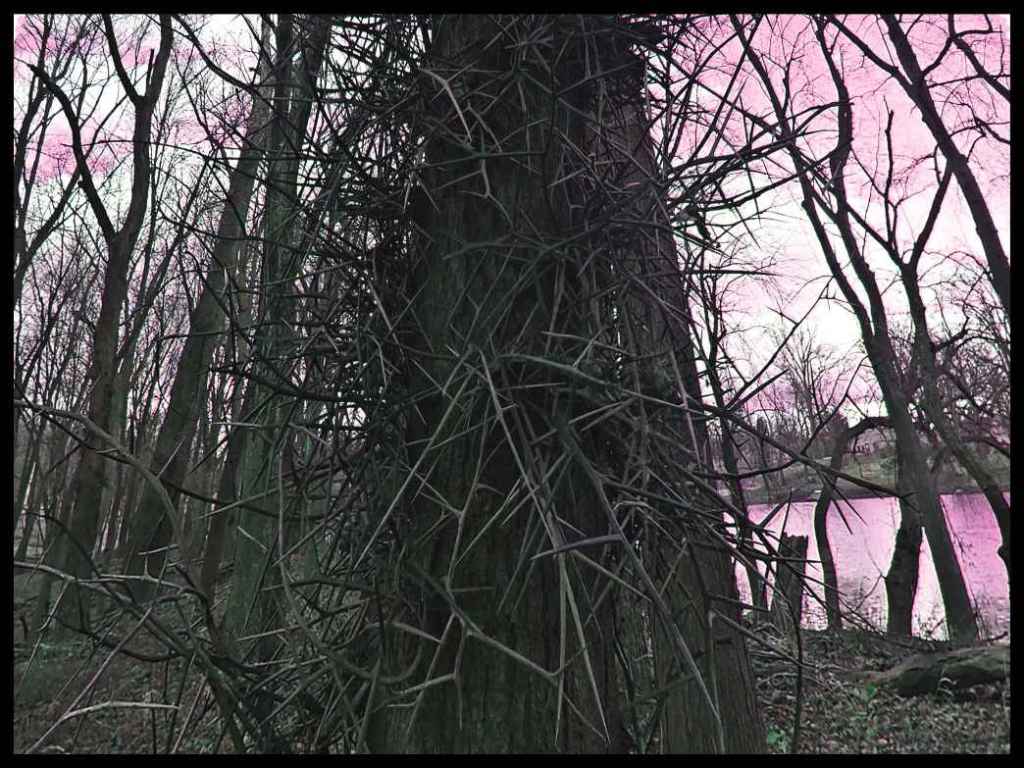
Curious Ant (2) Photo by Thomas Peace c. 2018









 Tom's Nature-up-close Photography and Mindfulness Blog