
.
The Zen all-meaning circle… it’s just a symbol, but whoever initially came up with it was attempting to convey something profound.
.
[A dried, fall wild vine…]

Zen all-meaning circle… Photo by Thomas Peace 2014
.
The Zen all-meaning circle… it’s just a symbol, but whoever initially came up with it was attempting to convey something profound.
.
[A dried, fall wild vine…]
Zen all-meaning circle… Photo by Thomas Peace 2014
.
To wisely question may be more intelligent than having concrete certitude.
.
[Eyeing the camera (with a smile)…]
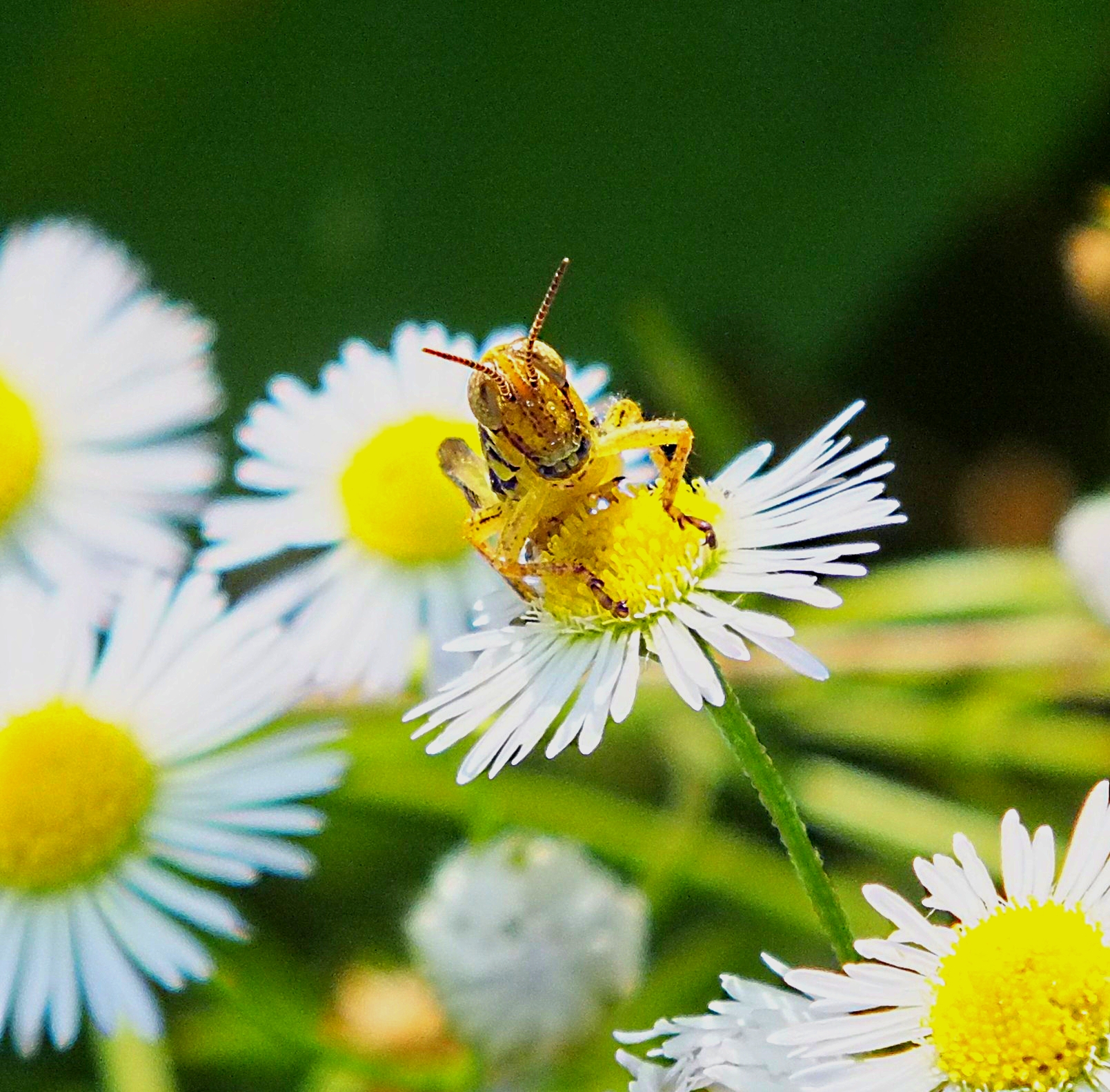
Captured by the Hopper’s lens. Photo by Thomas Peace 2014
.
You can buy stuff, but you can’t purchase integrity, compassion, and deep insight.
.
[Local Creek in Fall]

Local Creek Up Close. Photo by Thomas Peace 2014

Local Creek. Photo by Thomas Peace 2014
.
A requisite attribute of time is distance. A requisite attribute of thinking that you are separate from others is time.
.
[The Ailanthus Webworm Moth thrives from spring through fall. The caterpillars of the Ailanthus Webworm Moth spin loose cocoons low on the host plant. There is one generation per year.]

Ailanthus Webworm Moth, eats foliage of deciduous trees and shrubs. Photo by Thomas Peace 2014
.
To question everything wisely and intelligently… is to deviate from the norm.
.
[This Honey Locust Tree is protecting itself well with an array of spiked thorns. Honey Locust Tree thorns are thought to have evolved to protect the trees from browsing Pleistocene (i.e., Ice Age) mega-fauna. The name derives from the sweet taste of the legume pulp, which was used for food by Native American people, and can also be fermented to make beer.]
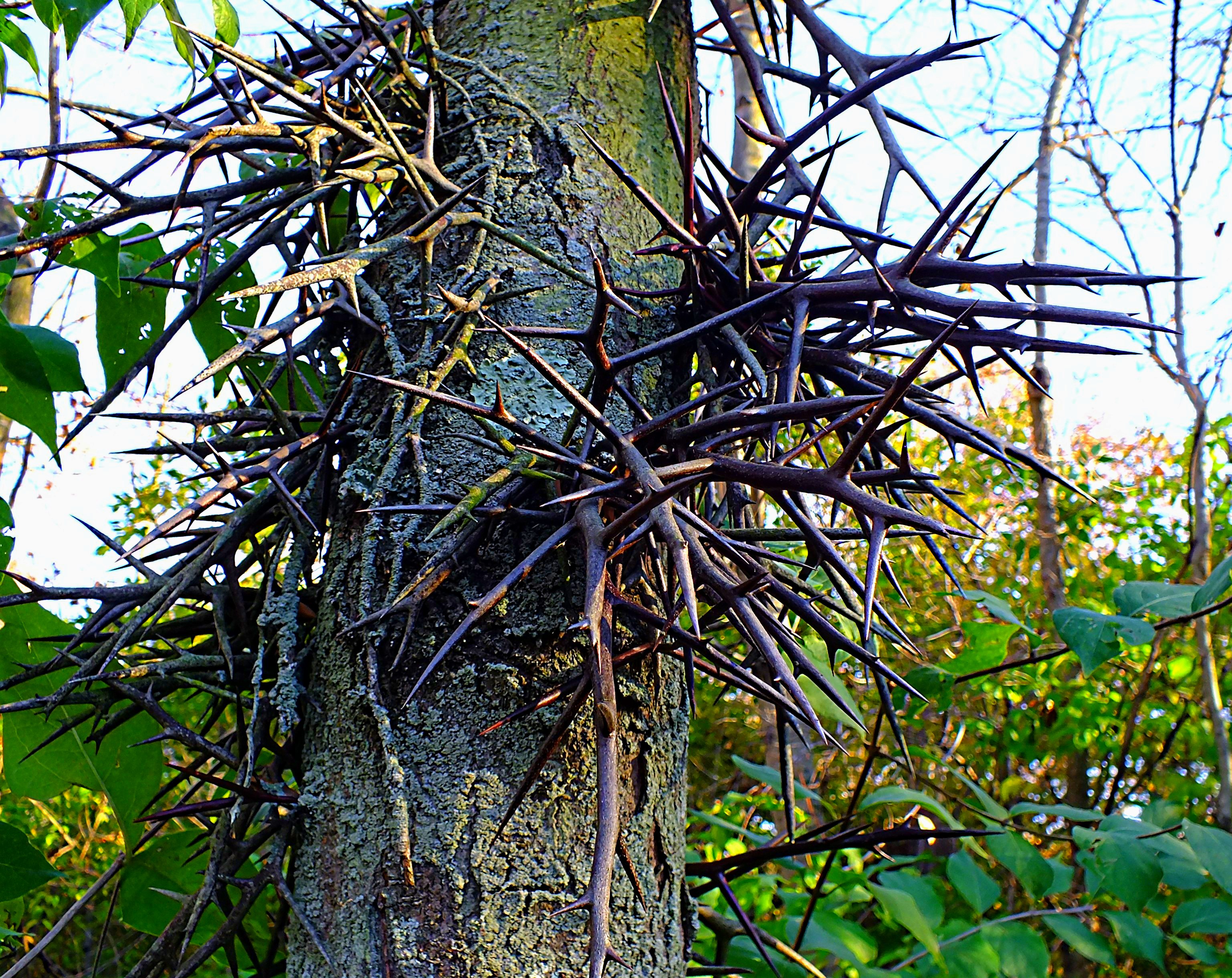
Honey Locust Tree protecting itself! Photo by Thomas Peace 2014
.
See each facet of life as part of the undivided whole.
.
[A Horsetail Plant growing through some Queen Anne’s Lace. The Horsetail Plant is an extremely primitive plant; indeed, it looks rather Devonian-like in appearance. The stems are hollow, with no true leaves. The Horsetail Plant likes wet areas, such as ponds or marshes. Horsetail has no known food value to wildlife.]
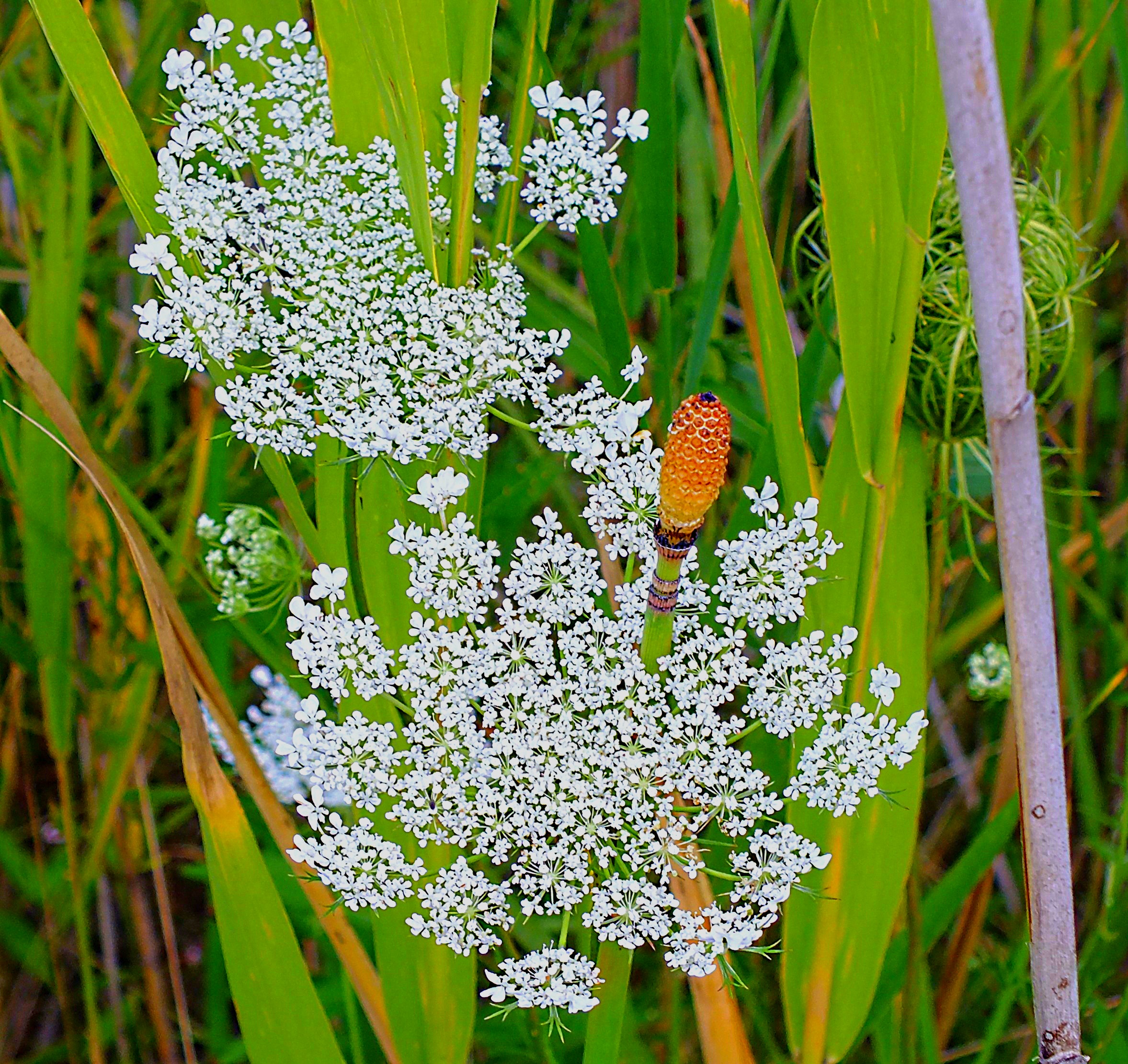
Horsetail Plant extending through Queen Anne’s Lace. Photo by Thomas Peace 2014
.
If one merely thinks according to what was taught by society — as most do — one is thinking and living their thoughts, which is rather second-hand. Live!
.
[Digger Wasps are often seen on flowers during the day. During the night, they rest upon vegetation, singly or in small groups, or burrow into the soil at the base of plants. Digger Wasps will readily sting if bothered enough.]

Digs sometimes. Photo by Thomas Peace 2014
.
There is not just the human race; there are also the races of elephants, tigers, whales, wolves, etc.
.
[This is a pair of mating Dragonflies in the standard wheel position. The copulatory wheel position is the way most species of Dragonflies engage in together. Note that the males and females of this species are of different colors.]
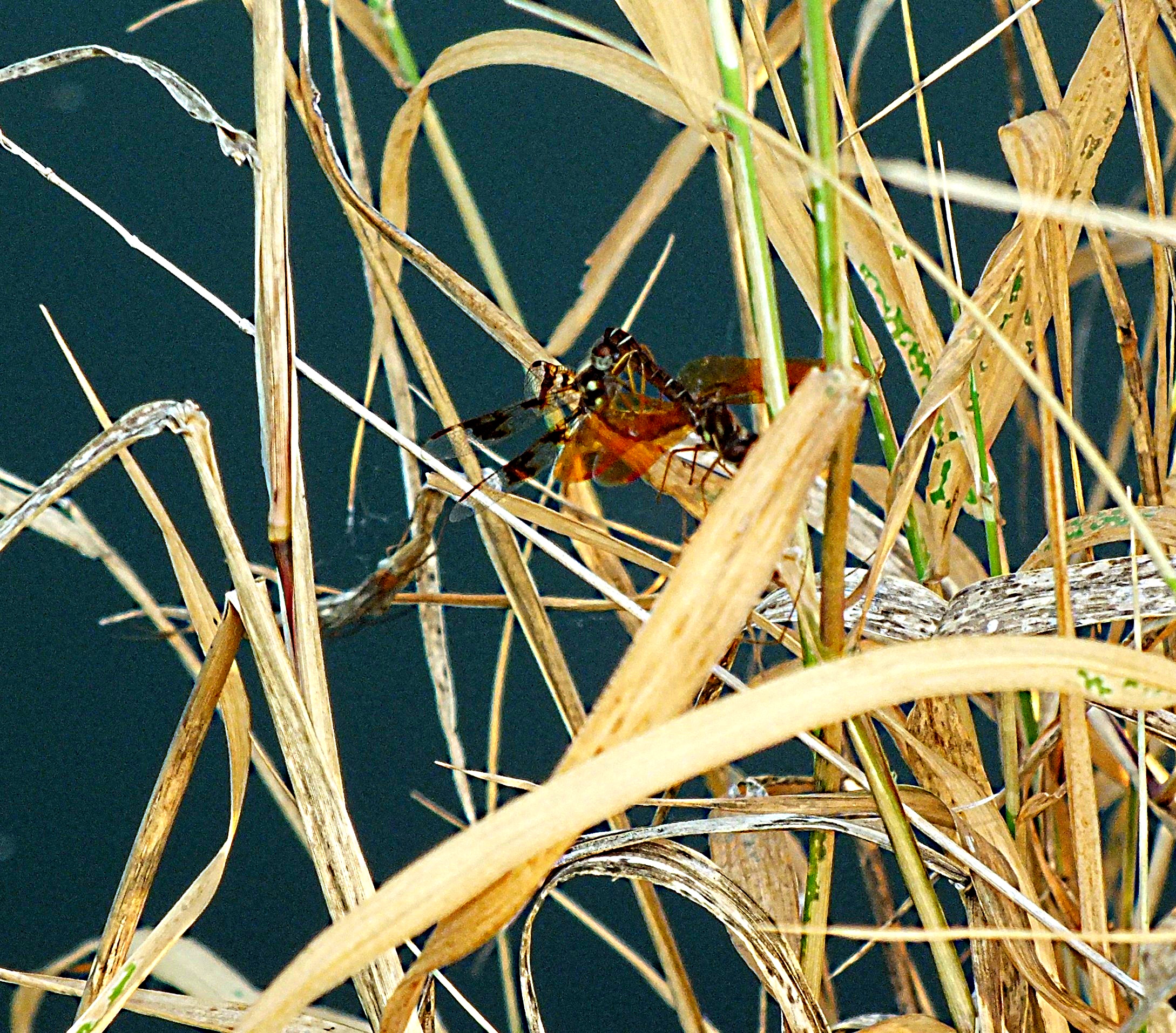
Dragonfly Mating Wheel. Photo by Thomas Peace 2014
.
The mind can often be the beautiful space between two thoughts… without symbolic representations, without effort.
.
[Diminutive insects on a Viola Flower in the fall season. Despite the cold weather during each night, the Viola Flower and the insects seem to be thriving during the day.]
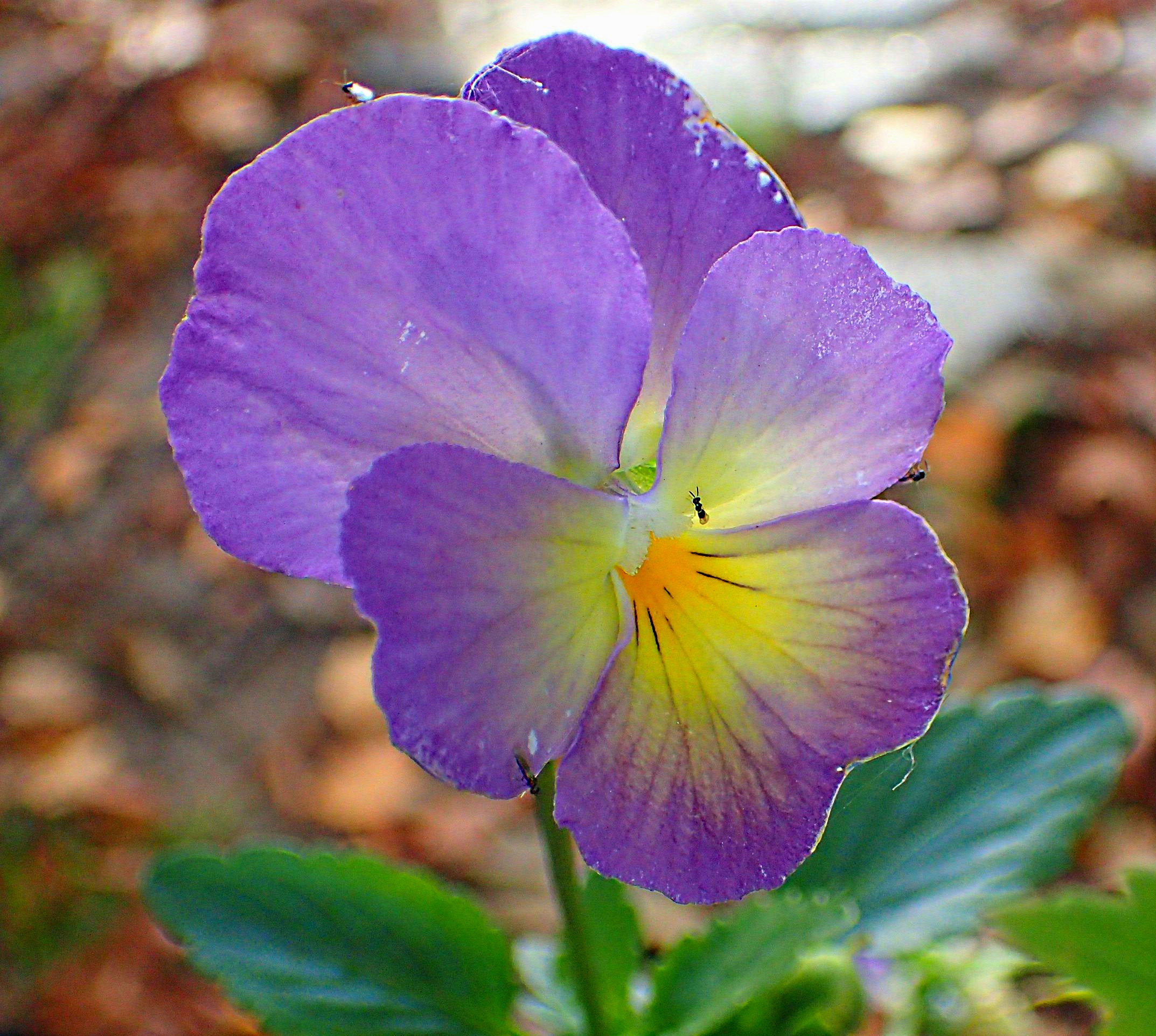
Impervious to cold. Photo by Thomas Peace 2014
.
True enlightenment occurs as actual, immense energy… not as mere ideas, symbols, and patterns “about energy.”
.
[This Grasshopper has less “hair” (on his face, legs, and back) than I do!]
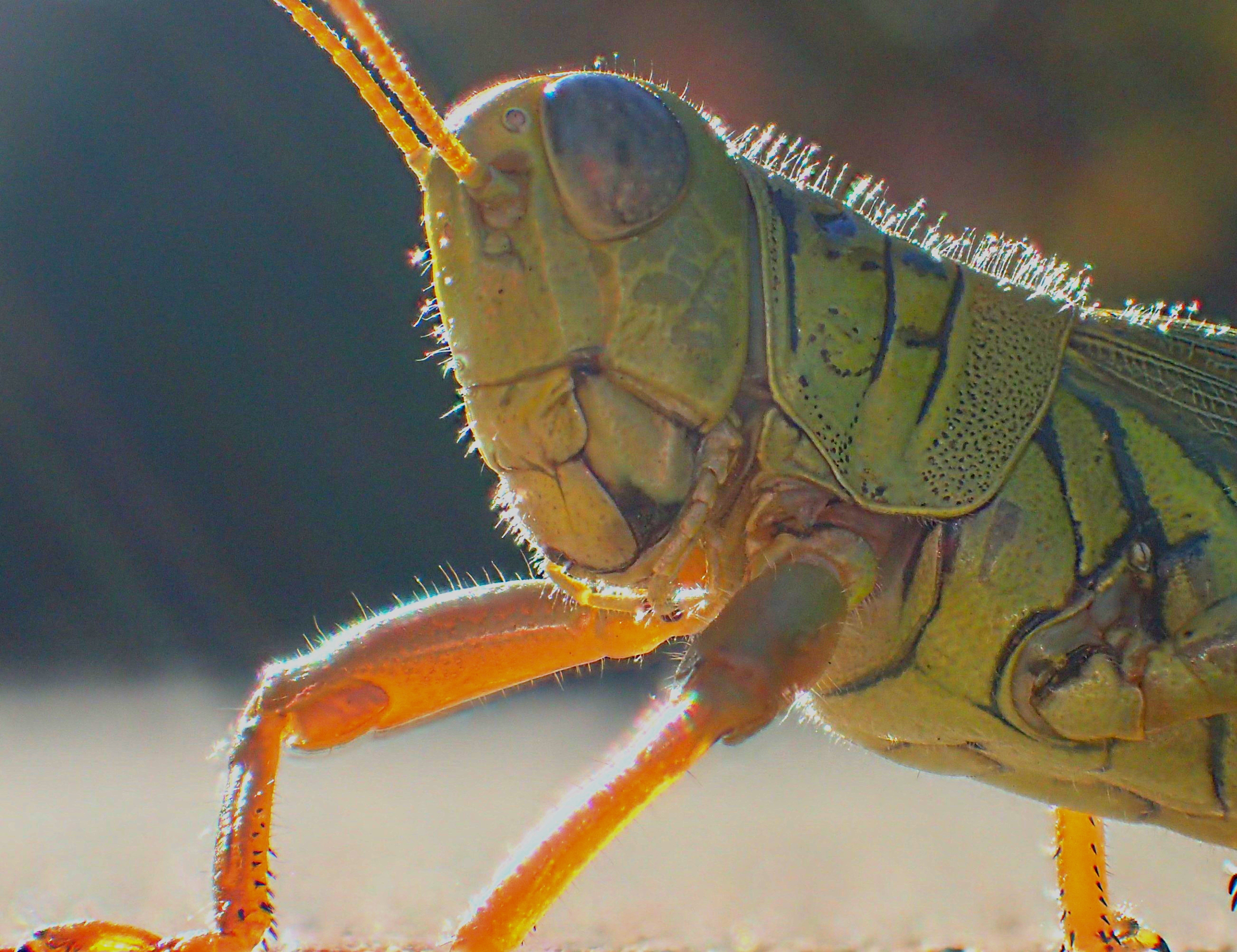
Not by the hair of my chinny chin chin! Photo by Thomas Peace 2014
.
Peace never comes by mindlessly clinging to separative groups or leaders.
.
[This is a Sheepshead Mushroom with a Midge Fly resting on it (to the left). The Sheepshead Mushroom is edible and is considered to be one of the best tasting mushrooms. They tend to grow at the base of Oak Trees.]

Resting on a Sheepshead. Photo by Thomas Peace 2014
.
Hugging trees is great. But hugging the elderly and those with handicaps is even better!
.
[This is a batch of Chicken of the Woods mushroom with little, winged-insects upon it. When I was out in the woods, photographing, I spotted this beauty from a quite a distance. One then thought: “Of course, it’s such a treasure, that it will be surrounded by my arch-enemy… poison ivy!” Upon approaching the Chicken of the Woods, I then observed that it was, indeed, surrounded by many patches of poison ivy. I carefully took each step towards the Chicken of the Woods, with extreme caution and deliberation. It was unreal; it was like walking through a puzzle (or working on a computer game)! Patches of poison ivy where everywhere! When I finally got to my prize, there was (of course) a big, tall plant of poison ivy right in front of it. I had to bend, with my camera, to get a decent shot. Getting out of the area was equally difficult; each step was a precarious, carefully calculated maneuver toward attaining freedom and safety! When I finally got home, I washed up using a special anti-poison ivy cleaning soap. I didn’t get any rashes! Whew!]

Chicken of the Woods surrounded by my arch enemy… poison ivy. Photo by Thomas Peace 2014
.
No amount of words can ever relate the profound immensity of what true enlightenment entails; it is beyond words, descriptions, and beliefs.
.
[Fall Oak Leaves]
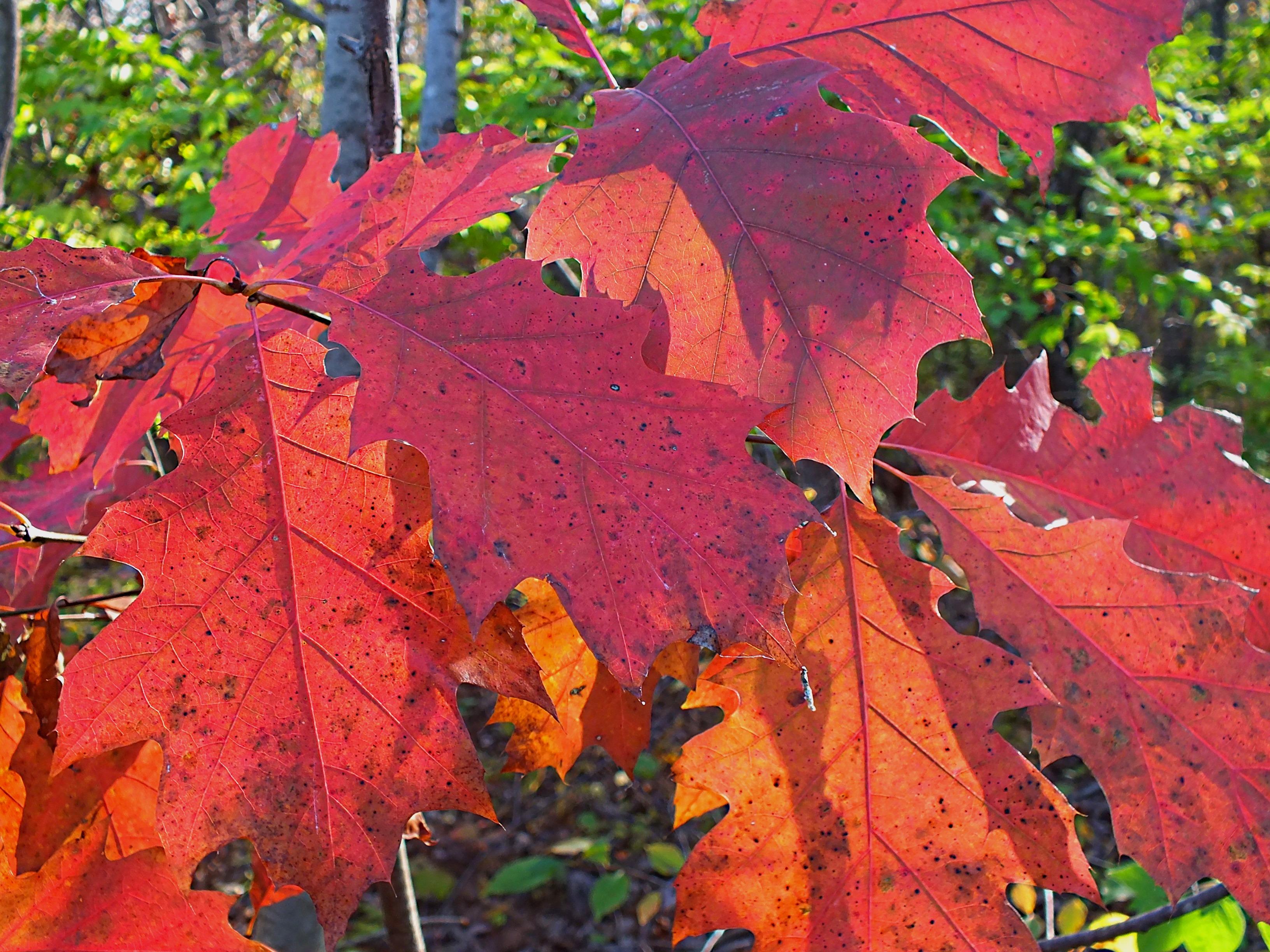
Fall Oak Leaves. Photo by Thomas Peace 2014
.
Whenever nature may fall… it always springs back again. It is ever renewing.
.

Fall by the Creek. Photo by Thomas Peace 2014
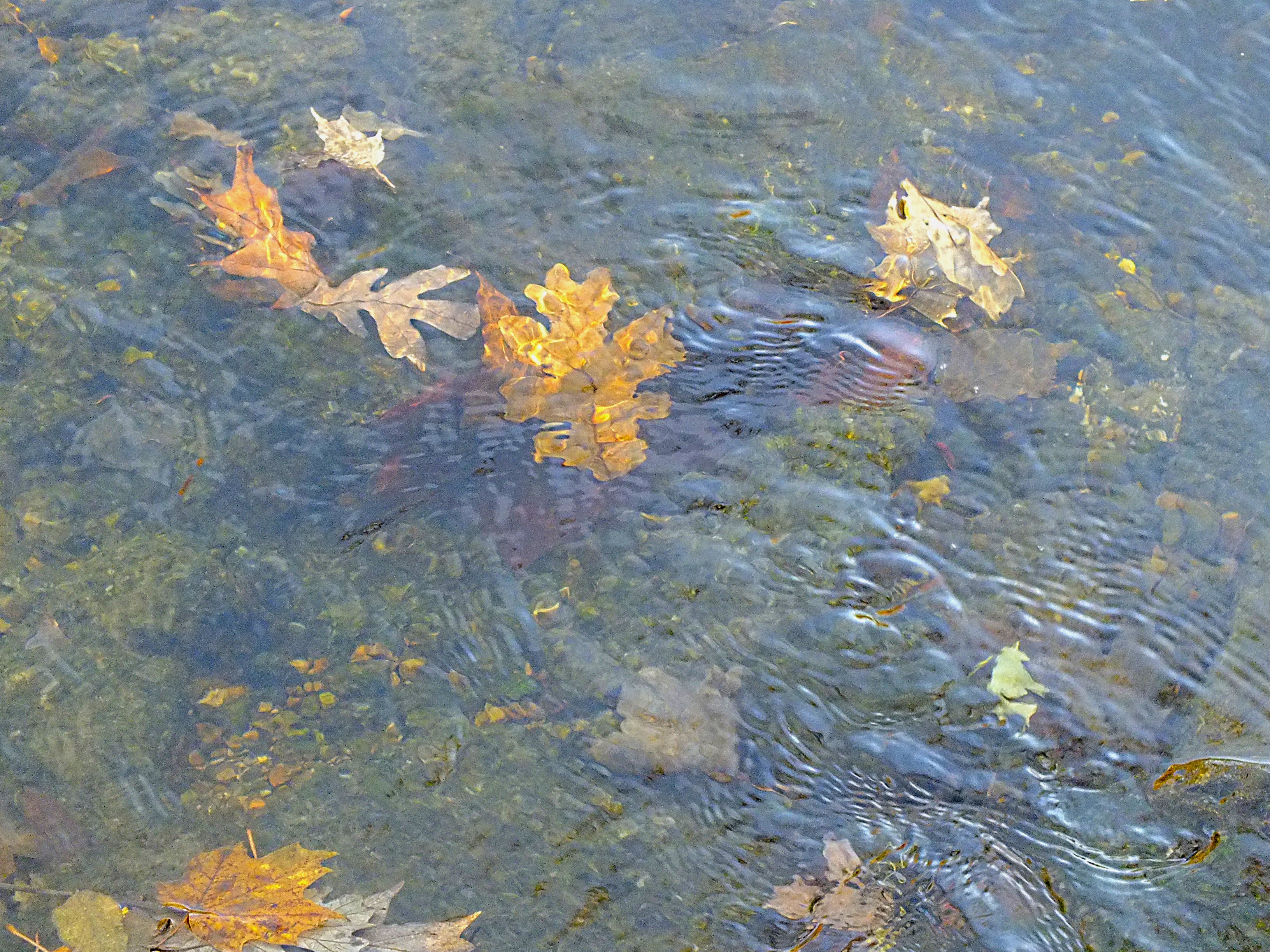
Fall Creek Leaves. Photo by Thomas Peace 2014
.
A simple smile is often the kindling to intense and blazing compassion (that uplifts others).
.
[These are the Sporophytes of moss upon a moist, large log in the middle of the forest. Sporophytes begin to grow by cell division out of the top of the archegonium on the female gametophyte moss plant… at which point it’s a parasite on the gametophyte plant, although it may produce some of its own food by photosynthesis in the early stages of growth.
Sporophytes consist of three basic structures, a foot, which anchors it to the gametophyte and helps to transfer water and nutrients from the gametophyte, a long erect stalk called a seta, and a pod-like capsule at the top-end where reproductive spores are produced. There is a Daddy-Long-Legs at the very bottom left of the photo, which can be seen partially; it is likely waiting for the many insects that crawl across moss. The larger leaves are not a different species of moss. They are the same species… and grow wider when more moisture is present in their immediate area. When moss gets flooded, it changes its shape, getting wider and more broad leaves.]
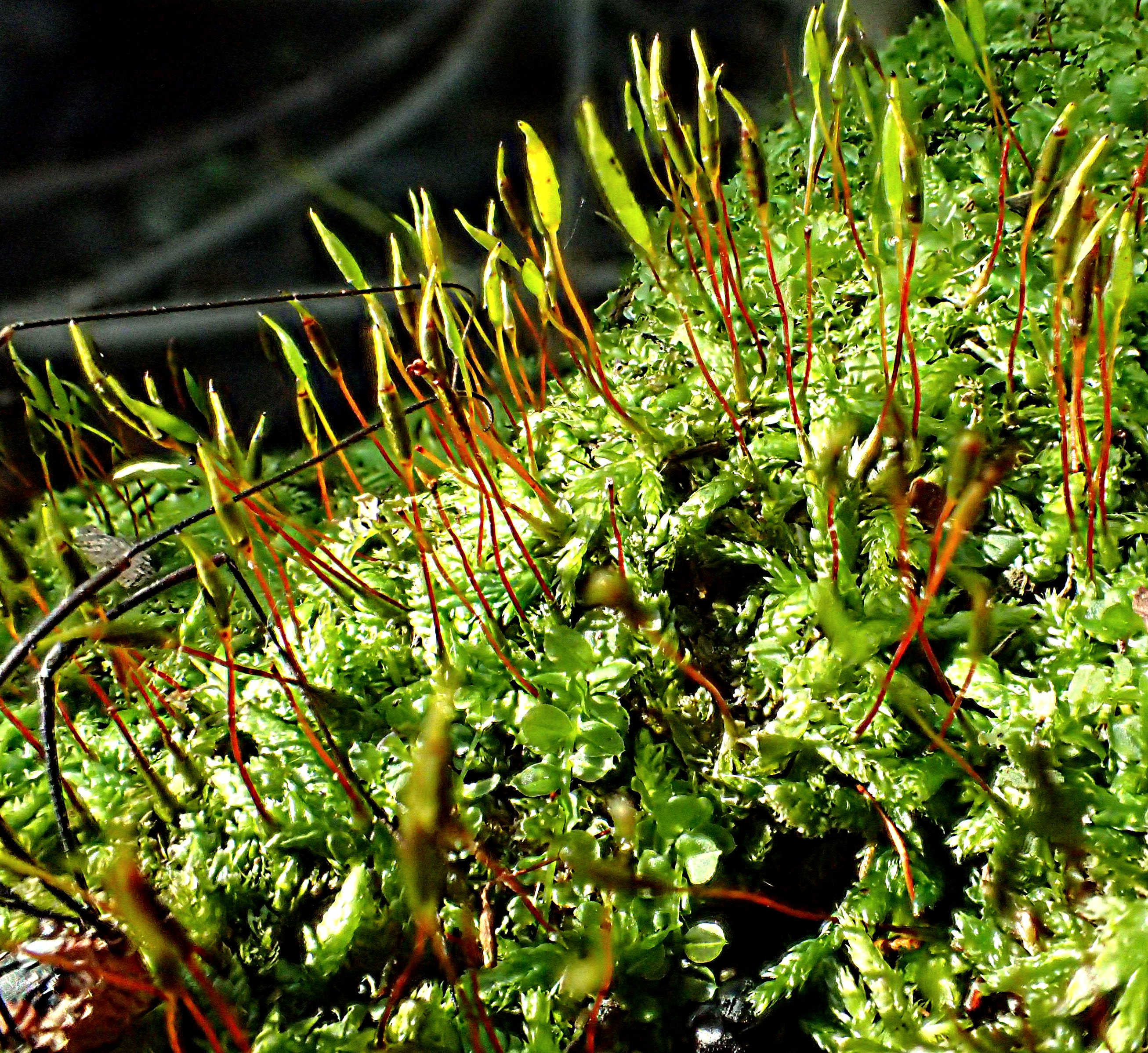
Sporophytes galore! Photo by Thomas Peace 2014
.
If one doesn’t exist primarily in (and “as”) the present now… one is living in the past.
.
[This Lady Bug is getting ready to leave a dried out Thistle Plant. Probably the Lady Bug had been searching for small insects to feed upon (that were nesting within the seed pod).]

Leaving Lady! Photo by Thomas Peace 2014
.
A highly prejudicial mind is like a coldly crafted puppet or a thoughtlessly made, prefabricated building; it was constructed to be what it is (by others).
.
[This is a very large Fishing Spider on a post of our Gazebo (at night) guarding its large egg sac. This Fishing Spider must have been over 2 inches long and its egg sac was also very large. It looks like it must have took a long time to carefully and skillfully form that huge egg sac. I was looking for spiders to photograph and was resting the camera against the post to get a steady shot of a smaller spider… when I suddenly came face to face with this huge creature! Nothing easily startles me… but this kind of did!]

Not an itsy bitsy spider by any means! Photo by Thomas Peace 2014
.
Do not merely look through the screen of fragmentation that was instilled within (and “as”) your mind.
.
[This is not, as many might think, a Monarch Butterfly. It is a Viceroy Butterfly, resting at the base of an Oak Tree along some moss. Unlike Monarchs, Viceroy Butterflies do not migrate south for the winter. Viceroy Butterflies overwinter as caterpillars, resting inside rolled leaves. Once the weather gets a bit colder, this Viceroy will likely perish; but its caterpillar offspring will survive the winter to emerge as new, splendid butterflies.]
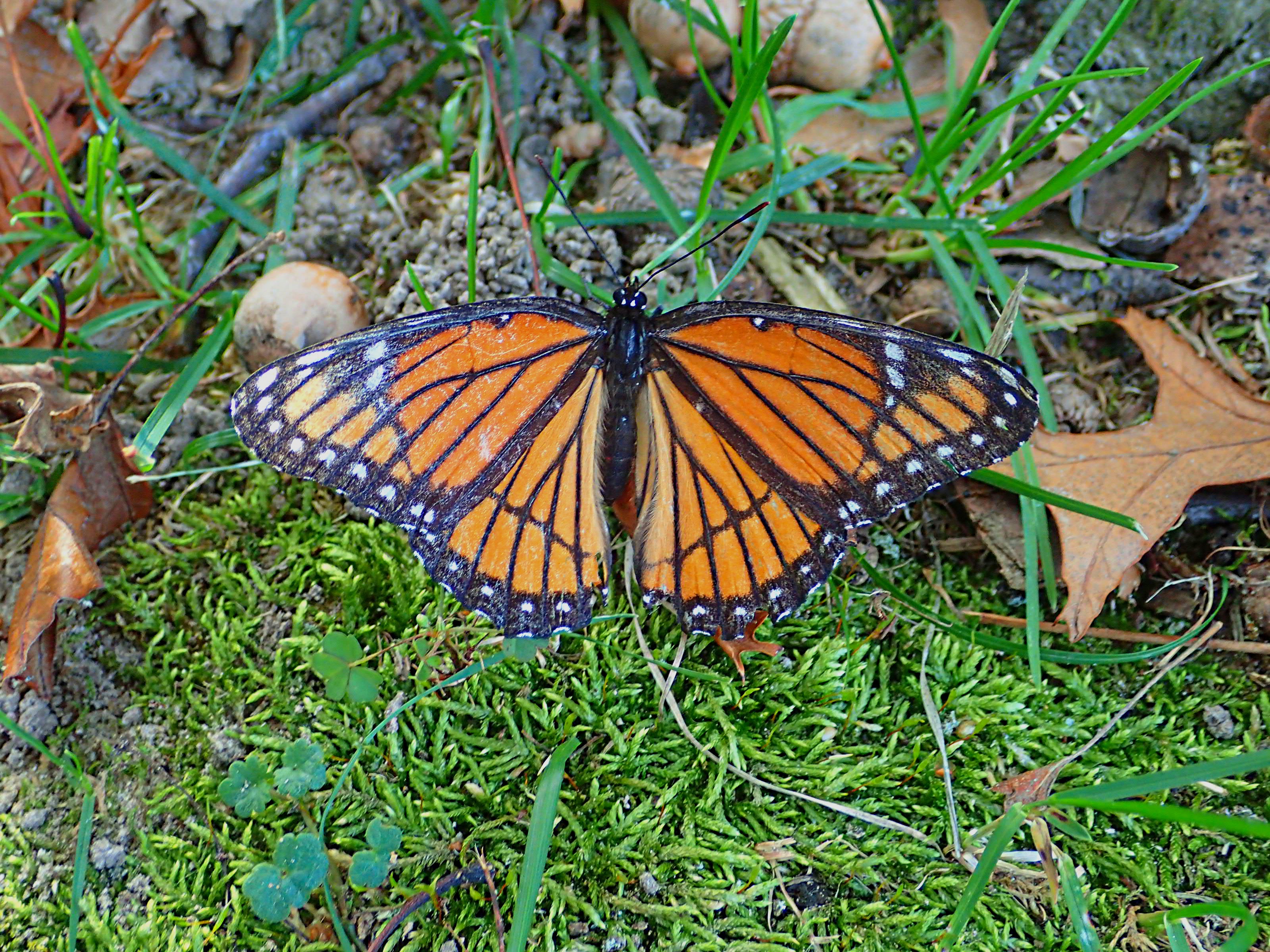
At the end of an excellent life! Photo by Thomas Peace 2014
.
Don’t lead a skeleton’s life. Ensure that your action has real meaning!
.
[This is the remnant skeletal framework of a plant growing along the river bank in the fall season. A diminutive spider can be seen with his handiwork.]

Plant Skeleton. Photo by Thomas Peace 2014
.
Don’t see people as draft horses to pull heavy loads for you; see them as thoroughbreds that are splendid companions.
.
[This Burying Beetle is feeding upon a Bracket Mushroom. It would also gladly feed on horse dung or other such material, as well as animal carrion, fallen fruit, and decaying vegetable matter. They are part of nature’s disposal service. The Burying Beetle is mainly found in wooden habitats.]

Fungus Feeder (1). Photo by Thomas Peace 2014

Fungus Feeder (2). Photo by Thomas Peace 2014
.
Each day, effortlessly watch every moment of thought and perception… and do so without the needless and conflicting separation between the “perception” and the “perceiver.”
.
[These are soybean plants in a local farm field, dry and ready for harvest. (Soy milk in the making!)]

Ready for harvest! Photo by Thomas Peace 2014
.
To psychologically die (each and every day) to endless fears and separative images… is living wisdom.
.
[This is, because of the enlarged pedipalps, a male spider… probably a Grass Spider. Pedipalps have sensitive chemical detectors and function as taste and smell organs, supplementing those on the legs. In males, the pedipalps are enlarged, functioning as organs for reproductive purposes.]
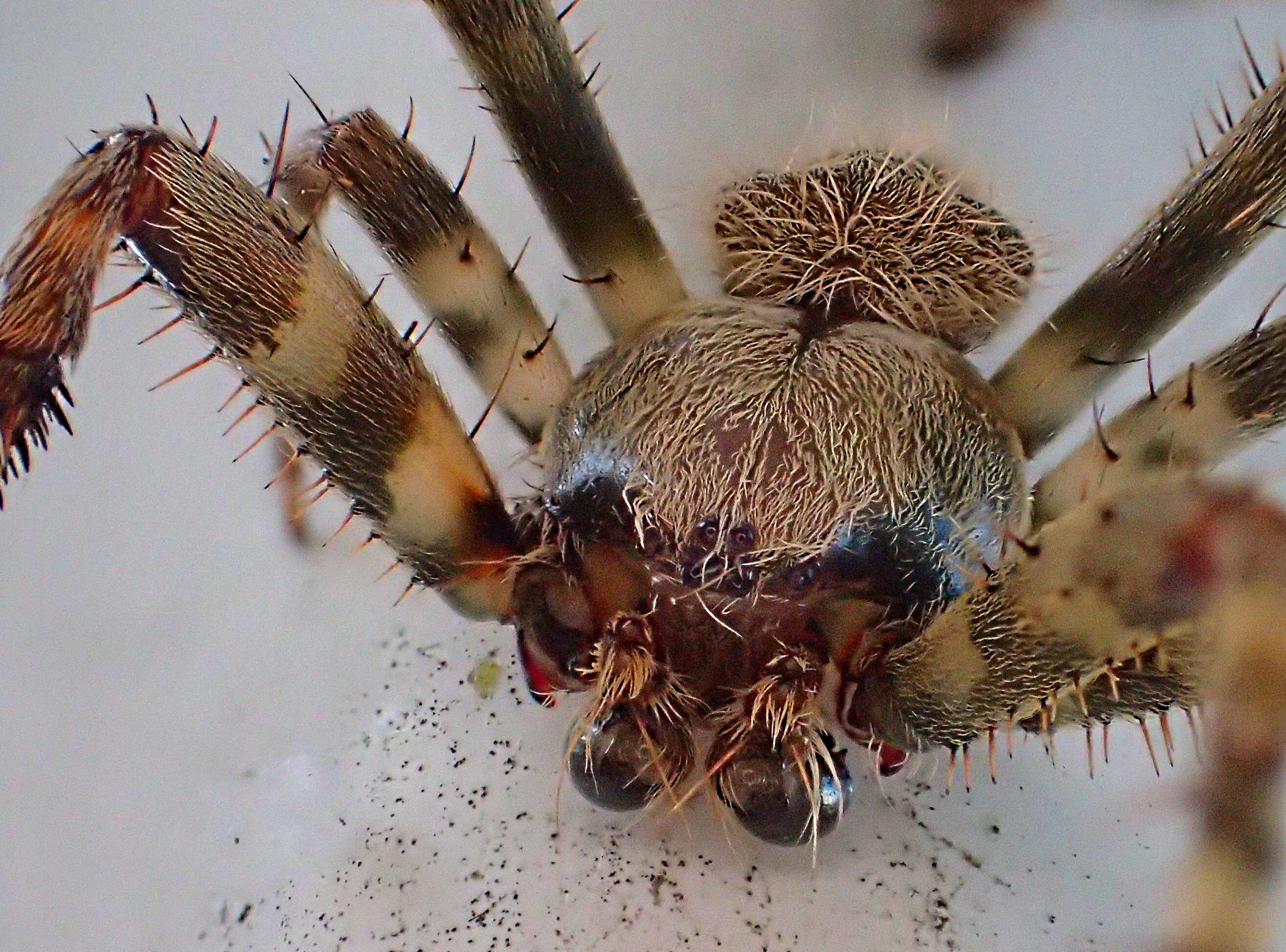
Oh, that movie-star face! Photo by Thomas Peace 2014
.
Direct perception is timeless; it’s instantaneous. Greed, hatred, envy, and comparison all take time.
.
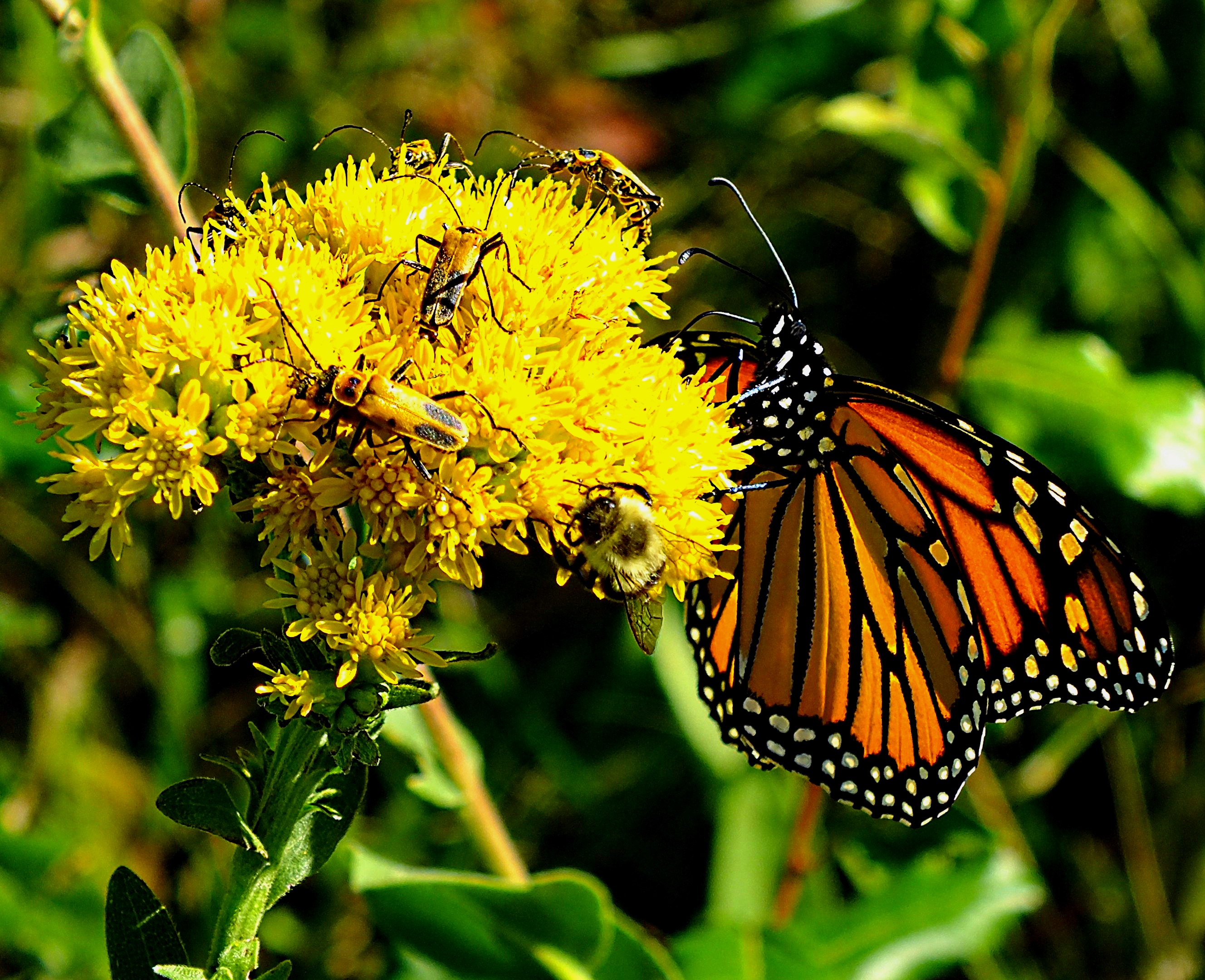
[This is a Potter Wasp, some Hover Flies, a small wild Fly, and a Soldier Beetle. Potter Wasps make nests of mud that are pot-like. (They were all circling around the flower cluster, but the Soldier Beetle didn’t get the direction right!)]

Time for nectar energy! Photo by Thomas Peace 2014
.
Each one of us, if we are at all honest, is (in many ways) beautiful… and each one of us has elements of bad and ugly habits.
.
[This fall foliage is beautiful. It is an old friend… whom I try to avoid, however. This is a batch of Poison Ivy. Sometimes, just being in the woods near it (even though I know what it looks like and avoid it) is enough to give me terrible, endless rashes. This year, my arthroscopic knee surgery was delayed… due to a case of Poison Ivy rash. I once received information about how a man encountered a woman carrying a batch of it; she was a teacher… and wanted “pretty leaves” to share with her classroom!]
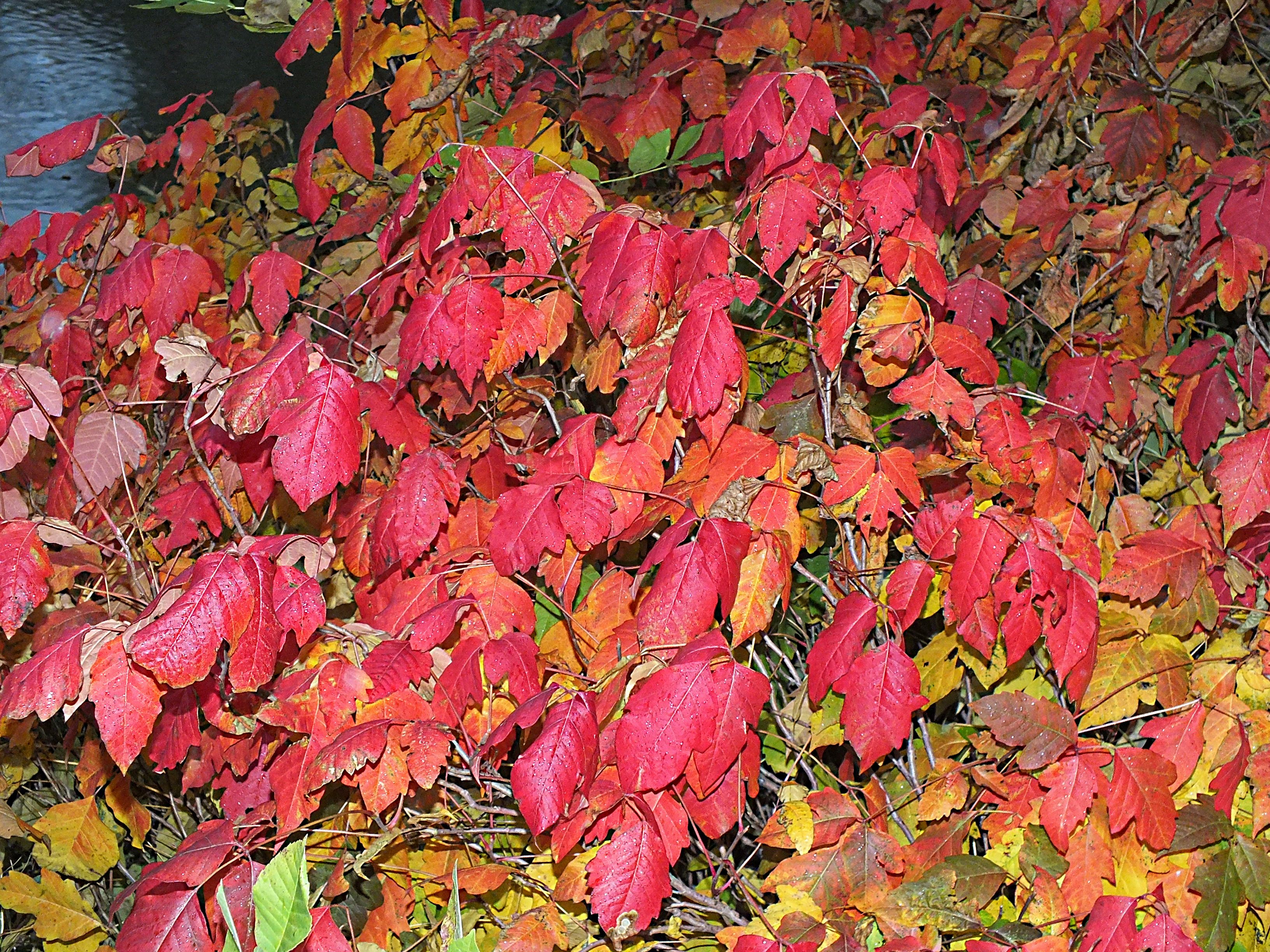
Beauty and the Beast all wrapped up into one. Photo by Thomas Peace 2014
.
The separation between yourself and your fears is as illusory as the separation between the idea of “me” and the idea of “others.”
.
[Who has been eating these beautiful wildflowers? One need not look very far for the answer!]

At the scene of the crime. Photo by Thomas Peace 2014
.
To be sane in an insane world isn’t easy.
.
[This small Ant may be biting the leaf to extract juices. Below the Ant is a small, bite-sized hole.]

Walking on a vertical leaf isn’t easy. Photo by Thomas Peace 2014
.
Untethered freedom is not mesmerized by authority’s lopsided systems and structures… additionally, it is full of deep order, intelligence, and integrity.
.
[This is a web-free Crab Spider in Phlox Flowers. Most Crab Spiders do not form webs. Crab Spiders, as we have shown, often change in chameleon-like fashion to suit their needs. They are usually found in flowers, even garden flowers.
Additional note: I will be posting more spiders (and similar creatures) in the Halloween month of October. It is neat that they are part of an old Halloween tradition (that is fun for kids). However, it is unfortunate that many children grow up associating spiders with “being frightened” and as “terrible creatures to be horrified of.” As the late, superb naturalist, Steve Irwin often propounded, spiders and snakes can indeed be seen to be majestic, marvelous animals, truly beautiful in their own ways. We must, as Steve Irwin so graciously suggested before his untimely passing, be far better caretakers of Mother Earth.]
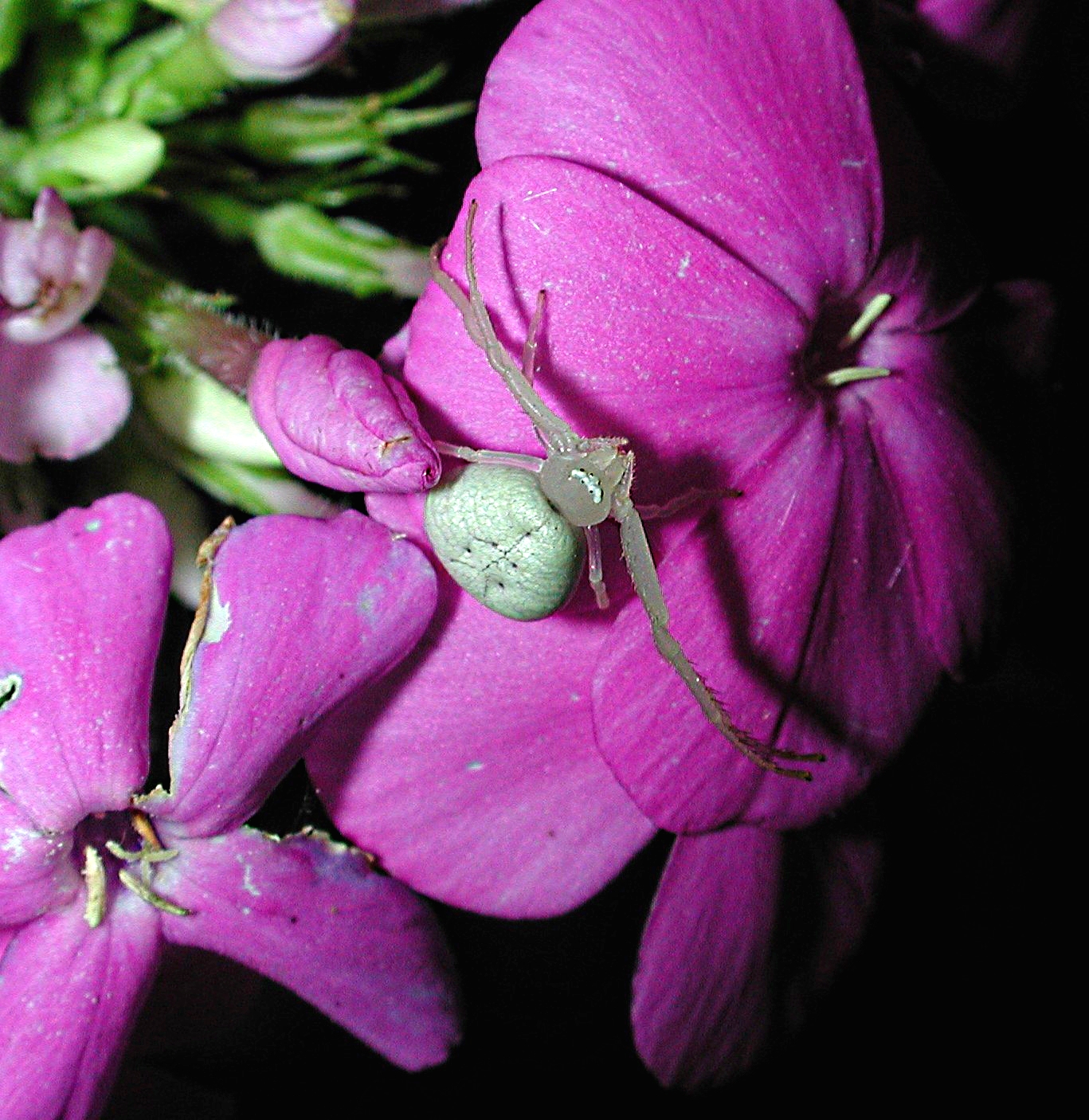
Crabby and waiting! Crab Spider in Phlox Flowers. Photo by Thomas Peace 2014
.
Blindly and eagerly leading people into a false path brings more than one into the ditch.
.
[These are leaves of a Sassafras Tree. Root Beer gets its name from the oil extracted from the root of the Sassafras Tree. Sassafras Tree parts were known primarily as medicinal herbs by the American Indians and, later, to the Europeans, who shipped great quantities to shops in England and on the Continent. The leaves could be made into teas and poultices, while the root bark was either chipped or crushed and then steeped in boiling water—one ounce of bark to one pint of water—and taken in small proportions as often as needed to reduce fevers; soothe chronic rheumatism, gout, and dropsy; relieve eye inflammation; ease menstrual and parturition pain; help cure scurvy and various skin conditions; and act as a disinfectant in dental surgery.]
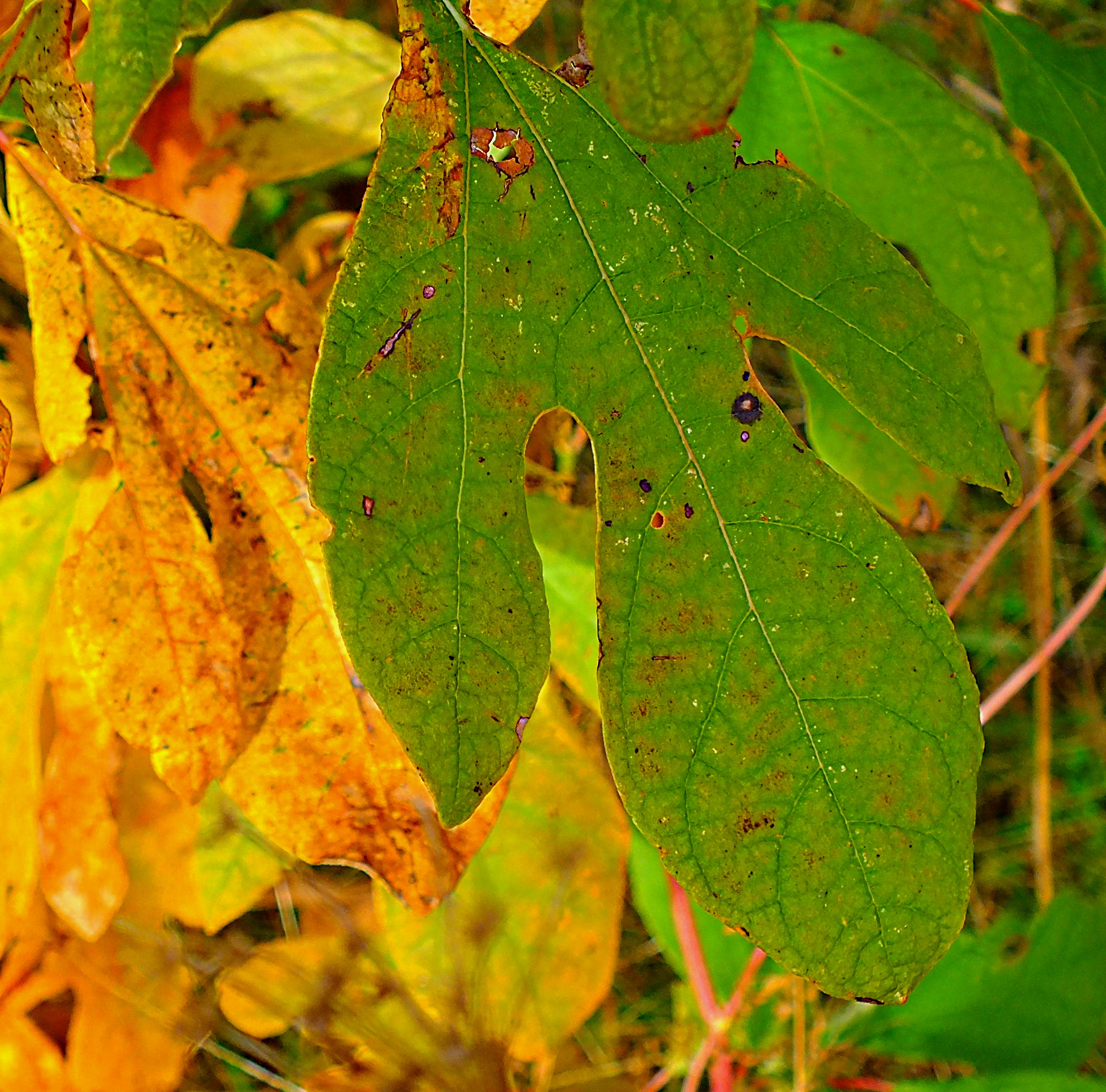
Holy Sassafras Leaves! Photo by Thomas Peace 2014
.
You can’t think outside the box. Thinking is the box!
.
[This very unique and unusual wild plant is the Seed Box Plant (Ludwigia alternifolia). The square, box-like seed-pods of the Seed Box Plant are – indeed – different than most!]

Little, wrapped presents. (Seed Box Plant) Photo by Thomas Peace 2014
.
Genuine heartfelt passion for life naturally helps others.
.
[Carpenter Bees, such as this one, love nectar and pollen, such as this Pink Cone-flower provides. Females of Carpenter Bees establish nests in broken or burned ends of hollow or pity stems and twigs. They can extract up to a foot of pith from the interior of a stem, but (nevertheless) are not considered pests. With Carpenter Bees, there is somewhat of a division of labor… similar to what honeybees expertly do, but at a far more simple level.]

Small but efficient! Photo by Thomas Peace 2014
.
Hate is like a disease; it can spread in ways that are not of intense order.
.
[The following statements – which I have written in the following, final paragraph – pertain to the following five sentences (occurring here at the beginning within bold quote marks) which are excerpts from a recent news article, about Ebola, written by David Willman: “Public health officials have voiced similar assurances, saying Ebola is spread only through physical contact with a symptomatic individual or their bodily fluids. “Ebola is not transmitted by the air. It is not an airborne infection,” said Dr. Edward Goodman of Texas Health Presbyterian Hospital in Dallas, where the Liberian patient remains in critical condition. Yet some scientists who have long studied Ebola say such assurances are premature — and they are concerned about what is not known about the strain now on the loose. It is an Ebola outbreak like none seen before, jumping from the bush to urban areas, giving the virus more opportunities to evolve as it passes through multiple human hosts.“
The attached photograph is of a female Common Whitetail Dragonfly resting with a Green Bottle Fly. The Dragonfly could easily eat and devour the Fly (which they do in nature often). Being familiar with insects, because of my intense interest in animals and close-up photography, I realize certain aspects of what they are capable of. One of my concerns is that, in the countries currently facing epidemics due to the Ebola virus, there are ways that non-airborne diseases can be transmitted easily through the air… and that is through the mechanism by which common flies (such as houseflies) eat and travel. Such flies do not eat their food whole; they regurgitate digestive juices onto food to dissolve it and then slurp the contents up. Flies use their proboscis and labellum (sponge-pad-like-mouth-parts) to repetitively sample and slop juicy substances around. Common flies tend to (and this happens dozens of times a minute) repetitively sample and re-sample things, liquefying them, spitting them back out, and spreading them. Needless to say, they fly from person to person (even from face to face) carrying germs and liquid debris on their mouth parts and feet-pads, and victims of Ebola tend to vomit a lot and have a lot of diarrhea. Enough said! Just as fleas had a big part in the Bubonic plague, flies may, I strongly suspect, significantly contribute to the spreading of the Ebola virus. (I diligently sent an email to the White House regarding this. I have not yet – to no shock to me – received a response.) In countries where housing and hospital spaces are minimal, placing Ebola victims in areas where flies have direct access to them (without making attempts to eradicate the flies) may be a very precarious situation indeed. Spraying with pesticides is needed in areas with Ebola… and such pesticides should be dispersed in large quantities. Anyway, I’m all for having more dragonflies and less flies!]

Face to face… Photo by Thomas Peace 2014
.
Many are caught in the limitation and web of mundane time; very few, unfortunately, go beyond that barrier.
.
[This spider, in our backyard (down by the river bank), won the lottery! This spider is an Orb-weaver that is likely a Barn Spider (due, partly, to the whitish hairs on its legs). Orb-weaver spider webs are dismantled (consumed) by the spider at the end of each night, and are rebuilt early the next evening; but this spider had too much to consume! She hit the jackpot! Count them all!
Additional note: I will be posting more spiders (and similar creatures) in the Halloween month of October. It is neat that they are part of an old Halloween tradition (that is fun for kids). However, it is unfortunate that many children grow up associating spiders with “being frightened” and as “terrible creatures to be horrified of.” As the late, superb naturalist, Steve Irwin often propounded, spiders and snakes can indeed be seen to be majestic, marvelous animals, truly beautiful in their own ways. We must, as Steve Irwin so graciously suggested before his untimely passing, be far better caretakers of Mother Earth.]

Orb Weaver Spider’s Bonanza Catch (1). Photo by Thomas Peace 2014

Orb Weaver Spider’s Bonanza Catch (2). Photo by Thomas Peace 2014
.
Concentration on a fixed (limited) point is hypnosis or egotism, not meditation; meditation is not being fixated by the limited technique (or blueprint) of others, but is a free, passionate awareness of the whole of everything beyond exclusion.
.
[This aperture in the tree could be a scope for a gun barrel or a focal mechanism for shooting a camera; or it could be a place where lichens no longer exist (unless they’re on the far tree in the background). We will have more photos of interesting lichens in the future. (We will be visiting the tree in the background and some of the other trees in the area.)]

Tree Scope. Photo by Thomas Peace 2014
.
Don’t just pick flowers or buy cut flowers… enjoy wildflowers or grow flowers!
.
[These are wildflowers. The white wildflowers are Robin’s Plantain. The purplish wildflowers are American Vetch. The American Vetch is less common than the Robin’s Plantain. (There is an insect in this photograph.)]
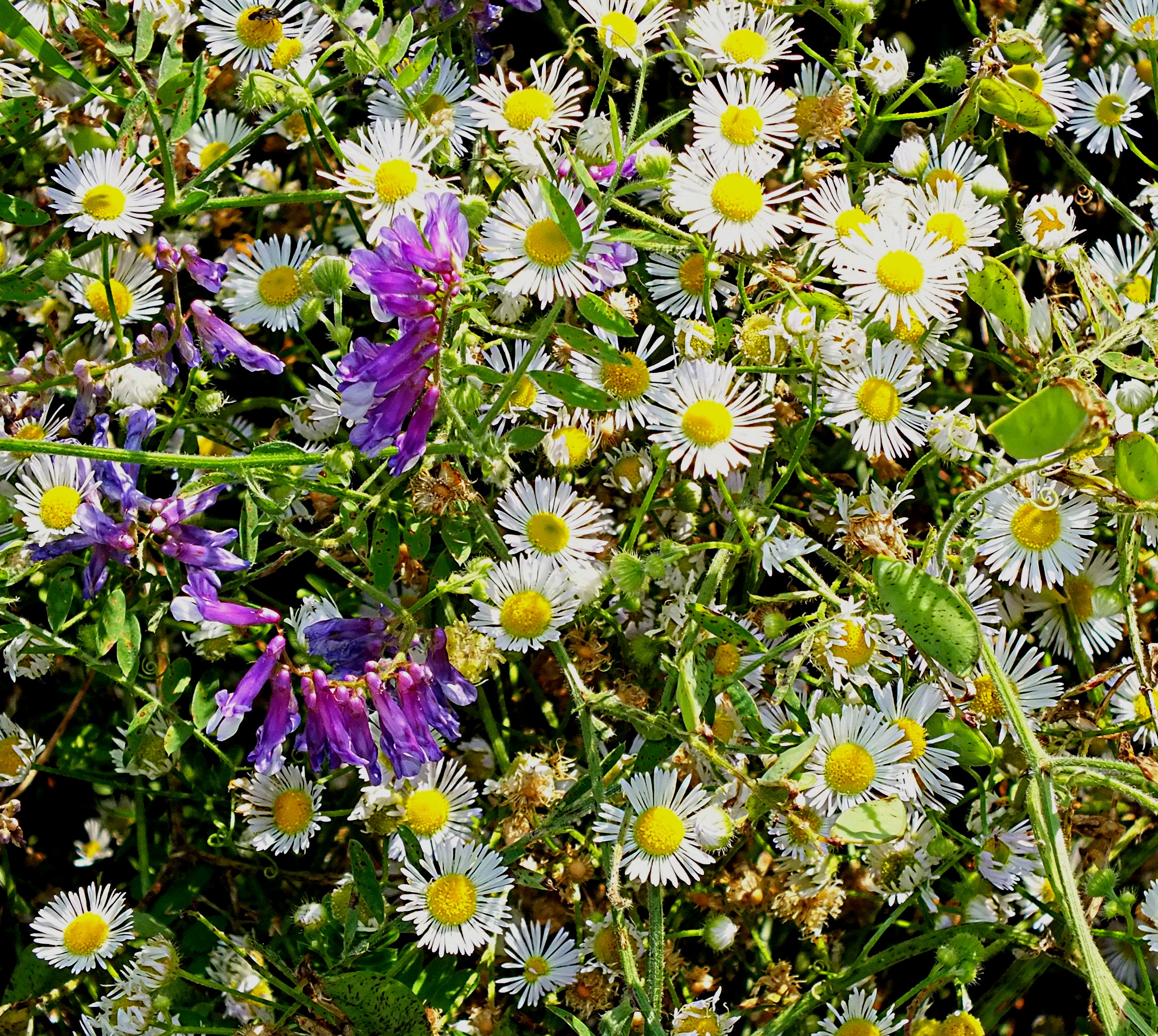
American Vetch & Robin’s Plantain. Photo by Thomas Peace 2014
.
Thoughts are the conditioned, residual remnants of experience; deep insight and “being” go far beyond mere experience.
.
[This insect is known as the Bee Assassin. These predatory insects are usually found on the leaves and stems of plants (as was this photographed specimen). Leaves and stems are not areas where honeybees usually tend to visit. Bee Assassin insects, in reality, mostly eat other types of insects, such as flies, beetles, caterpillars, and mosquitoes. Their front legs have a “stickiness” which enables them to easily catch insects. Bee Assassin insects, though they may look rather intimidating, are largely beneficial, as they help to eradicate many harmful garden pests.]

If you’re another bug, watch out for this one! Photo by Thomas Peace 2014
.
There is no “we” and “them.” There is no “us” and “they.”
.
[This is a unique form of Parasol Mushroom that seems to be almost glass-like with barely any top section; even from the top it looks like gills! The bottom photo is actually a shot of the top of this mushroom! These mushrooms grow at night and are gone by daylight. They are rather small sized mushrooms.]

Glass-like and diminutive. (1) Photo by Thomas Peace 2014
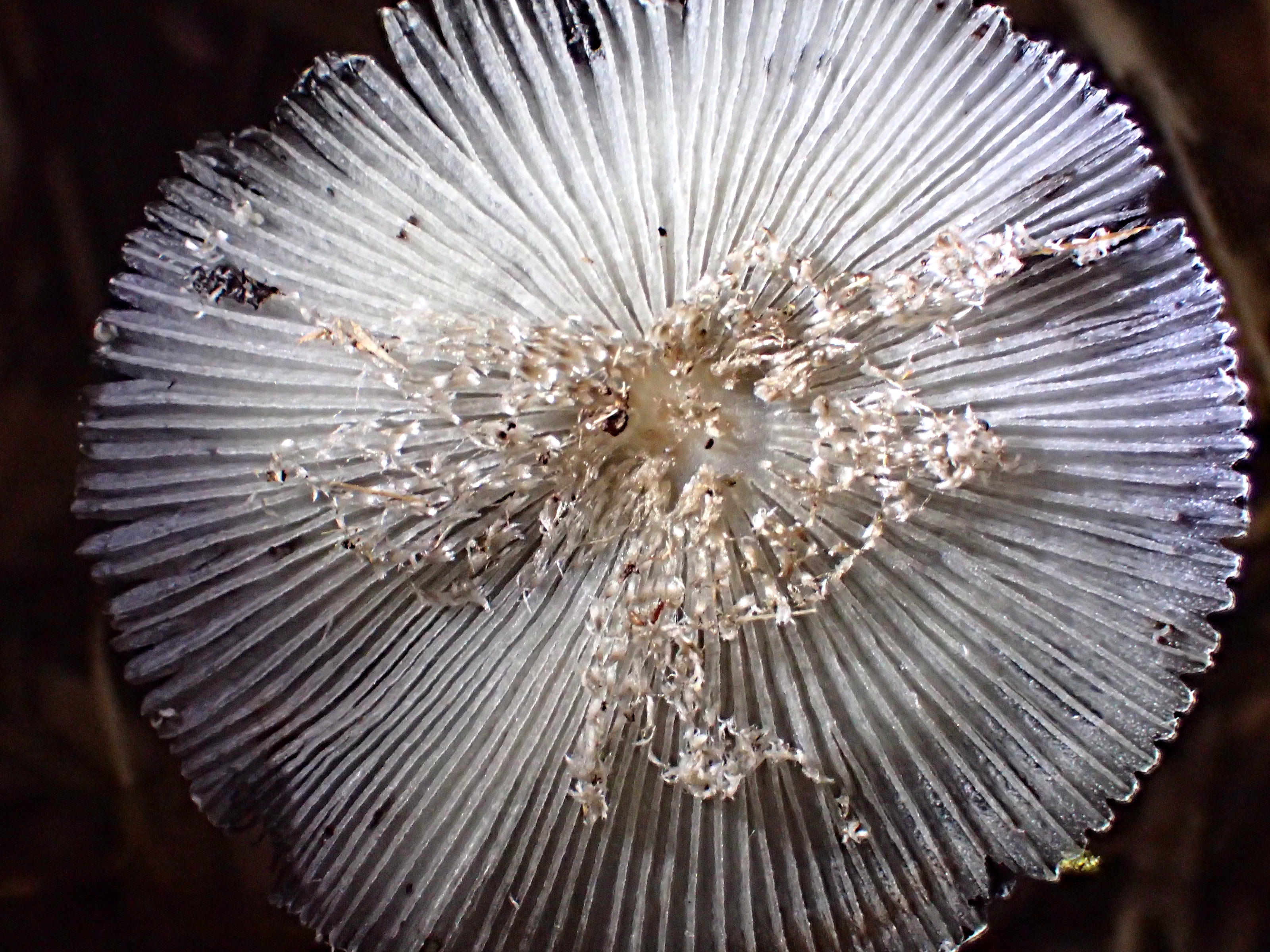
Glass-like and diminutive. (2) Photo by Thomas Peace 2014
.
If we shipped all of the foolish people to the moon… none of us would be left on earth!
😉
.
[This is a Katydid, whipping its antenna like a fishing fly-rod. A female Katydid has a long sword-like ovipositor. The sword-like ovipositor is used for depositing eggs deep in soil or rotten wood.]

A Katydid whipping her fishing fly-rod. Photo by Thomas Peace 2014
.
Societies and authorities weave an intricate, complex web. Unwind into what is simple, pure, and unadulterated!
.
[This is a reddish Harvestman. Notice the shadow of the Havestman upon the leaf. Harvestmen are arachnids, but they are not spiders and do not make webs to catch insects. Harvestmen are also called Daddy-long-legs. There are 200 species of Harvestmen in North America… 4,500 to 5,000 worldwide. They are harmless to human beings (and eat many pests, such as flies).
Additional note: I will be posting more spiders (and similar creatures) in the Halloween month of October. It is neat that they are part of an old Halloween tradition (that is fun for kids). However, it is unfortunate that many children grow up associating spiders with “being frightened” and as “terrible creatures to be horrified of.” As the late, superb naturalist, Steve Irwin often propounded, spiders and snakes can indeed be seen to be majestic, marvelous animals, truly beautiful in their own ways. We must, as Steve Irwin so graciously suggested before his untimely passing, be far better caretakers of Mother Earth.]

Long Legs 4 sure! Photo by Thomas Peace 2014
.
It is extremely easy to “fit in” to what others of authority maintain is normal and acceptable. Don’t be their shadow.
.
[Spider Silhouette.
I will be posting more spiders (and similar creatures) in the Halloween month of October. It is neat that they are part of an old Halloween tradition (that is fun for kids). However, it is unfortunate that many children grow up associating spiders with “being frightened” and as “terrible creatures to be horrified of.” As the late, superb naturalist, Steve Irwin often propounded, spiders and snakes can indeed be seen to be majestic, marvelous animals, truly beautiful in their own ways. Perhaps what’s truly horrifying is human beings who do not care enough (and who do not do enough) about the environment. We must, as Steve Irwin so graciously suggested before his untimely passing, be far better caretakers of Mother Earth.]

Spider Silhouette. Photo by Thomas Peace 2014
.
Don’t function like a cold, callous machine; operate with a warm, living heart.
.
[These are ants collecting pollen on wild Queen Ann’s Lace flowers. Pollen is great protein for some species of ants.]

Ant on Queen Ann’s Lace (1). Photo by Thomas Peace 2014

Ant on Queen Ann’s Lace (2). Photo by Thomas Peace 2014
.
Constant desire is the crutch of a very broken and injured mind.
.
[Buffalo Treehoppers are aptly named for their hornlike projections, which suggest a buffalo’s horns. Female Buffalo Treehoppers make crescent-shaped slits in young plant stems to lay their eggs. The larvae are a pale green and are covered with short spines.]
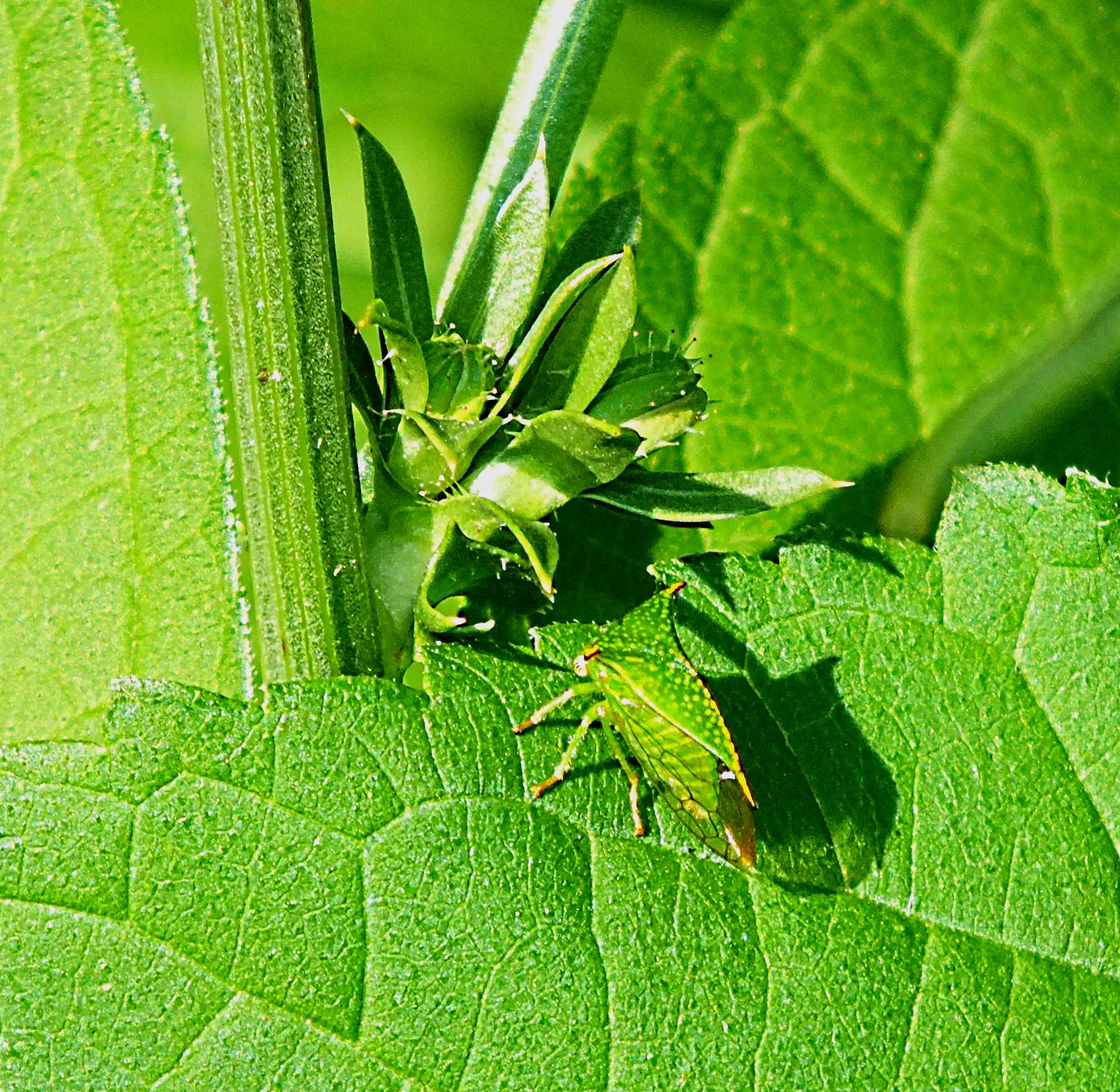
Buffalo Treehopper photo, from successful buffalo hunting! Photo by Thomas Peace 2014
.
Watch it… sometimes your hobby becomes so intense that it begins to pursue you!
.
[I went out to the backyard (to the bird-feeder) to get a few photos of birds, for a change of pace from all of those insects that I am perpetually pursuing. The following is what came to the bird-feeder. Sorry about that! I’ve been chasing insects for so long, I think they may be following me home! It’s, by the way, a Painted Lady butterfly. Painted Lady butterflies do not eat bird seed… but they do like to be the center of attention! 😉 ]
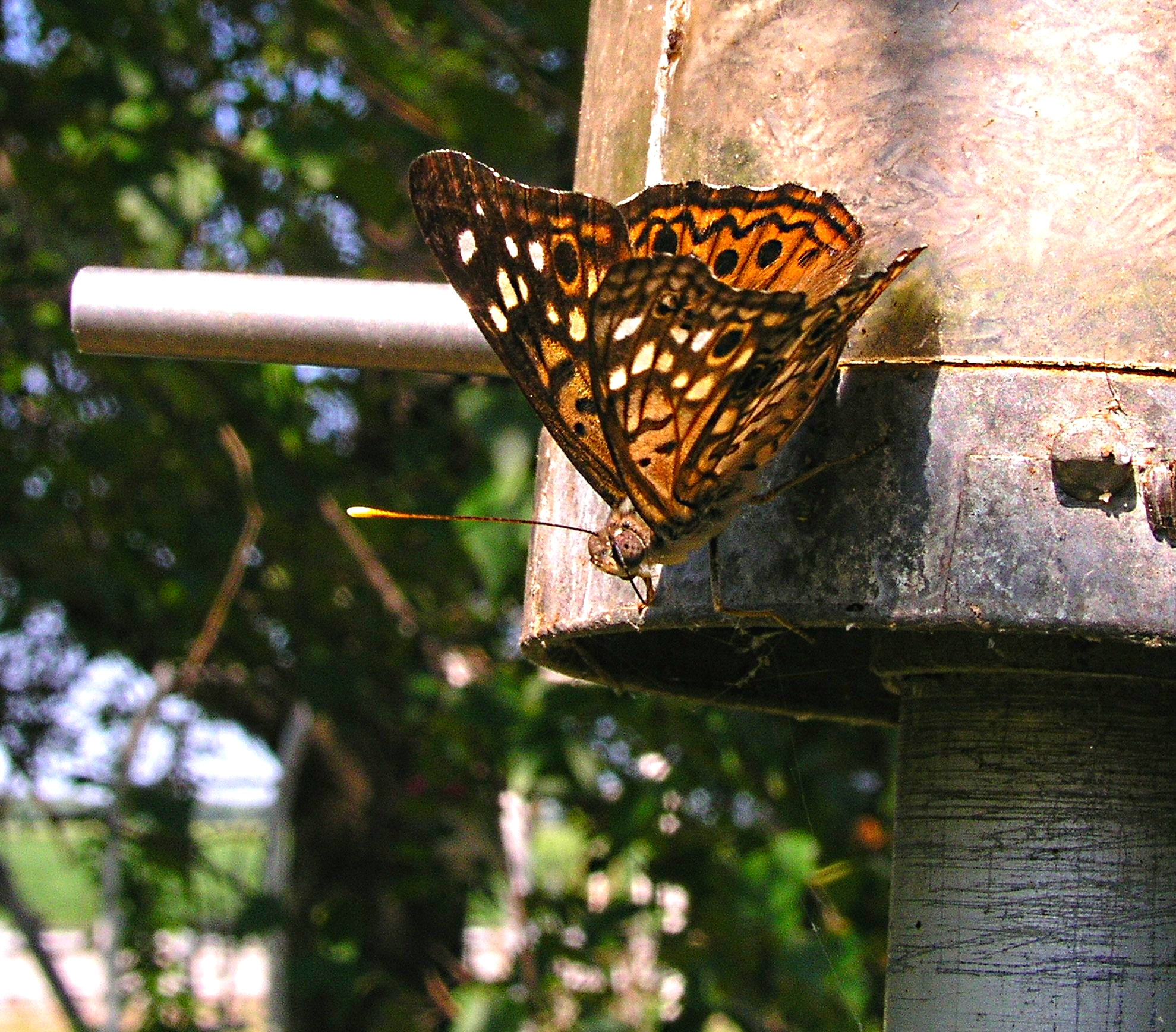
Just another egotist! (Painted Lady butterfly) Photo by Thomas Peace 2014
.
Inner and integral happiness does not cost a dime!
.
[This is a Black Swallowtail Butterfly resting on a Thistle Flower. Black Swallowtail Butterfly eggs are yellowish and ovoid shaped, and are laid on wild and cultivated plants of the carrot family, such as parsley, parsnips, celery, and carrots. There are two broods of Black Swallowtails annually in the North, and at least three in the South.]

Black is beautiful! Photo by Thomas Peace 2014
.
Most people, unfortunately, are content to remain in the limited… which is like staying in an enclosed, cold room.
.
[This is a Painted Lady Butterfly, a Bee Assassin, a Green Tree Cricket, a Hover Fly, some Ants, and a Soldier Beetle on a Goldenrod Plant. The more the merrier!]
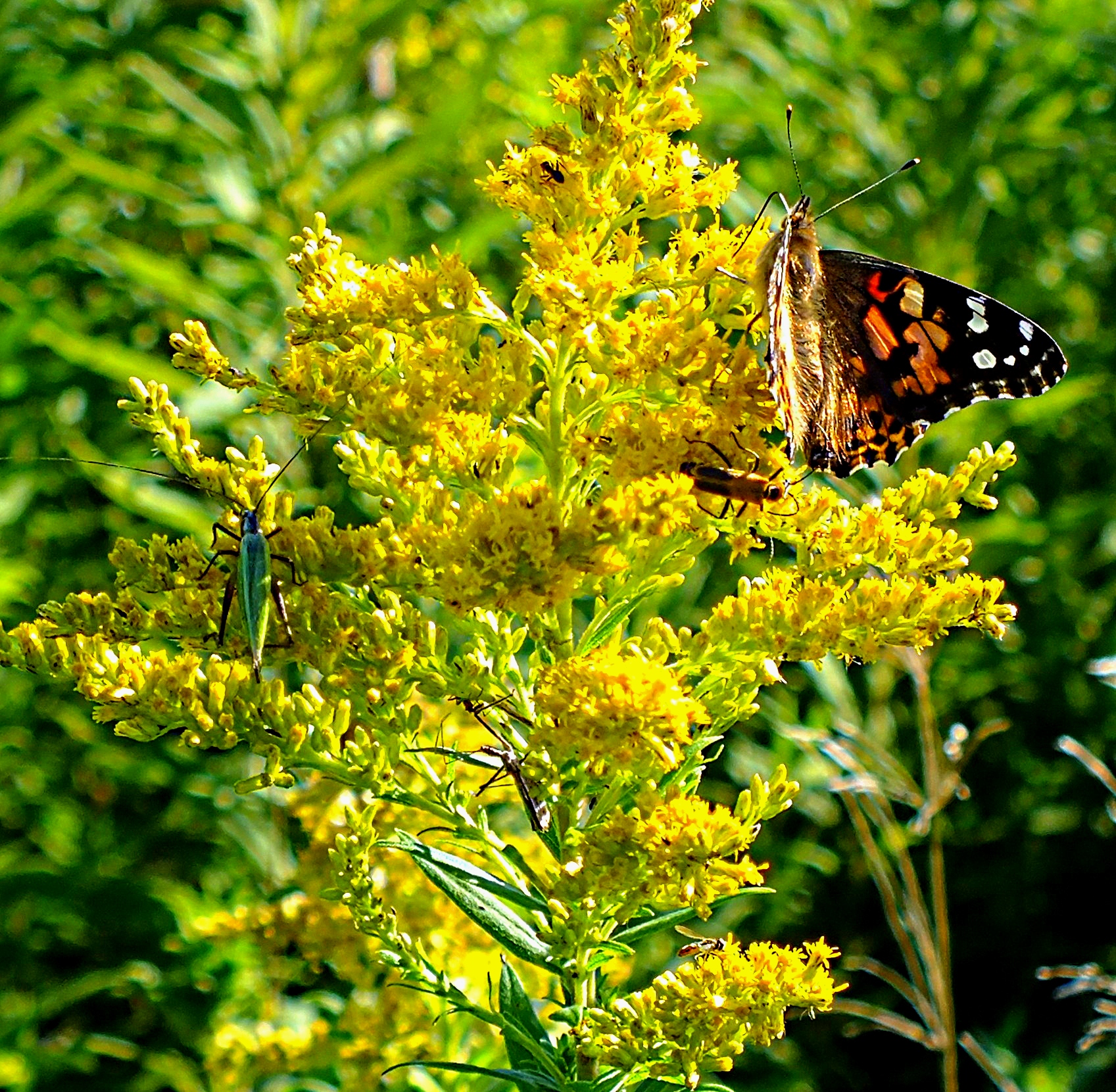
A big weekend party! Photo by Thomas Peace 2014
.
The space around a supposedly central ego is a limited (confined) space that encloses and separates… that imprisons. Go beyond egotism.
.
[These are various wild plants, including wild Fox Grape Vines and grasses. The seed pods in the center have spiked spears protruding from them.]

Vines and stickers. Photo by Thomas Peace 2014
.
A bad means used to get a good end is usually disorder and is not intelligent.
.
[These are micro-mushrooms (super small mushrooms) growing on the bark of a living oak tree along with some lichens. These diminutive mushrooms were around the size of a question mark (such as within a standard newspaper article or magazine). Mushrooms are the fruiting body of a fungus. Lichens themselves are a type of fungus growing in a symbiotic relationship with a particular type of algae, the two together forming a single organism.]
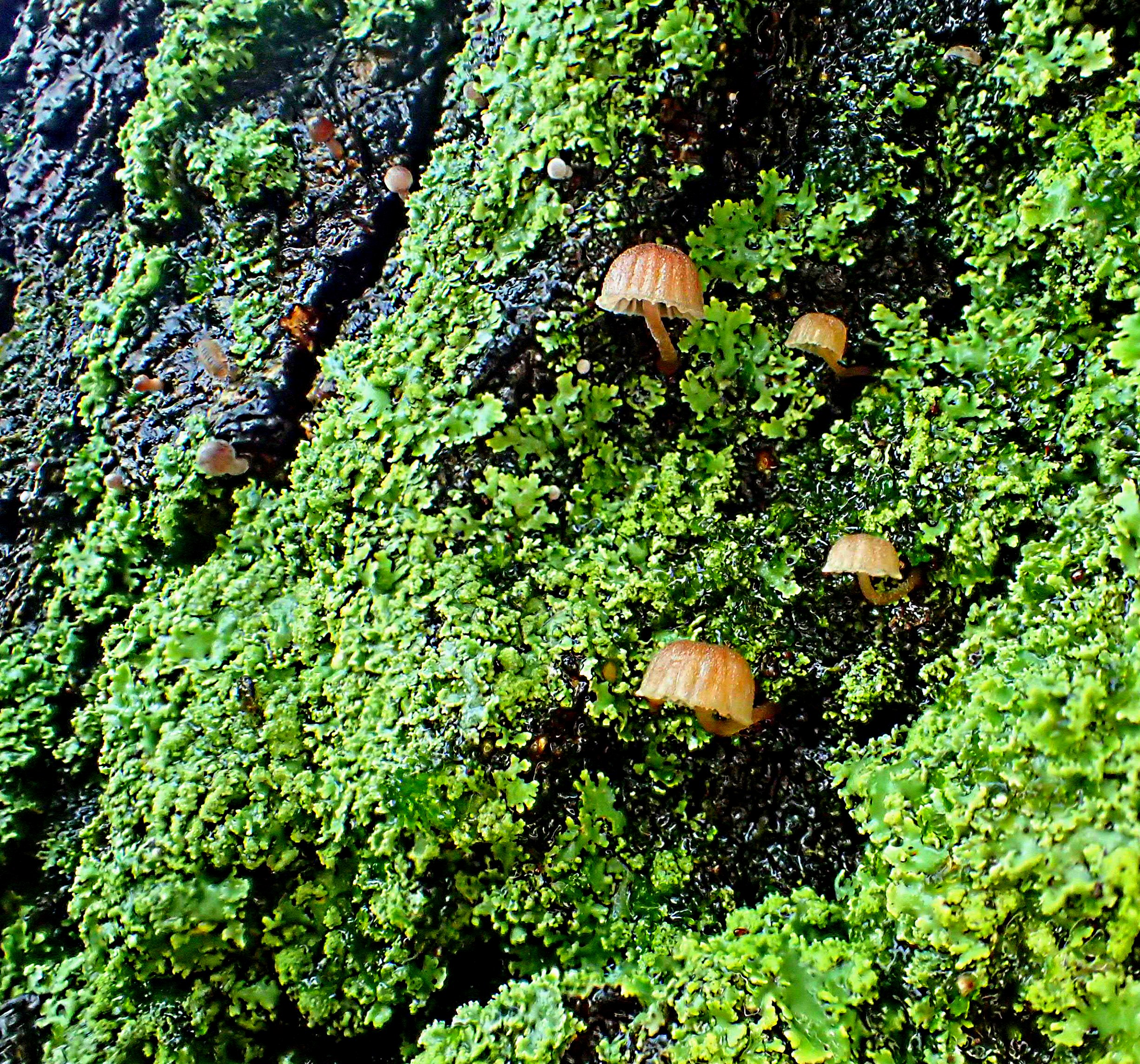
Small but significant! Photo by Thomas Peace 2014
.
Fingers apart are still — and will always be — fingers together!
.
[24th annual meeting of The Antenna Enthusiasts of America. (I also attended, because I have broadband.)]
Annual meeting of The Antenna Enthusiasts of America. Photo by Thomas Peace 2014
.
The learner is the learned; the painter is the painted; the criminal is the crime; the doctor is the healing.
.
[The approaching meeting. This is an inquisitive Grasshopper and a Green Tree Cricket on a Wild Sunflower.]

The Meeting. Photo by Thomas Peace 2014
.
The treasure chest of one’s mind — if one is not very careful — can merely be filled with others’ junk!
.
[This spider is a Long-jawed Orbweaver. Long-jawed Orbweavers are excellent web builders. Their carapaces are elongated. As in many spiders, the males are smaller than females.]

Orbweaver Spider doing its thing! Photo by Thomas Peace 2014
.
The fire of felicity, intense happiness, radiates from within.
.
[This Jumping Spider is, specifically, a Daring Jumping Spider. The chelicerae (the part containing the fangs) are a flamboyant metallic green and this is an excellent way to identify this particular jumping spider. These spiders like sunshine and do their hunting during the day. They jump from leaf to leaf with great dexterity and accurately (because of all those splendid stereoscopic eyes) leap on their prey and often eat other spiders as well as insects. They are totally harmless to human beings… and are beneficial, as they eat harmful insect pests. To me, they seem intelligent (considering their size) and rather cute!]

A handsome jumper. Photo by Thomas Peace 2014
 Tom's Nature-up-close Photography and Mindfulness Blog