
.
Live life magically, not heavy-footed and ungracefully!
.
[Female Whitetail Dragonfly]

Natural and balanced. Photo by Thomas Peace 2014
.
Live life magically, not heavy-footed and ungracefully!
.
[Female Whitetail Dragonfly]
Natural and balanced. Photo by Thomas Peace 2014
.
Don’t lose your innocence. Don’t ever merely crave to “fit in” with the crowd. Don’t ever fear “being made fun of” or fear “being rejected.” Stand alone without being a slave to “what they think.”
.
[Here we go ’round the mulberry bush,
The mulberry bush, the mulberry bush.
Here we go ’round the mulberry bush,
So early in the morning.]
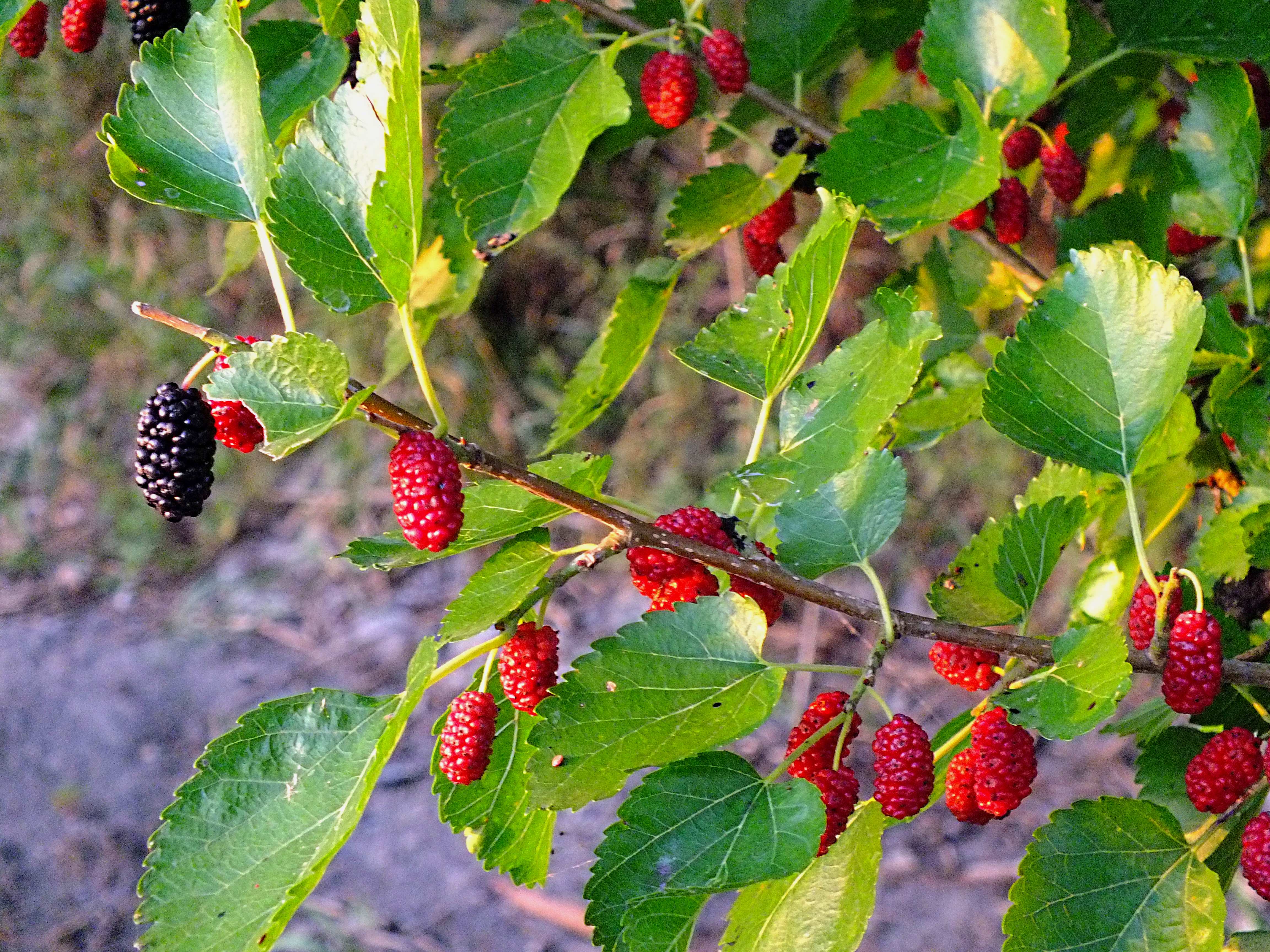
So early in the morning… Photo by Thomas Peace 2014
.
What motivates you? Is what motivates you rather ordinary, limited, and superficial… or is it something with tremendous depth?
.
[A session (i.e., social gathering) of the Nature Appreciation Club.]

Nature Appreciation Club. Photo by Thomas Peace 2014
.
Face life and truth as it actually is… not merely as what you want it to be or as what you were taught.
.
[Meeting with an old friend.]
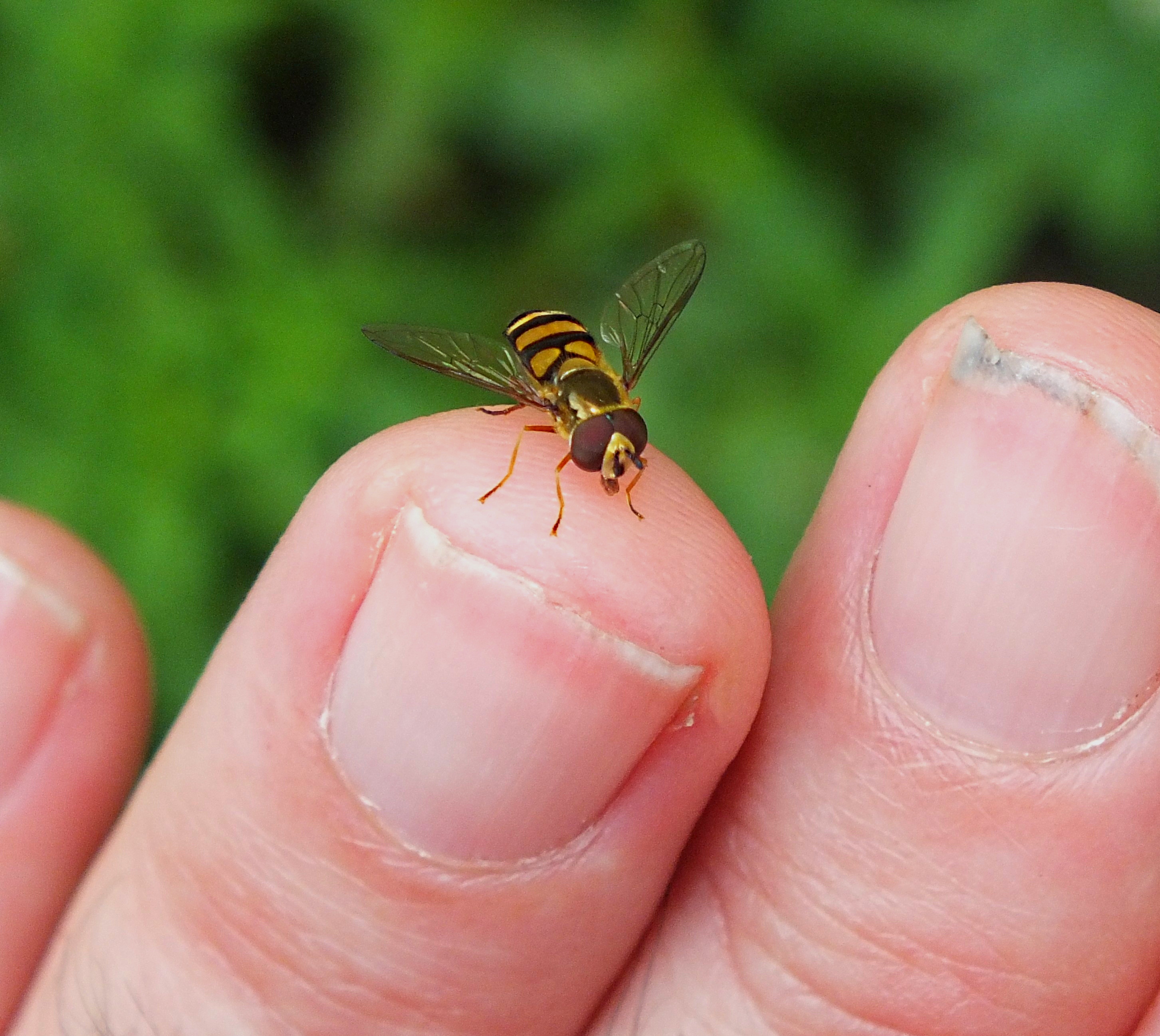
Discussing the day’s events. Photo by Thomas Peace 2014
.
The divisive notion of “us” and “them” causes wars.
.
[The single queen that laid these eggs was well fed indeed!]
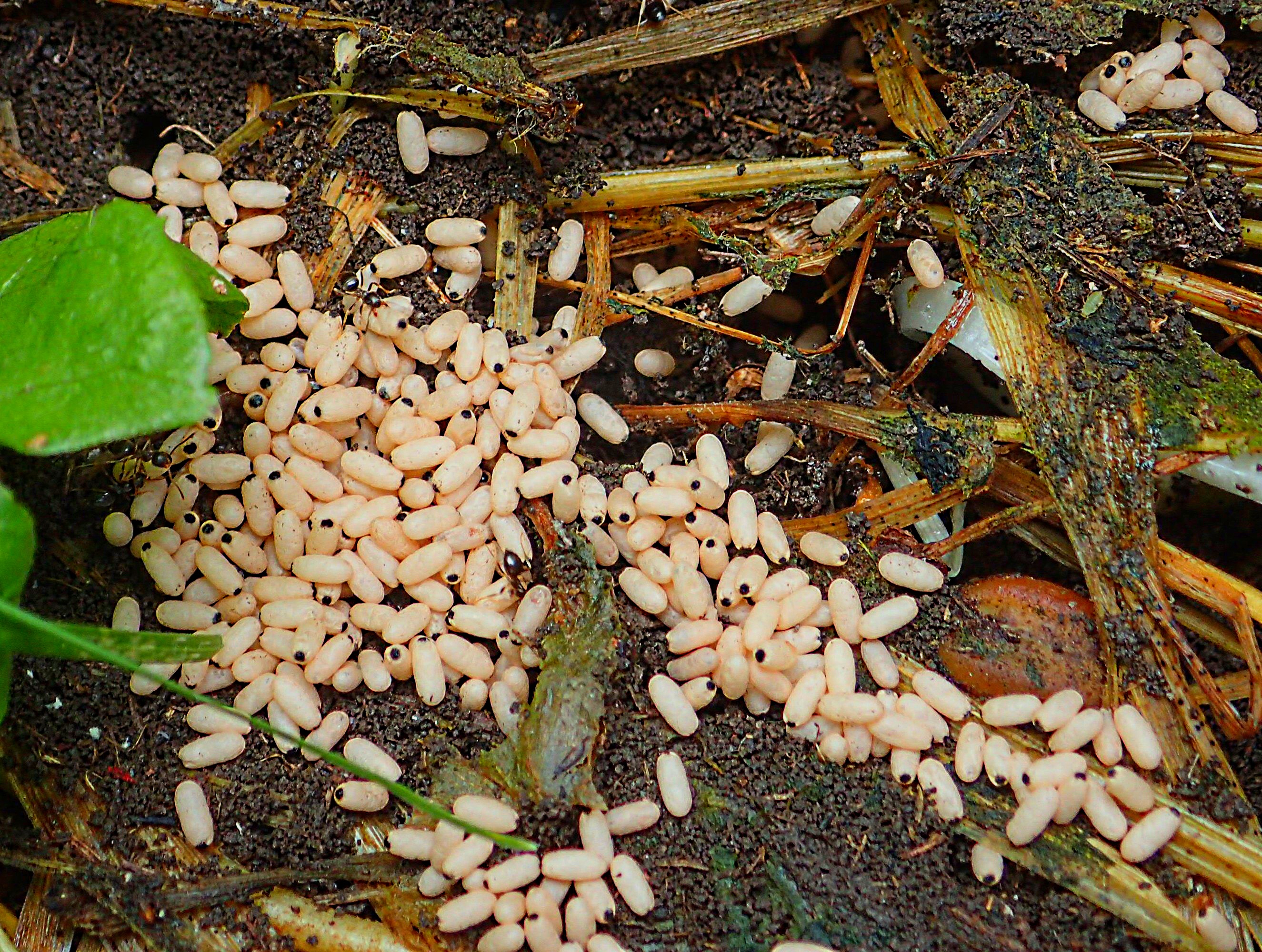
Many new sisters are on the way! Photo by Thomas Peace 2014
.
A trillion times more important than understanding the instrument of one’s camera… is understanding the instrument of one’s mind.
.

A couple of the planets of the sun contain life. Photo by Thomas Peace 2014
.
Can one ever remain truly happy if one is constantly looking at the world through the labels that others instilled in one?
.
[Buffalo Treehoppers feed on the sap of flowers, vegetables, shrubs, and deciduous trees.]
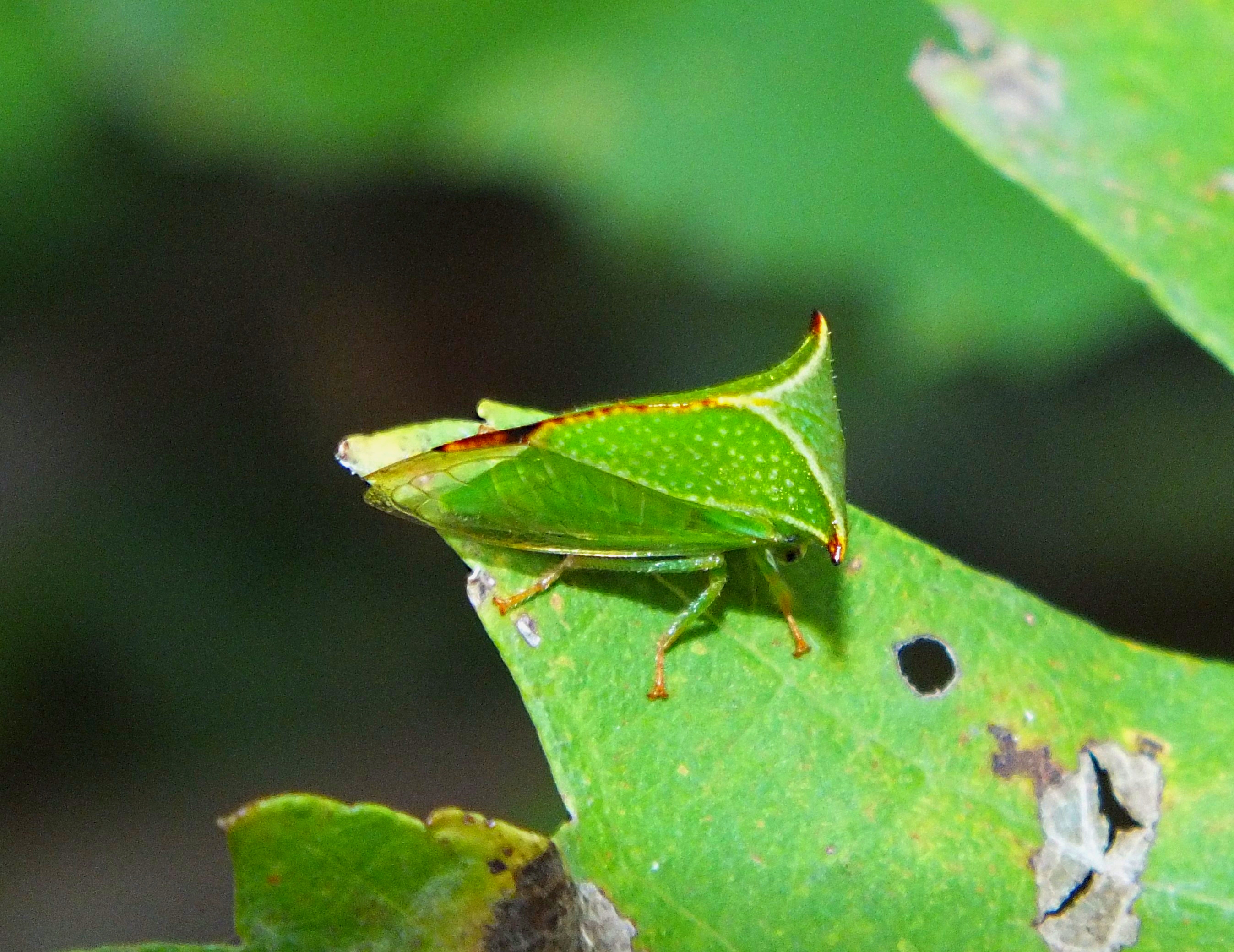
There’s a hole in their theories! Photo by Thomas Peace 2014
.
If, each and every day, one is wisely psychologically dying to the hullabaloo and clamor of superfluous thoughts, then one isn’t afraid of the mystery of dying (as so many are). Then living and dying aren’t two separate things… nor the latter something horrible to be frightened of.
.
[Widow Dragonfly]

Black Widow. Photo by Thomas Peace 2014
.
Few of us actually live between the past and the future because we are obtrusions of the past reacting to (and “as”) past learned images and desires.
.
[Eastern Comma Butterflies are found from spring through fall in woodland and forest openings and along the edges of thickets, streams, and rivers. This one is resting along the bank of a river.]

Moist environments rock. Photo by Thomas Peace 2014
.
To be cultivated is to be discerning; one can’t be discerning if one is full of the crumbs of an indifferent society’s brittle cookie.
.
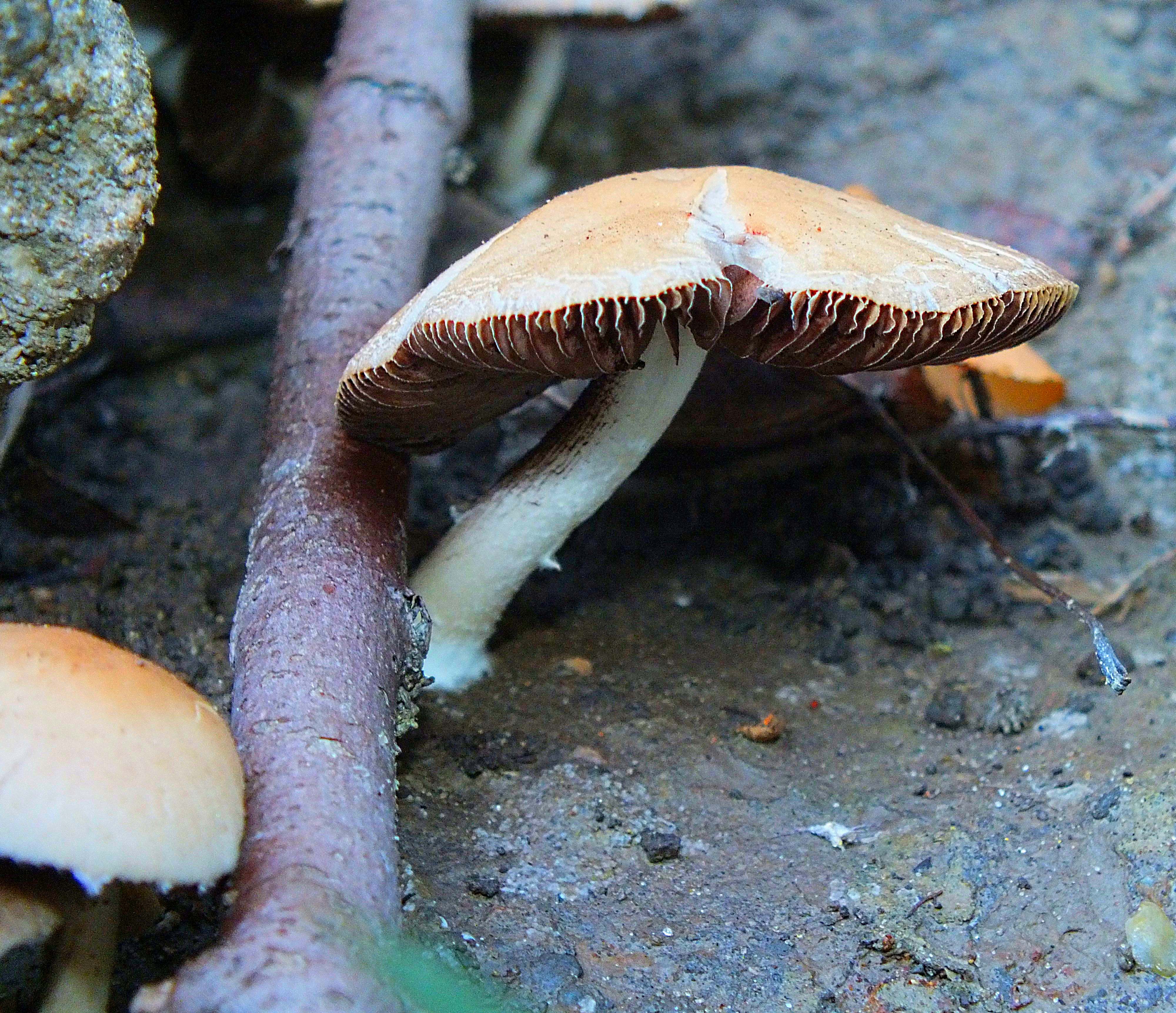
Away from the brittle pavement… Photo by Thomas Peace 2014
.
Let the mind be malleable and adaptable; flow with changes with poise and adroit movement.
.
[This is a local river area in fall.]

River Flow (1) Photo by Thomas Peace 2014

River Flow (2) Photo by Thomas Peace 2014
.
Many are prejudiced against animals… and look at them as inferior.
.
[A pair of Mourning Doves; the male is on the left. Pairs tend to mate for life. The male and the female work together to feed their new babies. (We live along some woods where you can hear hunters shooting these often. How any human being can shoot these (with a gun instead of a camera) is beyond my comprehension. I, just yesterday, heard on the radio about how Passenger Pigeons went extinct due to over-hunting.)]

Exploring together! Photo by Thomas Peace 2014
.
Thought is a necessary and extremely helpful tool; but it’s only a tool… not the true essence of the organism. When the mind is cluttered with a myriad of needless thoughts throughout the day (as it is in so many, with their endless fears and habitual, repetitive imagery) … it’s, in a way, like a plant burdened with many insects. However, don’t merely “try” to eradicate excess thoughts… because that would likely be some thoughts trying to eliminate “other” thoughts (accomplishing, in reality, nothing)… leaving the “plant” remaining rather “buggy.” (Fabricating more bugs to chase away other bugs leaves one remaining “buggy.”) Simply observe each series of thoughts without psychological separation (being aware of the space between thoughts as the thoughts perish and end)… and then a natural silence may beautifully occur without effort (i.e., without another fabrication trying to get rid of them). That natural silence would occur without struggle, without concocted manipulation, without friction, without conflict.
(Of course, there are endless people who prefer to remain buggy!)
.
[Aphid insects on a wild plant.]

Too much of a good thing. Photo by Thomas Peace 2014
.
To have a decent rapport with nature… go beyond the self and become “one with plants and animals.”
.
[A Grasshopper (with a penthouse view) and a Ladybug. Most Grasshoppers are vegetarian, while Ladybugs are mostly carnivorous. The Ladybug will not attack the Grasshopper, though, since the prey of Ladybugs is much smaller.]

Penthouse View… Photo by Thomas Peace 2014
.
The Future and the Past got married; they officially named their newborn child… calling him Now.
.
[Saber-Tooth Cat skull, (Machairodus giganteus), 12 million years old, Guanhe Beds, Linxia Basin, Gansu Province, China.]

Opening up at the dentist’s… Photo by Thomas Peace 2014
.
Love all beings and creatures in life… not just your little self and family, race, and nation.
.
[A pair of Black Phantom Tetras. The male is in the foreground… the female in the background. The tiny adipose fin — at the top of the fish between the tail fin and the much larger dorsal fin — is clear in the males and red in the females. The males also have larger and more flamboyant dorsal fins. Most freshwater tropical fish of the Tetra group have the little adipose fins… but few have such distinctive indicators to distinguish the males from the females.]
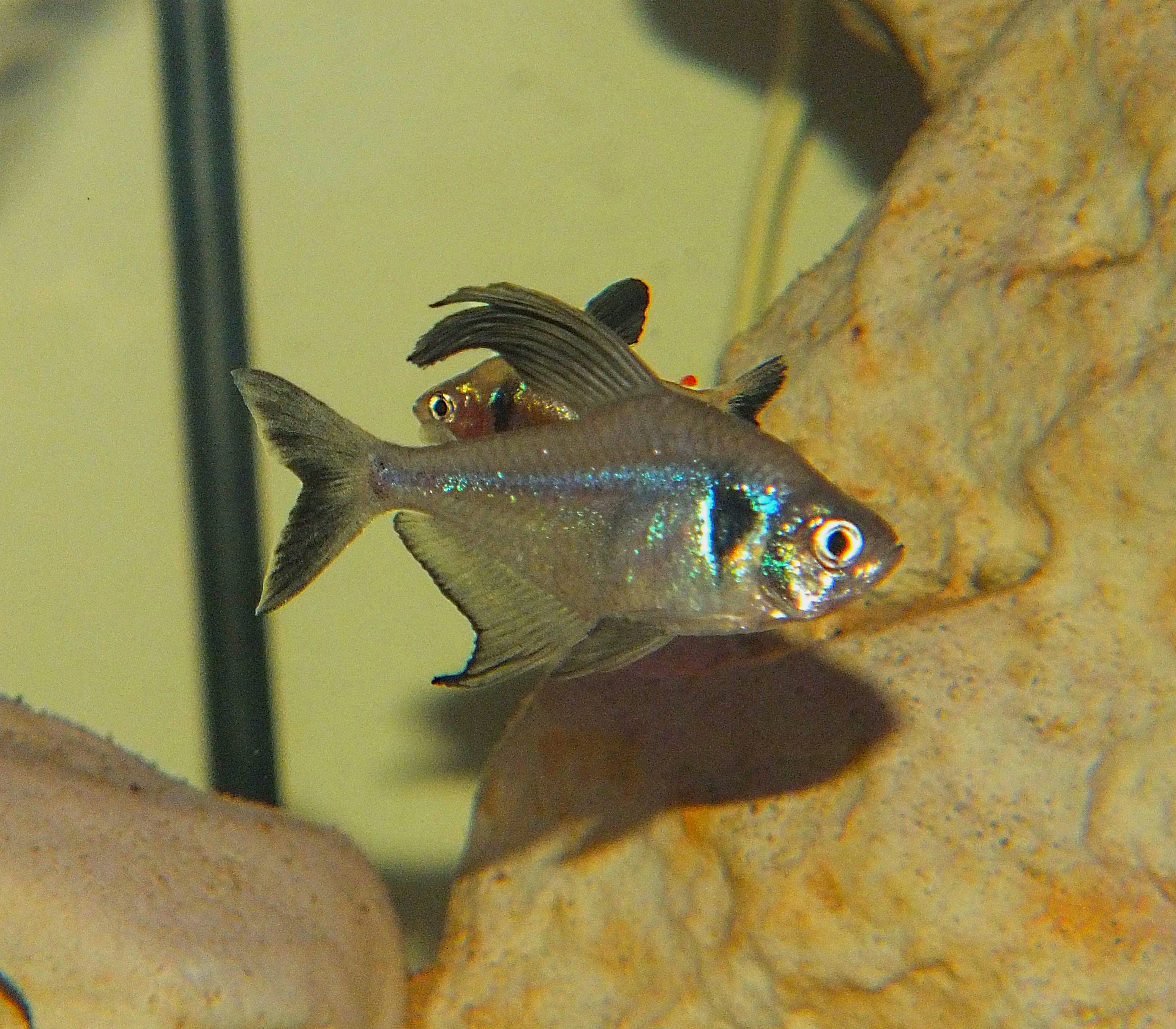
Black Phantoms in our midst… Photo by Thomas Peace 2014
.
Circle ends and circles again. Circle ends and circles again…
.
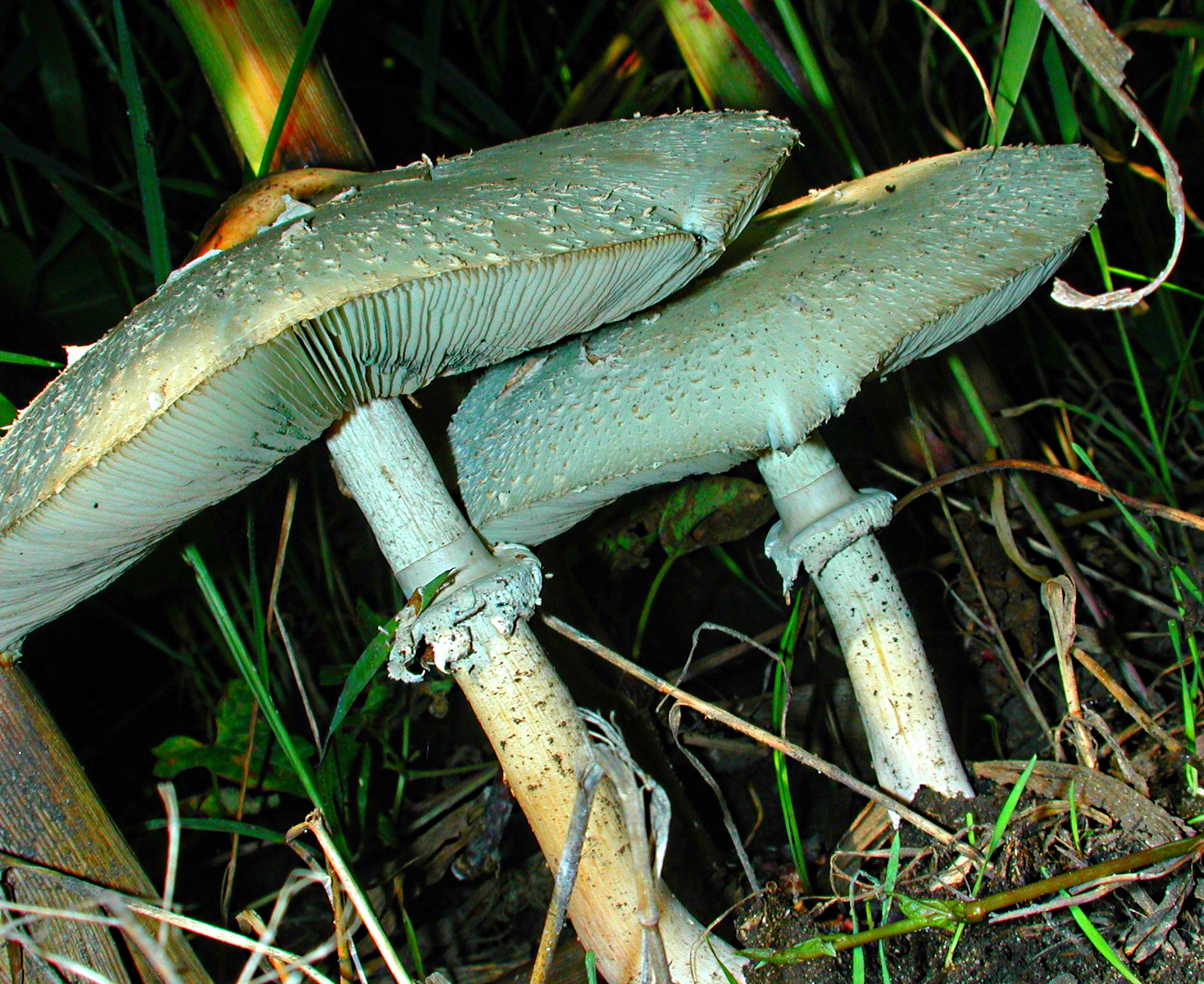
Circle ends and circles again… Photo by Thomas Peace 2014
.
Friction and conflict — in the mind — begins with thinking the “me” as separate from (and in control of) the “other” thoughts.
.
[Black Ants on a very large Oak Tree.]

Busy as bees… Photo by Thomas Peace 2014
.
The subject thought that it was separate from the object. At least that is what it was taught. But without all the objects, what would the subject be?
.
[Young Long-tailed Jaegar in a Pine Tree.]

Resting by the lake… Photo by Thomas Peace 2014
.
Beyond separation, the river finally felt compassion for the (not so distant) fish and so put the fishing pole down forever and went home.
.
[A local largemouth bass. (Many years ago, I used to be an avid fisherman; I could even catch fish when others failed; I no longer fish whatsoever.)]

Unhooked to fishing… Photo by Thomas Peace 2014
.
We must not merely inculcate children with mechanical, stale facts… but teach them much about compassion, empathy, and green energy.
.
[Sanddragon Dragonflies prefer to lay their eggs in streams and lakes with sandy bottoms; their larvae burrow into the sand. The abdomens of these dragonflies are of a unique shape.]

Sanddragon Dragonfly cooling off. Photo by Thomas Peace 2014
.
Nature doesn’t have its own sponsors — in the media — telling us to be less materialistic and to travel less (thereby using less fossil fuels); but big, materialistic corporations have plenty of promoters making earth-damaging practices seem “OK” and “normal.” We truly need to go beyond the advertising propaganda.
.
[Honey mushrooms along rocks on the river bank. Honey mushrooms, like most mushrooms, are just the visible fruiting body of the fungus. The main part of the organism is underground and is called the mycelium. Mycelium can spread for many miles… and this accounts for mushrooms being some of the world’s largest organisms. It is estimated that some honey mushrooms (that are very large, over many miles) are over 400 years old. (My photos, by the way, are all taken locally; I don’t travel any appreciable distance to take my photos. For instance, one walked to where these mushrooms were photographed.)]

Fruit of the mycelium. Photo by Thomas Peace 2014
.
It’s easy to harm something else when you think that it is separate from what you are. In the actual tree of life, we are all connected… all one.
.
[A frisky squirrel eating one of many acorns.]

Wisely plumping up for winter. Photo by Thomas Peace 2014
.
No one – not anybody – can accurately define what true awareness is… because true awareness is too dynamic to merely be put into words and categorized.
.
[Local natural rock-work formation. (There is, by the way, something man-made in this photo. Can you see it?)]

Natural beauty! Photo by Thomas Peace 2014
.
If you’re like me, you don’t let your good looks go to your head.
.
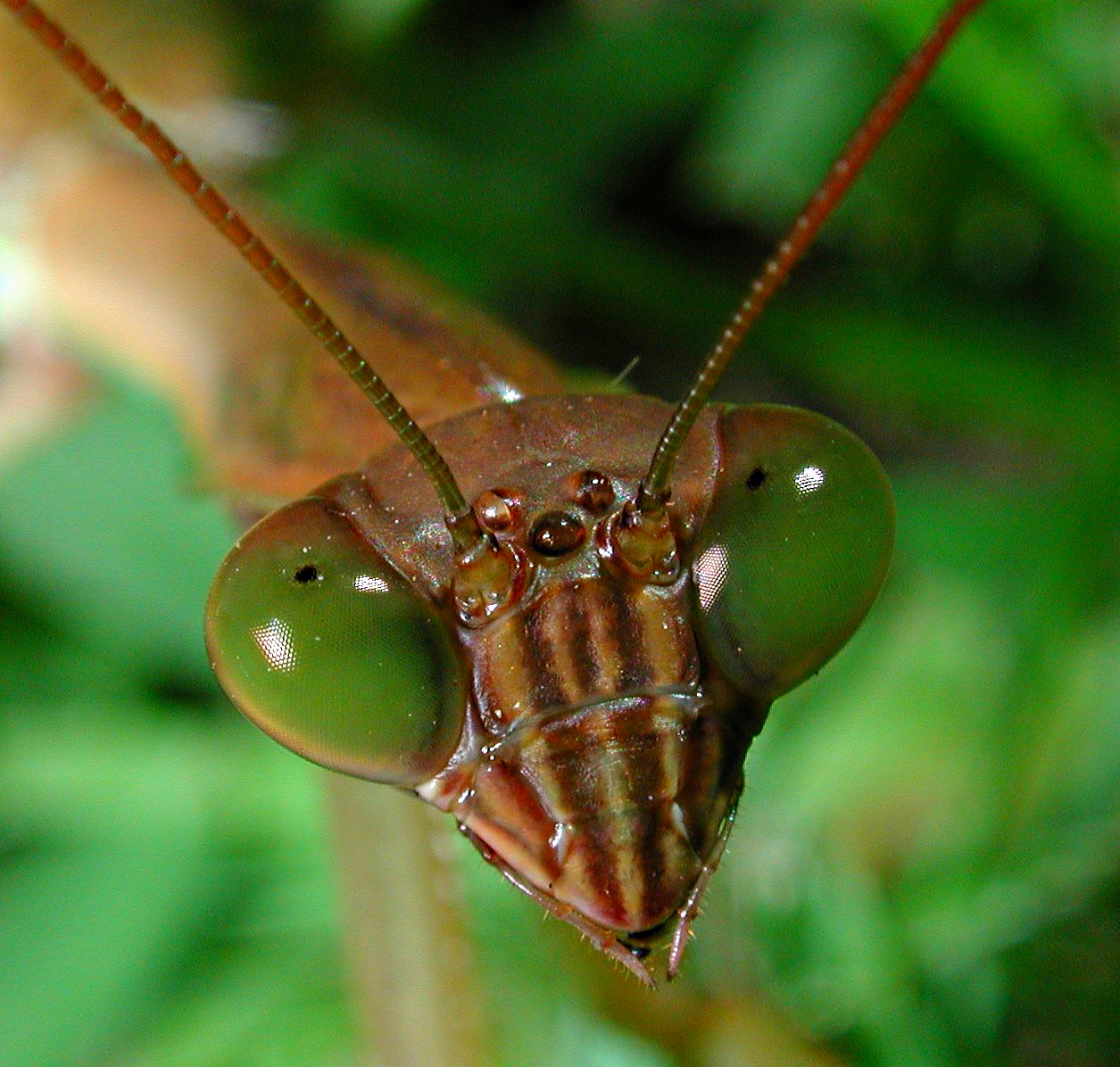
Mantis of the year! Photo by Thomas Peace 2014
.
A mind that is often aware without needing things or thoughts to “be aware of”… is a supremely free, non-dependent, unique, and rather majestic mind.
.
[Dragonfly in flight…]

Free and uncluttered…. Photo by Thomas Peace 2014
.
A mind that merely clings from one experience to another in order to be happy is, unfortunately, a rather infantile, impoverished state of affairs; it need not be that way.
.
[Poison Ivy leaf cluster in the fall.]

Not a good thing to walk through! Photo by Thomas Peace 2014
.
Love often acts without self-motivation.
.
[Grapeleaf Skeletonizer Moths are interesting in that they are both diurnal and nocturnal. I’ve got the same attributes for sure!]

Night or Day… Day or Night! Photo by Thomas Peace 2014
.
This is how — being a vegetarian — I shoot my turkeys for Thanksgiving. (It’s not the best shot; they’re not that easy to shoot!)
.

I bagged two at once! Photo by Thomas Peace 2014
.
Going far beyond depression – rarely, if ever, letting it flower – is an essential function of a stable, healthy, compassionate mind.
.
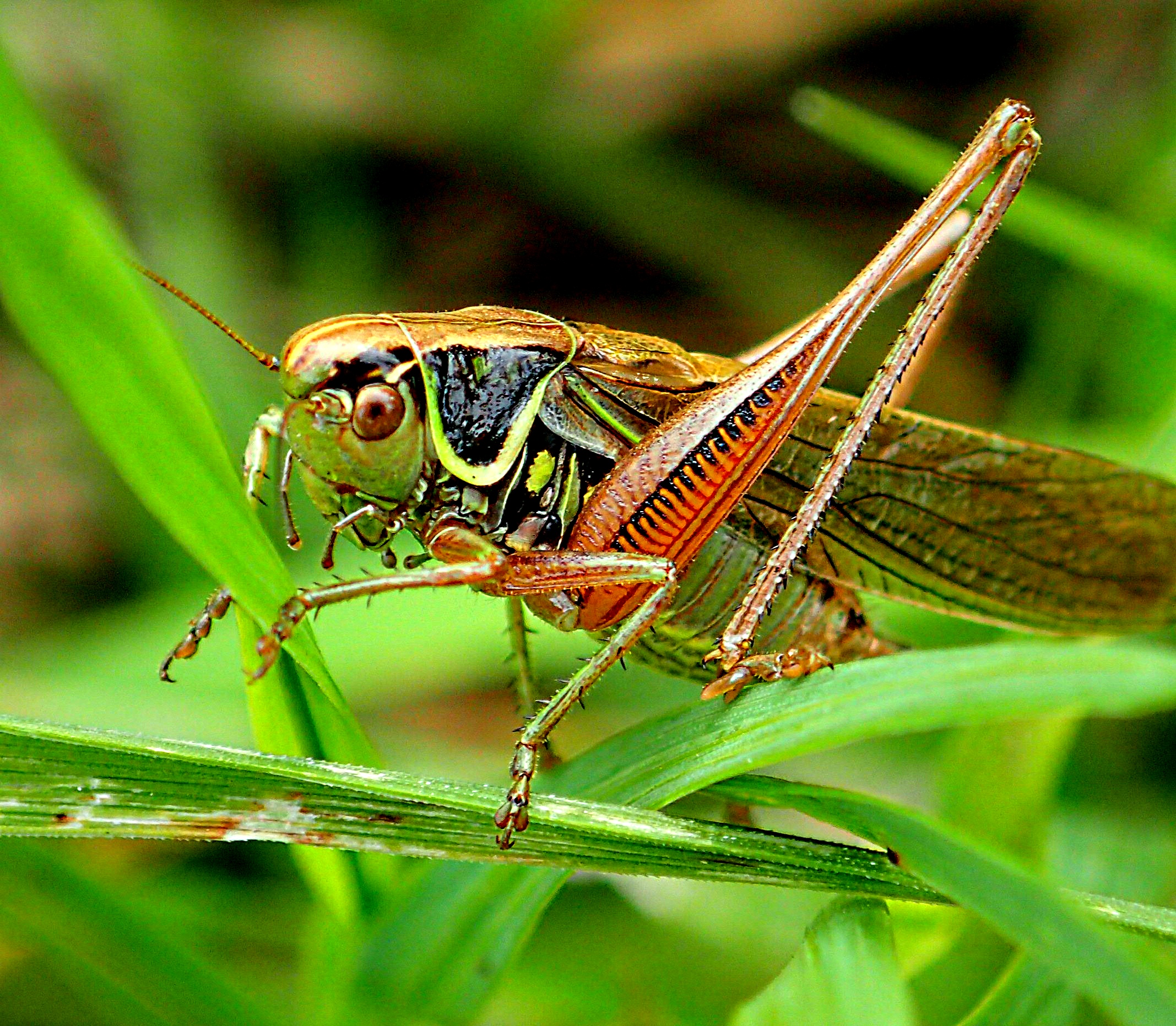
Together in nature. Photo by Thomas Peace 2014
.
The left arm can hate the right arm and think that it is separate… but it isn’t. Peace takes intelligence.
.
[A unique variety of Heal All Plant growing on a river bank.]

Heal All. Photo by Thomas Peace 2014
.
I’d much rather listen to a natural, babbling brook than the babbling from all the bourgeois, self-important, stale politicians and bureaucrats.
.
[Close-up of a natural, babbling brook that one was passionately listening to.]

Alone again… naturally… Photo by Thomas Peace 2014
.
True enlightenment — not all of that phony stuff — involves being beyond the “conditioned”; few ever exist in (and “as”) the timeless, the “unconditioned.”
.
[A female Cabbage Butterfly resting. They were introduced into the U.S. from Europe at around 1860. Well… we’re used to immigrants!]

She’s not a legal citizen… but I won’t turn her in! Photo by Thomas Peace 2014
.
The only true and profound revolution worth fighting for is a nonviolent, spiritual one.
.
[A Meadow Spittlebug weathering out the rain. They are very small and feed on a variety of weedy plants. Adults readily jump or fly when disturbed.]
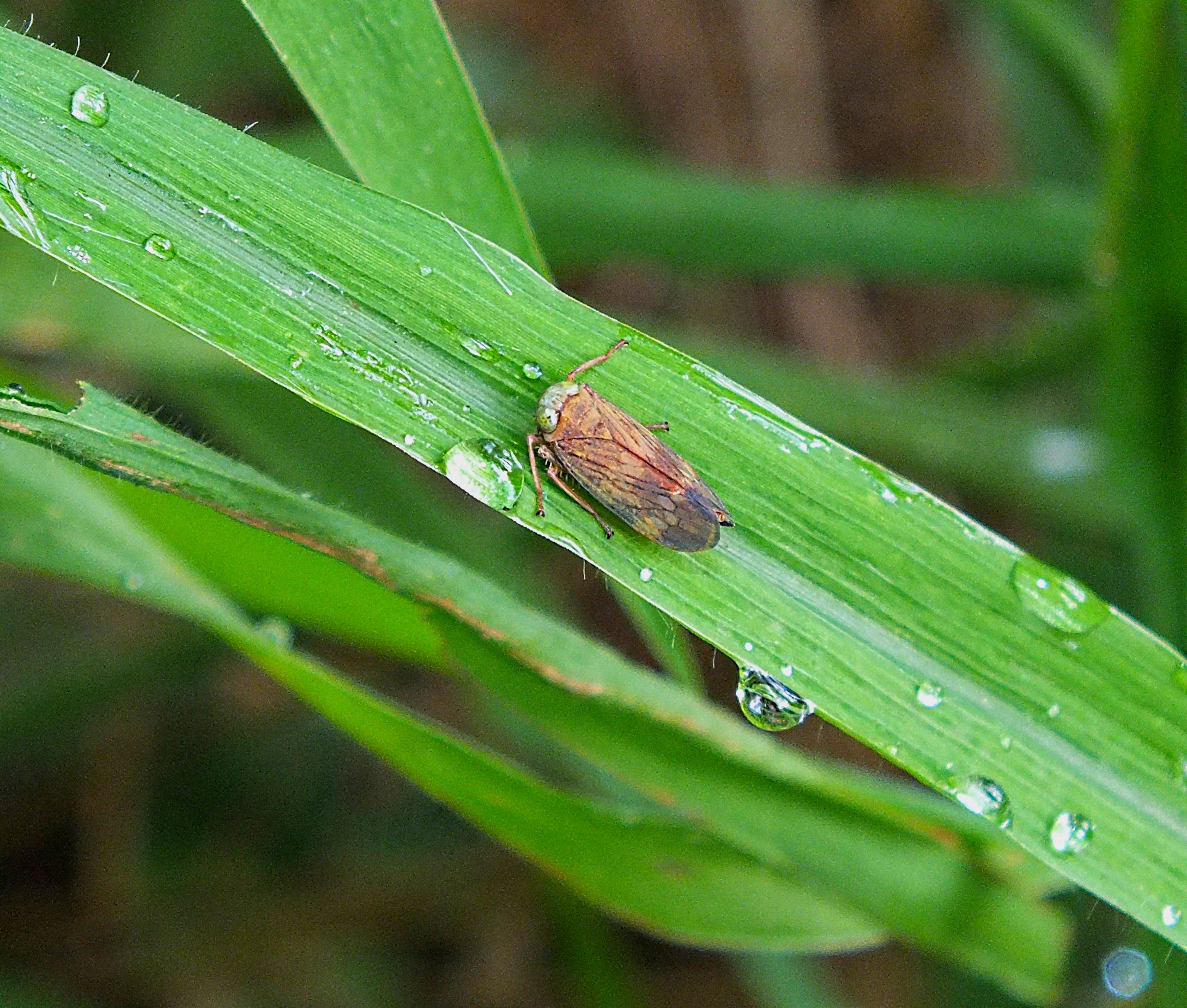
Raindrops keep fallin’ on my head… Photo by Thomas Peace 2014
.
Happiness isn’t a warm gun; happiness is a warm (compassionate) heart.
.
[Red Milkweed Beetles, I think, are among the most evolved and “intelligent” insects in our area. As I’ve mentioned before, sometimes when I approach Milkweed Plants these beetles will deliberately fly at a rapid rate into me, striking my face repeatedly to entice me to leave. Some panic and fly away. This one decided to “play dead.” It fell from a Milkweed leaf above. After I backed up and watched from a distance for a while… it subsequently straightened itself out and flew away. I laughed at its ruse!]
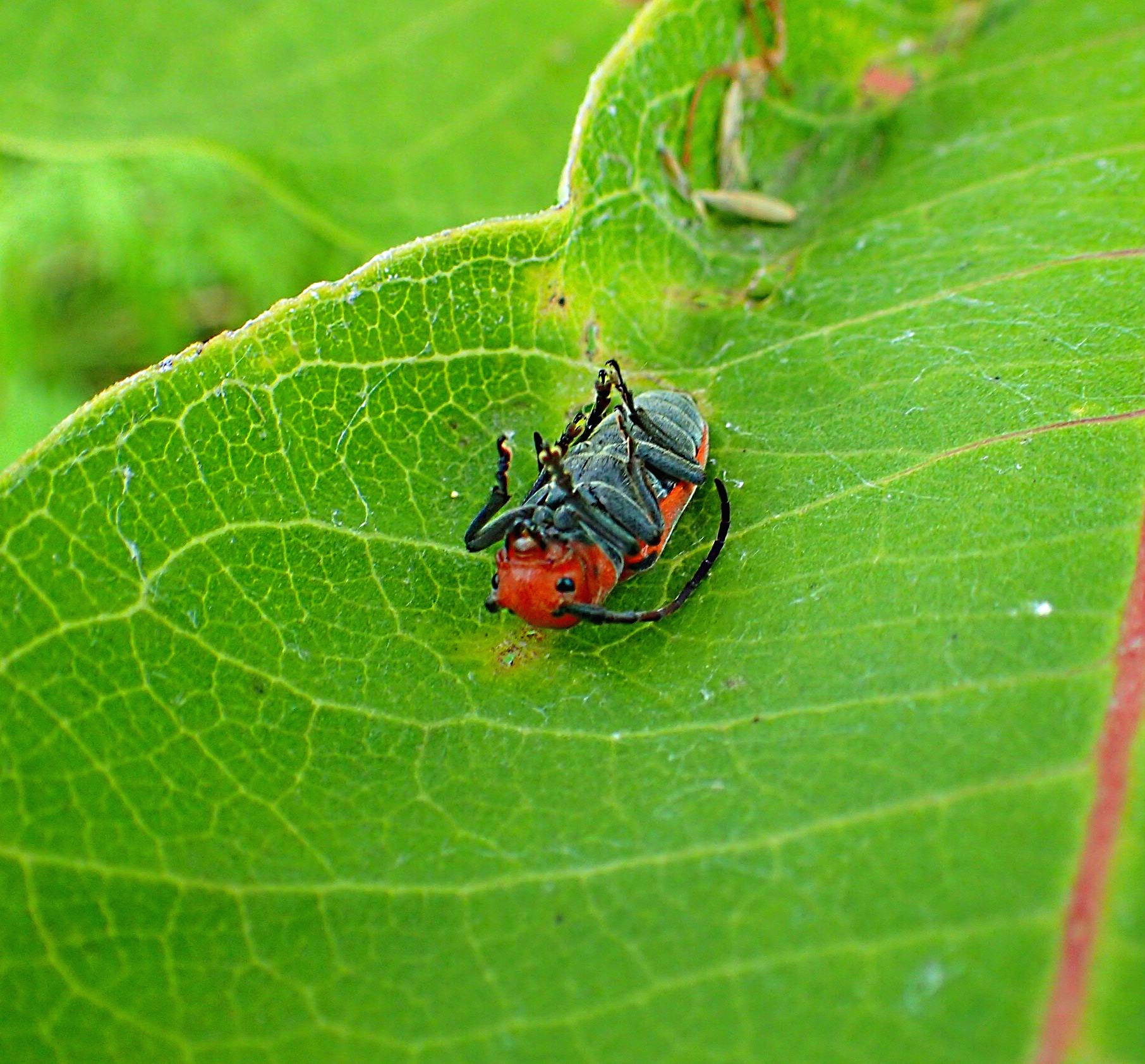
May he rest in peace! Photo by Thomas Peace 2014
.
Poise is the elegance and sound balance that a truly aware and, hence, compassionate mind has… without following blueprints.
.
[A Blue Bottle Fly and a Lady Bug. Blue Bottle Flies are most active during spring and fall. Lady Bugs are active spring through fall.]

A lady and her bottle. Photo by Thomas Peace 2014
.
In life, everything hangs in the balance… (even if you are unbalanced).
.
[This Steel-blue Cricket Hunter is not, currently, interested in hunting any crickets. Adults drink nectar. Larvae feed on crickets and grasshoppers.]
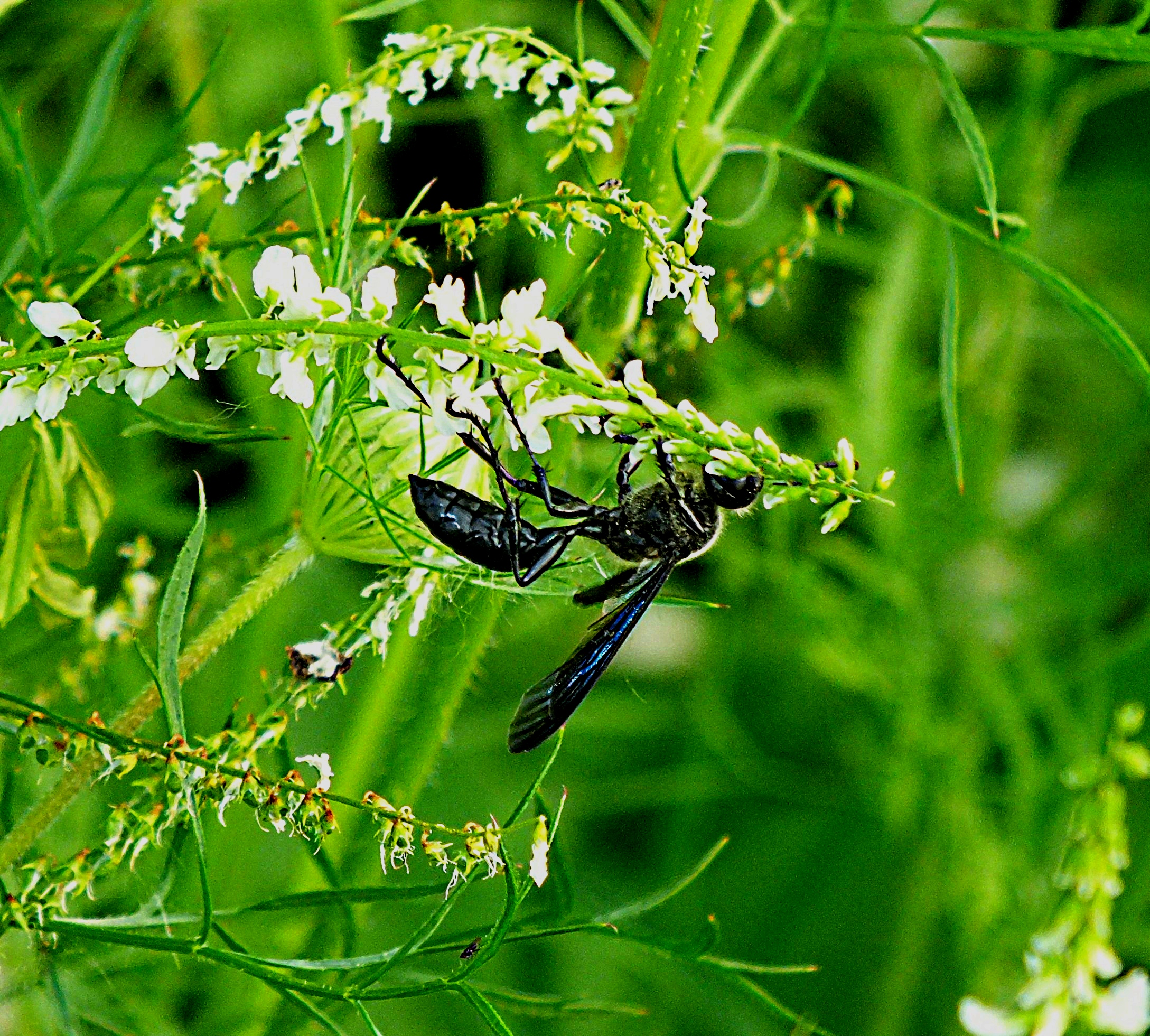
Hanging in the Balance. Photo by Thomas Peace 2014
.
Give a living, potted flower to an elderly friend… whom you expect nothing in return except for maybe a big, fresh smile!
.

Lily. Photo by Thomas Peace 2014
.
Man may exploit nature, use nature, try to cultivate nature, neglect nature, and even allow nature to be destroyed; but, in the end, nature always prevails.
.
[Wild Grapes, using a tractor as an arbor.]
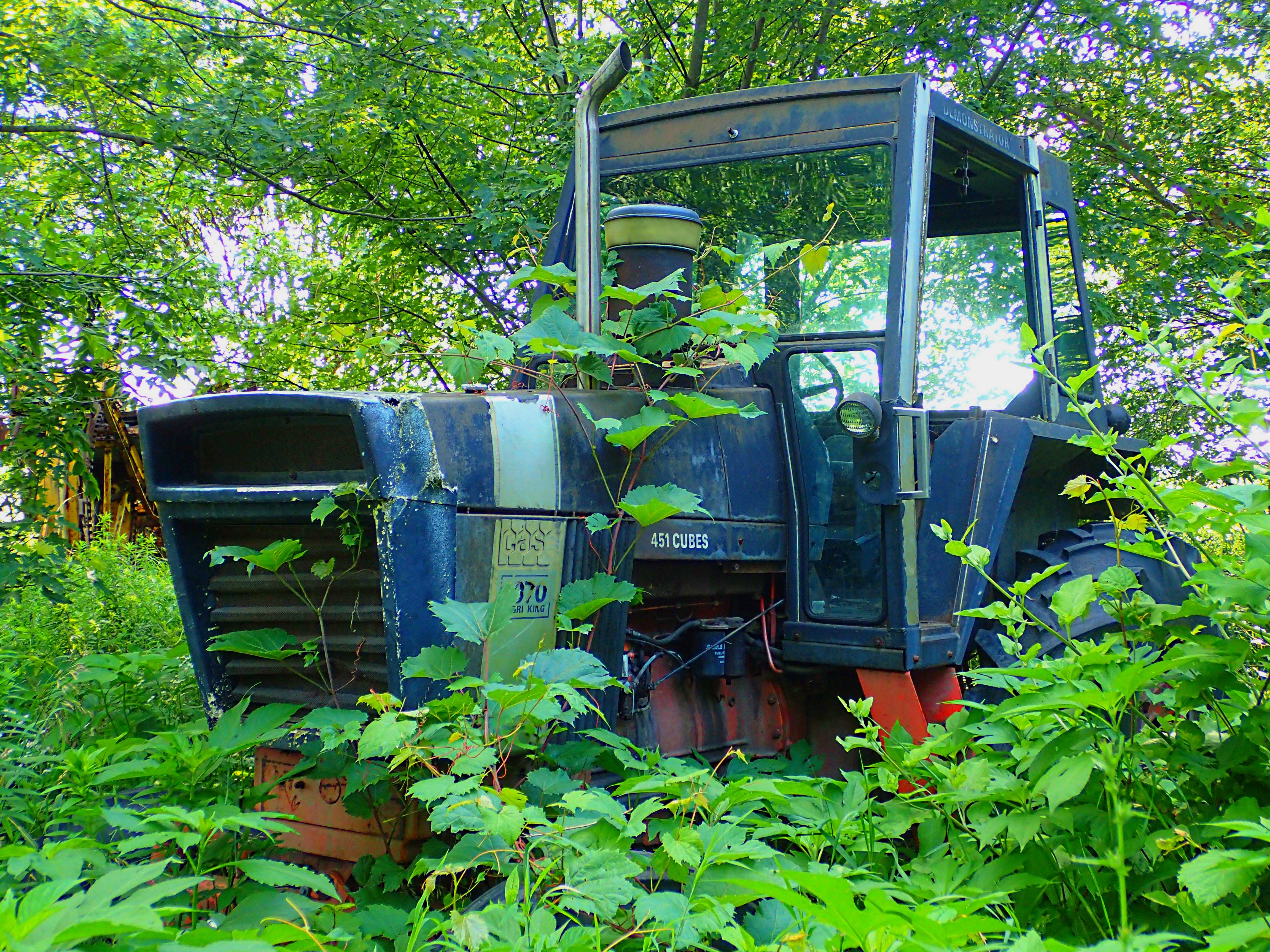
451 Cubes ain’t diddly. Photo by Thomas Peace 2014
.
True happiness is not merely an acquisition… it’s a wise, intelligent, aware, and blissful state of being and non-being.
.

Go beyond grasping. Photo by Thomas Peace 2014
.
One need not wince at one’s fears and endlessly run away from them if one intelligently realizes that one is not at all separate from what they are.
.
[A couple of Fruit Flies and a hiding Lady Bug. Though the Lady Bug is carnivorous, the Fruit Flies need not worry; they are too large. The Lady Bug goes after even smaller insects, such as Aphids.]
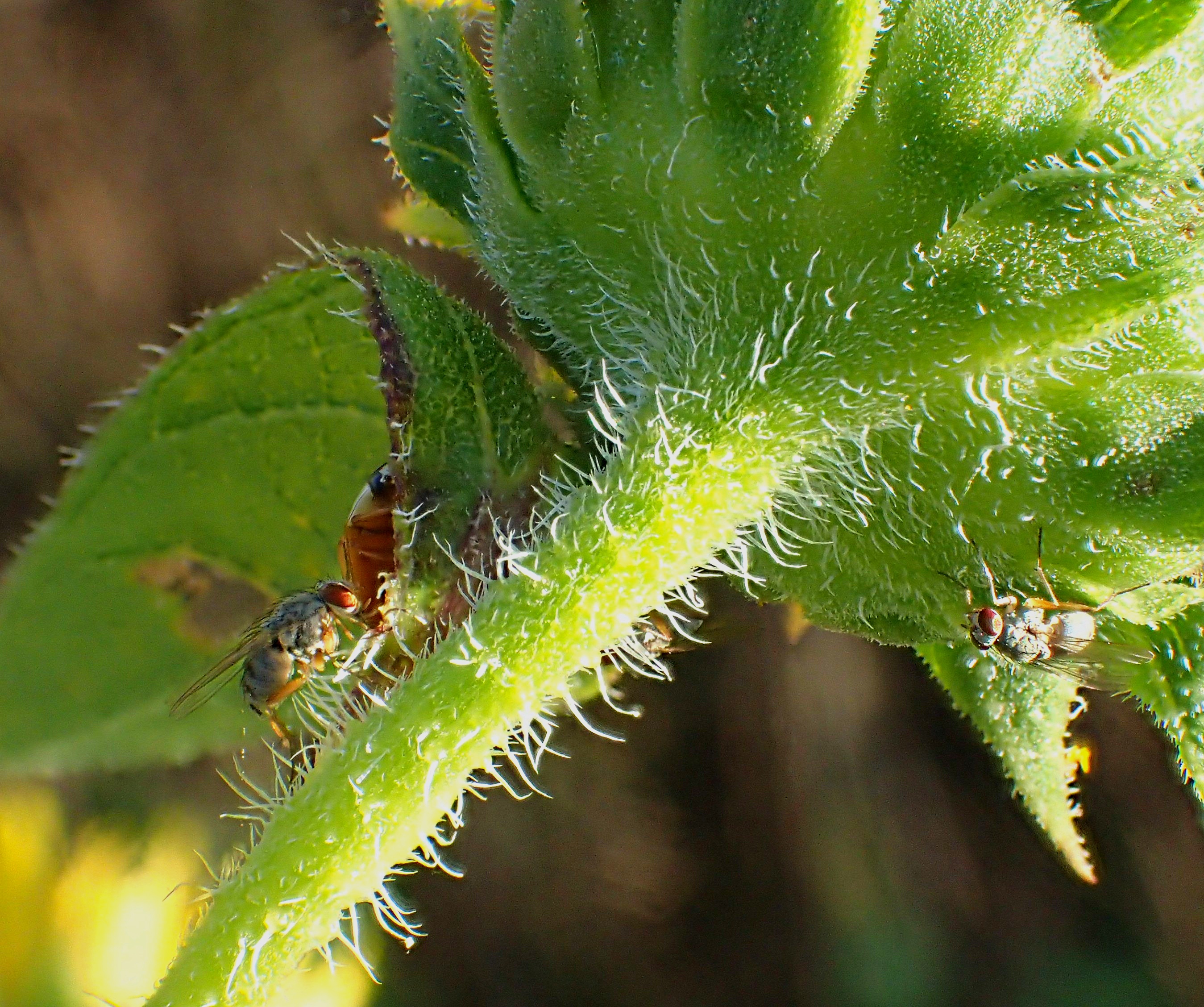
A good day to explore. Photo by Thomas Peace 2014
.
The learner is the learned; the controller is the controlled; the reader is the read.
.
[A Red-winged Blackbird informing me that I’m in “his” territory. I promptly departed.]
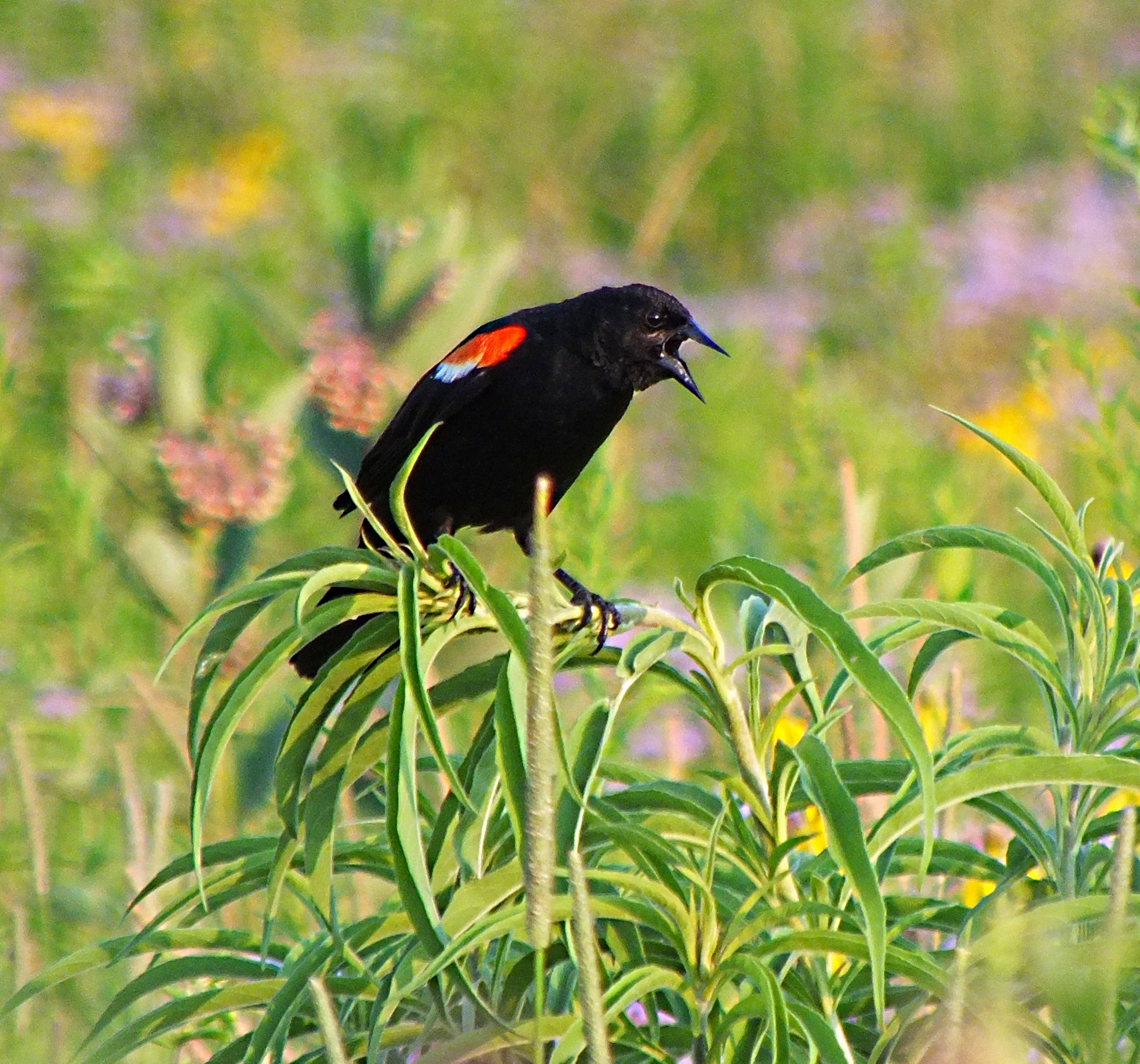
This vast spot is not big enough for the both of us! Photo by Thomas Peace 2014
.
Please don’t neglect the bountiful beauty of nature… which includes your own natural body and taking good care of it (and mother earth).
.
[Polyporus squamosus , called Dryad’s Saddle or Pheasant’s Back Mushroom, is a mushroom that is low growing and has very scaly caps. This mushroom cluster is commonly attached to dead logs or stumps at one point with a thick stem. This mushroom is in a log crevice as the logs floats in a local river. It causes a white rot in the heartwood of living and dead hardwood trees. The name “Dryad’s saddle” refers to legendary creatures in Greek Mythology called Dryads who could conceivably fit and ride on this mushroom, whereas the pheasant’s back analogy derives from the pattern of colors on the bracket matching that of a Pheasant’s back.]
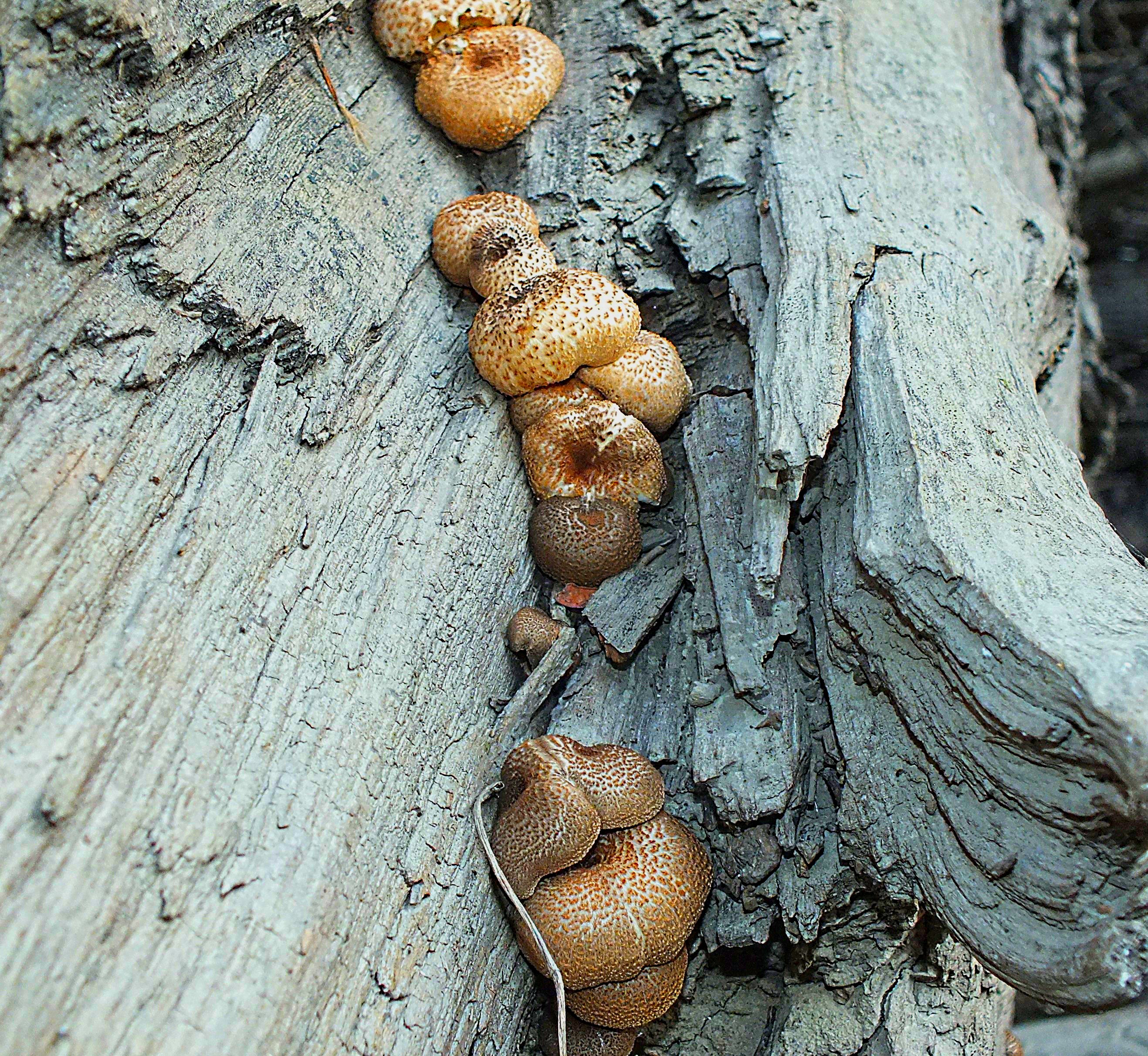
Polyporus squamosus Mushroom cluster. Photo by Thomas Peace 2014
.
If you are very wise, every time you throw a rock it always lands in the same place.
.
[Photos of local river in the fall season.]
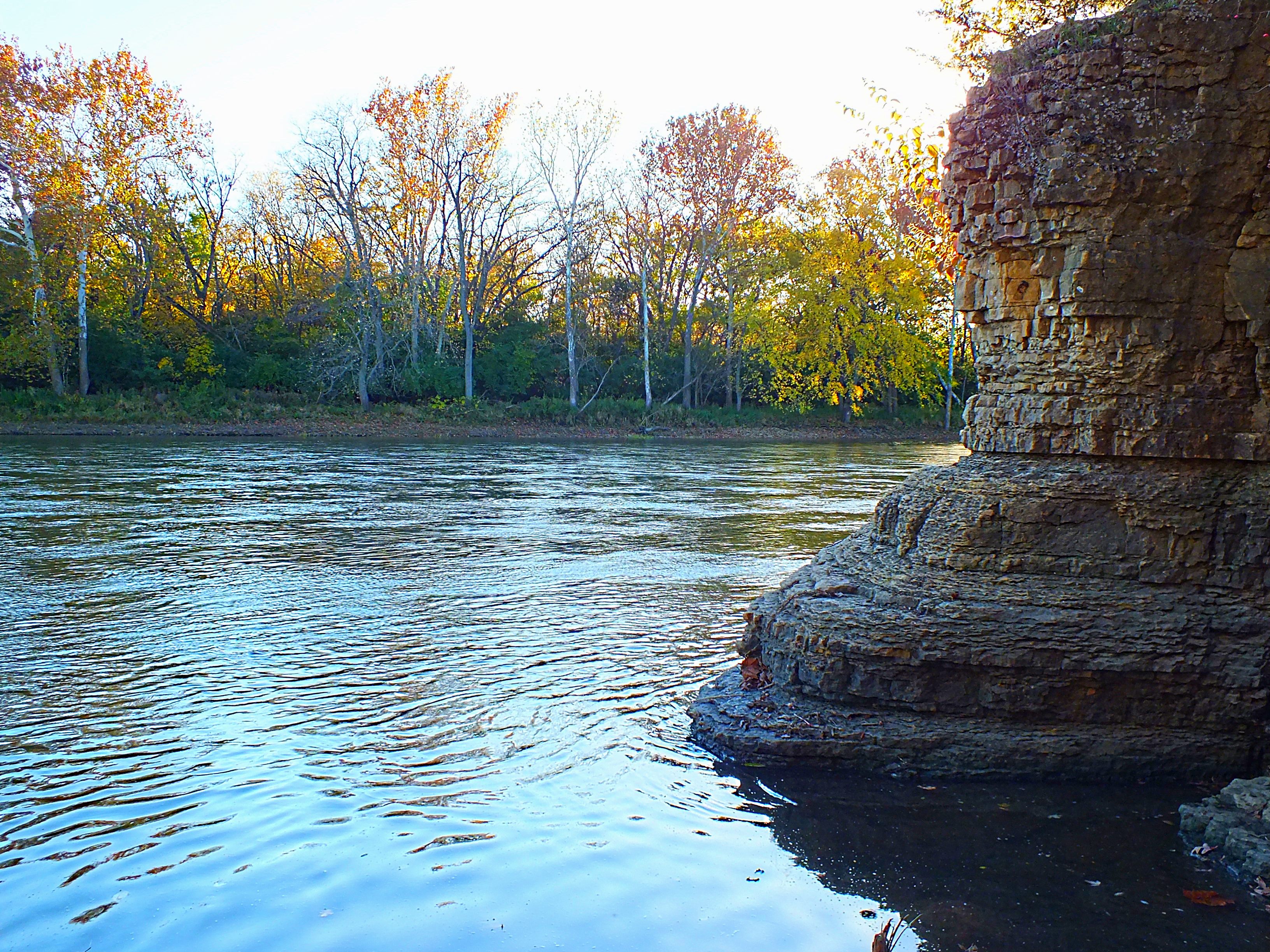
Always and never (1) Photo by Thomas Peace 2014

Always and never (2) Photo by Thomas Peace 2014
.
Let the authoritarians keep their gobbledygook. Look and feel for yourself!
.
[Fall colors! That acorn may be the Oak Tree’s first move regarding continuing the game.]

Splendid fall colors. Photo by Thomas Peace 2014
.
Being naturally/effortlessly silent – at times, throughout the day – is majestic and joyously deep, beyond words.
.

Searching together. Photo by Thomas Peace 2014
.
Lucid wisdom doesn’t take time… but sequential, symbolic thought does.
.
[This Acrea Moth larva, also called the Salt-marsh Caterpillar, is eating heavily and preparing for winter. These caterpillars are relatively abundant in the fall and over-winter as pupae in cocoons. The Salt-marsh Caterpillar feeds on herbaceous plants. There are small rain droplets upon this one, as it was beginning to rain when the photo was taken.]

Salt-marsh Moth Caterpillar preparing for winter. Photo by Thomas Peace 2014
.
All true wise men have a propensity to understand the whole.
.
[Silver-Spotted Skippers are distinguished from true butterflies by the antennae, which are wider apart at the base and end in pointed, curved clubs. Silver-Spotted Skippers — and all Skippers — are so named for their erratic, skipping flight.]
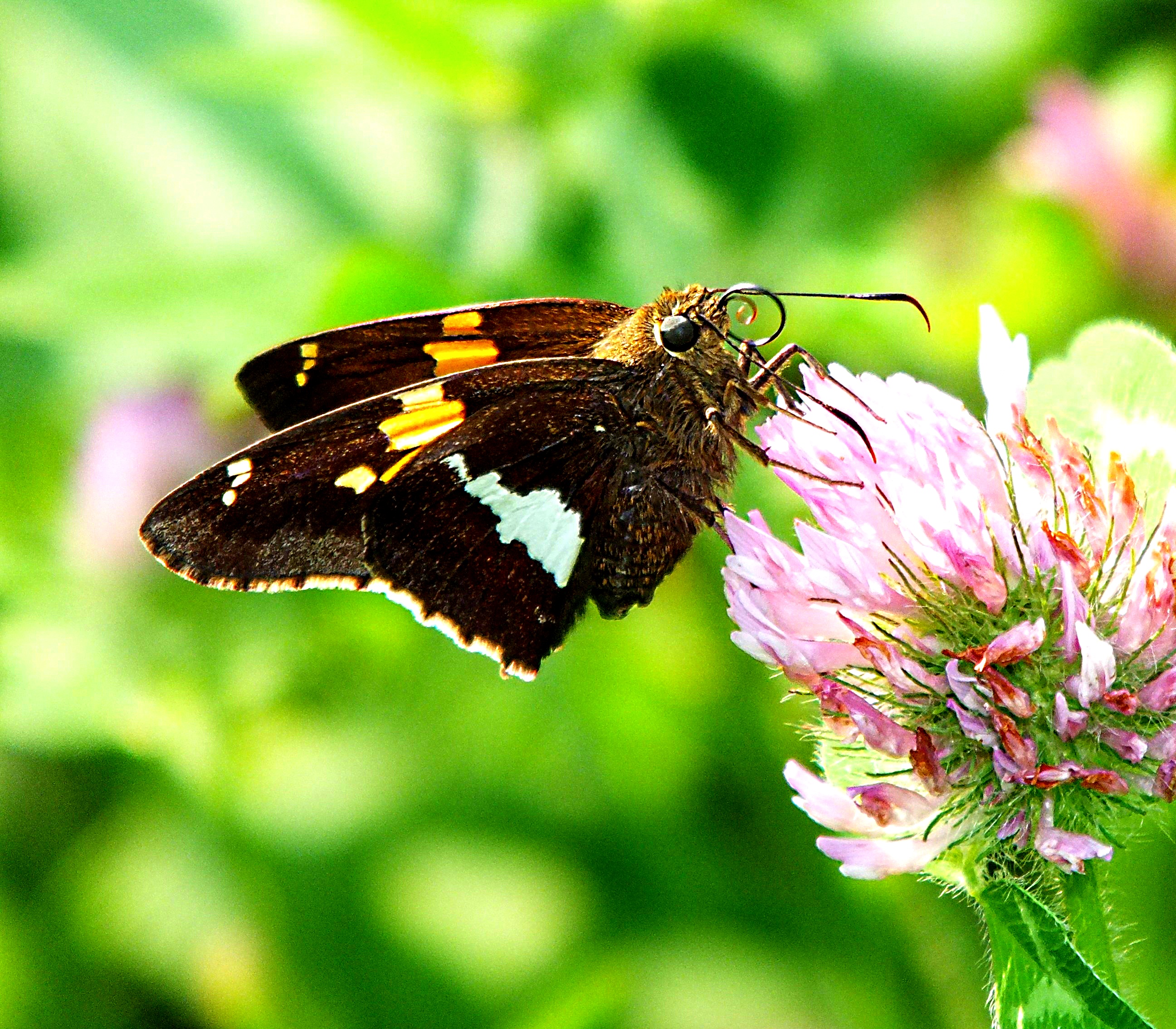
Silver-Spotted Skipper with its curled proboscis. Photo by Thomas Peace 2014
.
The essence of love is deep caring (beyond the limited self).
.
[Lazy Susans at a Hospital Park… There are at least two Hover Flies resting upon them.]
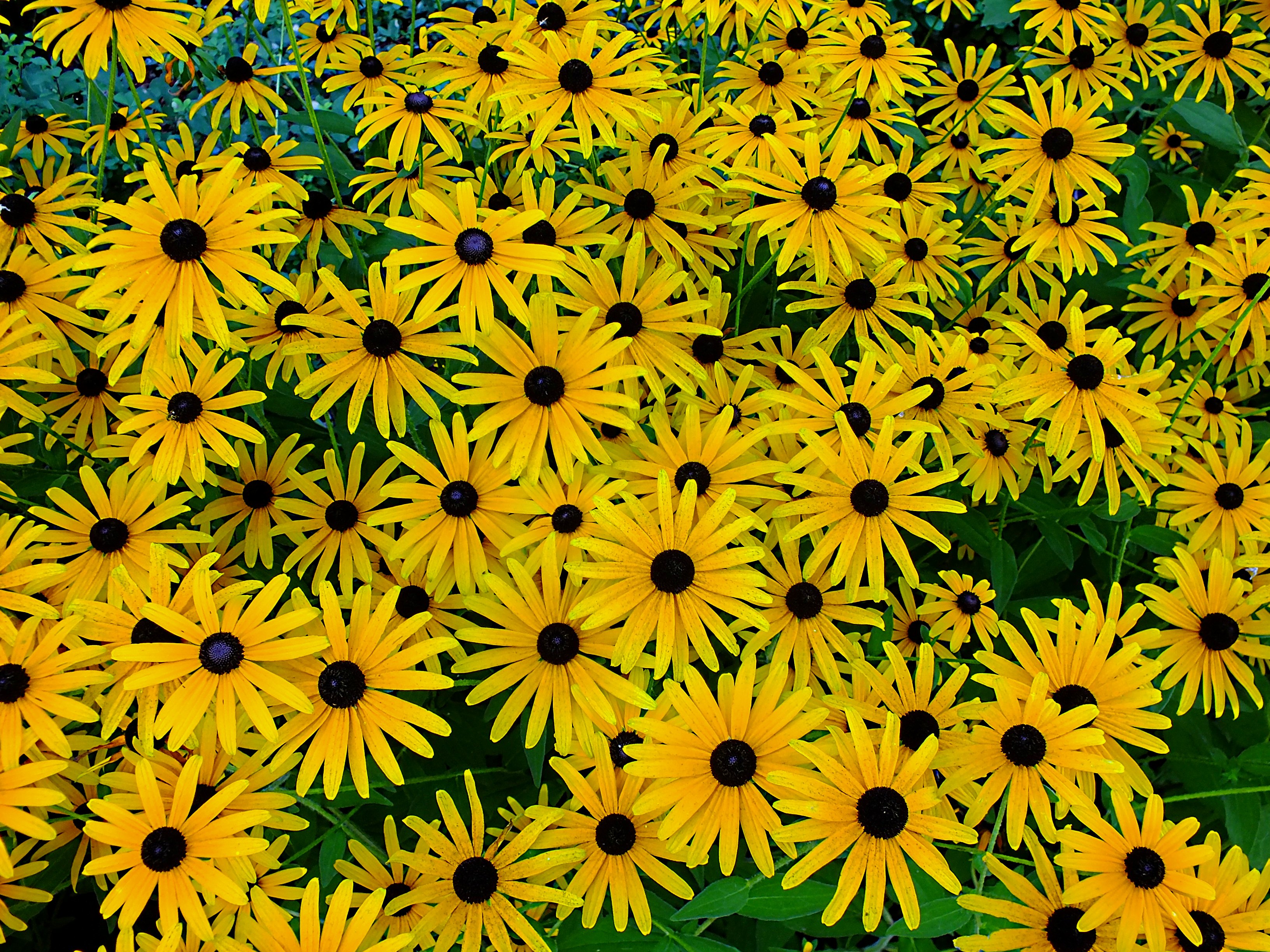
Lazy for a good reason. Photo by Thomas Peace 2014
.
Life is not dull or monotonous to a dynamic mind that inquires joyfully.
.
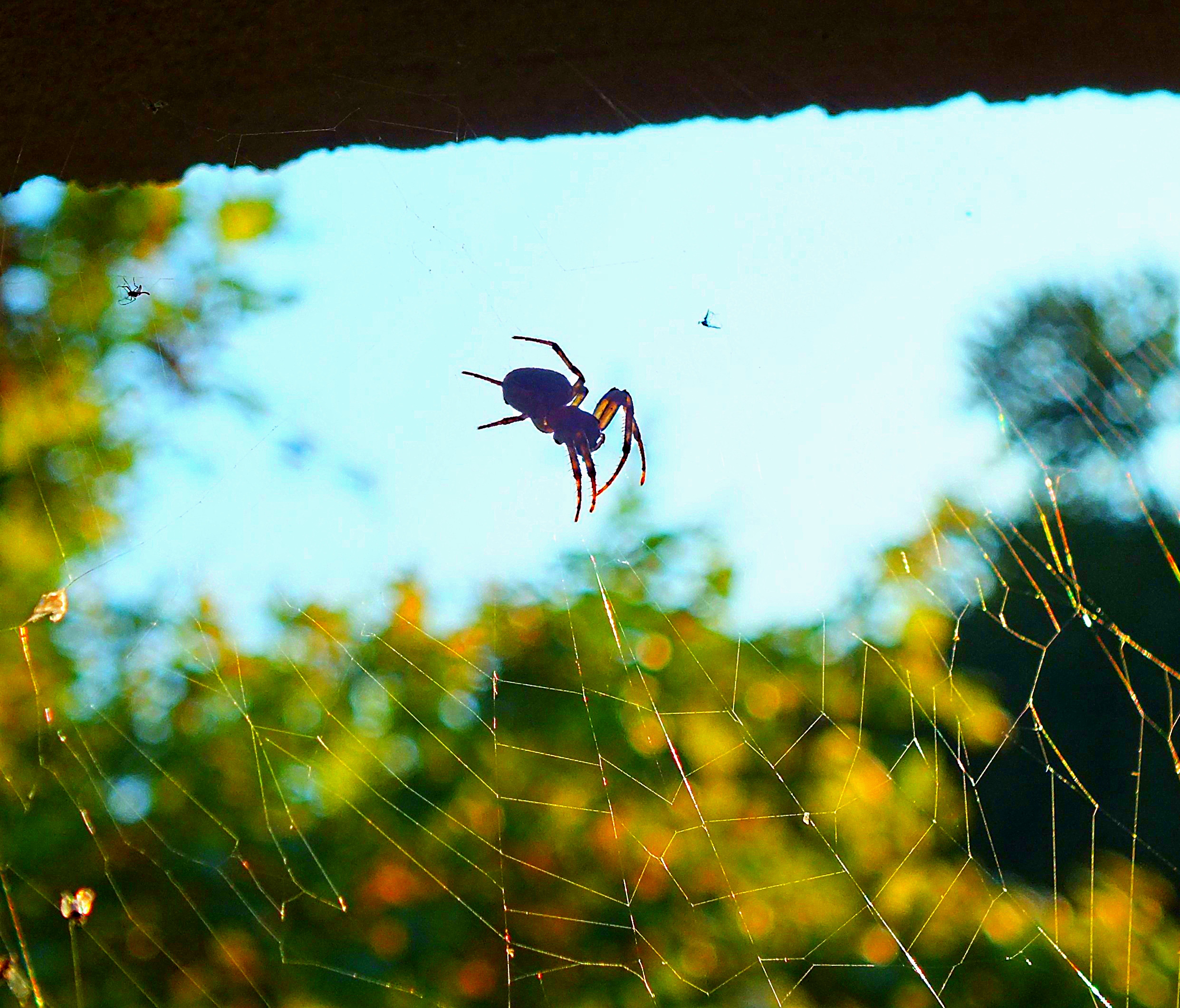
And frightened Miss Muffet away! Photo by Thomas Peace 2014
 Tom's Nature-up-close Photography and Mindfulness Blog