
.
To be cultivated is to be discerning; one can’t be discerning if one is full of the crumbs of an indifferent society’s brittle cookie.
.
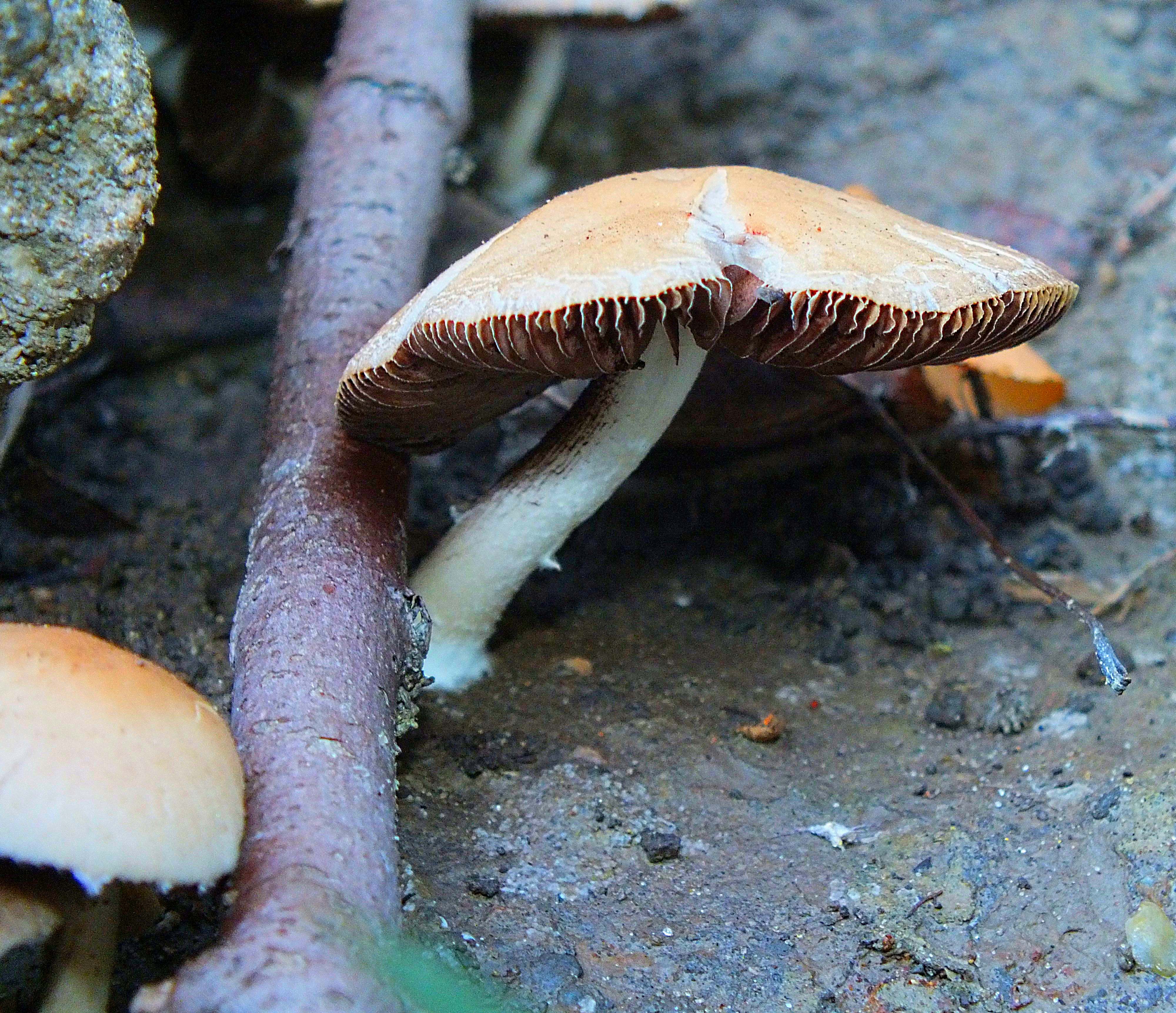
Away from the brittle pavement… Photo by Thomas Peace 2014
.
To be cultivated is to be discerning; one can’t be discerning if one is full of the crumbs of an indifferent society’s brittle cookie.
.
Away from the brittle pavement… Photo by Thomas Peace 2014
.
Let the mind be malleable and adaptable; flow with changes with poise and adroit movement.
.
[This is a local river area in fall.]

River Flow (1) Photo by Thomas Peace 2014

River Flow (2) Photo by Thomas Peace 2014
.
Thought is a necessary and extremely helpful tool; but it’s only a tool… not the true essence of the organism. When the mind is cluttered with a myriad of needless thoughts throughout the day (as it is in so many, with their endless fears and habitual, repetitive imagery) … it’s, in a way, like a plant burdened with many insects. However, don’t merely “try” to eradicate excess thoughts… because that would likely be some thoughts trying to eliminate “other” thoughts (accomplishing, in reality, nothing)… leaving the “plant” remaining rather “buggy.” (Fabricating more bugs to chase away other bugs leaves one remaining “buggy.”) Simply observe each series of thoughts without psychological separation (being aware of the space between thoughts as the thoughts perish and end)… and then a natural silence may beautifully occur without effort (i.e., without another fabrication trying to get rid of them). That natural silence would occur without struggle, without concocted manipulation, without friction, without conflict.
(Of course, there are endless people who prefer to remain buggy!)
.
[Aphid insects on a wild plant.]

Too much of a good thing. Photo by Thomas Peace 2014
.
Love all beings and creatures in life… not just your little self and family, race, and nation.
.
[A pair of Black Phantom Tetras. The male is in the foreground… the female in the background. The tiny adipose fin — at the top of the fish between the tail fin and the much larger dorsal fin — is clear in the males and red in the females. The males also have larger and more flamboyant dorsal fins. Most freshwater tropical fish of the Tetra group have the little adipose fins… but few have such distinctive indicators to distinguish the males from the females.]
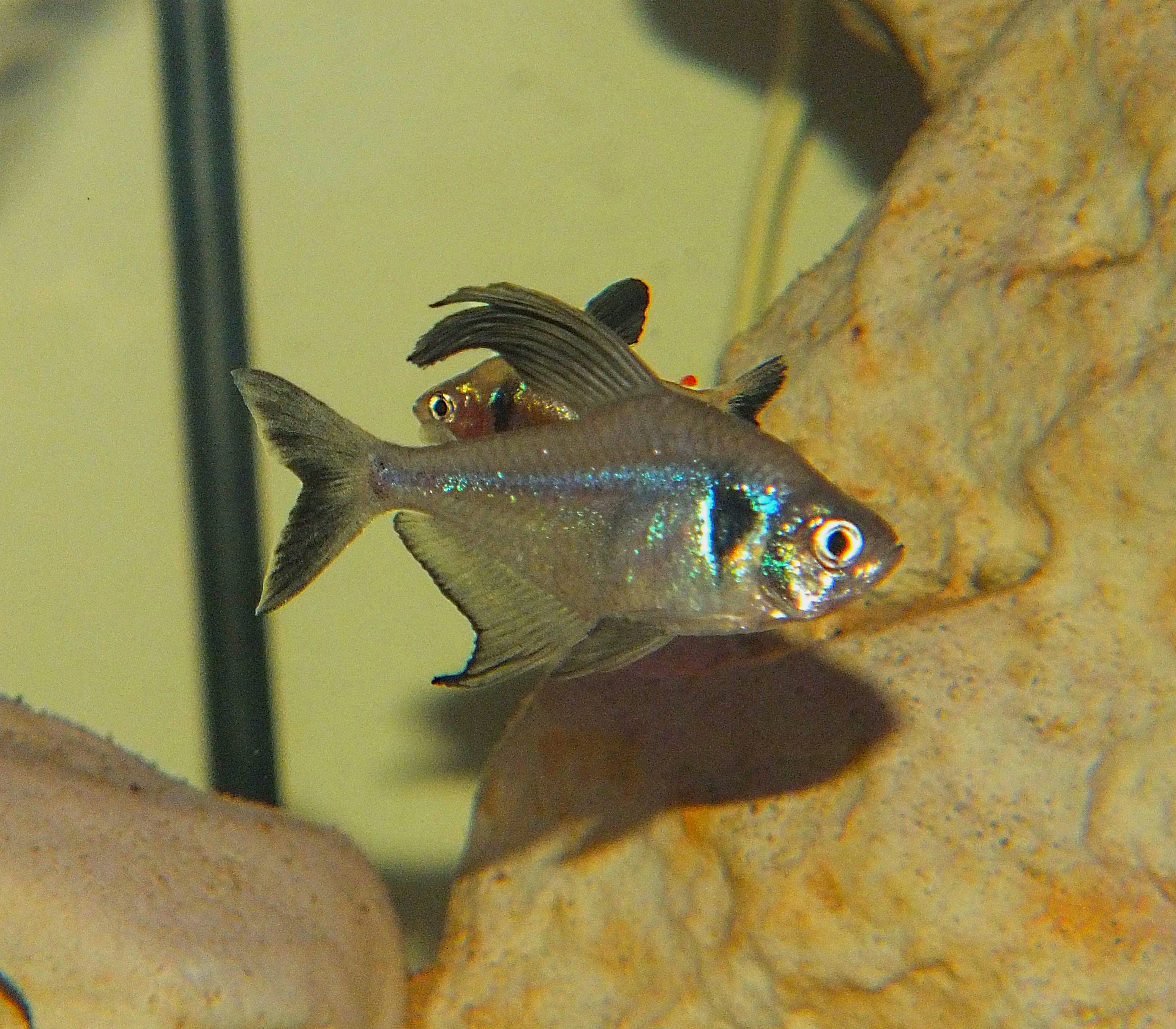
Black Phantoms in our midst… Photo by Thomas Peace 2014
.
Circle ends and circles again. Circle ends and circles again…
.
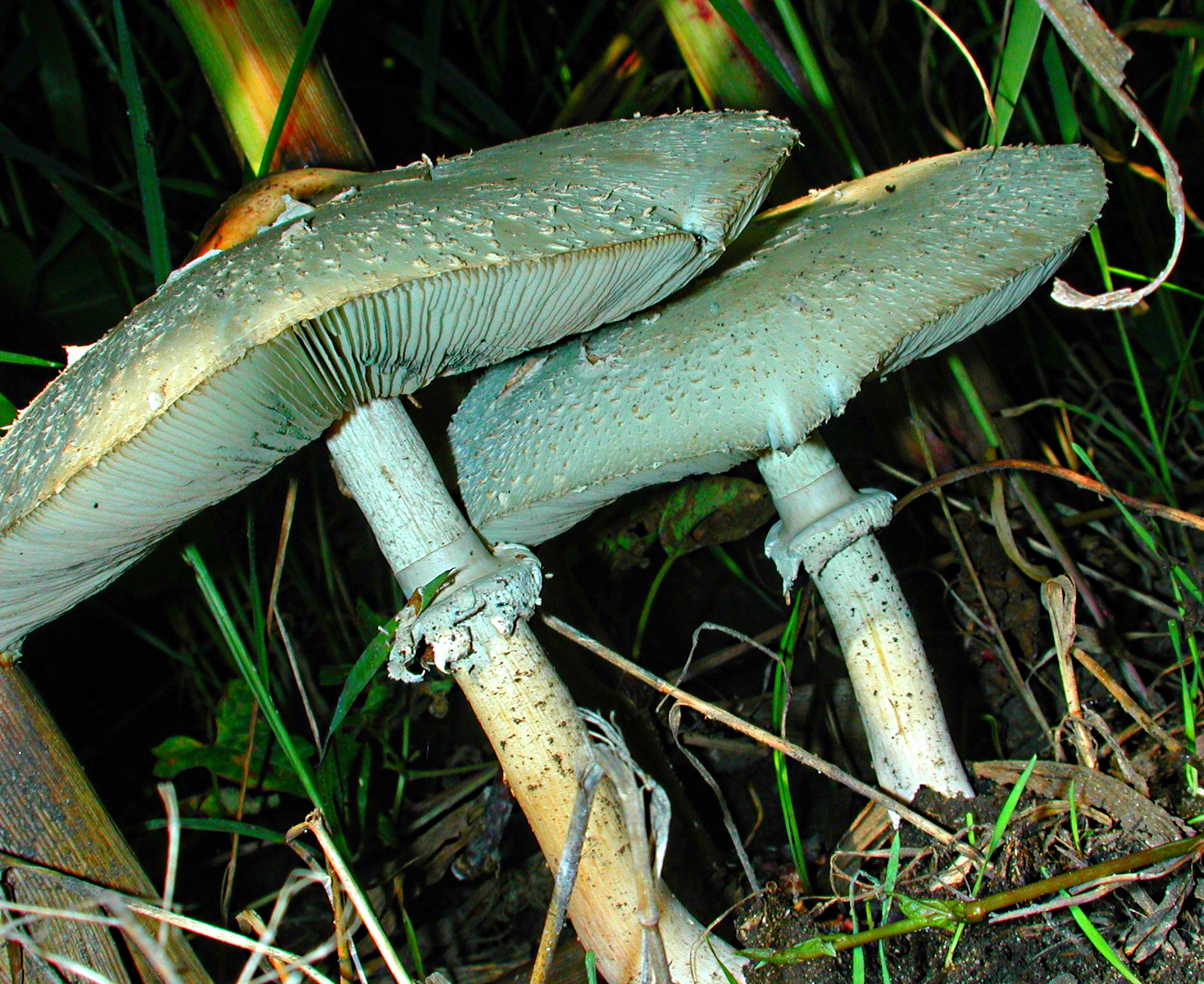
Circle ends and circles again… Photo by Thomas Peace 2014
.
Friction and conflict — in the mind — begins with thinking the “me” as separate from (and in control of) the “other” thoughts.
.
[Black Ants on a very large Oak Tree.]

Busy as bees… Photo by Thomas Peace 2014
.
The subject thought that it was separate from the object. At least that is what it was taught. But without all the objects, what would the subject be?
.
[Young Long-tailed Jaegar in a Pine Tree.]

Resting by the lake… Photo by Thomas Peace 2014
.
Beyond separation, the river finally felt compassion for the (not so distant) fish and so put the fishing pole down forever and went home.
.
[A local largemouth bass. (Many years ago, I used to be an avid fisherman; I could even catch fish when others failed; I no longer fish whatsoever.)]

Unhooked to fishing… Photo by Thomas Peace 2014
.
We must not merely inculcate children with mechanical, stale facts… but teach them much about compassion, empathy, and green energy.
.
[Sanddragon Dragonflies prefer to lay their eggs in streams and lakes with sandy bottoms; their larvae burrow into the sand. The abdomens of these dragonflies are of a unique shape.]

Sanddragon Dragonfly cooling off. Photo by Thomas Peace 2014
.
Nature doesn’t have its own sponsors — in the media — telling us to be less materialistic and to travel less (thereby using less fossil fuels); but big, materialistic corporations have plenty of promoters making earth-damaging practices seem “OK” and “normal.” We truly need to go beyond the advertising propaganda.
.
[Honey mushrooms along rocks on the river bank. Honey mushrooms, like most mushrooms, are just the visible fruiting body of the fungus. The main part of the organism is underground and is called the mycelium. Mycelium can spread for many miles… and this accounts for mushrooms being some of the world’s largest organisms. It is estimated that some honey mushrooms (that are very large, over many miles) are over 400 years old. (My photos, by the way, are all taken locally; I don’t travel any appreciable distance to take my photos. For instance, one walked to where these mushrooms were photographed.)]

Fruit of the mycelium. Photo by Thomas Peace 2014
.
It’s easy to harm something else when you think that it is separate from what you are. In the actual tree of life, we are all connected… all one.
.
[A frisky squirrel eating one of many acorns.]

Wisely plumping up for winter. Photo by Thomas Peace 2014
.
No one – not anybody – can accurately define what true awareness is… because true awareness is too dynamic to merely be put into words and categorized.
.
[Local natural rock-work formation. (There is, by the way, something man-made in this photo. Can you see it?)]

Natural beauty! Photo by Thomas Peace 2014
.
If you’re like me, you don’t let your good looks go to your head.
.
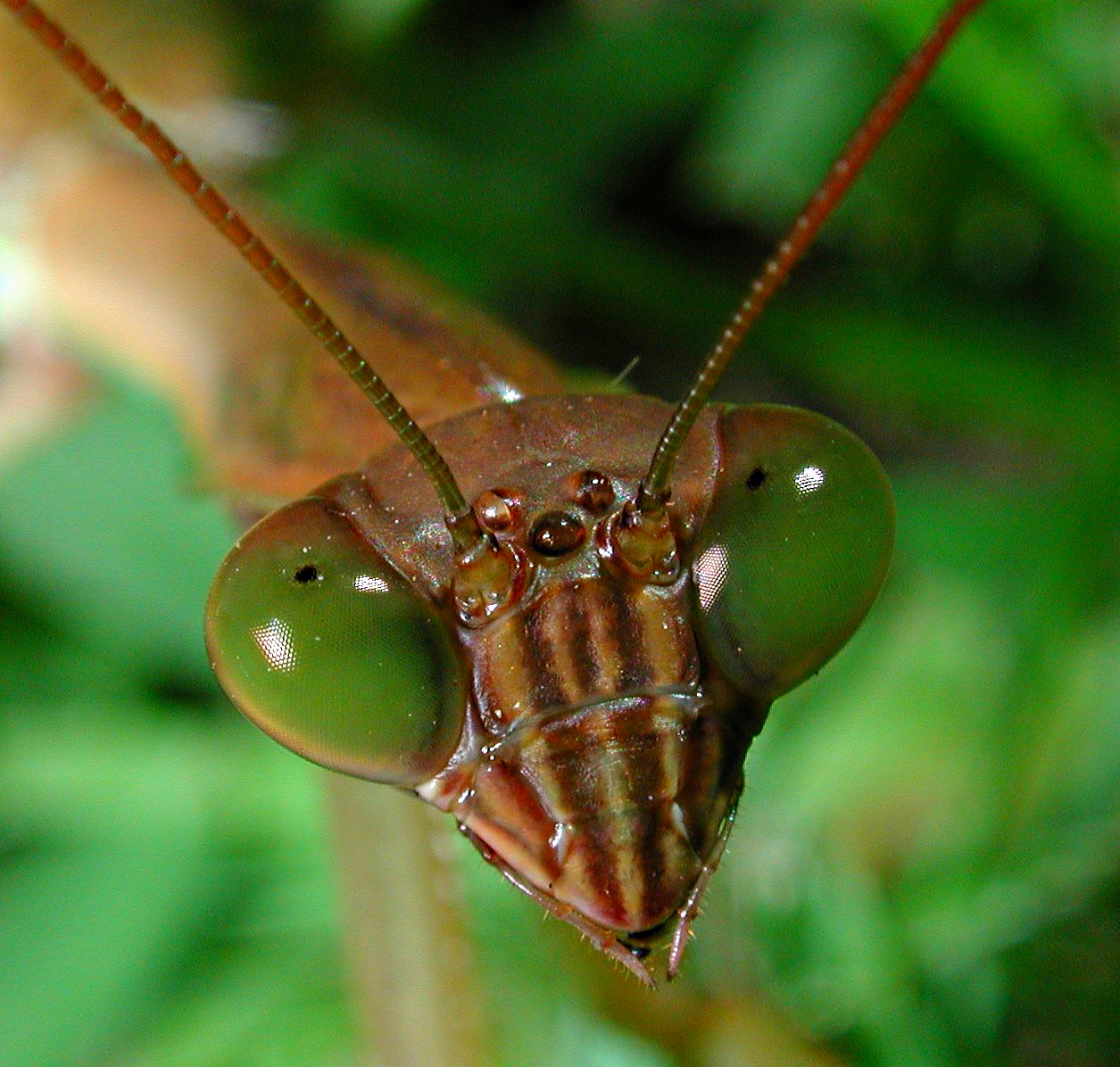
Mantis of the year! Photo by Thomas Peace 2014
.
A mind that is often aware without needing things or thoughts to “be aware of”… is a supremely free, non-dependent, unique, and rather majestic mind.
.
[Dragonfly in flight…]

Free and uncluttered…. Photo by Thomas Peace 2014
.
A mind that merely clings from one experience to another in order to be happy is, unfortunately, a rather infantile, impoverished state of affairs; it need not be that way.
.
[Poison Ivy leaf cluster in the fall.]

Not a good thing to walk through! Photo by Thomas Peace 2014
.
Love often acts without self-motivation.
.
[Grapeleaf Skeletonizer Moths are interesting in that they are both diurnal and nocturnal. I’ve got the same attributes for sure!]

Night or Day… Day or Night! Photo by Thomas Peace 2014
.
The left arm can hate the right arm and think that it is separate… but it isn’t. Peace takes intelligence.
.
[A unique variety of Heal All Plant growing on a river bank.]

Heal All. Photo by Thomas Peace 2014
.
I’d much rather listen to a natural, babbling brook than the babbling from all the bourgeois, self-important, stale politicians and bureaucrats.
.
[Close-up of a natural, babbling brook that one was passionately listening to.]

Alone again… naturally… Photo by Thomas Peace 2014
.
Happiness isn’t a warm gun; happiness is a warm (compassionate) heart.
.
[Red Milkweed Beetles, I think, are among the most evolved and “intelligent” insects in our area. As I’ve mentioned before, sometimes when I approach Milkweed Plants these beetles will deliberately fly at a rapid rate into me, striking my face repeatedly to entice me to leave. Some panic and fly away. This one decided to “play dead.” It fell from a Milkweed leaf above. After I backed up and watched from a distance for a while… it subsequently straightened itself out and flew away. I laughed at its ruse!]
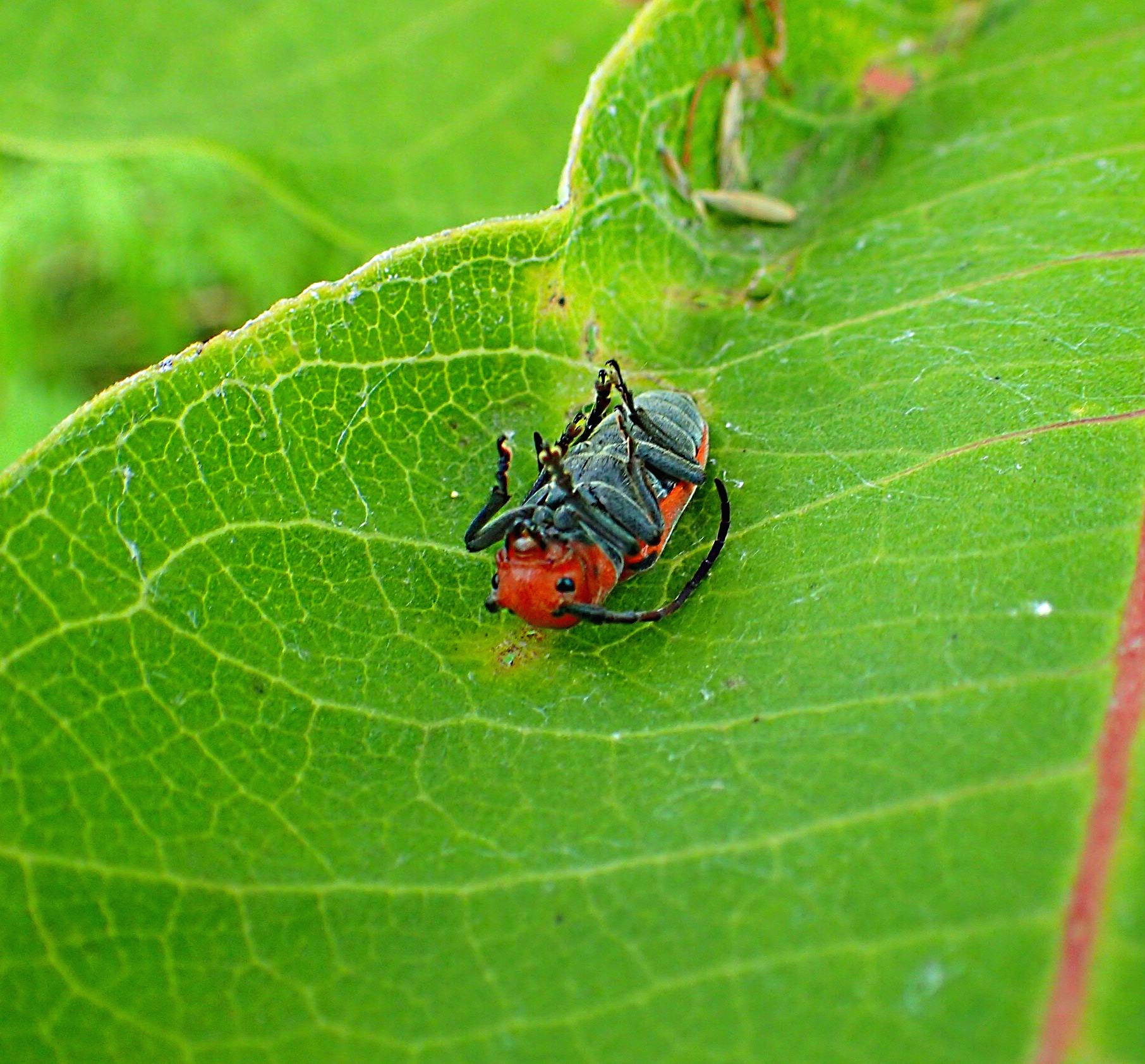
May he rest in peace! Photo by Thomas Peace 2014
.
Poise is the elegance and sound balance that a truly aware and, hence, compassionate mind has… without following blueprints.
.
[A Blue Bottle Fly and a Lady Bug. Blue Bottle Flies are most active during spring and fall. Lady Bugs are active spring through fall.]

A lady and her bottle. Photo by Thomas Peace 2014
.
Man may exploit nature, use nature, try to cultivate nature, neglect nature, and even allow nature to be destroyed; but, in the end, nature always prevails.
.
[Wild Grapes, using a tractor as an arbor.]
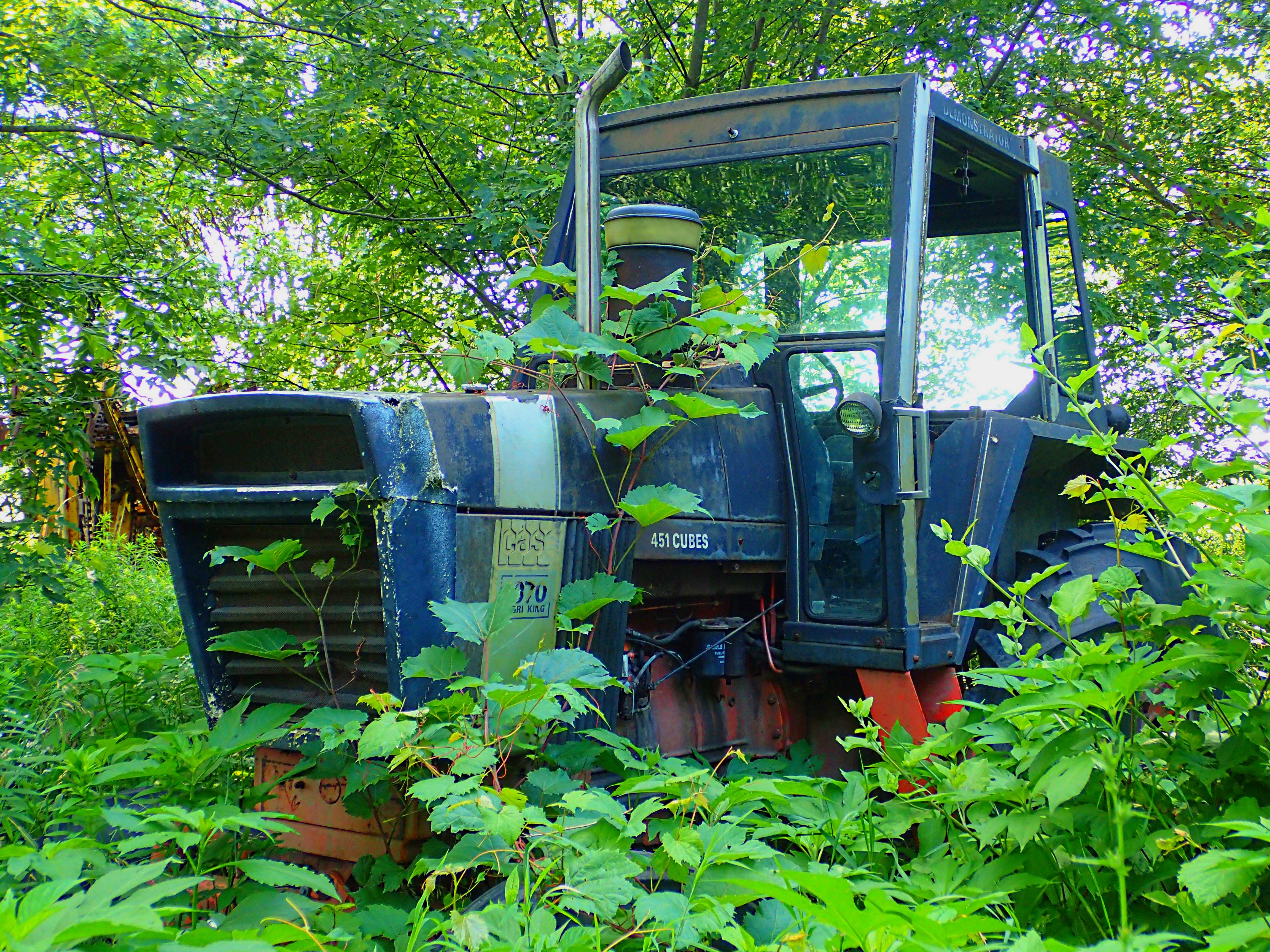
451 Cubes ain’t diddly. Photo by Thomas Peace 2014
.
In a big way, everyone in the whole world is facing in one direction.
Can you turn around?
.
[These are Tetras in one of our aquariums… all facing in one direction. The ones with the red dot on their sides are called Bleeding Heart Tetras. The others are Black Tetras. The plants are a type that grow on rocks or logs and do not need soil; they are called Anubias coffeefolia.]
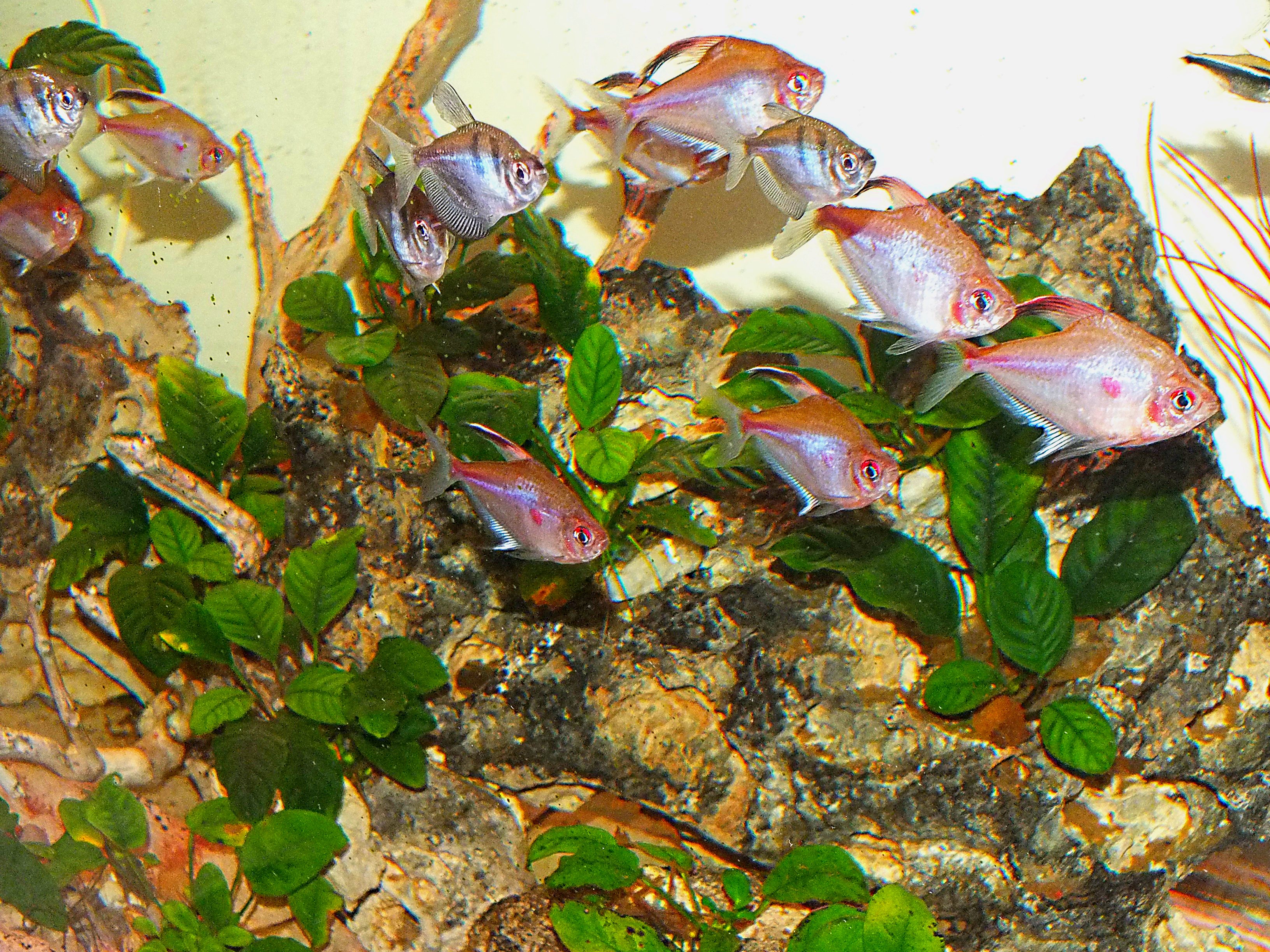
One direction. Photo by Thomas Peace 2014
.
True happiness is not merely an acquisition… it’s a wise, intelligent, aware, and blissful state of being and non-being.
.

Go beyond grasping. Photo by Thomas Peace 2014
.
One need not wince at one’s fears and endlessly run away from them if one intelligently realizes that one is not at all separate from what they are.
.
[A couple of Fruit Flies and a hiding Lady Bug. Though the Lady Bug is carnivorous, the Fruit Flies need not worry; they are too large. The Lady Bug goes after even smaller insects, such as Aphids.]
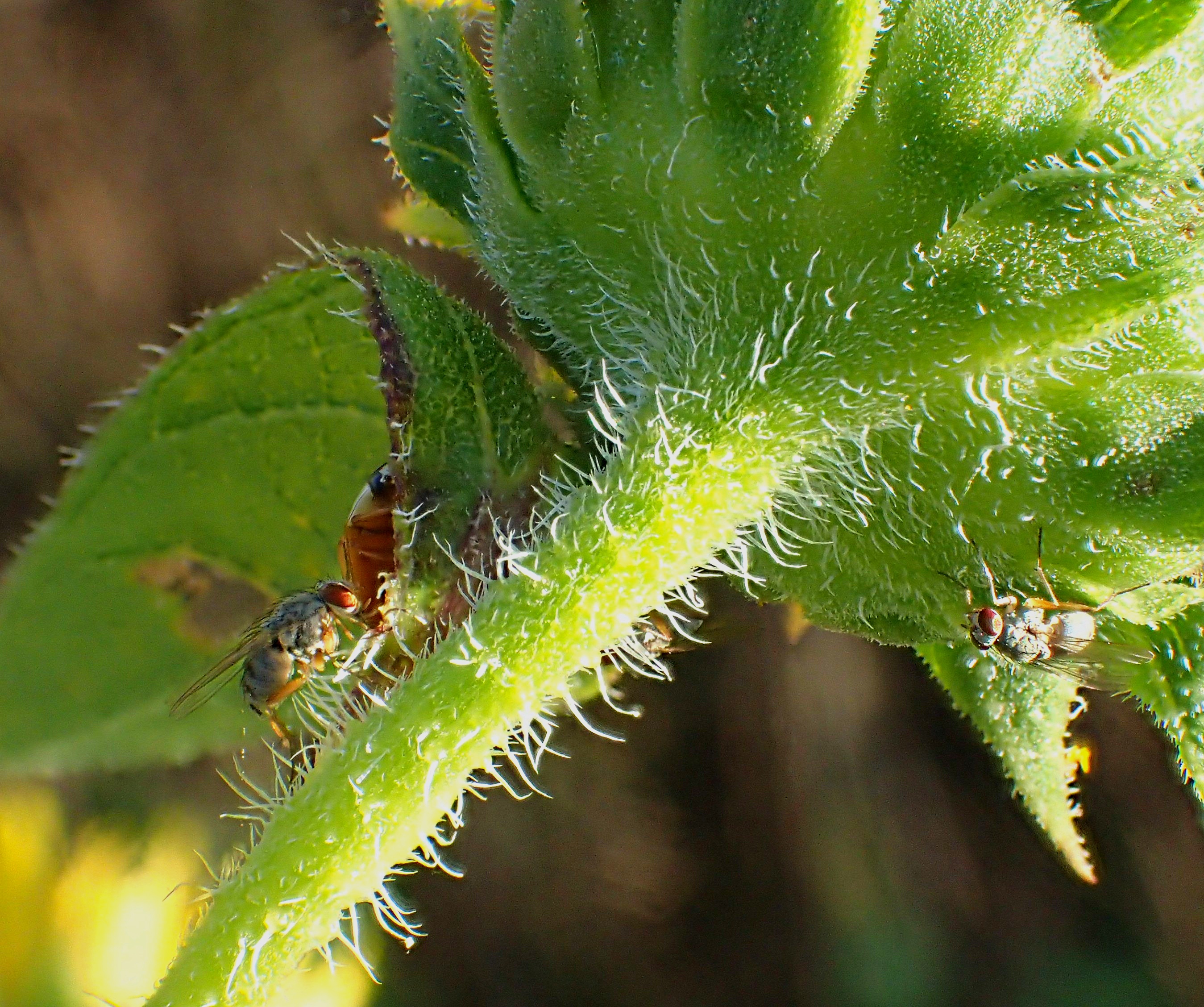
A good day to explore. Photo by Thomas Peace 2014
.
If you bully the small one… you are bullying the whole, bullying life’s child.
.
[A Hover Fly and a couple of other small insects on a wild Chicory Flower.]

Little and frail. Photo by Thomas Peace 2014
.
The learner is the learned; the controller is the controlled; the reader is the read.
.
[A Red-winged Blackbird informing me that I’m in “his” territory. I promptly departed.]
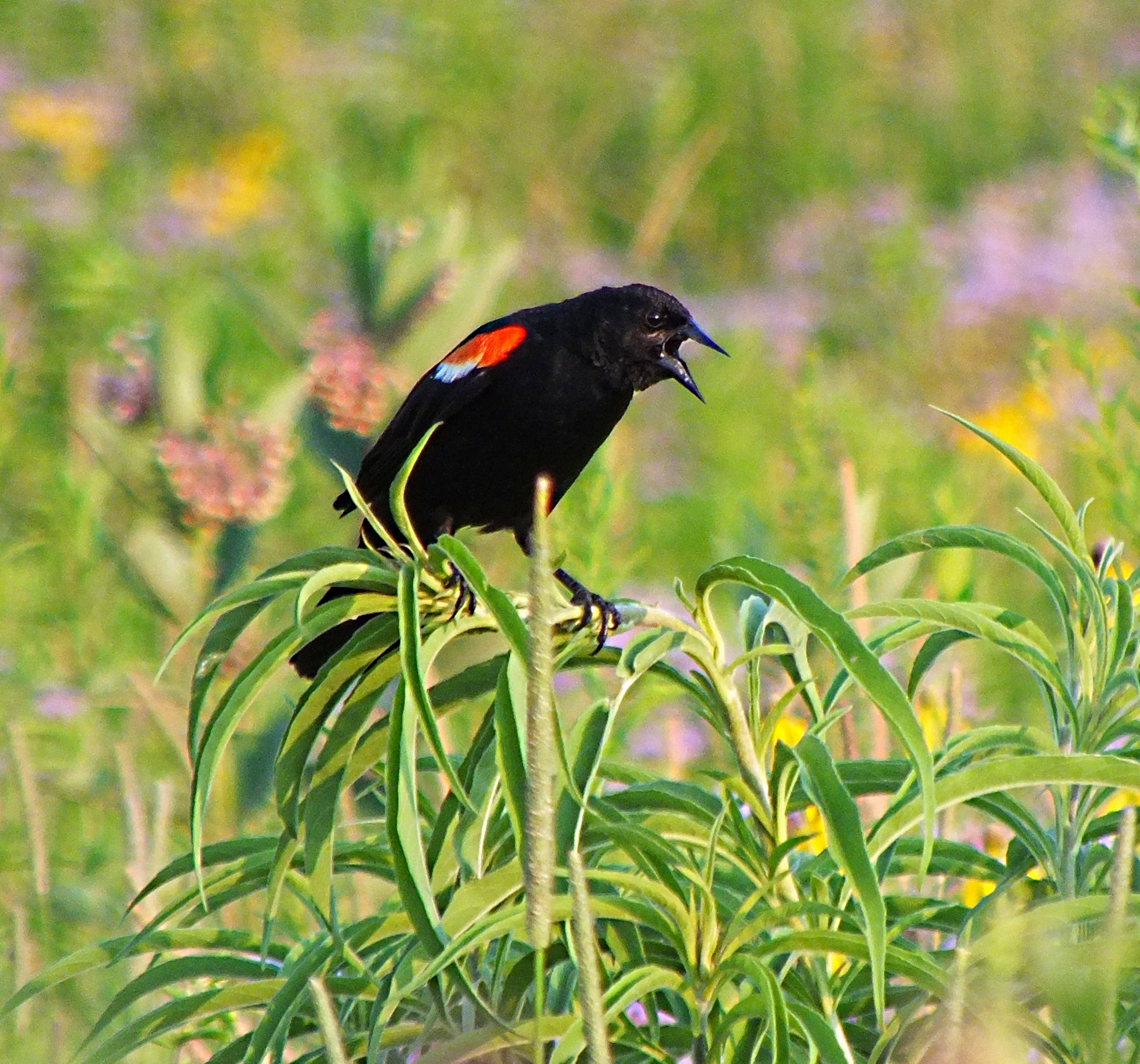
This vast spot is not big enough for the both of us! Photo by Thomas Peace 2014
.
If you are very wise, every time you throw a rock it always lands in the same place.
.
[Photos of local river in the fall season.]

Always and never (1) Photo by Thomas Peace 2014

Always and never (2) Photo by Thomas Peace 2014
.
Let the authoritarians keep their gobbledygook. Look and feel for yourself!
.
[Fall colors! That acorn may be the Oak Tree’s first move regarding continuing the game.]

Splendid fall colors. Photo by Thomas Peace 2014
.
Lucid wisdom doesn’t take time… but sequential, symbolic thought does.
.
[This Acrea Moth larva, also called the Salt-marsh Caterpillar, is eating heavily and preparing for winter. These caterpillars are relatively abundant in the fall and over-winter as pupae in cocoons. The Salt-marsh Caterpillar feeds on herbaceous plants. There are small rain droplets upon this one, as it was beginning to rain when the photo was taken.]

Salt-marsh Moth Caterpillar preparing for winter. Photo by Thomas Peace 2014
.
All true wise men have a propensity to understand the whole.
.
[Silver-Spotted Skippers are distinguished from true butterflies by the antennae, which are wider apart at the base and end in pointed, curved clubs. Silver-Spotted Skippers — and all Skippers — are so named for their erratic, skipping flight.]
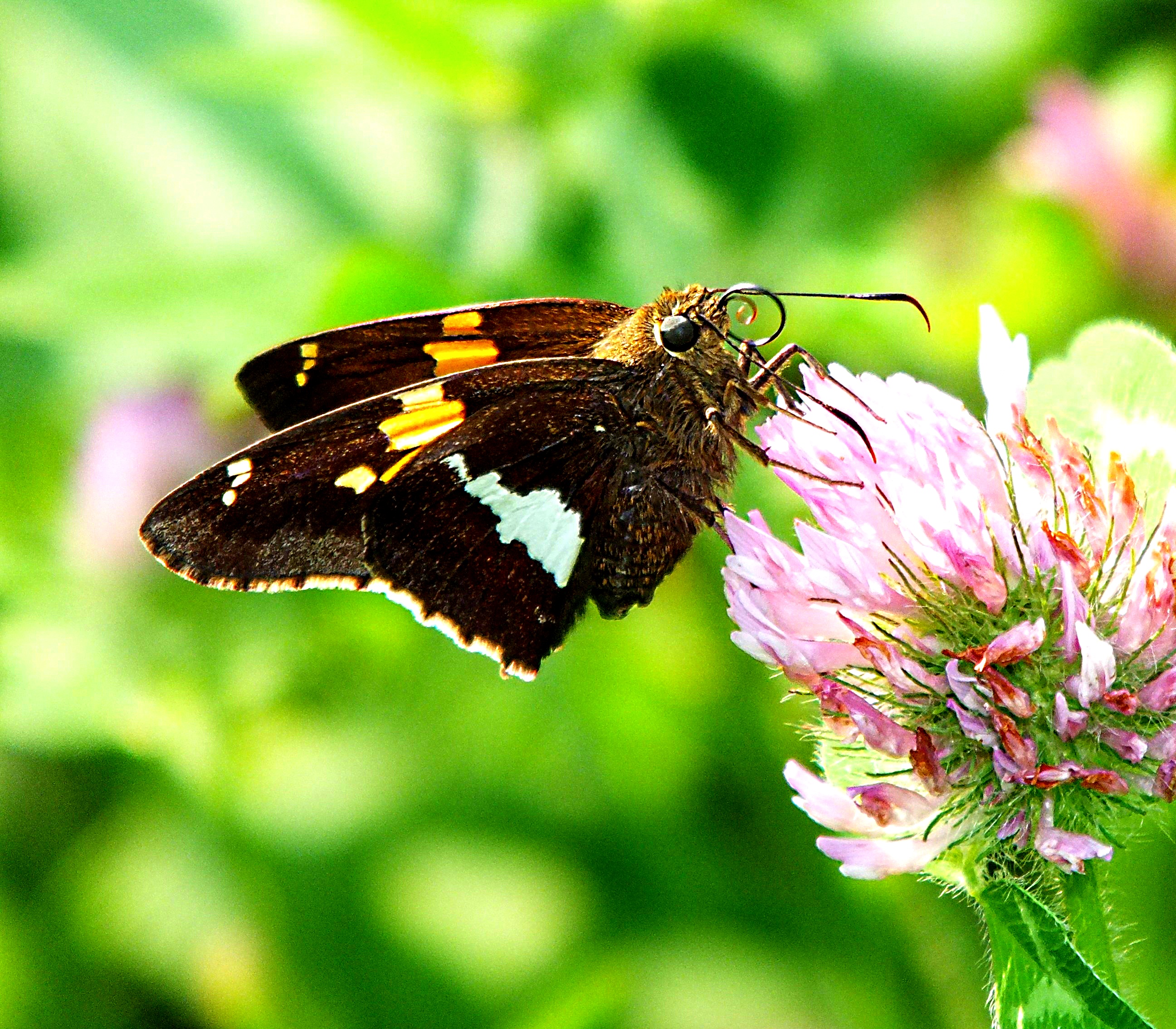
Silver-Spotted Skipper with its curled proboscis. Photo by Thomas Peace 2014
.
The essence of love is deep caring (beyond the limited self).
.
[Lazy Susans at a Hospital Park… There are at least two Hover Flies resting upon them.]
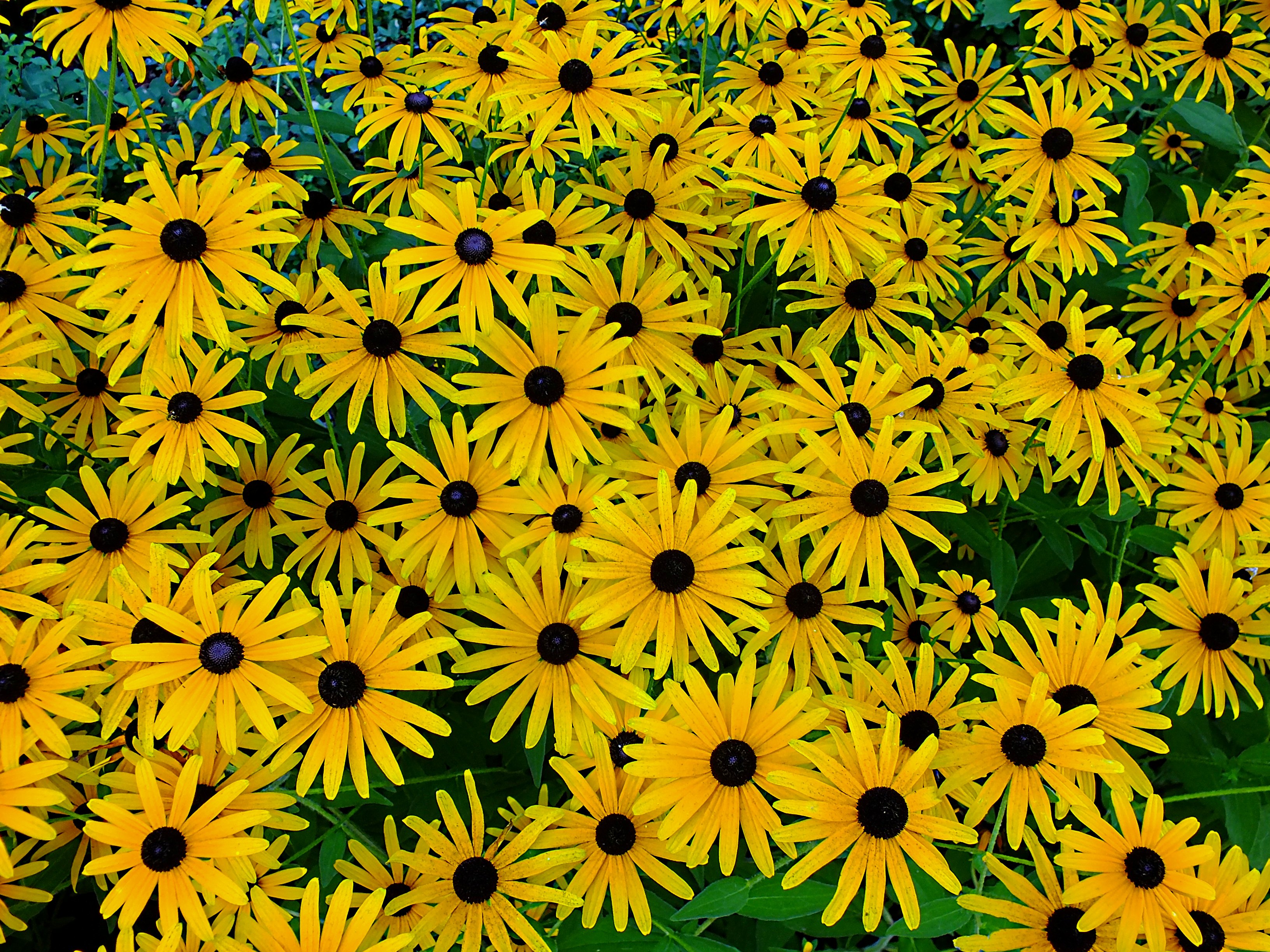
Lazy for a good reason. Photo by Thomas Peace 2014
.
Life is not dull or monotonous to a dynamic mind that inquires joyfully.
.
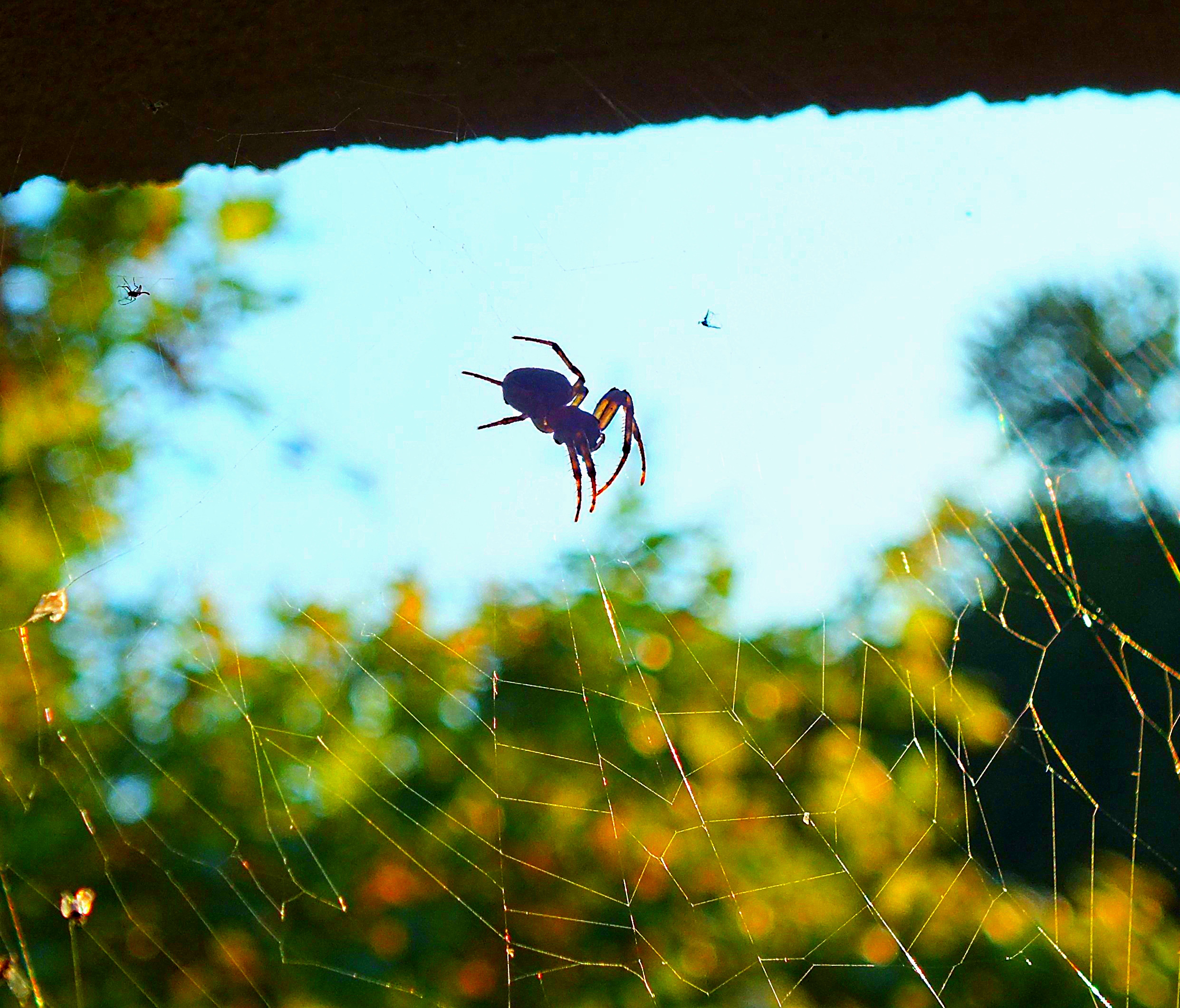
And frightened Miss Muffet away! Photo by Thomas Peace 2014
.
To wisely question may be more intelligent than having concrete certitude.
.
[Eyeing the camera (with a smile)…]
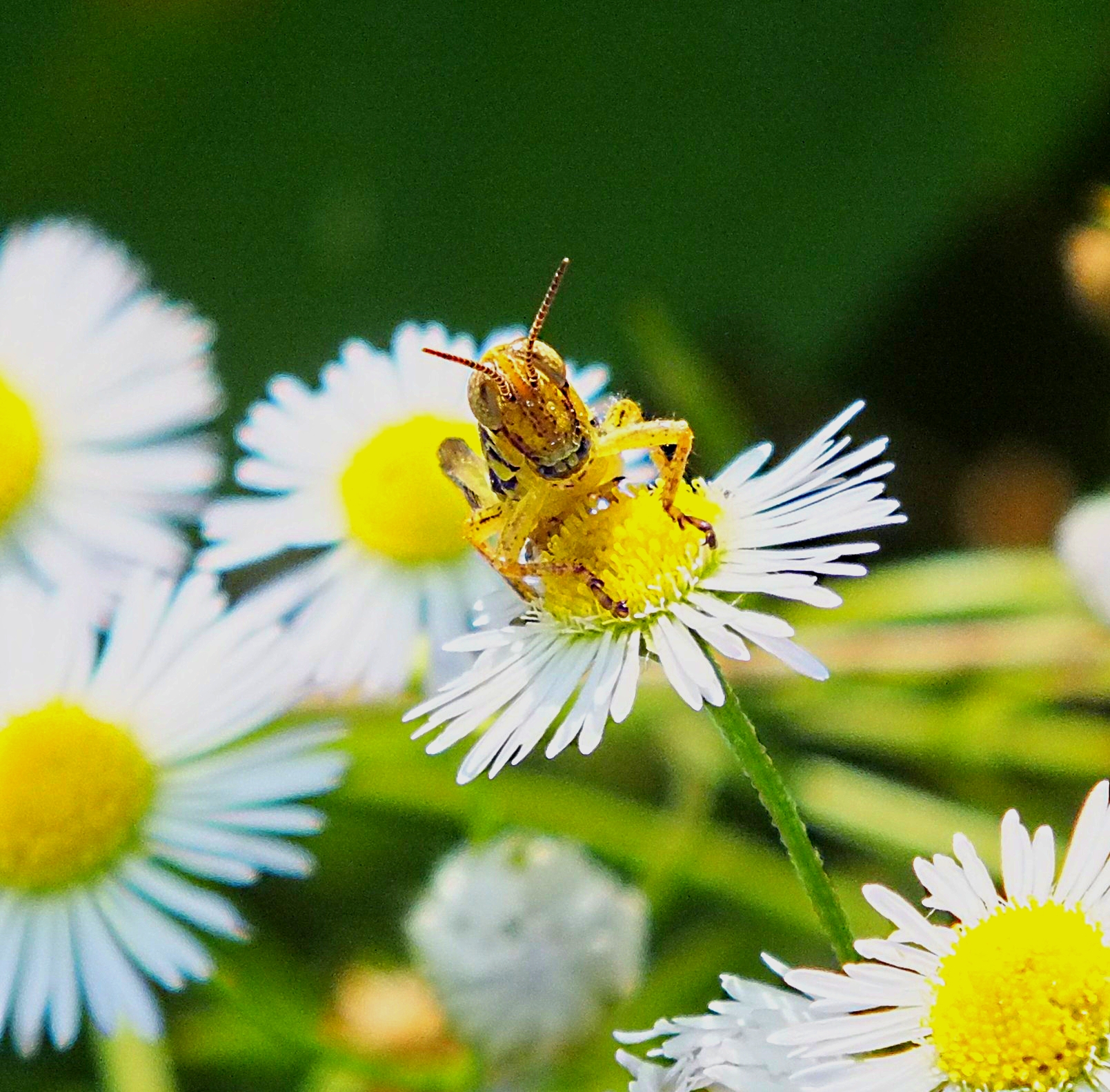
Captured by the Hopper’s lens. Photo by Thomas Peace 2014
.
A requisite attribute of time is distance. A requisite attribute of thinking that you are separate from others is time.
.
[The Ailanthus Webworm Moth thrives from spring through fall. The caterpillars of the Ailanthus Webworm Moth spin loose cocoons low on the host plant. There is one generation per year.]

Ailanthus Webworm Moth, eats foliage of deciduous trees and shrubs. Photo by Thomas Peace 2014
.
To question everything wisely and intelligently… is to deviate from the norm.
.
[This Honey Locust Tree is protecting itself well with an array of spiked thorns. Honey Locust Tree thorns are thought to have evolved to protect the trees from browsing Pleistocene (i.e., Ice Age) mega-fauna. The name derives from the sweet taste of the legume pulp, which was used for food by Native American people, and can also be fermented to make beer.]
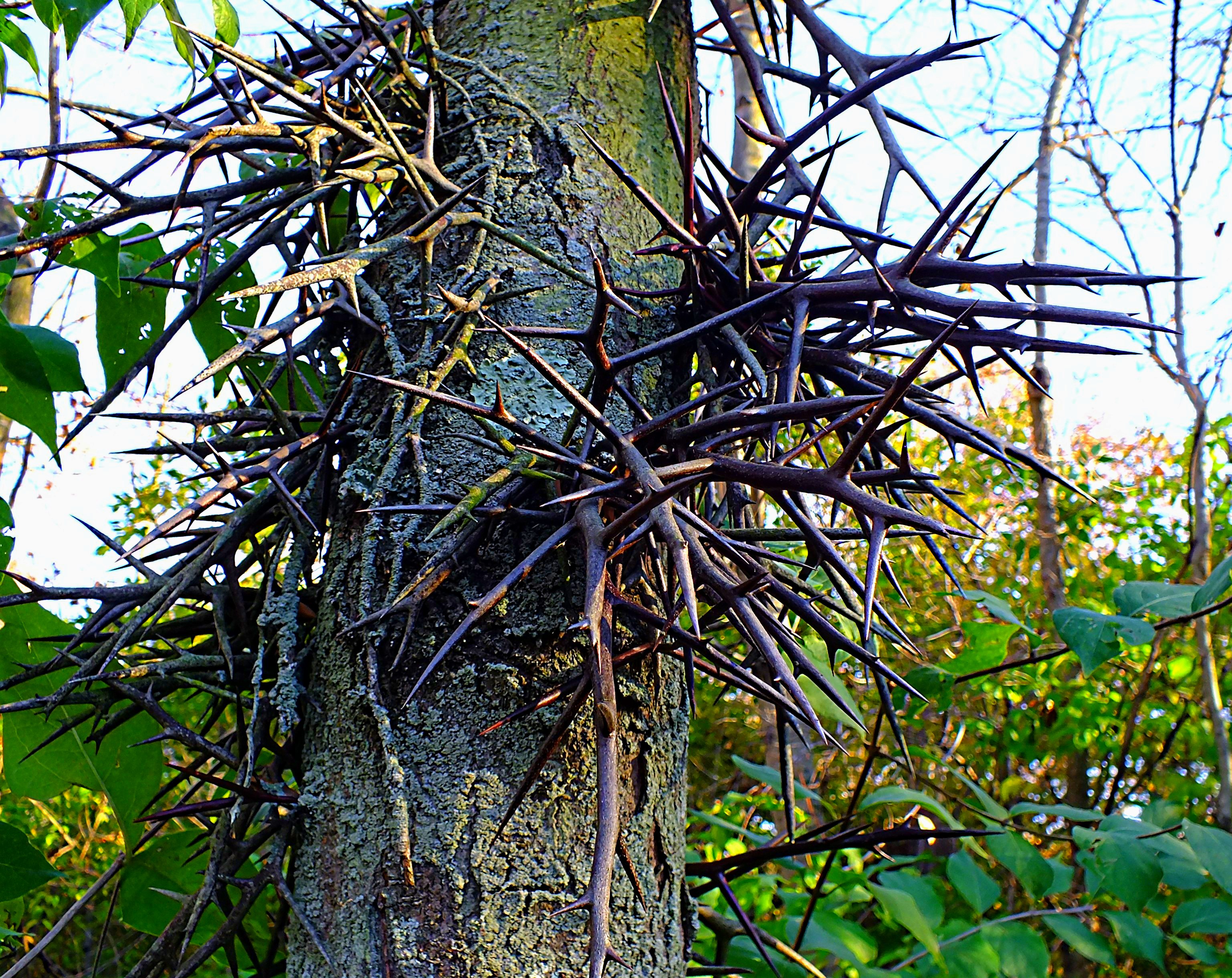
Honey Locust Tree protecting itself! Photo by Thomas Peace 2014
.
Go beyond what all the pundits and so-called experts teach… and inquire for yourself beyond tradition.
.
[The Heal-all Plant (Prunella vulgaris) is edible, and can be used in salads, soups, stews, and boiled as a pot herb. The Cherokee cooked and ate the young leaves. The Nlaka’Pamux drank a cold infusion of the whole plant as a common beverage. The Heal-all Plant contains vitamins A, C, and K, as well as flavonoids and rutin. The Heal-all Plant is taken internally as a medicinal tea for sore throat, fever, diarrhea, internal bleeding, and to alleviate liver and heart maladies. Topically, a poultice of the plant can be applied to irritated skin, as from stinging nettle toxins. A poultice of the Heal-all Plant also serves well as a disinfecting agent and is used to pack wounds in the absence of other wound-care material. It has been cherished by the Chinese to “change the course of a chronic disease.”]

Native Americans loved it! Photo by Thomas Peace 2014
.
See each facet of life as part of the undivided whole.
.
[A Horsetail Plant growing through some Queen Anne’s Lace. The Horsetail Plant is an extremely primitive plant; indeed, it looks rather Devonian-like in appearance. The stems are hollow, with no true leaves. The Horsetail Plant likes wet areas, such as ponds or marshes. Horsetail has no known food value to wildlife.]
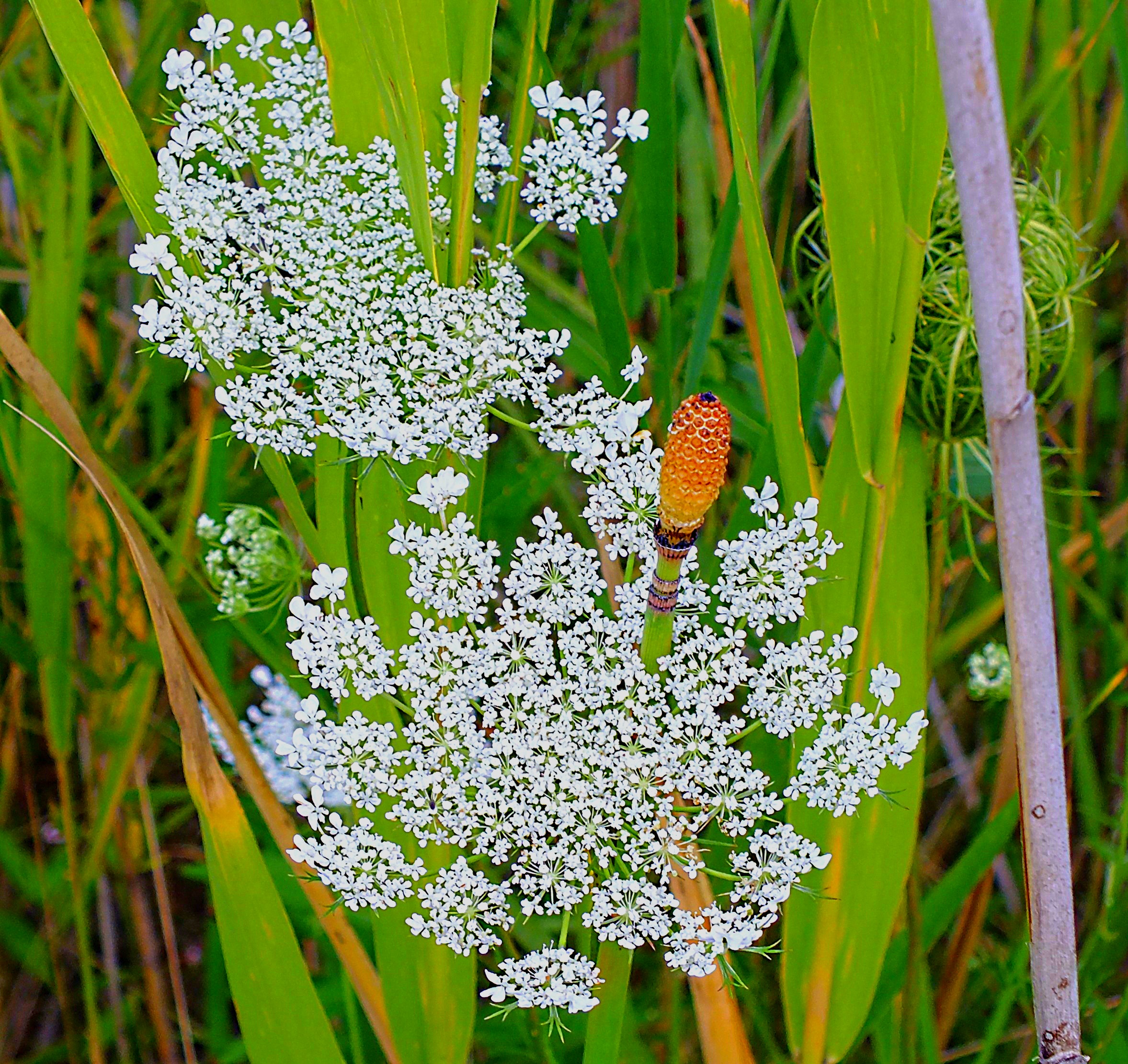
Horsetail Plant extending through Queen Anne’s Lace. Photo by Thomas Peace 2014
.
The ending of sorrow is the beginning of true and intelligent wisdom.
.
[These are wildflower Chinese Lantern plants. They were found growing in a prairie near a local pond.]

Small but beautiful! Photo by Thomas Peace 2014
.
True enlightenment occurs as actual, immense energy… not as mere ideas, symbols, and patterns “about energy.”
.
[This Grasshopper has less “hair” (on his face, legs, and back) than I do!]
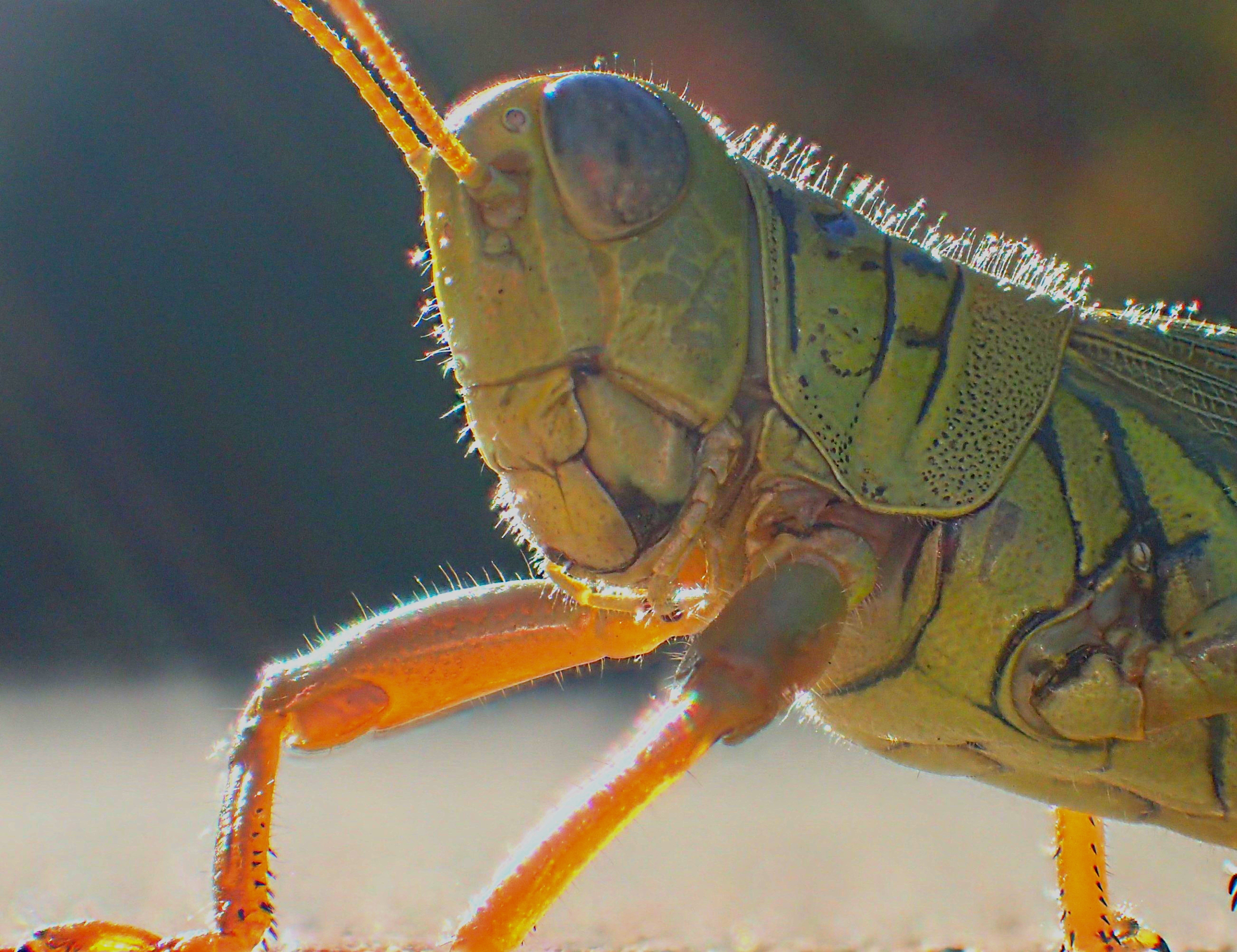
Not by the hair of my chinny chin chin! Photo by Thomas Peace 2014
.
Peace never comes by mindlessly clinging to separative groups or leaders.
.
[This is a Sheepshead Mushroom with a Midge Fly resting on it (to the left). The Sheepshead Mushroom is edible and is considered to be one of the best tasting mushrooms. They tend to grow at the base of Oak Trees.]

Resting on a Sheepshead. Photo by Thomas Peace 2014
.
Hate and indifference involves separation, distance, and a lack of compassion.
.
[In cooler weather, Katydids often cling to the sides of houses or garages for extra warmth. Katydids have excellent climbing abilities. This one is clinging to the warm, reflective side of a garage… an effective way to beat the cold!]
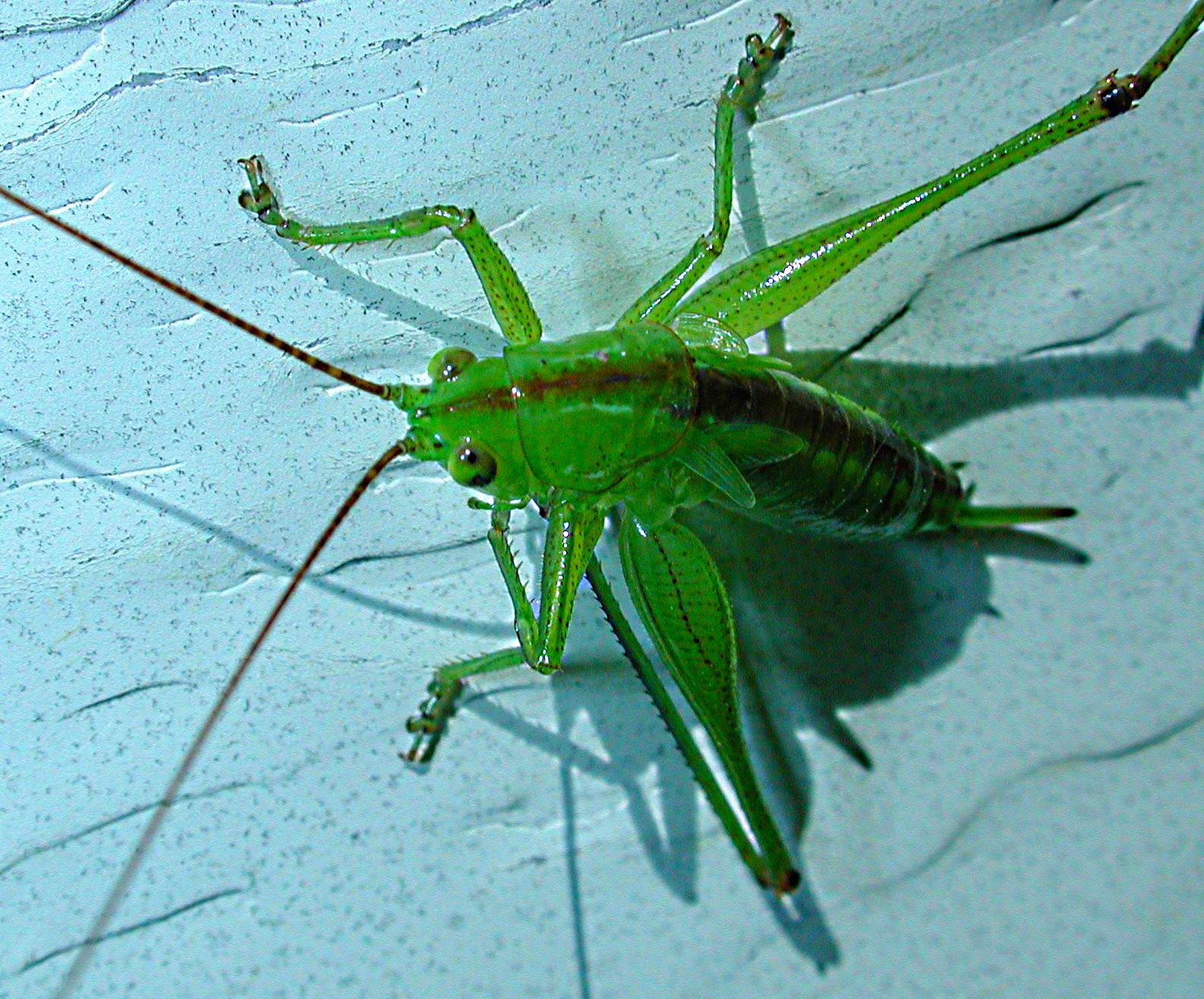
Wall Walker! Photo by Thomas Peace 2014
.
It’s likely best to be rather low-key and unnoticeable. For, in the long run, you will (especially if you are wise) really impress no one except yourself.
.
[There is, within this flower, and unobtrusive, little winged insect… a Hover Fly… having the time of his life! There’s also an inconspicuous ant there too!]
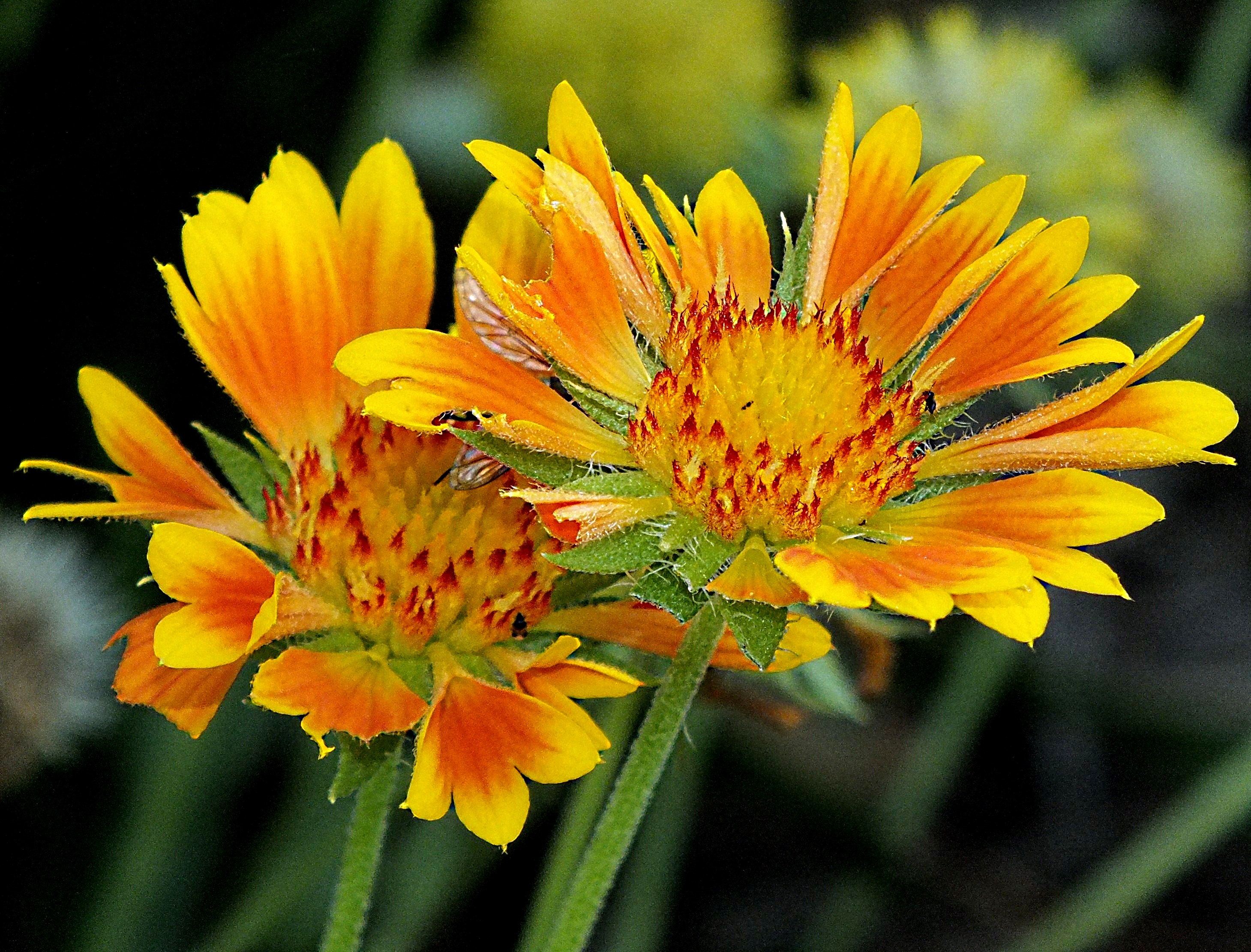
Beyond the Camera Eye and Superficial Fame! Photo by Thomas Peace 2014
.
The key to understanding life is not made to fit the rigid lock of powerful authority.
.
[The Spotted Jewelweed is an annul plant native to North America. The Spotted Jewelweed likes to grow along creeks and rivers; this one is growing along a creek flowing into a nearby river. The Spotted Jewelweed (Impatiens capensis) was transported in the 19th and 20th centuries to England, France, the Netherlands, Poland, Sweden, Finland, and potentially other areas of northern and central Europe. These naturalized populations persist in the absence of any effort of cultivation by people.]

Love is the key. Photo by Thomas Peace 2014
.
There was a wise man… and every time he bent down, the whole world (including all the people, animals, and plants) bent down.
.
[This Goldenrod is being bent over by the wind… not by the weight of the Hover Flies upon it. Hover Flies seek nectar from wildflowers, such as this Goldenrod, which is growing along the periphery of a local, nutrient-rich, rural pond.]

Bending together. Photo by Thomas Peace 2014
.
If one doesn’t exist primarily in (and “as”) the present now… one is living in the past.
.
[This Lady Bug is getting ready to leave a dried out Thistle Plant. Probably the Lady Bug had been searching for small insects to feed upon (that were nesting within the seed pod).]

Leaving Lady! Photo by Thomas Peace 2014
.
The thrown rock creates the ripples, but the ripples of thought create the ego (i.e., the so-called central “I”).
.
[This is a Banded Argiope Spider – with ripples of colors – waiting for prey in a perfect web that she has spun. The Banded Argiope Spider is a large spider and is related to the Black and Yellow Argiope Spider (i.e., the Banana Spider). Their expertly woven webs have crossed, zigzag bands running through them that are very thick. It is thought that these have the dual function of attracting certain insects – since they reflect a lot of ultraviolet light that certain insects are attracted to – and for warning low flying birds. (Humans cannot see in the ultraviolet range.) I used to have a lot of these spiders crawling all over me when out in the fields photographing (and didn’t mind it at all); but now I am better at spotting and avoiding the webs and going around them. Many of these spiders are well over and inch long. It is common for them to wait in the web with their head down. Note the webbing to the left and right of this spider.]
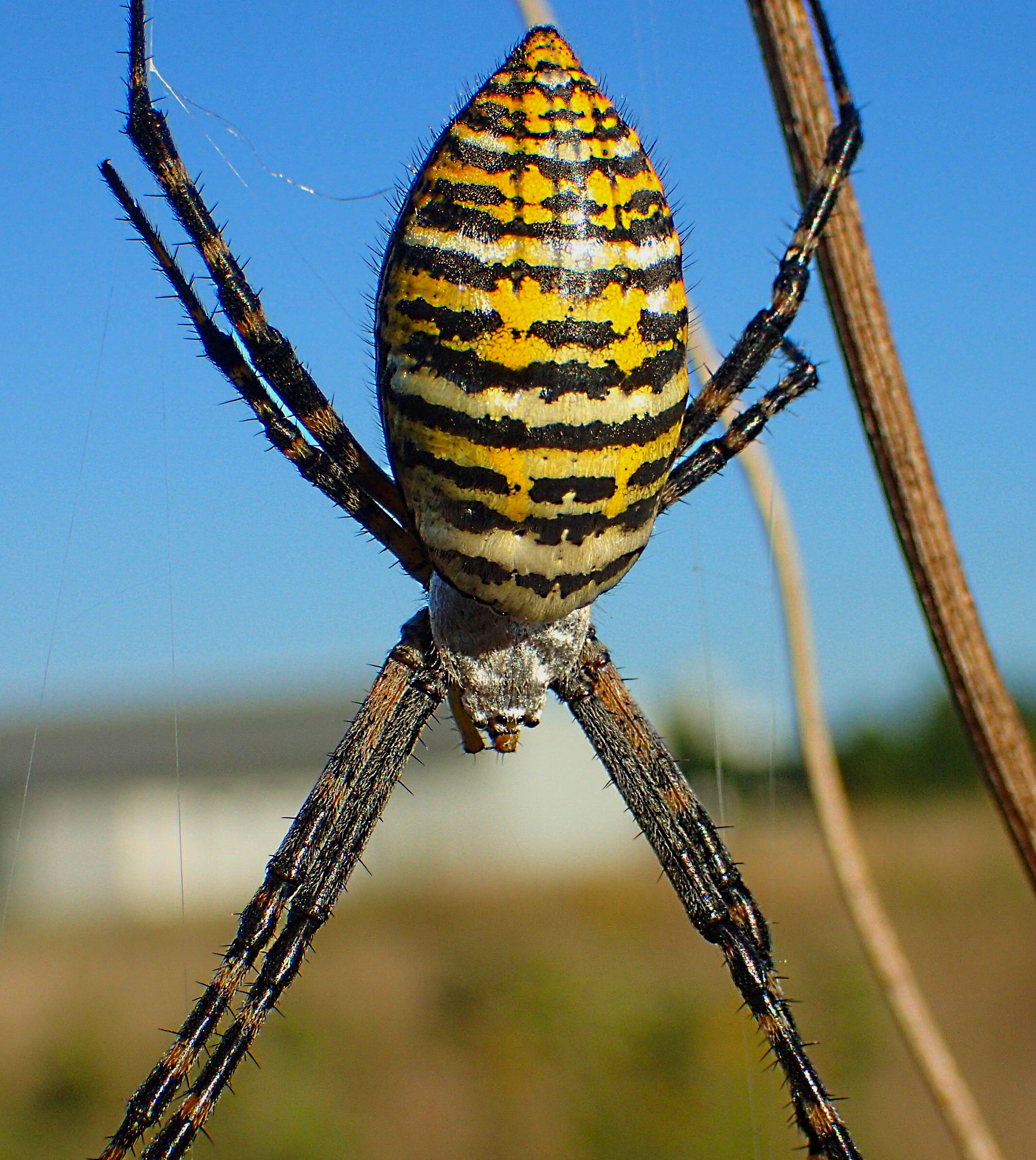
A real tiger. Photo by Thomas Peace 2014
.
Do not merely look through the screen of fragmentation that was instilled within (and “as”) your mind.
.
[This is not, as many might think, a Monarch Butterfly. It is a Viceroy Butterfly, resting at the base of an Oak Tree along some moss. Unlike Monarchs, Viceroy Butterflies do not migrate south for the winter. Viceroy Butterflies overwinter as caterpillars, resting inside rolled leaves. Once the weather gets a bit colder, this Viceroy will likely perish; but its caterpillar offspring will survive the winter to emerge as new, splendid butterflies.]
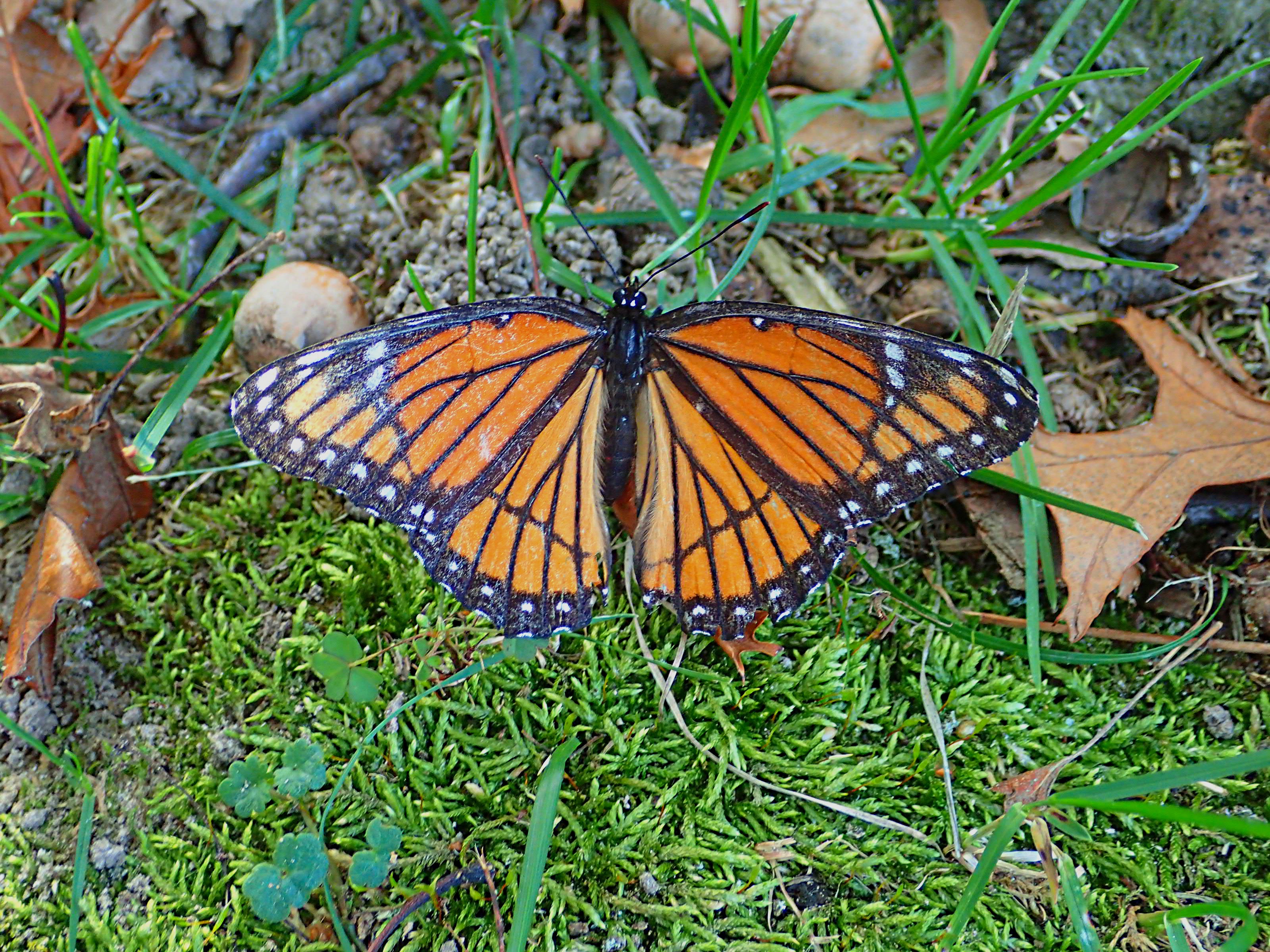
At the end of an excellent life! Photo by Thomas Peace 2014
.
What you perceive is not, psychologically, separate from what you are.
.
[These are Mycena haematopus mushrooms growing along a river bank.]

Far from the beaten path. Photo by Thomas Peace 2014
.
One oftentimes has to unlearn the erroneous conditioning that was hammered into one’s core and foundation.
.
[This Harvestman – some call them Daddy-long-legs – is resting on a leaf. Harvestmen (Daddy-long-legs) are not spiders. Spiders have two main body segments. Harvestmen have one. Harvestmen do have eight legs like spiders… but theirs are usually much longer.]

A Daddy with Long Legs. Photo by Thomas Peace 2014
.
If you deeply care… then the universe is deeply caring.
.
[This is a close-up shot of moss growing on a fallen tree stump in the woods. I’ll post this same type of moss (with spore shoots sprouting out) at a later time.]

The rolling stone gathers none. Photo by Thomas Peace 2014
 Tom's Nature-up-close Photography and Mindfulness Blog