Thought is a wonderful tool, but if that’s all you exist as… you are immured in the confines of your own, limited prison.
.
[This is the central part of a garden flower. The golden Stamen are holding up well to the recent cold weather. Stamen are the pollen filaments of flowers.]
A highly prejudicial mind is like a coldly crafted puppet or a thoughtlessly made, prefabricated building; it was constructed to be what it is (by others).
.
[This is a very large Fishing Spider on a post of our Gazebo (at night) guarding its large egg sac. This Fishing Spider must have been over 2 inches long and its egg sac was also very large. It looks like it must have took a long time to carefully and skillfully form that huge egg sac. I was looking for spiders to photograph and was resting the camera against the post to get a steady shot of a smaller spider… when I suddenly came face to face with this huge creature! Nothing easily startles me… but this kind of did!]
Not an itsy bitsy spider by any means! Photo by Thomas Peace 2014
[This bat-like moth looks like it could be a Waved Sphinx Moth. Larvae of the Waved Sphinx Moth feed on Ash, Privet, and Lilacs. (Don’t look too closely above the moth, to the right; a little webbing seems to be face-like… which won’t help one’s dreams!)]
Bat-like Waved Sphinx Moth. Photo by Thomas Peace 2014
A Spider sewed at Night Without a Light Upon an Arc of White.
If Ruff it was of Dame Or Shroud of Gnome Himself himself inform.
Of Immortality His Strategy Was Physiognomy.
.
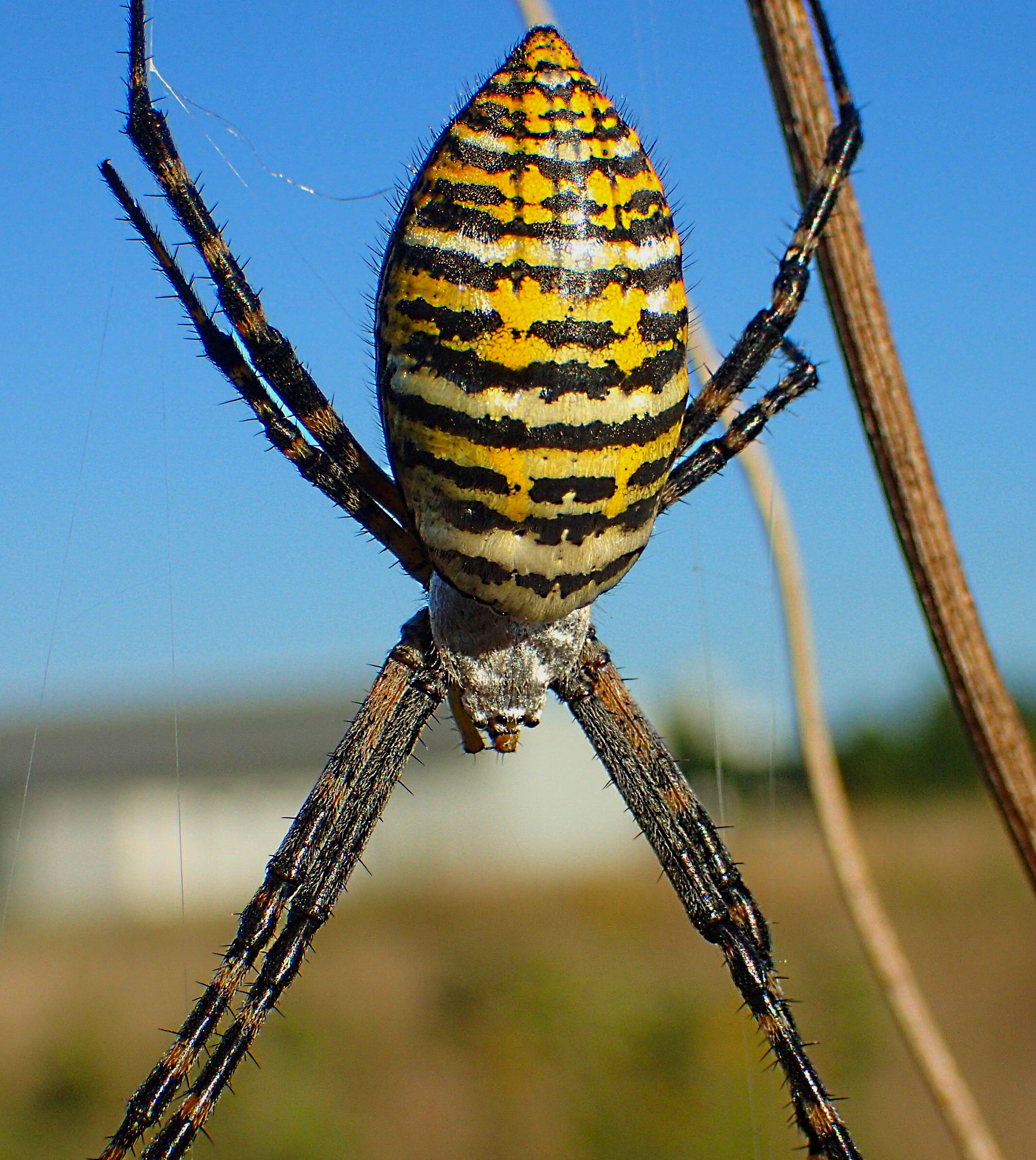
[This is a Black and Yellow Argiope Spider. We call them Banana Spiders here in the Midwest. Each Black and Yellow Argiope Spider carries an ominous, rather demonic set of images on its dorsal side… a clear message saying: “Don’t mess with me!”]
Positioned “head down” as is typical for these and related species. Photo by Thomas Peace 2014
The thrown rock creates the ripples, but the ripples of thought create the ego (i.e., the so-called central “I”).
.
[This is a Banded Argiope Spider – with ripples of colors – waiting for prey in a perfect web that she has spun. The Banded Argiope Spider is a large spider and is related to the Black and Yellow Argiope Spider (i.e., the Banana Spider). Their expertly woven webs have crossed, zigzag bands running through them that are very thick. It is thought that these have the dual function of attracting certain insects – since they reflect a lot of ultraviolet light that certain insects are attracted to – and for warning low flying birds. (Humans cannot see in the ultraviolet range.) I used to have a lot of these spiders crawling all over me when out in the fields photographing (and didn’t mind it at all); but now I am better at spotting and avoiding the webs and going around them. Many of these spiders are well over and inch long. It is common for them to wait in the web with their head down. Note the webbing to the left and right of this spider.]
Do not merely look through the screen of fragmentation that was instilled within (and “as”) your mind.
.
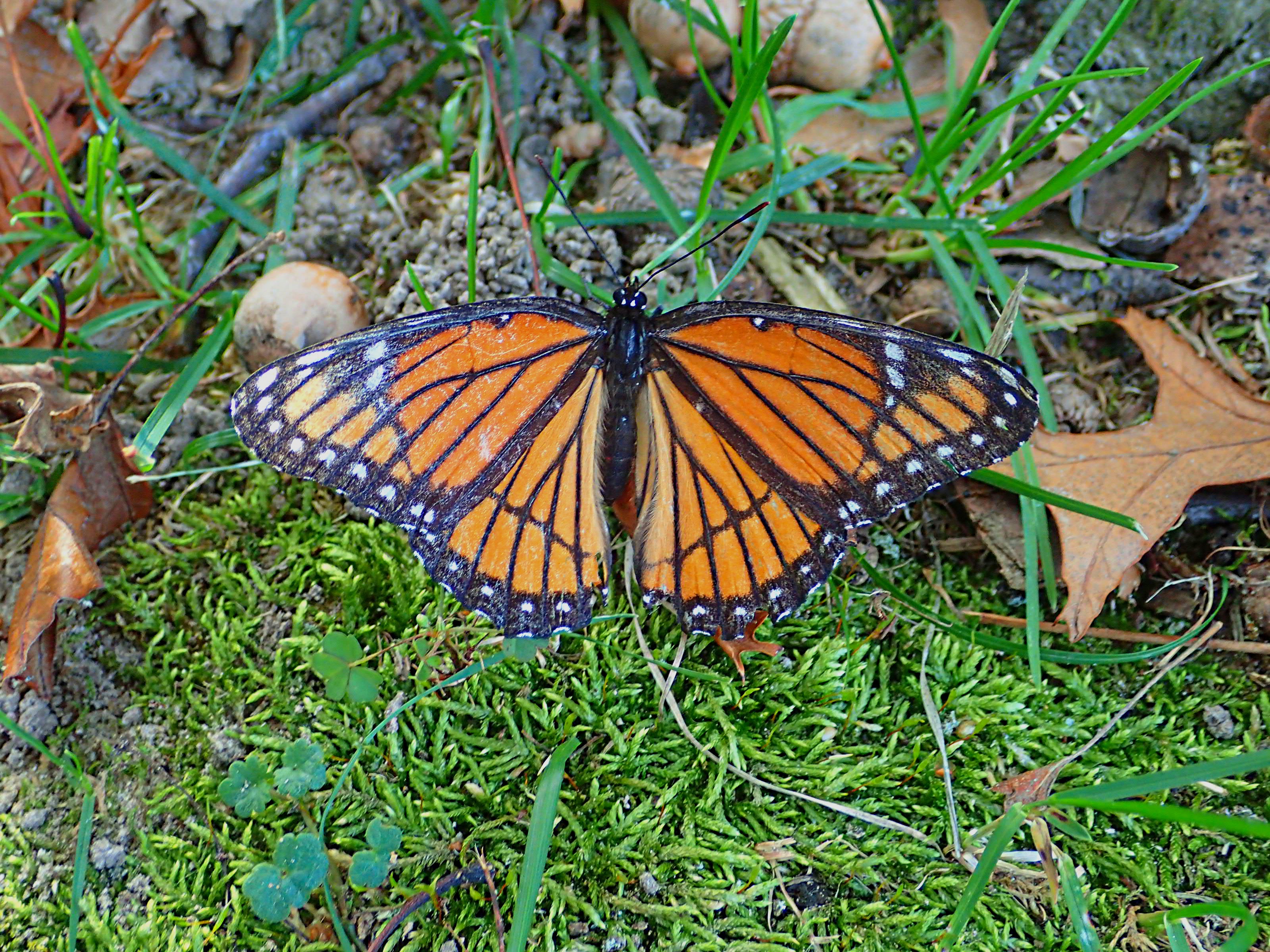
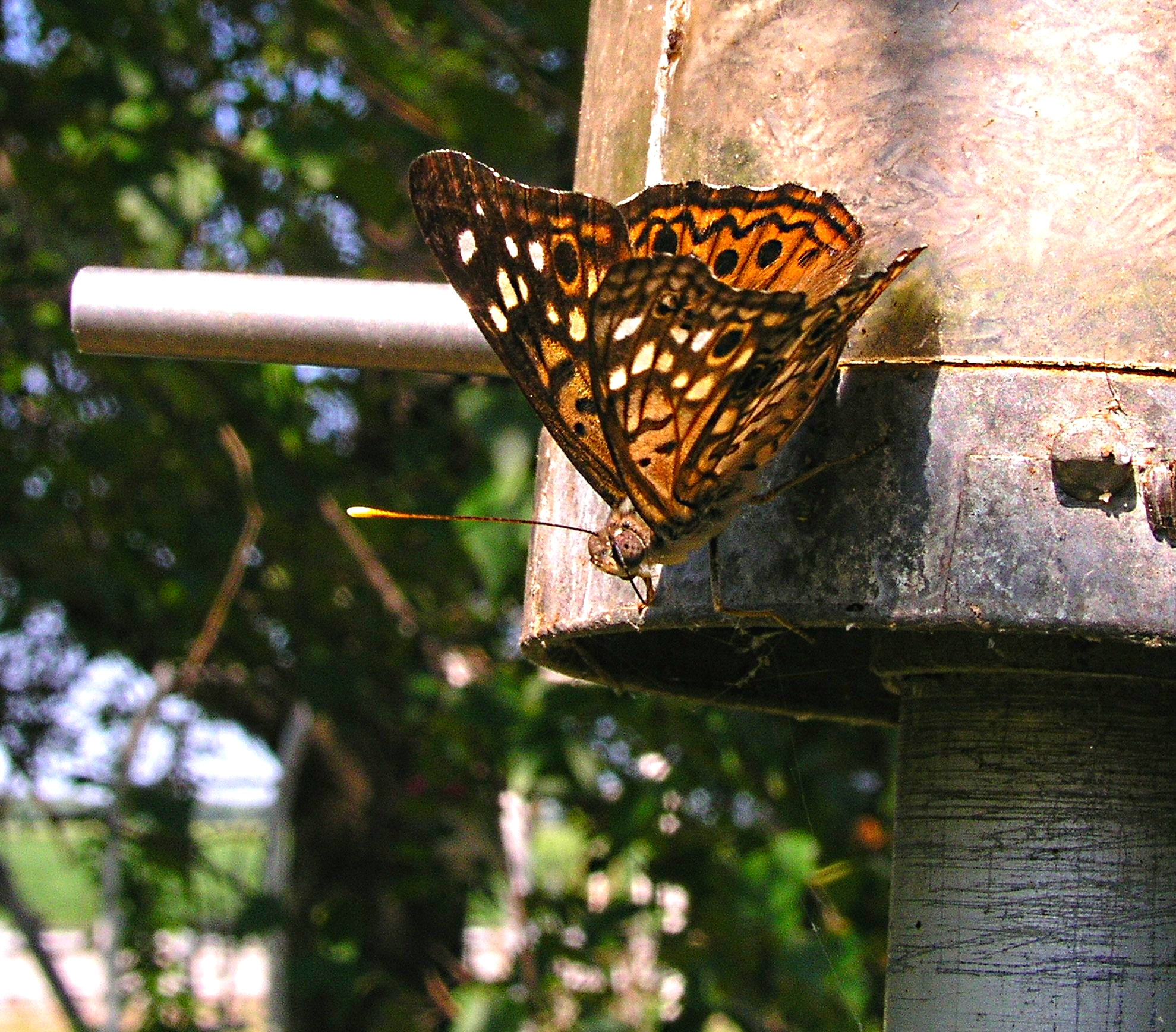
[This is not, as many might think, a Monarch Butterfly. It is a Viceroy Butterfly, resting at the base of an Oak Tree along some moss. Unlike Monarchs, Viceroy Butterflies do not migrate south for the winter. Viceroy Butterflies overwinter as caterpillars, resting inside rolled leaves. Once the weather gets a bit colder, this Viceroy will likely perish; but its caterpillar offspring will survive the winter to emerge as new, splendid butterflies.]
At the end of an excellent life! Photo by Thomas Peace 2014
Don’t lead a skeleton’s life. Ensure that your action has real meaning!
.
[This is the remnant skeletal framework of a plant growing along the river bank in the fall season. A diminutive spider can be seen with his handiwork.]
Don’t see people as draft horses to pull heavy loads for you; see them as thoroughbreds that are splendid companions.
.
[This Burying Beetle is feeding upon a Bracket Mushroom. It would also gladly feed on horse dung or other such material, as well as animal carrion, fallen fruit, and decaying vegetable matter. They are part of nature’s disposal service. The Burying Beetle is mainly found in wooden habitats.]
If you go through life in a slapdash, careless manner, you’ll not only overlook the beauty of nature, but you’ll also overlook the beauty of helping others kindly.
.
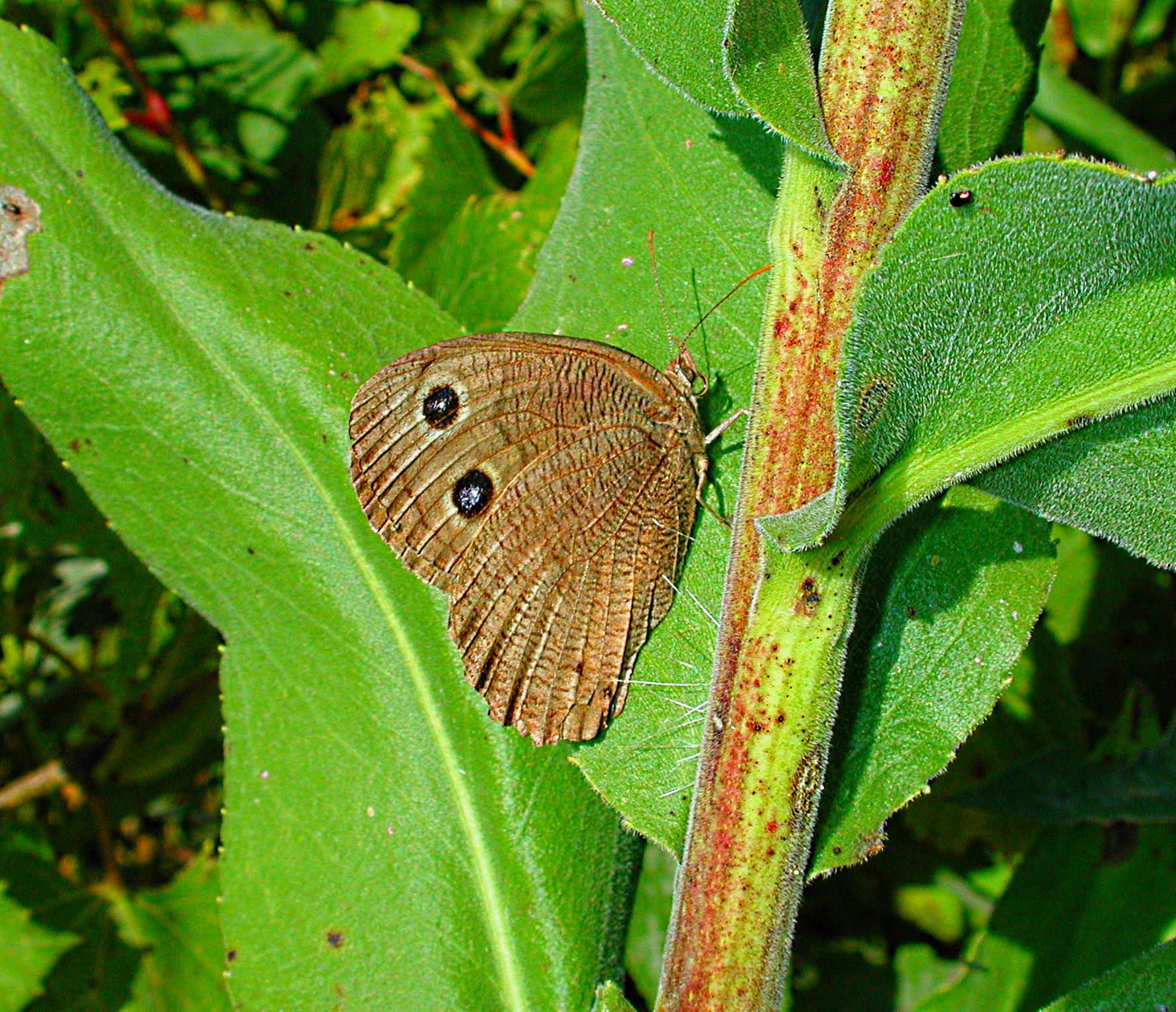
[This Common Wood Nymph Butterfly is resting on a leaf. The coloration and size of the Common Wood Nymph Butterfly changes throughout its range in America. It is not so common any more, unfortunately.]
Not so common any longer. Photo by Thomas Peace 2014
Each day, effortlessly watch every moment of thought and perception… and do so without the needless and conflicting separation between the “perception” and the “perceiver.”
.
[These are soybean plants in a local farm field, dry and ready for harvest. (Soy milk in the making!)]
True free will (i.e., freedom involving thought/thinking) is a phenomenon that — if it truly exists — breaks free from the cause & effect parameters of the cosmos… which, if one is at all honest, is not likely whatsoever, in any way, shape, or form. However, in profound and deep silence, an immense, timeless energy can appear (i.e., arrive)… that is truly free and not part of a conditioned cause-effect continuum.
.
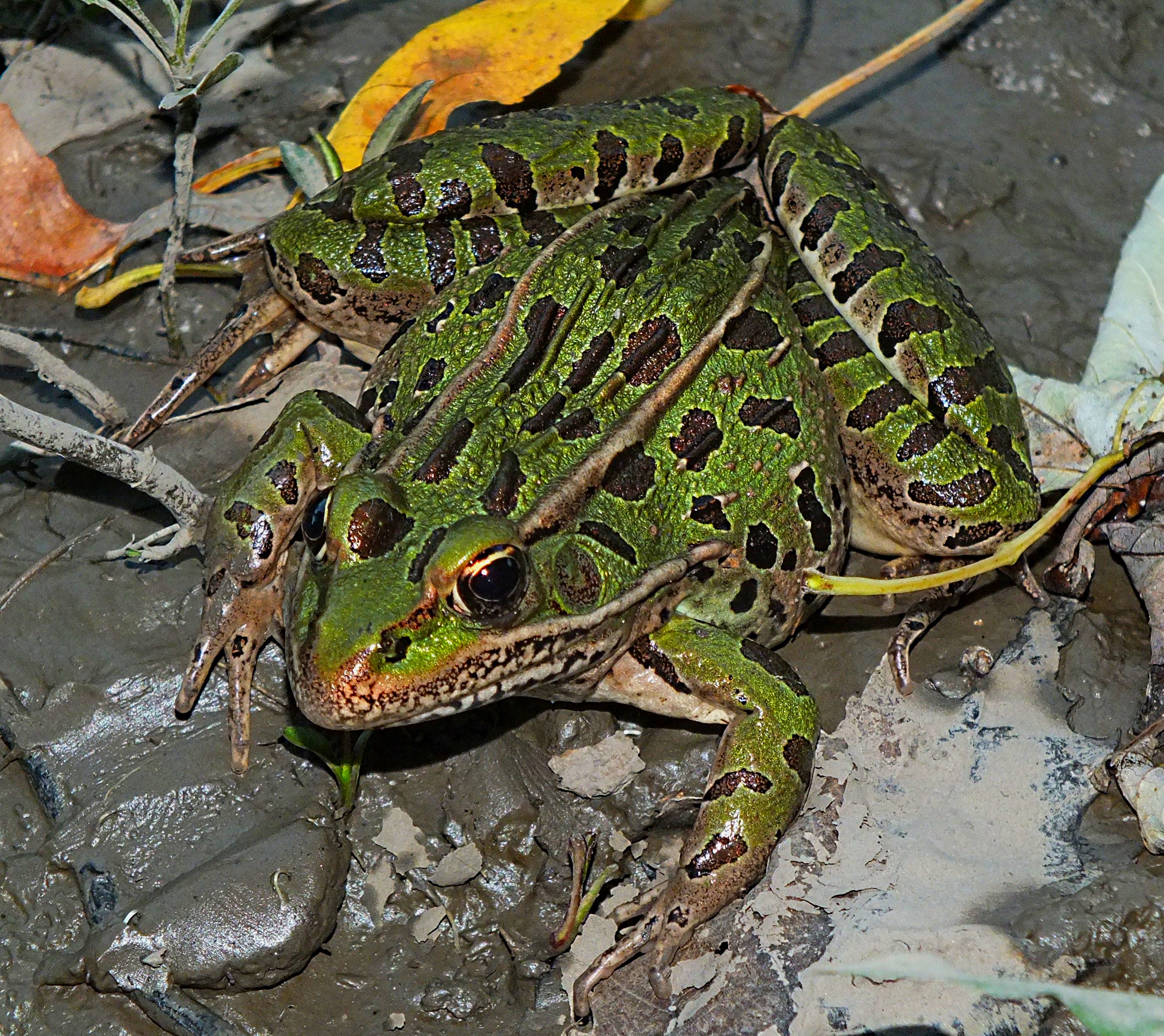
[This is a Leopard Frog among the dead leaves of fall; interestingly, this frog croaked many times… and is still very much alive. 😉 ]
He kicked the bucket more than once! Photo by Thomas Peace 2014
There is a much deeper dimension to life than what most people think or consider.
.
[These are a form of bracket fungus called Polypores on a fallen log (with some leaves of fall upon them). Most Polypores inhabit tree trunks or branches consuming the wood, but some soil-inhabiting species form myycorrhia – a symbiotic relationship with the roots of trees, wherein they blend with the roots intracellularly (i.e., within the wood-root cells) or extracellulary. Polypores and their relatives, corticioid fungi, consist as part of the most important agents of wood decay. Thus they play a very significant role in nutrient and carbon cycles of forest ecosystems.]
Some Bracket Fungus among us! Photo by Thomas Peace 2014
The divisive notion of “us” and “them” causes wars.
.
[This photo is of a Lady Bug feeding upon berries of Pokeweed… (also called Poke Salad, Poke Sallet, or Polk Weed). All parts of Pokeweed are poisonous, but (especially in the South) a lot of people boil and reboil the plant many times to leach out the toxins; then it is eaten. The berries are the least toxic part of the plant, though children have gotten sick from eating them. Pokeweed is being looked into as a possible cure for cancer and other diseases. Research has shown that pokeweed contains a compound that appears to enhance the immune system and has some anti-cancer effects in animals. Elvis Presley sang a song about this plant… “Polk Salad Annie” (‘gators got your granny).]
Sock a little Polk Salad to him. Photo by Thomas Peace 2014
Wake up (with awareness) in the morning, bright-eyed and bushy tailed!
.
[This fly (bright-eyed and bushy tailed) is called an Early Tachinid Fly. Unlike the undesirable, disease-carrying, common flies, this species hangs around flowers and drinks nectar (as do butterflies). The Early Tachinid Fly is most often seen in meadows and open woodlands full of wildflowers.]
Bright eyed and bushy tailed. Photo by Thomas Peace 2014
One oftentimes has to unlearn the erroneous conditioning that was hammered into one’s core and foundation.
.
[This Harvestman – some call them Daddy-long-legs – is resting on a leaf. Harvestmen (Daddy-long-legs) are not spiders. Spiders have two main body segments. Harvestmen have one. Harvestmen do have eight legs like spiders… but theirs are usually much longer.]
A Daddy with Long Legs. Photo by Thomas Peace 2014
Look with what is deeper than what can see; listen with what is deeper than what can hear.
.
[Leaf-footed Bug adults are active from late summer through fall in weedy fields and along the edges of woodlands. The Leaf-footed Bug is fond of a variety of trees, shrubs, and flowers, including hawthorns, goldenrods, and Joe-pye weed.]
To psychologically die (each and every day) to endless fears and separative images… is living wisdom.
.
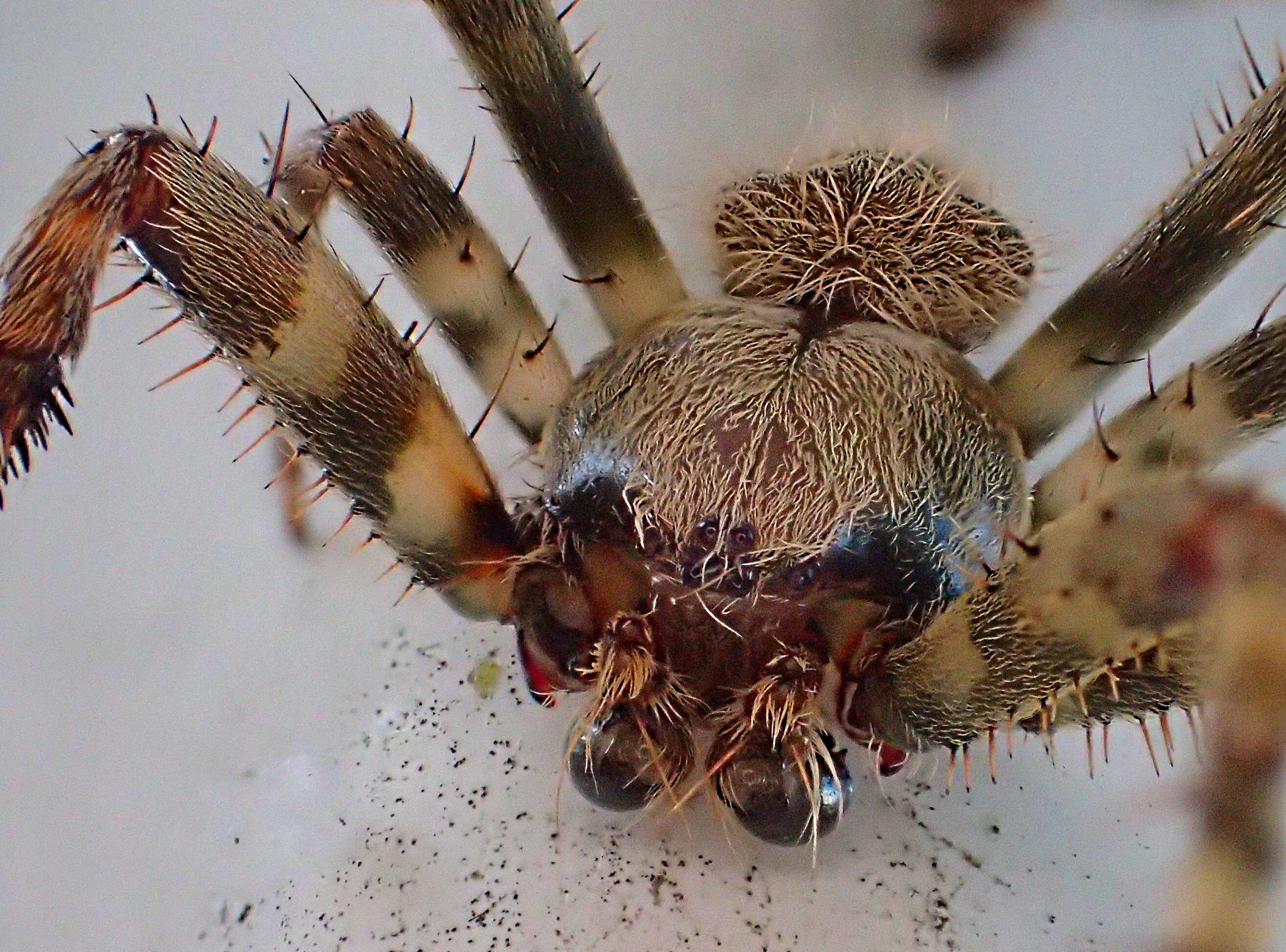
[This is, because of the enlarged pedipalps, a male spider… probably a Grass Spider. Pedipalps have sensitive chemical detectors and function as taste and smell organs, supplementing those on the legs. In males, the pedipalps are enlarged, functioning as organs for reproductive purposes.]
Oh, that movie-star face! Photo by Thomas Peace 2014
Compassion is expansive and all-containing; hate and selfishness… narrow and confined.
.
[These very small beetles are feeding on a Thistle Plant. These are likely Carpet Beetles. Carpet Beetles eat indoor carpets, woolens, cottons, and synthetic materials contaminated with organic fluids such as sweat. However, they prefer to eat dead insects and spiders, and they can devastate scientific specimens in university and museum collections. Outdoors, they feed on flower pollen and secretions from plants.]
Carpet Beetles far from carpets. Photo by Thomas Peace 2014
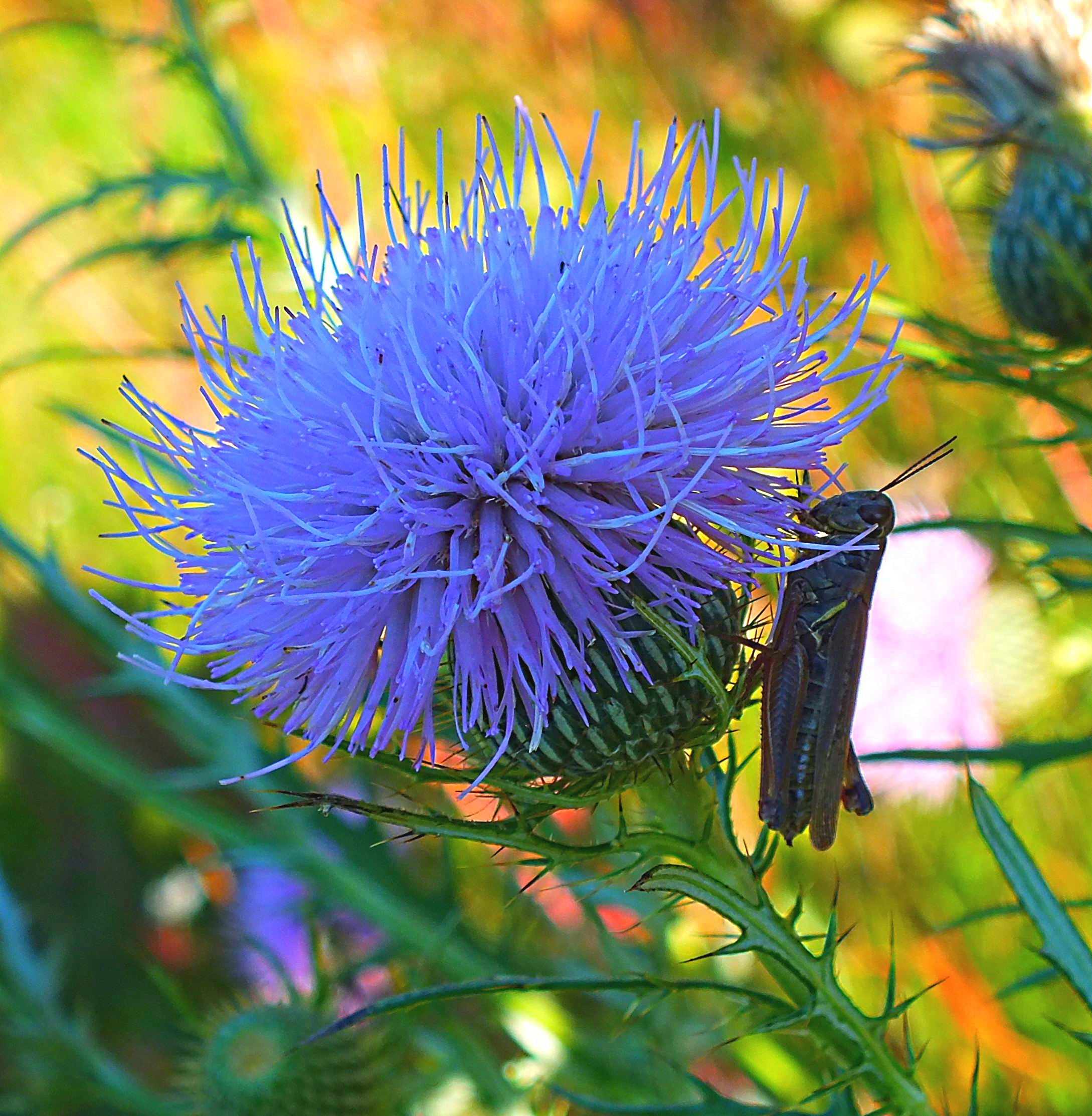
[This Grasshopper is placidly resting on a flowering Thistle Plant. Grasshoppers do not generally feed on Thistle Plants, though they may devour the flower sections.]
A beautiful place to be! Grasshopper on Thistle Plant. Photo by Thomas Peace 2014
On Twitter, a couple of Twitter friends, Kitusai & Bohdan — who happen to be excellent, creative musicians, by the way, (and who go by the Twitter icon-image of two Zebras) — suggested to me that it is good to give others a second chance when they do wrong. However, maybe not always; as I told them: two zebras who give the lioness a second-chance aren’t zebras for very long!
.
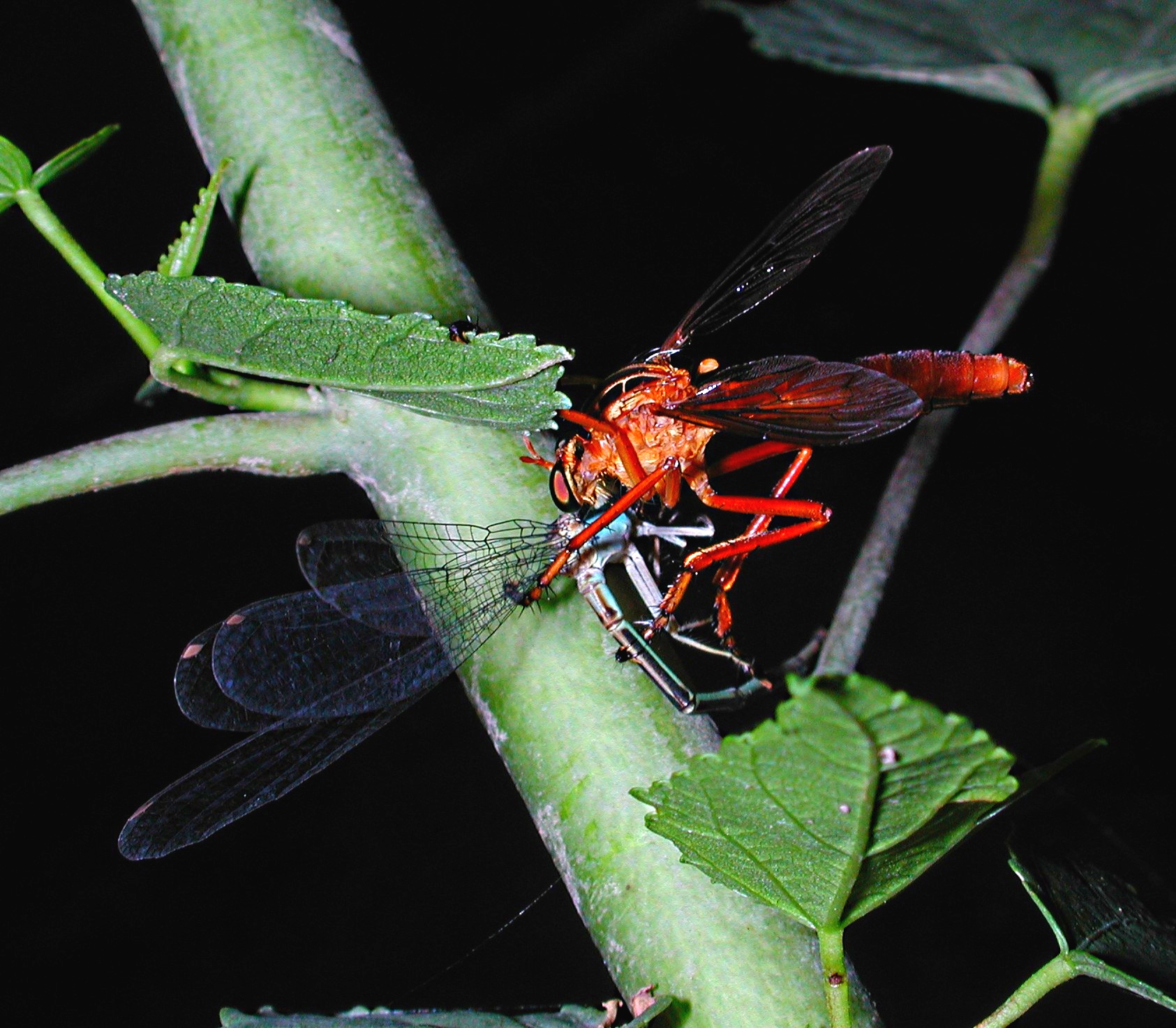
[If insects were mammals, this Robber Fly would be the lion of our rural area. In our area, I will often see a Robber Fly diligently flying from leaf to leaf, looking for prey to attack. They are very voracious and persistent predators. They will even attack much larger insects than themselves. This one has caught a Blue Damselfly. Blue Damselflies are, themselves, predators of other insects.]
I have nothing against meat eaters! Robber Fly attacking Damselfly. Photo by Thomas Peace 2014
The wall that separates you from all of life’s creatures… is (psychologically) composed of what is projected within (and “as”) you.
.
[This Wolf Spider (Lycosas gulosa) is clinging to the side of a rock wall. It is tending some lines for potential prey. This particular species of Wolf Spider lives in both the United States and Canada.]
Compassion is that alive awareness that cares beyond the cadaverous uncaring.
.
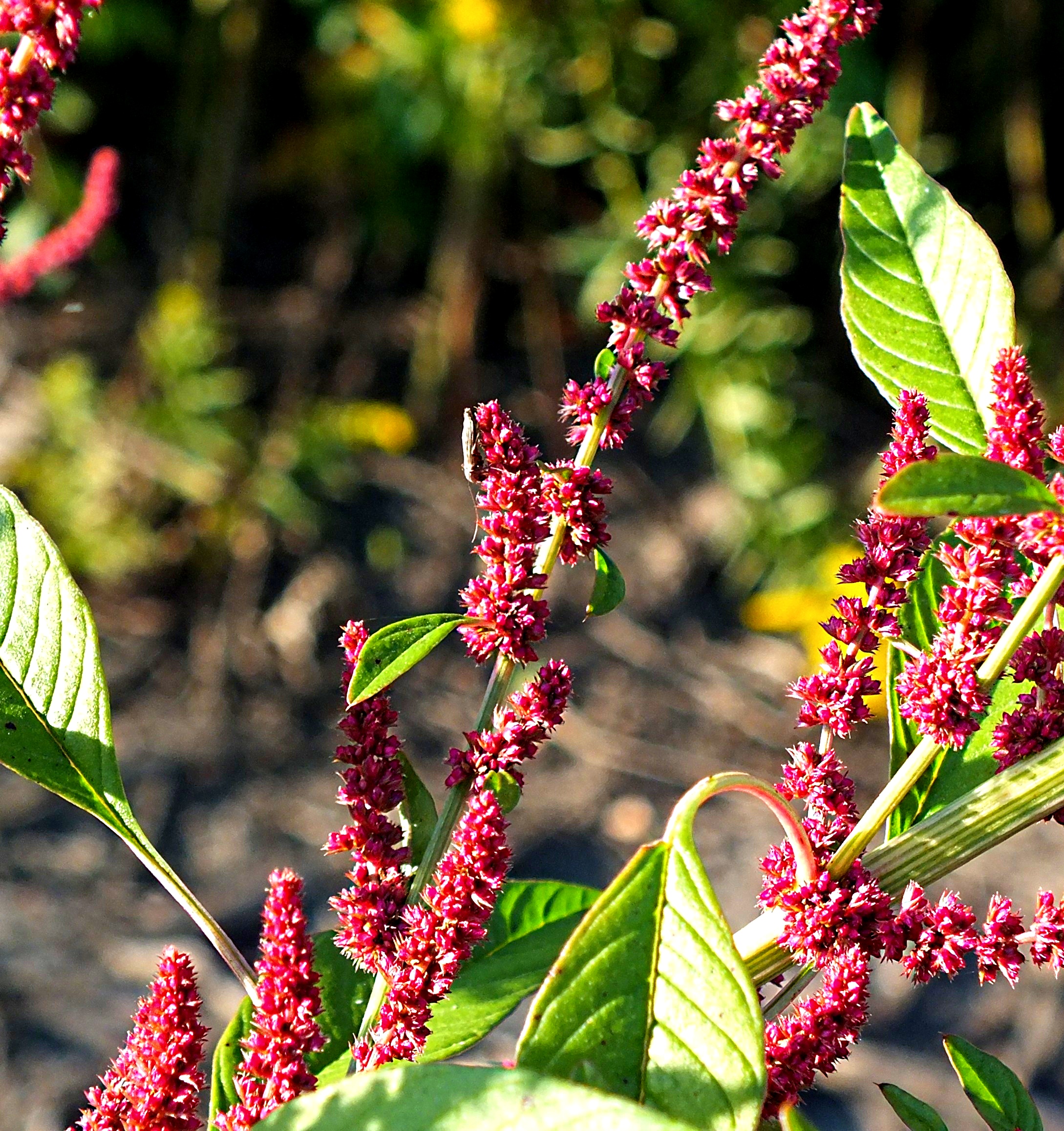
[This is a small Leafhopper on a cluster of colorful, wild Pigweed seeds. The Leafhoppers in Illinois are all relatively small. Leafhoppers have piercing-sucking mouth parts, which enables them to feed on plant sap. Pigweed is considered a weed and is a nuisance to farmers… but it is edible for humans and is full of nutritious vitamins.]
Down the Up-staircase. (Leafhopper on Pigweed) Photo by Thomas Peace 2014
Untethered freedom is not mesmerized by authority’s lopsided systems and structures… additionally, it is full of deep order, intelligence, and integrity.
.
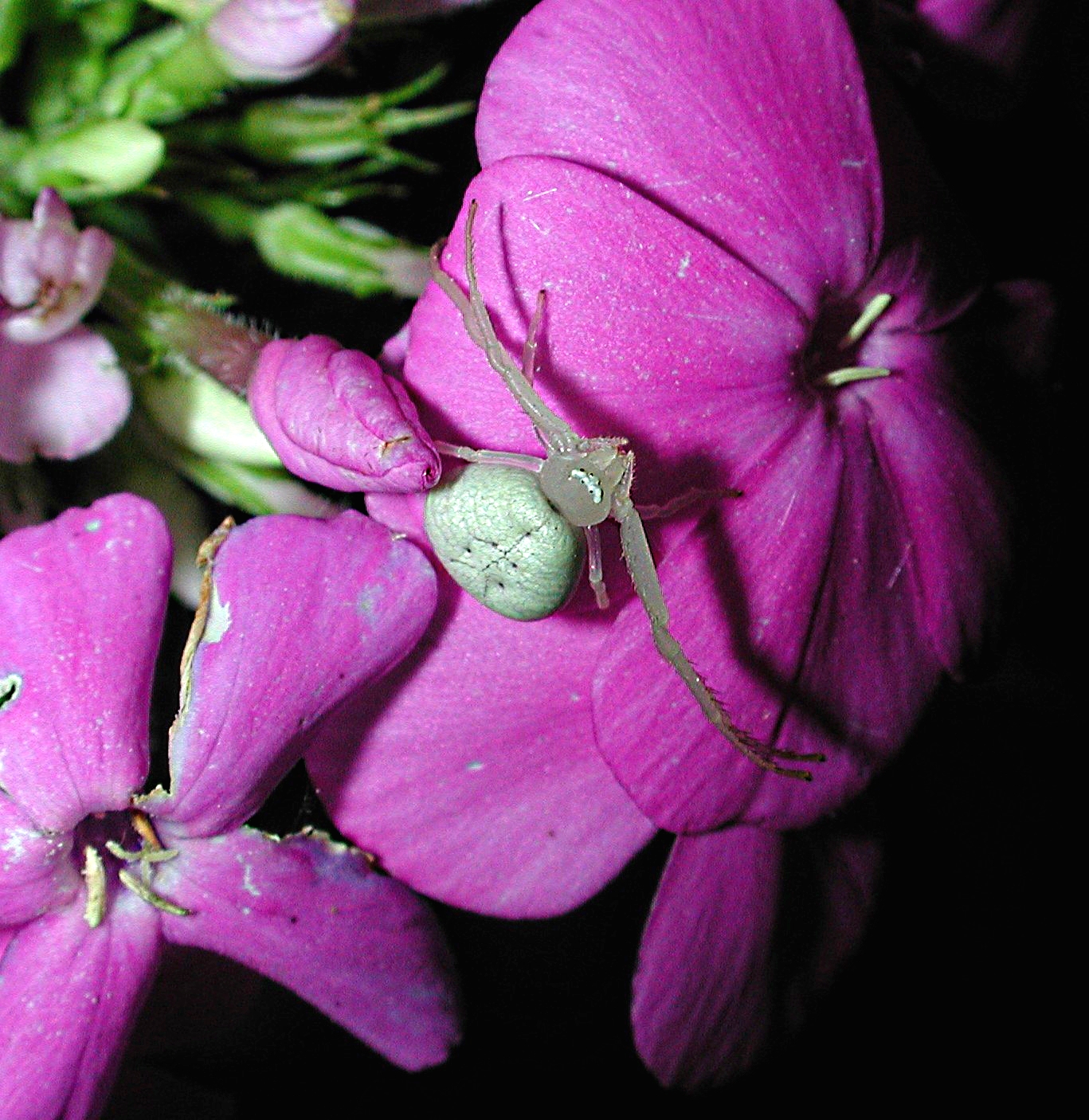
[This is a web-free Crab Spider in Phlox Flowers. Most Crab Spiders do not form webs. Crab Spiders, as we have shown, often change in chameleon-like fashion to suit their needs. They are usually found in flowers, even garden flowers.
Additional note: I will be posting more spiders (and similar creatures) in the Halloween month of October. It is neat that they are part of an old Halloween tradition (that is fun for kids). However, it is unfortunate that many children grow up associating spiders with “being frightened” and as “terrible creatures to be horrified of.” As the late, superb naturalist, Steve Irwin often propounded, spiders and snakes can indeed be seen to be majestic, marvelous animals, truly beautiful in their own ways. We must, as Steve Irwin so graciously suggested before his untimely passing, be far better caretakers of Mother Earth.]
Crabby and waiting! Crab Spider in Phlox Flowers. Photo by Thomas Peace 2014
Blindly and eagerly leading people into a false path brings more than one into the ditch.
.
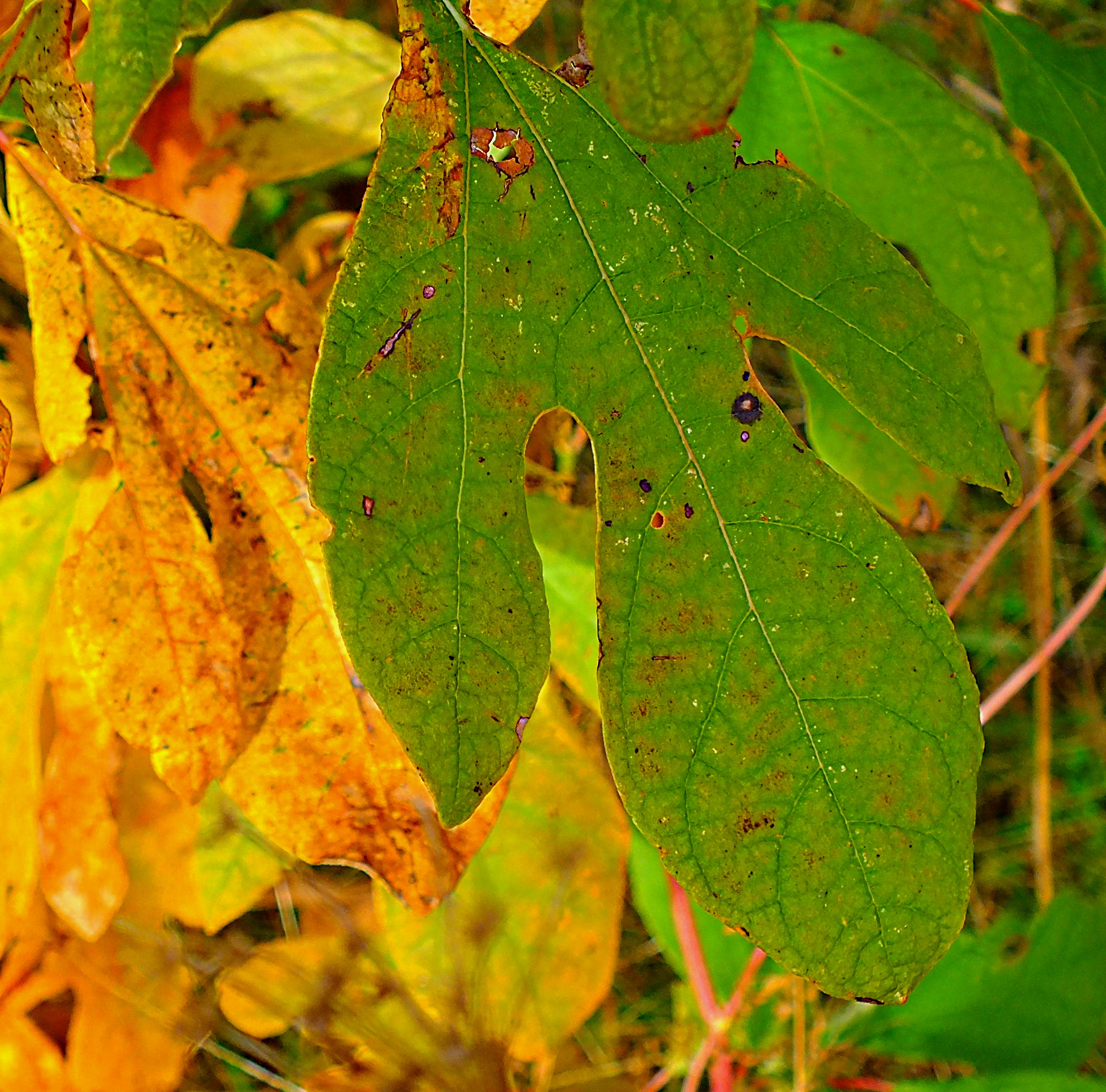
[These are leaves of a Sassafras Tree. Root Beer gets its name from the oil extracted from the root of the Sassafras Tree. Sassafras Tree parts were known primarily as medicinal herbs by the American Indians and, later, to the Europeans, who shipped great quantities to shops in England and on the Continent. The leaves could be made into teas and poultices, while the root bark was either chipped or crushed and then steeped in boiling water—one ounce of bark to one pint of water—and taken in small proportions as often as needed to reduce fevers; soothe chronic rheumatism, gout, and dropsy; relieve eye inflammation; ease menstrual and parturition pain; help cure scurvy and various skin conditions; and act as a disinfectant in dental surgery.]
You can’t think outside the box. Thinking is the box!
.
[This very unique and unusual wild plant is the Seed Box Plant (Ludwigia alternifolia). The square, box-like seed-pods of the Seed Box Plant are – indeed – different than most!]
Little, wrapped presents. (Seed Box Plant) Photo by Thomas Peace 2014
A small ego and a Big Heart is better than a Big Ego and a small heart.
.
[This diminutive Milkweed Bug Nymph just finished shedding its (outer) exoskeleton. The Milkweed Bug Nymph is around 3 mm long. It seems to be proudly overlooking its great accomplishment! Some insects devour their exoskeletons after shedding them; but this little vegetarian likely will not.]
The little contains the large. The large contains the little.
.
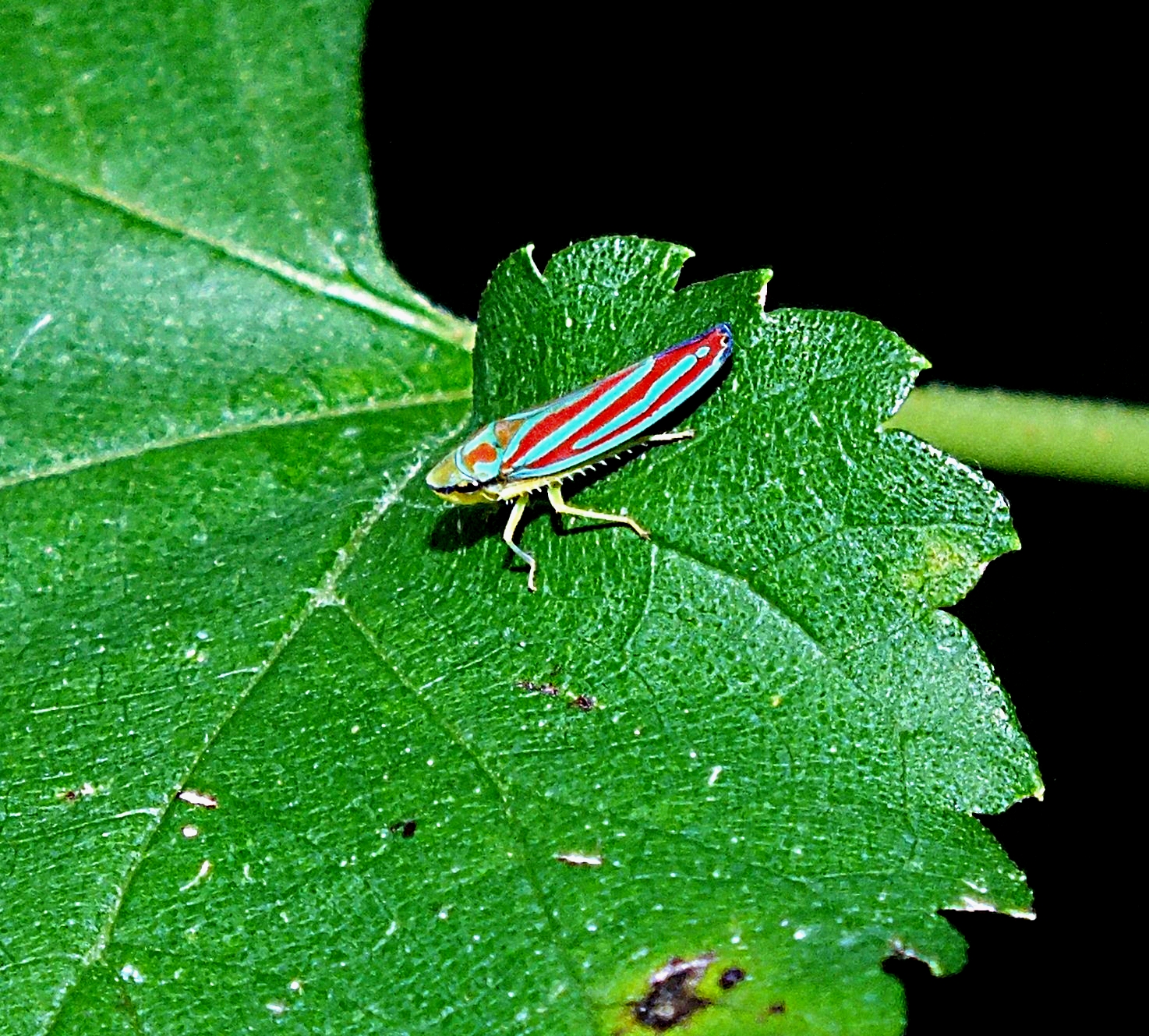
[Scarlet-and-green Leafhoppers are active from spring through fall in open habitats with plenty of herbaceous, lush foliage. Scarlet-and-green Leafhoppers feed on the sap of vines and shrubs. They are relatively small… often considerably less than 1/4th of an inch long.]
Little insect; large beauty! Photo by Thomas Peace 2014
Genuine heartfelt passion for life naturally helps others.
.
[Carpenter Bees, such as this one, love nectar and pollen, such as this Pink Cone-flower provides. Females of Carpenter Bees establish nests in broken or burned ends of hollow or pity stems and twigs. They can extract up to a foot of pith from the interior of a stem, but (nevertheless) are not considered pests. With Carpenter Bees, there is somewhat of a division of labor… similar to what honeybees expertly do, but at a far more simple level.]
The fears and hopes that exist in one… may not at all be separate from what one is.
.
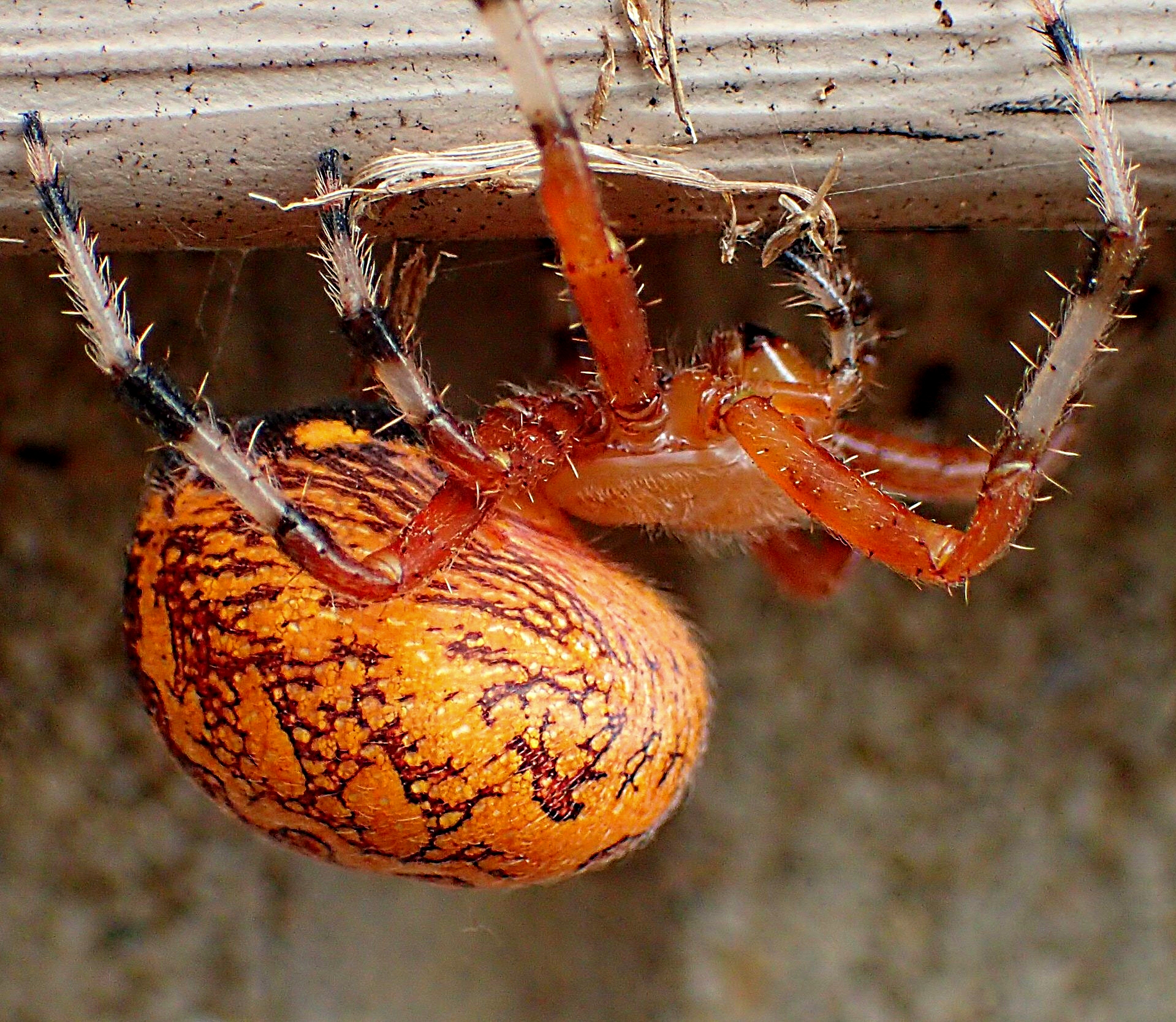
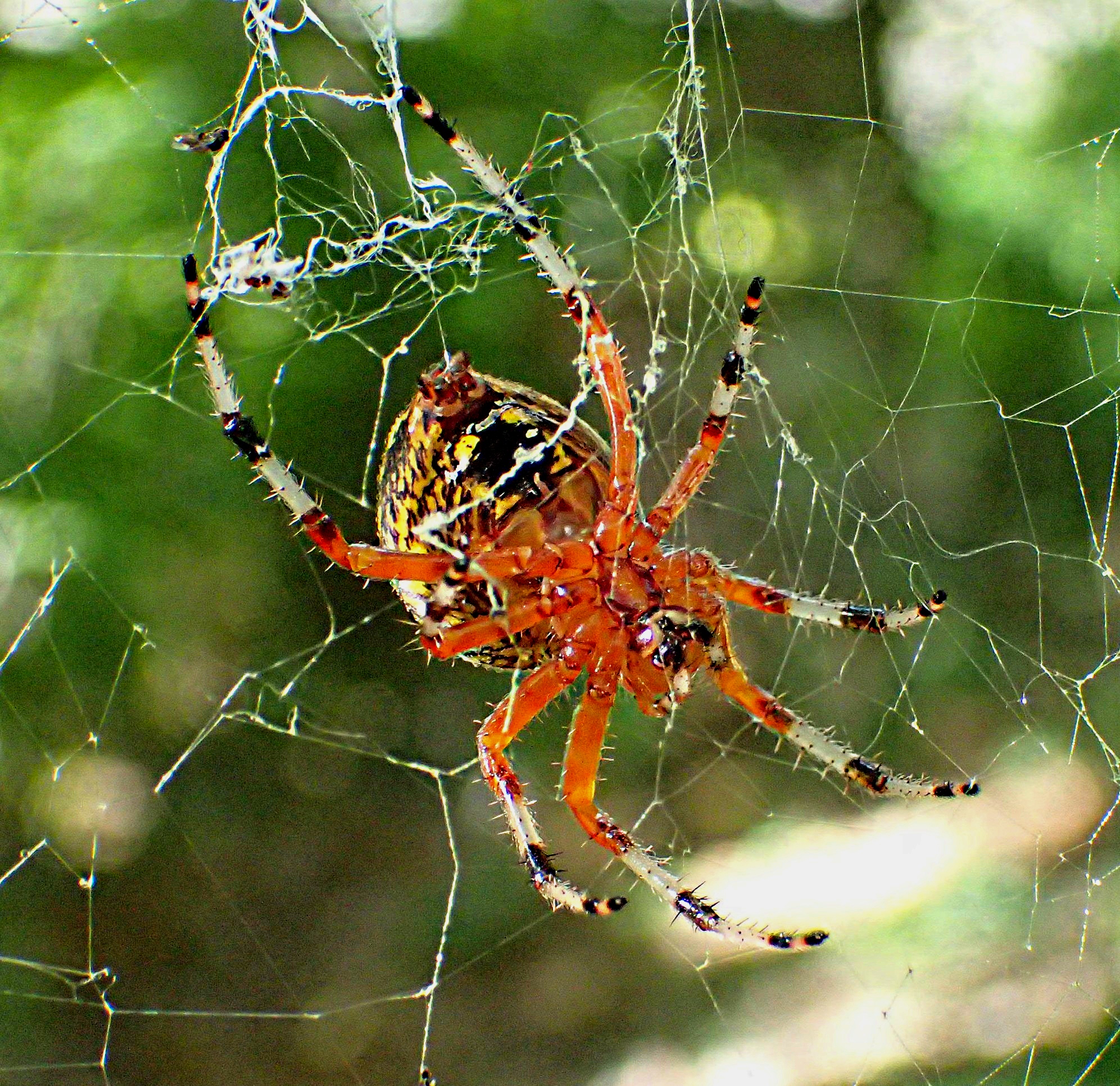
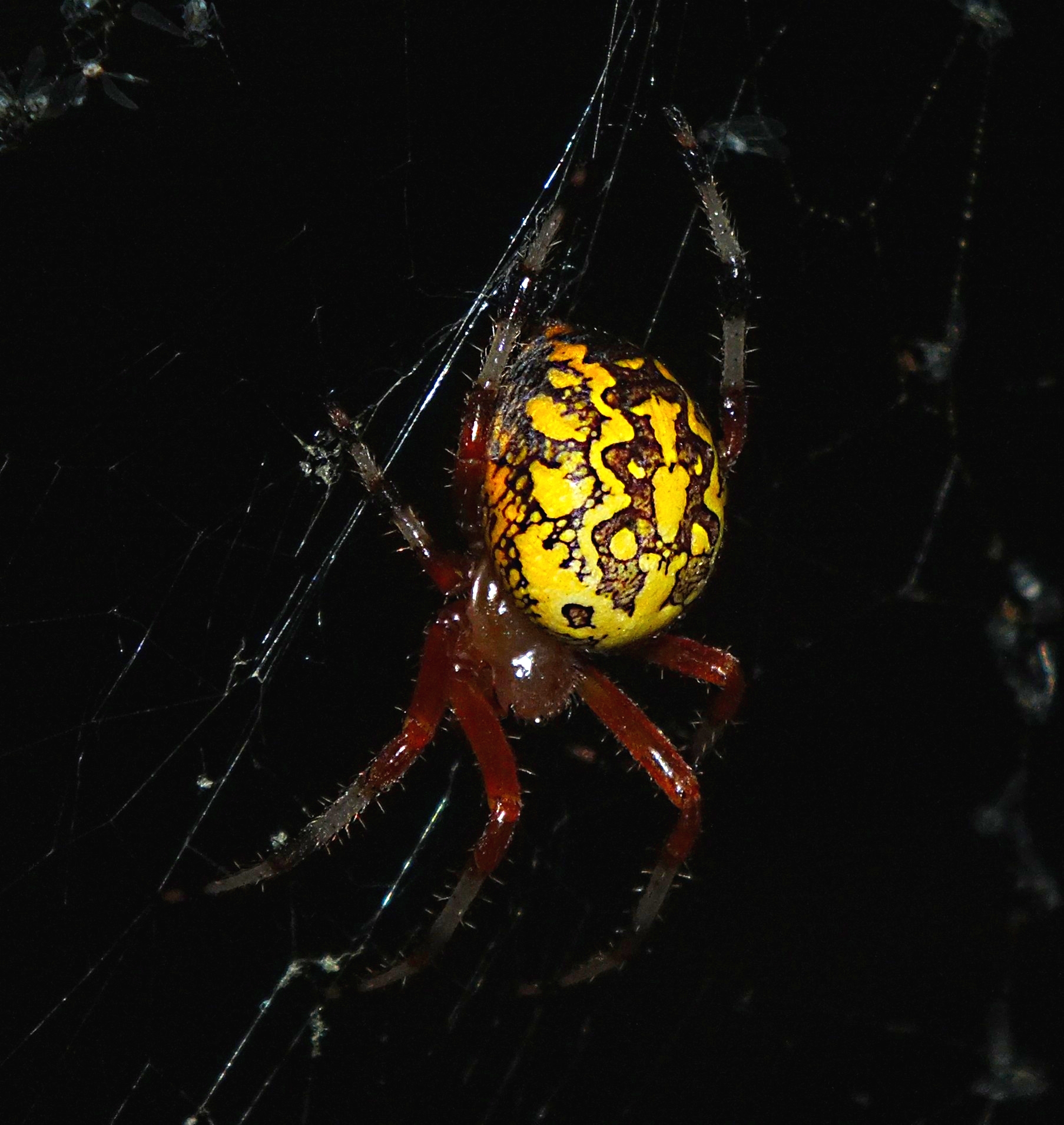
[Marbled Orb Weaver Spiders make spiraling orb webs built on low trees, shrubs, or grasses. Marbled Orb Weaver Spiders make a retreat in curled leaves or, if the web is on a tree, under bark. This one was in our yard near the river bank and was tough to photograph from its top side (i.e., dorsal side); its eyes are pretty good a seeing approaching visitors and it would quickly retreat into a curled leaf! However, I was better able to approach it in the evening! Notice how it is simultaneously spinning web and tightening web with separate legs! (I usually can’t do two things at once!)
Additional note: I will be posting more spiders (and similar creatures) in the Halloween month of October. It is neat that they are part of an old Halloween tradition (that is fun for kids). However, it is unfortunate that many children grow up associating spiders with “being frightened” and as “terrible creatures to be horrified of.” As the late, superb naturalist, Steve Irwin often propounded, spiders and snakes can indeed be seen to be majestic, marvelous animals, truly beautiful in their own ways. We must, as Steve Irwin so graciously suggested before his untimely passing, be far better caretakers of Mother Earth.]
Different and colorful! Marbled Orb Weaver Spider. Photo by Thomas Peace 2014
Interesting marbled design! Marbled Orb Weaver Spider. Photo by Thomas Peace 2014
Ponder beyond the ordinary. Go deep beyond the superficial.
.
[This is a Crab Spider in an Viola Flower. Crab Spiders act like chameleons and usually change to be the color of the particular flower that they are in… as they wait for winged prey to capture. This one should have made itself more yellow, but… considering the sprig hanging by this flower, this spider didn’t do too bad; I almost didn’t see it!
Additional note: I will be posting more spiders (and similar creatures) in the Halloween month of October. It is neat that they are part of an old Halloween tradition (that is fun for kids). However, it is unfortunate that many children grow up associating spiders with “being frightened” and as “terrible creatures to be horrified of.” As the late, superb naturalist, Steve Irwin often propounded, spiders and snakes can indeed be seen to be majestic, marvelous animals, truly beautiful in their own ways. We must, as Steve Irwin so graciously suggested before his untimely passing, be far better caretakers of Mother Earth.]
The real treasure to find is within you yourself; you don’t have to travel or search anywhere (out there) to find it.
.
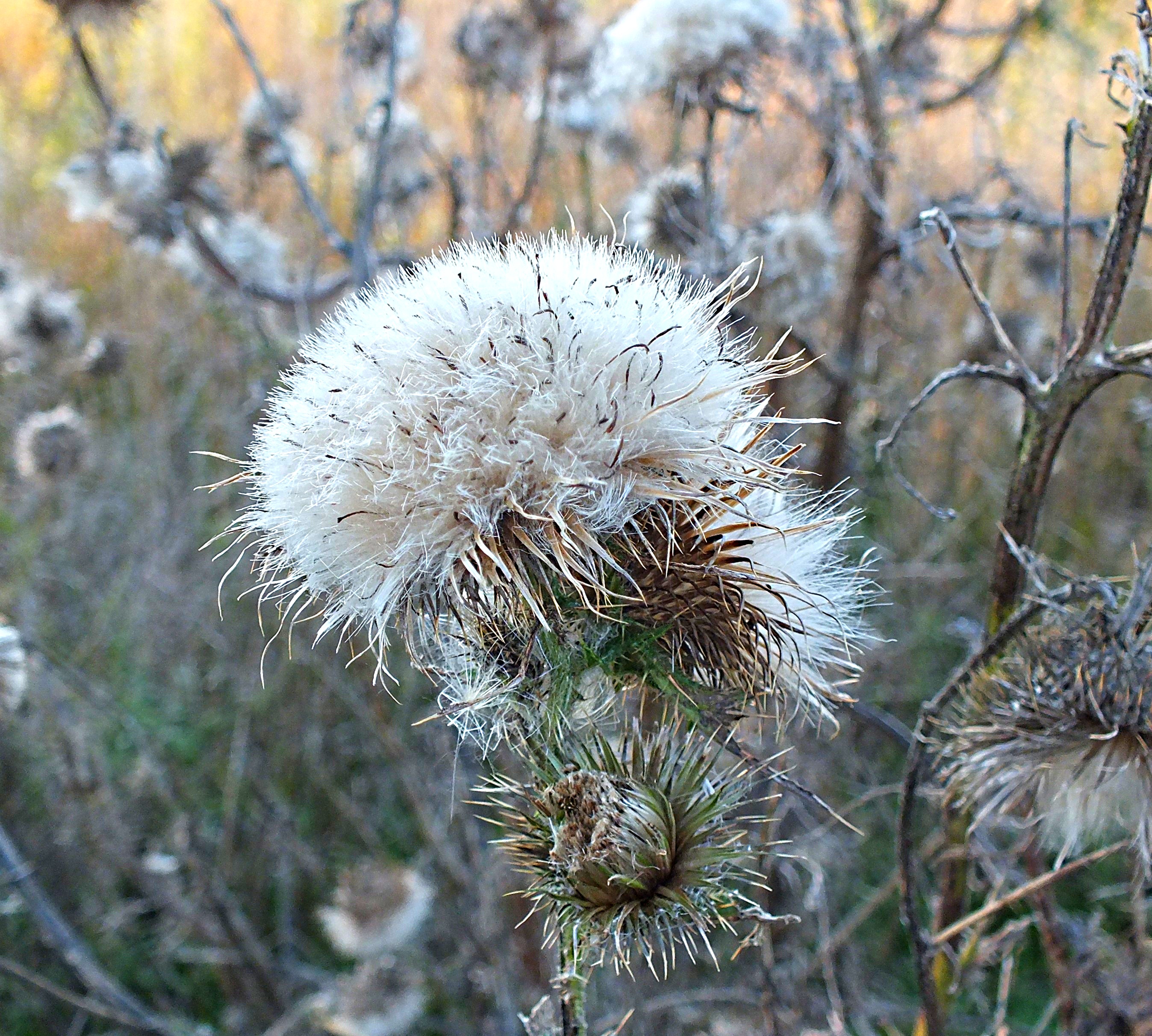
[This is a fluffy, seeding Thistle Plant full of Thistle Plant down. Some insects will nest in a Thistle Plant’s down to keep comfortable. Goldfinches (i.e. little, yellow, wild birds) use the Thistle Plant down for the main material for nest construction; they, additionally, relish Thistle seed.]
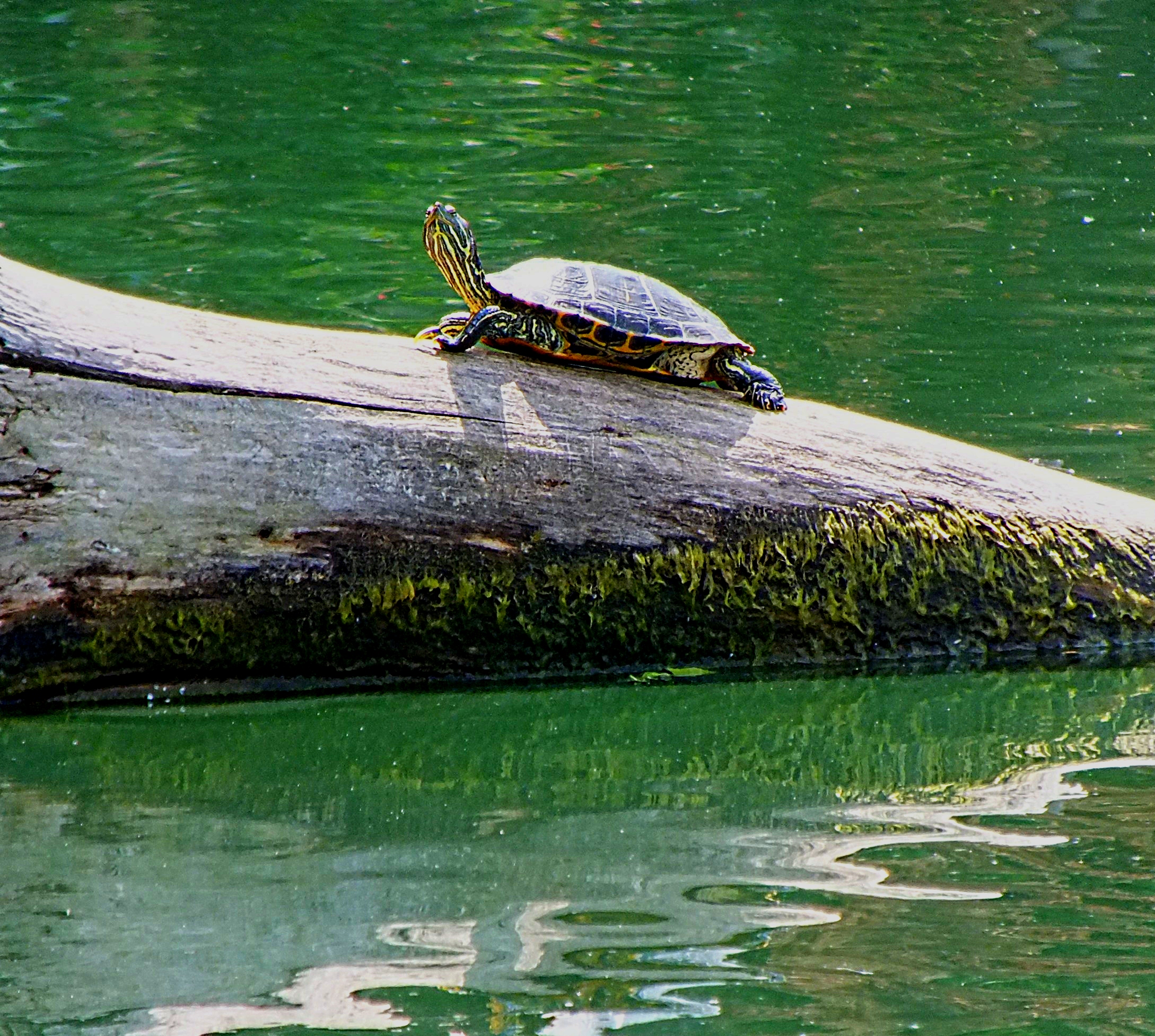
Painted turtles really haven’t been painted; enlightened human beings don’t glow in the dark.
.
[Basking occurs when Painted Turtles leave the water to soak up sunlight. This allows their bodies to warm, since Painted Turtles – like all turtles – are cold-blooded, and helps eliminate parasites, such as leeches, which do not like dryness nor sunlight. Basking is also essential in the synthesis of vitamin D3.]
True love goes beyond the affinity due to attractiveness. Love the less beautiful (that are also truly beautiful).
.
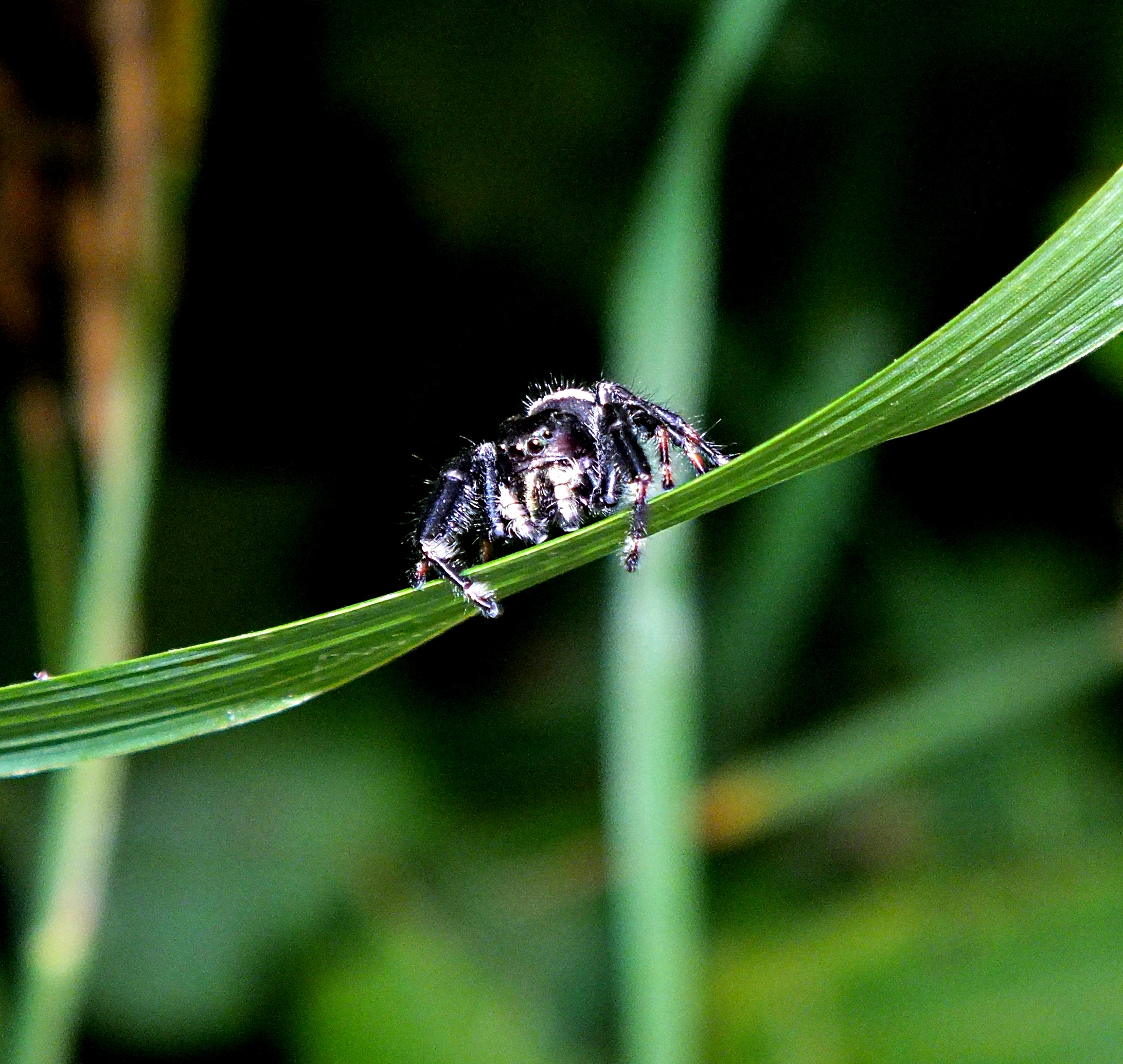
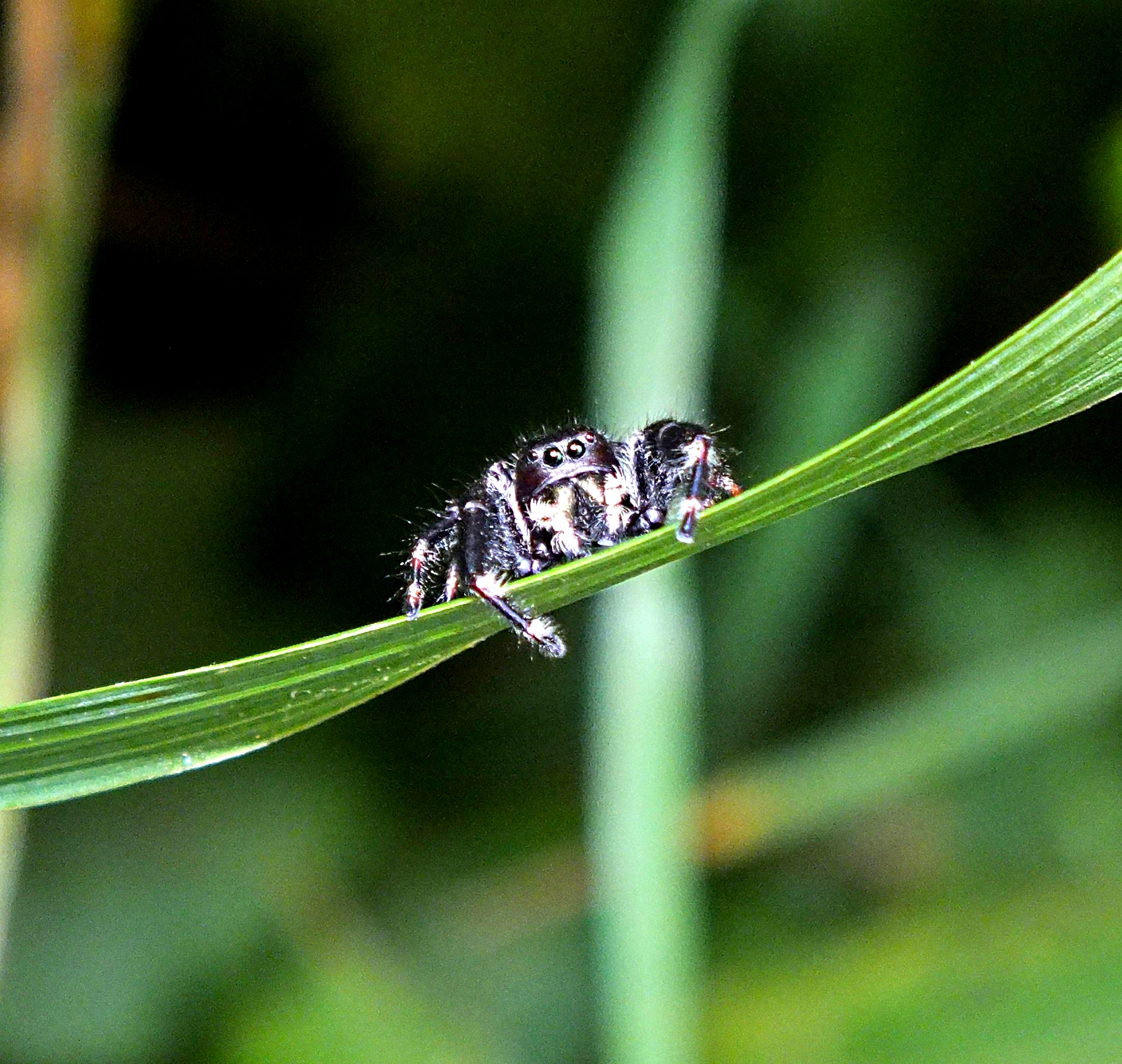
[This is a Phidippus Jumping Spider. It’s difficult to sneak up on a Jumping Spider; their multiple eyes easily detect others in their environment. They are harmless to human beings. I have some Jumping Spiders in 50 million year old amber which I will post at a later time.
Additional note: I will be posting more spiders (and similar creatures) in the Halloween month of October. It is neat that they are part of an old Halloween tradition (that is fun for kids). However, it is unfortunate that many children grow up associating spiders with “being frightened” and as “terrible creatures to be horrified of.” As the late, superb naturalist, Steve Irwin often propounded, spiders and snakes can indeed be seen to be majestic, marvelous animals, truly beautiful in their own ways. We must, as Steve Irwin so graciously suggested before his untimely passing, be far better caretakers of Mother Earth.]
Tightrope climber! (Jumping Spider) (1) Photo by Thomas Peace 2014
Tightrope climber! (Jumping Spider) (2) Photo by Thomas Peace 2014
The lucidity of insight shatters through the shady recesses of the stale known.
.
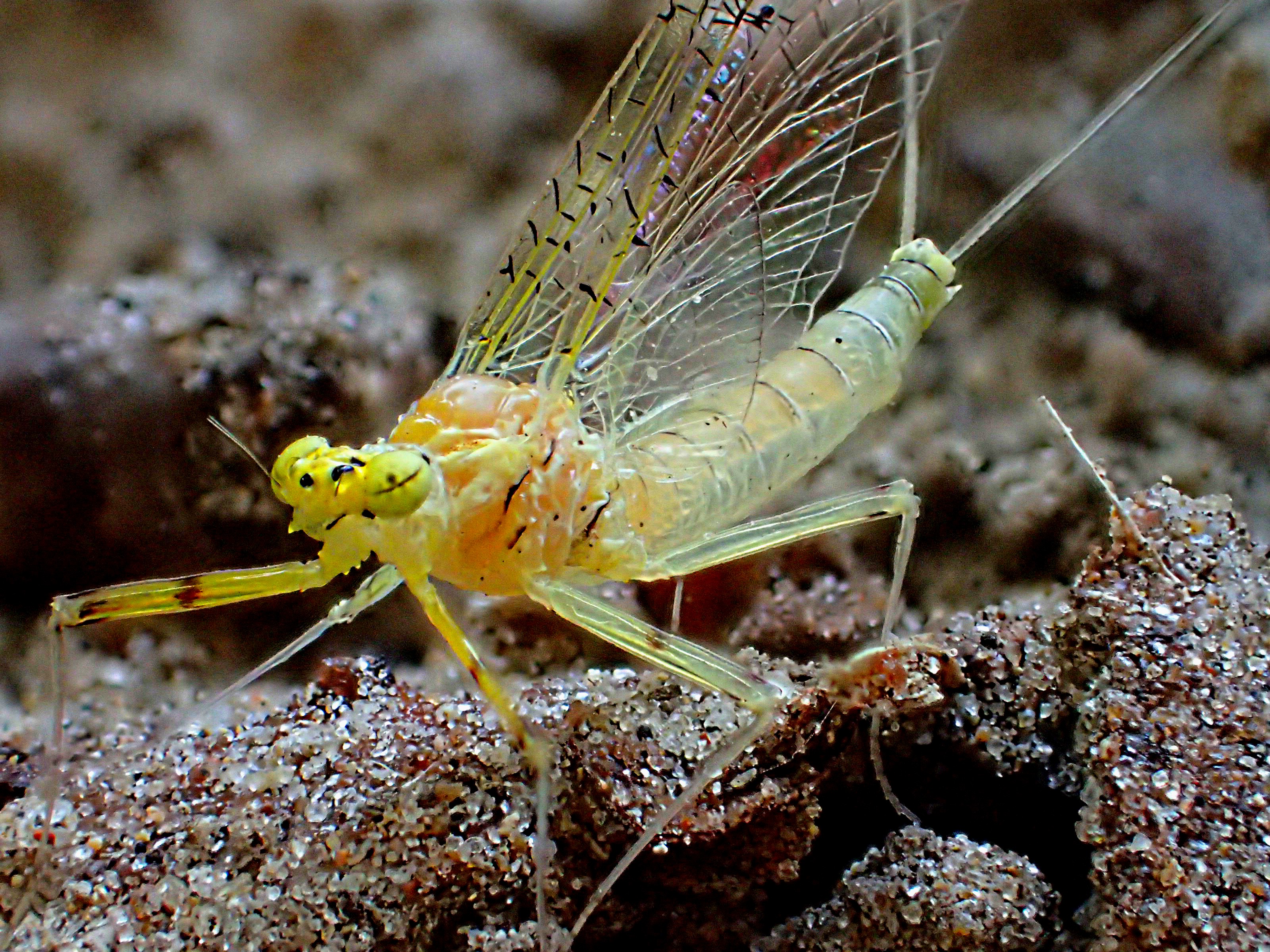
[Golden Mayflies do not feed. With Golden Mayflies, the young naiad nymphs eat diatoms and other algae from the bottom mud and submerged vegetation of lakes, rivers, and ponds.]
[Many Wolf Spiders hunt during the day. Wolf Spiders have excellent vision and a highly developed sense of touch. Male Wolf Spiders wave and motion with their large, often hairy pedipalps in a rhythmic pattern as they approach suitable female mates.
Additional note: I will be posting more spiders (and similar creatures) in the Halloween month of October. It is neat that they are part of an old Halloween tradition (that is fun for kids). However, it is unfortunate that many children grow up associating spiders with “being frightened” and as “terrible creatures to be horrified of.” As the late, superb naturalist, Steve Irwin often propounded, spiders and snakes can indeed be seen to be majestic, marvelous animals, truly beautiful in their own ways. We must, as Steve Irwin so graciously suggested before his untimely passing, be far better caretakers of Mother Earth.]
The better to see you with, my dear! Photo by Thomas Peace 2014
Poise includes intelligence, compassion, awareness, humor, and balance.
.
[This lone Hover Fly is feeding on a wildflower of Woodland Lettuce (Lactuca floridana). It appears as if the Hover Fly has been feeding on his favorite type of plant for some time; he seems to be taking on the colors of the flower! (I’ve got to stop eating broccoli almost every day!)]
Many are caught in the limitation and web of mundane time; very few, unfortunately, go beyond that barrier.
.
[This spider, in our backyard (down by the river bank), won the lottery! This spider is an Orb-weaver that is likely a Barn Spider (due, partly, to the whitish hairs on its legs). Orb-weaver spider webs are dismantled (consumed) by the spider at the end of each night, and are rebuilt early the next evening; but this spider had too much to consume! She hit the jackpot! Count them all!
Additional note: I will be posting more spiders (and similar creatures) in the Halloween month of October. It is neat that they are part of an old Halloween tradition (that is fun for kids). However, it is unfortunate that many children grow up associating spiders with “being frightened” and as “terrible creatures to be horrified of.” As the late, superb naturalist, Steve Irwin often propounded, spiders and snakes can indeed be seen to be majestic, marvelous animals, truly beautiful in their own ways. We must, as Steve Irwin so graciously suggested before his untimely passing, be far better caretakers of Mother Earth.]
Orb Weaver Spider’s Bonanza Catch (1). Photo by Thomas Peace 2014
Orb Weaver Spider’s Bonanza Catch (2). Photo by Thomas Peace 2014
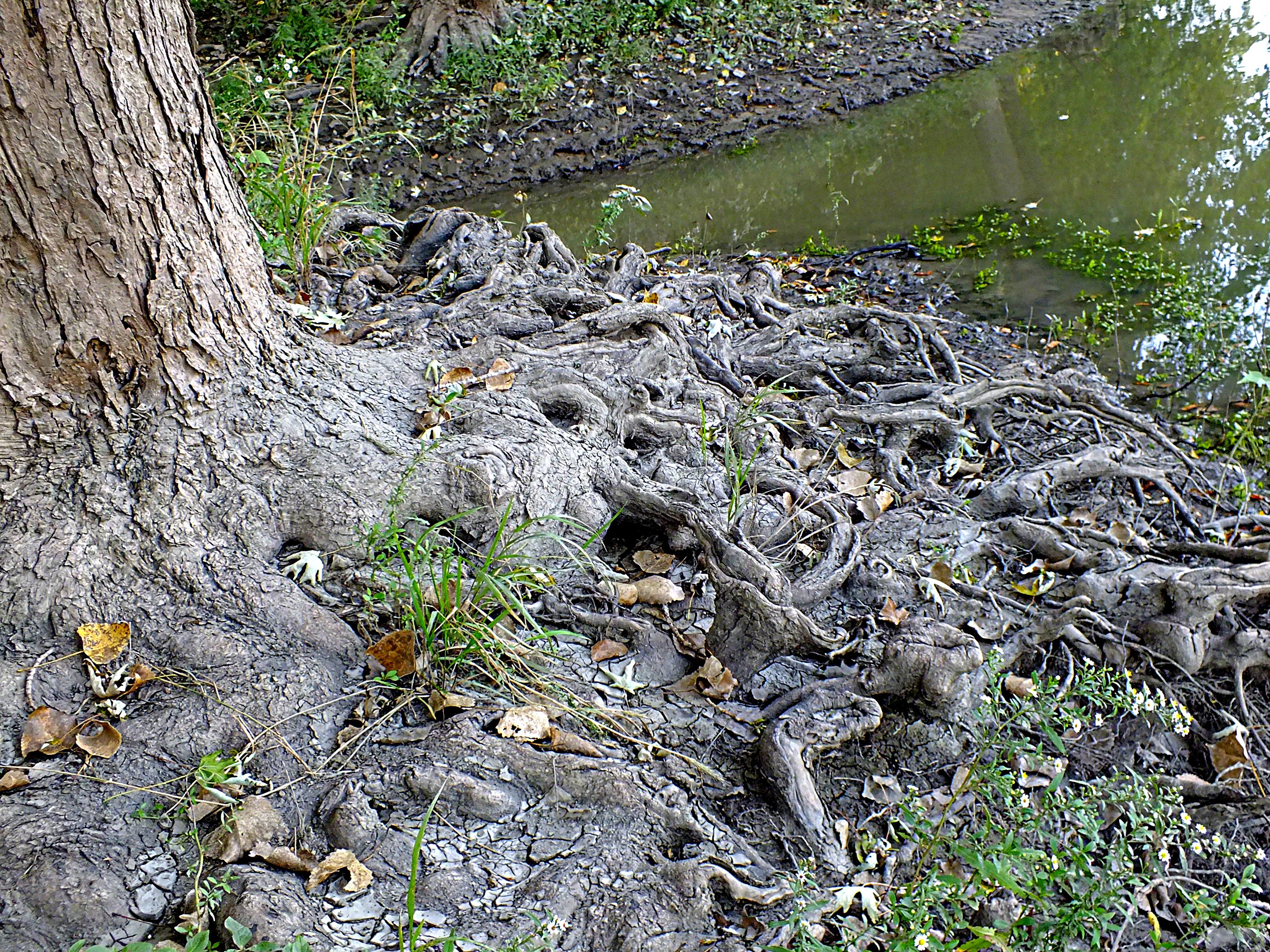
Let the lowly roots reach out through the water (and the boat) and flower into something truly lofty and sublime beyond all the endless mediocrity.
.
[Watch the following YouTube music-video also.
Roots To Branches (Lyrics by Jethro Tull):
Words get written. Words get twisted.
Old meanings move in the drift of time.
Lift the flickering torches. See gentle shadows change
the features of the faces cut in unmoving stone.
Bad mouth on a prayer day, hope no one’s listening.
Roots down in the wet clay, branches glistening.
True disciples carrying that message
to color just a little with their personal touch.
Home-spun fancy weavers and naked half-believers
Crusades and creeds descend like fiery flakes of snow.
Bad mouth on a prayer day, hope no one’s listening.
Roots down in the wet clay, branches glistening.
In wet and windy priest-holes. Grand in vast cathedrals.
High on lofty minarets or in the temples of doom.
I hope the old man’s got his face on.
He’d better be some quick change artist.
Suffer little children to make their minds up soon.
Bad mouth on a prayer day, hope no one’s listening.
Roots down in the wet clay, branches glistening. ]
Don’t just pick flowers or buy cut flowers… enjoy wildflowers or grow flowers!
.
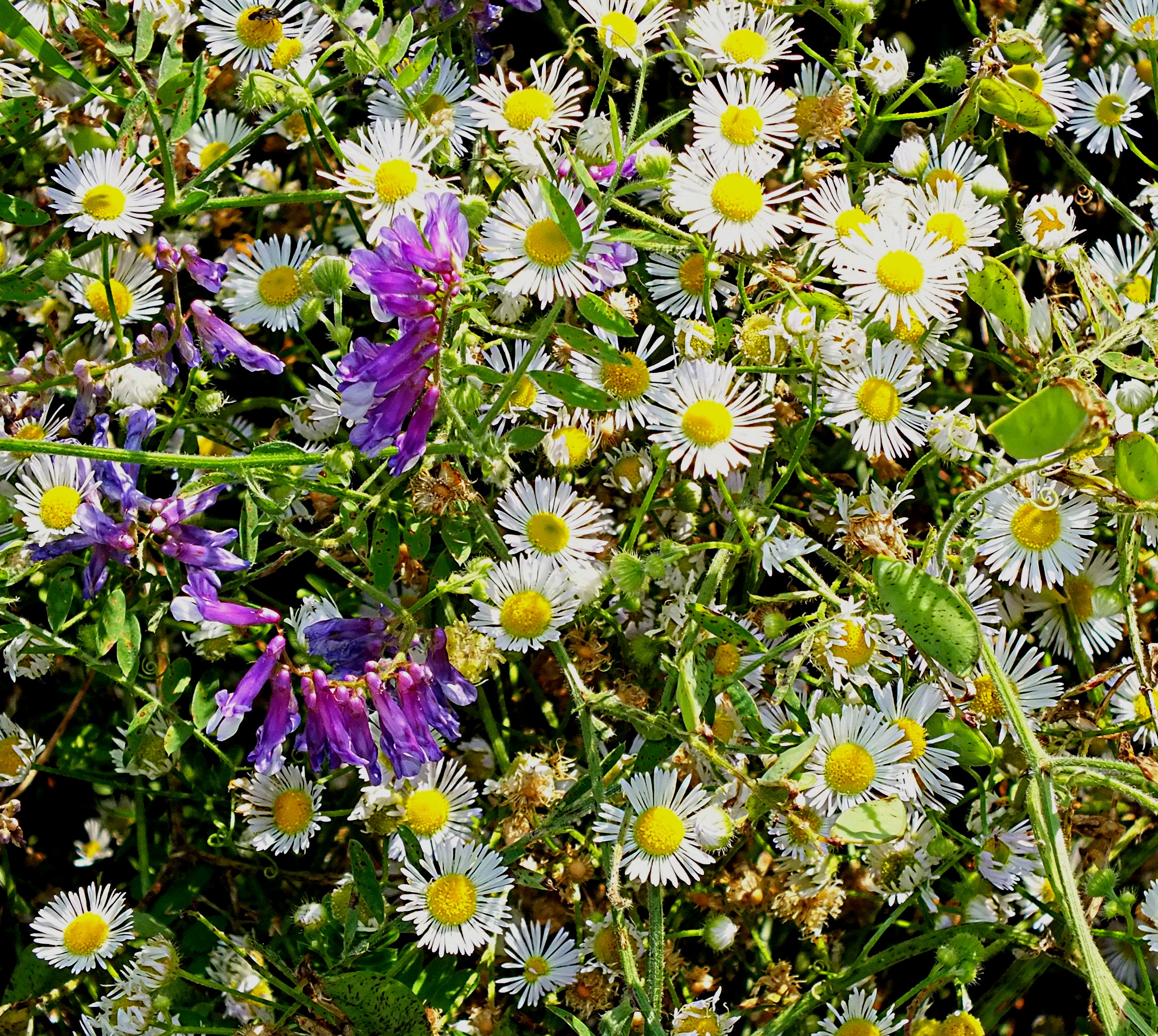
[These are wildflowers. The white wildflowers are Robin’s Plantain. The purplish wildflowers are American Vetch. The American Vetch is less common than the Robin’s Plantain. (There is an insect in this photograph.)]
American Vetch & Robin’s Plantain. Photo by Thomas Peace 2014
Fear — unless there is an immediate physical danger in the environment — is often based on patterns and images in (and “as”) time that are projected as “what might be.”
.
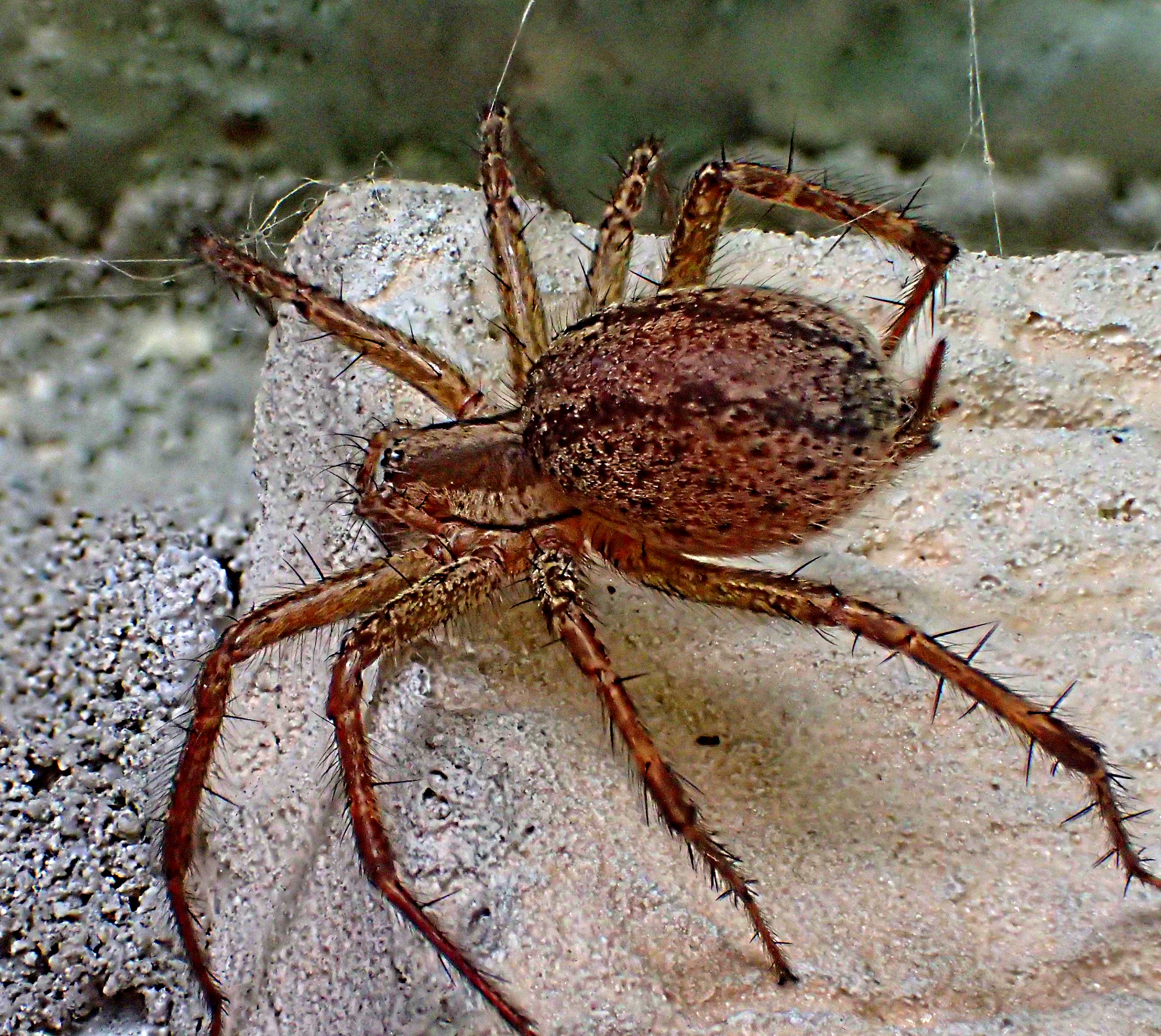
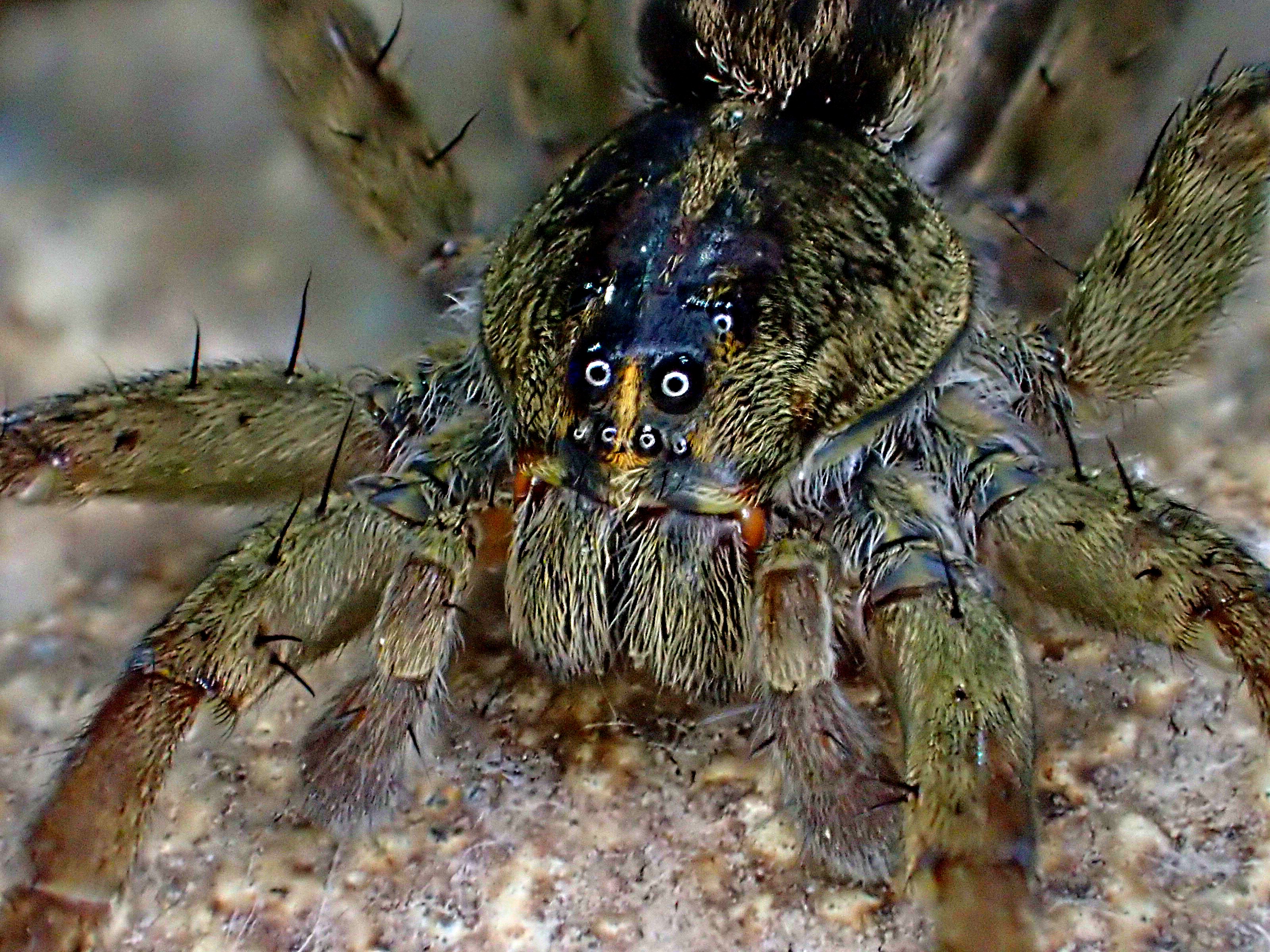
[Nursery Web Spiders may sit quietly for hours, legs spread out on vegetation, a large rock, or on a boat dock… or they may actively hunt in vegetation. Nursery Web Spiders have excellent vision.
Additional Note: I will be posting more spiders (and similar creatures) in the Halloween month of October. It is neat that they are part of an old Halloween tradition (that is fun for kids). However, it is unfortunate that many children grow up associating spiders with “being frightened” and as “terrible creatures to be horrified of.” As the late, superb naturalist, Steve Irwin often propounded, spiders and snakes can indeed be seen to be majestic, marvelous animals, truly beautiful in their own ways. We must, as Steve Irwin so graciously suggested before his untimely passing, be far better caretakers of Mother Earth.]
Societies and authorities weave an intricate, complex web. Unwind into what is simple, pure, and unadulterated!
.
[This is a reddish Harvestman. Notice the shadow of the Havestman upon the leaf. Harvestmen are arachnids, but they are not spiders and do not make webs to catch insects. Harvestmen are also called Daddy-long-legs. There are 200 species of Harvestmen in North America… 4,500 to 5,000 worldwide. They are harmless to human beings (and eat many pests, such as flies).
Additional note: I will be posting more spiders (and similar creatures) in the Halloween month of October. It is neat that they are part of an old Halloween tradition (that is fun for kids). However, it is unfortunate that many children grow up associating spiders with “being frightened” and as “terrible creatures to be horrified of.” As the late, superb naturalist, Steve Irwin often propounded, spiders and snakes can indeed be seen to be majestic, marvelous animals, truly beautiful in their own ways. We must, as Steve Irwin so graciously suggested before his untimely passing, be far better caretakers of Mother Earth.]
It is extremely easy to “fit in” to what others of authority maintain is normal and acceptable. Don’t be their shadow.
.
[Spider Silhouette.
I will be posting more spiders (and similar creatures) in the Halloween month of October. It is neat that they are part of an old Halloween tradition (that is fun for kids). However, it is unfortunate that many children grow up associating spiders with “being frightened” and as “terrible creatures to be horrified of.” As the late, superb naturalist, Steve Irwin often propounded, spiders and snakes can indeed be seen to be majestic, marvelous animals, truly beautiful in their own ways. Perhaps what’s truly horrifying is human beings who do not care enough (and who do not do enough) about the environment. We must, as Steve Irwin so graciously suggested before his untimely passing, be far better caretakers of Mother Earth.]
Watch it… sometimes your hobby becomes so intense that it begins to pursue you!
.
[I went out to the backyard (to the bird-feeder) to get a few photos of birds, for a change of pace from all of those insects that I am perpetually pursuing. The following is what came to the bird-feeder. Sorry about that! I’ve been chasing insects for so long, I think they may be following me home! It’s, by the way, a Painted Lady butterfly. Painted Lady butterflies do not eat bird seed… but they do like to be the center of attention! 😉 ]
Just another egotist! (Painted Lady butterfly) Photo by Thomas Peace 2014
The implicate, illimitable order always exists beyond limited, crass confinement.
.
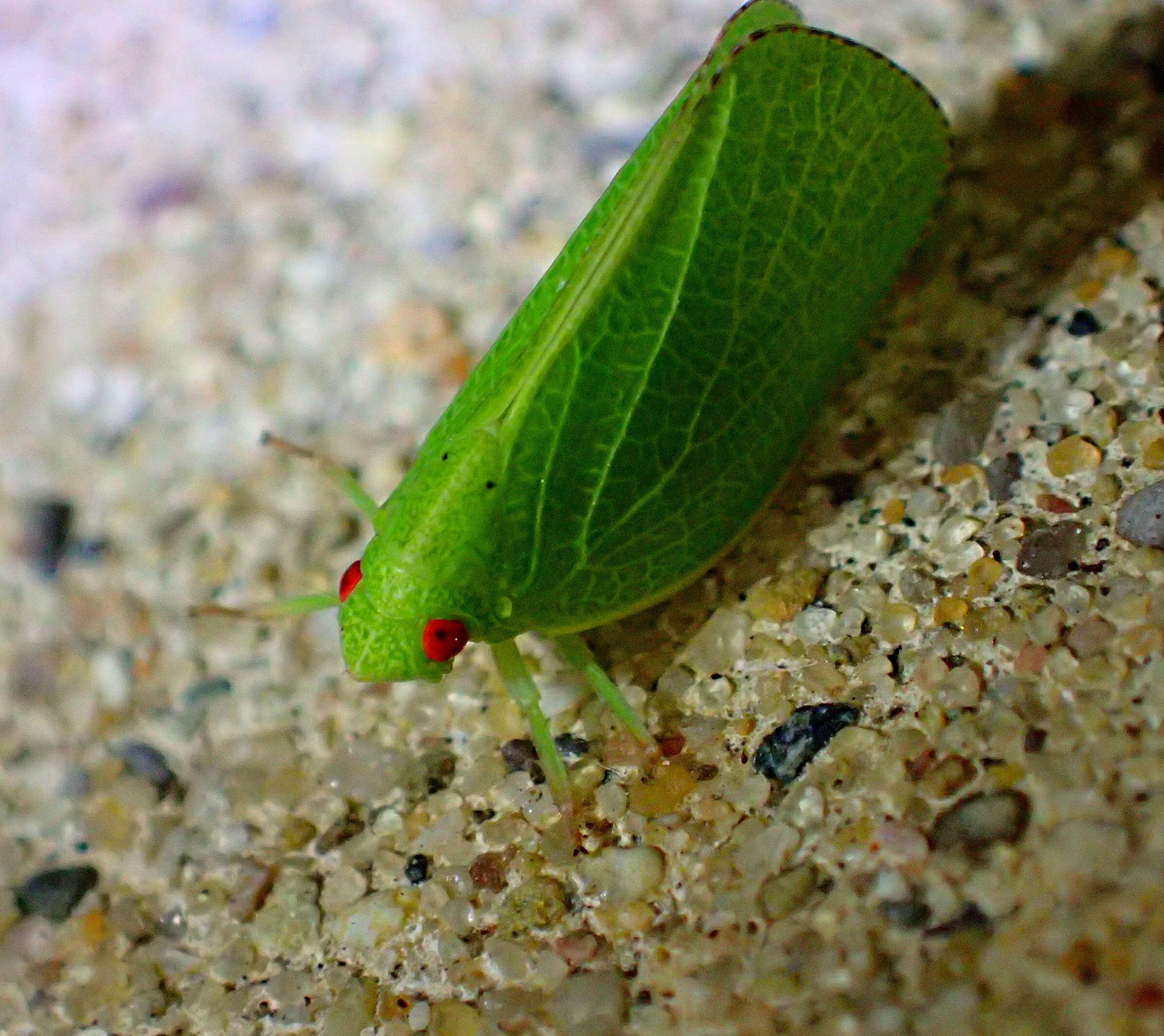
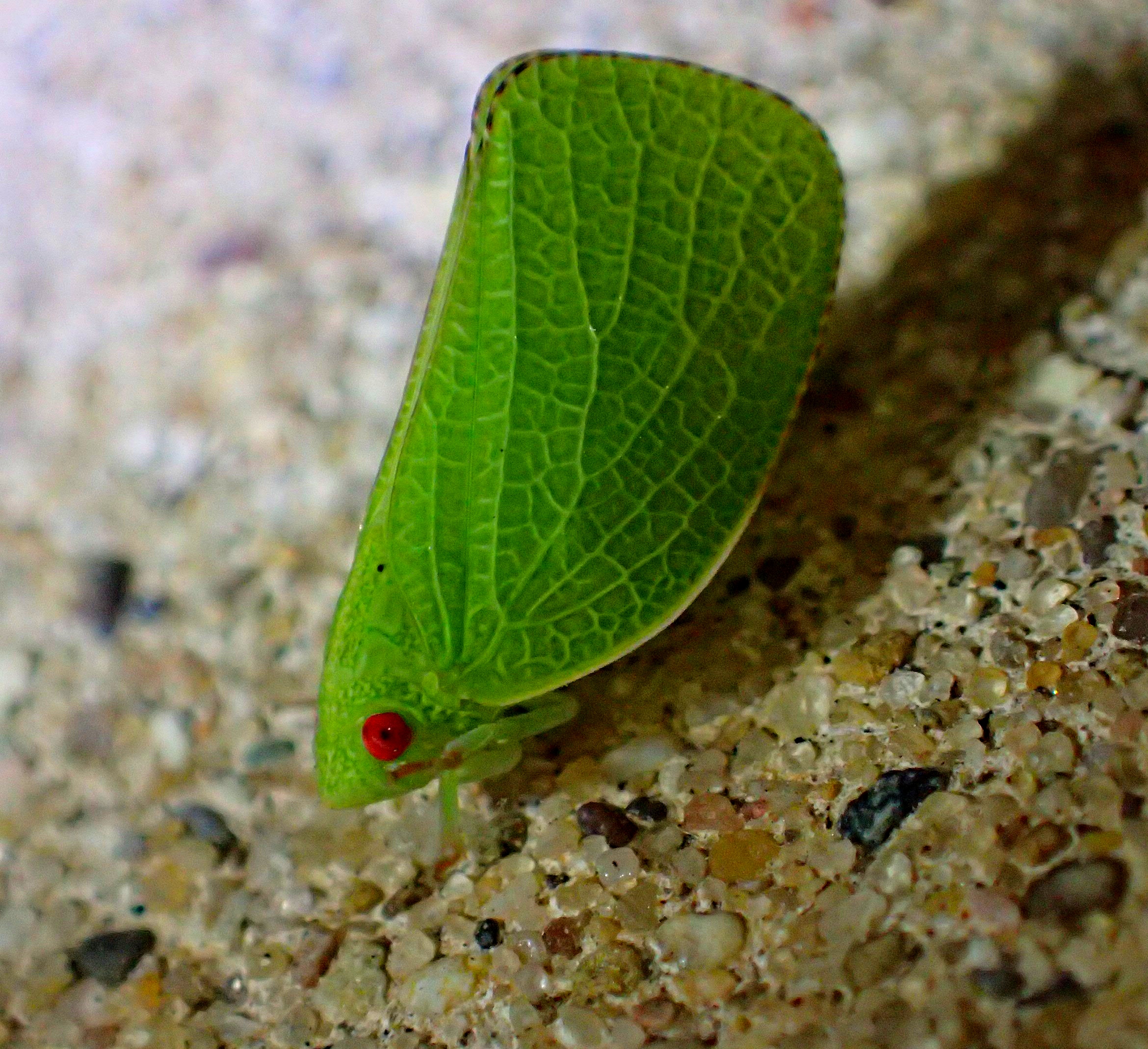
[This is a Red-eyed Planthopper, Acanalonia conica. The Planthopper hops with gigantic leaps to get away from danger. This rapid form of transportation is only used when it needs to make a quick getaway, though. Usually, Planthoppers move very slowly so as not to attract any unwanted attention from birds or other predators. I noticed this one temporarily resting on our cement porch; then I quickly ran in the house to grab my camera!]
Planthopper. Enlightenment personified (1). Photo by Thomas Peace 2014
Planthopper. Enlightenment personified (2). Photo by Thomas Peace 2014





















 Tom's Nature-up-close Photography and Mindfulness Blog