
.
.
.
.
.
. We humans need to do far more with regard to population control measures (to save our very small and fragile planet).
.
.

Hover Flies (1) by Thomas Peace 2013

Hover Flies (2) by Thomas Peace 2013
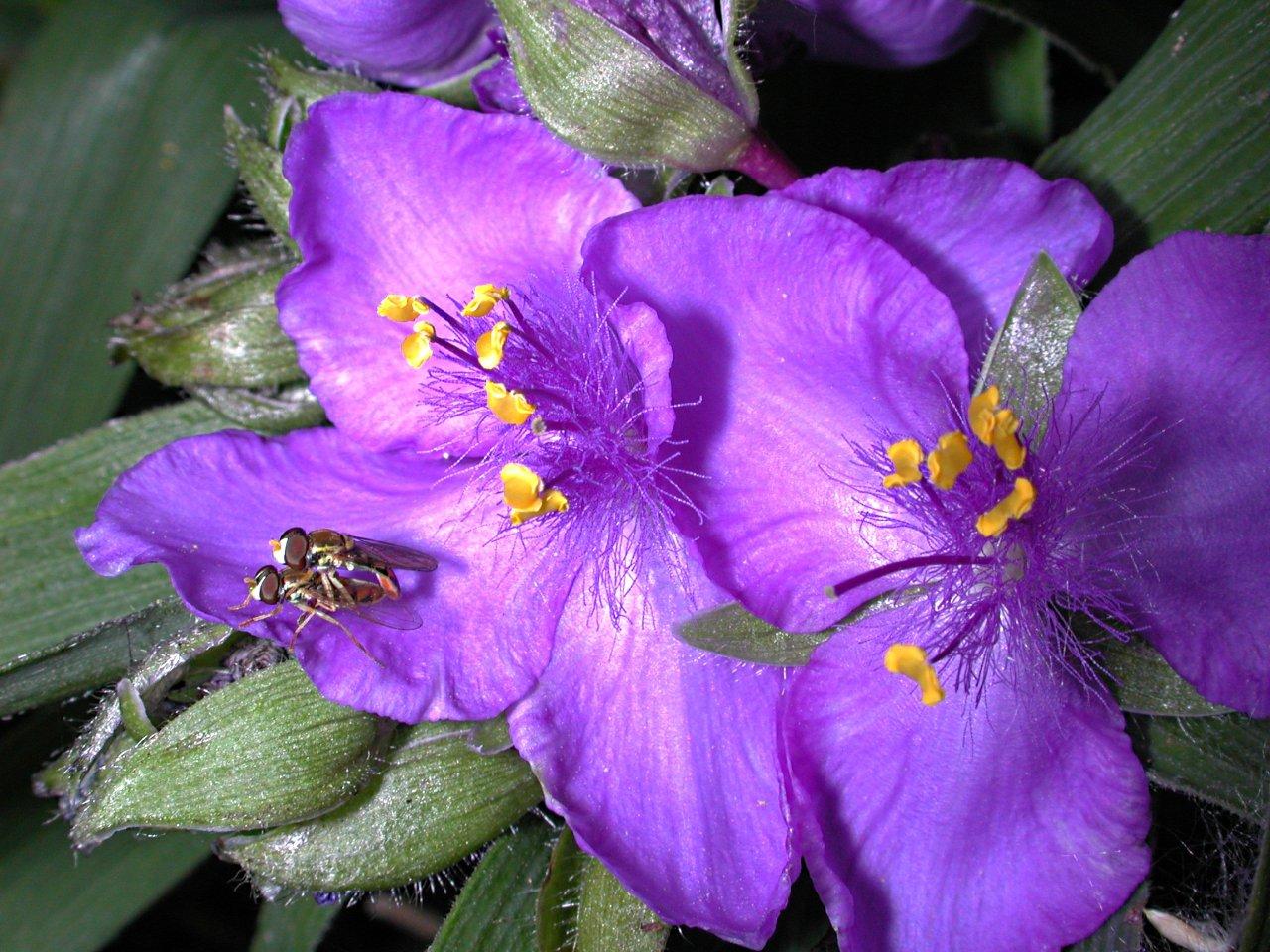
Hover Flies (3) by Thomas Peace 2013
.
.
.
.
.
. We humans need to do far more with regard to population control measures (to save our very small and fragile planet).
.
.
Hover Flies (1) by Thomas Peace 2013
Hover Flies (2) by Thomas Peace 2013
Hover Flies (3) by Thomas Peace 2013

.
.
.
.
.
. To effortlessly see life joyfully is to look silently without the accumulated baggage of the past.
.
.

Grand Haven (4) by Thomas Peace 2013
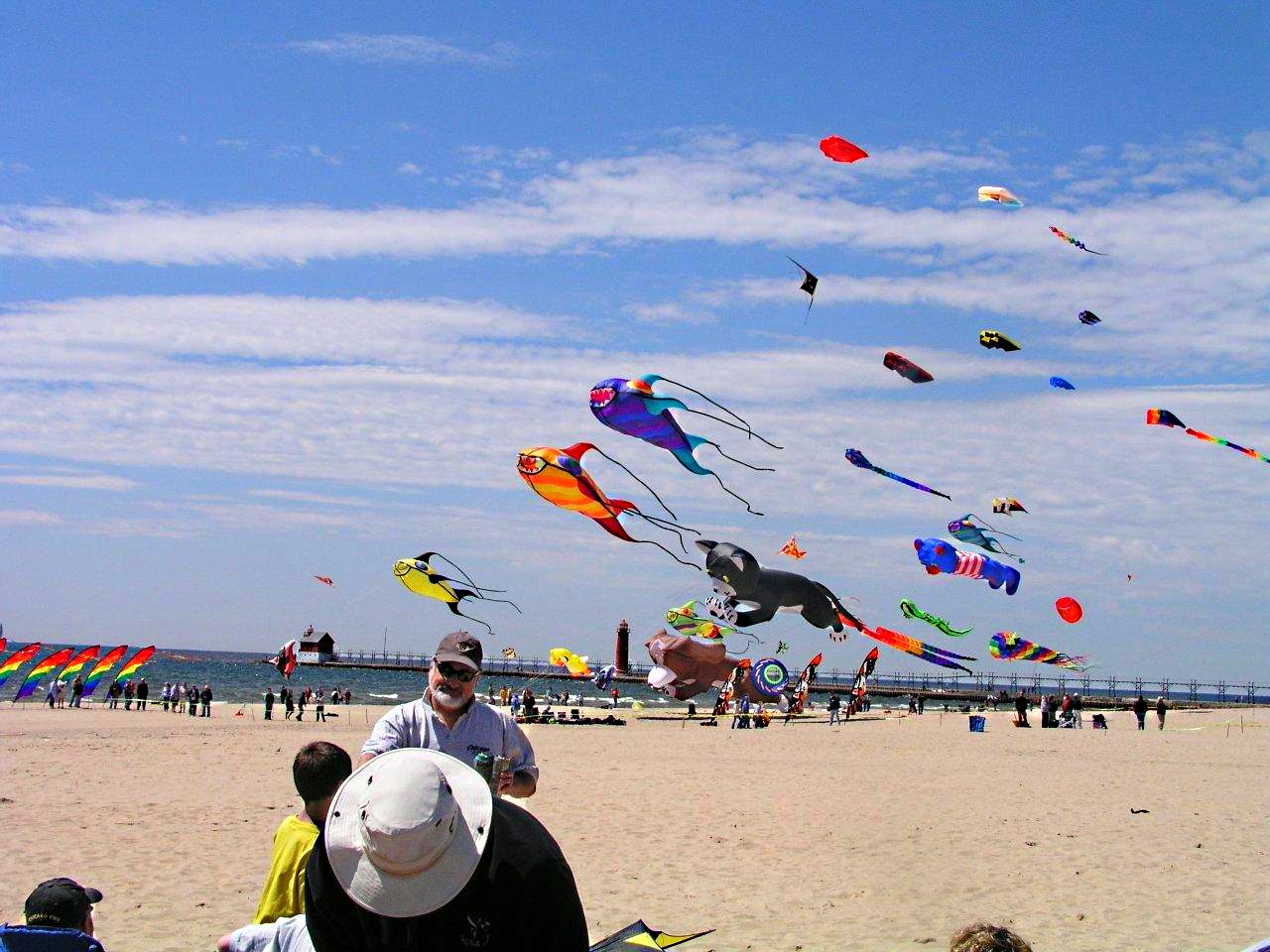

Grand Haven (6) by Thomas Peace 2013

Grand Haven (7) by Thomas Peace 2013
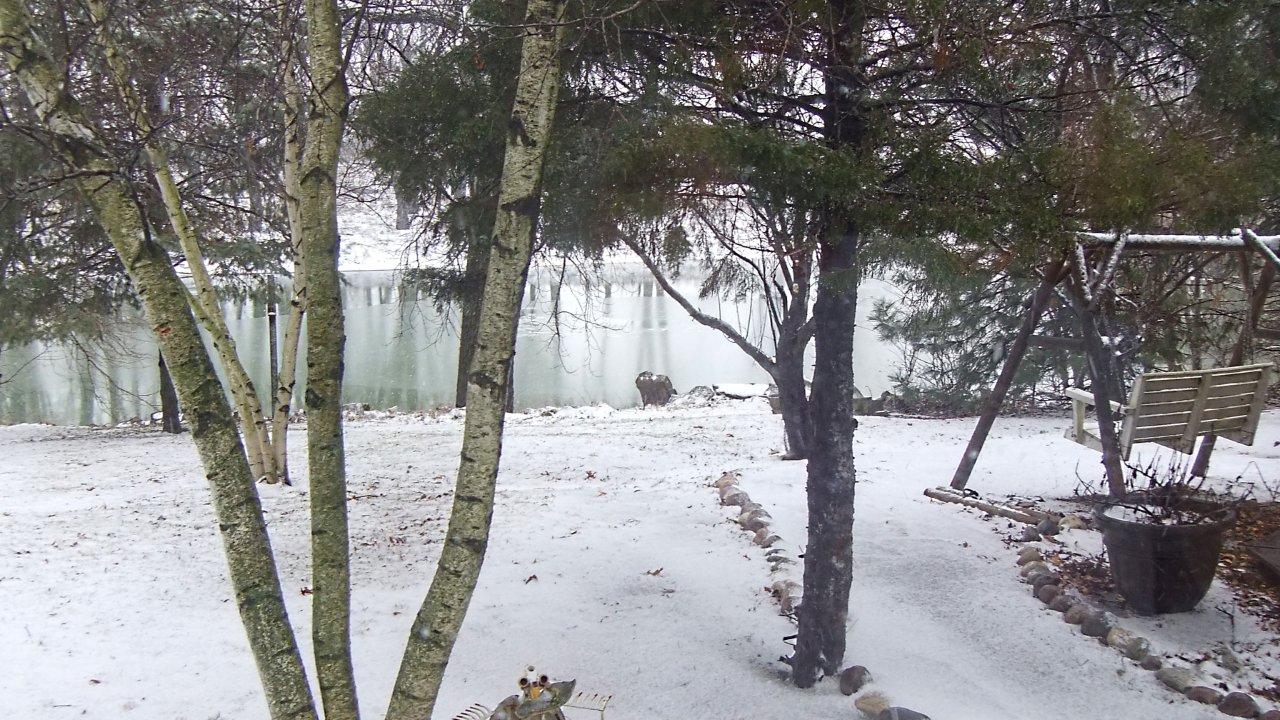
The following is a short (simple) video of it snowing where we live… along an Illinois river bank; a couple of photos are additionally included. Snow, even though it means the absence of all my favorite bugs and creatures (for a while), is cool (in more ways than one)! The snow was quite beautiful… as it always is!
Each snowflake is unique, not like the others; yet, from a distance, they all look rather the same. Each of us (humans) is unique; however, in a big way, we are all the same. We — each and every one of us — have hopes, fears, desires, and favorite people whom we love and cherish. However, each of our hopes, fears, desires, and favorite people are different from everyone else’s. We can even be considerably more unique when we stop blindly following our flaky leaders — who don’t have a clue about where they’re going (and drifting to) anyway — and, instead, independently look at life beyond what we’ve merely been molded and shaped to see.
from Emily Dickinson:
It sifts from Leaden Sieves –
It powders all the Wood.
It fills with Alabaster Wool
The Wrinkles of the Road –
It makes an even Face
Of Mountain, and of Plain –
Unbroken Forehead from the East
Unto the East again –
It reaches to the Fence –
It wraps it Rail by Rail
Till it is lost in Fleeces –
It deals Celestial Veil
To Stump, and Stack – and Stem –
A Summer’s empty Room –
Acres of Joints, where Harvests were,
Recordless, but for them –
It Ruffles Wrists of Posts
As Ankles of a Queen –
Then stills it’s Artisans – like Ghosts –
Denying they have been –

Winter Snowfall (1) by Thomas Peace 2013
Winter Snowfall (2) by Thomas Peace 2013
***************************************************************
***************************************************************

.
.
.
.
. To reflect on something — merely with images from the mind — may not be to see it (fully) in actuality. When one looks from (and “as”) images, one is looking from (or through) what one was taught. What one was taught is always “of the past”; therefore, what one sees through (and with) this medium… is always a distorted, partial view of what actually is. If one looks by way of “what one was taught to see”… one sees things as one was taught to see them; in actuality, one sees what one was taught. The “perceiver” and “the perception” are not necessarily two different/separate things. If the perception is a reflection of what one “has learned,” it is part of the absorbed and memorized constitution of the “perceiver.” When such a “perceiver” perceives, he (or she) is looking (at least partially) from (and “as”) what he is (i.e., from what he or she has absorbed via learned processes). Looking at all things by way of “what one was taught” is a form of mental reflection (learned from others). It may be that the truly sacred cannot ever be truly seen by what are mere reflections… not even partially (although perhaps hints of it can be seen in such a way). That is one big reason why the sacred seems so elusive to so many. Most merely reflect on things — and look at things — from mere symbolic representations that they were taught. All symbolic representations, no matter how “intelligent” they may seem — and no matter how helpful they may be — are, intrinsically, distortions. This doesn’t at all mean that one should give up on “thinking, reflecting, and learning”; those are all very useful tools. However, they are only tools; they need not be what the essence of the organism must always be. Over-identifying with the tools may make significant waves in the waters (of the mind) that never allow direct perception.
March is coming. No doubt, the river must soon be (in a reactive) flowing… just like most humans are fixated in a reactive flowing. An overabundance of reactive flowing may not easily allow for a direct perception of truth. Just as each surface wave of a turbulent (spring) river reflects things in a distorted, fragmentary way… so the essence of each thought is constituted of fragmentation and a significant degree of distortion. Time is as a river. Perhaps, in March, one will stand on the bank of the river and remember something about the call of a certain bird. However, it will not really be the call of a certain bird that occurs again; it will only be a virtual thing… as all thoughts are. (Don’t merely be satisfied with the virtual.)
.
.
.
from Wallace Stevens:
NOT IDEAS ABOUT THE THING
BUT THE THING ITSELF
At the earliest ending of winter,
In March, a scrawny cry from outside
Seemed like a sound in his mind.
He knew that he heard it,
A bird’s cry, at daylight or before,
In the early March wind.
The sun was rising at six,
No longer a battered panache above snow…
It would have been outside.
It was not from the vast ventriloquism
Of sleep’s faded paper-mache…
The sun was coming from the outside.
That scrawny cry–It was
A chorister whose c preceded the choir.
It was part of the colossal sun,
Surrounded by its choral rings,
Still far away. It was like
A new knowledge of reality.
.
.
.****************************************************************
A photo of the river bank that we live on; as one was taking photos, a goose, across the river, was calling out. (The river and this article may be something to reflect on.) (Left click on image to enlarge; hit left “return arrow” to return.)

Winter River by Thomas Peace 2013
**********************************************************************
**********************************************************************

.
.
.
.
. When I was rather young — which wasn’t just a few months ago — I was determined to search for the actual truth that lies behind the essence of everything. The consequences of what I found did not matter to me. I didn’t want to “sugar-coat” what I might find… and turn it into something more tolerable (if it turned out to somehow be unpleasant). One wanted to actually perceive “what was behind everything” without distortion, without concern as to whether my personal life had any lasting significance or was merely an evanescent flash soon to be diluted. What was important was the “seeing” of the truth without distortion, without altering it into something that might be more comfortable (though fictional). To approach the “actual truth of everything,” one must put away ones desires (or stored patterns) of “how things should be,” or “what would be comfortable,” or “what one was told about things (by others)”… and perception must be undistorted. If we approach the truth with “what we’ve been told,” or with “how things ought to be,” we’ll definitely find something, but it won’t be the truth (though we may erroneously accept that it is). To go towards the truth — without any baggage from the past — one must go without fear of the consequences of what one might find. (Carry a lot of baggage… and you’ll fall through the thin ice… as most people do.)
.
.
.
. from Stephen Crane:
.
.
. Mystic shadow, bending near me,
. Who art thou?
. Whence come ye?
. And — tell me — is it fair
. Or is the truth bitter as eaten fire?
. Tell me!
. Fear not that I should quaver,
. For I dare — I dare.
. Then, tell me!
.
.
.
. Sheets of ice of the partially frozen river that we live on. (Left click on image to enlarge; hit left “return arrow” to return.)
.
.

Ice on River (1) by Thomas Peace 2013

Ice on River (2) by Thomas Peace 2013
**********************************************************
**********************************************************

.
.
.
.
.
. Curiously, most human beings function within the very significant and important domain of time… yet they have no idea about the fundamental essence and nature of time; nor do they realize the opportunity of going beyond it. Though it sounds mysterious and rather supernatural — it isn’t — it is a fact that a truly enlightened being can (once and a while) exist in (and “with”) a timelessness that is beyond the limited and unlimited field of time.
.
.
. excerpt from E. E. Cummings:
.
.
. what time is it?it is by every star
. a different time,and each most falsely true;
. or so subhuman superminds declare
.
. —nor all their times encompass me and you:
.
. when are we never,but forever now
. (hosts of eternity;not guests of seem)
. believe me,dear,clocks have enough to do
.
. without confusing timelessness and time.
.
.
.
******************************************************************************
For a limited time (pun intended) my book about time and eternity is being offered as a signed copy with free shipping. Go to:
******************************************************************************
The following pictures are photos that I took of ice along the river bank that we live on. These look much better expanded, so… (Left click on the pictures to enlarge them; hit the left “return arrow” to return.)
******************************************************************************
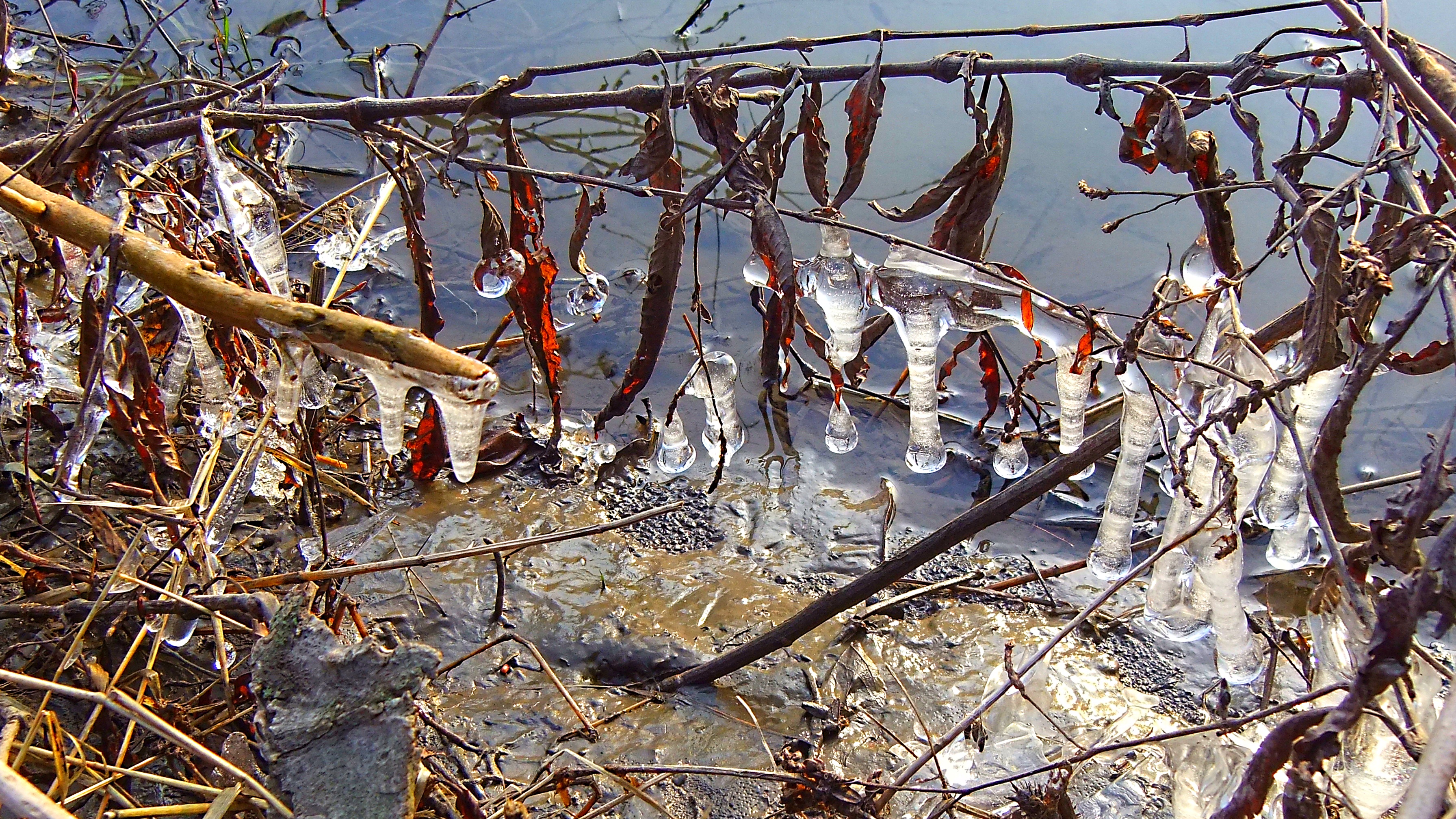
Frozen in Time (1) by Thomas Peace 2013

Frozen in Time (3) by Thomas Peace 2013

Frozen in Time (2) by Thomas Peace 2013
.

.
.
.
.
. Wisdom is one of the most important things in life. For without wisdom, one’s life may be essentially like an empty shell; such a life would very possibly be like a light bulb that has no illumination; it would be like a caterpillar that never changes into a true butterfly. Without wisdom, one may, indeed, lead a very comfortable life, a very financially secure, safe, and luxurious life. However, without that inner profundity (of wisdom)… such an outwardly appearing “successful” life is likely (largely) a rather cadaverous existence. Without true compassion, heartfelt awareness for all, deep insight, and non-fragmented perception… deep wisdom is not. One cannot have true wisdom if one merely fits in nicely into the indifferent edicts of society, while languidly allowing things to remain as they are. The vast disorder (of society) may seem to be overwhelming; but a little bit of pure order can have tremendous power. Changing the way one lives and being a better example is one way to act. Wisdom acts; if it doesn’t often act — if it sits around merely comfortably reacting — it isn’t wisdom. It isn’t easy to be in the minority (different from so many who hardly ever care); but not to peacefully stand up and do something against indifference, suffering, disorder, and tyranny is nonsensical.
******************************************************************************************
from Stephen Crane:
.
.
.
Once I saw mountains angry,
And ranged in battle-front.
Against them stood a little man;
Aye, he was no bigger than my finger.
I laughed, and spoke to one near me,
“Will he prevail?”
“Surely,” replied this other;
“His grandfathers beat them many times.”
Then did I see much virtue in grandfathers —
At least, for the little man
Who stood against the mountains.
.
.
***********************************************************************
For a limited time, signed copies of my book are available with free shipping; go to:
***********************************************************************
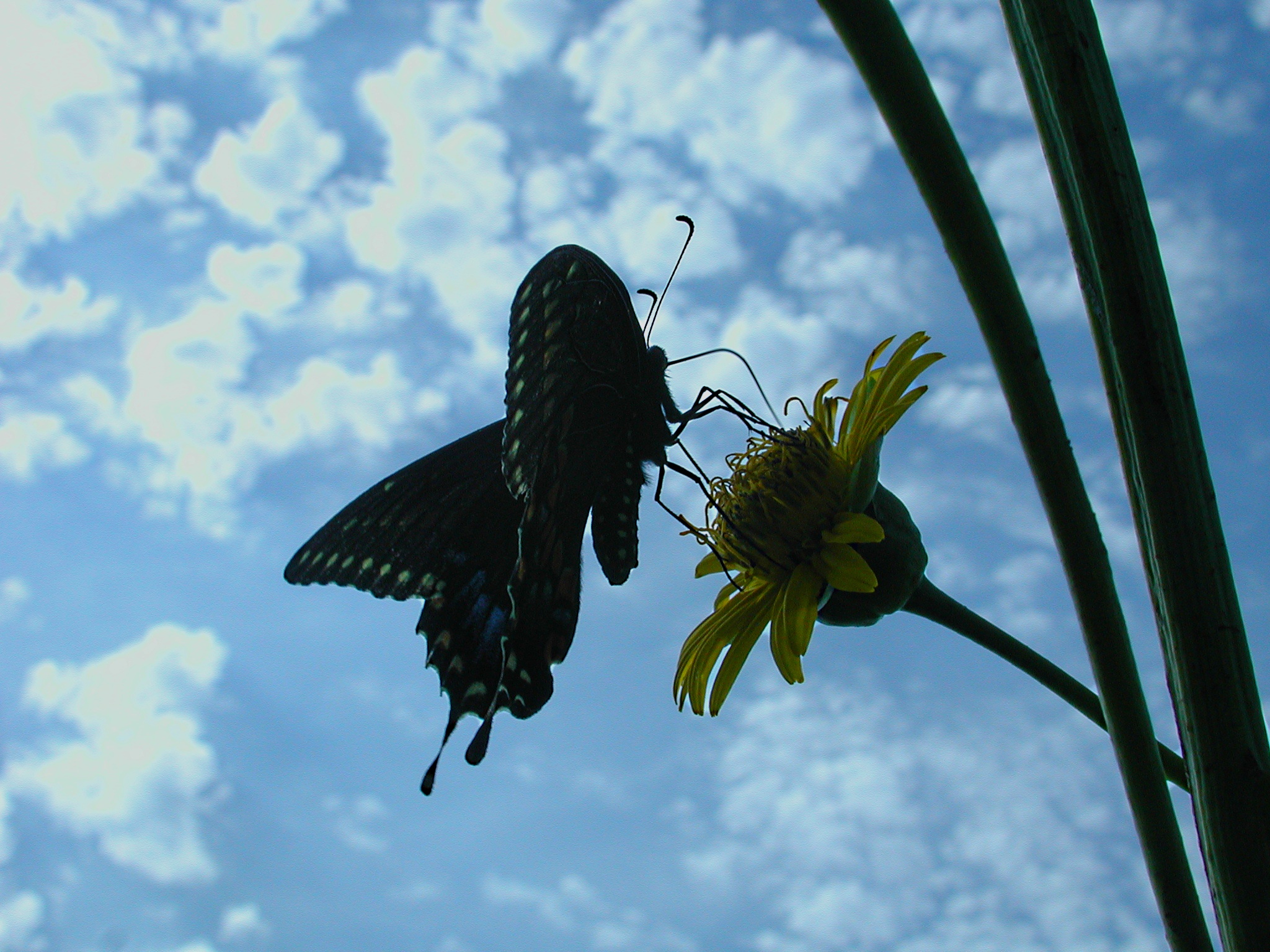
Pseudo-silhouette (2) by Thomas Peace 2013
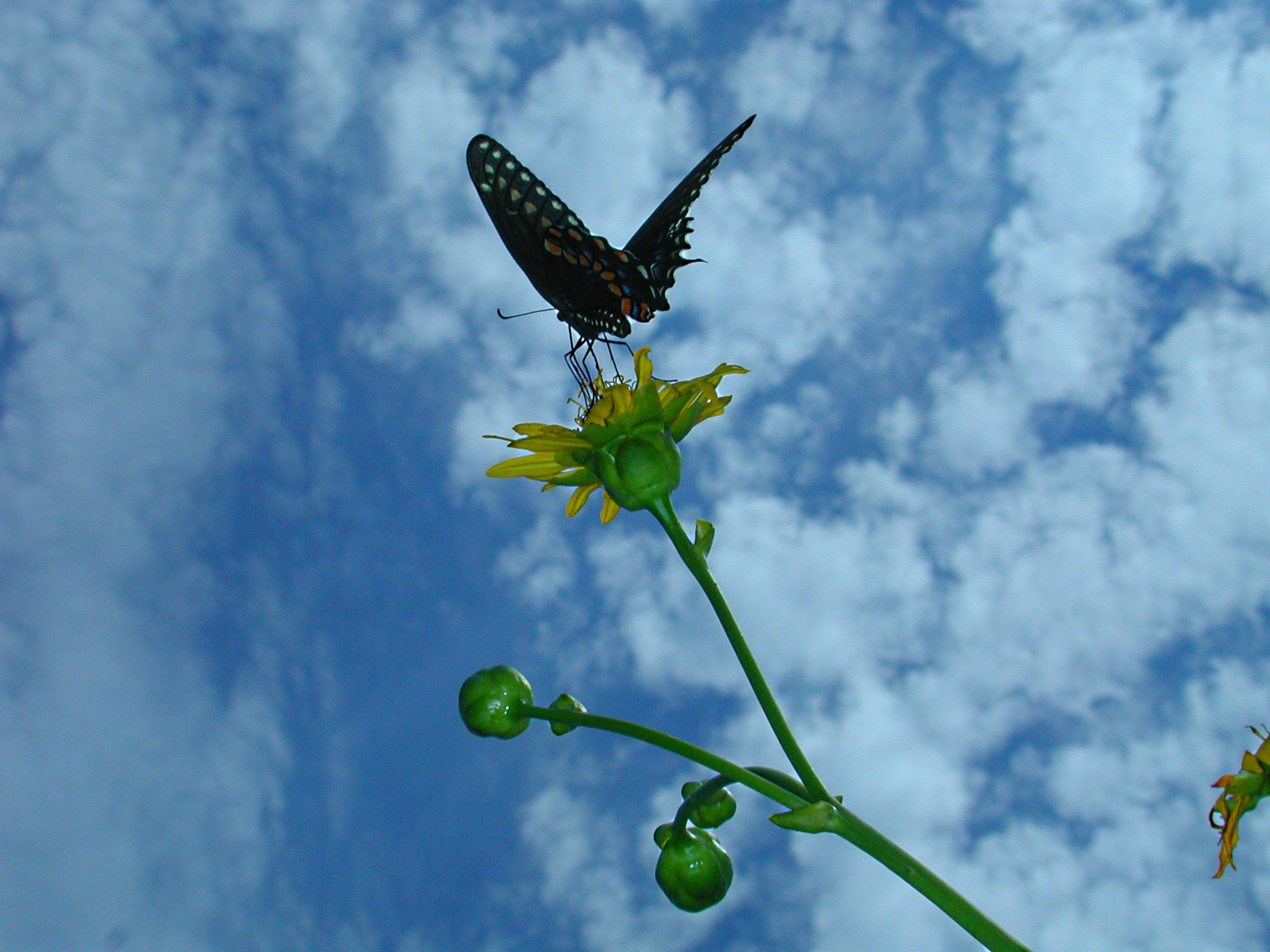
Pseudo-silhouette (1) by Thomas Peace 2013
.

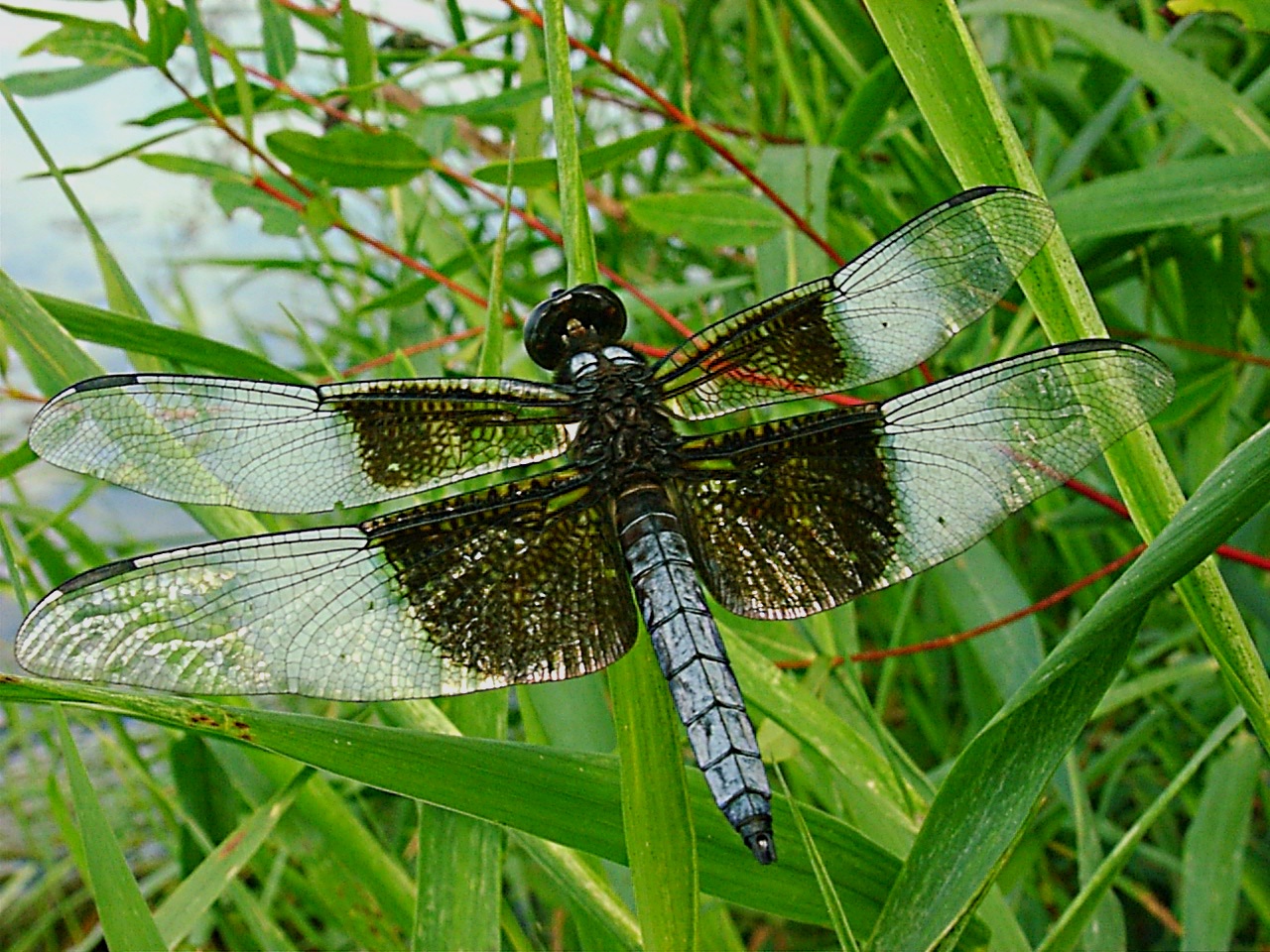
Pseudo-silhouette (3) by Thomas Peace 2013
****************************************************************************************
.
.
.
.
Though many talk about it and pretend to have it… very few are truly compassionate. Those few that are truly and deeply compassionate (in a holistic, deeper than average sense)… may be, fortunately, sometimes even visited (at least once, twice, or more, during their lives) by the immensity of the truly sacred.
.
.
.
from Emily Dickinson:
.
.
. Sometimes with the Heart
. Seldom with the Soul
. Scarcer once with the Might
. Few — love at all.
.
.
.
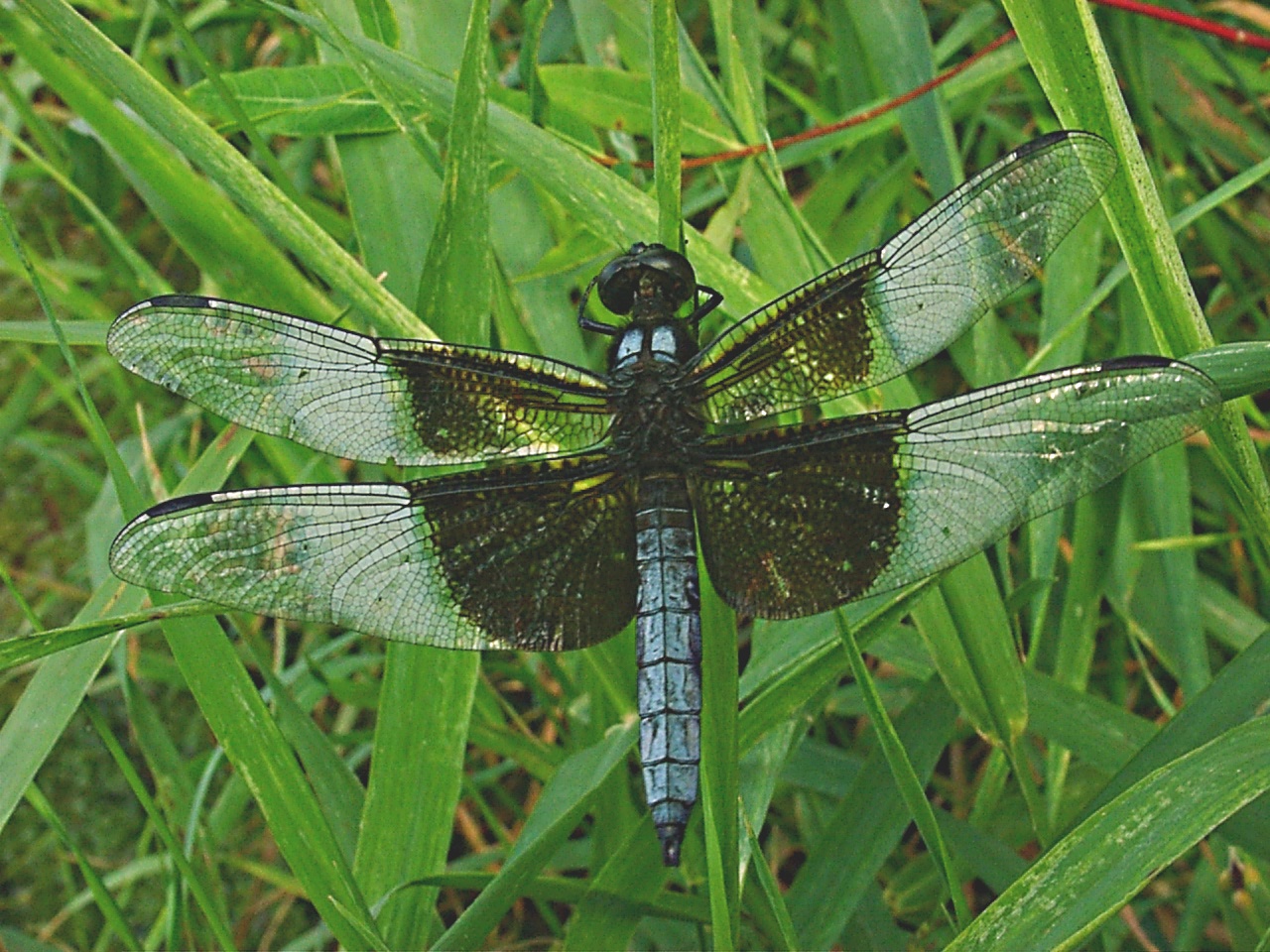
Resting Dragonfly (1) by Thomas Peace 2013

Resting Dragonfly (2) by Thomas Peace 2013
*************************************************************************************
*************************************************************************************
.

A robust and healthy mind is essential. Just as the body should be tenderly taken care of, given the correct, healthy foods, and exercised daily… so the mind, too, must be operated with care and order. The mind and the body have a close relationship with each other. When one is distorted and broken… it often influences the other. A languid and indifferent mind easily allows for a body that indolently sits around. Additionally, a body deficient in good nutrients and decent exercise… can easily influence the mind to be less alert, joyous, and caring. It’s a close partnership… and not enough people deeply realize that. Interestingly, just having a healthy body does not ensure that the mind (involved with that body) will be concomitantly healthy and orderly. There are many unbalanced, uncaring, mentally disturbed people with excellent bodies.
.
.
.
. from Wallace Stevens:
.
. Poetry is a health.
.
. There must be some wing on which to fly.
.
. Poetry is a cure of the mind.
.
.
.

Bre with Bubbles by Thomas Peace 2013
**************************************************************************
**************************************************************************

.
.
.
.
. To have a close and profound relationship with nature, one must give up the mental symbolism (as words) that one was taught to observe through (and function as). It can only be done without methods and sequential procedures (that were taught to you)… for time is not a factor when being in deep communion with (and as) nature. When spacial separation, labeling, categorization, and learned recognition come (naturally) to an end (without the effort that time involves), then one — if one is lucky — may, in a most beautiful stillness, be truly in communion with nature.
.
.
. from E. E. Cummings:
.
.
. n
. OthI
. n
.
. g can
.
. s
. urPas
. s
.
. the m
.
. y
. SteR
. y
.
. of
.
. s
. tilLnes
. s
.
.
.
.
**********************************************************************************
For a limited time, signed copies of my book are available with free shipping; go to:
**********************************************************************************
.
.
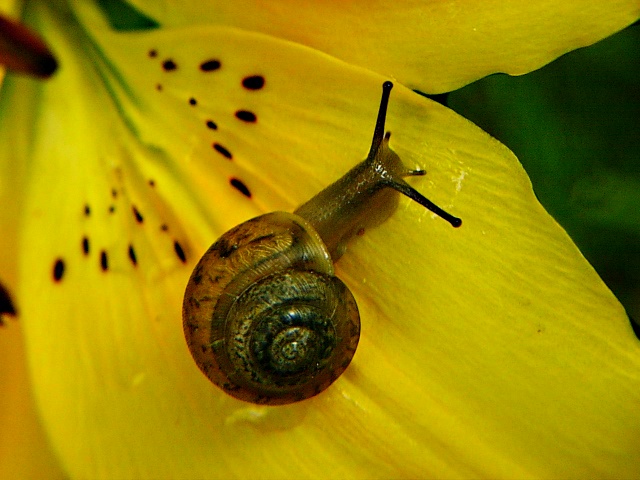
Friend (1) by Thomas Peace 2013
.

Friend (2) by Thomas Peace 2013

F(3) by Thomas Peace 2013
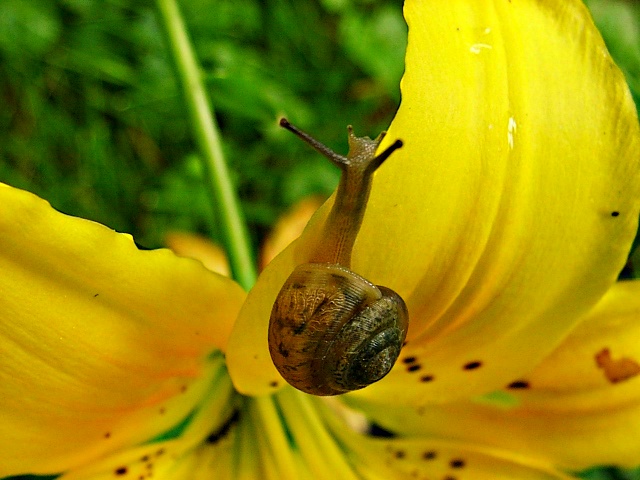
F (4) by Thomas Peace 2013
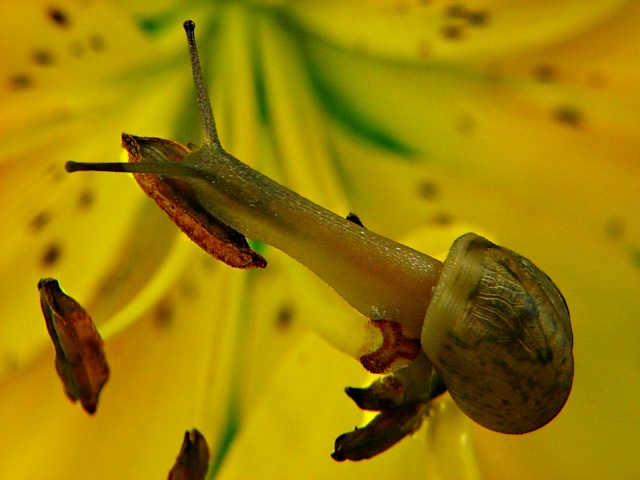
F (5) by Thomas Peace 2013
*************************************************************************
.

Although the wise man lucidly understands that (psychologically) the “perceiver” is “the perceived”… he (or she) does not let that “lucidity” ever become detrimental to his/her holistic integrity and order. In other words, seeing something that is rather ludicrous, or ugly, crude or crass… does not, in essence, ever nullify the sagacity and beautiful order of a true (integral) wise man. (Currently, there is plenty of manmade disorder all around, in society, that can be observed; however, that need not curtail the order within a truly decent, aware, orderly, compassionate being.)
Therefore it can be said:
You are not separate from what your perceptions are. However, if you perceive something that is rather ludicrous or disorderly… it does not transfer that state (of disorder) to you.
**********************************************************
Hysteria
from: T.S. Eliot (1888-1965)
 S she laughed I was aware of becoming involved
-Close-up-Tongue-Teeth-Open-Mouth- (photo from i-moc.com)
One of the chief attributes of a truly sagacious mind is to look at things without the dichotomy between the “observer” and “the observed.” The “observer” is not truly separate from “the observed”; you are not separate from what your perceptions are.
It is easy to crassly think that one is separate from the perceptions that one experiences. Multitudes of crude, base organisms can easily think and perceive in such a manner. The truly wise, however, acutely perceive beyond these primordial demarcations and boundaries. The truly sacred does not ever pass through what is crooked and distorted; it only visits (and goes through) what is straight, non-separated, direct, and true.
*********************************************************
from Walt Whitman:
.
.
THERE WAS A CHILD WENT FORTH
.
.
THERE was a child went forth every day;
And the first object he look’d upon, that object he became;
And that object became part of him for the day, or a certain part of
the day, or for many years, or stretching cycles of years.
The early lilacs became part of this child,
And grass, and white and red morning-glories, and white and red
clover, and the song of the phoebe-bird,
And the Third-month lambs, and the sow’s pink-faint litter, and the
mare’s foal, and the cow’s calf,
And the noisy brood of the barn-yard, or by the mire of the pond-
side,
And the fish suspending themselves so curiously below there–and the
beautiful curious liquid,
And the water-plants with their graceful flat heads–all became part
of him.
The field-sprouts of Fourth-month and Fifth-month became part of
him;
Winter-grain sprouts, and those of the light-yellow corn, and the
esculent roots of the garden,
And the apple-trees cover’d with blossoms, and the fruit afterward,
and wood-berries, and the commonest weeds by the road;
And the old drunkard staggering home from the out-house of the
tavern, whence he had lately risen,
And the school-mistress that pass’d on her way to the school,
And the friendly boys that pass’d–and the quarrelsome boys,
And the tidy and fresh-cheek’d girls–and the barefoot negro boy and
girl,
And all the changes of city and country, wherever he went.
His own parents,
He that had father’d him, and she that had conceiv’d him in her womb,
and birth’d him,
They gave this child more of themselves than that;
They gave him afterward every day–they became part of him.
The mother at home, quietly placing the dishes on the supper-table;
The mother with mild words–clean her cap and gown, a wholesome odor
falling off her person and clothes as she walks by;
The father, strong, self-sufficient, manly, mean, anger’d, unjust;
The blow, the quick loud word, the tight bargain, the crafty lure,
The family usages, the language, the company, the furniture–the
yearning and swelling heart,
Affection that will not be gainsay’d–the sense of what is real–the
thought if, after all, it should prove unreal,
The doubts of day-time and the doubts of night-time–the curious
whether and how,
Whether that which appears so is so, or is it all flashes and specks?
Men and women crowding fast in the streets–if they are not flashes
and specks, what are they?
The streets themselves, and the façades of houses, and goods in the
windows,
Vehicles, teams, the heavy-plank’d wharves–the huge crossing at the
ferries,
The village on the highland, seen from afar at sunset–the river
between,
Shadows, aureola and mist, the light falling on roofs and gables of
white or brown, three miles off,
The schooner near by, sleepily dropping down the tide–the little
boat slack-tow’d astern,
The hurrying tumbling waves, quick-broken crests, slapping,
The strata of color’d clouds, the long bar of maroon-tint, away
solitary by itself–the spread of purity it lies motionless in,
The horizon’s edge, the flying sea-crow, the fragrance of salt marsh
and shore mud;
These became part of that child who went forth every day, and who now
goes, and will always go forth every day.
.
.
.*********************************************
(Left click on image to enlarge; hit left “return arrow” to return.)
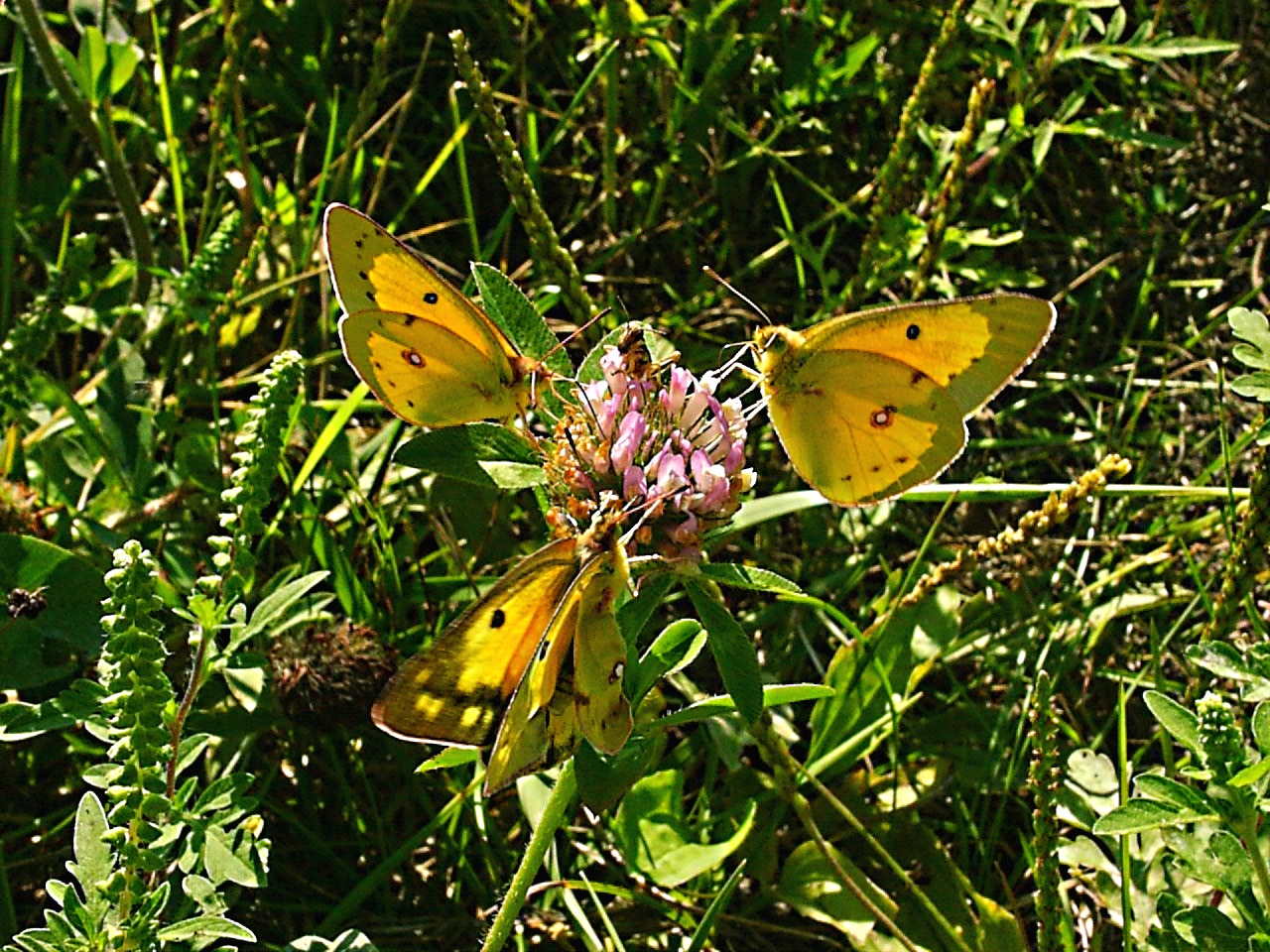
__Four at the Clover Table (Thomas Peace 2013)_______

Four at the Clover Table… by Thomas Peace 2013
*************************************************************************
*************************************************************************
.

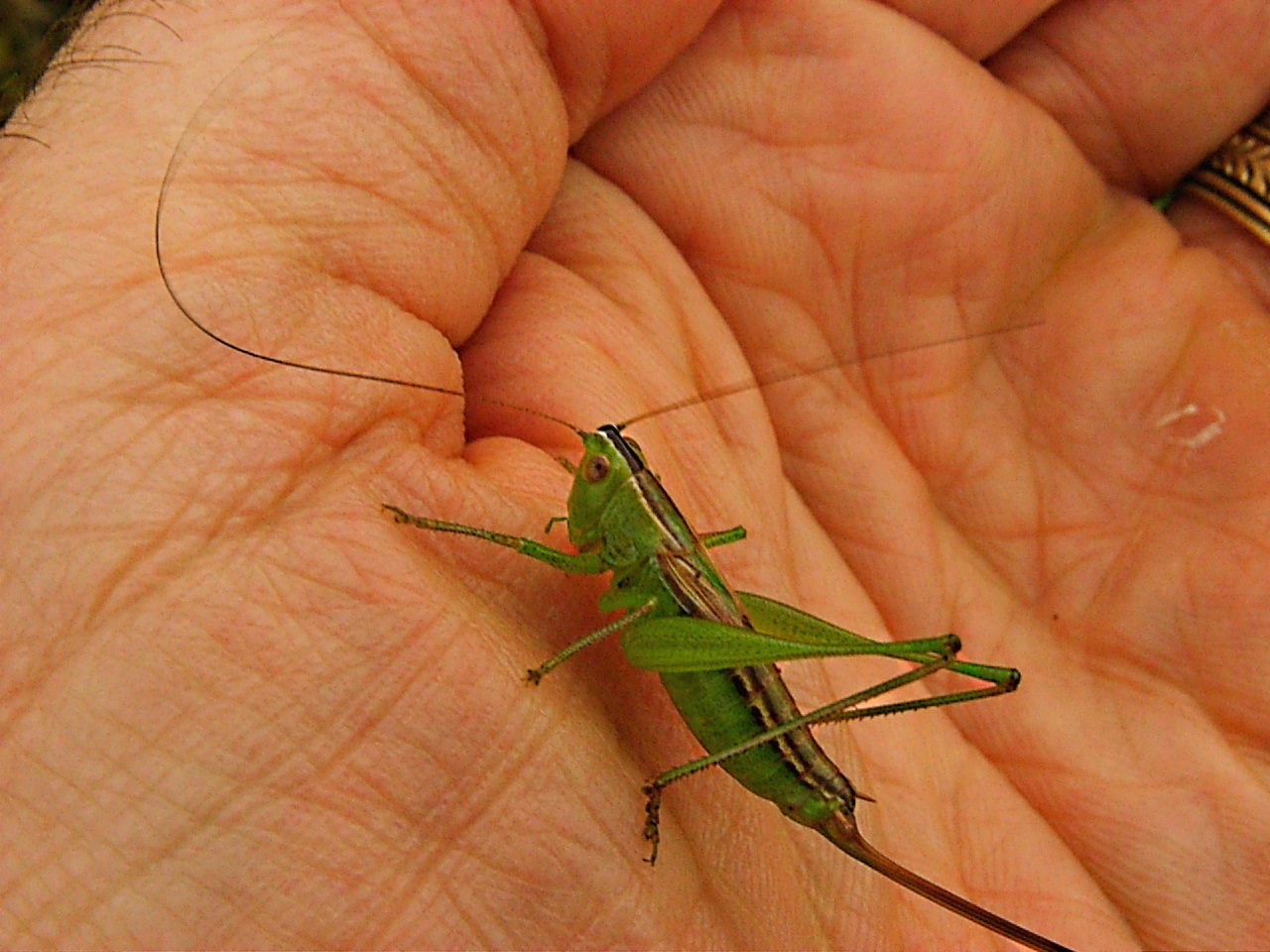
Tom with Katy (1)… by Thomas Peace 2013
***

Tom with Katy (2)… by Thomas Peace 2013
***

Tom with Katy (3)… by Thomas Peace 2013
.

.
.
.
.
. True enlightenment — not the kind that some falsely imagine is
. enlightenment — rarely, unfortunately, befalls upon human beings.
.
.
.
*************************************************************************
.
. from Walt Whitman:
.
.
.
. Hast never come to thee an hour,
. A sudden gleam divine, precipitating, bursting all these bub-
. bles, fashions, wealth,
. These eager business aims — books, politics, art, amours,
. To utter nothingness?
.
.
.
.****************************************************************************
(Left click on photos to enlarge; hit left “return arrow” to return.)

Close encounter… by Thomas Peace 2013

Feasting… by Thomas Peace 2013
***************************************************************************
*****************************************************************************

.
.
.
.
. As one… the thievery of the crooked, the indifference of the uncaring, and the bizarre oddness of the outwardly ostentatious… constitutes, in itself, its own punishment.
. Some things are innocent, content, and beautiful in themselves… and are the real blessings…
.
.
.
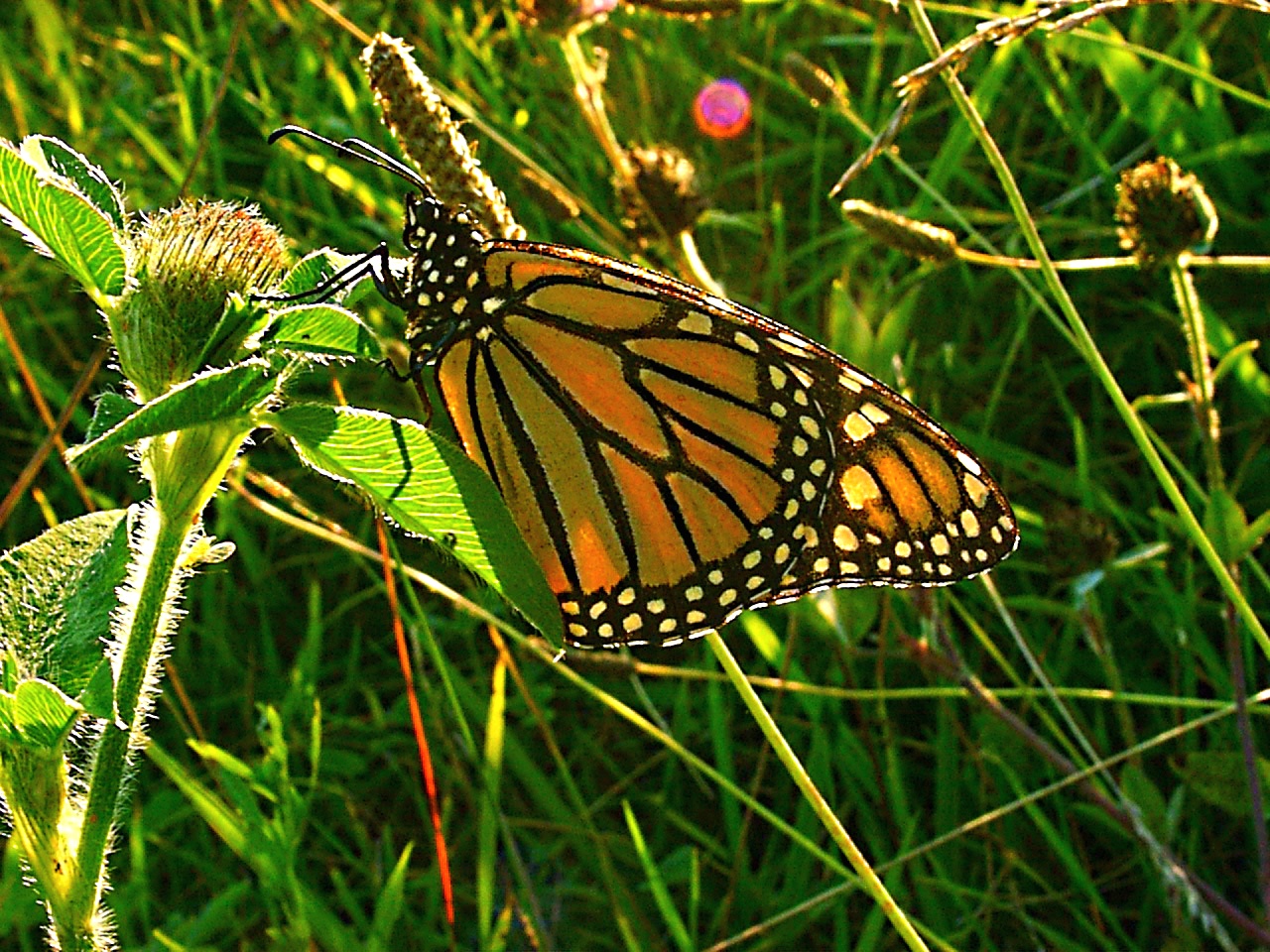
Just Being… photo by Thomas Peace 2013
******************************************
******************************************
.
.
.
.
. We are all one… we are not at all — as some would have you
. believe — separate. All creatures are (together) one. Not many
. creatures fully realize this.
. I (in my six-legged greyness) am supposed
. to “blend in”… so that you do not see me. But, you see me. Speak
. anything out loud, anything whatsoever, and you will
. also hear me.
.
.
.
.******************************************************************************************
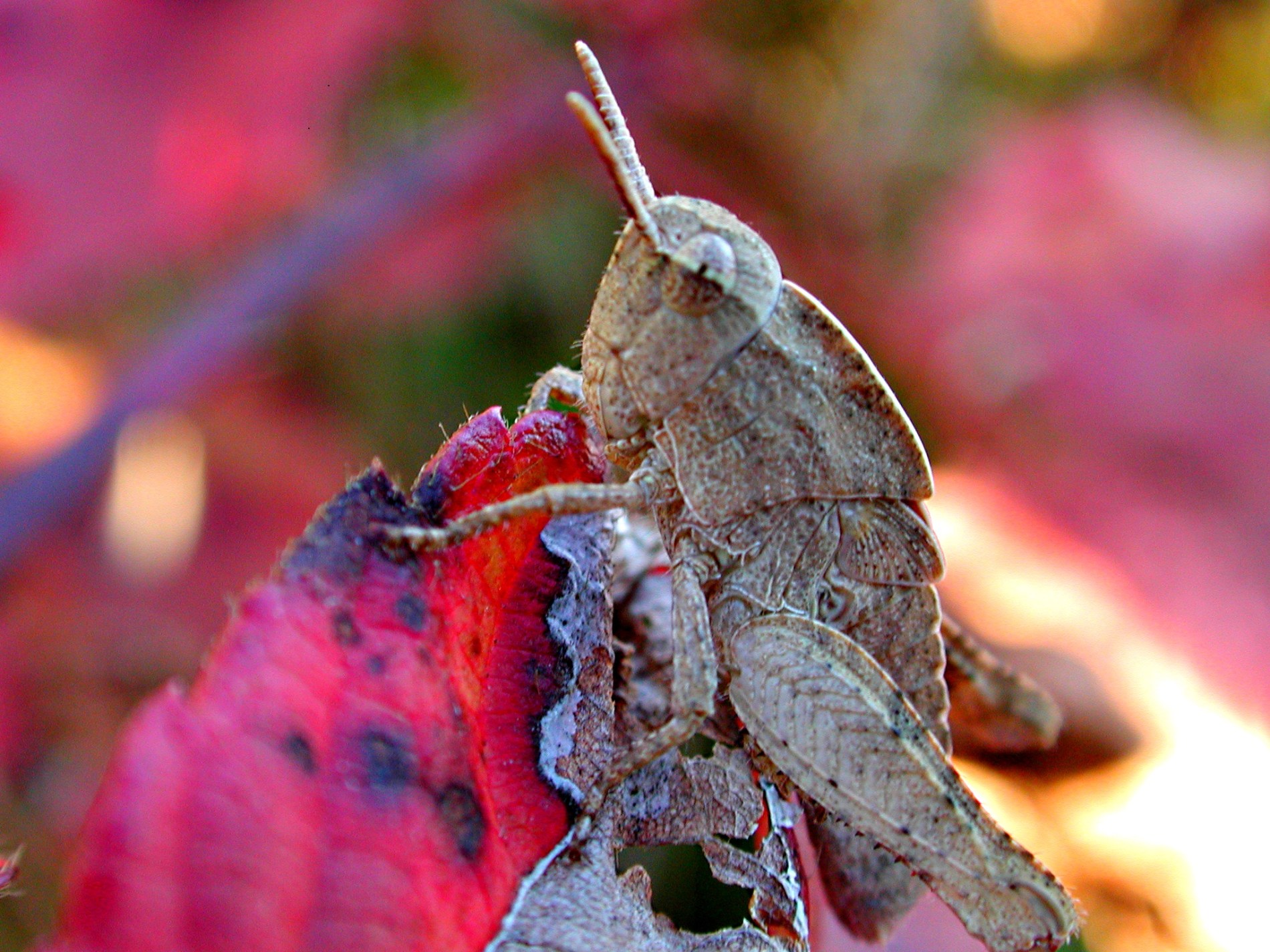
The following photographs of a “like a grey rock” sort of a thing… were taken in a wild, natural meadow.
*******************************************************************************************
.
. from E. E. Cummings:
.
.
.
. a like a
. grey
. rock wanderin
.
. g
. through
. pasture
. wom
.
. an creature whom
. than
. earth hers
.
. elf
. could
. silent more no
. be
.
.
.********************************************************************
(Left click on an image to enlarge it; hit left “return arrow” to return.)

a like a grey rock… by Thomas Peace 2013
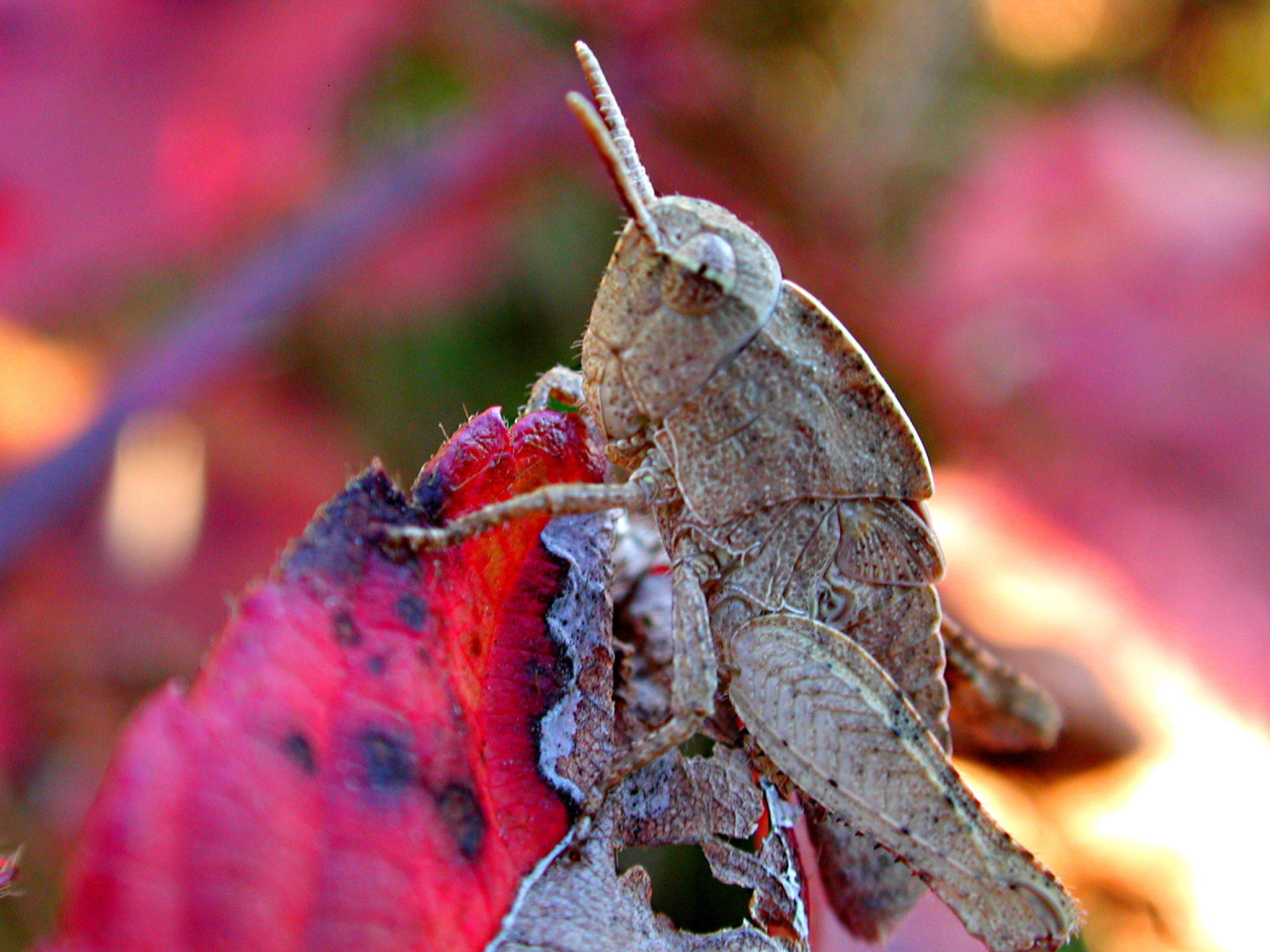
a like a grey rock (2)… by Thomas Peace 2013

a like a grey rock (3)… by Thomas Peace 2013
*********************************************************************
*********************************************************************

.
.
.
.
. Thinking, per se, is rather cold and empty. All thoughts are symbols. They are fragmentary tokens and representations that we “fabricate” about what reality may be. They (i.e., thoughts) are tools for dealing with the reality; however, they are not the reality. The idea of moving deeply through a warm beach full of sparsely clothed, beautiful people (who worship you) doesn’t give one (in the end) a sunburn. Yet most of us dwell as these “virtual,” symbolic representations almost all of the time… rarely, if ever, going beyond them.
Exclusively remaining in (and “as”) thought… is a form of suffering. Thinking is always “about” the reality; it is never the actuality of the reality. Remaining as “the virtual” is like staying within a computer world… accepting it to be essentially true.
Unfortunately, very few (these days) actually go beyond the symbolic tools that they were programmed to become.
.
.
.*******************************************************************************************
.
. from Wallace Stevens:
.
. Crude Foyer
.
.
Thought is false happiness:the idea
That by thinking one can
Or may, penetrate, not may,
But can, that one is sure to be able –
That there lies at the end of thought
A foyer of the spirit in a landscape
Of the mind, in which we sit
And wear humanity’s bleak crown;
In which we read the critique of paradise
And say it is the work
Of a comedian, this critique,
In which we sit and breathe
An innocence of an absolute,
False happiness, since we know that we use
Only the eye as faculty, that the mind
Is the eye, and that this landscape of the mind
Is a landscape only of the eye, and that
We are ignorant men incapable
Of the least, minor, vital metaphor, content,
At last, there, when it turns out to be here.
**********************************************************************************
(Left click on the photo to enlarge it; hit left “return arrow” to return.)

Trees on the Beach by Thomas Peace 2013
*****************************************************************************************
*****************************************************************************************

.
.
.
.
. Stopping violence isn’t easy. There is plenty of violence in America and in the world. More laws may help (but only to a very limited extent)… but more than that we need to offer people more educationally. We need to fundamentally change (as a society) at a level much deeper. We need to change to where there’s not so much separation… separation between others and separation between education and (integral, deep awareness beyond mere “knowing”). If we teach people to merely be competitive, to take from others, to exploit and use others… we will have failed. Many are the product of their education… and laws will not confine those who are determined to exploit them. These things are age-old; they are not anything new.
.
.
.
. from the ancient Tao Te Ching by Lao Tzu:
.
.
. The more laws and restrictions there are
. The poorer people become.
. The sharper men’s weapons,
. The more trouble in the land.
. The more ingenious and clever men are,
. The more strange things happen.
. The more rules and regulations,
. The more thieves and robbers.
.
.
.*****************************************************************************
(Left click on the photo to enlarge it; hit the left “return arrow” to return.)
Stopping Violence isn’t easy… photo by Thomas Peace 2013
****************************************************************
***************************************************************
.
.

.
.
.
.
. Suffering is universal; we are all part of the totality of it… and (together) we can go beyond it.
.
.
. Sometimes going beyond mere representative images and symbolic patterns (as what thoughts are)… is a fundamental way of truly transcending suffering. Such a “going beyond” is silent, perceptive, non-fragmentary, and devoid of mere separation and indifferent distance.
.
.
.***************************************************************************************************
. from Walt Whitman:
.
I SIT and look out upon all the sorrows of the world, and upon all
oppression and shame;
I hear secret convulsive sobs from young men, at anguish with
themselves, remorseful after deeds done;
I see, in low life, the mother misused by her children, dying,
neglected, gaunt, desperate;
I see the wife misused by her husband—I see the treacherous seducer
of young women;
I mark the ranklings of jealousy and unrequited love, attempted to be
hid—I see these sights on the earth;
I see the workings of battle, pestilence, tyranny—I see martyrs and
prisoners;
I observe a famine at sea—I observe the sailors casting lots who
shall be kill’d, to preserve the lives of the rest;
I observe the slights and degradations cast by arrogant persons upon
laborers, the poor, and upon negroes, and the like;
All these—All the meanness and agony without end, I sitting, look
out upon,
See, hear, and am silent.
*************************************************************************************
(Left click on image to enlarge it; hit left “return arrow” to return.)

Purple Passion… photo by Thomas Peace 2013
*************************************************************************************
.
.
.
.
. Youth is growing down… when they are slowly losing their innocence
. and are turning into more second-hand, dead copies of mere so-called
. grown-ups. Never grow up… never lose your innocence.
.
.
.
.
.*************************************************************************
. excerpt from E. E. Cummings:
.
. And something thought or done or wished without
. a little innocence,although it were
. as red as terror and as green as fate,
. greyly shall fail and dully disappear —
.
. but the proud power of himself death immense
. is not so as a little innocence
.
.
. ************************************************************************************
. (Left click to enlarge the following photo; hit left “return arrow” to return.)

a little innocence by Thomas Peace 2013
……………………………………………………………………………………………….
……………………………………………………………………………………………….

.
. (Somehow, the two always belong together.)
.
.
.
.
. Universal order eternally smiled at the limited, rather barbaric,
. miseducated, ironclad notions of entropy… as certain minds,
. after tha debate, star t ed 2 d tear e oar eight 2 knot in 8 all… & fine
. alley dis hip it 8 Ed a wwwwwwwayyyyyyyyyyyy..y..y..y………
.
.
.
.
Praying Mantises will make a quick meal out of other insects within their vicinity, which is a rather entropic situation for the prey, but a rather non-entropic situation for the Mantises. (Universal order, by the way, isn’t going bye-bye.)
.
.
. I love handling Mantises in the wild. Most, when caught, will tame down within a few minutes… after they bite the living daylights out of you! Most will tame down so quickly that — after several minutes, when you put them back down on the ground — they actually zealously try to get back on your hand; they love to climb the wiggling fingers; to them it must be a fun sort of activity or exciting experience. (At least that’s the case with the ones I’ve encountered.) In our area I only found one Mantid that would not tame down, no matter what. That one I called “a bronco”… and I hope not to experience another one like it for a very long time!
At one time, I had a Praying Mantis as a pet… in a large terrarium. I fed it thawed frozen brine shrimp (daily) from my fingers. It lived for a very long time and laid huge egg sacks full of many eggs (that I put in our backyard). Female Mantises can lay fertile eggs even without ever coming into contact with a male Mantis; in such cases, the babies are exact clones of the mother. (If they do mate with a male… the females sometimes eat the male’s head off… or consume much of his body.) My pet Mantis really enjoyed climbing around on my fingers often. I was with my pet Mantis on the day that it died; it continually kept kissing its arms/legs all around… as if it were saying “good-bye” to itself.
Mantises truly look “alien-like” in appearance!
***********************************************************************************************
(go figure)
.
.
. from E. E. Cummings:
.
.
. yonder deadfromtheneckup graduate of a
. somewhat obscure to be sure university spends
. her time looking picturesque under
.
. the as it happens quite
. erroneous impression that he
.
. nascitur
.
.
.
***********************************************************************************************
(Left click on the images to enlarge them; hit left “return arrow” to return.)
************************************************************************************************
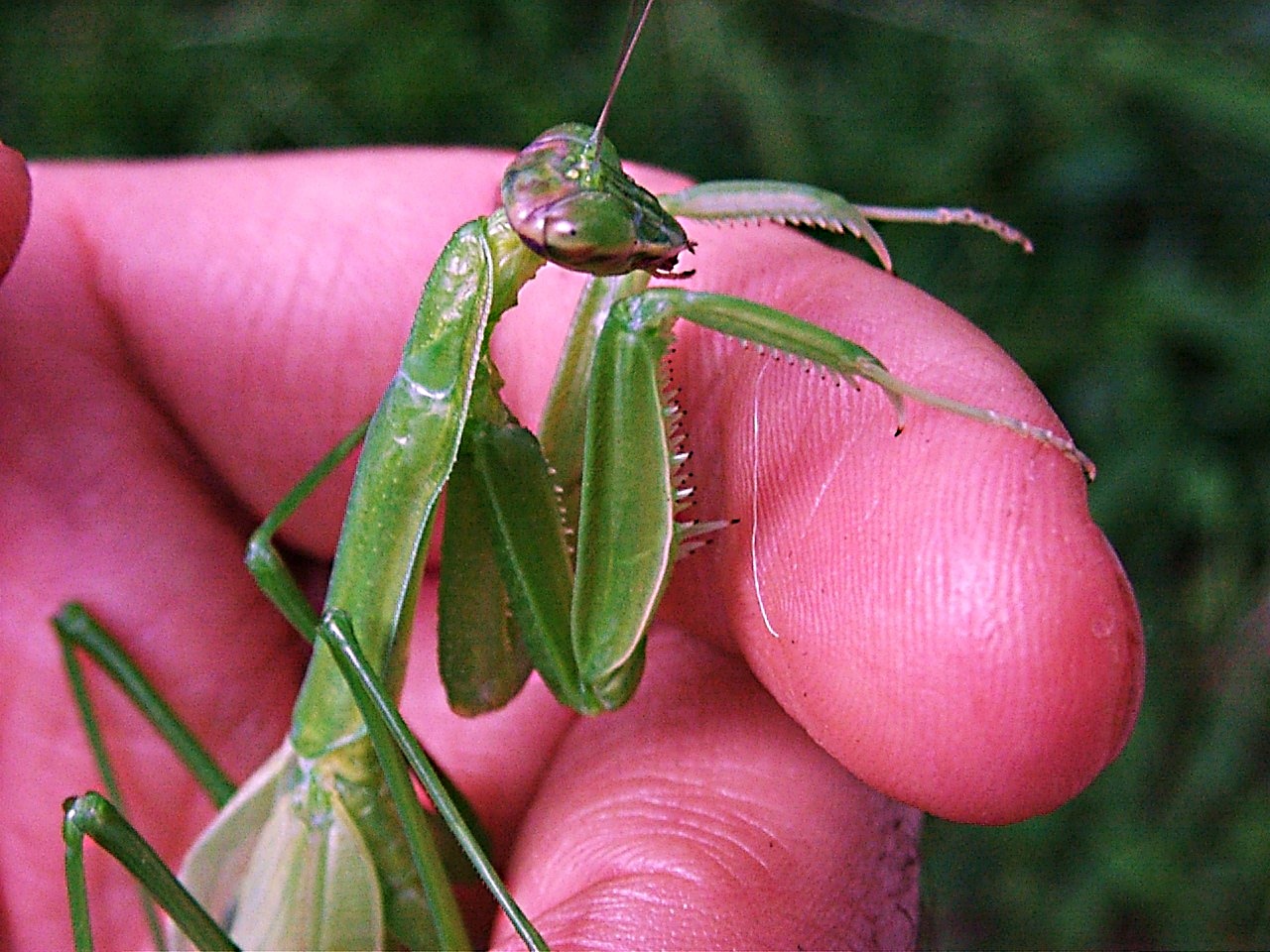
Mantis (1)… hanging out with Tom…by Thomas Peace 2013
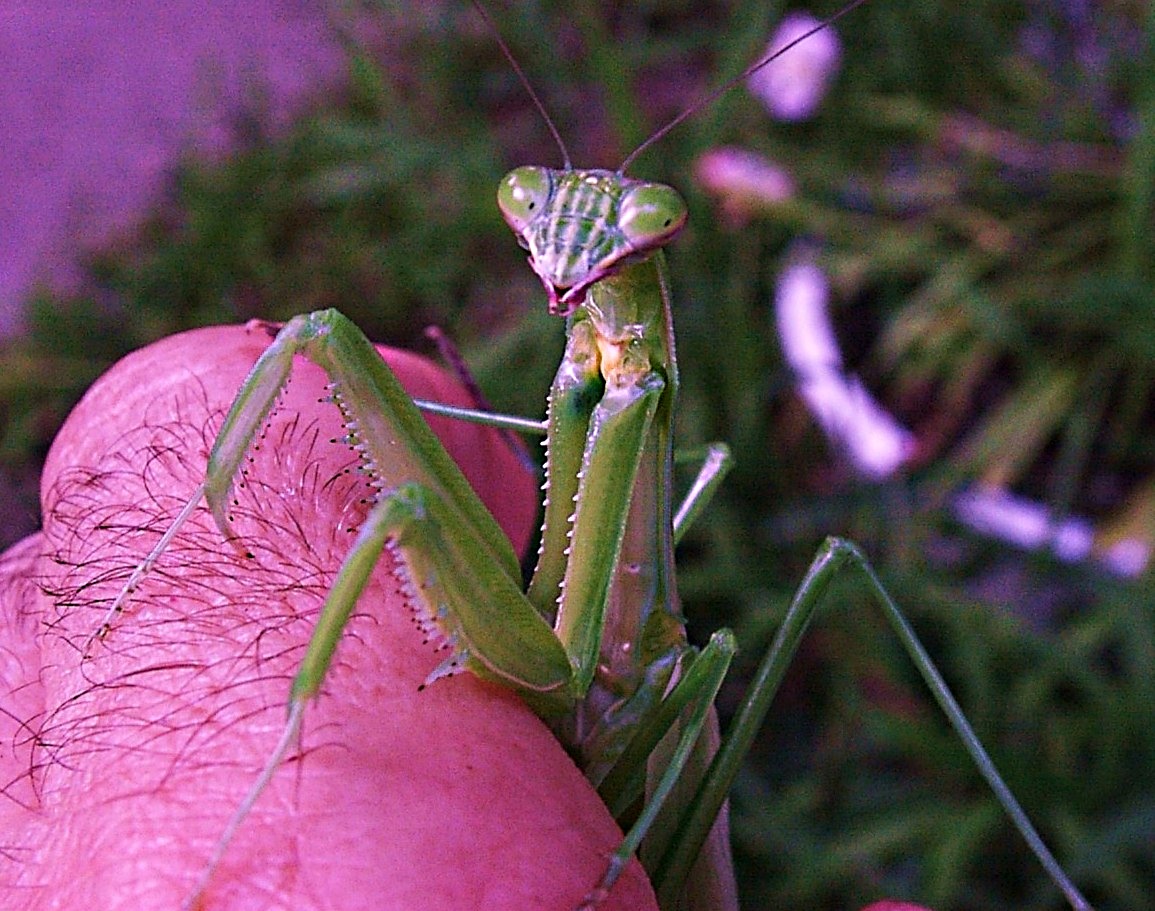
Mantis (2)… hanging out with Tom… by Thomas Peace 2013

Mantis (3) by Thomas Peace 2013
Mantids are meticulous groomers!

Mantis (4) by Thomas Peace 2013
Peeking over the antenna… right into the camera eye!
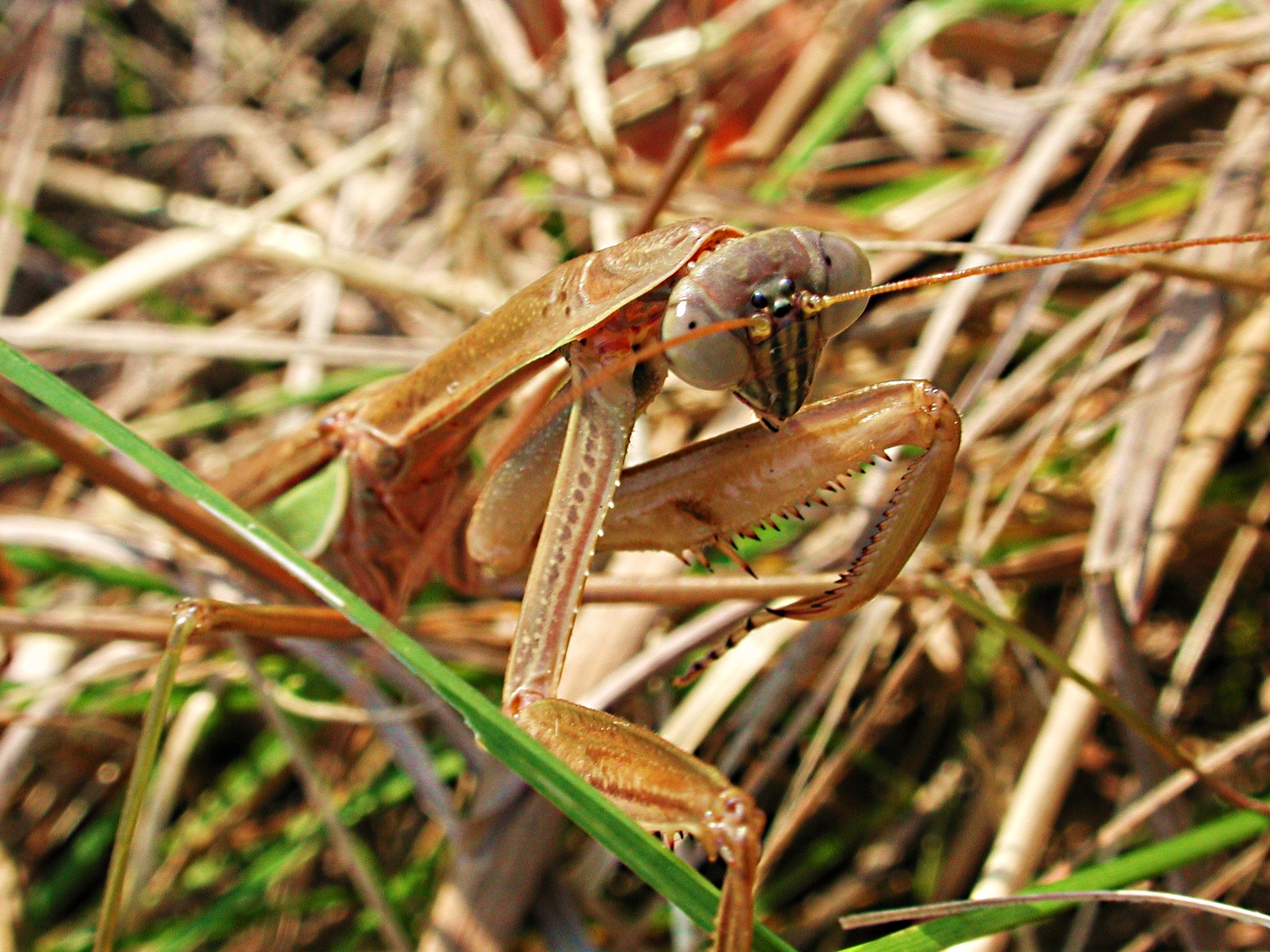
Mantis (5) by Thomas Peace 2013
*********************************************************************************************
*********************************************************************************************
.
.
.
.
Instead of the usual crass and ignorant revolution of violent disruption, war, and disharmony, why can’t there be an awe-inspiring, elevated, truly new revolution of respect, affection and (wise) holistic understanding?
.
.
.
********************************************************************************
excerpt from John Lennon:
You say you’ll change the constitution
Well, you know
We all want to change your head
You tell me it’s the institution
Well, you know
You’d better free your mind instead
But if you go carrying pictures of Chairman Mao
You ain’t gonna make it with anyone anyhow
Don’t you know it’s gonna be
Alright?
**************************************************************************
(Left click photo to enlarge; hit left “return arrow” to return.)

Well, you know… by Thomas Peace 2013
**************************************************************************
**************************************************************************

.
.
.
.
. Can we look at ourselves without mere condemnation, without judgement and criticism… but just look without any of the past conditioning and knowledge that was instilled within (and “as”) us?
.
.*****************************************************************************************
.
. from Stephen Crane:
.
.
. “It was wrong to do this,” said the angel.
. “You should live like a flower,
. Holding malice like a puppy,
. Waging war like a lambkin.”
.
. “Not so,” quoth the man
. Who had no fear of spirits;
. “It is only wrong for angels
. Who can live like the flowers,
. Holding malice like the puppies,
. Waging war like the lambkins.”
.
………………………………………………………………………………………………………….
(Left click to enlarge; hit left “return arrow” to return.)
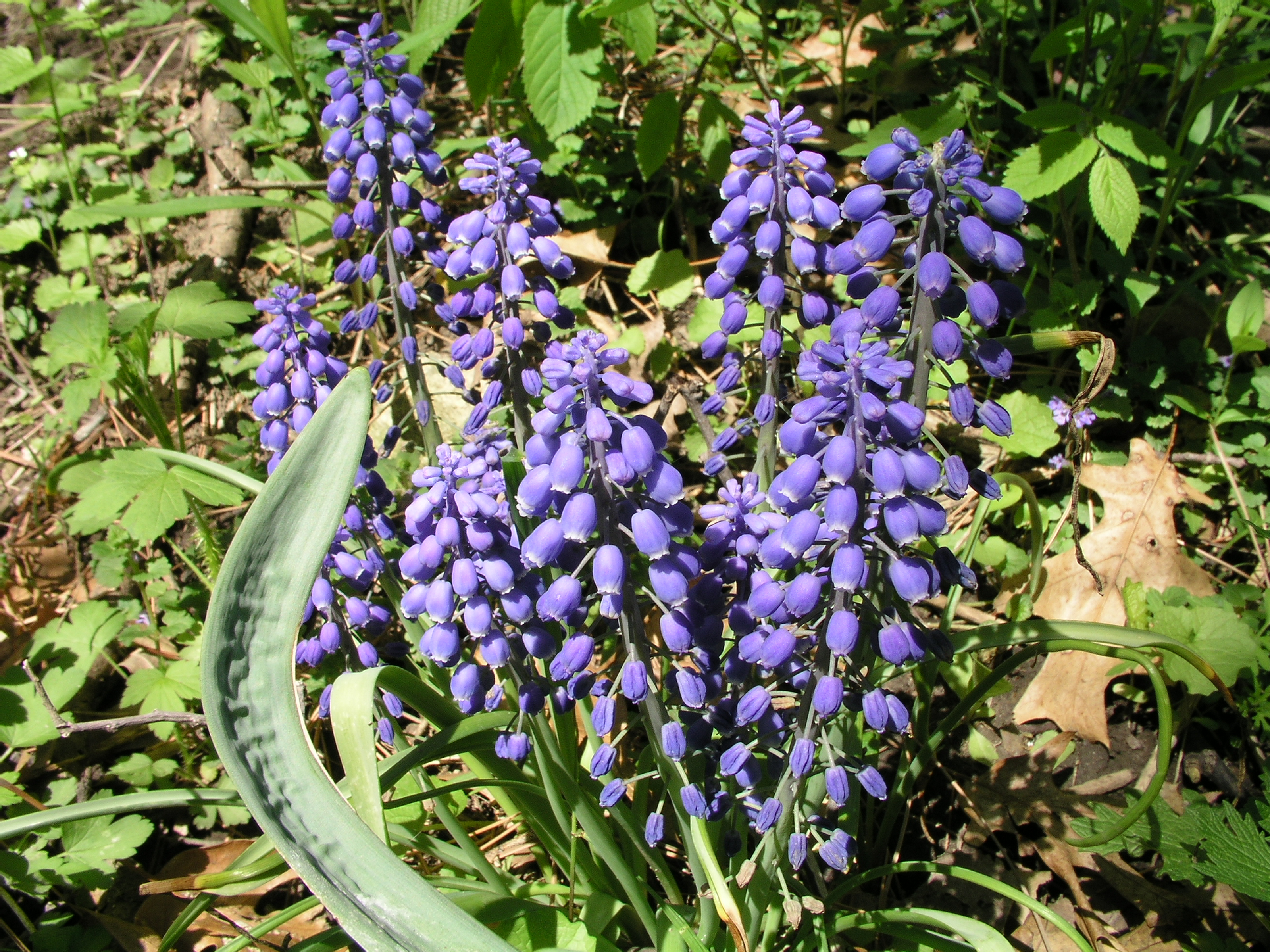
Grape Hyacinths by Thomas Peace 2013
…………………………………………………………………………………………………………..
…………………………………………………………………………………………………………..
.
.
.
.
. Life is meant to be lived (with vibrant awareness)… not mere
. (second-hand) imitation; perhaps you shouldn’t spend it
. looking through dead images that others instilled in you.
.
.
.
.***********************************************************************
.
.
. from Stephen Crane:
.
.
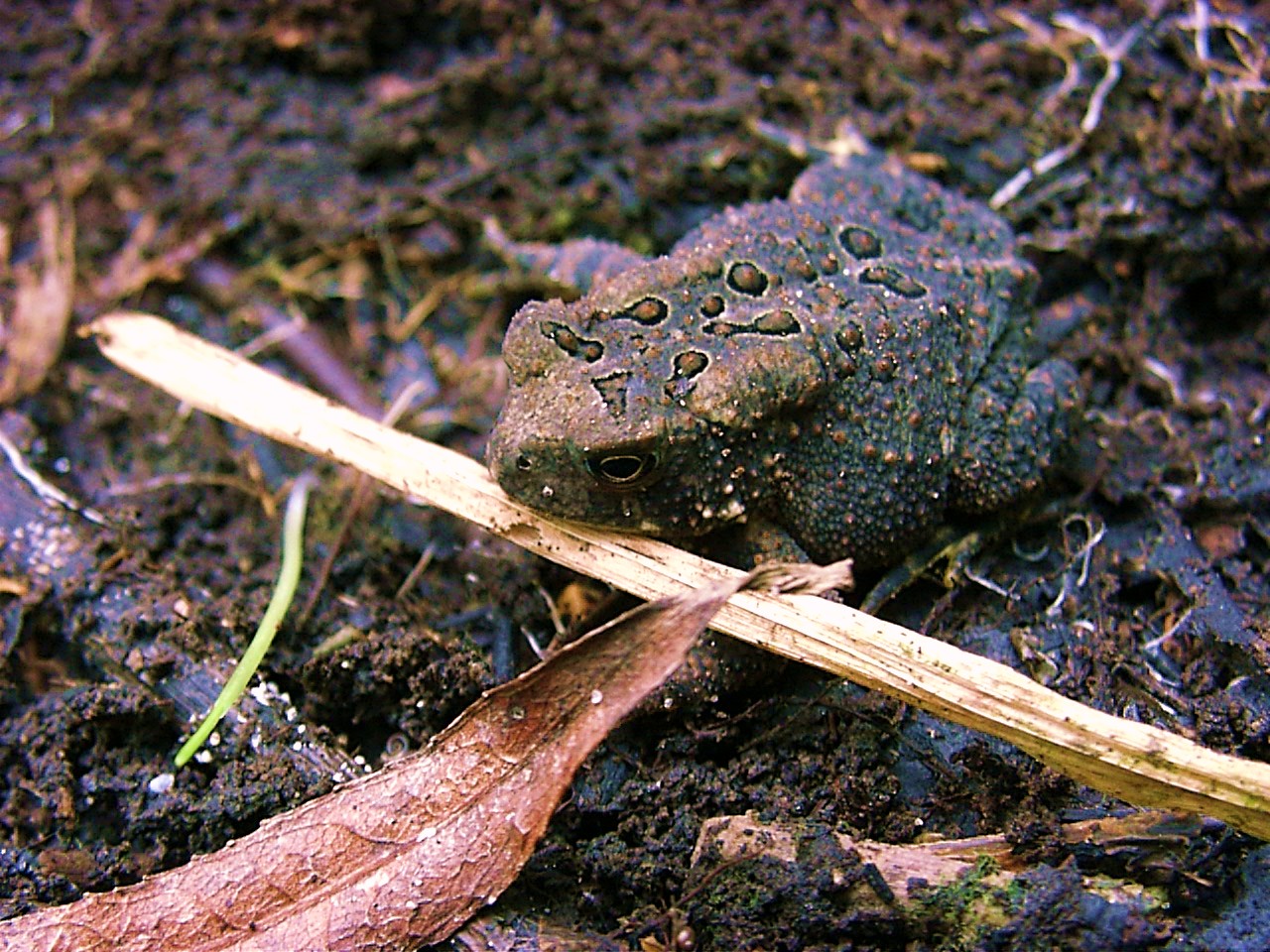
. “Think as I think,” said a man,
. “Or you are abominably wicked;
. You are a toad.”
.
. And after I had thought of it,
. I said: “I will, then, be a toad.”
.
.
.
.**********************************************************************
(Left click on photo to enlarge; hit left “return arrow” to return.)

Self Portrait… by Thomas Peace 2013
**********************************************************************
**********************************************************************

.
.
.
.
.
.
. There is no plurality… we are all one.
.
.
.
………………………………………………………………………………….
(Left click on images to enlarge; hit left “return arrow” to return.)

Shih Tzu (1) by Thomas Peace 2013
. ………………………………………………………………………………

Shih Tzu (2) by Thomas Peace 2013
……………………………………………………………………………………………………..

Shih Tzu (3) by Thomas Peace 2013
…………………………………………………………………………………………………
…………………………………………………………………………………………………

.
.
.
.
.
.
.
. Compassion — like the living, limitless heart of a truly dedicated, caring nurse — is thick, warm, and deep; indifference — like a limited, superficial pool of dead ice — is cold and shallow.
.
.
…………………………………………………………………………………………………………………………..
.
.
. from Walt Whitman:
.
. And whoever walks a furlong without sympathy walks to his own funeral
. drest in his shroud.
.
.
.
. (Left click to enlarge; hit left “return arrow” to return back.)

Lacewing by Thomas Peace 2013
……………………………………………………………………………………………..
……………………………………………………………………………………………..

.
.
.
.
.
.
. (Note: The following is rather subtle… and may be difficult for many to grasp.
. Please examine it carefully… and with a mind that has dropped — at least for a
. while — its ironclad, conventional background and inherited prejudices.) 😉
.
.
. One safe and quiet blade of lofty, unconventional grass,
. withstanding the traditional rain, soars higher (to the truth of
. her) than millions of trampled, overpowered, fallen
. “blade-unawarenesses.”
.
.
. **************************************************************************************
. from E. E. Cummings:
.
.
. the people who
. rain(are move as)proces
. -sion Its of like immens-
. ely(a feet which is prayer
.
. among)float withins he
. upclimbest And(sky she
. )open new(
. dark we all findingly Spring the
.
. Fragrance unvisible)ges
. -tured together-
. ly singing ams
. trample(they flying silence
.
.
*********************************************************************************
(Left click to enlarge; hit “return arrow” to return.)

Leaf of Grass by
Thomas Peace 2012
…………………………………………………………………………………………………………………………….
…………………………………………………………………………………………………………………………….
.
.
**********************************************************************************************************
[fiz-ee-og-nuh-mee, -on-uh-mee] Show IPA
.
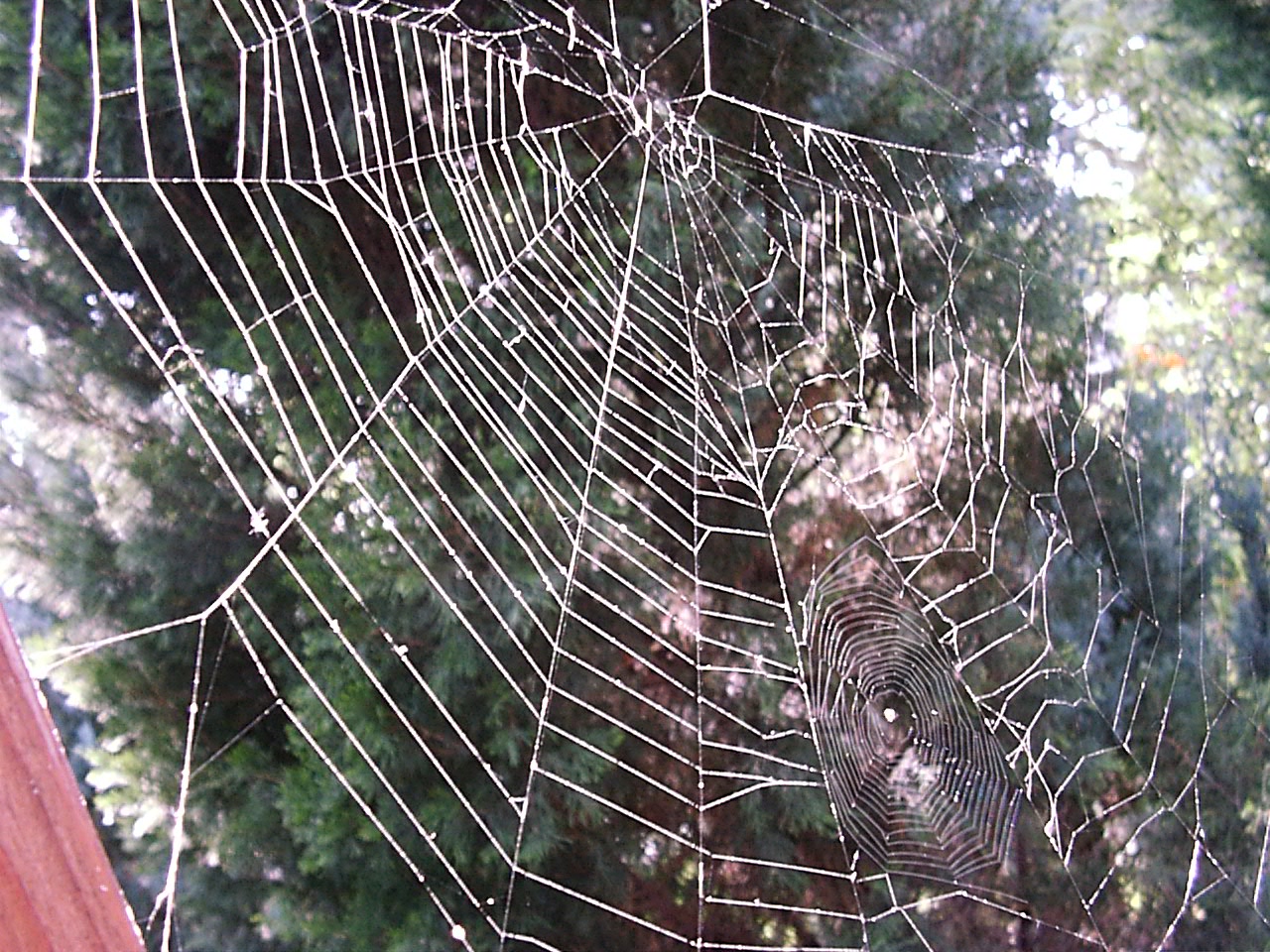
The Immortal Web of Time (1) by Thomas Peace 2013
.
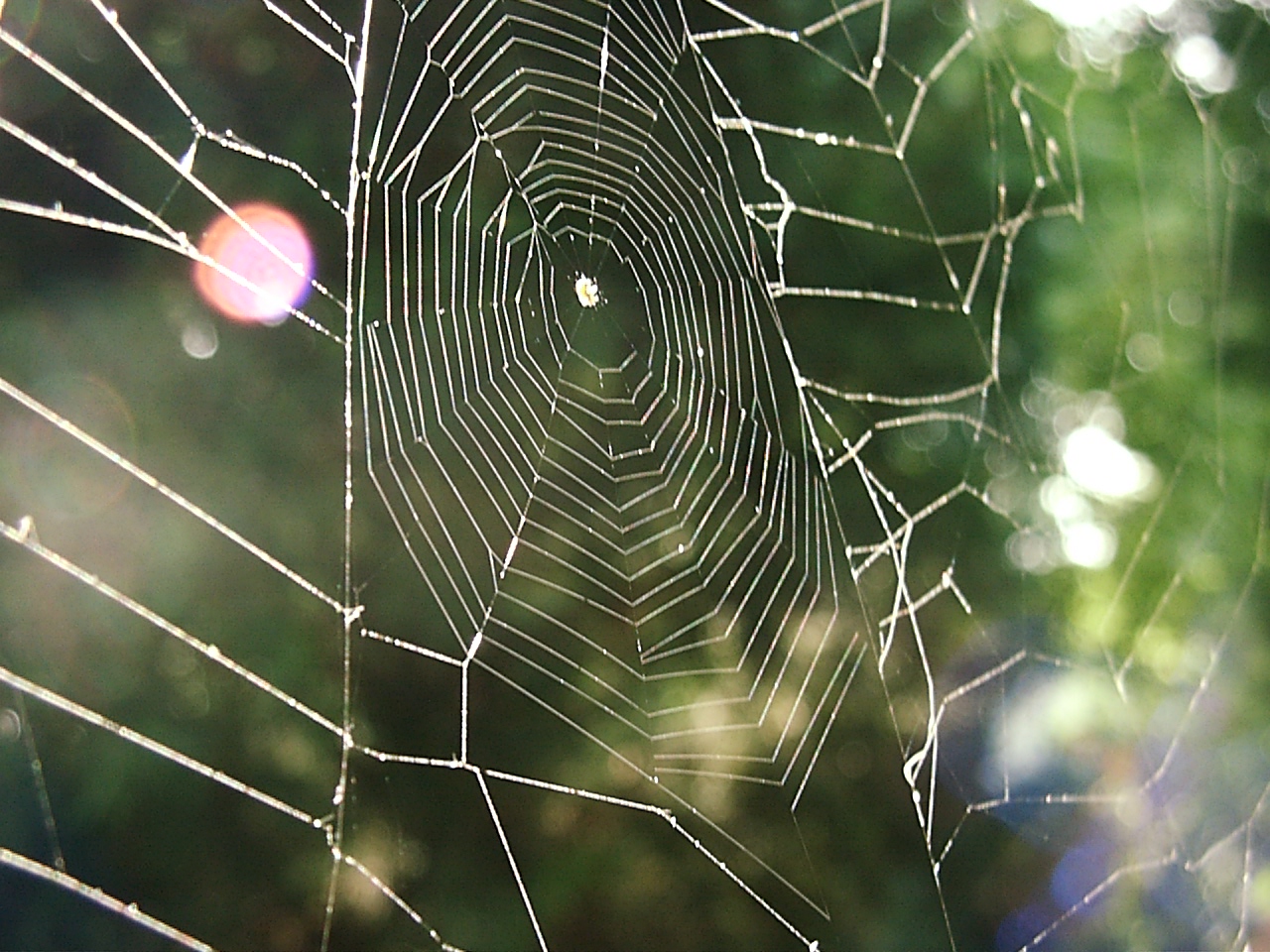
The Immortal Web of Time (2) by Thomas Peace 2013
.
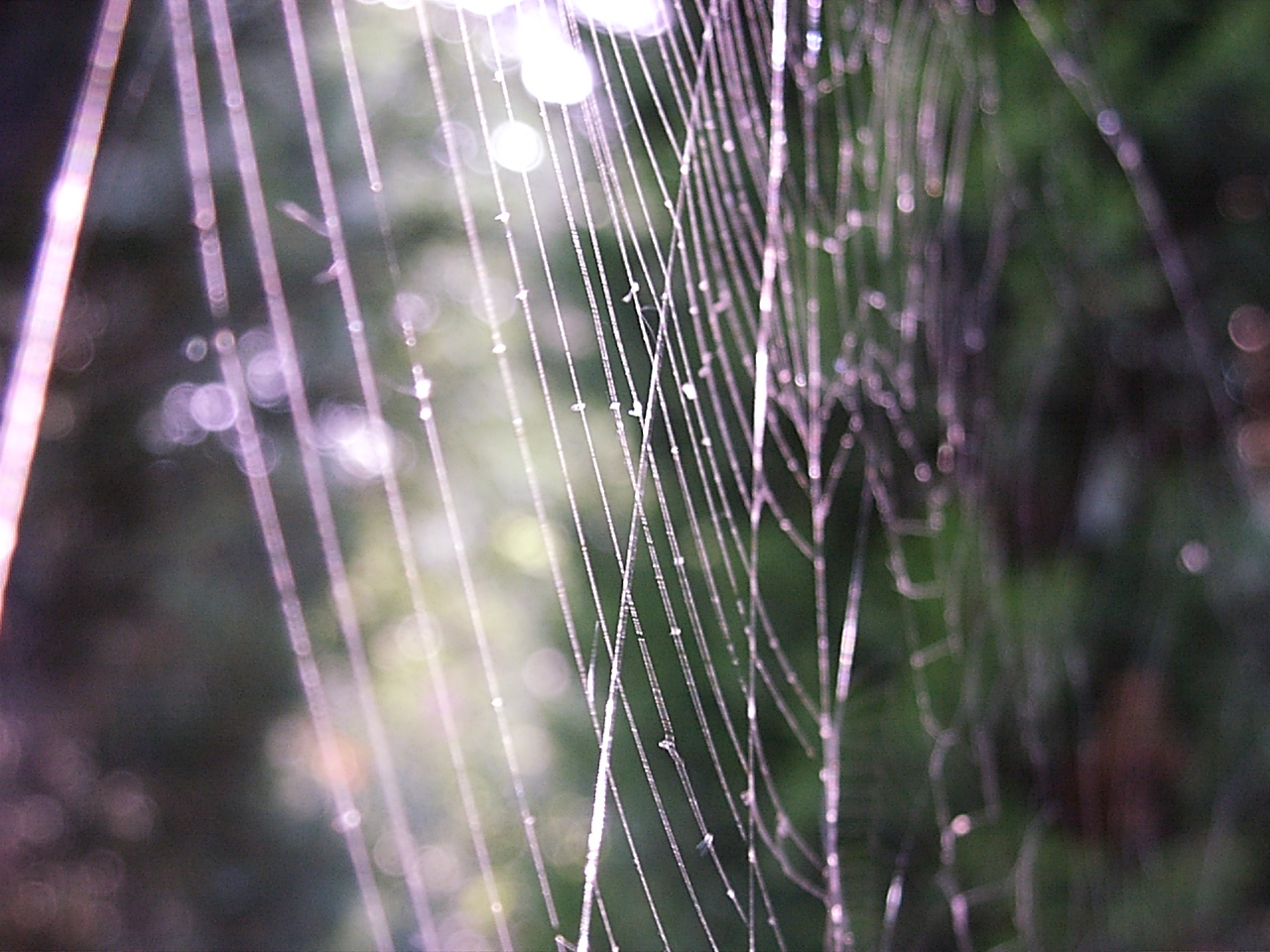
The Immortal Web of Time (3) by Thomas Peace 2013
*******************************************************************************************************
********************************************************************************************************

Curiously, it may be that “mostpeople” function in the details, but never seem to care about seeing the big picture.
Curiously, time and eternity may be parts of that bigger picture that “mostpeople” don’t care enough about seeing.
It’s always important to see the little details; it’s also always important to curiously see (and understand) the big picture.
.
.
.
from Emily Dickinson:
.
ESTRANGED from Beauty — none can be —
For Beauty is Infinity —
And power to be finite ceased
Before Identity was leased.
.
.
*********************************************************************************************************
(Left click on the photos to enlarge them; hit the left “return arrow” to return.)
…

Three Bugs in an Eternal Flower (1) by Thomas Peace 2013
.
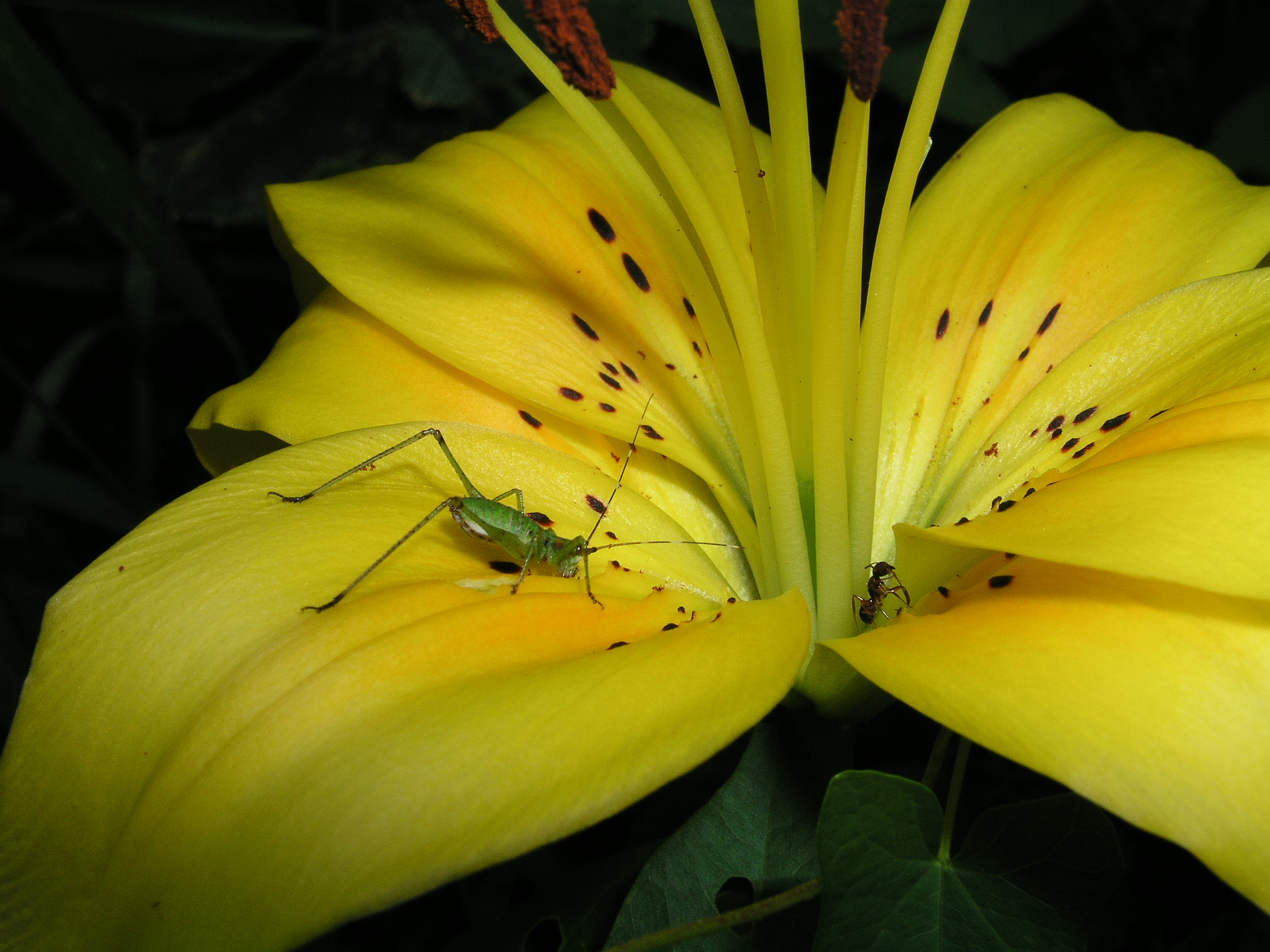
Three Bugs in an Eternal Flower (2) by Thomas Peace 2013
.
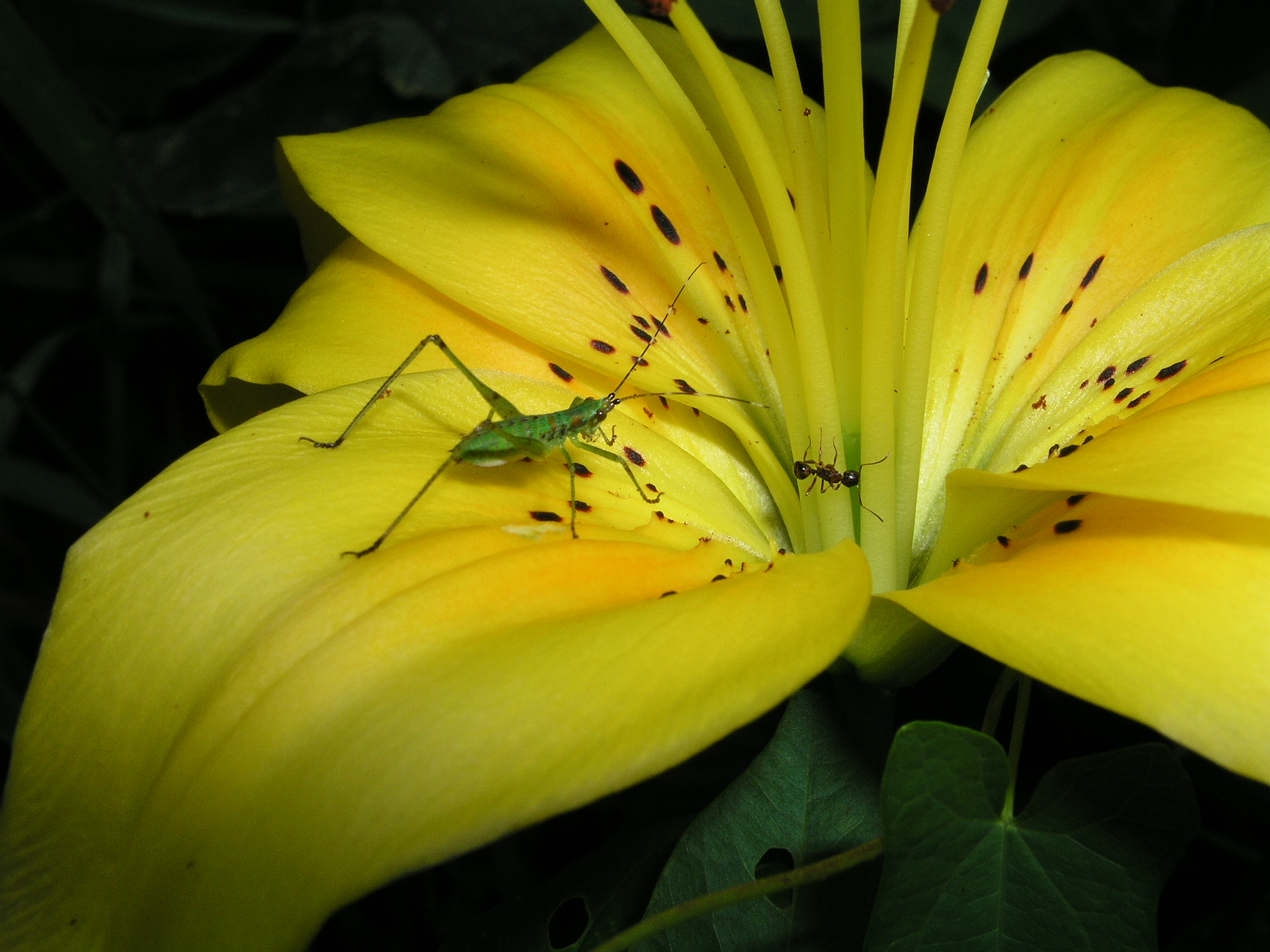
Three Bugs in an Eternal Flower (3) by Thomas Peace 2013
*************************************************************************************************

.
.
.(Left click on the photo to enlarge it; hit “left return arrow” to return.)

Painted Lady by Thomas Peace 2013
.
.
. from Emily Dickinson:
.
. THE BUTTERFLY’S Numidian Gown
. With spots of Burnish roasted on
. Is proof against the Sun
. Yet prone to shut its spotted Fan
. And panting on a Clover lean
. As if it were undone —
.
.
.
.
…………………………………………………………………………………………………………………………………………..
Other of Emily’s insightful poems occur in my book. eternalfountainofyouth.com
…………………………………………………………………………………………………………………………………………..

In order to magically not be like “mostpeople,” one has to stand alone… like a single leaf upon a branching tree… (which is not isolation; it is really joyously and steadfastly being connected to the whole).
“Mostpeople” will not deeply understand this. “Mostpeople” are not able to function via a profundity of much understanding. Do what you want… but I’m not interested in going with the masses of “mostpeople”; they all fall away from “being one with the whole.”
Like most of the leaves of a tree in late fall or in winter… “mostpeople” find it very easy to exist separately, apart from the whole. That is how “mostpeople” cadaverously go about their separate ways.
The “me” is what “mostpeople” are. “Mostpeople” are what they were taught. “Mostpeople” readily absorb and become what they were fabricated to become. “Mostpeople” are the fear of going beyond what they were merely taught; hence, they fear going into the truly unknown… into the truly mysterious. It is easy to become merely what you were (safely) structured to become. (However, such safety isn’t really safe by any means; it is a “being blown apart from the tree of wholeness and wisdom.” Such separation is a form of death.) “Mostpeople” are afraid of standing alone; they are afraid of not fitting in with “the rest of the crowd.”
The “me,” to “mostpeople,” is separate from everyone else. Each thinks that their “me” is what is essentially separate from “other” people, animals, and plants.” They think that there is distance from this “me” to “other” life forms and other beings. The “me,” to “mostpeople,” is separate from the desires and fears that it has. This “me” (according to “mostpeople”) can run from, try to alter, or subjugate its fears. The “me,” to “mostpeople,” is separate from the desires that it has. This “me” (according to “mostpeople”) can chase after, try to alter, or subjugate its desires. The “me,” to “mostpeople,” is separate from the ideas and thoughts that it has. This “me” (according to “mostpeople”) can recall, try to alter, or subjugate it ideas and thoughts.
To “mostpeople,” the “me” is a central, regulatory, decision-making presence that is apart from other beings… and is, additionally, apart from its very own thoughts (that “it” has power over).
To the ignorant and unaware, the following may seem a bit intimidating or disquieting… but (in reality) it is not anything to be alarmed about whatsoever.
To one who may, indeed, be of wisdom, there is not much of a “me”. The wise man goes far beyond what he (or she) was merely taught. The wise man does not merely become what he was molded, shaped, and programmed to become.
The wise man, to a great extent, is not separate from everyone else. He does not feel separate from other people, animals, and plants. The wise man feels responsibility for all… because there are no “learned,” illusory lines of demarcation separating him from the rest of life. The wise man understands that he is not merely something separate from his fears. He lucidly perceives that he and the fears are “one and the same.” He is not separate from what the fears are. The wise man understands that he is not merely something separate from his desires. He lucidly perceives that he and the desires are “one and the same.” He is not separate from what the desires are.
The wise man does not childishly try to run from, alter, or subjugate his fears… for he prudently sees that doing so involves primitive, superficial conflict along with a significant waste of time and energy. The wise man does not childishly try to run after, alter, or subjugate his desires… for he prudently sees that doing so involves primitive, superficial conflict along with a significant waste of time and energy. (This does not mean that he does whatever is desired; that would be foolish!) The wise man is not — unlike “mostpeople” — afraid of standing alone.
The wise man does not childishly (from something internal, with a distance) try to recall his thoughts… because he discerningly perceives that his thoughts are not separate from what he actually is. So, in a wise mind, when thoughts are being recalled, they are recalling themselves; they are doing the recalling… not something somehow magically separate from them that is “getting them to recall.” Any alteration of thought, by a wise mind, involves thought altering and rearranging itself… not something doing it that is, somehow, separate and distant from thought/thinking. (Interestingly, despite its close, non-divisive connection to thinking, the sagacious mind, by the way, in its all-pervading wisdom, is not merely confined to the realm of mere thoughts and thinking.)
The wise mind is not what functions with a lot of separation and needless conflict (between what it is and what it is not)… as does “mostpeople.” This does not mean, of course, that the wise mind will brush your teeth for you (if you can brush them). It does mean that the wise, holistic mind is not likely to be involved in fragmentary wars, ruthless competitiveness, indifferent unconcern, and uncaring debauchery. It may be that the wise mind is an awareness that pervades and permeates beyond all small, limited, selfish, immature lines of separation and restriction. One, major form or type of restriction… involves erroneously thinking that there is distance between you and your thoughts, fears, and perceptions… which, in reality, there is not. You actually are your thoughts, fears, and perceptions. Going beyond such restriction is the only true and real freedom and (wholeness)… and it is not, unfortunately, for “mostpeople.”
In order to magically not be like “mostpeople,” one has to stand alone… like a single leaf upon a branching tree… (which is not isolation; it is really joyously and steadfastly being connected to the whole).
**************************************************
from E. E. Cummings:
**************************************************
One winter afternoon
(at the magical hour
when is becomes if)
a bespangled clown
standing on eighth street
handed me a flower.
Nobody,it’s safe
to say,observed him but
myself;and why?because
without any doubt he was
whatever(first and last)
mostpeople fear most:
a mystery for which i’ve
no word except alive
—that is,completely alert
and miraculously whole;
with not merely a mind and a heart
but unquestionably a soul-
by no means funereally hilarious
(or otherwise democratic)
but essentially poetic
or ethereally serious:
a fine not a coarse clown
(no mob, but a person)
and while never saying a word
who was anything but dumb;
since the silence of him
self sang like a bird.
Mostpeople have been heard
screaming for international
measures that render hell rational
—i thank heaven somebody’s crazy
enough to give me a daisy
***********************************************************
(To enlarge the following photo, please left click on it; hit the left return arrow to return back.)

Connected to the Whole… photo by Thomas Peace c.2013
Not to stereotype… but the following is what I think about Gay people.
First off, let me inform you that I am completely “straight.” I am male and I have a female wife. I have always been straight… and I’m sure I’ll happily remain that way.
I’ve had tropical fish and parrots, as pets, for many years. Years ago, I met someone who shared his home with many parrots. He had a lot of breeding pairs — really cared for his many bird-friends — and was really fond of animals of all types. He was a real lover of nature. He went by the name of Buddy. Buddy became one of my very best of friends. As time went by, I learned that Buddy was gay. He, in all the long time that I knew him, never tried to touch me inappropriately or in any sexual kind of way. We hung out a lot together… and often talked about different kinds of animals and creatures; nature and wildlife was our real passion.
Buddy once confided, to me, about how difficult it was for his family (i.e., his parents and siblings) about accepting his “gayness.” He, additionally, once said to me, “Who would ever choose to be gay?” He said that nobody would choose to be different like that; that it was something that just “happens” (like biologically/physiologically). I agreed with him; felt empathy for him; and continued to accept him as a true and splendid friend.
Unfortunately, Buddy did not see himself as positively as I did. He was raised Roman Catholic and attended church on a weekly basis. Buddy told me that what he was doing was a “sin”… and that, in a way, he was “wrong” and “evil.” Following being told things like that from Buddy, I occasionally would tell him that what he was… was not in any way sinful, or wrong, or evil. However, just like oodles of others, Buddy was ingrained by a traditional, doctrine-oriented, obsolete system run by antiquated, old-fogeyish men. My words fell on deaf ears. To his mind, I was no longer a “believer.” So my words carried little weight.
Once, we went together (to a distant large town) to a huge convention — with many people attending — on parrots. Buddy invited me to stay overnight at his friend’s house (while we were there). He assured me that there would be no interference with my privacy. I agreed, and — though I had a room all to myself, with the door closed — I just could not sleep that night. Something, deep down and rather unconscious, would not let me sleep. Nothing happened that night, of course, and I could have slept just fine. I’m sure that Buddy had a great time with his friend. (My lack of sleep was something to laugh about the next day.) At the large (all day) convention, which was about parrots, they served “grouse” for lunch; each plate had a whole bird sitting there in front of each in attendance…(except, fortunately, for me… I’m a vegetarian)! That meal was ludicrous! Who planned that, one wonders! We laughed about it all the way home! 🙂
Ever since I was a young child, I’ve had tropical fish. Angel fish, which I’ve occasionally gotten eggs and babies from, mate for life. Once in a while, I noticed, two males or two females would become mates. These fish were not “swayed” by deviant other fish who “taught them deviant ways”! It was just some biological/physiological phenomenon that naturally happened now and then. (Like it or not, we, all land-dwelling vertebrates, evolved from fish… fish like Osteolepis.)
One day, they found Buddy dead in his back yard. This, by the way, happened years ago. It was a heart related cause of death. One wonders if stress played a role in his untimely demise. If he had more acceptance, from others, about his “condition that wasn’t a condition”… maybe he would have lived a lot longer and a lot happier.
I am so glad that I still am not a follower of those old-fogeyish men with their pointed, fancy caps and their fancy robes and buildings. I am glad that I was supportive of Buddy… and that I often said positive things about his lifestyle (that he didn’t choose).
One of my sister-in-laws is gay. She is married to another woman. My wife’s family, at first, had a bit of a difficult time with it. But now they are very accepting and understanding about it. I, from the get-go, did not have any problem with it; to me, at the time, the difficulty that others were having about it seemed to be rather nonsensical and silly. That sister-in-law — I have six others — happens to be one of my very favorite within the family. She and her awesome spouse now have two wonderful children (by way of a sperm bank for the deposit). They are the most splendid of parents… always fussing over their kids and taking them all over for learning and educational purposes. You couldn’t find better parents! Not only are they great parents, but they are kind, happy, considerate, warm human beings. They are both teachers… and people in their community love them!
At the family Christmas party, a few days ago, (we had one of those later parties), I overheard one of the other sister-in-law’s kids say to the girl of the twins, “Why don’t you have a father like the rest of us do? Isn’t that very odd?” She said it in a kind of half mocking, half despising way. I plan on asking my gay sister-in-law for permission to briefly talk to her two children about their parents. I want to tell them that my so-called normal parents were often very cruel and uncaring. My mother often asked me (as a child) to talk her out of suicide and my father was psychologically and physically abusive. I used to fear for my life (while living at home as a young child). I would like to tell my “favorite sister-in-law’s” children just how amazingly lucky they are… and how they need not ever be embarrassed or ashamed. Many (far too many) so-called “normal” parents leave a lot to be desired!
Some final comments: There is one thing that I do disapprove of. It is those authoritative, dictatorial, hierarchical, orthodox, old men with the pointy hats having their way with little children, while the system tidily covers things up. They are the ones that are truly the danger.
Walt Whitman, one of the most sagacious of poets — and I have some of his insightful, witty poems within my book — was probably gay (as indicated by many biographers). He was no follower of any rigid, antiquated system; he walked robustly and solidly… content and more than pleased with himself!
[from Walt Whitman:
Do you suppose you have a right to a good sight, and he or she has no right to a sight? Do you think matter has cohered together from its diffuse float, and the soil is on the surface, and water runs and vegetation sprouts, for you only, and not for him and her?]
The following bird is beautiful… but its beauty can never approach the deep beauty of someone who, without harming others, has profound and wise acceptance for the way he or she really (intrinsically) is.
Photo below… by Thomas Peace (Left click on the photo to see it enlarged; left click on the “middle” of it again if you wish to enlarge it more; hit left return-arrows, once or twice, to return.)

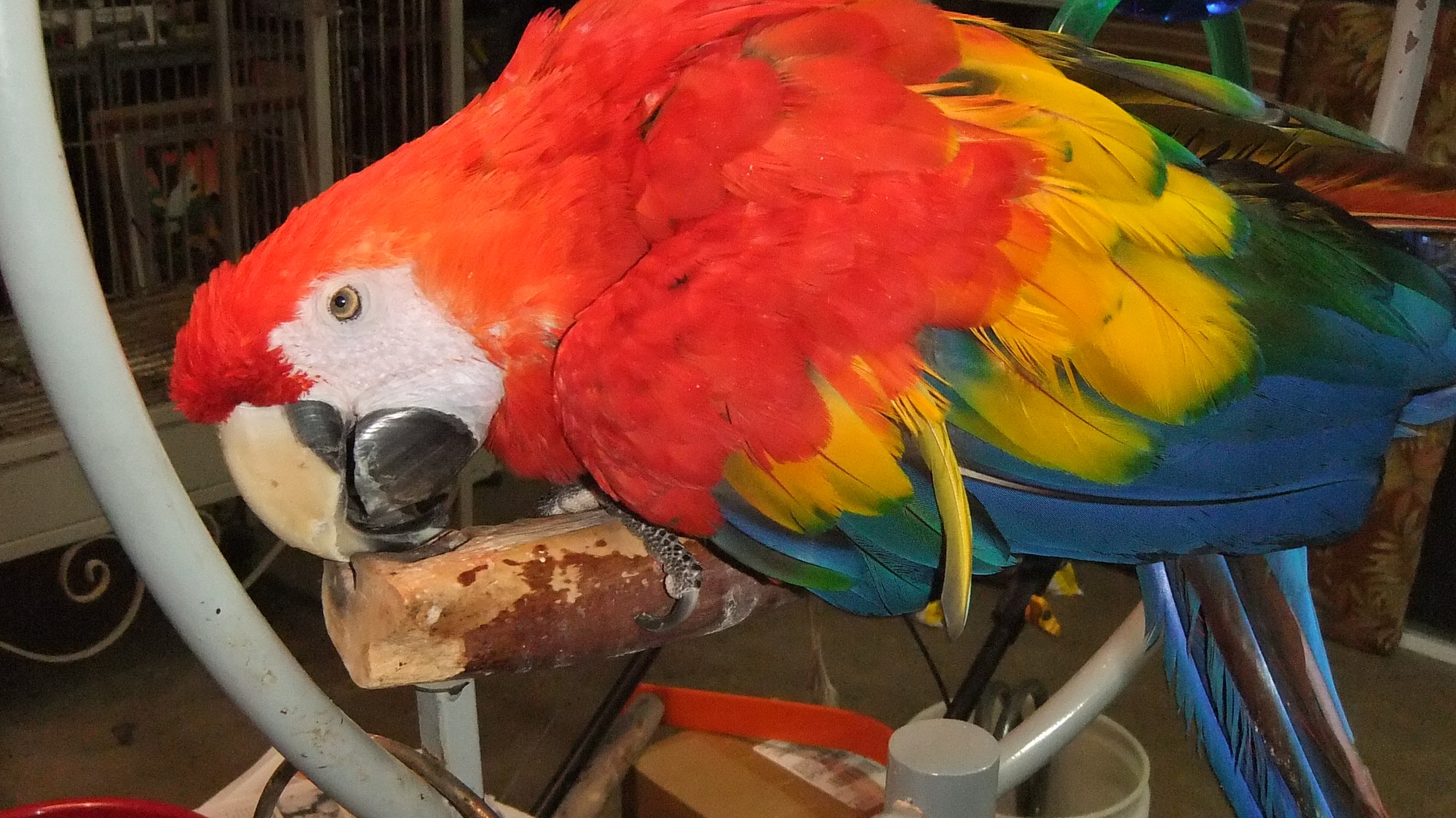
Photo of Scarlet by Thomas Peace c.2013

Beyond superficiality of the mind… may exist the profound depth of insightful, direct, compassionate perception. Perception that is not (often) compassionate is the kind that is not (often) the result of keen and profound awareness or insight. Such perception — without compassion — is often rather callous, machine-like, indifferent, limited, and therefore, superficial. In order to be indifferent, apathetic, and unconcerned about the feelings and well-being of others, one must be psychologically bound in a limited, constrained, and fixed frame of mind. Such a frame of mind is little and small… because its concern involves only one little square within the entire chess-board… not the entire field. One does not care much about what happens to others… because, for one thing, one is likely to be concentrating almost entirely on oneself (as what is important).
All limited fields, including the limited field of merely concentrating on oneself, must be curbed by narrow, fixed demarcations. Such demarcations and boundaries often are not fluid; they are not dynamic, nor are they all-encompassing. What is heavily bounded often does not have a lot of depth. Not to be judgmental, but there are all too many people who are quite content to remain fixed in limited fields of concern, having little regard for the well-being of the whole (i.e., well-being of the earth’s many life forms). Being separated from others involves fragmentation… a fissure and a disjunction from them. This separation can be learned (such as via barbaric educational or primitive parenting practices) or it can be the result of certain biological qualities of the brain (as a result of biological/genetic inheritance or by cerebral chemical malfunctioning).
Some very social animals, such as monkeys and higher apes, tend to (at times) be rather compassionate (to a limited extent) to members of their own group or pack. This sharing within the group tends to benefit members within the group, and it extends order and mutual survival for all. Even some insects (such as ants) engage in instinctual sharing and group consciousness; they even create ladders (constructed out of many of themselves, as bodies clinging to bodies) so that other members can transversely move across difficult crevasses/chasms. Bonobo chimpanzees, a subspecies of chimps, have a brain anatomy that is significantly more developed, with larger regions assumed to be associated with the process of feeling empathy; they easily sense distress in others, and “feel their anxiety,” which makes them less aggressive and more empathic than their close relatives (i.e., the regular chimps and some of us humans). Bonobos have a thick connection between the amygdala, an neural area that can spark aggression, and the ventral anterior cingulate cortex, which helps control impulses. This thicker connection enables them to better regulate their emotional impulses, and to get a better grip on their behavior. I love how Bonobos are so full of empathy for other animals. One, for example, lovingly held an injured bird and kept it warm, until it was able to fly over the enclosure fence.
For us humans, to be shaped (mentally) by the edicts of society allows only for a very limited depth of insight and true compassion. Although there is sharing… society, currently, incorporates a lot of separative, competitive, and rigid views. Dynamically transcending these views may be necessary for a profound depth of insight, and for real compassion, to manifest. Society, currently, often deeply admires the man who is very financially successful, competitive, and dominant over others; such success often involves a rather ruthless, cutthroat, and machine-like mode of affairs. Real compassion crashes through the superficial perspectives (of normalcy) and intelligently goes where recognition and awards are of little value and meaning. The immature need to be “recognized”; the need to be given “awards”… involves ostensibly concentrating on a little, limited, fixed self.
Photo below… by Thomas Peace (Left click on the photo and scroll down to see it enlarged; left click on the “middle” of it again to enlarge it more; hit left return-arrows, twice, to return.)
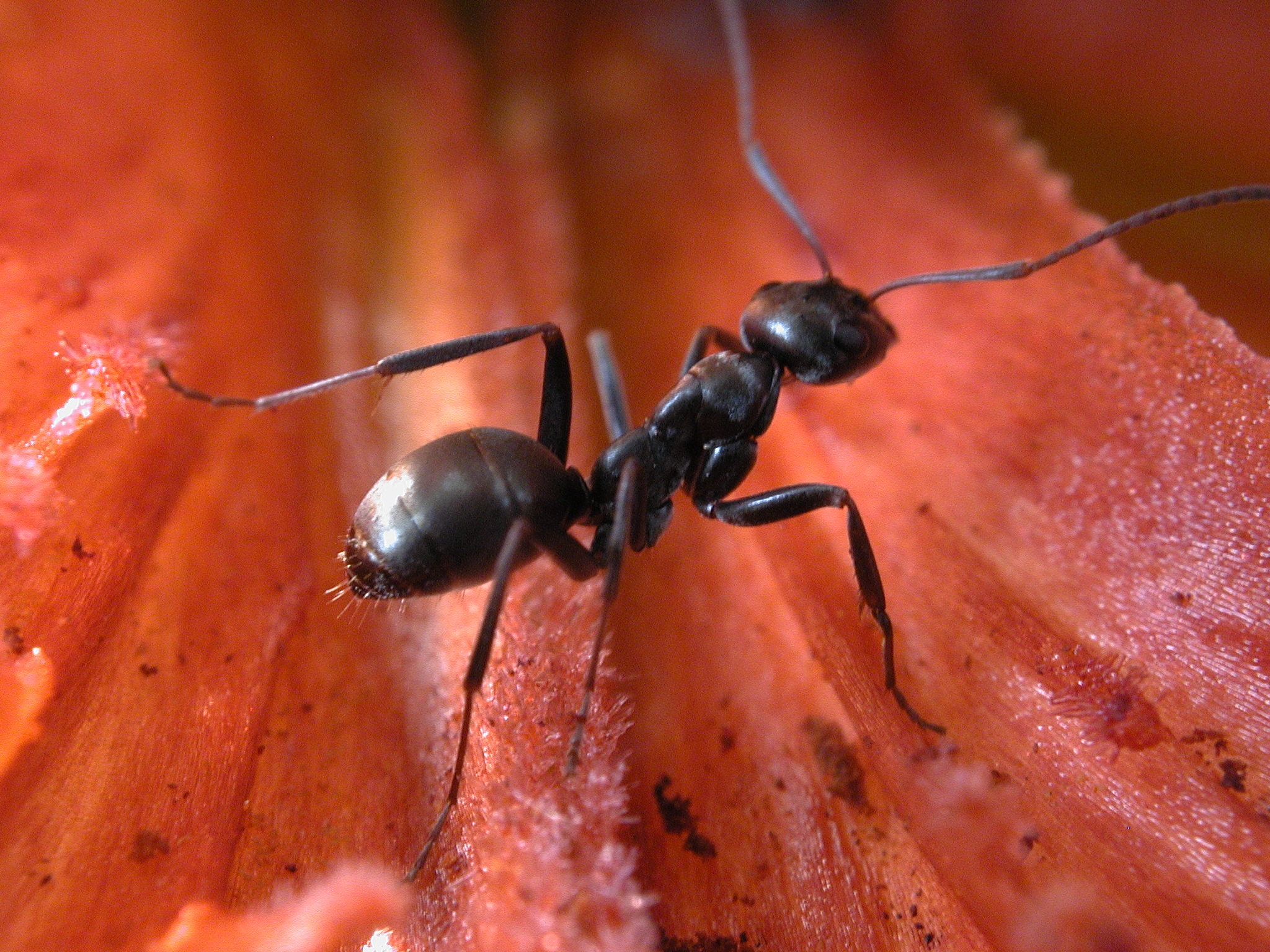
Lily with Ant photo by Thomas Peace c.2013

Life involves much more than having many symbols (i.e., thoughts) about it. Many of us go through life looking at everything through a screen of symbols and images. We recognize things merely via these symbols and images (that we were taught). To look freshly — without all of these blasé, worn-out images — is to really live. Otherwise, one is merely looking through (and with) the old, dead known. Direct, youthful observation only takes place without the contaminated past interfering. Such observation is, in itself, alive and free.
Structured and “learned” observation is never really of freedom; it is never implicitly free. Many merely look via the ways and modes that they were “taught” to look. Little wonder, then, why so many become bored, weary, melancholy, and depressed. They are not looking with what is joyous, fresh, alive, and spontaneous; they are looking with what is old, stored, categorized, and of the past. The beauty of existence and life is in its spontaneity and “nowness”… not in a remembrance of what “was before.” Go beyond what all the pundits have taught you. Go beyond what you stored and accumulated. Leave the dead past and perceive freshly in the “now.”
The next time you see the beauty of an animal, or a face, (or a tree)… please do not merely look at it via labels, classified-learned patterns, formulated systems, and antiquated memories. Please do not merely look with a lot of that “learned space” that exists between the perceiver and what is being perceived. Without all that baggage, maybe (if you’re lucky) you’ll actually be in relationship with what is observed.
“Beyond Labels”… pic by Thomas Peace (Left click on the photo and scroll down to see it enlarged; left click on the “middle” of it again to enlarge it more; hit left return-arrows, twice, to return.)

“Beyond Labels” photo by Thomas Peace

One can take the easy way that others have formulated “for you,” regarding living your life. Most of us travel the safe and easy path that was laid out for us by others. However, it may be that the “prefabricated path,” put there by others for us to travel upon… almost inevitably leads to a life that is not truly full of dynamic immensity and true passion. Any system, any set of rigid methodologies, merely tend to heavily condition the mind. Such a conditioned mind, being second-hand, rarely has the capacity to go beyond what is mediocre and contrived by plotting.
True spontaneity, true insight… is never the result of any second-hand, calculated series of events. Real spontaneity and actual insight is always what manifests from something direct and “non-distorted.” What is merely “learned” is always second-hand and, therefore, not truly direct and straight. Shadows are what is rather second-hand… and a lot of minds are “in the dark” due to having allowed themselves to exist via the formulations and blueprints of others. We need to go beyond what was fabricated for us to function “as.” We need to perceive without all of the contamination that was poured into so many (by calculating profiteers). We are not invited (enough) to do things without motive. We are not invited (enough) to question things freely, sanely. We are not invited to intelligently go beyond what was spoon-fed into us. Most of us may be falling “off course,” because we may be traveling as delimited by (fallen) others. Traveling on the razor’s edge is very difficult; it is easy to fall off and remain very “safe.”
Black Swallowtail on Flower’s Edge…pic by Thomas Peace (Left click on the photo and scroll down to see it enlarged; left click on the “middle” of it again to enlarge it more; hit left return-arrows, twice, to return.)
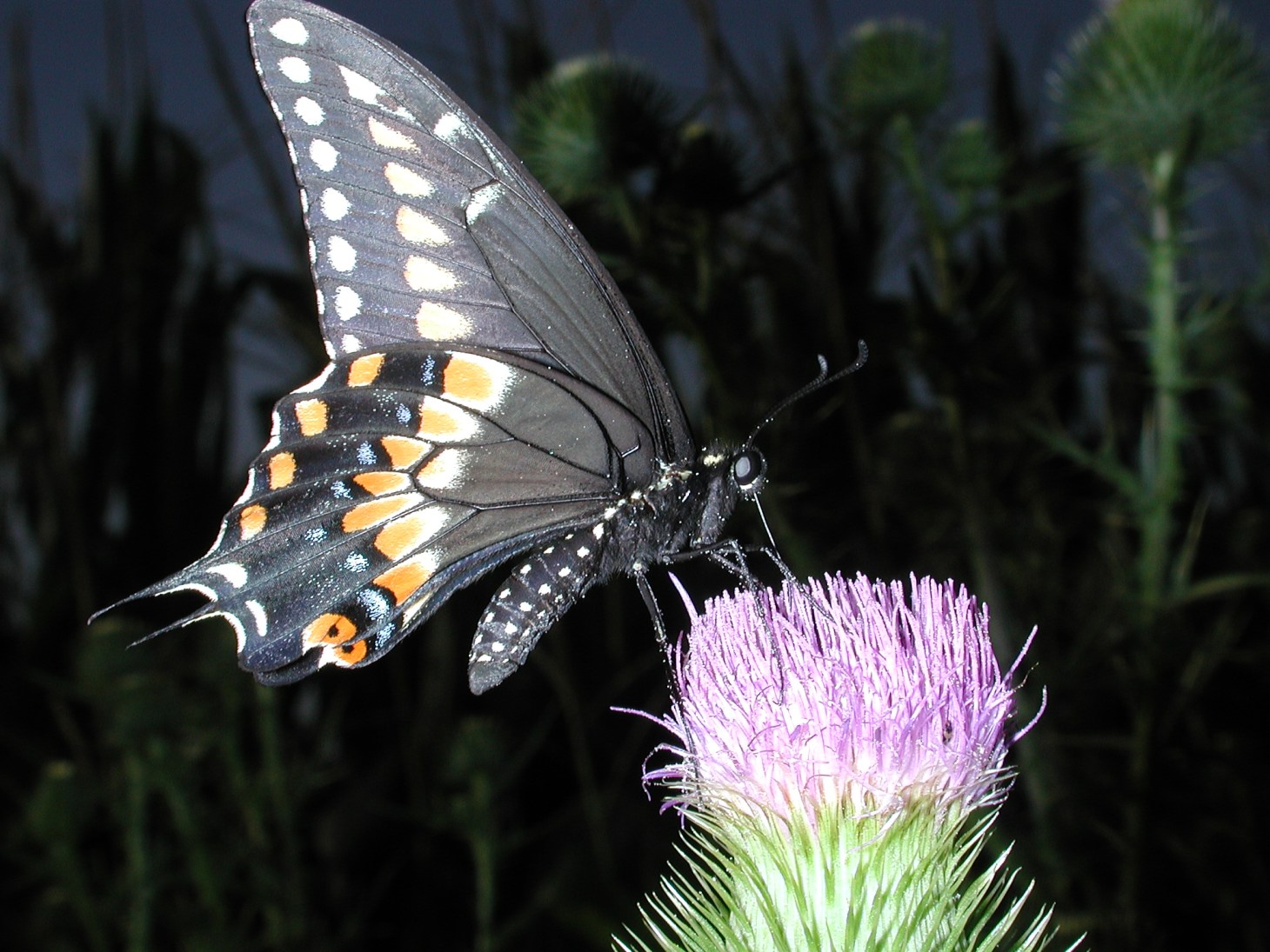

Memory is always old and of “the past.” It involves symbolic images and words in a recollection of past occurrences, past things, past events, and past experiences. Memory is usually heavily conditioned by the learned patterns that society has shaped within us. The memory bank is an accumulation of these past (learned) things and past experiences. Things are categorized within us, according to how we’ve been taught. We often merely see things through a process that is dictated through the learned screen of memory. Recognition is often largely memory reinforcing itself. Being more than something that is second-hand… involves going beyond all this in a fundamental way.
This arrangement (of memories) can become rearranged (and reshuffled) and, in having done so, relatively new things and ideas can become established. Such a rearrangement can either be very beneficial (to life on earth) or not very beneficial, or somewhere in between. People come up with all kinds of ways to “sell” or “profit from” their ideas. This profitability either is motivated to benefit the self or to benefit humanity and life (or both); oftentimes it lies somewhere in between. A truly wise man, however, deeply perceives that the self is not, in truth, separate from the rest of humanity (and life). Such a person’s motivation may not lie within what was merely learned via past experiences and via various types of stored memory. This is because real insight can spring into existence (in a serious person) regardless of what past memories and experiences existed previously.
Deep and profound insight cannot be purposefully brought about by any method, system, or procedure. Otherwise such insight would merely be the formulations of (or partially formulated by) a plan. Planning takes time, and deep insight exists beyond the realm of what can be concocted in time. True insight is timeless. It is a profound, spontaneous explosion beyond what one had learned or experienced via memory. The profundity of insight can (out of compassion) shape someone’s memory; but one’s memory can never shape, fabricate, or bring about true insight. The mechanism of memory (as the thinking process) must end (for deep insight to take place). This ending, of course, cannot come about via any contrived process, procedure, or devised strategy. An ending resultant from some kind of blueprint is a mechanically formulated effect… which is not, truly, an ending. If the cause involves “plotting” and “calculation”… the end will be also be rather ordinary, near-predictable, and mundane. Most people were taught that “ending,” for them, is something that is “not good.” However, ending “psychologically” may not, at all, be deleterious. Most people endlessly cling to (their) memory. (That is what they were taught… and that is what they have absorbed; that is what they continually function as.)
Insects and flowers have always had a symbiotic relationship with each other. The flower feeds the insects and the insects help pollinate, clean, and protect the flower.
Photo of ant on a lily flower by Thomas Peace c. 2012:
[Left click on the photo to see a larger version… then left click on the “center” of it again (up to 2 times) to expand it further; hit left “arrows” to return.]

Ant on Lily by Thomas Peace c. 2012

In Memory of those Budding Children who faded today…
They were beautifully blossoming… and such precious flower buds should never be overshadowed or clipped.
(An insane madman, of darkness, did some ignorant overshadowing.)
from Emily Dickinson:
On such a night, or such a night,
Would anybody care
If such a little figure
Slipped quiet from its chair —
So quiet — Oh how quiet,
That nobody might know
But that the little figure
Rocked softer — to and fro —
On such a dawn, or such a dawn —
Would anybody sigh
That such a little figure
Too sound asleep did lie
For Chanticleer to wake it —
Or stirring house below —
Or giddy bird in orchard —
Or early task to do?
There was a little figure plump
For every little knoll —
Busy needles, and spools of thread —
And trudging feet from school —
Playmates, and holidays, and nuts —
And visions vast and small —
Strange that the feet so precious charged
Should reach so small a goal!
Katy and her blossoming flowers…
Thomas Peace c. 2012

Looking from a limited perspective… what does that mean to you? Have you ever thought about it? Many of us probably perceive through a conditioned background… a background that many of us have “operated from,” but which many of us have never intelligently examined objectively. To perceive things in a fragmentary manner may be to look with a great deal of separation and division.
Many of us go through life “recognizing” things. We recognize one thing after another, as we were taught. Then we write essays, or books, or blogs, or letters, or emails about these multitudinous “things” that we have “recognized.” We often recognize things in the manner or way in which we were taught to recognize them. One’s consciousness is constituted of these “recognized things.” These things that we were taught about have very delineated demarcations and boundaries. We were taught that each thing has a finite domain and a limited space… and we were taught that there is a limited space between us and each of these “things.” (We were taught that fear is there, in us to deal with… not that we and our fears are not separate, not something different.) We continue to write about these things and share these things with others. So, indirectly (or directly) we are continuing to teach and to reinforce the learning/teaching process of others (in the manner that we were taught). Some of us are very good at writing and at conveying images to others via printed words. We get congratulated about what we are writing… and, indeed, some of us develop very lucrative professions due to our ability to hone and craft words in an “artful/intelligent” manner. We give each other prizes (for those who we think did the best job at entertaining us with words and symbols… in a crafty manner).
In the Algonquian Native American family of languages, for instance, there is more of a verb-based structure existent. In other words (no pun intended) more verbs exist, rather than separate things “as nouns.” There’s more of a “doing” and “blending,” rather than an “it-ness” and a “separativeness.” The Ojibwa, the Cheyenne, and the Blackfoot sometimes saw things more together, in a kind of blended movement or flow… rather than as mere separate, isolated “things” very apart from each other.
Animals recognize things, often without having been taught to do so. Dogs recognize what to eat and what not to eat (though what some dogs recognize as being “edible” is not often very beneficial to eat). Cats recognize what is a threat and what is not likely to be harmful. Saber tooth cats (no doubt) could often do so without having been taught by their mother. A lot of this recognition is innate and instinctual. It is at a very crude level. Even insects and spiders can recognize what is an enemy and what is beneficial to eat; oftentimes they are one and the same (in the case of what insects/spiders see as an enemy that is concomitantly likely delicious)!
The consequences of continuing to write with a separative mode (quite similar to what crude bugs and diminutive animals can grasp and attain)… might be extremely profitable for the so-called gifted writer or author who is capable regarding relating in such a manner. However, if we merely continue in that crude, crass, and primal mode (as we have been doing for millennia), then we will have merely continued the process of looking from a limited perspective. We need to evolve from this separative perspective (which merely involves separate things). If we don’t change, then people (with their separative little countries, sects, things, and establishments) will never change fundamentally. Will a fragment, a separate, little self that is divorced from everything else be able to do this? One doubts it. What is limited cannot transcend limitation unless it fundamentally changes into something else. A little insect, sitting on a plant, can’t fundamentally change from the crude limitation that it is immersed (and absorbed) in. Can we?

Katy in Flower
by Thomas Peace c. 2012

We are what we think. And by and large, we are the thoughts of others. We have absorbed the thoughts, patterns, habits, and manners of others; we are an accumulation of these processes, tokens, and methodologies that others provide. Yet we (each of us) think that we are something truly independent and unique. The reality may be that most of us are not unique or independent at all. To be a second-hand copy (of what everyone else basically is) may not at all be what “true living” involves. Being another domino in a sequential series of reactions may not involve real action whatsoever. Real action goes beyond limited boundaries. Limited boundaries constitute the very essence of symbolic representations and mental recognition frameworks via learned (i.e., merely absorbed) paradigms. Real learning lies beyond mere absorption.
We look through the screen of what we were taught… and what we see is what was implanted into us. Very few of us go beyond that very limited domain. We are used to (i.e., accustomed to) limitation, we live in limitation, we accept limitation, and we fight… in childish political parties, divisive religions, separative countries, and isolated, small self-concepts… all involving gross and crass limitation. Limitation occurs when the mind is spewing with boundaries of demarcations, when barren, symbolic representations endlessly clutter the mind. Merely absorbing and assimilating limitation is easy. Any languorous or inattentive mind can do that.
Fortunately, there are a few who look beyond the muddle and go beyond it. They are not the ones who write the innumerable mystery books that have no real mystery to them, and within… (and there are plenty of so-called mystery books like that). They are not the ones carelessly driving into dead-end streets while childishly trying to entertain us. They are not the ones in high office, dressed in fancy clothes (or wearing hierarchical robes) jabbering away, but with real apathy behind it. They are not the ones with their images plastered on the cover of popular magazines.
We think that we control what we think… but we are what we think. We have accepted separation as an essence of our fundamental perspective. (We think that we are separate from what we think… and that we control it.) We (most of us) have merely absorbed what we were “taught.” However, that kind of teaching, from which we were “taught,” may not be real teaching at all. Real teaching involves penetrating the superficial. Real teaching involves tearing down false limitations and puny demarcations to reveal and allow deep, profound insight. Wholeness, real wholeness, is not a concept. It is not something concocted from an accumulation (or bundling) of the many things that one sees or was “taught” to see.
Many of us are second-hand shadows, congratulating each other on what remains superficial and fragmentary. The ramifications of this involve a world being harmed more and more by very limited minds. To question what we were taught, and to go beyond it, may be the beginning of true wisdom. True wisdom stands alone… and it does not depend. True wisdom may not exist for one who wishes to wallow in the comfortable shadows of what it was conditioned to become by society.
www.eternalfountainofyouth.com
from Walt Whitman:
I believe that a leaf of grass is no less than the journey-work of the stars…
******************************************************************************************
Photograph “Leaves of Grass” by Thomas Peace (copyright 2012)


from Thomas Peace
True meditation is not something that one can know that one is engaged in. Like humility, true meditation occurs to the mind unawares; it is not something that can be recognized. One can not “know” that one is humble. Likewise, one cannot “know” that one is meditating. True meditation and true humility are both beyond the field of “the known.” Therefore, both are beyond the realm of recognition by the self; for recognizing is in the field of “the known,” whereas humility and meditation are of “understanding” and not “knowing.”
To practice meditation is folly. For one cannot practice what is beyond causality. One can practice what is within a cause and effect continuum — such as learning to play a man-made instrument — but true meditation is an all-encompassing, non-conditioned, non-fragmentary thing. Therefore, it is beyond the realm methodology within phenomena involving common causality. Interestingly, a lot of people claim that they practice a form of meditation. However, true meditation, being beyond what can be mechanically “practiced” within causality, does not exist for such erroneous individuals. You can practice something rather dead and mechanical… but you can’t practice “aliveness,” “awareness,” “insightful compassion,” and “holistic understanding”… and that (despite what many so-called experts say) is what meditation may really involve.
A wise, sagacious mind is (in itself) meditation. However, such meditation is not something that it practices as part of some methodology. A wise, sapient mind goes beyond the clutches of practice and methods… because such a mind intelligently goes beyond the field of the “known.” Such a mind goes beyond the realm of mere symbols and representations that words and labels are a part of. Such a mind goes beyond mere symbols… but not by any process of practice or methodology. True insight is instantaneous: no time is involved for it to (finally) come about. All methods and forms of practice take time. A wise mind (of true meditation) exists beyond what takes time in order to manifest. Interestingly, true meditation, being beyond mere practice and being beyond mere methods… is, in a significant way, beyond the causality of time.
Beware of those charlatans who offer a concrete form of meditation to you (for you to practice). What they give you may make you feel happy or comfortable for a limited time. However, what is not true meditation is merely a crutch. It is not the indelible gem of many indescribable facets. So, regarding those that offer you some form of methodology or prayer to attain enlightenment: run from them and do not fall into their clutches. Meditation is only what can occur for the individual of (and by) his (or her) own accord. It is a harmony that others cannot bestow upon you. Read my book (about self-awareness) at http://www.eternalfountainofyouth.com. The book will not provide you with mechanical methods to practice (like some kind of robot); it will not give you methodologies to follow like some kind of lemming. It will, however, encourage you to wake up and realize that what you do in infinitely important. However, if you are merely a “follower” and a lemming, then what you do will always be limited and confined. True meditation never blossoms forth from what is always merely limited and confined. True meditation is an explosion of infinite awareness and understanding… an awareness and understanding that no one can merely regulate out to you.
from Emily Dickinson:
A COUNTERFEIT — a plated Person —
I would not be —
Whatever strata of Iniquity
My Nature underlie —
Truth is Good Health — and Safety, and the Sky,
How meager, what an Exile — is a Lie,
And Vocal — when we die —
*************************************************************************************************
www.eternalfountainofyouth.com
Warm Regards,
Thomas Peace (author)
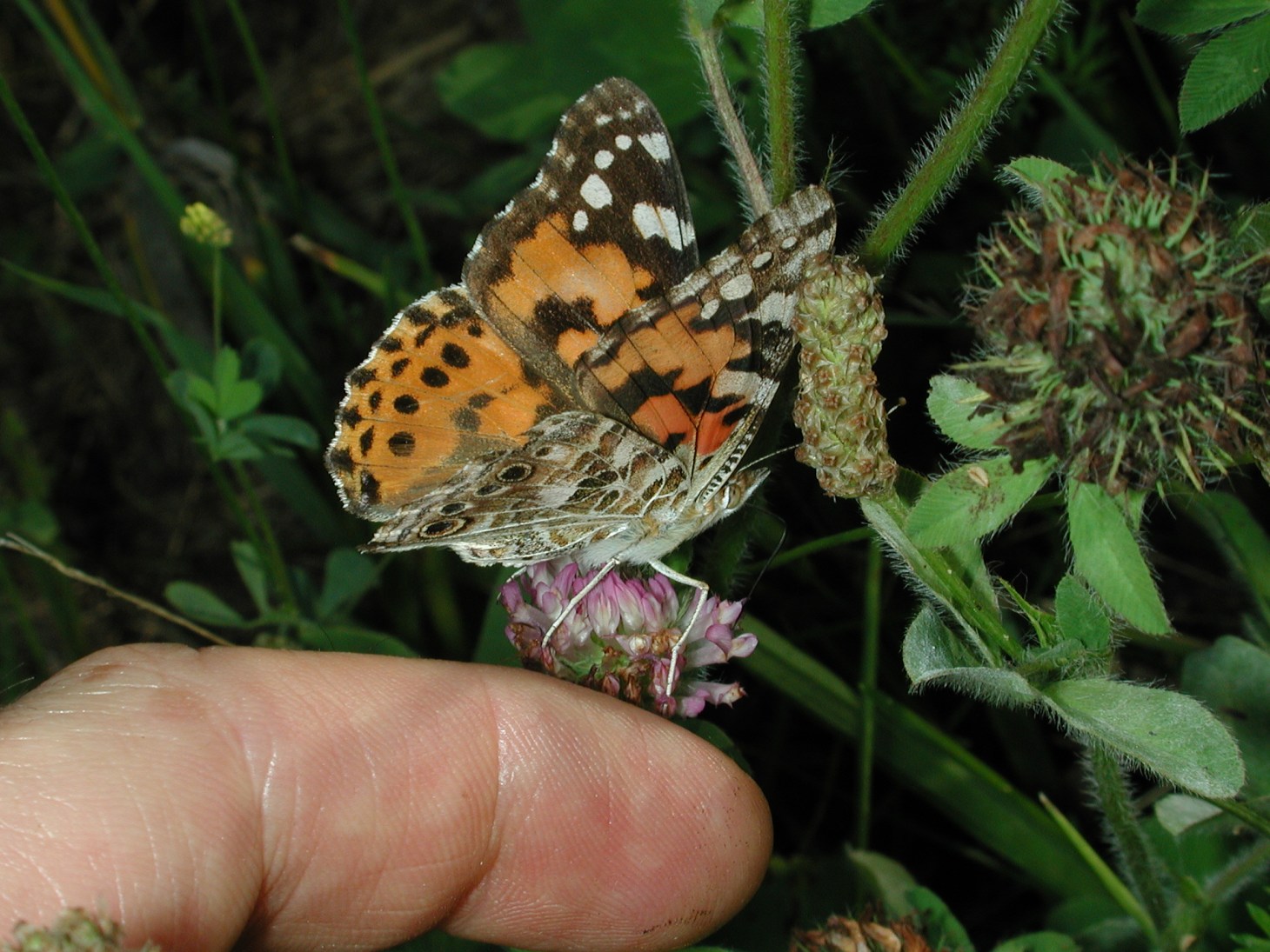
Photograph of Butterfly by Thomas Peace copyright 2012
Love and be the whole miracle of life… not limited, dead concepts and systems.
Intelligence goes beyond the boundaries of “them” and “us” and dissolves them forever.
It is easy to get lost in the shuffle.
A passionless mind is dead before it ever gets to the grave.
Anything, even a heartless machine, can exist as what it was programmed to exist as.
Separation (from others, for instance) is as a death.
You are responsible for the whole of life, because the whole of life is you.
True beginnings are entwined with (and engaged to) true endings.
The book, which I recently wrote, cannot fail, because even if you do not like it (which is highly unlikely)… it will have succeeded; it can only fail if you think that it is of the “languid orthodox” and that it is cherished by the “numb status quo”… and that cannot ever happen.
Regarding what most of the ungracious masses of separative people have unceasingly clung to: it doesn’t ring true.
Fly like a free Swallowtail… please do not cling to the stagnant flypaper of orthodoxy along with so many others.
Regarding my (i.e.,Thomas Peace’s) book please click on: www.eternalfountainofyouth.com
from Emily Dickinson:
Macro-photography pic taken by Thomas Peace:
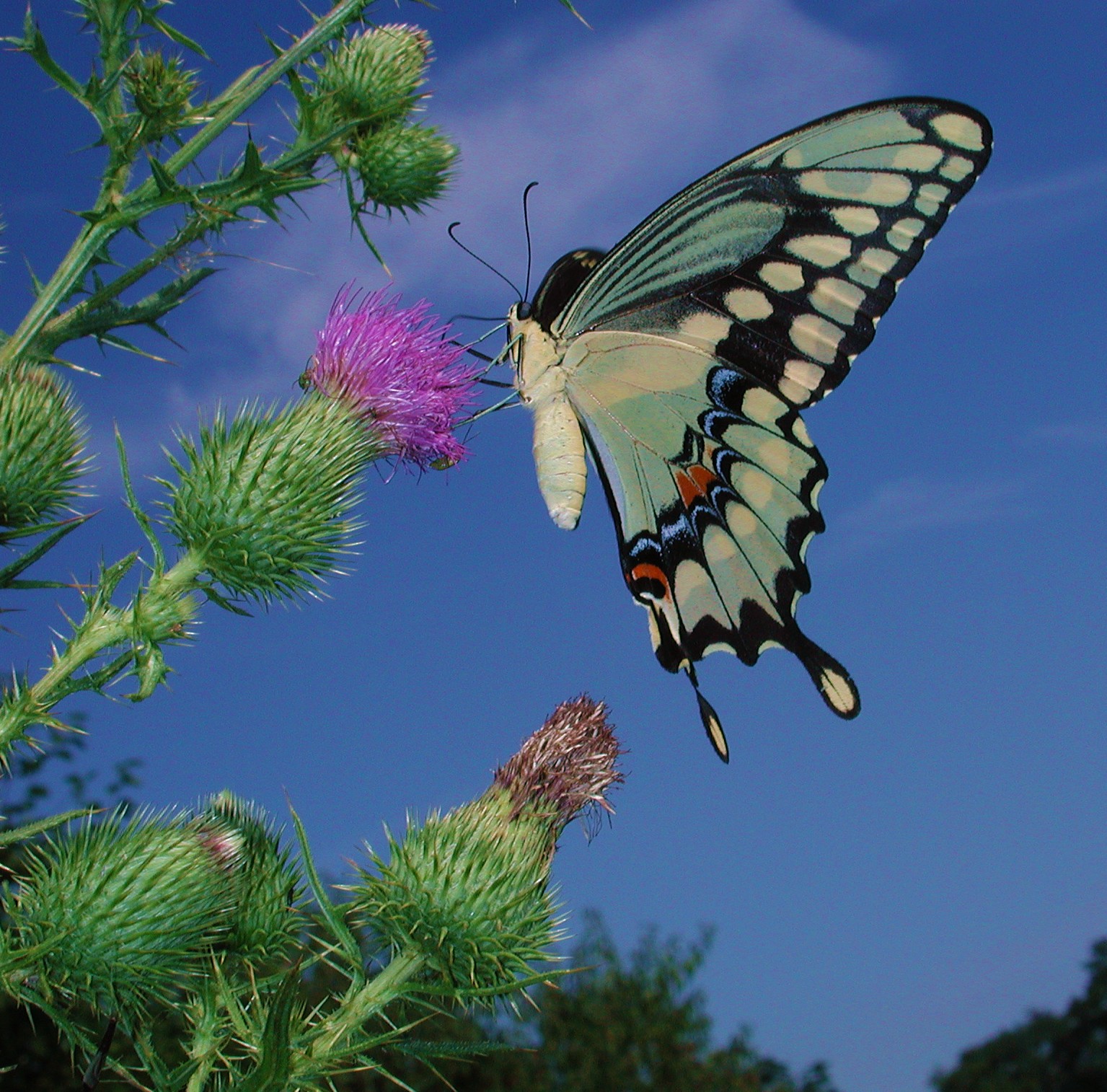
I feel that what is important in life… is understanding. For understanding is life, not something divorced from it. If you merely look in a second-hand way — that is, according to accumulations and formulated systems/patterns that were handed down to you — then you likely will be far from being a mind that is truly alive and supple. What is truly alive and supple is not ever the result of rigid, traditional, habitual formulations. If you follow a rigid, fixed path… you might find comfort, but you will not be what directly perceives truth, and you likely will not be what discovers deep mystery. That deep mystery is too alive and unconstrained to be able to be touched by what is second-hand, premeditated, and stale. No dead, fabricated path can lead to (or hold) what is true and what is truly living.
Please read my new book, but please do not cling to it. People who cling to books, to systems, to traditions, to methodologies (in the realm of the psychological and spiritual) are often like flies that get stuck onto stagnant flypaper. They end up being embedded in the conclusions of others, and there they are forever stuck… not ever realizing, for themselves, what true freedom is. So please do not turn my book into something to cling to and to help one become “stuck” (to conclusions about life). Please use my book as a tool for questioning. Question yourself about how others may have indoctrinated you and molded you to become part of what is rigid, second-hand, and obsolete.
Please wisely go beyond my book and beyond me. I, Thomas Peace, am not what is important and I am not what you need to focus on. You are what is important… and you may be so much more than what the supposedly sophisticated intellectuals have told you what you are. Please go beyond what the cultural pundits have shoveled to you. Please share my book with others… not to get them to come to presumptions… not to affix more humdrum ideas into their minds — and, it seems, most all the orthodox ideas are rather “humdrum” — but to invite them to prudently question things for themselves. This questioning may help them to live peacefully and holistically beyond dead conceptualizations, and to fly free (from being secure in the wretched, flat flypaper of stale conclusions). Please learn, for yourself (and not merely from others) about soaring and flying in true freedom. Please do not remain embedded in the old, humdrum patterns that the languid status quo adheres to.
Discover my book at www.eternalfountainofyouth.com
It can also be found by searching for it (via the book’s title) on Amazon.com
In an indirect way, it may be like drinking directly from the Grail cup itself.
 Tom's Nature-up-close Photography and Mindfulness Blog