A small ego and a Big Heart is better than a Big Ego and a small heart.
.
[This diminutive Milkweed Bug Nymph just finished shedding its (outer) exoskeleton. The Milkweed Bug Nymph is around 3 mm long. It seems to be proudly overlooking its great accomplishment! Some insects devour their exoskeletons after shedding them; but this little vegetarian likely will not.]
The little contains the large. The large contains the little.
.
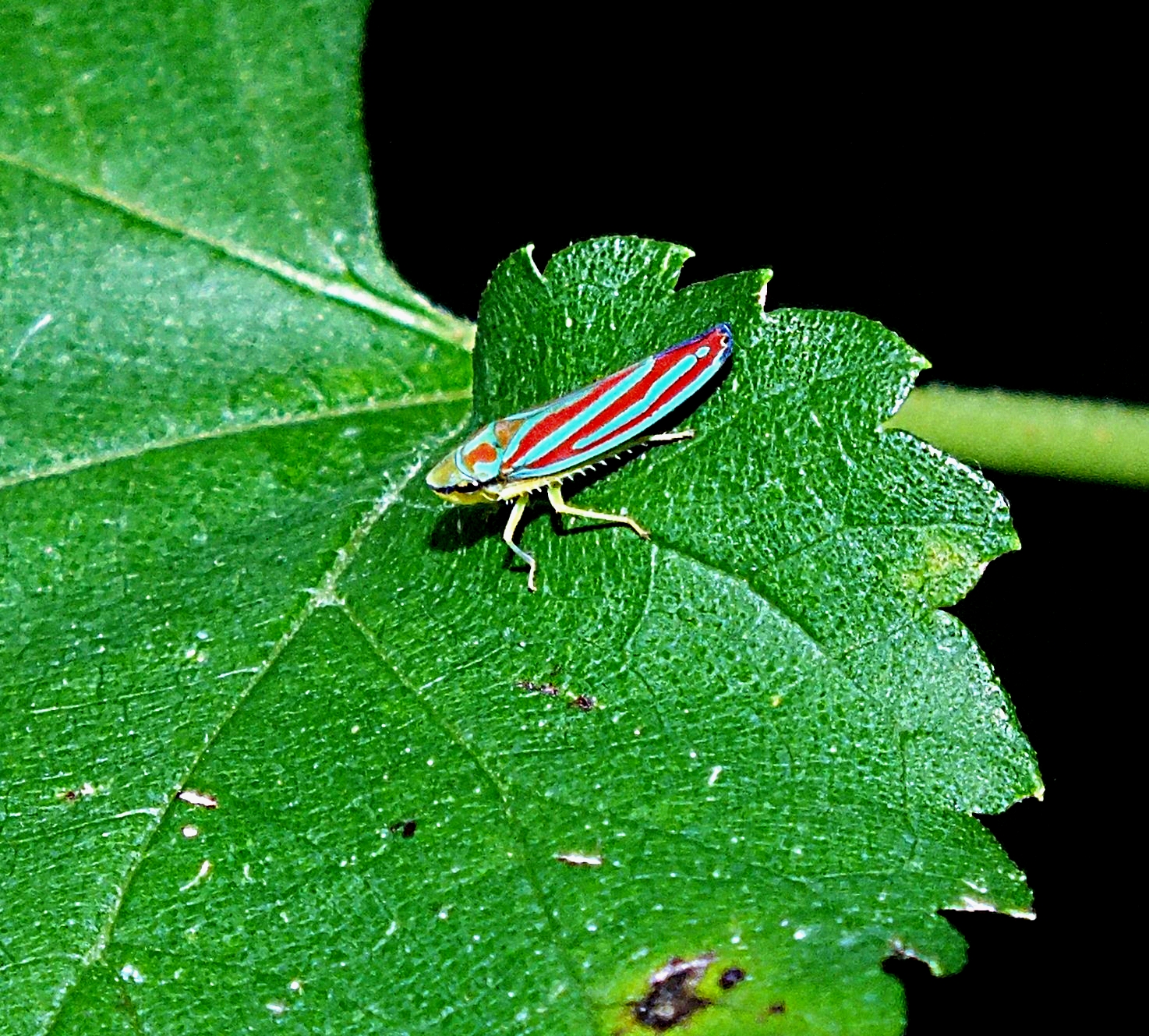
[Scarlet-and-green Leafhoppers are active from spring through fall in open habitats with plenty of herbaceous, lush foliage. Scarlet-and-green Leafhoppers feed on the sap of vines and shrubs. They are relatively small… often considerably less than 1/4th of an inch long.]
Little insect; large beauty! Photo by Thomas Peace 2014
The real treasure to find is within you yourself; you don’t have to travel or search anywhere (out there) to find it.
.
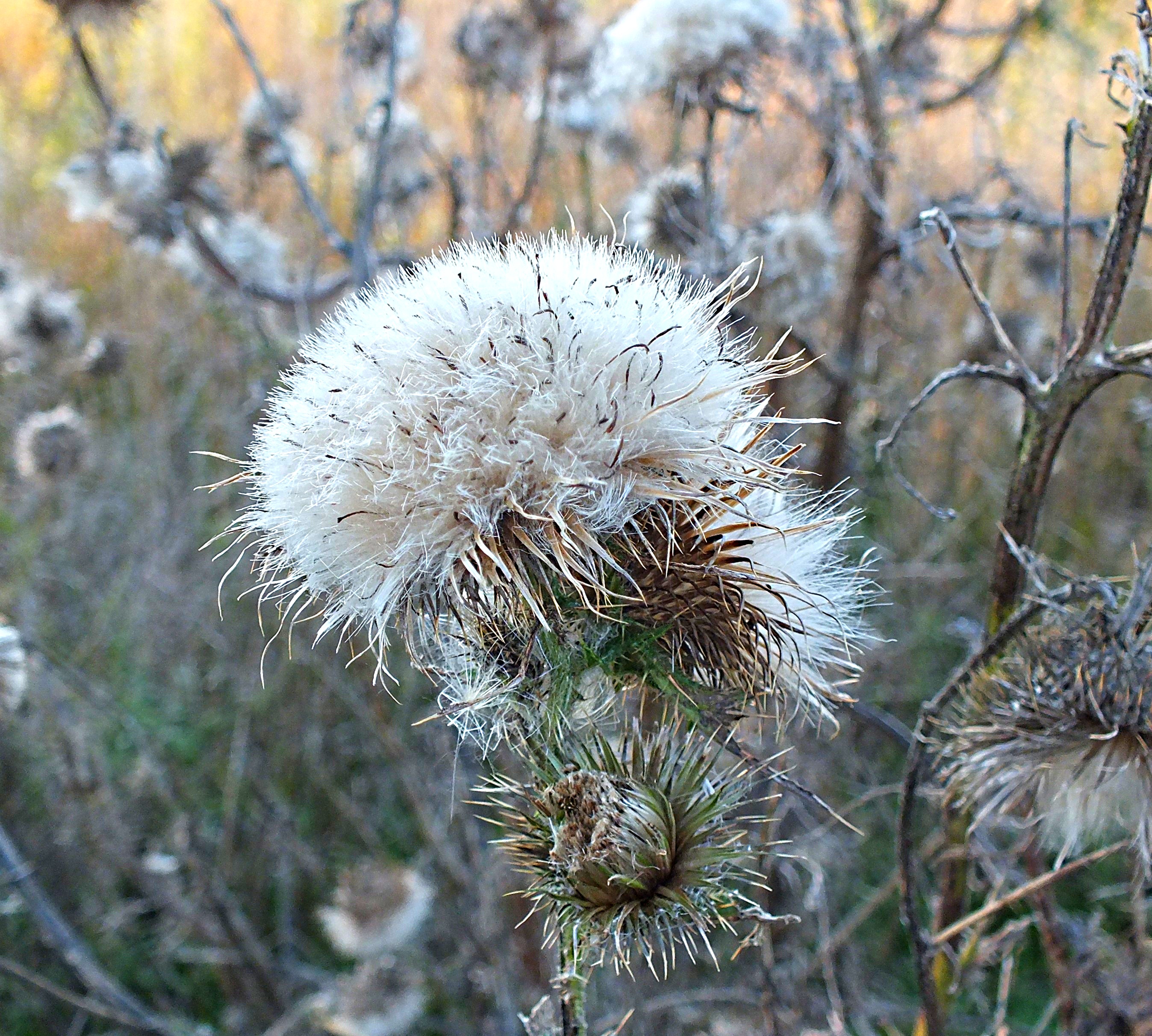
[This is a fluffy, seeding Thistle Plant full of Thistle Plant down. Some insects will nest in a Thistle Plant’s down to keep comfortable. Goldfinches (i.e. little, yellow, wild birds) use the Thistle Plant down for the main material for nest construction; they, additionally, relish Thistle seed.]
True love goes beyond the affinity due to attractiveness. Love the less beautiful (that are also truly beautiful).
.
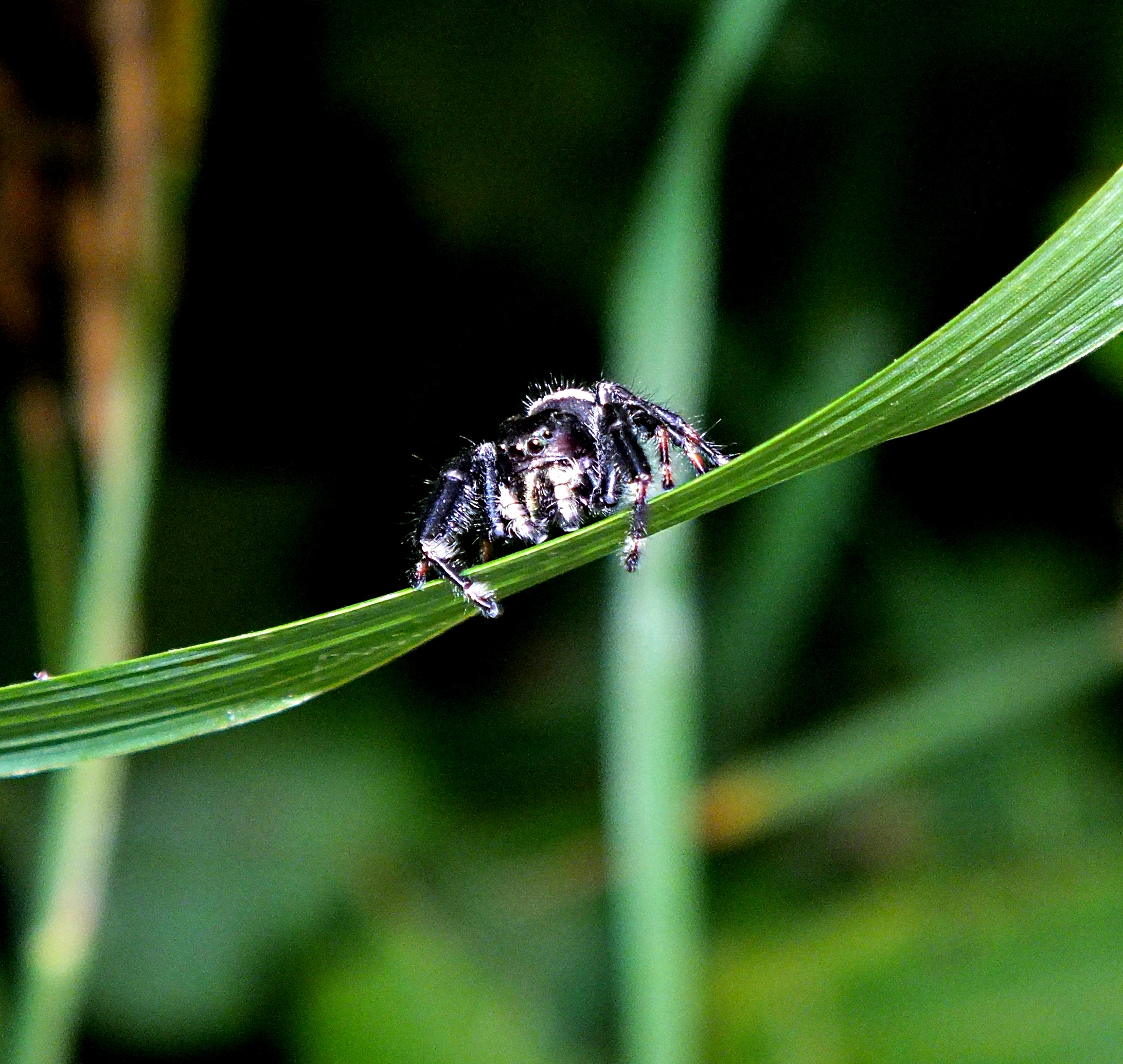
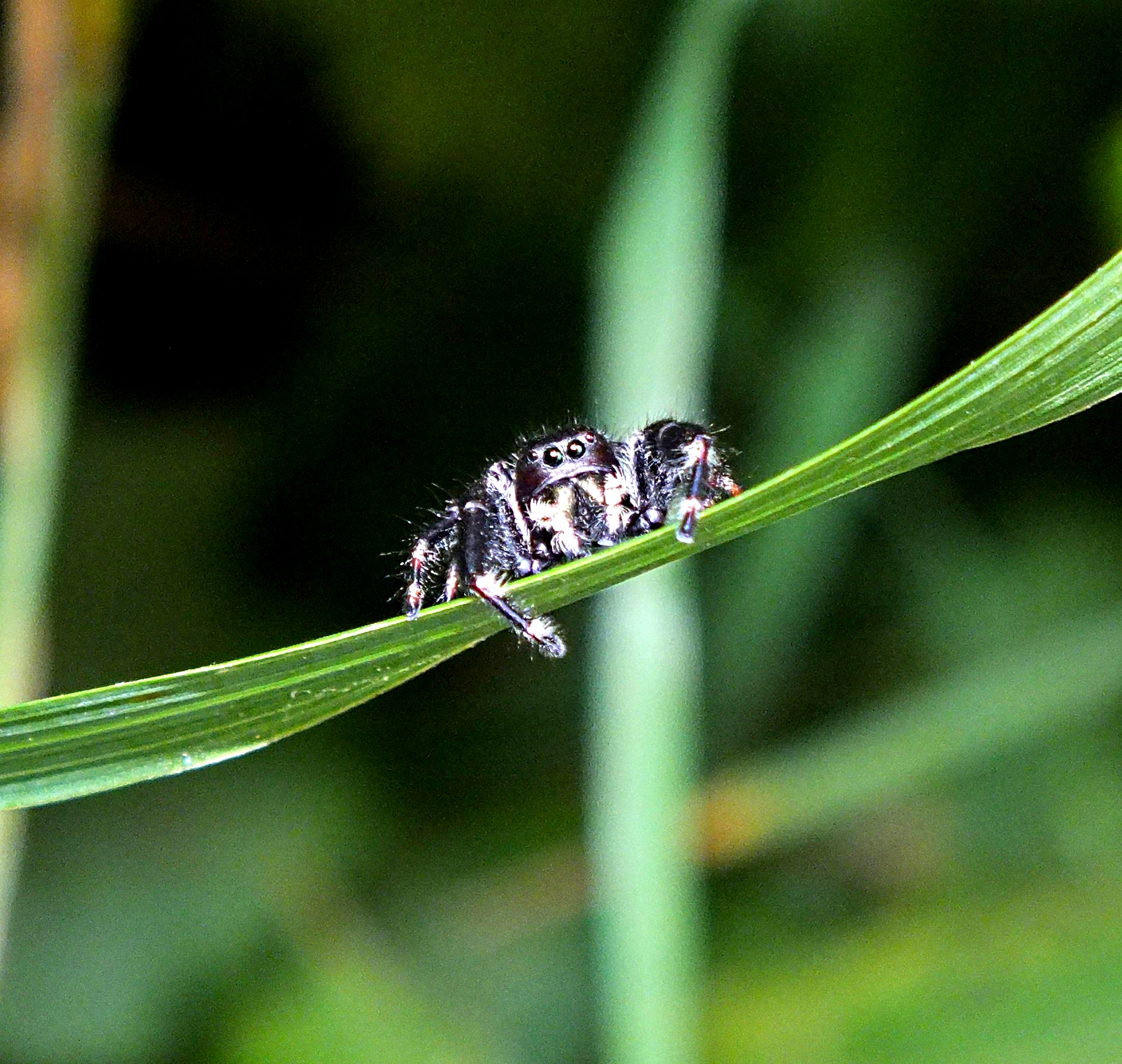
[This is a Phidippus Jumping Spider. It’s difficult to sneak up on a Jumping Spider; their multiple eyes easily detect others in their environment. They are harmless to human beings. I have some Jumping Spiders in 50 million year old amber which I will post at a later time.
Additional note: I will be posting more spiders (and similar creatures) in the Halloween month of October. It is neat that they are part of an old Halloween tradition (that is fun for kids). However, it is unfortunate that many children grow up associating spiders with “being frightened” and as “terrible creatures to be horrified of.” As the late, superb naturalist, Steve Irwin often propounded, spiders and snakes can indeed be seen to be majestic, marvelous animals, truly beautiful in their own ways. We must, as Steve Irwin so graciously suggested before his untimely passing, be far better caretakers of Mother Earth.]
Tightrope climber! (Jumping Spider) (1) Photo by Thomas Peace 2014
Tightrope climber! (Jumping Spider) (2) Photo by Thomas Peace 2014
Poise includes intelligence, compassion, awareness, humor, and balance.
.
[This lone Hover Fly is feeding on a wildflower of Woodland Lettuce (Lactuca floridana). It appears as if the Hover Fly has been feeding on his favorite type of plant for some time; he seems to be taking on the colors of the flower! (I’ve got to stop eating broccoli almost every day!)]
Concentration on a fixed (limited) point is hypnosis or egotism, not meditation; meditation is not being fixated by the limited technique (or blueprint) of others, but is a free, passionate awareness of the whole of everything beyond exclusion.
.
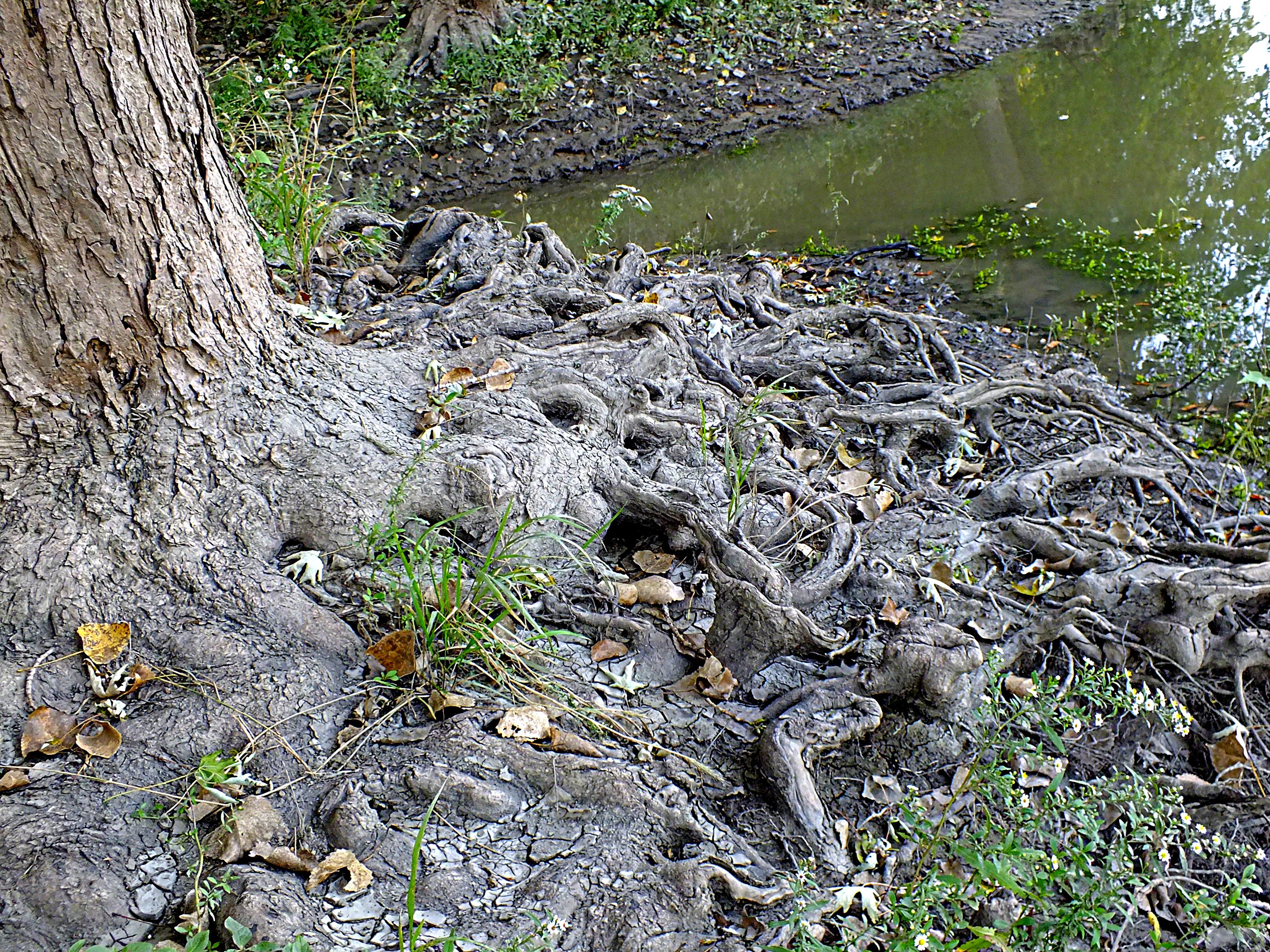
[This aperture in the tree could be a scope for a gun barrel or a focal mechanism for shooting a camera; or it could be a place where lichens no longer exist (unless they’re on the far tree in the background). We will have more photos of interesting lichens in the future. (We will be visiting the tree in the background and some of the other trees in the area.)]
Let the lowly roots reach out through the water (and the boat) and flower into something truly lofty and sublime beyond all the endless mediocrity.
.
[Watch the following YouTube music-video also.
Roots To Branches (Lyrics by Jethro Tull):
Words get written. Words get twisted.
Old meanings move in the drift of time.
Lift the flickering torches. See gentle shadows change
the features of the faces cut in unmoving stone.
Bad mouth on a prayer day, hope no one’s listening.
Roots down in the wet clay, branches glistening.
True disciples carrying that message
to color just a little with their personal touch.
Home-spun fancy weavers and naked half-believers
Crusades and creeds descend like fiery flakes of snow.
Bad mouth on a prayer day, hope no one’s listening.
Roots down in the wet clay, branches glistening.
In wet and windy priest-holes. Grand in vast cathedrals.
High on lofty minarets or in the temples of doom.
I hope the old man’s got his face on.
He’d better be some quick change artist.
Suffer little children to make their minds up soon.
Bad mouth on a prayer day, hope no one’s listening.
Roots down in the wet clay, branches glistening. ]
Thoughts are the conditioned, residual remnants of experience; deep insight and “being” go far beyond mere experience.
.
[This insect is known as the Bee Assassin. These predatory insects are usually found on the leaves and stems of plants (as was this photographed specimen). Leaves and stems are not areas where honeybees usually tend to visit. Bee Assassin insects, in reality, mostly eat other types of insects, such as flies, beetles, caterpillars, and mosquitoes. Their front legs have a “stickiness” which enables them to easily catch insects. Bee Assassin insects, though they may look rather intimidating, are largely beneficial, as they help to eradicate many harmful garden pests.]
If you’re another bug, watch out for this one! Photo by Thomas Peace 2014
Fear — unless there is an immediate physical danger in the environment — is often based on patterns and images in (and “as”) time that are projected as “what might be.”
.
[Nursery Web Spiders may sit quietly for hours, legs spread out on vegetation, a large rock, or on a boat dock… or they may actively hunt in vegetation. Nursery Web Spiders have excellent vision.
Additional Note: I will be posting more spiders (and similar creatures) in the Halloween month of October. It is neat that they are part of an old Halloween tradition (that is fun for kids). However, it is unfortunate that many children grow up associating spiders with “being frightened” and as “terrible creatures to be horrified of.” As the late, superb naturalist, Steve Irwin often propounded, spiders and snakes can indeed be seen to be majestic, marvelous animals, truly beautiful in their own ways. We must, as Steve Irwin so graciously suggested before his untimely passing, be far better caretakers of Mother Earth.]
There is no “we” and “them.” There is no “us” and “they.”
.
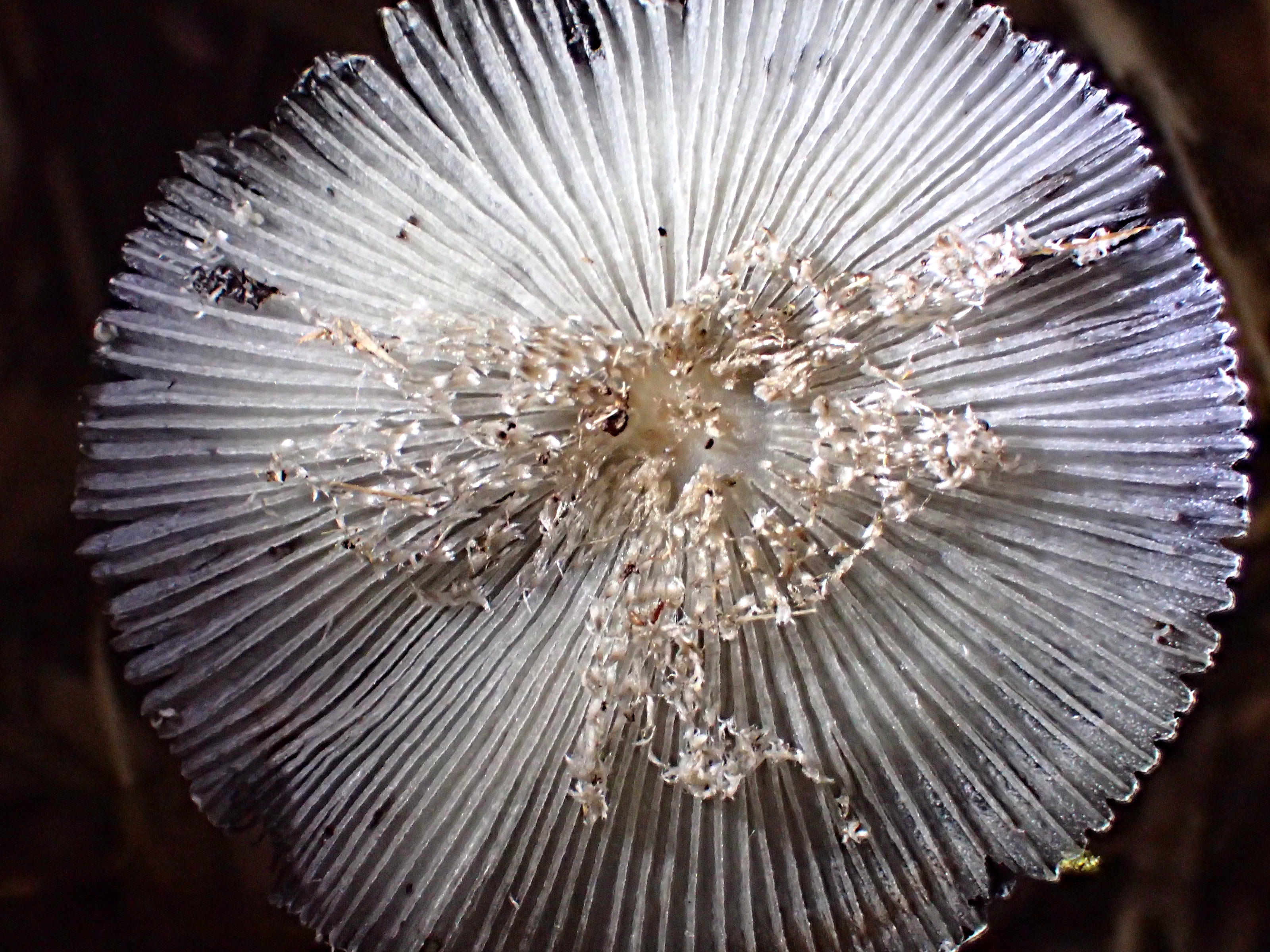
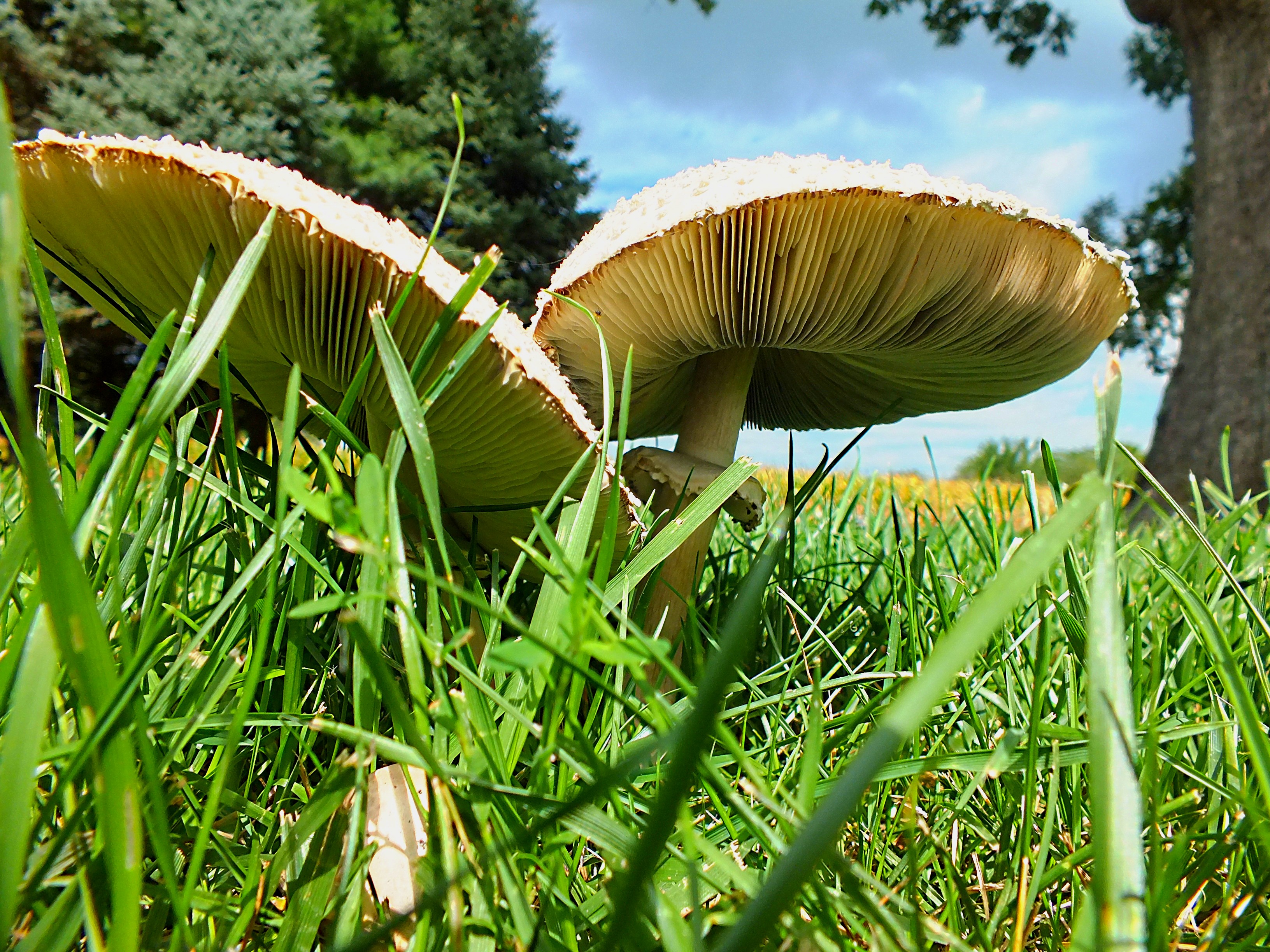
[This is a unique form of Parasol Mushroom that seems to be almost glass-like with barely any top section; even from the top it looks like gills! The bottom photo is actually a shot of the top of this mushroom! These mushrooms grow at night and are gone by daylight. They are rather small sized mushrooms.]
Glass-like and diminutive. (1) Photo by Thomas Peace 2014
Glass-like and diminutive. (2) Photo by Thomas Peace 2014
If we shipped all of the foolish people to the moon… none of us would be left on earth!
😉
.
[This is a Katydid, whipping its antenna like a fishing fly-rod. A female Katydid has a long sword-like ovipositor. The sword-like ovipositor is used for depositing eggs deep in soil or rotten wood.]
A Katydid whipping her fishing fly-rod. Photo by Thomas Peace 2014
Societies and authorities weave an intricate, complex web. Unwind into what is simple, pure, and unadulterated!
.
[This is a reddish Harvestman. Notice the shadow of the Havestman upon the leaf. Harvestmen are arachnids, but they are not spiders and do not make webs to catch insects. Harvestmen are also called Daddy-long-legs. There are 200 species of Harvestmen in North America… 4,500 to 5,000 worldwide. They are harmless to human beings (and eat many pests, such as flies).
Additional note: I will be posting more spiders (and similar creatures) in the Halloween month of October. It is neat that they are part of an old Halloween tradition (that is fun for kids). However, it is unfortunate that many children grow up associating spiders with “being frightened” and as “terrible creatures to be horrified of.” As the late, superb naturalist, Steve Irwin often propounded, spiders and snakes can indeed be seen to be majestic, marvelous animals, truly beautiful in their own ways. We must, as Steve Irwin so graciously suggested before his untimely passing, be far better caretakers of Mother Earth.]
It is extremely easy to “fit in” to what others of authority maintain is normal and acceptable. Don’t be their shadow.
.
[Spider Silhouette.
I will be posting more spiders (and similar creatures) in the Halloween month of October. It is neat that they are part of an old Halloween tradition (that is fun for kids). However, it is unfortunate that many children grow up associating spiders with “being frightened” and as “terrible creatures to be horrified of.” As the late, superb naturalist, Steve Irwin often propounded, spiders and snakes can indeed be seen to be majestic, marvelous animals, truly beautiful in their own ways. Perhaps what’s truly horrifying is human beings who do not care enough (and who do not do enough) about the environment. We must, as Steve Irwin so graciously suggested before his untimely passing, be far better caretakers of Mother Earth.]
Life does not always give you exactly what you ask of it. Life is not a gumball machine, hungry for quarters.
.
[Mydas Flies are large, heavy-bodied wasp mimics. They are a velvety black, with the 2nd abdominal segment being a bright orange-yellow, orange, or reddish orange. Blackish wings have a bluish or purplish sheen. Mydas Flies are frequently seen on flowers and they presumably feed on nectar (they were once thought to feed on other insects).]
Wasp-like but harmless! Photo by Thomas Peace 2014
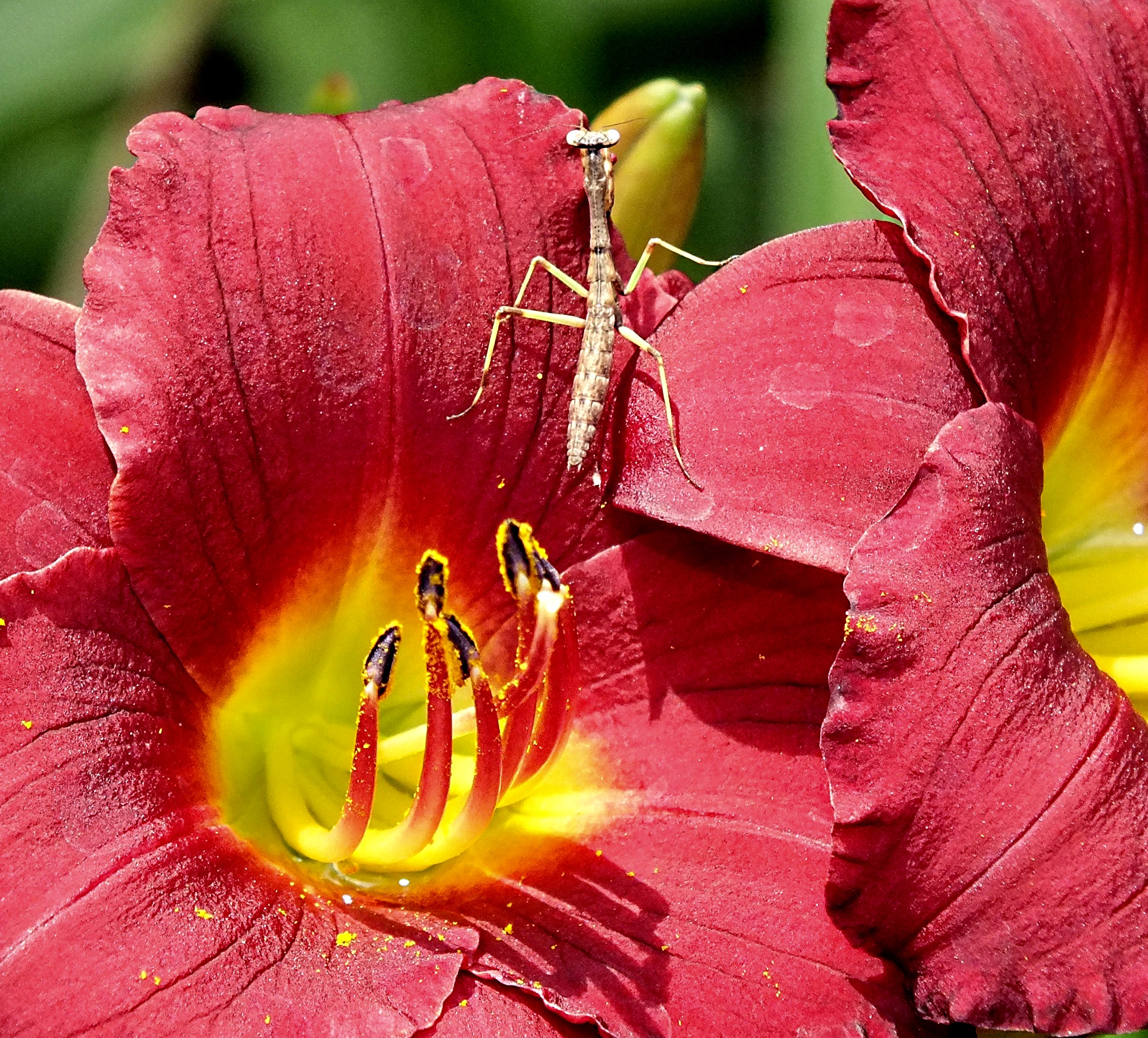
[A small Praying Mantis on a Red Lily. This Praying Mantis was around an inch and a half long. It is, I think, a male Carolina Praying Mantis. The Carolina Praying Mantis is not seen very often in our rural Illinois area. It was very aware of my presence and didn’t stick around long.]
Small and different. (1) Photo by Thomas Peace 2014
Small and different. (2) Photo by Thomas Peace 2014
The implicate, illimitable order always exists beyond limited, crass confinement.
.
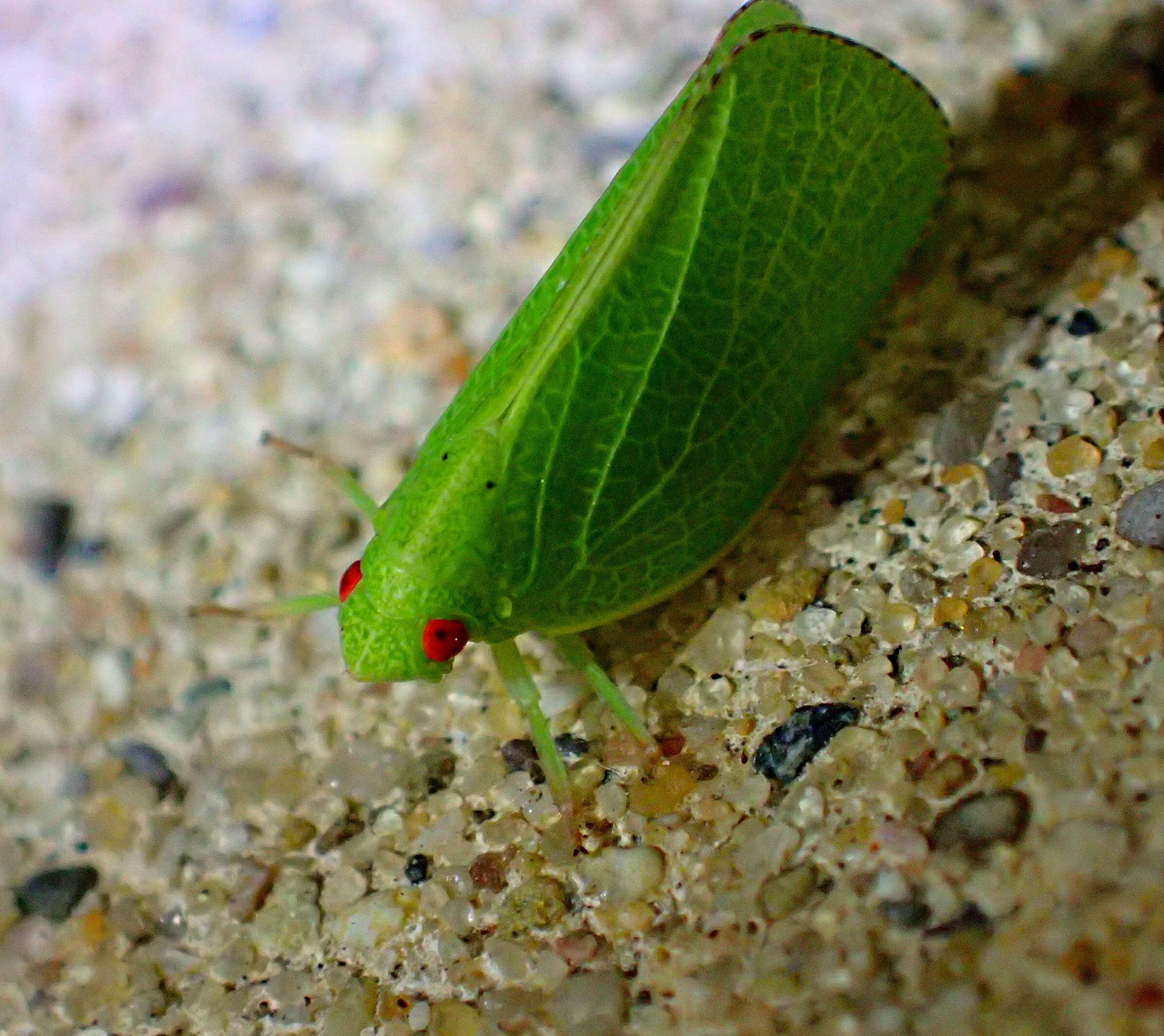
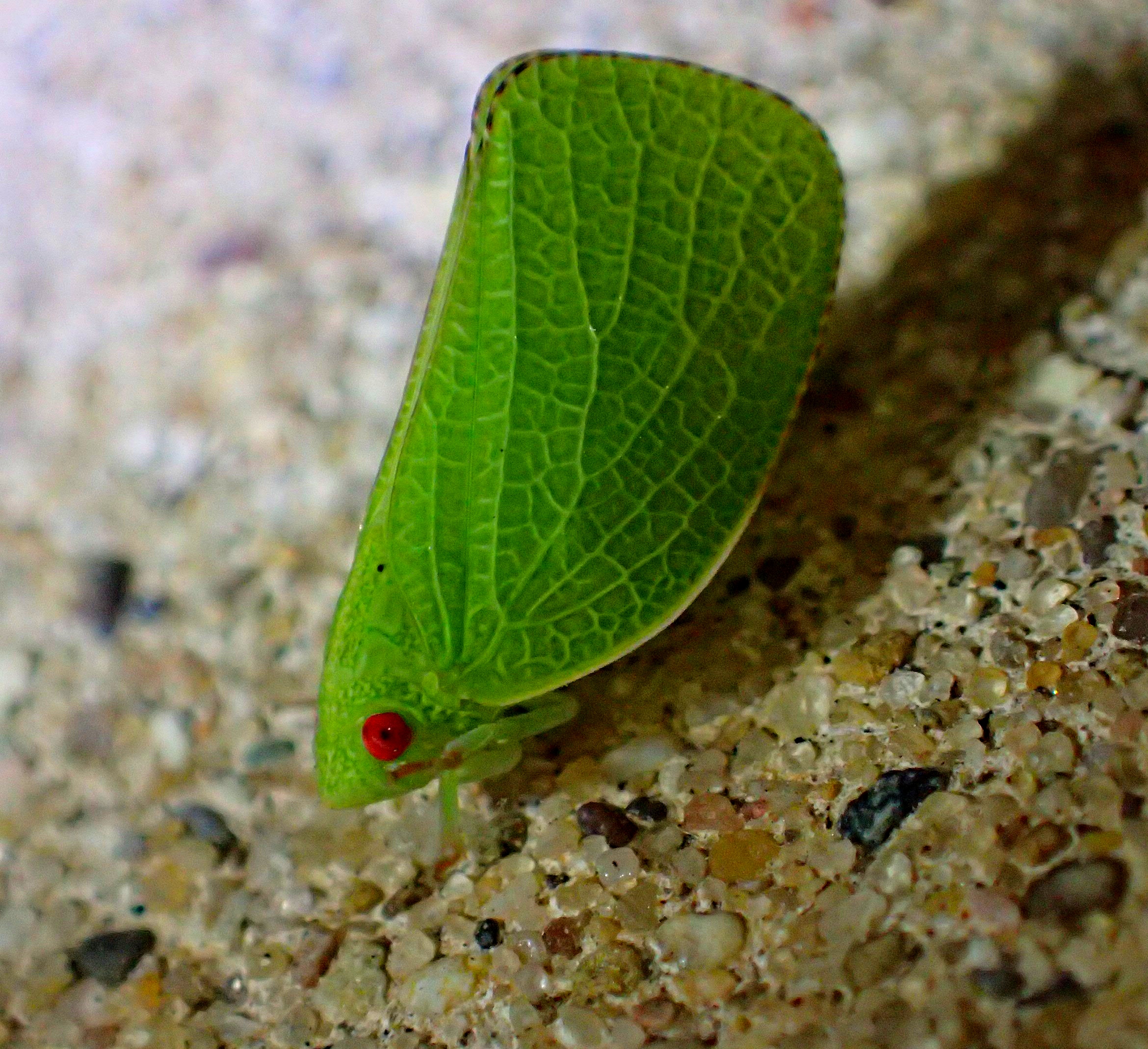
[This is a Red-eyed Planthopper, Acanalonia conica. The Planthopper hops with gigantic leaps to get away from danger. This rapid form of transportation is only used when it needs to make a quick getaway, though. Usually, Planthoppers move very slowly so as not to attract any unwanted attention from birds or other predators. I noticed this one temporarily resting on our cement porch; then I quickly ran in the house to grab my camera!]
Planthopper. Enlightenment personified (1). Photo by Thomas Peace 2014
Planthopper. Enlightenment personified (2). Photo by Thomas Peace 2014
An unfocused (distorted) mind looking at a well-focused photograph is — interestingly enough — simultaneously focused and unfocused.
.
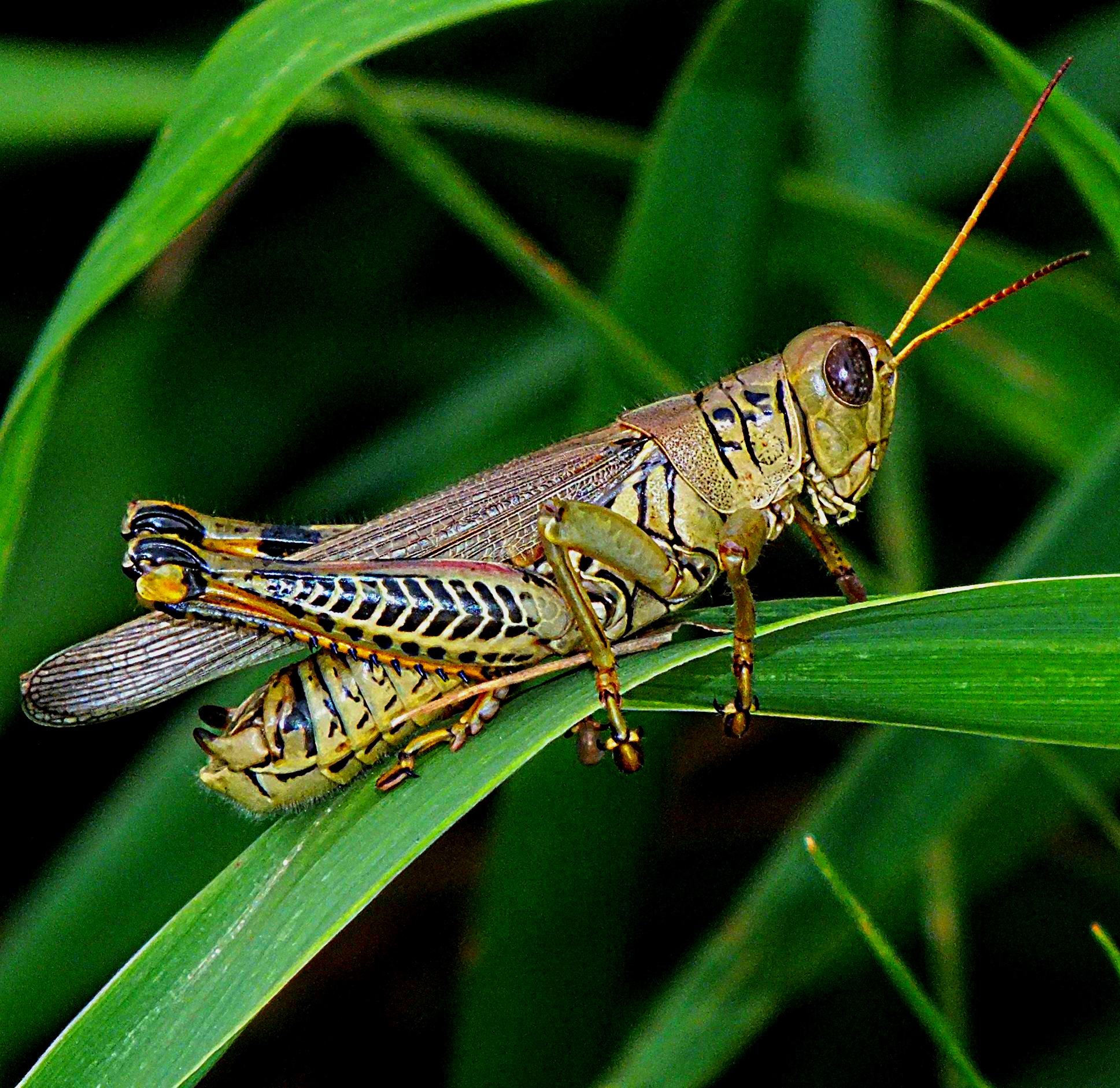
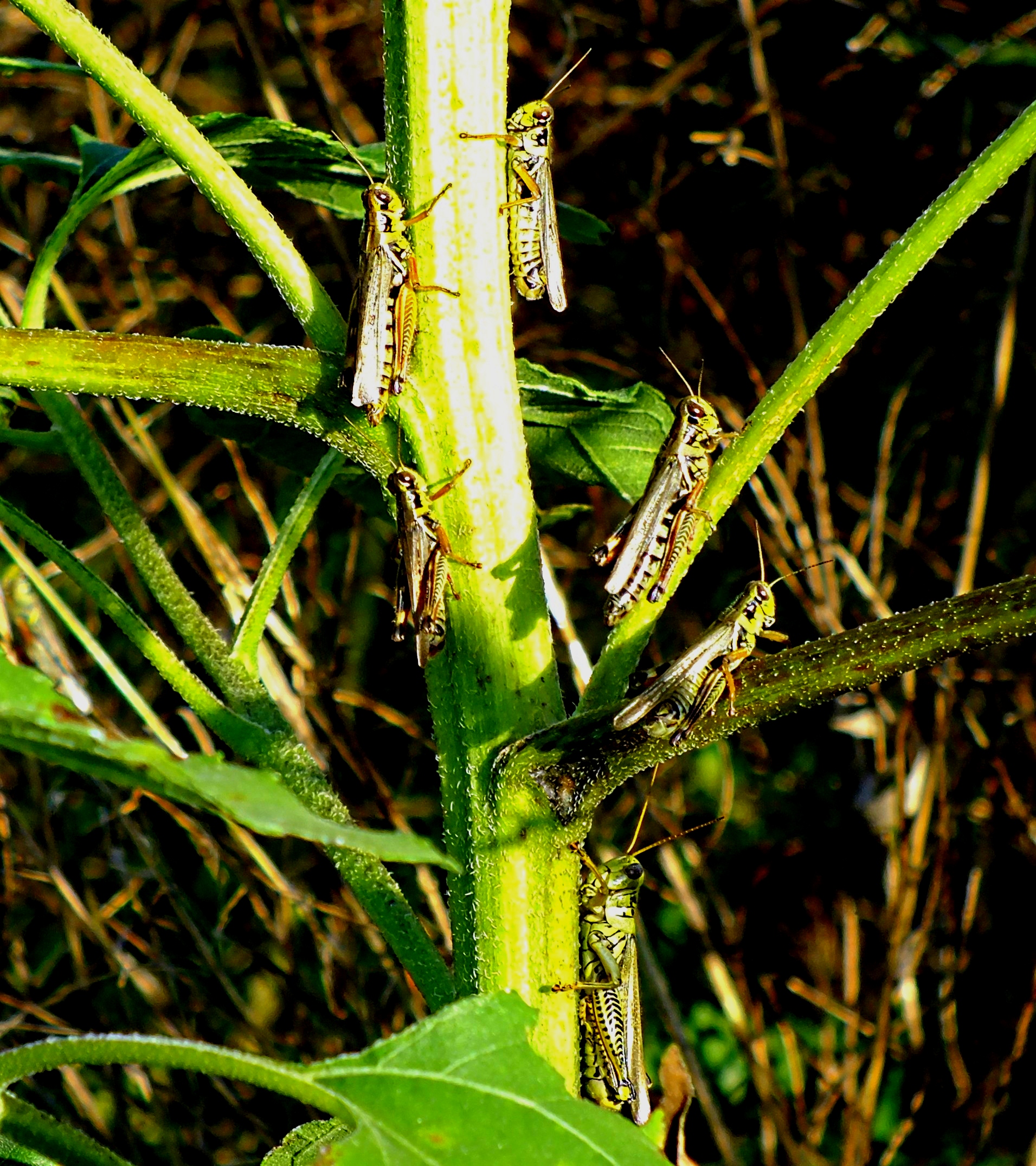
[Differential Grasshoppers have relatively large bodies; the females are larger than the males. Differential Grasshoppers inhabit grasslands, rural meadows, and weedy areas and are most abundant in the central states. The one in the photograph is a male. Male Differentail Grasshoppers have bootlike appendages on the abdomen tip.]
Male Differential Grasshopper. Photo by Thomas Peace 2014
A simple, mindful smile to a person — though seemingly nothing much — may help someone in immense and profound ways!
.
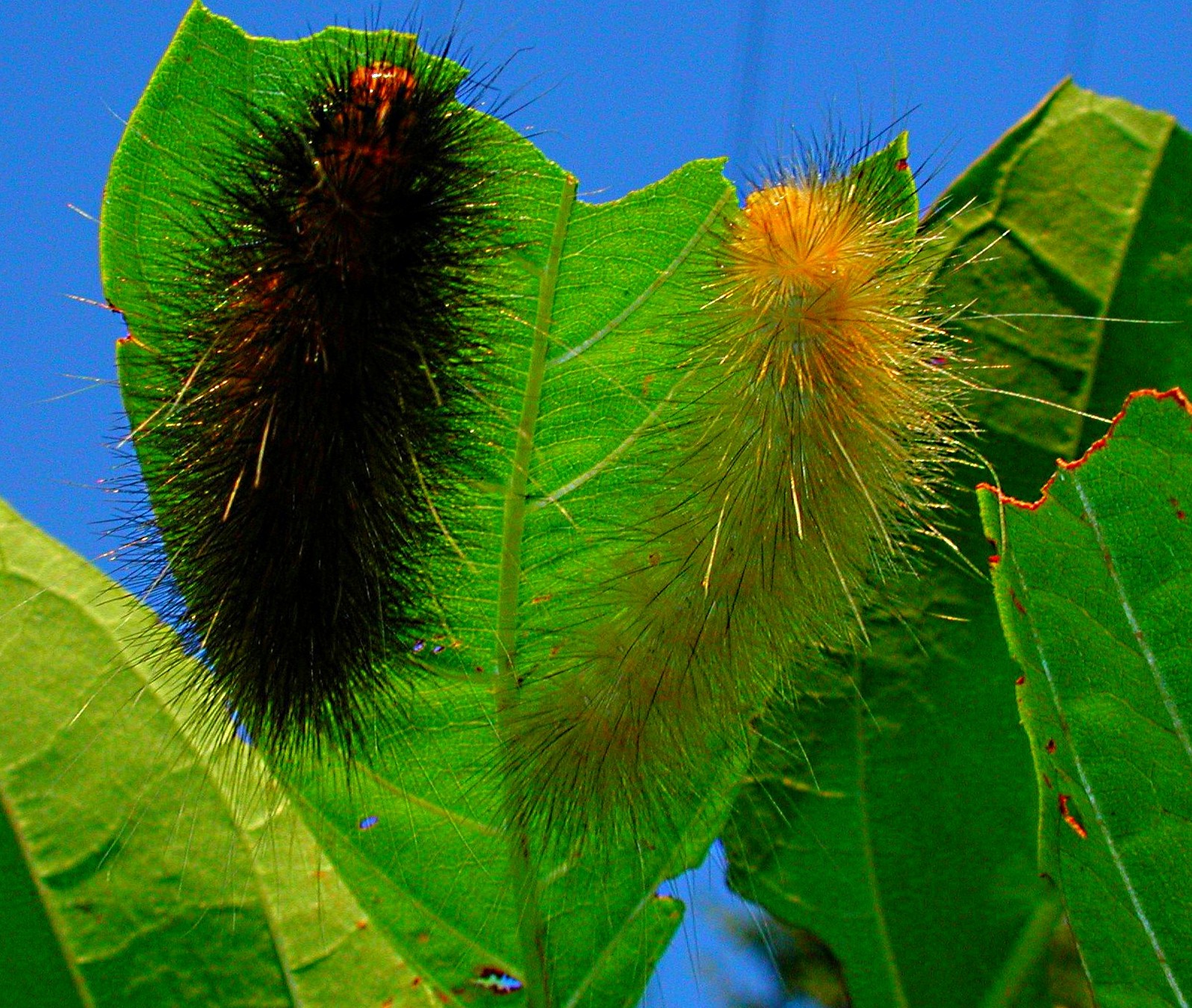
[These are either cute Shih Tzu puppies or fuzzy Caterpillars. They are the last two remaining from the litter, and have had all of their shots. $300 each. Take your pick.]
Fuzzy Caterpillars or Shih Tzu Pups?! Photo by Thomas Peace 2014
Real insight takes place in the present; it is never merely the result of old, stale, past knowledge and accumulation.
.
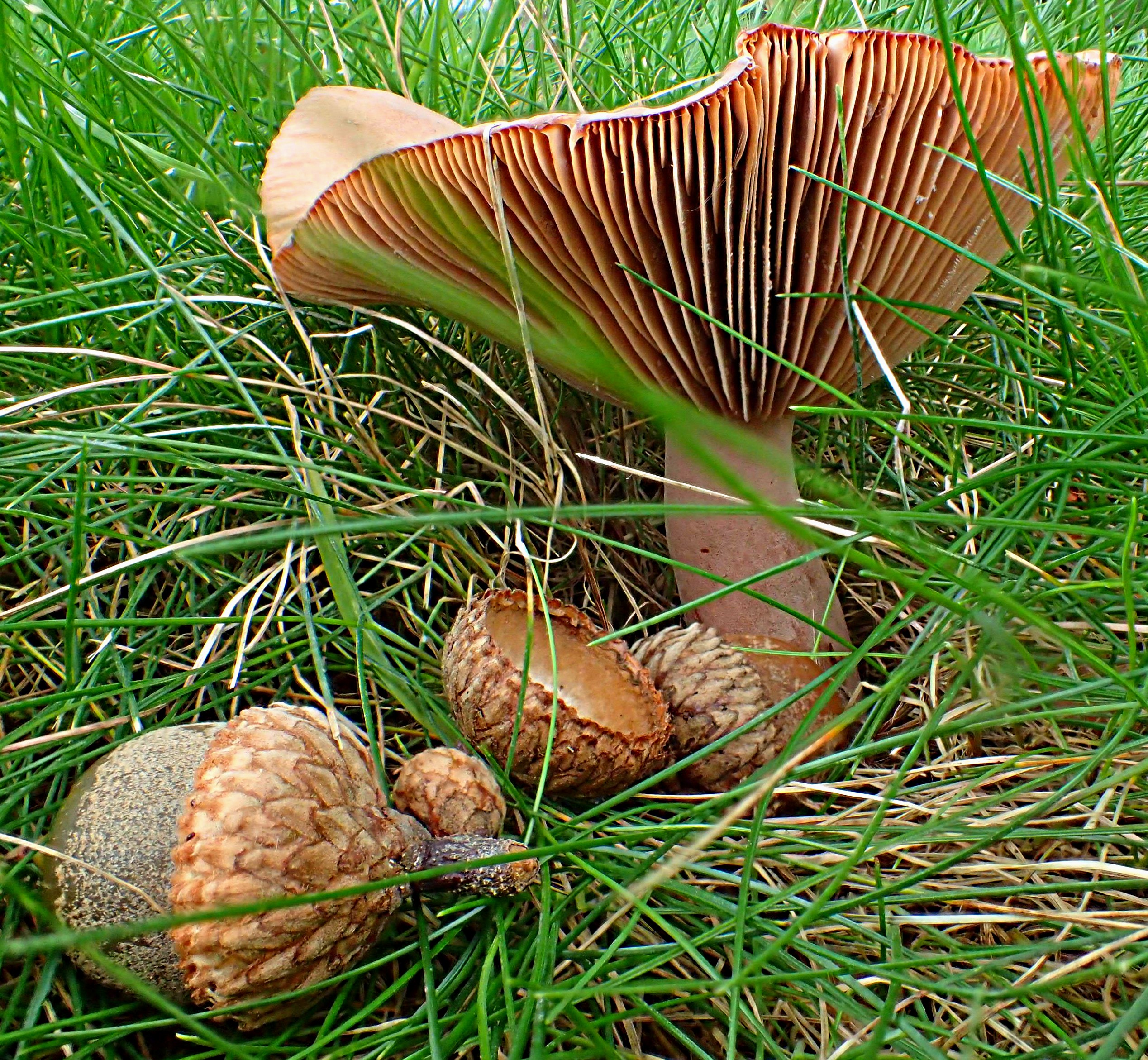
[These acorns from an old oak Tree accompany a lone mushroom. If the acorns don’t grow into trees, they will decompose and will provide the mushroom with plenty of energy. Both the oak tree and the mushroom are sowing seeds for the future.]
The simple things in life are often the best and most precious.
.
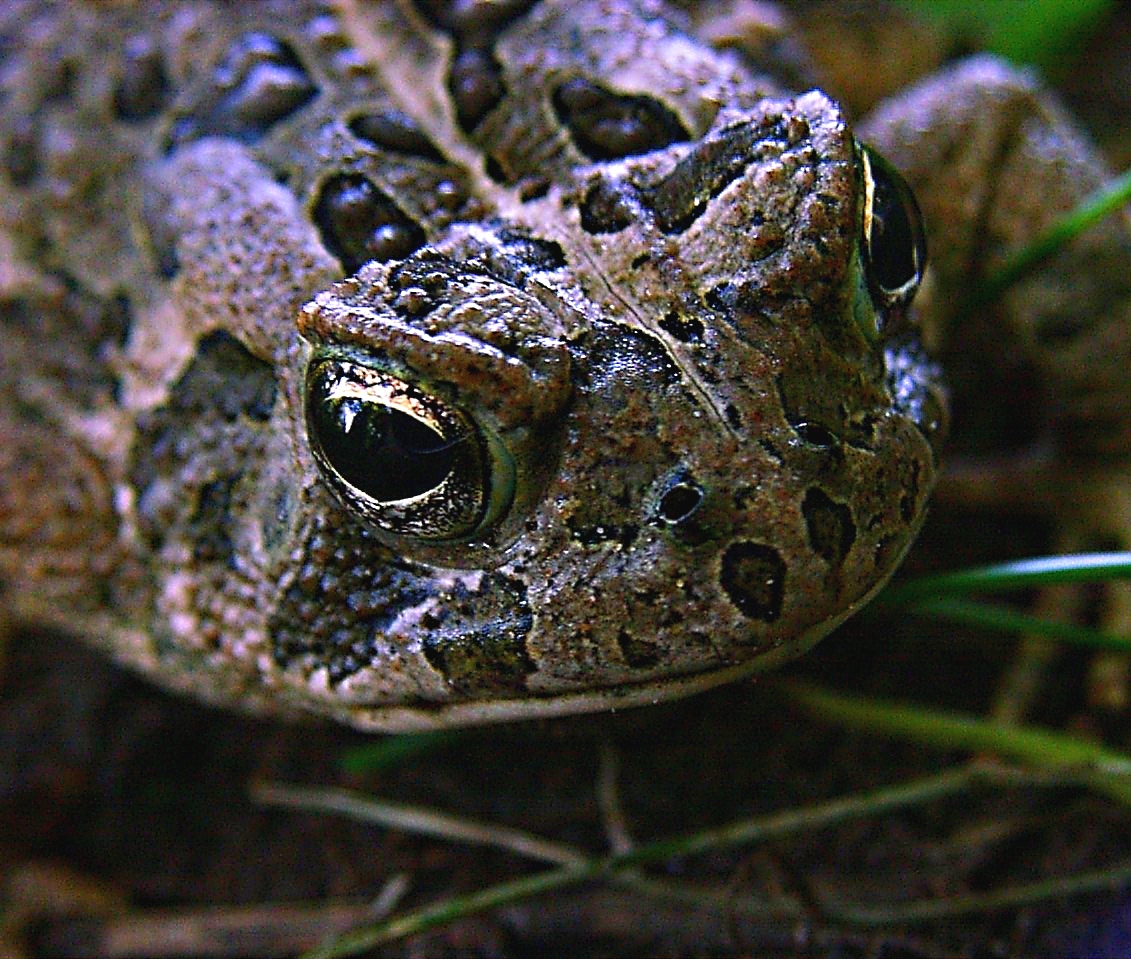
[This is an American Toad head study. Based on DNA sequence analysis, the American Toad, Anaxyrus americanus, and related North American species of Anaxyrus, are thought to be descended from an invasion of toads from South America prior to the formation of the Isthmus of Panama land bridge, presumably by way of floating on logs or buoyant plant masses.]
Immigrant from South America! Photo by Thomas Peace 2014
I don’t care how many people show up at my funeral if — for the time being — I’m the only one who is dead. 😉
.
[Bumble bees in a wild Thistle Plant; the plant is also is being visited by a Spotted Cucumber Beetle. Wild Thistle attracts many insects and birds (and photographers).]
The storyteller is the story. The butterfly is the soaring.
.
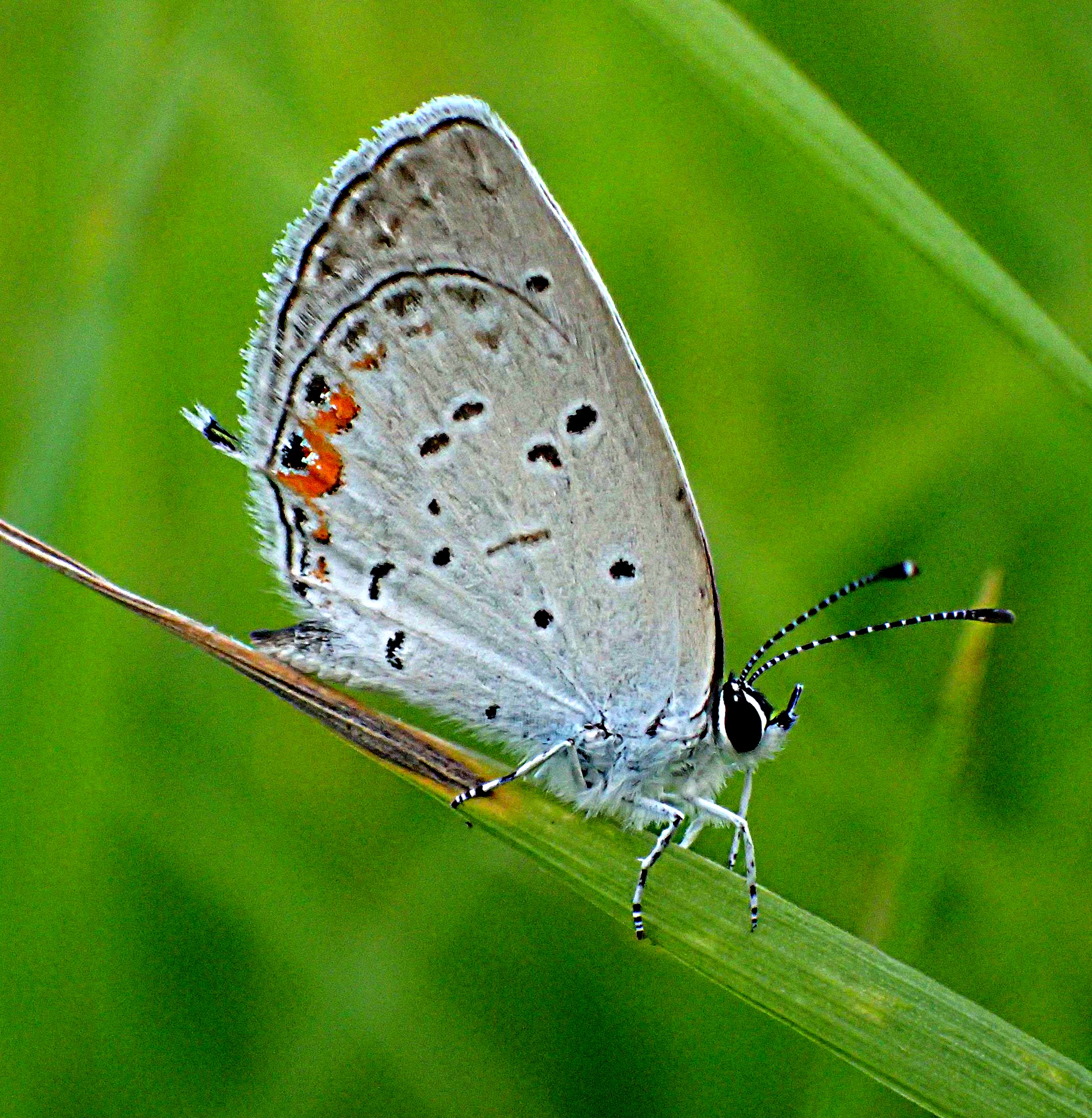
[This butterfly is an Eastern Tailed Blue. Eastern Tailed Blue Butterflies are usually blue above and a spotted pale on the underside. The larvae of a number of species of Blues secrete a type of “honeydew” cherished by ants; the ants attend the larvae, protecting them, in a symbiotic relationship.]
Resting on a windy day. Photo by Thomas Peace 2014
A bad means used to get a good end is usually disorder and is not intelligent.
.
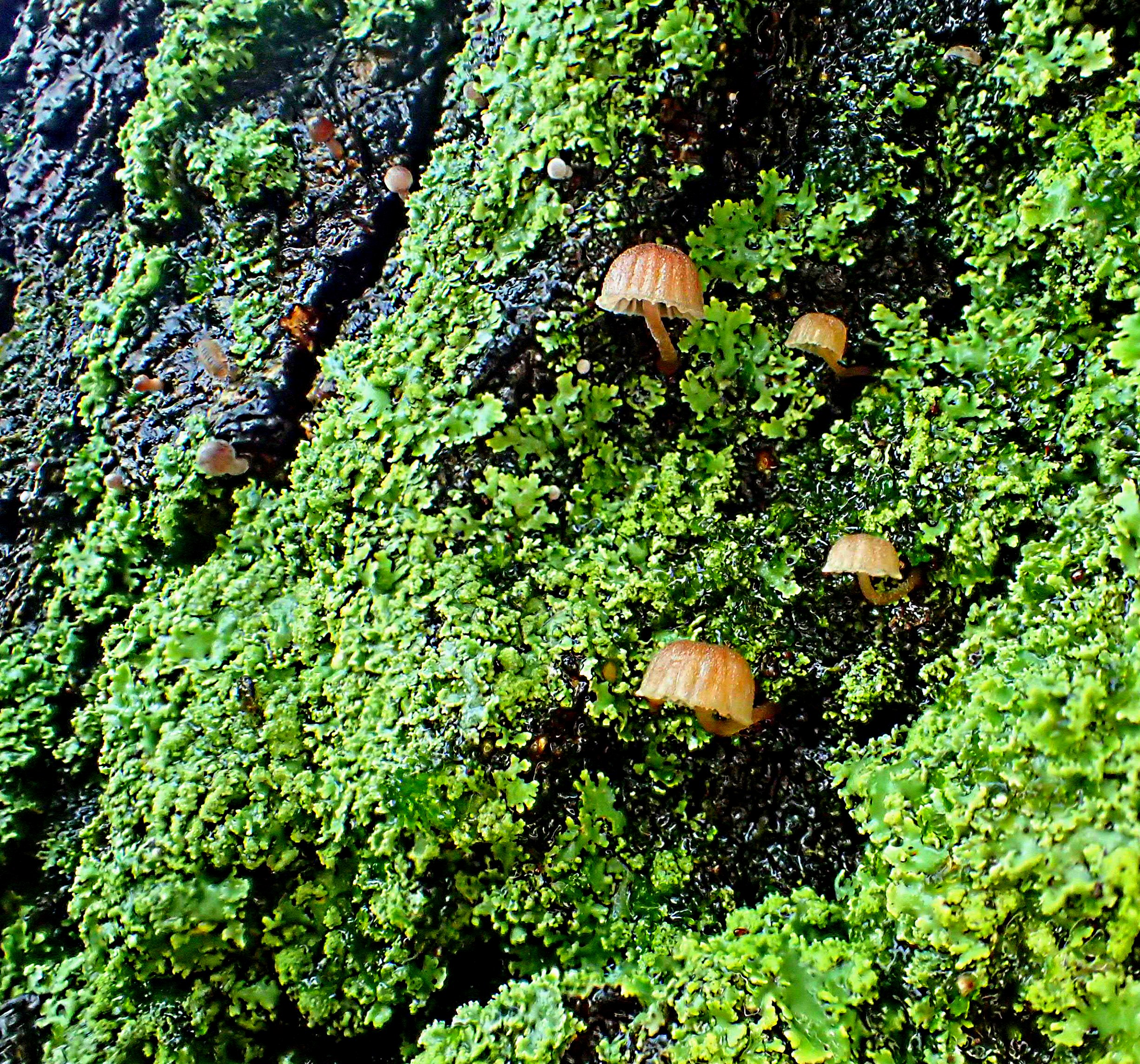
[These are micro-mushrooms (super small mushrooms) growing on the bark of a living oak tree along with some lichens. These diminutive mushrooms were around the size of a question mark (such as within a standard newspaper article or magazine). Mushrooms are the fruiting body of a fungus. Lichens themselves are a type of fungus growing in a symbiotic relationship with a particular type of algae, the two together forming a single organism.]
If there were many dark rooms and closed doors between you and the light of truth, would you merely be content — as so many are — to remain in limited enclosures?!
.
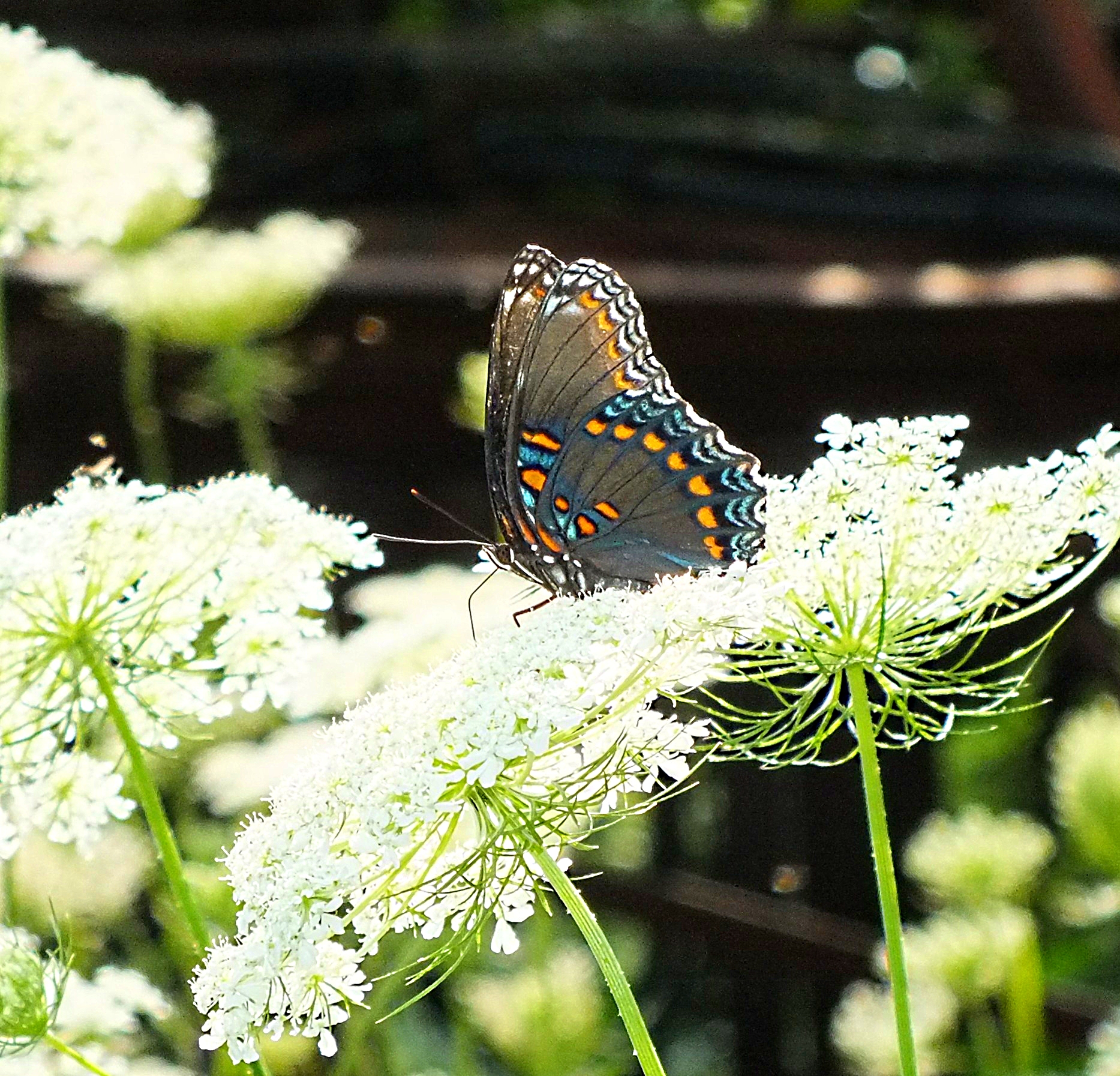
[This butterfly is a Red-spotted Purple. In Red-spotted Purple butterflies, there are up to 3 generations within a year. They prefer open habitats, such as meadows, forest edges, open woodlands, and areas along rivers.]
Berry eater and flower greeter. Photo by Thomas Peace 2014
I’d rather be emaciated physically, than starved of real insight and compassion.
.
[These are Fairy Mushrooms in a rural yard. They were growing in a large ring… and were rather large relative to other mushrooms in our area. Note how the two photographed are fused together as one… a true marriage bond! (Actually, clusters of mushrooms are the fruiting bodies of one larger organism down below in the soil; so they truly are one!)]
The treasure chest of one’s mind — if one is not very careful — can merely be filled with others’ junk!
.
[This spider is a Long-jawed Orbweaver. Long-jawed Orbweavers are excellent web builders. Their carapaces are elongated. As in many spiders, the males are smaller than females.]
Orbweaver Spider doing its thing! Photo by Thomas Peace 2014
What separates your face from your hands is what separates you from others.
Nothing!
.
[The two larger insects are Tarnished Bugs. These insects remain active from spring through fall. Tarnished Bugs extract juices from the leaves, young stems, flowers, and fruits of more than 200 plant species. They are small insects, around a quarter of an inch long.]
Not tarnished in my eyes! Photo by Thomas Peace 2014
The fire of felicity, intense happiness, radiates from within.
.
[This Jumping Spider is, specifically, a Daring Jumping Spider. The chelicerae (the part containing the fangs) are a flamboyant metallic green and this is an excellent way to identify this particular jumping spider. These spiders like sunshine and do their hunting during the day. They jump from leaf to leaf with great dexterity and accurately (because of all those splendid stereoscopic eyes) leap on their prey and often eat other spiders as well as insects. They are totally harmless to human beings… and are beneficial, as they eat harmful insect pests. To me, they seem intelligent (considering their size) and rather cute!]
Though everything has marginal boundaries and borders… see everything as “all one” unbroken whole!
.
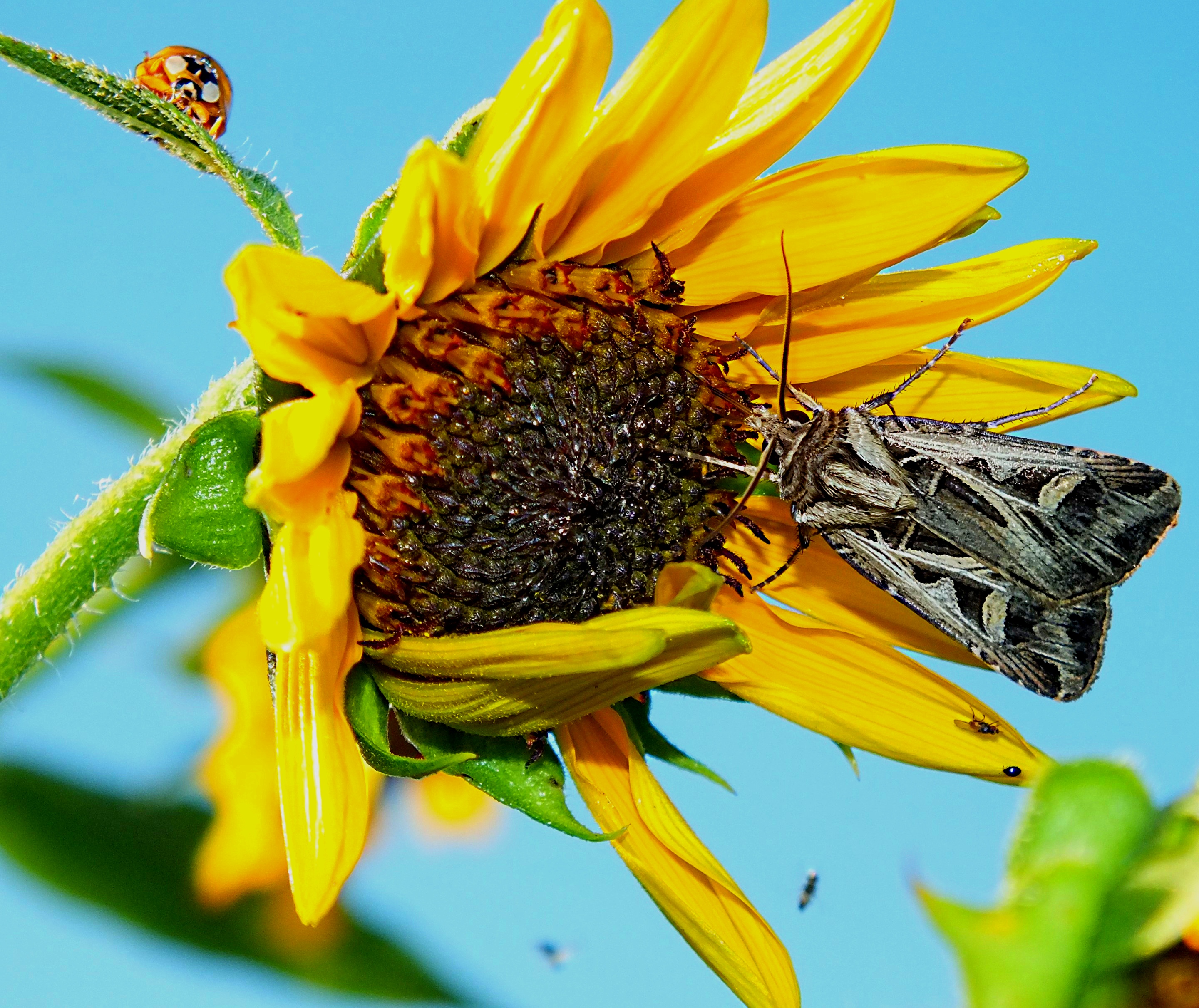
[A Dingy Cutworm Moth and a Ladybug (and other small insects) on a Wild Sunflower plant. Dingy Cutworm Moths are considered pests to crops, such as soybeans, while Ladybugs eat smaller insect pests, such as aphids, and are very beneficial.]
The Lady and the Tramp. Photo by Thomas Peace 2014
It is likely that the mind cannot fully go beyond nightly anxieties about the future if it continues to feel that it is something separate from what they are.
.
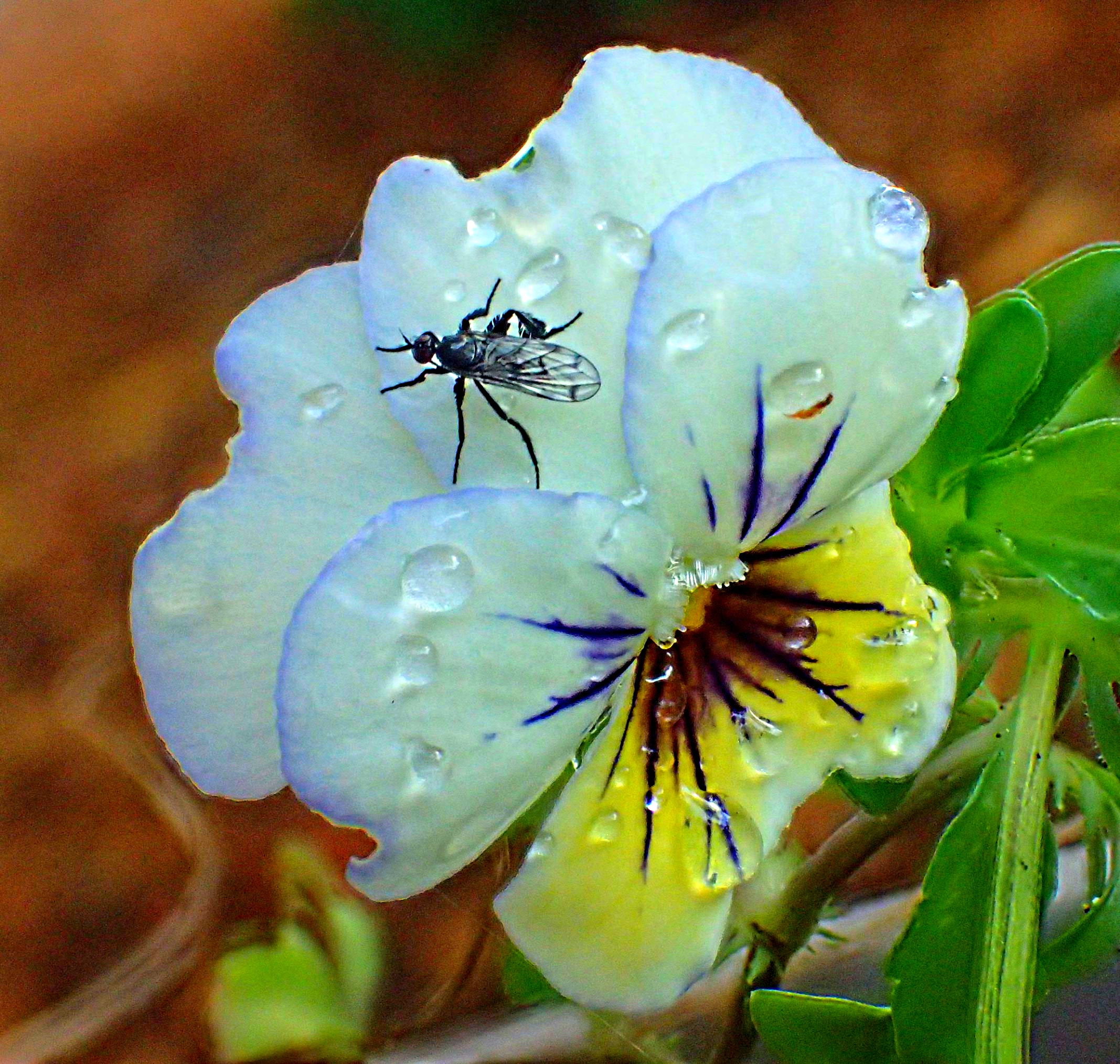
[A diminutive fly of the order Diptera resting on a very small, rain-laden Viola flower. Viola flowers tend to attract many small insects, while larger insects ignore them completely.]
Don’t merely think and react as you were programmed to. Be a light to yourself!
.
[This is a Viceroy Butterfly. Birds avoid Viceroy Butterflies if they have previously tried to eat a Monarch or a Queen Butterfly, which are poisonous. However, those birds that have not had this experience readily eat the non-poisonous Viceroy Butterflies.]
[A very pregnant Praying Mantis, late in the season. Praying Mantis females are larger than males. She is already showing signs of aging (i.e., deteriorating wings) and slowing metabolism. Getting older myself, I can easily sympathize with her. Hopefully, she will soon lay another egg sac and there will be plenty of viable eggs waiting to hatch again in the spring.]
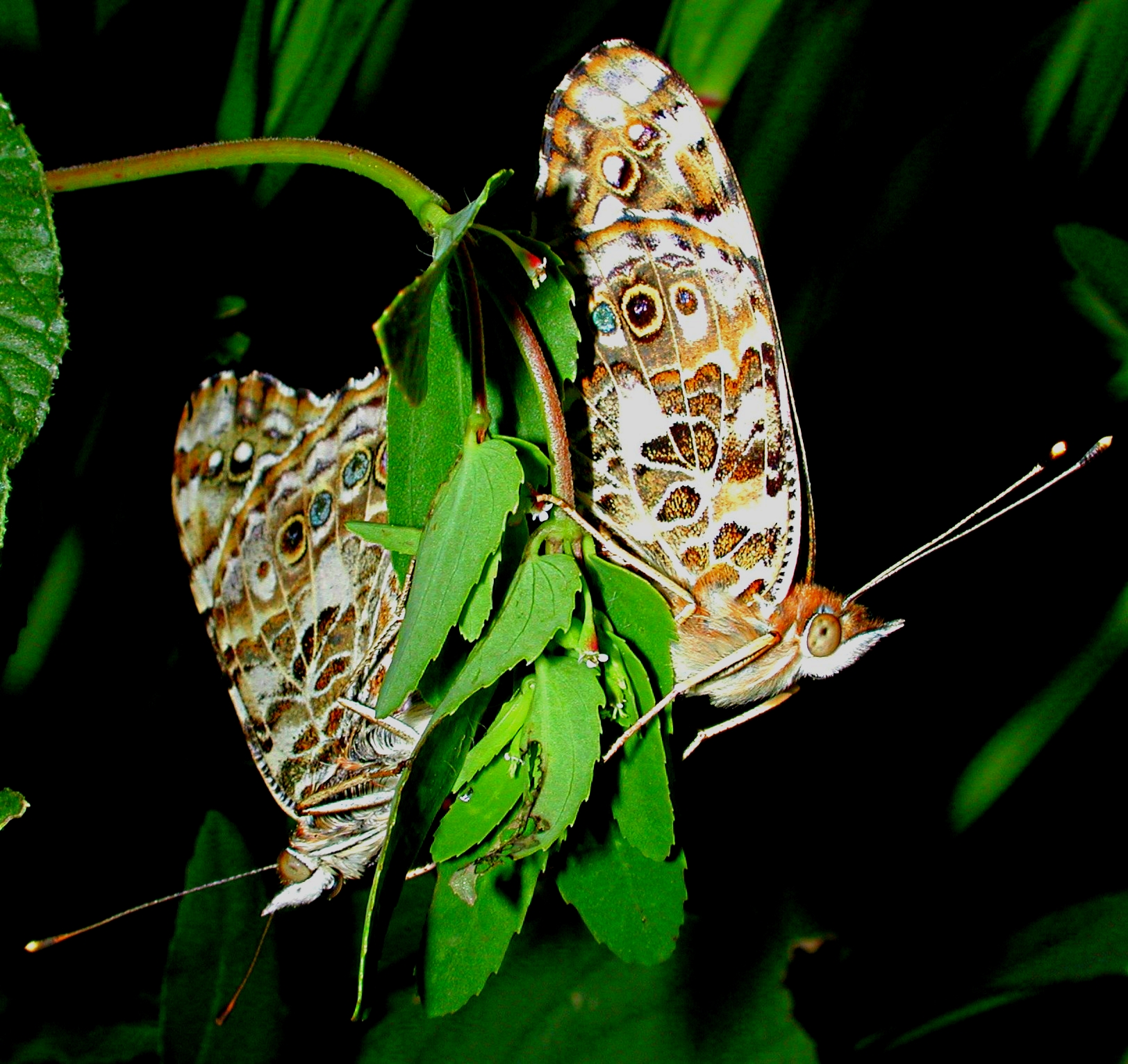
[Painted Lady Butterflies mating. They are discreetly using leaves for privacy. The Painted Lady Butterfly larva builds a webbed nest on the food plant, usually Thistle.]
It may be a losing battle — getting this sick world well — but, like a good surgeon, we’ll keep fighting anyway! 😉
.
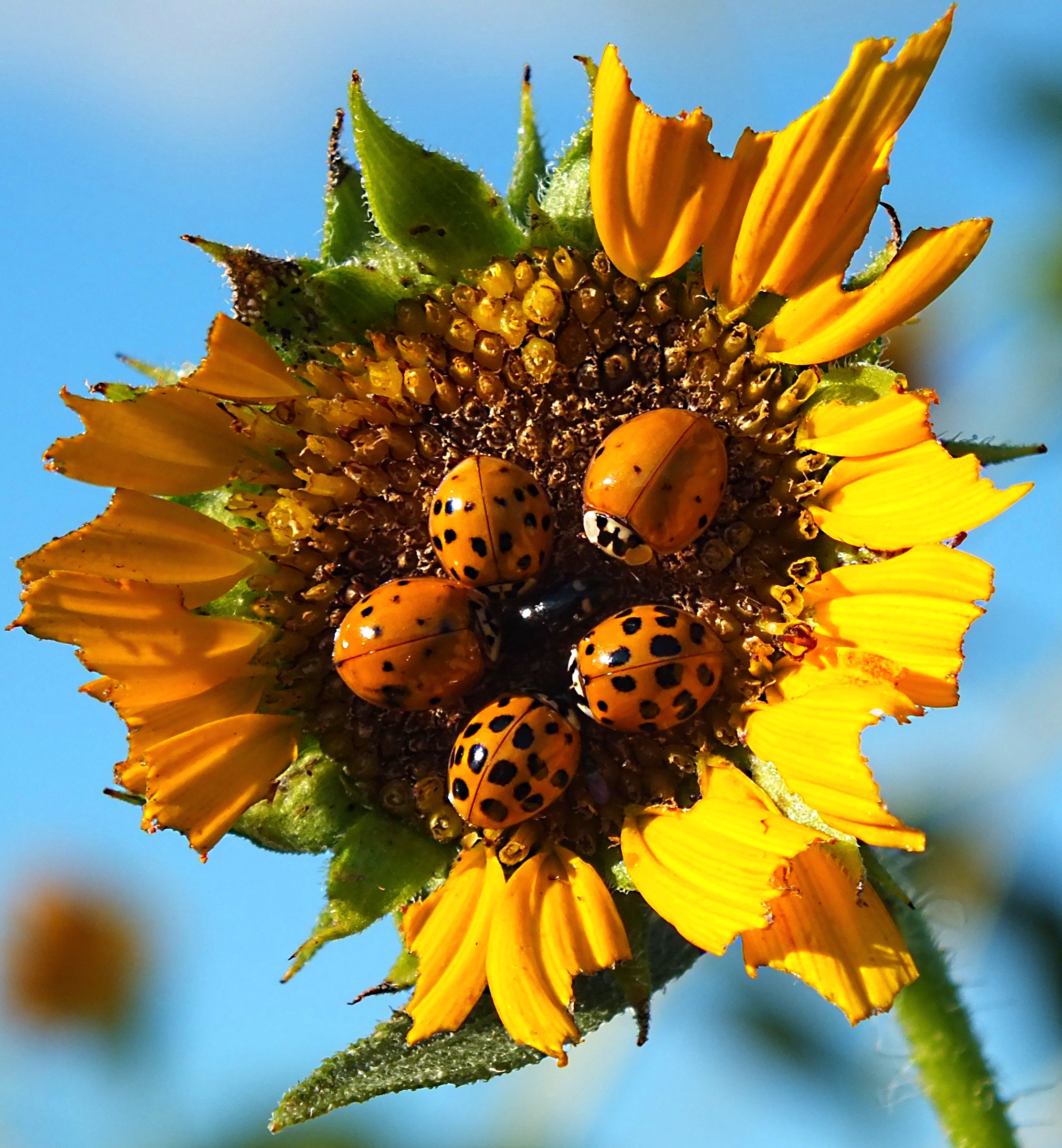
[These are Ladybugs having an important conference. Both the adults and the larvae are predators, mostly of aphids; therefore, they are very beneficial in gardens. Ladybugs are common on plants and often overwinter as adults in large swarms under fallen leaves or bark.]
Ladybugs in an important meeting. Photo by Thomas Peace 2014
You can say “Namaste” until you are blue in the face… but unless you live like all life forms are not separate from your actual self, it is rather meaningless.
.
[This huge wasp is a called the Giant Cicada Killer. The adults feed on nectar; the larva feed on cicadas. Several females use their “bushy” legs to make nests of branching tunnels in light clay to sandy soil. Front legs are used for digging; the hind legs are used for kicking out dirt. Females hunt cicadas one at a time; each victim is stung and brought back to the nest. One to two cicadas are placed in each cell; one wasp egg is laid on the last one. When this wasp was being photographed, I got quite close to it. It was aware of my presence, but seemed to be indifferent of me… seeming to know that it was equipped to attack if I truly threatened it. I used to keep bees, so was not intimidated by it; though I was glad that it respected me as I did it.]
One should always think of and help oneself first… and oneself, by the way, is the whole of humanity and life.
.
[This is a young Bullfrog, probably a female, in the security of a pond. Amphibians (and all vertebrates) evolved from fish… and this young frog has very fish-like eyes! The round disc behind the eye of the Bullfrog is the eardrum. For Bullfrogs, the eardrum is larger in males than it is in females. In males it is larger than the eye. In females, the eardrum is the same size or smaller than the eye. Female Bullfrogs grow to be larger than males. This one is very young… so it probably won’t croak soon. 😉 ]
[An elusive jumping spider. She jumped from one leaf to another plenty of times and was difficult to photograph. All those eyes signaled me out too easily! I finally got a shot and left her be!]
Enough eyes to see everywhere! Photo by Thomas Peace 2014
Interestingly, when thinking occurs, thought reacts as a virtual copy (in the form) of one’s own physical voice (as you tend to hear it). One can intelligently go beyond virtual “copyism.”
.
[This wild plant became eaten by a small — but voracious — caterpillar culprit. However, he is not the only one responsible. Look very closely and you may see other cohorts involved with the crime… and (just like criminals) they’re good at hiding!]
To be perceptive means to be observant, to be sensitive; and one isn’t fully perceptive if one does not have deep sensitivity and love for all living things.
.
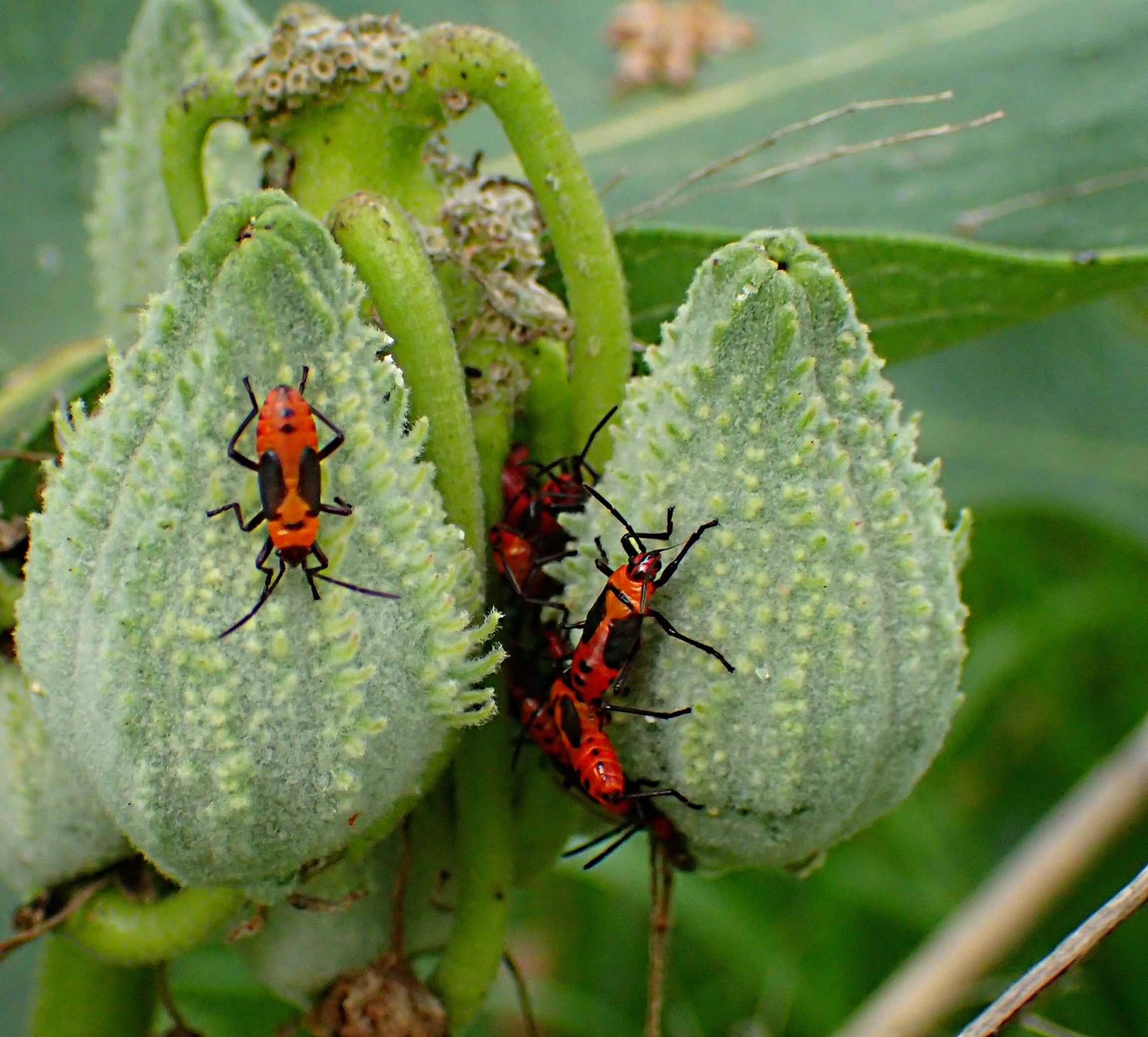
[Milkweed plants feed so many insects, yet seem to prosper and continue to do very well! True energy machines! These are nymph stages of the Large Milkweed Bug. Both the adults and young nymphs of the Large Milkweed Bug sip nectar and sap from plants and their flowers… but seem to do no significant damage. In the fall and winter they over-winter in the cottony growth of the milkweed pods. It would be nice if our homes were so edible and accommodating!]
One big happy family! Photo by Thomas Peace 2014
It’s sweet when your home is what you can eat! Photo by Thomas Peace 2014
[This butterfly is a Silver-spotted Skipper. Skippers have some characteristics of both butterflies and moths. They tend to have large, rather stocky heads, thick-oriented bodies, and relatively short wings, spanning up to 2 inches. The antenna are set far apart on the head and end in a curved hook. Adults love to sip nectar (as this one can be seen doing with its long proboscis.]
Like a moth to a candle! Photo by Thomas Peace 2014
I’m not interested in just nonchalantly passing through life while having a lot of mundane, but essentially superficial, experiences; I want to delve deep and (no matter what the answer entails) find out about the true essence of the whole and about existence.
.
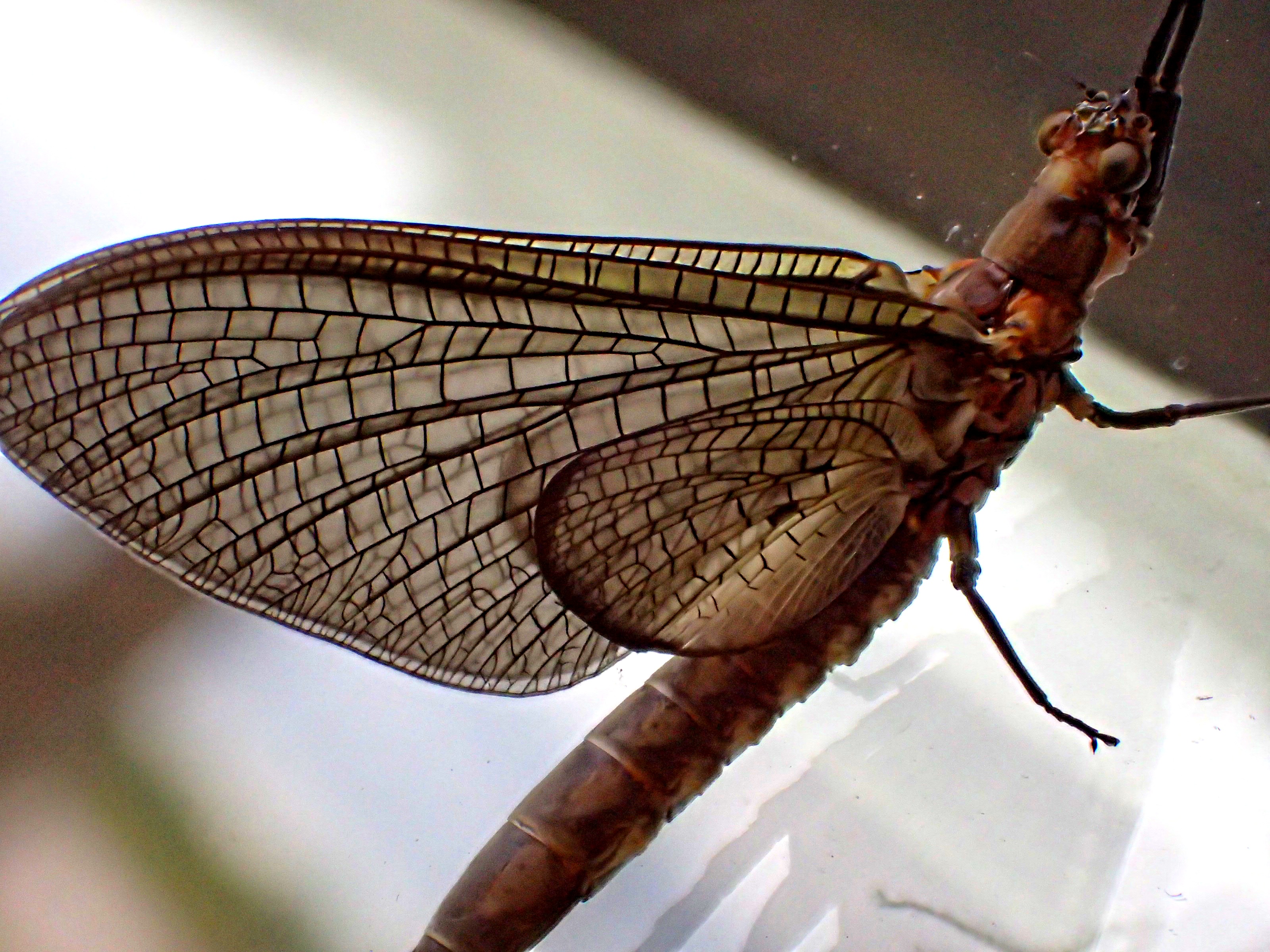
[This is close up study of an adult Mayfly resting upon an outside-oriented window pane. Though the immature “nymph” stage usually lasts around a year (living underwater), the adult stage of this order of insects usually only lives from a few minutes to a few days, depending on the species. The primary function of the adult is reproduction. Eating (for such a short adult span of time) is unnecessary; the mature adults don’t even possess functional mouth parts. Often, they emerge as adults at the same time; that way, predators get satiated and can only eat so many at once, enabling the others to survive (though their time is not long).]
An adult Mayfly: Short-lived but beautiful! Photo by Thomas Peace 2014
Fingers apart are still — and will always be — fingers together!
.
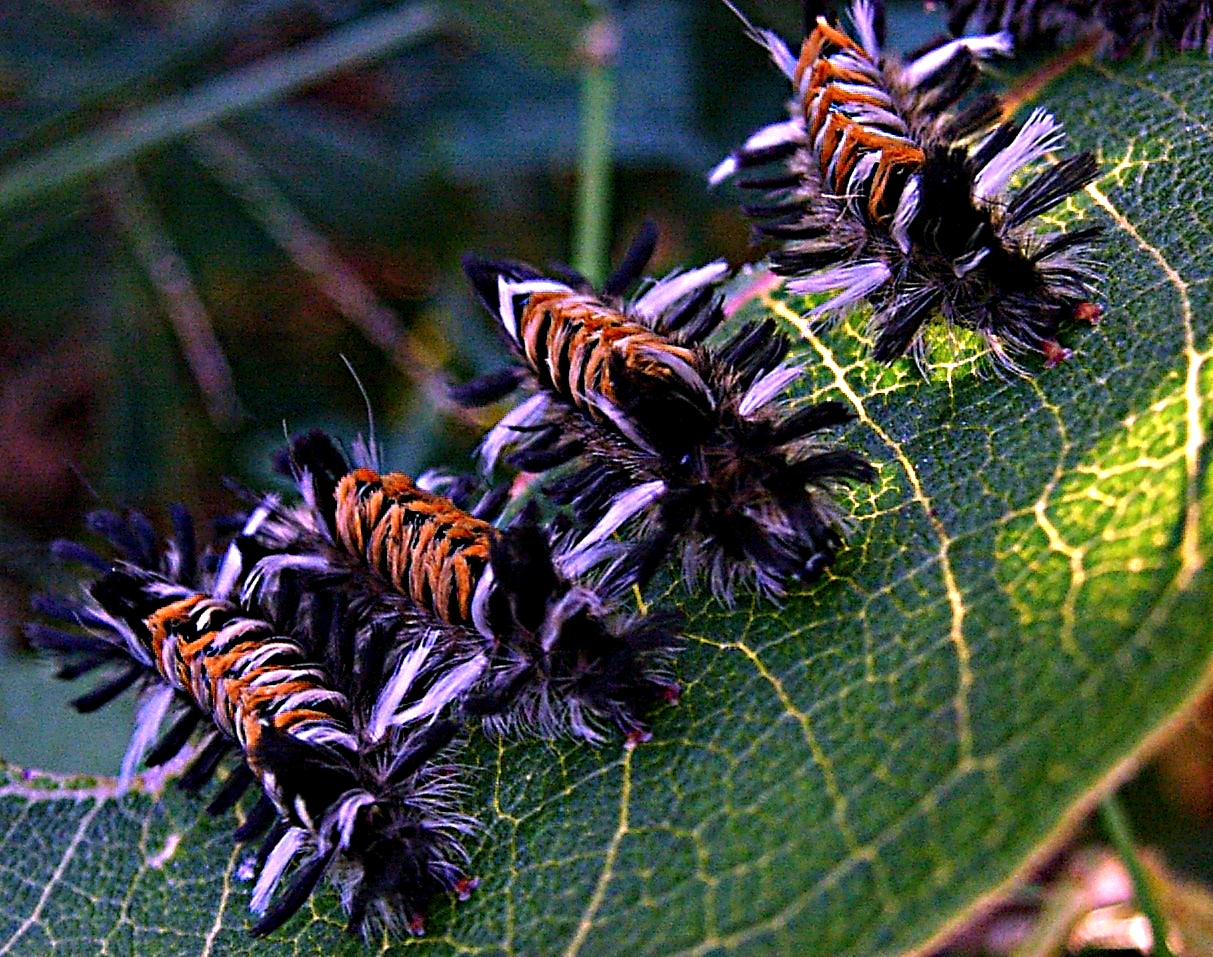
[These caterpillars — lined up and looking like puppies for sale and selection at the local pet store — are Milkweed Tussock moth (Euchaetes egle) caterpillars. They are eating and resting on a Milkweed plant. Caterpillars often look a lot different in appearance during each successive molt. Some species have completely different colors, or length of setae (fur-like covering), or may or may not have antennae or horns, for example. The variation between instars is one of the factors that makes it challenging to identify caterpillars.]
Milkweed Tussock moth (Euchaetes egle) caterpillars. This is no puppy mill! Photo by Thomas Peace 2014
Real passion in life cannot merely be taught. Real passion is not for one or two things, it is for the whole!
.
[This slender insect is a Conehead Katydid. The Conehead Katydid feeds on flowers and foliage, such as shrubs and trees. Males chirp during the day and sometimes at night with a “tsip-tsip” sound; close-up, the call resembles a continuous, second-long buzz repeated every 2 seconds.]




















 Tom's Nature-up-close Photography and Mindfulness Blog