All Posts Tagged ‘inspiration

Post

What I think about Gay people…

1 comment

Not to stereotype… but the following is what I think about Gay people.

First off, let me inform you that I am completely “straight.”  I am male and I have a female wife.  I have always been straight… and I’m sure I’ll happily remain that way.

I’ve had tropical fish and parrots, as pets, for many years.  Years ago, I met someone who shared his home with many parrots.  He had a lot of breeding pairs — really cared for his many bird-friends — and was really fond of animals of all types.  He was a real lover of nature.  He went by the name of Buddy.  Buddy became one of my very best of friends.  As time went by, I learned that Buddy was gay.  He, in all the long time that I knew him, never tried to touch me inappropriately or in any sexual kind of way.  We hung out a lot together… and often talked about different kinds of animals and creatures; nature and wildlife was our real passion.

Buddy once confided, to me, about how difficult it was for his family (i.e., his parents and siblings) about accepting his “gayness.”  He, additionally, once said to me, “Who would ever choose to be gay?”  He said that nobody would choose to be different like that; that it was something that just “happens” (like biologically/physiologically).  I agreed with him; felt empathy for him; and continued to accept him as a true and splendid friend.

Unfortunately, Buddy did not see himself as positively as I did.  He was raised Roman Catholic and attended church on a weekly basis.  Buddy told me that what he was doing was a “sin”… and that, in a way, he was “wrong” and “evil.”  Following being told things like that from Buddy, I occasionally would tell him that what he was… was not in any way sinful, or wrong, or evil.  However, just like oodles of others, Buddy was ingrained by a traditional, doctrine-oriented, obsolete system run by antiquated, old-fogeyish men.  My words fell on deaf ears.  To his mind, I was no longer a “believer.”   So my words carried little weight.

Once, we went together (to a distant large town) to a huge convention —  with many people attending — on parrots.  Buddy invited me to stay overnight at his friend’s house (while we were there).  He assured me that there would be no interference with my privacy.  I agreed, and — though I  had a room all to myself, with the door closed — I just could not sleep that night.  Something, deep down and rather unconscious, would not let me sleep.  Nothing happened that night, of course, and I could have slept just fine.  I’m sure that Buddy had a great time with his friend.  (My lack of sleep was something to laugh about the next day.)  At the large (all day) convention, which was about parrots, they served “grouse” for lunch; each plate had a whole bird sitting there in front of each in attendance…(except, fortunately, for me… I’m a vegetarian)!  That meal was ludicrous!  Who planned that, one wonders!  We laughed about it all the way home!  🙂

Ever since I was a young child, I’ve had tropical fish.  Angel fish, which I’ve occasionally gotten eggs and babies from, mate for life.  Once in a while, I noticed, two males or two females would become mates.  These fish were not “swayed” by deviant other fish who “taught them deviant ways”!  It was just some biological/physiological phenomenon that naturally happened now and then.  (Like it or not, we, all land-dwelling vertebrates, evolved from fish… fish like Osteolepis.)

One day, they found Buddy dead in his back yard. This, by the way, happened years ago.  It was a heart related cause of death.  One wonders if stress played a role in his untimely demise.  If he had more acceptance, from others, about his “condition that wasn’t a condition”… maybe he would have lived a lot longer and a lot happier.

I am so glad that I still am not a follower of those old-fogeyish men with their pointed, fancy caps and their fancy robes and buildings.  I am glad that I was supportive of Buddy… and that I often said positive things about his lifestyle (that he didn’t choose).

One of my sister-in-laws is gay.  She is married to another woman.  My wife’s family, at first, had a bit of a difficult time with it.  But now they are very accepting and understanding about it.  I, from the get-go, did not have any problem with it; to me, at the time, the difficulty that others were having about it seemed to be rather nonsensical and silly.  That sister-in-law — I have six others — happens to be one of my very favorite within the family.  She and her awesome spouse now have two wonderful children (by way of a sperm bank for the deposit).  They are the most splendid of parents… always fussing over their kids and taking them all over for learning and educational purposes.  You couldn’t find better parents!  Not only are they great parents, but they are kind, happy, considerate, warm human beings.  They are both teachers… and people in their community love them!

At the family Christmas party, a few days ago, (we had one of those later parties), I overheard one of the other sister-in-law’s kids say to the girl of the twins, “Why don’t you have a father like the rest of us do?  Isn’t that very odd?”  She said it in a kind of half mocking, half despising way.  I plan on asking my gay sister-in-law for permission to briefly talk to her two children about their parents.  I want to tell them that my so-called normal parents were often very cruel and uncaring.  My mother often asked me (as a child) to talk her out of suicide and my father was psychologically and physically abusive.  I used to fear for my life (while living at home as a young child).  I would like to tell my “favorite sister-in-law’s” children just how amazingly lucky they are… and how they need not ever be embarrassed or ashamed.  Many (far too many) so-called “normal” parents leave a lot to be desired!

Some final comments:  There is one thing that I do disapprove of.  It is those authoritative, dictatorial, hierarchical, orthodox, old men with the pointy hats having their way with little children, while the system tidily covers things up.  They are the ones that are truly the danger.

Walt Whitman, one of the most sagacious of poets — and I have some of his insightful, witty poems within my book — was probably gay (as indicated by many biographers).  He was no follower of any rigid, antiquated system; he walked robustly and solidly… content and more than pleased with himself!

[from Walt Whitman:

Do you suppose you have a right to a good sight, and he or she has no right to a sight?   Do you think matter has cohered together from its diffuse float, and the soil is on the surface, and water runs and vegetation sprouts, for you only, and not for him and her?]

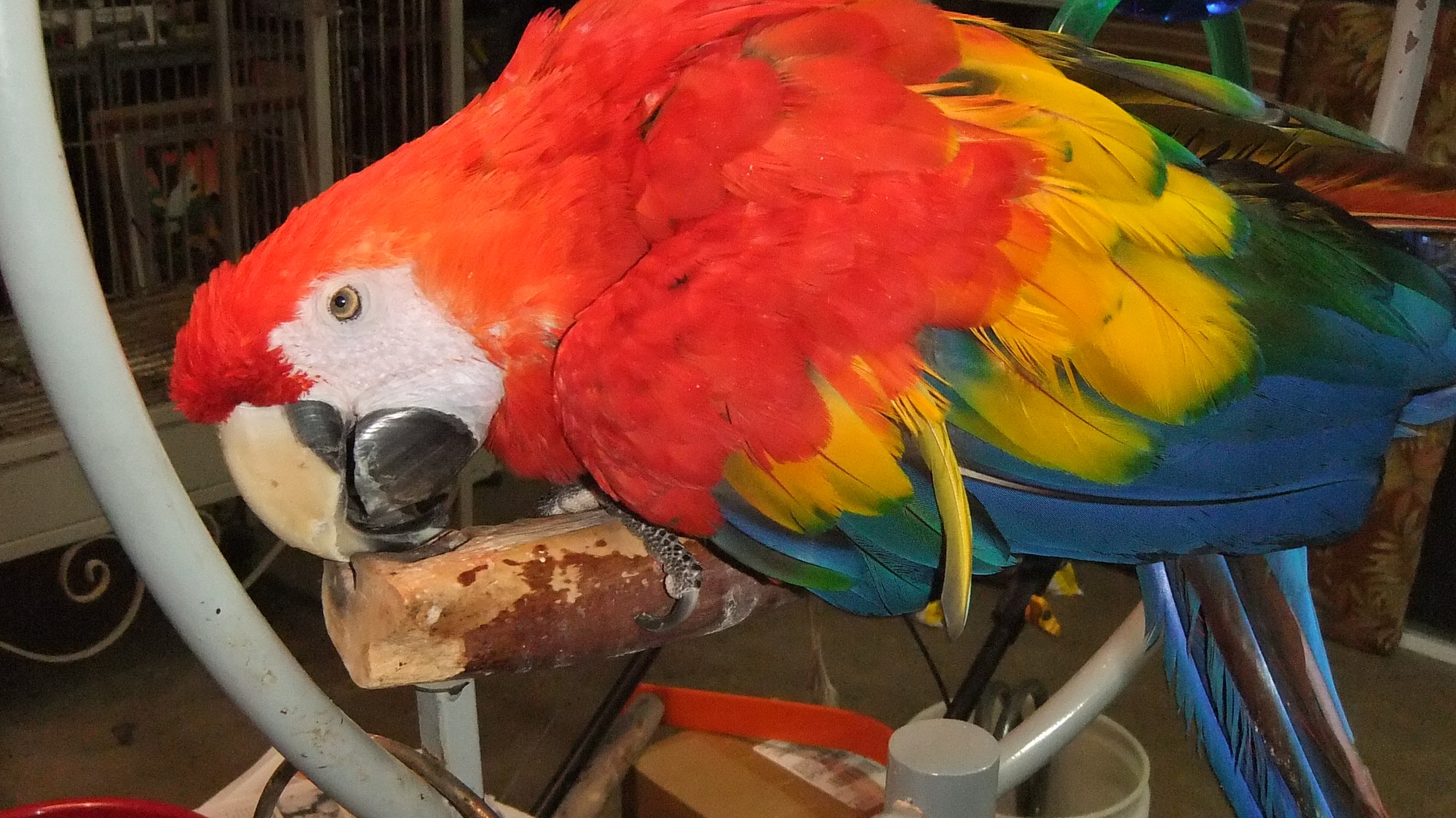
The following bird is beautiful… but its beauty can never approach the deep beauty of someone who, without harming others, has profound and wise acceptance for the way he or she really (intrinsically) is.

eternalfountainofyouth.com

Photo below… by Thomas Peace (Left click on the photo to see it enlarged; left click on the “middle” of it again if you wish to enlarge it more; hit left return-arrows, once or twice, to return.)

Photo of Scarlet by Thomas Peace c.2013

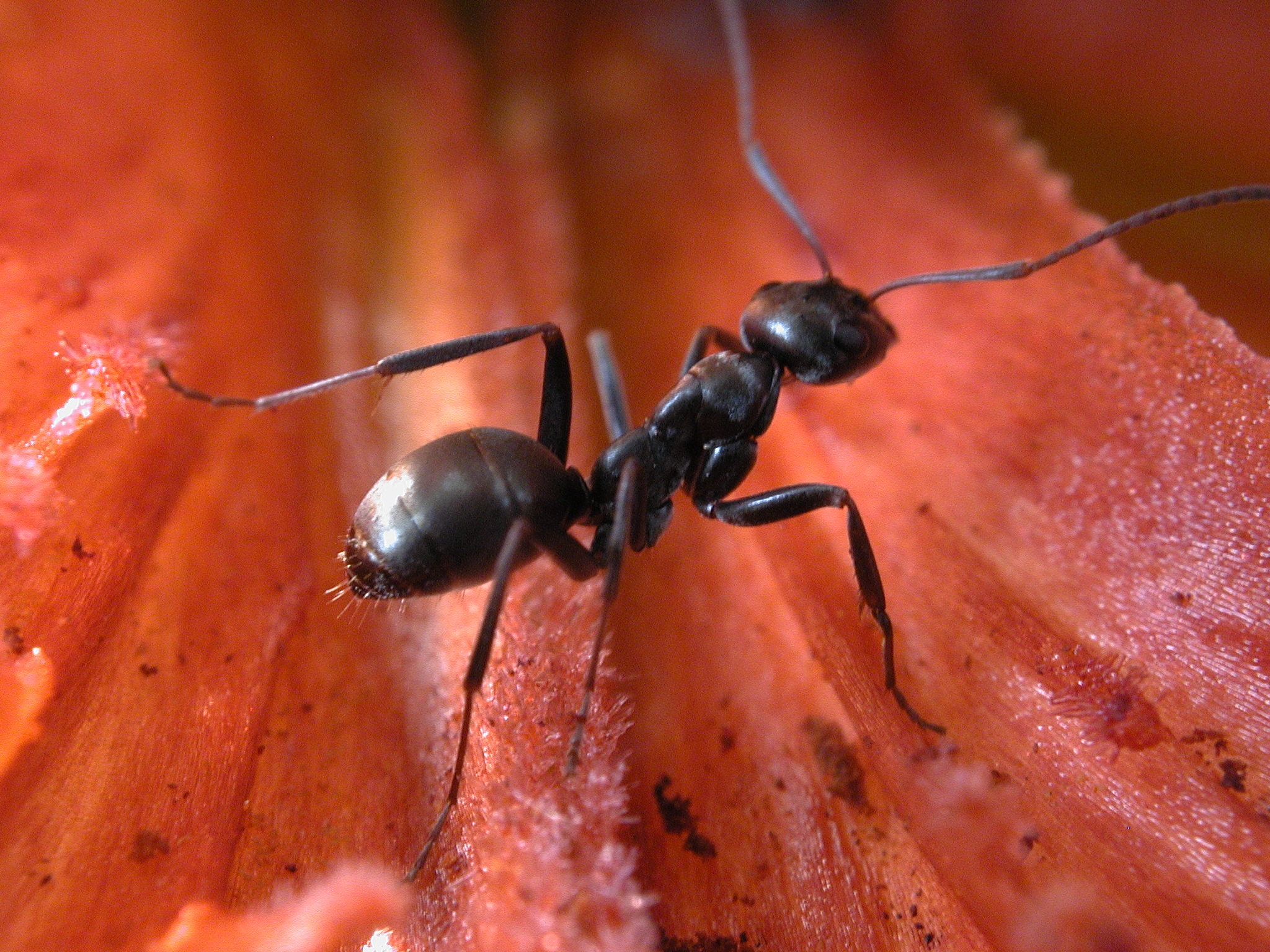
Photo of Scarlet by Thomas Peace c.2013

Post

Beyond the superficiality of apathy…

10 comments

Beyond superficiality of the mind… may exist the profound depth of insightful, direct, compassionate perception.  Perception that is not (often) compassionate is the kind that is not (often) the result of keen and profound awareness or insight.  Such perception — without compassion — is often rather callous, machine-like, indifferent, limited, and therefore, superficial.  In order to be indifferent, apathetic, and unconcerned about the feelings and well-being of others, one must be psychologically bound in a limited, constrained, and fixed  frame of mind.  Such a frame of mind is little and small… because its concern involves only one little square within the entire chess-board… not the entire field.  One does not care much about what happens to others… because, for one thing, one is likely to be concentrating almost entirely on oneself (as what is important).

All limited fields, including the limited field of merely concentrating on oneself, must be curbed by narrow, fixed demarcations.  Such demarcations and boundaries often are not fluid; they are not dynamic, nor are they all-encompassing.  What is heavily bounded often does not have a lot of depth.  Not to be judgmental, but there are all too many people who are quite content to remain fixed in limited fields of concern, having little regard for the well-being of the whole (i.e., well-being of the earth’s many life forms).  Being separated from others involves fragmentation… a fissure and a disjunction  from them.  This separation can be learned (such as via barbaric educational or primitive parenting practices) or it can be the result of certain biological qualities of the brain (as a result of biological/genetic inheritance or by cerebral chemical malfunctioning).

Some very social animals, such as monkeys and higher apes, tend to (at times) be rather compassionate (to a limited extent) to members of their own group or pack.  This sharing within the group tends to benefit members within the group, and it extends order and mutual survival for all.  Even some insects (such as ants) engage in instinctual sharing and group consciousness; they even create ladders (constructed out of many of themselves, as bodies clinging to bodies) so that other members can transversely move across difficult crevasses/chasms.  Bonobo  chimpanzees, a subspecies of chimps, have a brain anatomy that is significantly more developed, with larger regions assumed to be associated with the process of feeling empathy; they easily sense distress in others, and “feel their anxiety,” which makes them less aggressive and more empathic than their close relatives (i.e., the regular chimps and some of us humans). Bonobos have a thick connection between the amygdala, an neural area that can spark aggression, and the ventral anterior cingulate cortex, which helps control impulses. This thicker connection enables them to better regulate their emotional impulses, and to get a better grip on their behavior. I love how Bonobos are so full of empathy for other animals.  One, for example, lovingly held an injured bird and kept it warm, until it was able to fly over the enclosure fence.

For us humans, to be shaped (mentally) by the edicts of society allows only for a very limited depth of insight and true compassion.  Although there is sharing… society, currently, incorporates a lot of separative, competitive, and rigid views.  Dynamically transcending these views may be necessary for a profound depth of insight, and for real compassion, to manifest.  Society, currently, often deeply admires the man who is very financially successful, competitive, and dominant over others; such success often involves a rather ruthless, cutthroat, and machine-like mode of affairs.  Real compassion crashes through the superficial perspectives (of normalcy) and intelligently goes where recognition and awards are of little value and meaning.  The immature need to be “recognized”; the need to be given “awards”… involves ostensibly concentrating on a little, limited, fixed self.

eternalfountainofyouth.com

Photo below… by Thomas Peace (Left click on the photo and scroll down to see it enlarged; left click on the “middle” of it again to enlarge it more; hit left return-arrows, twice, to return.)

Lily with Ant photo by Thomas Peace c.2013

Lily with Ant photo by Thomas Peace c.2013

Post

On looking at life anew…

8 comments

Life involves much more than having many symbols (i.e., thoughts) about it.  Many of us go through life looking at everything through a screen of symbols and images.  We recognize things merely via these symbols and images (that we were taught).  To look freshly — without all of these blasé, worn-out images — is to really live.  Otherwise, one is merely looking through (and with) the old, dead known.  Direct, youthful observation only takes place without the contaminated past interfering.  Such observation is, in itself, alive and free.

Structured and “learned” observation is never really of freedom; it is never implicitly free.  Many merely look via the ways and modes that they were “taught” to look.  Little wonder, then, why so many become bored, weary, melancholy, and depressed.  They are not looking with what is joyous, fresh, alive, and spontaneous; they are looking with what is old, stored, categorized, and of the past.  The beauty of existence and life is in its spontaneity and “nowness”… not in a remembrance of what “was before.”  Go beyond what all the pundits have taught you.  Go beyond what you stored and accumulated.  Leave the dead past and perceive freshly in the “now.”

The next time you see the beauty of an animal, or a face, (or a tree)… please do not merely look at it via labels, classified-learned patterns, formulated systems, and antiquated memories.  Please do not merely look with a lot of that “learned space” that exists between the perceiver and what is being perceived.  Without all that baggage, maybe (if you’re lucky) you’ll actually be in relationship with what is observed.

eternalfountainofyouth.com 

“Beyond Labels”…   pic by Thomas Peace (Left click on the photo and scroll down to see it enlarged; left click on the “middle” of it again to enlarge it more; hit left return-arrows, twice, to return.)

"Beyond Labels" photo by Thomas Peace

“Beyond Labels” photo by Thomas Peace

Post

Traveling on the Razor’s Edge…

9 comments

One can take the easy way that others have formulated “for you,” regarding living your life.  Most of us travel the safe and easy path that was laid out for us by others.  However, it may be that the “prefabricated path,” put there by others for us to travel upon… almost inevitably leads to a life that is not truly full of dynamic immensity and true passion.  Any system, any set of rigid methodologies, merely tend to heavily condition the mind.  Such a conditioned  mind, being second-hand, rarely has the capacity to go beyond what is mediocre and contrived by plotting.

True spontaneity, true insight… is never the result of any second-hand, calculated series of events.  Real spontaneity and actual insight is always what manifests from something direct and “non-distorted.”   What is merely “learned” is always second-hand and, therefore, not truly direct and straight.  Shadows are what is rather second-hand… and a lot of minds are “in the dark” due to having allowed themselves to exist via the formulations and blueprints of others.  We need to go beyond what was fabricated for us to function “as.”  We need to perceive without all of the contamination that was poured into so many (by calculating profiteers).  We are not invited (enough) to do things without motive.  We are not invited (enough) to question things freely, sanely.  We are not invited to intelligently go beyond what was spoon-fed into us.  Most of us may be falling “off course,” because we may be traveling as delimited by (fallen) others.  Traveling on the razor’s edge is very difficult; it is easy to fall off and remain very “safe.”

eternalfountainofyouth.com 

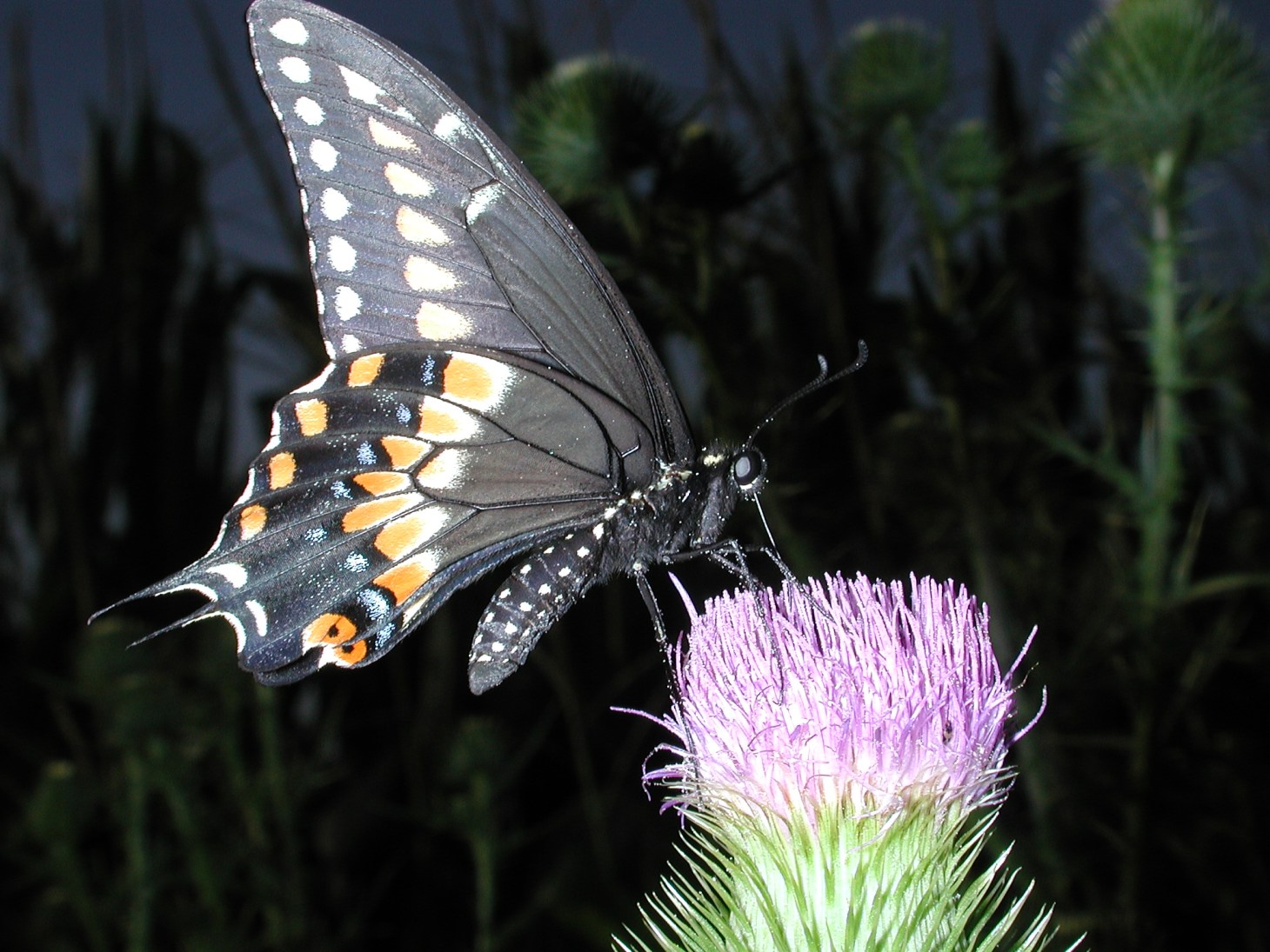
Black Swallowtail on Flower’s Edge…pic by Thomas Peace (Left click on the photo and scroll down to see it enlarged; left click on the “middle” of it again to enlarge it more; hit left return-arrows, twice, to return.)

Black Swallowtail pic by Thomas Peace c. 2012

Post

Memory is Always Old…

1 comment

Memory is always old and of “the past.”  It involves symbolic images and words in a recollection of past occurrences, past things, past events, and past experiences.  Memory is usually heavily conditioned by the learned patterns that society has shaped within us.  The memory bank is an accumulation of these past (learned) things and past experiences. Things are categorized within us, according to how we’ve been taught.  We often merely see things through a process that is dictated through the learned screen of memory. Recognition is often largely memory reinforcing itself.  Being more than something that is second-hand… involves going beyond all this in a fundamental way.

This arrangement (of memories) can become rearranged (and reshuffled) and, in having done so, relatively new things and ideas can become established.  Such a rearrangement can either be very beneficial (to life on earth) or not very beneficial, or somewhere in between.  People come up with all kinds of ways to “sell” or “profit from” their ideas.  This profitability either is motivated to benefit the self or to benefit humanity and life (or both); oftentimes it lies somewhere in between.  A truly wise man, however, deeply perceives that the self is not, in truth, separate from the rest of humanity (and life).  Such a person’s motivation may not lie within what was merely learned via past experiences and via various types of stored memory.  This is because real insight can spring into existence (in a serious person) regardless of what past memories and experiences existed previously.

Deep and profound insight cannot be purposefully brought about by any method, system, or procedure.  Otherwise such insight would merely be the formulations of (or partially formulated by) a plan.  Planning takes time, and deep insight exists beyond the realm of what can be concocted in time.  True insight is timeless.  It is a profound, spontaneous explosion beyond what one had learned or experienced via memory. The profundity of insight can (out of compassion) shape someone’s memory; but one’s memory can never shape, fabricate, or bring about true insight.  The mechanism of memory (as the thinking process) must end (for deep insight to take place).  This ending, of course, cannot come about via any contrived process, procedure, or devised strategy.  An ending resultant from some kind of blueprint is a mechanically formulated effect… which is not, truly, an ending.  If the cause involves “plotting” and “calculation”… the end will be also be rather ordinary, near-predictable, and mundane.  Most people were taught that “ending,” for them, is something that is “not good.”  However, ending “psychologically” may not, at all, be deleterious.  Most people endlessly cling to (their) memory.  (That is what they were taught… and that is what they have absorbed; that is what they continually function as.)

eternalfountainofyouth.com

Insects and flowers have always had a symbiotic relationship with each other.  The flower feeds the insects and the insects help pollinate, clean, and protect the flower.

Photo of ant on a lily flower by Thomas Peace c. 2012:

[Left click on the photo to see a larger version… then left click on the “center” of it again (up to 2 times) to expand it further; hit left “arrows” to return.]

Ant on Lily by Thomas Peace c. 2012

Post

In Memory of Those Budding Children who faded today…

1 comment

In Memory of those Budding Children who faded today…

They were beautifully blossoming… and such precious flower buds should never be overshadowed or clipped.

(An insane madman, of darkness, did some ignorant overshadowing.)

from Emily Dickinson:

On such a night, or such a night,
Would anybody care
If such a little figure
Slipped quiet from its chair —

So quiet — Oh how quiet,
That nobody might know
But that the little figure
Rocked softer — to and fro —

On such a dawn, or such a dawn —
Would anybody sigh
That such a little figure
Too sound asleep did lie

For Chanticleer to wake it —
Or stirring house below —
Or giddy bird in orchard —
Or early task to do?

There was a little figure plump
For every little knoll —
Busy needles, and spools of thread —
And trudging feet from school —

Playmates, and holidays, and nuts —
And visions vast and small —
Strange that the feet so precious charged
Should reach so small a goal!

Katy and her blossoming flowers...Thomas Peace c. 2012

Katy and her blossoming flowers…
Thomas Peace c. 2012

eternalfountainofyouth.com

Post

To Look From A Limited Perspective…

4 comments

Looking from a limited perspective… what does that mean to you?  Have you ever thought about it?  Many of us probably perceive through a conditioned background… a background that many of us have “operated from,”  but which many of us have never intelligently examined objectively.  To perceive things in a fragmentary manner may be to look with a great deal of separation and division.

Many of us go through life “recognizing” things.  We recognize one thing after another, as we were taught.  Then we write essays, or books, or blogs, or letters, or emails about these multitudinous “things” that we have “recognized.”  We often recognize things in the manner or way in which we were taught to recognize them.  One’s consciousness is constituted of these “recognized things.”  These things that we were taught about have very delineated demarcations and boundaries.  We were taught that each thing has a finite domain and a limited space… and we were taught that there is a limited space between us and each of these “things.”  (We were taught that fear is there, in us to deal with… not that we and our fears are not separate, not something different.)  We continue to write about these things and share these things with others.  So, indirectly (or directly) we are continuing to teach and to reinforce the learning/teaching process  of others (in the manner that we were taught).  Some of us are very good at writing and at conveying images to others via printed words.  We get congratulated about what we are writing… and, indeed, some of us develop very lucrative professions due to our ability to hone and craft words in an “artful/intelligent” manner.  We give each other prizes (for those who we think did the best job at entertaining us with words and symbols… in a crafty manner).

In the Algonquian Native American family of languages, for instance, there is more of a verb-based structure existent.  In other words (no pun intended) more verbs exist, rather than separate things “as nouns.”  There’s more of a “doing” and “blending,” rather than an “it-ness” and a “separativeness.”   The Ojibwa, the Cheyenne, and the Blackfoot sometimes saw things more together, in a kind of blended movement or flow… rather than as mere separate, isolated “things” very apart from each other.

Animals recognize things, often without having been taught to do so.  Dogs recognize what to eat and what not to eat (though what some dogs recognize as being “edible” is not often very beneficial to eat).  Cats recognize what is a threat and what is not likely to be harmful.  Saber tooth cats (no doubt) could often do so without having been taught by their mother. A lot of this recognition is innate and instinctual.  It is at a very crude level. Even insects and spiders can recognize what is an enemy and what is beneficial to eat; oftentimes they are one and the same (in the case of what insects/spiders see as an enemy that is concomitantly likely delicious)!

The consequences of continuing to write with a separative mode (quite similar to what crude bugs and diminutive animals can grasp and attain)… might be extremely profitable for the so-called gifted writer or author who is capable regarding relating in such a manner.  However, if we merely continue in that crude, crass, and primal mode (as we have been doing for millennia), then we will have merely continued the process of looking from a limited perspective.  We need to evolve from this separative perspective (which merely involves separate things).  If we don’t change, then people (with their separative little countries, sects, things, and establishments) will never change fundamentally.  Will a fragment, a separate, little self that is divorced from everything else be able to do this?  One doubts it.  What is limited cannot transcend limitation unless it fundamentally changes into something else. A little insect, sitting on a plant, can’t fundamentally change from the crude limitation that it is immersed (and absorbed) in. Can we?

eternalfountainofyouth.com

Katy in Flower by Thomas Peace c. 2012

Katy in Flower
by Thomas Peace c. 2012

Post

We are what we think.

3 comments

We are what we think.  And by and large, we are the thoughts of others.  We have absorbed the thoughts, patterns, habits, and manners of others; we are an accumulation of these processes, tokens, and methodologies that others provide.  Yet we (each of us) think that we are something truly independent and unique.  The reality may be that most of us are not unique or independent at all.   To be a second-hand copy (of what everyone else basically is) may not at all be what “true living” involves.  Being another domino in a sequential series of reactions may not involve real action whatsoever.  Real action goes beyond limited boundaries.  Limited boundaries constitute the very essence of symbolic representations and mental recognition frameworks via learned (i.e., merely absorbed) paradigms. Real learning lies beyond mere absorption.

We look through the screen of what we were taught… and what we see is what was implanted into us.  Very few of us go beyond that very limited domain.  We are used to (i.e., accustomed to) limitation, we live in limitation, we accept limitation, and we fight… in childish political parties, divisive religions, separative countries, and isolated, small self-concepts… all involving gross and crass limitation.  Limitation occurs when the mind is spewing with boundaries of demarcations, when barren, symbolic representations endlessly clutter the mind.  Merely absorbing and assimilating limitation is easy.  Any languorous or inattentive mind can do that.

Fortunately, there are a few who look beyond the muddle and go beyond it.  They are not the ones who write the innumerable mystery books that have no real mystery to them, and within… (and there are plenty of so-called mystery books like that).  They are not the ones carelessly driving into dead-end streets while childishly trying to entertain us. They are not the ones in high office, dressed in fancy clothes (or wearing hierarchical robes) jabbering away, but with real apathy behind it.  They are not the ones with their images plastered on the cover of popular magazines.

We think that we control what we think… but we are what we think.  We have accepted separation as an essence of our fundamental perspective.  (We think that we are separate from what we think… and that we control it.)  We (most of us) have merely absorbed what we were “taught.”  However, that kind of teaching, from which we were “taught,” may not be real teaching at all.  Real teaching involves penetrating the superficial.  Real teaching involves tearing down false limitations and puny demarcations to reveal and allow deep, profound insight.  Wholeness, real wholeness, is not a concept.  It is not something concocted from an accumulation (or bundling) of the many things that one sees or was “taught” to see.

Many of us are second-hand shadows, congratulating each other on what remains superficial and fragmentary. The ramifications of this involve a world being harmed more and more by very limited minds.  To question what we were taught, and to go beyond it, may be the beginning of true wisdom.  True wisdom stands alone… and it does not depend.  True wisdom may not exist for one who wishes to wallow in the comfortable shadows of what it was conditioned to become by society.

www.eternalfountainofyouth.com   

from Walt Whitman:

I believe that a leaf of grass is no less than the journey-work of the stars…

******************************************************************************************

Photograph “Leaves of Grass” by Thomas Peace (copyright 2012)

DSCN6807