
.
The essence of love is deep caring (beyond the limited self).
.
[Lazy Susans at a Hospital Park… There are at least two Hover Flies resting upon them.]

Lazy for a good reason. Photo by Thomas Peace 2014
.
The essence of love is deep caring (beyond the limited self).
.
[Lazy Susans at a Hospital Park… There are at least two Hover Flies resting upon them.]
Lazy for a good reason. Photo by Thomas Peace 2014
.
Life is not dull or monotonous to a dynamic mind that inquires joyfully.
.
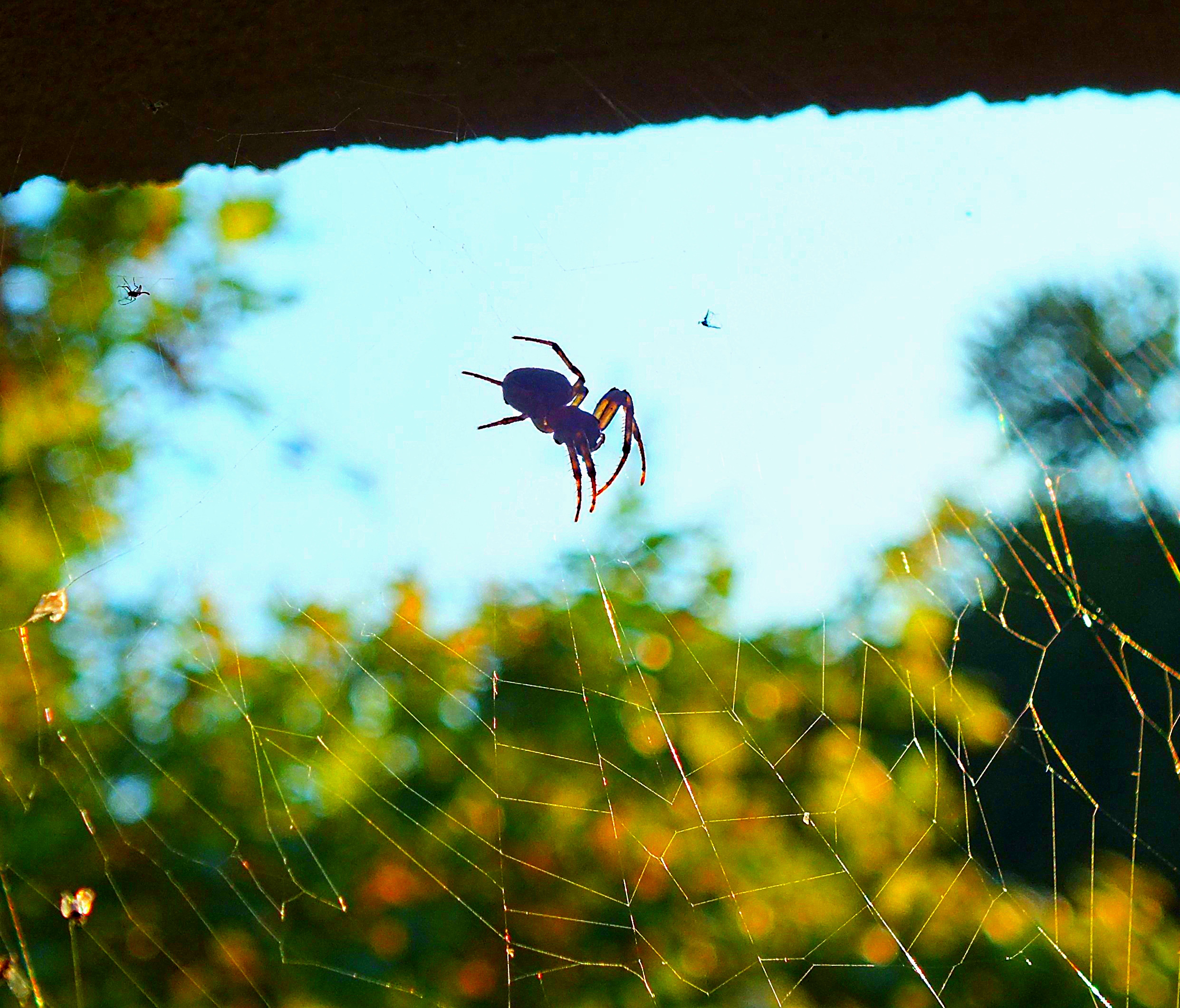
And frightened Miss Muffet away! Photo by Thomas Peace 2014
.
Have gratitude for the simple things in life… for they are usually the most precious.
.
[Morrow’s Honeysuckle, which now grows wild, is one of several honeysuckle shrubs that have been introduced from Eurasia. Morrow’s honeysuckle was imported in the 1800’s for use as an ornamental, for wildlife food and cover as well as for soil erosion control. This one is growing along the bank of a river… which helps against possible erosion.]
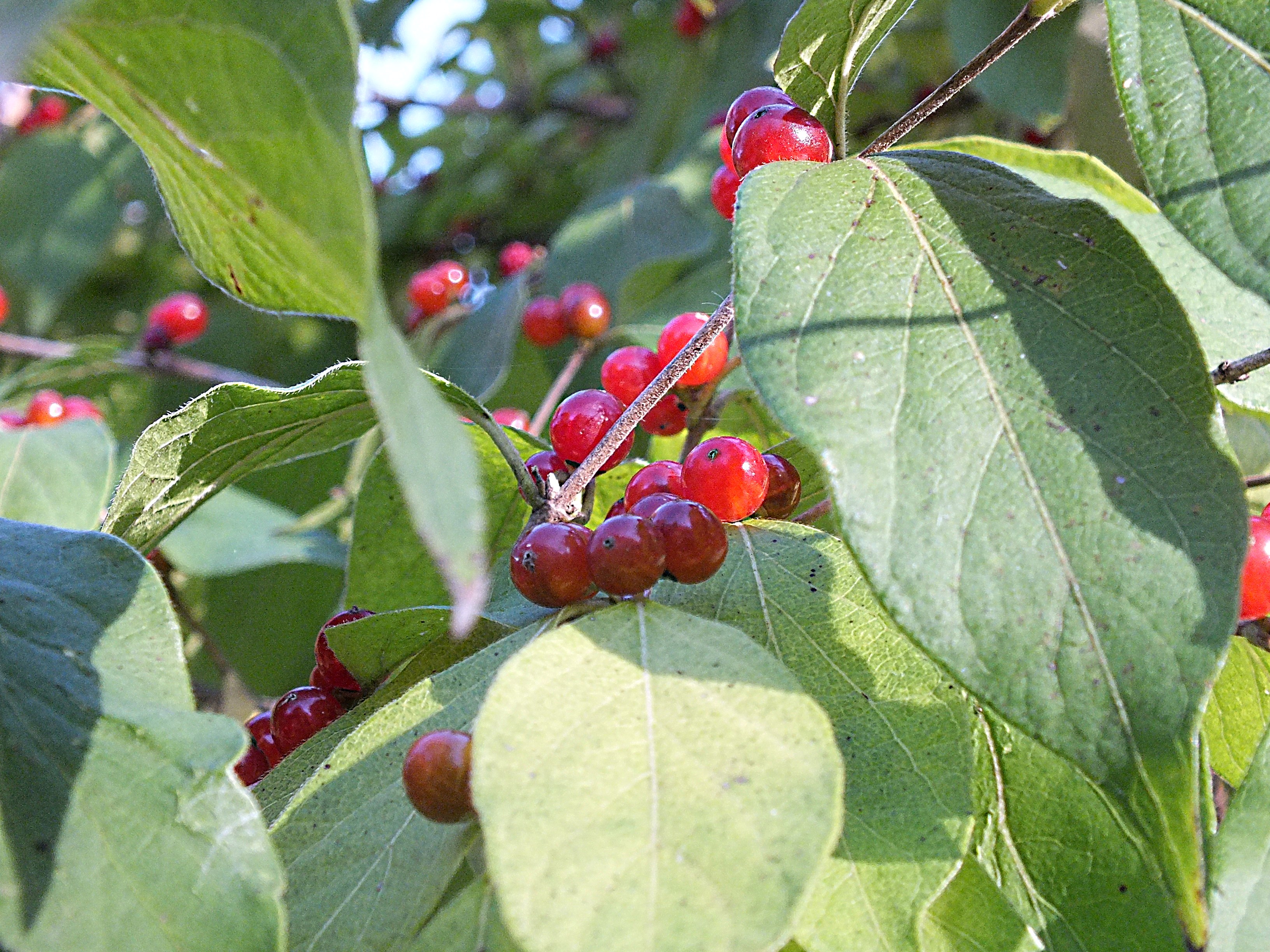
Red Gems. Photo by Thomas Peace 2014
.
The Zen all-meaning circle… it’s just a symbol, but whoever initially came up with it was attempting to convey something profound.
.
[A dried, fall wild vine…]

Zen all-meaning circle… Photo by Thomas Peace 2014
.
To wisely question may be more intelligent than having concrete certitude.
.
[Eyeing the camera (with a smile)…]
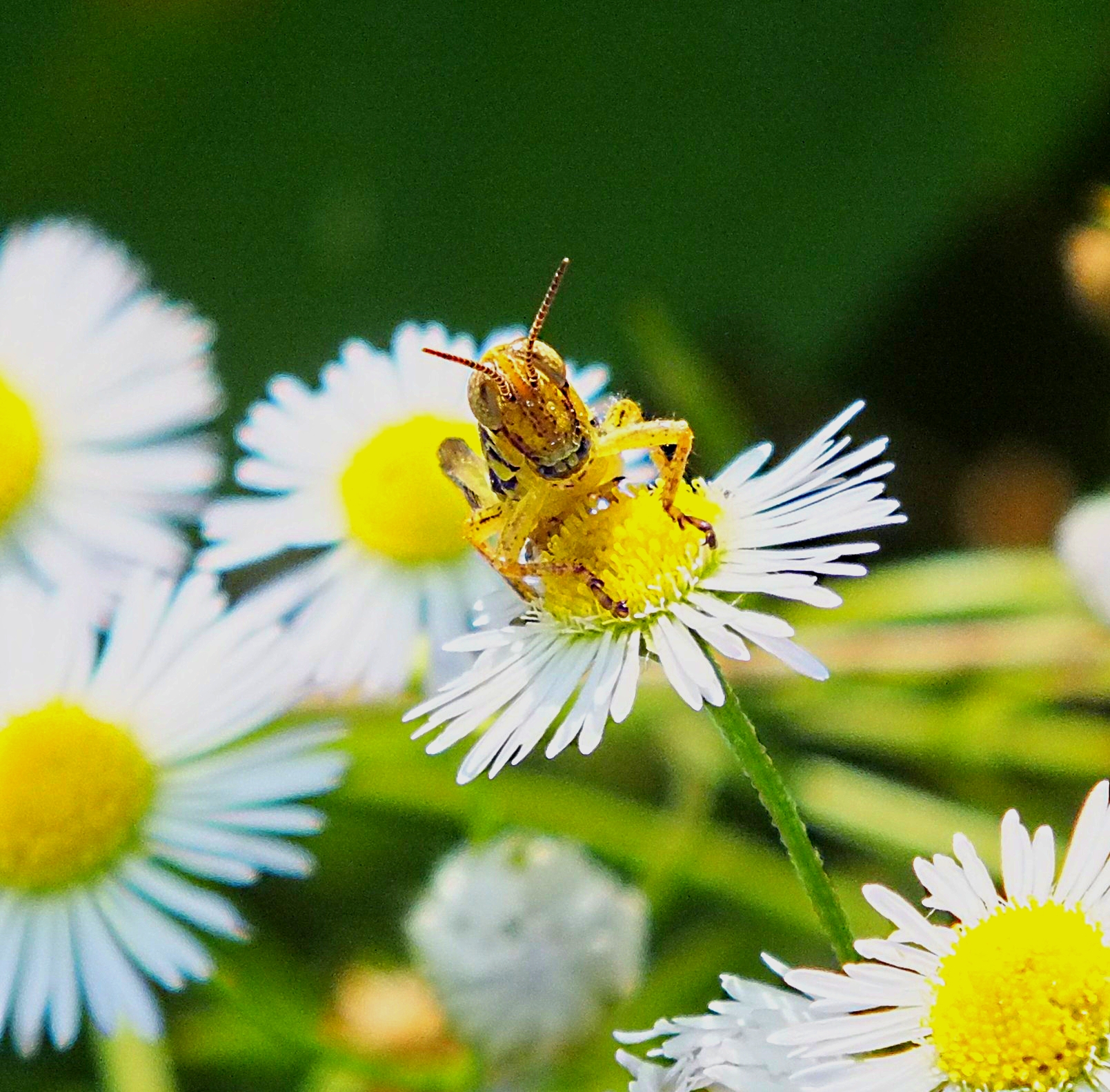
Captured by the Hopper’s lens. Photo by Thomas Peace 2014
.
You can buy stuff, but you can’t purchase integrity, compassion, and deep insight.
.
[Local Creek in Fall]

Local Creek Up Close. Photo by Thomas Peace 2014

Local Creek. Photo by Thomas Peace 2014
.
A requisite attribute of time is distance. A requisite attribute of thinking that you are separate from others is time.
.
[The Ailanthus Webworm Moth thrives from spring through fall. The caterpillars of the Ailanthus Webworm Moth spin loose cocoons low on the host plant. There is one generation per year.]

Ailanthus Webworm Moth, eats foliage of deciduous trees and shrubs. Photo by Thomas Peace 2014
.
To question everything wisely and intelligently… is to deviate from the norm.
.
[This Honey Locust Tree is protecting itself well with an array of spiked thorns. Honey Locust Tree thorns are thought to have evolved to protect the trees from browsing Pleistocene (i.e., Ice Age) mega-fauna. The name derives from the sweet taste of the legume pulp, which was used for food by Native American people, and can also be fermented to make beer.]
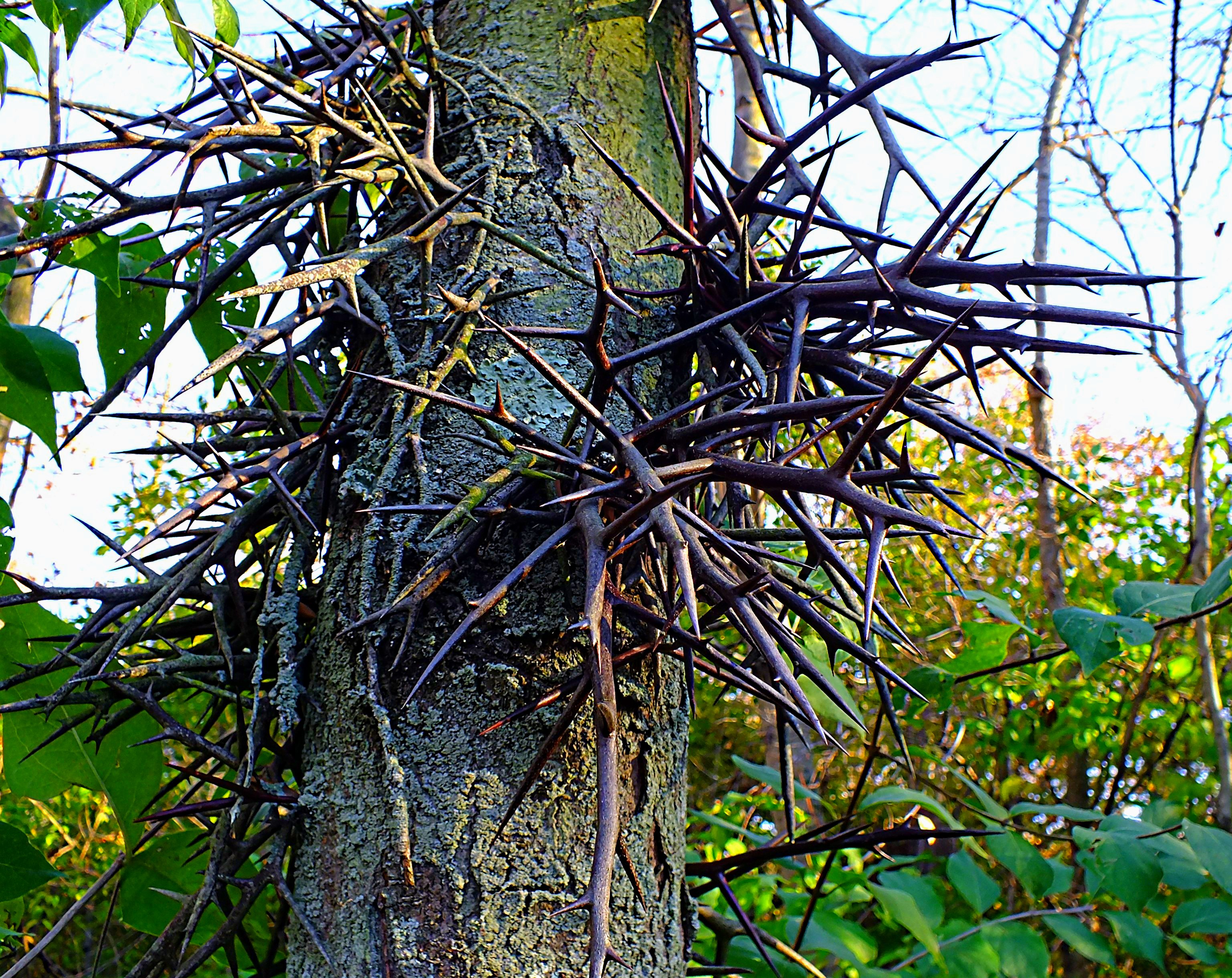
Honey Locust Tree protecting itself! Photo by Thomas Peace 2014
.
Go beyond what all the pundits and so-called experts teach… and inquire for yourself beyond tradition.
.
[The Heal-all Plant (Prunella vulgaris) is edible, and can be used in salads, soups, stews, and boiled as a pot herb. The Cherokee cooked and ate the young leaves. The Nlaka’Pamux drank a cold infusion of the whole plant as a common beverage. The Heal-all Plant contains vitamins A, C, and K, as well as flavonoids and rutin. The Heal-all Plant is taken internally as a medicinal tea for sore throat, fever, diarrhea, internal bleeding, and to alleviate liver and heart maladies. Topically, a poultice of the plant can be applied to irritated skin, as from stinging nettle toxins. A poultice of the Heal-all Plant also serves well as a disinfecting agent and is used to pack wounds in the absence of other wound-care material. It has been cherished by the Chinese to “change the course of a chronic disease.”]

Native Americans loved it! Photo by Thomas Peace 2014
.
Life is far too precious to sweep it under the musty rug of indifference. Help save the planet and go green!
.
[One of the local Tarnished Bugs investigating a wildflower. Tarnished Bugs seek out nectar and pollen.]

At the edge of one’s habitat. Photo by Thomas Peace 2014
.
See each facet of life as part of the undivided whole.
.
[A Horsetail Plant growing through some Queen Anne’s Lace. The Horsetail Plant is an extremely primitive plant; indeed, it looks rather Devonian-like in appearance. The stems are hollow, with no true leaves. The Horsetail Plant likes wet areas, such as ponds or marshes. Horsetail has no known food value to wildlife.]
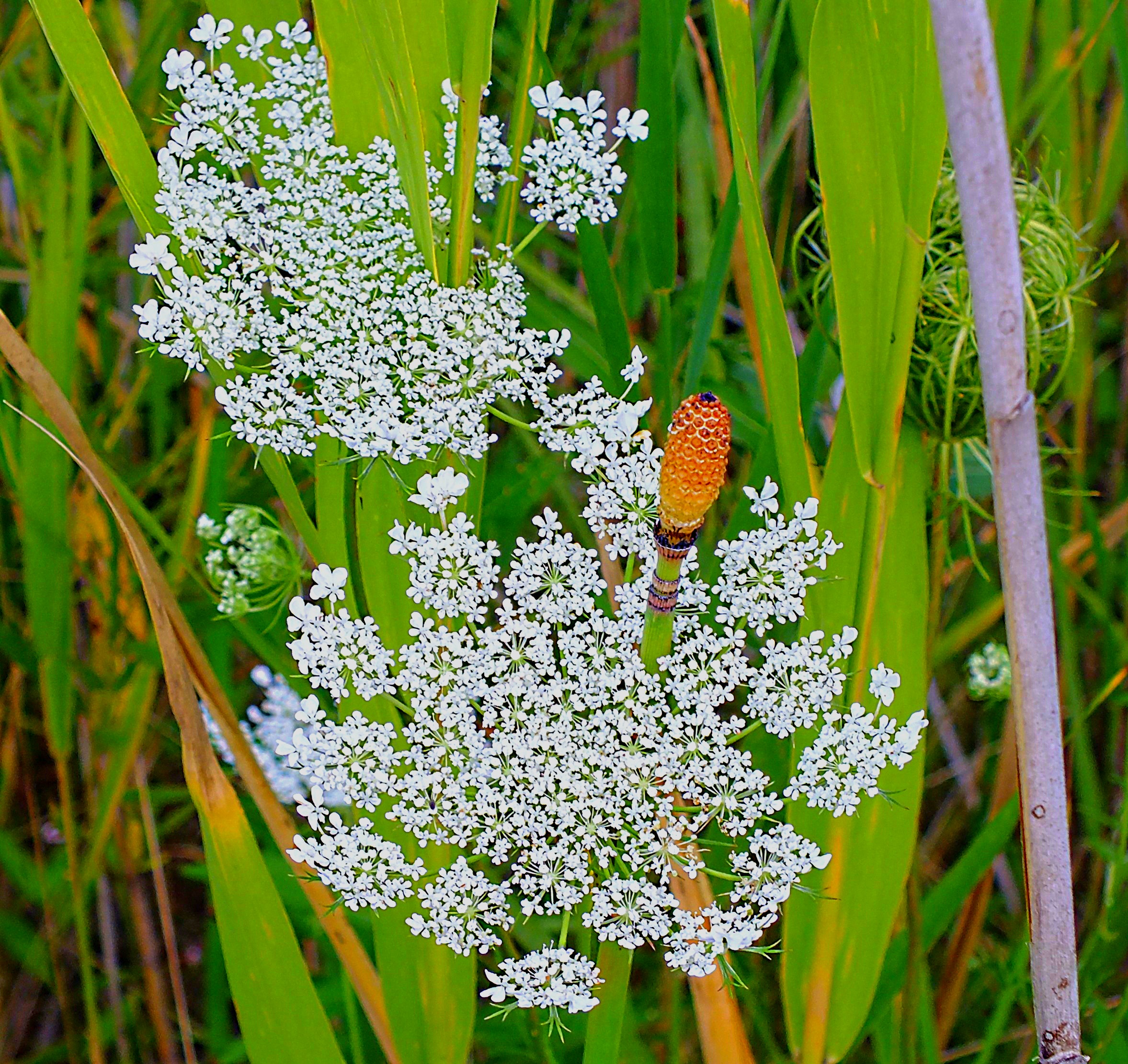
Horsetail Plant extending through Queen Anne’s Lace. Photo by Thomas Peace 2014
.
If one merely thinks according to what was taught by society — as most do — one is thinking and living their thoughts, which is rather second-hand. Live!
.
[Digger Wasps are often seen on flowers during the day. During the night, they rest upon vegetation, singly or in small groups, or burrow into the soil at the base of plants. Digger Wasps will readily sting if bothered enough.]

Digs sometimes. Photo by Thomas Peace 2014
.
There is not just the human race; there are also the races of elephants, tigers, whales, wolves, etc.
.
[This is a pair of mating Dragonflies in the standard wheel position. The copulatory wheel position is the way most species of Dragonflies engage in together. Note that the males and females of this species are of different colors.]
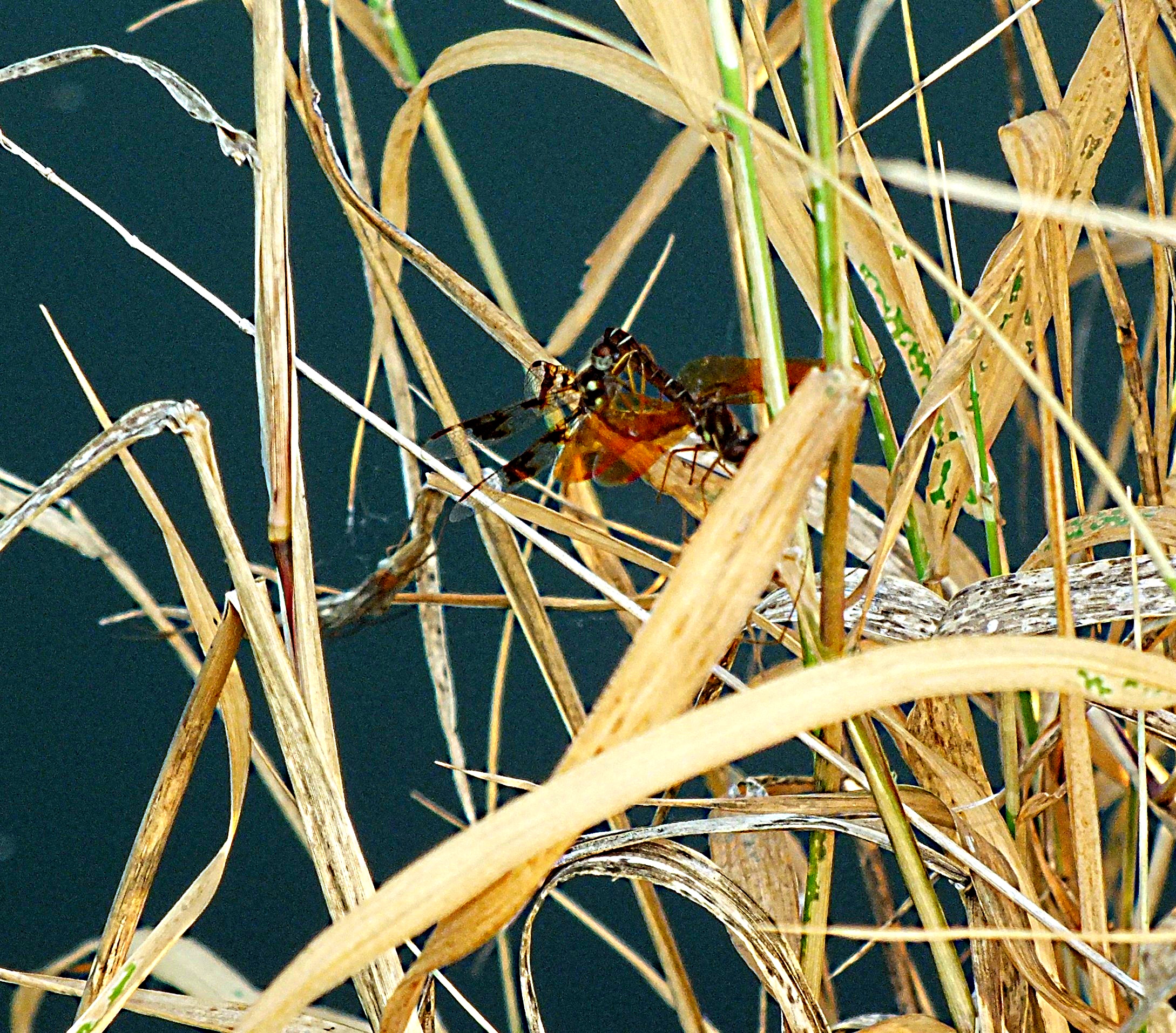
Dragonfly Mating Wheel. Photo by Thomas Peace 2014
.
The ending of sorrow is the beginning of true and intelligent wisdom.
.
[These are wildflower Chinese Lantern plants. They were found growing in a prairie near a local pond.]

Small but beautiful! Photo by Thomas Peace 2014
.
Simple acts to help others, physical action to end suffering, and acting to help Mother Earth with actual deeds… is likely worth more than a million people praying.
.
[Close-up study of a Begonia (Scarlanda green-red) in the outdoor garden of a large hospital/medical center.]

Begonia (Scarlanda green-red) Photo by Thomas Peace 2014
.
The mind can often be the beautiful space between two thoughts… without symbolic representations, without effort.
.
[Diminutive insects on a Viola Flower in the fall season. Despite the cold weather during each night, the Viola Flower and the insects seem to be thriving during the day.]
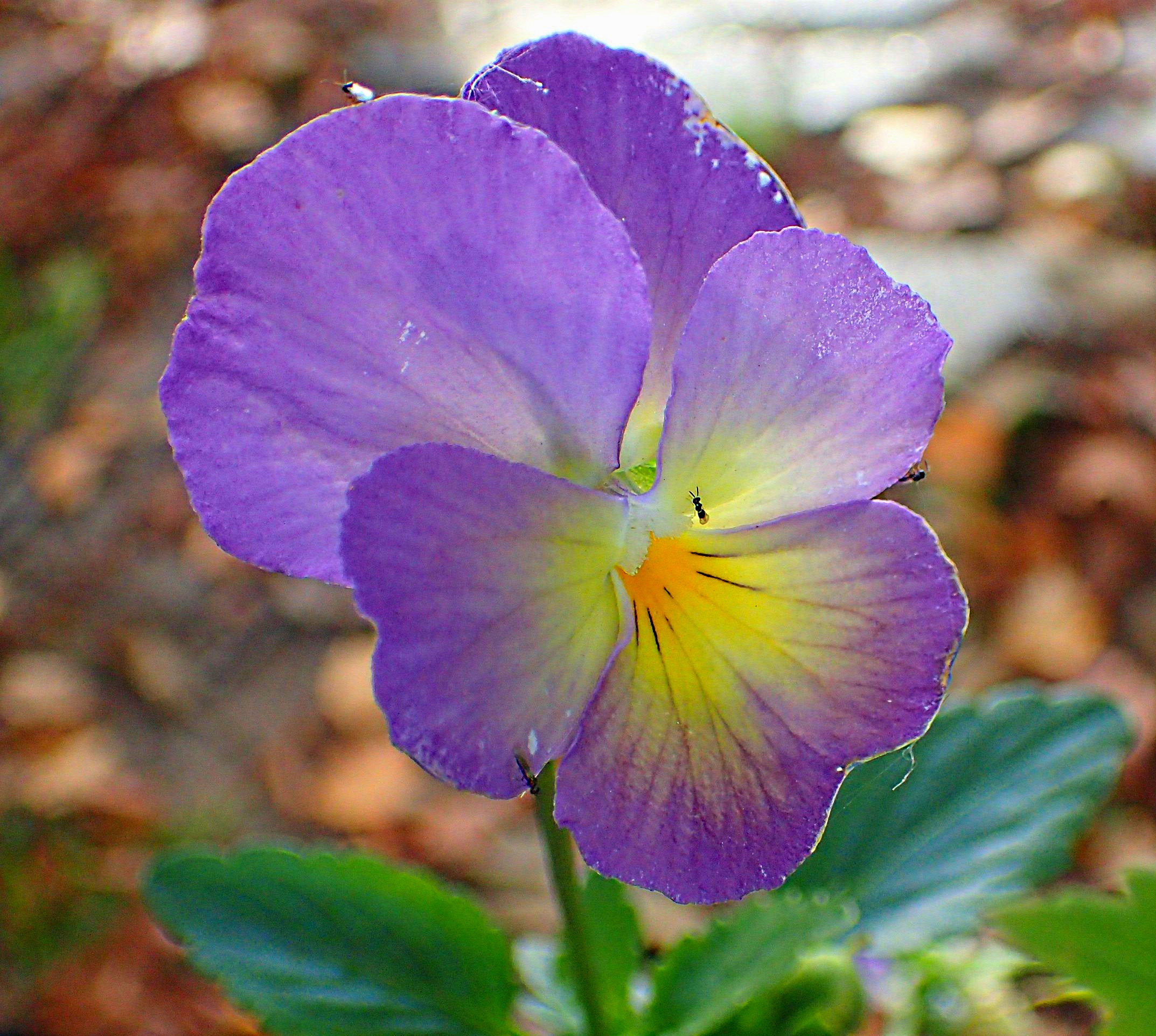
Impervious to cold. Photo by Thomas Peace 2014
.
True enlightenment occurs as actual, immense energy… not as mere ideas, symbols, and patterns “about energy.”
.
[This Grasshopper has less “hair” (on his face, legs, and back) than I do!]
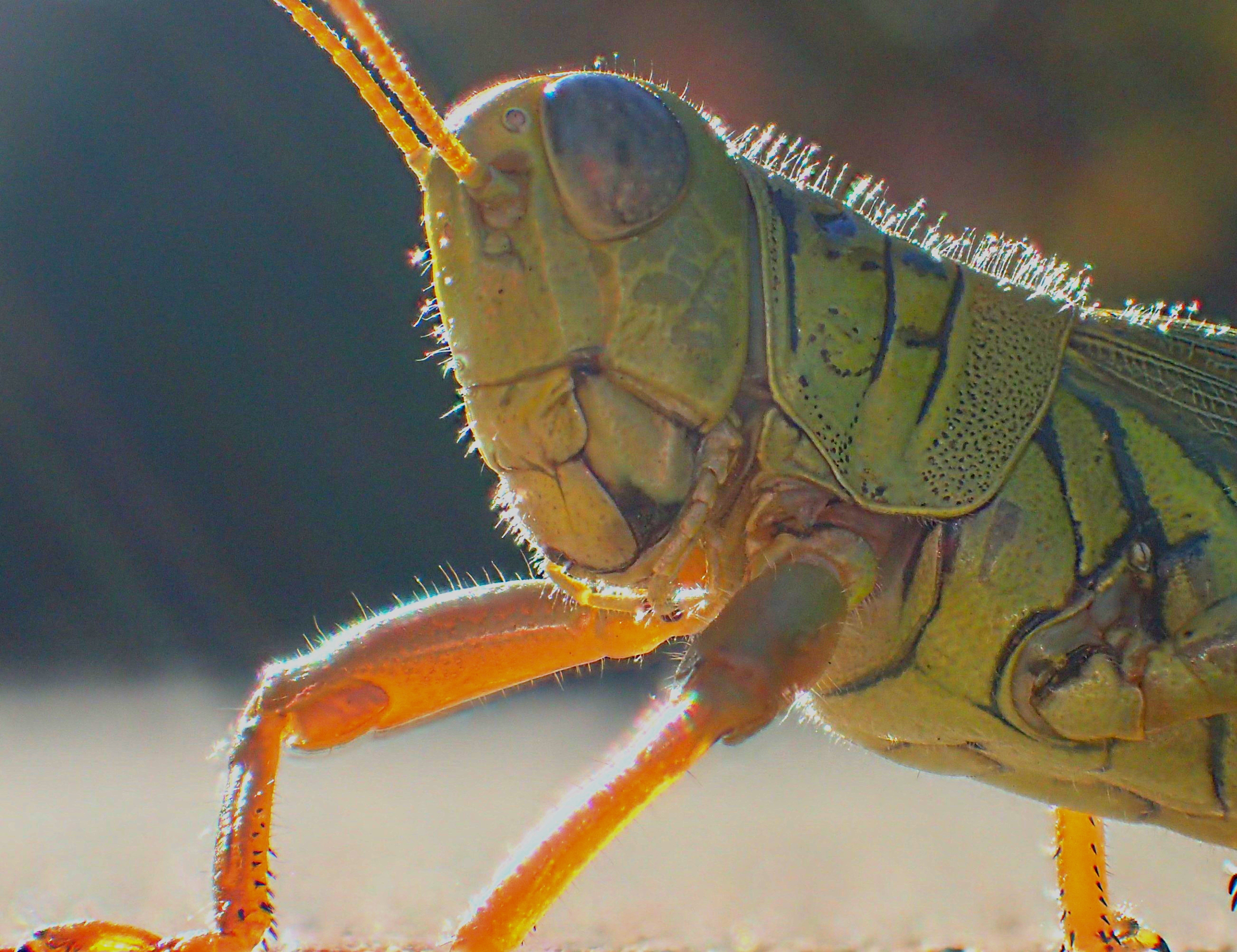
Not by the hair of my chinny chin chin! Photo by Thomas Peace 2014
.
Peace never comes by mindlessly clinging to separative groups or leaders.
.
[This is a Sheepshead Mushroom with a Midge Fly resting on it (to the left). The Sheepshead Mushroom is edible and is considered to be one of the best tasting mushrooms. They tend to grow at the base of Oak Trees.]

Resting on a Sheepshead. Photo by Thomas Peace 2014
.
Hate and indifference involves separation, distance, and a lack of compassion.
.
[In cooler weather, Katydids often cling to the sides of houses or garages for extra warmth. Katydids have excellent climbing abilities. This one is clinging to the warm, reflective side of a garage… an effective way to beat the cold!]
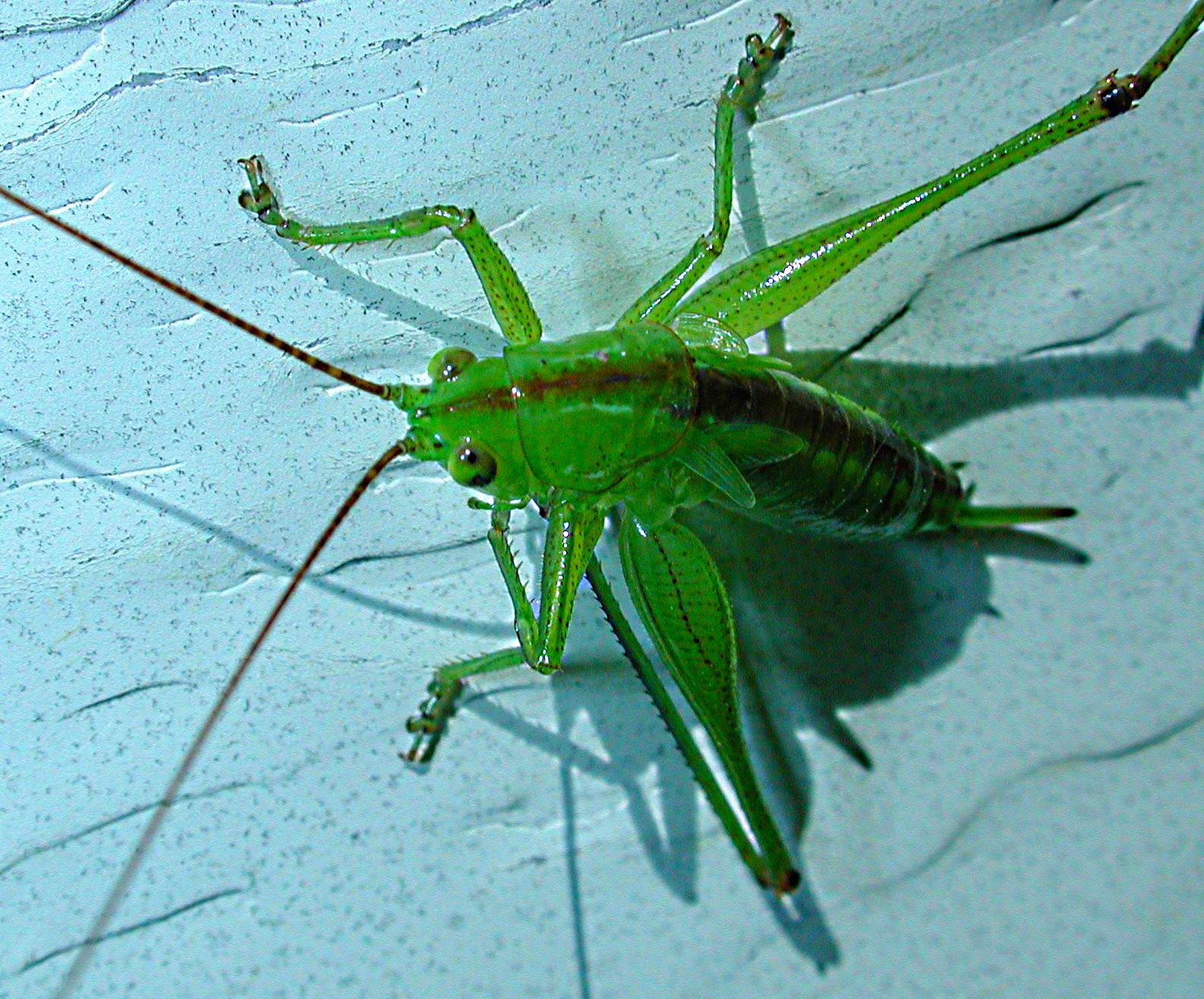
Wall Walker! Photo by Thomas Peace 2014
.
It’s likely best to be rather low-key and unnoticeable. For, in the long run, you will (especially if you are wise) really impress no one except yourself.
.
[There is, within this flower, and unobtrusive, little winged insect… a Hover Fly… having the time of his life! There’s also an inconspicuous ant there too!]
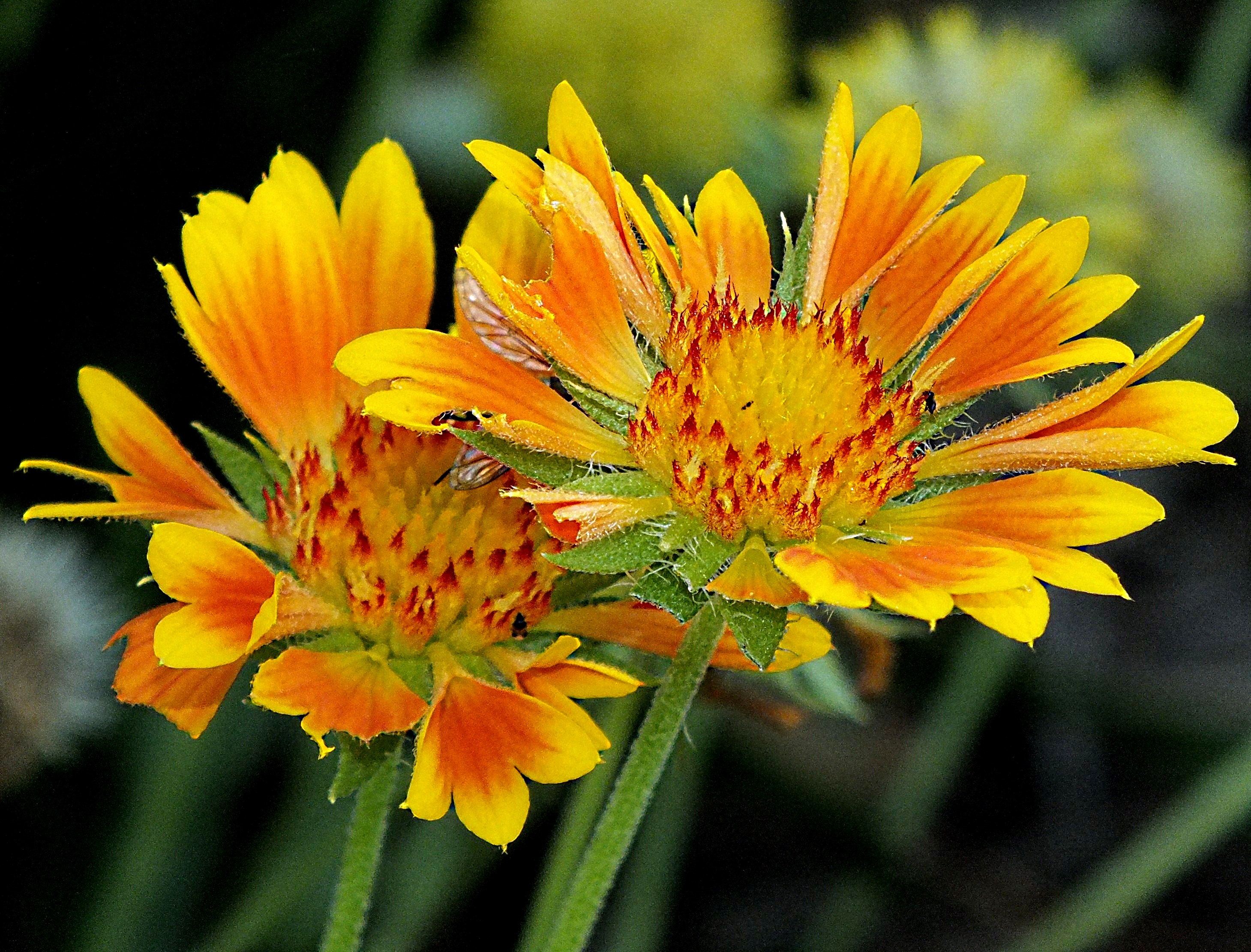
Beyond the Camera Eye and Superficial Fame! Photo by Thomas Peace 2014
.
The key to understanding life is not made to fit the rigid lock of powerful authority.
.
[The Spotted Jewelweed is an annul plant native to North America. The Spotted Jewelweed likes to grow along creeks and rivers; this one is growing along a creek flowing into a nearby river. The Spotted Jewelweed (Impatiens capensis) was transported in the 19th and 20th centuries to England, France, the Netherlands, Poland, Sweden, Finland, and potentially other areas of northern and central Europe. These naturalized populations persist in the absence of any effort of cultivation by people.]

Love is the key. Photo by Thomas Peace 2014
.
Hugging trees is great. But hugging the elderly and those with handicaps is even better!
.
[This is a batch of Chicken of the Woods mushroom with little, winged-insects upon it. When I was out in the woods, photographing, I spotted this beauty from a quite a distance. One then thought: “Of course, it’s such a treasure, that it will be surrounded by my arch-enemy… poison ivy!” Upon approaching the Chicken of the Woods, I then observed that it was, indeed, surrounded by many patches of poison ivy. I carefully took each step towards the Chicken of the Woods, with extreme caution and deliberation. It was unreal; it was like walking through a puzzle (or working on a computer game)! Patches of poison ivy where everywhere! When I finally got to my prize, there was (of course) a big, tall plant of poison ivy right in front of it. I had to bend, with my camera, to get a decent shot. Getting out of the area was equally difficult; each step was a precarious, carefully calculated maneuver toward attaining freedom and safety! When I finally got home, I washed up using a special anti-poison ivy cleaning soap. I didn’t get any rashes! Whew!]

Chicken of the Woods surrounded by my arch enemy… poison ivy. Photo by Thomas Peace 2014
.
No amount of words can ever relate the profound immensity of what true enlightenment entails; it is beyond words, descriptions, and beliefs.
.
[Fall Oak Leaves]
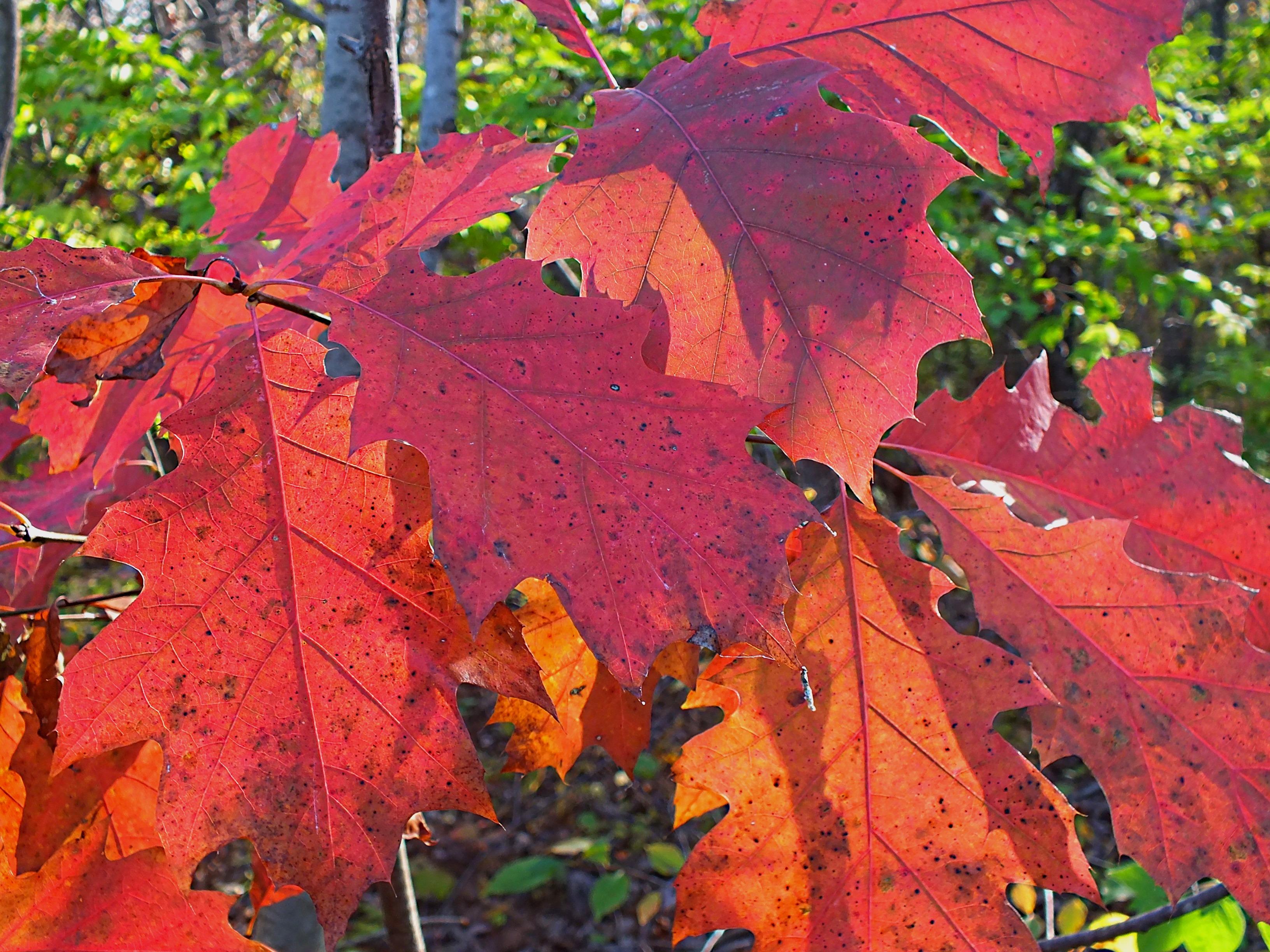
Fall Oak Leaves. Photo by Thomas Peace 2014
.
Whenever nature may fall… it always springs back again. It is ever renewing.
.

Fall by the Creek. Photo by Thomas Peace 2014
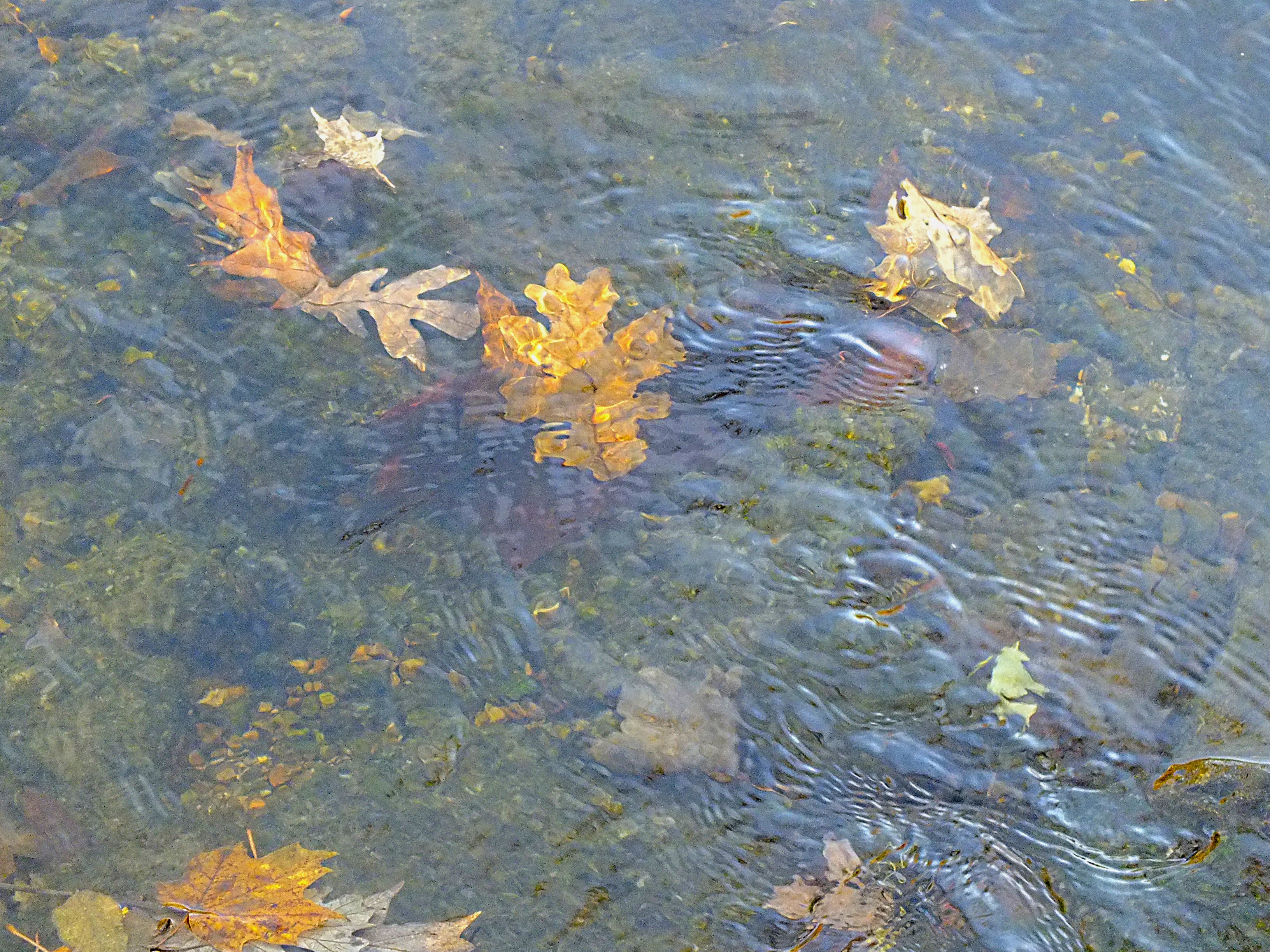
Fall Creek Leaves. Photo by Thomas Peace 2014
.
A simple smile is often the kindling to intense and blazing compassion (that uplifts others).
.
[These are the Sporophytes of moss upon a moist, large log in the middle of the forest. Sporophytes begin to grow by cell division out of the top of the archegonium on the female gametophyte moss plant… at which point it’s a parasite on the gametophyte plant, although it may produce some of its own food by photosynthesis in the early stages of growth.
Sporophytes consist of three basic structures, a foot, which anchors it to the gametophyte and helps to transfer water and nutrients from the gametophyte, a long erect stalk called a seta, and a pod-like capsule at the top-end where reproductive spores are produced. There is a Daddy-Long-Legs at the very bottom left of the photo, which can be seen partially; it is likely waiting for the many insects that crawl across moss. The larger leaves are not a different species of moss. They are the same species… and grow wider when more moisture is present in their immediate area. When moss gets flooded, it changes its shape, getting wider and more broad leaves.]
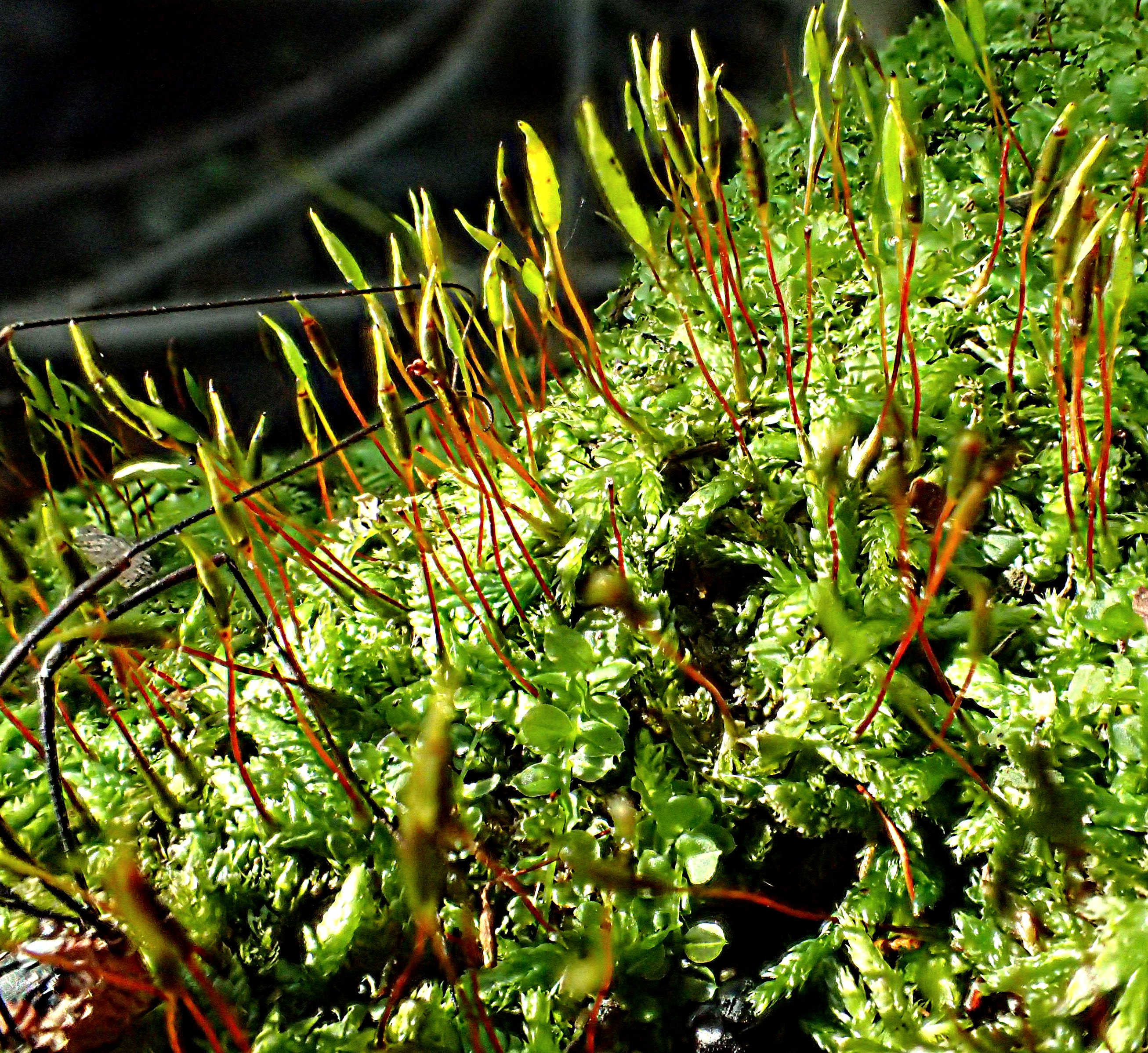
Sporophytes galore! Photo by Thomas Peace 2014
.
There was a wise man… and every time he bent down, the whole world (including all the people, animals, and plants) bent down.
.
[This Goldenrod is being bent over by the wind… not by the weight of the Hover Flies upon it. Hover Flies seek nectar from wildflowers, such as this Goldenrod, which is growing along the periphery of a local, nutrient-rich, rural pond.]

Bending together. Photo by Thomas Peace 2014
.
If one doesn’t exist primarily in (and “as”) the present now… one is living in the past.
.
[This Lady Bug is getting ready to leave a dried out Thistle Plant. Probably the Lady Bug had been searching for small insects to feed upon (that were nesting within the seed pod).]

Leaving Lady! Photo by Thomas Peace 2014
.
Thought is a wonderful tool, but if that’s all you exist as… you are immured in the confines of your own, limited prison.
.
[This is the central part of a garden flower. The golden Stamen are holding up well to the recent cold weather. Stamen are the pollen filaments of flowers.]

Golden Stamen. Photo by Thomas Peace 2014
.
A highly prejudicial mind is like a coldly crafted puppet or a thoughtlessly made, prefabricated building; it was constructed to be what it is (by others).
.
[This is a very large Fishing Spider on a post of our Gazebo (at night) guarding its large egg sac. This Fishing Spider must have been over 2 inches long and its egg sac was also very large. It looks like it must have took a long time to carefully and skillfully form that huge egg sac. I was looking for spiders to photograph and was resting the camera against the post to get a steady shot of a smaller spider… when I suddenly came face to face with this huge creature! Nothing easily startles me… but this kind of did!]

Not an itsy bitsy spider by any means! Photo by Thomas Peace 2014
.
Fear of things
can ruin your dreams
make you sweat
and fill you with Screams.
Compromised order
in the middle of the night
grind your teeth,
startle with Fright.
.
[This bat-like moth looks like it could be a Waved Sphinx Moth. Larvae of the Waved Sphinx Moth feed on Ash, Privet, and Lilacs. (Don’t look too closely above the moth, to the right; a little webbing seems to be face-like… which won’t help one’s dreams!)]

Bat-like Waved Sphinx Moth. Photo by Thomas Peace 2014
.
from Emily Dickinson:
A Spider sewed at Night
Without a Light
Upon an Arc of White.
If Ruff it was of Dame
Or Shroud of Gnome
Himself himself inform.
Of Immortality
His Strategy
Was Physiognomy.
.
[This is a Black and Yellow Argiope Spider. We call them Banana Spiders here in the Midwest. Each Black and Yellow Argiope Spider carries an ominous, rather demonic set of images on its dorsal side… a clear message saying: “Don’t mess with me!”]

Positioned “head down” as is typical for these and related species. Photo by Thomas Peace 2014
.
The thrown rock creates the ripples, but the ripples of thought create the ego (i.e., the so-called central “I”).
.
[This is a Banded Argiope Spider – with ripples of colors – waiting for prey in a perfect web that she has spun. The Banded Argiope Spider is a large spider and is related to the Black and Yellow Argiope Spider (i.e., the Banana Spider). Their expertly woven webs have crossed, zigzag bands running through them that are very thick. It is thought that these have the dual function of attracting certain insects – since they reflect a lot of ultraviolet light that certain insects are attracted to – and for warning low flying birds. (Humans cannot see in the ultraviolet range.) I used to have a lot of these spiders crawling all over me when out in the fields photographing (and didn’t mind it at all); but now I am better at spotting and avoiding the webs and going around them. Many of these spiders are well over and inch long. It is common for them to wait in the web with their head down. Note the webbing to the left and right of this spider.]
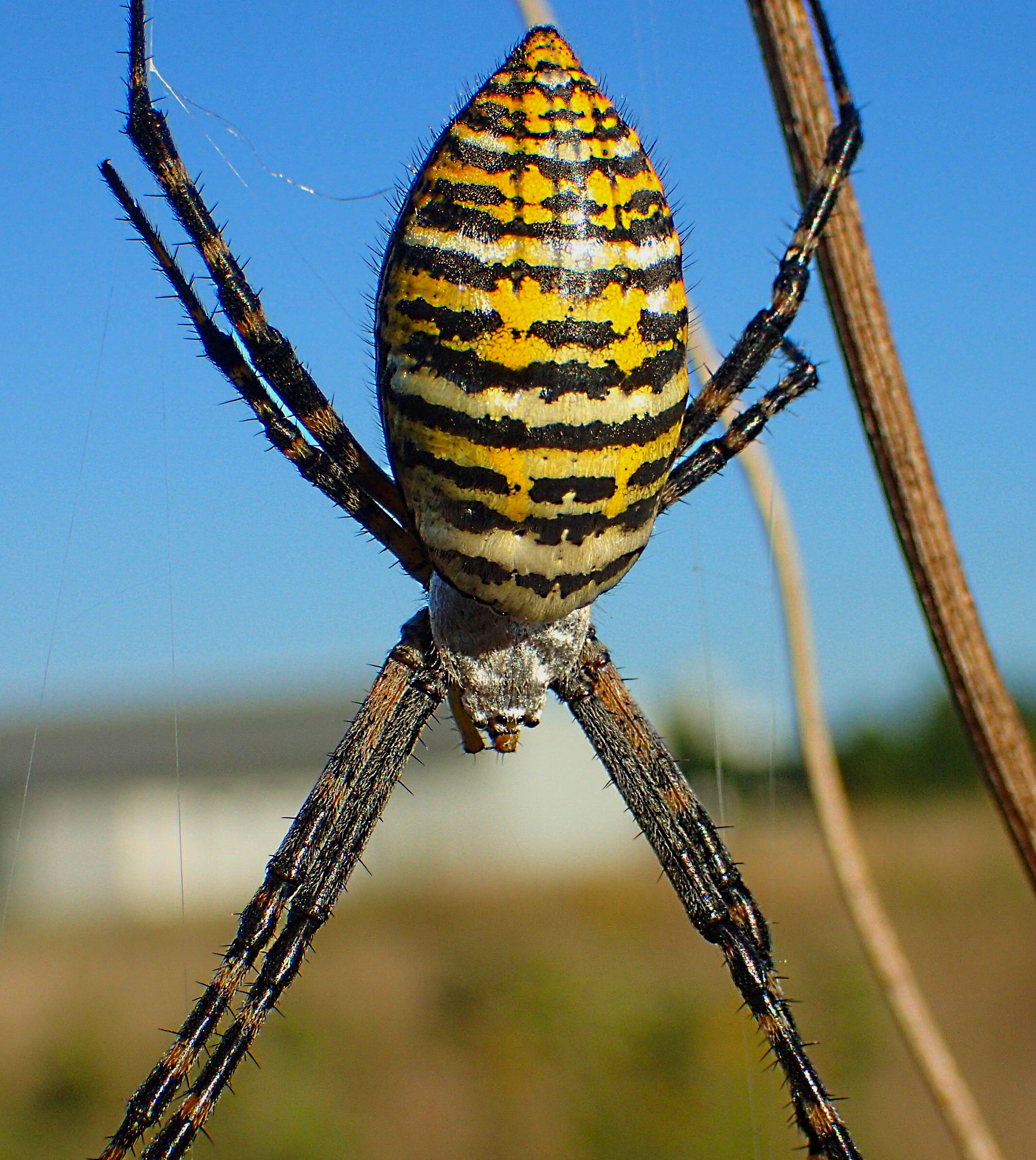
A real tiger. Photo by Thomas Peace 2014
.
Do not merely look through the screen of fragmentation that was instilled within (and “as”) your mind.
.
[This is not, as many might think, a Monarch Butterfly. It is a Viceroy Butterfly, resting at the base of an Oak Tree along some moss. Unlike Monarchs, Viceroy Butterflies do not migrate south for the winter. Viceroy Butterflies overwinter as caterpillars, resting inside rolled leaves. Once the weather gets a bit colder, this Viceroy will likely perish; but its caterpillar offspring will survive the winter to emerge as new, splendid butterflies.]
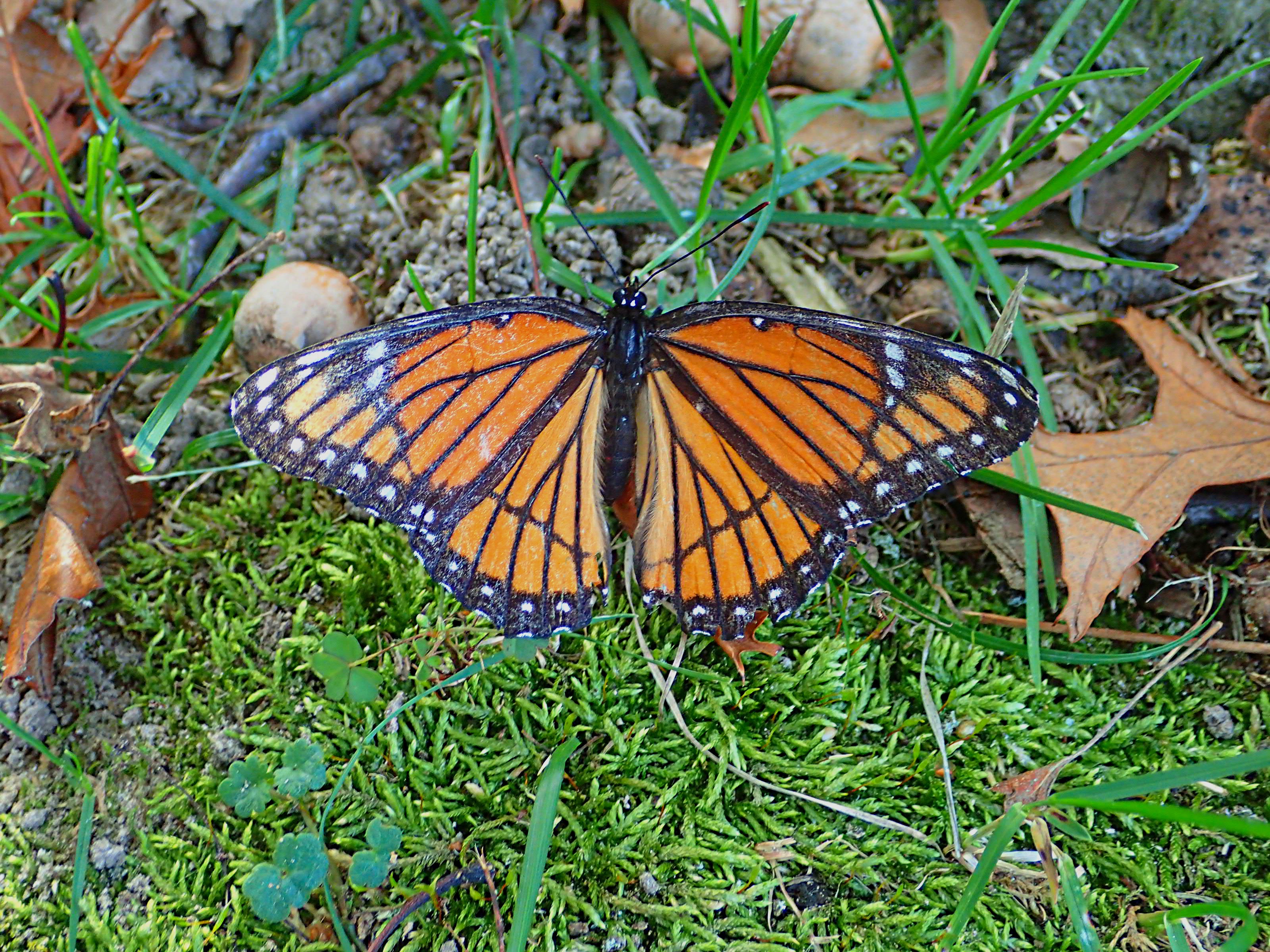
At the end of an excellent life! Photo by Thomas Peace 2014
.
Nothing is scarier than our elected politicians!
😉
.
from E. E. Cummings:
hist whist
little ghostthings
tip-toe
twinkle-toe
little twitchy
witches and tingling
goblins
hob-a-nob hob-a-nob
little hoppy happy
toad in tweeds
tweeds
little itchy mousies
with scuttling
eyes rustle and run and
hidehidehide
whisk
whisk look out for the old woman
with the wart on her nose
what she’ll do to yer
nobody knows
for she knows the devil ooch
the devil ouch
the devil
ach the great
green
dancing
devil
devil
devil
devil
wheeEEE
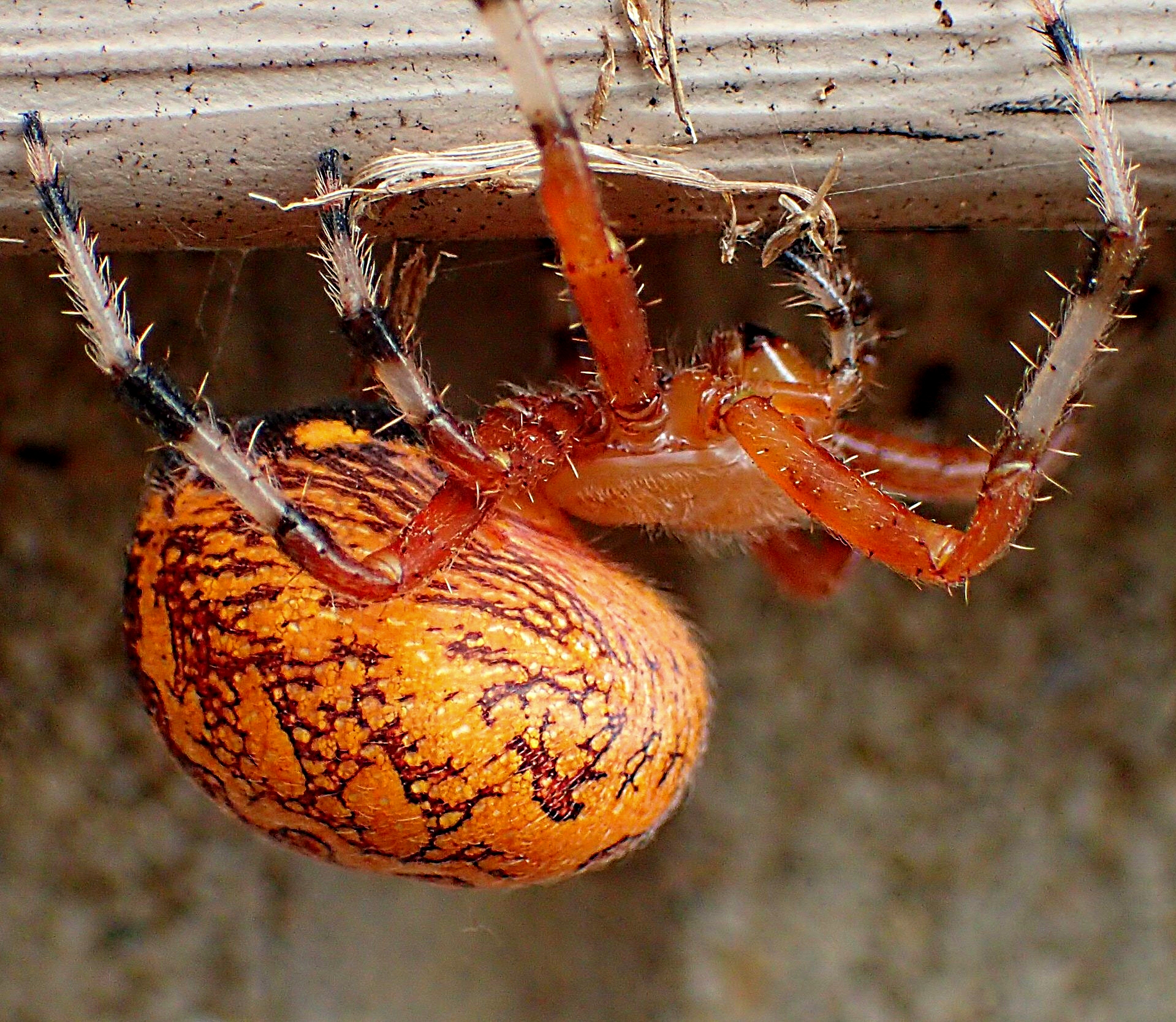
Marbled Orb Weaver Spider. Photo by Thomas Peace 2014
.
Don’t lead a skeleton’s life. Ensure that your action has real meaning!
.
[This is the remnant skeletal framework of a plant growing along the river bank in the fall season. A diminutive spider can be seen with his handiwork.]

Plant Skeleton. Photo by Thomas Peace 2014
.
What you perceive is not, psychologically, separate from what you are.
.
[These are Mycena haematopus mushrooms growing along a river bank.]

Far from the beaten path. Photo by Thomas Peace 2014
.
Don’t see people as draft horses to pull heavy loads for you; see them as thoroughbreds that are splendid companions.
.
[This Burying Beetle is feeding upon a Bracket Mushroom. It would also gladly feed on horse dung or other such material, as well as animal carrion, fallen fruit, and decaying vegetable matter. They are part of nature’s disposal service. The Burying Beetle is mainly found in wooden habitats.]

Fungus Feeder (1). Photo by Thomas Peace 2014

Fungus Feeder (2). Photo by Thomas Peace 2014
.
If you go through life in a slapdash, careless manner, you’ll not only overlook the beauty of nature, but you’ll also overlook the beauty of helping others kindly.
.
[This Common Wood Nymph Butterfly is resting on a leaf. The coloration and size of the Common Wood Nymph Butterfly changes throughout its range in America. It is not so common any more, unfortunately.]
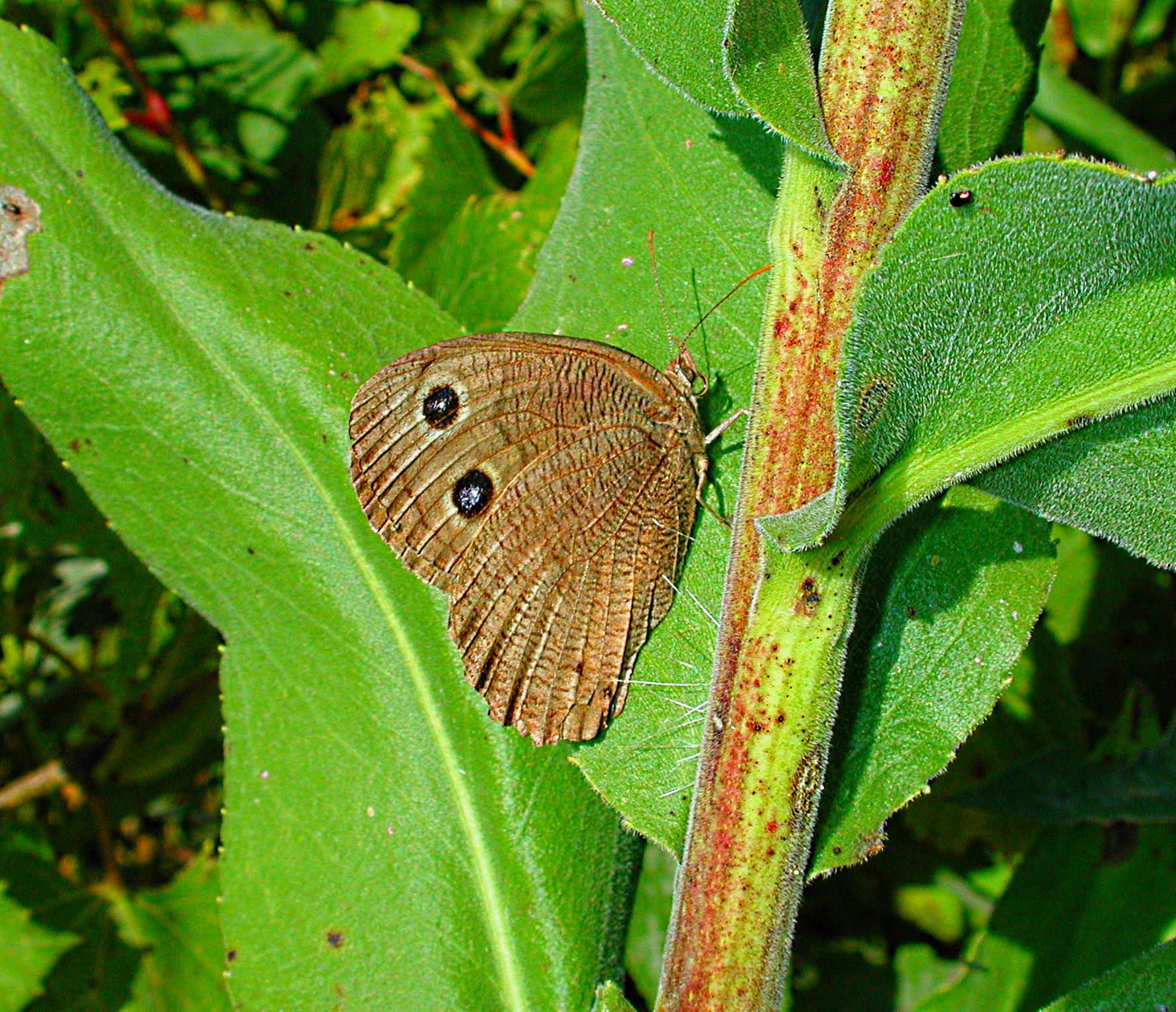
Not so common any longer. Photo by Thomas Peace 2014
.
Each day, effortlessly watch every moment of thought and perception… and do so without the needless and conflicting separation between the “perception” and the “perceiver.”
.
[These are soybean plants in a local farm field, dry and ready for harvest. (Soy milk in the making!)]

Ready for harvest! Photo by Thomas Peace 2014
.
True free will (i.e., freedom involving thought/thinking) is a phenomenon that — if it truly exists — breaks free from the cause & effect parameters of the cosmos… which, if one is at all honest, is not likely whatsoever, in any way, shape, or form. However, in profound and deep silence, an immense, timeless energy can appear (i.e., arrive)… that is truly free and not part of a conditioned cause-effect continuum.
.
[This is a Leopard Frog among the dead leaves of fall; interestingly, this frog croaked many times… and is still very much alive. 😉 ]
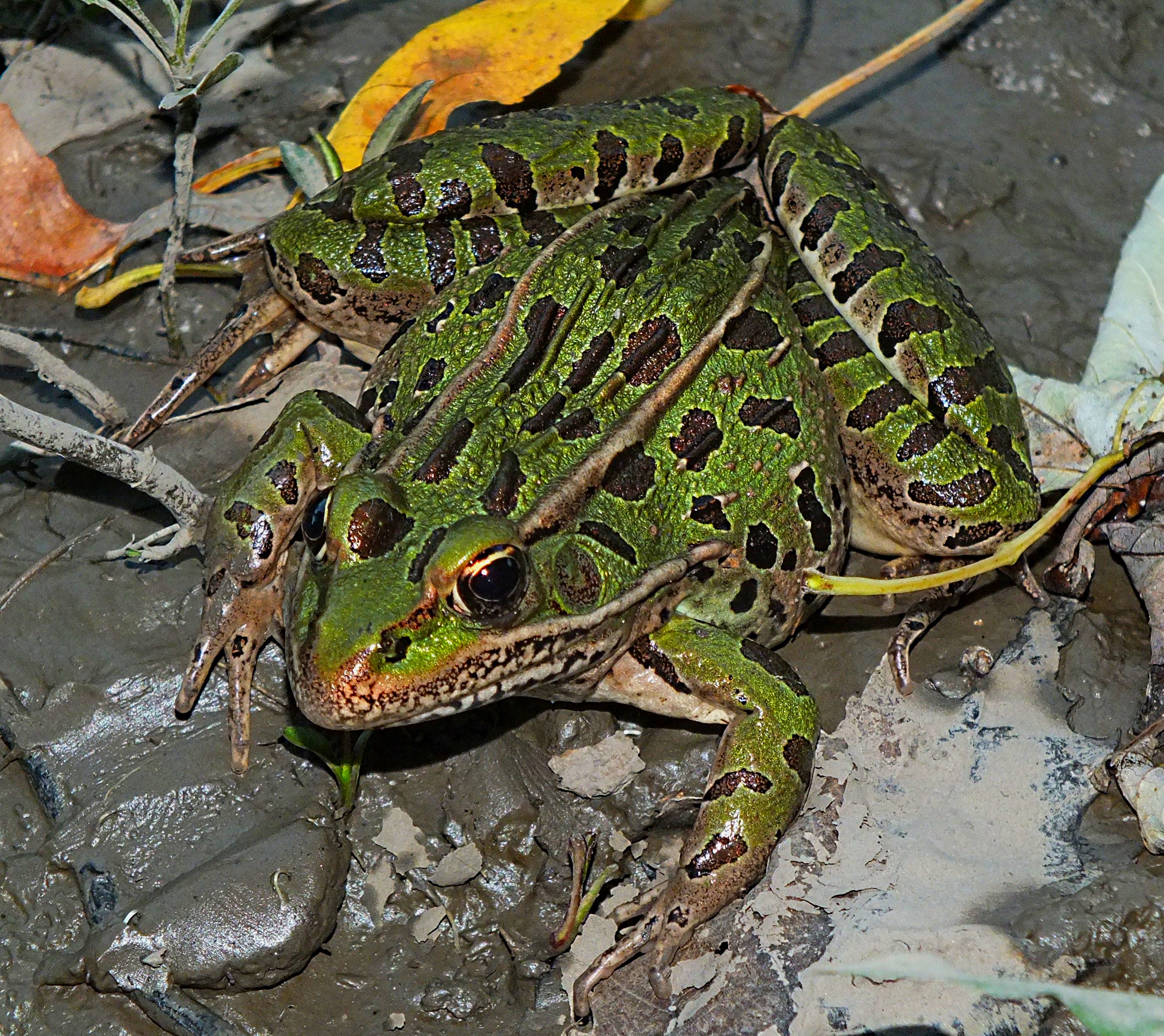
He kicked the bucket more than once! Photo by Thomas Peace 2014
.
There is a much deeper dimension to life than what most people think or consider.
.
[These are a form of bracket fungus called Polypores on a fallen log (with some leaves of fall upon them). Most Polypores inhabit tree trunks or branches consuming the wood, but some soil-inhabiting species form myycorrhia – a symbiotic relationship with the roots of trees, wherein they blend with the roots intracellularly (i.e., within the wood-root cells) or extracellulary. Polypores and their relatives, corticioid fungi, consist as part of the most important agents of wood decay. Thus they play a very significant role in nutrient and carbon cycles of forest ecosystems.]

Some Bracket Fungus among us! Photo by Thomas Peace 2014
.
The divisive notion of “us” and “them” causes wars.
.
[This photo is of a Lady Bug feeding upon berries of Pokeweed… (also called Poke Salad, Poke Sallet, or Polk Weed). All parts of Pokeweed are poisonous, but (especially in the South) a lot of people boil and reboil the plant many times to leach out the toxins; then it is eaten. The berries are the least toxic part of the plant, though children have gotten sick from eating them. Pokeweed is being looked into as a possible cure for cancer and other diseases. Research has shown that pokeweed contains a compound that appears to enhance the immune system and has some anti-cancer effects in animals. Elvis Presley sang a song about this plant… “Polk Salad Annie” (‘gators got your granny).]

Sock a little Polk Salad to him. Photo by Thomas Peace 2014
.
Wake up (with awareness) in the morning, bright-eyed and bushy tailed!
.
[This fly (bright-eyed and bushy tailed) is called an Early Tachinid Fly. Unlike the undesirable, disease-carrying, common flies, this species hangs around flowers and drinks nectar (as do butterflies). The Early Tachinid Fly is most often seen in meadows and open woodlands full of wildflowers.]

Bright eyed and bushy tailed. Photo by Thomas Peace 2014
.
One oftentimes has to unlearn the erroneous conditioning that was hammered into one’s core and foundation.
.
[This Harvestman – some call them Daddy-long-legs – is resting on a leaf. Harvestmen (Daddy-long-legs) are not spiders. Spiders have two main body segments. Harvestmen have one. Harvestmen do have eight legs like spiders… but theirs are usually much longer.]

A Daddy with Long Legs. Photo by Thomas Peace 2014
.
If you deeply care… then the universe is deeply caring.
.
[This is a close-up shot of moss growing on a fallen tree stump in the woods. I’ll post this same type of moss (with spore shoots sprouting out) at a later time.]

The rolling stone gathers none. Photo by Thomas Peace 2014
.
Look with what is deeper than what can see; listen with what is deeper than what can hear.
.
[Leaf-footed Bug adults are active from late summer through fall in weedy fields and along the edges of woodlands. The Leaf-footed Bug is fond of a variety of trees, shrubs, and flowers, including hawthorns, goldenrods, and Joe-pye weed.]

Good at leaf walking! Photo by Thomas Peace 2014
.
The supple mind goes beyond pigeonholing others and coming to dead-end conclusions.
.
[These are the small, fruiting parts of a large underground fungus.]

Mushroom burst. Photo by Thomas Peace 2014
.
To psychologically die (each and every day) to endless fears and separative images… is living wisdom.
.
[This is, because of the enlarged pedipalps, a male spider… probably a Grass Spider. Pedipalps have sensitive chemical detectors and function as taste and smell organs, supplementing those on the legs. In males, the pedipalps are enlarged, functioning as organs for reproductive purposes.]
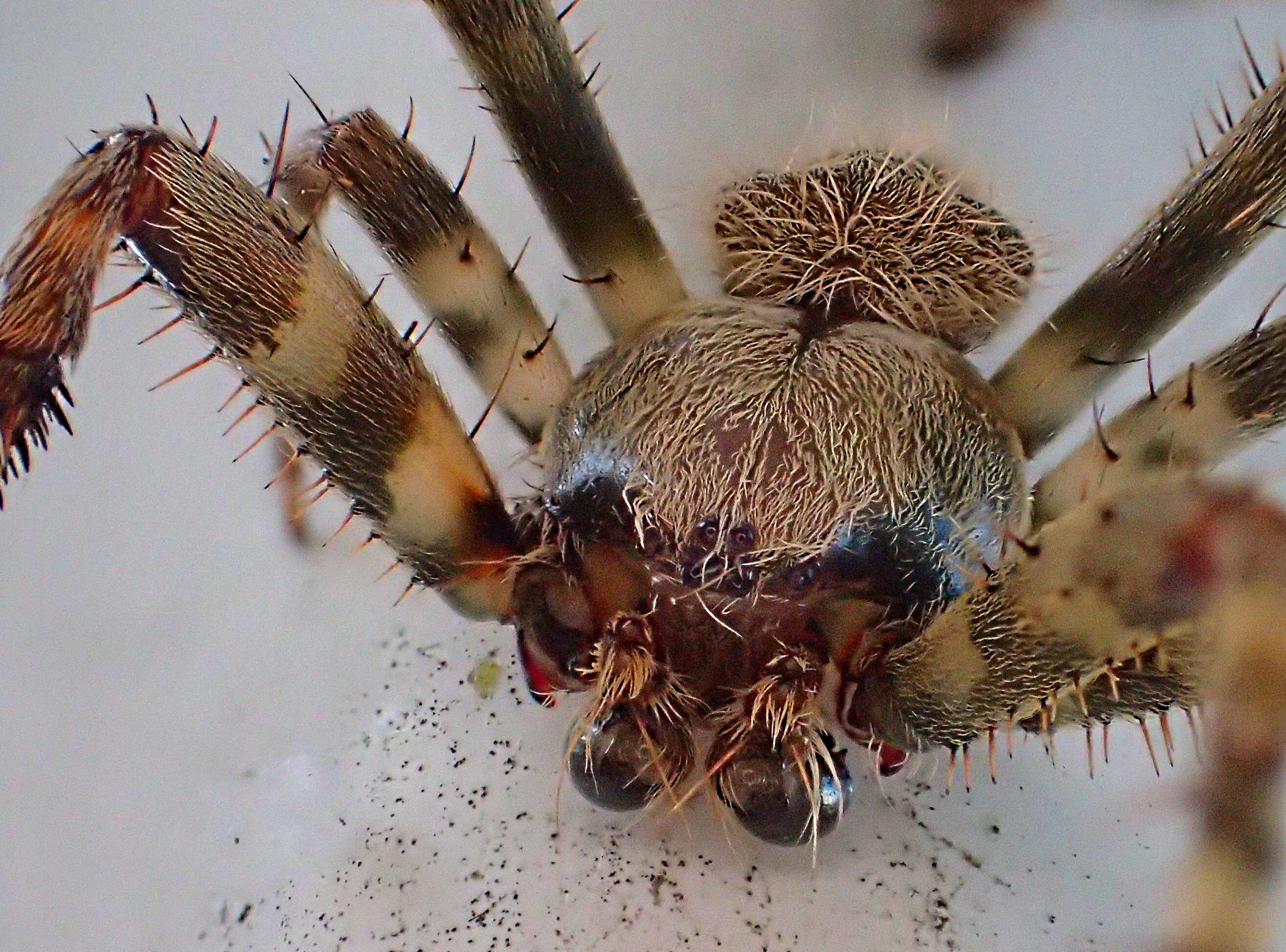
Oh, that movie-star face! Photo by Thomas Peace 2014
.
Direct perception is timeless; it’s instantaneous. Greed, hatred, envy, and comparison all take time.
.
[This is a Potter Wasp, some Hover Flies, a small wild Fly, and a Soldier Beetle. Potter Wasps make nests of mud that are pot-like. (They were all circling around the flower cluster, but the Soldier Beetle didn’t get the direction right!)]

Time for nectar energy! Photo by Thomas Peace 2014
.
Compassion is expansive and all-containing; hate and selfishness… narrow and confined.
.
[These very small beetles are feeding on a Thistle Plant. These are likely Carpet Beetles. Carpet Beetles eat indoor carpets, woolens, cottons, and synthetic materials contaminated with organic fluids such as sweat. However, they prefer to eat dead insects and spiders, and they can devastate scientific specimens in university and museum collections. Outdoors, they feed on flower pollen and secretions from plants.]

Carpet Beetles far from carpets. Photo by Thomas Peace 2014
 Tom's Nature-up-close Photography and Mindfulness Blog