Looking from a limited perspective… what does that mean to you? Have you ever thought about it? Many of us probably perceive through a conditioned background… a background that many of us have “operated from,” but which many of us have never intelligently examined objectively. To perceive things in a fragmentary manner may be to look with a great deal of separation and division.
Many of us go through life “recognizing” things. We recognize one thing after another, as we were taught. Then we write essays, or books, or blogs, or letters, or emails about these multitudinous “things” that we have “recognized.” We often recognize things in the manner or way in which we were taught to recognize them. One’s consciousness is constituted of these “recognized things.” These things that we were taught about have very delineated demarcations and boundaries. We were taught that each thing has a finite domain and a limited space… and we were taught that there is a limited space between us and each of these “things.” (We were taught that fear is there, in us to deal with… not that we and our fears are not separate, not something different.) We continue to write about these things and share these things with others. So, indirectly (or directly) we are continuing to teach and to reinforce the learning/teaching process of others (in the manner that we were taught). Some of us are very good at writing and at conveying images to others via printed words. We get congratulated about what we are writing… and, indeed, some of us develop very lucrative professions due to our ability to hone and craft words in an “artful/intelligent” manner. We give each other prizes (for those who we think did the best job at entertaining us with words and symbols… in a crafty manner).
In the Algonquian Native American family of languages, for instance, there is more of a verb-based structure existent. In other words (no pun intended) more verbs exist, rather than separate things “as nouns.” There’s more of a “doing” and “blending,” rather than an “it-ness” and a “separativeness.” The Ojibwa, the Cheyenne, and the Blackfoot sometimes saw things more together, in a kind of blended movement or flow… rather than as mere separate, isolated “things” very apart from each other.
Animals recognize things, often without having been taught to do so. Dogs recognize what to eat and what not to eat (though what some dogs recognize as being “edible” is not often very beneficial to eat). Cats recognize what is a threat and what is not likely to be harmful. Saber tooth cats (no doubt) could often do so without having been taught by their mother. A lot of this recognition is innate and instinctual. It is at a very crude level. Even insects and spiders can recognize what is an enemy and what is beneficial to eat; oftentimes they are one and the same (in the case of what insects/spiders see as an enemy that is concomitantly likely delicious)!
The consequences of continuing to write with a separative mode (quite similar to what crude bugs and diminutive animals can grasp and attain)… might be extremely profitable for the so-called gifted writer or author who is capable regarding relating in such a manner. However, if we merely continue in that crude, crass, and primal mode (as we have been doing for millennia), then we will have merely continued the process of looking from a limited perspective. We need to evolve from this separative perspective (which merely involves separate things). If we don’t change, then people (with their separative little countries, sects, things, and establishments) will never change fundamentally. Will a fragment, a separate, little self that is divorced from everything else be able to do this? One doubts it. What is limited cannot transcend limitation unless it fundamentally changes into something else. A little insect, sitting on a plant, can’t fundamentally change from the crude limitation that it is immersed (and absorbed) in. Can we?
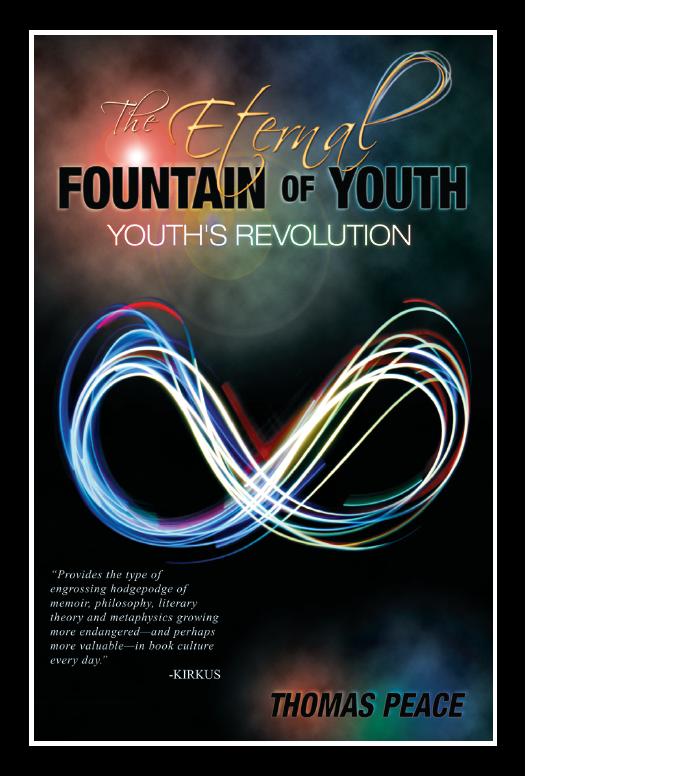
eternalfountainofyouth.com

Katy in Flower
by Thomas Peace c. 2012





 Tom's Nature-up-close Photography and Mindfulness Blog