
.
The essence of love is deep caring (beyond the limited self).
.
[Lazy Susans at a Hospital Park… There are at least two Hover Flies resting upon them.]
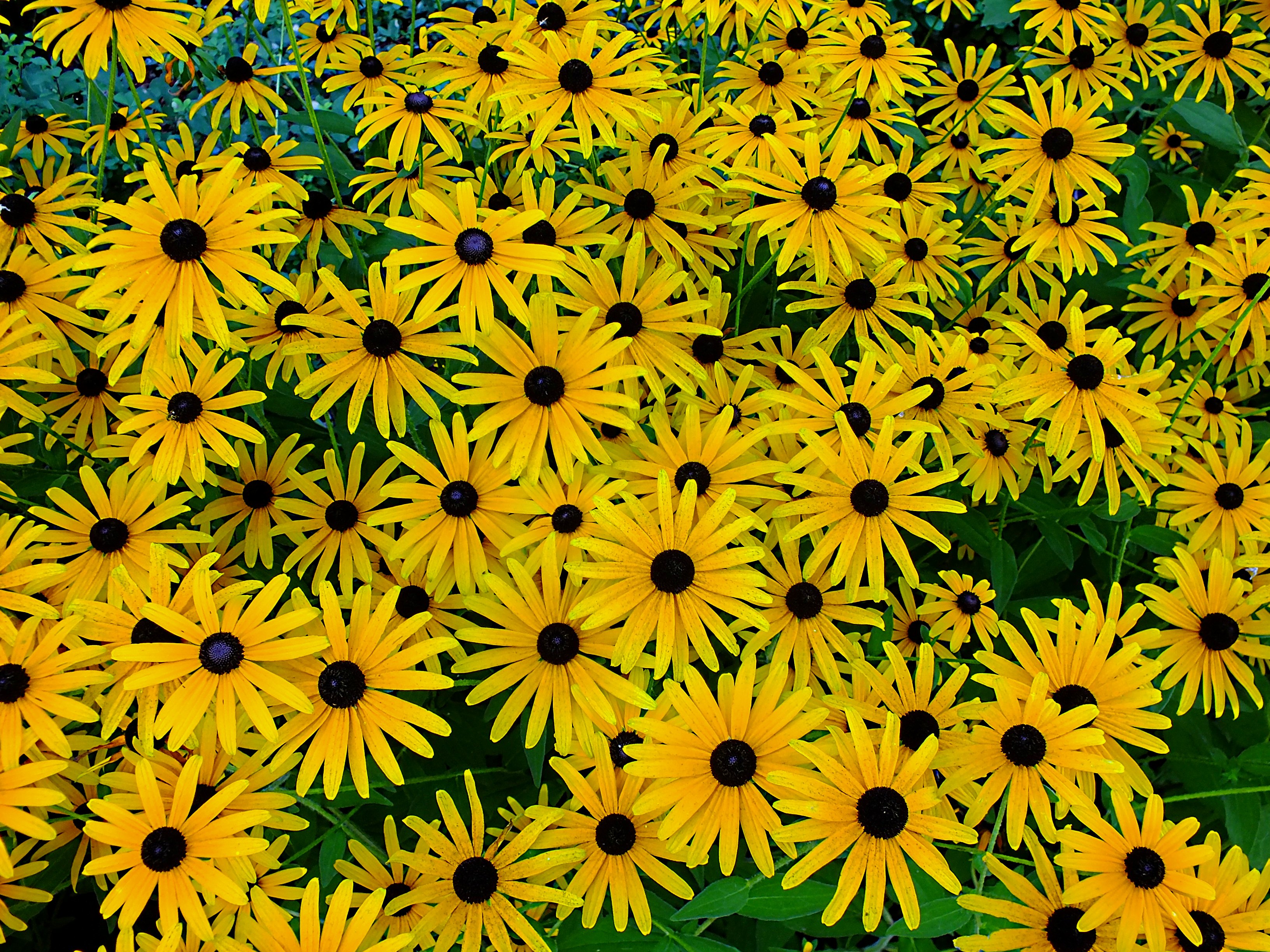
Lazy for a good reason. Photo by Thomas Peace 2014
.
The essence of love is deep caring (beyond the limited self).
.
[Lazy Susans at a Hospital Park… There are at least two Hover Flies resting upon them.]
Lazy for a good reason. Photo by Thomas Peace 2014
.
Have gratitude for the simple things in life… for they are usually the most precious.
.
[Morrow’s Honeysuckle, which now grows wild, is one of several honeysuckle shrubs that have been introduced from Eurasia. Morrow’s honeysuckle was imported in the 1800’s for use as an ornamental, for wildlife food and cover as well as for soil erosion control. This one is growing along the bank of a river… which helps against possible erosion.]
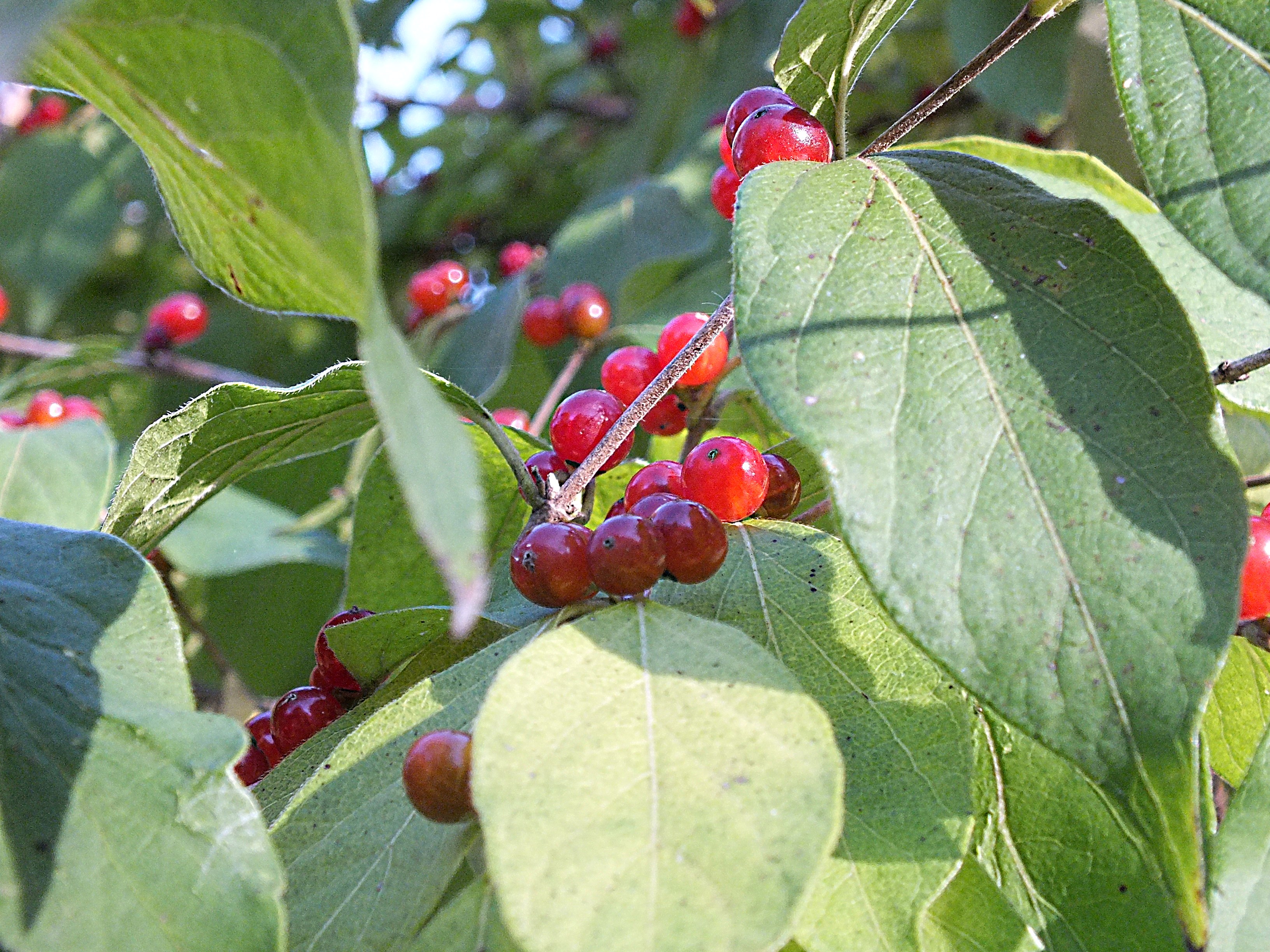
Red Gems. Photo by Thomas Peace 2014
.
The Zen all-meaning circle… it’s just a symbol, but whoever initially came up with it was attempting to convey something profound.
.
[A dried, fall wild vine…]

Zen all-meaning circle… Photo by Thomas Peace 2014
.
You can buy stuff, but you can’t purchase integrity, compassion, and deep insight.
.
[Local Creek in Fall]

Local Creek Up Close. Photo by Thomas Peace 2014

Local Creek. Photo by Thomas Peace 2014
.
To question everything wisely and intelligently… is to deviate from the norm.
.
[This Honey Locust Tree is protecting itself well with an array of spiked thorns. Honey Locust Tree thorns are thought to have evolved to protect the trees from browsing Pleistocene (i.e., Ice Age) mega-fauna. The name derives from the sweet taste of the legume pulp, which was used for food by Native American people, and can also be fermented to make beer.]
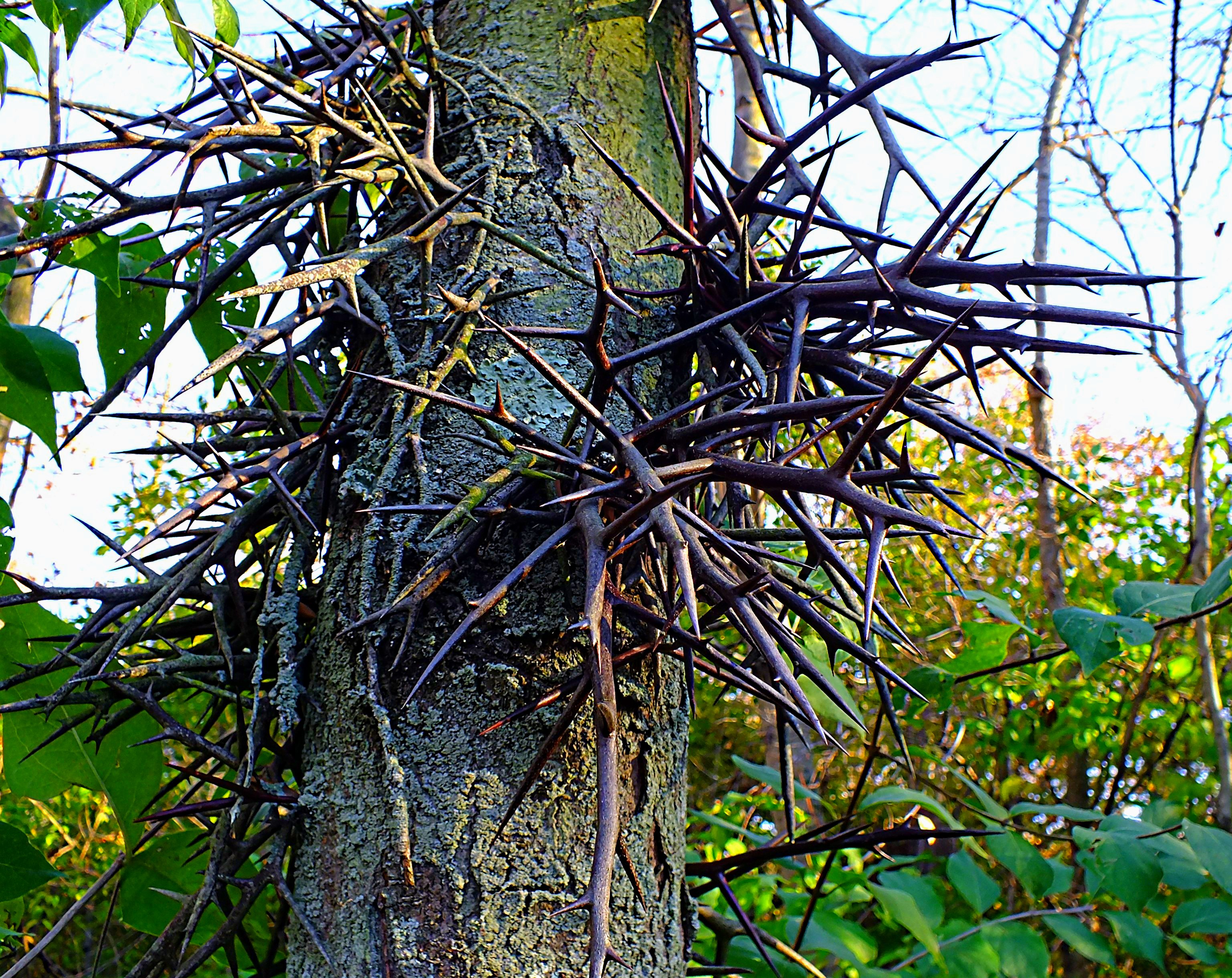
Honey Locust Tree protecting itself! Photo by Thomas Peace 2014
.
Go beyond what all the pundits and so-called experts teach… and inquire for yourself beyond tradition.
.
[The Heal-all Plant (Prunella vulgaris) is edible, and can be used in salads, soups, stews, and boiled as a pot herb. The Cherokee cooked and ate the young leaves. The Nlaka’Pamux drank a cold infusion of the whole plant as a common beverage. The Heal-all Plant contains vitamins A, C, and K, as well as flavonoids and rutin. The Heal-all Plant is taken internally as a medicinal tea for sore throat, fever, diarrhea, internal bleeding, and to alleviate liver and heart maladies. Topically, a poultice of the plant can be applied to irritated skin, as from stinging nettle toxins. A poultice of the Heal-all Plant also serves well as a disinfecting agent and is used to pack wounds in the absence of other wound-care material. It has been cherished by the Chinese to “change the course of a chronic disease.”]

Native Americans loved it! Photo by Thomas Peace 2014
.
Life is far too precious to sweep it under the musty rug of indifference. Help save the planet and go green!
.
[One of the local Tarnished Bugs investigating a wildflower. Tarnished Bugs seek out nectar and pollen.]

At the edge of one’s habitat. Photo by Thomas Peace 2014
.
Simple acts to help others, physical action to end suffering, and acting to help Mother Earth with actual deeds… is likely worth more than a million people praying.
.
[Close-up study of a Begonia (Scarlanda green-red) in the outdoor garden of a large hospital/medical center.]

Begonia (Scarlanda green-red) Photo by Thomas Peace 2014
.
True enlightenment occurs as actual, immense energy… not as mere ideas, symbols, and patterns “about energy.”
.
[This Grasshopper has less “hair” (on his face, legs, and back) than I do!]
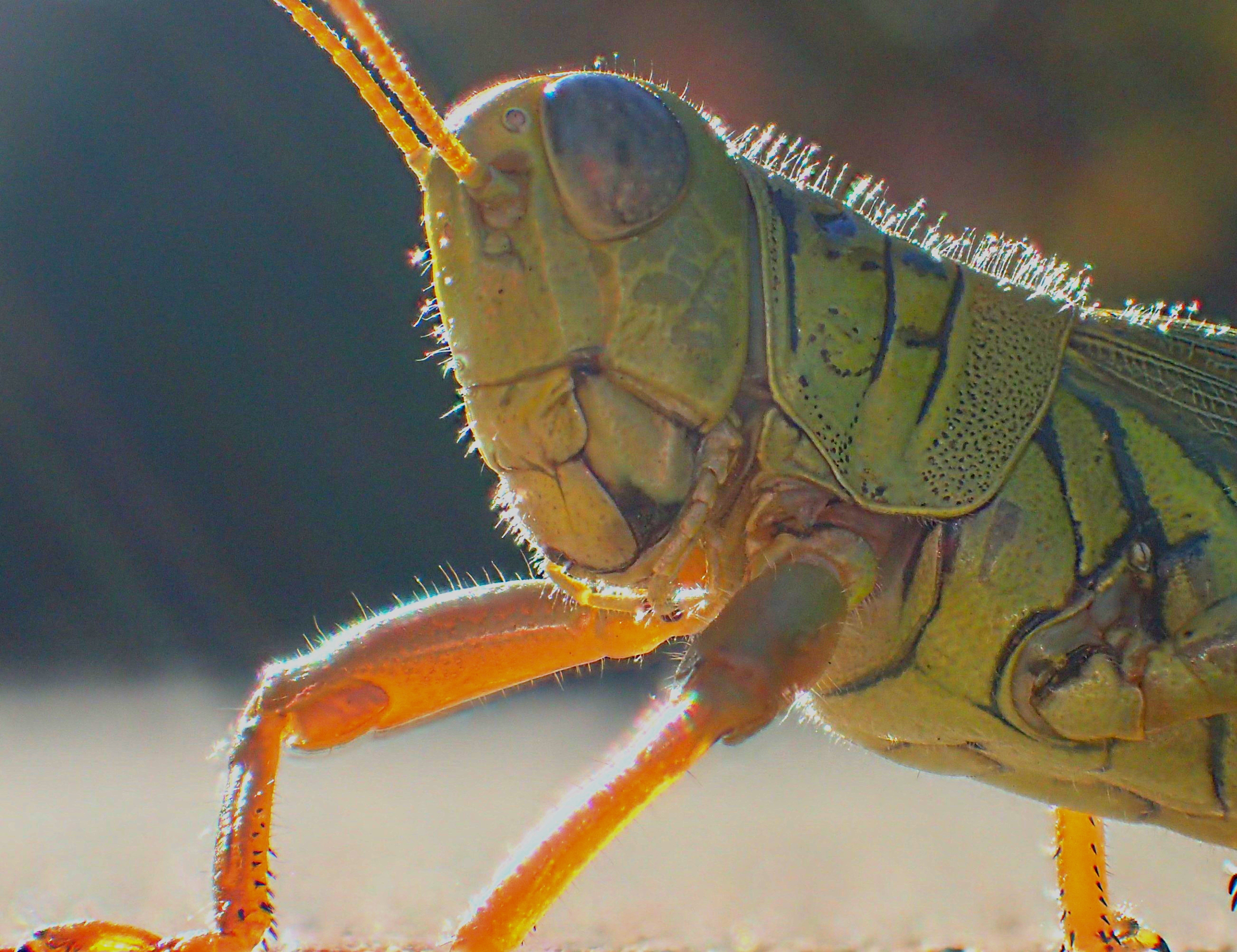
Not by the hair of my chinny chin chin! Photo by Thomas Peace 2014
.
Peace never comes by mindlessly clinging to separative groups or leaders.
.
[This is a Sheepshead Mushroom with a Midge Fly resting on it (to the left). The Sheepshead Mushroom is edible and is considered to be one of the best tasting mushrooms. They tend to grow at the base of Oak Trees.]

Resting on a Sheepshead. Photo by Thomas Peace 2014
.
Hate and indifference involves separation, distance, and a lack of compassion.
.
[In cooler weather, Katydids often cling to the sides of houses or garages for extra warmth. Katydids have excellent climbing abilities. This one is clinging to the warm, reflective side of a garage… an effective way to beat the cold!]
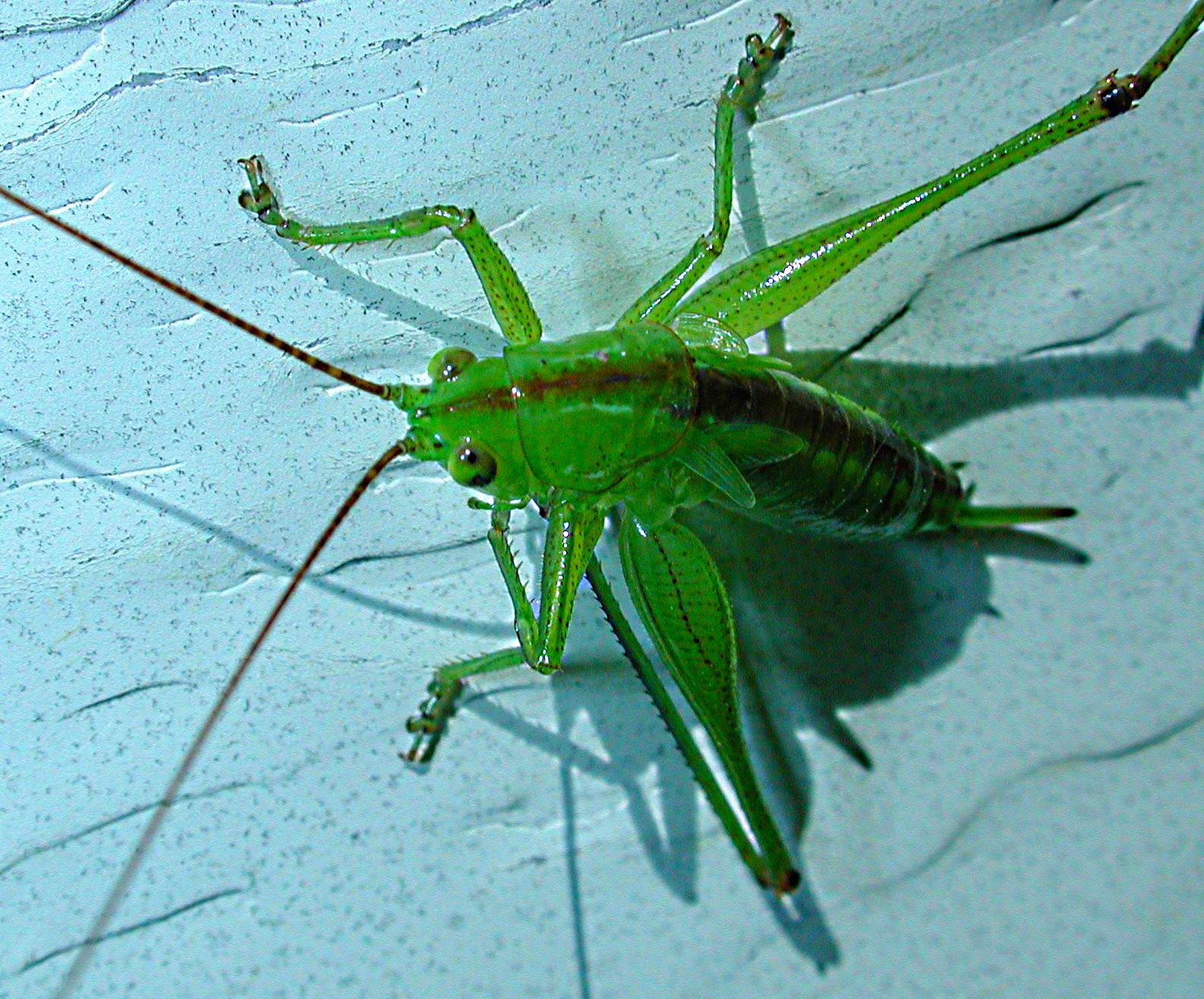
Wall Walker! Photo by Thomas Peace 2014
.
It’s likely best to be rather low-key and unnoticeable. For, in the long run, you will (especially if you are wise) really impress no one except yourself.
.
[There is, within this flower, and unobtrusive, little winged insect… a Hover Fly… having the time of his life! There’s also an inconspicuous ant there too!]
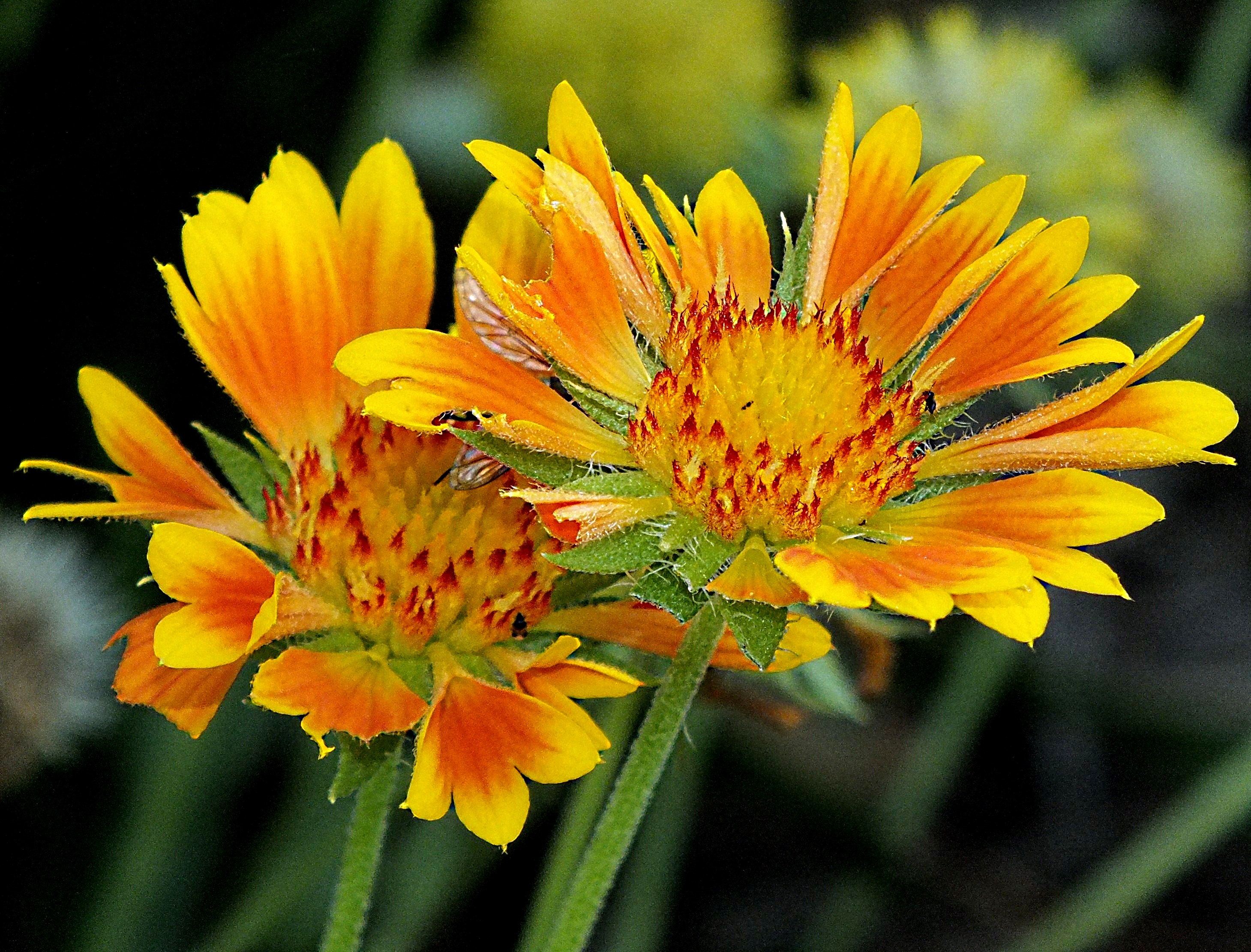
Beyond the Camera Eye and Superficial Fame! Photo by Thomas Peace 2014
.
The key to understanding life is not made to fit the rigid lock of powerful authority.
.
[The Spotted Jewelweed is an annul plant native to North America. The Spotted Jewelweed likes to grow along creeks and rivers; this one is growing along a creek flowing into a nearby river. The Spotted Jewelweed (Impatiens capensis) was transported in the 19th and 20th centuries to England, France, the Netherlands, Poland, Sweden, Finland, and potentially other areas of northern and central Europe. These naturalized populations persist in the absence of any effort of cultivation by people.]

Love is the key. Photo by Thomas Peace 2014
.
Hugging trees is great. But hugging the elderly and those with handicaps is even better!
.
[This is a batch of Chicken of the Woods mushroom with little, winged-insects upon it. When I was out in the woods, photographing, I spotted this beauty from a quite a distance. One then thought: “Of course, it’s such a treasure, that it will be surrounded by my arch-enemy… poison ivy!” Upon approaching the Chicken of the Woods, I then observed that it was, indeed, surrounded by many patches of poison ivy. I carefully took each step towards the Chicken of the Woods, with extreme caution and deliberation. It was unreal; it was like walking through a puzzle (or working on a computer game)! Patches of poison ivy where everywhere! When I finally got to my prize, there was (of course) a big, tall plant of poison ivy right in front of it. I had to bend, with my camera, to get a decent shot. Getting out of the area was equally difficult; each step was a precarious, carefully calculated maneuver toward attaining freedom and safety! When I finally got home, I washed up using a special anti-poison ivy cleaning soap. I didn’t get any rashes! Whew!]

Chicken of the Woods surrounded by my arch enemy… poison ivy. Photo by Thomas Peace 2014
.
No amount of words can ever relate the profound immensity of what true enlightenment entails; it is beyond words, descriptions, and beliefs.
.
[Fall Oak Leaves]
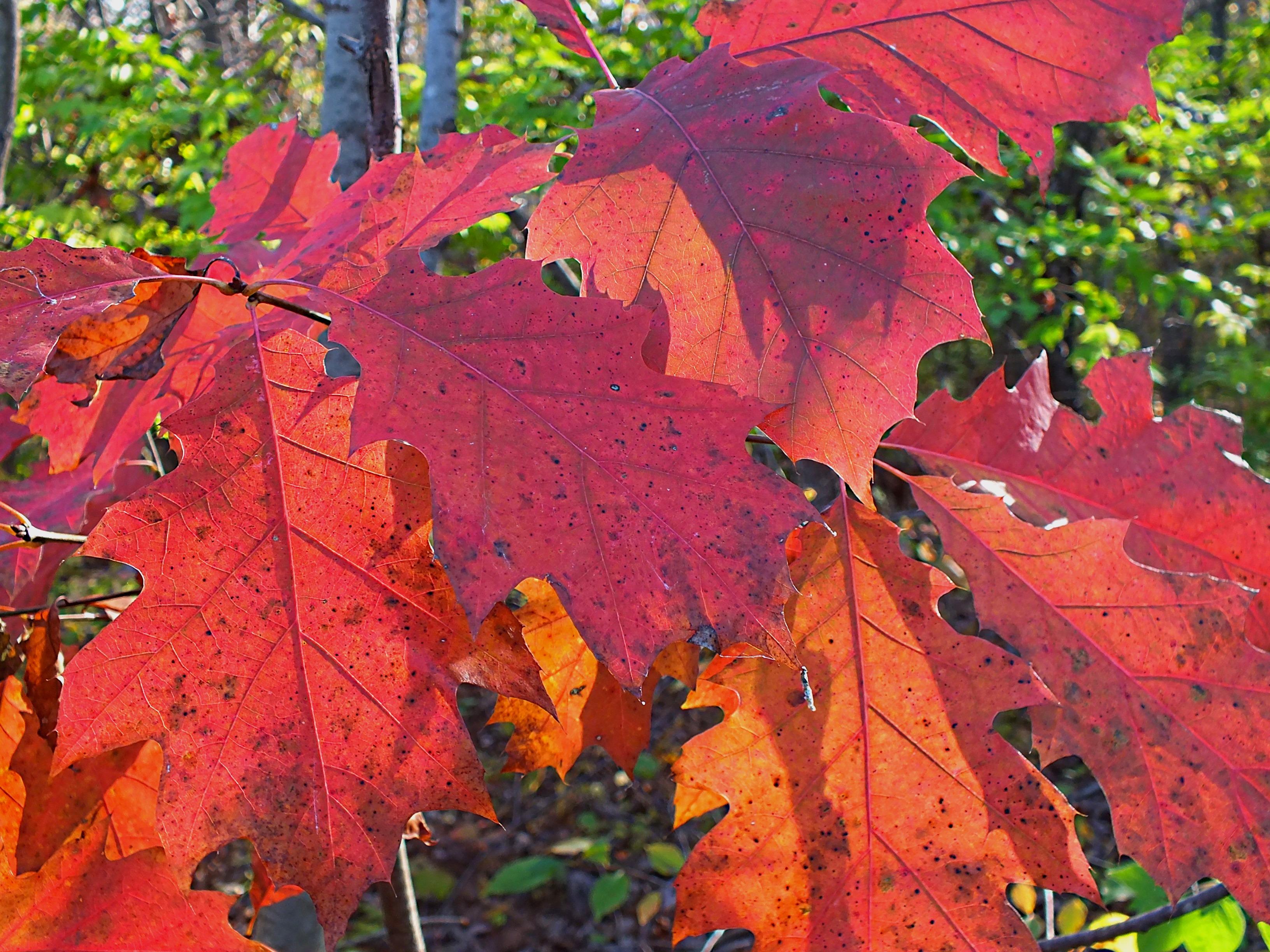
Fall Oak Leaves. Photo by Thomas Peace 2014
.
Whenever nature may fall… it always springs back again. It is ever renewing.
.

Fall by the Creek. Photo by Thomas Peace 2014
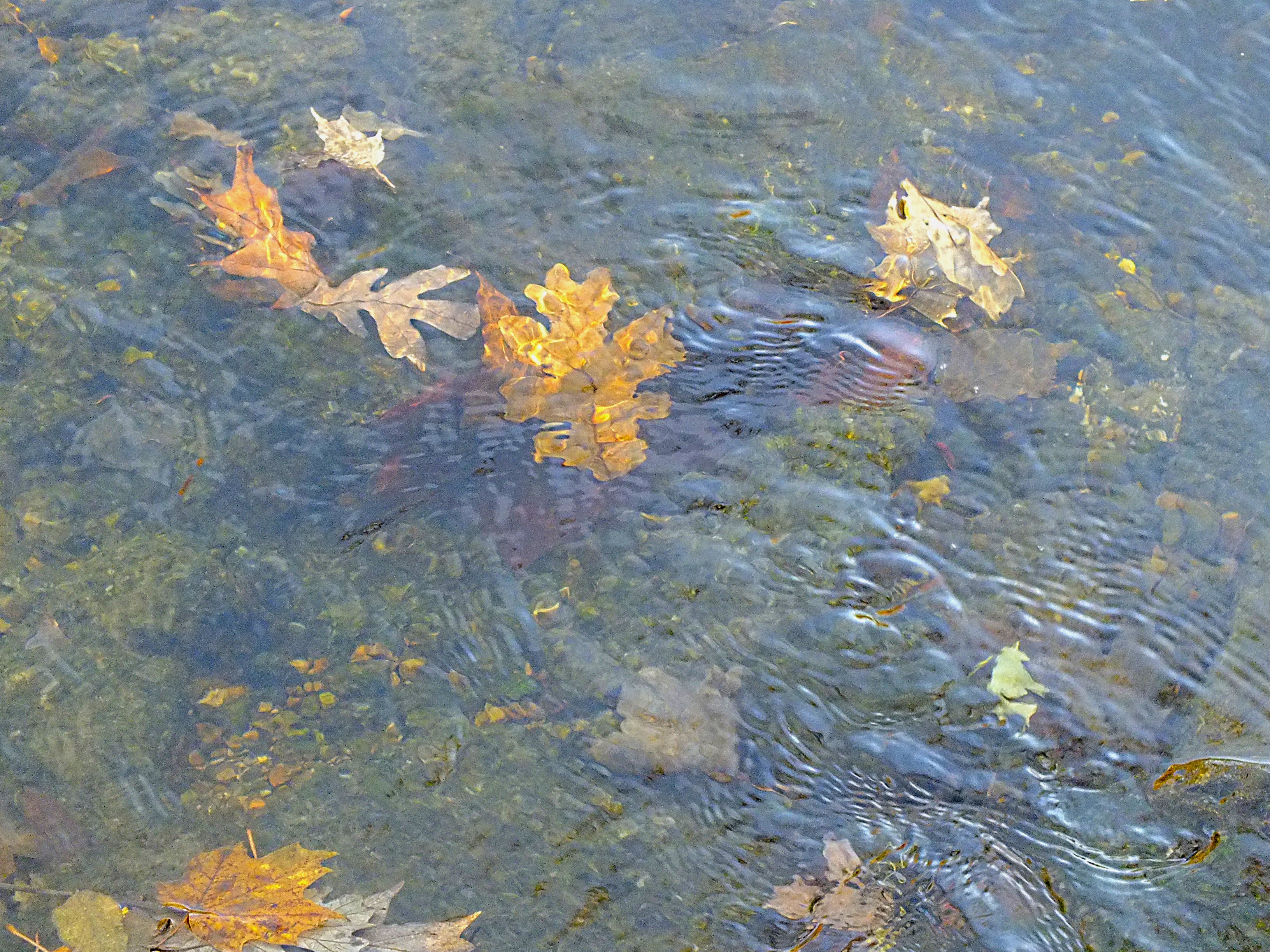
Fall Creek Leaves. Photo by Thomas Peace 2014
.
A simple smile is often the kindling to intense and blazing compassion (that uplifts others).
.
[These are the Sporophytes of moss upon a moist, large log in the middle of the forest. Sporophytes begin to grow by cell division out of the top of the archegonium on the female gametophyte moss plant… at which point it’s a parasite on the gametophyte plant, although it may produce some of its own food by photosynthesis in the early stages of growth.
Sporophytes consist of three basic structures, a foot, which anchors it to the gametophyte and helps to transfer water and nutrients from the gametophyte, a long erect stalk called a seta, and a pod-like capsule at the top-end where reproductive spores are produced. There is a Daddy-Long-Legs at the very bottom left of the photo, which can be seen partially; it is likely waiting for the many insects that crawl across moss. The larger leaves are not a different species of moss. They are the same species… and grow wider when more moisture is present in their immediate area. When moss gets flooded, it changes its shape, getting wider and more broad leaves.]
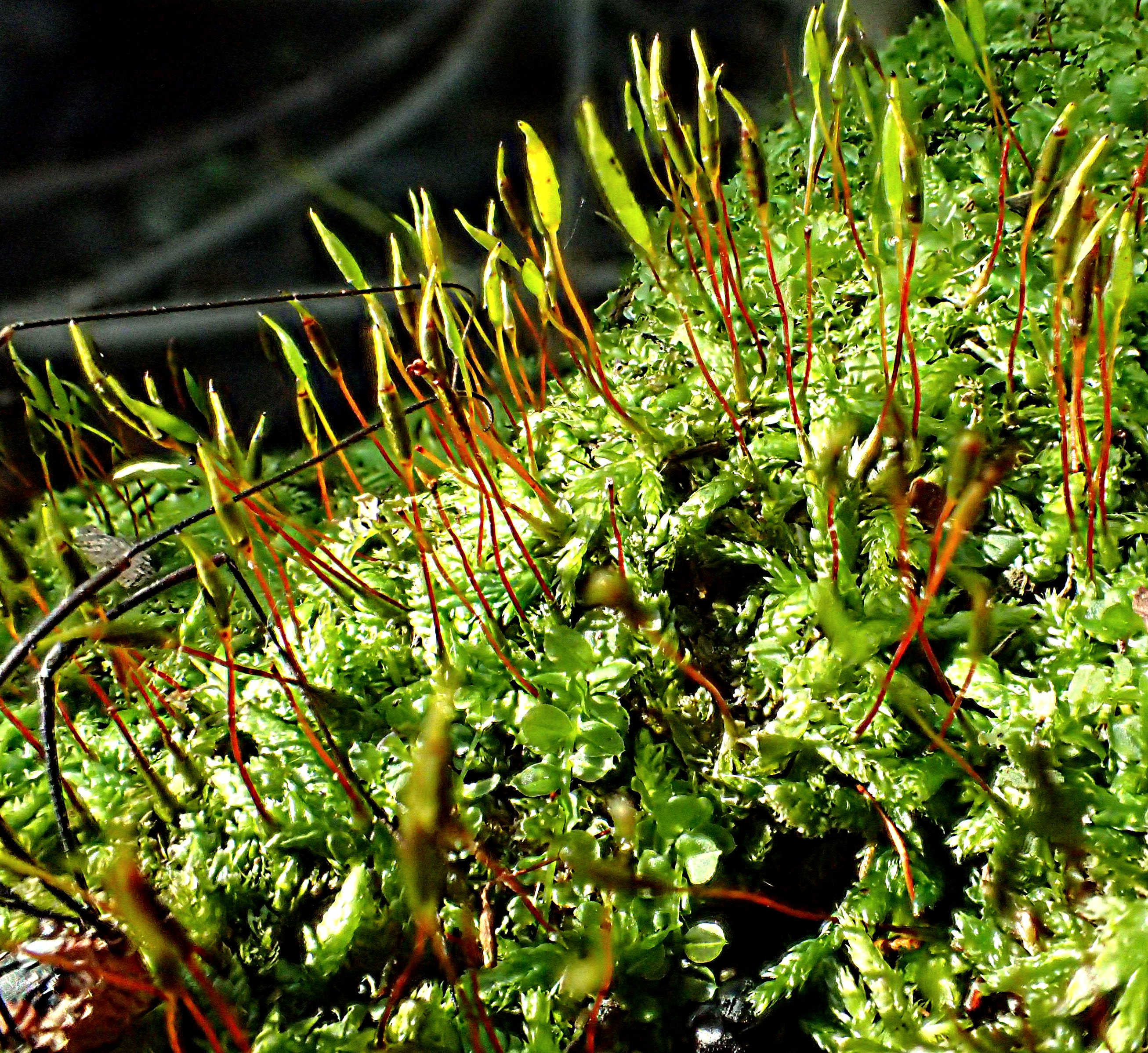
Sporophytes galore! Photo by Thomas Peace 2014
.
There was a wise man… and every time he bent down, the whole world (including all the people, animals, and plants) bent down.
.
[This Goldenrod is being bent over by the wind… not by the weight of the Hover Flies upon it. Hover Flies seek nectar from wildflowers, such as this Goldenrod, which is growing along the periphery of a local, nutrient-rich, rural pond.]

Bending together. Photo by Thomas Peace 2014
.
If one doesn’t exist primarily in (and “as”) the present now… one is living in the past.
.
[This Lady Bug is getting ready to leave a dried out Thistle Plant. Probably the Lady Bug had been searching for small insects to feed upon (that were nesting within the seed pod).]

Leaving Lady! Photo by Thomas Peace 2014
.
Thought is a wonderful tool, but if that’s all you exist as… you are immured in the confines of your own, limited prison.
.
[This is the central part of a garden flower. The golden Stamen are holding up well to the recent cold weather. Stamen are the pollen filaments of flowers.]

Golden Stamen. Photo by Thomas Peace 2014
.
Don’t lead a skeleton’s life. Ensure that your action has real meaning!
.
[This is the remnant skeletal framework of a plant growing along the river bank in the fall season. A diminutive spider can be seen with his handiwork.]

Plant Skeleton. Photo by Thomas Peace 2014
.
What you perceive is not, psychologically, separate from what you are.
.
[These are Mycena haematopus mushrooms growing along a river bank.]

Far from the beaten path. Photo by Thomas Peace 2014
.
If you go through life in a slapdash, careless manner, you’ll not only overlook the beauty of nature, but you’ll also overlook the beauty of helping others kindly.
.
[This Common Wood Nymph Butterfly is resting on a leaf. The coloration and size of the Common Wood Nymph Butterfly changes throughout its range in America. It is not so common any more, unfortunately.]
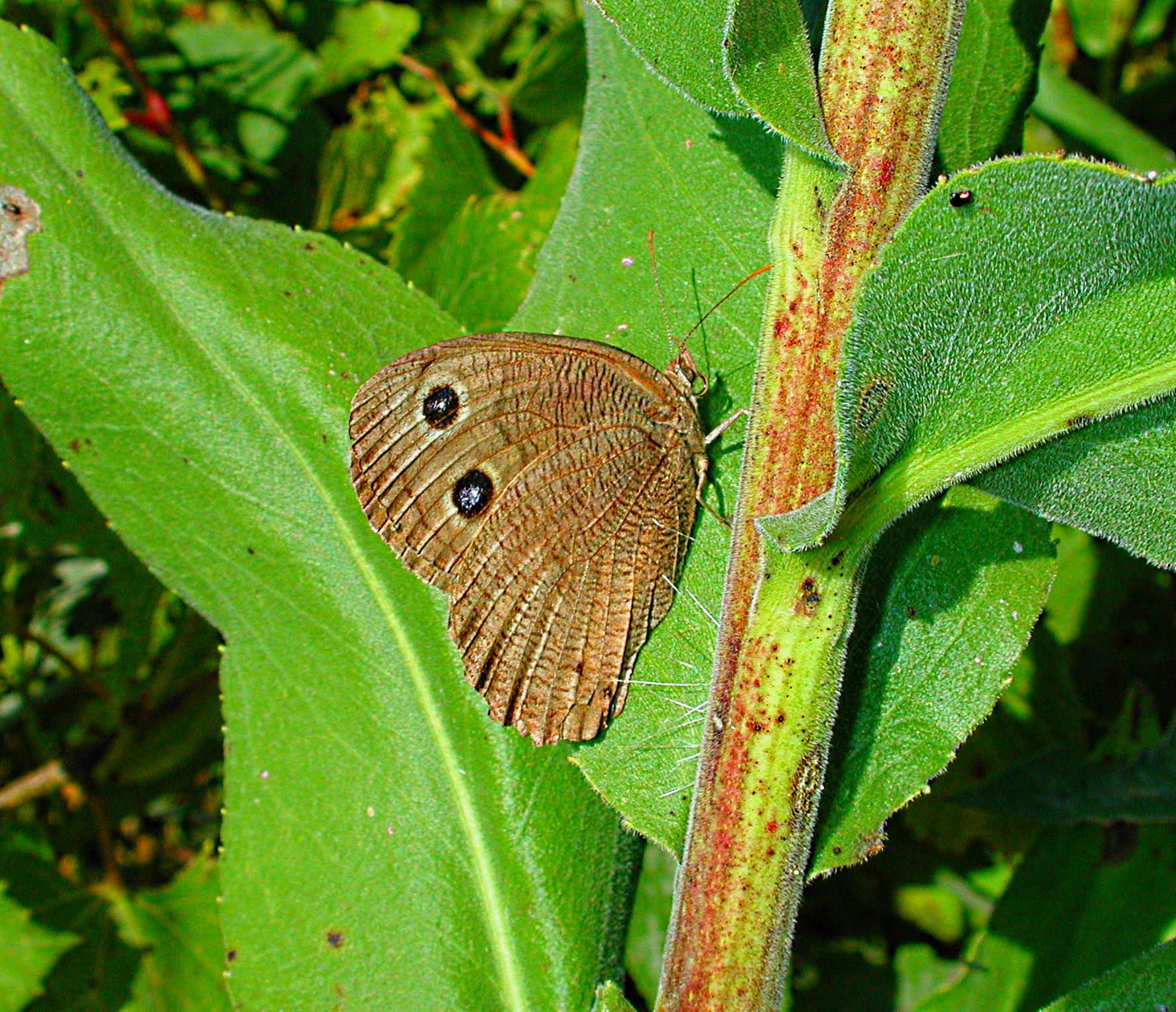
Not so common any longer. Photo by Thomas Peace 2014
.
Each day, effortlessly watch every moment of thought and perception… and do so without the needless and conflicting separation between the “perception” and the “perceiver.”
.
[These are soybean plants in a local farm field, dry and ready for harvest. (Soy milk in the making!)]

Ready for harvest! Photo by Thomas Peace 2014
.
True free will (i.e., freedom involving thought/thinking) is a phenomenon that — if it truly exists — breaks free from the cause & effect parameters of the cosmos… which, if one is at all honest, is not likely whatsoever, in any way, shape, or form. However, in profound and deep silence, an immense, timeless energy can appear (i.e., arrive)… that is truly free and not part of a conditioned cause-effect continuum.
.
[This is a Leopard Frog among the dead leaves of fall; interestingly, this frog croaked many times… and is still very much alive. 😉 ]
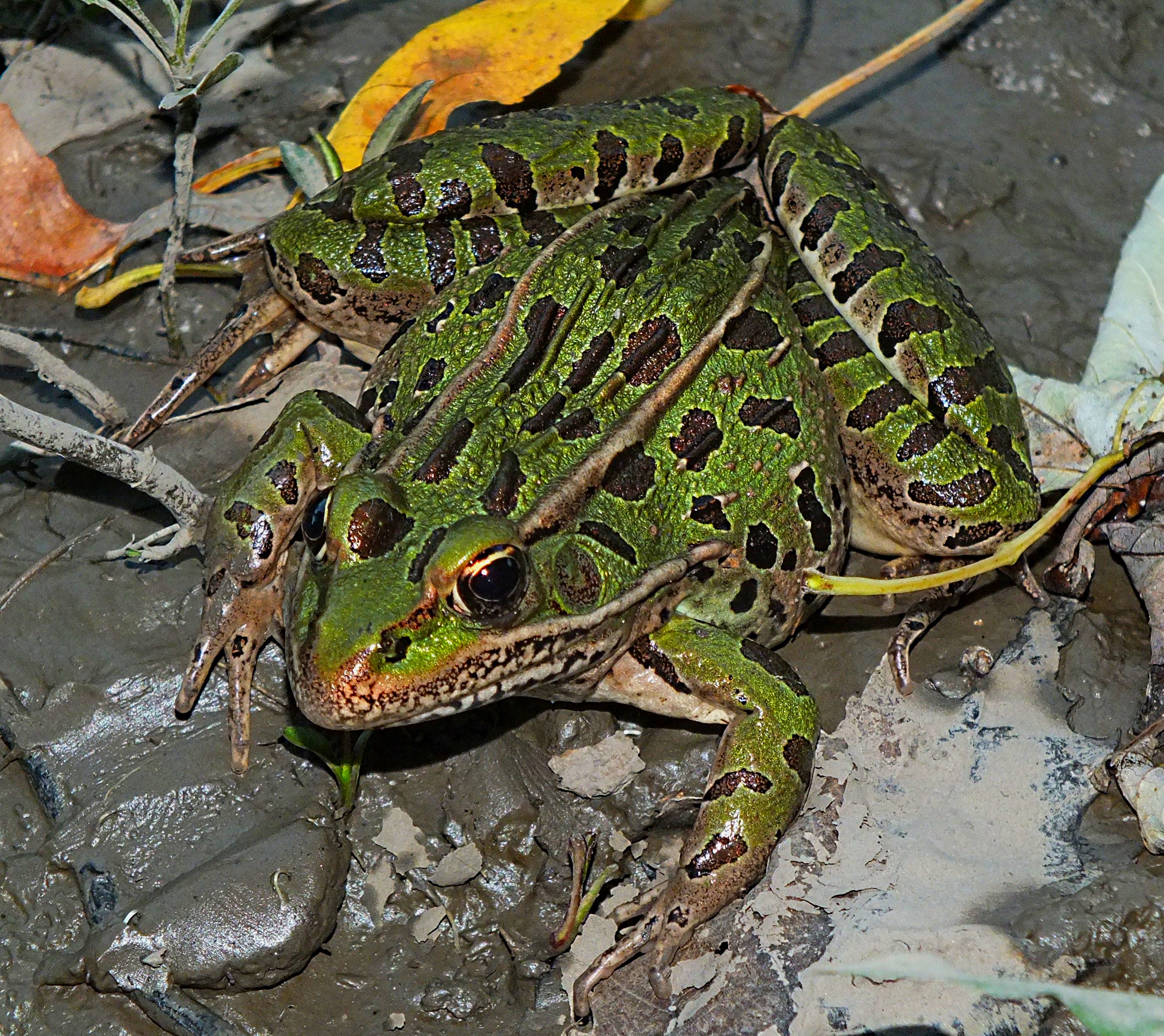
He kicked the bucket more than once! Photo by Thomas Peace 2014
.
One oftentimes has to unlearn the erroneous conditioning that was hammered into one’s core and foundation.
.
[This Harvestman – some call them Daddy-long-legs – is resting on a leaf. Harvestmen (Daddy-long-legs) are not spiders. Spiders have two main body segments. Harvestmen have one. Harvestmen do have eight legs like spiders… but theirs are usually much longer.]

A Daddy with Long Legs. Photo by Thomas Peace 2014
.
If you deeply care… then the universe is deeply caring.
.
[This is a close-up shot of moss growing on a fallen tree stump in the woods. I’ll post this same type of moss (with spore shoots sprouting out) at a later time.]

The rolling stone gathers none. Photo by Thomas Peace 2014
.
The supple mind goes beyond pigeonholing others and coming to dead-end conclusions.
.
[These are the small, fruiting parts of a large underground fungus.]

Mushroom burst. Photo by Thomas Peace 2014
.
Direct perception is timeless; it’s instantaneous. Greed, hatred, envy, and comparison all take time.
.
[This is a Potter Wasp, some Hover Flies, a small wild Fly, and a Soldier Beetle. Potter Wasps make nests of mud that are pot-like. (They were all circling around the flower cluster, but the Soldier Beetle didn’t get the direction right!)]

Time for nectar energy! Photo by Thomas Peace 2014
.
Compassion is expansive and all-containing; hate and selfishness… narrow and confined.
.
[These very small beetles are feeding on a Thistle Plant. These are likely Carpet Beetles. Carpet Beetles eat indoor carpets, woolens, cottons, and synthetic materials contaminated with organic fluids such as sweat. However, they prefer to eat dead insects and spiders, and they can devastate scientific specimens in university and museum collections. Outdoors, they feed on flower pollen and secretions from plants.]

Carpet Beetles far from carpets. Photo by Thomas Peace 2014
.
Each one of us, if we are at all honest, is (in many ways) beautiful… and each one of us has elements of bad and ugly habits.
.
[This fall foliage is beautiful. It is an old friend… whom I try to avoid, however. This is a batch of Poison Ivy. Sometimes, just being in the woods near it (even though I know what it looks like and avoid it) is enough to give me terrible, endless rashes. This year, my arthroscopic knee surgery was delayed… due to a case of Poison Ivy rash. I once received information about how a man encountered a woman carrying a batch of it; she was a teacher… and wanted “pretty leaves” to share with her classroom!]
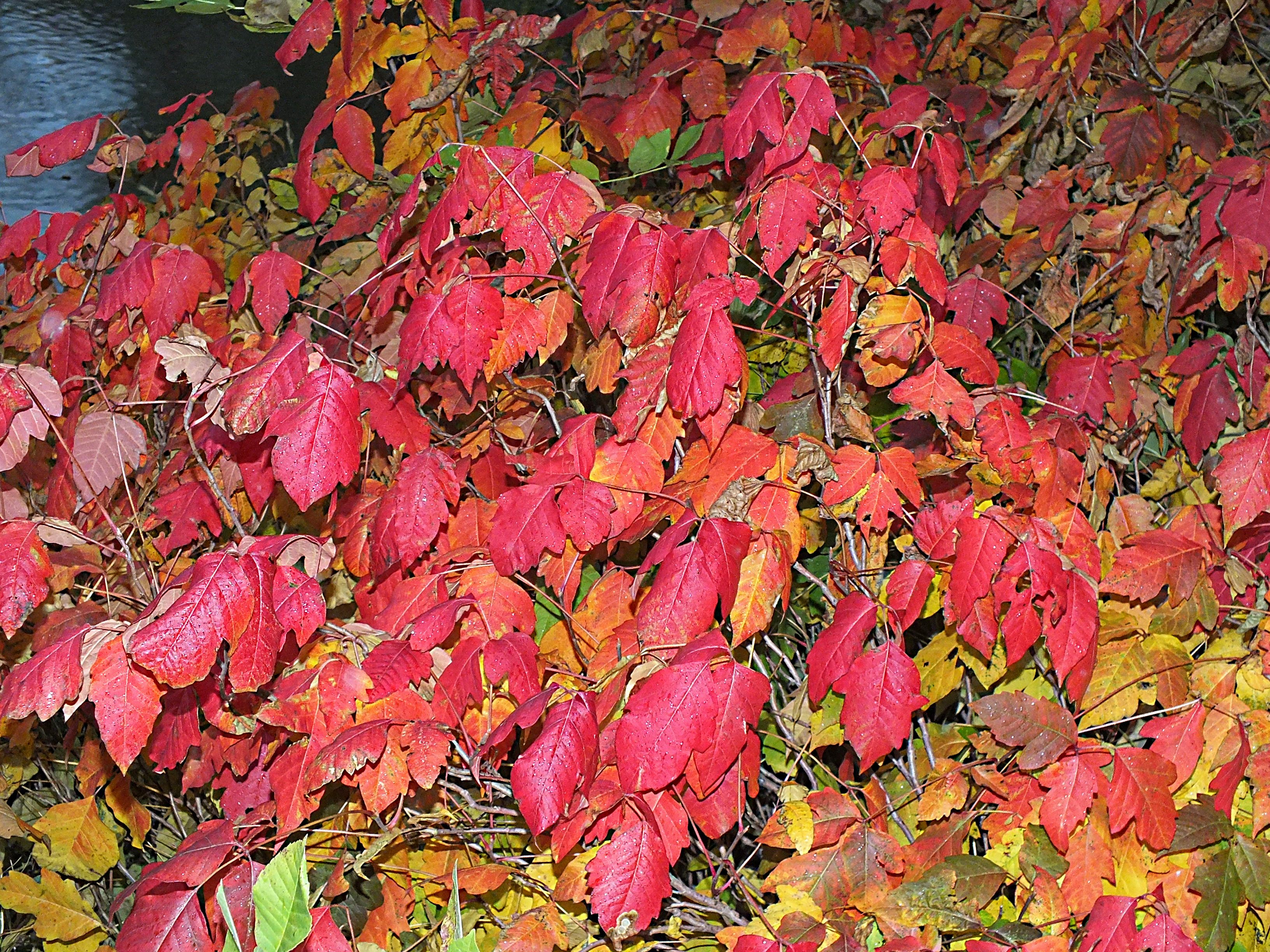
Beauty and the Beast all wrapped up into one. Photo by Thomas Peace 2014
.
Vast freedom occurs beyond limited narrow-mindedness.
.
[This Grasshopper is placidly resting on a flowering Thistle Plant. Grasshoppers do not generally feed on Thistle Plants, though they may devour the flower sections.]
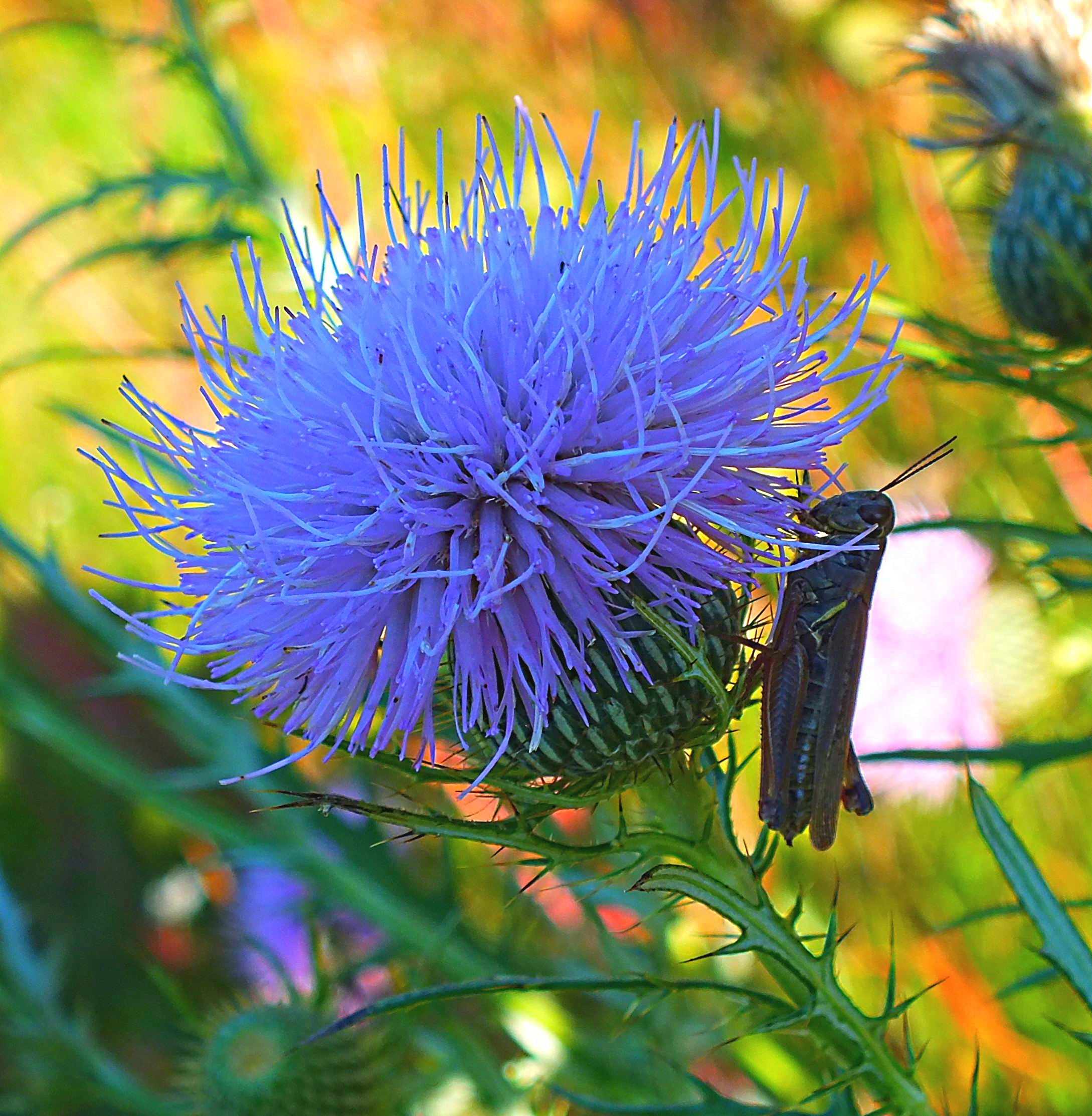
A beautiful place to be! Grasshopper on Thistle Plant. Photo by Thomas Peace 2014
.
There are no separate (isolated) pieces to the universal puzzle… once you see the golden whole.
.
[This is a Hover Fly on a wild Sunflower Plant. This Hover Fly is likely searching for flower nectar (and is distributing pollen as part of a symbiotic relationship).]

Psychologically, the perceiver and the perceived are one. Photo by Thomas Peace 2014
.
My biggest vice (according to my wife) — and the observer is the observed — is that of purchasing too many fossils. Perhaps, thinking a few words would be sufficient (instead of getting the fossils)… fossils being fixed impressions of the past. Words – all words – are symbolic representations from the memory bank (i.e., from the stored, dead past).
.
[These are Micro-mushrooms growing on a healthy Lichen covered, large Oak Tree. These diminutive mushrooms are around 2 mm in total length.].
Stairway to Heaven (lyrics & video by Led Zeppelin):
There’s a lady who’s sure all that glitters is gold
And she’s buying a stairway to heaven.
When she gets there she knows, if the stores are all closed
With a word she can get what she came for.
Ooh, ooh, and she’s buying a stairway to heaven.
There’s a sign on the wall but she wants to be sure
‘Cause you know sometimes words have two meanings.
In a tree by the brook, there’s a songbird who sings,
Sometimes all of our thoughts are misgiven.
Ooh, it makes me wonder,
Ooh, it makes me wonder.
There’s a feeling I get when I look to the west,
And my spirit is crying for leaving.
In my thoughts I have seen rings of smoke through the trees,
And the voices of those who stand looking.
Ooh, it makes me wonder,
Ooh, it really makes me wonder.
And it’s whispered that soon, if we all call the tune,
Then the piper will lead us to reason.
And a new day will dawn for those who stand long,
And the forests will echo with laughter.
If there’s a bustle in your hedgerow, don’t be alarmed now,
It’s just a spring clean for the May queen.
Yes, there are two paths you can go by, but in the long run
There’s still time to change the road you’re on.
And it makes me wonder.
Your head is humming and it won’t go, in case you don’t know,
The piper’s calling you to join him,
Dear lady, can you hear the wind blow, and did you know
Your stairway lies on the whispering wind?
And as we wind on down the road
Our shadows taller than our soul.
There walks a lady we all know
Who shines white light and wants to show
How everything still turns to gold.
And if you listen very hard
The tune will come to you at last.
When all are one and one is all
To be a rock and not to roll.
And she’s buying a stairway to heaven.

Another Stairway to Heaven. Photo by Thomas Peace 2014
.
The separation between yourself and your fears is as illusory as the separation between the idea of “me” and the idea of “others.”
.
[Who has been eating these beautiful wildflowers? One need not look very far for the answer!]

At the scene of the crime. Photo by Thomas Peace 2014
.
On Twitter, a couple of Twitter friends, Kitusai & Bohdan — who happen to be excellent, creative musicians, by the way, (and who go by the Twitter icon-image of two Zebras) — suggested to me that it is good to give others a second chance when they do wrong. However, maybe not always; as I told them: two zebras who give the lioness a second-chance aren’t zebras for very long!
.
[If insects were mammals, this Robber Fly would be the lion of our rural area. In our area, I will often see a Robber Fly diligently flying from leaf to leaf, looking for prey to attack. They are very voracious and persistent predators. They will even attack much larger insects than themselves. This one has caught a Blue Damselfly. Blue Damselflies are, themselves, predators of other insects.]
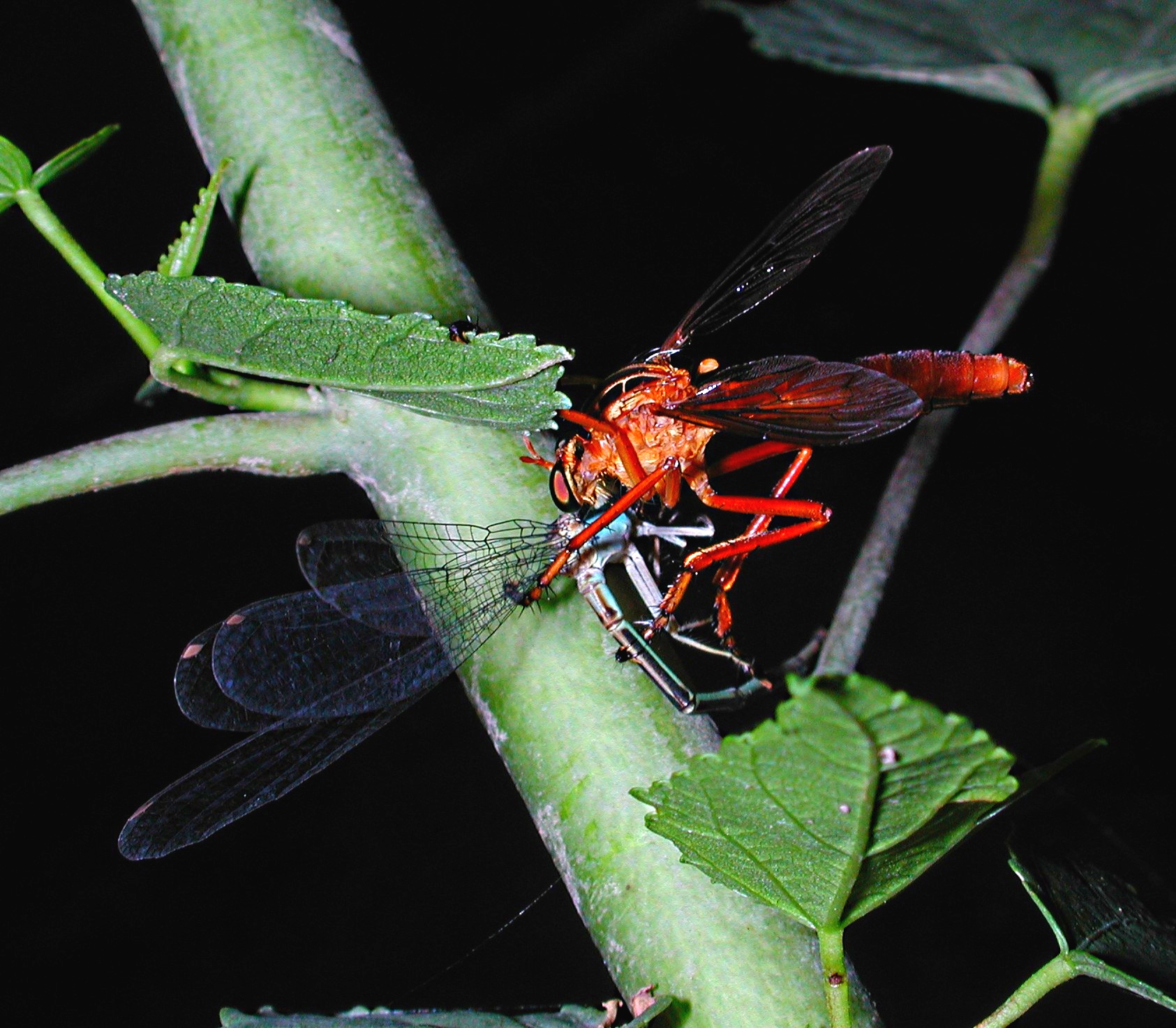
I have nothing against meat eaters! Robber Fly attacking Damselfly. Photo by Thomas Peace 2014
.
The wall that separates you from all of life’s creatures… is (psychologically) composed of what is projected within (and “as”) you.
.
[This Wolf Spider (Lycosas gulosa) is clinging to the side of a rock wall. It is tending some lines for potential prey. This particular species of Wolf Spider lives in both the United States and Canada.]
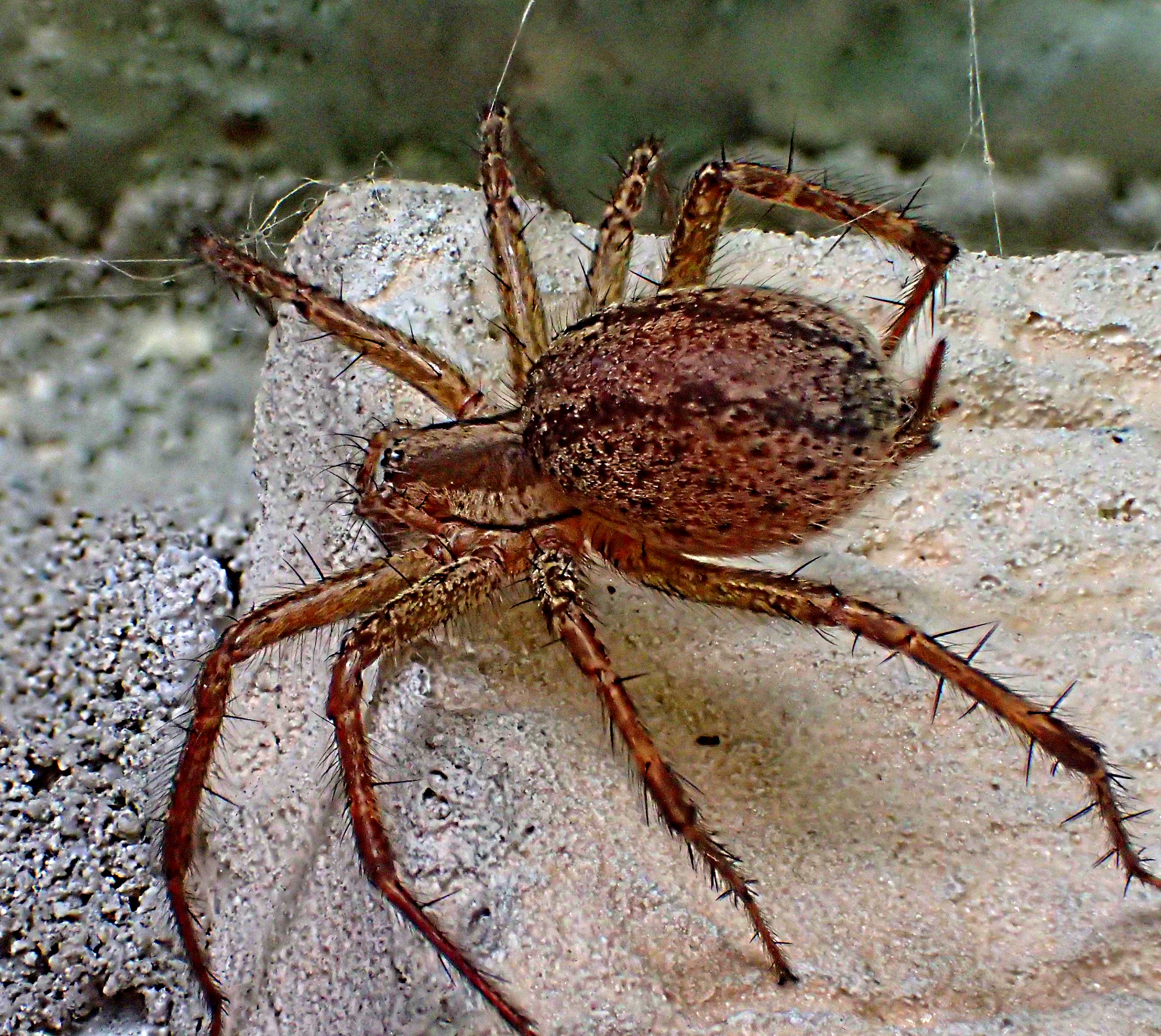
Pink Floyd… The Wall. Photo by Thomas Peace 2014
.
To be sane in an insane world isn’t easy.
.
[This small Ant may be biting the leaf to extract juices. Below the Ant is a small, bite-sized hole.]

Walking on a vertical leaf isn’t easy. Photo by Thomas Peace 2014
.
Too much blind affection can strangulate the object of such so-called affection.
.

Intense Passion! Photo by Thomas Peace 2014
.
Compassion is that alive awareness that cares beyond the cadaverous uncaring.
.
[This is a small Leafhopper on a cluster of colorful, wild Pigweed seeds. The Leafhoppers in Illinois are all relatively small. Leafhoppers have piercing-sucking mouth parts, which enables them to feed on plant sap. Pigweed is considered a weed and is a nuisance to farmers… but it is edible for humans and is full of nutritious vitamins.]
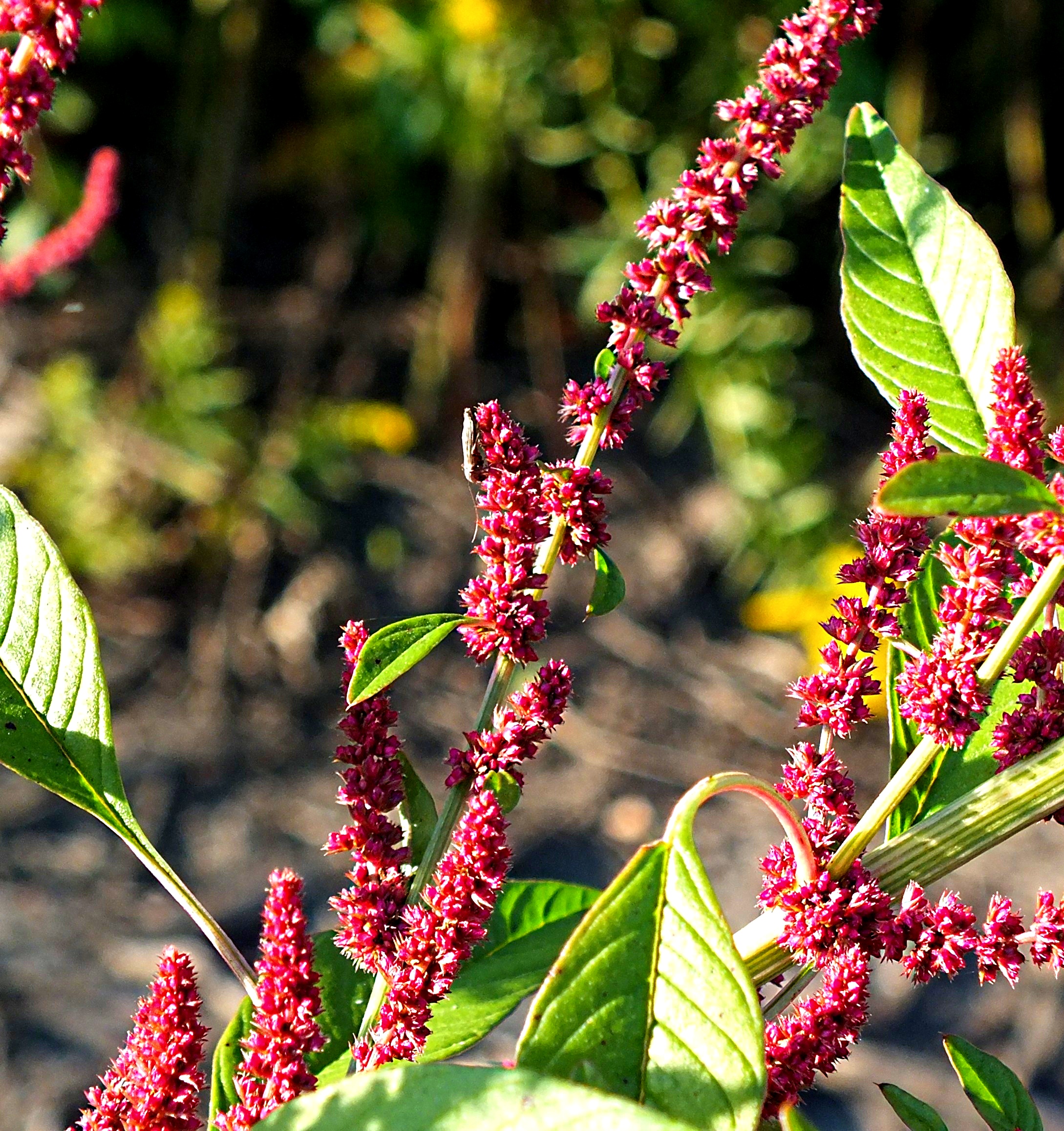
Down the Up-staircase. (Leafhopper on Pigweed) Photo by Thomas Peace 2014
.
Untethered freedom is not mesmerized by authority’s lopsided systems and structures… additionally, it is full of deep order, intelligence, and integrity.
.
[This is a web-free Crab Spider in Phlox Flowers. Most Crab Spiders do not form webs. Crab Spiders, as we have shown, often change in chameleon-like fashion to suit their needs. They are usually found in flowers, even garden flowers.
Additional note: I will be posting more spiders (and similar creatures) in the Halloween month of October. It is neat that they are part of an old Halloween tradition (that is fun for kids). However, it is unfortunate that many children grow up associating spiders with “being frightened” and as “terrible creatures to be horrified of.” As the late, superb naturalist, Steve Irwin often propounded, spiders and snakes can indeed be seen to be majestic, marvelous animals, truly beautiful in their own ways. We must, as Steve Irwin so graciously suggested before his untimely passing, be far better caretakers of Mother Earth.]
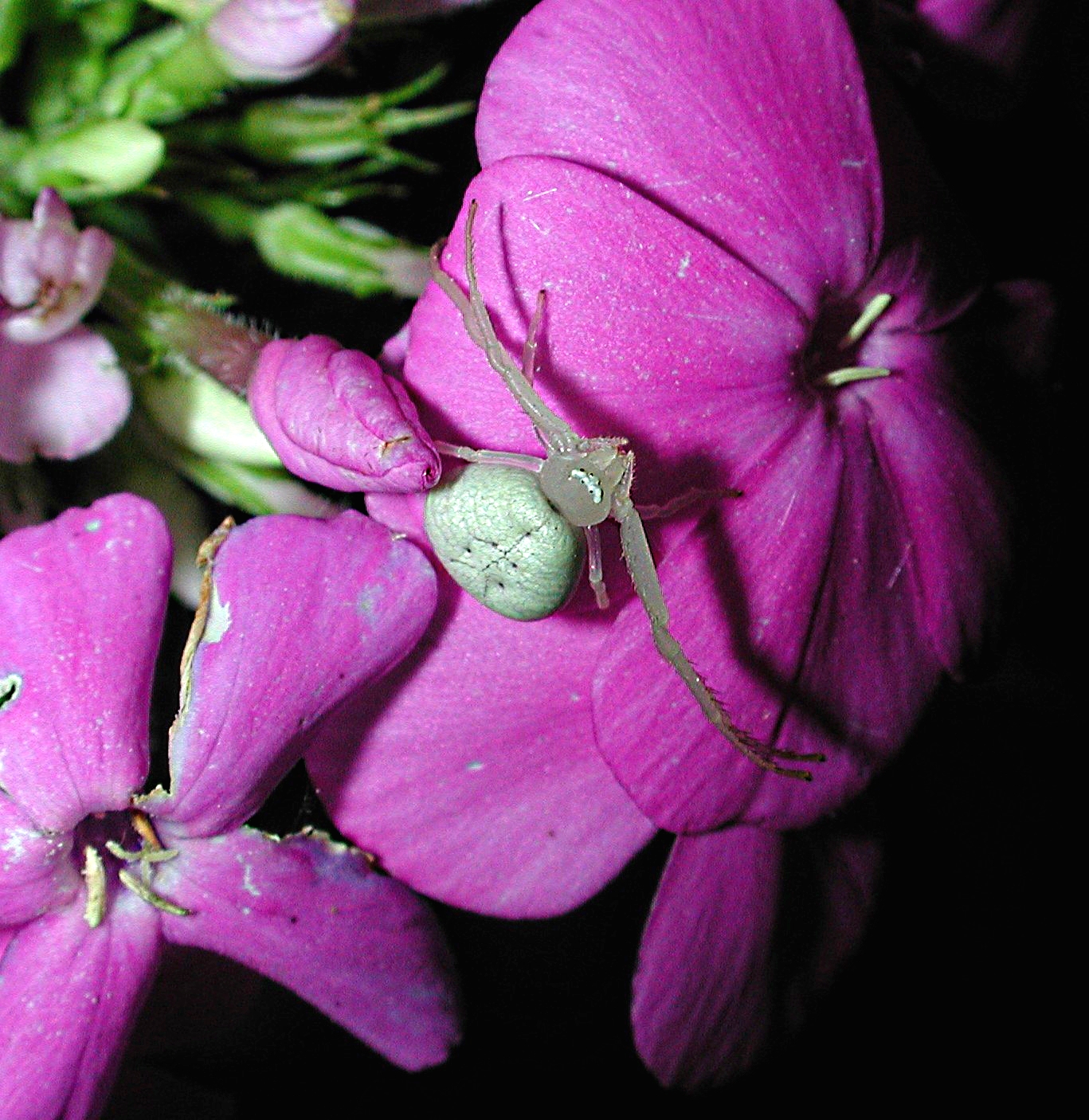
Crabby and waiting! Crab Spider in Phlox Flowers. Photo by Thomas Peace 2014
.
Blindly and eagerly leading people into a false path brings more than one into the ditch.
.
[These are leaves of a Sassafras Tree. Root Beer gets its name from the oil extracted from the root of the Sassafras Tree. Sassafras Tree parts were known primarily as medicinal herbs by the American Indians and, later, to the Europeans, who shipped great quantities to shops in England and on the Continent. The leaves could be made into teas and poultices, while the root bark was either chipped or crushed and then steeped in boiling water—one ounce of bark to one pint of water—and taken in small proportions as often as needed to reduce fevers; soothe chronic rheumatism, gout, and dropsy; relieve eye inflammation; ease menstrual and parturition pain; help cure scurvy and various skin conditions; and act as a disinfectant in dental surgery.]
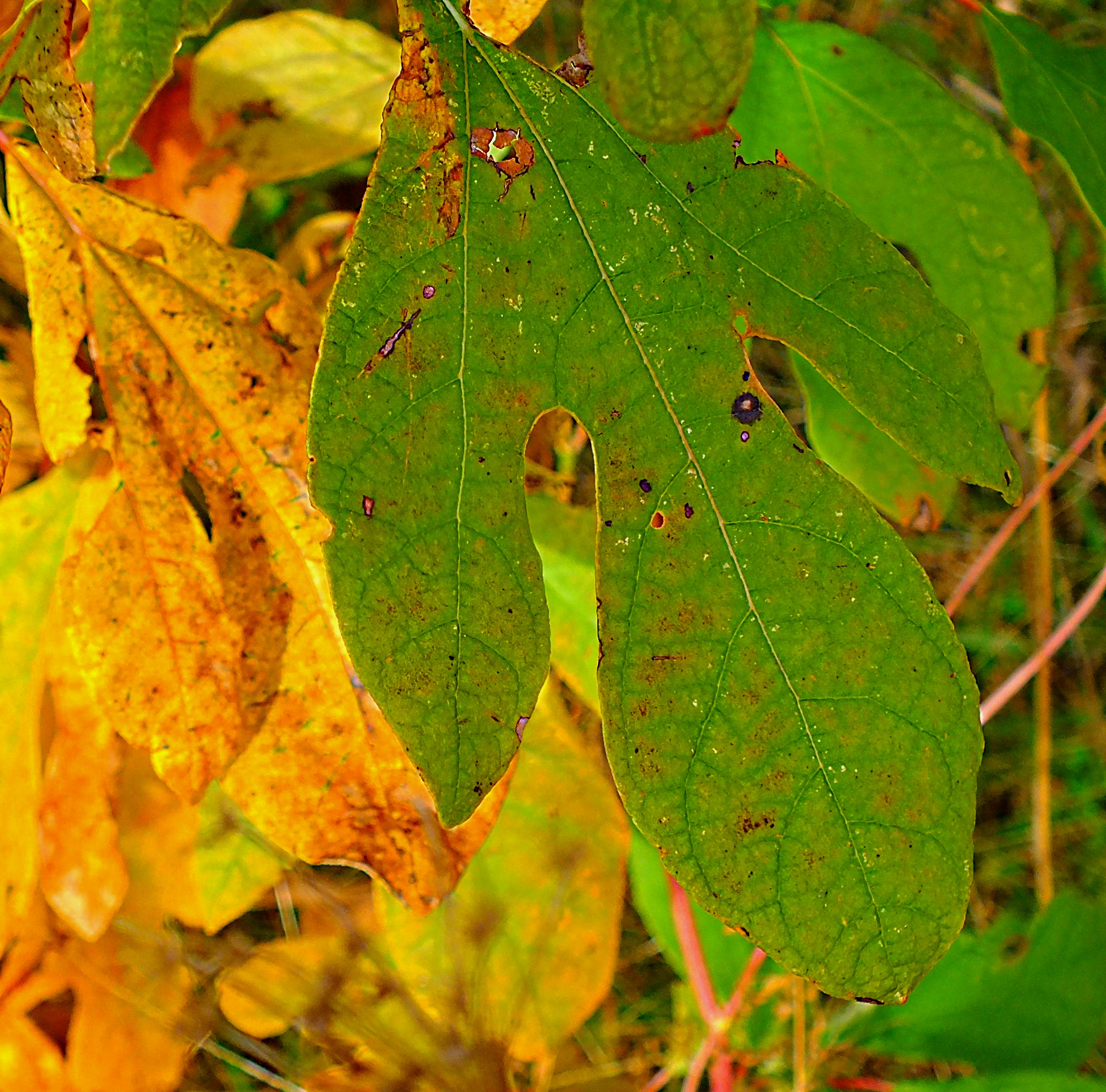
Holy Sassafras Leaves! Photo by Thomas Peace 2014
.
A small ego and a Big Heart is better than a Big Ego and a small heart.
.
[This diminutive Milkweed Bug Nymph just finished shedding its (outer) exoskeleton. The Milkweed Bug Nymph is around 3 mm long. It seems to be proudly overlooking its great accomplishment! Some insects devour their exoskeletons after shedding them; but this little vegetarian likely will not.]

Dumping your skeleton! Photo by Thomas Peace 2014
.
The little contains the large. The large contains the little.
.
[Scarlet-and-green Leafhoppers are active from spring through fall in open habitats with plenty of herbaceous, lush foliage. Scarlet-and-green Leafhoppers feed on the sap of vines and shrubs. They are relatively small… often considerably less than 1/4th of an inch long.]
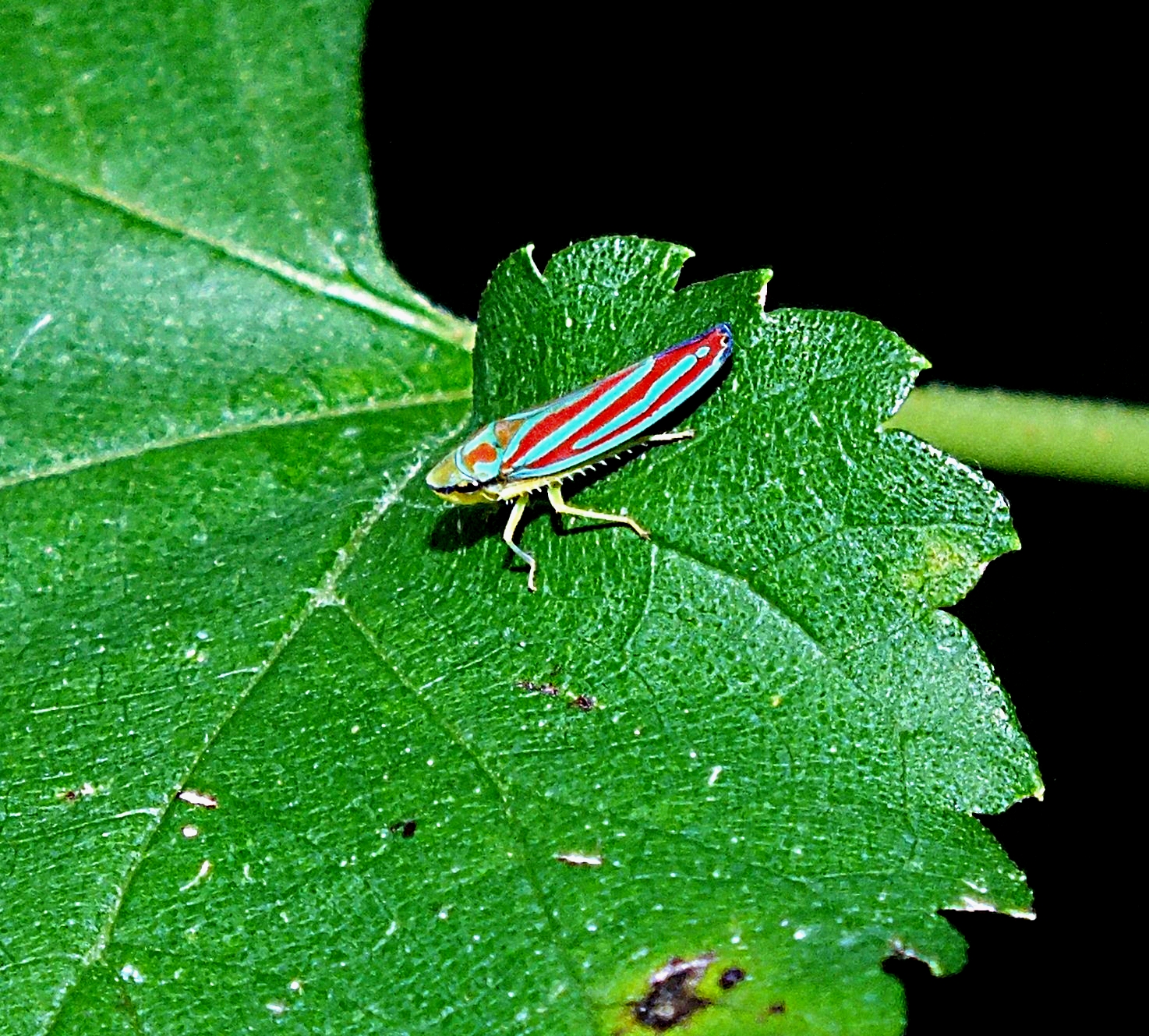
Little insect; large beauty! Photo by Thomas Peace 2014
.
Genuine heartfelt passion for life naturally helps others.
.
[Carpenter Bees, such as this one, love nectar and pollen, such as this Pink Cone-flower provides. Females of Carpenter Bees establish nests in broken or burned ends of hollow or pity stems and twigs. They can extract up to a foot of pith from the interior of a stem, but (nevertheless) are not considered pests. With Carpenter Bees, there is somewhat of a division of labor… similar to what honeybees expertly do, but at a far more simple level.]

Small but efficient! Photo by Thomas Peace 2014
.
True and authentic, wise behavior is never the result of a blueprint or mere book of rules.
.
[A spotted Cucumber Beetle walks across a wild Sunflower flower. An adult Cucumber Beetle may feed on many different types of plants, including cucumbers.]

A Cucumberless Cucumber Beetle. Photo by Thomas Peace 2014
.
Ponder beyond the ordinary. Go deep beyond the superficial.
.
[This is a Crab Spider in an Viola Flower. Crab Spiders act like chameleons and usually change to be the color of the particular flower that they are in… as they wait for winged prey to capture. This one should have made itself more yellow, but… considering the sprig hanging by this flower, this spider didn’t do too bad; I almost didn’t see it!
Additional note: I will be posting more spiders (and similar creatures) in the Halloween month of October. It is neat that they are part of an old Halloween tradition (that is fun for kids). However, it is unfortunate that many children grow up associating spiders with “being frightened” and as “terrible creatures to be horrified of.” As the late, superb naturalist, Steve Irwin often propounded, spiders and snakes can indeed be seen to be majestic, marvelous animals, truly beautiful in their own ways. We must, as Steve Irwin so graciously suggested before his untimely passing, be far better caretakers of Mother Earth.]

Almost missed. Photo by Thomas Peace 2014
.
The real treasure to find is within you yourself; you don’t have to travel or search anywhere (out there) to find it.
.
[This is a fluffy, seeding Thistle Plant full of Thistle Plant down. Some insects will nest in a Thistle Plant’s down to keep comfortable. Goldfinches (i.e. little, yellow, wild birds) use the Thistle Plant down for the main material for nest construction; they, additionally, relish Thistle seed.]
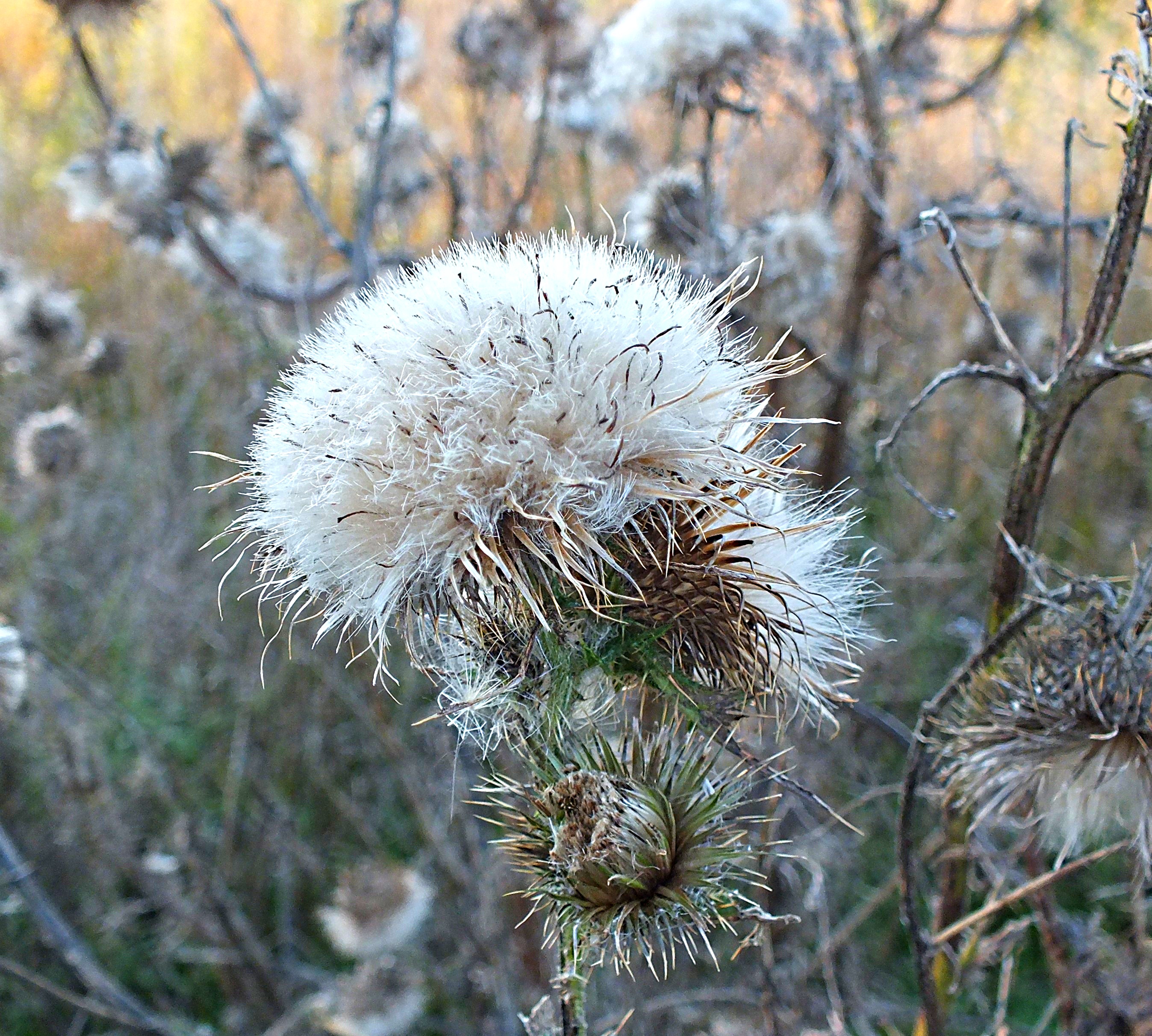
A lot of useful fluff! Photo by Thomas Peace 2014
.
Painted turtles really haven’t been painted; enlightened human beings don’t glow in the dark.
.
[Basking occurs when Painted Turtles leave the water to soak up sunlight. This allows their bodies to warm, since Painted Turtles – like all turtles – are cold-blooded, and helps eliminate parasites, such as leeches, which do not like dryness nor sunlight. Basking is also essential in the synthesis of vitamin D3.]
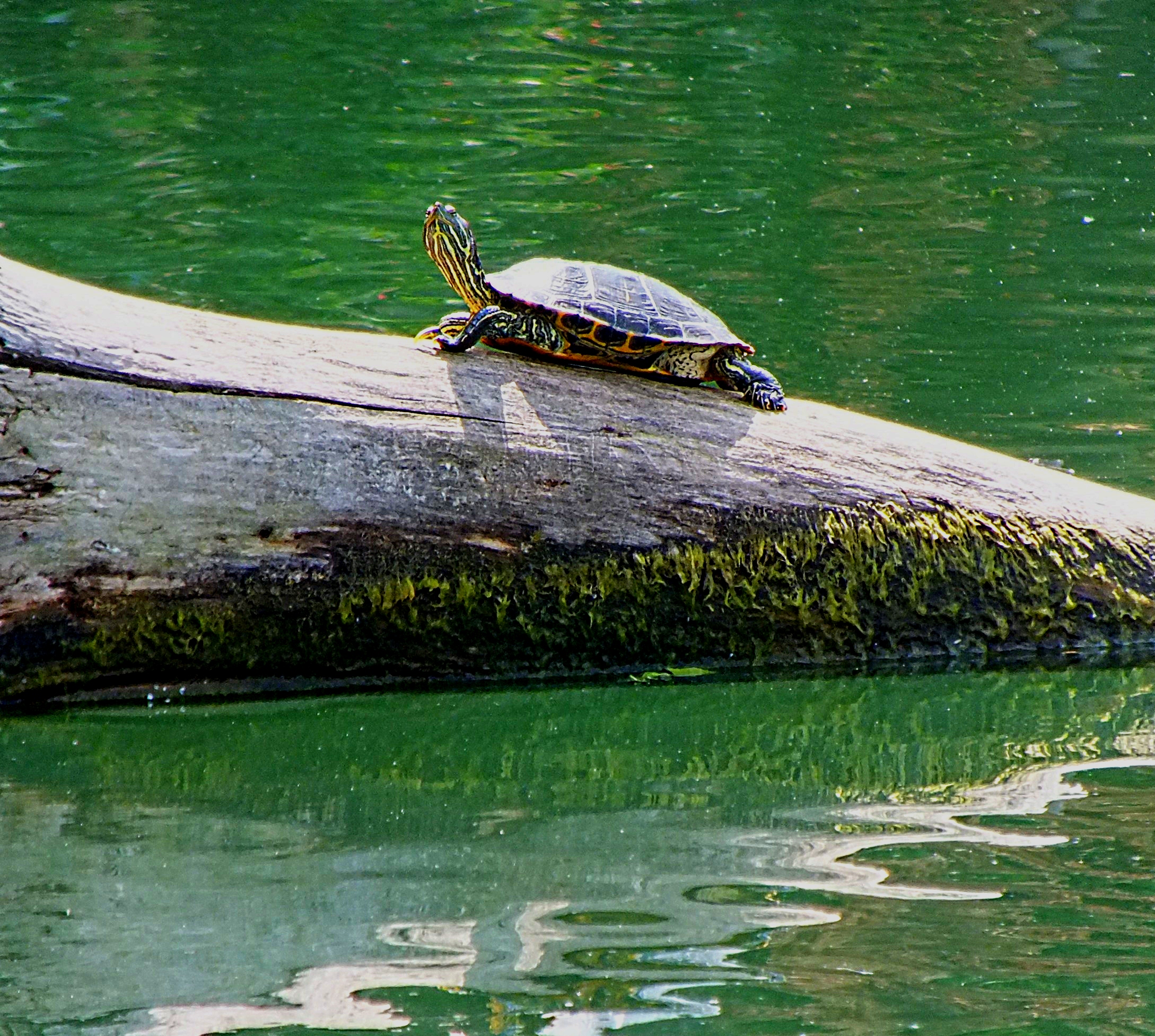
Soaking up some rays. Photo by Thomas Peace 2014
.
True love goes beyond the affinity due to attractiveness. Love the less beautiful (that are also truly beautiful).
.
[This is a Phidippus Jumping Spider. It’s difficult to sneak up on a Jumping Spider; their multiple eyes easily detect others in their environment. They are harmless to human beings. I have some Jumping Spiders in 50 million year old amber which I will post at a later time.
Additional note: I will be posting more spiders (and similar creatures) in the Halloween month of October. It is neat that they are part of an old Halloween tradition (that is fun for kids). However, it is unfortunate that many children grow up associating spiders with “being frightened” and as “terrible creatures to be horrified of.” As the late, superb naturalist, Steve Irwin often propounded, spiders and snakes can indeed be seen to be majestic, marvelous animals, truly beautiful in their own ways. We must, as Steve Irwin so graciously suggested before his untimely passing, be far better caretakers of Mother Earth.]
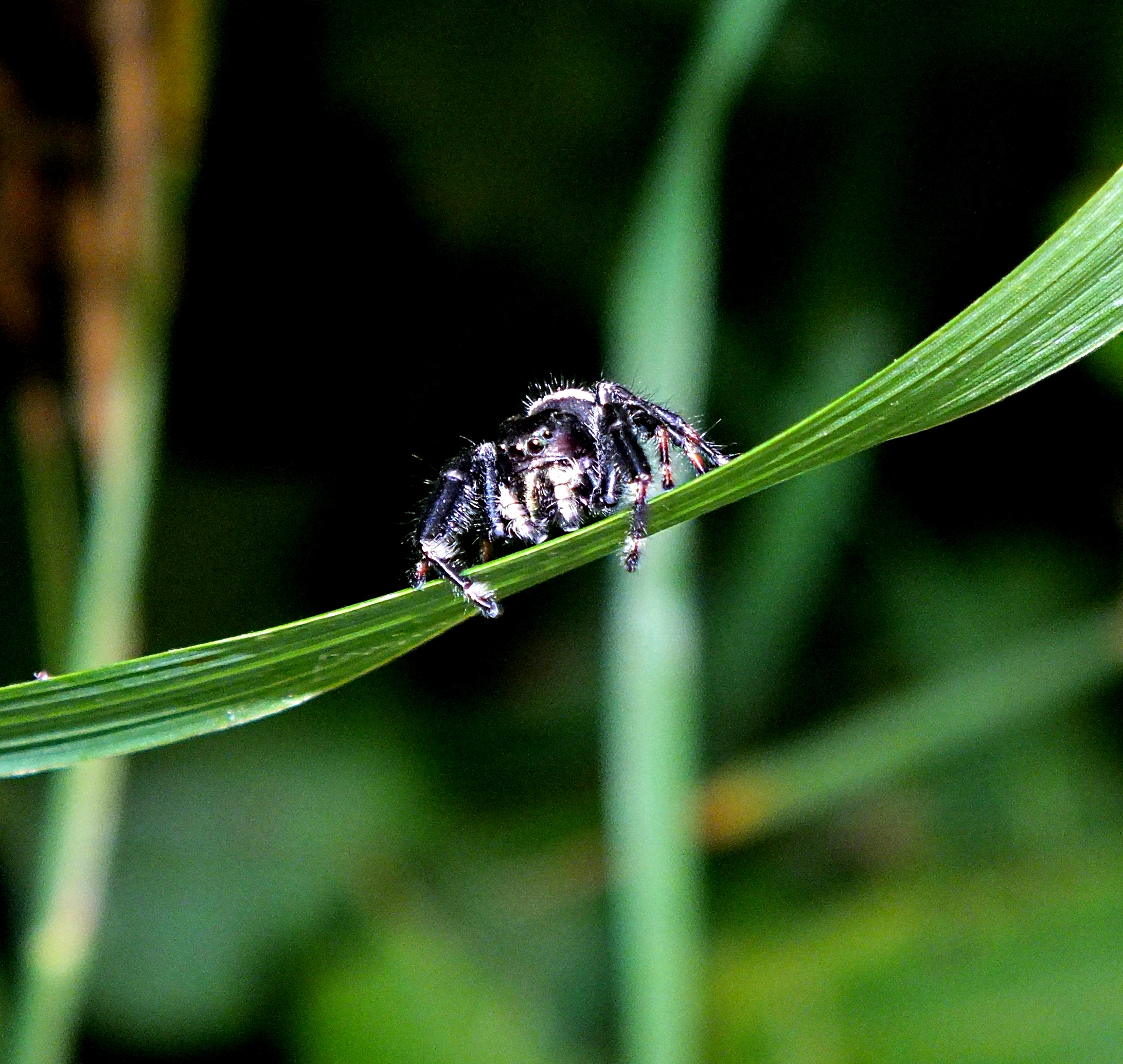
Tightrope climber! (Jumping Spider) (1) Photo by Thomas Peace 2014
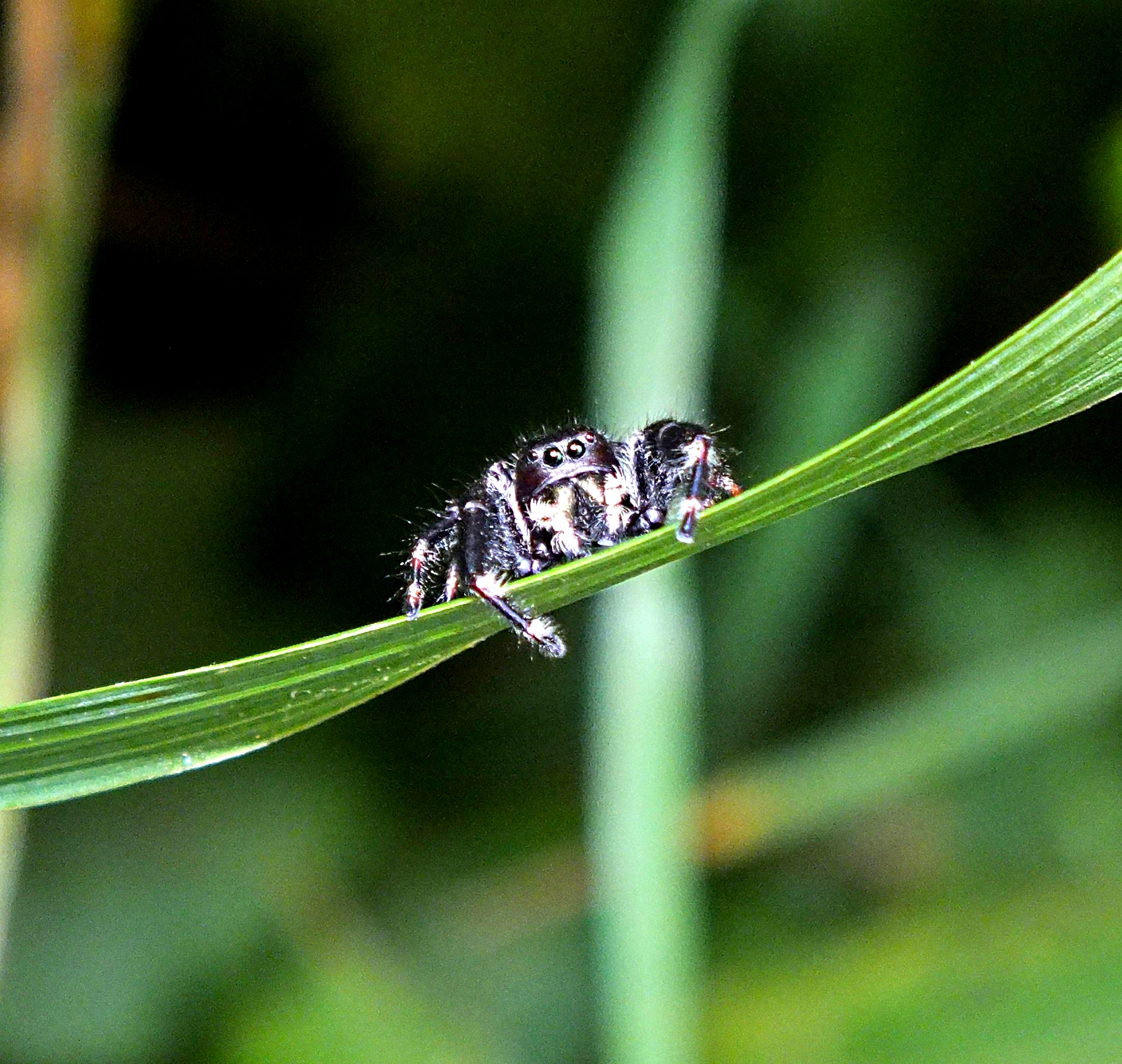
Tightrope climber! (Jumping Spider) (2) Photo by Thomas Peace 2014
 Tom's Nature-up-close Photography and Mindfulness Blog