.
True and lasting felicity, as intense happiness, is an inner phenomenon; it is not merely the result of outer stimuli.
.
[Leaves of the Ginkgo Tree. Ginkgo Trees were around during the time of the dinosaurs.]
.
Go beyond merely having ideals of what you want to be or “should be.” Such ideals often create inner conflict and friction within (and “as”) the mind and are usually a waste of energy. Look at your actions — without separation — from moment to moment without images of desire or idealism. This doesn’t mean that one just goes on to live in a crazy, disorderly way; it does mean that perhaps attention is looking without “learned patterns,”… and, instead, with a natural, field of order that is beyond conflict, beyond the mind’s (or others’) imposed fabrications. Profound understanding and keen (uncontaminated) “observing” changes things… not stale, concocted ideals.
.
.
If the mind renews itself each and every moment… there is no boring job of drudgery.
.
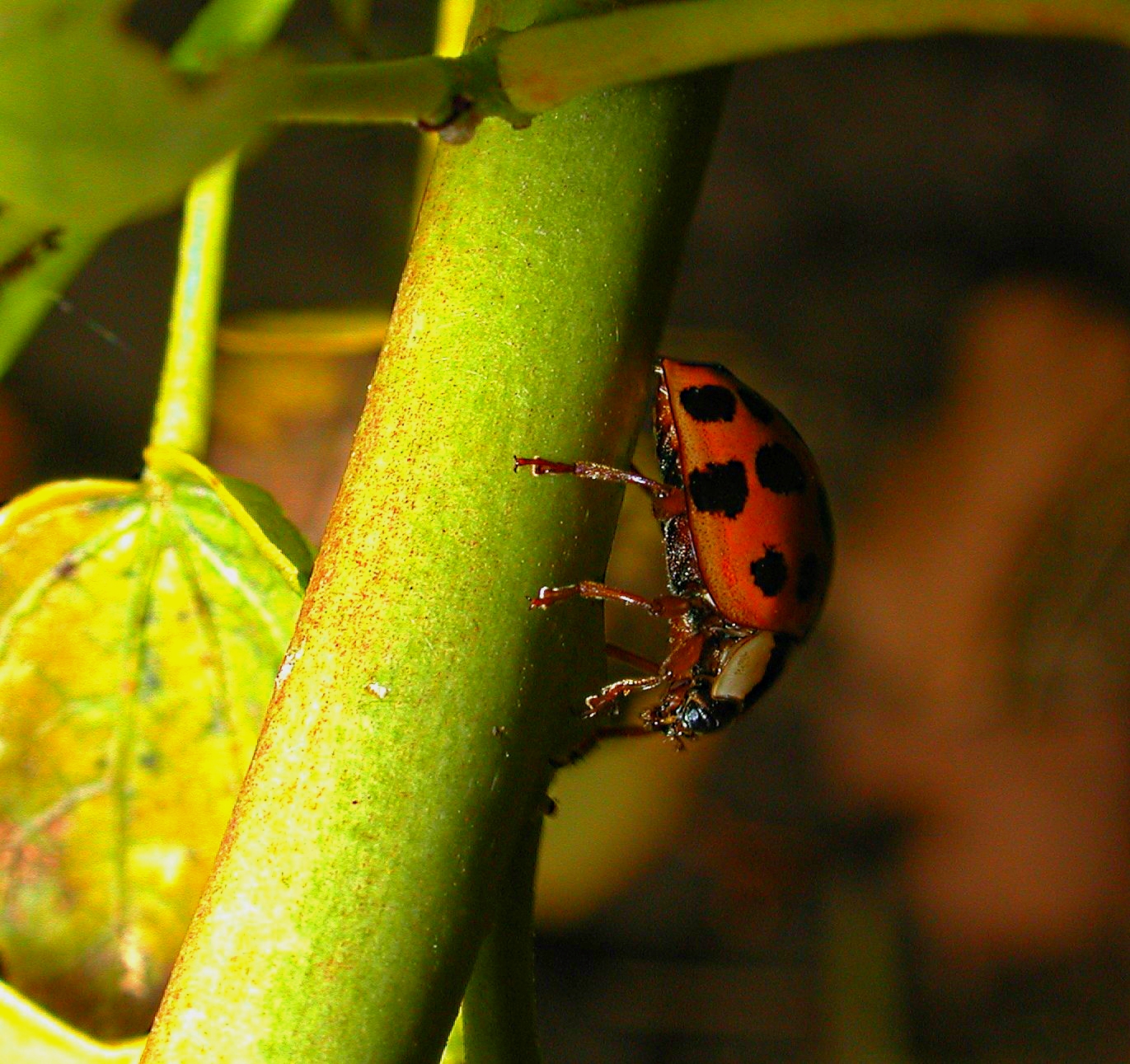
[Ladybugs are largely carnivorous and eat little insects called Aphids. In this photograph, the captured Aphid is ejecting (i.e., offering) some honeydew, but to no avail. Ants herd Aphids — and protect them like cows – to get honeydew from them (like getting milk from protected cows); but this Ladybug is not just interested in the honeydew; it wants steak for dinner. (There were no protective ants within or around this particular Aphid colony.)]
.
Perhaps real spirituality is not found — locked up in confinement — in temples, where masses of people often worship self-created images, but is found when one understands oneself alone, such as when one is out in nature (without deception, without fabrication, without endless, internal chattering, and without a bunch of pretense).
After the death of the historical Christ, there were many Gospels and bibles about Jesus that different groups of people cherished and felt were legitimate. Many years after the death of the historical Christ, The Gospel of Thomas — which many of the world’s top (current) Biblical Scholars feel was written before the standard four — was declared heretical by the high priests who catered to Rome’s Emperor Constantine… no doubt largely because it called for finding God for oneself and not by following others (such as priests, leaders, and gurus). Some top scholars even feel that the Gospel of John was written as a rebuttal against the Gospel of Thomas. (Jesus was initially an ardent follower of John the Baptist, who advocated finding God far from the temples, out in nature; John was terminated by the authorities.) From the early Greek version of the Gospel of Thomas found at the ancient Oxyrhynchus site:
Jesus said, “Where there are three, they are without God. And where there is only one, I say, I am with him. Lift up the stone and you will find me there. Split a piece of wood and I am there.”
.
[The Christmas ornaments are on the left. One of Santa’s reindeer is on the right.]
.
Meditation is never a practice. You can’t practice profound perception, deep awareness, and alive/dynamic wisdom.
.
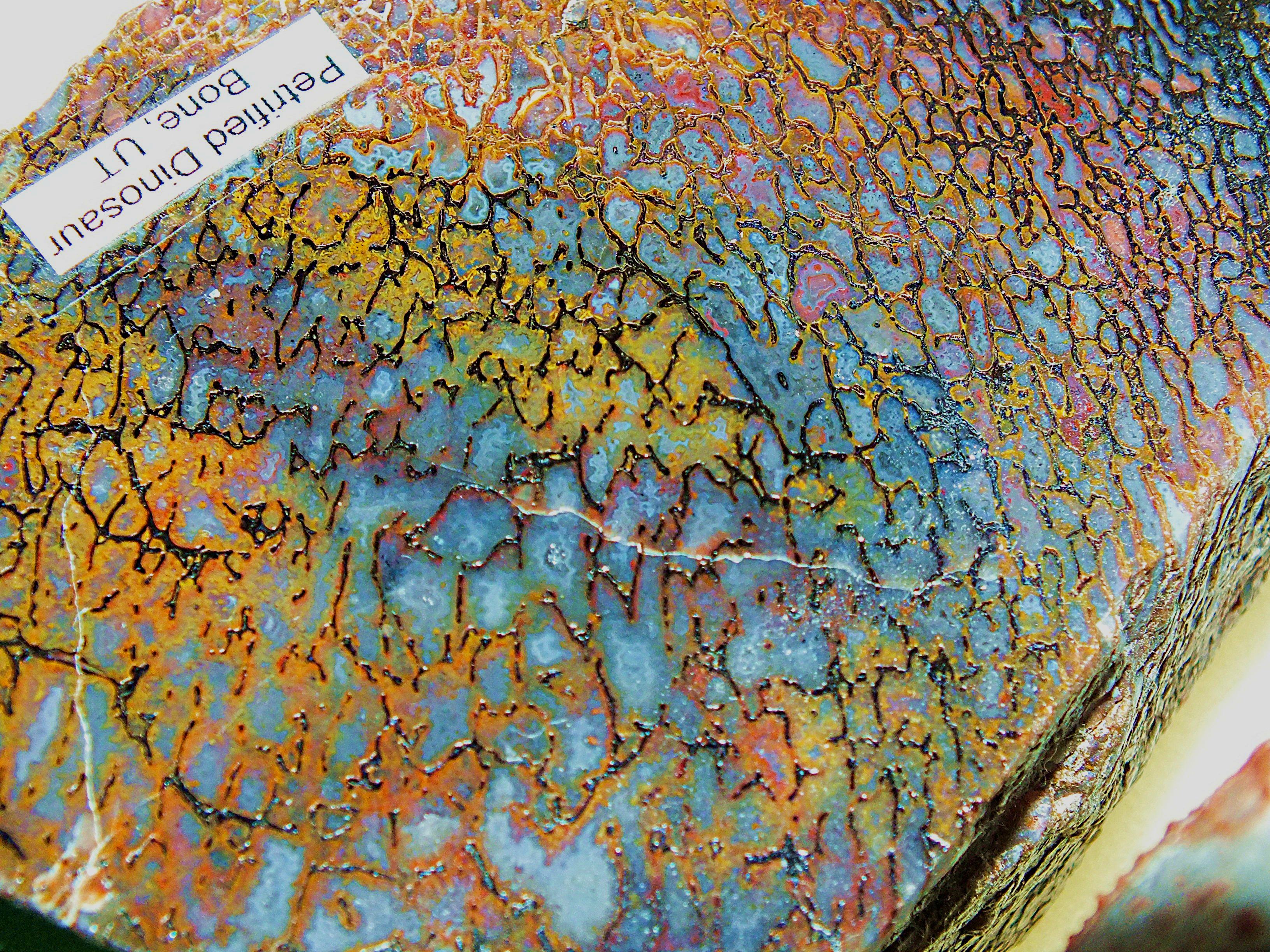
[Fossilized dinosaur bone, Jurassic Period, Southern Utah. Dinosaur bone had chambers within it to store air from the lungs and was more advanced than what mammals had (and still have).]
.
Schools and educators would do well by putting much more emphasis on cooperation rather than on ruthless competition. T(ruthless) competition bestows a mentality that leans more toward domination and indifference. Cooperation confers more learning in terms of helping, consideration, sharing, and kindness. Perhaps one of the reasons our world is going to pot is that so many are just out for themselves (accepting a crass, dog-eat-dog mentality).
.
[The gills of the mushroom help support each other (as the whole).]
.
Don’t lose your innocence. Don’t ever merely crave to “fit in” with the crowd. Don’t ever fear “being made fun of” or fear “being rejected.” Stand alone without being a slave to “what they think.”
.
[Here we go ’round the mulberry bush,
The mulberry bush, the mulberry bush.
Here we go ’round the mulberry bush,
So early in the morning.]
.
If, each and every day, one is wisely psychologically dying to the hullabaloo and clamor of superfluous thoughts, then one isn’t afraid of the mystery of dying (as so many are). Then living and dying aren’t two separate things… nor the latter something horrible to be frightened of.
.
[Widow Dragonfly]
.
Few of us actually live between the past and the future because we are obtrusions of the past reacting to (and “as”) past learned images and desires.
.
[Eastern Comma Butterflies are found from spring through fall in woodland and forest openings and along the edges of thickets, streams, and rivers. This one is resting along the bank of a river.]
.
Thought is a necessary and extremely helpful tool; but it’s only a tool… not the true essence of the organism. When the mind is cluttered with a myriad of needless thoughts throughout the day (as it is in so many, with their endless fears and habitual, repetitive imagery) … it’s, in a way, like a plant burdened with many insects. However, don’t merely “try” to eradicate excess thoughts… because that would likely be some thoughts trying to eliminate “other” thoughts (accomplishing, in reality, nothing)… leaving the “plant” remaining rather “buggy.” (Fabricating more bugs to chase away other bugs leaves one remaining “buggy.”) Simply observe each series of thoughts without psychological separation (being aware of the space between thoughts as the thoughts perish and end)… and then a natural silence may beautifully occur without effort (i.e., without another fabrication trying to get rid of them). That natural silence would occur without struggle, without concocted manipulation, without friction, without conflict.
(Of course, there are endless people who prefer to remain buggy!)
.
[Aphid insects on a wild plant.]
.
To have a decent rapport with nature… go beyond the self and become “one with plants and animals.”
.
[A Grasshopper (with a penthouse view) and a Ladybug. Most Grasshoppers are vegetarian, while Ladybugs are mostly carnivorous. The Ladybug will not attack the Grasshopper, though, since the prey of Ladybugs is much smaller.]
.
Love all beings and creatures in life… not just your little self and family, race, and nation.
.
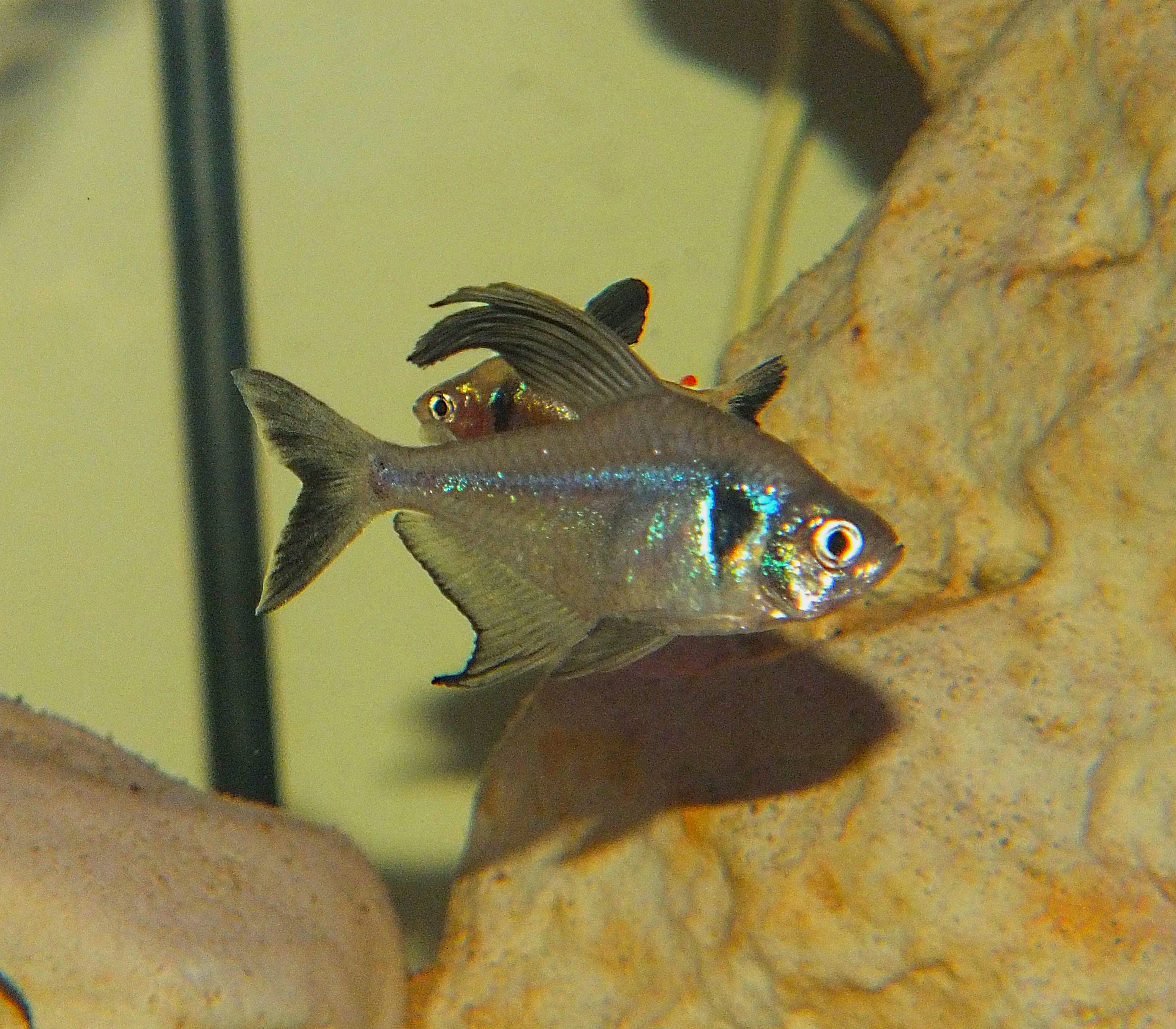
[A pair of Black Phantom Tetras. The male is in the foreground… the female in the background. The tiny adipose fin — at the top of the fish between the tail fin and the much larger dorsal fin — is clear in the males and red in the females. The males also have larger and more flamboyant dorsal fins. Most freshwater tropical fish of the Tetra group have the little adipose fins… but few have such distinctive indicators to distinguish the males from the females.]
.
Beyond separation, the river finally felt compassion for the (not so distant) fish and so put the fishing pole down forever and went home.
.
[A local largemouth bass. (Many years ago, I used to be an avid fisherman; I could even catch fish when others failed; I no longer fish whatsoever.)]
.
We must not merely inculcate children with mechanical, stale facts… but teach them much about compassion, empathy, and green energy.
.
[Sanddragon Dragonflies prefer to lay their eggs in streams and lakes with sandy bottoms; their larvae burrow into the sand. The abdomens of these dragonflies are of a unique shape.]
.
Nature doesn’t have its own sponsors — in the media — telling us to be less materialistic and to travel less (thereby using less fossil fuels); but big, materialistic corporations have plenty of promoters making earth-damaging practices seem “OK” and “normal.” We truly need to go beyond the advertising propaganda.
.
[Honey mushrooms along rocks on the river bank. Honey mushrooms, like most mushrooms, are just the visible fruiting body of the fungus. The main part of the organism is underground and is called the mycelium. Mycelium can spread for many miles… and this accounts for mushrooms being some of the world’s largest organisms. It is estimated that some honey mushrooms (that are very large, over many miles) are over 400 years old. (My photos, by the way, are all taken locally; I don’t travel any appreciable distance to take my photos. For instance, one walked to where these mushrooms were photographed.)]
.
No one – not anybody – can accurately define what true awareness is… because true awareness is too dynamic to merely be put into words and categorized.
.
[Local natural rock-work formation. (There is, by the way, something man-made in this photo. Can you see it?)]
.
A mind that does not depend on images throughout the day (to be aware) can sleep without crass and crude dreams occurring whatsoever.
.
[Leaf-footed Bug with its footing on a leaf. In these, the first three antenna segments are red or reddish brown; the forth is contrastingly yellow-orange or nearly white.]
.
True enlightenment — not all of that phony stuff — involves being beyond the “conditioned”; few ever exist in (and “as”) the timeless, the “unconditioned.”
.
[A female Cabbage Butterfly resting. They were introduced into the U.S. from Europe at around 1860. Well… we’re used to immigrants!]
.
The only true and profound revolution worth fighting for is a nonviolent, spiritual one.
.
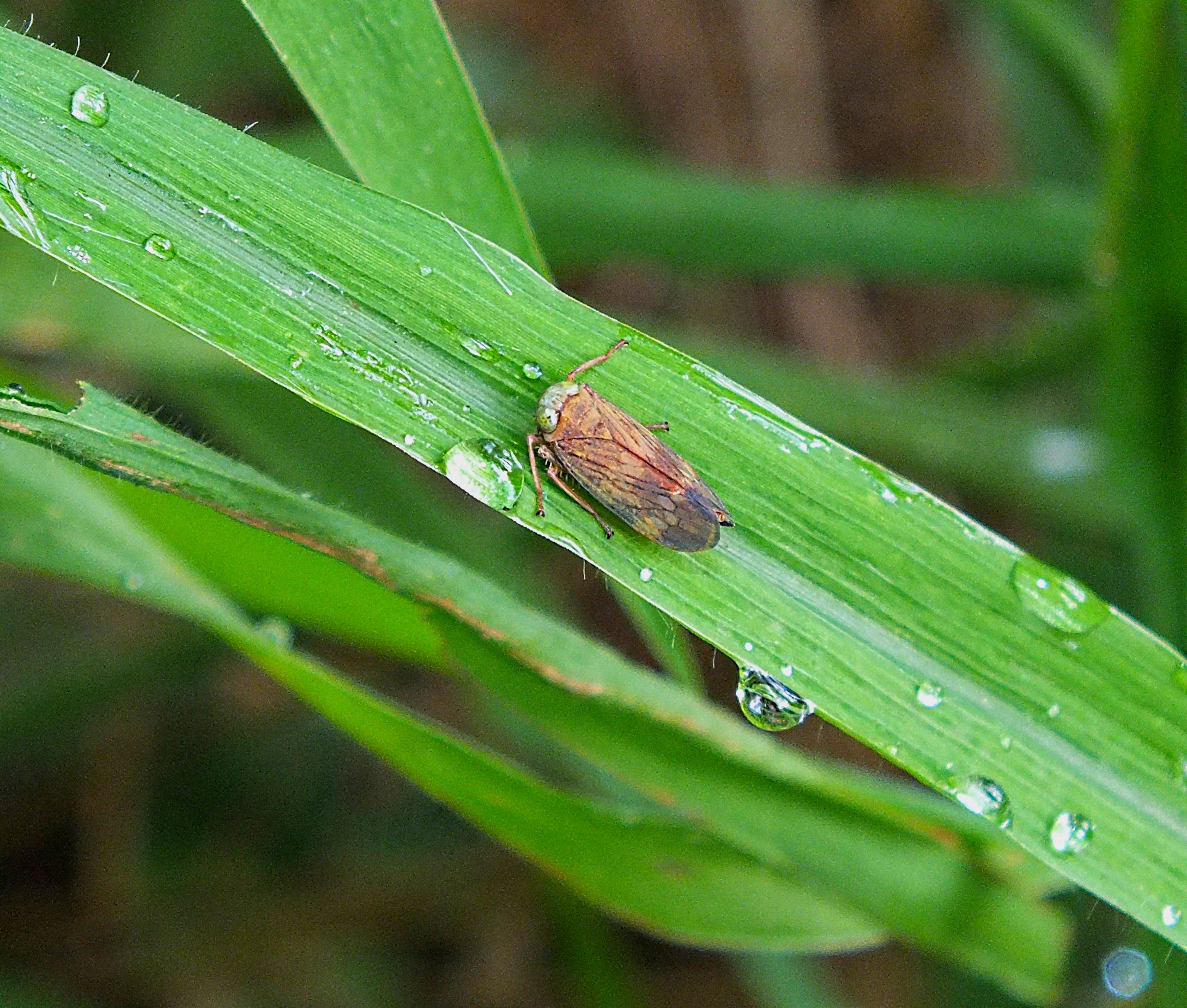
[A Meadow Spittlebug weathering out the rain. They are very small and feed on a variety of weedy plants. Adults readily jump or fly when disturbed.]
.
In a big way, everyone in the whole world is facing in one direction.
Can you turn around?
.
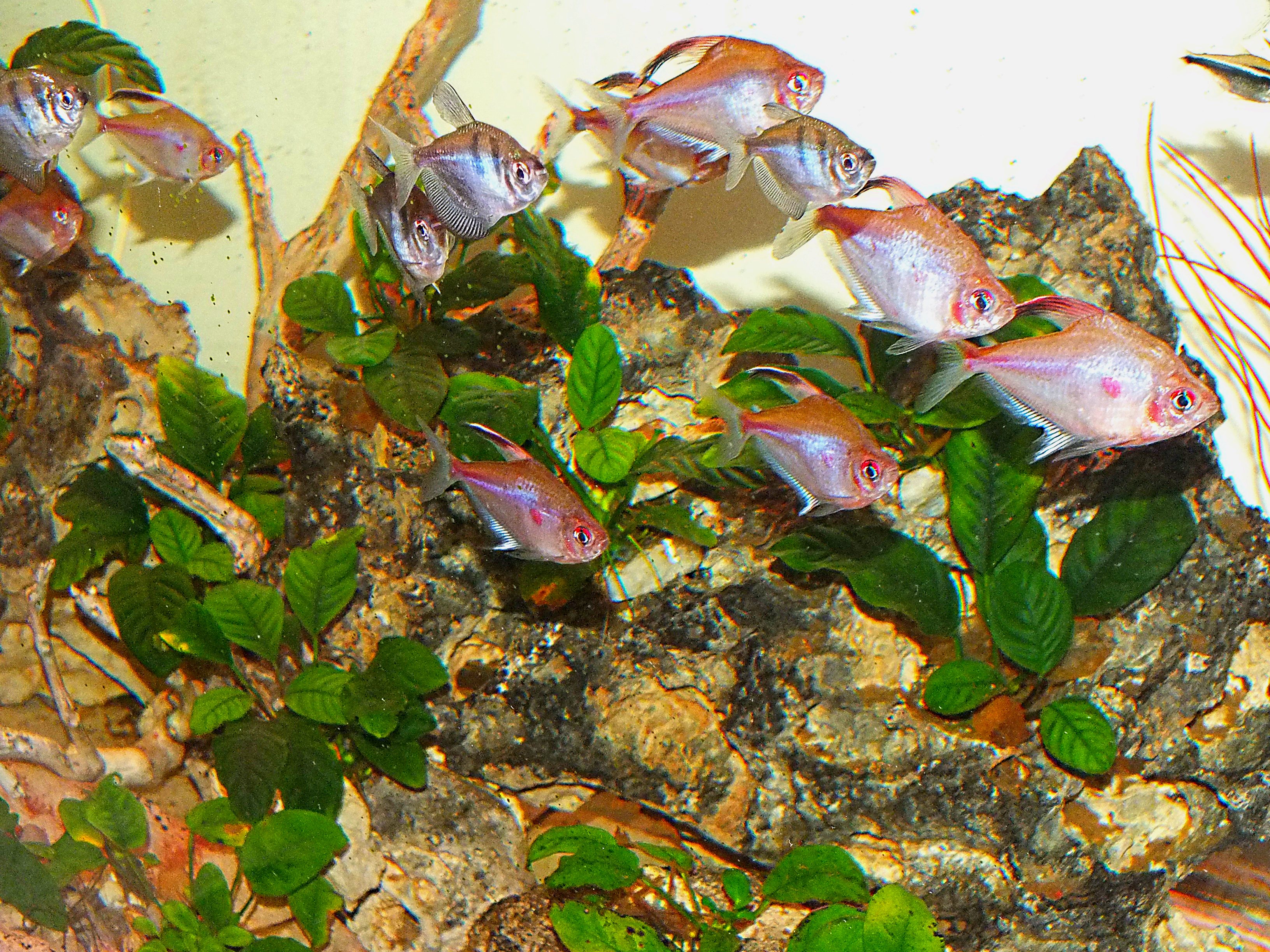
[These are Tetras in one of our aquariums… all facing in one direction. The ones with the red dot on their sides are called Bleeding Heart Tetras. The others are Black Tetras. The plants are a type that grow on rocks or logs and do not need soil; they are called Anubias coffeefolia.]
.
True insight is instantaneous (and timeless)… no time (or practice) is involved for it to finally come about.
.
[From earlier this year… these are the Stamen of a red Lily Flower. The Anther is the top part of the Stamen and contains the Pollen, the male reproductive cells. The Filament is lower down and holds the Anther.]
.
Lucid wisdom doesn’t take time… but sequential, symbolic thought does.
.
[This Acrea Moth larva, also called the Salt-marsh Caterpillar, is eating heavily and preparing for winter. These caterpillars are relatively abundant in the fall and over-winter as pupae in cocoons. The Salt-marsh Caterpillar feeds on herbaceous plants. There are small rain droplets upon this one, as it was beginning to rain when the photo was taken.]