
.
Friction and conflict — in the mind — begins with thinking the “me” as separate from (and in control of) the “other” thoughts.
.
[Black Ants on a very large Oak Tree.]

Busy as bees… Photo by Thomas Peace 2014
.
Friction and conflict — in the mind — begins with thinking the “me” as separate from (and in control of) the “other” thoughts.
.
[Black Ants on a very large Oak Tree.]
Busy as bees… Photo by Thomas Peace 2014
.
We won’t ever have a clean, pristine planet if, for instance, fracking is more important for creating jobs and oil than green energy is for world health.
.
[Brown Paper Wasp… Polistes metricus. They nourish themselves on nectar and pollen but also seek prey, consisting mostly of caterpillars, to nourish their colonies’ larvae (which reside in “paper-nests.”)]

Getting a little side-snack. Photo by Thomas Peace 2014
.
Real learning is not merely absorbing. Real learning involves multi-faceted wisdom, consideration, profound passion, penetrating perception, and transcending inner/outer conflict.
.
[Close to the edge…]

Close to the edge… down by the river… Photo by Thomas Peace 2014
.
We must not merely inculcate children with mechanical, stale facts… but teach them much about compassion, empathy, and green energy.
.
[Sanddragon Dragonflies prefer to lay their eggs in streams and lakes with sandy bottoms; their larvae burrow into the sand. The abdomens of these dragonflies are of a unique shape.]

Sanddragon Dragonfly cooling off. Photo by Thomas Peace 2014
.
No one – not anybody – can accurately define what true awareness is… because true awareness is too dynamic to merely be put into words and categorized.
.
[Local natural rock-work formation. (There is, by the way, something man-made in this photo. Can you see it?)]

Natural beauty! Photo by Thomas Peace 2014
.
A mind that merely clings from one experience to another in order to be happy is, unfortunately, a rather infantile, impoverished state of affairs; it need not be that way.
.
[Poison Ivy leaf cluster in the fall.]

Not a good thing to walk through! Photo by Thomas Peace 2014
.
Love often acts without self-motivation.
.
[Grapeleaf Skeletonizer Moths are interesting in that they are both diurnal and nocturnal. I’ve got the same attributes for sure!]

Night or Day… Day or Night! Photo by Thomas Peace 2014
.
Going far beyond depression – rarely, if ever, letting it flower – is an essential function of a stable, healthy, compassionate mind.
.
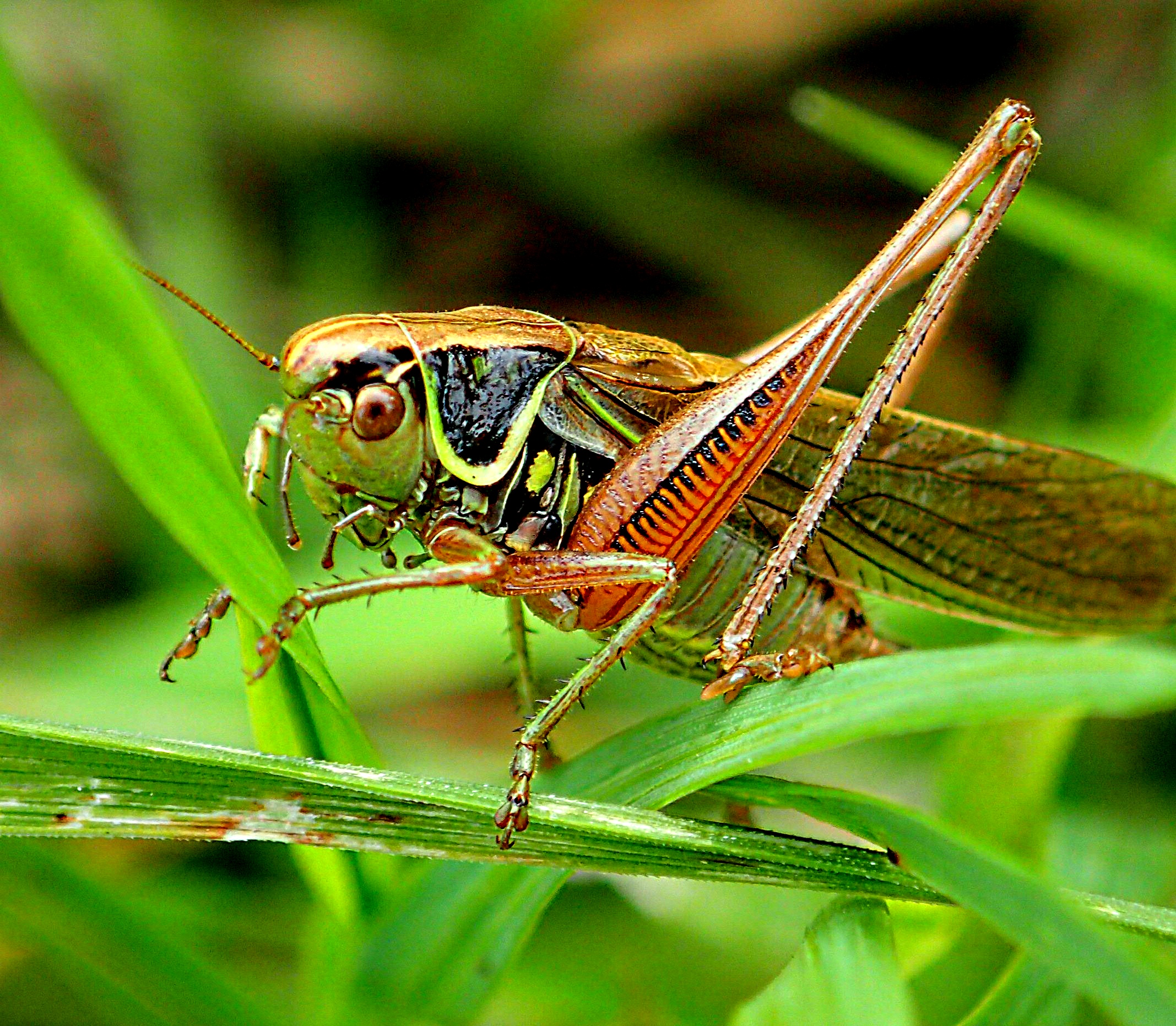
Together in nature. Photo by Thomas Peace 2014
.
The left arm can hate the right arm and think that it is separate… but it isn’t. Peace takes intelligence.
.
[A unique variety of Heal All Plant growing on a river bank.]

Heal All. Photo by Thomas Peace 2014
.
I’d much rather listen to a natural, babbling brook than the babbling from all the bourgeois, self-important, stale politicians and bureaucrats.
.
[Close-up of a natural, babbling brook that one was passionately listening to.]

Alone again… naturally… Photo by Thomas Peace 2014
.
The only true and profound revolution worth fighting for is a nonviolent, spiritual one.
.
[A Meadow Spittlebug weathering out the rain. They are very small and feed on a variety of weedy plants. Adults readily jump or fly when disturbed.]
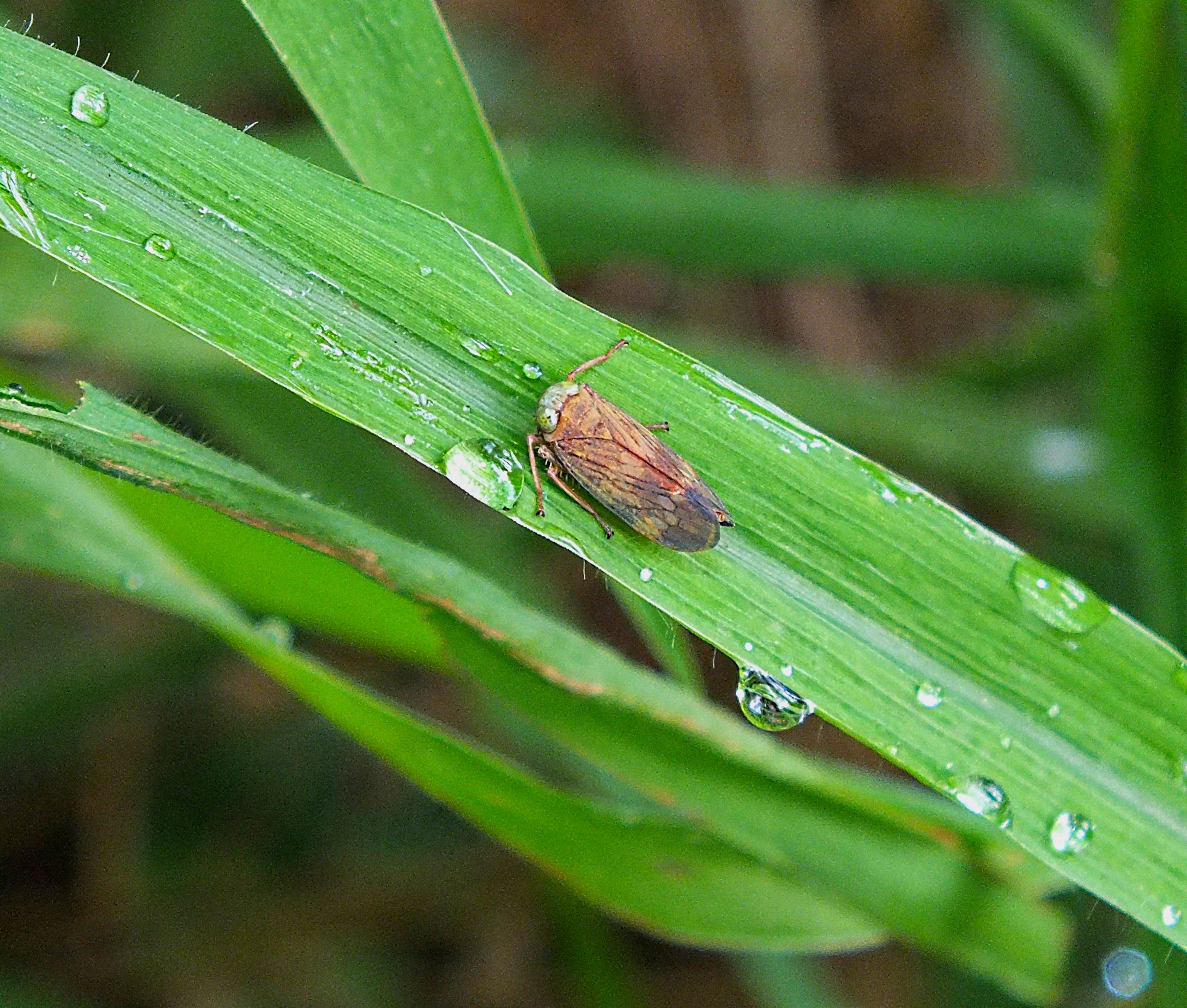
Raindrops keep fallin’ on my head… Photo by Thomas Peace 2014
.
Happiness isn’t a warm gun; happiness is a warm (compassionate) heart.
.
[Red Milkweed Beetles, I think, are among the most evolved and “intelligent” insects in our area. As I’ve mentioned before, sometimes when I approach Milkweed Plants these beetles will deliberately fly at a rapid rate into me, striking my face repeatedly to entice me to leave. Some panic and fly away. This one decided to “play dead.” It fell from a Milkweed leaf above. After I backed up and watched from a distance for a while… it subsequently straightened itself out and flew away. I laughed at its ruse!]
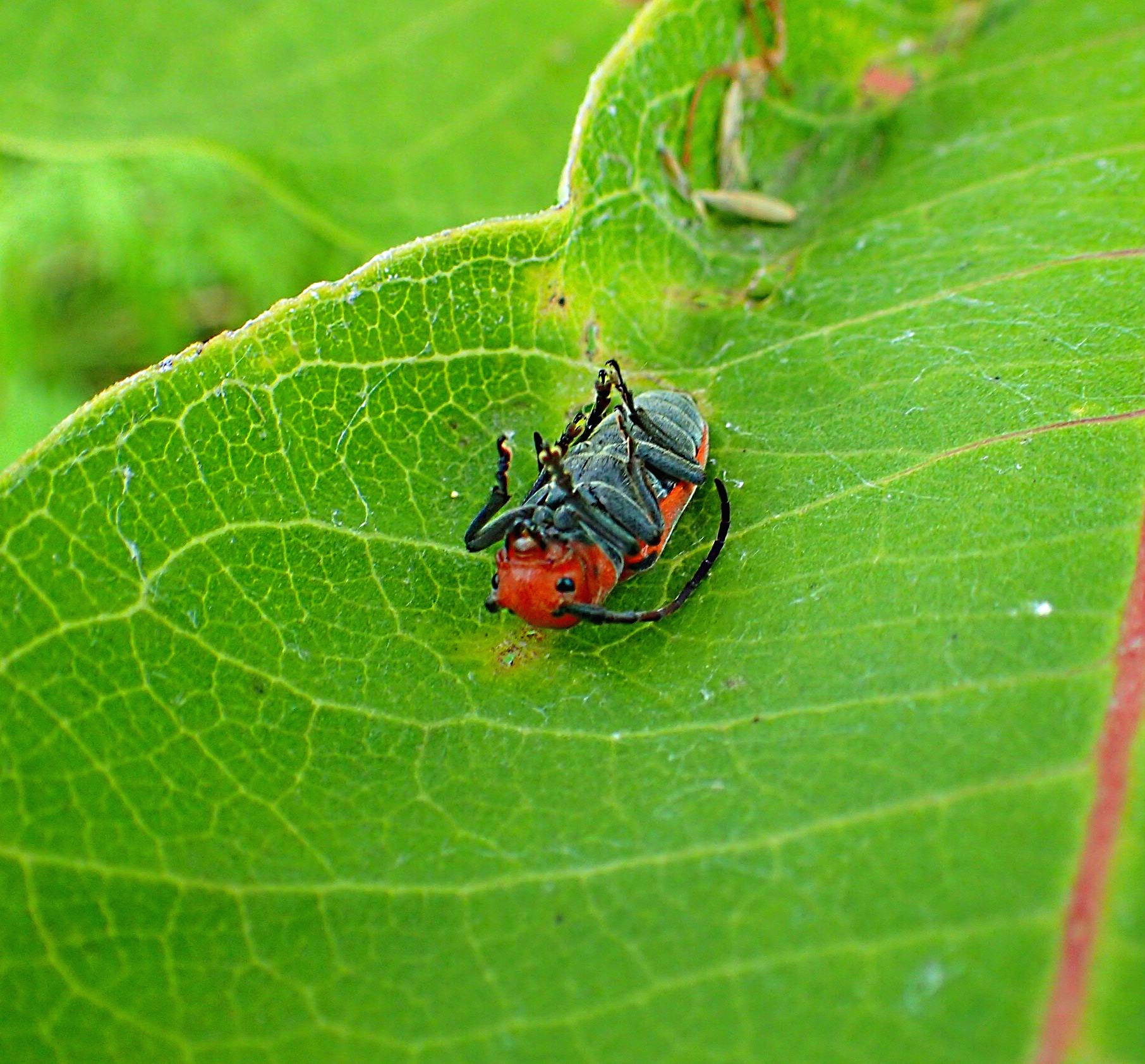
May he rest in peace! Photo by Thomas Peace 2014
.
In life, everything hangs in the balance… (even if you are unbalanced).
.
[This Steel-blue Cricket Hunter is not, currently, interested in hunting any crickets. Adults drink nectar. Larvae feed on crickets and grasshoppers.]
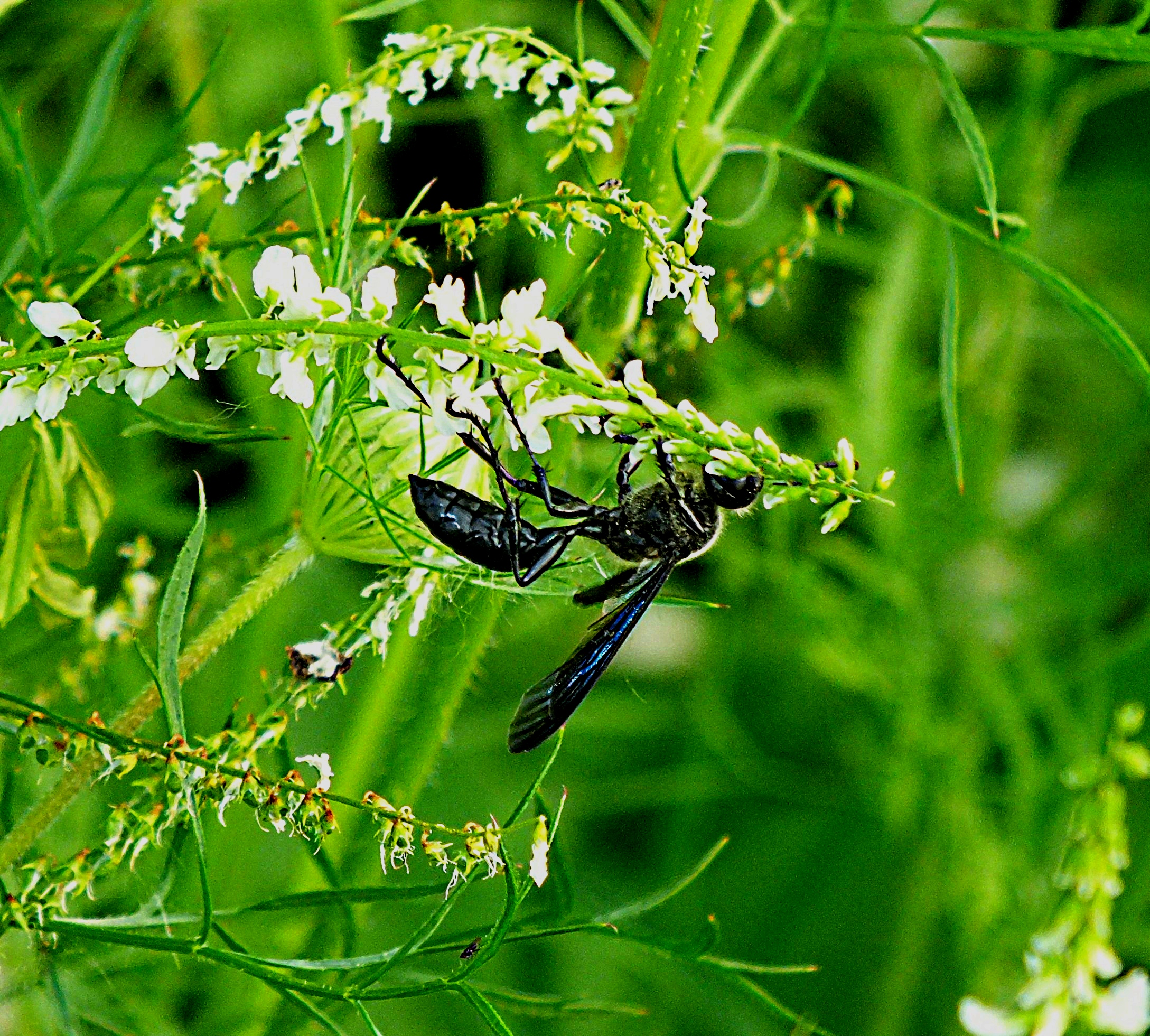
Hanging in the Balance. Photo by Thomas Peace 2014
.
Man may exploit nature, use nature, try to cultivate nature, neglect nature, and even allow nature to be destroyed; but, in the end, nature always prevails.
.
[Wild Grapes, using a tractor as an arbor.]
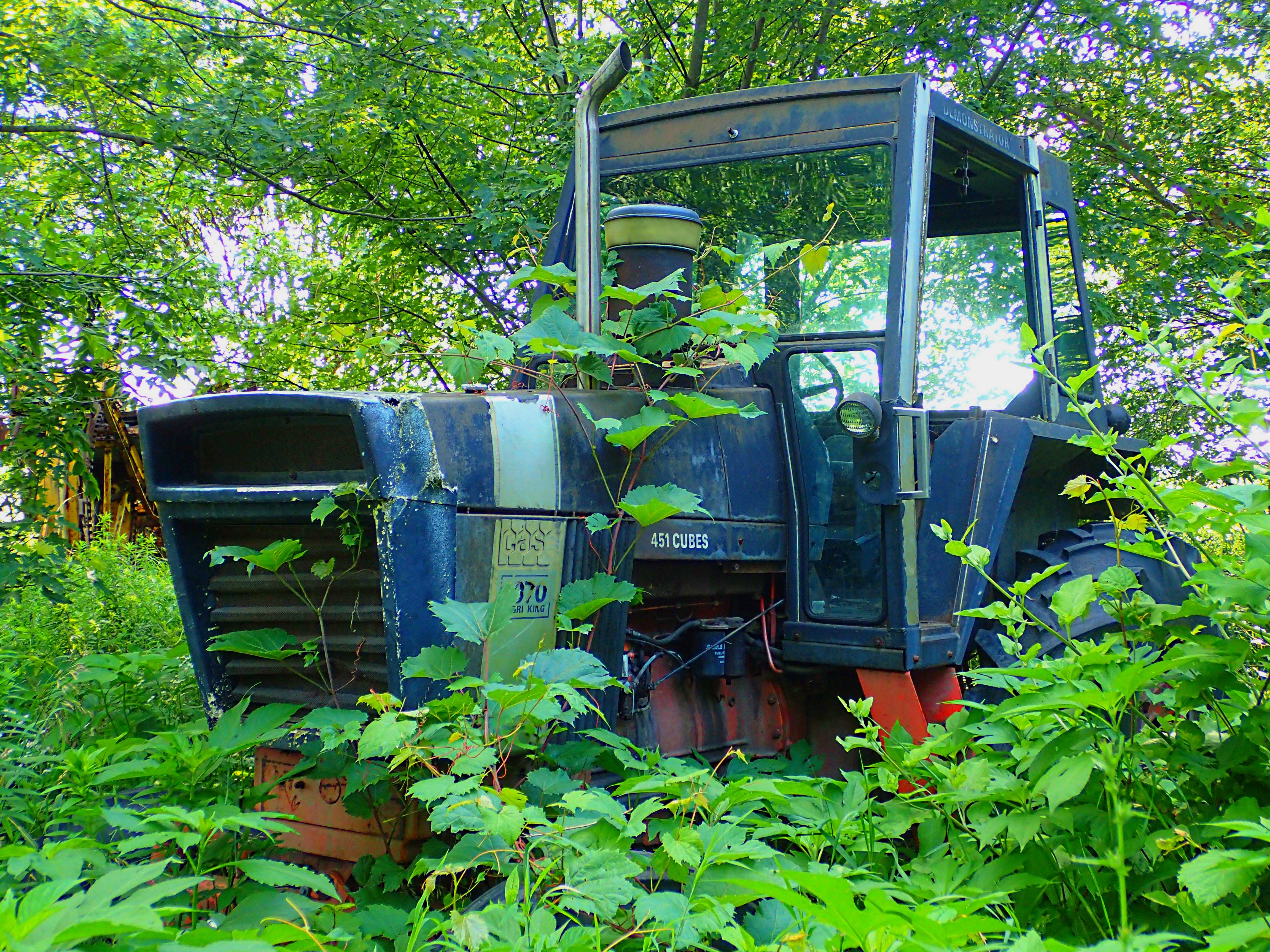
451 Cubes ain’t diddly. Photo by Thomas Peace 2014
.
Let the authoritarians keep their gobbledygook. Look and feel for yourself!
.
[Fall colors! That acorn may be the Oak Tree’s first move regarding continuing the game.]

Splendid fall colors. Photo by Thomas Peace 2014
.
Life is not dull or monotonous to a dynamic mind that inquires joyfully.
.
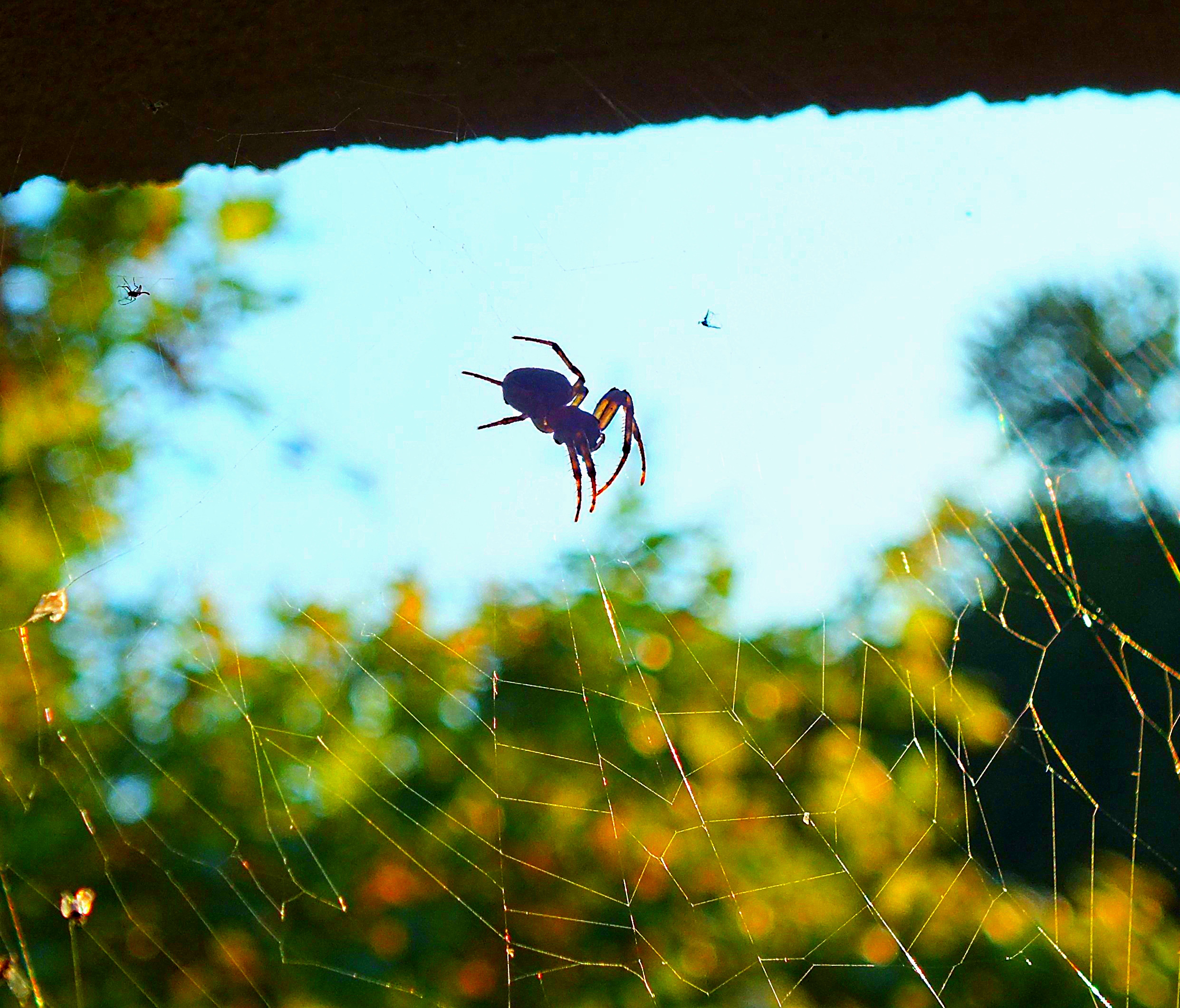
And frightened Miss Muffet away! Photo by Thomas Peace 2014
.
Have gratitude for the simple things in life… for they are usually the most precious.
.
[Morrow’s Honeysuckle, which now grows wild, is one of several honeysuckle shrubs that have been introduced from Eurasia. Morrow’s honeysuckle was imported in the 1800’s for use as an ornamental, for wildlife food and cover as well as for soil erosion control. This one is growing along the bank of a river… which helps against possible erosion.]
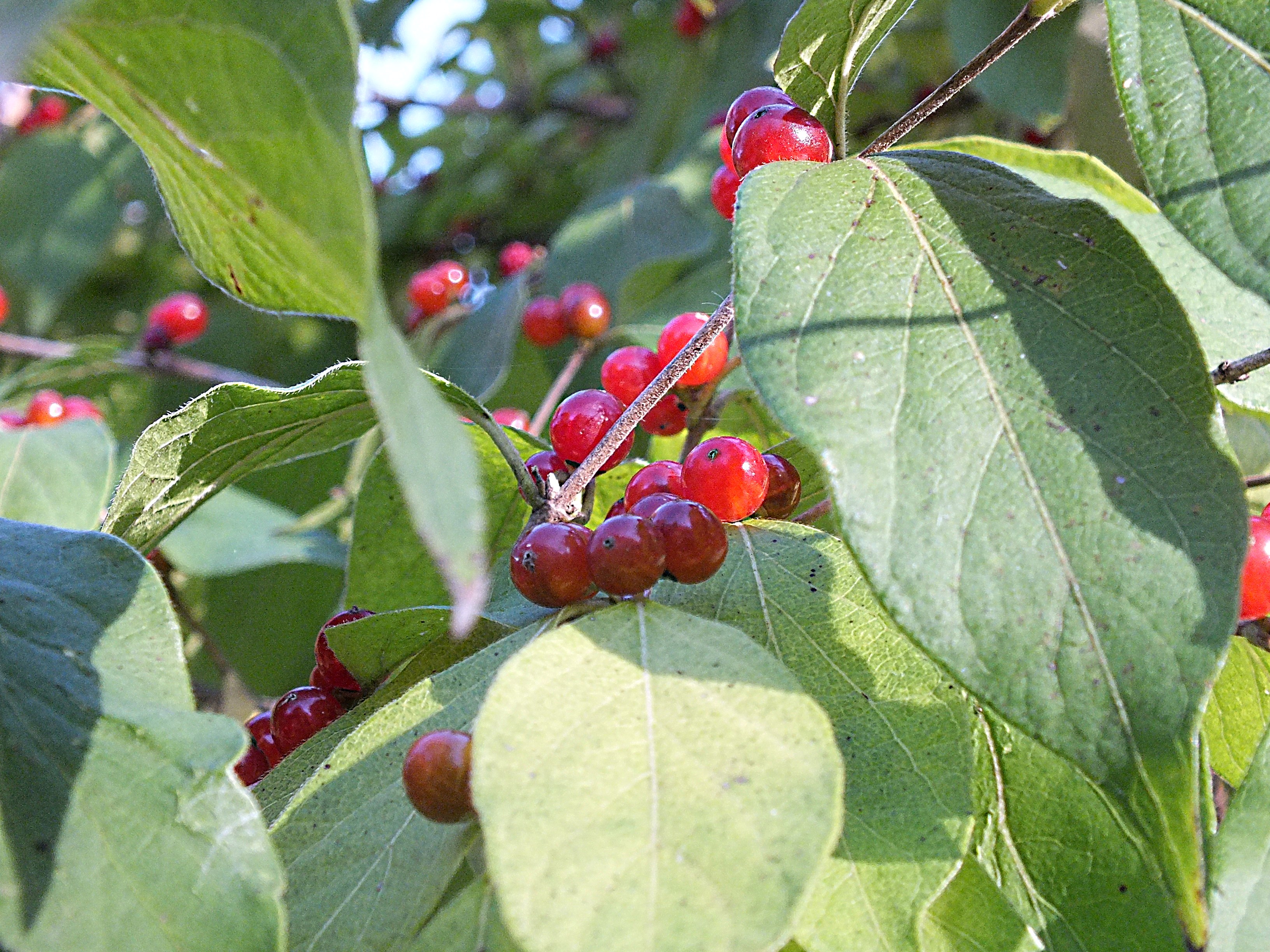
Red Gems. Photo by Thomas Peace 2014
.
The Zen all-meaning circle… it’s just a symbol, but whoever initially came up with it was attempting to convey something profound.
.
[A dried, fall wild vine…]

Zen all-meaning circle… Photo by Thomas Peace 2014
.
To wisely question may be more intelligent than having concrete certitude.
.
[Eyeing the camera (with a smile)…]
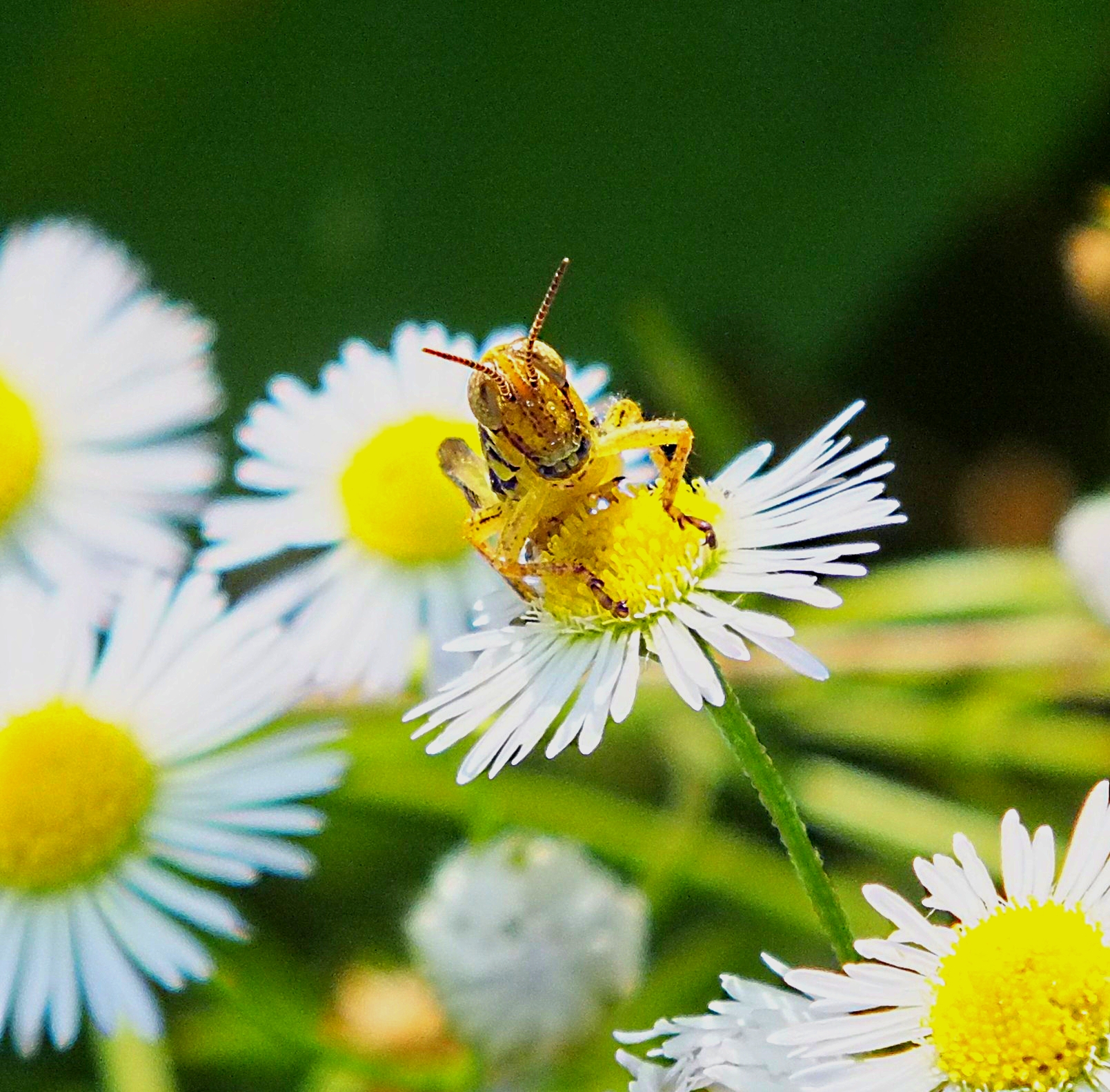
Captured by the Hopper’s lens. Photo by Thomas Peace 2014
.
You can buy stuff, but you can’t purchase integrity, compassion, and deep insight.
.
[Local Creek in Fall]

Local Creek Up Close. Photo by Thomas Peace 2014

Local Creek. Photo by Thomas Peace 2014
.
Life is far too precious to sweep it under the musty rug of indifference. Help save the planet and go green!
.
[One of the local Tarnished Bugs investigating a wildflower. Tarnished Bugs seek out nectar and pollen.]

At the edge of one’s habitat. Photo by Thomas Peace 2014
.
There is not just the human race; there are also the races of elephants, tigers, whales, wolves, etc.
.
[This is a pair of mating Dragonflies in the standard wheel position. The copulatory wheel position is the way most species of Dragonflies engage in together. Note that the males and females of this species are of different colors.]
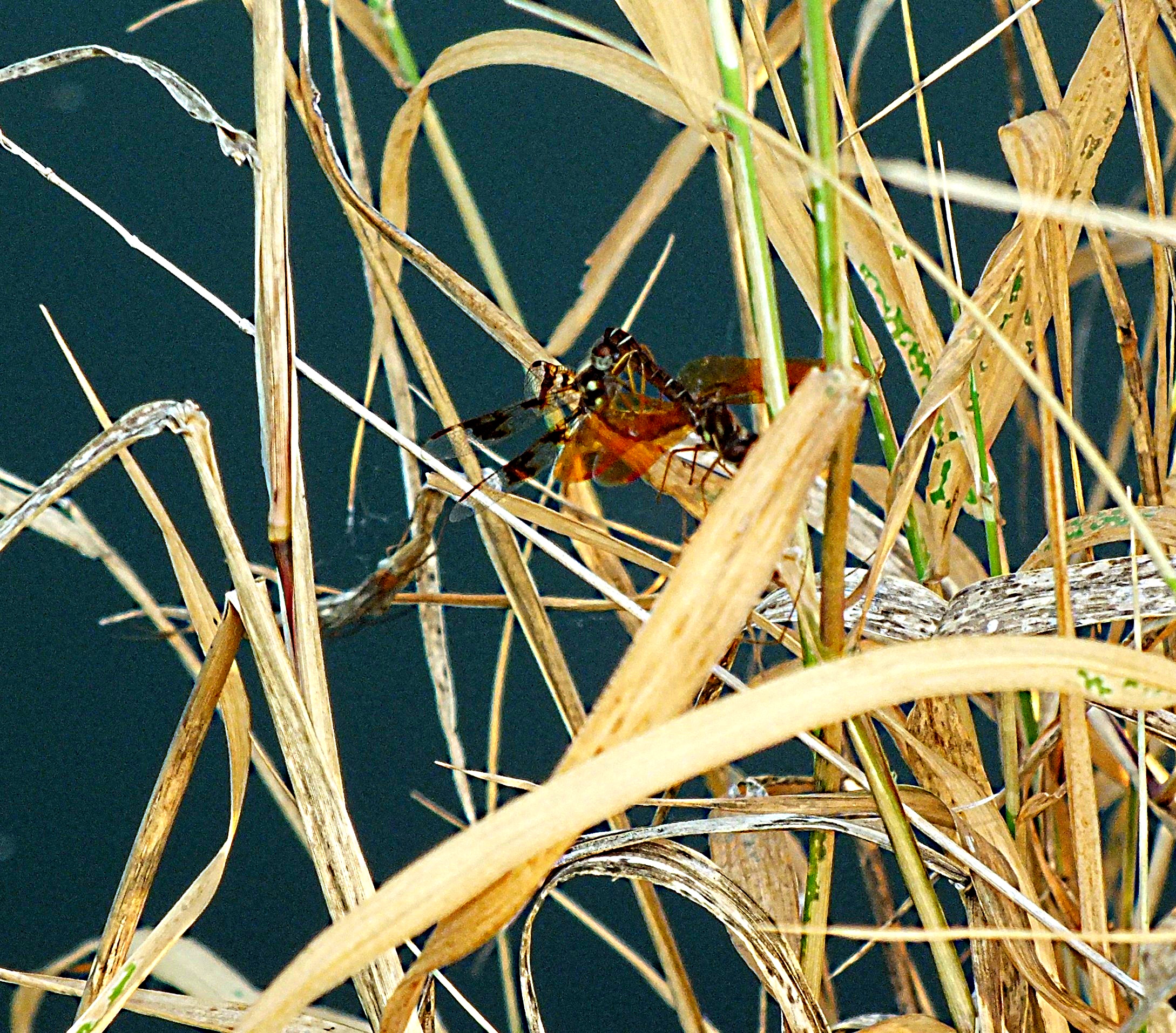
Dragonfly Mating Wheel. Photo by Thomas Peace 2014
.
Simple acts to help others, physical action to end suffering, and acting to help Mother Earth with actual deeds… is likely worth more than a million people praying.
.
[Close-up study of a Begonia (Scarlanda green-red) in the outdoor garden of a large hospital/medical center.]

Begonia (Scarlanda green-red) Photo by Thomas Peace 2014
.
A simple smile is often the kindling to intense and blazing compassion (that uplifts others).
.
[These are the Sporophytes of moss upon a moist, large log in the middle of the forest. Sporophytes begin to grow by cell division out of the top of the archegonium on the female gametophyte moss plant… at which point it’s a parasite on the gametophyte plant, although it may produce some of its own food by photosynthesis in the early stages of growth.
Sporophytes consist of three basic structures, a foot, which anchors it to the gametophyte and helps to transfer water and nutrients from the gametophyte, a long erect stalk called a seta, and a pod-like capsule at the top-end where reproductive spores are produced. There is a Daddy-Long-Legs at the very bottom left of the photo, which can be seen partially; it is likely waiting for the many insects that crawl across moss. The larger leaves are not a different species of moss. They are the same species… and grow wider when more moisture is present in their immediate area. When moss gets flooded, it changes its shape, getting wider and more broad leaves.]
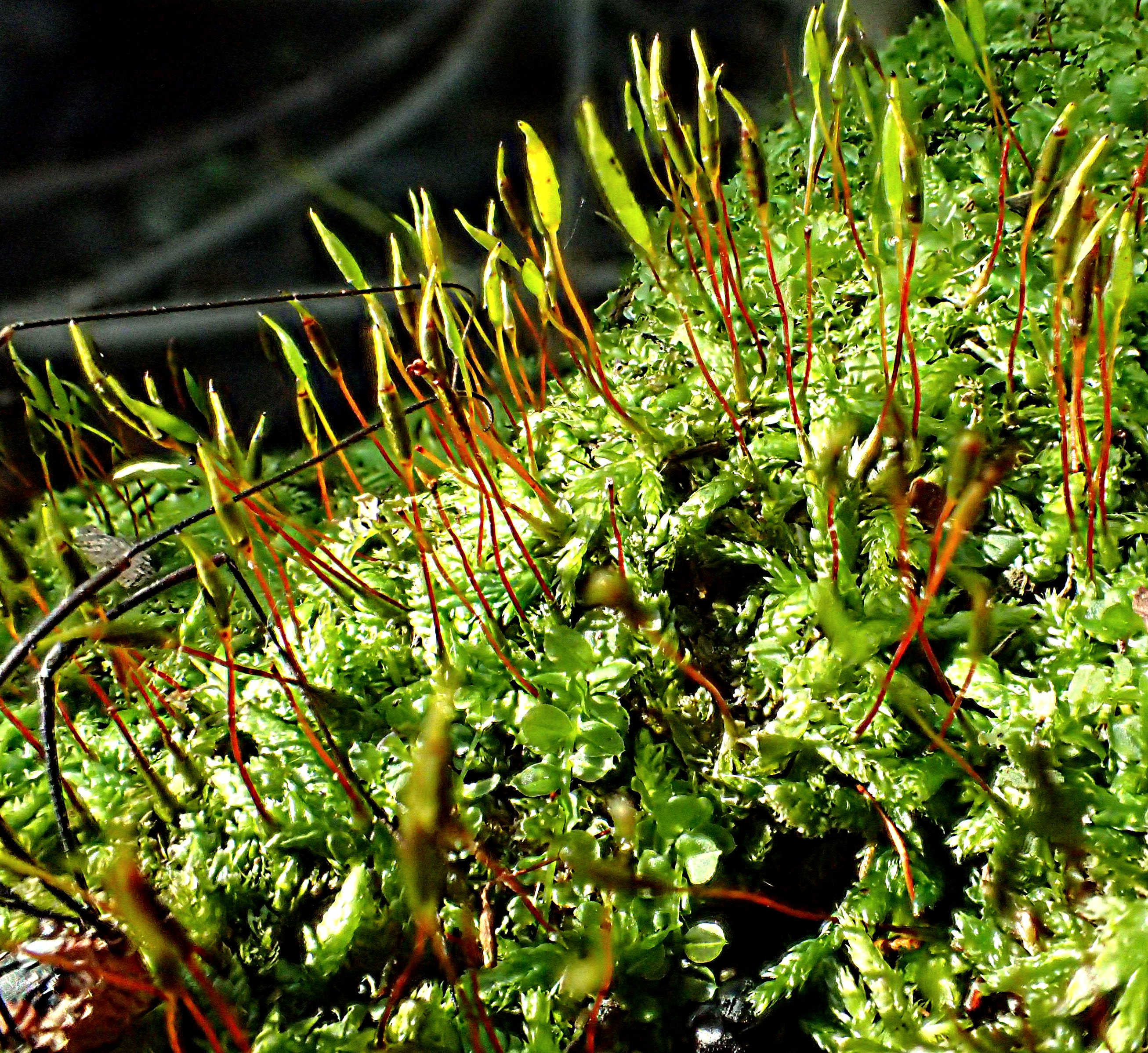
Sporophytes galore! Photo by Thomas Peace 2014
.
Thought is a wonderful tool, but if that’s all you exist as… you are immured in the confines of your own, limited prison.
.
[This is the central part of a garden flower. The golden Stamen are holding up well to the recent cold weather. Stamen are the pollen filaments of flowers.]

Golden Stamen. Photo by Thomas Peace 2014
.
Vast freedom occurs beyond limited narrow-mindedness.
.
[This Grasshopper is placidly resting on a flowering Thistle Plant. Grasshoppers do not generally feed on Thistle Plants, though they may devour the flower sections.]
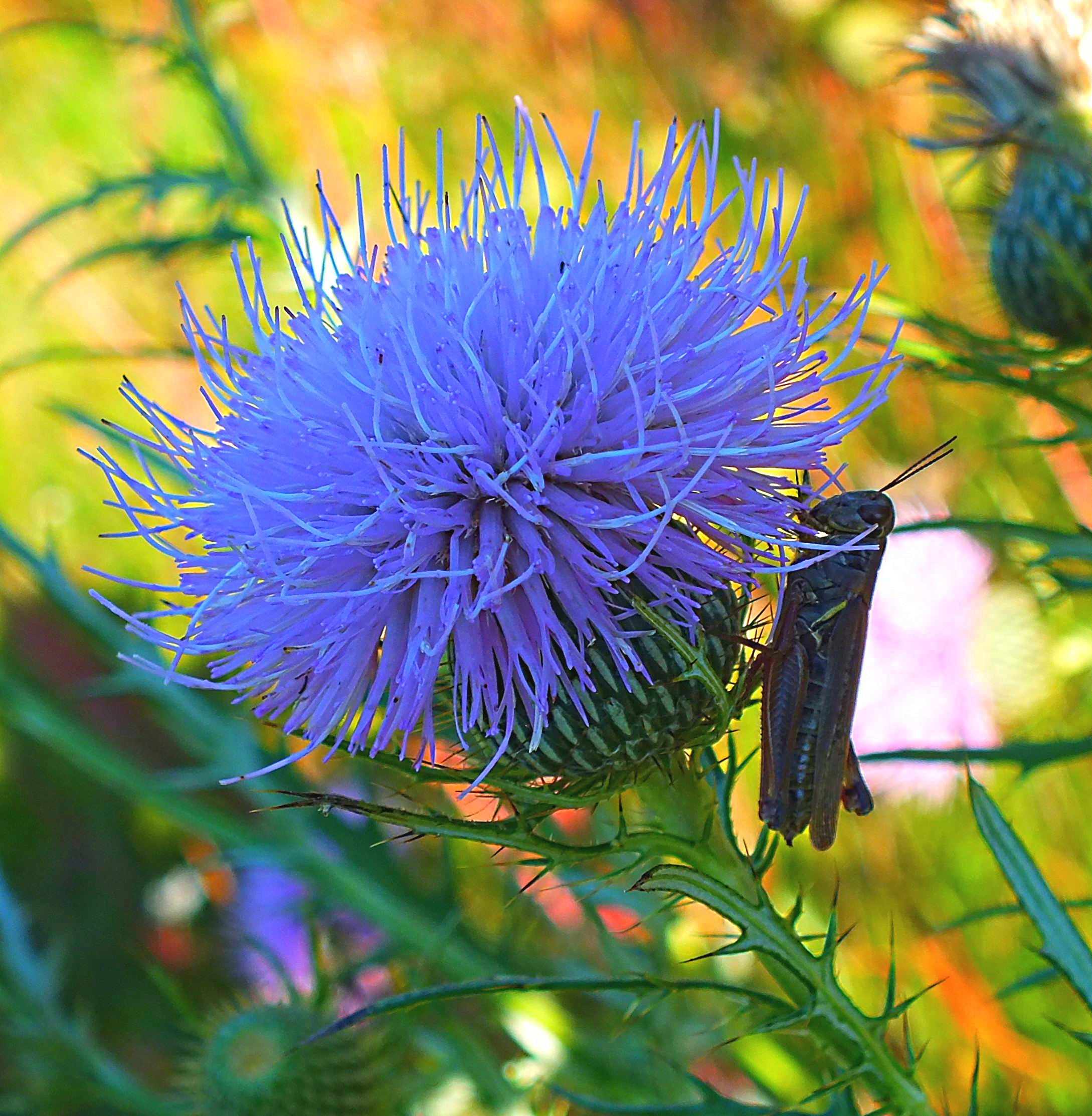
A beautiful place to be! Grasshopper on Thistle Plant. Photo by Thomas Peace 2014
.
Warm affection used for ulterior means is often cold and calculating; beware of false, mechanical reactions, including your own (such as in selfish self-adoration) !
.
[Some Daddy-Long-Legs – or Harvestmen – eat vegetable matter and mushrooms, but some are carnivorous. This Havestman (with dull, dark, leaden eyes) didn’t need to spin a vast, clever web of lies to catch his gullible Fly victim. Daddy-Long-Legs are harmless to humans, but are bad news for germ-carrying (egotistical) flies. Havestmen are not true spiders, but they’re close enough for the inclusion of the following poem:
from Mary Howitt (1799-1888):
“Will you step into my parlor?” said the spider to the fly;
“’Tis the prettiest little parlor that ever you did spy.
The way into my parlor is up a winding stair,
And I have many pretty things to show when you are there.”
“O no, no,” said the little fly, “to ask me is in vain,
For who goes up your winding stair can ne’er come down again.”
“I’m sure you must be weary, dear, with soaring up so high;
Will you rest upon my little bed?” said the spider to the fly.
“There are pretty curtains drawn around, the sheets are fine and thin,
And if you like to rest awhile, I’ll snugly tuck you in.”
“O no, no,” said the little fly, “for I’ve often heard it said,
They never, never wake again, who sleep upon your bed.”
Said the cunning spider to the fly, “Dear friend, what shall I do,
To prove the warm affection I’ve always felt for you?
I have within my pantry good store of all that’s nice;
I’m sure you’re very welcome; will you please to take a slice?”
“O no, no,” said the little fly, “kind sir, that cannot be;
I’ve heard what’s in your pantry, and I do not wish to see.”
“Sweet creature!” said the spider, “You’re witty and you’re wise!
How handsome are your gauzy wings, how brilliant are your eyes!
I have a little looking-glass upon my parlor shelf,
If you’ll step in one moment, dear, you shall behold yourself.”
“I thank you, gentle sir,” she said, “for what you’re pleased to say,
And bidding you good-morning now, I’ll call another day.”
The spider turned him round about, and went into his den,
For well he knew the silly fly would soon be back again:
So he wove a subtle web, in a little corner sly,
And set his table ready to dine upon the fly.
Then he came out to his door again, and merrily did sing
“Come hither, hither, pretty fly, with the pearl and silver wing:
Your robes are green and purple; there’s a crest upon your head;
Your eyes are like the diamond bright, but mine are dull as lead.”
Alas, alas! how very soon this silly little fly,
Hearing his wily flattering words, came slowly flitting by.
With buzzing wings she hung aloft, then near and nearer drew
Thinking only of her brilliant eyes, and green and purple hue;
Thinking only of her crested head — poor foolish thing! At last,
Up jumped the cunning spider, and fiercely held her fast.
He dragged her up his winding stair, into his dismal den,
Within his little parlor; but she ne’er came out again!
And now, dear little children, who may this story read,
To idle, silly, flattering words, I pray you ne’er give heed;
Unto an evil counselor close heart, and ear, and eye,
And take a lesson from this tale of the Spider and the Fly. ]

Gullible Fly! (1) Photo by Thomas Peace 2014

Gullible Fly! (2) Photo by Thomas Peace 2014
.
The wall that separates you from all of life’s creatures… is (psychologically) composed of what is projected within (and “as”) you.
.
[This Wolf Spider (Lycosas gulosa) is clinging to the side of a rock wall. It is tending some lines for potential prey. This particular species of Wolf Spider lives in both the United States and Canada.]
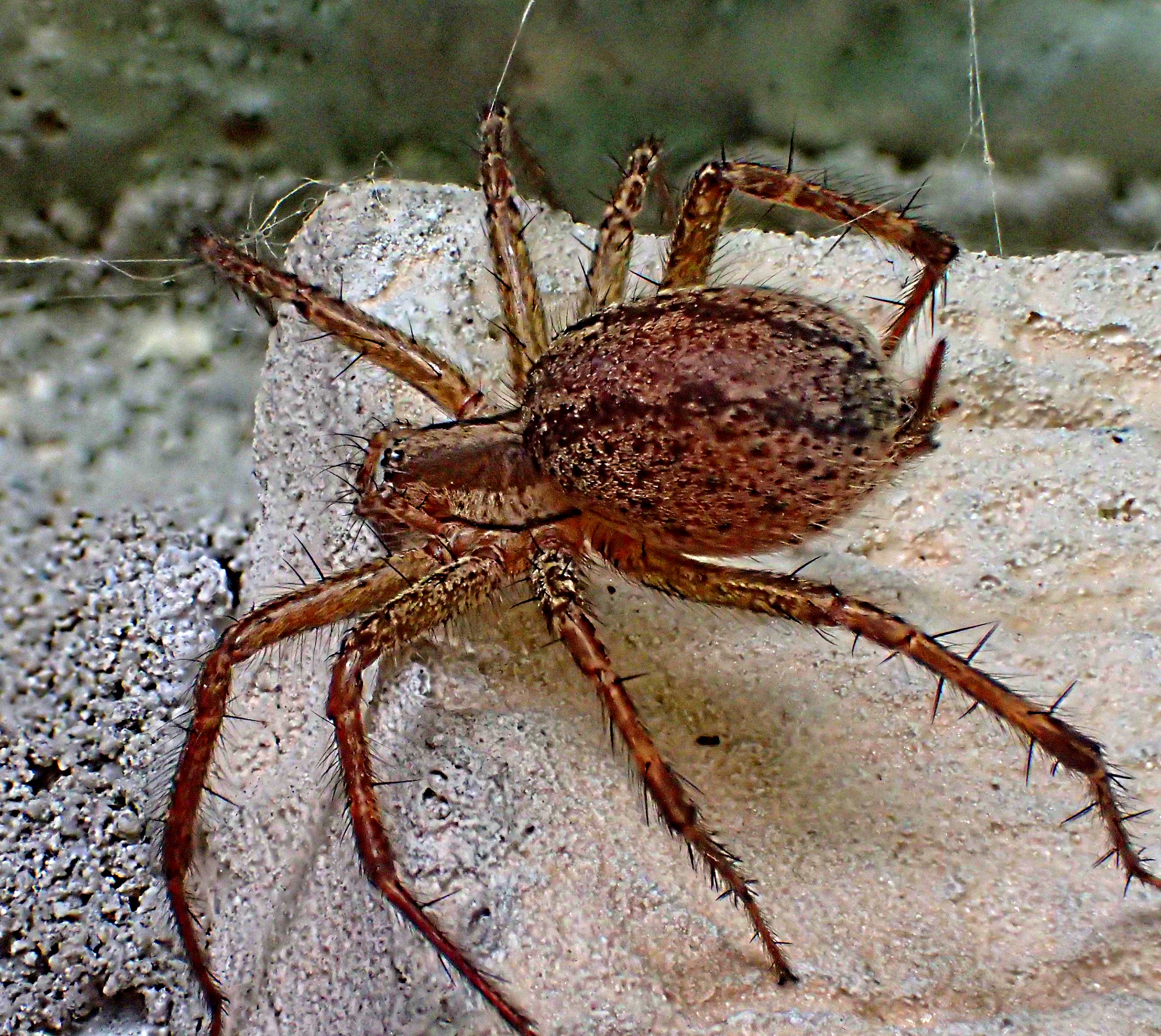
Pink Floyd… The Wall. Photo by Thomas Peace 2014
.
To be sane in an insane world isn’t easy.
.
[This small Ant may be biting the leaf to extract juices. Below the Ant is a small, bite-sized hole.]

Walking on a vertical leaf isn’t easy. Photo by Thomas Peace 2014
.
A small ego and a Big Heart is better than a Big Ego and a small heart.
.
[A yellow Katydid. This is a small katydid with a really Large Antenna.]

A Katydid with what may be a large Broadband Antenna. Photo by Thomas Peace 2014
.
You can’t think outside the box. Thinking is the box!
.
[This very unique and unusual wild plant is the Seed Box Plant (Ludwigia alternifolia). The square, box-like seed-pods of the Seed Box Plant are – indeed – different than most!]

Little, wrapped presents. (Seed Box Plant) Photo by Thomas Peace 2014
.
Real beauty is much deeper than what you can see!
.
[Many Wolf Spiders hunt during the day. Wolf Spiders have excellent vision and a highly developed sense of touch. Male Wolf Spiders wave and motion with their large, often hairy pedipalps in a rhythmic pattern as they approach suitable female mates.
Additional note: I will be posting more spiders (and similar creatures) in the Halloween month of October. It is neat that they are part of an old Halloween tradition (that is fun for kids). However, it is unfortunate that many children grow up associating spiders with “being frightened” and as “terrible creatures to be horrified of.” As the late, superb naturalist, Steve Irwin often propounded, spiders and snakes can indeed be seen to be majestic, marvelous animals, truly beautiful in their own ways. We must, as Steve Irwin so graciously suggested before his untimely passing, be far better caretakers of Mother Earth.]
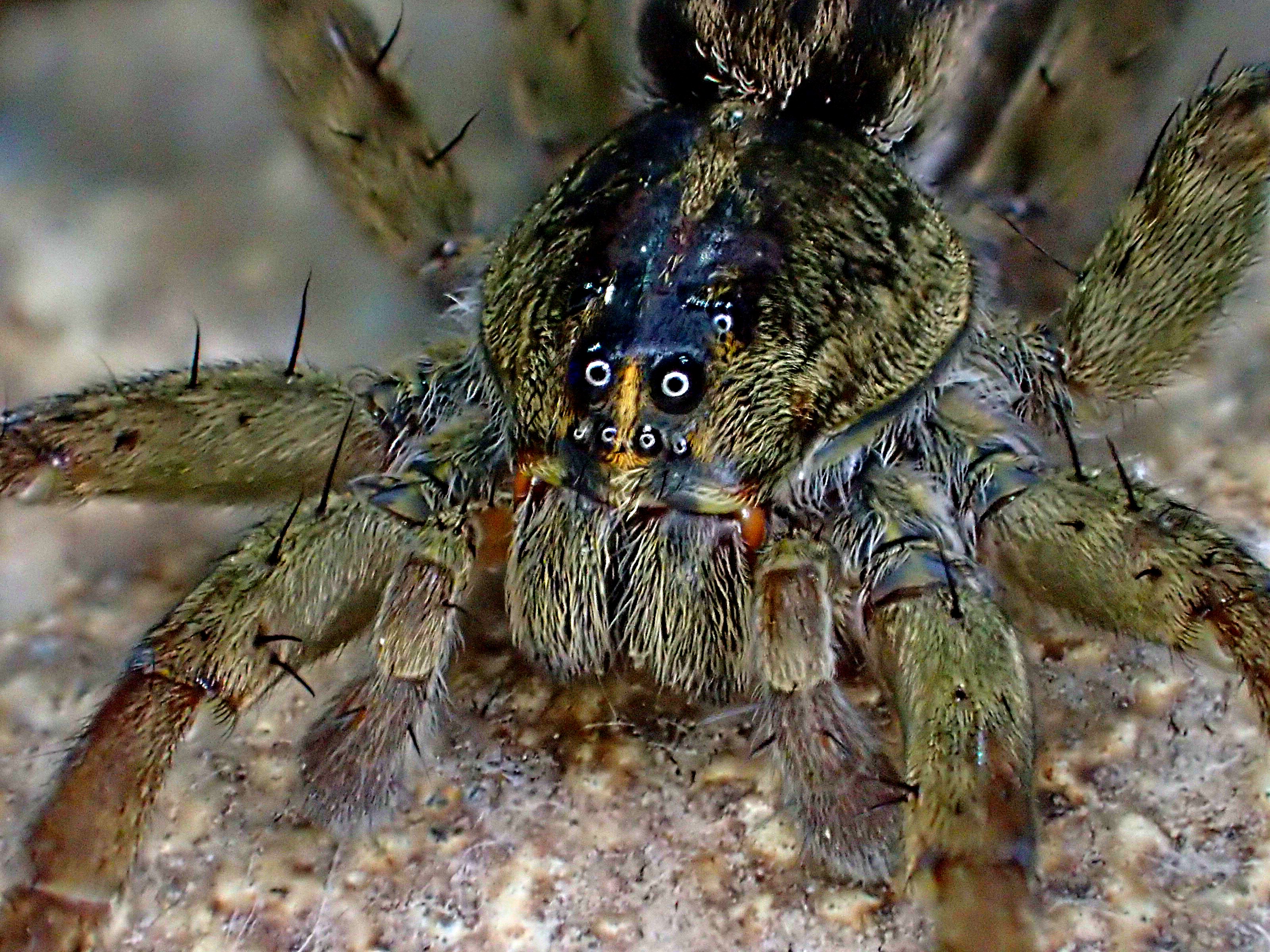
The better to see you with, my dear! Photo by Thomas Peace 2014
.
Don’t just pick flowers or buy cut flowers… enjoy wildflowers or grow flowers!
.
[These are wildflowers. The white wildflowers are Robin’s Plantain. The purplish wildflowers are American Vetch. The American Vetch is less common than the Robin’s Plantain. (There is an insect in this photograph.)]
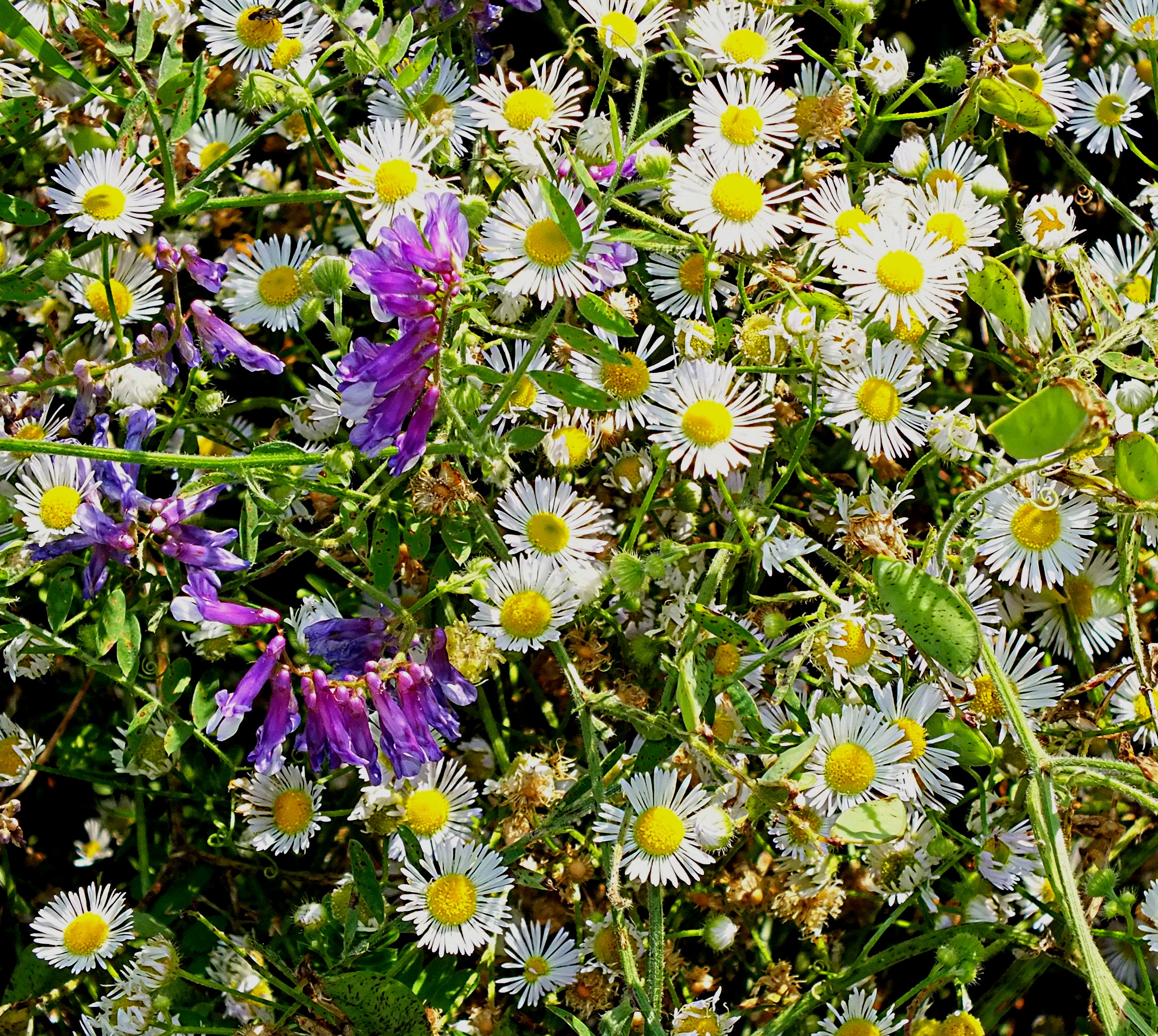
American Vetch & Robin’s Plantain. Photo by Thomas Peace 2014
.
Fear — unless there is an immediate physical danger in the environment — is often based on patterns and images in (and “as”) time that are projected as “what might be.”
.
[Nursery Web Spiders may sit quietly for hours, legs spread out on vegetation, a large rock, or on a boat dock… or they may actively hunt in vegetation. Nursery Web Spiders have excellent vision.
Additional Note: I will be posting more spiders (and similar creatures) in the Halloween month of October. It is neat that they are part of an old Halloween tradition (that is fun for kids). However, it is unfortunate that many children grow up associating spiders with “being frightened” and as “terrible creatures to be horrified of.” As the late, superb naturalist, Steve Irwin often propounded, spiders and snakes can indeed be seen to be majestic, marvelous animals, truly beautiful in their own ways. We must, as Steve Irwin so graciously suggested before his untimely passing, be far better caretakers of Mother Earth.]

Rock-a-bye Baby. Photo by Thomas Peace 2014
.
Don’t function like a cold, callous machine; operate with a warm, living heart.
.
[These are ants collecting pollen on wild Queen Ann’s Lace flowers. Pollen is great protein for some species of ants.]

Ant on Queen Ann’s Lace (1). Photo by Thomas Peace 2014

Ant on Queen Ann’s Lace (2). Photo by Thomas Peace 2014
.
Constant desire is the crutch of a very broken and injured mind.
.
[Buffalo Treehoppers are aptly named for their hornlike projections, which suggest a buffalo’s horns. Female Buffalo Treehoppers make crescent-shaped slits in young plant stems to lay their eggs. The larvae are a pale green and are covered with short spines.]
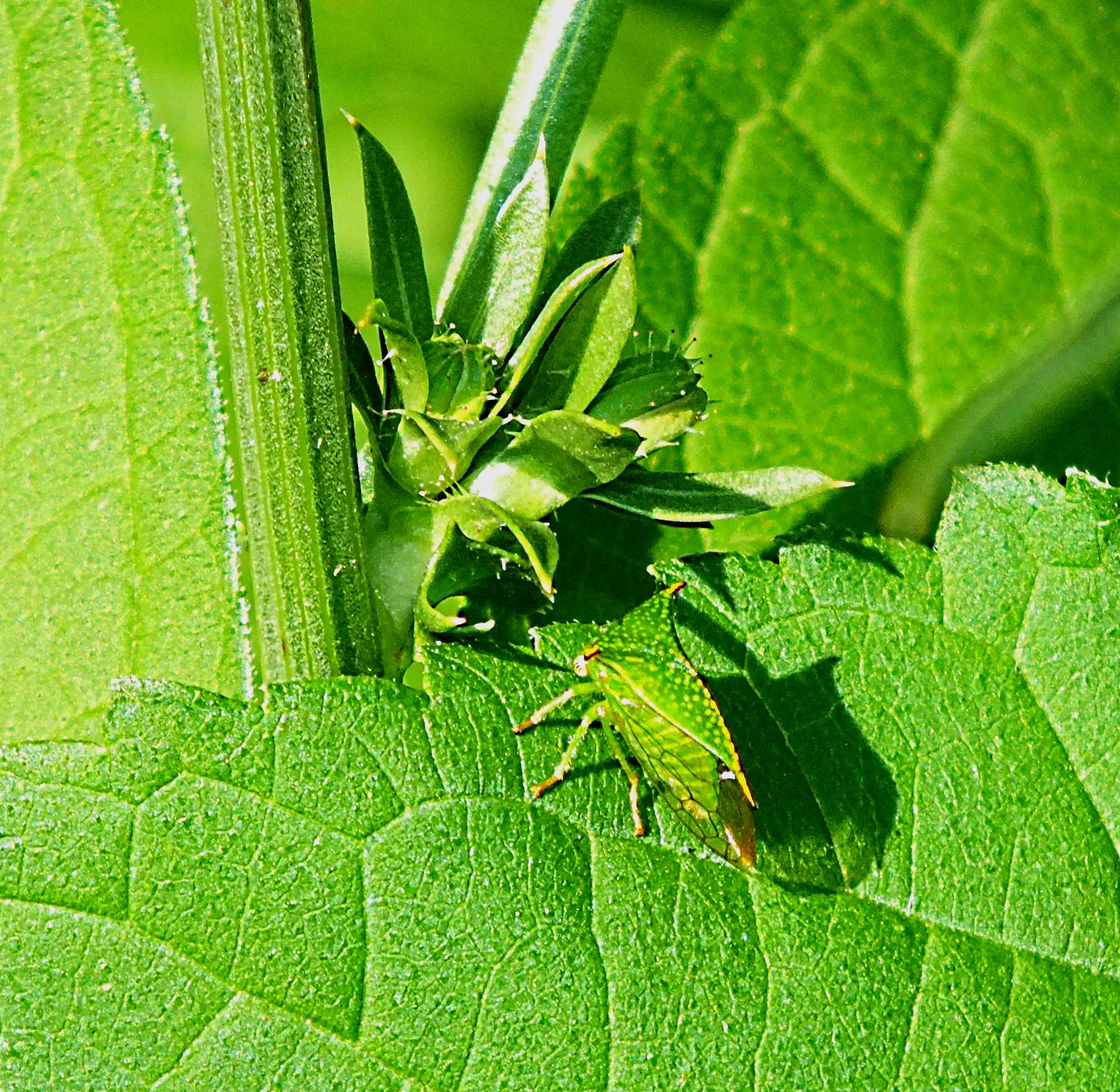
Buffalo Treehopper photo, from successful buffalo hunting! Photo by Thomas Peace 2014
.
Watch it… sometimes your hobby becomes so intense that it begins to pursue you!
.
[I went out to the backyard (to the bird-feeder) to get a few photos of birds, for a change of pace from all of those insects that I am perpetually pursuing. The following is what came to the bird-feeder. Sorry about that! I’ve been chasing insects for so long, I think they may be following me home! It’s, by the way, a Painted Lady butterfly. Painted Lady butterflies do not eat bird seed… but they do like to be the center of attention! 😉 ]
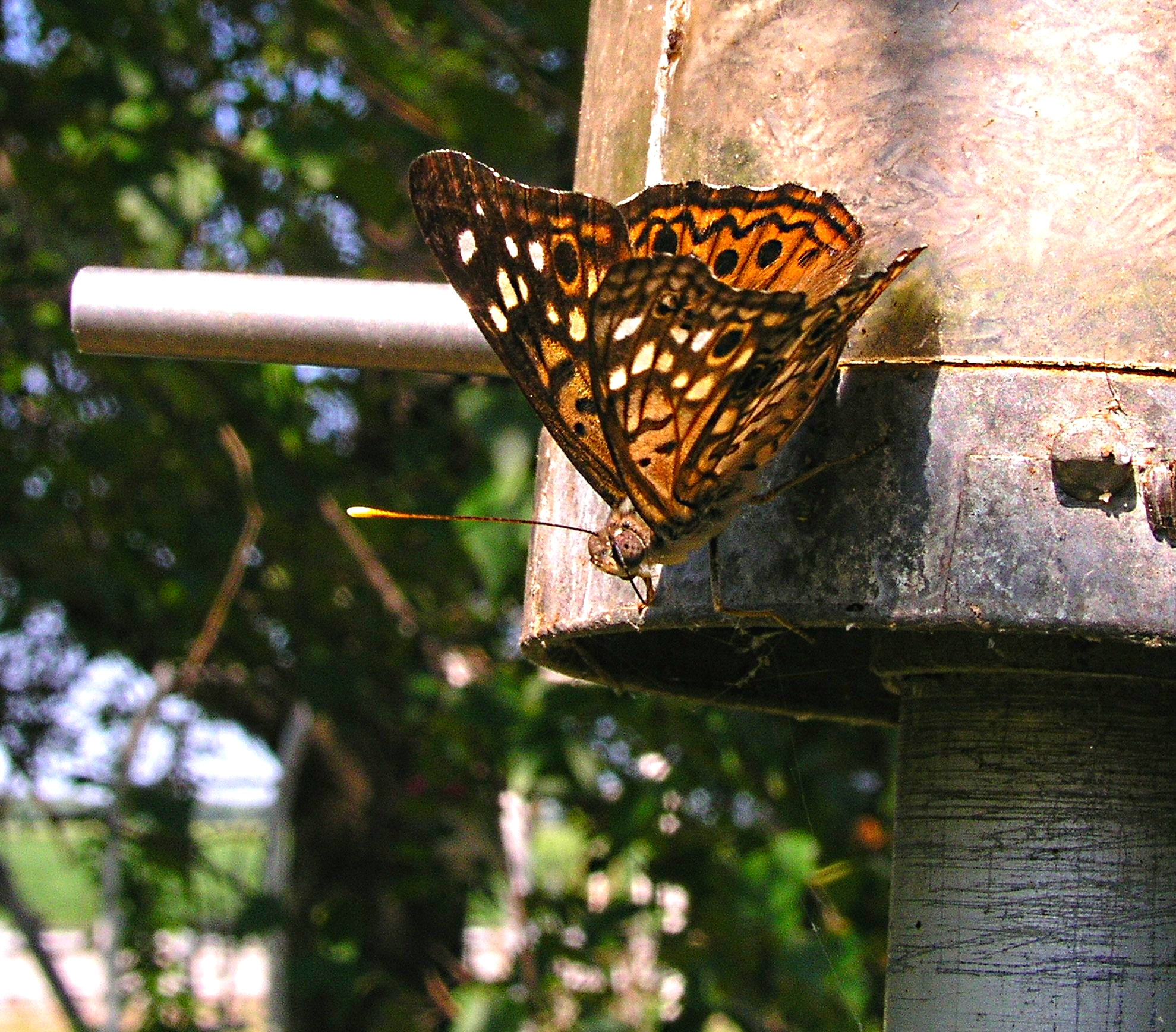
Just another egotist! (Painted Lady butterfly) Photo by Thomas Peace 2014
.
Nature has priceless and very precious gifts.
.
[A small Praying Mantis on a Red Lily. This Praying Mantis was around an inch and a half long. It is, I think, a male Carolina Praying Mantis. The Carolina Praying Mantis is not seen very often in our rural Illinois area. It was very aware of my presence and didn’t stick around long.]
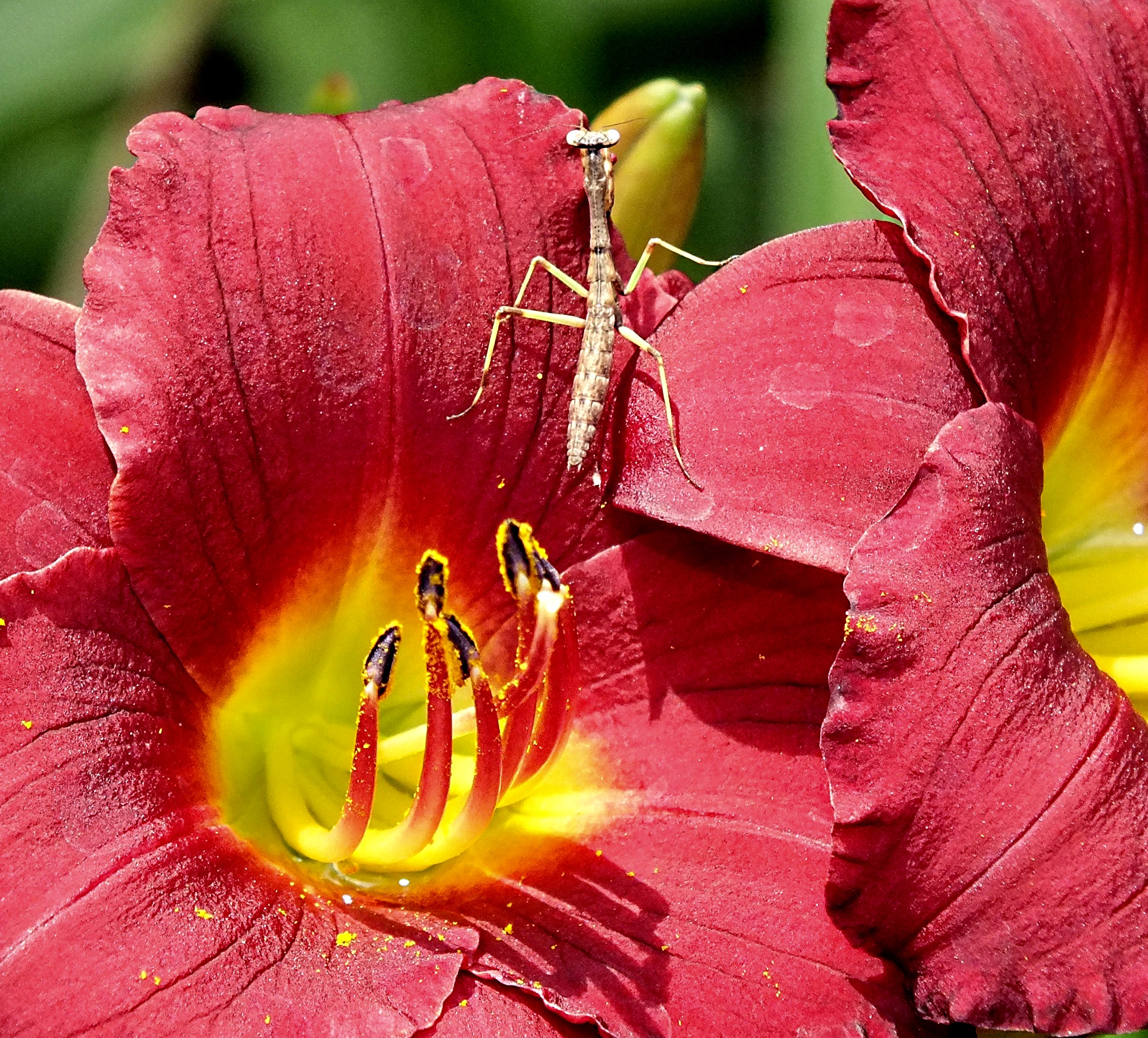
Small and different. (1) Photo by Thomas Peace 2014

Small and different. (2) Photo by Thomas Peace 2014
.
A simple, mindful smile to a person — though seemingly nothing much — may help someone in immense and profound ways!
.
[These are either cute Shih Tzu puppies or fuzzy Caterpillars. They are the last two remaining from the litter, and have had all of their shots. $300 each. Take your pick.]
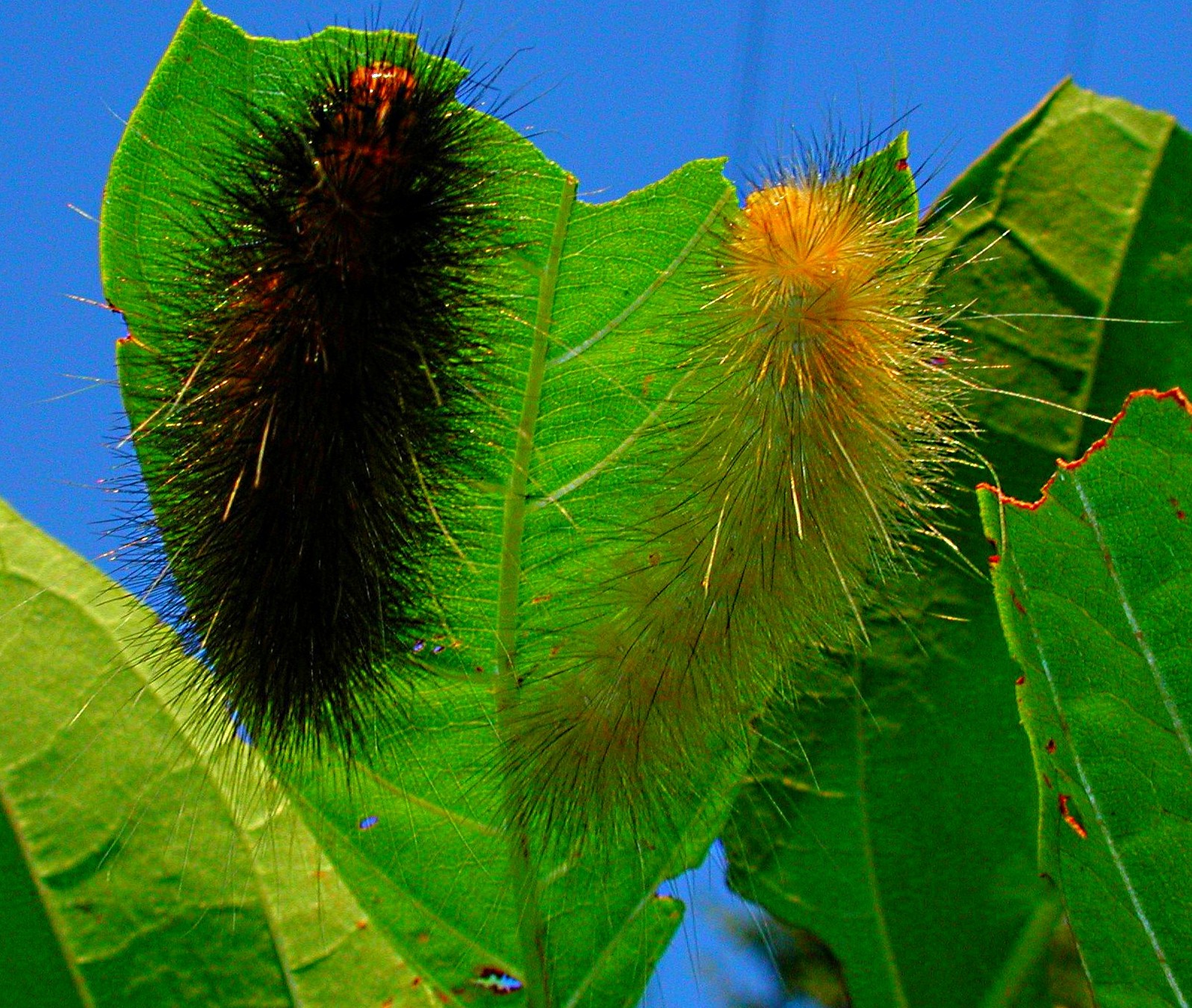
Fuzzy Caterpillars or Shih Tzu Pups?! Photo by Thomas Peace 2014
.
I’d rather be emaciated physically, than starved of real insight and compassion.
.
[These are Fairy Mushrooms in a rural yard. They were growing in a large ring… and were rather large relative to other mushrooms in our area. Note how the two photographed are fused together as one… a true marriage bond! (Actually, clusters of mushrooms are the fruiting bodies of one larger organism down below in the soil; so they truly are one!)]
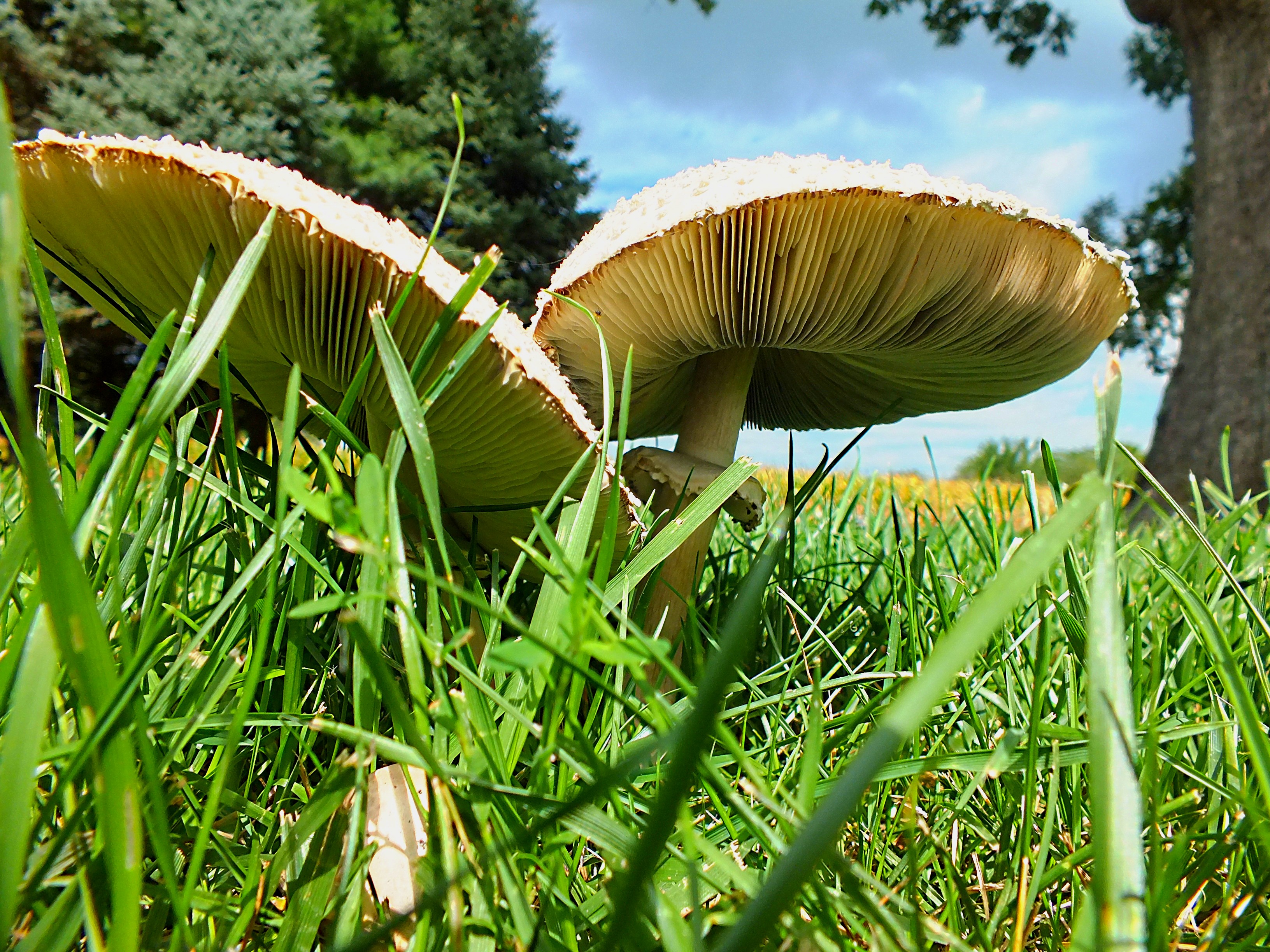
Home grown. Photo by Thomas Peace 2014

Home grown (2). Photo by Thomas Peace 2014
.
What separates your face from your hands is what separates you from others.
Nothing!
.
[The two larger insects are Tarnished Bugs. These insects remain active from spring through fall. Tarnished Bugs extract juices from the leaves, young stems, flowers, and fruits of more than 200 plant species. They are small insects, around a quarter of an inch long.]

Not tarnished in my eyes! Photo by Thomas Peace 2014
.
It is likely that the mind cannot fully go beyond nightly anxieties about the future if it continues to feel that it is something separate from what they are.
.
[A diminutive fly of the order Diptera resting on a very small, rain-laden Viola flower. Viola flowers tend to attract many small insects, while larger insects ignore them completely.]
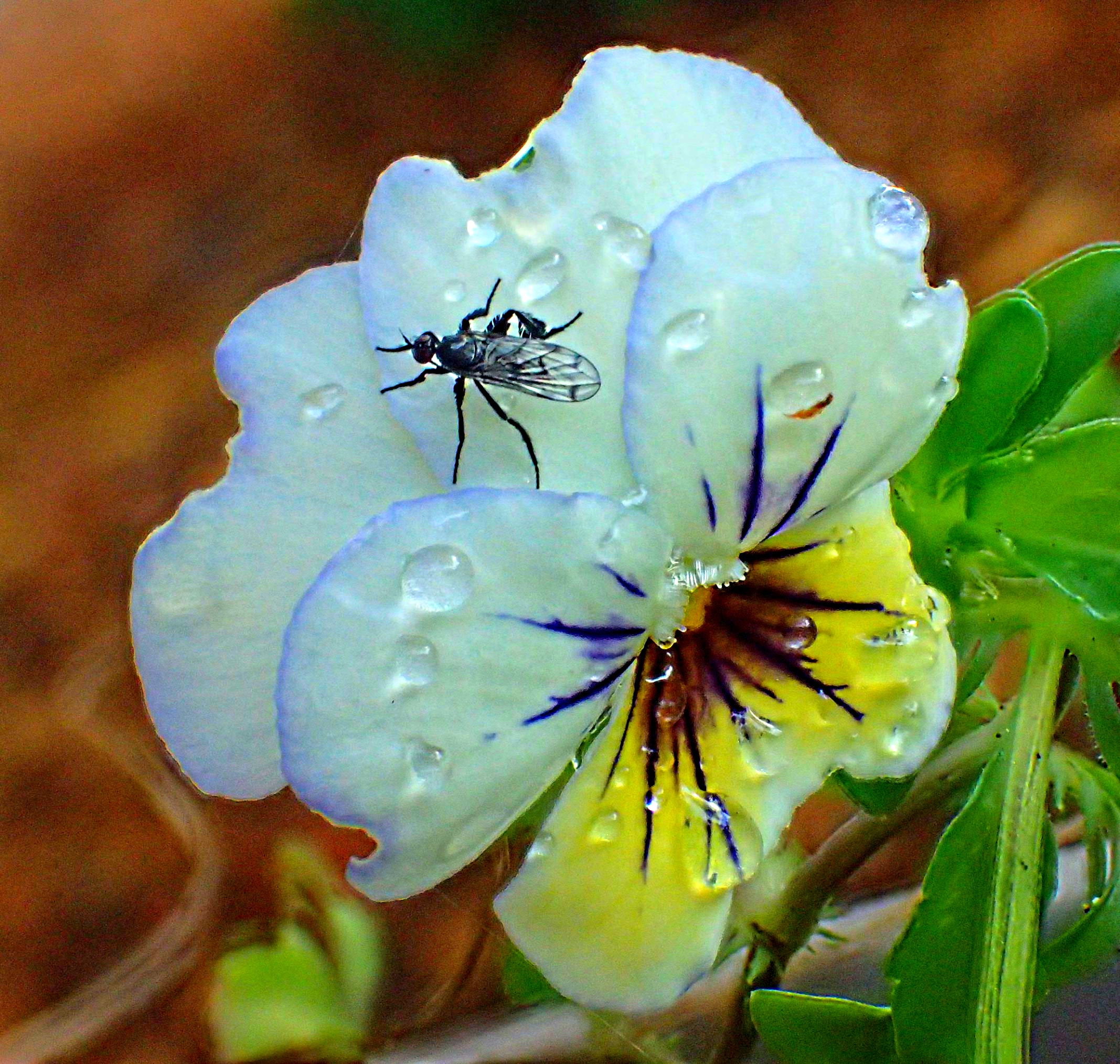
Rain dodger! Photo by Thomas Peace 2014
.
Don’t merely think and react as you were programmed to. Be a light to yourself!
.
[This is a Viceroy Butterfly. Birds avoid Viceroy Butterflies if they have previously tried to eat a Monarch or a Queen Butterfly, which are poisonous. However, those birds that have not had this experience readily eat the non-poisonous Viceroy Butterflies.]

A bird’s folly. Photo by Thomas Peace 2014
.
One should always think of and help oneself first… and oneself, by the way, is the whole of humanity and life.
.
[This is a young Bullfrog, probably a female, in the security of a pond. Amphibians (and all vertebrates) evolved from fish… and this young frog has very fish-like eyes! The round disc behind the eye of the Bullfrog is the eardrum. For Bullfrogs, the eardrum is larger in males than it is in females. In males it is larger than the eye. In females, the eardrum is the same size or smaller than the eye. Female Bullfrogs grow to be larger than males. This one is very young… so it probably won’t croak soon. 😉 ]

Not green due to envy! Photo by Thomas Peace 2014
.
When sorrow enters a truly wise mind… sorrow’s essence and dross disintegrates.
.
[This is a moth caterpillar… likely a Buck Moth. Buck Moth larvae have stinging spines. This is one cat you don’t want to hug!]

Ugly and beautiful! Photo by Thomas Peace 2014
.
Dorothy (from the Wizard of Oz): If I ever go looking for my heart’s desire again, I won’t look any further than my own backyard. Because if it isn’t there, I never really lost it to begin with!
.
[Monarch Butterfly eating from Rosy Strife Flowers.]

Close to home! Photo by Thomas Peace 2014
.
One can look young on the outside and be stale and old on the inside. One can be young on the inside and appear elderly on the outside.
.
[This is an Acorn Weevil. They use their long snouts to drill and burrow into acorns. This one was photographed adjacent to a large oak tree. The adult female weevil bores a tiny hole in the immature acorn to lay her eggs, which then hatch into legless grubs. In the fall, the grubs bore holes through the shells from the inside to emerge into the soil where they may live for a year or two before maturing into adults. So these insects are frequently boring… like a lot of politicians these days!]

Boring like our politicians! Photo by Thomas Peace 2014
.
Don’t be a second-hand copy… inquire about the whole of life independently.
.
[Close-up of a Widow Dragonfly resting. The young nymphs reside underwater and feed on small aquatic insects and fish. Adults like to hang on grasses and twigs of pondside shrubbery.]

Widow Dragonfly (1). Photo by Thomas Peace 2014
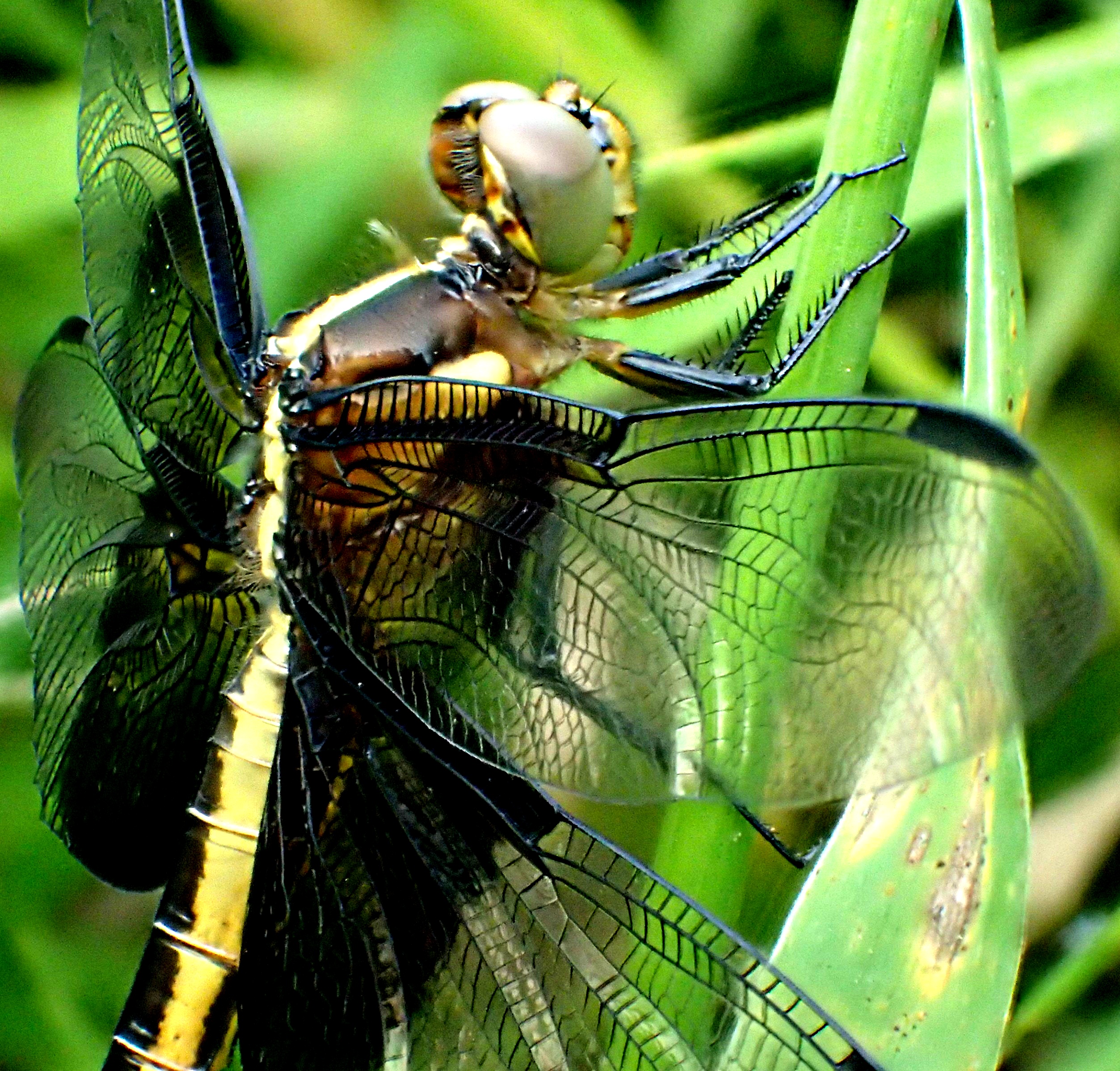
Widow Dragonfly (2). Photo by Thomas Peace 2014

Widow Dragonfly (3). Photo by Thomas Peace 2014
.
Grace is enjoying life and not harming it.
.
[This is a pair of adult, fully grown Large Milkweed Bugs; another similar species is the one consisting of the Small Milkweed Bugs. Their food consists of Milkweed plants and their seeds. They sometimes sip nectar from the flowers of other plants in gardens and crop fields but seem to do no significant damage.]

Two together as one! Photo by Thomas Peace 2014
.
Most merely look – all their lives – through a screen of learned patterns; and guess what they exclusively see: patterns!
.
[White Mushroom along a river bank. Nature’s parasol! Likely Chlorophyllum molybdites; you don’t want to eat this parasol… unless you like getting lots of vomiting and nausea!]

Garden Umbrella! Photo by Thomas Peace 2014
 Tom's Nature-up-close Photography and Mindfulness Blog