True free will (i.e., freedom involving thought/thinking) is a phenomenon that — if it truly exists — breaks free from the cause & effect parameters of the cosmos… which, if one is at all honest, is not likely whatsoever, in any way, shape, or form. However, in profound and deep silence, an immense, timeless energy can appear (i.e., arrive)… that is truly free and not part of a conditioned cause-effect continuum.
.
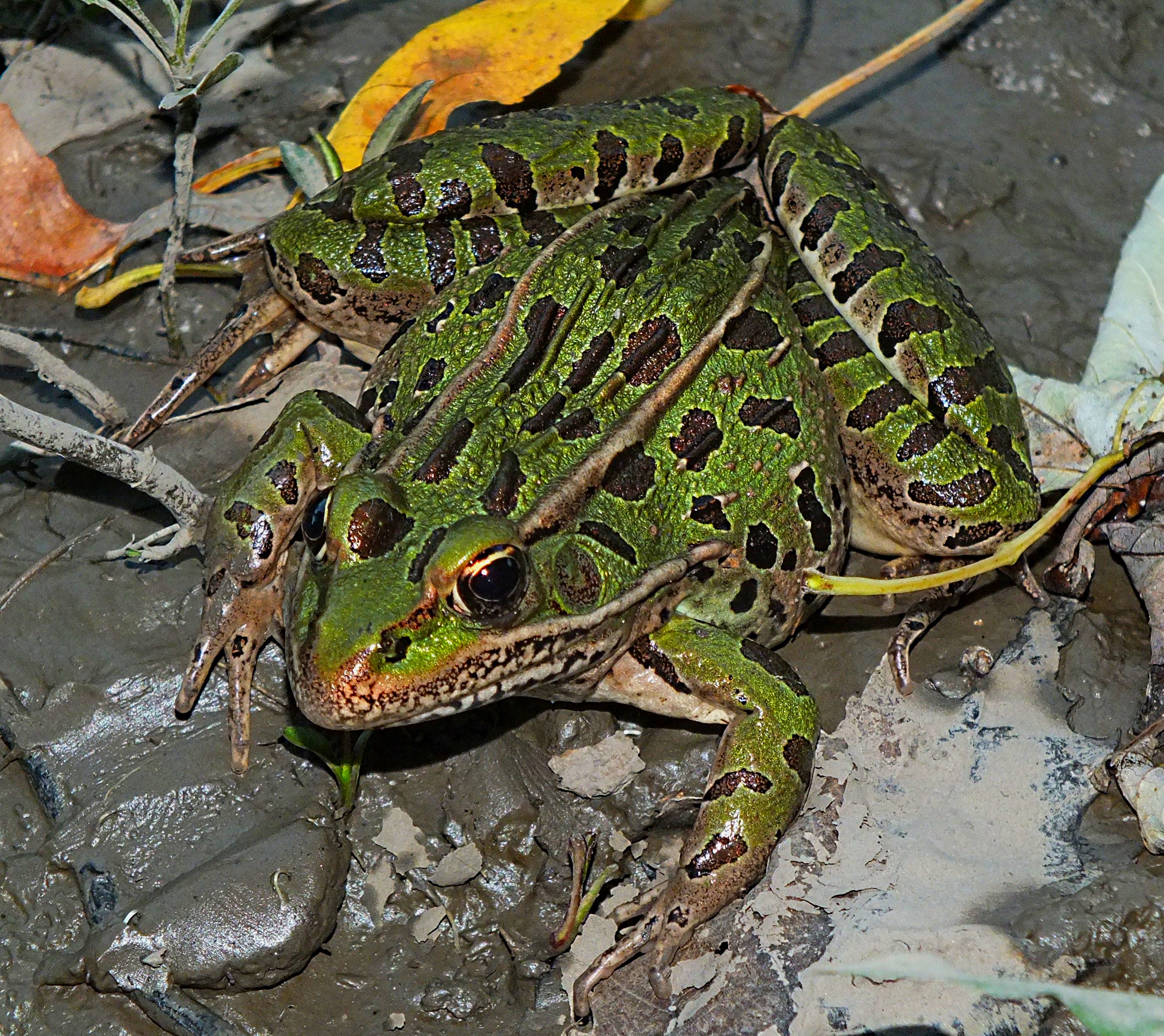
[This is a Leopard Frog among the dead leaves of fall; interestingly, this frog croaked many times… and is still very much alive. 😉 ]
He kicked the bucket more than once! Photo by Thomas Peace 2014
There is a much deeper dimension to life than what most people think or consider.
.
[These are a form of bracket fungus called Polypores on a fallen log (with some leaves of fall upon them). Most Polypores inhabit tree trunks or branches consuming the wood, but some soil-inhabiting species form myycorrhia – a symbiotic relationship with the roots of trees, wherein they blend with the roots intracellularly (i.e., within the wood-root cells) or extracellulary. Polypores and their relatives, corticioid fungi, consist as part of the most important agents of wood decay. Thus they play a very significant role in nutrient and carbon cycles of forest ecosystems.]
Some Bracket Fungus among us! Photo by Thomas Peace 2014
Wake up (with awareness) in the morning, bright-eyed and bushy tailed!
.
[This fly (bright-eyed and bushy tailed) is called an Early Tachinid Fly. Unlike the undesirable, disease-carrying, common flies, this species hangs around flowers and drinks nectar (as do butterflies). The Early Tachinid Fly is most often seen in meadows and open woodlands full of wildflowers.]
Bright eyed and bushy tailed. Photo by Thomas Peace 2014
Look with what is deeper than what can see; listen with what is deeper than what can hear.
.
[Leaf-footed Bug adults are active from late summer through fall in weedy fields and along the edges of woodlands. The Leaf-footed Bug is fond of a variety of trees, shrubs, and flowers, including hawthorns, goldenrods, and Joe-pye weed.]
To psychologically die (each and every day) to endless fears and separative images… is living wisdom.
.
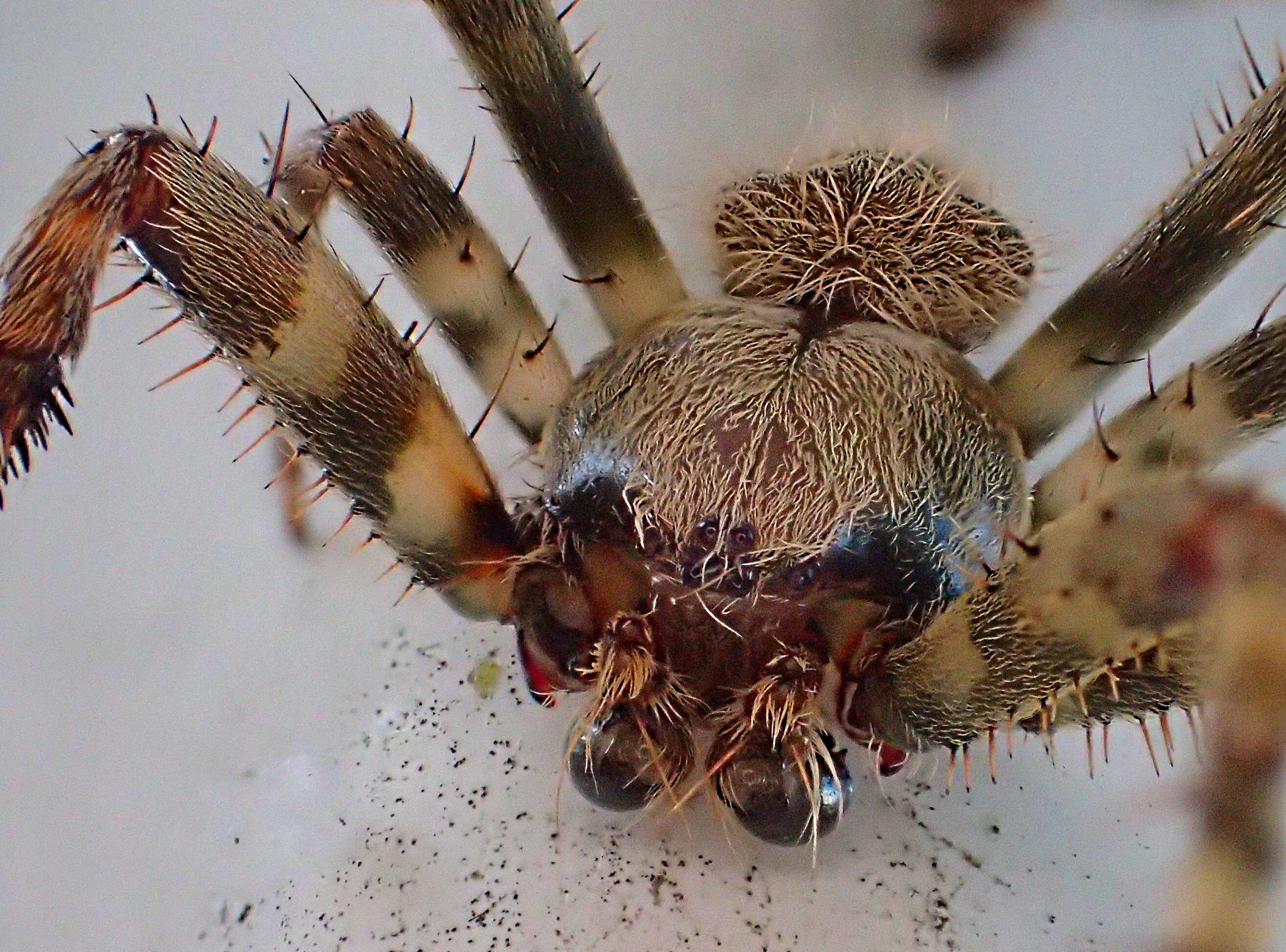
[This is, because of the enlarged pedipalps, a male spider… probably a Grass Spider. Pedipalps have sensitive chemical detectors and function as taste and smell organs, supplementing those on the legs. In males, the pedipalps are enlarged, functioning as organs for reproductive purposes.]
Oh, that movie-star face! Photo by Thomas Peace 2014
Direct perception is timeless; it’s instantaneous. Greed, hatred, envy, and comparison all take time.
.
[This is a Potter Wasp, some Hover Flies, a small wild Fly, and a Soldier Beetle. Potter Wasps make nests of mud that are pot-like. (They were all circling around the flower cluster, but the Soldier Beetle didn’t get the direction right!)]
Time for nectar energy! Photo by Thomas Peace 2014
There are no separate (isolated) pieces to the universal puzzle… once you see the golden whole.
.
[This is a Hover Fly on a wild Sunflower Plant. This Hover Fly is likely searching for flower nectar (and is distributing pollen as part of a symbiotic relationship).]
Psychologically, the perceiver and the perceived are one. Photo by Thomas Peace 2014
My biggest vice (according to my wife) — and the observer is the observed — is that of purchasing too many fossils. Perhaps, thinking a few words would be sufficient (instead of getting the fossils)… fossils being fixed impressions of the past. Words – all words – are symbolic representations from the memory bank (i.e., from the stored, dead past).
.
[These are Micro-mushrooms growing on a healthy Lichen covered, large Oak Tree. These diminutive mushrooms are around 2 mm in total length.].
Stairway to Heaven (lyrics & video by Led Zeppelin):
There’s a lady who’s sure all that glitters is gold And she’s buying a stairway to heaven. When she gets there she knows, if the stores are all closed With a word she can get what she came for. Ooh, ooh, and she’s buying a stairway to heaven.
There’s a sign on the wall but she wants to be sure ‘Cause you know sometimes words have two meanings. In a tree by the brook, there’s a songbird who sings, Sometimes all of our thoughts are misgiven.
Ooh, it makes me wonder, Ooh, it makes me wonder.
There’s a feeling I get when I look to the west, And my spirit is crying for leaving. In my thoughts I have seen rings of smoke through the trees, And the voices of those who stand looking.
Ooh, it makes me wonder, Ooh, it really makes me wonder.
And it’s whispered that soon, if we all call the tune, Then the piper will lead us to reason. And a new day will dawn for those who stand long, And the forests will echo with laughter.
If there’s a bustle in your hedgerow, don’t be alarmed now, It’s just a spring clean for the May queen. Yes, there are two paths you can go by, but in the long run There’s still time to change the road you’re on. And it makes me wonder.
Your head is humming and it won’t go, in case you don’t know, The piper’s calling you to join him, Dear lady, can you hear the wind blow, and did you know Your stairway lies on the whispering wind?
And as we wind on down the road Our shadows taller than our soul. There walks a lady we all know Who shines white light and wants to show How everything still turns to gold. And if you listen very hard The tune will come to you at last. When all are one and one is all To be a rock and not to roll.
And she’s buying a stairway to heaven.
Another Stairway to Heaven. Photo by Thomas Peace 2014
Compassion is that alive awareness that cares beyond the cadaverous uncaring.
.
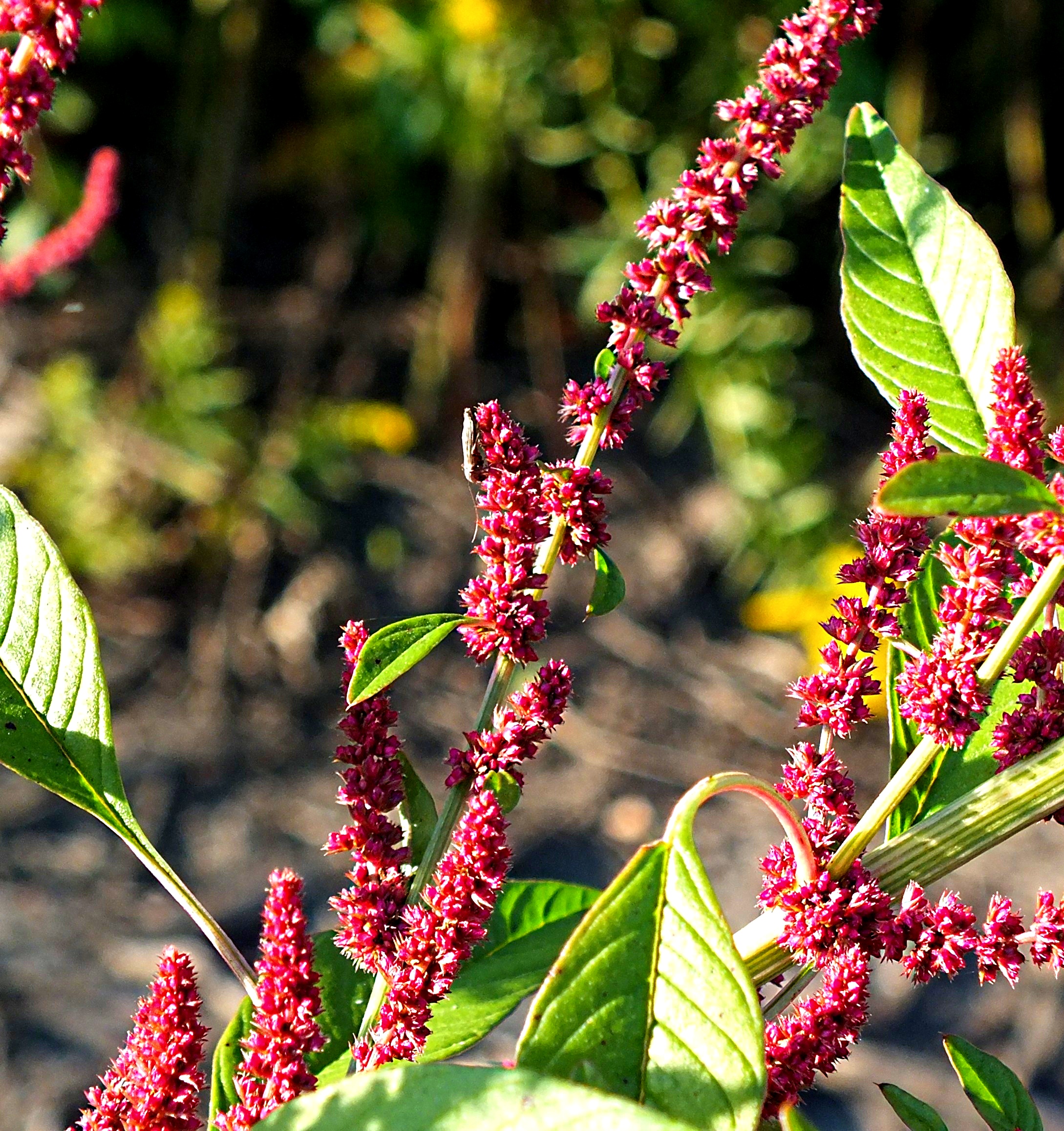
[This is a small Leafhopper on a cluster of colorful, wild Pigweed seeds. The Leafhoppers in Illinois are all relatively small. Leafhoppers have piercing-sucking mouth parts, which enables them to feed on plant sap. Pigweed is considered a weed and is a nuisance to farmers… but it is edible for humans and is full of nutritious vitamins.]
Down the Up-staircase. (Leafhopper on Pigweed) Photo by Thomas Peace 2014
The little contains the large. The large contains the little.
.
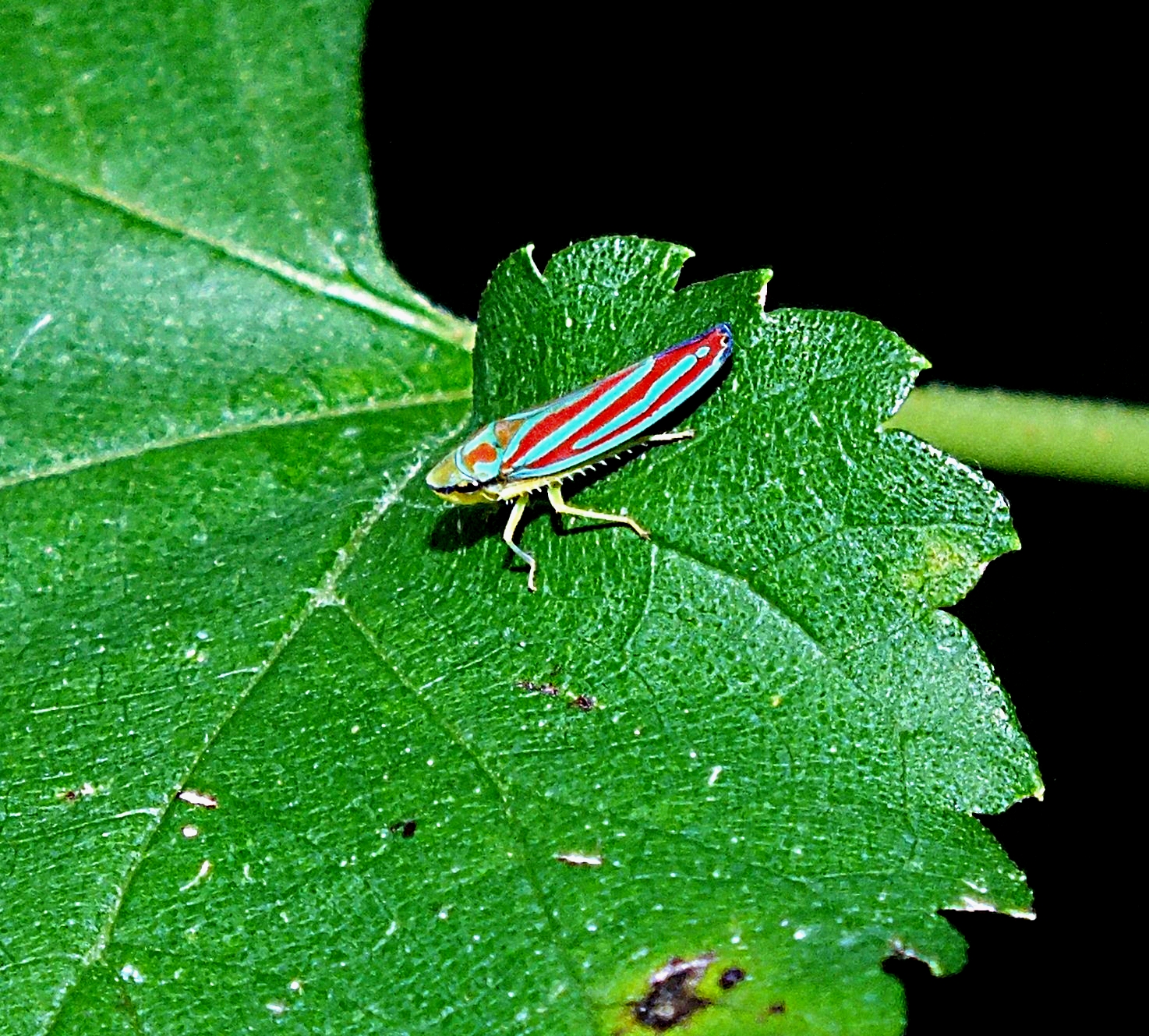
[Scarlet-and-green Leafhoppers are active from spring through fall in open habitats with plenty of herbaceous, lush foliage. Scarlet-and-green Leafhoppers feed on the sap of vines and shrubs. They are relatively small… often considerably less than 1/4th of an inch long.]
Little insect; large beauty! Photo by Thomas Peace 2014
The fears and hopes that exist in one… may not at all be separate from what one is.
.
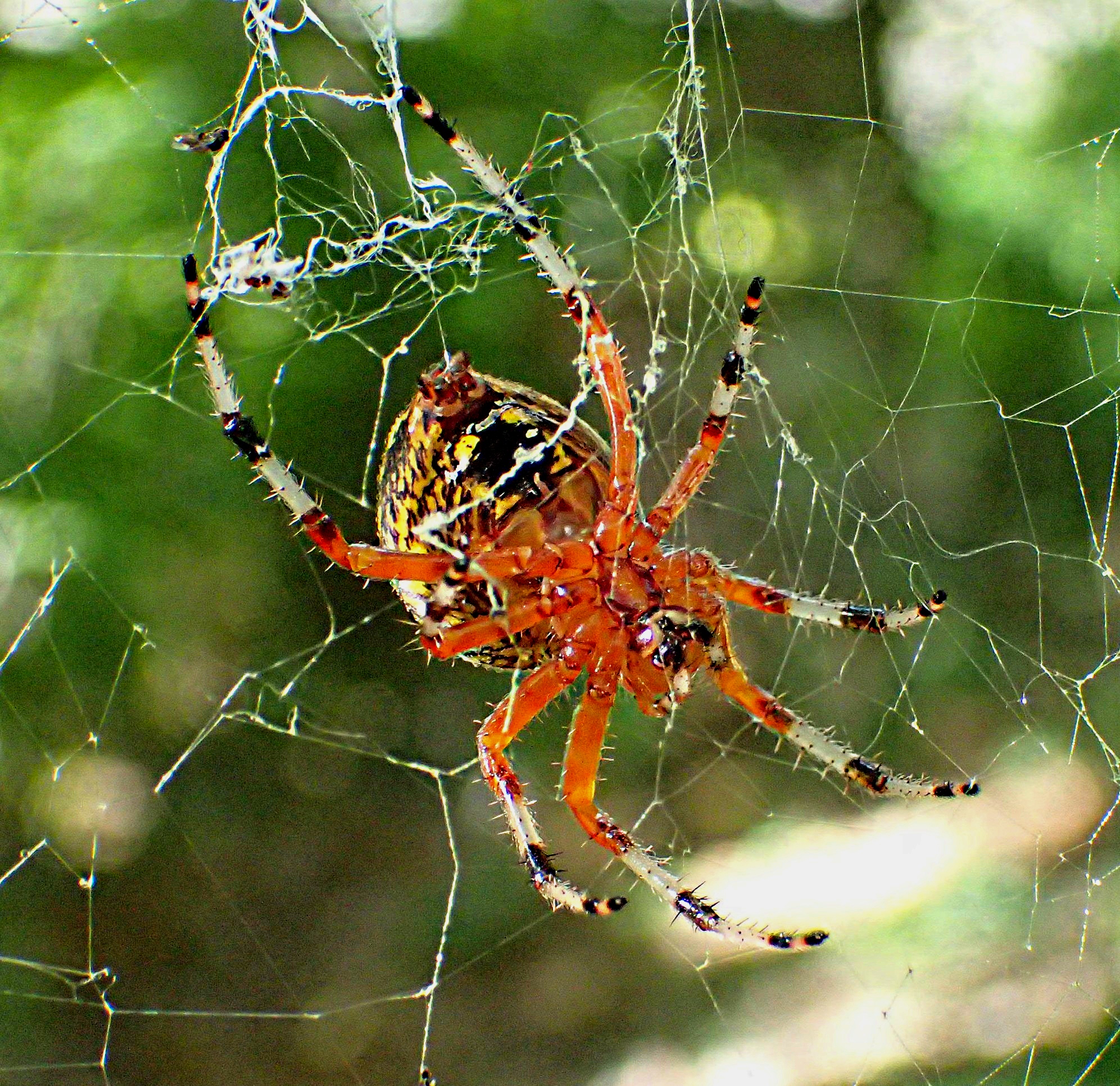
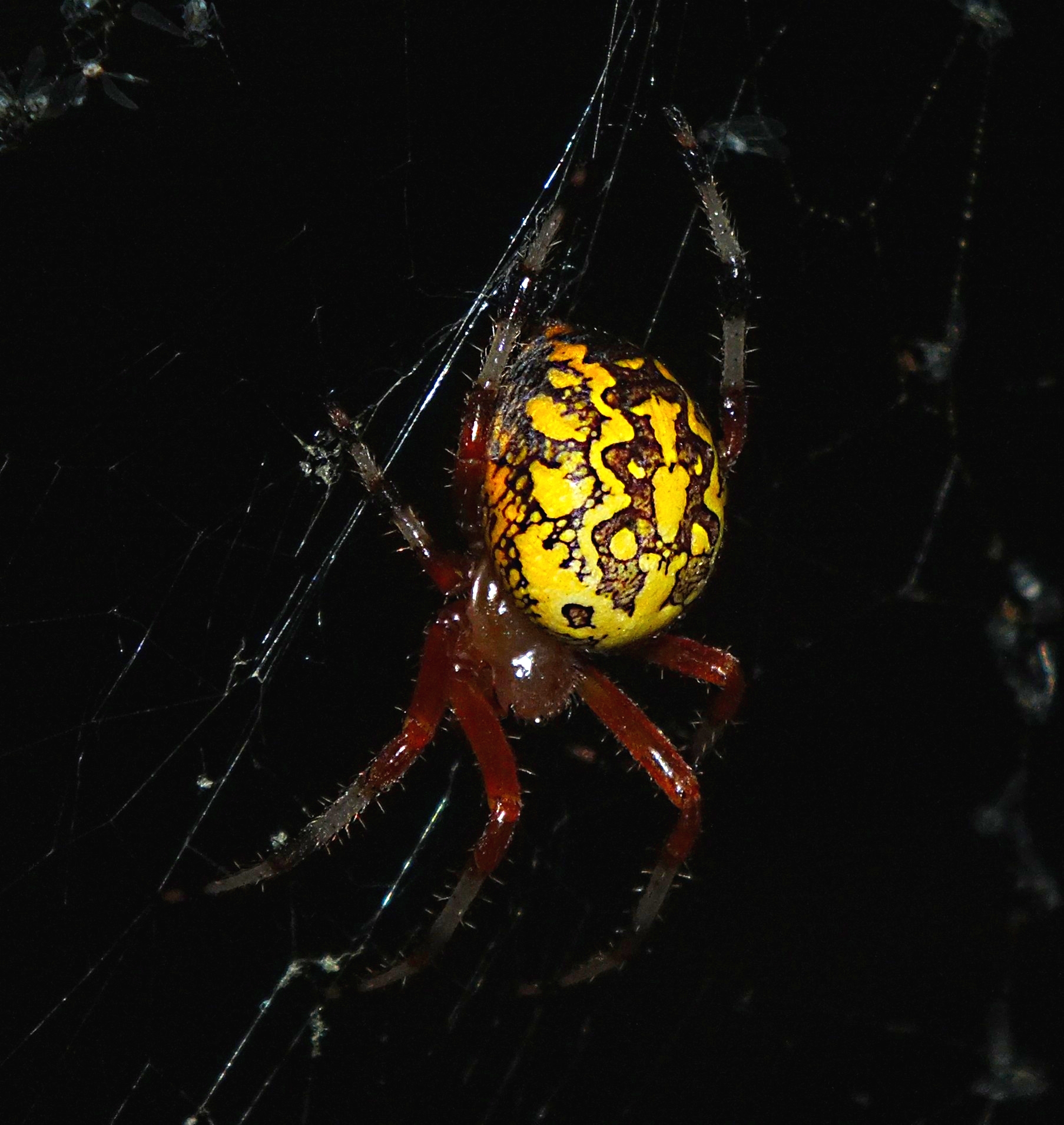
[Marbled Orb Weaver Spiders make spiraling orb webs built on low trees, shrubs, or grasses. Marbled Orb Weaver Spiders make a retreat in curled leaves or, if the web is on a tree, under bark. This one was in our yard near the river bank and was tough to photograph from its top side (i.e., dorsal side); its eyes are pretty good a seeing approaching visitors and it would quickly retreat into a curled leaf! However, I was better able to approach it in the evening! Notice how it is simultaneously spinning web and tightening web with separate legs! (I usually can’t do two things at once!)
Additional note: I will be posting more spiders (and similar creatures) in the Halloween month of October. It is neat that they are part of an old Halloween tradition (that is fun for kids). However, it is unfortunate that many children grow up associating spiders with “being frightened” and as “terrible creatures to be horrified of.” As the late, superb naturalist, Steve Irwin often propounded, spiders and snakes can indeed be seen to be majestic, marvelous animals, truly beautiful in their own ways. We must, as Steve Irwin so graciously suggested before his untimely passing, be far better caretakers of Mother Earth.]
Different and colorful! Marbled Orb Weaver Spider. Photo by Thomas Peace 2014
Interesting marbled design! Marbled Orb Weaver Spider. Photo by Thomas Peace 2014
The lucidity of insight shatters through the shady recesses of the stale known.
.
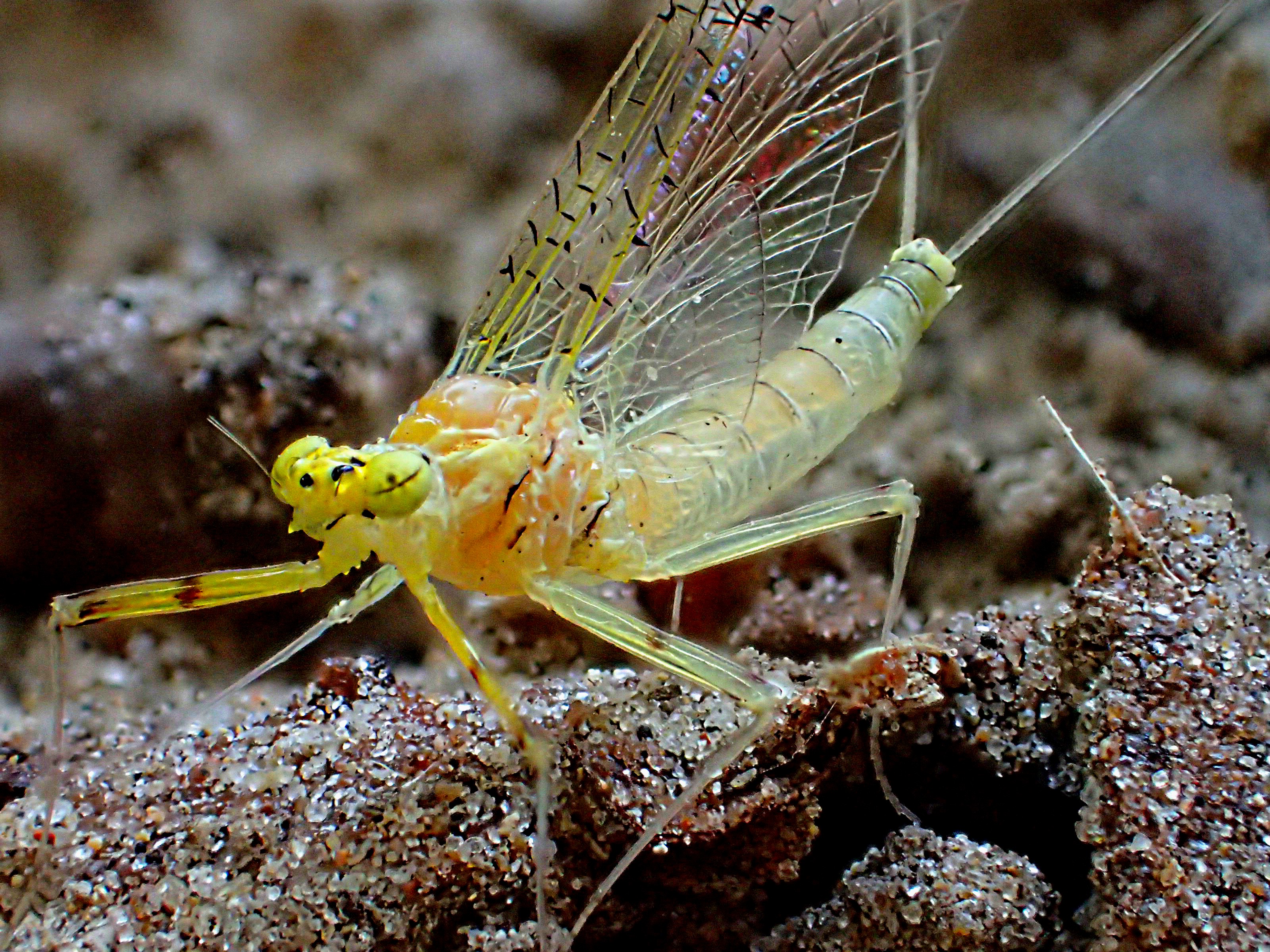
[Golden Mayflies do not feed. With Golden Mayflies, the young naiad nymphs eat diatoms and other algae from the bottom mud and submerged vegetation of lakes, rivers, and ponds.]
Many are caught in the limitation and web of mundane time; very few, unfortunately, go beyond that barrier.
.
[This spider, in our backyard (down by the river bank), won the lottery! This spider is an Orb-weaver that is likely a Barn Spider (due, partly, to the whitish hairs on its legs). Orb-weaver spider webs are dismantled (consumed) by the spider at the end of each night, and are rebuilt early the next evening; but this spider had too much to consume! She hit the jackpot! Count them all!
Additional note: I will be posting more spiders (and similar creatures) in the Halloween month of October. It is neat that they are part of an old Halloween tradition (that is fun for kids). However, it is unfortunate that many children grow up associating spiders with “being frightened” and as “terrible creatures to be horrified of.” As the late, superb naturalist, Steve Irwin often propounded, spiders and snakes can indeed be seen to be majestic, marvelous animals, truly beautiful in their own ways. We must, as Steve Irwin so graciously suggested before his untimely passing, be far better caretakers of Mother Earth.]
Orb Weaver Spider’s Bonanza Catch (1). Photo by Thomas Peace 2014
Orb Weaver Spider’s Bonanza Catch (2). Photo by Thomas Peace 2014
Concentration on a fixed (limited) point is hypnosis or egotism, not meditation; meditation is not being fixated by the limited technique (or blueprint) of others, but is a free, passionate awareness of the whole of everything beyond exclusion.
.
[This aperture in the tree could be a scope for a gun barrel or a focal mechanism for shooting a camera; or it could be a place where lichens no longer exist (unless they’re on the far tree in the background). We will have more photos of interesting lichens in the future. (We will be visiting the tree in the background and some of the other trees in the area.)]
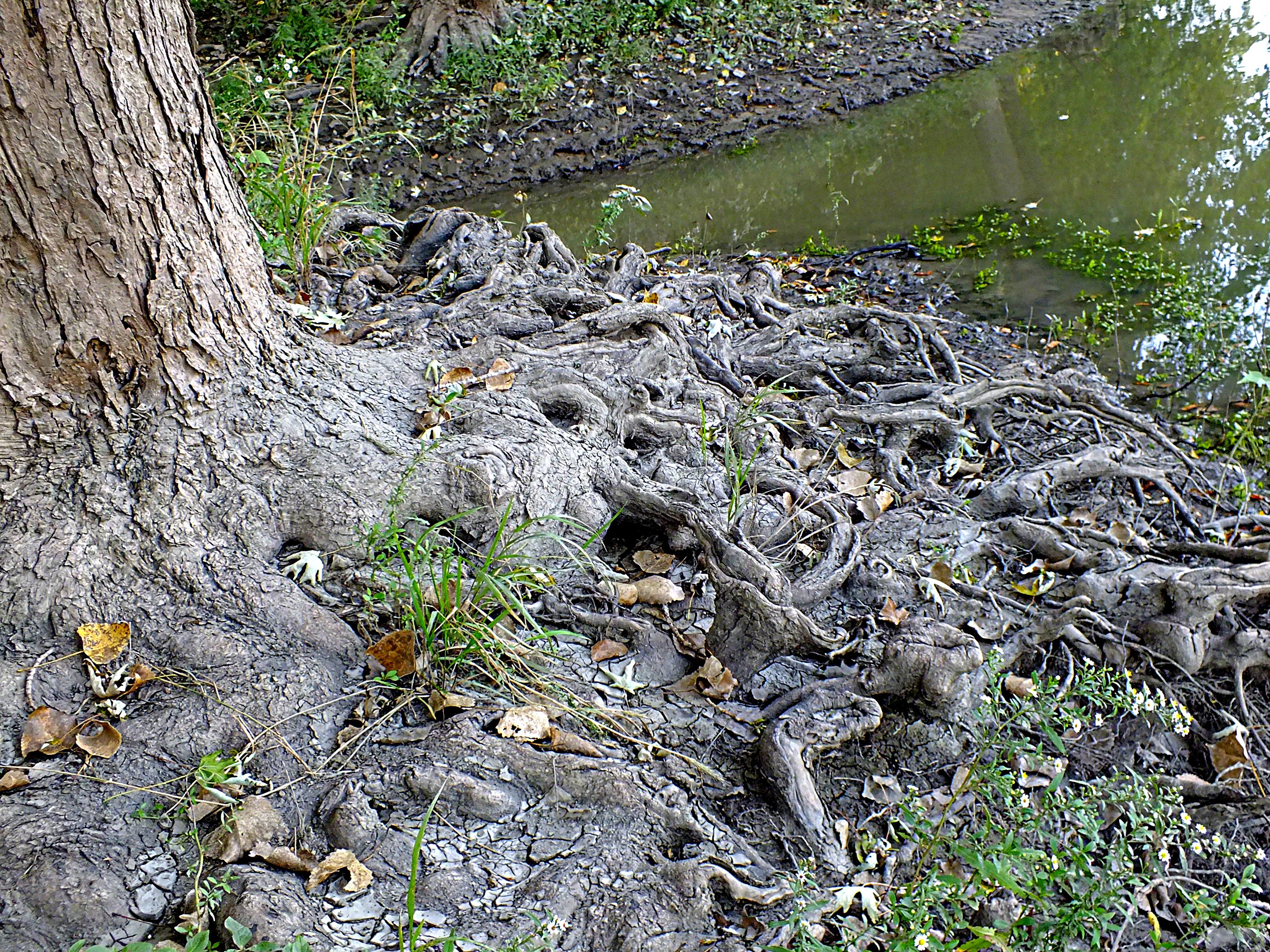
Let the lowly roots reach out through the water (and the boat) and flower into something truly lofty and sublime beyond all the endless mediocrity.
.
[Watch the following YouTube music-video also.
Roots To Branches (Lyrics by Jethro Tull):
Words get written. Words get twisted.
Old meanings move in the drift of time.
Lift the flickering torches. See gentle shadows change
the features of the faces cut in unmoving stone.
Bad mouth on a prayer day, hope no one’s listening.
Roots down in the wet clay, branches glistening.
True disciples carrying that message
to color just a little with their personal touch.
Home-spun fancy weavers and naked half-believers
Crusades and creeds descend like fiery flakes of snow.
Bad mouth on a prayer day, hope no one’s listening.
Roots down in the wet clay, branches glistening.
In wet and windy priest-holes. Grand in vast cathedrals.
High on lofty minarets or in the temples of doom.
I hope the old man’s got his face on.
He’d better be some quick change artist.
Suffer little children to make their minds up soon.
Bad mouth on a prayer day, hope no one’s listening.
Roots down in the wet clay, branches glistening. ]
Thoughts are the conditioned, residual remnants of experience; deep insight and “being” go far beyond mere experience.
.
[This insect is known as the Bee Assassin. These predatory insects are usually found on the leaves and stems of plants (as was this photographed specimen). Leaves and stems are not areas where honeybees usually tend to visit. Bee Assassin insects, in reality, mostly eat other types of insects, such as flies, beetles, caterpillars, and mosquitoes. Their front legs have a “stickiness” which enables them to easily catch insects. Bee Assassin insects, though they may look rather intimidating, are largely beneficial, as they help to eradicate many harmful garden pests.]
If you’re another bug, watch out for this one! Photo by Thomas Peace 2014
There is no “we” and “them.” There is no “us” and “they.”
.
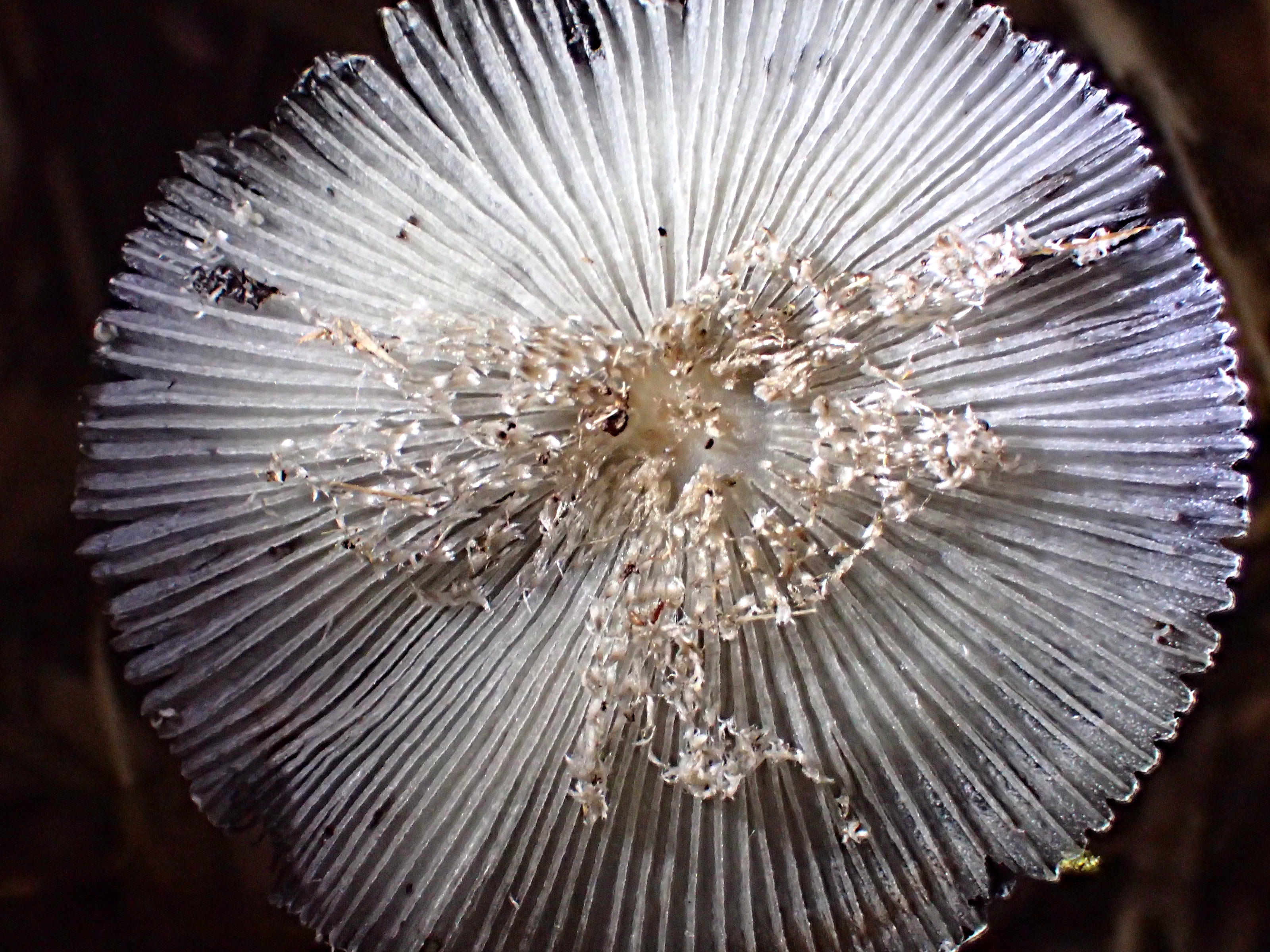
[This is a unique form of Parasol Mushroom that seems to be almost glass-like with barely any top section; even from the top it looks like gills! The bottom photo is actually a shot of the top of this mushroom! These mushrooms grow at night and are gone by daylight. They are rather small sized mushrooms.]
Glass-like and diminutive. (1) Photo by Thomas Peace 2014
Glass-like and diminutive. (2) Photo by Thomas Peace 2014
Inner and integral happiness does not cost a dime!
.
[This is a Black Swallowtail Butterfly resting on a Thistle Flower. Black Swallowtail Butterfly eggs are yellowish and ovoid shaped, and are laid on wild and cultivated plants of the carrot family, such as parsley, parsnips, celery, and carrots. There are two broods of Black Swallowtails annually in the North, and at least three in the South.]
Most people, unfortunately, are content to remain in the limited… which is like staying in an enclosed, cold room.
.
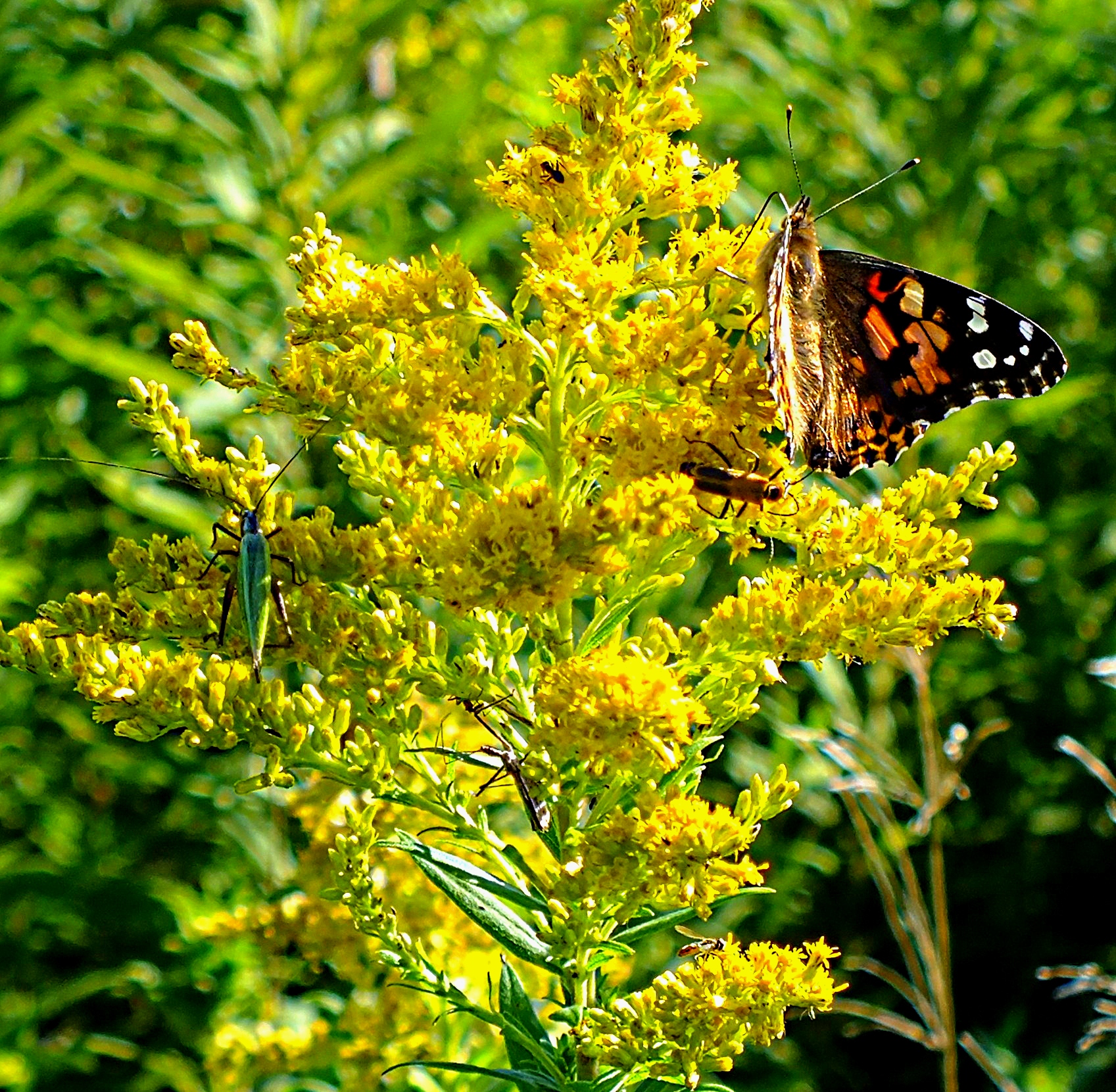
[This is a Painted Lady Butterfly, a Bee Assassin, a Green Tree Cricket, a Hover Fly, some Ants, and a Soldier Beetle on a Goldenrod Plant. The more the merrier!]
The implicate, illimitable order always exists beyond limited, crass confinement.
.
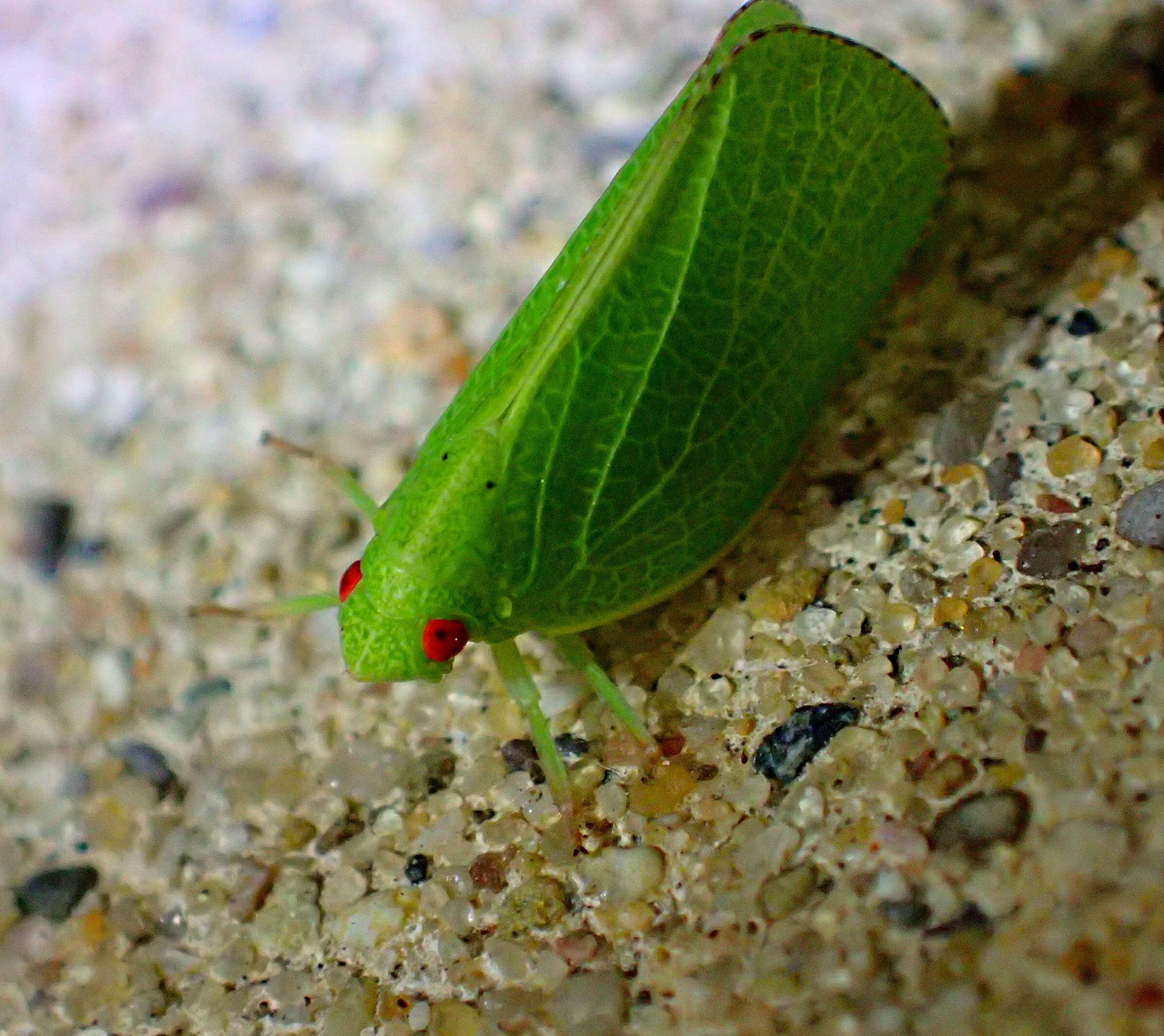
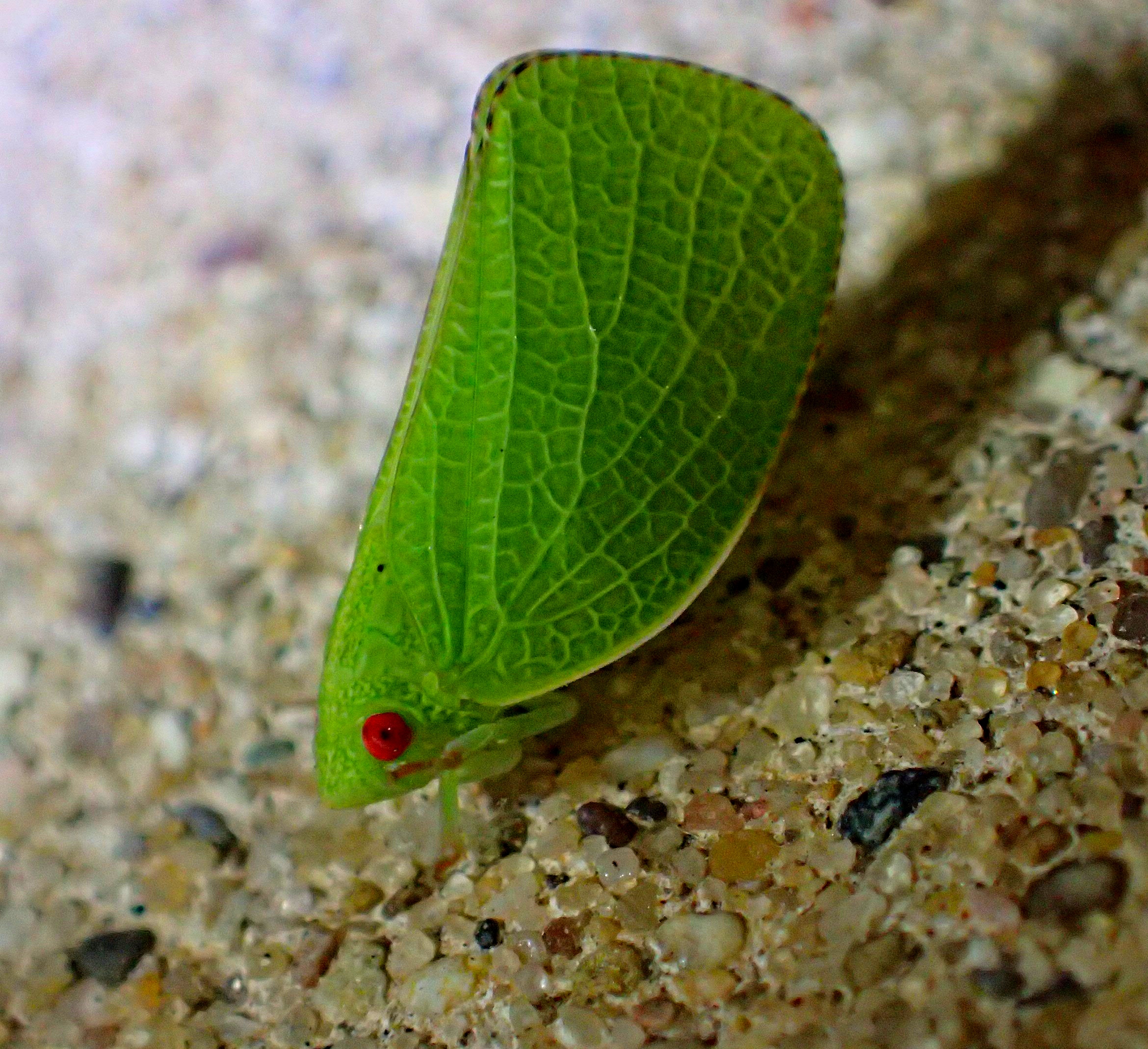
[This is a Red-eyed Planthopper, Acanalonia conica. The Planthopper hops with gigantic leaps to get away from danger. This rapid form of transportation is only used when it needs to make a quick getaway, though. Usually, Planthoppers move very slowly so as not to attract any unwanted attention from birds or other predators. I noticed this one temporarily resting on our cement porch; then I quickly ran in the house to grab my camera!]
Planthopper. Enlightenment personified (1). Photo by Thomas Peace 2014
Planthopper. Enlightenment personified (2). Photo by Thomas Peace 2014
Real insight takes place in the present; it is never merely the result of old, stale, past knowledge and accumulation.
.
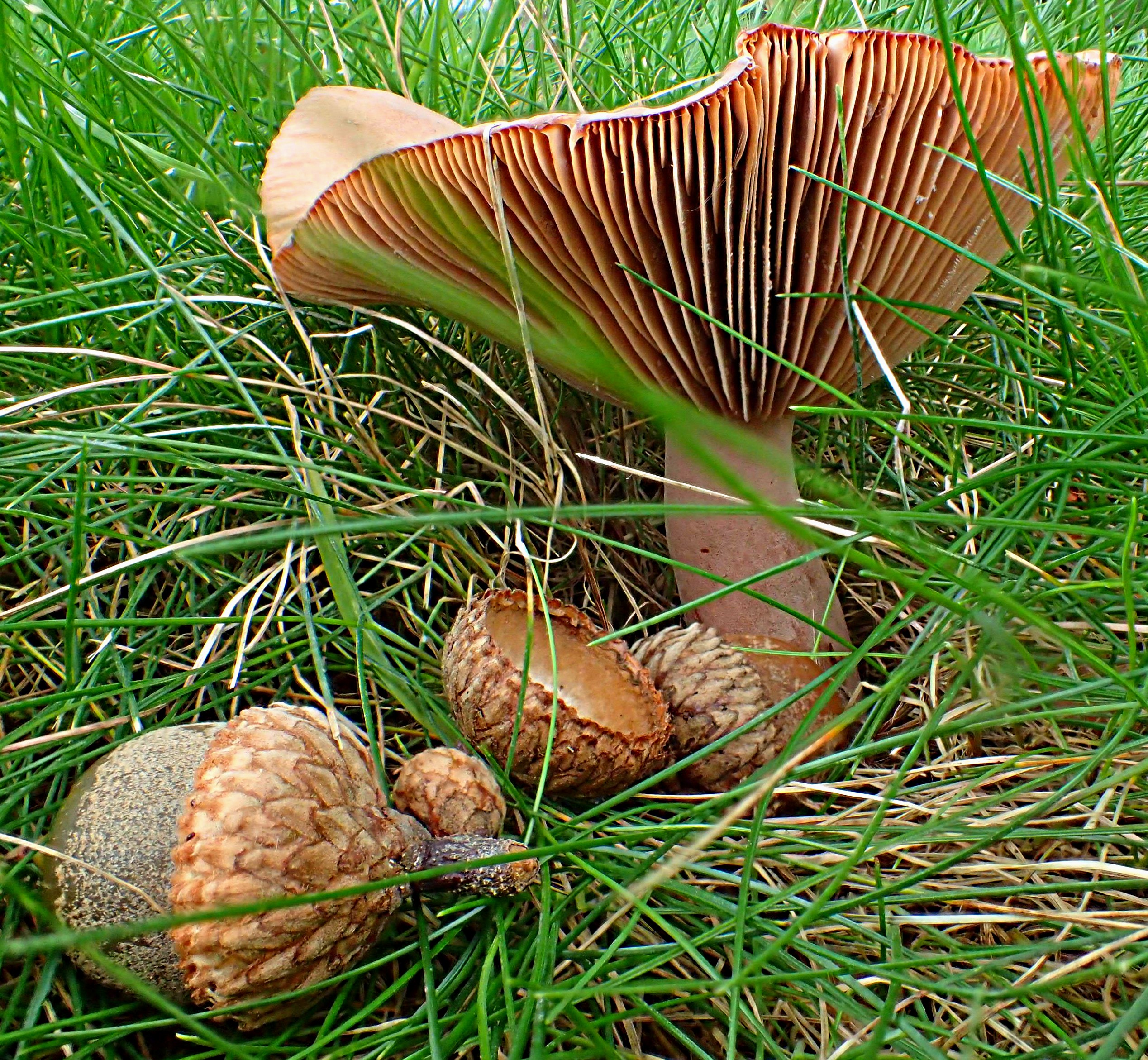
[These acorns from an old oak Tree accompany a lone mushroom. If the acorns don’t grow into trees, they will decompose and will provide the mushroom with plenty of energy. Both the oak tree and the mushroom are sowing seeds for the future.]
A bad means used to get a good end is usually disorder and is not intelligent.
.
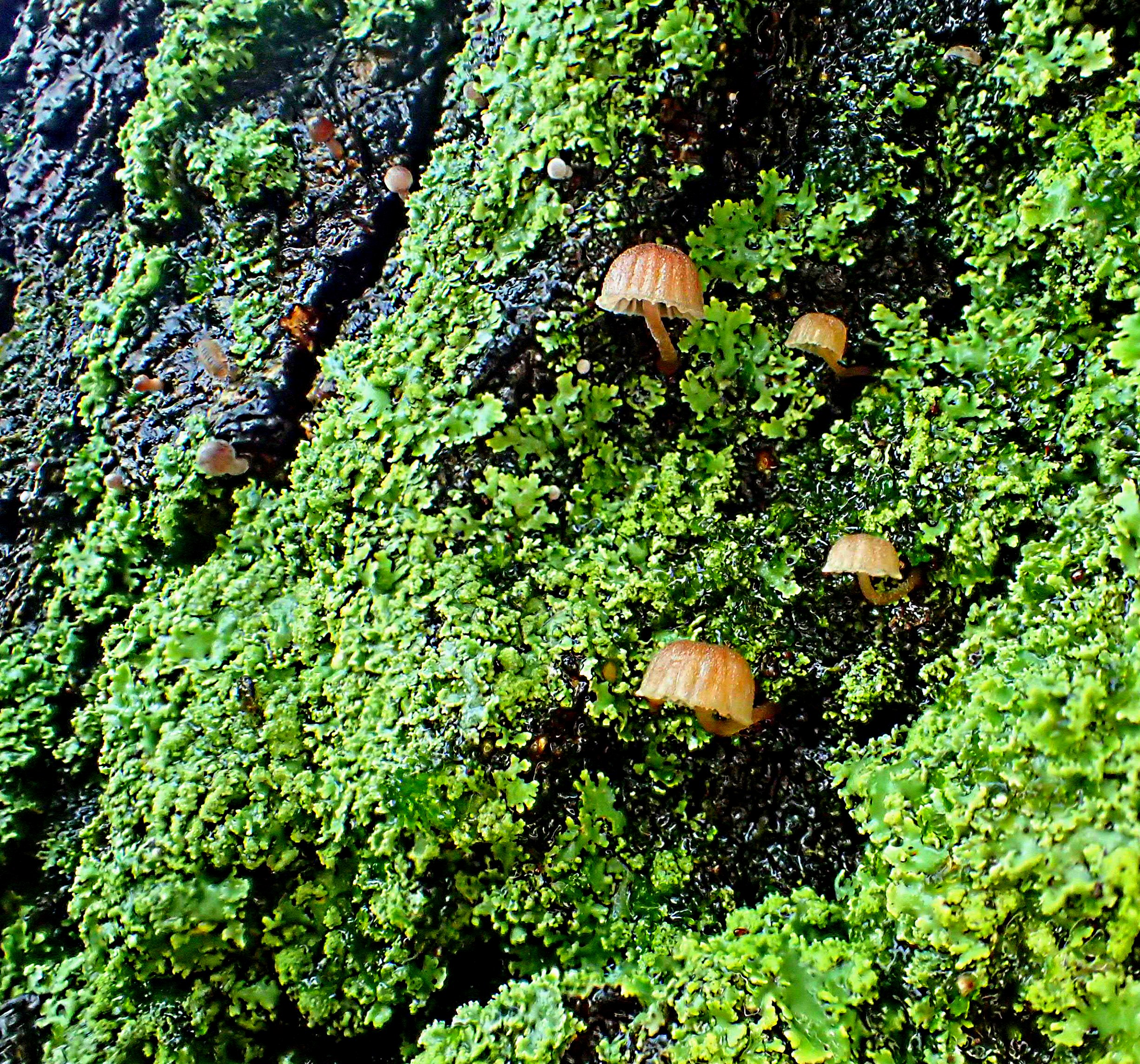
[These are micro-mushrooms (super small mushrooms) growing on the bark of a living oak tree along with some lichens. These diminutive mushrooms were around the size of a question mark (such as within a standard newspaper article or magazine). Mushrooms are the fruiting body of a fungus. Lichens themselves are a type of fungus growing in a symbiotic relationship with a particular type of algae, the two together forming a single organism.]
If there were many dark rooms and closed doors between you and the light of truth, would you merely be content — as so many are — to remain in limited enclosures?!
.
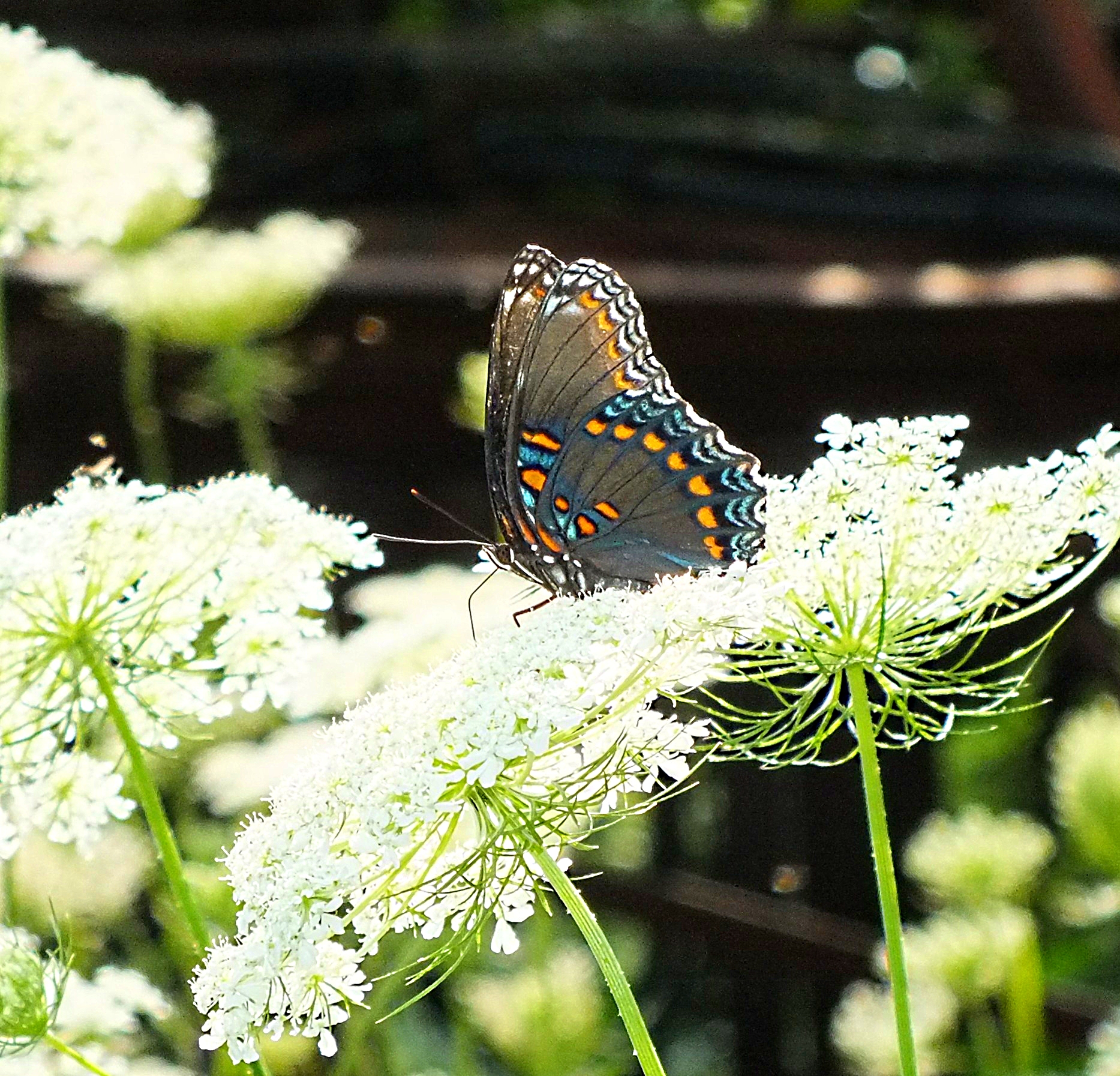
[This butterfly is a Red-spotted Purple. In Red-spotted Purple butterflies, there are up to 3 generations within a year. They prefer open habitats, such as meadows, forest edges, open woodlands, and areas along rivers.]
Berry eater and flower greeter. Photo by Thomas Peace 2014
I’d rather be emaciated physically, than starved of real insight and compassion.
.
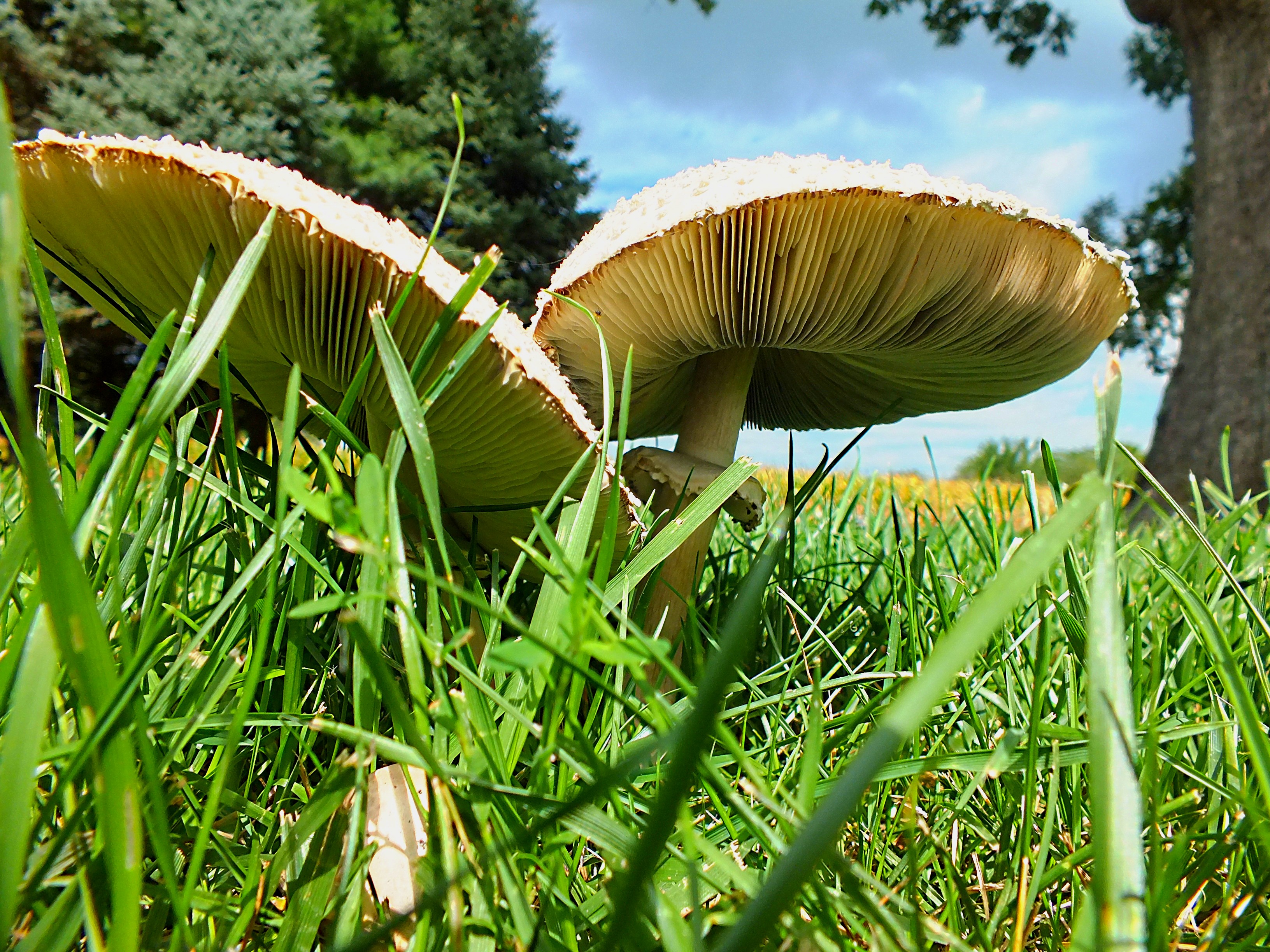
[These are Fairy Mushrooms in a rural yard. They were growing in a large ring… and were rather large relative to other mushrooms in our area. Note how the two photographed are fused together as one… a true marriage bond! (Actually, clusters of mushrooms are the fruiting bodies of one larger organism down below in the soil; so they truly are one!)]
What separates your face from your hands is what separates you from others.
Nothing!
.
[The two larger insects are Tarnished Bugs. These insects remain active from spring through fall. Tarnished Bugs extract juices from the leaves, young stems, flowers, and fruits of more than 200 plant species. They are small insects, around a quarter of an inch long.]
Not tarnished in my eyes! Photo by Thomas Peace 2014
Though everything has marginal boundaries and borders… see everything as “all one” unbroken whole!
.
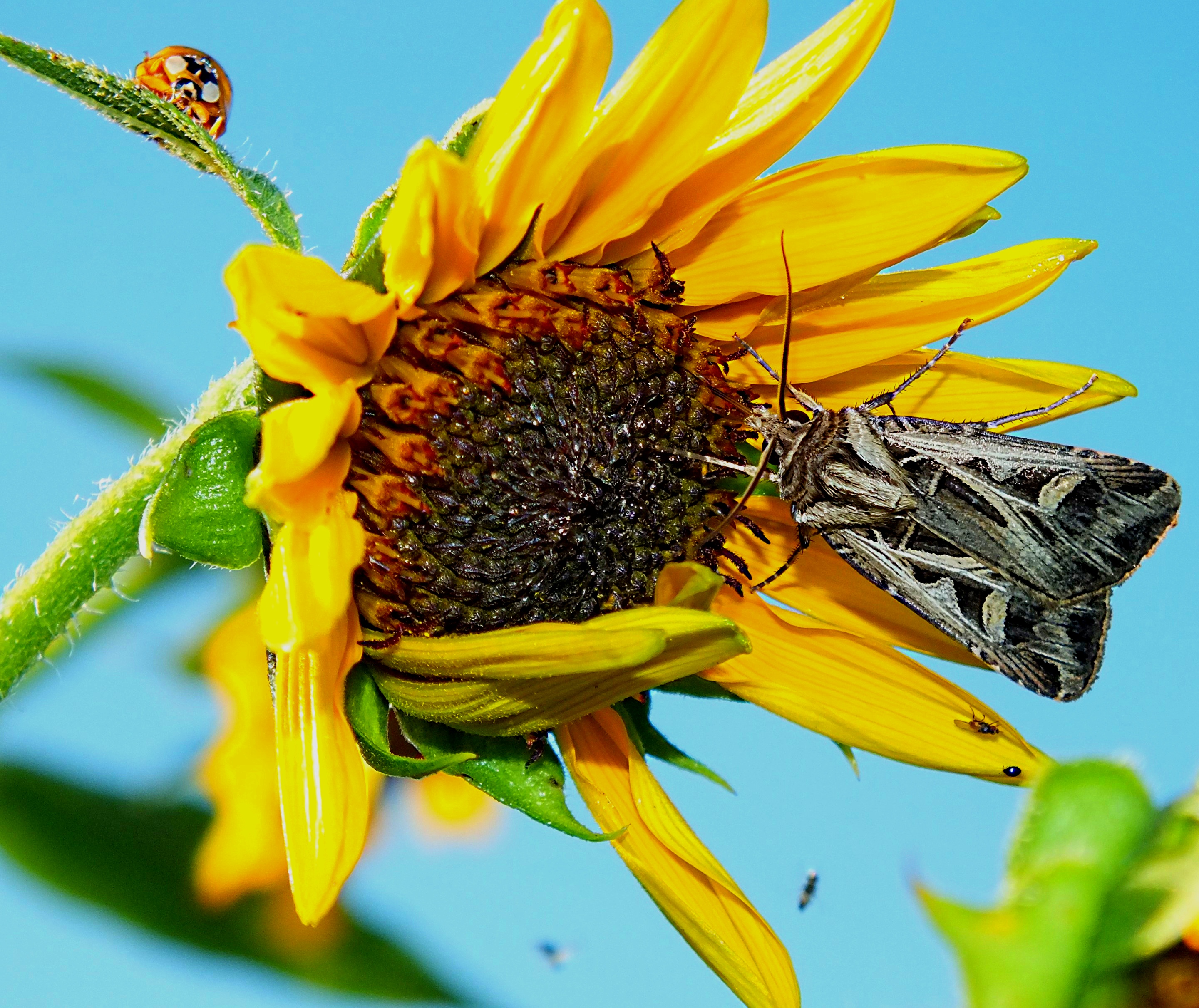
[A Dingy Cutworm Moth and a Ladybug (and other small insects) on a Wild Sunflower plant. Dingy Cutworm Moths are considered pests to crops, such as soybeans, while Ladybugs eat smaller insect pests, such as aphids, and are very beneficial.]
The Lady and the Tramp. Photo by Thomas Peace 2014
It is likely that the mind cannot fully go beyond nightly anxieties about the future if it continues to feel that it is something separate from what they are.
.
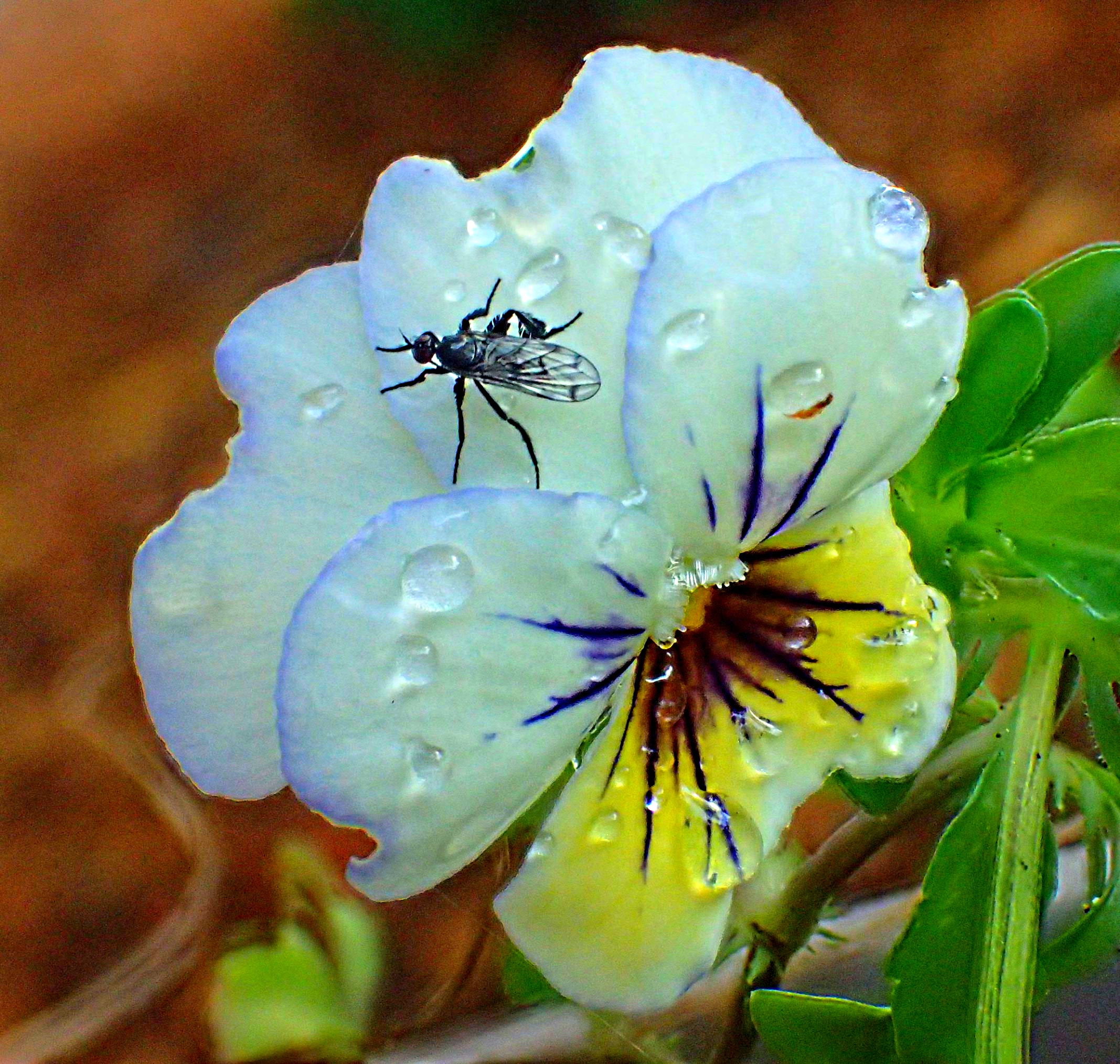
[A diminutive fly of the order Diptera resting on a very small, rain-laden Viola flower. Viola flowers tend to attract many small insects, while larger insects ignore them completely.]
Love the truth more than man-made fabrications and constructions. Look effortlessly (now and then) without separation and learned patterns.
.
[These are Sulphur Butterflies (specifically, Alfalfa Sulphur Butterflies). They like to land on wet river bank soil to absorb needed moisture and minerals.]
A male and two females. Photo by Thomas Peace 2014
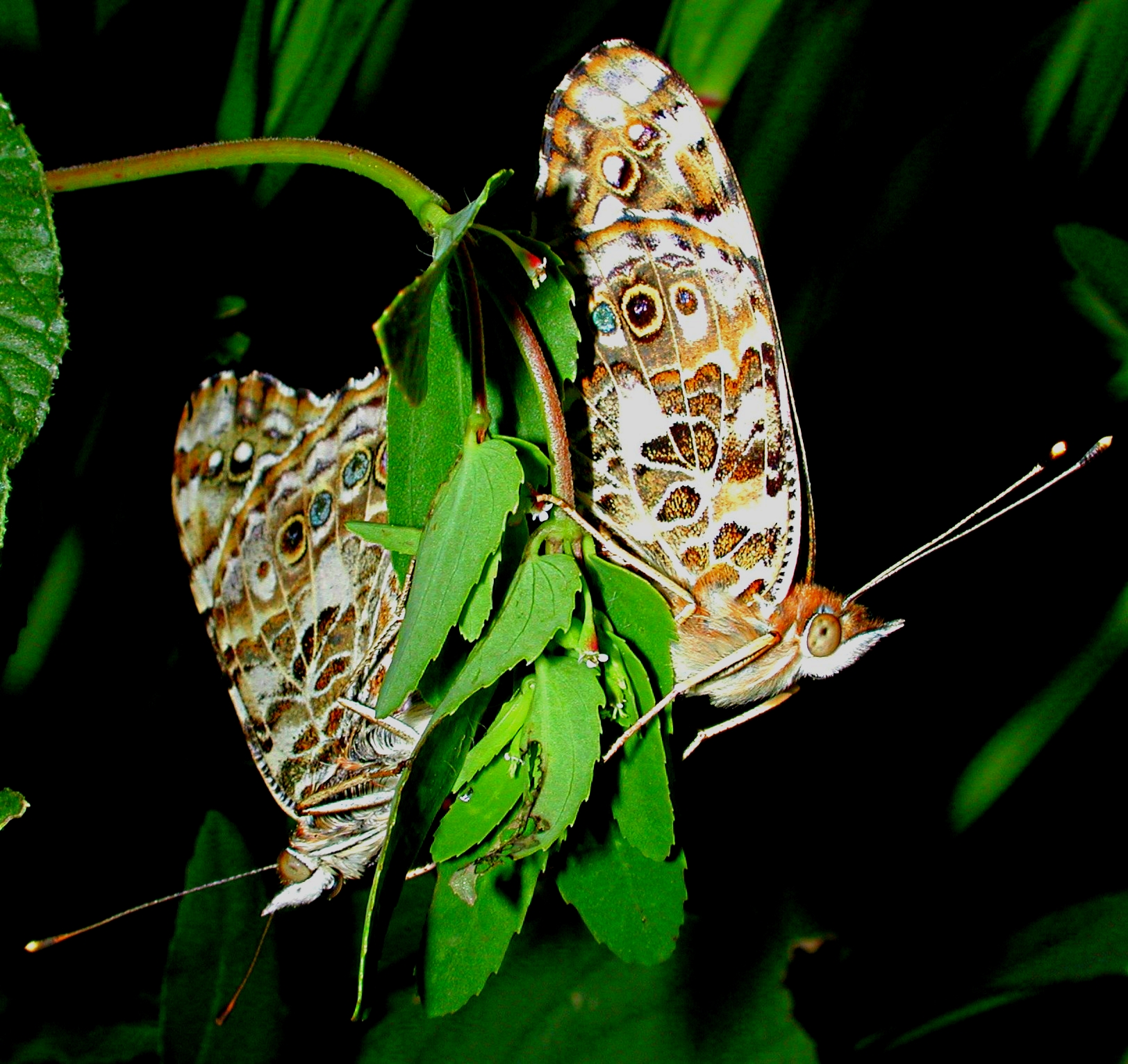
[Painted Lady Butterflies mating. They are discreetly using leaves for privacy. The Painted Lady Butterfly larva builds a webbed nest on the food plant, usually Thistle.]
It may be a losing battle — getting this sick world well — but, like a good surgeon, we’ll keep fighting anyway! 😉
.
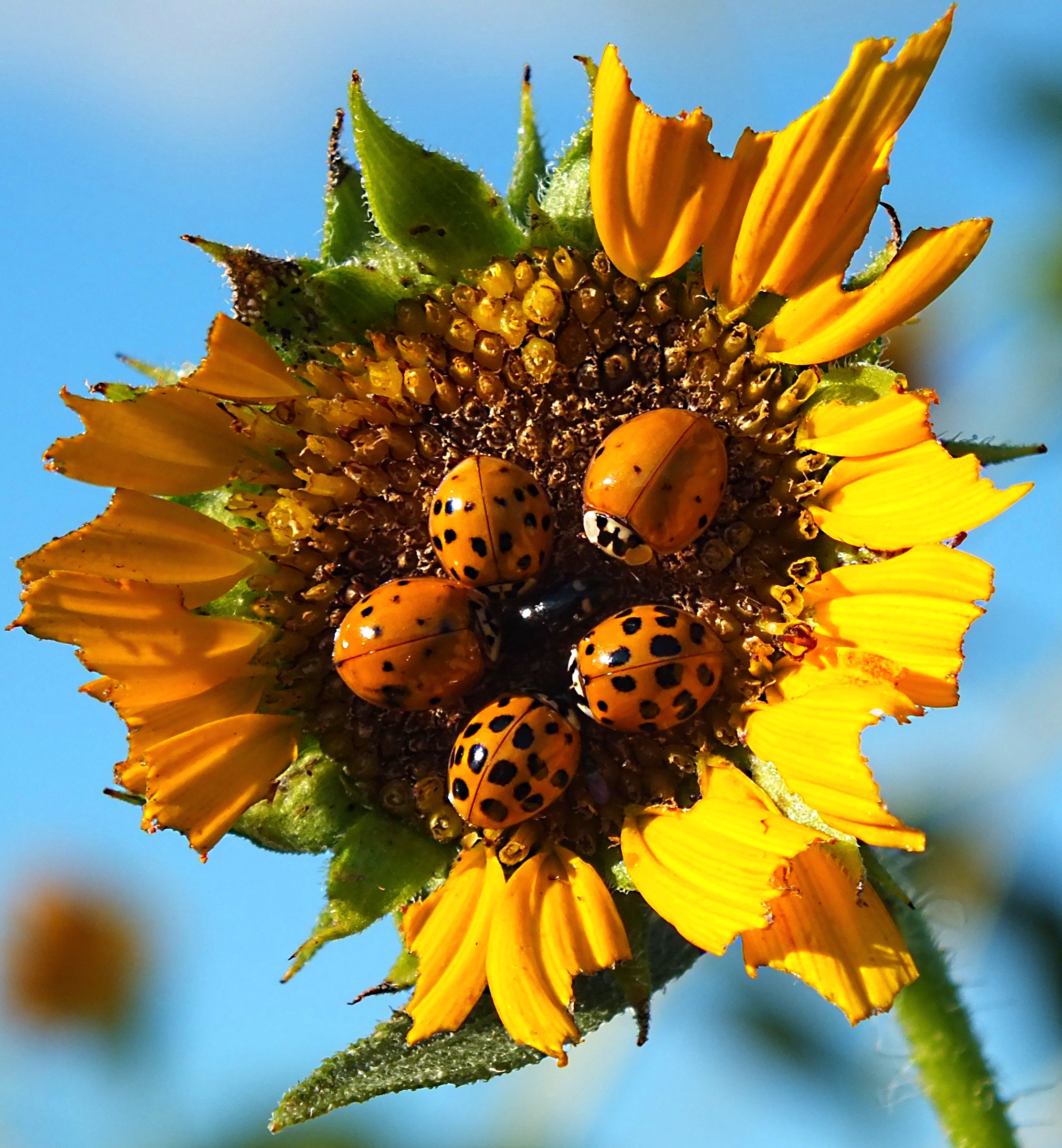
[These are Ladybugs having an important conference. Both the adults and the larvae are predators, mostly of aphids; therefore, they are very beneficial in gardens. Ladybugs are common on plants and often overwinter as adults in large swarms under fallen leaves or bark.]
Ladybugs in an important meeting. Photo by Thomas Peace 2014
You can say “Namaste” until you are blue in the face… but unless you live like all life forms are not separate from your actual self, it is rather meaningless.
.
[This huge wasp is a called the Giant Cicada Killer. The adults feed on nectar; the larva feed on cicadas. Several females use their “bushy” legs to make nests of branching tunnels in light clay to sandy soil. Front legs are used for digging; the hind legs are used for kicking out dirt. Females hunt cicadas one at a time; each victim is stung and brought back to the nest. One to two cicadas are placed in each cell; one wasp egg is laid on the last one. When this wasp was being photographed, I got quite close to it. It was aware of my presence, but seemed to be indifferent of me… seeming to know that it was equipped to attack if I truly threatened it. I used to keep bees, so was not intimidated by it; though I was glad that it respected me as I did it.]
One should always think of and help oneself first… and oneself, by the way, is the whole of humanity and life.
.
[This is a young Bullfrog, probably a female, in the security of a pond. Amphibians (and all vertebrates) evolved from fish… and this young frog has very fish-like eyes! The round disc behind the eye of the Bullfrog is the eardrum. For Bullfrogs, the eardrum is larger in males than it is in females. In males it is larger than the eye. In females, the eardrum is the same size or smaller than the eye. Female Bullfrogs grow to be larger than males. This one is very young… so it probably won’t croak soon. 😉 ]
[An elusive jumping spider. She jumped from one leaf to another plenty of times and was difficult to photograph. All those eyes signaled me out too easily! I finally got a shot and left her be!]
Enough eyes to see everywhere! Photo by Thomas Peace 2014
Interestingly, when thinking occurs, thought reacts as a virtual copy (in the form) of one’s own physical voice (as you tend to hear it). One can intelligently go beyond virtual “copyism.”
.
[This wild plant became eaten by a small — but voracious — caterpillar culprit. However, he is not the only one responsible. Look very closely and you may see other cohorts involved with the crime… and (just like criminals) they’re good at hiding!]
An insect’s priorities don’t include understanding the whole. Go beyond an arthropodan mentality.
.
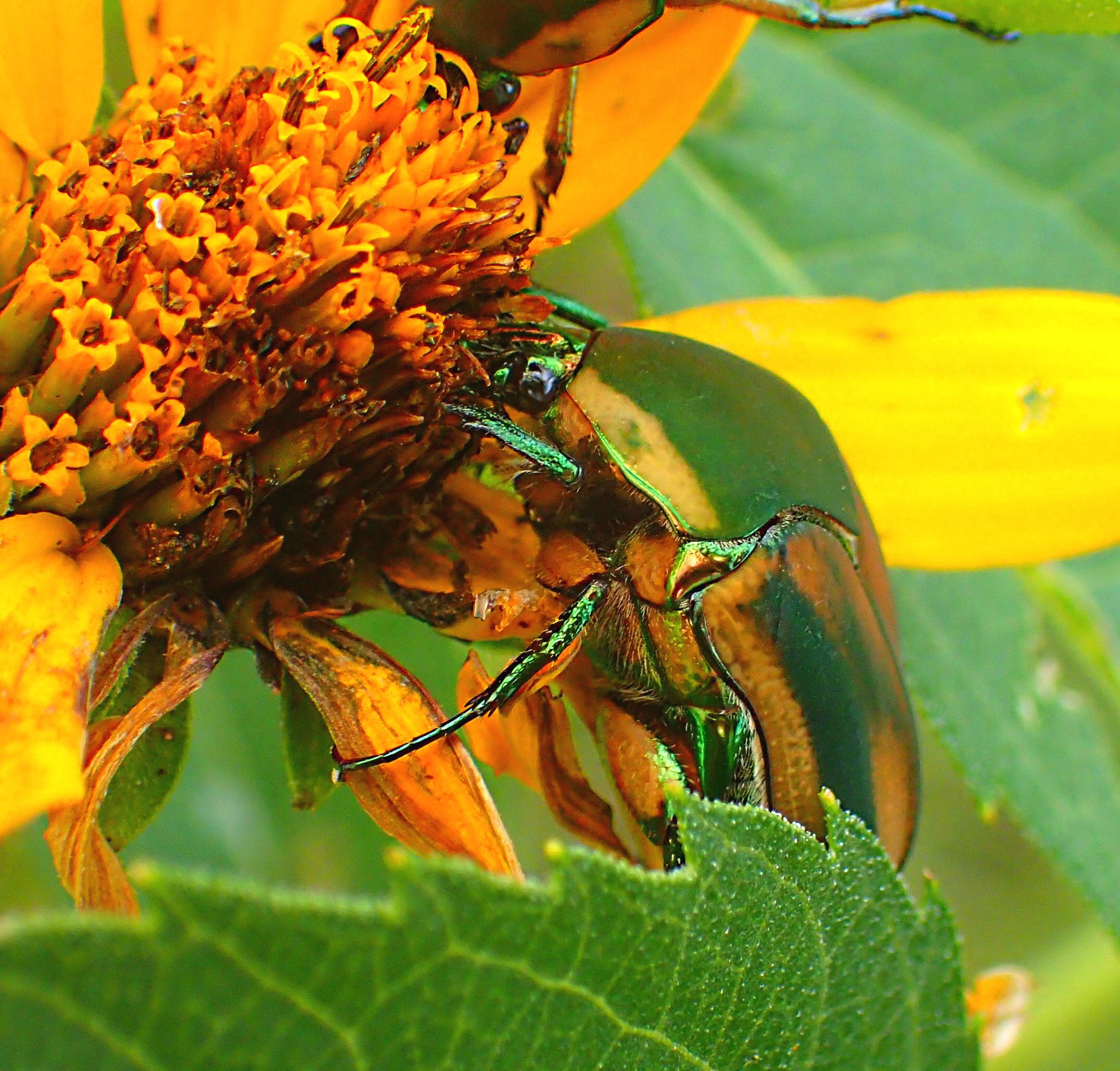
[Green June Beetles are metallic bronze-green underneath. Like other scarab oriented insects, Green June Beetles lay their eggs in the ground and their larvae develop as c-shaped grubs within the soil. Following having pupated underground, they emerge as adults in the summer and actively fly, feed, and reproduce from June–September.]
To be perceptive means to be observant, to be sensitive; and one isn’t fully perceptive if one does not have deep sensitivity and love for all living things.
.
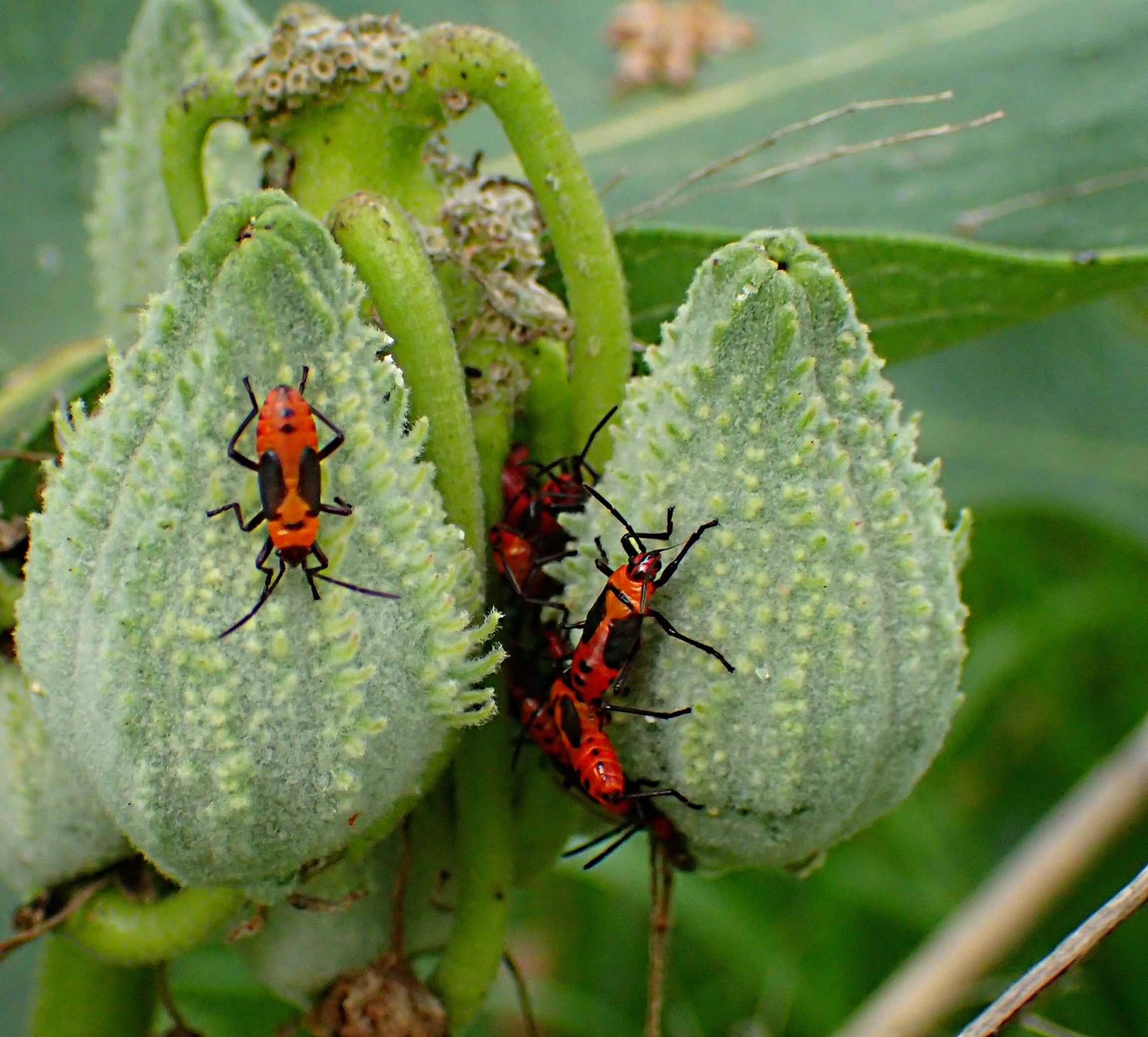
[Milkweed plants feed so many insects, yet seem to prosper and continue to do very well! True energy machines! These are nymph stages of the Large Milkweed Bug. Both the adults and young nymphs of the Large Milkweed Bug sip nectar and sap from plants and their flowers… but seem to do no significant damage. In the fall and winter they over-winter in the cottony growth of the milkweed pods. It would be nice if our homes were so edible and accommodating!]
One big happy family! Photo by Thomas Peace 2014
It’s sweet when your home is what you can eat! Photo by Thomas Peace 2014
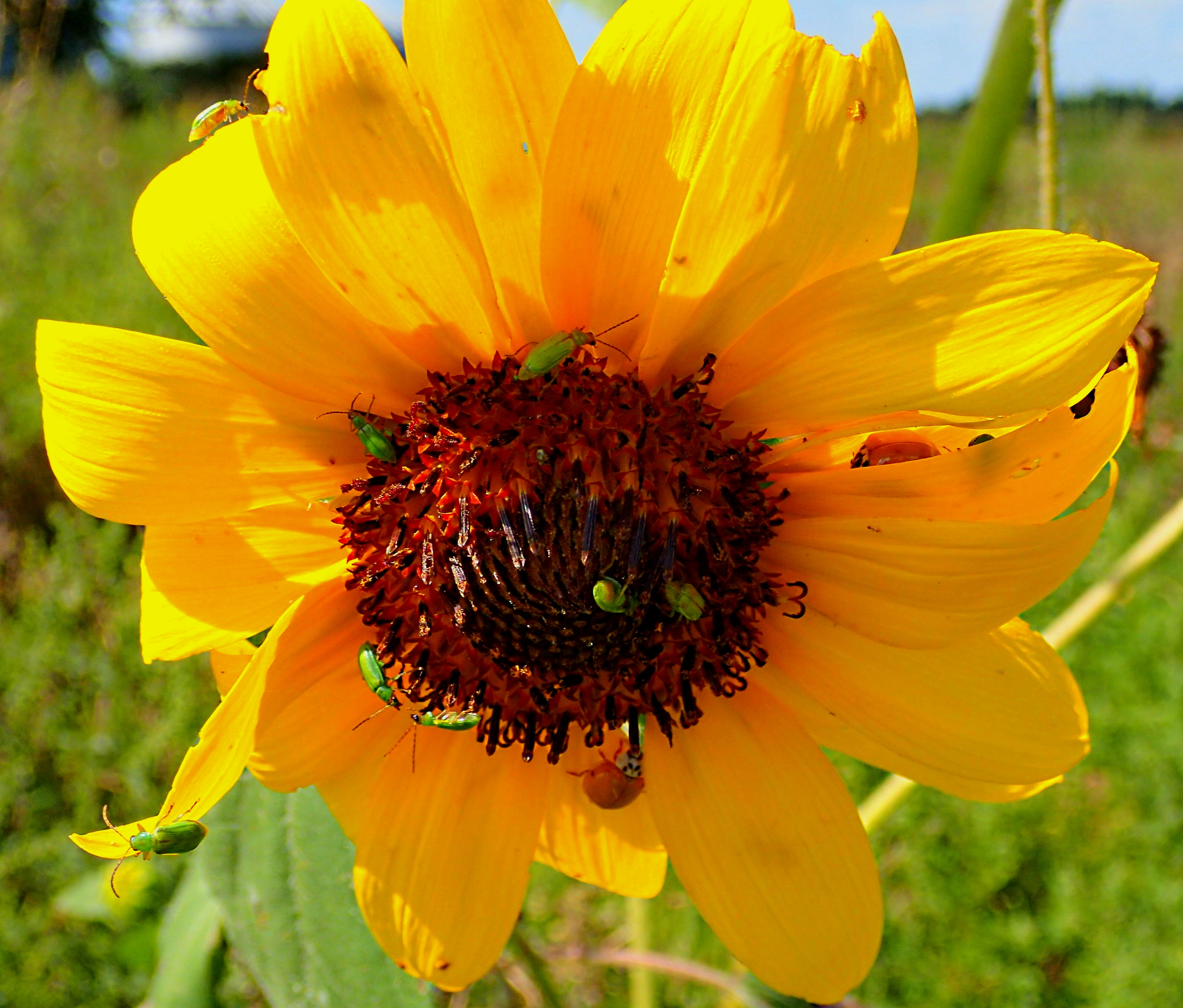
[Leaf beetles, Diabrotica barberi, and Ladybug beetles on a wild sunflower plant. Some species of Leaf Beetles are very destructive to corn crops. Ladybugs, on the other hand, eat many insect pests, though these are additionally getting the abundant nectar from this wild flower. (One can’t blame them for liking sweets!]
Can you count how many there are? Photo by Thomas Peace 2014
[This butterfly is a Silver-spotted Skipper. Skippers have some characteristics of both butterflies and moths. They tend to have large, rather stocky heads, thick-oriented bodies, and relatively short wings, spanning up to 2 inches. The antenna are set far apart on the head and end in a curved hook. Adults love to sip nectar (as this one can be seen doing with its long proboscis.]
Like a moth to a candle! Photo by Thomas Peace 2014
I’m not interested in just nonchalantly passing through life while having a lot of mundane, but essentially superficial, experiences; I want to delve deep and (no matter what the answer entails) find out about the true essence of the whole and about existence.
.
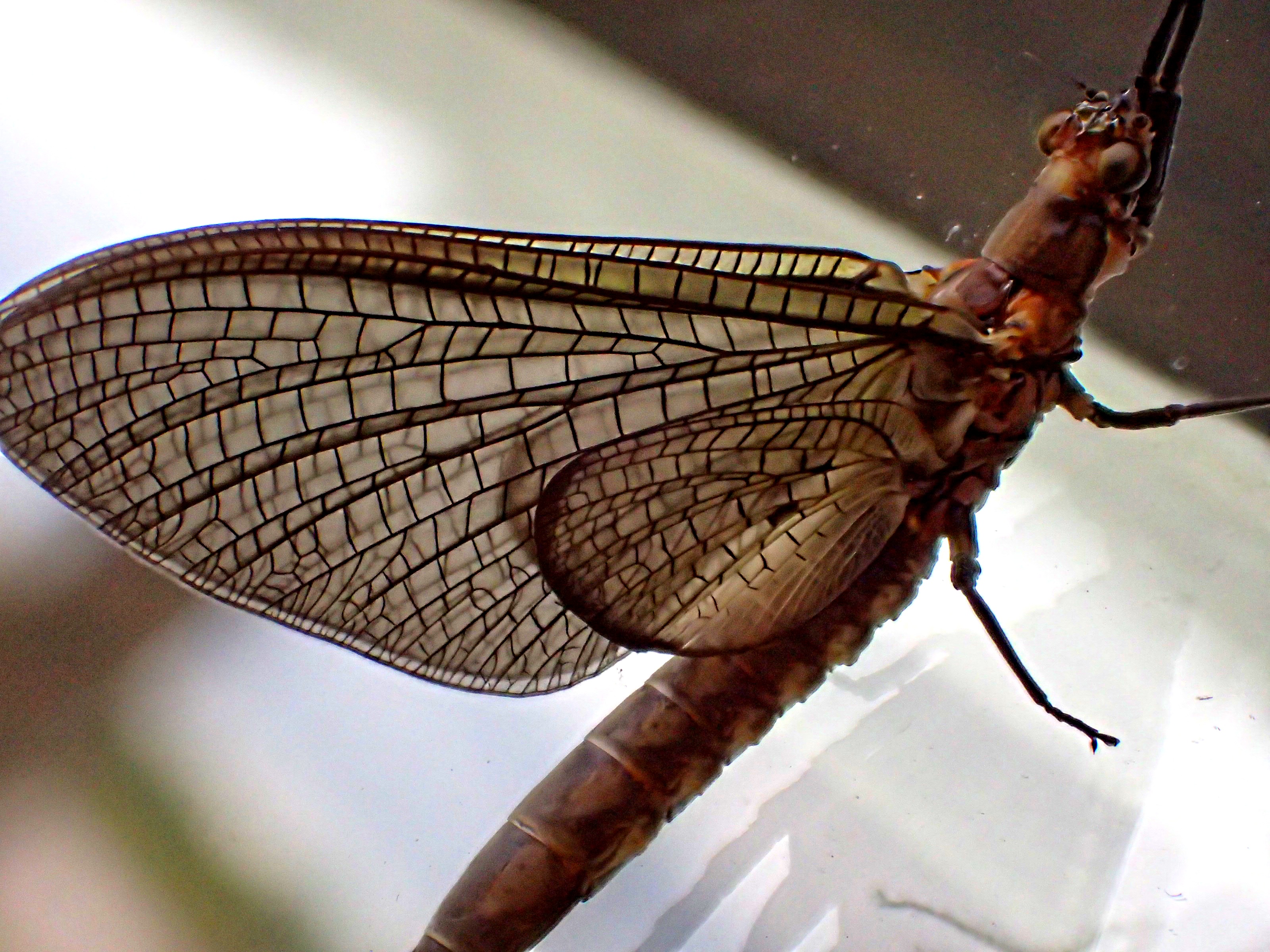
[This is close up study of an adult Mayfly resting upon an outside-oriented window pane. Though the immature “nymph” stage usually lasts around a year (living underwater), the adult stage of this order of insects usually only lives from a few minutes to a few days, depending on the species. The primary function of the adult is reproduction. Eating (for such a short adult span of time) is unnecessary; the mature adults don’t even possess functional mouth parts. Often, they emerge as adults at the same time; that way, predators get satiated and can only eat so many at once, enabling the others to survive (though their time is not long).]
An adult Mayfly: Short-lived but beautiful! Photo by Thomas Peace 2014
Fingers apart are still — and will always be — fingers together!
.
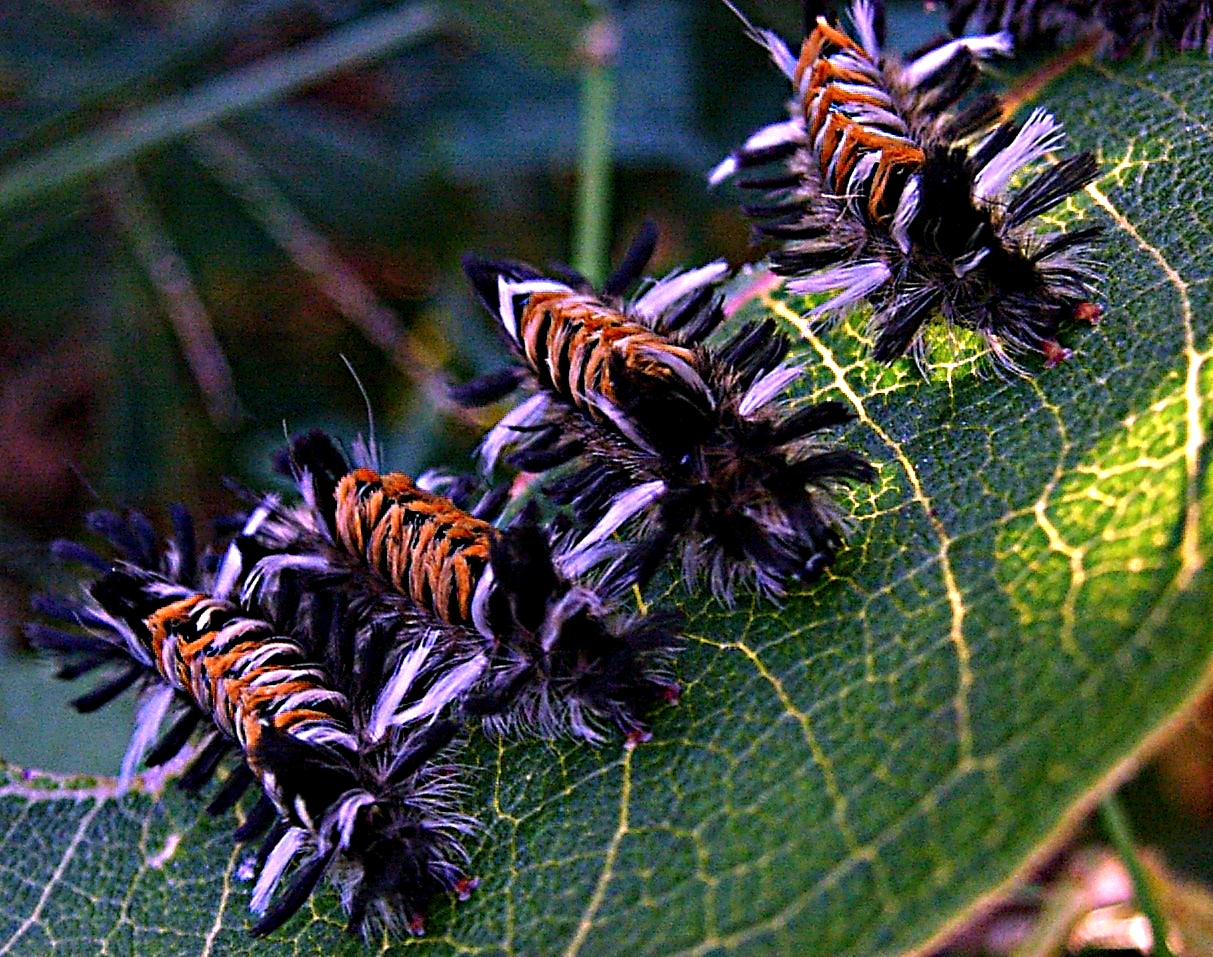
[These caterpillars — lined up and looking like puppies for sale and selection at the local pet store — are Milkweed Tussock moth (Euchaetes egle) caterpillars. They are eating and resting on a Milkweed plant. Caterpillars often look a lot different in appearance during each successive molt. Some species have completely different colors, or length of setae (fur-like covering), or may or may not have antennae or horns, for example. The variation between instars is one of the factors that makes it challenging to identify caterpillars.]
Milkweed Tussock moth (Euchaetes egle) caterpillars. This is no puppy mill! Photo by Thomas Peace 2014
Real passion in life cannot merely be taught. Real passion is not for one or two things, it is for the whole!
.
[This slender insect is a Conehead Katydid. The Conehead Katydid feeds on flowers and foliage, such as shrubs and trees. Males chirp during the day and sometimes at night with a “tsip-tsip” sound; close-up, the call resembles a continuous, second-long buzz repeated every 2 seconds.]
[This is a group of Hover Flies feeding on nectar from a Goldenrod plant. Many people mistake Hover Flies for bees; they are not bees and do not carry stingers. I love the way that they can hover in one spot (in mid-air), remaining (except for their wings) perfectly still! Adults drink nectar. The larva preys on aphids and the larvae of scale insects. It is considered to be extremely beneficial due to the eating habits of the larvae, aiding in eliminating harmful insects that attack ornamental plants and commercial crops. Often they get quite sociable and will land on you without fear.]
A true teacher is a “learning assistant” and fellow learner… not a manipulator or puppeteer!
.
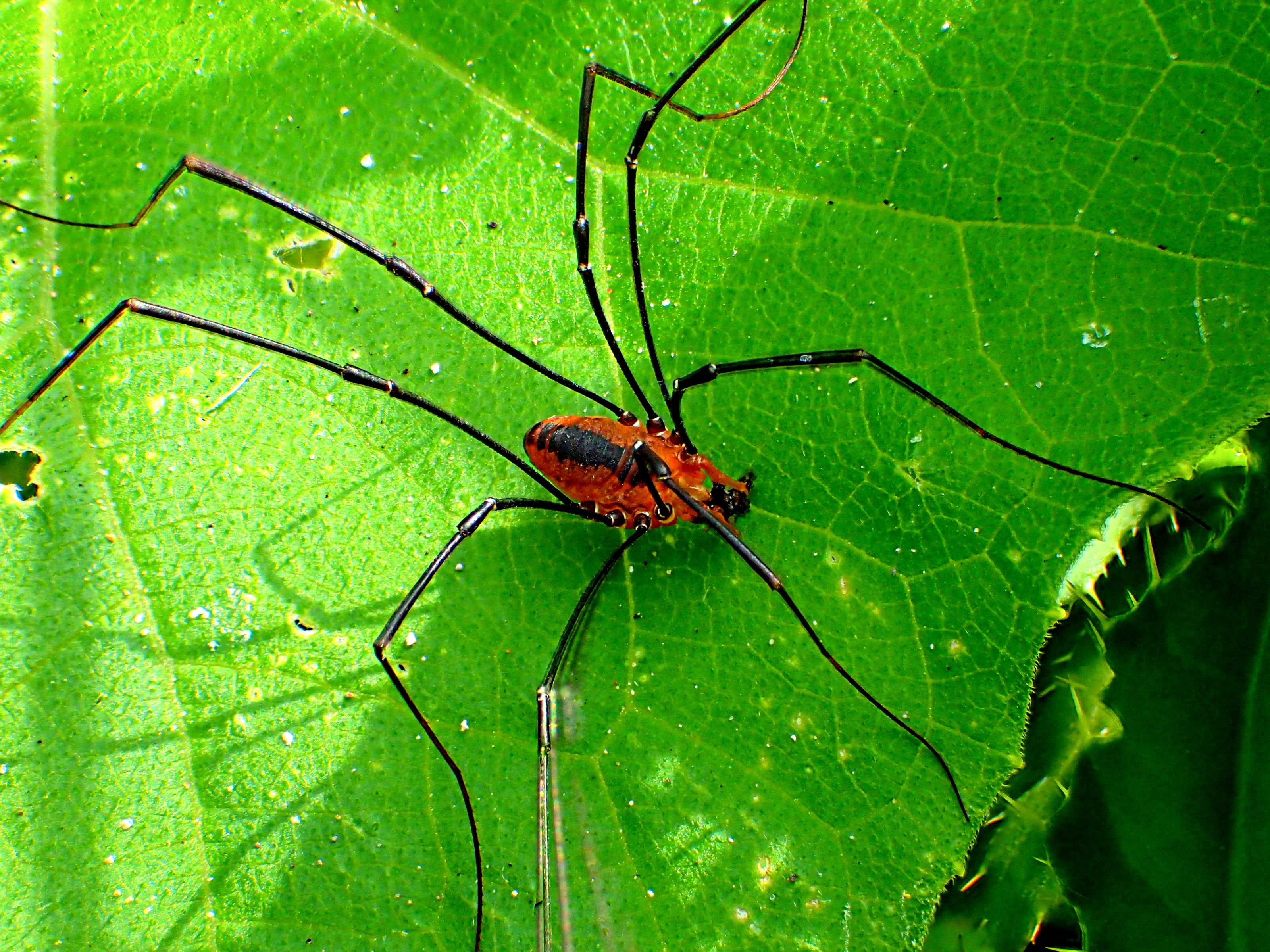
[This is a red Harvestman… often called a Daddy-longlegs. They have no venom and are harmless to human beings. Harvestmen have what are called Chelicerae, which in spiders are hollow in order to deliver venom, but in Harvestmen they are primarily used to grasp food; no venom is involved.]




















 Tom's Nature-up-close Photography and Mindfulness Blog