
All of us, in (and “as”) a succession of moments, in a series or sequence, react. In a very wise entity, however, these reactions are not always habitual, are not always the only activity taking place. In most people, conditioned into habits, what they actuate is always caused by some prior (usually some group of) antecedent factors. They may think and fully feel that they are dignified and elegant and in total control (for what they allegedly “choose”); however, they usually are a reacting part of a calculated, complex matrix devised by a larger society. Many then get stuck in mundane, dull routines and then often try to find various escapes to temporarily pull boredom out for a while. These escapes then create further reactions, many of which do not fundamentally benefit the earth nor those upon it.
What can go beyond this is real integrity, real wholeness, and soundness. To perceive integrally is to perceive beyond the fragments. Thought, being symbolic and partial, is inherently limited and fragmentary. However, most are habitually composed of (and habitually dependent on) thought and thinking. These habitual thoughts go much further (in their extent) than most realize. Thought often separates one group from another, oneself from so-called others at a distance, and the so-called central controller from what is seen (from an alleged distance) as his or her fear.
In a divisive, mad, chaotic world, can the mind exist as more than mere fragmented reaction? There is a quietness, a vast humility, beyond the shadows of spurious control and manipulation. That quietness is not the mere result of any kind of reaction, nor the product of any kind of intention or contrivance. You cannot make yourself be quiet (as so many try to do); the so-called “maker” of the quietness is a protrusion of thought; the concocted reaction from a protrusion of thought can never be genuine quietness. There must be a motiveless (effortless) perceiving without mere habitual rigamarole.
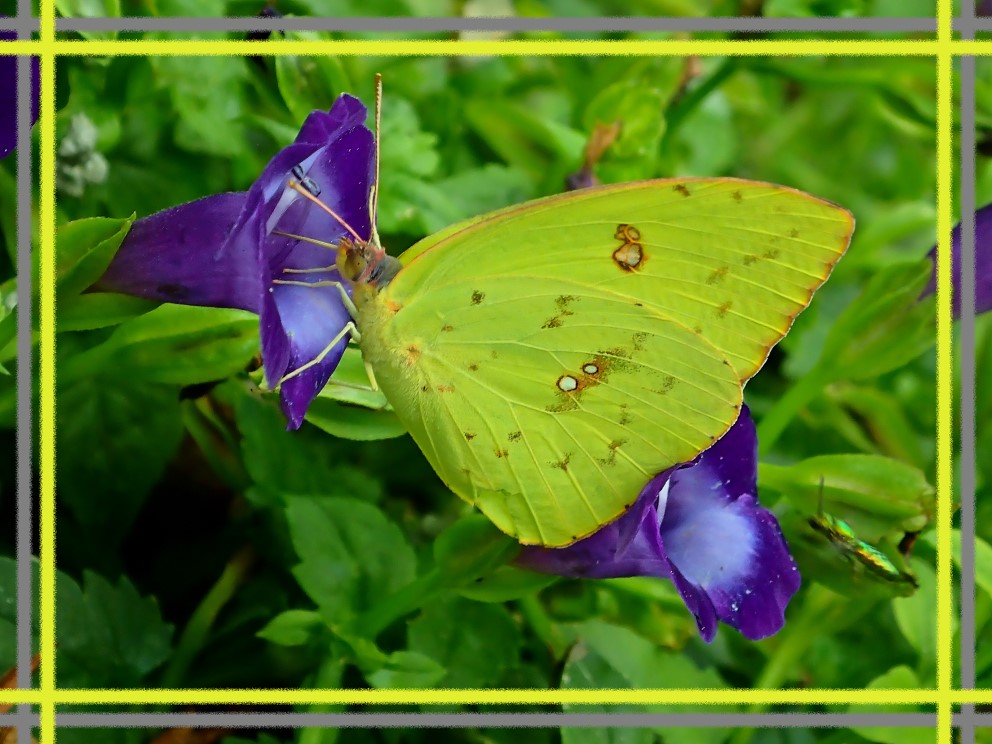
Cloudless Sulphur Butterfly Photo by Thomas Peace c. 2017
 Tom's Nature-up-close Photography and Mindfulness Blog