
.
The subject thought that it was separate from the object. At least that is what it was taught. But without all the objects, what would the subject be?
.
[Young Long-tailed Jaegar in a Pine Tree.]

Resting by the lake… Photo by Thomas Peace 2014
.
The subject thought that it was separate from the object. At least that is what it was taught. But without all the objects, what would the subject be?
.
[Young Long-tailed Jaegar in a Pine Tree.]
Resting by the lake… Photo by Thomas Peace 2014
.
We won’t ever have a clean, pristine planet if, for instance, fracking is more important for creating jobs and oil than green energy is for world health.
.
[Brown Paper Wasp… Polistes metricus. They nourish themselves on nectar and pollen but also seek prey, consisting mostly of caterpillars, to nourish their colonies’ larvae (which reside in “paper-nests.”)]

Getting a little side-snack. Photo by Thomas Peace 2014
.
Beyond separation, the river finally felt compassion for the (not so distant) fish and so put the fishing pole down forever and went home.
.
[A local largemouth bass. (Many years ago, I used to be an avid fisherman; I could even catch fish when others failed; I no longer fish whatsoever.)]

Unhooked to fishing… Photo by Thomas Peace 2014
.
Real learning is not merely absorbing. Real learning involves multi-faceted wisdom, consideration, profound passion, penetrating perception, and transcending inner/outer conflict.
.
[Close to the edge…]

Close to the edge… down by the river… Photo by Thomas Peace 2014
.
We must not merely inculcate children with mechanical, stale facts… but teach them much about compassion, empathy, and green energy.
.
[Sanddragon Dragonflies prefer to lay their eggs in streams and lakes with sandy bottoms; their larvae burrow into the sand. The abdomens of these dragonflies are of a unique shape.]

Sanddragon Dragonfly cooling off. Photo by Thomas Peace 2014
.
Nature doesn’t have its own sponsors — in the media — telling us to be less materialistic and to travel less (thereby using less fossil fuels); but big, materialistic corporations have plenty of promoters making earth-damaging practices seem “OK” and “normal.” We truly need to go beyond the advertising propaganda.
.
[Honey mushrooms along rocks on the river bank. Honey mushrooms, like most mushrooms, are just the visible fruiting body of the fungus. The main part of the organism is underground and is called the mycelium. Mycelium can spread for many miles… and this accounts for mushrooms being some of the world’s largest organisms. It is estimated that some honey mushrooms (that are very large, over many miles) are over 400 years old. (My photos, by the way, are all taken locally; I don’t travel any appreciable distance to take my photos. For instance, one walked to where these mushrooms were photographed.)]

Fruit of the mycelium. Photo by Thomas Peace 2014
.
It’s easy to harm something else when you think that it is separate from what you are. In the actual tree of life, we are all connected… all one.
.
[A frisky squirrel eating one of many acorns.]

Wisely plumping up for winter. Photo by Thomas Peace 2014
.
No one – not anybody – can accurately define what true awareness is… because true awareness is too dynamic to merely be put into words and categorized.
.
[Local natural rock-work formation. (There is, by the way, something man-made in this photo. Can you see it?)]
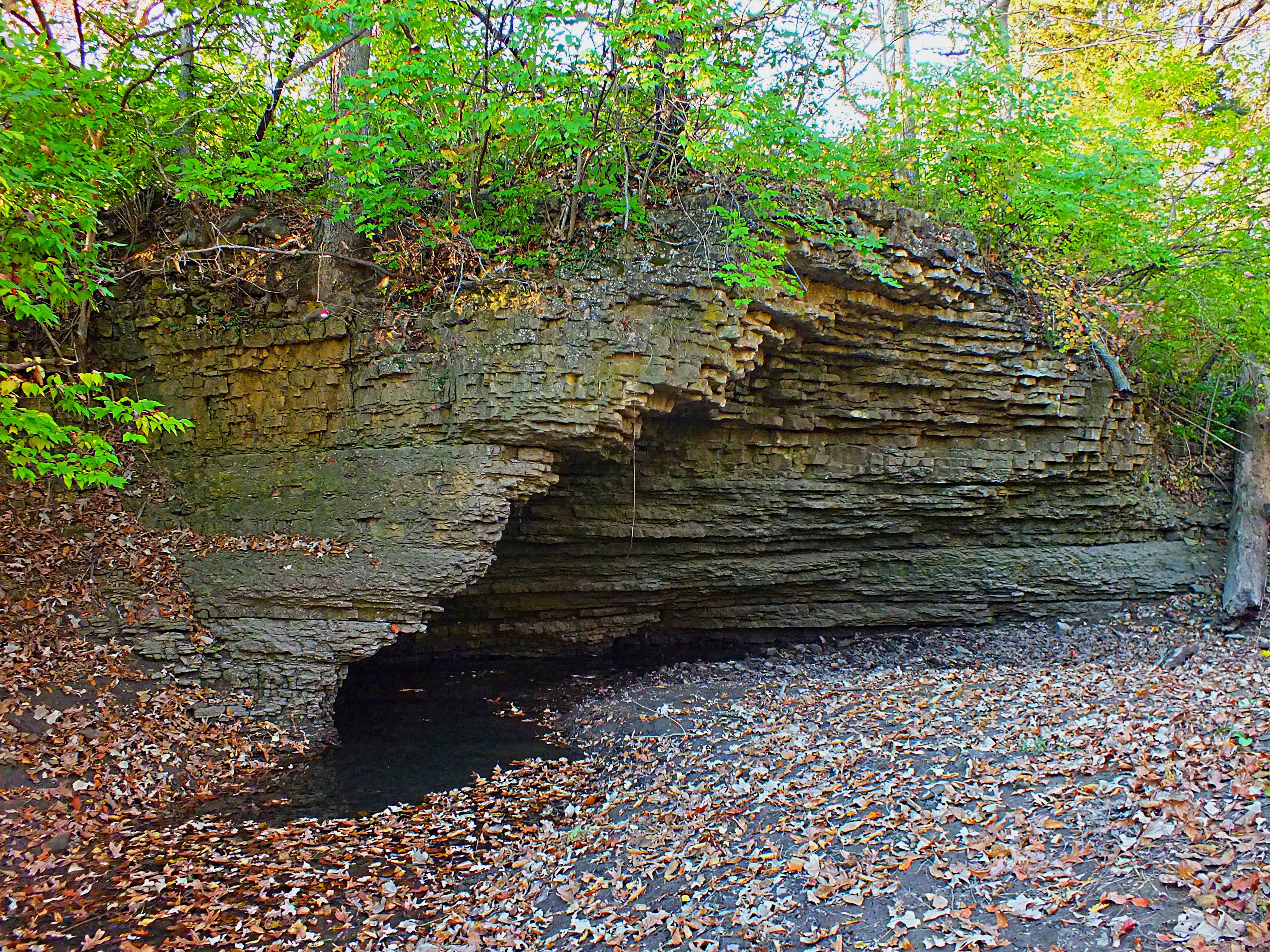
Natural beauty! Photo by Thomas Peace 2014
.
If you’re like me, you don’t let your good looks go to your head.
.
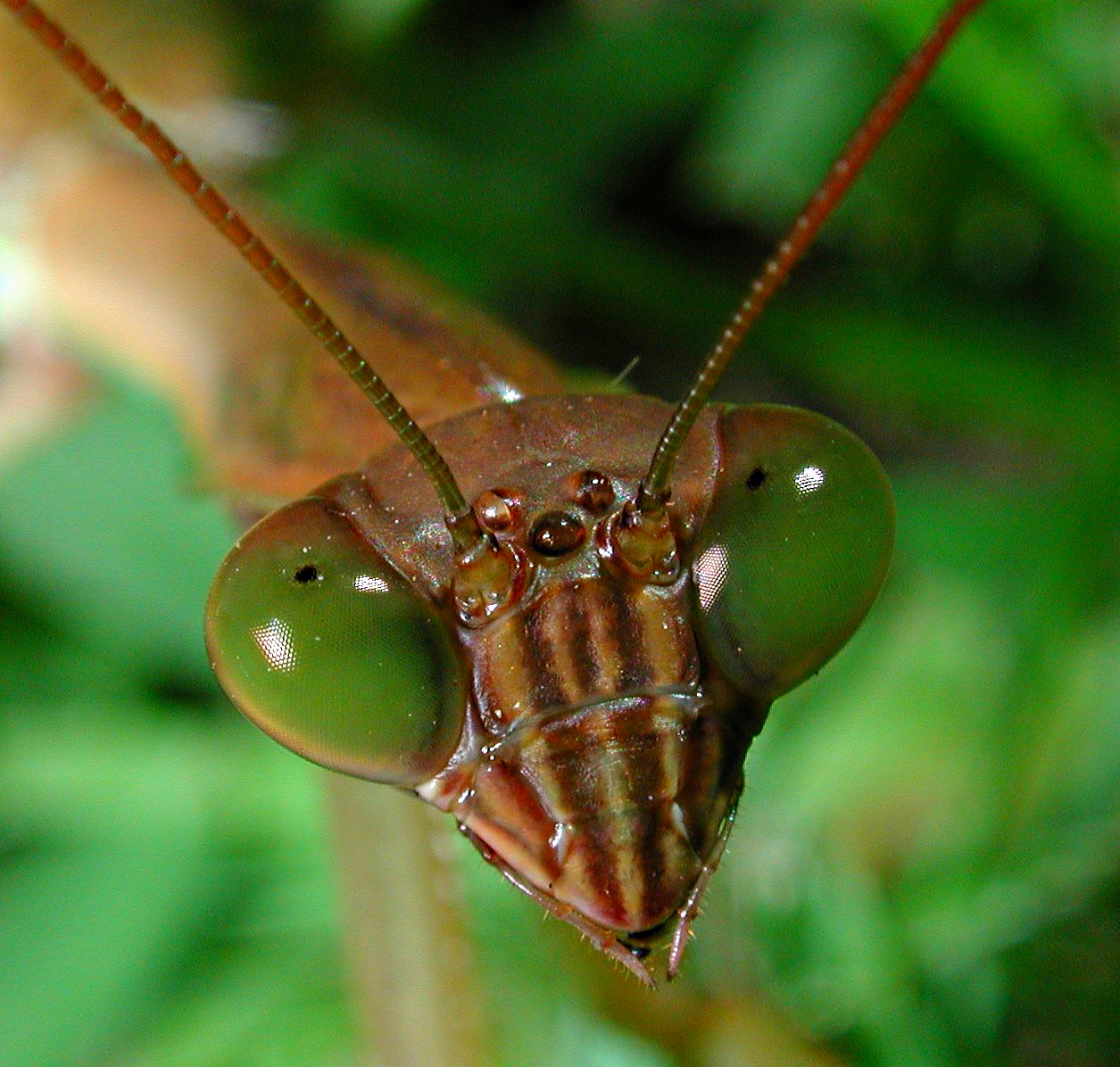
Mantis of the year! Photo by Thomas Peace 2014
.
A mind that is often aware without needing things or thoughts to “be aware of”… is a supremely free, non-dependent, unique, and rather majestic mind.
.
[Dragonfly in flight…]

Free and uncluttered…. Photo by Thomas Peace 2014
.
A mind that does not depend on images throughout the day (to be aware) can sleep without crass and crude dreams occurring whatsoever.
.
[Leaf-footed Bug with its footing on a leaf. In these, the first three antenna segments are red or reddish brown; the forth is contrastingly yellow-orange or nearly white.]

Leaf-footed Bug exploring. Photo by Thomas Peace 2014
.
A mind that merely clings from one experience to another in order to be happy is, unfortunately, a rather infantile, impoverished state of affairs; it need not be that way.
.
[Poison Ivy leaf cluster in the fall.]

Not a good thing to walk through! Photo by Thomas Peace 2014
.
Love often acts without self-motivation.
.
[Grapeleaf Skeletonizer Moths are interesting in that they are both diurnal and nocturnal. I’ve got the same attributes for sure!]

Night or Day… Day or Night! Photo by Thomas Peace 2014
.
This is how — being a vegetarian — I shoot my turkeys for Thanksgiving. (It’s not the best shot; they’re not that easy to shoot!)
.

I bagged two at once! Photo by Thomas Peace 2014
.
Going far beyond depression – rarely, if ever, letting it flower – is an essential function of a stable, healthy, compassionate mind.
.
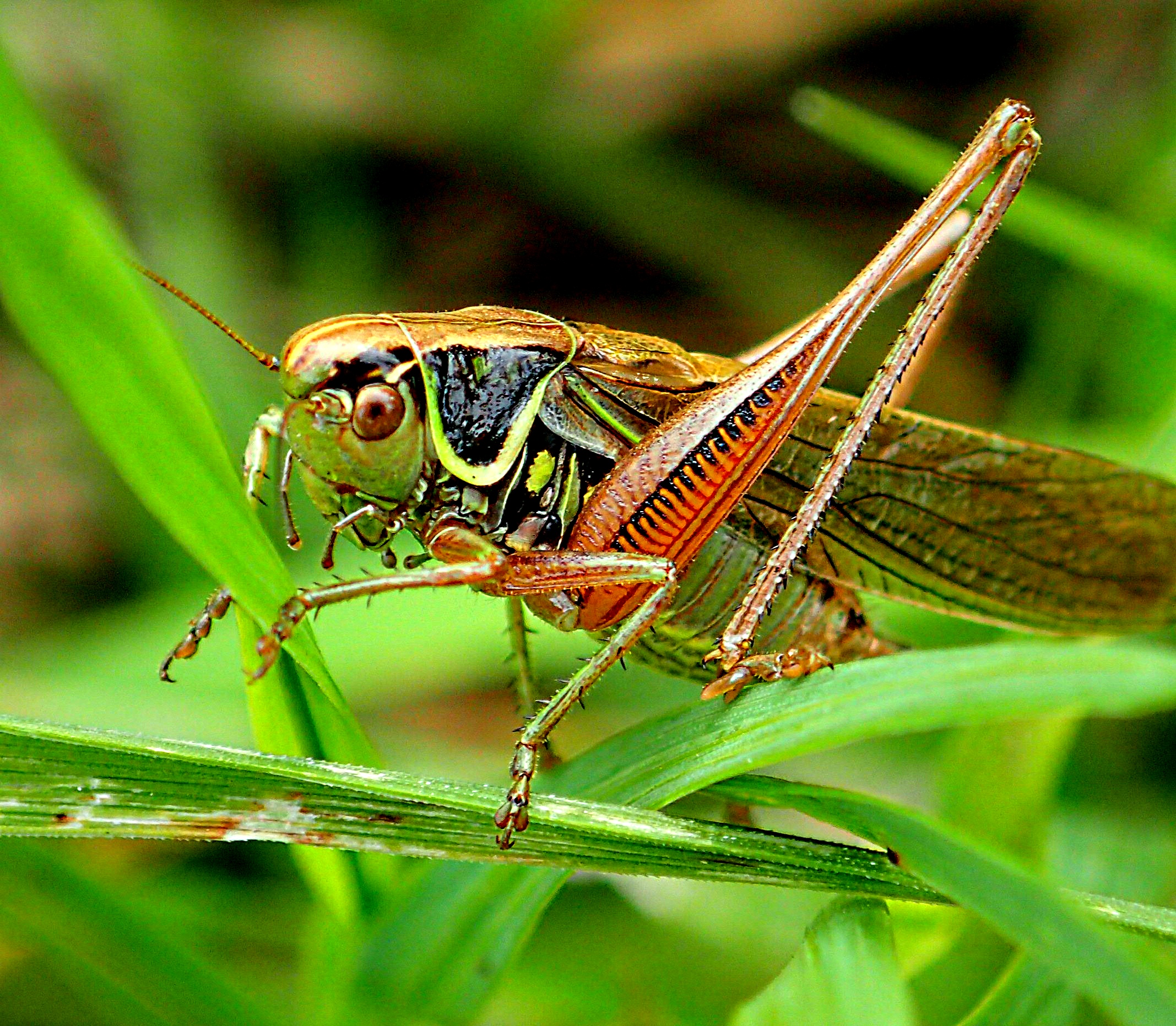
Together in nature. Photo by Thomas Peace 2014
.
In most minds, the thought of “I” or “me” is the most exalted, elevated and high-ranking; but it is just another thought; real wisdom happily exists beyond such projections.
.
[Black Turpentine Beetles eat the inner, lower bark of pine trees.]

Tree eater! Photo by Thomas Peace 2014
.
The left arm can hate the right arm and think that it is separate… but it isn’t. Peace takes intelligence.
.
[A unique variety of Heal All Plant growing on a river bank.]

Heal All. Photo by Thomas Peace 2014
.
I’d much rather listen to a natural, babbling brook than the babbling from all the bourgeois, self-important, stale politicians and bureaucrats.
.
[Close-up of a natural, babbling brook that one was passionately listening to.]

Alone again… naturally… Photo by Thomas Peace 2014
.
True enlightenment — not all of that phony stuff — involves being beyond the “conditioned”; few ever exist in (and “as”) the timeless, the “unconditioned.”
.
[A female Cabbage Butterfly resting. They were introduced into the U.S. from Europe at around 1860. Well… we’re used to immigrants!]

She’s not a legal citizen… but I won’t turn her in! Photo by Thomas Peace 2014
.
The only true and profound revolution worth fighting for is a nonviolent, spiritual one.
.
[A Meadow Spittlebug weathering out the rain. They are very small and feed on a variety of weedy plants. Adults readily jump or fly when disturbed.]
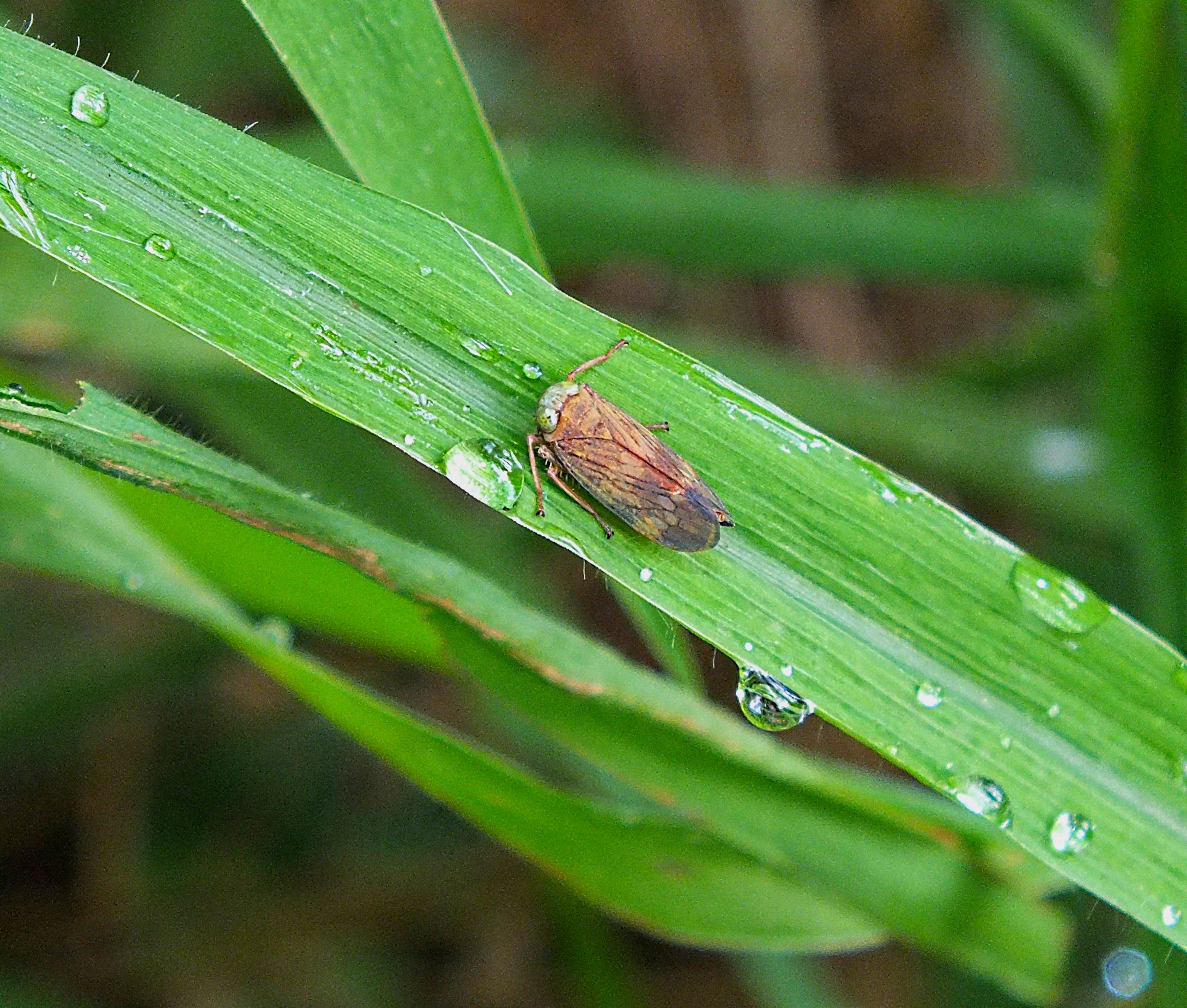
Raindrops keep fallin’ on my head… Photo by Thomas Peace 2014
.
Happiness isn’t a warm gun; happiness is a warm (compassionate) heart.
.
[Red Milkweed Beetles, I think, are among the most evolved and “intelligent” insects in our area. As I’ve mentioned before, sometimes when I approach Milkweed Plants these beetles will deliberately fly at a rapid rate into me, striking my face repeatedly to entice me to leave. Some panic and fly away. This one decided to “play dead.” It fell from a Milkweed leaf above. After I backed up and watched from a distance for a while… it subsequently straightened itself out and flew away. I laughed at its ruse!]
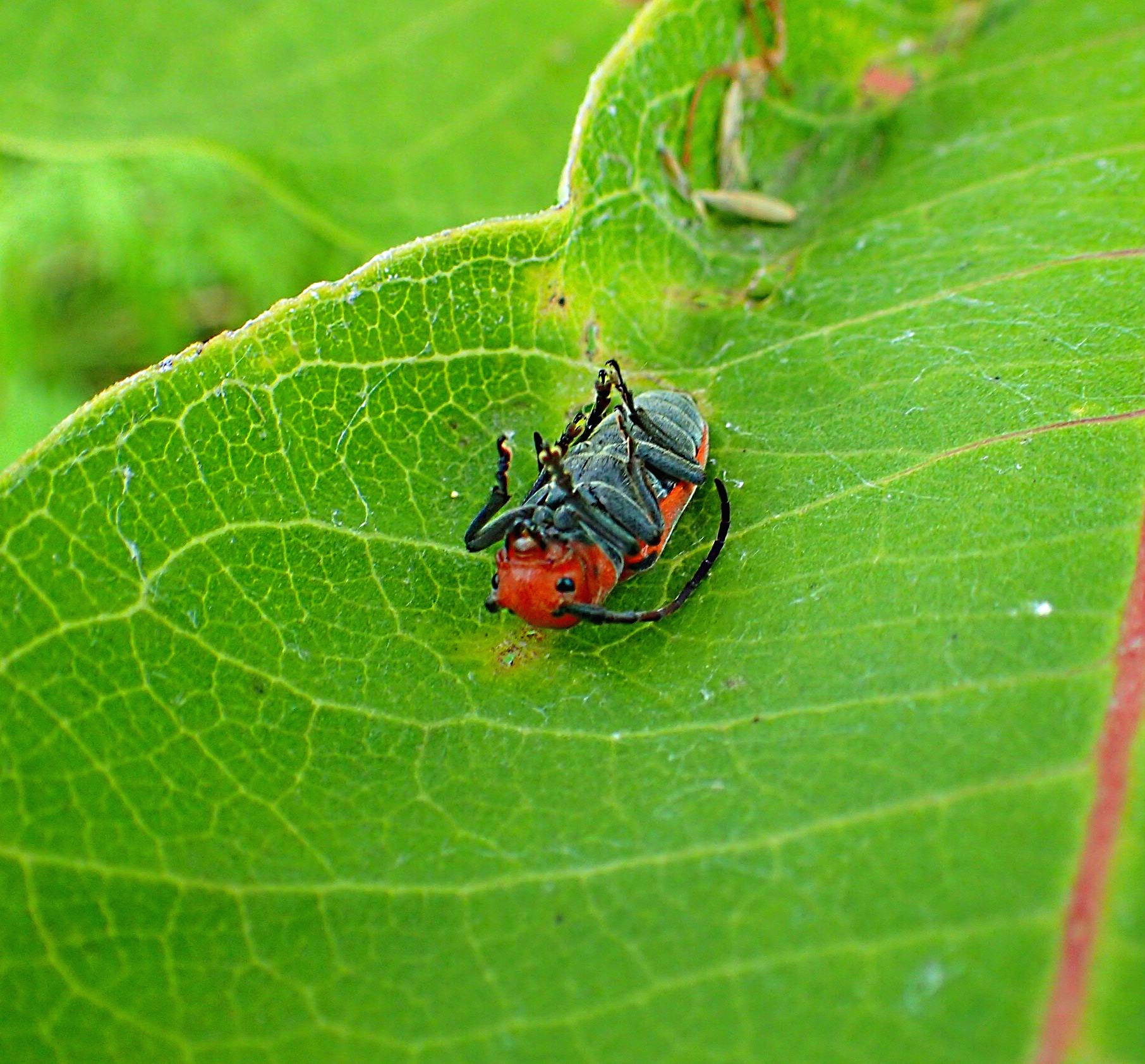
May he rest in peace! Photo by Thomas Peace 2014
.
Poise is the elegance and sound balance that a truly aware and, hence, compassionate mind has… without following blueprints.
.
[A Blue Bottle Fly and a Lady Bug. Blue Bottle Flies are most active during spring and fall. Lady Bugs are active spring through fall.]

A lady and her bottle. Photo by Thomas Peace 2014
.
In life, everything hangs in the balance… (even if you are unbalanced).
.
[This Steel-blue Cricket Hunter is not, currently, interested in hunting any crickets. Adults drink nectar. Larvae feed on crickets and grasshoppers.]
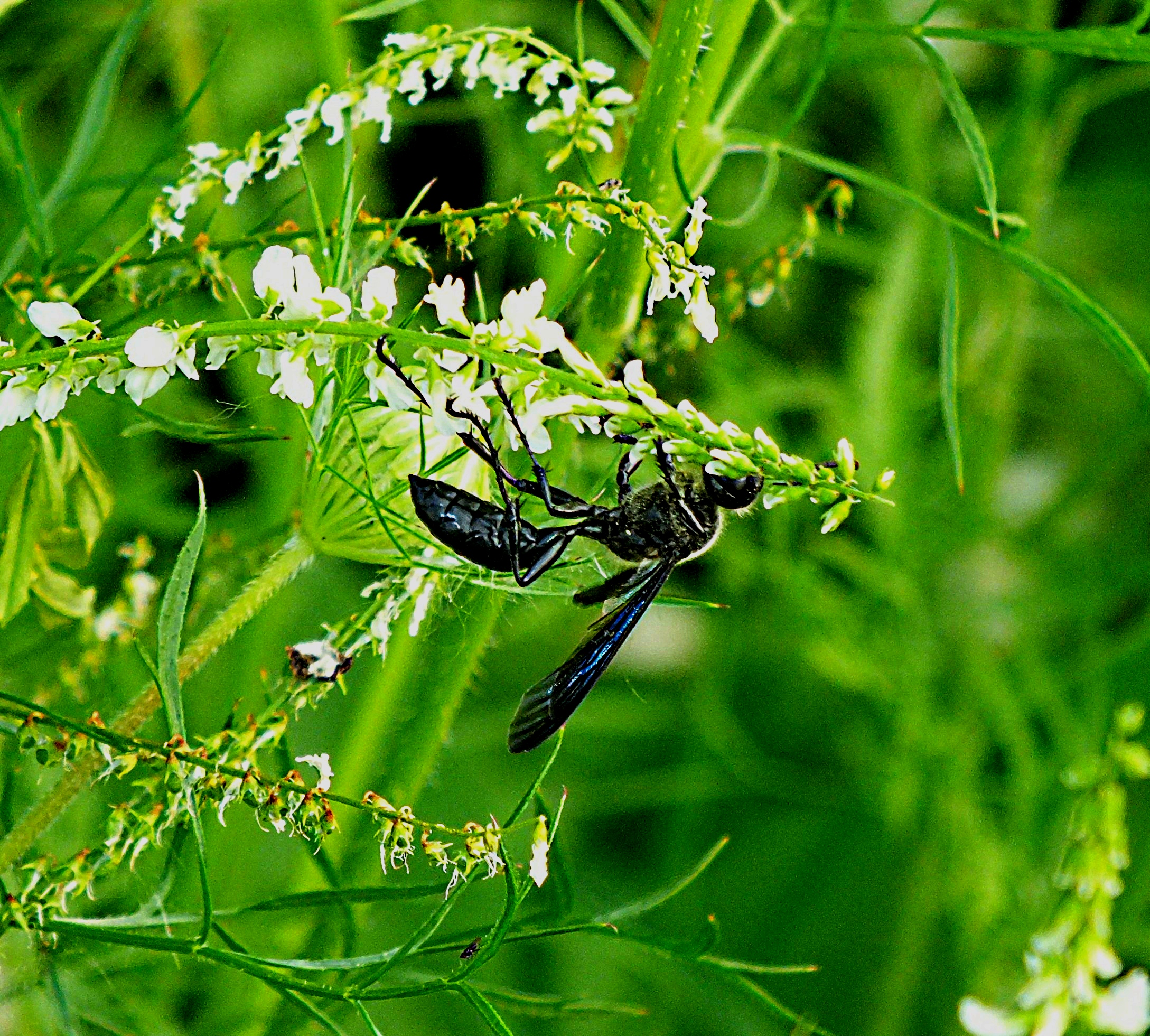
Hanging in the Balance. Photo by Thomas Peace 2014
.
Give a living, potted flower to an elderly friend… whom you expect nothing in return except for maybe a big, fresh smile!
.

Lily. Photo by Thomas Peace 2014
.
Man may exploit nature, use nature, try to cultivate nature, neglect nature, and even allow nature to be destroyed; but, in the end, nature always prevails.
.
[Wild Grapes, using a tractor as an arbor.]
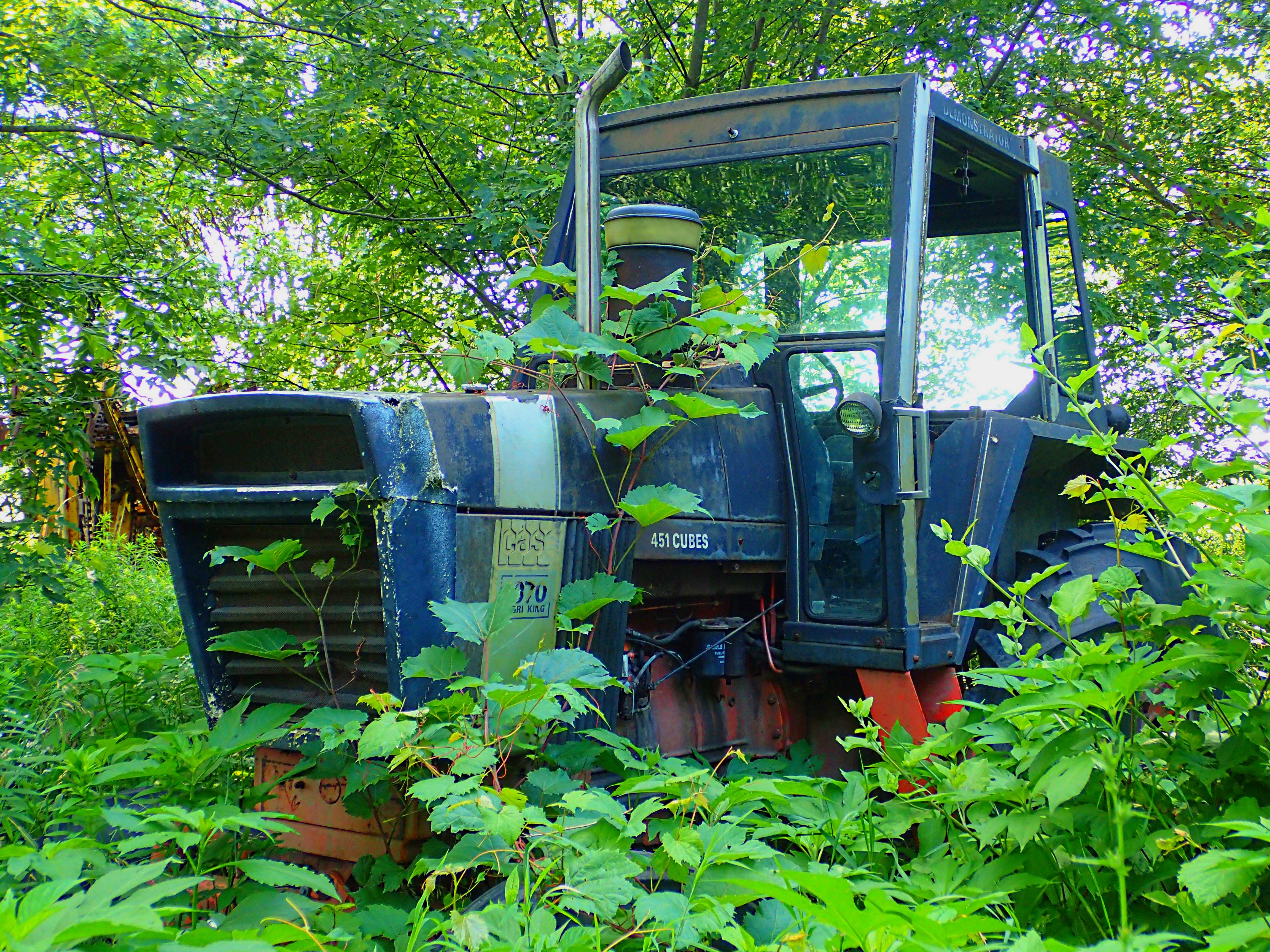
451 Cubes ain’t diddly. Photo by Thomas Peace 2014
.
In a big way, everyone in the whole world is facing in one direction.
Can you turn around?
.
[These are Tetras in one of our aquariums… all facing in one direction. The ones with the red dot on their sides are called Bleeding Heart Tetras. The others are Black Tetras. The plants are a type that grow on rocks or logs and do not need soil; they are called Anubias coffeefolia.]
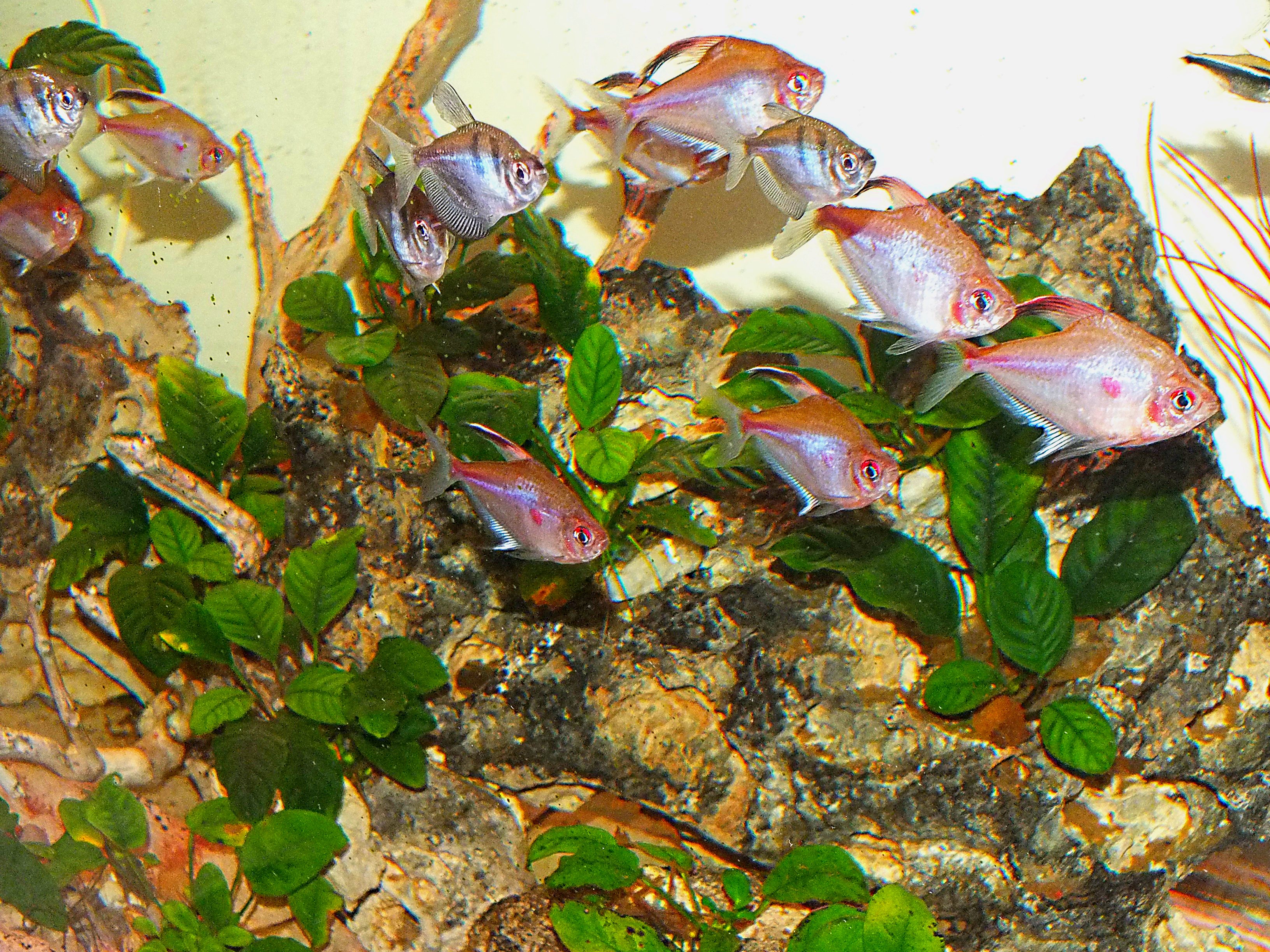
One direction. Photo by Thomas Peace 2014
.
True happiness is not merely an acquisition… it’s a wise, intelligent, aware, and blissful state of being and non-being.
.

Go beyond grasping. Photo by Thomas Peace 2014
.
One need not wince at one’s fears and endlessly run away from them if one intelligently realizes that one is not at all separate from what they are.
.
[A couple of Fruit Flies and a hiding Lady Bug. Though the Lady Bug is carnivorous, the Fruit Flies need not worry; they are too large. The Lady Bug goes after even smaller insects, such as Aphids.]
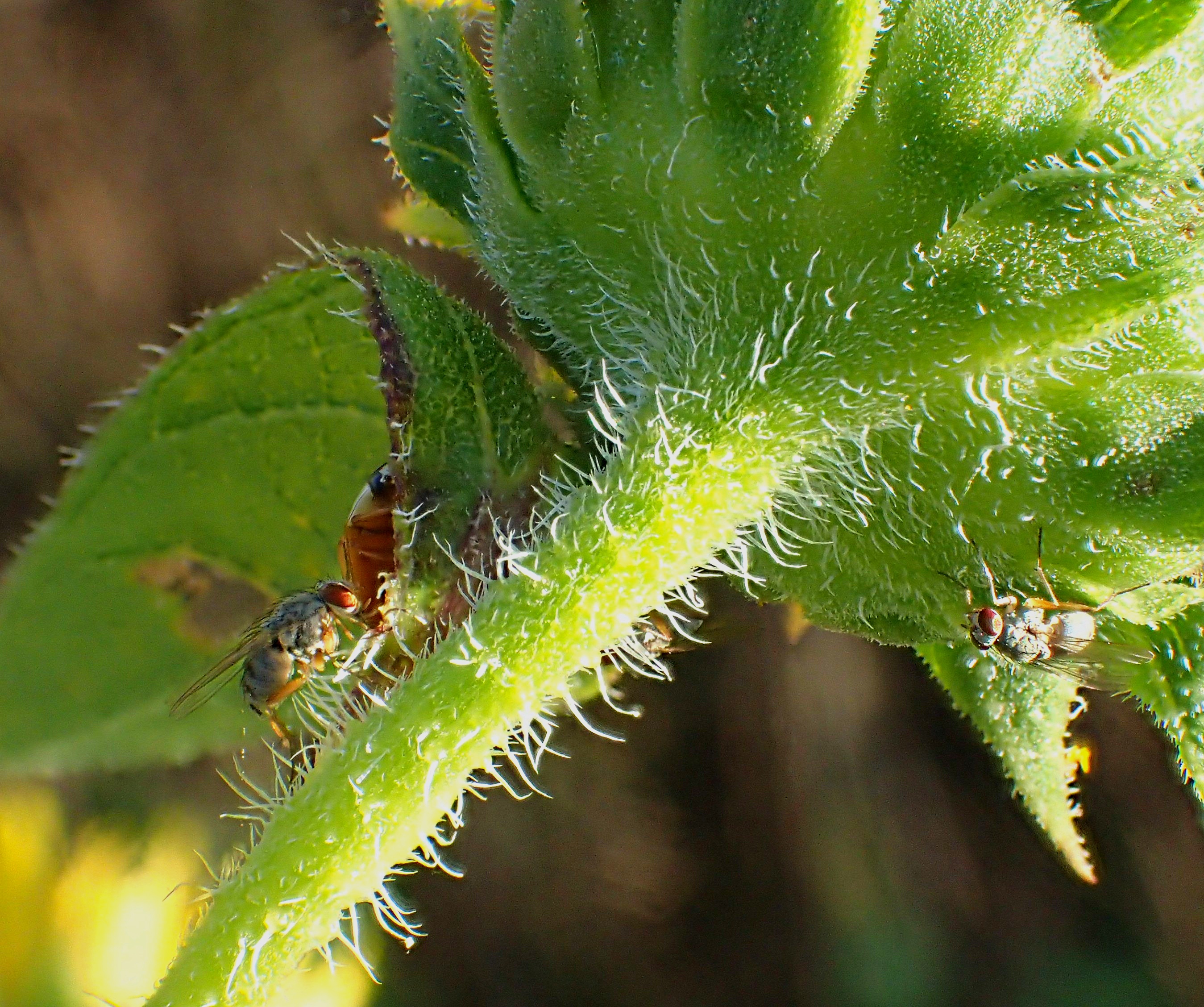
A good day to explore. Photo by Thomas Peace 2014
.
If you bully the small one… you are bullying the whole, bullying life’s child.
.
[A Hover Fly and a couple of other small insects on a wild Chicory Flower.]

Little and frail. Photo by Thomas Peace 2014
.
The learner is the learned; the controller is the controlled; the reader is the read.
.
[A Red-winged Blackbird informing me that I’m in “his” territory. I promptly departed.]
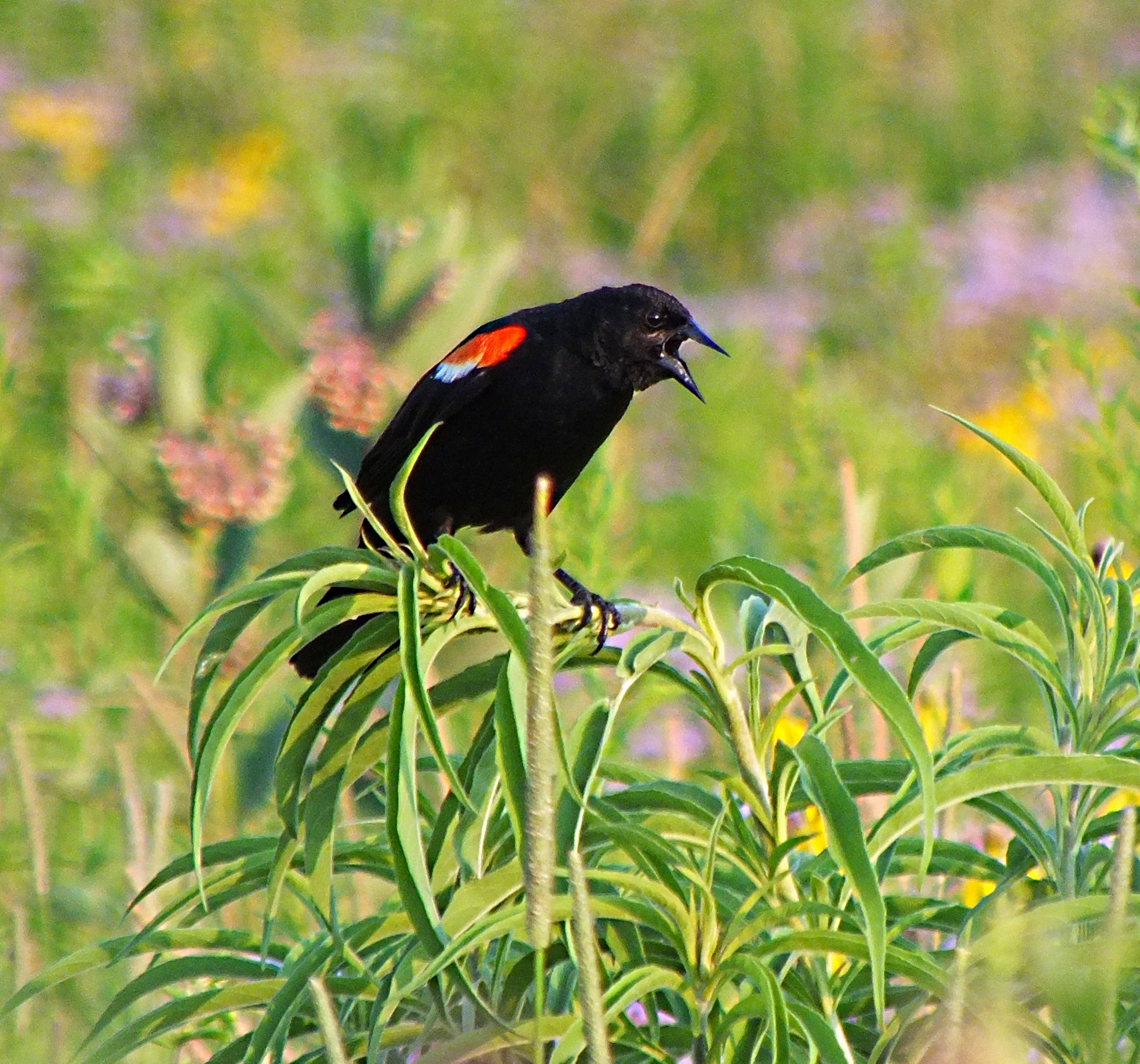
This vast spot is not big enough for the both of us! Photo by Thomas Peace 2014
.
True insight is instantaneous (and timeless)… no time (or practice) is involved for it to finally come about.
.
[From earlier this year… these are the Stamen of a red Lily Flower. The Anther is the top part of the Stamen and contains the Pollen, the male reproductive cells. The Filament is lower down and holds the Anther.]

Pollen machines. Photo by Thomas Peace 2014
.
Please don’t neglect the bountiful beauty of nature… which includes your own natural body and taking good care of it (and mother earth).
.
[Polyporus squamosus , called Dryad’s Saddle or Pheasant’s Back Mushroom, is a mushroom that is low growing and has very scaly caps. This mushroom cluster is commonly attached to dead logs or stumps at one point with a thick stem. This mushroom is in a log crevice as the logs floats in a local river. It causes a white rot in the heartwood of living and dead hardwood trees. The name “Dryad’s saddle” refers to legendary creatures in Greek Mythology called Dryads who could conceivably fit and ride on this mushroom, whereas the pheasant’s back analogy derives from the pattern of colors on the bracket matching that of a Pheasant’s back.]
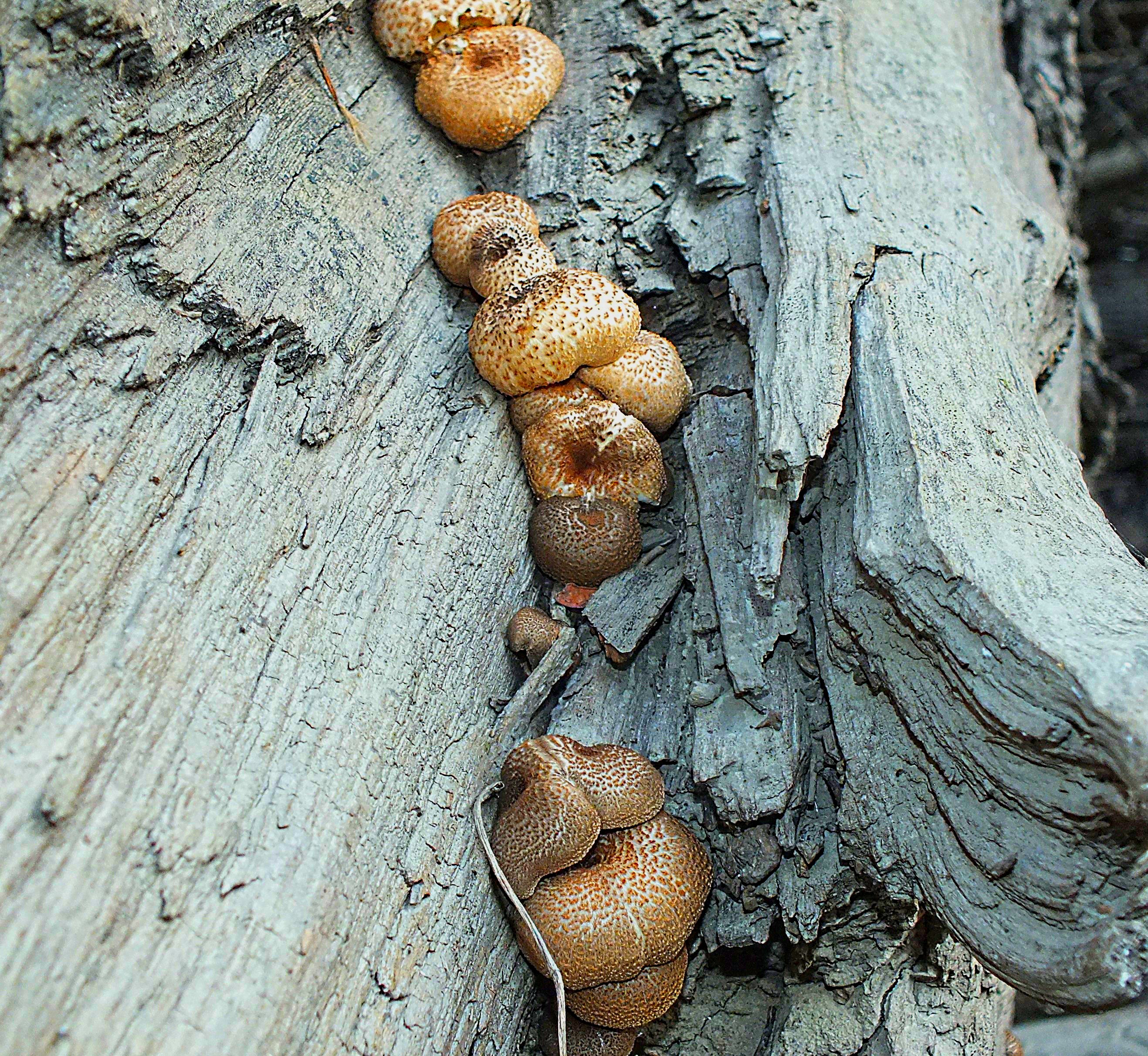
Polyporus squamosus Mushroom cluster. Photo by Thomas Peace 2014
.
If you are very wise, every time you throw a rock it always lands in the same place.
.
[Photos of local river in the fall season.]
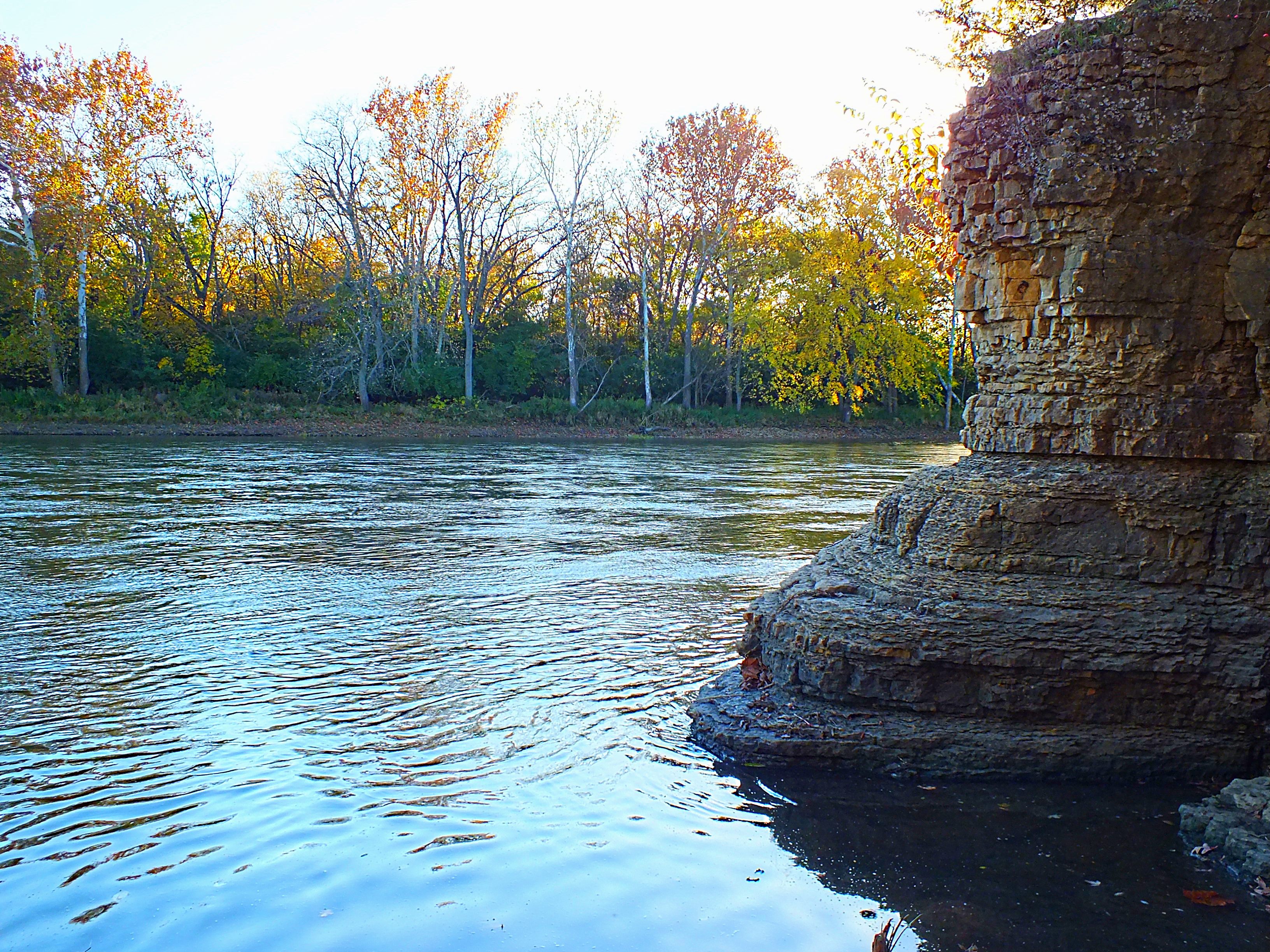
Always and never (1) Photo by Thomas Peace 2014

Always and never (2) Photo by Thomas Peace 2014
.
Let the authoritarians keep their gobbledygook. Look and feel for yourself!
.
[Fall colors! That acorn may be the Oak Tree’s first move regarding continuing the game.]

Splendid fall colors. Photo by Thomas Peace 2014
.
Being naturally/effortlessly silent – at times, throughout the day – is majestic and joyously deep, beyond words.
.

Searching together. Photo by Thomas Peace 2014
.
Lucid wisdom doesn’t take time… but sequential, symbolic thought does.
.
[This Acrea Moth larva, also called the Salt-marsh Caterpillar, is eating heavily and preparing for winter. These caterpillars are relatively abundant in the fall and over-winter as pupae in cocoons. The Salt-marsh Caterpillar feeds on herbaceous plants. There are small rain droplets upon this one, as it was beginning to rain when the photo was taken.]

Salt-marsh Moth Caterpillar preparing for winter. Photo by Thomas Peace 2014
.
All true wise men have a propensity to understand the whole.
.
[Silver-Spotted Skippers are distinguished from true butterflies by the antennae, which are wider apart at the base and end in pointed, curved clubs. Silver-Spotted Skippers — and all Skippers — are so named for their erratic, skipping flight.]
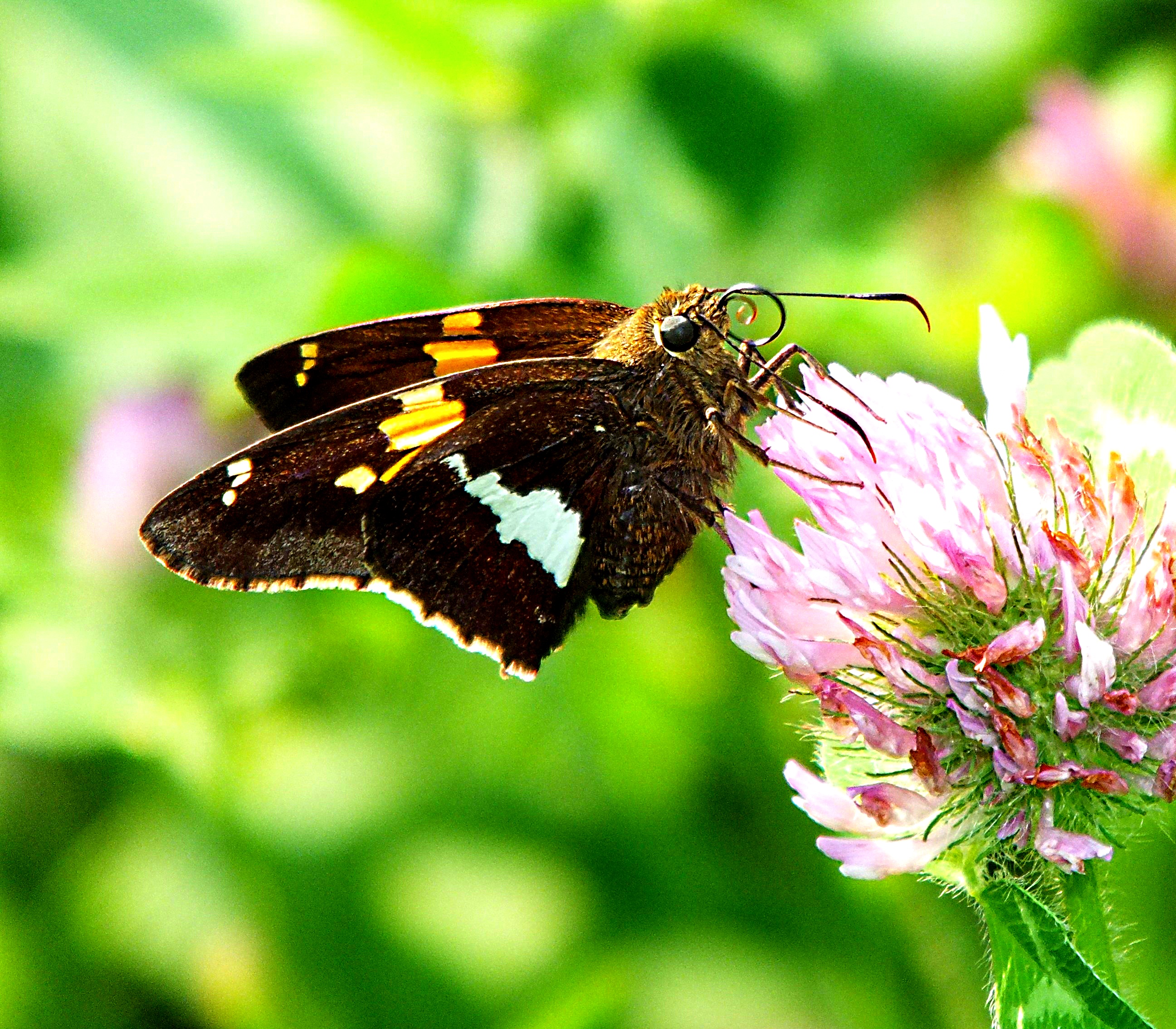
Silver-Spotted Skipper with its curled proboscis. Photo by Thomas Peace 2014
.
The essence of love is deep caring (beyond the limited self).
.
[Lazy Susans at a Hospital Park… There are at least two Hover Flies resting upon them.]
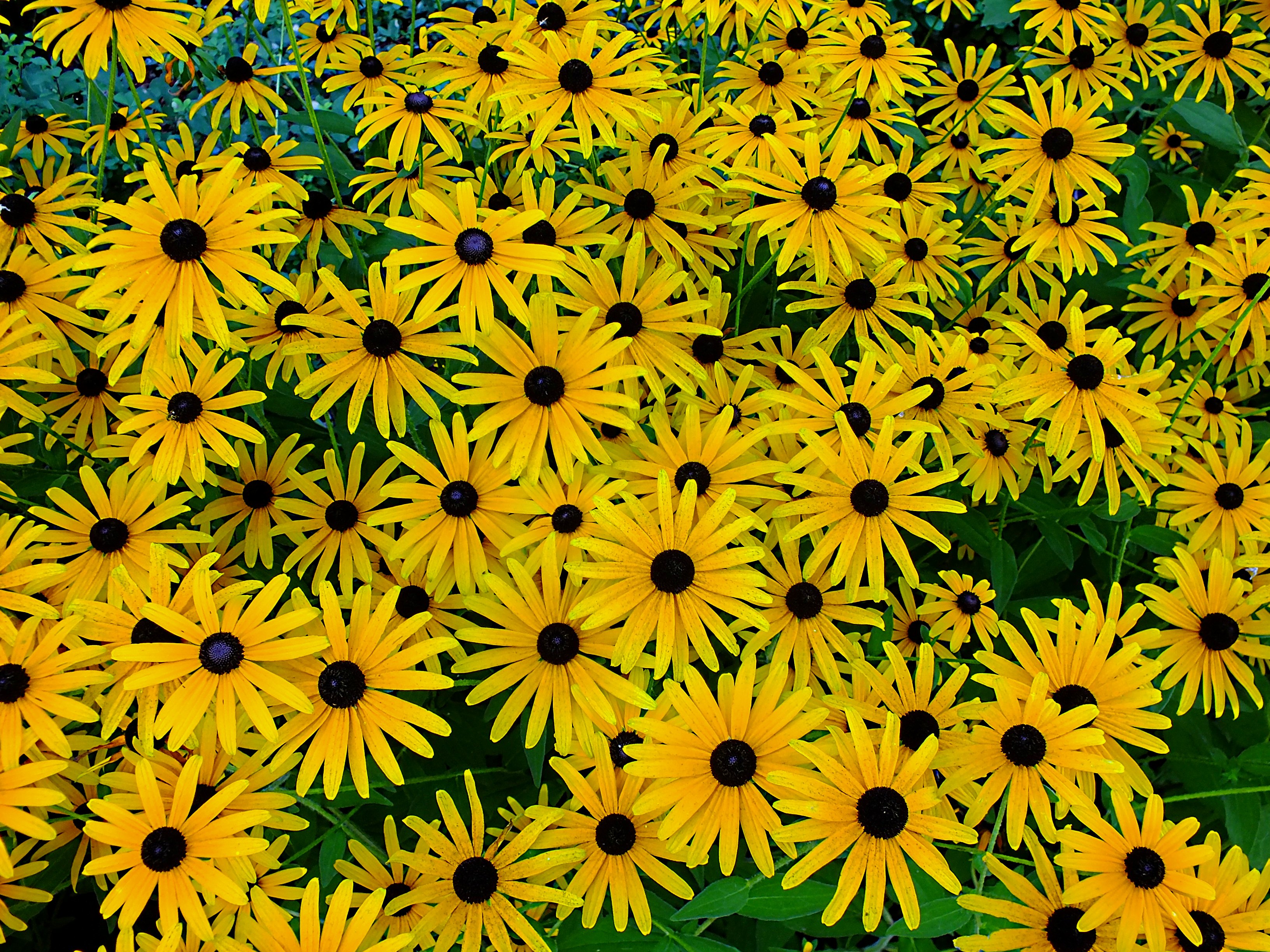
Lazy for a good reason. Photo by Thomas Peace 2014
.
Life is not dull or monotonous to a dynamic mind that inquires joyfully.
.
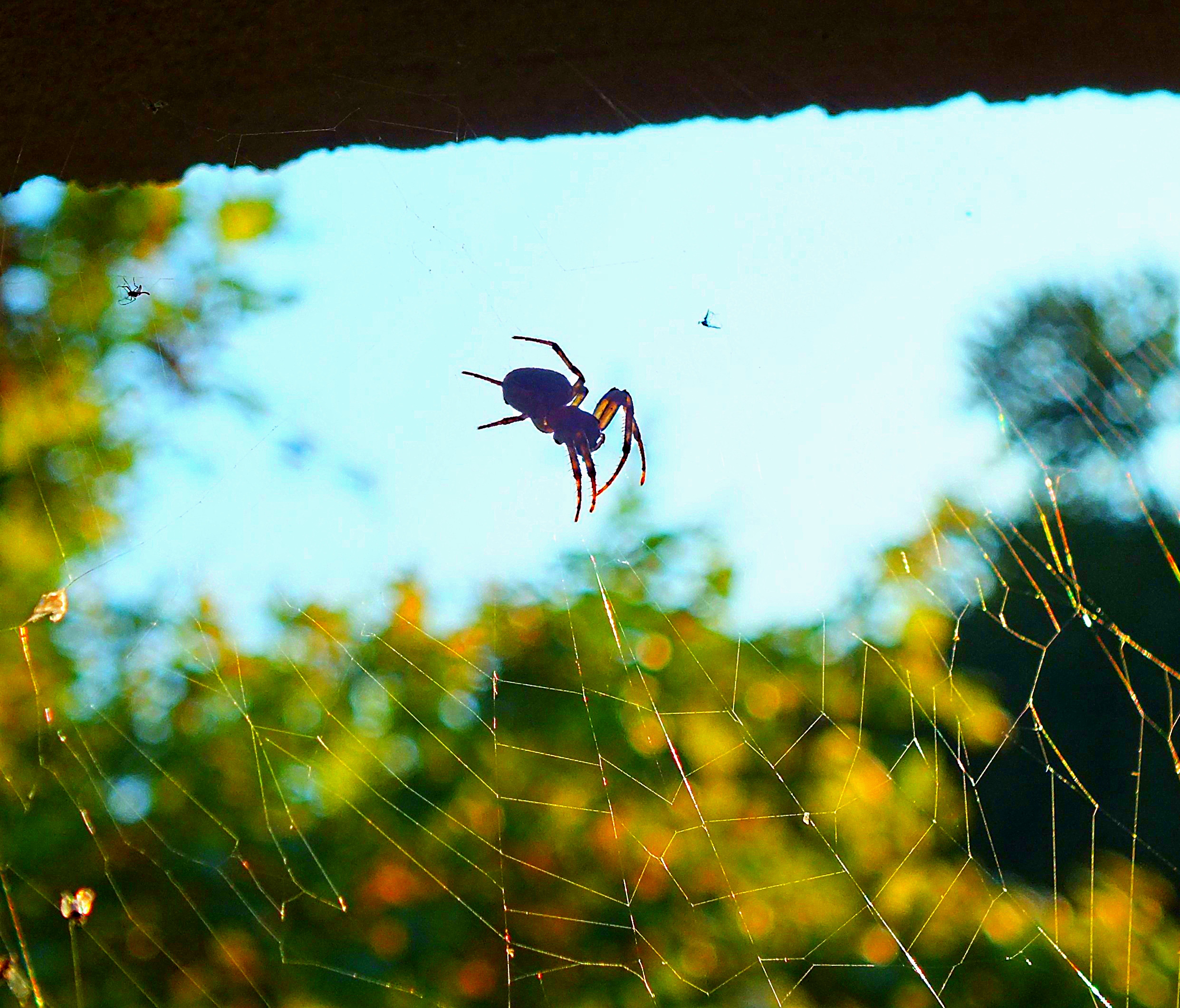
And frightened Miss Muffet away! Photo by Thomas Peace 2014
.
Have gratitude for the simple things in life… for they are usually the most precious.
.
[Morrow’s Honeysuckle, which now grows wild, is one of several honeysuckle shrubs that have been introduced from Eurasia. Morrow’s honeysuckle was imported in the 1800’s for use as an ornamental, for wildlife food and cover as well as for soil erosion control. This one is growing along the bank of a river… which helps against possible erosion.]
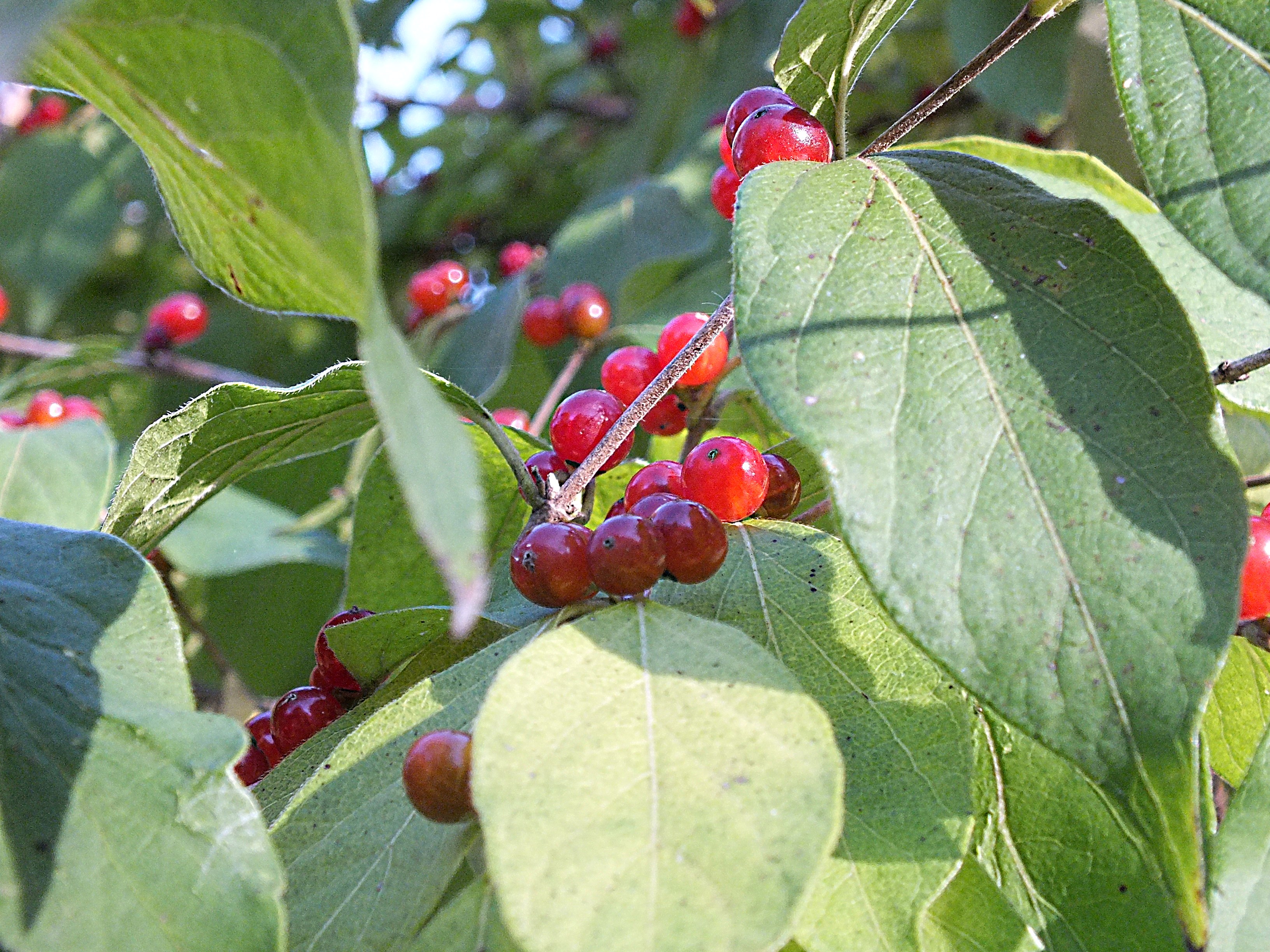
Red Gems. Photo by Thomas Peace 2014
.
The Zen all-meaning circle… it’s just a symbol, but whoever initially came up with it was attempting to convey something profound.
.
[A dried, fall wild vine…]

Zen all-meaning circle… Photo by Thomas Peace 2014
.
To wisely question may be more intelligent than having concrete certitude.
.
[Eyeing the camera (with a smile)…]
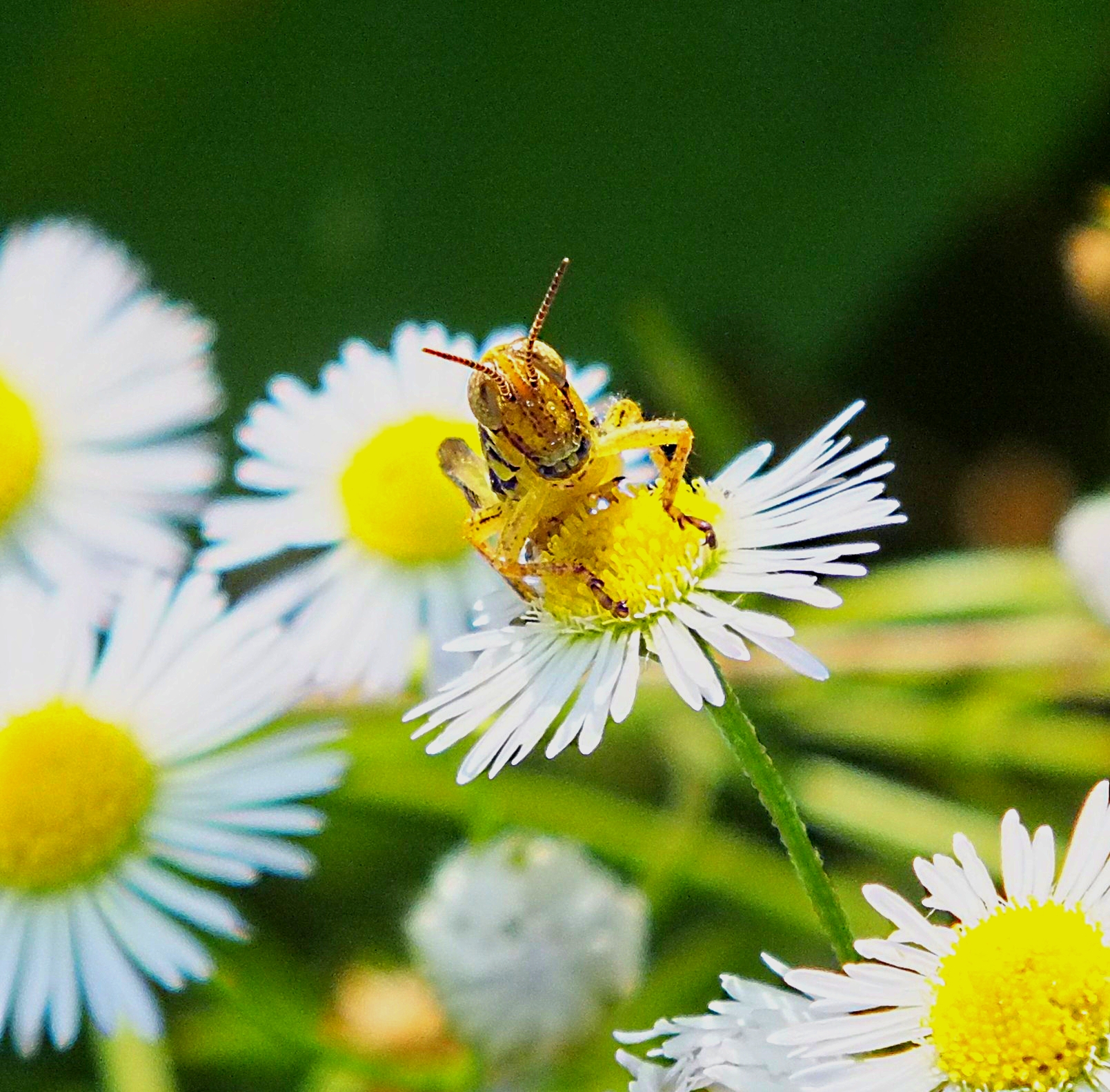
Captured by the Hopper’s lens. Photo by Thomas Peace 2014
.
You can buy stuff, but you can’t purchase integrity, compassion, and deep insight.
.
[Local Creek in Fall]

Local Creek Up Close. Photo by Thomas Peace 2014

Local Creek. Photo by Thomas Peace 2014
.
A requisite attribute of time is distance. A requisite attribute of thinking that you are separate from others is time.
.
[The Ailanthus Webworm Moth thrives from spring through fall. The caterpillars of the Ailanthus Webworm Moth spin loose cocoons low on the host plant. There is one generation per year.]

Ailanthus Webworm Moth, eats foliage of deciduous trees and shrubs. Photo by Thomas Peace 2014
.
To question everything wisely and intelligently… is to deviate from the norm.
.
[This Honey Locust Tree is protecting itself well with an array of spiked thorns. Honey Locust Tree thorns are thought to have evolved to protect the trees from browsing Pleistocene (i.e., Ice Age) mega-fauna. The name derives from the sweet taste of the legume pulp, which was used for food by Native American people, and can also be fermented to make beer.]
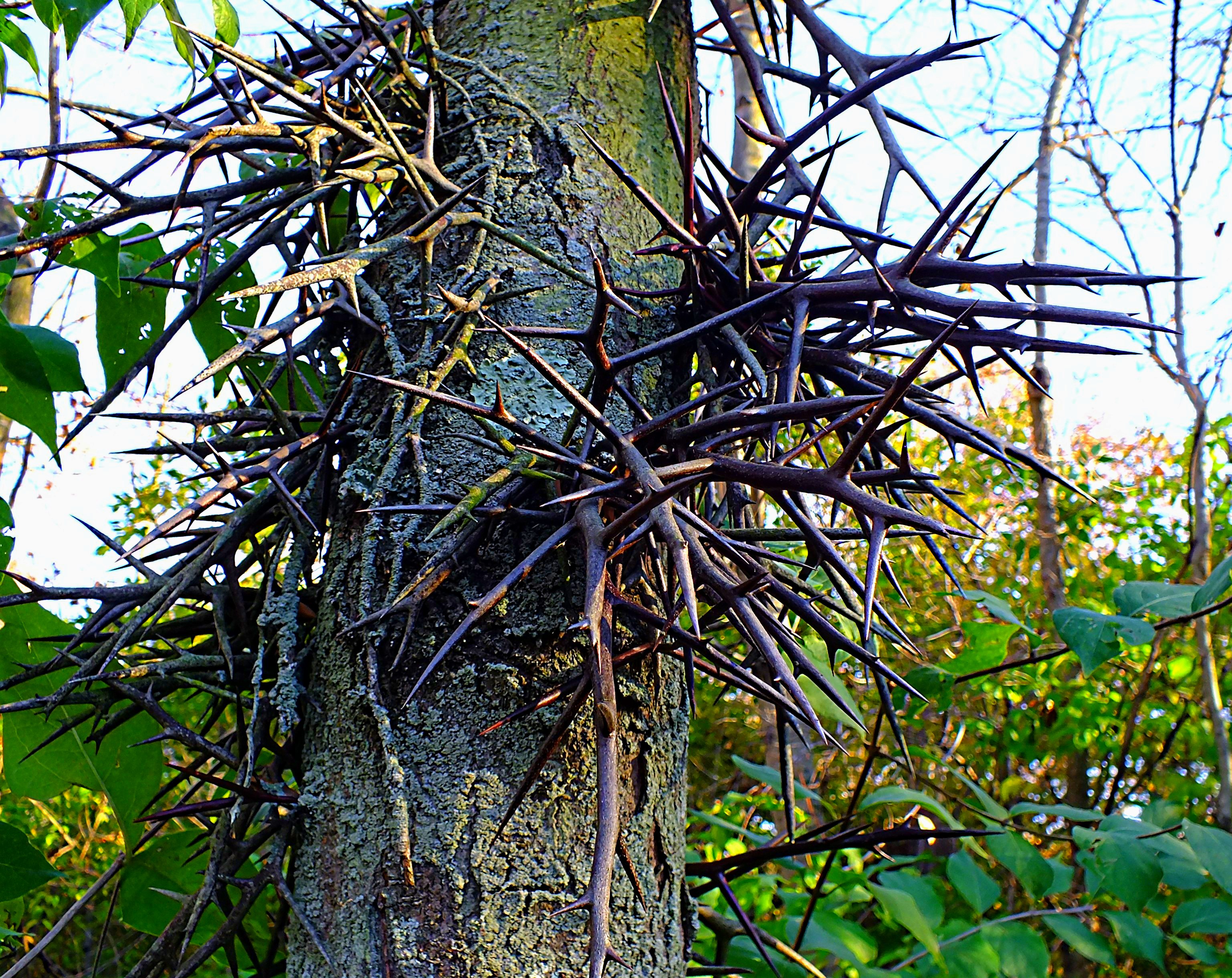
Honey Locust Tree protecting itself! Photo by Thomas Peace 2014
.
Go beyond what all the pundits and so-called experts teach… and inquire for yourself beyond tradition.
.
[The Heal-all Plant (Prunella vulgaris) is edible, and can be used in salads, soups, stews, and boiled as a pot herb. The Cherokee cooked and ate the young leaves. The Nlaka’Pamux drank a cold infusion of the whole plant as a common beverage. The Heal-all Plant contains vitamins A, C, and K, as well as flavonoids and rutin. The Heal-all Plant is taken internally as a medicinal tea for sore throat, fever, diarrhea, internal bleeding, and to alleviate liver and heart maladies. Topically, a poultice of the plant can be applied to irritated skin, as from stinging nettle toxins. A poultice of the Heal-all Plant also serves well as a disinfecting agent and is used to pack wounds in the absence of other wound-care material. It has been cherished by the Chinese to “change the course of a chronic disease.”]

Native Americans loved it! Photo by Thomas Peace 2014
.
Life is far too precious to sweep it under the musty rug of indifference. Help save the planet and go green!
.
[One of the local Tarnished Bugs investigating a wildflower. Tarnished Bugs seek out nectar and pollen.]

At the edge of one’s habitat. Photo by Thomas Peace 2014
.
See each facet of life as part of the undivided whole.
.
[A Horsetail Plant growing through some Queen Anne’s Lace. The Horsetail Plant is an extremely primitive plant; indeed, it looks rather Devonian-like in appearance. The stems are hollow, with no true leaves. The Horsetail Plant likes wet areas, such as ponds or marshes. Horsetail has no known food value to wildlife.]
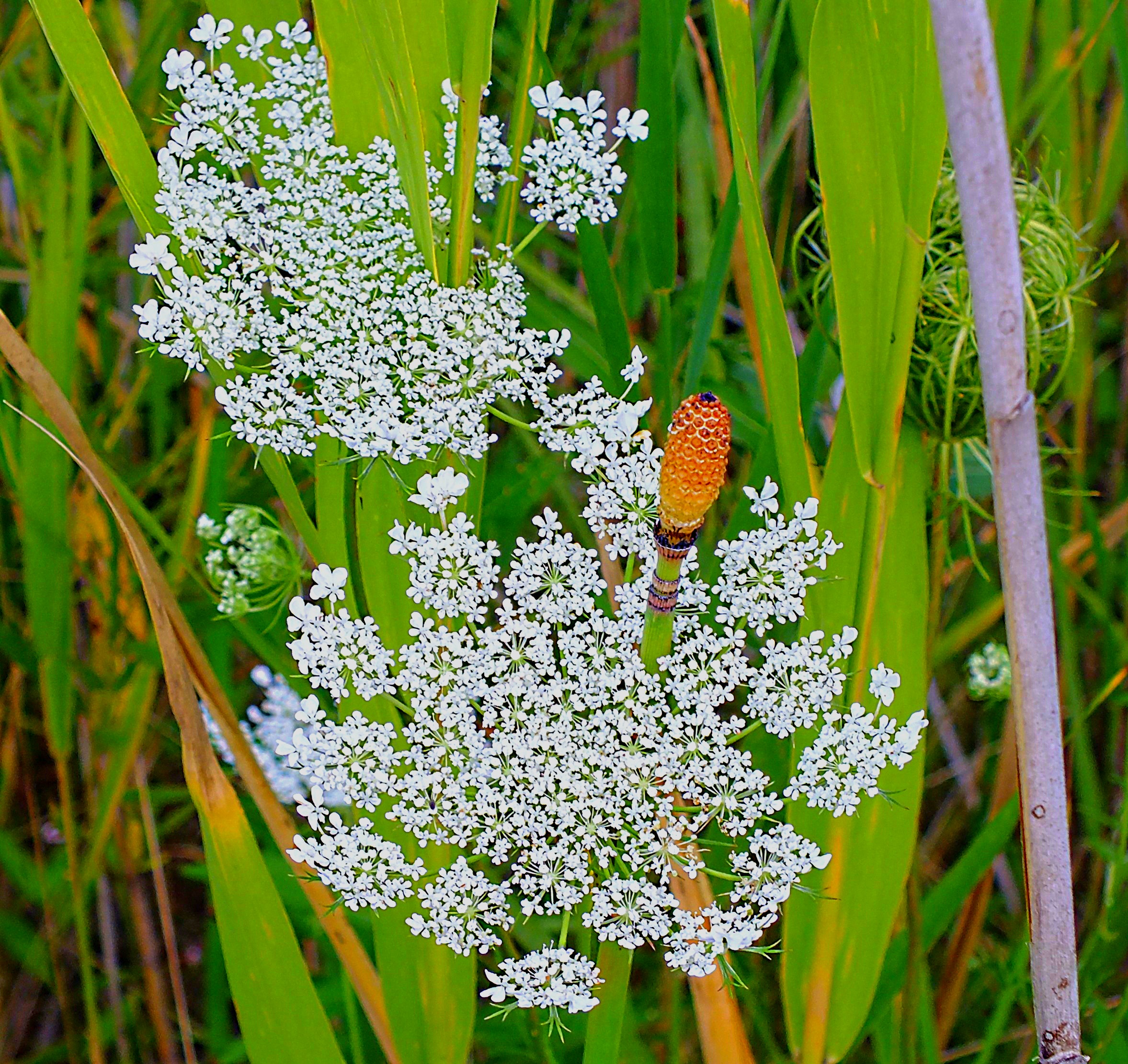
Horsetail Plant extending through Queen Anne’s Lace. Photo by Thomas Peace 2014
.
If one merely thinks according to what was taught by society — as most do — one is thinking and living their thoughts, which is rather second-hand. Live!
.
[Digger Wasps are often seen on flowers during the day. During the night, they rest upon vegetation, singly or in small groups, or burrow into the soil at the base of plants. Digger Wasps will readily sting if bothered enough.]

Digs sometimes. Photo by Thomas Peace 2014
.
There is not just the human race; there are also the races of elephants, tigers, whales, wolves, etc.
.
[This is a pair of mating Dragonflies in the standard wheel position. The copulatory wheel position is the way most species of Dragonflies engage in together. Note that the males and females of this species are of different colors.]
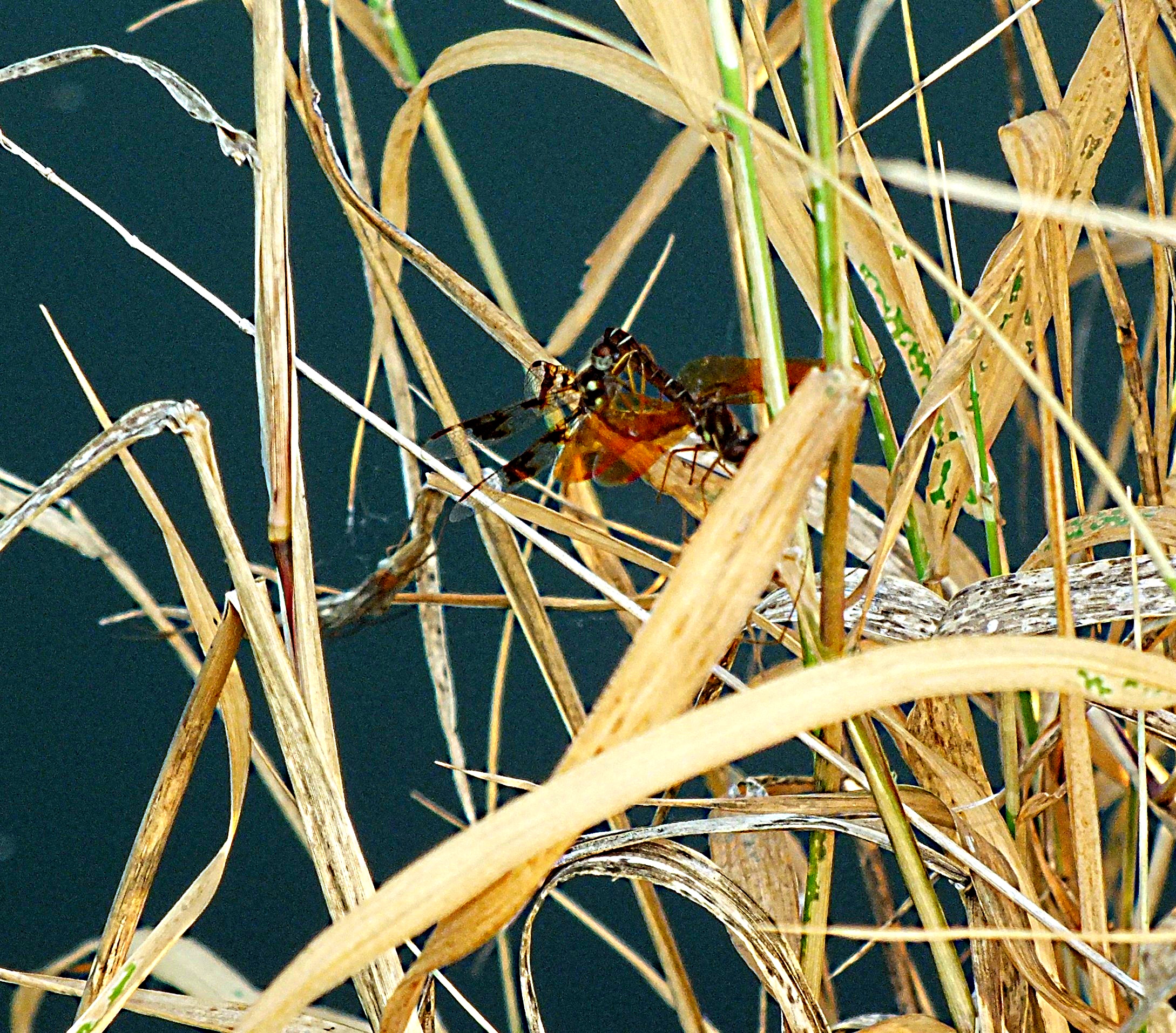
Dragonfly Mating Wheel. Photo by Thomas Peace 2014
 Tom's Nature-up-close Photography and Mindfulness Blog